Gandhi ji and Communal Liberty

Gandhi is an important figure in India’s national movement. A phase of our national movement is called the Gandhian Phase. Nation is defined as a people sharing a common language, history and culture and having a sense of belonging to their common identity. The idea of nation was combined with the nation of the state. It developed where the people of one nation were suppose to live in one state. Nationalism has 2 versions: Premordial and Modernist.

Premordial versions means is the the original versions of nationalism in which the nation has a common language, culture, ethics and history. The modernist version however they treat people like a particular territory and sharing its civic amenities despite loving different ethic on regular affinities.

Gandhi ji was one of the nationalist who was the leader of many movements. He helped us to get independence. He believed in non- violence. He lead many movements in his opposition to the British rule like Satyagraha, Dandi March, Khilafat Movement, the non-cooperation movement. For Mahatma Gandhi, nationalist was based on understanding what was required for people to be free. He was not a socialist but, in common with the socialists, he believed that capitalism could never solve the problem of unemployment and the mental dullness is produced. Gamdhi ji also fought against the practices of sati, child marriage, oppressions of widow, ‘pardah’ and fueled emancipation of women.

Gandhi ji on Communal Liberty

India is a land of diversity. Populated by heterogeneous people of multifarious languages, religion, castes and creeds. Inspite of such diversities of character, there is always an underlying unity among them since time immemorial. The fact also remains that there is always a threat to narrow communal feelings. In modern India, gandhi was one of the greatest champions and communal unity. He lived his whole lofe striving for it, ensuring it, stood firmly by itand finally sacrificed his life in the pursuit of his communal unity. For Gandhi the life of communal unity was even greater than swaraj. None of the political leaders or religious priests were as devotedly concerned about communal unity as Gandhi ji was. Gandhi ji saw truth, love, compassion and service enlisted in all religions, which led him to accord equal respects to all faiths. All religion insist on equality of human race and developing a harmonious relationship with the entirety of creation. Any violation of the principle of equality gives way to conflict and violation. Gnadhiji regarded Islam as a religion of peace in the same sense as Christanity, Buddhism and Hinduism. No doubt, there are differences in the degree. He said in this regard that he knew the passages that could be quoted from the holy Quran to the contrary. Hindu and Muslim has often raised a great challenge before India became secular. Without unity between Hindu and Muslim no certain progress can be made by the nation tenet that ‘unity is strength’ is not merely a copy book maxim but a rule of life. Hindu-Muslim unity means not only unity betwwen Hindus and Muslims but betwwen all these who believe India to be their home, no matter to what faith they belong. Gandhi ji did not fully succeed in Hindu-Muslim unity . Some writers felt that Gandhi ji locked a historocal perspective. He did not take into the account that held that religion with its dagma, tradition, customs, rituals and historical memories has on the minds of men and women in the pre modern society. Gandhi assigned only a derination role to the cultural factors. He did not grasp the deeper social and cultural roots of the hindu-muslims conflict. Gamdhi placed the entire blame for the communal problem on the British. He thought that hindu-muslim was essentially religious amd missed the social aspect of the problems. Gandhi always emphasized upon the necessity of openness of mind for the unity and harmony of the society. It was not a question of failure or success. Gandhi realised that the only alternative to violence coercion, retribution and chaos was restoration of society among the misguided individual to counter Frenzy and indictiveness, gandhi sought rehabilitation of balanced social interrogation among the masses to reslove to put the cause of nation above all denominated prejudices. Today, India is a secular nation. Democracy is mature, muslims have got equal rights and opportunities and are more secure in India than in any other country. The credit goes to the founding father of contribution and Mahatma Gandhi.
Structure of banking system in India

Introduction

Banking in India in the mdern sense originated in the last decades of the 18th century . The first banks were Bank of Hindustan (1770-1829) and the General Bank of India established 1786. The largest bank and the oldest still in existence, is tge State bank of India, which originated in the Bank of Calcutta in June 1806 , which almost immediately became the bank of Bengal. This was one of the three presidency banks , the other two being The Bank of Bombay and The bank of Madras , all three of which were established under charters from the British East India Company. The three banks merged in 1921 to form the Imperial Bank of India , which , upon India’s independence became the State Bank of India in 1955. For many years the presidency banks acted as quasi-central banks , as did their successors until the reserve Bank of India was established in 1935 .

Reserve bank of India (RBI)

The Reserve Bank of India is India’s central banking institution, which controls the monetary policy of the Indian rupee. It commenced its operations on 1 April 1935 during the British Rule in accordance with the provisions of the Reserve Bank of India Act,1934 and in 1949 it was nationalized.The central office of the Reserve Bank was initially established in Calcutta but was permanently moved to Mumbai in 1937. The central office is where the Governor sits and where policies are formulated. Sir CD Deshmukh is the first Governor of RBI. The RBI has four zonal offices at Chennai, Delhi, Kolkata, Mumbai and 20 regional offices mostly located in the state capitals and 11 sub-offices. Reserve Bank of India Act,1934 is the legislative act under which the Reserve Bank of India was formed. This act along with the Comapnies Act, which was amended in 1936, were meant to provide a framework for the supervision of banking firms in india.

Scheduled and non-scheduled banks

Scheduled banks in India refer to those banks which have been included in the second schedule of Reserve Bank of India Act, 1934. Banks not under this schedule are called non-scheduled banks. In other words, Banks with a reserve capital of less than 5 lakh rupees qualify as non-scheduled banks. Unlike scheduled Banks , they are not entitled to borrow from the RBI for normal banking purposes, except, in emergency or ‘abnormal circumstances’. Coastal local Area Bank Ltd. (Vijayawasa,AP), Capital Local Area Bank Ltd. (Phagwara, Punjab), Krishna Bhima Samrudhi Local Area Bank Ltd. (Mehbubnagar, Telangana), Subhadra Local Area Bank Ltd. (Kolhapur, Maharashtra) are the only non-scheduled banks in India.

Scheduled banks are further internally classified into commercial banks and cooperative banks.

Public Sector Banks

Public sector banks (PSBs) are banks where a majority state (ie., more than 50%) is held by a government . The shares of these banks are listed on stock exchange. There are a total of 21 PSBs in India and State Bank of India group.

  • In 1969, the Indira-Gandhi headed government nationalised 14 major commercial banks ( Allahabad Bank , Bank of Baroda , Bank of India , Bank of Maharashtra , Canara Bank , Central Bank of India , Dena Bank , Indian Bank , Indian Overseas Bank , Punjab and Sindh Bank , Punjab National Bank, Sindicate Bank , UCO Bank , United Bank of India)
  • In 1980 , a further 6 banks were nationalised (Andhra Bank , Cooperation Bank , New Bank of India , Oriental Bank of Commerce, Punjab and Sindh Bank , Vijay Bank )
  • IDBI Bank is an Indian government-owned financial service company, formarly known as industrial Development Bank of India , headquartered in Mumbai , India .It was established in 1964 and nationalised in year 2005 .

Private Sector Banks

The ‘Private- Sector’ banks are baks where greater parts of share or equity are not held by the government but by private shareholders . There are many Indian and Foreign Banks in India . HDFC Bank , ICICI Bank , Axis Bank , Kotak Mahindra Bank , Yes Bank , IDFC Bank , RBL Bank , Federal Bank , City Union Bank are the major private banks in India.

Regional Rural Banks

Regional Rural Banks were formed on October 2,1975 upon the recommendations of M. Narsimham working group during the tenure of Indira Gandhi’s government. The object behind the formation of RRBs was to serve large unserve population of rural areas and promoting financial inclusions . They have been created with a view to serve primarily the rural areas of India with basic banking and financial services. However, RRBs may have branches set up for urban operations and their area of operation may include urban areas too.

Cooperative Banks

The cooperative banks are furtger classified into:

  • State cooperative banks: These are small financial institutions which are governed by regulations like Banking Regulations Act , 1949 and Banking Laws Cooperative Socities Act ,1965 . At present there are about 33 state cooperative banks of which 19 are scheduled.
  • Urban/ Central cooperative banks: The term urban cooperative banks (UCB) refers to primary cooperative banks located in urban and semi-urban areas . These banks till 1996 , were allowed to lend money only for non-agricultural purposes. This distinction does not hold today . They essentially lent to small borrowers abd business . There are about 2,104 UCBs of which 56 were scheduled Banks. About 79 percent of these are located in 5states- Andhra Pradesh, Gujarat, Karnataka, Maharashtra and Tamil Nadu .
  • Primary credit Socities: Primary Credit Societies or primary agricultural credit society (PACs) is a basic unit and smallest cooperative credit institutions in India. It works on the grassroot level (Gram panchayat and village level ) . It virtually function like banks , but whose net worth is less than Rs. 1 lakh; who are not members of the payment system and to whom deposit insurance is not extended .

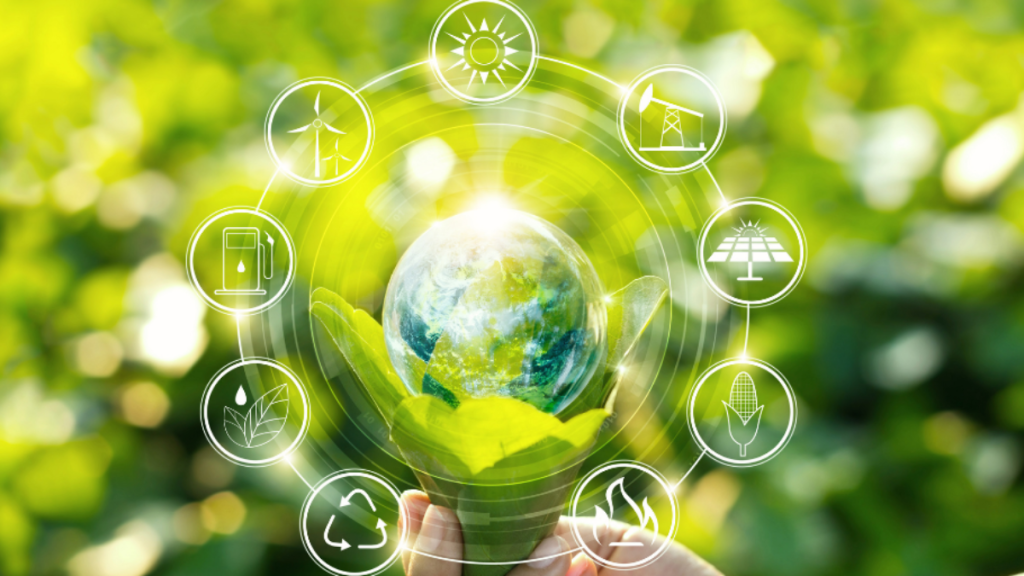
Renewable resources .

Replacing traditional sources of energy completely with renewable energy is going to be a challenging task. However, by adding renewable energy to the grid and gradually increasing its contribution, we can realistically expect a future that is powered completely by green energy.

– Tulsi Tanti

A way to live a new life . Without any destruction , without worrying about the future . Live a life where we can grow together , develop a life with renewable resources.

Introduction

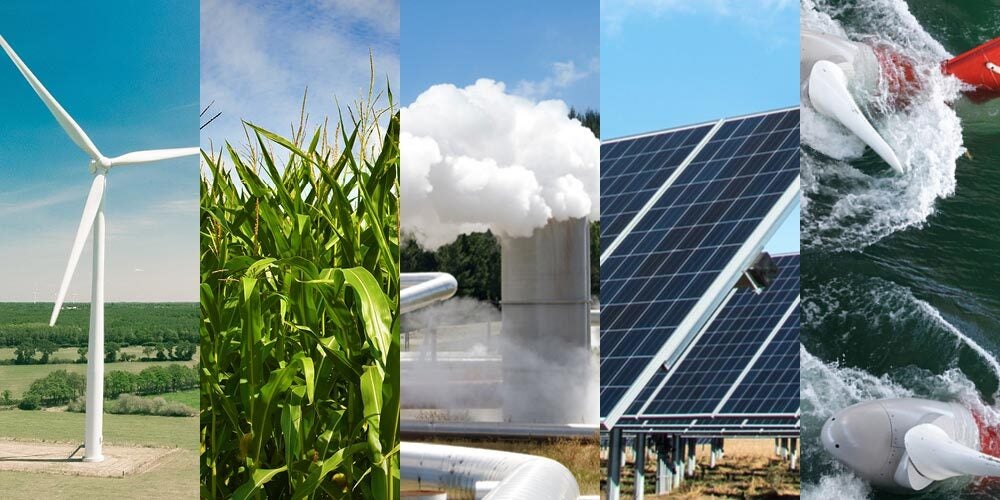
A renewable resource, also known as a flow resource, is a natural resource which will replenish to replace the portion depleted by usage and consumption, either through natural reproduction or other recurring processes in a finite amount of time in a human time scale.

When such recovery rate of resources is unlikely to ever exceed a human time scale, these are called perpetual resources. Renewable resources are a part of Earth’s natural environment and the largest components of its ecosphere. A positive life-cycle assessment is a key indicator of a resource’s sustainability.

Renewable resources are an energy source that cannot be depleted and are able to supply a continuous source of clean energy.

Renewable resources also produce clean energy, meaning less pollution and greenhouse gas emissions, which contribute to climate change.

Examples of renewable resources.

  • Biomass .
  • Biogas.
  • Tidal Energy.
  • Wind Energy.
  • Geothermal Energy.
  • Radiant Energy.
  • Hydro Electricity.
  • Compressed Natural Gas.

Types of renewable resources.

1) Solar energy. Sunlight is one of our planet’s most abundant and freely available energy resources. 2) Wind energy. Wind is a plentiful source of clean energy. 3) Hydro energy.
4) Tidal energy.
5) Geothermal energy. 6) Biomass Energy.

Impact of renewable resources.

Environmental impact

Renewable energy projects have also contributed in improving environmental impacts such as reduction of carbon dioxide gas, awakening community about the climate change. The study observed very small impacts on the people living in a particular area, tourism, cost of energy supply, and educational impacts. Significant impacts were observed in improvement of life standard, social bonds creation, and community development. They also observed that the renewable energy projects are complex to install and are local environmental and condition sensitive. Their forecasting, execution, and planning require more consideration and knowledge as compared to other projects.

Social impact

These resources also provide social benefits like improvement of health, according to choice of consumer, advancement in technologies, and opportunities for the work, but some basic considerations should be taken for the benefit of humans, for example, climate conditions, level of education and standard of living, and region whether urban or rural from agricultural point of view. Social aspects are the basic considerations for the development of any country. The following social benefits can be achieved by renewable energy systems: local employment, better health, job opportunities, and consumer choice.

Advantages of renewable resources.

  • Renewable energy won’t run out.
  • Maintenance requirements are lower.
  • Renewables save money.
  • Renewable energy has numerous health and environmental benefits.
  • Renewables lower reliance on foreign energy sources.
  • Higher upfront cost.
  • Intermittency.
  • Storage capabilities.

Conclusion

Renewable energy is becoming an important resource in all over the world . I do agree that people might exploit the resources for there own benefit . But the government is working on that aspect and trying to provide resources that can help our future households .

There are a lot of different ways of building a prosperous society, and some of them use much less energy than others. And it is possible and more practical to talk about rebuilding systems to use much less energy than it is to think about trying to meet greater demands of energy through clean energy alone.

– Alex Steffen

Link

Classification of Law in Jurisprudence

International Law and Municipal Law

Law maybbe broadly divided into two classes: international law and municipal law. Whatever the objections raised against the claim of international law to be called international law, it is now recognised that international law is not only law but also a very important branch of law.

International law is divided into two classes: public international law and private international law. public international law is that body of rules which governs the conduct and relations of the States with each other. by private international law we mean those rules and principles according to which cases having foreign element are decided. if a contract is made between an Indian and a Pakistani which is to be performed in Sri Lanka, the rules and principles on which the rights and liabilities of the parties depend are to be determined by private international law. Critics point out that the term private international law is not correct. The adjective “international” is wrongly given to it as it does not possess any characteristics of international law. Private international law applies to individuals and not to States. Moreover, the rules and principles of private international law vary from State to State and there is no uniformity. Private international law is enforced by municipal courts which apply municipal law and not international law. In order to avoid controversy, it is suggested that private international law be called Conflict of Laws and should be treated as a branch of municipal private law.

Municipal Law

Municipal law is the law applied within a State. It can be divide into two classes: public law and private law. Public law determines and regulates the organisation and functioning of the State and determines the relation of the State with its subjects.

Public law is divided ito three classes: constitutional law, administrative law and criminal law. Constitutional law determines the nature of the State and the structure of the government. It is superior to the ordinary law of the land. Constitutional law is written in India and the Unites States but it is unwritten in England. The modern tendency is to have written constitutons.

Administrative law deals with the structure, powers and functions of the organisation of administration, the limits of their powers, the methods and procedures followed by them and the methods by which their powers are controlled including the legal remedies available to persons whose rights have been infringed.

Criminal law defines offences and prescribes punishments for them. It not only orevent crimes but also punishes the offenders. Criminal law is necessary for the maintenance of law and order and peace within State. In criminal cases, it is the State which initiates proceedings against the wrongdoers. The State is always a party in criminal cases.

Private law regulates and governs the relations of citizens with one another. The parties are private individuals and the State decides the disputes among the people. There is great difficulty in classifying private law. A general classifiactionof private law is the law of persons, the law of property, the law of obligations, the conflict of laws, contaracts, quasi-contracts and tort.

Critics point out many defects in the above classification o laws. Many of the classes of laws do not exist in many legal systems of the world. Those branches f law which have recently been developed cannot be put under any classification. The result is that the classification given abone is neither universal nor exhaustive. Many jurists have attempted classifications on different principles. New branches of law are growing and developing rapidly in different parts of the world and provision has to be made for them in any classification of laws. Industrial law and commercial law are such subjects.

Conversion to Islam and Marital Rights

Introduction

Muslim law applies to-
        1)   Mohammedans by birth, as well as to,.                                                               

2) Mohammedans by conversion.

A non-muslim , who has attained majority and is of sound mind may embrace Islam in any of two modes:-

a) He may simply declare that he believes in the oneness of God and the Prophetic character of Mohammad,or

b) He may go to a mosque, to a person who is well versed in Islamic theology (Alim), where he utters Kalma (Lailaha-ill-Allah Muham-mad-ur Rasoolullah) before Imam, whereupon he is given a muslim name by the Imam. It is however, necessary that the conversion must be bona fide; the Court will not permit any one to commit a fraud upon the law by pretending to be a covert Islam in order to elude te personal law by which he is bound .

In Rikhya Bibi v. Anil Kumar , a hindu women accepted Islam in order to get rid of her Hindu husband, who was impotent. It was held that her conversion to Islam was colourable and was effected with the intent to commit a fraud upon the law, and was therefore invalid and ineffective.

Conversion to Islam and Marital Rights

According to Muslim Law, a distinction, is made between conversion to Islam of one of the spouses when such conversion takes place-
1) In a country subject to Muslim Law, and

2) In a country where the Law of Islam is not the law of the land

In the first case, when one of the parties embraces Islam, he should offer Islam to the other spouse , and of the latter refuses, the marriage can be dissolved. In the second case, the marriage is automatically dissolved after the lapse of a period of three months after the adoption of Islam by one of the spouses. The courts in India do not administer the laws of any particular community but they administer such laws as are valid in India. Muslim Laws is administered only in those cases where it happens to be the law of India and where the parties are muslims. In India , the spouse who has become a convert to Islam can sue for divorce or a declaration of dissolution of the marriage on the ground that the other spouse has refused to adopt the Muslim religion. It has been held in Pakistan that a marriage of a Hindu married woman on her conversion in British India to Islam should be regarded as dissolved on the completion of three of her monthly couses without any decree or order of the court.

In Sarla Mudgal v. Union of India, the Supreme Court has held that the second marriage of a Hindu husband after conversion to Islam without having his first marriage dissolved under law would be invalid. The second marriage would be void in terms of the provision of Section 494, IPC and the apostate husband would be guilty of the offence under Section 494 of IPC.

In Lily Thomas v. Union of India, the Supreme Court has observed that if hindu wife files a complaint for the offence of bigamy under Section 494, IPC on the ground that, during subsistence of marriage her husband had married a second wife under the other religion after converting to that religion, the offence of bigamy pleaded by her would have to be investigated and tried in accordance with the provisions of the Hindu Marriage Act. Since under Hindu Marriage Act, a bigamous marriage is prohibited and has been constituted as an offence under Section 17 of the Act, any marriage solemnized by the husband during the subsistence of that marriage in spite of his conversion to another religion, would be an offence under Section 17 of the Hindu Marriage Act read with Section 494 of IPC. Change of religion does not dissolve the marriage performed under the Hindu Marriage Act between two hindus. Apostasy does not bring to an end the civil obligation or matrimonial bond but it is a ground for divorce under Section 13 as well as ground for judicial separation under Section 10 of Hindu Marriage Act.

Conversion to Islam and Rights of Inheritance

In the absence of a custom to the contrary, in case of a Hindu converts to Islam, succession and inheritance are governed by Mohammedan Law and not by Hindu law.

Where a Hindu, who had a Hindu wife and children, embraced Islam and married a Muslim woman and had children by her,his property would pass on his death to his Muslim wife and children and not to his Hindu wife or children because under Muslim Law, a Hindu cannot succeed to the estate of a Muslim.

Effects of conversion to Islam

The legal consequences that follow by conversion, may be summarised as under:

1) The religion of Islam is substituted for the previous religion of the convert to Islam, with so much of the personal law as necessarily follows from that religion;

2) The rights and status of the convert become subject to the Mohammedan law;

3) His apostasy (abandonment of religion) has an immediate and prospective effect, from the moment of the conversion and is not retrospective;

4) Conversion of the both spouse, without any intention to commit fraud upon the law, will have the effect to altering the rights incidental to marriage, but this question was left undecided by the Privy Council in Skinner v. Orde.

5) Succession to the estate of a convert is governed by Muslim Law.

Effect of renunciation of Islam

Under the pure Muslim Law Mohammedan after renouncing Islam loses all rights to succeed as Muslim. But now under the provision of the Caste Disabilities Removal Act XXI of 1850, the apostate will lose such rights. The question here arises as to what amounts to apostasy, i.e., abandonment of one’s religion. The answer is that mere deviation from non-fundamental provisons of Mohammedan religion does not amount to apostasy. So long as a person is prepared to accept the fundamental tenets of Islam, he is not an apostate.

Apostsy of guardian – According to Mohammedan Law an apostate has no right to contract a minor in marriage: Hedaya, 392. It is enacted however, by Act XXI of 1850, that no law or usage shall inflict on any person who renounces his religion any “forfeiture of rights of property”, and it was accordingly held in Muchoo v. Arzoon that a Hindu father is not deprived of his right to the custody of his children and to direct their education by reason of his conversion to Christianity. It is submitted that the decision in Muchoo’s case is correct . But the court may in its discretion deal with each case on its own merits.

Effect of renunciation of Islam on Marriage

Marriage of a Muslim husband with a Muslim wife is dissolved ipso facto on the renunciation of the husband of the Islamic religion, their marriage remains intact and is not dissolved.

The renunciation of Islam by a married Muslim woman on her conversion to a faith other than Islam does not by itself dissolve her marriage. But were a woman converted to Islam from some other faith re-embraces her former faith, her marriage with the Muslim husband stands dissolved .


Comparative Study b/w Parliamentary and Presidential System of Government

Parliamentary system is a democratic form of government in which the party with the greatest representation in parliament (legislature) forms the govt., its leader becoming prime minister or chancellor. Presidential form of govt. is a democratic and republican govt. in which a head of govt. leads an executive branch. The head of govt. is in almost cases also the head of the state, which is called the President. India follows a parliamentary form of govt. modelled on Britain’s.

Features

Features of Presidential system are that the executive can veto acts by the legislature, the President has a fixed tenure and cannot be removed by a vote of no confidence in legislature. The President has the power to pardon or commute judicial sentences awarded to criminals and the President is elected directly by the people or by the people or by an electoral college whereas features of parliamentary system are- close relationship b/w the legislature and the executive, executive is responsible to the legislature, there are two executive i.e. real executive and titular executive, bicameral legislature, no fixed tenure, leadership of Prime Minister.

Merits

Merits of Presidential system are- seperation of powers, expert govt., stability and less influence of the party system.

Merits of Parliamentary system are- better coordination b/w executive and legislature, prevents authoritarianism, responsible govt., represents diverse groups, flexibility in the system.

Demerits

Demerits of Presidential system are- less responsible executive, deadlocks b/w executive and legislature, rigid govt., spoils system as the system gives the President sweeping powers of patronage.

Demerits of Parliamentary system are- no seperation of powers, unqualified legislators, instability, failure to take prompt decision because there is no fixed tenure, party politics is more.

Conclusion

The Presidential system is better for one because of its seperation of powers, the role of judiciary and the govt. accountability to its people. We should ensure a system of govt. whose leaders can focus on governance rather than on staying in power. The present parliamentary system has been tried and tested for nearly 70 years. It can be reformed thoroughly to remove the challenges thrown up by it. Also, there is a need to reform the electoral processes to make democracy more robust.

UP Draft Population Control Bill 2021

With the aim to provide stabilization in population growth and welfare to public, the Uttar Pradesh government has come up with draft of “Population Control Bill 2021”. The Uttar Pradesh Population (Control, Stabilisation, and Welfare) Bill, 2021 invites suggestions on it. The suggestions have been invited to improve the bill and have to be sent through e-mail – statelawcommission2018@gmail.com or by post, latest by July 19, 2021.

According to state census 2011, Uttar Pradesh is the most populous state with a population of 19.96 crores. The least populated state is Sikkim with a population of 6,07,688.

BPL couple with single child, who undergoes voluntary sterilization shall be benefited with one-time-lump sum amount of 80,000 if it is a boy and 1 lakh if it is a girl.
Whosoever procreates after the commencement of the Act shall be ineligible to contest in elections.
If the child is born at the time of enactment of the law, necessary applications must be undertaken within an year of commencement of Act.
It shall be the duty of government to inroduce a compulsary subject relating to population control in the state schools.

Measures in Mizoram

In contrary to this bill, recently the Mizoram minister had announced that he would reward a living man or woman having the largest number of offspring within his Aizawl East-2 assembly constituency with a cash incentive of ₹1 lakh. According to the minister, the infertility rate and the decreasing growth rate of the Mizo population have become a serious concern. Mizoram’s population was 1,091,014, according to the 2011 census.

“Mizoram is far below the optimum number of people to attain development in various fields because of the gradual decline in its population. The low population is a serious issue and hurdle for small communities or tribes like Mizos to survive and progress,”

Royte

Criticism

It is a good step towards population control. However the process of sterilization of BPL couple shall be done with great care because there have been reports of infections and death post operation.

EDUCATIONAL OPPORTUNITIES AFTER BBA

Master of Business Administration (MBA)

MBA is the most popular choice for a graduate in management domain. The course takes the graduate one step further in the management stream and builds on the basic principles that he/she was taught during graduation. A graduate can choose to go for a particular sector or industry after MBA by choosing the correct MBA specialization as per his/her interest and requirements.

Fee Structure

The average course fee for MBA in India is around Rs. 5,00,000.

May extend beyond Rs. 15,00,000 in the top colleges with a national and international reputation

What attracts students?

i) Excellent returns

ii) Pathway to some of the most well-paying jobs available in the private sector

A New Study Suggests You May Want To Rethink That MBA

Bachelor of Legislative Law (LLB)

Many students may decide to go for an LLB after BBA. Having a degree in law along with the management skills can work in the favor of a student and help them earn more money, take up cases in their chosen specialization or switch fields completely. LLB gives graduate a wide range of career options and provides a great alternative skill set to rely on.

Fee Structure

The average course fee for LLB in India ranges between Rs. 2.5-4 LPA.

What attracts students?

•Excellent returns •Range of Salary offered by Law firms range from 25-30 LPA.

•Offers a package ranging between 5-10 LPA to 18-20 LPA for Freshers

Bachelor of Education (B. Ed.)

Students who like teaching and see their future in teaching line can purse higher education by pursuing B. Ed. courses.

Qualification Requirements

 Graduation from a recognized institute

Drawbacks of joining B. Ed after Graduation

• Only eligible to apply for teaching in class I-VIII

• Not eligible to apply for teaching in Higher Secondary Schools or Colleges

Must hold Master Degree to become eligible for teaching in Higher Secondary Schools or Colleges

CABINET RESHUFFLE 2021

Before starting with building, it’s important to have the base strong. Similarly, before diving into the sea of ministers, let us look into our parliamentary system.

Indian system of Parliament is based on British constitution. It is a bicarmel legilature composed of the President of India and the two houses: the Rajya Sabha (Council of States/ Upper House) and the Lok Sabha (House of the People/ Lower House.). The Lok Sabha members are chosen by the people as Member of Parliament. There are 543 members in the Lok Sabha currently. Out of these members, the party in majority choses the Prime Minister. Prime Minister holds the power to chose his ministers who help to run the country. This group of ministers is called Council of Ministers. Articles 74 and 75 deal with the council of ministers. Article 352 defines the cabinet as “The council consisting of Prime Minister and other ministers of cabinet rank appointed under Article 75. The council helps and advises president for any decision to be taken.

The part of council of ministers who holds important portfolios is called cabinet. The Ministers in this position are called Cabinet ministers. Some cabinet ministries are Minister of Defence, Finance, Home Affairs, External Affairs, Education, etc. The decisions of the cabinet are important for PM to take into consideration. Unlike the council, cabinet ministers have frequent meetings to formulate policies. Council is a wider body consisting up to 60-70 ministers and Cabinet is a smaller body with 15-20 ministers. However, the word cabinet was never mentioned in the constitution. It came into use in the 44th Constitutional Amendment Act, 1978.

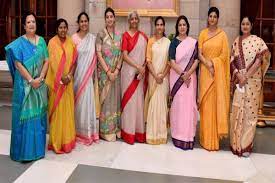
Prime Minister Narendra Modi’s Council of Ministers has been realigned recently. Many new faces have been appointed with an eye on next year’s assembly polls. A total of 43 political leaders have been sworn-in as union ministers, and some have been promoted. Council of Ministers now includes a wide range of youth and experienced leaders from across the board. Interestingly, the Union Cabinet has taken the number of women a notch up, inducting seven fresh faces to add to the existing scanty list. A diversity in terms of representation of caste, religion and gender was kept in mind. The Union Cabinet now consists a total of 11 women ministers.

Cabinet Ministers

Union ministers Harsh Vardhan (Health), Ravi Shankar Prasad (Law/IT), Prakash Javadekar (Environment/I&B), Ramesh Pokhriyal (Education), Santosh Gangwar (Labour) and Sadananda Gowda (Chemicals & Fertilizers) etc. resingned from their posts. BJP leaders who were sworn in as Union ministers include Jyotiraditya Scindia (Aviation), Narayan Rane, Sarbananda Sonowal and Ashwini Vaishnaw(Railay) among the 43. The oath-taking ceremony was held at the Rashtrapati Bhavan in New Delhi.

7 new women MPs of PM Modi’s Council of Ministers:

Anupriya Singh Patel, Sushri Shobha Karandlaje, Darshana Vikram Jardosh, Meenakshi Lekhi, Annpurna Devi, Sushri Pratima Bhoumik, Bharati Pravin Pawar

Criticism

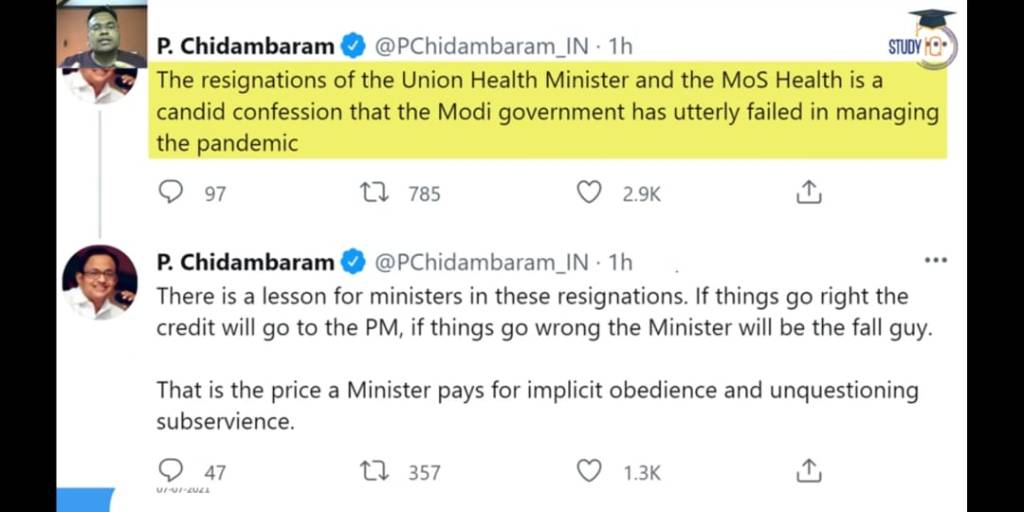
Opposition party has clearly stated the step as Modi government’s failure in managing the situation. Also that the ministers are blamed solely whenever there is a collective error. Many also consider the political agenda as the reason- to attract people support in upcoming elections by selecting ministers from that particular state

Source SudyIQ


HYMENOPTERA

Classification

Kingdom: Animalia 

  Phylum : Arthropoda 

    Class: Insecta (Endopterygota) 

      Sub-class : Pterygota 

         Order:Hymnoptera 

Hymenoptera

Hymenoptera means membrane wings. 

One of the largest insect order. 

Size range – 0.21nm(0.008inch)-5cm(2inch) in length. 

Usually 4 membranous wings

  • Forewing and hindwing are held together by small hook. 
  • Hind pair smaller than front pair

Complete metamorphosis (Holometabolous).

Mouthparts modified for chewing and sucking

In some form especially bees, certain Mouthparts (labium and maxillae) form a structure for sucking liquid food. 

Antennae usually with 10 or more segment. 

Larvae usually maggot like(i.e. Leg less) 

Large compound eyes, usually 3 simple eyes(ocelli) present. 

Females typically have a special ovipositor for inserting eggs into host or places that are otherwise inaccessible.

Most have constriction between the first 2 segment of the abdomen which is known as a wasp waist. 

Worldwide there are over 100,000 species included in the Hymenoptera. 

In Australia, there are about 1275 ant, 10,000 wasp, 2000 bee and 176 sawfly species.

Habitat

Found in all terrestrial habitat throughout Australia. 

May occur in soil, leaf litter and range of vegetation types especially flowers. 

Life Cycle

Some female produce young one without mating, while other can store sperms and spread out their egg laying to coincide with available food. 

Most species lay their egg to the host plant or paralysed food sources they have gathered into specially constructed nest. 

The Larvae will moult several times before they pupate.

Development may range from a few weeks for some parasitoid to much longer in social species. 

Feeding Habit

Feed on a wide range of foods depending on the species. 

Adult wasp mostly feed on nectar and honeydew. 

Some species are predator or parasites and spend their time searching out invertebrate hosts to lay their eggs on. 

Some are predator, scavenger, omnivores, seedeaters, fungus feeders or honeydew feeders

Suborder of hymenoptera :

1)  Symphyta(sawflies and horntails) 

2)Apocrita(ants, bees and wasps) 

Symphyta :(sawflies)

Most primitive Hymenoptera 

Have a broad junction between thorax and abdomen. 

Body has no waist. 

Paraphyletic group 

Females have a saw-like egg laying device for cutting slits in plants into which eggs are laid. 

Larvae are caterpillar-like and feed on outside and inside of plant tissue.

There are one or two parasitic families

lack of constriction at the base of the abdomen

 fly-like appearance and more extensive wing venation. 

They are often confused with lepidopteron larvae but it include–six or more pair of abdominal prolegs(which lack chrochet ), one lateral ocellus on each side of head. 

Apocrita :(wasps,bees,ants)

The body has a distinct waist. 

The first segment of the abdomen is incorporated into the thorax. A narrow region called the petiole joins this to the rest of the abdomen, called the gaster.

Characterized by Larvae that feed on other Arthropods. 

The larvae are maggotlike.

Have narrow junction between thorax and abdomen. 

Contain largest no. of species. 

Node is usually present. 

Further divided into:- Terebrantia(parasitica) which use their ovipositor for egg laying and the Aculeata, which have the ovipositor modified as a sting. 

Reference

australian.museum

ento.csiro.au

Projects.ncsu.edu

tolweb.org

britannica.com 

A computer screen: the new classroom of the modern age?

The outbreak of COVID-19 affected all sections of society since the first case recorded in China in late 2019. People were asked to quarantine themselves in their homes to prevent the spread of this virus. Despite its negative effect on other sectors, the pandemic was a boon for a few viz online shopping sites and also a rapid increase was seen in e-learning as compared to the traditional classroom method of education.

Even before COVID-19, there was already a high growth and adoption in education technology, with investments in e-learning apps reaching a value of $18.66 billion in 2019 and the overall market for online education is projected to reach $350 billion by 2025. The pandemic however challenged the education system across the world and forced educators to shift to an online mode of teaching overnight. Many academic institutions that were earlier reluctant to change their traditional approach were left with no alternative option but to shift entirely to e–learning. Whether it was language learning apps, virtual tutors, tools for video conferencing or online learning software, all had a significant surge in its usage since the pandemic hit.

While some believe that the unplanned move to online learning – with no training and little preparation – will result in a poor user experience, others believe that a new hybrid model of education will emerge, with significant benefits. There have already been successful transitions amongst many universities. The Imperial College, London started offering a course on the science of coronavirus, which is now the most enrolled class launched in 2020 on the site coursera. The e-learning method offers teachers an efficient way to deliver lessons to students. Videos, PDFs, podcasts, can be used as a part of lesson plan. By extending the lesson beyond traditional textbooks to include online resources, teachers are becoming more efficient educators. The online learning system, with its range of options, can be personalized in many ways. Some students are visual learners, while some prefer to learn through audio. Similarly, some students thrive in the classroom, and others are solo learners. It is the best way to create a perfect learning environment suited to the needs of each student.

There are, however, challenges to overcome. Some students without reliable internet access and/or technology struggle to participate in digital learning; this gap is seen across countries and between income brackets within countries. While internet penetration has grown in leaps and bounds over the past few years, still in smaller cities, a consistent connection with decent speed is a problem. Without a consistent internet connection for students or teachers, there can be a lack of continuity in learning. This is detrimental to the education process. Online learning also requires teachers to have a good understanding of digital forms of learning. However, this is not the case. Very often, teachers have a very basic understanding of technology. To combat this, it is important for schools to invest in training teachers with the latest technology updates so that they can conduct their classes seamlessly.

Parents and students are also concerned about the health hazards of spending hours staring at a screen. This increase in screen time is one of the biggest disadvantages of online learning taking a toll on students ‘eyesight. Sometimes students also develop bad posture and other physical problems due to staying hunched in front of a screen.

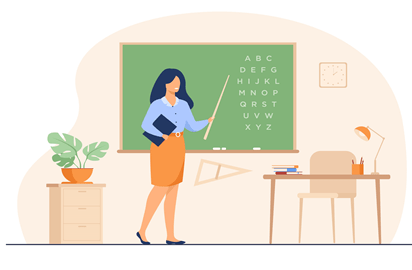
Major world events are often an inflection point for rapid innovation – a clear example is the rise of e-commerce post the SARS pandemic (2002-2004). While we have yet to see whether this will apply to e-learning post-COVID-19, it is one of the few sectors where investment hasn’t dried up. What has been made clear through by this pandemic is the importance of disseminating knowledge across borders, companies, and all sections of society. If online learning technology can play a role here, it is incumbent upon all of us to explore its full potential. From chalks and blackboards to smart boards to laptops -the education sector has jumped the boundaries of a school wall…the journey has just begun.

Top 2 entrance exams other than JEE MAIN and JEE ADVANCE

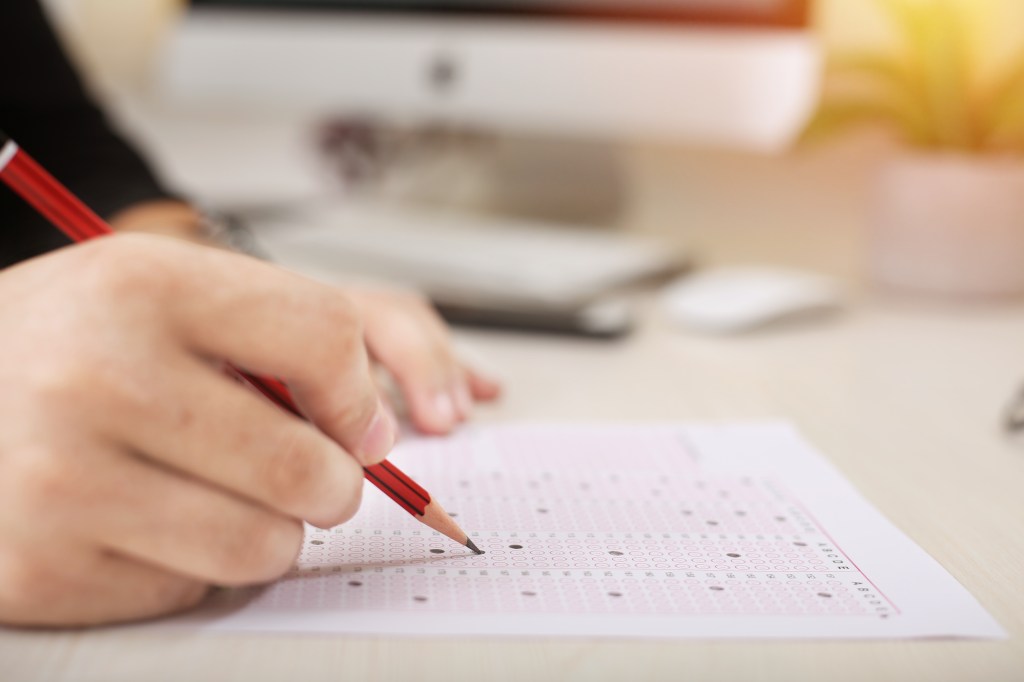
Every students want to go IIT(Indian Institute of Technology) because IIT are the top prestigious engineering colleges in India. There are overall 23 IITs in India. The only way to get into IIT is JEE Advance, to write JEE advance you have to first qualify in JEE main then only you can write JEE advance. Around 15 lakhs of students every year write JEE main, in which 2,50,000 students qualify to write JEE advance. In that 2,50,000 lakhs students your rank has to come under 2,000 then only you can get admission in IIT. This blog is for those who doesn’t qualify in IIT. In this blog, I am going to tell you some other entrance exams other than JEE.

TOP ENTRANCE EXAMS OTHER THAN JEE MAIN AND ADVANCE

  1. BITSAT

Birla Institute of Technology and Science(Bits) is a private university in India that conducts BITSAT( Birla Institute of Technology and Science Aptitude test) entrance exam every year. It is a computer based test conduced every year to get admission in first year degree programs like BE(Bachelor of Engineering), MSc(Master of Science), and Pharma in Bits. It has three campuses in India(Hyderabad, Goa and Pilani) and one in Dubai(UAE).

Eligibility criteria

 1. Student should have passed class 12 from a recognized board with physics, chemistry and mathematics with 75 percent marks in each subject.

 2. Candidate should be proficient in English.

3. Candidates already studying in Bits are not eligible to write Bitsat.

About the Examination

  1. The duration of the exam is 3 hours.
  2. All questions are multiple choice question only.
  3. The exam has 4 section physics, chemistry, biology, and English proficiency and logical thinking.
  4. Medium of paper is English.

Marking scheme

  1. For every correct answer 3 marks are awarded.
  2. For every wrong answer 1 mark is deducted.
  3. For untried question no marks are awarded.

2. KVPY

KVPY stands for Kishore Vaigyanik Protsahan Yojana is a national level scholarship program is conducted to encourage students in basic sciences courses. It is funded of department of science and technology of India. Students who qualify in Kvpy will receive scholarship. Also if you qualify in Kvpy you can get admission in top institutions like IISc Bangalore, IISER, IIITs, and other Research institutes. Class 11th, 12th and those who in 1st year of there under graduation are eligible for the exam.

Eligibility criteria

  1. There are 3 streams in KVPY. They are SA, SX, and SB. Students in class 11 comes under SA stream, class 12 students come under SX stream and undergraduate 1st year students comes under SB stream.
  2. Students must be enrolled in science stream.

About the Exam

  1. The duration of the exam is 3 hours.
  2. The exam has 4 sections physics, chemistry, mathematics and biology.
  3. The paper consists of two parts, part 1 and part 2.
  4. Part 1 consist of 60 questions.
  5. Part 2 consist of 20 questions.
  6. The mode of the exam is Online.
  7. Medium of the exam is English and Hindi.

Marking Scheme

  1. The paper consists of 100 marks.
  2. In part 1, for every correct answer 1 mark is awarded.
  3. In part 1, for every wrong answer 0.25 mark is deducted.
  4. In part 2, for every correct answer 2 marks are awarded.
  5. In part 2, for every wrong answer 0.5 mark are deducted.

I hope you like this blog, if you like please like and rate it.

On Liberty

The word liberty is derived from the Latin word ‘liber’(free from all restraints). There are two views of liberty – positive and negative. Positive approach views liberty as the freedom to do anything. Negative approach views liberty as the freedom to be not forced to do anything.

Some definitions of liberty are:

Seeley:

 “Liberty is the opposite of over-government”. 

McKechnie: 

“Freedom is not the absence of all restraints but rather the substitution of irrational ones for the rational”.

According to this definition, absolute freedom cannot exist in practice and liberty can exist only with certain restrictions on freedom. This is a practical perspective of liberty. 

Burns: 

“Liberty means the liberty to grow to one’s natural height to develop one’s abilities.”

According to this definition, the end of liberty is an opportunity for the individual to develop himself personally and become better. 

Gettell: 

“Liberty is the positive power of enjoying and doing those things which are worthy of enjoyment and work”.

There are certain types of liberty. One type is natural liberty which is the absolute, unrestricted freedom to do anything at all. People enjoyed this kind of liberty in a “state of nature”(life of people before societies came into existence without any social or political institutions and laws). According to the social contract theory, people enjoyed natural liberty in the state of nature. It is to be noted that, natural liberty is inapplicable in a civil society. Practically speaking, natural liberty does not exist. Therefore, it is necessary to restrict absolute liberty with certain reasonable restrictions to ensure an orderly and harmonious existence. Civil liberty answers this need and grants a reasonable degree of freedom to every person forming the society without any discrimination. The obvious problem here is the determination of how much liberty to allow without any arbitrariness and selfishness. According to jurist Dicey, Rule of Law, referring to the restriction of the arbitrary exercise of power by subjecting it to established, well-defined rules applicable to everyone or laws, is the solution . 

 The third type of liberty is political liberty. Scholars soon realised that mere recognition of civil rights alone was not sufficient as it did not guarantee protection against tyrannical and despotic authority. Even the Rule of Law, seemingly a proper guarantee against arbitrariness of rulers, was not a complete guarantee against rulers imposing unpopular measures against the citizens. This led to the perspective that people must also possess the power to convince the government to recognize their views and problems and replace the plans. This was the origin of politcal liberty. Political liberty, in its core, refers to the freedom of an individual to play an active part in the politics and governance of the State. According to Laski, political liberty is “the power to be active in the affairs of the State”. Practically, political liberty includes freedoms and rights like the right ot vote, free and fair elections, right to dissent etc. Civil liberty and political liberty combined was a severe blow to the arbitrariness and despotism of rulers, a major problem in the past. Another type of liberty is economic liberty. It refers to the freedom of individual to be involved in economic action and make economic choices. 

The next type of liberty is personal liberty. Personal liberty refers to the freedom of the individual to make personal choices. For example, decisions regarding clothing, food, religion etc. Just like an individual even the State yearns for liberty. National liberty refers to a position where the State has external sovereignty which means freedom from external control from other states and external pressure. 

 Apart from this, there are certain safeguards to protect liberty from denigration and ensure it is practised properly. One such safeguard is the Rule of Law developed by the English jurist Dicey. It refers to imposing check on the arbitrary usage of power by subjecting it laws. At its core, lie the ideas of society ruled by law, equality before law and obligations. It acts as a check against arbitrary restrictions on liberty by those in power. Next important safeguard is the Independence of the Judiciary. All the states in the modern era are built on the idea of separation of powers amongst the Legislature, Executive, and Judiciary. Independence of the judiciary is necessary for it act without being influenced by fear from the executive. This acts as a check on the executive and prevents arbitrary usage of power. The next safeguard is democracy. Liberty is possible only in a democratic set up. It is unimaginable in a monarchic or authoritative state. Democracy is sine qua non for liberty to exist. Liberty is also safeguarded by the Constitution. The Constitution forms the supreme law to which everyone in the State is subject. It reigns supreme even over everyone and even the most powerful in the State. This makes it an effective check on despotism and arbitrariness in the exercise of power, thus protecting liberty. Then, liberty is safeguarded by rights sanctioned, guarded and enforced by law form the basis for liberty in practice. Another important safeguard in economic security. When people’s basic needs are unfulfilled they can think about higher causes like liberty. This makes it an important condition to exercise liberty.

Educated Unemployment

When we talk about development, education is the major factor and has a direct or indirect influence on other factors as well. “Our education system rests on the pillars of accessibility, affordability and quality,” quotes our Late ex- President Pranab Mukherjee.

Unemployment is a phenomenon that occurs when a person who is actively searching for employment is unable to find work. A widespread phenomenon which came into existence is educated unemployment or graduate unemployment. A college graduate actively is not able to seek job due to lack of opportunity is termed as graduate unemployment.

 In recent times this problem has come to assume a frightening level. A variety of factors including a large population and the defects in the educational system as well as the inability to provide a diversified and vibrant economy can be considered to be the prime reasons for the problem of educated unemployment.

In India, present scenario is that parents are putting lots of money for their child education and dreams their child as a person with successful career and same is the dream of child But reality turns to frustration out of unemployment.

The root of the unemployment begins at the systematic and policy making level. The policies making and their implementation should be incompatibility to the citizens of the state. The people of the nation should be the beneficiaries of these policies, but the case differs at the grass root level. The people in rural areas, which are approx 70% of our total population, have no or least access to such policies. One the causes of graduate unemployment are the quality of education which passes after three to four year of college, employers look for people who have learned how to learn, and have gained substantial communication skills as well as critical thinking abilities. Graduates are not meeting employer’s needs.

“An educated mind with an empty stomach and ample of time doing nothing but cursing the system, is more harmful for an individual or the society than any other problem.”

India is a country having 1.21 billion population and 66% of this population are under the age of 35 (Census 2011). Due to the increased education level in the recent years, the modern youth is well-educated and possess a good degree like B.Tech, B.E., MBA, MBBS, Ph.D. etc. Hence, a major workforce of our country is seeking for a well-paid job in their respective fields. But due to limited access to skill based education and drop in the financial market; it’s hard for them to get a desired job and this entire scenario creates “Educated Unemployment”.

The problem arises when a degree holder is not getting a skilled job due to not being skilled during their degree course. Due to this problem India lacks in skilled labour. According to a survey,“90% of the educated youth is unemployable due to lack of skills i.e. 60% due to lack of communication skills, 25% due to lack of analytical skills, 5% due to lack of knowledge in their respective field”.

Consequences of educated unemployment:

“One year of unemployment reduces the life expectancy by five years”, states a report.

Frustration, anxiety, stress, depression are the common behaviors of an educated unemployed. They are filled up with the rage against the society that has made them develop low self-esteem and fell like they are not among the productive members of the society. To take revenge against the system they indulge in wrong ways of earning money like robbery, chain snatching, rapes, violence, kidnapping, and murders etc. Studies tell that due to the higher rates of educated employment crime rates are drastically increasing day by day. Terrorism, drug trafficking, anti-social groups are the other hazardous outcomes of educated unemployment.

How to solve the problem of educated unemployment:

If we talk about reforms and solution of the unemployment plight about India, multiple technical and vocational institutions should be the establishment in the country and the significance of vocational courses to be instilled in the mind of people and efforts to break the taboo about their job insecurity. A campaign to present and promote more educational fields except engineering and medical should be recited to the people in the rural areas. The higher education like post graduation and PHD courses should be promoted to divide the job opportunity. Pradhan Mantri Kaushal Vikas Yojana,  Swarnajayanti Gram Swarozgar Yojana, Mahatma Gandhi national rural employment guarantee act and several other should be promoted and implemented efficiently throughout the country.

Conclusion:

Economy and employment are the backbones of any state, the regular reforms and policy making should always be considered for the enshrouded growth. With the population which I possess, carrying youngsters as liabilities whereas they should be the support and help the nation go further ahead is an enormous devastating thought.

THE EXCRETORY SYSTEM

Excretion

Removal of nirogenous waste produce during metabolism of protein and nucleic acid.

Human excretory system includes:-
Pair of kidney
Pair of ureter
Urinary bladder
Urethra

Function of kidney

Kidneys regulate the osmotic pressure of a mammal’s blood through extensive filtration and purification, in a process known as Osmoregulation.

  • Kidneys filter the blood; urine is the filtrate that eliminates wastes from the body via the ureter into the urinary bladder.
  • The kidneys are surrounded by three layers:
    1.  Renal fascia
    2. perirenal fat capsule
    3. Renal caps

EXTERNAL ANATOMY

A typical adult kidney (mass – 135–150 g) is:

10–12 cm- long
5–7 cm – wide
3 cm cm- thick

  • The concave medial border of each kidney faces the vertebral column. 
  • Near the centre of the concave border is an indentation called the Renal hilum, through which the ureter emerges from the kidney along with blood vessels, lymphatic vessels and nerves.
  • Human kidney are Retroperitoneal(covered with peritoneum) 
  • Present between 12th thoracic vertebrae to 3rd lumber vertebrae. 
  • Left kidney is higher than the right kidney due to position of liver in right side. 

Three layers of tissue

a) .The Renal capsule(Deep layer) – Smooth, transparent sheet of dense irregular connective tissue that is continuous with the outer coat of the ureter.

  •  It serves as a barrier against trauma and helps maintain the shape of the kidney. 

b) The adipose capsule (middle layer) – Mass of fatty tissue surrounding the renal capsule. 

  •  Protects the kidney from trauma and holds it firmly in place within the abdominal cavity.

c) The renal fascia(superficial layer) – Thin layer of dense irregular connective tissue 

  •  Anchors the kidney to the surrounding structures and to the abdominal wall 

On the anterior surface of the kidneys, the renal fascia is deep to the peritoneum

Internal anatomy

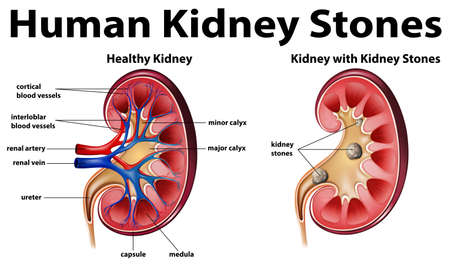
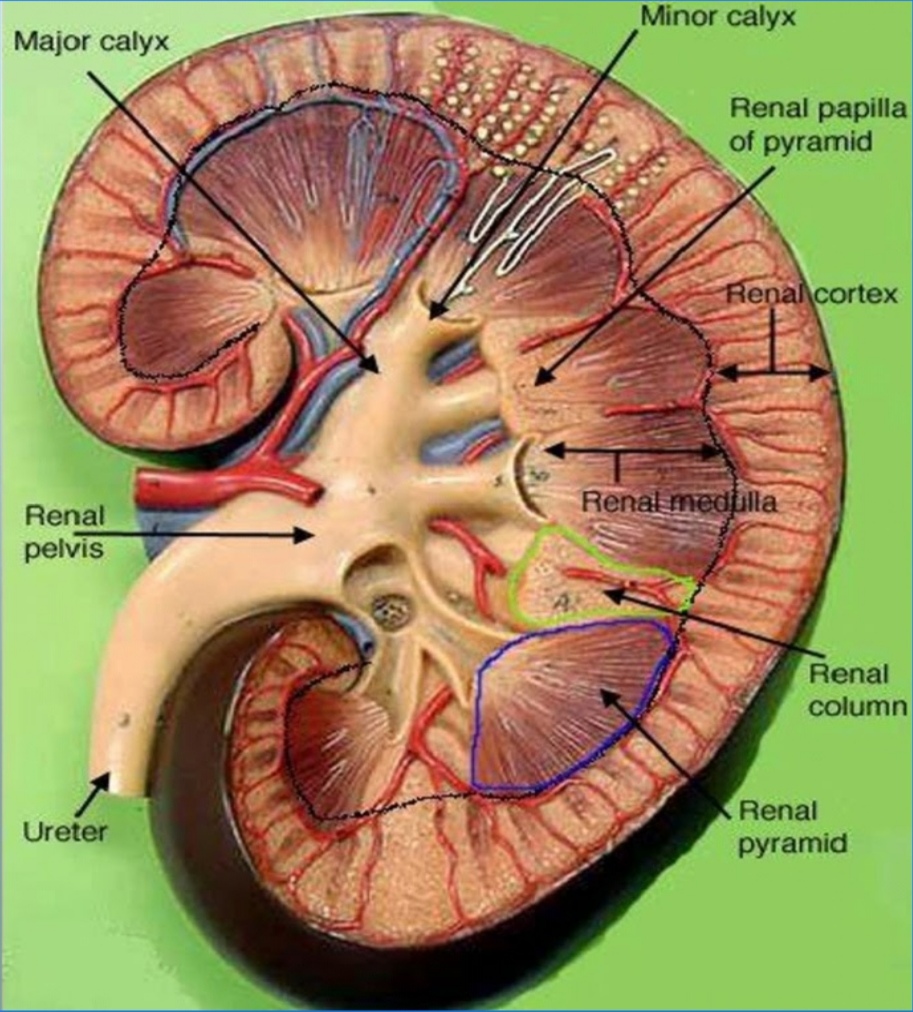
A frontal section through the kidney reveals two distinct regions: 

  1.  Renal cortex (outer)
  2.  Renal medulla (inner). 

The renal medulla consists of several cone-shaped renal pyramids. 

The base (wider end) of each pyramid faces the renal cortex, and its apex (narrower end), called a renal papilla, points toward the renal hilum. 

The renal cortex, smooth textured area extending from the renal capsule to the bases of the renal pyramids. 

It is divided into an outer cortical zone and an inner juxtamedullary zone.

Ureter

Muscular tubes of 25-30cm length, 3m in diameter. 

Wall of Ureter

  • Innermost-Transitional epithelium
  • Middle layer-Muscular(longitudinal and circular muscle) 
  • Outermost layer – Tunica adventita. 

Urine is move through ureter by peristalsis.

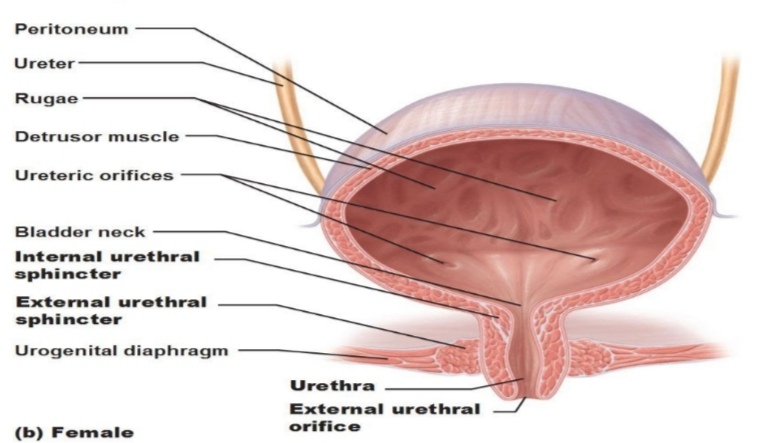
Urethra conduct the urine from urinary bladder to outside.
Female urethra is short.
Male urethra is long.


Urinary bladder

It is hollow muscular organ  that stores urine from the kidneys before disposal by urination. 

In humans the bladder is a hollow distensible organ that sits on the pelvic floor

Nephron

Structure and functional unit of kidey.

Each kidney contain about 1 million nephron 

Each nephron has 2 part 

  • Glomerulus
  • Renal tubules.
  • Take a simple filtrate of the blood and modify it into urine.
  • Cleanse the blood and balance the constituents of the circulation.
  • Many changes take place in the different parts of the nephron before urine is created for disposal. 
  • The term urine will be used here after to describe the filtrate as it is modified into true urine. 
  • The principle task of the nephron population is to balance the plasma to homeostatic set points and excrete potential toxins in the urine.

RENAL CORPUSCLE

It CONSISTS OF A GLOMERULUS SURROUNDED BY A BOWMAN’S CAPSULE. 

THE GLOMERULUS ARISES FROM AN AFFERENT ARTERIOLE AND EMPTIES INTO AN EFFERENT ARTERIOLE. 

THE SMALLER DIAMETER OF AN EFFERENT ARTERIOLE HELPS TO MAINTAIN HIGH BLOOD PRESSURE IN THE GLOMERULUS.

THE BOWMAN’S CAPSULE IS DIVIDED INTO THREE LAYERS:

  • OUTER PARIETAL LAYER- MADE UP OF EPITHELIAL CELLS WITH MINUTE PORES OF DIAMETER 12NM.
  • MIDDLE BASEMENT MEMBRANE-IT IS SELECTIVELY PERMEABLE.
  • INNER VISCERAL LAYER-IT CONSISTS OF LARGE NUCLEATED CELLS CALLED PODOCYTE(BEAR FINGER-LIKE PROJECTIONS CALLED PODOCEL) 

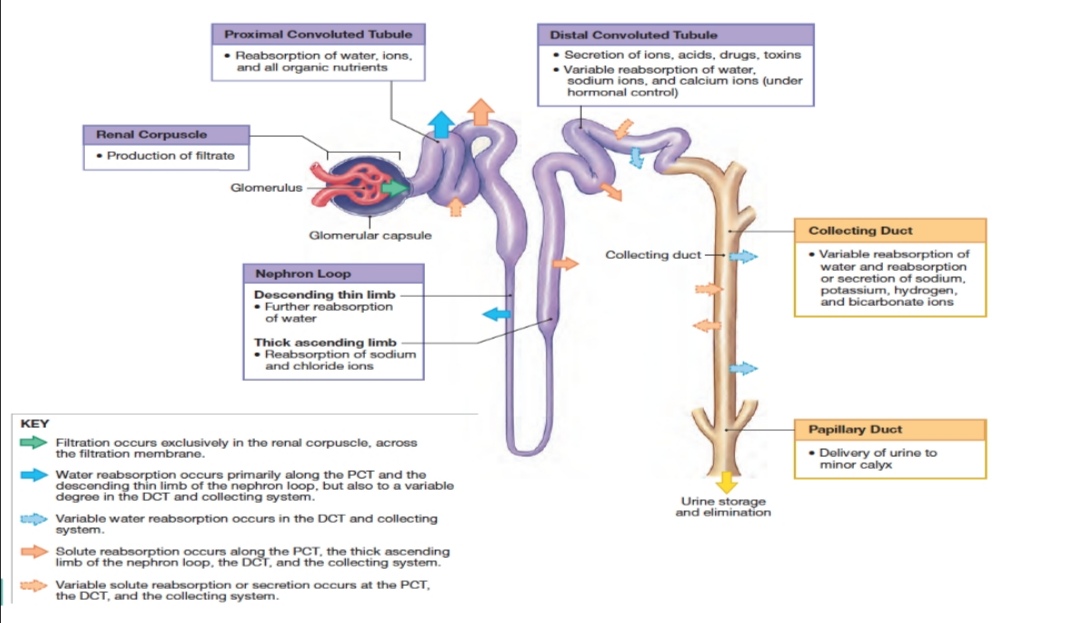
Renal tubule

It IS A LONG AND CONVOLUTED STRUCTURE THAT EMERGES FROM THE GLOMERULUS 

IT CAN BE DIVIDED INTO THREE PARTS BASED ON FUNCTION:-

  1.  PROXIMAL CONVOLUTED TUBULE (PCT) –  IN THE RENAL CORTEX.
  2.  THE LOOP OF HENLE, OR NEPHRITIC LOOP – IT FORMS A LOOP (WITH DESCENDING AND ASCENDING LIMBS) THAT GOES THROUGH THE RENAL  MEDULLA.
  3. DISTAL CONVOLUTED TUBULE (DCT)- IN THE RENAL CORTEX.

Loop of Henle

Thick segment-Simple cuboidal epithelium
Thin segment-Simple squamous epithelium.

DCT

Distal  convoluted tubules

Cuboidal epithelium with fewer mitochondria and microvilli

  • Conditional reabsorption of water under the effect of ADH.
  • Na+ – Aldesteron
  • Ca²+ – parathyroid hormone
  • Reabsorption ofHCO3¯and secretion of H+, K+and NH3 to maintain pH. 

Collecting duct

Cuboidal epithelium

Conditional reabsorption of water, Na+, Ca²+. 

Permeability for urea 

PCT

⅔rd of water reabsorption and 60% of glomerular filtrate is reabsorbed. 

Water, Na+, Cl-, HCO3-, Glucose, vit. C, amino acid, K+and little amount of urea and uric acid.

Descending Limb-permeable to water only. 

Ascending Limb– permeable to ions only. 

Na+, Cl-, k+, Mg²+, Ca²+

Reabsorption is minimum. 

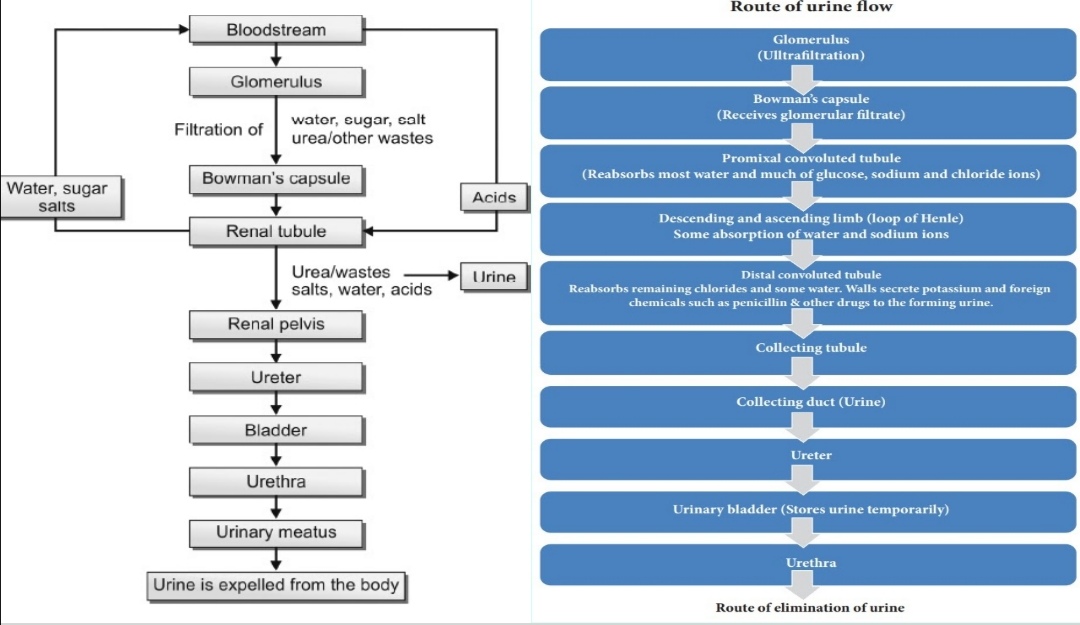
Urine formation

1) Glomerular filtration
2) Tubular reabsorption
3) Tubular secretion

Glomerular filtration 

  • WATER AND SOLUTES ARE FORCED THROUGH THE CAPILLARY WALLS OF THE Glomerulus INTO THE BOWMAN’S CAPSULE (GLOMERULARCAPSULE)
  • FILTRATE –THE FLUID THAT IS FILTERED OUT INTO BOWMAN’S CAPSULE. 
  • Glomerulus filtrate-same as plasma but protein are absent. 

Contains-Water, ions, Glucose, amino acid, water soluble vitamin, urea, uric acid etc. 

Tubular reabsorption

OCCURS BOTH PASSIVE AND Actively. 

GLUCOSE, AMINO ACIDS, AND OTHER NEEDED IONS (NA, K, CL, CA, HCO3) ARE TRANSPORTED OUT OF THE FILTRATE INTO THE PERITUBULAR CAPILLARIES ( REABSORBED BACK INTO THE BLOOD)

ABOUT 65% OF THE FILTRATE IS REABSORBED IN THE PCT. 

AS THESE SUBSTANCES ARE Reabsorbed, THE BLOOD BECOMES HYPERTONICSO WATER EASILY FOLLOWS BY OSMOSIS. 

REABSORPTIONIN THE DCT IS UNDER Hormonal CONTROL ALDOSTERONE CAUSES MORE SALT TO BE ABSORBED

 ADH CAUSES MORE WATER TO BE ABSORBED

TUBULAR SECRETION

WASTE PRODUCTS SUCH AS UREA AND URIC ACID, DRUGS AND HYDROGEN AND BICARBONATE IONS ARE MOVE OUT OF THE PERITUBULARCAPILLARIES INTO THE FILTRATE; THIS REMOVES UNWANTED WASTES AND HELPS REGULATE PH

Urine

It is pale yellow in colour due to Urochrome pigment that is byproduct of red blood corpuscles(RBC) breakdown. 

Around 1-1.5 litre of urine is formed per day. 

PH =6 (vary 4.2 – 8.2) 

It can be four times as concentrated as the blood i. e-1200mosmol/L.

Heavier than water

  • contain
  • 95% =water
  •  5%= urea, uric acid, K+, H+, NH4+, sulphate, hippuric acid, oxalate