The bailment of goods as a security for payment of a debt or performance of promise is called ‘pledge’. The person with whom the goods are pledged is known as ‘Pawnee’ or Pledgee’. The person pledging the goods is known as ‘Pawnor’.
The rights of the pledgee or pawnee are mentioned in Section 173 to 176 of the Indian Contract Act,1872.
Rights of Pawnee
Right to retain the goods pledged (Section 173 and 174): According to Sec. 173, the right of a pawnee to retain the goods pledged shall not be only for payment of the debt or the performance of the promise, but he can also exercise this right for interest on the debt and all necessary expenses incurred by him in respect of the possession or for the preservation of the goods pledged. According to Section 174, a pawnee can retain the goods pledged only as a security for that debt or promise for which they are pledged, but there is a presumption that if there are subsequent advances, they are also the part of the original debt and the pawnee may retain the goods and to recover subsequent advamces also. This is merely a presumption which could be rebutted by contract to the contrary. The pawnee is bound to redeliver the goods after he gets what is due to him.
Right to recover extraordinary expenses incurred by pawnee (Section 175) : According to section 175, the pawnee is entitled to receive extraordinary expenses incurred by him for the preservation of the goods pledged from the pawnor.
Right of suit to recover debt etc., and sale of the pledged goods (Section 176) : Section 176 confers right on the pawnee, including right of selling the pledged goods if the pawnor makes a default in payment of debt or performance of promise at the stipulated time. This section confers following rights on pawnee on the pawnor’s default in fulfilling promise:-. a) he may bring a suit against the pawnor upon the debt or promise and retain the goods pledged as collateral security. b) he may sell the good pledged on giving reasonable notice of the sale to the pawnor.
Right of Pawnor
Right of Pawnor to Redeem (Section 177): The pawnor has right to redeem the goods pledged, i.e., take back the goods from pawnee on payment of the agreed debt or performance of the promise in accordance with the agreement. He can exercise the right to redeem before the pawnee has made an actual sale of the goods.
Legal Heir’s Right to Redeem: In case of death of a pawnor, the pledge made by him can be redeemed by his legal heirs on meeting the liabilities concerning the pledge.
The concept of Notice for the purpose of The Transfer of Property is given under Section 3 of Transfer of Property Act, 1882 (TPA). Notice means to have knowledge of something i.e. to know something. In law, it means knowledge of a fact. It is used to decide on conflicting claims of two parties. In law, the Notice or Knowledge of a fact affects one’s legal rights and liabilities.
Under Section 3 of TPA Notice can be; “Actual or express Notice” or “Constructive Notice”, or it may be imputed to the transferee when information of the fact has been obtained by his Agent.
Constructive notice
It is based on the law of presumption or it is presumed that in certain circumstances that the person knows the fact. He cannot afterwards say against it. This type of notice can be divided into five.
Notice imputed by wilful abstention from enquiry
Notice from gross negligence
Notice by registration
Notice by possession
Notice by agent
Actual notice.- Actual notice, to constitute a binding force, must be definite information given by a person interested in the thing in respect of which the notice is issued, as it is settled rule that a person is not bound to attend to vague rumours or statements by mere strangers, and that a notice to be binding must proceed from some person interested in the thing. A mere casual conversation in which knowledge of a certain thing is imparted, is not notice of it, unless the mind of a person has, in some way been brought to an intelligent apprehension of the nature of the thing, so that a reasonable man or any normal man of business would act upon the information, and would regulate his conduct accordingly. In other words, the party imputing notice must show that the other party had knowledge which would operate upon the mind of any rational man, or man of business, and make him act with reference to the knowledge he has so acquired. A vague or general report or the mere existence of suspicious circumstances is not in itself notice of the matter to which it relates. A general claim is not sufficient to affect a purchaser with notice of a deed of which he does not appear to have knowledge. If a person knows that another has or claims an interest in property for which he is negotiating he is bound to inquire what his interest is, and if he omits to do so, he will be bound, although the notice was inaccurate as to the particulars to the extent of such interest.
The notice must be given in the same transaction. A person is not bound by notice given in a previous transaction which he may have forgotten. Notice to a purchaser by his title papers in one transaction will not be notice to him in an independent subsequent transaction in which the instruments containing recitals are not necessary to his title, but he is charged constructively with notice merely of that which affects the purchase of the property in the chain of title of which the payer forms the necessary link.
Constructive notice.- Constructive notice is the knowledge which the Courts impute to a party upon a presumption so strong that it cannot be allowed to be rebutted, that knowledge must have been communicated. “The doctrine of constructive notice” said Lord Brougham in Kennedy v. Green, depends upon two considerations first that certain things existing in relation or the conduct of parties, or in the case between them, begets a presumption so strong of actual knowledge that the law holds the knowledge to exist because it is highly improbable it should not, and next, that policy and safety of the public forbids a person to deny knowledge while he is so dealing as to keep himself ignorant or so as that he may keep himself ignorant, and yet all the while let his agent know, and himself perhaps, profit by that knowledge. The broad principle underlying the doctrine of constructive notice is that a person who is bound to make an inquiry and fails to do it should be held to have notice of all facts which would have come to his knowledge had he made the inquiry. Where, on the other hand, a person is not bound to make an inquiry he cannot be charged with constructive notice of the facts that might havebeen ascertained on such inquiry. Again, where a fact, of which a person has notice, would not put him on inquiry as to the matters in question, it cannot be constructive notice of such matter.
Classes of constructive notice
(1) Wilful abstention from search which one ought to make. (2) Gross negligence. (3) Registration as a notice. (4) Possession as notice. (5) Notice to agent (5.1)Notice should have been received in his capacity as agent. (5.2)Notice must have been given in the course of agency business. (5.3)Notice must be of a fact which is material to the Agency Business. (5.4)Fraud by an agent.
Conclusion
Thus it can be said that Constructive notice is a manifestation of the rule of Caveat Emptor. This is because according to Constructive notice, a person ought to have known a fact as if he actually does know it. It presupposed that in property translation a transferee ought to ascertain and verify certain facts for safeguarding his own interest. Thus he must be aware of the nature of the transaction. These facts may relate to property or the transferor, like whether the property is free of any charge or encumbrances or whether the transferor is competent to transfer the property or not.
If the property is encumbered, then the exact nature of the encumbrance ought to be ascertained by the transferee. Law puts it as the duty of the transferee, as a reasonably prudent person to be reasonably vigilant and diligent to ascertain the facts, inspect the documents relating to property in possession of the transferor, inspecting concerned persons, even with relevant statutory authorities, if required. Failure to do this would result in the imposition of Constructive notice.
Globalisation is the process of international integration arising from the interchange of world views, products, ideas and other aspects of life. The vital element of globalisation is ‘worldwide interconnectedness’ that is created and sustained as a consequence of these constant flows. Globalisation is a multi-dimensional concept. It has political, economic and cultural manifestations and these must be adequately distinguished. The impact of globalisation is vastly uneven- it affects some societies more than others and some parts of some societies more than others and it is important to avoid drawing general conclusions about the impact of globalisation without paying sufficient attention to specific contexts.
Causes of Globalisation
There are many causes of it but technology affects it more than anything else. Invention of printing, integrated chip(IC), telephone, internet has revolutionized communication between people in different parts of the world.
Due to faster communication and transportation, ideas, commodities, capital move more easily to any part of the globe than ever. As people got the technology of better communication and transportation they recognise these mediums to connect rest of the world.
The Ebola virus is not confined to only African continent but it affects other nations too.
It has mainly 3 types of consequences:-
Political : Globalisation results in discomfort in functionality and working of government. The increased role of MNC all over the world leads to reduction in the capacity of govt. to take decisions on their own. But at the same time globalisation does not always reduce state capacity. The importance of state continues to be unchallenged basis of political community. Indeed in some manner state capacity has recieved a boost as a consequence of globalisation. Due to advancement in technology available in state, it can collect information about its citizens. With this information, the state is better governed. State becomes powerful than earlier due to emergence of new technology.
Economic : The economic globalisation involves greater economic flows or exchange of commodities among different countries of the world. The mention of economic globalisation draws our attention to the role of international institutions like IMF and WTO in determining economic policies across world. The restrictions imposed by different countries on capital across countries and allowing imports of other countries have been reduced. Capital across countries means that investors in prosperous countries can invest in other countries including developing countries where they might get good returns. There is less movement of people across the globe because developed countries have carefully guarded their borders with visa policies to ensure that citizens of other countries cannot take away the jobs of their own citizens.
Cultural : It refers to impact of globalisation in what we eat, wear, drink, watch and think. The cultural effect of globalisation poses a threat to different cultures in the world other than western culture. There is a cultural homegenisation which means rise of uniform culture, as we notice the popularity of American things like McDonald’s, Pizza, KFC, GOOGLE, blue jeans and hollywood movies has spreaded across the globe. This is dangerous not only for the poor countries but for the whole of humanity because it leads to the shrinkage or extinction of the rich cultural heritage of the entire globe. But cultural consequences of globalisation is not always negative as sometimes external culture influences simply enlarge our choices and sometimes they modify our culture without overwhelming the tradition. The Maggi is no substitute for noodles, therefore, does not pose any real challenge. Globalisation leads to each culture becoming more distinctive and different. This phenomenon is called Cultural Hetergenisation. Those who are concerned about social justice are worried about the extent of state withdrawal caused by process of economic globalisation. They point out that it is likely to benefit only a small section of population while impovershing those who were dependent on govt. for jobs and welfare. They have emphasised the need to ensure institutional safeguards to minimise the negative effects of globalisation on those who are economically weak. Many movements all over the world feel that safety nets are insufficient or unworkable. They have called for a stopping to forced economic globalisation, for its results would lead to economic ruin for the weaker countries, especially for the poor within these countries. Some economists have described economic globalisation as re-colonisation of the world. Advocates of economic globalisation argue that it generates greater economic growth and well-being for larger sections of population when there is de-regulation. Greater trade among countries allows each economy to do what it does best. This would benefit the whole world. They also argue that economic globalisation is inevitable.
India and Globalisation
From the colonial period, India became an exporter of primary goods and raw materials and a consumer of finished goods. After independence, because of the experience with British, we decided to make things ourselves rather than depending on others. We also decided not to allow others to export to us so that our own producers could learn to make things. This step generated its own problem. India had a fairly sluggish rate of economic growth (due to ignoring other sectors such as health, housing, etc.). In 1991, responding to a financial crisis and to the desire for higher rates of economic growth, India began programme of economic reforms that opened doors for trade and FDI.
India and Resistance to Globalisation
Resistance to globalisation in India has come from political parties as well as through forums like the Indian Social Forum. Trade Unions of industrial workforce as well as those representing farmers interests have organised protests against the entry of multinationals. The patenting of certain plants like Neem by American and European firms has also generated considerable opposition.
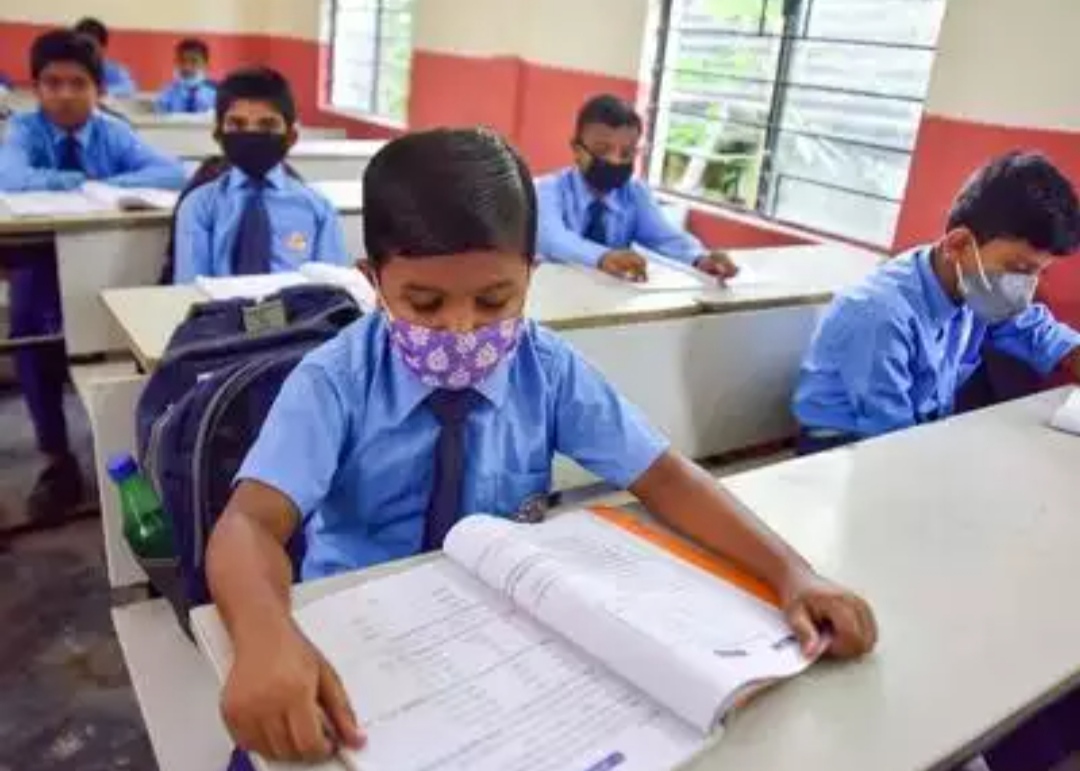
With many states planning to start physical classes only for high school students, managements and teachers said that it is much more important to resume physical classes for primary students, as many of them unable to follow virtual classes.
They said that offline classes should be conducted at least two days a week for primary students. “Even as per ICMR, the impact of Covid-19 on children under the age group of 10 is much less when compared with elder children and adults. Why not start physical classes for them as well,” V Amarnath, director.
“These students are unable to concentrate, their confidence is low and communication skills have been impacted,” he said, adding that holistic development of a child has been impacted overall. Teachers said that physical classes should be resumed for all children in August within a gap of 10-15 days and all students should get to attend offline classes on alternate days.
“Now, almost all teachers are vaccinated. The same is the case with parents. So the risk of children spreading Covid seems to be comparatively lower. However, the state should provide sanitation, medical staff and allocate sufficient budget to follow Covid protocols in schools. By following all norms, physical classes should be started,” said M Ravinder, a government teacher, adding students are already facing memory and conceptual loss.
Parents agreed that it is a matter of urgency to resume physical classes, although they said that the same cannot be done in a haste.
The government should form a committee and study the impact of reopening of schools. They need to communicate with parents, explain what to expect and give an assurance about their children and family members’ safety.
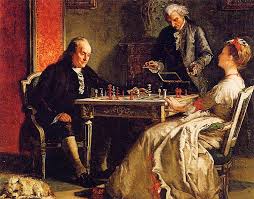
Chess was the most important indoor game of the nineteenth century in England. It enjoyed centuries-old privileged status. It was considered as a ‘rational recreation’. Chess, unlike any other game, deals more with logic and rationality rather than fun, as we know, Rationalism had taken over the Victorian era abundantly.
(Alice playing Chess in Looking Glass world)
Alice, at once, recognizes the chess board stretched on the vast land in the Looking Glass World. It shows that although she is just seven and a half years, still familiar to the this game, which signifies the popularity of Chess in England in Victorian Era, especially among the bourgeois class(as it is also called ‘game of royals’) and Alice belonged to the same.
In life we make ‘choices’, in chess we make ‘moves’. In order to attain something valuable in life as to capture the opponent’s castle in chess, initiative has to be taken. Nobody can make decisions for me, I’ll have to play myself, it’s just suggestions that our people may put before us. Here, Alice makes a choice to participate in the game ‘imagining’ her goal where she wants to be in the end. Well, talking about imagination with reference to Victorian era, it significantly brought out a drastic change in society, though previously children along with adults were forced into realism. ‘Imagination’ is quite efficient to presume one’s position in the coming years and then working out to get there can be useful, because life makes it hard to calculate the further possibilities due to lack of information. Alice restrained herself asking the Queens about their arrival, thinking it would be obtrusive, which keeps her away from the information, also we see Alice not able to distinguish between Red Knight and White Knight and actually who’s there to save her declares her ignorance towards information.
Chess is symbolic to attributes of life, we see, there are (apparently) three stages in chess, that is, opening, middle game and the end game, similarly we have childhood, youth and adulthood in life. Alice joins the giant Chess game of life as a white pawn, that is, she holds very limited power and can move once at a time. We always need to start from the beginning, that is, from the very first ladder in order to earn it step by step. Alice has the freedom to setup her ‘goal’ to be a Queen, but she has no power over her inevitable maturation that’s leading her to womanhood. Within the framework of the chess game, Alice has almost no control over her path and she, with certain implied rules of the game, is driven by the corresponding characters in the book, as in chess, every piece moves in answer to the move of the other one. She is pushed towards her goal by the various situations occurring before her in every square, such as, the train ride, no-name forest, Humpty Dumpty and the White Knight. Thus, it can be traced from the narrative that in life, there is some invisible force that’s propelling every individual in the direction of set goal. It can be comprehended that collaboration is the biggest instrument to victory, for example, White Knight saved Alice from the attack of Red Knight without which it had been a Herculean task for her to reach to final square. We will have to rely on our people somehow, otherwise we can’t achieve our dreams just by our own self. In chess, one can take full credit for one’s victories, but in life it would be naive to say that what I achieved is all because of my sole efforts.
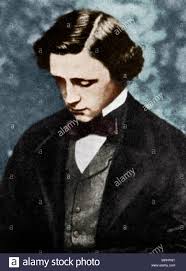
(Lewis Carroll)
The game of Chess in Through The Looking Glass represents the interest of Carroll in logics and mathematics, and the agent is ‘Alice’. This game is not about luck unlike other indoor/board games, rather brainy. In the same way, Life is more about randomness, it’s not alone in the hands of fate, though life is much more unpredictable. We need statistics as well as probability in both chess and life. Also, chess possesses two different colors, that is, one is light and the other one is dark, where I suppose, they stand for logic and nonsense respectively. Based on this idea, Alice often proves to be smarter, more prudent than the so-called adults she confronts in the Looking Glass world. This might also be a reverse-reflection of actual world, I guess, where we see adults inclined towards logic and children uttering stuff and nonsense and vice-versa, here, in the world of mirror.
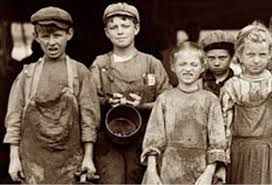
(Children doing factory chores in Victorian England)
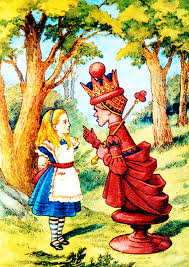
Life of the children in Victorian period was totally opposite to that of present-day children. They were considered as miniature adults and were expected to be highly sophisticated, more in the case of rich class children. Children were not allowed to shout, complain, interrupt or disagree with anyone. The children of rich parents were usually looked after by governesses, no matter humble or strict, and they only used to teach them manners and the way of living. Here, in Looking Glass world, Red Queen, the first character to guide Alice in the reverse world,
(Red Queen scolding Alice)
resembles very much like a governess of Alice when she teaches her how to not tweedle her fingers while speaking, how to behave, and to curtsey, and how Alice couldn’t go against her. She says, “when you’ve once said a thing, that fixes it, and you must take the consequences.”, because Alice is a Pawn and a Pawn cannot move backward, it is also allusion to the fact that once you have made the decision/choice, you can’t step back and stay committed bearing with it’s outcome, and she also asks Alice only to speak when she was asked to. Even we see TweedleDum-TweedleDee not ready to converse with Alice before she greets them. When Alice thinks that asking the Queens how they arrived would be impertinent, it shows again the social structure built for children in the real Victorian world.
When we are in a state of childhood, we want to turn into an adult soon. Similarly, Alice is excited about her lone-tour of adulthood through the Looking Glass world as she thinks she will be free of all the scolding, she says, “….no one here to scold me away from the fire….and can’t get me!” In the beginning, Alice was thrilled about her journey but as she is heading forward, she encounters the sense of loneliness in her journey to become a Queen(apparently) and acts adult herself. Though she is surrounded by different creatures many a times, but she feels alienated to their foreign ways. Hence, here Chess is a symbol of journey advancing from childhood to adulthood. She undergoes many crucial experiences, putting forward the idea of challenges one has to face in this journey of adulthood in one’s life. In the beginning, we see Alice being rude to Gnat about his jokes and later we see her kindness with White Knight that declares the change in her attitude as moving towards adulthood. When the Queen gives Alice directions as how to be a proper queen, it indicates that Alice wasn’t actually prepared to become a queen, just as it’s hard to prepare to be an adult in real world. Every square leads her to different characters and every character teaches Alice something significant, as we know, advice can come from the most unexpected places. For example, revelation of identity imposed by the situation in the woods of forgetfulness, the White Queen teaches her to believe in impossible, the fall of Humpty Dumpty symbolizes ‘the fall of man for pride’ and also ‘the fall of innocence’ proceeding towards maturity, and likewise all the other characters. These teachings help Alice to inherent the characteristics of adulthood within her. The crown here, symbolizes the transformation of Alice from childhood to adulthood.
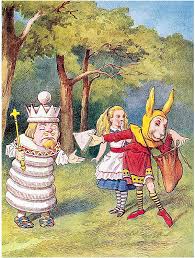
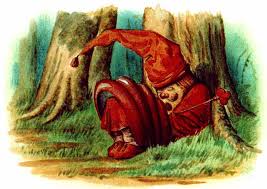
The Red King and the White King are almost doing nothing throughout the game as compared to their Queens. The Red King, as first encountered by Alice, is sleeping and his other pieces are performing their tasks to save him, whereas, the White King seems to be nervous not able to catch up with her Queen.
White King
Red King
Now these characters resemble in moves of both as that of the White and Red King in the real chess board. These actions of Queens and Kings in the world behind the mirror, may portray the position of women in the Victorian era. Women, at that time, used to engage themselves working for their husband and family, and also middle class and the working class women were employed to earn bread for their family, in support of their husbands. Red Queen saying to Alice, “…if you want to get somewhere else, you must run at least twice as fast as that!” may ascertain the idea that in a male-dominated society, women need to work double/toil harder in comparison to men in order to attain recognition. Women in the nineteenth century were not given much of the rights and privileges. This period is named after Queen Victoria, who was in the place of power. It is strange to encounter such a frivolous situation of women at the time when a lady herself was reigning over the society. When we behold Alice as a little woman moving from actual world to Looking Glass world, it may seem as she is struggling to change her confided world. She starts her journey all by herself which reflects the essence of independence in her. The characters like Live flowers resemble the social class structure that pushes Alice to follow their rules. When she chooses to be a Queen, she establishes the path for women/girls to upgrade their status because Alice learns that she must have a powerful authority to control Looking Glass world when one of the servants at once answers her after she turns into a Queen, so is the case for women in Victorian era, for example, Queen Victoria.
We need not be afraid of our high-rated opponents and feel incapable before them and it is then only that Alice is able to shake Red Queen in frustration and raises her voice against her rather than stitching her lips out of fear as evident in the beginning, that is, crown here, symbolizes her transformation from childhood to womanhood, gives her voice and finally renovates her status from a pawn to a queen. All the exclusive pieces are placed right behind the pawns. And a Pawn in comparison to them is just an ordinary, common piece that can slowly and gradually become a Queen. Even a pawn can cut down a King, pertaining to life, a single human being, regardless of his status, is enough to bring about revolution in the society, and win the castle of life. Alice suffering through all the odds, obstructions eventually made it, checkmated the Red King and turned into a Queen.
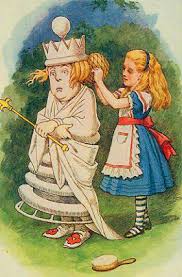
As a Queen in the game, the Red Queen and the White Queen are able to move swiftly and effortlessly. The White Queen, as she says, “jam-tomorrow and jam-yesterday, but never jam-today.”, and screams before pricking her thumb, travels in past and future which is true for the Queen,
(Alice tying clumsy hair of White Queen)
in general, in chess that she can freely move in every direction possible, but she is seen nervous and messy all the time here, and ultimately at two points passes up a chance to checkmate and on another occasion she missed the opportunity to capture the Red Knight. Similarly, the Red Queen said to Alice, “Speak when you’re spoken to!”, and having supporting her words, she doesn’t announce it after putting White King on the check, hence, the check is ignored. Their individual character traits restrained them from performing their duties. This also discovers their absent-mindedness and reverse effect of the mirror world.
The Knight in the chess moves very distinctively and is allowed to jump over any other pieces. Riding and falling of the White Knight in looking glass world is signifying it’s unique L-shape movement. The inventions of White Knight are here to present his powerful character trait, like in chess board Knight is an only piece imbibed with many powers, unlike other pieces, not even a Queen can move in same way as Knight, though his inventions are unprofitable disclosing the touch of the illusionary world, still it is pointing to the fact that precaution is must, so his horse wears spikes on it’s ankles to protect it from shark bites and he collects things that might be useful in the difficult situation. The White Knight is the only character that is benevolent with Alice and saves Alice from the attack of Red Knight (stopping her to be a Queen/upgrade the position of women in society), but it can be an example of gender-biased society where a man is shown as a powerful figure and woman belongs to a weaker section. Alice, here, is represented as a weak girl and this action of White Knight throws light on the concept of feminism, and make Alice learn that a woman must stand for herself and must discover her own capabilities.
Chess wasn’t just one of the themes in Carroll’s story, indeed, it was the ground for the novel’s structure. The game of chess in real world is ‘logical’ while in looking glass world it can be called as ‘maddening game of chess’. Also as an inverted image created by the mirror, this indoor game is displayed as an outer giant field of chess. The pieces are definitely running and moving under the implied rules, but the pattern is not applied evenly. This game sets the deterministic way of life. Both life and chess are, more or less, synonymous in almost every aspect.
India is a diverse country with 29 states. In this blog, we are going to see 29 facts for 29 states, 1 fact for 1 state.
Jammu and Kashmir
World’s only floating post office is located at Dal lake, Jammu and Kashmir. It is the most attracting place for tourist. Every year lakh’s of people come to see this post office. It is the only post office in this world that floats on water.
Maharastra
Lonar Lake, also known as Lonar crater is located at Lonar in Buldhana District, Maharashtra. This lake was created by a meteorite collision. This lake has diameter of 1.2 kilometre and it is 137 feet deep.
Rajasthan
Karni Mata Temple in Rajasthan is one of the strangest temples in this world. This is a strange temple because, approximately 25,000 thousands of rats live there. It is also called the temple of rats. It is believed that Karni Mata manifests herself into rats. Devotes eat the prasad after the rat taste them.
Mizoram
Many shops in Mizoram are without shopkeepers. Means the shopkeepers keeps the products open in there store and keep a small box. Customers come and take the products and deposit the money in the small boxes. These shops run on a principle of trust. This tradition is known as Nghah-Lou-Dawr.
Uttarakhand
There is a lake in Uttarakhand called Roopkund lake. This is a mystery lake in Uttarakhand. It is also called as skeleton lake, at the bottom of this lake, you can find many skeletons there deposited under mysterious circumstances.
Tamil Nadu
You have seen in many movies that people walk on fire. You actually think it is not true. But in reality it is true, people in Tamil Nadu celebrate fire-walking ceremony, which is a honor to goddessDraupati Amman.
Andhra Pradesh
Have ever wondered will snow fall in south India. The answers is Yes, there is a beautiful village in Andhra pradesh called Lambasingi, it is the only place where snows falls in south India.
Gujarat
Do you know a single voting poll was set up for a man, named Mahant Bharatdas in Gujarat. He used to live alone in the Gir west forest. Unfortunately, he died in 2019.
Uttar pradesh
As, we all know Uttar pradesh is the most populated state in India. The population of Uttar pradesh is 20 crores, which is equal to 65 percent of US population. If Uttar Pradesh is country, then it would be ranked as 5th most populated country in the world.
Madya Pradesh
Madhya pradesh has the largest reserves of diamonds and coppers in India. It is also rich coal, manganese, bauxite and dolomite.
Assam
For everyone in India have only one national anthem whether he is from north or south. But people in Assam have there own anthem called ‘O Mur Apunar Dex’ written by famous poet Lakshminath Bezbaroa, this anthem was adopted in 1927.
Kerala
Kerala is most literate state in India with literacy rate 93.91%. Also It is the only state in India to have hospitals and banks in every village. Apart from this, it is the first state to receive rainfall in India.
This is just part-1, part-2 will come soon. That’s all from my side I hope you like it. Thank you.
Education is a very powerful medium to grow in life and perceive something important. In a human’s life, education benefits a lot in decreasing the difficulties of a hard life. The expertise obtained through the education era encourages everybody regarding their life.Education is a way to enter into several doors for possibilities to obtain more real prospects in life to improve career growth. Government is also arranging various programs to educate everyone about education and its benefits in our life especially in rural areas. Education delivers knowledge of equality among everyone in society and encourages the growth and improvement of the nation.
In this modern technology-based era, education performs a supreme role in our life. And in this era, there are so many methods to boost the level of education. The complete criteria of education have now been modernized. And education makes a big impact on anyone’s life.
To say Education is important is an understatement. Education is a weapon to improve one’s life. It is probably the most important tool to change one’s life. Education for a child begins at home. It is a lifelong process that ends with death. Education certainly determines the quality of an individual’s life. Education improves one’s knowledge, skills and develops the personality and attitude. Most noteworthy, Education affects the chances of employment for people. A highly educated individual is probably very likely to get a good job. In this essay on importance of education, we will tell you about the value of education in life and society.
Importance of Education in Life
First of all, Education teaches the ability to read and write. Reading and writing is the first step in Education. Most information is done by writing. Hence, the lack of writing skill means missing out on a lot of information. Consequently, Education makes people literate.
Above all, Education is extremely important for employment. It certainly is a great opportunity to make a decent living. This is due to the skills of a high paying job that Education provides. Uneducated people are probably at a huge disadvantage when it comes to jobs. It seems like many poor people improve their lives with the help of Education.
Better Communication is yet another role in Education. Education improves and refines the speech of a person. Furthermore, individuals also improve other means of communication with Education.
Education makes an individual a better user of technology. Education certainly provides the technical skills necessary for using technology. Hence, without Education, it would probably be difficult to handle modern machines.
People become more mature with the help of Education. Sophistication enters the life of educated people. Above all, Education teaches the value of discipline to individuals. Educated people also realize the value of time much more. To educated people, time is equal to money.
Finally, Educations enables individuals to express their views efficiently. Educated individuals can explain their opinions in a clear manner. Hence, educated people are quite likely to convince people to their point of view.
Importance of Education in Society
First of all, Education helps in spreading knowledge in society. This is perhaps the most noteworthy aspect of Education. There is a quick propagation of knowledge in an educated society. Furthermore, there is a transfer of knowledge from generation to another by Education.
Education helps in the development and innovation of technology. Most noteworthy, the more the education, the more technology will spread. Important developments in war equipment, medicine, computers, take place due to Education.
Conclusion
Education is a ray of light in the darkness. It certainly is a hope for a good life. Education is a basic right of every Human on this Planet. To deny this right is evil. Uneducated youth is the worst thing for Humanity. Above all, the governments of all countries must ensure to spread Education.
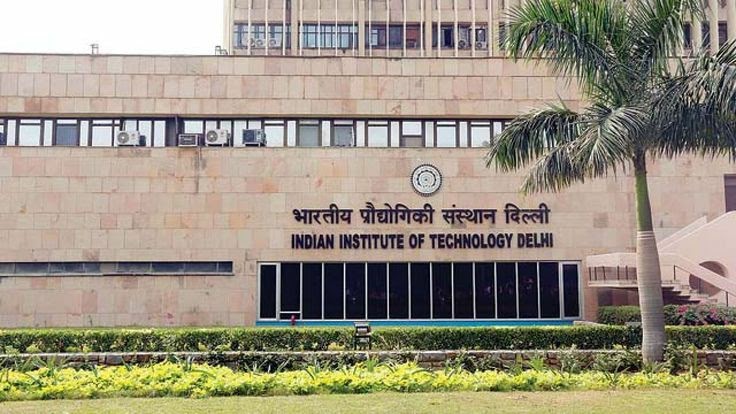
Indian institute of technology (iits) are the most prestigious institution in india. The IITs are autonomous public technical universities located across India students are mostly attached towards iits because of the High package offered in these institutions. It’s quite obvious that the enterance in theses institute need a lot of Hard work and perseverance. The Institutes of Technology Act, 1961 lists twenty-three institutes. Each IIT is autonomous, linked to the others through a common council, which oversees their administration. So here is the list of IITians who excelled in different field like arts, science & technology.
1.Sundar Pichai
Born in Madras, India, Pichai earned his degree from IIT Kharagpur in metallurgical engineering. Moving to the United States, he attained an M.S. from Stanford University in materials science and engineering and further attained an MBA from the Wharton School of the University of Pennsylvania, where he was named a Siebel Scholar and a Palmer Scholar, respectively. Pichai was selected to become the next CEO of Google on August 10, 2015, after previously being appointed Product Chief by CEO, Larry Page. On October 24, 2015, he stepped into the new position at the completion of the formation of Alphabet Inc., the new holding company for the Google company family. He was appointed to the Alphabet Board of Directors in 2017.
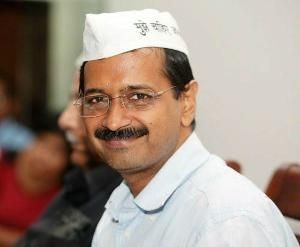
2.Arvind Kejriwal
Arvind Kejriwal is the founder of Aam Admi Party (AAP), and Convenor of the same. He is a politician and a former bureaucrat who is the current and 7th Chief Minister of Delhi since February 2015.In 2006, Kejriwal was awarded the Ramon Magsaysay Award for Emergent Leadership in recognition of his involvement in the grassroots level movement Parivartan using right to information legislation in a campaign against government corruption. The same year, after resigning from Government service, he donated his Magsaysay award money as a corpus fund to found the Public Cause Research Foundation, a non-governmental organization (NGO). He was educated at Campus School in Hisar and at Holy Child School at Sonipat.In 1985, he took the IIT-JEE exam and scored All India Rank of 563.He graduated from Indian Institute of Technology Kharagpur, majoring in mechanical engineering.
3.chetan Bhagat
Chetan Bhagat is an Indian author and columnist. He was included in Time magazine’s list of World’s 100 Most Influential People in 2010. grew up in Naraina Vihar, West Delhi in a traditional middle-class Punjabi Hindu family. Bhagat graduated with a BTech degree in Mechanical Engineering from the Indian Institute of Technology, Delhi in 1995. Bhagat then went on to do an master’s of business administration degree in marketing from the Indian Institute of Management, Ahmedabad (IIMA) and graduated in 1997.
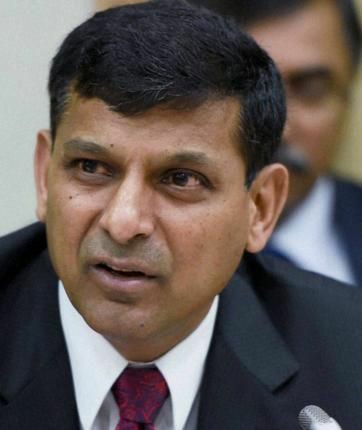
4.raghuram Rajan
Raghuram Govinda Rajan is a indian economist & former governor of the Reserve Bank of India.Between 2003 and 2006 he was Chief Economist and Director of Research at the International Monetary Fund. From September 2013 through September 2016 he was the 23rd Governor of the Reserve Bank of India; in 2015, during his tenure at the RBI, he became the Vice-Chairman of the Bank for International Settlements. In 1981 he enrolled at Indian Institute of Technology Delhi for a bachelor’s degree in electrical engineering. In the final year of his four-year degree, he headed the Student Affairs Council. He graduated in 1985 and was awarded the Director’s Gold Medal as the best all-round student. In 1987, he earned a Master of Business Administration from the Indian Institute of Management Ahmedabad, graduating with a gold medal for academic performance.
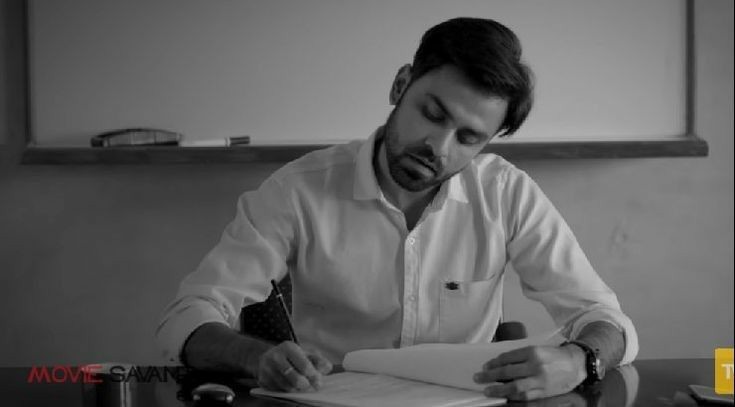
5.Jitendra Kumar
Jitendra is one actor who makes it a point to play relatable characters that we just can’t forget. From Jeetu to Gittu, he has starred in series/movies like Kota Factory, Panchayat, Shubh Mangal Zyada Saavdhan. He has won a Filmfare OTT award in the category of “Best Actor Comedy Series (Male) for portraying Abhishek Tripathi in Amazon Prime’s Panchayat. He did his bachelor’s in civil engineering from IIT Kharagpur .While studying civil engineering at IIT Kharagpur Jitendra kumar started liking acting. Kumar has done many stage plays as the Governor of the Hindi Technology Dramatics Society at IIT KGP where he met Biswapati Sarkar who eventually invited him to join TVF in 2012.
Career is one of most important aspect in our life. Choosing a right career is hard and confusing. Sometimes student often chooses wrong, due to lack of knowledge about streams. Only a few students are clear about what they want in there life. Sometimes a wrong decision can change our life completely. This blog is for them who are confused about there career, choose the stream which suits you the most because rest of your career is in that field only. In this blog, you can see all career options available after 10th class.
Career options after 10th class
Science, PCM(Physics, Chemistry, and Mathematics)
This is one of the most famous and popular stream every year lakhs of student join this stream. Students who are interested in engineering, architecture, bachelor of science, pharmacy, commercial pilot, banking, defense, mathematics can go with this stream. This stream includes Physics, Chemistry, and Mathematics. With this stream you can write top entrance examinations like JEE Main & Advance, Bit Sat, NDA, KVPY, etc. With this exams you can get admission into top institutions like IIT’s(Indian Institute of Technology), Bits(Birla Institute of Technology & Science), IISc Bangalore, NIT’s(National Institute of Technology). There are many career options after this stream.
2. Science, PCB(Physics, Chemistry, and Biology)
This is also one of the most popular stream. Students who are interested in medical profession can go up with this stream. This stream includes Physics, Chemistry, and Biology. With this stream you can write top entrance examinations like NEET, AIIMS, NEST, JIPMER, EAMCET, etc. With these exams you can get admission in top institutions like AIIMS, Madras medical college, Grant medical college, Stanley medical college, Christian medical college, etc. The career options after this stream are MBBS, BDS pharmacy, Bachelor of Science, agriculture, biotechnology, etc.
3. Commerce
It is the second popular course after science, If you are interested in economics, civics, finance, and mathematics then you should go with commerce. In commerce you have two options, commerce with maths and commerce without math’s. Commerce with maths is known MEC(Mathematics, Economics, and Commerce) and Commerce without maths is known as CEC(Commerce, Economics, and Civics). With commerce steam you can write top entrance examinations like CSEET, CMA, SET, Xavier’s Entrance exam, etc. The career options after commerce are Bachelor of Commerce, Chartered Accountant, Bachelor of Law, Business Administration, Bachelor of Economics, etc.
4. Arts/humanities
If you are interested in history, arts, designs then you should go with arts/humanities. Nowadays arts /humanities are in high demand and more students are opting it now. With this stream you can write entrance examinations like SAT, CLAT, MRNAT, NIFT, etc. The career options after arts are bachelor of arts, bachelor of journalism, bachelor of fine arts, business administration, bachelor of fashion design. Students who take up art stream develop critical thinking. It also helps you increase your leadership qualities.
5. Diploma
If you are interested in engineering then you can go with diploma. Diploma is a professional course that provides you the practical knowledge in a field of technology. Diploma generally large for 3 years. After the completion of diploma course, student can directly join second year in engineering course. After diploma you can write entrance exams like TS POLYCET, AP POLYCET, RRB, MP PPT, APJEE, etc.
Marie Curie became the first woman to win a Nobel Prize and the first person man or woman to win the award twice. With her husband Pieree Curie, Marie’s efforts led to the discovery of polonium and radium and, after Pierre’s death, the further development of X-rays. The famed scientist died in 1934 of aplastic anemia likely caused by exposure to radiation.
Early Life and Education
Maria Sklodowska, later known as Marie Curie, was born on November 7, 1867, in Warsaw (modern-day Poland). Curie was the youngest of five children, following siblings Zosia, Józef, Bronya and Hela.
Both of Curie’s parents were teachers. Her father, Wladyslaw, was a math and physics instructor. When she was only 10, Curie lost her mother, Bronislawa, to tuberculosis.
As a child, Curie took after her father. She had a bright and curious mind and excelled at school. But despite being a top student in her secondary school, Curie could not attend the male-only University of Warsaw. She instead continued her education in Warsaw’s “floating university,” a set of underground, informal classes held in secret.
Both Curie and her sister Bronya dreamed of going abroad to earn an official degree, but they lacked the financial resources to pay for more schooling. Undeterred, Curie worked out a deal with her sister: She would work to support Bronya while she was in school, and Bronya would return the favor after she completed her studies.
For roughly five years, Curie worked as a tutor and a governess. She used her spare time to study, reading about physics, chemistry and math.
In 1891, Curie finally made her way to Paris and enrolled at the Sorbonne. She threw herself into her studies, but this dedication had a personal cost: with little money, Curie survived on buttered bread and tea, and her health sometimes suffered because of her poor diet.
Curie completed her master’s degree in physics in 1893 and earned another degree in mathematics the following year.
Speech sounds are of two types vowels and consonants . A consonant is a speech sound during the articulation of which there is an obstruction with in the oral cavity or a narrowing of the air passage by various organs of speech so that lung air escapes with audible friction . In other words , all speech -sounds necessitating a closure or narrowing ,which involves plosion or friction ,are called consonants .
Consonants are produced in one of the two ways : either there is a closing movement of one of the speech organs forming such a narrow constriction that it is possible to hear the sound of the air passing through or the closing movement may involve the lips ,the tongue or the throat . The over-all effect in each case is quite different from the open unobstructed articulation found in the case of vowels .
During the production of certain consonants , vocal cords vibrate . Those consonants that involve the vibration of vocal cords are called voiced consonants . During the production of the rest of the consonants ,vocal cords do not vibrate .Those consonants that are produced without the vibration of vocal cords are called voiceless consonants .This distinction ,however ,is not absolute .The position of the consonant in a word , to a great extent , determines the degree of voicing .For example , if a voiced consonant appears at the end of a word it loses a great deal of its vibration . The /z/ sound at the beginning of the word zebra /zi:bra/ is much more vibrant than the /z/ sound at the end of the word jazz /dzaez/.
CONSONANTS OF ENGLISH RP
There are 24 consonants in english RP. The following details regarding their production are necessary for the description of these consonants .
The National Council of Education Research and Training (NCERT) attribute towards developing the valuable content for the CBSE students. The NCERT books published on the principle of child-centred system .The books inculcating creativity and treat children as participants in learning ,not as receivers of a fixed body of knowledge.The NCERT books enhance this endeavour by giving higher priority and space oppurtunities for contemplation and wondering.
Why to use NCERT books ?? Syllabus designed of the NCERT books tried to address the problem of curriculum burden by reorientating knowledge at different stages.
Especially designed for CBSE students The NCERT books are especially designed in curriculum with CBSE students .NCERT books are the best choice for CBSE students . All the answers to the tricky questions asked in CBSE exams could easily be answered by using these NCERT books. There will not be a single question which would be beyond the scope of NCERT books.
Easy to understand language The best advantage of using NCERT books is that ,its quite easy to understand .The NCERT books are written in very simple and easy to understand language. The NCERT books are very simple to understand.
NCERT books especially adhere to CBSE syllabus CBSE students should use NCERT books as they are strictly adhere to CBSE syllabus .Each and every single topic of CBSE syllabus is covered in NCERT books.
Important question NCERT books contains all the important question at the end of the books.The questions are very helpful in scoring handsome marks in the Exams .Even if you touch them at the last minute of examination ,you can score good marks in exams .
CONCLUSION The NCERT books are very helpful for CBSE students .The CBSE board itself suggest the students to use it .Its quite logistics to use NCERT books for CBSE exams .
The aim of education should be building of character and not merely injecting of information.
– Pranab Mukherjee.
Education is a learning process that enables students and adults in a school community to understand, care about and act on core ethical values.
Learn the value of respect, justice, civic virtue and citizenship, and responsibility for not only themselves but also for others.
Education gives us the knowledge we need to know what dangers in society are and how to deal with them properly.
Intelligence plus character – that is the goal of true education. The complete education gives one not only power of concentration but worthy objectives upon which to concentrate.
– Martin Luther King Jr
Important aim of teaching should be producing students with good moral and skills for life.
Confidence and resilience are two character traits that are essential for success in the workplace.
As we all know, we faces various challenges after school life. We do not comfort with our good grade but we feel comfort with the character traits like confidence and resilience.
People with Confidence deals with well interview and prospect the more responsibility the within a job or any role.
People with resilience character, deals with failure rejection and various unseen obstacles in life. They face problems rather than wasting time on worrying about Minor failures. They always try to keep growing.
Education is the key to build characters
Producing students with good grades are not enough for them to face various kinds of challenges in their life. Good grapes are not going to help them for their fruitful life. But preparing students with good ethics, good Morals, social skills and life skills are really going to help them for their future challenges.
In today’s world the schools are focusing on student and forces them for good grades in academic. Parents also want their child to gain good grades in academics. but in future only good return are not going to work anymore. A person with with good grades and without any social or soft skills or ethics they faces competitions only.
Thus, focusing on building character is also very important for us.
“IF YOU THINK YOU ARE BETTER NOW, DON’T FORGET THERE IS SOMEONE, SOMEWHERE BEST THAN YOU.”
In life we always have reasons and excuses to hide our mistakes and weakness but, when it comes to our personality and lifestyles we always had new ideas to be best. Reinventing does’nt mean to change your life for society or people but, to change your weakness and to improve your life, habits and living for yourself.
IT’s NEVER LATE TO BE BETTER THAN WHAT YOU ARE…
There are people with a reason that ‘we are happy for what we are, we don’t have to change ourself for others.’ Yes, I admire their thoughts and confidence and I am one of them only. With time i realised it’s wrong to change yourself for others but, there is nothing wrong in improving ourself to be a better personality. There is difference between changing and improving and everyone has to know and realise it sooner or later. You don’t have to be one of ‘them’, you have to better own self and choose your way to be better. Just like a fis moving out of crowd to another pond for own survival and betterment.
AN EMPTY START IS BETTER THAN STICKING TO CROWD…
I am not asking you to leave your society and move alone but, to start a step to improve your bad habits, weakness, persona and life to be better and trust me you will find new ‘You’ and there will people wanting to be like you. If improving yourself is better than changing yourself so do not hesitate to take a step. Explore now and start a day with one thought to improve yourself so that, you can reinvent the hidden better ‘You’.
Celebrating Teacher’s day at school is one of the finest memories from the school days. With no doubt, we can say everyone will agree with it.
Teachers’ Day is celebrated to honour the memory of India’s first Vice President and to commemorate the importance of teachers in our lives.
The idea of celebrating Teachers’ Day took root in many countries during the 19th century; in most cases, they celebrate a local educator or an important milestone in education.
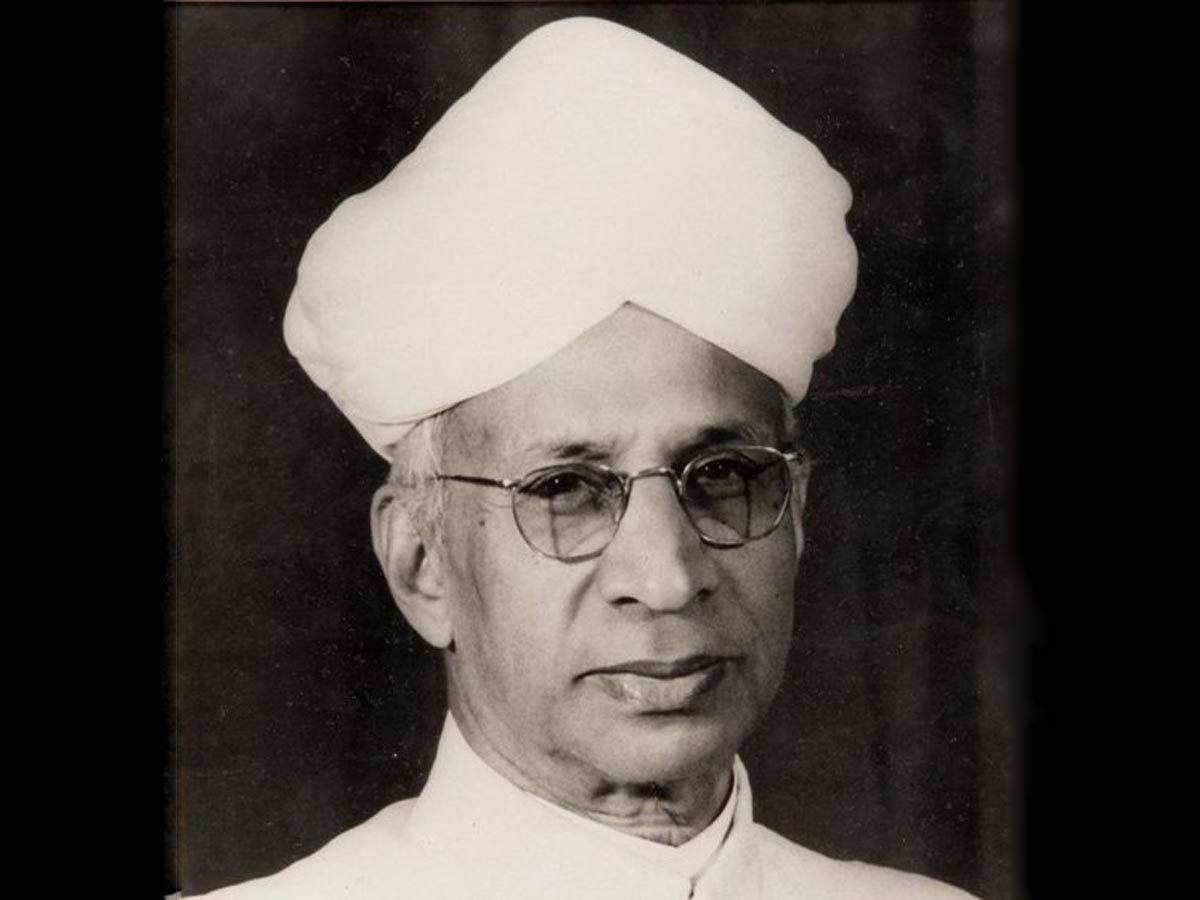
SARVEPALLI RADHAKRISHNAN
Why We Celebrate Teachers Day On 5th September? 5th September is the birth anniversary of a great teacher Dr Sarvepalli Radhakrishnan, who was a staunch believer of education and was a well-known diplomat, scholar, the President of India and above all, a teacher.
Sarvepalli Radhakrishnan ( 5 September 1888 – 17 April 1975) was an Indian academic, professor, philosopher, and politician who served as the first Vice President of India (1952–1962) and the second President of India (1962–1967).
What is education according to Radhakrishnan? Education, according to Sarvepalli Radhakrishnan, is acquiring of knowledge beyond what is academic and professional. Education is the assimilation of values and ideas for character building and preparing to face life’s challenges.
” A life of joy and happiness is possible only on the basis of knowledge and science.”
















 Eduindex
You must be logged in to post a comment.