Objectification of Women through Item Songs

Objectification of women is quite self-explanatory, is it not? In a very simple term, it explains how women are treated as objects rather than breathing, living human beings. This subject has been discussed before, article have been written on the same, petition has been filled for the same. However, I sit to write about it again, for when I discussed about this to an acquaintance, I was asked why am I so hung up on these almost feminist issues, why not I write about ‘pressing issues’ such as poverty and other such issues. I agree that these are important issues but the subject in hand is no less important. The fact that people consider it to be of less importance is really disturbing and bothersome How are we to bring a change when we don’t deem it significant enough to look after.

For a very long time, women have been referred to as ‘weaker sex’, a source of entertainment. This notion has only been promoted in various ways. Bollywood movies have been a very strong medium for the same. The article throws light on one of the aspects in Bollywood movies which in not-so-subtle ways objectify women – ‘Item Songs’. Interestingly, the term ‘item’ refers only to women, specifically very curvaceous women. Moreover, the ‘songs’, the lyrical content of all these item songs unabashedly objectify women. Let’s take for instance, ‘tandoori chicken’ (Fevicol), ‘Chikni Chameli’; ‘Ab Karunga tere saath Gandi Baat’. Oh! The list is endless. The new so called pop songs are not giving it a break. What do songs like ‘Genda Phool’; ‘Chocolate’ among many others are trying to portray?

Yes! Entertainment is always welcomed but not at the cost of women being objectified, being compared to all the objects that one can think of. It affects the mindset of people; it adds to the not so progressive mindset. It in a way says that ‘it is okay if we refer women as such, she has no complaints, look at the way she smiles among all the leering, lustful, predatory eyes.’ However, we all know that it is not okay. In any given real-life situations, no one would love the idea of being cat-called, being called names or whatsoever. Media has somehow come dictate the ways people think, their perspective, their actions. If people can enjoy the actors and actresses enjoying all these in a ‘T.V. screen’, who says it won’t be enjoyable outside the screen, right!

We need to realize that this is unacceptable, not everyone way of entertainment is ‘not’ harmful. The portrait of women as being skinny has somehow fed into the mind of every other person that only acceptable body-shape is being skinny, lean and not otherwise. In other words, body-shaming becomes prominent.

It is important for such discussion to take place more, for more involvement of people in this direction, for raising voice. Moreover, as Sabhana Azmi suggested that it is important for actresses to have a say in the lyrical content. All such lyrics are written by a man – describing a woman through a male gaze. It is very disturbing that people with mighty pen in their swords would resort to writing such lines which can influence a lot of audience. Not one person is to blame, the mind-set of people will take years to change, you cannot expect women to carry knife while always moving around. However, it somewhere needs to start. A little initiative needs to be taken. Somewhere, someone. A conversation about this cannot be ignored. Media can always be important instrument in bringing the wind of change.

Image Credit: Google

Globalization and Rural Areas

Globalization is not a foreign concept to many – the term might be as we proceed to the interior. Its effects have been too much and many, touching every spectrum of life to be easily ignored. It can never be not given the time of the day when it has so successfully managed to touch every aspect of life. Its effect as we al know has been positive and negative, just like the two sides of a coin. Often cited to be double-edged sword, it has managed to flourish life for some while disrupt it for some. Bringing and making everything come out to be in open, liberalized, interlinked, interdependent, it has created chaos for beings who couldn’t grasp the complexities of apparently simple notion.

Rural areas with its close-knitted community, spatially located has too not been spared, not any of us expected. Rural development and sustenance have always been necessary for the sprouting and survival of urban areas. How would have urban areas survived if it not were for surplus of agriculture among many other reasons?! However, when we think of a backward area, rural areas would come to our mind if not immediately. It could not act keep up with the pace of development or it might have been neglected in some ways or others.

When Liberalization, Privatization and Globalization reforms were taken up in India, it did allow the country to let its fortunes grow but the negative impact cannot be ignored. The article takes up the case of rural areas and how it has been impacted on the negative side. It does not take up the analysis of data given the time crunch but throws a light on the subject. One of the many effects has been the draining of human resources – sort of every industrial model predicted. With industries coming up attracting the labor for the same. Abundance of labor with just minimum wage served as a profitable interest for the industrialist. However, it led to the rural areas filled with old age people capable of doing only minimum work. With technology coming up requiring more skilled laborers, unemployment is only rising. The lack of proper skills has also compelled the concentration of laborers in the field (disguise unemployment). A viscous cycle has been created, somehow and poverty could never actually leave. Although, development has taken place, reforms have been made in terms of basic needs, imparting training and education, a lot still need to be done. There has been a difference, a very bold line created because of the cultural difference. Though the interlinkages and interdependence has led the spread of ideas, it has also created some sort of animosity among the community towards urban dwellers. One of the reasons can be the exploitation – low wages, some unfair action taken up by the middleman, less profitable trades and the obvious, the viscous cycle of debts, they are unable to escape.

Steps have been taken on the part of government to bring in the development in rural areas. Focus should also be thrown in preserving the culture of the same, creation of jobs in the same heritage, promotion of cottage industries, more push to the handicrafts, encouraging the participation of communities in decision making among many.

Image Credit: Google

ECO FEMINISM IN INDIAN CONTEXT

According to Merriam-Webster, ecofeminism is a movement or a theory that applies feminist principles and ideas to ecological issues. This term was first coined by a French feminist, Francoise d’Eaubonne in her book “Le Feminisme ou la Mort” (Feminism or Death). She raised the point that patriarchy is the root cause of all ecological crisis – men’s control over women and nature have led to overpopulation and overexploitation of nature respectively. When we talk about the environmental disaster that’s taking place, the role of gender about how we can move forward comes into play.

As United Nations Environment Programme puts it, “Around the world, environmental conditions impact the lives of women and men in different ways as a result of existing inequalities. Gender roles often create differences in the ways men and women act in relation to the environment and in the ways men and women are enabled and prevented from acting as agents of environmental change”; and here comes the concept of ecofeminism.

In India, ecofeminist Vandana Shiva is the pioneer who prepared the ground for ecofeminism with a strong belief that women have always been the key to solve various societal problems and environmental problems are one of them. By highlighting their presence in the Indian literature, the nature and form of ecofeminism in India can be assessed. Literature in which the concept of ecofeminism has been taken into account ranges from early ecofeminism to the recent or the urbanized one such as ‘Nectar in a Sieve’ (1954) by Kamala Markandya, ‘Fire on the Mountain’ (1977) by Anita Desai, ‘A Riversutra’ (1993) by Gita Mehta, ‘The God of Small Things’ (1997) and ‘An Atlas of Impossible Longing’ (2008) by Arundhati Roy and ‘Monkey-Man’ (2010) by Usha K.R.

Many female Indian novelists not only explore the subjectivity that is embedded in the relationship of women and the patriarchal society but also make several social issues as the key subjects. Many of the works from twentieth century of such novelists have been regarded as effective mediums of ‘modernism and feminism’. With Arundhati Roy and Kiran Desai getting hold of Booker Prizes, works of Indian women novelists have been highlighted. Indian women’s fiction on the relationship between women and the environment has added to the theory and development of ecofeminism in India.

In the West, there are large bodies of literary accounts that have analyzed ecofeminism in different ideological terms but in India, the struggle to save environment went on for long even before it was accounted in the West. It was Vandana Shiva who brought ecofeminism movements to the forefront in India with her active involvement in the Chipko Movement- wherein women wrapped themselves around trees to prevent contractors from felling them off- as a young woman. The struggle to protect the environment is believed to be the same across all communities in India but we would be at a loss in our thinking if we ignore the fact that protests against environmental damage and questions of survival and subsistence are interlinked deeply with the axiom of caste, class and gender issues.  Vandana Shiva, the pioneer in this field, critiques that modern technology which has actually reinforced the patriarchal system and violence perpetuates it towards women and nature.  According to her, switching to such a lifestyle is deviating us from the traditional lifestyle which promotes human-environment balance ‘prakriti’. Under the influence and grab of these new developments, nature has been mercilessly exploited and feminine principles in terms of the environment are no longer considered for creativity and sanctity but merely to be passive resources. Thus, though women’s knowledge of dependence on nature for subsistence has been dissipated and marginalized under the grab of modern science, she strongly believes that third world women have the power within them for causing a change. In this regard, we can cite the example of ‘Narmada Bachao Andolan’ in which the active participation of Medha Patkar and Arundhati Roy helped the movement gain momentum.

The issue of sustainable development to protect the environment from degrading was raised in Conference on Environment and development at Stockholm in 1974 for the first time. If we turn the pages of history, we will find instances which prove that women are better connected with nature. Since time immemorial, they have been responsible to look after households and prepare basic needs for survival and thus, are better connected to nature.

Women’s interaction and relationship with nature must be located within the material reality of caste, class and gender. Women are the victims of environmental disaster but they can also be very effective agents of environmental regeneration – as is clearly evident by the success of the Chipko Movement. The need of the hour is to mobilise them into a proper channel and to give ecofeminism a proper voice and a way so that it does not turn into a superficial shout. There is also a need to abolish the class and caste basis for an effective collective movement in India. The adverse class-caste effects on women’s relationship with nature are reflected in the erosion of indigeneous knowledge and livelihood strategies on which poor, rural women are dependent. Thus, there is a need for ecofeminism in India to strengthen itself in the face of different barriers and be more than a superficial shout.

Image Credit: Google

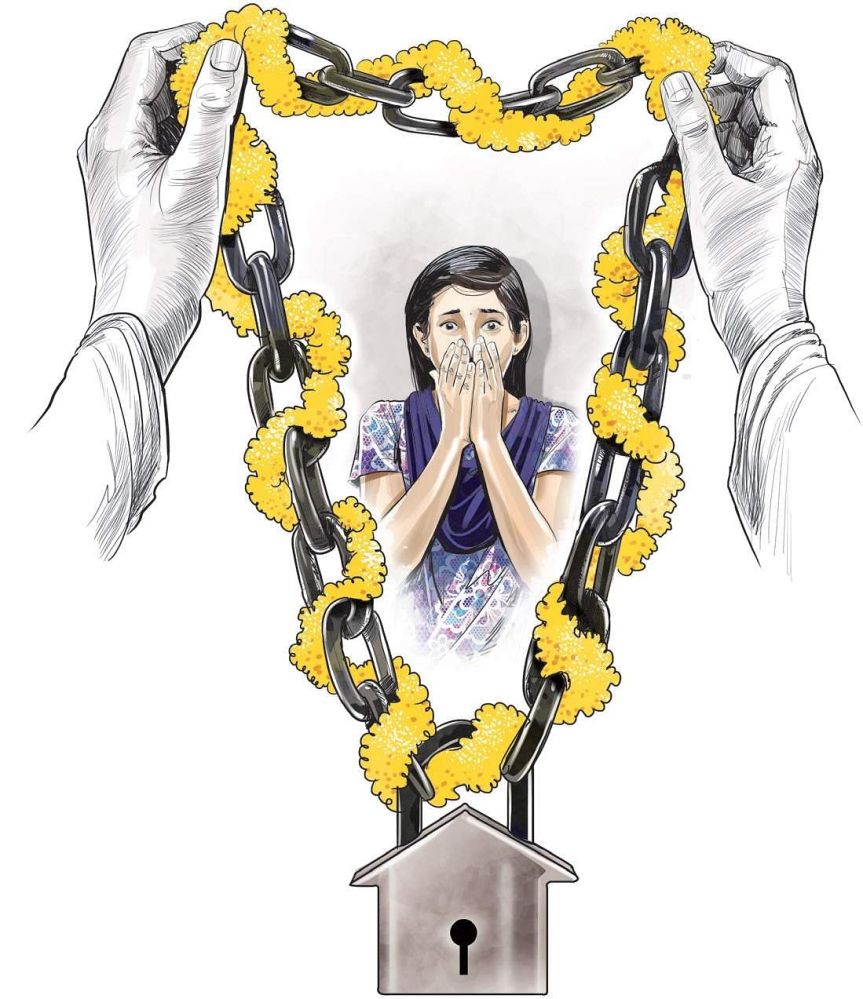
Child Marriages in India – Two Steps Backward!

It is in common knowledge that the legal age of marriage for girls is 18 years and 21 years for boys. However, social factors and circumstances, age-old prejudices cloud the judgement – leading to child marriage as a solution to one thing or other. Child marriages are not confined to a single country but happens across the world – barring the girls from being empowered and at times, the boys too. Keeping this in mind, the Sustainable Development Goal 5, which focuses on ‘Gender Equality’ has set a target to stop child marriages entirely by 2030.

According to UNICEF report, about one in three of the world’s child brides live in India and about 102 million were married before turning 15 and were pregnant even before reaching adolescents. Among the states in India, 36 billion child brides have been reported to be in Uttar Pradesh. Other states with large population of child brides are Bihar, West Bengal, Maharashtra and Madhya Pradesh. Among the Southern states, Andhra Pradesh with 13 million tops the list followed by Tamil Nadu with 11 million. It has also been reported that about 60 % of the child brides who were married before turning 15 went through pregnancy before completing the adolescent period. Whereas those married after the age of 15 but before age 18, about 20% of them went through pregnancy before completing adolescent period. Those married before turning 15 tend to contribute to larger families. During the trying COVID-19 times when the entire focus of the world was on healthcare system, the child marriages saw a spike. United Nations Population Fund has estimated that COVID-19 will result in 13 million additional child marriages globally. Women Development and Child Welfare, India has reported that child marriages saw a rise of 27%. While rural areas are the hub of reports against child marriages, interestingly, “more than 25 percentage of child marriages in 2011 happened in urban districts. In other words, one out of five girls aged between 10-17 was married in urban districts in the ear 2011”, IANS reports (yourstory, 2017).

Even with the coming of Child Marriage Prevention Act, 2006, one of the reasons for its so not grand success can be the poor implementation and also the fact that people always find ways to try and tamper with the acts and laws. What actually force them to do so? What actually compels them to do – send off their buds away, forcing them to marriage? One of the reasons is being orphaned. COVID-19 has taken lives of many people, parents of many rendering the children orphan (Jejeebhoy, 2021). The lack of parents or unwilling relatives to take care of the orphaned, thus marriage. Financial constraints are another compelling factor. Families tend to marry all the girls together (if there is more than one girl and the family is drowning in poverty) in a single place to save money. It is sort of passing off the so-called burden.

It is important to bring back the focus of the world to the atrocities happening. While there are cases where girls have escaped, seeking help and prevention of child marriage, there are still alarming cases of ‘being stuck’ in the unlawful marriage. At this point of time, youth volunteers can be a powerful force. Bringing in more volunteers to spread awareness as well as for on ground action to prevent marriages from happening can be a helpful approach. The schemes of the government seem to fail to trickle down, more maybe because of the lack of effort in the lower vertical ladder. Bringing in the community in action can help to keep in check the local government and vice-versa.

Image Credit: Google

India and Quality Education – SDG 4

Education is an integral part for the mental development of a human being. Not just education on paper but ‘Quality Education’ which in turn allows the beings to add to the well-being of themselves as well as others without comprising anyone’s needs. Given the importance of quality education in ensuring sustainable growth of the world, one of the sustainable development goals is “Ensure Inclusive and Equitable Quality Education and Promote Lifelong Learning Opportunities for All” (SDG 4).

Around 11 indicators have been decided by UNDP to ensure Quality Education across countries, which are:

  1. Free Primary and Secondary Education
  2. Equal Access to Quality Pre-Primary Education
  3. Equal Access to Affordable Technical, Vocational and Higher Education
  4. Increase the number of people with relevant skills for financial success
  5. Eliminate all discrimination in education
  6. Universal literacy and numeracy
  7. Education for sustainable development and global citizenship
  8. Build and upgrade inclusive and safe schools – in terms of electricity, toilets (including gender neutral toilets), apt infrastructure for disables, gender inclusive.
  9. Expand higher education scholarships for developing countries – by ensuring the sufficient volume of ‘Official Development Assistance’ flows for scholarships.
  10. Increase the supply of qualified teachers in developing schools
  11. Custodian agencies such as UNDP

The article attempts to throw light on the performance of India in the sphere of Education based on NSSO Education data. It is with no doubt that India has made great strides in this particular aspect but the challenges are always present – which will be taken up in the later section of the article.

As per the data, in 2014, total urban literacy rate stood at 86% (male: 91%; female: 81%) while total rural literacy rate was 71% (male: 80%; female: 61%). The difference between rural and urban male and female literacy rate is quite large. The reasons among many can be lack of initiatives; income-deficit; ingrained favoritism; lack of safe and inclusive schooling etc.

To better understand the Gender-gap/parity, data on Gender-Parity Index (GPI) based on Gross Enrolment Ratio (GER). It has been defined as “the ratio of GER of female students enrolled at Primary, Secondary and Tertiary Levels of education to the corresponding ratio of male students at that level” (ESAG, 2018). During 2015-16, the gender parity stood at 1.03 (Primary); 1.05 (Elementary); 1.01 (Senior-Secondary) to 0.92 (Higher Education). While up to +2 level, gender parity favors females but when it comes to higher education, it favors males. Interestingly, if we focus on the annual dropout rate in school education, 2014-15, it will come to notice that boys dropout percentage is higher in secondary (17.21%) than girls (16.88%).

To get a better grasp of gender equation, the article looks into the teaching section. The data for percentage of teachers who are females, 2014 speaks that the percentage is less than 50 at all levels – with dropping percentage as we move from Primary (49.49%), Secondary (43.21%) to Tertiary (39.03%).

Evaluation of reasons for dropout among both males and females as per NSSO brings out – for males, engagement in economic activities has been vetoed as the major reason while for females, reasons such as engagement in domestic activities followed by marriage stand out. The distance between home and school has also been one of the reasons of dropout among females.

Another set of data released by UNESCO as part of the realization of SDG 4 – ‘State of the Education Report: No Teacher, No Class’ for India, 2021 can be used as reference to right the wrongs, fill in the holes in the education scenario of the country. The report points out that there is shortage of 11.6 lakh teachers and about 1.2 lakh are single-teacher school, with 89% being in rural areas. However, in the private sector, the pupil teacher ratio increased from 21% in 2013-14 to 35% in 2018-19. With variation among states, the national average for percentage of females employed stands at 50.

The pandemic has only thrown obstacles testing the efficiency of the country in this sphere. As the world and its works shifted online, this country and sector did too. The shifting to online classes has led to many dropouts, leading to a break in the education of many pupils. When it comes to teaching, the country has faced certain inadequacy in the percentage of trained government school teacher – to use and teach using electronical devises. The Hindu (2021) reports that only 15% of government school teachers were trained and about 31% in private school.

However, when the world was still in offline mode and so the sector – various government schemes had benefitted the children. In this era of everything being online – government need to come up with new schemes focusing towards digital India, co-operating with various grassroot levels can be quite helpful in percolating the benefits to lower levels.

Image Credit: Google

Share Market HIGHLIGHTS: Sensex rallies 831 pts to 60138, Nifty ends near 17950; IndusInd Bank, Airtel rally

Share Market Today, Share Market Live

share Market News Today | Sensex, Clever, Offer Costs Features: Homegrown value market benchmarks BSE Sensex and Clever 50 finished 1.5 percent higher on Monday, helped by certain Asian prompts. BSE Sensex mobilized 831 focuses or 1.40 percent to 60,138.46, while NSE’s Clever 50 list flooded 258 focuses or 1.46 percent to 17,930. IndusInd Bank was the greatest gainer among the BSE 30-share bleeding edge organizations pack, mobilizing 7.5 percent, trailed by Bharti Airtel, HCL Tech, Goodbye Steel, Tech Mahindra, Dr. Reddy’s Research facilities, State Bank of India (SBI), Kotak Mahindra Bank, TCS, Infosys, among others. On the other side, Bajaj Finserv, Mahindra and Mahindra, Settle India and Dependence Businesses Ltd (RIL) were the main BSE Sensex washouts. Bank Clever hopped 1.7 percent to end at 39,764. Clever Realty was the top sectoral gainer, up more than 4%

Positive Asian signs help Sensex, Clever

Homegrown values bounced back strongly today in the wake of seeing a sharp fall over the most recent few days. Positive worldwide signs additionally upheld solid recuperation. Eminently, solid purchasing in Financials, IT and metal stocks upheld a solid meeting today. Furthermore, Clever Auto, pharma and realty additionally saw sound footing. Midcap and smallcap stocks similarly saw solid recuperation today.

Remarkably, heavenly 2QFY22 execution detailed by SAIL supported Clever metal today, while assumptions for supported income bounce back in IT organizations additionally created interests among financial backers. Binod Modi, Head Methodology at Dependence Protections.

G20 Summit ‘fruitful’: PM Modi

G20 Summit 'fruitful': PM Modi - The Hindu

prime Minister Narendra Modi on Sunday portrayed the just-finished up G20 Highest point in Rome as “productive” and said world pioneers had elaborate considerations on issues of worldwide significance like battling the pandemic, further developing wellbeing framework, helping financial collaboration and encouraging advancement.

The G20 pioneers during their two-day highest point, taken on the ‘Rome Assertion’ and the nations concurred that the Coronavirus inoculation is a worldwide public great.

“Leaving for Glasgow after a productive @g20org Culmination in Rome. During the Culmination, we had the option to have elaborate thoughts on issues of worldwide significance like battling the pandemic, further developing wellbeing foundation, supporting monetary collaboration and encouraging advancement,” Mr. Modi tweeted.

The G20 pioneers have concurred that the World Wellbeing Association would be fortified to quick track the interaction for crisis use authorisation for Coronavirus antibodies, India’s G20 Sherpa Piyush Goyal said on Sunday.

“We have truly got into the text the language that affirms that the created world has recognized that they have not done what’s necessary as far as meeting their responsibilities and that they should be more impending in giving money in giving innovation and (be) the empowering influences to make the progress to a spotless energy world later on,” he said.

Mr. Goyal said it was additionally concluded that the acknowledgment of Coronavirus immunizations which are considered to be protected and solid by the WHO will be commonly acknowledged subject to public and security laws that the nations might have.

In Rome, Mr. Modi cooperated with a few world pioneers, including U.S. President Joe Biden, French President Emmanuel Macron, Canadian PM Justin Trudeau, Singapore Head administrator Lee Hsien Loong and South Korean President Moon Jae-in among others.

In Glasgow, Mr. Modi will join in excess of 120 Heads of Government and Heads of State at the World Chiefs’ Highest point (WLS) of the 26th Gathering of Gatherings (COP26) to the Assembled Countries System Show on Environmental Change (UNFCCC) at the Scottish Occasion Grounds (SEC) – an assigned UN zone for the worldwide culmination.

During his three-day U.K. visit until Tuesday, Mr. Modi is leaned to address the COP26 culmination with a public assertion about India’s environment activity plan in the early evening meeting on Monday.

Manu’s Grab Bag: Nadir

Manu's Grab Bag: The Beginning - Black & White & Read All Over

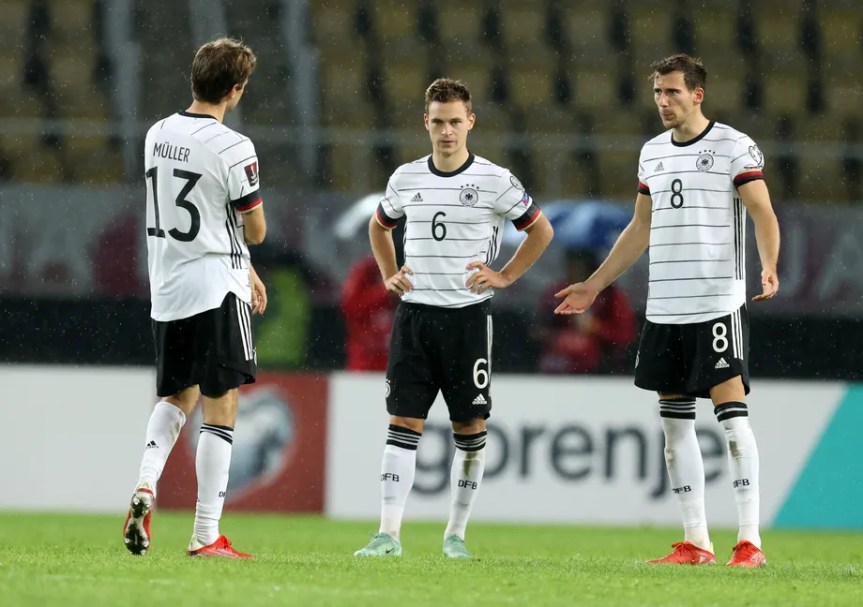
As we remain in late-October, that is right now particularly not the situation. What’s more, it sure wasn’t on Saturday as Juventus lost 2-1 against Hellas Verona to drop consecutive games against mid-table resistance. What’s more, now, would we say we are just stunned? Since, as things as of now stand, that is actually what Juventus is — a mid-table group.

We can have all the extravagant arenas and big-time names — and wages to coordinate — that we need, however neither the numbers nor the eye test lies. Juventus is sitting where it’s sitting in the table since that is actually where they have the right to be.

LVP: Arthur

You might have presented the defense for various players here, however I need to feature Arthur due to two reasons. One that is 10,000 foot view, and one that is little picture.

For one thing, he’s for the most part to fault for Verona’s opener, as just God knows what he was attempting to achieve on that play. Did he get confounded with regards to where on the pitch he was? Did he think they were on the assault and saw an incredible open door for a through pass? It boggles the psyche truly.

That was his main feature reel-commendable play — awful feature, yet a feature all things considered — as he was only sort of there for the rest of this game. Not actually doing an entire bundle unpalatably or protectively, only glad to be out there on a decent Saturday evening getting a pleasant exercise.

Victor; Paulo Dybala

I know some of you comedians will attempt to fix him in the above bunch. What’s more, without a doubt, he has his positional characteristics and he has failed to meet expectations on events also. However, excuse me if I wonder whether or not to kill the main person on the field on Saturday that was essentially having a go at something and that appeared as though he cared a lot.

La Joya outshot the whole group and was reliably one of the main dangers on objective for the Bianconeri. It was a demonstration of his expertise — and how all around instructed the Hellas Verona players were — that each time the Argentinian contacted the ball it appeared to be that three gold and blue clad players met unto him.

On a more fortunate day he might have handily had a support — he hit the post once, was denied on an incredible save by Lorenzo Montipò and had various shots scarcely miss the objective.

Separating Shot of the Week

Juventus had an amazing chance to cut distances in the Serie A table with three games in succession. After a hard-battled draw with Entomb last week, seven out of nine focuses would have been an exceptionally sure outcome.

What Juventus did rather was choose up just one from those nine and are in a 16-point opening after Napoli’s most recent success. I battle to say that the season is successfully over so right off the bat in the year, however at that point once more, 16 focuses is a ton of focuses.

Up next is another midweek apparatus, this time against Russian side Zenit at home. A success can plant up capability to the Bosses Association Round of 16 and could be an infusion of certainty that this group frantically needs. I don’t hold a huge load of trust, however hello, now wouldn’t it be a very Juve thing to keep on being horrible in homegrown contest and by one way or another dominate in Europe?

Garena Free Fire Redeem Codes for November 1: How to redeem daily codes

Garena Free Fire Redeem Codes for October 28, 2021: How to redeem daily  codes - Times of India

Garena Free Fire is a multiplayer fight royale game that has acquired ubiquity in the nation as of late. It is created by 111 Spots Studio where 50 players play 10-minute rounds. The game’s engineers continue to update alpha-numeric codes to the game regularly, allowing players an opportunity to win prizes free of charge.

Utilizing these codes, players can likewise get the advantage of opening specific advances and getting different award focuses. As referenced above, it is an activity experience fight imperial game. There is just a single victor toward the end.

n Garena Free Discharge, players have the choice to pick their beginning position, procure weapons and supplies that might be expected to expand their war zone. It is accessible on both Apple Application Store and Google Play Store.

Here is a bit by bit manual for reclaim the Garena Free Fire Recover Codes

Stage 1: Visit the authority site https://reward.ff.garena.com/en

Stage 2: Sign in to the game utilizing any online media account-Facebook, Google, Twitter, or VK IDs.

Stage 3: Players would then be able to reorder the reclaim codes into the text box and snap on the affirm button to proceed.

Stage 4: After the affirmation, a discourse box will spring up for cross-check. Snap on ‘alright’ to recover the codes.

Stage 5: Players can gather their compensation in the in-game mail area.

Note: The codes will require 24 hours to get credited and the focuses won’t work for visitor accounts.

You Must Try These Bihari Cuisines Before You Die

Dal Poori:

It doesn’t only sounds delicious but it taste even better. We, Indians are crazy for poori’ and dal poori is another level of happiness to the list.The mixture of gram flour with a lil of chatpata masala stuffing of the puri makes it yummier and though it’s a Dussehra special recipe, one need not have to wait for any such special occasions.
The Dal poori is served even in normal days in a Bihari family with a spicy ‘sabji’ or curd.

Dal Poori

Parwal ki Mithai:

The amazingly delicious sweet made of Vegetable! Parwal ki mithai is quite a famous sweet in Bihar. Though it is made out of Parwal which is a vegetable, it is fantabulous to taste, and is made by stuffing the pointed gourd with khoya, giving it the right balance of sweet, salty and healthy. If you havent tasted this unusual mithai, dont give it a miss.

Parwal Ki Mithai

Pedakiya :

Pedakiya is the Bihari version of Gujiya. It is Bihar’s most famous fried sweet, it is made by stuffing flour stuffed with suji (semolina), khoya or grated coconut and is made on almost every festival. Whether its Holi, Teej, Diwali or Chatt you can expect Pedakiya.

Pedakiya

Khaja :

 Another name in the long list of amazing desert from Bihar. This wafery sweet snack is made from flour and sugar, is deep fried and then dipped in hot sugar syrup.Khaja is has a strong sweet taste, so all those who has sweet tooth can taste Khaja for sure. Silao ka Khaja is very famous.

khaja

 Litti Chokha :

The signature dish of Bihar and Biharis. If you have a Bihari friend, you must have tried Litti Chokha at least once in your life time.It is baked from wheat flour dough that is stuffed with a mixture of roasted gram flour, spices, lemon juice and pickle. And is served with chokha.Chokha is baked and pulped vegetables mixed with spices and onion.Litti these days are being served with chicken and mutton gravy as well for non Veg lovers.

littiii

Malpua :

Malpua is that sweetmeat to which all Biharis swear by for every special event and festival. Whether it’s Holi or Eid, Durga Puja or Ramzan the festival is incomplete if you haven’t eaten Malpua. Its batter is made by mixing flour, milk, sugar and mashed bananas and is deep fried in such a way that the edges go all crispy while the center is all soft. Mouth watering isn’t it? Tust me, if you are a sweet tooth, you cannot resist Malpua.

Malpua

Thekua/Khajuria:

Thekua is one of the most important ingredient  of ‘Chatt’ puja in Bihar. Ask any Bihari friend the occasions when this sweet is made at home and they all will say the same.Thekua or Khajuria is a snack made from wheat flour; jaggery or sugar mixed together, molded and deep fried in ghee.

Thekua

Nimki:

Stick Crackers: This snack made of flour and salt is deep fried. It is one of the perfect snack for evening chai.

nimki

The Bihari Kadi budi:

kadhis, from different parts of the country. The Bihari kadhi is a one that uses badi(pakoda) dumplings. It is considered inauspicious in Bihar to prepare plainkadhi without any dumplings.

Kadi badi

Tilkut :

Tilkut or bars of sesame seeds – a sweet cracker made by mixing the seeds either with jaggery or sugar – that is indelibly linked to Gaya, the birthplace of Buddhism, has been growing patrons not only in Bihar, but also in neighbouring countries like Pakistan and Bangladesh, and also the US. Come Makar Sakranti and every possible sweet shop in Bihar will sell one of these.

Bihari Cuisine

Peda:

Bihari peda-

Khurma/ShakarPala:

This snack made of flour, is deep fried and dipped in sugar syrup. As the sugar syrup cools off, it crystallizes.

khurma shakarpala

10 Foods That Help Reduce Joint Pain

Ben Franklin was right when he said: “An ounce of prevention is worth a pound of cure.” We agree, so our orthopedic specialists encourage patients to adopt dietary and exercise habits that support strong bones and joints.

1. Omega-3 Fatty Acids / Fish Oils

Cold-water fish are a terrific source of Omega-3s fatty acids, which are essential nutrients for human health. These important nutrients are also sometimes referred to as polyunsaturated fatty acids. Not only are they proven to reduce inflammatory proteins in the body, but they also improve brain function and lower risk of heart disease, diabetes and other illnesses.

Omega-3 can be found in cold-water fish such as tuna, salmon, trout, halibut and sardines. Taking a daily fish oil supplement is another way to absorb Omega-3s.

2. Nuts and Seeds

There’s good news for the vegans and vegetarians among us. Omega-3s can also be found in a variety of nuts and seeds. A small daily portion of walnuts, almonds, flax seeds, chia seeds or pine nuts can help reduce inflammation in the joints and connective tissue.

3. Brassica Vegetables

What are those, you might ask. Also known as cruciferous vegetables, brassicas are commonly associated with the mustard and cabbage family. Leafy greens like mustard greens, arugula, kale and purple cabbage are in the brassica family. Several other popular (and tasty!) vegetables make the list, including broccoli, cauliflower and Brussel sprouts.

This particular subset of the vegetable population has been known to block an enzyme that causes swelling in the joints. Plus, they’re chocked full of fiber, vitamins and nutrients for overall health and well-being.

4. Colorful Fruits

Fruits sometimes get a bad rap because of their high sugar content, but many are excellent antioxidants. Just like with vegetables, certain fruits are more effective than others in reducing inflammation in the body.

We’re particularly partial to blueberries, which are high in anthocyanins – one of the most powerful flavonoids. These help “turn off” inflammatory responses in the body.

Apples are another fiber-rich, anti-inflammatory fruit, and they deliver added benefits for gut health.

Pineapple is also on our short list for its bromelain content, a nutrient that has shown to reduce joint pain caused by osteoarthritis and rheumatoid arthritis. However, most of the bromelain is found in the stem and core of the pineapple, so blend the core into a smoothie to get the maximum benefit.

5. Olive Oil

Toss out your vegetable oil, sunflower oil and peanut oil – all of which can increase inflammation. Instead, opt for a few tablespoons of olive oil for cooking and making salad dressings. Better yet, go with the extra virgin variety that is less processed. Often associated with a Mediterranean diet, olive oil is an unsaturated “healthy” fat. And guess what … it’s another source of Omega-3!

6. Lentils and Beans

Beans and lentils are known for their health benefits. They’re an excellent source of protein, fiber and essential minerals. They also have antioxidant and anti-inflammatory properties. Black beans, lentils, chickpeas, pinto beans and soybeans are all great sources of anthocyanins – that magical flavonoid that reduces inflammation.

7. Garlic and Root Vegetables

Garlic, onions, ginger and turmeric have anti-inflammatory properties. Various studies have shown that these pungent root vegetables can be useful in treating symptoms of arthritis and other joint pain. Incorporate these vegetables into meals for added flavor. Plus, they’re all available in a supplement.

8. Whole Grains

Research suggests that proteins found in refined grains (such as white bread, white rice and regular pasta) may trigger an inflammatory response in the body. However, high-fiber whole grains help produce fatty acids that are thought to counteract inflammation. Therefore, stick with the whole grains.

9. Bone Broth

Glucosamine, chondroitin and amino acids are well documented to help maintain healthy joints, while calcium is essential for bone density. Bone broth contains all of these. The gelatin-like substance that comes from cooking bones mimics collagen that occurs naturally in our joints, tendons and ligaments. Whether or not bone broth can actually stimulate regrowth of cartilage is a fiercely debated topic in the medical filed. But taken regularly as an oral supplement, it has been known to reduce joint pain and increase function for people with arthritis.

10. Dark Chocolate

Now we’re talking! Indeed, chocolate has anti-inflammatory properties. Cocoa, the main ingredient in chocolate, contains antioxidants that can counteract genetic predisposition to insulin resistance and inflammation. The higher the percentage of cocoa in the chocolate, the higher its anti-inflammatory effect.

But remember, chocolate can be high in sugar and fat, so enjoy it in moderation. If you’re going to indulge, choose chocolate that is at least 70% cocoa.

10 SELF-MADE WOMEN OF INDIA

Vandana Luthra (VLCC)

Vandana Luthra is an Indian businesswoman, philanthropy and chairperson of the beauty and wellness sector skill council(B&WSSC). In 1989, she started the company called VLCC as a beauty and slimming service centre.

Kiran Mazumdar Shaw (Biocon Limited)

Kiran Mazumdar Shaw is known as India’s wealthiest self-made women entrepreneur who found a biopharamaceutical firm in 1978. This firm has entered in US biosimilars market ad is getting the attention of investors.

Priya Paul(Park Hotel)

Priya Paul is an Indian woman entrepreneur who is chairperson of Apeejay Surrendra park hotels. After finishing her studies from Wellesley College(US), she startred working under her father as a marketing manager.

Ritu Kumar(Fashion Designer)

Ritu Kumar is an Indian fashion designer who began her Fashion career in Kolkata. Initially, she was making bridal wear and evening clothes. After decades, she entered an international market. She has been operating her business in several different forging cities France and New York.

Suchi Mukherjee(Limeroad)

In 2012, Suchi Mukherjee created online clothing and lifestyle accessories marketplace and named Limeroad. Today this company is known as India’s most stylish online shopping website for men and women.

Indra Nooyi (Amazon)

Indra Nooyi is a former CEO of PepsiCo who has joined Amazon’s board of directors. After completing a master’s degree from Yale School of management, she worked as aproduct manager at Johnson & Johnson.

Aditi Gupta (Menstrupedia)

Aditi Gupta is an author and the co-founder of the Menstrupedia. Aditi and her husband created a comic book to illustrate and educate girkls anout menstruation. Later, they created a website called menstrupedia.com.

Falguni Nayar (Nykaa)

After working 20 years as an investement banker with Kotak Mahindra, she left the job to pursue her own dream. In 2012 she started company Nykaa, which sells online cosmetic and wellness products. Today, the company has become so famous among Indian women.

Vani Kola(Kalaari Capital)

Vani Kola is a venture capitalist and founder an d mangung director of Kalaari Capital. She has done her masters of science degree from Arizona State University. Duribg her 22 years in Silicon Valley, she founded two company Rightwrok and Certus software.

Radhika Ghai (Shopclues)

Equipped with more that 15 years of marketing experience in several industriues such S Fashion & lifestyle, advertising & public relations, and others. She became co-founder of Shopclues.com. In 2011, the company was founded in Silicon Valley.

IPL 2021: Proud to leave legacy behind? I haven’t left yet, says MS Dhoni as CSK fans cheer

CSK Vs KKR: Congratulatory Wishes Pour In As Chennai Super Kings Win IPL  Final 2021

DUBAI: Mahendra Singh Dhoni in his matchless style kept inquiries on his IPL retirement open-finished yet conceded that a great deal of things will rely upon the sort of maintenance strategy that BCCI sets up for the huge sale one year from now.

Dhoni, who is set to join the Indian group as ‘Coach’ for the T20 World Cup, talked concerning how he might want to make a guide for the following 10 years of IPL that Chennai Super Lords will play.

When inquired as to whether he was glad to have abandoned an inheritance in the 12 seasons for CSK, Dhoni guaranteed his million fans with a wide smile, “Still I haven’t left behind….”

However, he said that he hasn’t chose how he would squeeze into the maintenance plan of things.

“Again I’ve said it previously, it relies upon BCCI. With two new groups coming in……we need to choose what is useful for CSK,” the captain said after his group won the fourth IPL title by beating Kolkata Knight Riders in the last.

“It’s not with regards to me being there in top-three or four. It’s tied in with making a solid center to guarantee the establishment doesn’t endure. The center gathering, we must have a hard hope to see who can contribute for the following 10 years,” he added.

Dhoni was glad that a ton of individual match-champs have CSK to their fourth prize.

“We had match champs coming many more than one game and doing all around well. Each last is uncommon, in the event that you take a gander at details, we might say we’re the most reliable group to lose the last as well. I feel return solid, particularly in the knockouts,” he said.

Dhoni additionally clarified that he isn’t particularly into group gatherings as the normal ability to focus during these gatherings are 20 minutes.

“To be perfectly honest no visits, we don’t ramble (gatherings). It’s more one-on-one, our training meetings are meeting meetings. The second you get into a group room, it achieves diverse strain. Our training meetings have been acceptable.”

he ‘Thala’ had a directive for the CSK fans.

“I couldn’t want anything more than to thank the fans, any place we’ve played, in any event, when we were in South Africa, we’ve generally had a lot of CSK fans. That is the thing that you want for. On account of every one of them, it seems like we’re playing in Chennai. Ideally we’ll be back in Chennai for the fans.”

He additionally toward the beginning adulated KKR for a fine show as they returned from two focuses in seven games to arrive at the last which is an accomplishment in itself.

“Before I begin discussing CSK, need to discuss KKR. Hard to return and do what they have, if any group had the right to win the IPL, it’s KKR. Colossal credit to the mentors, group and care staff. The break truly helped them.”

Indian Hockey Teams Pull Out of 2022 Birmingham Commonwealth Games Citing Discriminatory Quarantine Rules

The Indian people’s hockey group won’t be important for the 2022 Republic Games in Birmingham subsequent to pulling out of the occasion refering to Coronavirus concerns and unfair quarantine rules Indians in Joined Realm. This move comes simply a day after Britain pulled out of the FIH Men’s Lesser World Cup to be held in Bhubaneswar one month from now, refering to various Coronavirus related concerns including the Indian government’s obligatory 10-day quarantine convention for all UK nationals.

India had last week refreshed its tourism warning for residents coming from the Assembled Realm in a complementary measure. The refreshed tourism warning notices expresses that all English nationals showing up in India from the UK should go through a required 10-day quarantine from Monday regardless of their inoculation status as a feature of a corresponding activity against the UK’s new global travel rules with comparative measures for Indians.

This came in the scenery of the UK as of late declining to perceive India’s Coronavirus immunization endorsements and forced a 10-day hard quarantine on explorers from the nation regardless of whether they were completely inoculated.

You will see the value in that the Asian games is the Mainland capability occasion for the 2024 Paris Olympic Games and remembering the need of the Asian Games, Hockey India can not hazard any individuals from the Indian groups contracting Coronavirus during the Republic Games,” Ningombam composed.

Yoga at workplace: 5 exercises to de-stress at office and regain focus

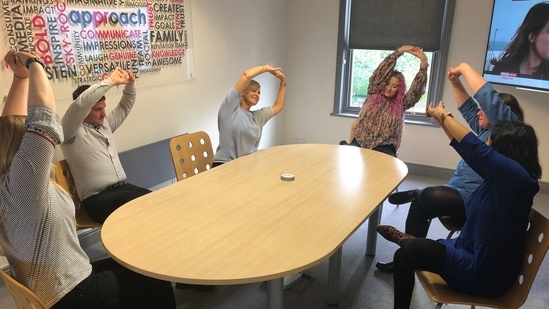
Yoga at workplace: 5 exercises to de-stress at office and regain focus(Twitter/Approach_pr)

Keep spinal pains, neck torment, muscle firmness and joint issues under control as you work extended periods. Attempt these 5 straightforward corporate Yoga asana that guarantee to lessen actual torment, work environment stress, decline non-attendance and increment usefulness alongside work inspiration.

We as a whole have utilized our office work areas to stick family pictures, our most loved munchies and heap heaps of work yet from now, it will observer a wellbeing turn as well, graciousness these corporate Yoga practices that are easy to perform and serve to de-stress at working environment and recapture center. Exactly when we Tuesday blues began to soak in, we went over some Yoga asanas that keep spinal pains, neck torment, muscle solidness and joint issues under control while we work extended periods of time.

Simply require out 10 minutes during work hours to rehearse these simple yoga stretches and breathing activities at your work area or out in the outside air and under the sun. This is on the grounds that these 5 basic Yoga asana guarantee to diminish actual torment, working environment stress, decline truancy and increment efficiency alongside work inspiration:

1.Siddhasana or Achieved pose

Method:: This is the most simple posture of Yoga where you sit leg over leg with eyes shut somewhere down in reflection and hands laying on your knees. Sit with your toes got into your thighs and set your feet next to each other while keeping your knees wide and eyes shut in a thoughtful posture to expert the situated asana.

Advantages: Siddhasana or Yoga’s Cultivated posture or Siddhi’s posture is ideal situation for contemplating. It is amazing for expanding adaptability in hips and crotch/internal thigh muscles.

It not just opens the expert’s hips, chest and shoulders yet in addition extends the spine, further develops pose, extends the front of the lower legs, reinforces lower leg muscles, initiates the chakras, keeps the brain alert, diminishes pressure and uneasiness and assists with adjusting the exercises of the conceptive organs.

  1. Situated Sickle Moon Posture

Method:: Situated in your work area seat, breathe in and lift your chest upstanding, taking your arms upwards, either corresponding to one another or palms joined. With each breathe out, twist further into the posture, squeezing your tailbone towards the floor.

On the off chance that conceivable, take your head back and turn upward. To emerge from the posture, return and rehash by inclining toward to the opposite side and hold this posture for a few breaths prior to exchanging sides once more.

Advantages: This asana further develops adaptability around your shoulders and neck. The posture gives a profound stretch to the hips, thighs and crotches.

It assists with extending and open the chest and shoulders, gives recuperation post-exercise and lifts energy while deliberately working to better the body pose. The asana additionally works on the equilibrium of the body.

3. Seated Backbend Pose

Method:: Like you perform Ustrasana or camel present, sit in your office seat with feet on the floor and back off the seat while the spine is kept straight and not bended. Incline forward, arrive at your arms back behind you, snatch the rear of the seat and keep your elbows straight

Watch your shoulders unwind into the posture as you pull your shoulder bones back and breathe in. Clutch this stance prior to delivering the posture and sitting upright.

Advantages: From extending to reinforcing the shoulders, this activity further develops breath by opening up the chest. It relaxes up the vertebrae, mitigates lower back torment and further develops pose and lessens fat on thighs.

4. Seated Figure Four Pose

Method:: Track down a steady seat where you can put the two feet on the floor and not a seat with wheels or with a ton of padding. Sit ahead on the edge of your seat, keep your back nonpartisan, roll your shoulders both clockwise and counter-clockwise and slacken your neck to further develop portability.

Cross your right leg by establishing your left foot firmly on the floor and lifting your right leg to twist it at the knee as you place your right lower leg to your left side thigh. Inhale profoundly, extend your stomach then, at that point, rehash similar developments with the other leg.

Advantages: This activity extends the exterior of the professional’s hips just as their butt as it explicitly focuses on the gluteus medius, the muscle that guides in hip development and hip portability. It soothes strain in the muscles encompassing the sacrum and decreases lower back torment.

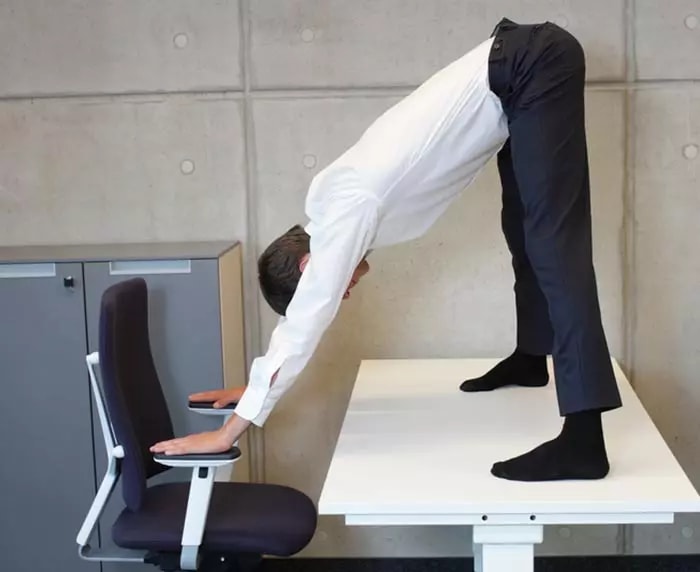
5. Prasarita Padottanasana or Wide-Legged Forward Bend

Prasarita Padottanasana or Wide-Legged Forward Bend(Twitter/Cian_Chaos)

Method: Keep an equal distance of around 3 to 4 feet between your legs and spot your hands on your hips. With your legs and spine seriously extended, breathe in, lift your chest up tall through your entire middle and crease gradually over your legs. Start to extend your middle forward by setting your hands level on the floor and keeping them shoulder-width separated. Crease further, bringing your head toward the floor.

Advantages: This wide-legged remaining forward twist is a decent get ready for other wide-position standing postures as it extends the backs of the legs and the inward crotches. It quiets the mind and facilitates exhaustion while further developing dissemination of blood and conditioning the stomach organs.

A Harvard research uncovered that “Yoga brings mental advantages like diminished nervousness and sadness. Might be seriously astounding that it really makes your cerebrum work better.” As per the examination done in Word related Medication, work environment yoga intercession can decrease apparent pressure and back torment and further develop mental prosperity.