Why AAP lost Election in Delhi

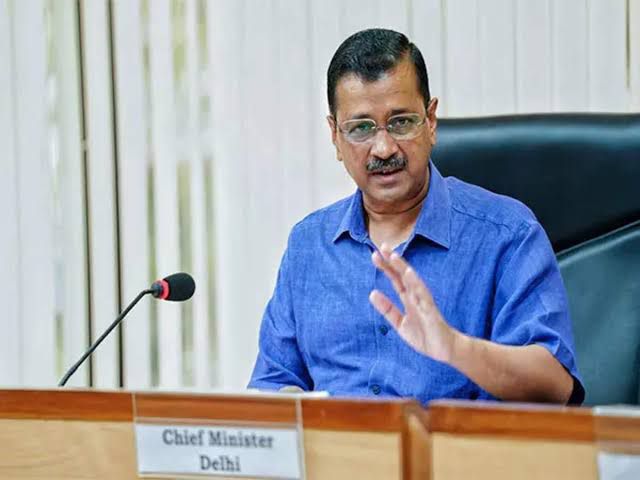
The Aam Aadmi Party (AAP) lost the 2025 Delhi Assembly elections due to a combination of political, legal, and governance-related factors. Here are the key reasons:

1. Legal Troubles & Corruption Allegations

  • AAP leaders, including Chief Minister Arvind Kejriwal and Manish Sisodia, faced serious legal challenges in cases related to the Delhi liquor policy scam.
  • Kejriwal’s arrest by the Enforcement Directorate (ED) just before the elections significantly weakened the party’s campaign.
  • Allegations of corruption eroded public trust, making BJP’s anti-corruption narrative stronger.

2. BJP’s Strong Strategy & Modi Factor

  • BJP effectively capitalized on AAP’s weaknesses and positioned itself as a clean and stable alternative.
  • Prime Minister Narendra Modi’s popularity played a major role in BJP’s success.
  • BJP aggressively targeted AAP on governance failures, corruption, and law-and-order issues.

3. Declining Public Trust in AAP

  • AAP’s focus shifted from governance to legal battles, leading to public discontent.
  • Voters who supported AAP in 2015 and 2020, particularly from the middle class, began questioning the party’s credibility.

4. I.N.D.I.A Alliance & Congress Factor

  • The I.N.D.I.A bloc (Opposition alliance), which included AAP and Congress, failed to effectively coordinate their campaign.
  • Congress did not fully support AAP, leading to a split in anti-BJP votes.

5. Lack of New Governance Initiatives

  • AAP had built its success on free electricity, water, and education reforms, but by 2025, these policies lost their novelty.
  • Issues like deteriorating air quality, water shortages, and unfulfilled promises hurt AAP’s credibility.

6. BJP’s Booth-Level Mobilization

  • BJP worked extensively at the grassroots level, mobilizing voters effectively.
  • The party also gained support from migrants, traders, and youth, who were disappointed with AAP’s governance.

Final Takeaway

While AAP started as an anti-corruption movement, its governance and leadership were overshadowed by legal troubles and controversies. BJP seized this opportunity and presented itself as a stable, corruption-free alternative, leading to its historic win after 27 years in Delhi.

Would you like a deeper analysis of any specific aspect?

Assassination Of Former Prime Minister Rajiv Gandhi .

The assassination of former Prime Minister of India Rajiv Gandhi, , occurred on 21 May 1991 as a result of a suicide bombing in Sriperumbudur in Tamil Nadu, India . At least 14 others,we’re killed alongside Rajiv Gandhi in the suicide bombing.

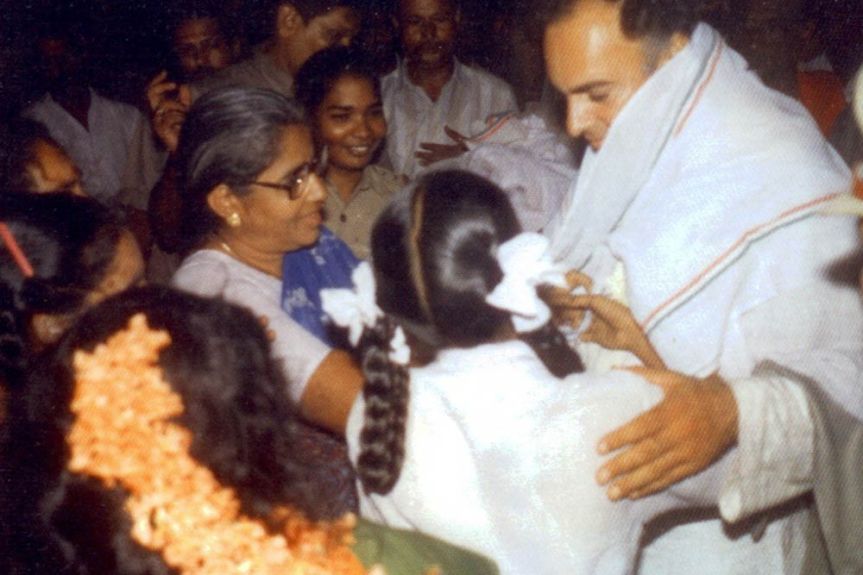
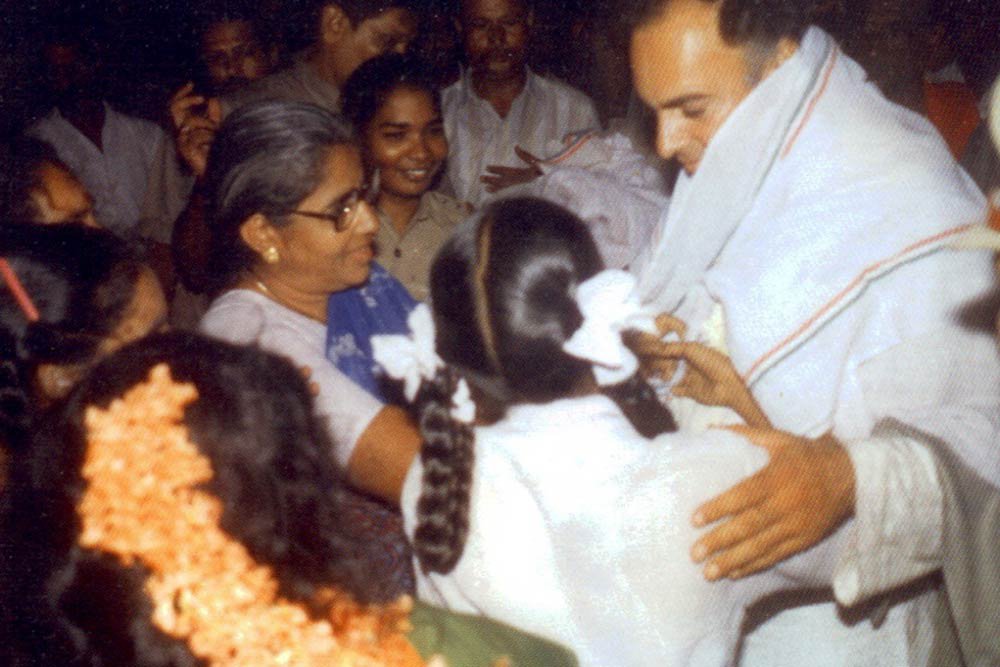
The assassination was carried out by Thenmozhi Rajaratnam, a member of the Tamil Liberation Tigers (LTTE), a Tamil separatist organization in Sri Lanka, and Dr. Jagjit Singh Chohan of the National Council of Khalistan (NCK) and Gurjant Singh Budhsinghwala of the Khalistan Liberation Force. At that time, India had just finished its involvement in the civil war in Sri Lanka through the Indian Peace Keeping Force. Rajiv Gandhi along with G.K. Moupanal started election campaign in southern state of India. After campaigning in Visakhapatnam, Andhra Pradesh on May 21, his next destination was Sriperumbudur, Tamil Nadu. Approximately two hours after arriving in Madras ,Rajiv Gandhi rode a white ambassador car to Slipelumbudur in a convoy, stopping at several other campaign sites along the way. Arriving at the campaign rally at Sriperumbudur, Rajiv left the car and went up to the podium, where he gave a speech. After the soeech the assassin Danu (Thenmozhi Rajaratnam) approached and greeted him. Then she bent over and touched his leg, and at 10:10 pm, detonated a belt loaded with RDX explosives place under her dress. Gandhi, his assassin and 14 others were killed in a subsequent explosion, and 43 were seriously injured. The assassination was filmed by local photographer Haribab. Haribab’s camera and film were found intact on the scene, but he also died in the blast.

Apart from Rajiv Gandhi, former Prime Minister of India and the suicide bomber Thenmozhi Rajaratnam , several people were killed in the blast on 21 May 1991:
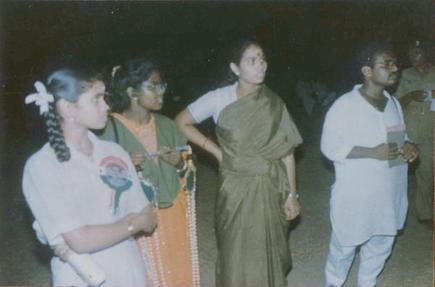
Including Pradeep K Gupta (personal security officer of Rajiv Gandhi ), K.S Mohammed Iqbal (police superintendent), Edward Joseph ( police inspector) ,Dharman,Chandra, Ethiraju Muruganand and Rajguru (police constables), Santhani Begum (Mahila Congressn Leader) ,Latha Kannan ( Mahila Congress worker,who was with her daughter Kokilavani ),Kokilavani (ten-year-old daughter of Latha Kannan, who sang a poem to Gandhi immediately before the blast), Munuswamy (former member of the Tamil Nadu Legislative Council) ,Saroja Devi (seventeen-year-old college student), Ravichandran (Black Cat commando).
Around forty-three spectator present in the campaign including police sub-inspector Anushiya Daisy were also injured in the explosion.

Immediately after the assassination, the Chandrasekhar government handed over the investigation to the CBI on May 22, 1991. Authorities, formed a special research team led by Karthikeyan to determine who is responsible for the assassination. A SIT investigation confirmed the role of the LTTE in assassination and was endorsed by the Supreme Court of India. Judge Millap Chand Jain’s interim report investigated the secret aspects of the assassination and accused DMK of working with the LTTE. The report concluded that the DMK provided the LTTE with shelter and made it easier for rebels to assassinate Rajiv Gandhi. The report also claimed that Jaffna’s LTTE leaders possessed confidential, encrypted messages exchanged between the federal and DMK state governments.Authorities also stated in reports “There is evidence that during this period some of the most important radio messages were exchanged between the LTTE agents stationed in Tamil Nadu and Jaffna. These later deciphered messages are directly related to the assassination of Rajiv Gandhi “. The Congress demanded withdrawal of DMK from the Union Front government, after claiming to have played an important role in Rajiv Gandhi’s death. According to reports Dr. Jagjit Singh Chohan supported the LITTE with logistic and tactical support. His involvement was first revealed in 2016, about 10 years later. Speculation. This was evidence of the Jain Commission’s report and was suspected that the LTTE had contacted Gurjant Singh Budhsinghwala with Jagjit Singh Chohan to plan the plot.

After the investigation on the assassination of former prime minister Rajiv Gandhi ,the court convicted and sentenced the seven persons who were involved in the assassination to life imprisonment. They are currently undergoing life imprisonment in prisons in India.
They are:
Murugan – A LTTE operative from Sri Lanka, Nalini – Wife of Murugan. Nalini is a citizen of India ,Jayakumar – The brother in law of Robert Pious ,Ravichandran – A Sri Lankan national ,T. Suthenthiraraja – A Sri Lankan national ,Robert Pious – A Sri Lankan national and A. G. Perarivalan – An Indian citizen who was arrested for supplying a 9-volt battery for the explosive device.

Shortage in Indias Power Supply.

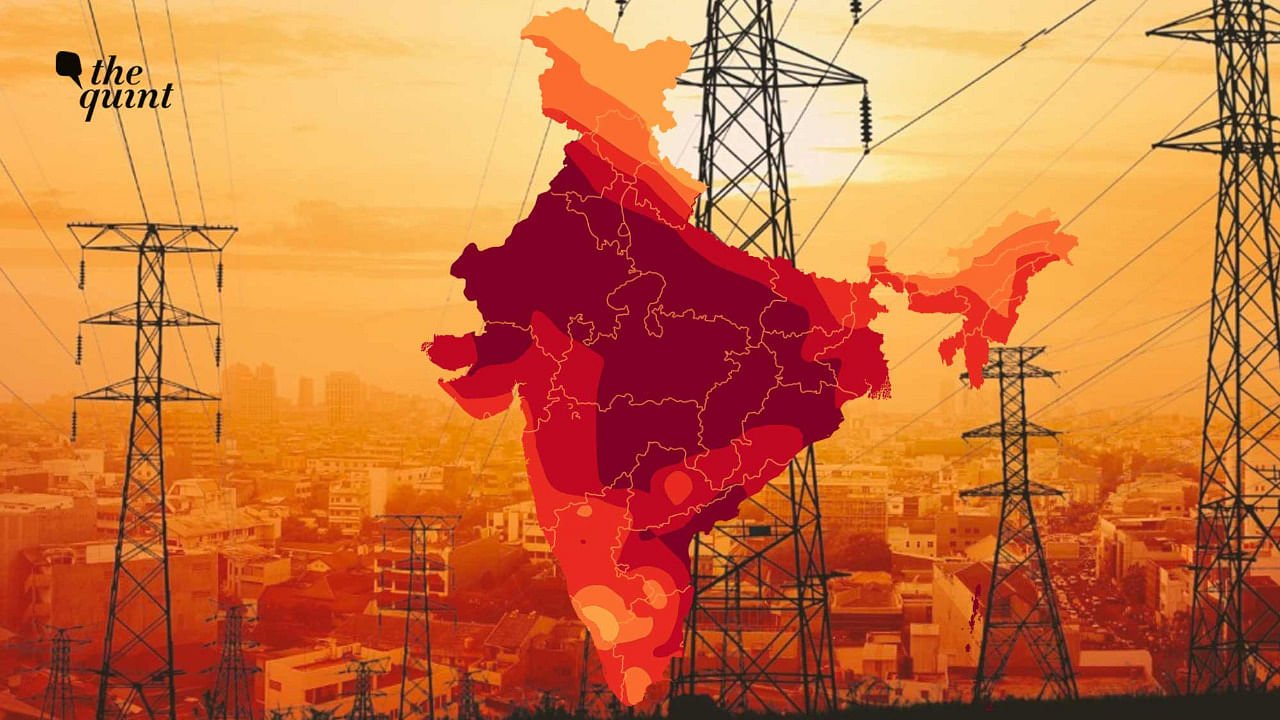
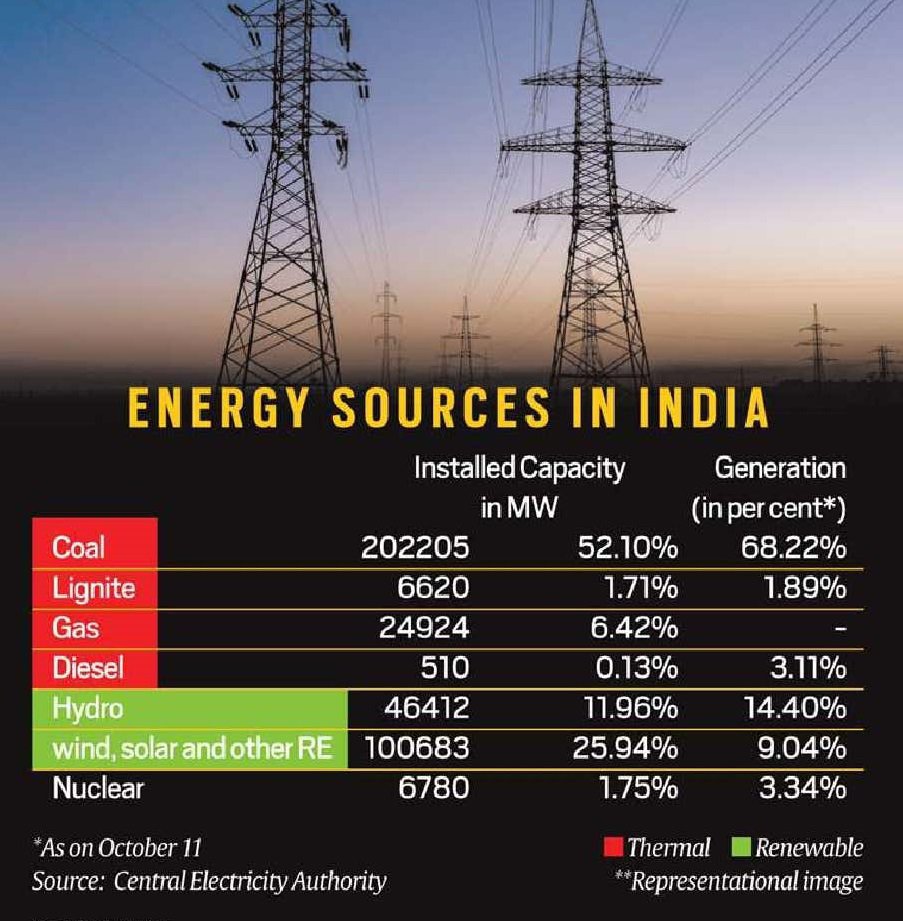
India has the fourth largest coal deposit in the world. It is the second largest fossil fuel producer after China and is home to Coal India, the world’s largest coal mining mine, which accounts for 80% of domestic production. Already allocated coal block mining capacity exceeds expected demand in 2030 by approximately 15% to 20%.


So why are India’s power plants facing coal shortages each year, leading to widespread power outages, exposing parts of the country to darkness and endangering industry?
There are several factors. India has a long time policy of minimizing coal imports. In February 2020, Coal Minister Pralhad Joshi announced that the country would stop importing steam coal from 2023 to 2024.
Mr Joshi said the Ministry of Coal will work with the Ministry of Railways and the Ministry of Shipping to allow Coal India, prisoners and commercial miners to discharge more coal from their supply by 2030. And the coal supply at power plants is running out at an alarming rate. The Department of Energy is currently blaming the decline in coal imports due to the current crisis. In 2018-19, 21.4 million tonnes of coal were imported for mixing, down to 23.8 million tonnes in 2019-20 and 8.3 million tonnes in 2021-22.


Power plant coal inventories have fallen by about 13% since April, reaching pre-summer lows. And for the first time since 2015, Coal India will import fuels used by state-owned and private power companies. The Ministry of Energy said almost all states showed that multiple state bids for coal imports would cause confusion and that the decision was made after calling for centralized procurement by Coal India.
Imported coal costs five times as much as domestic mining, so the center is being pushed back by the state.
Recently, the government has also pressured utilities to increase imports to mix with local coal. Last year, after a two-year break, three tranches of coal auctions were held and nine blocks were successfully awarded.

In September 2021, the Ministry of Coal issued a strict warning to owners of confined coal blocks, stating that their mines should increase production or face restrictions on coal supply by the CIL.
The ministry has discovered that these mines are producing below target.

Of the 43 coal mines outsourced to private companies in the energy, steel and metals sectors, none have met their annual production targets.
On May 6, Coal India announced that it would provide the private sector with 20 closed and abandoned underground coal mines and reopen and operate its revenue sharing model.

According to journalist Shreya Jai the current power supply chain does not seem ready to handle periods of high growth and state discos cannot pay gencos, but the power supply chain starts with state discos and needs repairs. Railroads, on the other hand, are struggling to align the thermal power industry’s demands for faster coal supply with those from other industries. Rakes must be prepared to meet the growing demand for almost all other bulk commodities, from cement and steel to sand and edible grains. By strengthening the value chain of the electric power sector, it is possible to resolve the coal supply-demand mismatch in the long run.

Enhance voting and credibility of election process

 Vice President of India Shri M. Venkaiah Naidu today urged the Election Commission and the citizens to ensure a voter turnout of 75% in the next general elections to make electoral democracy more inclusive and also sought consensus on simultaneous polls to sustain the tempo of development.

In a message on the occasion of the 12th National Voters Day today, Shri Naidu stressed that no voter should be left behind and urged the citizens to judge the contestants in the elections on merit. As Shri Naidu is in home isolation in Hyderabad after testing corona positive, his address was  read out at the  event in New Delhi.

Referring to the increase  in  voter turnout from 44.87% in the first general elections to Lok Sabha during 1951-52 to the highest ever 67.40% for the 17th Lok Sabha in 2019, marking an increase of 50% in  voting, Shri Naidu complimented all stakeholders for the same. Alluding to the sustained efforts of the Election  Commission of India in this regard striving for excellence during the 70 years of the country’s electoral journey, Shri Naidu hailed the Commission as a  credible, responsive and forward looking institution every  votary of democracy can legitimately be proud of.

Shri Naidu noted that the challenge before the Election Commission is to ensure a steady increase in voting in every election to make our electoral democracy more inclusive by addressing the barriers to voter participation.

The Vice President urged: “In the 75th year of our Independence, let us resolve to leave no voter behind and aim to increase the voter turnout to at least 75% in the next general elections. Let each one realize that vote is not only a right but a responsibility. We, as a nation, must think and arrive at a consensus to have simultaneous polls to all the three tiers of federal set up and move towards better governance by focusing our attention on all round development of our people”.

Shri  Naidu referred to the substantial 8% increase in voter turnout from 58.21% in 2009 general elections to 66.44% in 2014, suggesting that it is feasible to reach 75%  voter turnout target from 67.40% in 2019. He complimented the SVEEP(Systematic Voter Education and Electoral Participation) initiative of the Election Commission launched in 2009 for improving voter participation.

Shri Naidu expressed delight over women voting more than men in the 2019 general elections by a margin of 0.17%, for the first time in 70 years, ending the gender gap in the country. (In 1962  general elections, men voter turnout was 16.71% more than that of  women)

Shri Naidu stressed on the need for more swift resolution of election disputes and creation of a more informed citizenry empowered to judge the merits of each  candidate in the elections. He urged the Commission to further explore innovative ways in which technology can enhance the credibility and accessibility of the voting process. He also referred to high voter turnout in the range of 74% to 84% in the elections to five State Assembly held under covid protocol last year.

The 12th National Voters Day is being organized on the theme “Making our Elections Inclusive, Accessible and Participative”. January 25th is being so celebrated as the Election Commission was set up on January 25, 1950, a day before the country became a Republic with the Constitution coming into force from January 26, 1950.

Following is the full text of the Vice President’s message (It was read at 12th National Voters’ Day celebrations organized by Election Commission of India today) –

Chief Election Commissioner Shri Sushil Chandra, Election Commissioners, senior officials from the Union and State Governments, distinguished invitees and friends from the media !

At the outset, I extend my hearty felicitations and  greetings to all of you and all fellow citizens on the occasion of 73rd Republic Day tomorrow. We are meeting at the confluence of 70 years of elections in our country, the 73rd Republic Day and the 75th year of our hard fought Independence.

Looking back at the past seven decades, we can legitimately be proud of our achievements in various fields. However, what is most remarkable is our continuous endeavour to strengthen our democratic structures to transform India, the world’s largest democracy, into a vibrant, inclusive, participative and progressive democracy where each citizen has a voice that is heard and each citizen contributes to the governance and development of the nation.

We not only took the bold step of introducing universal suffrage right from the time we became independent but established a credible institutional framework to conduct elections to ensure that the voting right of every citizen is protected.

I compliment the Chief Election Commissioner, the Election Commissioners, the staff of the Election Commission and the Chief Electoral Officers in the states as well as every functionary engaged in conducting elections right up to the polling station level for continuously enriching our democracy. You are, indeed, the proud inheritors of an illustrious legacy that your predecessors have  left behind.

We have come a long way from the first General Elections of 1952 when only 44.87%  of the eligible voters turned out to vote. In the last general elections in 2019,  67.40% or more than two-third of the eligible voters exercised their franchise. It is heartening to note that today, we are among the highest voting nations in the world with a substantial  increase of 50%  in voter turnout in 70 years.

All this calls for a celebration of the remarkable foresight of our constitution makers, the indefatigable efforts of countless dedicated officials, the media, civil society partners and the active involvement of people and the political parties as well as their implicit faith in the Election Commission.

This is what we are doing today as we look back at the 70 years of our country’s electoral history and the ceaseless quest for excellence that has made the Election Commission of India a credible, responsive and forward-looking institution every votary of democracy can legitimately be proud of.

The theme of today’s 12th National Voters Day is ‘Making our Elections Inclusive, Accessible and Participative’.

The challenge before the Election Commission and the country is to ensure a steady increase in the voter turnout in every election to make our electoral democracy more inclusive by addressing the barriers to voting. This year’s theme of inclusive,  accessible and participative elections is, hence, very apt.

I am pleased to note the consistent efforts of the Election  Commission of India to improve voter turnout and also enhance the integrity of the election process.

Thanks to initiatives like Systematic Voter Education and Electoral Participation (SVEEP), voter turnout has increased by  8% from 58.21% in 2009 to 66.44%  in 2014. I am delighted that in the last general elections in 2019 and for the first time, women voter turn was more than that of men by a margin of 0.17%. Elections to five State Assemblies last year held under Covid protocol formulated by the Commission has witnessed huge voter turnout in the range of 74% to 84%.

Voter registration process is now considerably simpler with the  Election Laws Amendment Act, 2021 enabling voters to  register  four times in a  year. The Election Commission has ensured access to voters in remote areas like the Spiti valley located at 15,256 feet above sea level and has been making sustained efforts to curb electoral malpractices. However, there is much more to be done including a swifter  resolution of election disputes and creation of a more informed citizenry empowered to judge the merits of each candidate. The Commission can further explore innovative ways in which technology can enhance the credibility and accessibility  of the voting process.

In the 75th year of our Independence, let us resolve to leave no voter behind and aim to increase the  voter turnout to at least  75% in the next general elections.  Let each one realise that vote is not only a right but a responsibility. We, as a nation, must think and arrive at a consensus to have simultaneous elections to all the three tiers of federal set up and move towards better governance by focusing our attention on all round development of our people.

I compliment the awardees being recognized today for their commendable performance in the last elections.

I extend my greetings to the Election Commission and all the officials, to the enlightened leaders of political parties, to the media, civil society partners and most importantly, every citizen of our country who are making democracy work and are continuously contributing to a robust, well-functioning democracy.

*****


Limit of 5 persons for door to door campaign enhanced to 10 persons

 The Election Commission of India today held a review meeting with the Secretary, Ministry of Health and Family Welfare, Government of India through virtual mode. The Commission also held virtual meetings with Chief Secretaries, Chief Electoral Officers and Health Secretaries of Goa, Manipur, Punjab, Uttarakhand and Uttar Pradesh.

Chief Election Commissioner Shri Sushil Chandra along with Election Commissioners Shri Rajiv Kumar and Shri Anup Chandra Pandey accompanied by Secretary General and concerned Deputy Election Commissioners held a comprehensive review of the present situation with respect to status and projected trends of COVID pandemic in the five poll going states. The Commission also reviewed Vaccination status and action plan for expeditiously completing vaccination for 1st, 2nd and booster dose for eligible persons amongst polling personnel. The Commission deliberated on relaxing restrictions for physical rallies in the wake of prevailing situation.

After taking into consideration inputs and ground reports from these officers, the Commission also deliberated on requirements of the campaign period in phases where candidate list will be finalised on January 27, 2022 for Phase 1 and on January 31, 2022 for Phase 2.

After considering the present situation, facts and circumstances as also the inputs received in these meetings, Commission has decided as follows:

(1) No road show, Pad-yatra, cycle/bike/vehicle rally and procession shall be allowed till January 31, 2022.

(2) Since contesting candidates for Phase 1 elections will be finalised on January 27, 2022, Commission has decided to allow physical meetings of concerned Political parties or contesting candidates in designated open spaces with a maximum of 500 persons or 50% of the capacity of the ground or the prescribed limit set by SDMA, whichever number is lesser, from January 28, 2022 till February 8, 2022 (excluding the silence period).

(3) Since contesting candidates for Phase 2 elections will be finalised on January 31 2022, Commission has decided to allow physical meetings of concerned Political parties or contesting candidates with public in designated open spaces with a maximum of 500 persons or 50% of the capacity of the ground or the prescribed limit set by SDMA, whichever number is lesser, from February 1, 2022 till February 12, 2022 (excluding the silence period).

(4) The Commission has also enhanced the limit of door to door campaign. Instead of 5 persons, now 10 persons, excluding security personnel, will be allowed for door to door campaigns. Other instructions on door to door campaigns will continue.  

5) Commission has already granted relaxation for the political parties to the extent that indoor meetings of a maximum of 300 persons or 50% of the capacity of the hall or the prescribed limit set by SDMA is allowed.

(6) Commission has also allowed video vans for publicity with usual COVID restrictions at designated open spaces with a maximum of 500 viewers or 50 % of the capacity or the limit set by SDMA, whichever number is lesser, in the poll going States subject to public convenience and no hindrance to smooth flow of traffic. (Instructions in this regard are being sent to the CEOs separately).

(7) Political parties and contesting candidates shall ensure the compliance of COVID appropriate behaviour & guidelines and Model Code of Conduct at all occasions during the activities connected with elections.

(8) It shall be the responsibility of the DEO concerned to identify and to notify the designated spaces in advance for the aforesaid purposes.

(9) All remaining restrictions as contained in the Revised Broad Guidelines for Conduct of Elections, 2022 issued on January 8, 2022 shall continue to operate.

All concerned State/District authorities shall ensure full compliance of these instructions.

The Commission will review these instructions at a subsequent date.

***

Himalaya Neem Face Wash

Himalaya Herbals Purifying Neem Face Wash, 100ml https://www.amazon.in/dp/B002Q5JE2C/ref=cm_sw_r_apan_glt_fabc_1D670NAQADQ4RFK07F0X

Himalaya Herbals Purifying Neem Face Wash reduces skin inflammation and hickeys for all skin types. It has the combination of neem and turmeric for deep purification the skin from out without drying it out. It battles bacterial complications and forestalls there-occurrence of facial irregularities and calms your skin. It likewise improves the adaptability of the skin and positions out its tone.

READING IN THREE KEYS: How to Write a READING RESPONSE

Active reading involves looking at the text in more than one way.  For your reading responses write using these three “keys,” or methods, of analyzing what you have read: 

Reading responses in this class generally vary from 250 – 400 words. The length required will be specified on the assignment.


 Sometimes you will be asked to post your reading response to the Discussion Board and then follow-up with a response to one of your classmate’s postings. You may respond in any of the three “keys.”  A sample response building on a previous posting might start off with a sentence like this: “I agree with David that advertising objectifies women by portraying them as dehumanized objects, but I wonder whether women benefit from that objectification in any way?”  You can build your ideas on comments others have made.  And feel free to keep chatting with each other.

One nation, One election

                                                                       (Photo: Think India)

“One nation, one election”, might sound good as well as appealing, but it will have a number of anti-democratic consequences. It’s true saying that simultaneous elections for Lok Sabha and State Assembly could save time, energy and money of our country, but on the other side it can prove to be harmful for our country as well as democracy.

Apart from logical considerations, which cannot be a serious reason for a major change to the basic structure of the Indian polity, the most seductive argument in favor of simultaneous elections is the allure of Modi’s phrase, “One nation, one election.” This matches the “one nation, one tax” rationale for the goods and services tax (GST), which, of course, came into force via its own constitutional amendment on 1 July, 2017.

While one can debate the economic costs and benefits of GST, the analogy with elections is logically flawed. Indeed, the concept of simultaneous elections fundamentally runs against the grin of our Westminster-style federal political union. “One nation, one election” would make sense if India were a unitary state. But we are a union of states, which is philosophically and politically an essentially different conception of the Indian nation-state. With this, let us discuss the disadvantages of holding simultaneous elections in India:

  • Rule by the majority is the cardinal principle of Indian democracy. The concept of simultaneous elections goes against this principle since if elections are held simultaneously then the Lok Sabha and the state legislative assemblies cannot be dissolved before completing their full period of 5 years even if the ruling party is reduced to a minority hence it will go against the federal principles.
  •  It will disown today’s reality of fragmented quality at the state level where coalitions are the order of the day. So, simultaneous elections try to bring in the presidential type of governance where the state assembly is no longer can decide their own path and have to be in existence for 5 years with a minority party in power.
  • Even if elections were to take place simultaneously, parties contesting in only one state would anyway be similarly burdened. So, it probably takes care of only national parties. And the logistic requirement of movement of the requisite security forces. This constant would remain even if simultaneous elections were held.

So, it can be said that holding simultaneous elections is certainly desirable but not feasible. The question which arises is, “Why should the states suffer from the electoral decisions taken at the centre?” It has been said that simultaneous elections would curtail government expenditure but the election commission has updated that for this it would require the procurement of 24 lakh EVMs and an equal number of VVPAT units which is double the number required to hold only parliamentary polls. So, the first objective is not met.

Therefore, notwithstanding the benefits of simultaneous elections highlighted above, the cost to the Indian democracy in terms of playing havoc with the cardinal principle of rule by the majority will be far more than any savings to be realized to the public exchequer. Rather other alternatives should be explored to reduce election-related expenses like state funding of elections, decriminalization of politics, bringing in transparency in political funding by linking Aadhaar card to the election Identity card which has still not been done, etc.


ARYA RAJENDRAN: YOUNGEST MAYOR IN THE HISTORY OF INDIA

On Monday 28th December 2020, Arya Rajendran a 21-year-old graduate student from Kerala created history becoming the youngest Mayor in the country. She was elected as the Mayor of Thiruvananthapuram corporation, the largest urban body in Kerala. Arya, a second-year BSc Mathematicss student of the All Saints College here, won from the Mudavanmughal ward of the city corporation, bagging 2,872 votes, 549 more than the rival Congress candidate. The Thiruvananthapuram district secretariat of the ruling CPI(M) had recommended Arya Rajendran’s name for the post of Mayor as two of their Mayor candidates of CPI(M) failed to win the election from their respective wards. After she was elected Mayor, Arya took the oath administered by  Collector Navjot Khosa inside the closely packed council hall of Thiruvananthapuram Corporation.

Arya Rajendran began her political journey as a child activist in Balasangam, the children’s wing of CPI(M) in Kerala. At present, she is the state president of Balasangam and state committee member of Student’s Federation of India (SFI). 

As a staunch party activist hailing from a hardcore Marxist family, she said: “I have faced the election with confidence and courage. I am ready to shoulder any responsibility entrusted with me by my party. My dream is to take forward politics and my studies together.”

Arya being elected as the mayor of the capital city of Kerala in itself is a declaration from CPI(M), that age and gender will never be used as a constraint in determining a true leader. She is redefining the existing norms by setting an example to the youth, especially girls who are reluctant to come to the forefront of politics at a young age. 

When asked about her role model, Arya was quick and clear with her answer. 

“When it is a party like the LDF (Left Democratic Front) there will be many people to be cited as models – it is a party of cadres. Like our respected Chief Minister who has proven to be a crisis manager during these difficult times, and the influence he’s had on the common man. It is very important to be a leader who stands with the people at times of crisis,” she said.

Arya being elected as the Mayor of the capital city can be seen as the first of many changes from CPI(M) in Kerala ahead of the forthcoming assembly elections. After a stunning victory in the civic election across the state, CPI(M) is aiming to continue their winning streak to the upcoming assembly elections and thereby creating the history of becoming the first government to continue for two consecutive terms since its inception in 1950.

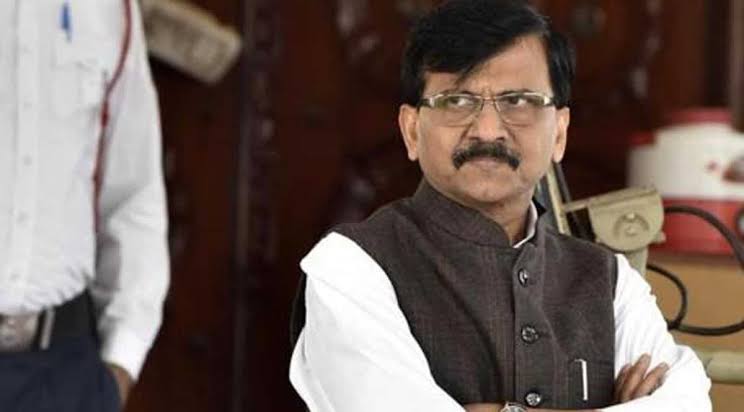
“Issues from Mumbai can be sent as parcel to Bihar” – Sanjay Raut

Sanjay Raut

A day after the Election Commission of India announced the schedule of Bihar elections to be held in three phases on October 28, November 3 and 7, Shiv Sena leader Sanjay Raut said if Bihar doesn’t have enough issues, Mumbai can parcel some. His jibe came in the backdrop of allegations that the death of Bollywood actor Sushant Singh Rajput, who hailed from Bihar, is being used as an election issue in Bihar.

“Elections in Bihar should be fought on the issues of development, law and order, and good governance, but if these issues have exhausted, then issues from Mumbai can be sent as parcel,” the Shiv Sena leader said.

The state police departments of Bihar and Maharashtra locked horns over the investigation into the death of Rajput who was found dead on June 14 at his Mumbai residence. Former Bihar DGP Gupteshwar Pandey accused Maharashtra Police of not co-operating with them. It is also being speculated that Pandey may join politics after he took a VRS.

The Shiv Sena may contest in the Bihar polls, Raut hinted. “Chief Minister Uddhav Thackeray will take a call on Shiv Sena contesting the Bihar elections in coming 2-3 days. The election in Bihar is held on caste and other things. Labour laws or farmers bills will not be an issue in Bihar elections,” Raut said on Friday.

The Shiv Sena leader has been made a party in the case pertaining to the demolition of Bollywood actor Kangana Ranaut’s office.
The MP has recently criticised the questioning of several Bollywood personalities by the Narcotics Control of Bureau in a drug case related to Sushant Singh Rajput’s death.

How President of India is elected ?

The president of India, is the ceremonial head of state of India and the commander-in-chief of the Indian Armed Forces.

The president is indirectly elected by an electoral college comprising the Parliament of India (both houses) and the legislative assemblies of each of India’s states and territories, who themselves are all directly elected.

Although the Article 53 of the Constitution of India states that the president can exercise his powers directly or by subordinate authority, with few exceptions, all of the executive powers vested in the president are, in practice, exercised by the prime minister (a subordinate authority) with the help of the Council of Ministers. The president is bound by the constitution to act on the advice of the prime minister and cabinet as long as the advice is not violating the constitution.

Origin

India achieved independence from the British on 15 August 1947, initially as a dominion within the Common wealth of Nations with George VI as king, represented in the country by a governor-general. Still, following this, the Constituent Assembly of India, under the leadership of B.R.Ambedkar, undertook the process of drafting a completely new constitution for the country. The Constitution of India was eventually enacted on 26 November 1949 and came into force on 26 January 1950, making India a republic. The offices of monarch and governor-general were replaced by the new office of President of India, with Rajendra Prasad as its first incumbent.

The Indian constitution accords with the president, the responsibility and authority to defend and protect the Constitution of India and its rule of law. Invariably, any action taken by the executive or legislature entities of the constitution shall become law only after the president’s assent. The president shall not accept any actions of the executive or legislature which are unconstitutional. The president is the foremost, most empowered and prompt defender of the constitution (Article 60), who has pre-emptive power for ensuring constitutionality in the actions of the executive or legislature. The role of the judiciary in upholding the Constitution of India is the second line of defence in nullifying any unconstitutional actions of the executive and legislative entities of the Indian Union.

Difference between democracy and republic is a minor one where democracy refers to the government elected by the people while republic refers to the Head of the state elected by the people.   

In India, Prime Minister is the head of government while President is the head of the state. In England, Prime Minister is head of government and Queen is the head of the state. Since Prime minister is elected by the people of England but Queen is not, England is a democracy but not a republic. But in India both the head of the government as well as state both are elected by the people of India, India is a democratic as well as republic.   

As per Article 52 of the Constitution of India, there shall be a President of India and the executive powers of the Union shall be vested in the President. The President of India is the first citizen and represents the Indian nation and does not, therefore, belong to any particular political party. Election of President is conducted by the Election Commission of India. He / She  is indirectly elected by the people of India as the representatives of the people through an Electoral College.   

The main reasons behind the indirect election of President of India as discussed in the Constituent Assembly were –  

• If the direct election of the President were adopted, the Presidential candidate who has to carry on an election campaign from one corner of the country to another will certainly be put up by some party or the other, which may cause political excitement and generate party feelings. Thus the person elected to the Presidential office through this means will never be able to forget his party affiliations.  

• A directly elected President may not be content with his position of a mere constitutional head and can claim to derive his authority directly from the people. So, if he wanted to assume real power, it would lead to a constitutional deadlock.  

The Electoral College constitutes the elected members of Lok Sabha, Rajya Sabha and State Legislative Assemblies who elect the President through proportional representation single transferable vote.   

Candidate who corners the majority i.e. more than 50 percent of votes is the winner but it is possible that four aspiring candidates A, B, C and D gets 35 %, 30% 25 % and 20 % respectively and no one gains more than 50% of votes. In this case, single transferable vote is used where each voter gave preference to each candidate as first, second, third of fourth preference. Since in the said example, D gets least number of first preference votes, He will be eliminated from the race and his votes will be distributed among the other contestants on the basis of the second preference.   

The Proportional Representation is followed by assigning a value to the votes of MP and MLA. Each member of the Electoral College who is a member of a State Legislative Assembly will have a number of votes calculated as follows : 

On vote of MLA = Total population of state/ Number of MLAs in the state x 1000 Fractions exceeding one half being are counted as one.   

For example , The population of Punjab is 1,35,51,060. Let us take the total number of elected members of the Legislature of Punjab to be 117. Now applying the aforesaid process, if we divide 1,35,51,060 (i.e. the population) by 117 (i.e. the total number of elected members), the quotient is 115821.0256. Therefore, the number of votes which each member of the Punjab Legislature would be entitled to cast is 115,821.0256/1000 i.e. 116.  

The value of a vote of MP is = Total value of vote of all MLAs/ Total No. of MPs  

In 2012 Presidential elections,  Value of vote of each elector in Parliament = 1025179/776 = 1321(without fraction)  

Total value of votes of Parliament = 776 x 1321= 1025096  

Total value of votes of State electors (4120 MLAs) = 1025179  

Total value of 4896 electors for Presidential election in 2012 = 2050275  

In this manner, total 4896 electors from the country will vote to elect the President of India through a single transferable vote. In order to be elected as President of India, he / she    

• Must be a citizen of India. 

• Completed 35 yrs in age. 

• Eligible to be a member of Lok Sabha. 

• Must not hold any Government post     

Supreme Court inquires all disputes regarding President’s election. President takes oath in presence of Chief Justice of India, or in his absence, senior most judge of Supreme Court.