CONCEPT OF EMOTIONS

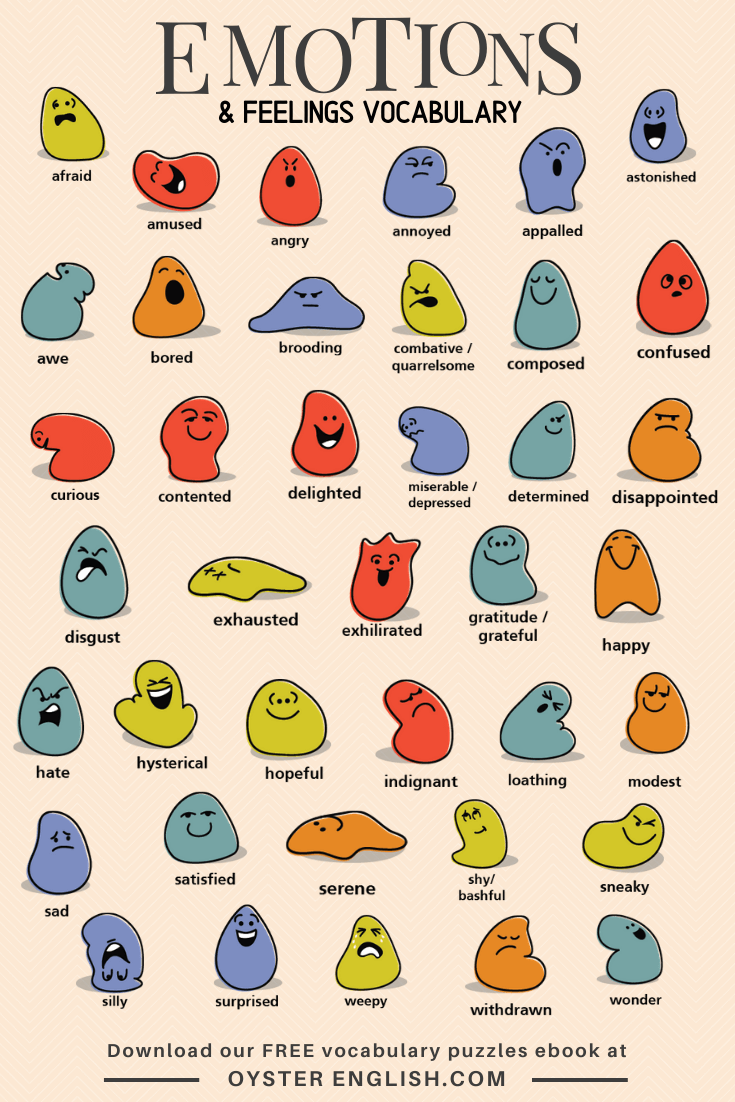
List of Emotions: 54 Ways to Say What You're Feeling

The word ‘emotion‘ is derived from a Latin word ‘emovere’ which means ‘to stirr up ‘ ,to agitate ‘ or ‘excite ‘. Emotions play a very significant role in human life . These are related with internal needs of human beings . Emotions stimulate the mind and as a result emotions became intense . During the stage of emotion an individual appears to feel impatience which enhances physical and mental readiness . To understand the clear cut meaning of emotion , the following definitions may be beneficial :

  • According to Mc Dougall , ”Emotion is a moved or stirred up state of feeling in an individual, linked with some tendency. There are physiological changes associated with each emotion frequently of a muscular or glandular nature”.
  • According to Gates , ‘Emotions are episodes in which the individual is moved or excited”.
  • According to Woodworth, ”It is a moved or stirred up state of an organism. It is a disturbed muscular and glandular activity”.

In simple words , emotions is any strong agitation of the feelings actuated by experiencing love, hate, fear, etc., and usually accompanied by certain physiological changes, as increased heartbeat or respiration and often overt manifestation , as crying or shaking.

Indeed, emotions appear to influence action in various ways. The stronger the emotion, the greater the activity to which it will give rise. It is a well-known fact that emotions disturb our logical thinking . Whenever any emotion is aroused we usually lose our head; functioning of our vital organs changes due to simulation of our nervous system . Emotions change our face expression . Under the influence of emotions , sometimes we are not able to perform the activity naturally . During emotions impossible thing can be made possible. Sometimes under the influence of emotions simple things become complex and intricate.

As a matter of fact, various emotions play a very significant role in the field of games and sports such as fear, anger, pride, jealousy, anxiety, frustration, worry, hope, enthusiasm , vitality, confidence, joy, etc. The emotions of fear, anger, frustration, pride, etc., have a negative effect on the movement of muscles . In fact, such emotions should be under control for better performance in games and sports.

WHAT DOES THE THE COLOUR SAY

Our lives are full of colours. Every person has a favorite colour and colour preference for their things. It helps us identifying and recognizing various objects. Colours are not just for a pleasant visual experience. Each colour has its meaning. Every colour tells something about human behaviour.

It is exciting to know how human behaviour can be studied through various elements. One such element is colour. Colours can not only impact how food tastes but can also tell a lot about a person’s nature and behaviour. Ascertaining human behaviour through colour study is known as colour psychology.

Every colour has an emotion associated with it. People respond to different colours in different ways. Some colours like red and orange act as stimulants.

Impact of Colours

Colour influences the way people perceive and understand things. The colour even impacts the appetite. You must have noticed most of the restaurants or food outlets use red and yellow colours in their menus, logos, and table clothes because the colours like red and yellow stimulate hunger like Pizza Hut, McDonald’s, Domino’s, and more.

You must have also noticed the chocolate flavoured products feel more chocolaty if they are brown in colour than any other colour. If any food item is pale, white, or dull coloured, it is usually perceived as plain or spice-less food.

The colour for product packaging is chosen according to the need and personality of the product as well as customers. Like, the kinder joy chocolate makes its packaging containing toys for girls in pink, and in blue for packaging having toys for boys. This is because the colour pink is usually associated with femininity and blue with masculinity. Even the products that claim to be natural and organic have their packaging mostly in green, as green is the colour of plants and trees (natural).

The red colour is associated with danger and evokes alertness or fear, and hence, it is used for signboards that have any sort of warning written on it. The railway crossing has stop signs board in red. You must have noticed that the computer displays warning or error signs if any website or file poses any threat to the computer security, the warning sign that pops up is also usually red.

Some colours and meanings and emotions associated with it:

  • White signifies purity and peace. On the other hand, it also plain and tasteless when it comes to food.
  • Red is associated with danger and fear. But it is also said to be the colour of love and passion and that’s why mostly red coloured roses are given to someone you love.
  • The green colour soothes the mind and signifies eco-friendly nature, while it is also the colour of jealousy and envy.
  • Yellow radiates happy vibes and energy. On the flip side, it means cowardice and irresponsible.
  • On one hand, the blue colour stimulates calmness of mind, and on the other hand, it depicts the lack of emotions.

A single colour can have multiple meanings and emotions associated with it according to the thing it is related to.

Through colour mapping, human behaviour can also be studied. This also helps in identifying and psychological disorders.

MARADONA: THE ARGENTINE BORN NEAPOLITAN

The world was in absolute shock and the Neapolitans couldn’t believe their senses when the world’s most expensive player moved to one of the world’s poorest cities and led the team which have never won a Serie A title to two Scudetti and a UEFA cup. The signing of Maradona itself was a huge reason for the people of Naples to celebrate but when he won them the titles they could’ve never imagined of, that’s the moment when the Argentine boy Diego Maradona became Santo Diego for them. With the streets of Naples painted in blue with flags and ribbons and chants hailing Diego pulsating everywhere, it took months for Neapolitans to fall back to their senses and accept that they have become the champions of Italy. And for one last time, Neapolitans were out on 25th November 2020, wearing the blue colour, carrying Diego’s photos and chanting his name through the streets of Naples, as their Saint, the greatest of all-time bid adieu to the mortal world.

Debates on Maradona’s might as a player and a person shall go on forever but for the city of Naples and its people, Maradona is so much more than just the greatest football player of all time. He will remain a godly figure, a ray of hope, an emotion that led them through their darkest times. He had the courage, conscience, and resilience to take football beyond the pitch and elevate it to a political act embarking millions of hearts with a sense of hope and feeling of redemption. 

From the slums of Buenos Aires to attaining the stature of a demigod for millions of Argentines and Neapolitans, Maradona was all a footballer could ever imagine of becoming. He has etched his name in golden scripts in the history of world football and the people of Naples, Argentina and football lovers across the globe through his charisma, leadership qualities and love for the game. Maradona might be flawed as a person but as a player, no one can ever reach the greatness he has achieved with a ball at his feet. He had qualities which no other footballing personalities can never boast about. He wasn’t a player but a politician who rebelled against the atrocities against the people. Football was just a medium for him. Diego’s might is beyond football and the politics of nations. Wherever he’s played, no one could ever own the player in Maradona. He was never a player for a particular club or country but the people, he represented them as one among them. That is the sole reason why the people of Napoli still celebrates Diego, decades after his departure, not as a person or a player but as Santo Diego, the Saint send by God to save them from all the atrocities. For Neapolitans, Maradona stays eternal, he’s the patron saint of Naples and champion of the people. And they celebrate him now and forever by singing,

‘OH, MAMMA, MAMMA, MAMMA, DO YOU KNOW WHY MY HEART BEATS?

‘I’VE SEEN MARADONA, I’VE SEEN MARADONA, AND MAMMA, I’M IN LOVE.’

Know where you stand!

Definition: The quality of being conscious of one’s own feelings and character.

Self-awareness is a person’s knowledge of themselves and their worth as a person.

Self-awareness involves being aware of different aspects of the self, including traits, behaviors, and feelings. Essentially, it is a psychological state in which oneself becomes the focus of attention.

Self-awareness represents the capacity of becoming the object of one’s own attention. In this state one actively identifies, processes, and stores information about the self. This paper surveys the self-awareness literature by emphasizing definition issues, measurement techniques, effects and functions of self-attention, and antecedents of self-awareness. Key self-related concepts (e.g., minimal, reflective consciousness) are distinguished from the central notion of self- awareness. Reviewed measures include questionnaires, implicit tasks, and self recognition. Main effects and functions of self-attention consist in self-evaluation, escape from the self, and amplification of one’s subjective experience, increased self-knowledge, self-regulation, and inferences about others’ mental states (Theory-of-Mind). A neurocognitive and socio-ecological model of self-awareness is described in which the role of face-to-face interactions, reflected appraisals, mirrors, media, inner speech, imagery, autobiographical knowledge, and neurological structures is underlined.

self-awareness awareness;

Self-Awareness is having a clear perception of your personality, including stre weaknesses, thoughts, beliefs, motivation, and emotions. Self-Awareness allows you to understand other people, how they perceive you, your attitude and responses to them in the moment.

importance of Self Awareness;

Self-awareness is important because when we have a better understanding of ourselves, we are able to experience ourselves as unique and separate individuals. We are then empowered to make changes and to build on your areas of strength as well as identify areas where we would like to make improvements.

How can you improve your self-awareness?

1. Meditate. Yes, meditate…

2. Write down your key plans and priorities. One of the best ways to increase self-awareness is to write down what you want to do and track your progress. …

3. Take psychometric tests. …

4. Ask trusted friends. ..

5. Get regular feedback at work.

Examples:

Self-awareness helps kids learn that how they see themselves may be different from how others see them. Kids who are self-aware are more able to recognize their strengths as well as their weaknesses. Self-awareness is a skill that helps kids with learning and attention issues learn self-reflection and self-advocacy.

Self-Awareness;

Self-Awareness is having a clear perception of your personality, including strengths, weaknesses, thoughts, beliefs, motivation, and emotions. Self-Awareness allows you to understand other people, how they perceive you, your attitude and your responses to them in the moment.

We might quickly assume that we are self-aware, but it is helpful to have a relative scale for awareness. If you have ever been in an auto accident you may have experienced everything happening in slow motion and noticed details of your thought process and the event. This is a state of heightened awareness. With practice we can learn to engage these types of heightened states and see new opportunities for interpretation in your thoughts, emotions, and conversations.

Having awareness creates the opportunity to make changes in behavior and beliefs.

Why Develop Self Awareness;

As you develop self-awareness you are able to make changes in the thoughts and interpretations you make in your mind. Changing the interpretations in your mind allows you to change your emotions. Self-awareness is one of the attributes of Emotional Intelligence and an important factor in achieving success.

Self-awareness is the first step in creating what you want and mastering your life.

Where you focus your attention, your emotions, reactions, personality and behavior determine where you go in life. Having self-awareness allows you to see where your thoughts and emotions are taking you. It also allows you to take control of your emotions, behavior, and personality so you can make changes you want.

Until you are aware in the moment of your thoughts, emotions, words, and behavior, you will have difficulty making changes in the direction of your life.

Self-Awareness in Relationships;

Having a clear understanding of your thought and behavior patterns help you understand other people. This ability to empathize facilitates better personal and professional relationships.


NARCISSISTS and the art of blame game

When we listen to the term narcissists the first thing that strikes in our mind about that person is someone who likes to be the center of attention, likes to dominate etc

The psychiatric literature defines narcissists as possessing specific traits, such as having a sense of entitlement or requiring excessive admiration. characterized especially by an exaggerated sense of self-importance, persistent need for admiration, lack of empathy for others, excessive pride in achievements, and snobbish, disdainful, or patronizing attitudes

BLAME SHIFTING

Narcissists like to externalize blame. It’s a fundamental feature of their modus operandi. As the theory goes, it would internally decimate them to fault themselves. It would cause emotional pain for them to bear which they cant and it could crush their “fragile” egos. So, their unconscious mind puts up defenses, Particularly, defenses of refutation and projection. They may know a mess has been made, but it can’t be because of them. It has to be someone or something else’s fault. These defenses keep them from feeling anxious or despise themselves. But are these really the reasons why narcissists blame others?

Narcissists always have to be right. That means others have to be wrong, until or unless one agree with them. Some narcissists solidly believe in their superiority. Accordingly, they always try to assert it. They want only validation and vindication.

It’s easy to call out the faults of others. We’re all flawed creatures. But narcissists go on the attack for a reason. They know how others really regard them. More importantly, deep down, they know how character-deficient they are. So, they build themselves up by tearing others down.

People with strong narcissistic traits are unwilling or unable to reflect on their shortcomings and destructive behaviours. As a result, they project, blame, and manipulate others to cope with their shallow and shaky self-esteem.

Manipulation tactics include diverting, attacking and putting others into defense mode, lying about others being worse and themselves being better, victim-blaming, and playing the victim.

They have unrealistically high expectations of life.Beneath the narcissist’s disguise are layers and layers of fallacious pretenses they’ve fabricated through the years.

As a consequence of their false sense of grandeur, overcompensation, unrealistic expectations and demands become a constant part of their life equation. They then nurture the image of an overgrown  baby who thinks the world owes them everything while clothing themselves in an appearance of superiority.

Knowing how the narcissist thinks can help you understand toxic individuals. But we all have toxic people in our lives who can’t be avoided, whether it be a parent or parent-in-law, a sibling or a sibling’s spouse, a friend of a friend, or a co-worker whom you just can’t stand.

You can’t blame someone for having narcissistic personality which  can be caused by genetic factors, environmental factors which suggests that people with narcissistic personality disorder have a damaged capacity for emotional regulation and emotional empathy.

Their mental condition is not by choice. But how they choose to act upon it is their choice — and they usually choose not to do anything about it.