Longest running light bulb since 1901: The case of Planned Obsolescence

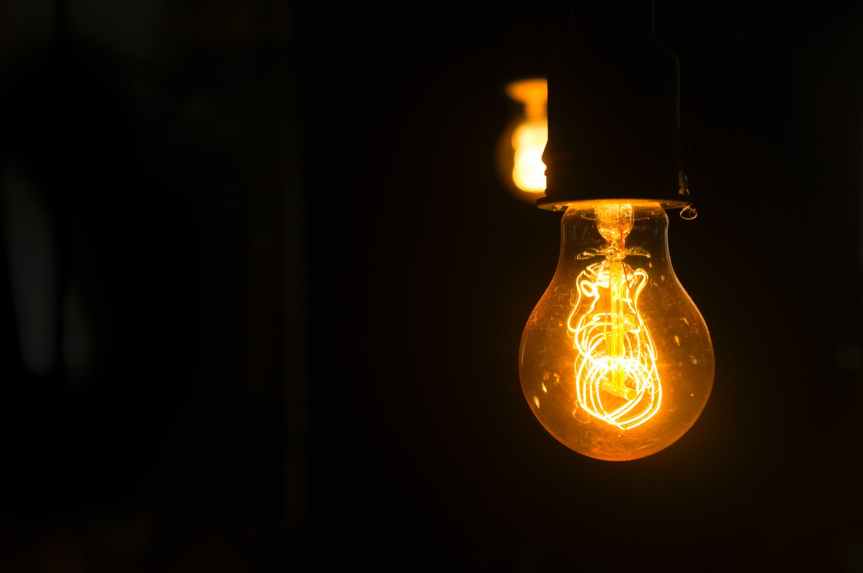
Centennial Light is the longest-running electric light bulb on record. It has been running continuously since 1901 and it has never been switched off. It is located in Fire Station 6 in Livermore, California. The ordinary dim light bulb looks like any other bulb and there is also a camera that live-streams the light bulb onto the internet.

Link for the official website and live webcam of the light bulb.

http://www.centennialbulb.org/photos.htm

It was manufactured in the late 1890s by the Shelby Electric Company, of Ohio, using a design by the French-American inventor Adolphe Chaillet. It has operated for over 100 years with very few interruptions. In 2011, it passed a milestone: One million hours of near-continuous operation. In 2015 it was recognized by Guinness World Records as the world’s longest-burning bulb.

The 60-watt bulb uses a carbon filament. One of the reasons for its longevity is that it seems to have an incredibly durable vacuum seal. There have been some researches done on bulbs manufactured by Shelby Electric Company of that era. But no one really exactly knows how these eternal bulbs were made as they were experimenting with various but the company was experimenting with a variety of designs at the time.

The electric model was quite different when first homes in The U.S had electricity. The servicing was the responsibility of the electric companies and customers would purchase entire electrical systems manufactured by a regional electricity supplier. The companies would also take care of the installation and servicing of any burned out electric bulbs would be replaced for free.

It made more logic for the suppliers to manufacture bulbs that would last longer and would burn out as least as possible. But this business model was later replaced and homeowners were responsible to change the light bulbs. It was soon realized that it would be more profitable to make cheaper bulbs that burned out faster. Since the mid-1900s goods were manufactured with a pre-determined expiry date aimed at forcing consumers into repeat purchases. This phenomenon has only been exacerbated in recent years. This can also be called planned obsolescence.

In 1924, the life span of the light bulbs was at least 2,500 hours. Phoebus cartel was formed in 1925 in Geneva. It comprised of the major incandescent light bulbs manufacturers at that time: Osram, General Electric, Associated Electrical Industries, and Philips. The cartel had directed their engineers to cut the life of the bulbs to 1,000 hours, which the engineers did by adjusting voltage and current. The cartel was intended to operate for 30 years but it was starting to fall apart in the early 1930s after General Electric patents expired and as the cartel faced competition from non-member manufactures from other regions. The cartel ceased its operations after the outbreak of World War II in 1939.

Planned obsolescence is a very critical area it does not only decrease the lifespan of the good but as a consequence, it is also wasteful. It is not sustainable for the environment and the main focus of this practice is to maximize profits. It also reminds us that technological innovations are often not accessible in favor of corporate greed.

References:

Leonardo Da Vinci’s Human Powered Helicopter Becomes Reality

Leonardo Da Vinci's Aerial Screw

It would be hard to call Leonardo Da Vinci anything other than a man ahead of his time.  Between 1452 and 1519, Leonardo did just about everything. He is most famous today for his skills as a painter, where he painted some small works- like the Mona Lisa and The Last Supper. His sketches of man were the most anatomically correct to date (The Vitruvian Man). He was also a famed sculptor, musician, architect, anatomist, geologist, cartographer, botanist, writer mathematician, engineer and inventor. He conceptualized things far beyond his time, including concentrated solar power, a calculator, the double hull for ships, a tank and, most interesting to those of us in the aviation industry, a helicopter.

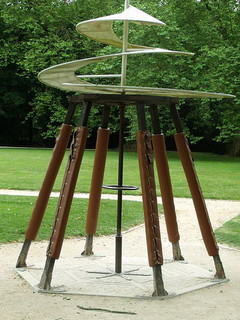
Over 420 years before the first helicopter was built, Leonardo Da Vinci sketched out what he called the Aerial Screw. This aerial screw was a man powered helicopter that required four men to spin cranks fast enough to generate enough lift to get off the ground.

Now, fast forward to 1980, 461 years after Leonardo passed away.  The American Helicopter Society sought to finally see the first human powered helicopter take flight. To win the prize money, which started at $10,000, the helicopter needed to reach at least 3 meters in the air (9.8 feet) for 60 seconds while being stable enough to have the center of the helicopter stay within a 10 x 10 meter box (32.8 x 32.8 feet). It would take 9 years from then before the first human powered helicopter even got off the ground when students at Cal Poly San Luis Obispo got their human powered helicopter 8 inches off the ground for all of 7.1 seconds. In the next 20 years, not much progress would be made so the Sikorsky Aircraft Corporation pledged additional prize money to try to see if that would inspire more innovation.

Sure enough, it did. Two teams, one from the University of Maryland and the other AeroVelo, were locked in a tight race to win. The university of Maryland got their man powered helicopter to fly for 65 seconds but it only reached 8 ft (about 1.8 feet short of where they needed to be) in August of 2012.

Finally, this July in Toronto, Aerovelo took the $250,000 in prize money with this flight:

While we don’t expect to see these Atlas human-powered helicopter’s flying around a city near you soon, this was a remarkable achievement. Congratulations to the Aerovelo team! And, over 480 years later, Leonardo Da Vinci’s vision of a human powered helicopter came to fruition.

Introduction to Bits Pilani

Photo by Ekrulila on Pexels.com

The Birla Institute of Technology & Science, Pilani, popularly known as BITS Pilani, was established in 1964. It is a Deemed to be University for higher education. BITS Pilani is accredited by the NAAC with ‘A’ Grade with a 3.45 CGPA. In addition, BITS Pilani is ranked among the top 10 Engineering institutes in India by India Today 2020 Ranking survey.

The campus of BITS Pilani is sprawled over an area of 328 acres and is equipped with all necessary facilities. It specifically emphasises research and development and considers it as an integral part of its higher education ecosystem. The Centre for Material Science & Technology, Embedded Controller Application Centre and Centre for Robotics and Intelligent System are a few among many research centres that are there at BITS Pilani campus.

BITS Pilani provides decent infrastructure throughout the college. Following are the key highlights:

  • Hostels:  There are eleven hostels for boys and one hostel complex for girls.
  • Sports: Swimming Pool, Volleyball Court, Tennis court, etc.
  • Laboratories: Civil Engineering Lab, Chemistry Lab, Computer Lab, Design Lab, Electrical Lab, Electronics Lab, Mechanical Lab, Physics Lab, Petroleum and Petrochemical Lab, etc
  • Library: Library has room for up to 8,000 students, offers 738 open-access study places and 246 open-access IT work stations. As well as the books and periodicals you expect, it is home to computing facilities for students.
  • Other facilities: Gym, Cafeteria, Wi-Fi campus. AC Classrooms, etc.

https://www.google.com/url?sa=t&source=web&rct=j&url=https://www.bits-pilani.ac.in/&ved=2ahUKEwiM-LfdjsfxAhWyILcAHZvnCZsQFjANegQILBAC&usg=AOvVaw2xUo3sgWjB8sN3Atv8Q2TH

https://www.google.com/url?sa=t&source=web&rct=j&url=https://www.bitsadmission.com/&ved=2ahUKEwiM-LfdjsfxAhWyILcAHZvnCZsQFjAPegQIMRAC&usg=AOvVaw01a4501s38SJU_HqRst1sn

Dr E SREEDHARAN: THE MAN WHO ADDED WHEELS TO INDIA’S METRO DREAMS

Dr Elattuvalapil Sreedharan, popularly known as the “Metro Man”, is primarily credited for changing the face of public transportation in India through his leadership in building Konkan Railway, designed and built in a record time of eight years and Delhi Metro, the largest and busiest metro in India, when he served as its managing director between 1995 and 2012. He is well known for his exceptional leadership qualities and unwavering determination in shouldering arduous responsibilities. During the national railway strike by about 1.7 million workers in 1974 which spanned over 20 days, he was resolute to work on the Metro rail network in Calcutta without a halt. The construction of Konkan Railway headed by Sreedharan was the only project in India which managed to overcome all the adversities faced during the first Gulf War while many countries around the globe including India suffered excessive fuel shortage. These incidents stand out as a testimony for his clairvoyant and exhilarating personality.

Dr E Sreedharan was born on 12th  June 1932, in Palakkad district of Kerala. He completed his primary education and college from Kerala before moving to Andhra Pradesh from where he had his education of Civil Engineering from Government Engineering College in Kakinada. After completing his education, he joined the Government Polytechnic in Kozhikode where he taught Civil Engineering subjects. He passed the Indian Engineering Service (IES) examination in 1953 while working as a trainee in Bombay Port Trust and was further appointed as the Probationary Assistant Engineer in Southern Railways in 1954. 

Dr E. Sreedharan played a key role in bringing a revolution in the country as a metro. Country’s first Metro project, Kolkata Metro was entrusted to him and its foundations were laid in 1970. Cochin Shipyard got rejuvenated under his guidance and several projects which were hanging for a long time gained momentum. The construction of Konkan Railway, the biggest railway construction endeavour in independent India was carried out under the watchful eyes of Dr Sreedharan. Its construction effectively connected the southwestern coast of India with the rest of the country in a point-to-point straight line. The Delhi Metro Rail Project is another example of architectural marvel constructed under his excellency connecting Delhi and its satellite cities of Faridabad, Gurgaon etc. Being the chief advisor of major metro rail projects of Kochi, Lucknow and Jaipur, he is also associated with numerous metro rail projects across the country. The latest endeavour Dr Sreedharan has undertaken is the reconstruction of Palarivattom flyover in Ernakulam district of Kerala, which he promised to construct within 8 months using the leftover budget of other four bridges constructed by Kochi Metro Rail Corporation. The government of Kerala doesn’t need to spend a penny on the bridge’s reconstruction.
Dr E. Sreedharan, a man so dedicated to his cause and service was honoured with Padma Shri and Padma Vibhushan by the country for his exceptional and unfathomable services. He was also awarded Chevalier légion d’honneur by the French government in 2005.

Happy Engineer’s Day

Every year, the country celebrates September 15 as National Engineer’s Day to appreciate the contributions of Mokshagundam Visvesvaraya. The Bharat Ratna awardee, Visvesvaraya was born on September 15, 1861 in a village called Muddenahalli in Karnataka. He studied Bachelor of Arts (BA) from the University of Madras and pursued civil engineering at the College of Science in Pune.

A Bharat Ratna awardee, Visvesvaraya had studied Bachelor of Arts (BA) from the University of Madras and pursued civil engineering at College of Science in Pune.

As years went by, the Engineering community began to develop greatly that   in the early 19th century, so many changes on production techniques began to take place. As the British engineers then able to design a simple machine that was powered by steam. i.e the steam engine. This simple evolution in British technology brought about great benefits to the government as a whole. So many aspects of productions were improved. Which in turn boosted the economic strength of the nation. All industries soon grew up as labor was now assigned to their new machine. The transportation, power and other basic sectors of the nation’s economy soon diverted to the steam engine which brightened their economy in return. The engine was used to create electricity and also used to move caravans to aid transportation. As time went by, this

evolution was spread all over the world and then Engineering found larger grounds for exploitation.

Everywhere you look you’ll see examples of engineering having a positive effect on everyday life. Cars are safer, sound systems deliver better acoustics, medical tests are more accurate, and computers and cell phones are a lot more fun! You’ll be giving back to your community.

Engineers don’t sit back and watch – they make things happen. Using innovation, creativity and a wealth of knowledge, engineering graduates are impacting the world unlike any other.

The world is changing, and engineers are the ones behind so much of this development. The majority of today’s services and products had some element of engineering involved in their conception at least, paving the way to long, fulfilling and healthy lives for the people influenced by them.

Engineers must be critical yet creative; curious yet capable; as well as ready to handle the constantly changing world.

The wide range of disciplines that fall under the engineering title mean that no matter what the prospective student’s interest, there’s bound to be one facet of the sector they’ll find enticing and engaging. Whether its civil, electrical, chemical or mechanical engineering, if you like tinkering, creating, designing or building, the engineering sector has a place for you.

In an advanced technological world, we need engineers to bring ideas into reality. By applying the principles of mathematics and science, engineers develop solutions to the world’s biggest technical issues.

You could find yourself doing anything from building new bridges to developing electrical sockets for refugee camps; working on special effects for blockbuster movies or testing aircraft and aerospace products. With a myriad of positions open to engineers in almost every field, graduates happily welcome the huge choice of careers they have the potential to explore.

The engineering portfolio knows no bounds, but these people are all working to the same common goal: building a sustainable world. Whatever you wish to contribute to society through your engineering dedication, nothing compares to the knowledge that you’ve achieved something that’s impacted people’s lives for the better.

With this infrastructure, people can go to other place with more comfortable and faster. For example, engineer had created many type of vehicles such as car, motorcycle and airplane that make human life now easier to go to other place. This can reduce of used of more energy by human nowadays. It is also highly important on a human level such as roads, railways and aircraft which all of these are allow people to travel over varying distances. The importance of this for encouraging more frequent personal contact between people cannot be understated. Integrated design has made the system highly efficient, and time wasted by travelling has been significantly reduced. We also can travel to everywhere in the world by transport whether by air, water or land transport for business or holiday.

In our homes, schools, offices, agriculture, automobiles, banks, security, and so many other areas, we observe the applications of engineering. In fact, you may not be able to read this article effectively without the underground works performed by engineers before the final manufacturing of the device. Engineering is a faculty that have been making machines with unique properties everyday. It is filled with experts that have great innovative ideas.

The internet has helped many businessmen in the marketing of products and selling some useful services to their customers. People sit with their computers and advanced mobile phones and promote their businesses through this channel. Presently, there are many websites created where people go and render services to get paid in turn for the work well done. An example of such website is the one called Fiverr. This is a website that has been a source of daily bread to people from different parts of the world. There are dozens of services being offered by sellers in that website including web and graphics designs, promotion of books and other tangible goods, application designs, sound cloud works, writing businesses, and so many others.

Engineering plays fundamental roles in banking institutions of various societies. In a bank, there are many engineers that engineer the affairs of the banking activities. Without these engineers, the banks will not function effectively. Banks are advancing on a yearly basis and they have been demanding the services of the engineers (especially Software and Networking Engineers) to make the advancement unique. Engineering in banks has added a lot to the quality of services that banks render to their customers

Engineering as a profession is a major player in the twenty-first century. Engineering is a unique profession and it has been changing the face of the earth to good. The world is upgrading and seeing clearly because of the importance of engineering profession in our society. In this piece of write-up or essay, the author detailed out the importance of engineering as it relates to agricultural, banking, automobile, educational, marketing, and health sectors.


Worlds first “Internet controlled robot” By 23 year old Indian boy : Covid-19

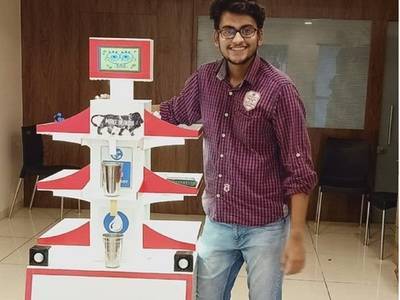
A 23 year old Thane engineer has developed worlds first-of-its-kind internet controlled robot which can be used to treat covid patients in hospitals.

The robot delivers food, water, beverages, medicines and even some good advices to the patients without the help of any hospital nurses or staffs.

This aCoro-bot’ eliminates the need of physical presence or contact of nurses or ward boys with the patient. It can deliver food, water, medicines and interact with the patients through a camera. Through a speaker, it can also advise patients on various precautions like sanitizing their hands before picking up anything from the robotic tray,” Says Pratik tirodkar the creator and designer of this robot.

This smart boy is also the founder of a start up ‘PNT solutions’. Whatsmore this young lad had developed other unique creations when he had barely stepped to college. This include world’s first ‘Humanoid’ with 47 body (axis) movements, a robotic bird ornithopter for various outdoor applicationsapplications,  a mini packaging robot and several others.

This genius has even given over a 100 guest lectures to the brain students of IITs and NITs in the country.

This robot can be operated from any part of the world through internet. The robot comes with 3 trays with a carrying capacity of 10-15 kg each, plus a 30-kg storage at the bottom, enabling it to serve the supplies to over a dozen patients at a time in the COVID-19 ward.

There are separate dispensers for water, tea, coffee, besides sensors for sanitizers which flow out quickly when the patient holds his hand below it and cuts off the supply when the hand is removed. Thus there is minimum wastage,” Tirodkar explained.

“Not only the COVID-19 patients, Coro-bot can also take care of itself. It has three nozzles at the back to give itself a disinfectant bath regularly, it goes on spraying sanitisers on both sides of the path, plus disinfects the ground it moves on by using UV lights” Says the genius.

The Coro-bot also has LED lights illumination to make it convenient for night usage as well, timers for indicating lunch-dinner, emergency button, besides a small PC like screen on the top for basic computer work or entertainment, he said.

This is now successfully deployed at Holy Cross Hospital in kalyan. Impressed by this robot over a dozen of other hospitals have ordered coro-bot in Mumbai.

The Coro-bot costs between Rs 1.60-Rs.3.80 lakhs, depending on various specifications like the load-carrying capacity, etc, and the Ornithopter is around Rs 30,000. I have a small manufacturing unit at Dombivali, but if I can get a good investor, I can get into mass production,” he said.

Pratik tirodkar is currently doing his Btech in instrumentation engineering from Bharati  Vidyapeeth College of Engineering, Navi Mumbai.

“JEE-MAINS”- The first step to a new beginning

JEE-MAINS stands for JOINT ENTRANCE TEST-MAINS which was earlier called as All India Engineering Entrance Examination (AIEEE). This is an undergraduate entrance test for taking admissions in various engineering and architecture institutes, mainly in 31 National Institutes of Technology (NITs), 23 Indian Institutes of Information Technology (IITs), and Government Funded Technical Institutes (GFTIs). This test is organized every year by National Teaching Agency (NTA) in India. This test was introduced in the year 2002.


STRUCTURE OF THE EXAM –
Until 2018, it was held only once after the CBSE exams, nearly in first week of April by the NTA since 2019 has decided to take this entrance test twice a year. Earlier, it held either electronically or online but now it happens only in the online mode.
It is a computer based entrance exam which consists of 2 papers:

  1. Paper 1 is for B.E. / B.Tech courses which only occurs in online mode from 2019, earlier there was an option of OMR based exam also. The qualification required for this paper is Physics, Chemistry and Mathematics as main subjects in class 12th.
  2. Paper 2 is for BArch and BPlanning courses. The knowledge of Mathematics, Aptitude, Drawing and Planning is required for being a part of this paper.
    The duration of the exam is 3 hours and candidates can apply for 3 subsequent years. LANGUAGE OF THE ENTANCE TEST –
    The exam was offered in English, Hindi and Gujarati. From January 2021, It has been planned to take the exam in eleven different languages namely Assamese, Bengali, English, Hindi, Gujarati, Kannada, Marathi, Odiya, Tamil, Telugu, Urdu.
    MODE OF EXAMINATION –
    • B.E. /B. Tech. (Paper 1) Physics, Chemistry and Mathematics, part 1, 2 and 3 respectively will be conducted in Computer Based Test mode only.
    • B. Arch (Paper 2) Mathematics and Aptitude Test, part 1 and 2 respectively will be held in Computer Based Test mode only. While Drawing Test or part 3 will be in offline mode on drawing sheet.
    • B. Planning (Paper 3) Mathematics, Aptitude Test and Planning Based Questions, part 1, 2 and 3 respectively will be held in Computer Based Test mode only.

PARTICIPATING INSTITUTES –
Institutes participating in the 2017 centralized seat allocation process included:
• The 31 National Institutes of Technology,
• The 24 Indian Institutes of Information Technology,
• 19 other central government or state government funded institutions including the three Schools of Planning and Architecture.
• Several self-financed institutes (during the spot round).
• Many other institutes used JEE (Main) ranks to fill seats through their own seat allocation processes.

NUMBER OF APPLICANTS

There are lakhs of students who appear in the entrance exam every year. The number of applicants has varied over the years, with the peak of over 1.35 millions in 2014.

  1. Starting from 2012, there were 1,220,000 students who appeared in the exam.
  2. In the year 2013, 1,282,000 students appeared.
  3. In 2014, 1,356,805 students appeared.
  4. In 2015, 1,304,495 students appeared.
  5. In 2016, 1,194,938 students appeared.
  6. In 2017, 1,186,454 students appeared.
  7. In 2018, 1,259,000 students appeared.
  8. From 2019, exam was conducted in two different phases. So, in 2019 in the first phase 929,198 students gave the exam while in second phase 935,741 students appreared for the exam.
  9. In 2020, in the first phase of the exam 921,261 students appeared whereas the second phase is still to be held.