ETHOS OF VEDANTA IN MANAGEMENT

Ethos of Vedanta are based on supreme truth & supreme soul. If you do good to someone , you will get good . If you are good , the whole world is good to you . Management ethics is the ethical treatment of employees, stockholders, owners and the public by a company. A company, while needing to make a profit, should have good ethics. Employees should be treated well, whether they are employed here or overseas. By being respectful of the environment in the community a compound ethics, and good, honest records also show respect to stockholders and owners. Most of us would agree that it is ethics in practice that makes sense; just having it carefully drafted and redrafted in books may not serve the purpose. Of course all of us want businesses to be fair, clean and beneficial to the society. For that to happen, organizations need to abide by ethics or rule of law, engage themselves in fair practices and competition; all of which will benefit the consumer, the society and organization.

When ethics are used in management , organization grow at a different level .

In these days of globalization, Vedanta-based values will surely have to make a sympathetic assessment of values of those brought up according to Islamic or Christian faith. However desirable it may be to universalize the teachings culled from the Vedanta philosophy, ultimately one will have to find in that same school the lessons of co-existence with alien cultures and roots.

Ethics are about making choices that may not always feel good or seem like they benefit you but are the ‘right’ choices to make. They are the choices that are examples of ‘model citizen’ and are the examples of ‘golden rules’ like; don’t hurt, don’t steal, don’t be dishonest, don’t lie. But if we take Ethics as a subjective philosophy then what will happen to these golden rules. Especially at the time of facing any ethical dilemma how one should decide-what is ethical and what’s unethical? Organization provides rules, regulations, code of conduct, protocols which provide guidelines to work, it shows how to walk, but it does not show the correct path to walk on. Ethical dilemmas faced by managers are often more real to life and highly complex with no clear guidelines, whether in law or often in religion. Ethics gives us a message to always look forward , which gives a message to look at a long go . Ethics teaches a management the most important thing that is forward looking approach . With this forward looking approach , it teaches to be always true to the organization .

Some of the principles of Indian ethos are :

  1. Know who you are & what is your purpose of existence , this concept is used in management because a management’s main motive is to know what who they have to manage & what they have to deal through
  2. Holistic approach : We should behave with others in the manner which we expect from them . Effectiveness & efficiency of an organization increases when the employees are highly motivated.
  3. Service motive : A person should have service motive & at the same time should have a smiling face while providing that service . An organizations main motive is to provide service to other , & they should not be profit oriented .
  4. Self sacrifice : One should have self sacrifice attitude , means sacrificing self ego , & should always be helpful to others

The Story of Spice King Of India From A Tonga Driver To A Millionaire

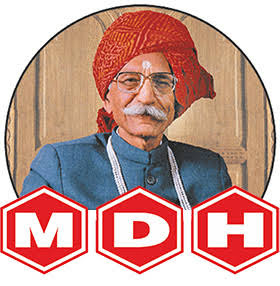
Hi everybody , one of the most iconic business Maharajas of India whose name was Mahashay Dharampal Gulati. This is a story of a man who went from being a tonga driver to building an empire with an operating revenue of 2000 crores. And the reason why his story is even more special is because he built a business during a time when people were struggling hard even to stay alive because back then India was still recovering from the massacres of partition.

 Dharampal Ji was born in the year 1923 in Sialkot, which today, falls in modern-day Pakistan in a Hindu family which had high ideals of honesty and simplicity. And since childhood, he was a carefree kid but with a sheer will to do something extraordinary. 

Gulati Ji, since childhood, experienced a lot of failures, he first dropped out of school in class 5 and tried doing several jobs where he couldn’t find any fulfilment. 

Then he tried selling Mehendi (Henna) from street to street. and even that did not work out. Then, his father tried to set up a separate shop for him and his brother and eventually, even that venture failed. So after spending years trying to do different kinds of jobs like selling wood, mirrors he finally decided to settle in and start running his father’s spice shop which at that time was named as Mahashian Di Hatti. 

But when he was just 25 years old and he began to settle down in his business and his business began to pick up the India-Pakistan partition happened. and within a midnight, the entire nation was in chaos. And because Sialkot became a part of Pakistan soon enough there was such a massive bloodshed that hundreds of innocent people were being killed due to the Hindu-Muslim riots. 

During that time they somehow managed to board a train that brought them to Amritsar and people, if you have seen the movie ‘Bhaag Milkha Bhaag’ you would pretty much have an idea of how terrible the situation of partition was. In fact, the very train that Gulati Ji’s family boarded had the dead bodies of the people who had been killed due to the massacres of partition.

 So, he stayed in the refugee camp of Amritsar for quite some time and then decided to move to Delhi wherein he became a tonga driver. Now people, back then he was already married for 7 years because he got married at the early age of 18. So he had responsibilities on his shoulders to provide good life for his family.

 But then after a few months he understood that tonga driver’s profession was not good enough to provide a good life for his family. And that is when he decided to restart his father’s business and set up a small spice shop in Delhi. And that is when he named his shop Mahashian Di Hatti which today is known by the name MDH

Now, people, even after partition India was still struggling hard to recover from the massacres of partition. There were millions of people who had lost their everything and India as a country was in a state of poverty wherein 80% of the entire country’s population lived below the poverty level. 

So, the markets, in general, never focused on quality because if you had to produce quality product during that time it would increase the cost of production, it would decrease your margins of profit and most importantly, because the cost of the product will increase majority of the peope will not be able to afford it eventually, resulting into decrease in sales. 

So running a viable business during that time by selling quality products was practically impossible. So, the majority of the poducts that were being sold in he market including milk and salt were being completely . 

For example, milk was being mixed with a lot of water to increase the quantity. And to compensate for the density, even harmful chemicals were used. Similarly, yellow soil was mixed with haldi (turmeric) and sawdust was being mixed with dhaniya (coriander) powder. And just like that, even spices were being adulterated to a large extent because it was practically impossible for a common man to be able to understand the difference between pure spices and adulterated spices.

But even during that time Gulati Ji poured his blood and sweat and always made sure that his shop always sold pure spices. Because he believed that the primary intent of any business should not be to make money but to do great service. And money should always be a bi-product of great service.

That is why Gulati Ji worked very hard to monitor every single process of the production of spices just so that he can give a common man of India, a taste of pure spices And people can you imagine how difficult it would have been ? 

He had to keep the cost low just so that he can match the cost of the adulterated spices. Number two, he had to keep his margins very thin because his cost of production was way higher as compared to adulterated spices. 

And most importantly he was making very less money, inspite of making the best product in the market. But all throughout these difficult times, this great man worked tirelessly with the hope that he’ll be able to build a brand one day that the mother of a common household can blindly trust upon when she makes a meal for her family. And guess what ? 

Slowly and steadily, people began to realize the differnce between Gulati Ji’s spices and the adulterated spices and soon enough people started to line up at his shop just to buy his products. And that is how Gulati Ji’s small shop- Mahashian Di Hatti Masale as in, MDH masale, became a popular brand in Delhi. 

And as his business started growing, he started to recruit his friends and family into his business with the hope that they will be able to stand by his belief of providing excellent quality spices to people. And he also started outsourcing a few processes like powdering turmeric. 

And yet again, when everything looked well, he faced even tougher challenges and here’s where ordinary people like you and me have something very important lesson to learn. 

People, Gulati Ji was a person who did every small thing in his shop starting from the raw material transportation to the grinding of spices, he participated in every single activity and that is the reason why he soon enough became an expert in finding out even a little bit of adulteration in his spices.

 So, when he was scaling up he was able to maintain the same excellent quality standards that he used to maintain while he was selling spices from his small shop. And because of his sharpness and diligence he was able to spot certain loopholes in his system which could have completely destroyed his business altogether.

 Because soon enough he discovered that the contractor who was powdering his turmeric was actually mixing Chana Dal to adulterate the turmeric powder. And when he spotted similar practices being followed in a lot of these outsourcing ventures.

 He understood that this loophole would betray the trust of his customers. And just to keep the trust of his customers he ended all of his outsourcing practices and poured in his entire life saving to open up his own factory wherein he could powder all the spices.

 And not just that. He was betrayed by his childhood friend who used to take a commission on every single material which used to come in from the supplier. And many of his friends and family who were supposed to help him grow, started causing a lot of troubles while this man was putting his blood and sweat just to make sure that he can sell pure spices to the mothers of India. 

And that is how, by facing a lot of hurdles Gulati Ji was able to establish a brand which the mothers of India could trust. And that is how due to the incredible hard work of Gulati Ji, today, people like you and me have the luxury of having mouth watering dishes like Chole Batture and Pav Bhaaji.

 And in this world where people talk about retiring at the age of 30 and people like you and me who often feel lazy inspite of achieving nothing. This legendary person was shooting for an advertisement even at the age of 97. 

So because of this incredible dedication and persistence combined with extraordinary business acumen today, MDH has reached a level wherein it exports its spices to US, China, Vietnam, UAE, Malaysia, Saudi Arabia, UK, Germany, Singapore, Sri Lanka with US exports alone valued at $351.6 million. And all of this put together, turned Gulati Ji into one of those icons because of whom India, today, is known for spices all across the world.

 Now the question is- What can we learn from this incredible story of the king of spice ?

 Lesson 1, we all need to realize that optimism is the faith that leads to greatness and the real test of optimism is how you choose to react even during the times of calamity just like partition in Gulati Ji’s life. While and optimist will try to see an opportunity in every difficulty, a pessimist will try to see difficulty even during the times of great opportunity. 

Lesson 2, while outsourcing is essential for scaling up of any business it is also important to note that outsourcing along with a lot of growth will also bring in a lot of loopholes. So, as a leader of a business organisation it is important that you do all the petty works in the beginning because what might look like petty experience in the beginning will eventually help you find the loopholes in your business which could potentially destroy your whole business. 

And last and most importantly, each one of us needs to understand that greatness comes at a cost that very few people can afford. For example, at that time, very few people could actually settle in for less profits by selling pure spices.

 Very few people had the ability to put in the hardwork to have a look at every single process just so that they could sell pure spices and keep the trust of an innocent mother when she wanted to make something tasty for her family because very few people understand that the cost of greatness cannot be paid with stacks of currency notes but with every ounce of blood and sweat that you put in to achieve it.

 Because at the end of the day, greatness comes at a cost of persistence. And once a great man said that “Nothing in this world can take place of good old persistence. Talent will not, which is why in this world there is nothing more common than unsuccessful men with talent. 

Genius will not, which is why unrecognised genius is practically a cliché. Education will not, which is why the world is full of educated fools. 

Persistence and determination alone are all powerful.” In our case they were powerful enough to turn an ordinary refugee into the spice king of India who will live in our hearts forever. Thank you.


Can Russia 'Checkmate' US in global market,with its new fighter jet SU-75 (checkmate)?

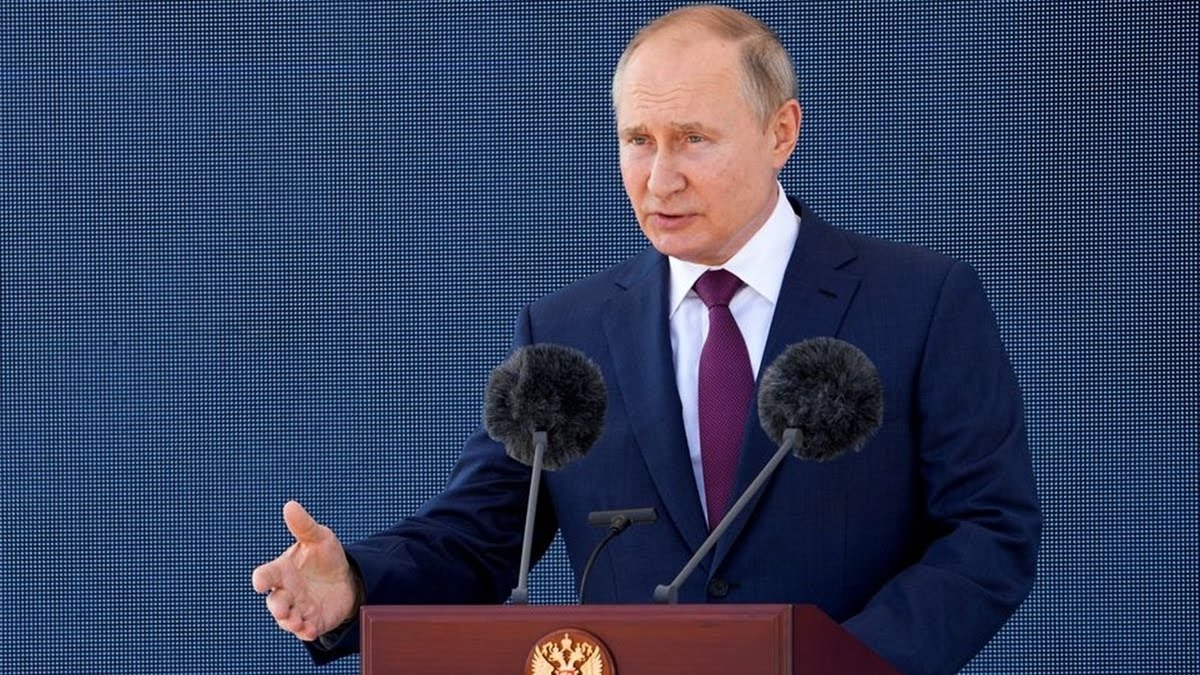
On Saturday, last week in MAKS-2021 arms show, a new fighter jet nicknamed ‘Checkmate’ was unveiled in Moscow, in presence of Russian president Vladimir Putin.This MAKS arms show is a chance for Russian industry to introduce the public to the next generations of its flagship vehicles, as well as for smaller players to pitch their prototypes and concepts to prospective buyers.

SU-75 (Checkmate) Specifications

This jet by Rostec subsidiary United Aircraft Corporation comes With split angled tails, a narrow fuselage suggesting presence of one engine, and diamond shaped wings, it looks similiar to f-35. This jet can fly up to 1,500 kilometers in a single sortie, while loaded with weapons and payload. It is Capable of continuous supersonic flight at the speed of 1,180 miles per hour and can share data with other fighters in the air and it’s also hinted that it might have AI abilities and drone control abilities. It can engage upto 6 targets simultaneously on land,sea or air.

Cost

This aircraft would cost between $25 million to $30 million and Moscow expects demand from the Middle East, Asia Pacific region and Latin America. The cost is extremely low as compared to F-35, which comes at a price of over $75 million.

Competition

It will compete with likes of Swedish JAS-39E/F Gripen,the Dassault Rafale, the Lockheed Martin F-35. and the Shenyang J-35. This jet is expected to take to the skies in 2023, with first batch expected in 2026. Moscow plans to produce 300 units of the aircraft over 15 years once the production begins.

Road ahead for this jet

Russia is known for its fighter jets like Mikoyan-Gurevich MiG-21 (F-16 killer), Mikoyan-Gurevich MiG-25 foxbat,
Mikoyan MiG-29 (Fulcrum),Sukhoi SU-30. Countries like China, India, Egypt, Algeria,are the major buyers of Russian fighter jets. Russian jets are known for their ruggidity as compared with their US counterparts. Cold war is over long ago,but rivalry between Russia and US is still there and even in weapon market. Let’s see how many buyers this new hyped jet will attract in the global market.

8 pieces of clinching evidence that show how IAF’s Abhinandan shot down a Pakistani F-16

"ELON MUSK" Biography

“Elon Musk” is an Entrepreneur, Engineer and Inventor. He was born in Pretoria South Africa on June 28 1971. His father’s name of Errol musk and mother’s name was Maye Haldeman. His father was a British electrical engineer and mother was a British Canadian model. When they divorced in 1980, Elon stated with his father in South Africa.

A few years later she began teaching himself computer programming and sold his first video game at the age of 12. For his undergraduate education he attended the Queen’s University in Kingston Ontario, in 1990. He eventually transferred to the University of Pennsylvania, earning dual degree in physics and economics. In addition to the bachelor’s degrees, he earned in physics and economics, he also holds an honorary doctorate in Design from the “Art Center College of Design” and an honorary doctorate in Aerospace engineering from the “University of Surrey”. He moved to California to attend Stanford for a PhD in applied physics in 1995, but quit within a few of days to pursue his own interest in avenues of technology and entrepreneurship. Later that year, he worked with his brother, Kimbal Musk, to develop the software company”Zip2″, which provided services to high end newspaper clients like “The Newyork Times” and the “Chicago Tribune”. After the successful sale of Zip2 to Compag in 1999, Musk went straight into his next venture an online financial service called “X.com”. Shortly after the company acquired a money transfer service called “PayPal”, through a merger, they began to focus their efforts exclusively on building this Internet payment service.

The Successful off PayPal ID mask to sell his stock in company to eBay for 165 million dollar. Elon Musk has married thirce twice the same woman. His first marriage was to Canadian other Justin Wilson in 2000 they had its children together in 2002. He invested his millions in her third company with in 7 years the company had designed the “Falcon” line of space launch vehicles and the “Dragon line” of multipurpose spacecraft and was making history with their privately funded innovation “SpaveX” received contracts from NASA to create a launch craft to deliver cargo to the International Space Station Tesla Motors was founded with the mission of designing and building electric car musk invested in the company and became its chairman in 2004, a after it Inception taking on an active role in the design of the “Roadster” which won the “Global Green” product award. During the recession when the company was adversely affected he went on to become the CEO and product architect of the company. A role he holds till today. After Designing the initial Concept for “Solar City” Musk remains its biggest shareholder. Today it is the second largest provider of solar energy in the United States with a focus on combating global warming Elon Musk and Justin Wilson divorced in 2008 in 2008 she began dating English actress Tallulah Riley and the two of them got married in 2010. The couple separated in 2012. In 2013 Elon Musk remarried Tallulah Riley really but the couple filed for divorce in 2014 and it was finalized in 2016. On August 12 2013, Musk announced Revolutionary plans for a high-speed travel technology that in theory could replace airplane travel as a faster and cheaper option. His company “SpaveX” is currently working on putting his plants into practice with the design intended to run entirely on solar energy he has envisioned high speed Transportation system known as the Hyperloop it incorporates reduced pressure tube in which pressurized capsules ride on air bearing driven by Linear induction motors and air compressors. Elon Musk for briefly in a relationship with American actress Amber Heard in 2016. But the couples split owing to their conflicting schedules. In July 2017, he announced that first successful test run of Hyperloop has been done in Nevada. He also said that he has got verbal approval to build a Hyperloop from New York city to Washington DC. Elon Musk was heavily involved in the design of Tesla Motors first electric sports car, the “Tesla Roadster” Musk received the 2006 ” Global Green” product design award for this vehicle, presented by Mikhail Gorbachev. “PATIENCE IS A VIRTUE AND I’M LEARNING PATIENCE. IT’S A TOUGH LESSON” Said by “ELON MUSK”.

CRED's Master Plan – CRED Business Study

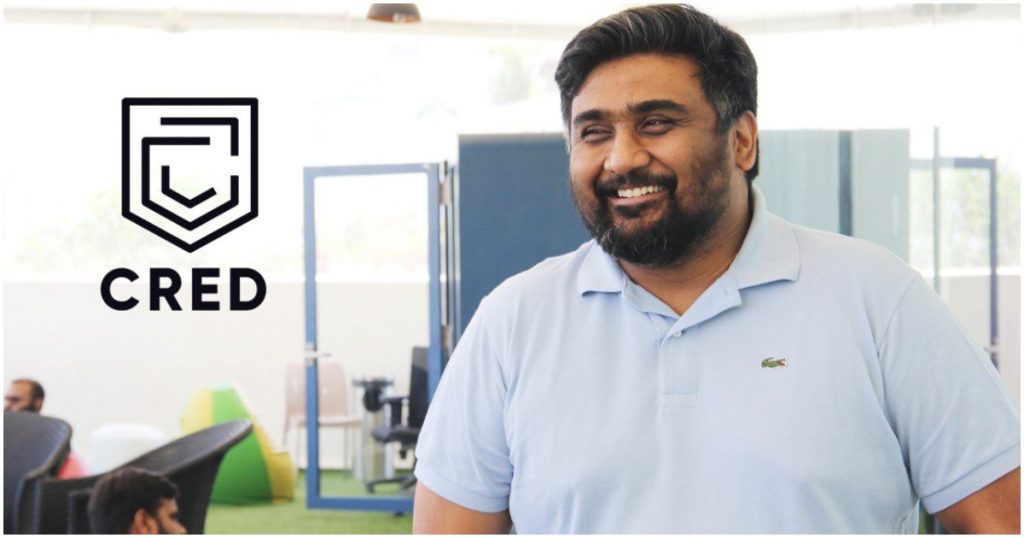
Hello everybody, CRED is one of the most fascinating business case studies in the Indian start-up ecosystem. In just 2 years, CRED went from 0 to hitting a $2B valuation and became one of the youngest Indian startups to reach this milestone. Now, the peculiarity of CRED is that in 2020 alone CRED incurred a massive loss of ₹360 crores which is a massive increase of 492% from 2019. And for every rupee of revenue that CRED generated they spent ₹727 which is a massive cashburn. 

We all have seen the result of massive expenditure into creative marketing. *beating noises* So now the question is, even with such massive losses how is it that CRED is getting so much funding ? And what exactly is Kunal Shah’s strategy ? Well, the beauty of this case study is the that if you only understand what CRED is doing you will more or less understand a large chunk of the Indian startup ecosystem because most of the giant companies like Jio, Ola, PharmEasy also operate in a similar fashion. and the most important factor that is common in all of them is that they extensively work on altering the behavioural design of the society. And the anticipation of that behavioural design, is what makes them billion dollar companies. 

This golden strategy works out in 4 discrete steps The first phase is what we call cash burn and here’s where The company, first identifies a major problem in the society, Number two, it designs a system to fix that problem Number three, it raises a million dollars in funding and lastly it entices the customers to use the product by giving out unbelievable offers which are almost too good to be true.

 A very simple example of the same is Jio. First of all, Jio identified internet accessibility as a major problem in the Indian society and then Reliance spent about ₹1.5 lakh crores into building the infrastructure required for Jio. And then in 2016 when Jio got launched, they gave out offers that almost looked impossible. -free sim cards, free calls and free internet. And the moment this announcement happened, millions of people rushed to buy Jio sims. And Jio did everything in it’s capacity to maximise it’s number of it’s users without even bothering about profits. Which is why, on top of the heavy investment that they made they further incurred a loss of Rs. 31 crores in 2016.

 Just like this, when CRED rolled out in 2018 they identified 3 of the biggest pains of a credit card holder which are; number one, hidden charges Number two, late fees due to forgetfulness and number three is the extra interest. And they rolled out massive cashbacks and offers to incentivise the act of on-time payment. And these offers were as amazing as free flight tickets extremely lucrative discounts and ₹1000 cashbacks also Fast foward to 2021, CRED today, has over 30 lakh users and today, CRED is already processing 20% of all the premium credit card transactions. 

So this is how within a short span of time, in Phase 1, companies present incentives in order to get customers to use their product, eventually, to increase their user base. And this is what brings us to Phase 2. Phase 2 is all about habituation. Once you bought a Jio sim, you never bothered about talktime, you never bothered about data. And we all recklessly got habituated to this newfound luxury of Internet Similarly, in case of CRED, the people who have 2-3 credit cards found it so simple to use CRED that they stopped using their conventional method wherein they had to go through this long list of their statements or putting in effort to dig in and find out whether there are hidden charges, on each credit card As a CRED user myself, I can’t even tell you how amazing it feels as compared to having this terrible feeling wherein you have no idea where the hell your money is going. 

In fact, there was a time when I thought that some hacker is stealing my money, alright ? and I’m not even kidding about this. So, this is how in Phase 2, using their super efficient system companies seemlessly get us habituated to new normal wherein we are no longer used to adjusting to the ‘hurdles of the system’. Here’s where we enter the most crucial phase of all, that is, Phase 3 and Phase 3 is what we can call as Irreversibility. 

A classy example of the same is Google Maps Now you might have observed that most of the people of our generation never even bother to remember the name of a landmark, street or chowk In fact, I’ve got so used to Google Maps that in my own city, if you leave me in some street I will start wandering as if I am in some strange jungle. That is how much I have got habituated to Google Maps And by the way, this does not include those superhumans who have this amazing memory to remember any route, even if they have visited that place only once and you know which friend am I talking about… So the point is, 

Google Maps has made our lives so easy that finding a way to a place no longer occupies our headspace and in case of CRED, users no longer have to remember to pay their credit card bills, they no longer have to remember when exactly is their due dates or bother about late fees. Similarly in case of Ola, we are no longer used to finding taxi on the streets In case of Jio, when there is no Internet you all know how you feel So you see, once these companies came in there has been an irreversible change in our behaviour wherein the small acts of booking a cab or paying a credit card bill has changed to such a large extent that we will never ever go back to our past system. 

Now CRED is yet to complete this phase which is why all the numbers that you see about CRED is in the negatives now because CRED is yet to change a significant part of the consumer behaviour. After this we come to Phase 4. Now, this is the goldmine that every investor waits for wherein the company starts making profits and if you look at the numbers, it literally looks like a goldmine. For that matter look at the numbers of Jio. In just 1.5 years, Jio became profitable that is in the 3rd quarter of 2017 with a profit of ₹504 Crores From there onwards it has been on a magnificent run wherein in 2020, Jio has posted a net profit of ₹5,562 crore and the reason why CRED is also sitting on a similar goldmine is because the customers of CRED are by default the richest 1% of the country.

 These people are literally the dream customers of any company. Their incomes are high, so they make expensive purchases on a regular basis which results into massive profit margins for every company And my sense is that in the 4th phase, CRED could leverage it’s golden customer base in three very very powerful ways. 

Number one, CRED could become this must have expense management app which will also allow it’s users to file their income tax and just like it cured the headaches of the credit card users by saving their money from hidden charges. CRED might also might start saving it’s customers a ton of money through their income tax rebate filings by turning the entire process of income tax filing into a very simple and efficient process and if this happens, I don’t think any of us will ever leave the CRED club.

So, Kunal sir if you’re watching this please help us out over here. Number two, CRED has one of the most valuable customer data in terms of purchase preferences For example, CRED clearly knows that Parsh loves to spend ₹20,000 into sports. Ganesh loves to spend ₹10,000 in education and books. So CRED could use this data to show relevant advertisements with exclusive coupons to get people to spend heavily on the things they absolutely love eventually, to make a comission out of it. 

Lastly, CRED could also became a bank for the top 1% of India and the reason why I think so is because there are two important factors that are very very crucial for any bank’s existence.

 Number one, every bank wants customers who have a lot of money deposited in their bank account after all their investment and expenses. And this money is what the bank uses to lend to businesses and customers in the form of home loans, car loans etc. 

Number two, every bank needs borrowers who pay back their loans judiciously. So that they can charge an interest on top of it eventually to make money out of the lending business. And guess what ? CRED literally has these exact people in it’s customer base which is why my sense is, CRED could literally extend itself to become a full fledged bank or maybe even become a full fledged portfolio management system for the top 1%.

 Eventually to become the most revolutionary fintech start-up of India So to put that straight, for ordinary people like you and me CRED might look like a weird idea but in reality it is a revolutionary idea coming from one of the most amazing entrepreneurs in the Indian start-up space. 

And we must consider ourselves to be extremely fortunate that we are getting to witness their processes and we must learn from these revolutionary start-ups that are going to redefine 21st century India forever.  

CRED's Master Plan – CRED Business Study

Hello everybody, CRED is one of the most fascinating business case studies in the Indian start-up ecosystem. In just 2 years, CRED went from 0 to hitting a $2B valuation and became one of the youngest Indian startups to reach this milestone. Now, the peculiarity of CRED is that in 2020 alone CRED incurred a massive loss of ₹360 crores which is a massive increase of 492% from 2019. And for every rupee of revenue that CRED generated they spent ₹727 which is a massive cashburn. 

We all have seen the result of massive expenditure into creative marketing. *beating noises* So now the question is, even with such massive losses how is it that CRED is getting so much funding ? And what exactly is Kunal Shah’s strategy ? Well, the beauty of this case study is the that if you only understand what CRED is doing you will more or less understand a large chunk of the Indian startup ecosystem because most of the giant companies like Jio, Ola, PharmEasy also operate in a similar fashion. and the most important factor that is common in all of them is that they extensively work on altering the behavioural design of the society. And the anticipation of that behavioural design, is what makes them billion dollar companies. 

This golden strategy works out in 4 discrete steps The first phase is what we call cash burn and here’s where The company, first identifies a major problem in the society, Number two, it designs a system to fix that problem Number three, it raises a million dollars in funding and lastly it entices the customers to use the product by giving out unbelievable offers which are almost too good to be true.

 A very simple example of the same is Jio. First of all, Jio identified internet accessibility as a major problem in the Indian society and then Reliance spent about ₹1.5 lakh crores into building the infrastructure required for Jio. And then in 2016 when Jio got launched, they gave out offers that almost looked impossible. -free sim cards, free calls and free internet. And the moment this announcement happened, millions of people rushed to buy Jio sims. And Jio did everything in it’s capacity to maximise it’s number of it’s users without even bothering about profits. Which is why, on top of the heavy investment that they made they further incurred a loss of Rs. 31 crores in 2016.

 Just like this, when CRED rolled out in 2018 they identified 3 of the biggest pains of a credit card holder which are; number one, hidden charges Number two, late fees due to forgetfulness and number three is the extra interest. And they rolled out massive cashbacks and offers to incentivise the act of on-time payment. And these offers were as amazing as free flight tickets extremely lucrative discounts and ₹1000 cashbacks also Fast foward to 2021, CRED today, has over 30 lakh users and today, CRED is already processing 20% of all the premium credit card transactions. 

So this is how within a short span of time, in Phase 1, companies present incentives in order to get customers to use their product, eventually, to increase their user base. And this is what brings us to Phase 2. Phase 2 is all about habituation. Once you bought a Jio sim, you never bothered about talktime, you never bothered about data. And we all recklessly got habituated to this newfound luxury of Internet Similarly, in case of CRED, the people who have 2-3 credit cards found it so simple to use CRED that they stopped using their conventional method wherein they had to go through this long list of their statements or putting in effort to dig in and find out whether there are hidden charges, on each credit card As a CRED user myself, I can’t even tell you how amazing it feels as compared to having this terrible feeling wherein you have no idea where the hell your money is going. 

In fact, there was a time when I thought that some hacker is stealing my money, alright ? and I’m not even kidding about this. So, this is how in Phase 2, using their super efficient system companies seemlessly get us habituated to new normal wherein we are no longer used to adjusting to the ‘hurdles of the system’. Here’s where we enter the most crucial phase of all, that is, Phase 3 and Phase 3 is what we can call as Irreversibility. 

A classy example of the same is Google Maps Now you might have observed that most of the people of our generation never even bother to remember the name of a landmark, street or chowk In fact, I’ve got so used to Google Maps that in my own city, if you leave me in some street I will start wandering as if I am in some strange jungle. That is how much I have got habituated to Google Maps And by the way, this does not include those superhumans who have this amazing memory to remember any route, even if they have visited that place only once and you know which friend am I talking about… So the point is, 

Google Maps has made our lives so easy that finding a way to a place no longer occupies our headspace and in case of CRED, users no longer have to remember to pay their credit card bills, they no longer have to remember when exactly is their due dates or bother about late fees. Similarly in case of Ola, we are no longer used to finding taxi on the streets In case of Jio, when there is no Internet you all know how you feel So you see, once these companies came in there has been an irreversible change in our behaviour wherein the small acts of booking a cab or paying a credit card bill has changed to such a large extent that we will never ever go back to our past system. 

Now CRED is yet to complete this phase which is why all the numbers that you see about CRED is in the negatives now because CRED is yet to change a significant part of the consumer behaviour. After this we come to Phase 4. Now, this is the goldmine that every investor waits for wherein the company starts making profits and if you look at the numbers, it literally looks like a goldmine. For that matter look at the numbers of Jio. In just 1.5 years, Jio became profitable that is in the 3rd quarter of 2017 with a profit of ₹504 Crores From there onwards it has been on a magnificent run wherein in 2020, Jio has posted a net profit of ₹5,562 crore and the reason why CRED is also sitting on a similar goldmine is because the customers of CRED are by default the richest 1% of the country.

 These people are literally the dream customers of any company. Their incomes are high, so they make expensive purchases on a regular basis which results into massive profit margins for every company And my sense is that in the 4th phase, CRED could leverage it’s golden customer base in three very very powerful ways. 

Number one, CRED could become this must have expense management app which will also allow it’s users to file their income tax and just like it cured the headaches of the credit card users by saving their money from hidden charges. CRED might also might start saving it’s customers a ton of money through their income tax rebate filings by turning the entire process of income tax filing into a very simple and efficient process and if this happens, I don’t think any of us will ever leave the CRED club.

So, Kunal sir if you’re watching this please help us out over here. Number two, CRED has one of the most valuable customer data in terms of purchase preferences For example, CRED clearly knows that Parsh loves to spend ₹20,000 into sports. Ganesh loves to spend ₹10,000 in education and books. So CRED could use this data to show relevant advertisements with exclusive coupons to get people to spend heavily on the things they absolutely love eventually, to make a comission out of it. 

Lastly, CRED could also became a bank for the top 1% of India and the reason why I think so is because there are two important factors that are very very crucial for any bank’s existence.

 Number one, every bank wants customers who have a lot of money deposited in their bank account after all their investment and expenses. And this money is what the bank uses to lend to businesses and customers in the form of home loans, car loans etc. 

Number two, every bank needs borrowers who pay back their loans judiciously. So that they can charge an interest on top of it eventually to make money out of the lending business. And guess what ? CRED literally has these exact people in it’s customer base which is why my sense is, CRED could literally extend itself to become a full fledged bank or maybe even become a full fledged portfolio management system for the top 1%.

 Eventually to become the most revolutionary fintech start-up of India So to put that straight, for ordinary people like you and me CRED might look like a weird idea but in reality it is a revolutionary idea coming from one of the most amazing entrepreneurs in the Indian start-up space. 

And we must consider ourselves to be extremely fortunate that we are getting to witness their processes and we must learn from these revolutionary start-ups that are going to redefine 21st century India forever.  

CRED's Master Plan – CRED Business Study

Hello everybody, CRED is one of the most fascinating business case studies in the Indian start-up ecosystem. In just 2 years, CRED went from 0 to hitting a $2B valuation and became one of the youngest Indian startups to reach this milestone. Now, the peculiarity of CRED is that in 2020 alone CRED incurred a massive loss of ₹360 crores which is a massive increase of 492% from 2019. And for every rupee of revenue that CRED generated they spent ₹727 which is a massive cashburn. 

We all have seen the result of massive expenditure into creative marketing. beating noises So now the question is, even with such massive losses how is it that CRED is getting so much funding ? And what exactly is Kunal Shah’s strategy ? Well, the beauty of this case study is the that if you only understand what CRED is doing you will more or less understand a large chunk of the Indian startup ecosystem because most of the giant companies like Jio, Ola, PharmEasy also operate in a similar fashion. and the most important factor that is common in all of them is that they extensively work on altering the behavioural design of the society. And the anticipation of that behavioural design, is what makes them billion dollar companies. 

This golden strategy works out in 4 discrete steps The first phase is what we call cash burn and here’s where The company, first identifies a major problem in the society, Number two, it designs a system to fix that problem Number three, it raises a million dollars in funding and lastly it entices the customers to use the product by giving out unbelievable offers which are almost too good to be true.

 A very simple example of the same is Jio. First of all, Jio identified internet accessibility as a major problem in the Indian society and then Reliance spent about ₹1.5 lakh crores into building the infrastructure required for Jio. And then in 2016 when Jio got launched, they gave out offers that almost looked impossible. -free sim cards, free calls and free internet. And the moment this announcement happened, millions of people rushed to buy Jio sims. And Jio did everything in it’s capacity to maximise it’s number of it’s users without even bothering about profits. Which is why, on top of the heavy investment that they made they further incurred a loss of Rs. 31 crores in 2016.

 Just like this, when CRED rolled out in 2018 they identified 3 of the biggest pains of a credit card holder which are; number one, hidden charges Number two, late fees due to forgetfulness and number three is the extra interest. And they rolled out massive cashbacks and offers to incentivise the act of on-time payment. And these offers were as amazing as free flight tickets extremely lucrative discounts and ₹1000 cashbacks also Fast foward to 2021, CRED today, has over 30 lakh users and today, CRED is already processing 20% of all the premium credit card transactions. 

So this is how within a short span of time, in Phase 1, companies present incentives in order to get customers to use their product, eventually, to increase their user base. And this is what brings us to Phase 2. Phase 2 is all about habituation. Once you bought a Jio sim, you never bothered about talktime, you never bothered about data. And we all recklessly got habituated to this newfound luxury of Internet Similarly, in case of CRED, the people who have 2-3 credit cards found it so simple to use CRED that they stopped using their conventional method wherein they had to go through this long list of their statements or putting in effort to dig in and find out whether there are hidden charges, on each credit card As a CRED user myself, I can’t even tell you how amazing it feels as compared to having this terrible feeling wherein you have no idea where the hell your money is going. 

In fact, there was a time when I thought that some hacker is stealing my money, alright ? and I’m not even kidding about this. So, this is how in Phase 2, using their super efficient system companies seemlessly get us habituated to new normal wherein we are no longer used to adjusting to the ‘hurdles of the system’. Here’s where we enter the most crucial phase of all, that is, Phase 3 and Phase 3 is what we can call as Irreversibility. 

A classy example of the same is Google Maps Now you might have observed that most of the people of our generation never even bother to remember the name of a landmark, street or chowk In fact, I’ve got so used to Google Maps that in my own city, if you leave me in some street I will start wandering as if I am in some strange jungle. That is how much I have got habituated to Google Maps And by the way, this does not include those superhumans who have this amazing memory to remember any route, even if they have visited that place only once and you know which friend am I talking about… So the point is, 

Google Maps has made our lives so easy that finding a way to a place no longer occupies our headspace and in case of CRED, users no longer have to remember to pay their credit card bills, they no longer have to remember when exactly is their due dates or bother about late fees. Similarly in case of Ola, we are no longer used to finding taxi on the streets In case of Jio, when there is no Internet you all know how you feel So you see, once these companies came in there has been an irreversible change in our behaviour wherein the small acts of booking a cab or paying a credit card bill has changed to such a large extent that we will never ever go back to our past system. 

Now CRED is yet to complete this phase which is why all the numbers that you see about CRED is in the negatives now because CRED is yet to change a significant part of the consumer behaviour. After this we come to Phase 4. Now, this is the goldmine that every investor waits for wherein the company starts making profits and if you look at the numbers, it literally looks like a goldmine. For that matter look at the numbers of Jio. In just 1.5 years, Jio became profitable that is in the 3rd quarter of 2017 with a profit of ₹504 Crores From there onwards it has been on a magnificent run wherein in 2020, Jio has posted a net profit of ₹5,562 crore and the reason why CRED is also sitting on a similar goldmine is because the customers of CRED are by default the richest 1% of the country.

 These people are literally the dream customers of any company. Their incomes are high, so they make expensive purchases on a regular basis which results into massive profit margins for every company And my sense is that in the 4th phase, CRED could leverage it’s golden customer base in three very very powerful ways. 

Number one, CRED could become this must have expense management app which will also allow it’s users to file their income tax and just like it cured the headaches of the credit card users by saving their money from hidden charges. CRED might also might start saving it’s customers a ton of money through their income tax rebate filings by turning the entire process of income tax filing into a very simple and efficient process and if this happens, I don’t think any of us will ever leave the CRED club.

So, Kunal sir if you’re watching this please help us out over here. Number two, CRED has one of the most valuable customer data in terms of purchase preferences For example, CRED clearly knows that Parsh loves to spend ₹20,000 into sports. Ganesh loves to spend ₹10,000 in education and books. So CRED could use this data to show relevant advertisements with exclusive coupons to get people to spend heavily on the things they absolutely love eventually, to make a comission out of it. 

Lastly, CRED could also became a bank for the top 1% of India and the reason why I think so is because there are two important factors that are very very crucial for any bank’s existence.

 Number one, every bank wants customers who have a lot of money deposited in their bank account after all their investment and expenses. And this money is what the bank uses to lend to businesses and customers in the form of home loans, car loans etc. 

Number two, every bank needs borrowers who pay back their loans judiciously. So that they can charge an interest on top of it eventually to make money out of the lending business. And guess what ? CRED literally has these exact people in it’s customer base which is why my sense is, CRED could literally extend itself to become a full fledged bank or maybe even become a full fledged portfolio management system for the top 1%.

 Eventually to become the most revolutionary fintech start-up of India So to put that straight, for ordinary people like you and me CRED might look like a weird idea but in reality it is a revolutionary idea coming from one of the most amazing entrepreneurs in the Indian start-up space. 

And we must consider ourselves to be extremely fortunate that we are getting to witness their processes and we must learn from these revolutionary start-ups that are going to redefine 21st century India forever.  

Ethical Hacking and IT

Data Technology (IT) is one of the greatest and most mainstream businesses as far as building up a profession on the planet today. Industry 4.0 has invited various innovative headways because of which specific IT experts have discovered conspicuousness, in IT organizations as well as in different enterprises. Maybe, the most famous among them is a vocation in online protection.

More than 1 billion network safety experts are required to be sought after over the course of the following 2 years in this field, making it perhaps the most worthwhile profession ways on the planet today. Notwithstanding being a mammoth association, National Health Services couldn’t shield themselves from a huge scope hack. A main nourishment application, MyFitnessPal, likewise went through a monstrous security penetrate where the individual information of more than 150 million clients was taken. The recurrence of these assaults has expanded off-late, making network safety basic in each association.

Huge banks and gems stores regularly enlist proficient hoodlums to endeavor burglaries, to recognize provisos in their security frameworks. Through these preliminaries, these establishments can reliably redesign their security frameworks, to ultimately arrive at a phase of becoming invulnerable. Taking motivation from this interaction, the network protection space has likewise reversed the situation on hacking and made it a legitimized idea through moral hacking.

Moral hacking is a cycle through which experts are paid to hack into an association, to pinpoint weaknesses in the security framework that the association needs to fix. Ill-conceived programmers have likewise discovered lawful conspicuousness in the IT world today because of the developing significance of moral hacking as an idea.

Moral programmers are recruited and prepared to utilize a huge number of methods to attempt to penetrate various associations. They help in the identification of holes inside the security framework as well as during digital assaults.

Government associations wherein digital fighting holds extraordinary unmistakable quality, moral programmers are accustomed to balancing endeavors made by noxious programmers with the expectation of outmaneuvering them, and protecting the information. Another use of moral hacking is of supporting in the examination that follows a digital assault.

Law implementation offices frequently recruit moral programmers to follow the means of a programmer and distinguish the culprit.

Thinking about the incredibly specialized nature of the calling, a basic degree is for the most part insufficient to build up an effective vocation in the field a particular preparing is fundamental. Many driving IT organizations today offer affirmed courses in Ethical Hacking that involve the nuts and bolts of PC organizing as well as intricate methods and driving cycles for keeping up with digital protection.

Think inventively and out-of-the-box:

Aside from these specialized ideas, it is additionally fundamental for moral programmers to have the option to think imaginatively and out of the container. The explanation programmers are developing and can penetrate confounded security frameworks is that they are reliably attempting to concoct new ways and approaches for something very similar.

Another significant quality to have is critical thinking, as the expertise can be fortified after some time, and sharpened with experience and down to earth openness. In this manner, getting ready for a vocation in moral hacking needs to involve a decent blend of both, specialized and reasonable viewpoints.

Be that as it may, there is an exceptionally clear ability hole in the business today, and subsequently, an absence of qualified staff in the field. Attributable to the hole between the interest and supply of moral programmers, this vocation way has gotten very rewarding with monstrous extension later on.

Work From Home Ends For 2.6 Lakh Infosys Employees

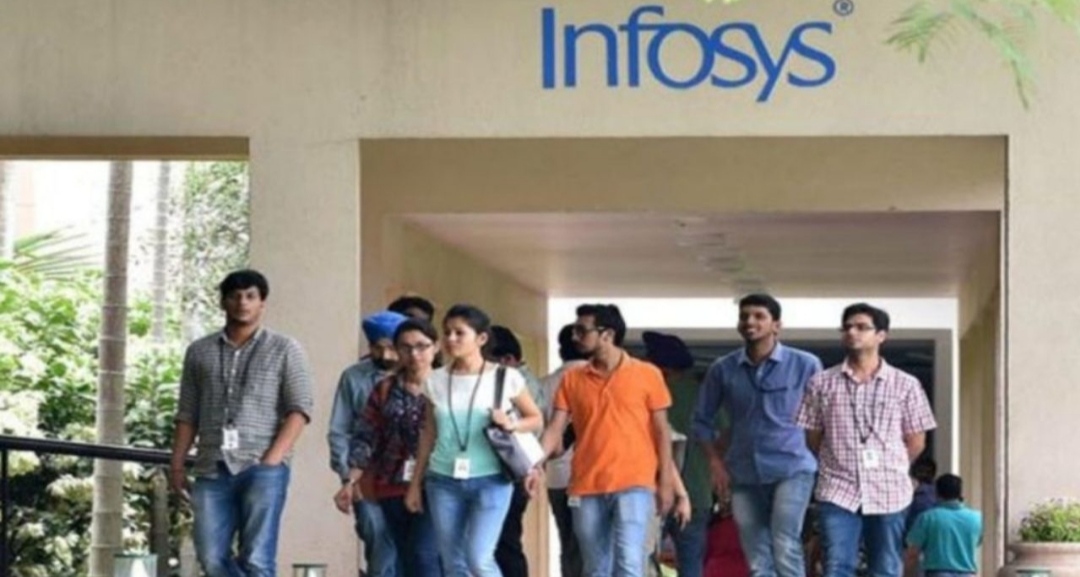
Infosys Ltd told employees last week they could resume work from offices, according to a memo seen by Reuters that offers an early sign of the country’s $190 billion technology services sector moving to get back on track.

Many IT businesses are mass-vaccinating their personnel to ensure that they are protected from Covid, while also preparing them to return to work once the situation gets back to normal, or the pandemic’s impact is reduced.

Most MNC employees have already received their first round of vaccination, and some have also completed their second dosage.

Infosys Ltd Will Resume Work From Offices….!!

Large corporations have allowed their staff to work from home but small businesses and startups are finding it difficult to adapt the work from home due to a lack of resources and technology.

Many corporations planned to reopen offices in full force at the moment, but with the second wave striking and more lockdowns being announced, these plans had to be postponed for a long period.

Infosys said the country’s safety situation seems to be improving, with growing vaccination coverage. Infosys did not respond to Reuters’ request for comment on the memo.

“We have been getting requests from certain accounts to allow their team members to work from Infosys campuses. In addition, some of our employees have also been asking to come back and start working from the office, as a personal preference.”

Infosys had a total employees of 2.67 lakh at the end of the June quarter, as compared to 2.59 lakh in the March quarter.

After reporting results last week, Infosys executives told analysts that roughly 99% of its staff was working from home, and the company would make efforts to get “more and more people to come to office” over the next couple of weeks.

Work From Home Ends For 2.6 Lakh Infosys Employees

Infosys Ltd told employees last week they could resume work from offices, according to a memo seen by Reuters that offers an early sign of the country’s $190 billion technology services sector moving to get back on track.

Many IT businesses are mass-vaccinating their personnel to ensure that they are protected from Covid, while also preparing them to return to work once the situation gets back to normal, or the pandemic’s impact is reduced.

Most MNC employees have already received their first round of vaccination, and some have also completed their second dosage.

Infosys Ltd Will Resume Work From Offices….!!

Large corporations have allowed their staff to work from home but small businesses and startups are finding it difficult to adapt the work from home due to a lack of resources and technology.

Many corporations planned to reopen offices in full force at the moment, but with the second wave striking and more lockdowns being announced, these plans had to be postponed for a long period.

Infosys said the country’s safety situation seems to be improving, with growing vaccination coverage. Infosys did not respond to Reuters’ request for comment on the memo.

“We have been getting requests from certain accounts to allow their team members to work from Infosys campuses. In addition, some of our employees have also been asking to come back and start working from the office, as a personal preference.”

Infosys had a total employees of 2.67 lakh at the end of the June quarter, as compared to 2.59 lakh in the March quarter.

After reporting results last week, Infosys executives told analysts that roughly 99% of its staff was working from home, and the company would make efforts to get “more and more people to come to office” over the next couple of weeks.

Entrepreneur

The word entrepreneur has its origin in the French language. It refers to the organiser of musical or other entertainments. An entrepreneur is one who organises, manages, and assumes the risks of an enterprise. An entrepreneur visualises a business, takes bold steps to establish undertaking, coordinates the various factors of production and gives it a start.Entrepreneurs are the owners of the business Who Contribute the capital and bear the risk of uncertainties in business life. Entrepreneur is action – oriented and highly motivated. He has the ability to evaluate business opportunities, to gather the necessary resources to take advantage of them and to initiate appropriate action to ensure success. Entrepreneur is associated with innovations.He is the main factor of production. Entrepreneur takes decision regarding what to produce, how to produce, where to produce and for whom to produce. He mobilises other factors of production namely, land, labour, capital, organisation and initiates production process. He is responsible for both the profit or the loss. In India, Birla, Tata, Modi are big entrepreneurs.

Many people dream of becoming entrepreneurs someday. But it made me realize that there other factors that needs to be taken into consideration. We need to ask ourselves are we ready to take the challenge to the outside world. Not everyone have the vision, innovation and creativity to become an entrepreneur. The individual must have a positive attitude and accept the responsibility, have discipline to meet their goals, and take action when the opportunity presents itself. Many prefer a job security and rely on a weekly paycheck, while entrepreneurs will take risks and doesn ‘t have that luxury to know the amount of their income.

Starting your own business can be exciting and it can become a well- rewarded experience. Being your own business includes great benefits,
Businesses trying to survive the current economic crisis need to pursue competitive advantages and empower them. Competitive advantage results from matching core competencies to the opportunities. The entrepreneur that I interviewed uses her experience, quality, consistency and overall learned what the customers really need and demand. Jane’s skills and experience enable her to respond faster to market changes. Jane has remarkable negotiation and sales skills that make her a most competitive in the market. There are also questions that you need to ask yourself to determine if you are ready to take the next step. Are you able to think of new ideas? Can you imagine new ways of solving problems? Entrepreneurs should think creatively. If you have ideas learn how take advantage of new opportunities. Be your own boss also means that you are responsible for making difficult decisions. The business world involves uncertainty. Do you avoid the uncertainty in life at all costs? If so, owning your own business is not the best.

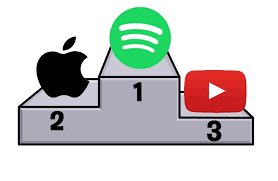
Business War – Apple Music vs Spotify vs YouTube Music

 Hi everybody. We all know that Spotify is by far the most successful audio streaming platform in the world. In fact, even during the pandemic itself, the stock price of Spotify went up by 70%. Now, on the outside if you look at the numbers while Apple Music has only 72 million users Spotify has more than 345 million users and the rest of the competition is not even close. On top of that, its recommendation and playlist have been so amazing that you’ll agree that it has given you an incredible experience every single time. But you know what guys? Fortunately or unfortunately, in 2021, Spotify is in deep-deep trouble. 

While on one side the losses of the company have been stacking up rapidly On the other side with the giants entering the streaming market Spotify is officially in a business war. And what we are witnessing right now is perhaps one of the most interesting Internet business wars in history. And if you pay very close attention you’ll be able to learn some incredible business lessons that you can apply to your startup and most importantly, as an investor, if you’re investing into US stocks this streaming war is going to be very very crucial. The question is- What is this business war and most importantly as an entrepreneur, what are the business lessons that you can learn from this iconic case study. 

People, the music streaming revolution of the world started way back in the 1990s. Now, back then from 1984 to 1999 CDs were the ultimate instrument of the music industry. The distribution channels of the music CDs made the record labels and musicians billions of dollars every single year. But in the 1990s the Internet and the computer revolution began to pick up resulting into massive penetration of both, computers and web, into the American household. Now, people if you see this is a fine culmination of technology and connectivity and if you observe closely every time this golden combination happens, it gives rise to a new generation of startups. In the music industry, it was the company called Napster which was started way back in 1999 by Shawn Fanning and Sean Parker. 

In simple words Napster was nothing but a music torrent instead of buying a CD for 20 dollars you can download an MP3 file for free and share it with your friends And you know what guys? This invention was a disruption in the making because what followed next was the first wave of music streaming. And this wave did not just change the way people listen to music it literally changed the entire music industry. Within a few months it had 4 million song downloads and in less than a year, Napster had 20 million users. Now, initially, people thought that it’s no big deal. But in sometime, the numbers of Napster exploded further, to 60 millions users by 2001. And this is when the record labels began to realize that their stores are incurring losses and when they actually computed it shocked them to see that they were incurring more than $100 million in losses due to Napster.

 And that’s when hell broke loose for Napster. They got slapped with a lot of lawsuits and what followed next was the historic suit that led Napster to pay millions of dollars to artists, creators and record label companies eventually they had to shut down their operation in sometime. Now, while most people thought that piracy will be gone and that CDs will be back as it turns out, Napster left the market but the behavioural design of the society had been so strongly altered that people just didn’t go back to CDs at all. 

The CD stores were still closing down and other piracy websites took the place of Napster. Companies were still incurring millions of dollars of losses because people just wouldn’t pay $20 for an album. And this is where record labels were desparately looking out for an alternative to actually get their distribution channel back on track. And while all of this drama was going on, there was one man who noticed this and decided to become an opportunist during the times of chaos. And this man was none other than the legendary Steve Jobs himself and the solution that he brough to the table was to give people ultra cheap music and to give record labels a non-piratable distribution channel for their music. And this solution was none other than the iconic iPod and the rest is history. 

The record labels again started to make billions of dollars customers fell in love with the iPod as it brough along the second wave of music streaming revolution.  There were two major problems over here. Number one, not everyone owned an iPod or a Macbook and number two, not everyone could pay for each album. but everyone had the computers and the Internet. So, guess what? This culmination of technology and connectivity, again, gave rise to another generation of startups and the most successful player in this segment turned out to be none other than Spotify which started way back in 2006. 

Spotify learnt from the pains of the customers and decided to build a music streaming platform that could be used by everyone and could be used by everyone for free and this is where Spotify deploys its freemium model with an option to subscribe but this time it wasn’t easy because they knew what happened to Napster and the subscription model was way more complex than the discreet model of iTunes. Because when it comes to CDs or iTunes, it was pretty straightfoward if you buy a $1 album from iTunes 80% of that goes to record labels and 20% of that is mediator fees and that’s it. 

Whereas in case of subscription, it’s quite difficult because you are giving unlimited access to everyone for a defined fees. So, the revenue distribution itself becomes very very complex. But fortunately the Spotify guys got through it and they spent about $9.8 billion dollars between 2006 to 2018 just to get the music rights without legal issues and they built the freemium model to make music accessible to everyone. And what followed next was the third wave of music streaming that is, unlimited legal music which could be listened for free. As a result of which, again, Spotify exploded and today it is a market leader with the highest number of paid subscribers. But again there were 3 problems.

 Number one, ad revenue was not enough to pay the artists well and because the music is free, very few people actually opted in for a subscription. Number two, there was no profit for Spotify, in fact the company suffered massive losses during its rise. And last and most importantly things got really ugly with the artists. Taylor Swift and Adele broke up with Spotify over low pay. And again it led to a series of troubles for them from the creators’ side. Now, the company was badly cornered. With massive losses on one side annoyed artists on the other and on top of that they’ve now got freebie loving customers. And this gave them no option but to run a lot of ads to push their customers to buy Spotify Premium and hence a lot of interruptions. And this is when ladies and gentlemen 2 more giants decided to step into the game.

 In 2015, Apple introduced that it’s going to kill iTunes and launch the subscription model which was Apple Music as direct competition to Spotify. And in just 5 months, in November 2015, YouTube entered the streaming wars with YouTube Music. Now, if you observe this streaming war very very closely guys, you’ll see that both these services, that is, Apple Music and YouTube Music are built over the weaknesses of Spotify. And with just a few moves here and there Spotify could be killed and there could be another wave of social media revolution on YouTube. The question is- How is that even possible? If you look at this table, Apple Music deploys a premium model and its only for Apple users while Spotify and YouTube Music is for everyone and they use the freemium model which gives them a wider audience. 

Now, if you look at the user base, Apple has 1.65 billion users Spotify has 345 million users and YouTube, well it’s got 2.1 billion users. But when it comes to paid subscription Spotify is way ahead of Apple because of its accessibility through both Android and Apple. While Apple Music has only 72 million users but all of them are paid Spotify has 345 million users out of which 155 million of them pay. Now, the X factor for Spotify over here is its amazing playlists and podcasts that is integrated into the app. And this is where we saw Spotify coming out with Spotify Originals like 22 Yarns and signing up creators like Joe Rogan to become Spotify exclusive. But Apple and YouTube both also have their podcast but separately. YouTube has Google Podcasts and Apple has Apple Podcasts. And now, guys here comes the big difference. 

While Apple Music generates a revenue of $4.1 billion with very less profits because it’s just an ecosystem product Spotify being a standalone incurred a loss of $698 million inspite of generating a revenue of $9.2 billion. And YouTube? Well it’s way ahead of the game with $19.7 billion dollars in revenue and this is mainly because of it’s video service. Fun fact: YouTube is one of the most popular platforms to discover musicians and artists. Now, guys, if you take a step back (I don’t know if you see this) but YouTube can literally accommodate every single X factor of Spotify and Apple Music in the YouTube app itself. Number one You kind of already search for songs through lyrics from Google and YouTube which is the USP of Apple Music. 

Number two, you can ask Google which song is playing and it will find that out for you which is nothing but a Shazam feature. And most importantly Google has Google Podcasts and a huge base of creators who are already making podcast on YouTube. Now, every single creator knows that YouTube is by far the best platform for creating content. And users know very well how well YouTube understands them and their preferences. Now, if YouTube rolls out an update tomorrow saying that Google Podcasts is now integrated into YouTube as YouTube podcasts. 

Do you realize what’s going to happen? It is going to lead to another huge wave of creators who will flock to upload their audio content on YouTube because there are already a ton of audio creators who are desperately wanting to be on YouTube. And if given a chance with YouTube algorithm, it’s going to be a game changer for them. And the best part is, because it’s available on both Android and iOS the user base is insanely huge. So, basically YouTube literally has the best of both Spotify and Apple. And when integrated together, it will become unbeatable in the content space just like Instagram is right now for social media networks. And my sense is, one day there will be a grand announcement that’s going to change everything for Spotify. This is what, ladies and gentlemen is happening in the streaming wars. Now let’s move on to the most important part of the video and that is what are the lessons that we can learn from this iconic case study. 

 Now, let’s talk about the lesson from the case study. Lesson number one. People, always remember that being the first mover can sometimes be a terrible thing and as far as my observation goes it’s almost every time a terrible thing. And it’s always better to be a second mover so that you can build upon the mistakes made by the first mover. In this case if you see, iTunes built over Napster Spotify built over iTunes and Apple Music and YouTube music built over Spotify. So, if you’re the first mover, you’ve got to be very very careful and if you’re the second mover you’ve got to be very very happy, at the same time, very very sharp about the mistakes that have been made by the first mover. 

Lesson number two companies might come and go but the behavioral design they leave behind will stay forever. In this case, it was the paradigm shift from CDs to streaming. So, while most people will neglect it and try to reverse it you as an entrepreneur can be an opportunist and can bring about a solution which is forward looking rather than backward looking. In this case the opportunist was none other than the legendary Steve Jobs himself who built upon the behavioral design left behind by Napster. 

And most importantly, always remember guys the culmination of technology and connectivity is always the sweet spot for innovation and it will give rise to the most revolutionary startups. In this case, it was the computers and the Internet but in the next 3 years it’s going to be the green tech and the Internet, blockchain and the Internet and most importantly Artificial intelligence and the Internet.  Bye-Bye.

SOCIAL ENTREPRENEURSHIP


SOCIAL ENTREPRENEURSHIP

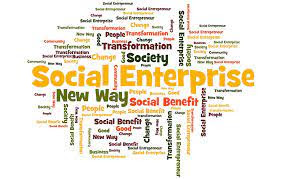
social entrepreneur is an individual who chases new applications that have the prospects to clear-up community-related issues. These individuals are fully prepared to take on the risk or threats and attempt to originate optimistic commute in society through their creativity and initiatives. 

Entrepreneurs are those individuals who volunteer into new region first and foremost with aim of making revenue out of the same. Of course there they socially responsible also and have the obligation of contributing to the well being of the society in which they operate; but this obligation is secondary. In social entrepreneurship this obligation of contribution to social well being is primary and in a way profit takes a back seat or is more or less secondary but essential to the survival!

A social entrepreneur is somebody who takes up a pressing social problem and meets it with an innovative or path breaking solution. Since profit making is a secondary objective, therefore they are people who are passionate and determined about what they do. They possess a very high level of motivation and are visionaries who aim at bringing about a change in the way things are.

By definition social entrepreneurs are great people recruiters who present their ideas or solutions in a way that many people, who are either part of the problem or surrounding it, recognize a need for change and get onboard the change bandwagon. Thus mobilizing the masses for bringing about change is a hallmark of a social entrepreneur.

Social entrepreneurs operate with an aim of changing the face of society. Be it health, sanitation, education, they are present everywhere. There are people even who work on bringing about change in the modern innovations because their impact has been detrimental to human life. They thus work towards improving systems, creating new solutions, laying down fair practices.


Some of the very famous people who inspire others to take up social entrepreneurship are:

  • Susan B Anthony: was the Co-Founder of the first women’s temperance movement and a prominent American civil rights leader for women’s rights in the 19th century.

  • Vinobha Bhave: is a prominent figure in Indian modern history and was the founder and leader of the Land gift movement that helped reallocate land to untouchables.

  • Maria Montessori: a pioneer in education. Developed the Montessori approach to early education in children.

  • Florence nightingale: she laid the foundation for the first school of nurses and worked to improve the hospital conditions.

  • Margaret Sanger: She was the founder and Leader of the planned parent hood federation of America, championed the family planning system around the world.

These are examples of some people who fought for what they believed in and brought about varying degrees of change in their respective spheres of work.

Social entrepreneurship has witnessed a boom in the past few years with more and more people getting attracted to it. There is now a healthy competition and world class graduates are giving up lucrative jobs to work and contribute in meaningful ways towards the society.

As Bill Drayton would say it aptly ‘Social entrepreneurs are not content just to give a fish or teach how to fish. They will not rest until they have revolutionized the entire fishing industry’. Such is the passion and the commitment required to be called a social entrepreneur that it may not be misappropriate to say that it is more challenging that traditional entrepreneurship!

Advantages of a social enterprise that are entrepreneur specific like:


  • Social entrepreneurs find it easier to raise capital. There are huge incentives and schemes from the government for the same. since the investment industry here is ethical, it is easier to raise capital at below market rates.
  • Marketing and promotion for these organizations is also very easy. Since a social problem is being tackled with a solution, it is easier to attract attention of the people and media. The degree of publicity often depends on the degree of uniqueness of the solution.
  • It is easier to garner support from likeminded individuals since there is a social side to the enterprise. It is also easier to get people onboard at lower salaries than compared to other industry.

<

p style=”line-height: 1.4;margin: 0px 0px 15px”>

Advantages of Online Business

With the development and growth of technology in today’s world, people go for much easier and faster ways to do absolutely anything. Nowadays everything can be easily done with just some clicks here and there. From paying your bills to shopping for your birthday, from wanting to eat a small burger to planning a huge party, almost every single thing is possible online. 

Do you want an Android mobile phone, or do you want a flight ticket to go meet your family? Name it and you got it. Are you still stuck in your mind thinking “Should I start a business online?” If yes, then go nowhere else. We are here to clear your doubts about it and persuade you to just go for it. So yes, you should do business online. Now let’s see why. 

Why Should You Do Business Online? 

We will tell you all about why to start a business online. We are going to shoot you some persuasive points to start a business online. 

  1. Extremely inexpensive

When starting it will be a little expensive but just to fuel the process. Once you have started an online store or maybe an online blog, then you just need a website with a domain name and your business will take off in no time.

  1. Flexibility of time

Depending on the type of online business you wish to start, you will have the flexibility of time and work. You can choose what time of the day you want to work. But this does not mean you relax all the time thinking it is going well. You need to work according to what your business requires. But you can do that at your own convenient time.

  1. Choose your location

In an online business, you are not forced to sit at a desk all the time. You can work from the comfort of your home. You don’t need to spend hours daily stuck in traffic to reach your office or you don’t need to ask for a weekend off to go for a trip with your family. You have the freedom to choose from where you want to work.

  1. Huge income and growth potential

Before starting an online business you should know that your income won’t be defined by the number of hours you work. It solely depends on the amount of progress and productivity of your work. Try to work on the important parts and reduce your time of work. The main focus should be on consistency. Unlike those 9 to 5 office jobs, online business runs even when you relax for some time.

Photo by Michael Burrows on Pexels.com
  1. In action all the time

Online businesses can run all 24 hours a day, 7 days a week. It does not require you always hovering over your screen to work all the time. Keep track of what important is going on and relax for a bit. It provides the owner, flexibility in how they want to work.

  1. Outsourcing your work

As you grow in your online business, begin to earn some money you can start to outsource your work to other contractors or hire them. You can also hire some employees to help you ahead in your journey. Outsourcing work does not cost a lot of money instead it helps you grow your business more and at significantly higher levels.

  1. Focus on important things

One of the most useful perks of starting a business online is that it allows you to focus on the most important aspects of your life rather than just working 24/7. You can build a platform for yourself by sharing your information and ideas with like-minded people. You can spend quality time with your friends and family. You can also guide other individuals thinking of starting an online business too.

  1. Creates long term financial security

An online business that you started just as an experiment of a new thing, can be grown to become a stable, well-established business in the market. It can become your main source of revenue as well. It will provide you with financial security for a longer period than you expected. And not just one, you can add more businesses along the way.

  1. Less overhead and financial commitment

To start a business, people usually take loans, property leases are signed, and what not is done to start the business. But the advantage of online business is that it requires a less overhead and financial commitment. This is also a great path for young entrepreneurs to chase their passion and find stability at a young age.

  1.  Easy to excel

 It has become much easier to be successful in online businesses than it is in others. There is much scope in many different types of businesses around the world. 

There, you have it. You have now got all the motivation you need to start an online business. Make sure to keep these points in mind whenever you have doubts about starting an online business. Hope we threw away the question from your mind. Now, what do you say? Should you start a business online? We hope you got the correct answer. Yes, go for it!

Some successful entrepreneurs of recent time

Developing and Managing a business is called Entrepreneurship. The goal of the business is to gain profit. The entrepreneur should be innovative enough to make his/her business become a success. He/She should be having qualities of a good leader to execute the team work efficiently. This journey also comes with many risks.

Entrepreneurship includes start-ups and small business. Entrepreneurship creates jobs and helps in developing economy. Entrepreneurship does not have a specific path to follow. The path differs to for every aspiring entrepreneur according to their goals and their present conditions.

India has seen many of such successful entrepreneurs from a very long period. Here are some of the entrepreneurs of the recent times who managed to swim through the ocean and grab the trophy of success:

  1. RITESH AGARWAL (OYO ROOMS) : Ritesh Agarwal, founder of OYO Rooms was born in Odisha. He qualified the Thiel fellowship which was for entrepreneurs of age below 20. Ritesh founded OYO-On your own hotels and homes in 2013 and at the age of 22 he became a millionaire. The concept of OYO was inspired by Airbnb, a US based company. OYO headquarters is in Gurugram and the company has expanded to Malaysia and USA and 80 other countries.
  2. SHRADHA SHARMA ( YOUR STORY) : Your story was started in 2008 by Shradha Sharma. She Used to work at CNBC TV18 as a journalist before she decided to take this venture of start-up. Your story publishes stories of success of different people through their blog. The blog is published in 12 Indian languages. Now the net worth of the company is estimated to be $678K. More than 40,000 success stories have been published in the blog and has more than 10 million readers per month.
  3. BHAVISH AGARWAL ( OLA CABS) : Bhavish Agarwal was born in Punjab. He was a student of IIT Bombay and started his career by working in Microsoft. A Bad experience during one of his rented drive, gave him Idea of starting the car renting company. Ola cabs stared partnering with taxi drivers. They gave the comfort of booking the cars through mobile phones through the app to the customer. They also started partnering with auto drivers as well. Now the Net worth of the company is estimated to be $6.5 billion. Now Ola is renting e-bikes which aims bring revolution.
  4. KUNAL SHAH ( CRED) : CRED was started in 2018 by Kunal shah, Who is also known for starting the company freecharge. CRED is a app mostly for mobiles which helps the members to manage their credit cards in one place. Kunal Shah is a founder of tech company without engineering background . The company got funding before its execution. And it has a huge market as now.

The opportunities for an entrepreneur in India is very high and still growing. India is considered as a good investment destination. A report from pricwwaterhouseCoppers says that 2219 multinational companies emerge from India till 2024. A favorable environment for the business persons is developing in India. Along with government programs, private funds are also increasing in India and hopes to see much more successful entrepreneurs in future.