Feminism In India

The task at hand is twofold : first, to present a schematic account of feminism in India ; second to bring up some theoretical and methodological issues entailed in representing it. This decision to problematize the process of narrating has been prompted by the fact that writing in the second decade of the 21st century implies that we take into cognizance some of the developments in the preceding decades that impinge in a very fundamental way on both the practice and theory of feminism. In other words, I seek to flag some of the changing features of the contemporary context within which I as a resident Indian scholar write about feminism for Western academia. (i) A rich and complex body of feminist writings has emerged over the last forty years which in many ways have become institutionalized within academia as well as within policy making, whether of various states or of international agencies ; (ii) the rise of multiculturalism and postmodernism in the West since the 1980s gave way not just recognition but celebration of diversity and plurality including that of divergent feminisms ; (iii) the rise of postcolonial studies, articulated in the writing of non-Western scholars located in the West on one hand and a predilection towards poststructuralist theory on the other ; (v) finally the greater visibility of India and Indian scholarship in the recent decades of globalization. My central contention is that these developments are not extraneous but constitutive of Indian feminism.

As a resident Indian feminist scholar I feel an acute sense of disquiet when what I have to say is readily slotted as yet another instance of burgeoning postcolonial writings, one more voice of diverse feminism. My discomfort is that postcolonial theory principally addresses the needs of Western academia. “What post-colonialism fails to recognize is that what counts as ‘marginal’ in relation to the West has often been central and foundational in the non-West” . Thus when I privilege British colonialism and Indian nationalism this is not a belated deference to postcolonial theory but a historical fact which Indians have lived and battled with and one within which the story of Indian feminism emerged and grew. Further, the theoretical shift to textual analysis that accompanied postmodernism and post structuralism led to a gross neglect of a historical and concrete analysis of the constraints of social institutions and the possibilities of human agency therein.

I start on this note to make a conscious break with concepts in circulation and a current academic propensity, which invokes ‘difference’ and ‘plurality’, celebrates ‘fragments’ in a manner of politically correct mantras without even being fully aware of the complex and concrete historical processes, which produce and perpetuate these differences and inequalities. Social institutions, production relations, individual and group actions (and reactions), retreat from such analysis while attention is focused on discerning ‘ruptures’ and ‘gaps’ in either textual representations or oral narratives. These ruptures appear like autonomous ‘marks’ awaiting discovery from the analyst rather than real, historically existing social contradictions.

In privileging India’s colonial past, I am not averring to a simple colonial social constructionist position, nor waving the wand of colonial cartography. I begin with the material and ideological dynamics of colonialism within which Indian feminism emerged and developed – a past that makes its presence felt in some expected and many unexpected, unintended ways as this paper would show. I therefore choose to understand the emergence of feminism in India in the following contexts :

history of colonialism and emergent Indian nationalism ;
its subsequent advance within the trajectory of independent India’s state initiated development ;
more recently within the transformed context of globalization and India’s own success story in it ;
and growing assertion of marginalized castes and communities which has led to a complex deepening of the democratization process in India.
While I have often been asked to tell the story of Indian feminism, I have in each instance been acutely aware of the convolution involved. The academic context of knowledge practices within which I write today about Indian feminism for a Western audience is only a part of the complexity. Though Western hegemony is not quite what it used to be, it is not easy to rid ourselves of our ‘captive imagination’ – a point that was driven home to me almost a decade ago as I struggled to write a conceptual story of feminism in India. I realized :

“the obvious but often overlooked fact that while, for western feminists whether or not to engage with non-western feminism is an option they may choose to exercise, no such clear choice is available to non-western feminists or anti-feminists. (…) our very entry to modernity has been mediated through colonialism, as was the entire package of ideas and institutions such as nationalism or democracy, free market or socialism, Marxism or feminism. Any question therefore, had to confront the question of western feminism as well…”
What then is different today ? I would argue that while we had a great deal of interaction with the colonial West, we did not have the kind of increasingly institutionalized global academic interaction which we have today, a world where too often we all appear to speak alike, even when we seek to mark our difference. The earlier Western ideological influence and the opposition to it were both more powerful and explicitly political. The native was speaking but her voice was outside the deemed legitimate intellectual discourse. It was in the political sphere of colonial India that social reformers and nationalists sought to make history, sought to articulate a distinct nationalist and feminist identity (though informed of and often inspired by Western visions). Often this expressed itself as a denial. “I am not a feminist” was a statement heard more often than not from major women public figures. My argument has been that “the sheer persistence of this theme has a story to tell”. And the story is that ambivalence/evasion can be fruitfully read “both as a claim for difference as well as political strategies of the nationalist and women’s movement” (Chaudhuri, 2011b, p. xix). Readers will appreciate that those rough and turbulent struggles of feminist doings in colonial times within which feminism was being theorized were very different from the current, sanitized academic spaces where professionals seek to speak and write, no matter how many times the word ‘political’ is invoked. No wonder I had found it impossible to separate the history of action from the history of ideas, and in an intellectual world so completely subjugated by Western academic norms it took a while to recognize :

“that feminism was being debated, but differently, (…) such attempts at articulating difference were taking place in a context uninformed either by the language of difference or the more recent political legitimacy accorded to it… concepts which have ‘local habitation and name’ today and which slide spontaneously to the tip of the tongue and pen (‘gender construction, ’ ‘patriarchy’, ‘empowerment’, ‘complicity’, ‘co-option’) were couched in different labels a century ago.”
My location as a resident Indian is important even in such times of times of globalization. Not only do I have to engage with the West, but a West with an increasing presence of the non-West and a Western academia, where the ‘native’ has already spoken. Postcolonial scholars of South Asian origin are leading intellectual voices of the non-West in the West, particularly North America. This compounds the matter more, for ‘national’ contexts do still matter in social sciences and humanities. At another level, many of the issues that at one time appeared to be issues of the non-West are now eminently visible in the West, home to increasing and strident cultural diversity. At one time ‘Western-located Indian’ feminists decried the fact that Indian feminism was “self effacing”, that Indian women see their personal desires as unnecessary and were engrossed with larger questions such as questions of community identity, democratic citizenship, religious beliefs, workers’ rights, cultural distinctions, and rural poverty. The question that Western feminisms would ask and we would echo : “Where amidst this din of large issues were the women ?”.

A decade into the 21st century, the terms of the debate seem to have changed entirely in the West. It seems overtly obsessed with questions of cultural identity, of alien cultures and a realization that choices and selfhoods need not be expressed in the language of the Western individual woman. In a world politically more intolerant than ever, in a Western academia more multicultural than ever, the histories of non-Western feminisms no longer appear extraneous, beside the point, or even lacking the ‘authentic’ feminist impulse. Almost lurching to the other extreme, voices of non-Western women are now validated in the West. Alternative modes of agencies are being increasingly imagined. I am a trifle wary of the representation of the third world woman either as “victim subject” or as an “alternate agential self” – catch-all terms that reign in postcolonial Western academia. It is in such a context that it may be productive to shift focus to the ground reality of Indian feminist deliberations such as that of the Thirteenth National Conference of the Indian Association of Women’s Studies (IAWS) 2011, the largest national-level body of Indian feminists. Here we find a context that is far more complex and manifold, and concepts that are far more varied. In contemporary Indian feminism we thus have issues ranging from :

developmental induced displacements to questions of alternative sexuality ;
agrarian crisis to the need to challenge hierarchies of victimhood versus pleasure ;
reproductive health to the question of controlling resources – land, forest and water ;
global capitalism and the localized and diverse articulations of culture to military conflict ;
language, voices representations to new markets and interlocking inequalities ;
rural labour to women in religions ;
starvation to female spectatorship.
The above issues are not exhaustive. They are simply indicative of the unequal and diverse voices WITHIN contemporary Indian feminism .

Inequalities and diversities define Indian society. Various precolonial social reformer movements, the British state, the nationalist and feminist movement have always had to negotiate with this. Thus British colonialism impacted different regions differently both because of the stage of colonialism as well because of the nature of different regions. Thus there were periods of reluctance on the part of colonial rulers’ meddling with India’s social customs such as those related to women, for fear of reprisal, and periods of active involvement to intervene such as the abolition of sati in 1829 or raising the Age of Consent for Women in 1863 which brought forth a furiously hostile reaction, leading again to a phase where the British preferred to rely more on their conservative allies. What one can however infer is that colonial rule, the humiliation of the subject population, the impact of Western education, the role of Christian missionaries, growth of an English speaking Indian middle class all led to an intense and contested debate of the women’s question in the public sphere. This debate itself has been scrutinized carefully from different perspectives. We thus have a question on whether the debate on sati was about women or about reconfiguring tradition and culture ; we have questions on why Dalit  women’s public initiatives and intervention went unwritten; we have arguments that suggest social reforms were more about efforts to introduce new patriarchies than about women’s rights and gender justice. Such rethinking emerges from the challenges posed by social movements and new theorizing emanating from structural transformations within the country.

The Indian feminist is debating in part within the ‘national’ context on ‘local’ issues, even as she is part of the contemporary globalization of academia and of feminist scholarship. That there is such a strong presence of scholars of Indian origin within Western academia who speak for India but within an intellectual world quite distinctively Western, with its own set of empirical and conceptual imperatives, compounds the matter further. Concepts travel thick and fast and are often picked up without any serious engagement with either their contexts or with the theoretical frameworks from which concepts emerge.

Readers will excuse this digression. For I think that, at this present historical juncture where intellectual international exchanges are both intensive and far reaching, one needs to problematize the contexts of production, circulation and reception of intellectual representations. It is necessary therefore to draw attention to the fact that “texts circulate without their context…. and… the recipients, who are themselves in a different field of production, re-interpret the texts in accordance with the structure of the field of reception.” The concepts with which I seek to tell the tale of Indian feminisms needs historicizing. Further, the theoretical frameworks that have sought to analyze the history of Indian feminisms are themselves products of social movements such as the anti-colonial, the nationalist, the feminist, the left and anti-caste. Simply put, much before the theoretical shift to a language of difference, Indian social movements – whether nationalist or feminist – have had to negotiate with both the questions of difference and inequality.

The 20th Century Movement

Prior to the 1990s, the Indian state visualized a state-led development in alliance with national capital (Chaudhuri, 1996). The 1990s altered this paradigm. Transnational capital and the market acquired ascendancy. This shift reconfigured both class and gender in the developmental priority, and therefore necessarily in the national imaginary. Readers will recall how the Indian working class and peasant women were seen as the face of the nation.

This ideological frame changed. The national iconic representation of the working class and peasant women gave way to the new icons of Brand India – the super rich, the beautiful people of the now growing Beauty Business. The buzzword was ‘growth’ and the way towards it an ‘unbridled market’. Structurally, deregulation was the way forwards. One of the corollaries of this pattern of development was an unprecedented expansion of the informal sector wherein a large section of women worked on wretchedly low wages with no security of tenure. Feminists like Mary John and U Kalpagam (1994) have observed how this model has been legitimized by international institutions like the World Bank who have drawn upon feminist scholarship about “the incredible range of tasks poor women perform, their often greater contribution to household income despite lower wage earnings, their ability to make scarce resources stretch further under deteriorating conditions”, but through a crucial shift in signification displayed the findings as no longer arguments about “exploitation so much as proofs of efficiency” (John, 2004, pp. 247-248). Not surprisingly, a great deal of development gender discourse is now exclusively addressed within the micro credit framework, premised upon the idea that women are efficient managers and can be trusted to repay.

Significantly, while most feminists were critical of the state relegating its commitment to the poor and vulnerable, there were contrary views. Gail Omvedt for instance contends that “being anti-globalisation” has become the correct standard of political correctness and argues that “the only meaningful question is, for a Marxist (or dalit, or feminist) activist, what advances the revolution, that is, the movement towards a non-caste, non-patriarchal, equalitarian and sustainable socialist society ?” (Omvedt, 2005, p. 4881) Sections within the Dalit movement itself have aggressively projected the need for dalit capitalism and globalization as the way forward (Chaudhuri, 2010).

I have already alluded to the rise of the Beauty Business which was closely tied to an unprecedented expansion of the advertising and consumer goods sector, which together recast the Indian woman from the frugal to the profligate spender – in keeping with the changing image of India (Chaudhuri, 2000, 2001). It is impossible to capture the finer contours of the feminist debates in this context. A quick reference to the diverse takes on a major Beauty Contest that was organized in Bangalore in 1997 may capture the key points. The contest was marked by protests by the women’s movement against beauty contests on the grounds that “these contests both glorify the objectification of women and serve to obscure the links between consumerism and liberalization in a post-globalization economy”. Processions were held in Bangalore with mock ‘queens’ crowned as ‘Miss Disease’, ‘Miss Starvation’, ‘Miss Poverty’, ‘Miss Malnourished’, ‘Miss Dowry Victim’, etc. in order to highlight the issues of poverty, and lack of nutrition and health care in the country (Phadke, 2003, p. 4573). Shilpa Phadke, a younger generation feminist, argues in this context that “the focus on women as ‘victims’ could well serve to erase images of women as subjects with agency, sometimes suggesting that feminism is a movement devoid of joy”. She further argues that the market rather than the state is better as “a potential turf for negotiation”. For “unlike the state, where the citizen is largely a client, for the market the individual is first and foremost an actor-consumer. Can the women’s movement use the strategies of the market to re-sell itself to a larger audience and reclaim its right to speak on behalf of a larger constituency of women ?” (ibid., p. 4575) It is important to reiterate here that many continue to perceive the state and political parties rather than the market or NGOs as responsible for their “basic needs”, and they approached either the government agency concerned or political parties when they needed resolution of any problem (Chandhoke, 2005). The great Indian middle class may not need the government, but the vast majority of the poor do. The idea of citizenship as both hegemonic and potentially liberating has been very central to Indian feminism (Roy, 2005). Into the second decade of the 21st century, Indian feminism is engaged with a whole host of issues – some global, some not.

The conclusion

The central contention that has informed this paper is that while boundaries (including academic) are increasingly breaking down, there still exist considerable distinctions between the global and local, the West and non West. And here, I am not alluding to any idea of an essential culture, or to notions of pure indigenous concepts, but only to the specificities of history. Western concepts of the state and market, citizen and consumer hold here as much as anywhere else. This paper bears witness to this. What differ are the details that make the stuff of human action and human conceptualization. The context, within which concepts emerge and the contexts where they travel to, needs enunciation. Its significance in an increasingly globalized academia cannot be overstated. Hence the focus here is on both the tale and the telling of Indian feminism. No ready conceptual frame of the postcolonial, even less no seductive binary oppositions, no amount of sophisticated readings of textual representations will suffice. Endless invocation of ‘voices’ and ‘agency’ will not set free the elusive feminist subject. Careful historical analysis may offer a better understanding of the many achievements and failings of Indian feminism.
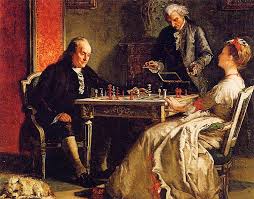
Comprehending CHESS through ‘Through the Looking Glass’

Chess was the most important indoor game of the nineteenth century in England. It enjoyed centuries-old privileged status. It was considered as a ‘rational recreation’. Chess, unlike any other game, deals more with logic and rationality rather than fun, as we know, Rationalism had taken over the Victorian era abundantly.

Alice, at once, recognizes the chess board stretched on the vast land in the Looking Glass World. It shows that although she is just seven and a half years, still familiar to the this game, which signifies the popularity of Chess in England in Victorian Era, especially among the bourgeois class(as it is also called ‘game of royals’) and Alice belonged to the same.

In life we make ‘choices’, in chess we make ‘moves’. In order to attain something valuable in life as to capture the opponent’s castle in chess, initiative has to be taken. Nobody can make decisions for me, I’ll have to play myself, it’s just suggestions that our people may put before us. Here, Alice makes a choice to participate in the game ‘imagining’ her goal where she wants to be in the end. Well, talking about imagination with reference to Victorian era, it significantly brought out a drastic change in society, though previously children along with adults were forced into realism. ‘Imagination’ is quite efficient to presume one’s position in the coming years and then working out to get there can be useful, because life makes it hard to calculate the further possibilities due to lack of information. Alice restrained herself asking the Queens about their arrival, thinking it would be obtrusive, which keeps her away from the information, also we see Alice not able to distinguish between Red Knight and White Knight and actually who’s there to save her declares her ignorance towards information.

Chess is symbolic to attributes of life, we see, there are (apparently) three stages in chess, that is, opening, middle game and the end game, similarly we have childhood, youth and adulthood in life. Alice joins the giant Chess game of life as a white pawn, that is, she holds very limited power and can move once at a time. We always need to start from the beginning, that is, from the very first ladder in order to earn it step by step. Alice has the freedom to setup her ‘goal’ to be a Queen, but she has no power over her inevitable maturation that’s leading her to womanhood. Within the framework of the chess game, Alice has almost no control over her path and she, with certain implied rules of the game, is driven by the corresponding characters in the book, as in chess, every piece moves in answer to the move of the other one. She is pushed towards her goal by the various situations occurring before her in every square, such as, the train ride, no-name forest, Humpty Dumpty and the White Knight. Thus, it can be traced from the narrative that in life, there is some invisible force that’s propelling every individual in the direction of set goal. It can be comprehended that collaboration is the biggest instrument to victory, for example, White Knight saved Alice from the attack of Red Knight without which it had been a Herculean task for her to reach to final square. We will have to rely on our people somehow, otherwise we can’t achieve our dreams just by our own self. In chess, one can take full credit for one’s victories, but in life it would be naive to say that what I achieved is all because of my sole efforts.

The game of Chess in Through The Looking Glass represents the interest of Carroll in logics and mathematics, and the agent is ‘Alice’. This game is not about luck unlike other indoor/board games, rather brainy. In the same way, Life is more about randomness, it’s not alone in the hands of fate, though life is much more unpredictable. We need statistics as well as probability in both chess and life. Also, chess possesses two different colors, that is, one is light and the other one is dark, where I suppose, they stand for logic and nonsense respectively. Based on this idea, Alice often proves to be smarter, more prudent than the so-called adults she confronts in the Looking Glass world. This might also be a reverse-reflection of actual world, I guess, where we see adults inclined towards logic and children uttering stuff and nonsense and vice-versa, here, in the world of mirror.

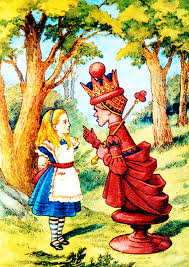
Life of the children in Victorian period was totally opposite to that of present-day children. They were considered as miniature adults and were expected to be highly sophisticated, more in the case of rich class children. Children were not allowed to shout, complain, interrupt or disagree with anyone. The children of rich parents were usually looked after by governesses, no matter humble or strict, and they only used to teach them manners and the way of living. Here, in Looking Glass world, Red Queen, the first character to guide Alice in the reverse world,

resembles very much like a governess of Alice when she teaches her how to not tweedle her fingers while speaking, how to behave, and to curtsey, and how Alice couldn’t go against her. She says, “when you’ve once said a thing, that fixes it, and you must take the consequences.”, because Alice is a Pawn and a Pawn cannot move backward, it is also allusion to the fact that once you have made the decision/choice, you can’t step back and stay committed bearing with it’s outcome, and she also asks Alice only to speak when she was asked to. Even we see TweedleDum-TweedleDee not ready to converse with Alice before she greets them. When Alice thinks that asking the Queens how they arrived would be impertinent, it shows again the social structure built for children in the real Victorian world.

When we are in a state of childhood, we want to turn into an adult soon. Similarly, Alice is excited about her lone-tour of adulthood through the Looking Glass world as she thinks she will be free of all the scolding, she says, “….no one here to scold me away from the fire….and can’t get me!” In the beginning, Alice was thrilled about her journey but as she is heading forward, she encounters the sense of loneliness in her journey to become a Queen(apparently) and acts adult herself. Though she is surrounded by different creatures many a times, but she feels alienated to their foreign ways. Hence, here Chess is a symbol of journey advancing from childhood to adulthood. She undergoes many crucial experiences, putting forward the idea of challenges one has to face in this journey of adulthood in one’s life. In the beginning, we see Alice being rude to Gnat about his jokes and later we see her kindness with White Knight that declares the change in her attitude as moving towards adulthood. When the Queen gives Alice directions as how to be a proper queen, it indicates that Alice wasn’t actually prepared to become a queen, just as it’s hard to prepare to be an adult in real world. Every square leads her to different characters and every character teaches Alice something significant, as we know, advice can come from the most unexpected places. For example, revelation of identity imposed by the situation in the woods of forgetfulness, the White Queen teaches her to believe in impossible, the fall of Humpty Dumpty symbolizes ‘the fall of man for pride’ and also ‘the fall of innocence’ proceeding towards maturity, and likewise all the other characters. These teachings help Alice to inherent the characteristics of adulthood within her. The crown here, symbolizes the transformation of Alice from childhood to adulthood.

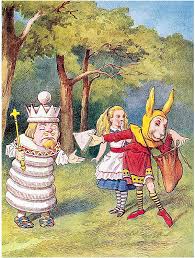
The Red King and the White King are almost doing nothing throughout the game as compared to their Queens. The Red King, as first encountered by Alice, is sleeping and his other pieces are performing their tasks to save him, whereas, the White King seems to be nervous not able to catch up with her Queen.

Now these characters resemble in moves of both as that of the White and Red King in the real chess board. These actions of Queens and Kings in the world behind the mirror, may portray the position of women in the Victorian era. Women, at that time, used to engage themselves working for their husband and family, and also middle class and the working class women were employed to earn bread for their family, in support of their husbands. Red Queen saying to Alice, “…if you want to get somewhere else, you must run at least twice as fast as that!” may ascertain the idea that in a male-dominated society, women need to work double/toil harder in comparison to men in order to attain recognition. Women in the nineteenth century were not given much of the rights and privileges. This period is named after Queen Victoria, who was in the place of power. It is strange to encounter such a frivolous situation of women at the time when a lady herself was reigning over the society. When we behold Alice as a little woman moving from actual world to Looking Glass world, it may seem as she is struggling to change her confided world. She starts her journey all by herself which reflects the essence of independence in her. The characters like Live flowers resemble the social class structure that pushes Alice to follow their rules. When she chooses to be a Queen, she establishes the path for women/girls to upgrade their status because Alice learns that she must have a powerful authority to control Looking Glass world when one of the servants at once answers her after she turns into a Queen, so is the case for women in Victorian era, for example, Queen Victoria.

We need not be afraid of our high-rated opponents and feel incapable before them and it is then only that Alice is able to shake Red Queen in frustration and raises her voice against her rather than stitching her lips out of fear as evident in the beginning, that is, crown here, symbolizes her transformation from childhood to womanhood, gives her voice and finally renovates her status from a pawn to a queen. All the exclusive pieces are placed right behind the pawns. And a Pawn in comparison to them is just an ordinary, common piece that can slowly and gradually become a Queen. Even a pawn can cut down a King, pertaining to life, a single human being, regardless of his status, is enough to bring about revolution in the society, and win the castle of life. Alice suffering through all the odds, obstructions eventually made it, checkmated the Red King and turned into a Queen.

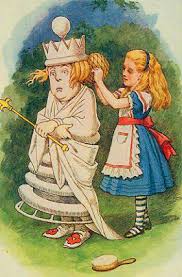
As a Queen in the game, the Red Queen and the White Queen are able to move swiftly and effortlessly. The White Queen, as she says, “jam-tomorrow and jam-yesterday, but never jam-today.”, and screams before pricking her thumb, travels in past and future which is true for the Queen,

in general, in chess that she can freely move in every direction possible, but she is seen nervous and messy all the time here, and ultimately at two points passes up a chance to checkmate and on another occasion she missed the opportunity to capture the Red Knight. Similarly, the Red Queen said to Alice, “Speak when you’re spoken to!”, and having supporting her words, she doesn’t announce it after putting White King on the check, hence, the check is ignored. Their individual character traits restrained them from performing their duties. This also discovers their absent-mindedness and reverse effect of the mirror world.

The Knight in the chess moves very distinctively and is allowed to jump over any other pieces. Riding and falling of the White Knight in looking glass world is signifying it’s unique L-shape movement. The inventions of White Knight are here to present his powerful character trait, like in chess board Knight is an only piece imbibed with many powers, unlike other pieces, not even a Queen can move in same way as Knight, though his inventions are unprofitable disclosing the touch of the illusionary world, still it is pointing to the fact that precaution is must, so his horse wears spikes on it’s ankles to protect it from shark bites and he collects things that might be useful in the difficult situation. The White Knight is the only character that is benevolent with Alice and saves Alice from the attack of Red Knight (stopping her to be a Queen/upgrade the position of women in society), but it can be an example of gender-biased society where a man is shown as a powerful figure and woman belongs to a weaker section. Alice, here, is represented as a weak girl and this action of White Knight throws light on the concept of feminism, and make Alice learn that a woman must stand for herself and must discover her own capabilities.

Chess wasn’t just one of the themes in Carroll’s story, indeed, it was the ground for the novel’s structure. The game of chess in real world is ‘logical’ while in looking glass world it can be called as ‘maddening game of chess’. Also as an inverted image created by the mirror, this indoor game is displayed as an outer giant field of chess. The pieces are definitely running and moving under the implied rules, but the pattern is not applied evenly. This game sets the deterministic way of life. Both life and chess are, more or less, synonymous in almost every aspect.

Citation: https://www.smithsonianmag.com/arts-culture/the-64-square-grid-design-of-through-the-looking-glass-24546391/

Feminism: A Myth

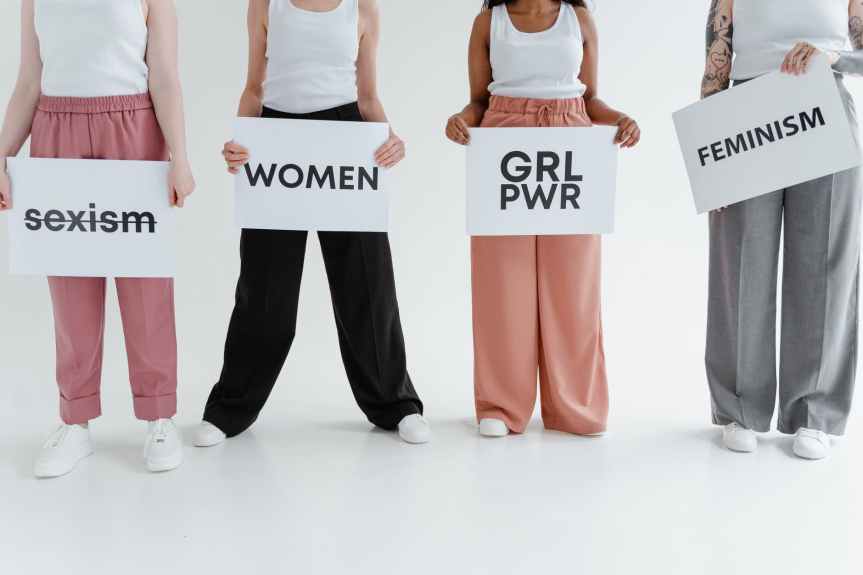
All over the world people are misguided about the word feminism. According to you what does feminism mean? Is it to put men down and rule the world or is it to enjoy everything a man can? Let’s discuss about various myths and the actual meaning of feminism and the significance of it in a women’s life.

According to the Oxford dictionary feminism means “the belief that women should have the same rights and opportunities as men“. In more simpler words feminism is all about the equality between men and women and have the freedom of everything that they wish to do. Some people argue that they believe in ‘equality’ but they have no belief in feminism. Feminism has been made critical despite of it being a very simple concept.

From ancient times women are pointed out for the way they dress and for their aspirations. They have been constantly told to dress in a certain way and to live their life according to the norms of the society. Women are fighting for their equal rights from centuries for there right to vote, right to speech and freedom. People in the society have framed a woman according to their needs and expect them to fulfill their expectations. A married woman taking care of her husband, her in-laws and looking after their children is considered to be the ideal one whereas if she wants to work and be dependent, she is criticised and often being questioned on her motherhood. Similar type of Criticism she faces at her work place. These are the basic yet essential inequality that a women regularly faces.

Women-Women Conflict regarding feminism

Sometimes women also take feminism in a wrong way. They think that being a feminist means to humiliate men and they often misuse their power of being a women by falsely accusing a men in a crime. This is basically pseudo feminism. Women around the world debates for the real meaning of feminism which sometimes leads to conflicts. Some women of old generation are also against feminism and consider it as uncultural.

Myths

  • Feminists hate men.
  • Feminists are angry.
  • Feminists are unattractive and not feminine.
  • All feminists are lesbians.
  • Feminists are all pro-choice.
  • If you are a feminist, you cannot be religious.
  • All feminists are career women and do not support stay-at-home moms.
  • Feminists are Bra- Burners who hate sex.
  • Feminists can only be women.
  • Feminists don’t believe in marriage.

If you have ever found yourself saying “I’m not a feminist, but I am for equality,” then ask yourself why you do not claim the title? If it is because of the misconceptions of what a feminist truly is then empower yourself to raise awareness about what feminism is really all about. 

Feminists are all about equality between genders– which means feminists don’t want women to be more powerful than men any more than we want men more powerful than women. What may seem like a discriminatory act against men is actually an attempt to level the playing field between men and women.

While huge strides have been made towards complete gender equality, a great deal of work remains to be done, both in India and abroad, including the gender pay gap, access to reproductive healthcare, protection against sexual assault and violence and gender representation in media, among other issues.

How a Guy Can Be a Feminist?

Basically feminism is not only committed to changing negative stereotypes about being a woman. A large facet of feminism is understanding streotypes about masculinity and its effects on society and what it means to be a man. If you care about equality for your mother, daughter, grandmother, girlfriend, a friend, who is female then feminism should be important to you. Additionally, feminism is about equality for all marginalized groups- equality for those who are LGBTQIA, disabled, and ethnic and racial minorities. Caring about feminism means caring about people who fit into these categories.

Being a feminist is not something to be ashamed of. It is the right of every person who believes in equality for all.

Thank you for reading!

Renewable resources .

Replacing traditional sources of energy completely with renewable energy is going to be a challenging task. However, by adding renewable energy to the grid and gradually increasing its contribution, we can realistically expect a future that is powered completely by green energy.

– Tulsi Tanti

A way to live a new life . Without any destruction , without worrying about the future . Live a life where we can grow together , develop a life with renewable resources.

Introduction

A renewable resource, also known as a flow resource, is a natural resource which will replenish to replace the portion depleted by usage and consumption, either through natural reproduction or other recurring processes in a finite amount of time in a human time scale.

When such recovery rate of resources is unlikely to ever exceed a human time scale, these are called perpetual resources. Renewable resources are a part of Earth’s natural environment and the largest components of its ecosphere. A positive life-cycle assessment is a key indicator of a resource’s sustainability.

Renewable resources are an energy source that cannot be depleted and are able to supply a continuous source of clean energy.

Renewable resources also produce clean energy, meaning less pollution and greenhouse gas emissions, which contribute to climate change.

Examples of renewable resources.

  • Biomass .
  • Biogas.
  • Tidal Energy.
  • Wind Energy.
  • Geothermal Energy.
  • Radiant Energy.
  • Hydro Electricity.
  • Compressed Natural Gas.

Types of renewable resources.

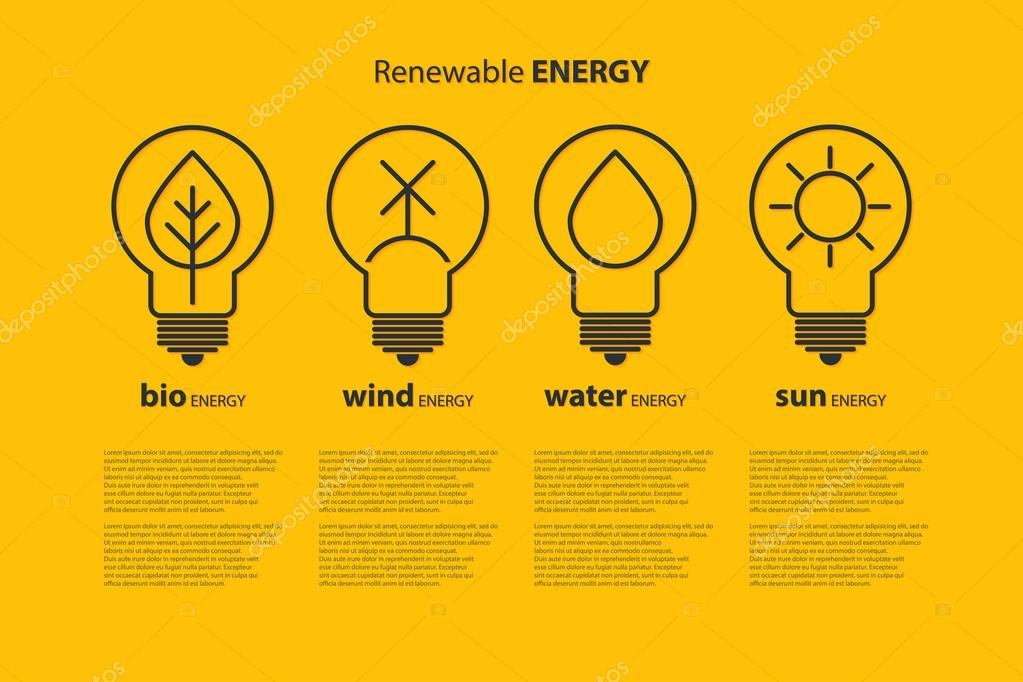
1) Solar energy. Sunlight is one of our planet’s most abundant and freely available energy resources. 2) Wind energy. Wind is a plentiful source of clean energy. 3) Hydro energy.
4) Tidal energy.
5) Geothermal energy. 6) Biomass Energy.

Impact of renewable resources.

Environmental impact

Renewable energy projects have also contributed in improving environmental impacts such as reduction of carbon dioxide gas, awakening community about the climate change. The study observed very small impacts on the people living in a particular area, tourism, cost of energy supply, and educational impacts. Significant impacts were observed in improvement of life standard, social bonds creation, and community development. They also observed that the renewable energy projects are complex to install and are local environmental and condition sensitive. Their forecasting, execution, and planning require more consideration and knowledge as compared to other projects.

Social impact

These resources also provide social benefits like improvement of health, according to choice of consumer, advancement in technologies, and opportunities for the work, but some basic considerations should be taken for the benefit of humans, for example, climate conditions, level of education and standard of living, and region whether urban or rural from agricultural point of view. Social aspects are the basic considerations for the development of any country. The following social benefits can be achieved by renewable energy systems: local employment, better health, job opportunities, and consumer choice.

Advantages of renewable resources.

  • Renewable energy won’t run out.
  • Maintenance requirements are lower.
  • Renewables save money.
  • Renewable energy has numerous health and environmental benefits.
  • Renewables lower reliance on foreign energy sources.
  • Higher upfront cost.
  • Intermittency.
  • Storage capabilities.

Conclusion

Renewable energy is becoming an important resource in all over the world . I do agree that people might exploit the resources for there own benefit . But the government is working on that aspect and trying to provide resources that can help our future households .

There are a lot of different ways of building a prosperous society, and some of them use much less energy than others. And it is possible and more practical to talk about rebuilding systems to use much less energy than it is to think about trying to meet greater demands of energy through clean energy alone.

– Alex Steffen

Link

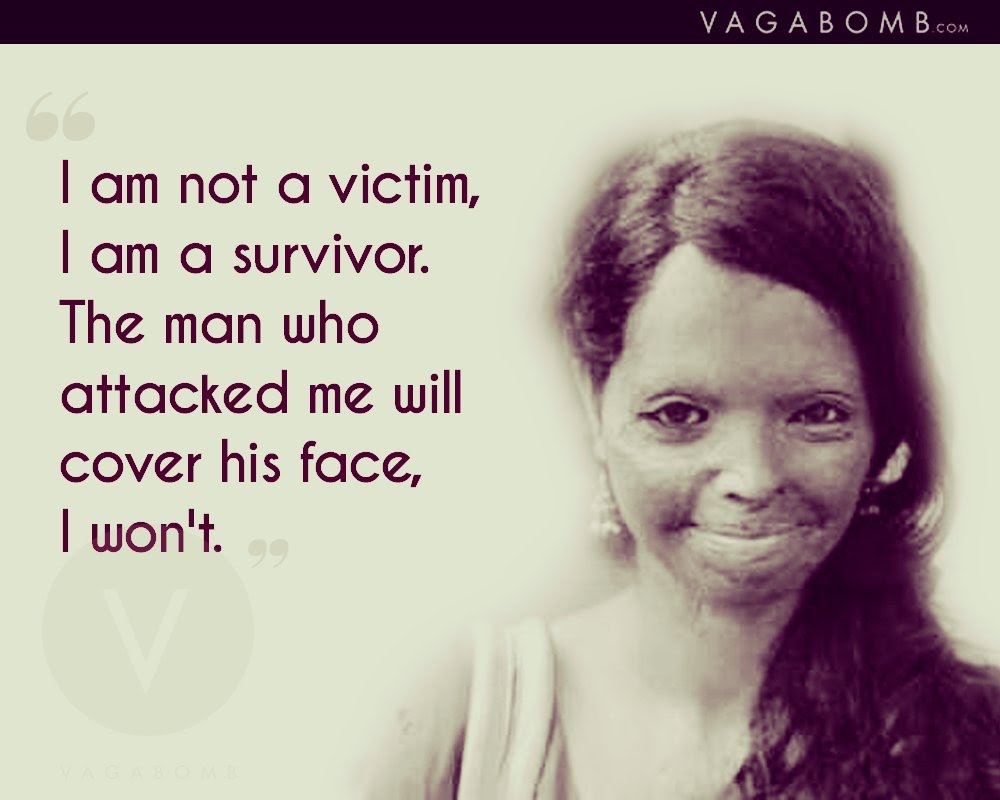
A Survivor : The Story of Lakshmi Agarwal

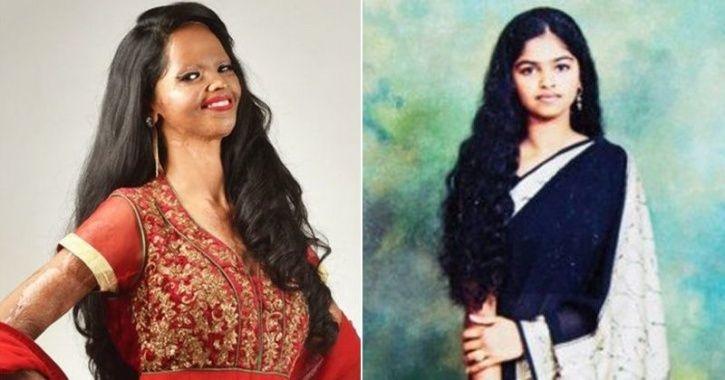
She was just a 15 year old girl . A girl , full of life . But what happened to her .

It’s her story . A story of a survivor.

She was powerful not because she wasn’t scared but because she went on so strongly, despite the fear.”

– Atticus

At the age of 15 , when a girl or a boy makes happy memories and learn about life . She was attacked in the market full of people . She was attacked because she rejected an old jerk of 32 years old.

A 32 year old proposed a marriage proposal to a 15 year old girl , who lives near the neighborhood. She ignored and rejected him and he planned an acid attack .

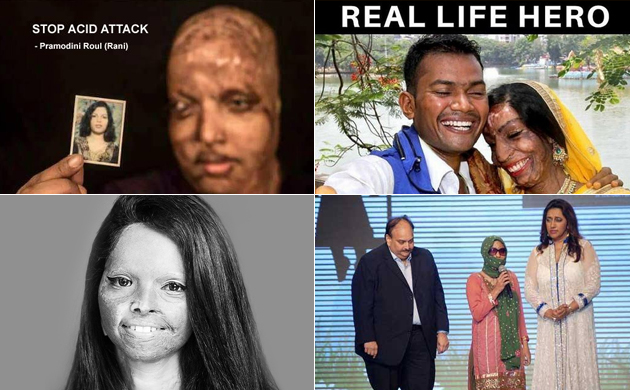
Her name is Lakshmi Agarwal , she was attacked at the age of 15 in 2005 in New Delhi after rejecting the romantic advances of Naeem Khan . She didn’t inform anyone about the scenario because she believed her parents and society would have blamed her and stopped her study .

After 10 months , Lakshmi was in the market and Naeem asked her again through message about the marriage proposal but she didn’t respond . And in no time , Kamran (Naeem’s older brother ) and his girlfriend attacked her with acid . He was in the motorcycle and his girlfriend Rakhi threw acid on Lakshmi , when Kamran called her name and she looked behind for response.

She fainted on the road and when she regain consciousness she went middle of the road asked for help and met with multiple accidents but no one stopped to help her . She was burning in fire and her skin was melting.

A man named Arun Singh called PCR and told police about the situation . Someone threw water to help her but it turned out opposite and the acid burnt her neck . Arun think it might be late , so he helped her on the backseat of his car , later the seat cover turned into black hole due to the acid .

Arun admitted her in the hospital , called police and her family . Lakshmi went through many surgeries and operations including eye surgery. Four days later Naeem Khan got arrested but was bailed after a month later .

Protests and media attention.

After many protests and media attention Naeem got life imprisonment .

Lakshmi’s story was one of the series in the Hindustan Times. Lakshmi was scared after the attack because most of her face and body parts were not same as before . But she didn’t loose hope ,she fought for justice , asked for help for the victims of acid attacks and pleaded the law for the ban on sale of acid.

Meanwhile government failed to frame policies on acid sale and chemical attacks .

Seriousness is not seen on the part of the government in handling the issue,” the bench headed by Justice RM Lodha.

In 2013 , the plea of Agarwal was heard and later claims that “ Acid is freely available in shops. Our own volunteers have gone and purchased acid easily. In fact, I have myself purchased acid,” she said. “We have launched a new initiative called ‘Shoot Acid’.

After , the law passed by Supreme court . Lakshmi founded NGO named Chhanv Foundation to help acid attack survivors in India.

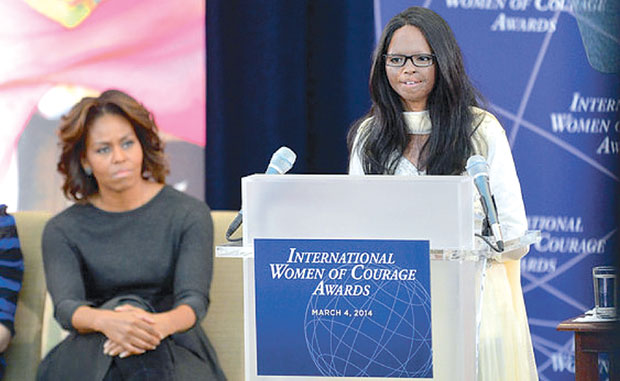
In 2019, she was honored with the International Women Empowerment Award from the Ministry of Women and Child Development, the Ministry of Drinking Water and Sanitation and UNICEF for her campaign of Stop Acid Sale. In 2014, she received the International Women of Courage award at the hands of First Lady Michelle Obama.

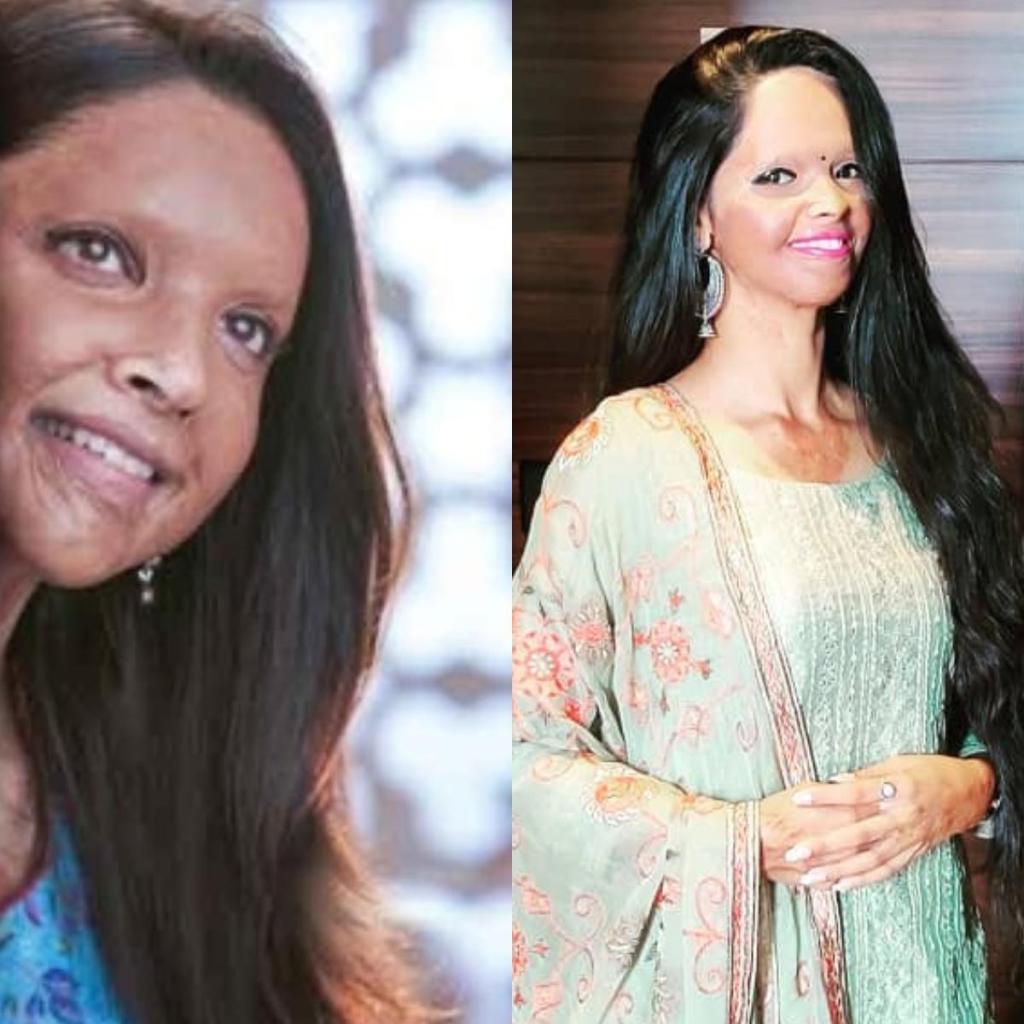
And the movie Chhapaak is based on her life and stars Deepika Padukone in her role.

“And one day she discovered that she was fierce, and strong, and full of fire, and that not even she could hold herself back because her passion burned brighter than her fears.”

– Mark Anthony

Link

Menstrual hygiene: necessity and not a luxury

Break the taboo


Menstruation is associated with the onset of puberty in girls. Menstrual health and hygiene or menstrual hygiene management brings up the adequate access to menstrual hygiene products to collect and absorb the flow of blood during the menstruating period. It also refers to the privacy to change the used material to a new and clean one and to dispose the used one .
Still today in many parts of India , menstruation is considered a taboo and often it brings with it tons of rules , many restrictions and sometimes discrimination and isolation. A girl or a women in her period is often excluded from many social and religious events and even sometimes they are not even allowed to enter in the kitchen of their own house .
Cause of menstruation still being a taboo –
Still today girls and women feel uncomfortable to talk about their period loudly and consider it a shame ; and not being talked about it loudly results in adolescent girls remaining unknown and ignorant of the hygiene and health practise which many a times results in adverse health conditions. Illiteracy , poverty and lack of awareness are the major behind menstruation still being a taboo in indian society. Several studies indicate that in india, specially in the rural areas and in the slums, most of the girls and women do not have consistent and adequate access to good quality menstrural hygiene products with 88% of them using homemade alternatives such as clothes, rags, hay, sand and ash.
OUTCOMES OF NOT HAVING ACESS TO MENSTRUAL HYGIENE PRODUCTS
Not having adequate access to clean and proper menstrual hygiene products causes many health problems like Reproductive Tract Infections (RTI), irritation of skin which causes discomfort and possibly results in dermatitis which is a medical condition in which the skins swells , turns red and at times becomes a sore with blisters. There is a balance of good and bad bacteria that live in the vagina . If this balance gets disrupted or hampered because of certain poor menstrual hygiene it causes vaginosis . This impact women the most when they are pregnant or trying to get pregnant . RTI also increases the chances of having cervical cancer. Added to the discomfort it also hampers their mobilty and day – to – day activites.
Why is menstrual awareness important ?
Myths about menstruation is largely prevalent forcing many girls to dropout of school early year at menarche in India . A study finds a 12 % decline in school enrollment rate for girls in the menarche group , also in the co-ed schools , disparity is clearly visible in the ratio of girls to boys always remaining low.
It is very important to spread awareness on menstrual hygiene . Menstruation considered a taboo topic , most of the adolescent girls when they get their first period, they don’t know about “menstrual hygiene management “. Many a time, unawareness about menstrual hygiene has an a adverse impact on women’s health especially in rural areas and the slums of the cities. Not having access to proper menstrual hygiene products is the harsh reality of most rural and slum womens. Lack of information and other socio-cultural norms and the use of unhygenic products instead of safe sanitary napkins and tampons makes it difficult for the girls to remain hygenic .
Its high time we spead correct information and educate the adolescent girls about menstruation and help them know about how to maintain proper menstrual hygiene . To educate girls and spread awareness among the womens of slums and the rural areas , the much needed measure is to spread awareness that it a normal very biological process and busts the myths associated with menstruation to ensure healthy menstrual practices.
Spreading awareness about menstruation and menstrual hygiene can help in creating a culture that welcomes discussions about it and can also prevent many diseases and infections caused due to unhygenic practices.
MENSTRUAL PRODUCTS IS A BASIC NECESSITY
Poverty is another reason why the womens of rural areas and slums use alternatives most of them cannot afford adequate and proper menstral products . the unavailability of menstrual products n rural areas ans high cost of the same in the cities deter menstrual hygiene in India.
To increase awareness about menstrual hygiene product being a necessity the washrooms in schools shouls also stock menstrual product besides stocking soaps , papaer towels etc. Having the supply of free menstrual products in every schools will not only ensure that every menstruating girl gets access to the basic needs easily , but many a times it helps in solving economic issues.
Its time for us to start spreading awareness about menstrual hygiene and spread knowledge and correct information about it and start treating it is as a healthly biological process and not a taboo.

https://swachhindia.ndtv.com/menstrual-hygiene-day-facts-26-percent-use-sanitary-pads-periods-34309/

References:

https://www.hindawi.com/journals/jeph/2018/1730964/

https://swachhindia.ndtv.com/menstrual-hygiene-day-facts-26-percent-use-sanitary-pads-periods-34309/

Menstrual hygiene products should be treated as a necessity

Role of family in the social construction of gender

Gender in contrast to sex is a social construct. It is an established set of characteristics of society according to which people are categorized into males or females. Gender roles vary from society to society. There are many agencies present in society that facilitate the social construction of gender. Family is one such agency.

In this article, I will try to show the various processes through which gender identity is established in children by their families. 

As a child grows the gender identity is established through four processes namely:

  1. Reinforcement or moulding-Parents at home treat their children differently depending on their sex. Boys are normally given more freedom than girls while girls are treated more protectively. Any ‘effeminate’ behaviour on the part of the boy is highly discouraged and if such tendencies continue they are regarded as ‘psychological disturbances.’As a result of this training, children learn their sex roles effectively and quickly. 
  2. Opportunities-Opportunities go a long way in determining gender roles. While boys are encouraged to take up technical jobs girls are discouraged . Girls are encouraged to go along the ‘the feminine way’ and boys are expected to develop themselves along ‘the masculine way’.Boys are given cars, building blocks etc to play with while girls are given kitchen set, dolls to play with. The boys are expected to help their fathers and girls are expected to help their mothers.
  3. Role modelling-It is a major mechanism of gender socialisation. By the age of three, nearly all children know whether they are male or female and by the age of four, they have very definite ideas of what masculinity and femininity must involve. A male child usually identifies with his father and a female child with her mother. The boys considering their father as a role model emulates them and the same is the case with girls who look up to their mothers. Role modelling is more effective when the child has a strong and warm relationship with the role model.
  4.  Explicit verbal instruction-Certain instructions also determine gender identity.” Boys don’t cry like girls”,” Pink is the colour of girls”,” You are a girl you should know how to cook” etc are some very common instructions. Hearing the same everywhere and on daily basis influences the mind of an individual and determines the gender identity.

Hence, families give the earliest reinforcement for acting appropriately according to one’s gender, and the environment continues to teach what is acceptable for men and women.