All you need to know about an Economic Recession.

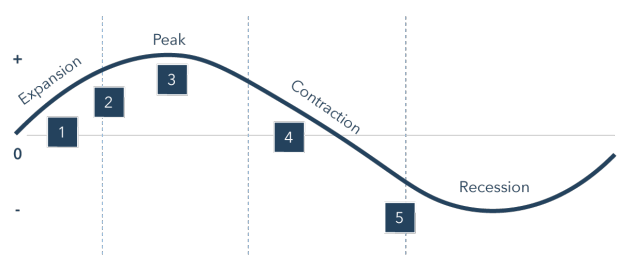
The National Bureau of Economic Research (NBER) defines a recession as “a significant decline in activity spread across the economy, lasting more than a few months, visible in industrial production, employment, real income, and wholesale-retail trade.” A recession is also believed to be signalled when businesses cease to expand, the GDP diminishes for two consecutive quarters, and the unemployment rate rises. The nature and causes of recessions are simultaneously evident and uncertain. Recessions are, in essence, a cluster of business failures being realized simultaneously. Firms are forced to reallocate resources, scale back production, limit losses, and, usually, lay off employees. Those are the clear and visible causes of recessions. There are several different ways to explain what causes a general cluster of business failures, why they are suddenly realized simultaneously, and how they can be avoided.

What Causes a Recession?

Some recessions can be traced to a clearly-defined cause. For instance, the recession of 1973-1975 began as a result of the 1973 oil crisis. However, most recessions are caused by a complex combination of factors, including high interest rates, low consumer confidence, and stagnant wages or reduced real income in the labour market. Other examples of recession causes include bank runs and asset bubbles.

Psychological Factors of a Recession

Psychological factors are frequently cited by economists for their contribution to recessions also. The excessive exuberance of investors during the boom years brings the economy to its peak. The reciprocal doom-and-gloom pessimism that sets in after a market crash at a minimum amplifies the effects of real economic and financial factors as the market swings. Moreover, because all economic actions and decisions are always to some degree forward-looking, the subjective expectations of investors, businesses, and consumers are often involved in the inception and spread of an economic downturn.

Economic Factors of a Recession

Real changes in economic fundamentals, beyond financial accounts and investor psychology, also make critical contributions to a recession. Some economists explain recessions solely due to fundamental economic shocks, such as disruptions in supply chains, and the damage they can cause to a wide range of businesses. Shocks that impact vital industries such as energy or transportation can have such widespread effects that they cause many companies across the economy to retrench and cancel investment and hiring plans simultaneously, with ripple effects on workers, consumers, and the stock market. There are economic factors that can also be tied back into financial markets. Market interest rates represent the cost of financial liquidity for businesses and the time preferences of consumers, savers, and investors for present versus future consumption. In addition, a central bank’s artificial suppression of interest rates during the boom years before a recession distorts financial markets and business and consumption decisions.
What Are the Indicators of a Recession?

Economists determine whether an economy is in recession by looking at a variety of statistics and trends. Factors that indicate a recession include:

  • Rising in unemployment
  • Rises in bankruptcies, defaults, or foreclosures
  • Falling interest rates
  • Lower consumer spending and consumer confidence
  • Falling asset prices, including the cost of homes and dips in the stock market

All of these factors can lead to an overall reduction in the Gross Domestic Product (GDP). The European Union and the United Kingdom define a recession as two or more consecutive quarters of negative real GDP growth.

Impact of Covid-19 Pandemic on the Economy

In February 2020, the National Bureau of Economic Research (NBER) announced that according to their data, the U.S. was in a recession due to the economic shock of the widespread disruption of global and domestic supply chains and direct damage to businesses across all industries. These events were caused by the COVID-19 epidemic and the public health response. Some of the underlying causes of the two-month recession (and economic hardship) in 2020 were the overextension of supply chains, razor-thin inventories, and fragile business models. The pandemic-related recession, according to NBER, ended in April 2020, but the financial hardship caused by the pandemic is still impacting Americans.

For simpler understanding-
Defining tourism in modern world

Career in Travel and Tourism- Top 6 Jobs Around the World - Leverage Edu

Tourism is one among those economic activities that existed since the ancient times. During ancient and medieval era people travelled to experience the cultural differences. Over the time tourism has also evolved and has become a significant contributor to the national income of many countries. There are many nooks and corners of the world which solely depends on tourism and its allied activities for their living.

Earlier the main motive behind visiting places were to see and experience their culture along with enjoying the natural beauty of the area. But, in this era of globalization the scope of tourism has widened and many nations are trying to gain a competitive edge in this industry. Let us take a look at various types of tourism now prevailing around us:

Cultural tourism

Cultural tourism is a type of tourism that allows the tourist to participate in local cultural activities, like festivals and rituals. As a result, the tourist can enjoy a genuine cultural exchange with the locals.

Religious tourism

Religious tourism, spiritual tourism, sacred tourism, or faith tourism, is a type of tourism with two main subtypes: pilgrimage, meaning travel for religious or spiritual purposes, and the viewing of religious monuments and artefacts, a branch of sightseeing.

Environmental tourism

Environmental tourism typically defined as travel to destinations where the flora, fauna, and cultural heritage are the primary attractions. Responsible ecotourism includes programs that minimize the adverse effects of traditional tourism on the natural environment, and enhance the cultural integrity of local people.

Health tourism

Health tourism is a form of tourism that consists of patients traveling to other countries to get medical treatment or assistance. It comprises all the services associated with tourism like transport, accommodation, and hospitality.

Culinary tourism

Culinary tourism is the focus on food as an attraction for exploration and a destination for tourism. Although food has always been a part of hospitality services for tourists, it was not emphasized by the tourism industry until the late 1990s.

Adventure tourism

Adventure tourism is defined as the movement of the people from one to another place outside their comfort zone for exploration or travel to remote areas, exotic and possibly hostile areas.

Enotourism

Enotourism, oenotourism, wine tourism, or vinitourism refers to tourism whose purpose is or includes the tasting, consumption or purchase of wine, often at or near the source.

Rural tourism

Rural tourism focuses on actively participating in a rural lifestyle. It can be a variant of ecotourism. Many villages can facilitate tourism because many villagers are hospitable and eager to welcome (and sometime even host) visitors. Agriculture is becoming highly mechanized and therefore, requires less manual labor.

Sports tourism

Sports tourism refers to travel which involves either observing or participating in a sporting event while staying apart from the tourists’ usual environment. Sport tourism is a fast-growing sector of the global travel industry and equates to $7.68 billion.

Eco tourism

Ecotourism is defined as “responsible travel to natural areas that conserves the environment, sustains the wellbeing of local people and involves interpretation and education”

Agritourism

Agro-tourism refers to people visiting working farms or other agricultural operations for the purpose of enjoyment, education, or other active involvement. Agri-tourism encompasses a wide variety of activities and provides a means for farmers to diversify and supplement their income.

Sustainable tourism

Sustainable tourism is defined by the UN Environment Program and UN World Tourism Organization as “tourism that takes full account of its current and future economic, social and environmental impacts, addressing the needs of visitors, the industry, the environment and host communities.”

Space tourism

Space tourism is a type of space travel that allows individuals to visit outer space for the purpose of recreation or leisure. Suborbital flights, orbital trips, and missions to distant planets are all examples of space tourism

Business tourism

  Business tourism is the provision of facilities and services to the millions of delegates who annually attend meetings, congresses, exhibitions, business events, incentive travel and corporate hospitality.

India is a country with wide scope for tourism. It should try to incentivize the emerging trends in tourism industry and strive to be a global leader.

Need for switch from physical to human capital

Human capital refers to stock of ‘skill and expertise’ embodied in humans. Human capital is as important as physical capital for economic development. Human capital formation is the process of adding to stock of human capital over time. Human capital can be developed through creation of skilled, trained and efficient labour force by providing better education, health care facilities, etc. Highly skilled people can create new ideas and methods of production. Thus, expenditure on education, on health and on on-job-training are key instruments of human capital formation. Expenditure on education is one of the most important way of enhancing and enlarging a productive workforce in the country. Expenditure on health can create more efficient and more productive human capital. Further, on-the-job-training helps workers to update skills. Training enhances the productivity and is expected to accelerate the process of human capital formation.

Human Capital and Economic Growth

When we talk about economic growth, human capital is the main reason for the accelerated growth and expansion for many countries that provide investment in human capital. This gives the best advantages to these countries for providing the best situations for work and lifestyles.A significant advantage in generating a stable environment for growth is that the nation has the expanded high-quality human capital in fields like health, science, management, education, and other fields. Here, the main components of human capital are definitely human beings, but presently, the principal component is a creative, educated, and enterprising person with a high level of professionalism.

Human capital in the economy manages the central portion of the national wealth. Hence, all researchers consider that human capital is the most important resource of the community, which is more powerful than nature or wealth. In most countries, human capital determines the rate of development, economic, technological, and scientific progress.

(i) Inventions, innovations, and technological improvement

 (ii) Higher productivity of physical capital

 (iii) Raises production

 (iv) High rate of participation and equality

 (v) Improves the quality of life

The difference between human capital and physical capital

Both forms of capital formation are outcomes of conscious investment decisions. Decision regarding investment in physical capital is taken on the basis of one’s knowledge in this regard. The entrepreneur possesses knowledge to calculate the expected rate of return to a range of investments and internationally decide which one of the investments should be made. Physical capital is the outcome of the conscious decision of the owner the physical capital formation is mainly and economic and technical process. A substantial part of human capital formation takes place in one life when she or he is unable to decide whether it will maximize her or his earnings. Children are given different types of school education health care facilities by parents and society. The peers, educators and society influence the decisions regarding human capital investment even at the tertiary level, at the college level. Human capital formation at this stage is dependent upon the already from human capital at the school level. Human capital formation is partly a social process and partly a conscious decision of the possessor of the human capital. The owner of a physical capital, does need not be present in the place where it is used; a bus driver who possesses the knowledge and ability to drive the bus should be present when the bus is used for transportation of people and other materials physical capital is tangible and can be easily sold in the market like any other commodity. Human Capital is intangible it is endogenously built in the body and mind of its owner. Human Capital is not sold in the market; service of human capital is sold and hence there arises the necessity of owner of the human capital to be present in the place of production. Physical capital is variable from its owner where does the human capital is in separable from its owner. The two forms of capital differ in terms of mobility across space. Capital is completely mobile between countries except for some artificial trade restrictions. Human capital is not a perfectly movable between countries as movement is restricted by nationality and culture. Physical Capital formation can be built it even do import, human capital formation is to be done through conscious policy formulations in consensus with nature of society and economy expenditure by the state and the individual.

Both forms of capital depreciate with the time but the nature of depreciation differs between the two continuous use of machine lead to depreciation and change of Technology makes a machine of solute. Human capital, eating but can reduce, for large through continuous investment in education and health on the job training. This investment also facilitates the human capital to cope with change in technology which is not the case with physical capital. Natures of benefits flowing from human capital are different from that of physical capital. Human Capital benefits not only the owner but also the society in general. This is called external benefit. Educated person can effectively take part in a democratic process and contribute to the socio economic progress of a nation. Healthy person, by maintaining personal hygiene and sanitation, stops the spread of contagious diseases and epidemics. Human Capital creates both private and social benefits where as physical capital creates only private benefits. That is, benefits from a capital good flow to those who pay the price for the product and services provided by it.

Importance of Human Capital Formation:

Although the accumulation of physical capital is quite important in the process of economic growth of a country but with the passage of time, it is being increasingly realised that the growth of tangible capital stock depends extensively on the human capital formation must get its due importance.In the absence of adequate investment in human capital, utilisation of physical capital will be at low pace, leading to retardation of development.Prof. Galbraith observed, “We now get the larger part of our industrial growth not from more capital investment but from investment in men and improvements brought about by improved men.” Unless these developed economies spread education, knowledge, know-how and raise the level of skills and physical efficiency of their people, the productivity of physical capital would have been reduced at this moment.

Most of the underdeveloped countries are suffering from low rate of economic growth which is again partially resulted from lack of investment in human capital. These underdeveloped countries are facing mainly two basic problems. They lack critical skills very much needed for the industrial sector and again have a surplus labour force.Thus human capital formation wants to solve these problems by creating necessary skills in man as a productive resource and also providing him gainful employment.In order to remove economic backwardness of the underdeveloped countries as well as to instill the capacities and motivations to progress, it is quite necessary to increase the level of knowledge and skills of the people.Thus in the absence of proper development of the quality of the human factor, the underdeveloped countries will not be able to attain the desired rate of progress.

Takeaway

Economic and social benefits of human capital formation and Human Development are well-known. The spread of education and Health Services across different sectors of the society should be ensured so as to simultaneously attain economic growth and equity. The need of the hour is to better it qualitatively and provide such conditions so that they are utilised in our own country.

New era of socially responsible toys

Buy Wooden Shape & Number House: Educational Puzzle Set Toy – Shumee

A child’s play is not simply a reproduction of what he has experienced, but a creative reworking of the impressions he has acquired.

~Lev Vygotsky

As rightly quoted by Soviet psychologist Lev Vygotsky a child not only reproduces what he has experienced but also shows the impressions they have formed through their actions. That time has passed when people believed that a child cannot understand the things happening around them. Due to this misconception, very less effort was taken to make shape their concept formation in a socially responsible manner.

As a result of the research conducted around the world people have reached to a conclusion that childhood is the period when a major portion of the concept formation takes place. This realization has developed a demand for toys which could contribute towards a positive outlook development. Realizing this rising demand several brands have shifted towards developing socially responsible toys.

Let us look into some examples:

Barbie dolls

Mattel Inc., the company producing Barbie dolls, has released a wide range of inclusive dolls which are different from conventional dolls. The company has introduced dolls of three sizes slim, broad and original. It has also released dolls in wheel chair as well as with artificial limb. The company has also tried to make it more inclusive by providing dolls in different skin tones, hair types and eye color. Apart from this, they have also introduced Moschino Barbie which caters towards boys, thereby breaking the stereotype that dolls are not meant for boys.

Lego

The company which sells building blocks have decided to make their products gender neutral after realizing the need for gender equality. It has also promised to shift from plastic packaging to other alternatives. The company’s initiative to produce sustainable bricks will also contribute towards reduction of carbon footprint of one of the biggest toy manufacturers.

Mega bloks Green Town Line

It is a set of carbon neutral construction toys for preschoolers. Mega Bloks bought carbon offsets from the Darkwood Forests conservation project in Canada to get this label. The manufacturers have specified that the toys are made from a minimum of 56% plant-based materials rather than plastic.

Hasbro

Hasbro is a company dealing with wide variety of toys and they adopt a whole lot of activities towards sustainability. Its major initiative is to replace plastic packaging with environmentally friendly materials. It also provides provisions for recycling the toys by collecting the toys and creating new toys from them. It also checks for the environment assessment of their suppliers.

Colors of the world- skin tone crayons

This is a pack of crayons which provides twenty-four shades. What makes it different from other crayons is that it has 24 skin colours from extra light to deepest. It helps to develop a sense of inclusion and generate a non-discriminatory mindset among the children. It helps children to realize that it is normal to have all shades of skin and not strive for achieving the so called “ideal” skin shade.

Similarly, several companies have initiated different measures to make their toys inclusive and climate conscious. The indigenous toys of our country could also be an alternative in this new era.

Being grownups, it is our duty to promote ethical products and thereby assist in positive concept formation of our upcoming generation.

Let us make use of the available resources and pave way for a compassionate, inclusive and climate conscious generation.

Make in India

All You Need To Know About 'Make In India' - iPleaders
source: Google

As India is completing her 75th year of independence, the government has put all its focus on making India self-reliant. In 1950, since the very first plan formulated by planning commission, self-reliance was given due importance. From a broken agrarian economy India has built up an economy which is seventh largest in the world. However, the fact is that it is not sufficient to meet the growing needs of 140 crore population of the country.

India is forced to depend on other nations to meet many of its needs even at present. This solidifies the need for an initiative to boost India’s production. Recognising this urge, the government of India has initiated the scheme termed “Make in India”.

Make in India aims to promote the manufacturer to develop, manufacture and assemble products domestically. It not only emphasizes on production but also focuses on innovation and research. Under this scheme government provides market for goods made in India and also markets them in international markets. “Make in India” had three stated objectives:

  • to increase the manufacturing sector’s growth rate to 12-14% per annum;
  • to create 100 million additional manufacturing jobs in the economy by 2022;
  • to ensure that the manufacturing sector’s contribution to GDP is increased to 25% by 2022 (later revised to 2025).

In order to achieve this objectives government of India has initiated several programs like:

Sagarmala

Sagarmala Programme aims to provide enhanced connectivity between the ports and the domestic production& consumption centres. The programme envisages unlocking the potential of waterways and the coastline to minimize infrastructural investments required to meet these targets.

Bharatmala

The Bharatmala Pariyojana is a centrally-sponsored and funded Road and Highways project of the Government of India.[1] The total investment for 83,677 km committed new highways is estimated at ₹10.63 lakh crore, making it the single largest outlay for a government road construction scheme.

Digital India

Digital India is a campaign launched by the Government of India in order to ensure the Government’s services are made available to citizens electronically by improved online infrastructure and by increasing Internet connectivity or making the country digitally empowered in the field of technology.[1][2] The initiative includes plans to connect rural areas with high-speed internet networks. It consists of three core components: the development of secure and stable digital infrastructure, delivering government services digitally, and universal digital literacy.

Freight corridors and Industrial corridors

These are infrastructure projects to facilitate easy movement of goods as well as infrastructural setup for business investments

UDAN RCS

Ude Desh ka Aam Naagrik (Hindustani for “Let the common citizens of the country fly”), known by its acronym UDAN (Hindi for “flight”) is a regional airport development program of the Government of India and part of the Regional Connectivity Scheme (RCS) of upgrading under-serviced air routes. Its goal is to make air travel affordable and widespread, to boost inclusive national economic development, job growth and air transport infrastructure development of all regions and states of India.

Last two years was the period when we realised the importance of self-reliance the most. During lockdown when international borders were closed there was shortage of many goods. On successful implementation of this initiative India could be able to meet its own needs along with the needs of the world. So let us hope that on the eve of 100th year of independence India would be a global leader with an economy sufficient to meet the demand of the world.

Let us conclude on the note that self-reliance is the most important thing a country as well as an individual should strive for.

The Future of Cryptocurrency

Credit: EconomicTimes

Introduction

Cryptocurrencies are digital or virtual currencies underpinned by cryptographic systems. They enable secure online payments without the use of third-party intermediaries. “Crypto” refers to the various encryption algorithms and cryptographic techniques that safeguard these entries, such as elliptical curve encryption, public-private key pairs, and hashing functions. Cryptocurrencies can be mined or purchased from cryptocurrency exchanges. Not all eCommerce sites allow purchases using cryptocurrencies. In fact, cryptocurrencies, even popular ones like Bitcoin, are hardly used for retail transactions.

What is Cryptocurrency?

A cryptocurrency is a digital or virtual currency that is secured by cryptography, which makes it nearly impossible to counterfeit or double-spend. Many cryptocurrencies are decentralized networks based on blockchain technology—a distributed ledger enforced by a disparate network of computers. A defining feature of cryptocurrencies is that they are generally not issued by any central authority, rendering them theoretically immune to government interference or manipulation.

Blockchain Technology

Central to the appeal and functionality of Bitcoin and other cryptocurrencies is blockchain technology. As its name indicates, a blockchain is essentially a set of connected blocks or an online ledger. Each block contains a set of transactions that have been independently verified by each member of the network. Every new block generated must be verified by each node before being confirmed, making it almost impossible to forge transaction histories. The contents of the online ledger must be agreed upon by the entire network of an individual node, or computer maintaining a copy of the ledger.

Types of Cryptocurrency

Bitcoin is the most popular and valuable cryptocurrency. An anonymous person called Satoshi Nakamoto invented it and introduced it to the world via a white paper in 2008. There are thousands of cryptocurrencies present in the market today. Each cryptocurrency claims to have a different function and specification. For example, Ethereum’s ether markets itself as gas for the underlying smart contract platform. Ripple’s XRP is used by banks to facilitate transfers between different geographies. Bitcoin, which was made available to the public in 2009, remains the most widely traded and covered cryptocurrency. As of November 2021, there were over 18.8 million bitcoins in circulation with a total market cap of around $1.2 trillion. Only 21 million bitcoins will ever exist.

Is Cryptocurrency Legal?

Fiat currencies derive their authority as mediums of the transaction from the government or monetary authorities. For example, each dollar bill is backstopped by the Federal Reserve. But cryptocurrencies are not backed by any public or private entities. Therefore, it has been difficult to make a case for their legal status in different financial jurisdictions throughout the world. It doesn’t help matters that cryptocurrencies have largely functioned outside most existing financial infrastructure. The legal status of cryptocurrencies has implications for their use in daily transactions and trading. In June 2019, the Financial Action Task Force (FATF) recommended that wire transfers of cryptocurrencies should be subject to the requirements of its Travel Rule, which requires AML compliance. As of December 2021, El Salvador was the only country in the world to allow Bitcoin as legal tender for monetary transactions. In the rest of the world, cryptocurrency regulation varies by jurisdiction.

Future of Cryptocurrency

A cryptocurrency that aspires to become part of the mainstream financial system may have to satisfy widely divergent criteria. It would need to be mathematically complex (to avoid fraud and hacker attacks) but easy for consumers to understand; decentralized but with adequate consumer safeguards and protection; and preserve user anonymity without being a conduit for tax evasion, money laundering, and other nefarious activities. Since these are formidable criteria to satisfy, is it possible that the most popular cryptocurrency in a few years could have attributes that fall in between heavily-regulated fiat currencies and today’s cryptocurrencies?

Conclusion

The emergence of Bitcoin has sparked a debate about its future and that of other cryptocurrencies. Despite Bitcoin’s recent issues, its success since its 2009 launch has inspired the creation of alternative cryptocurrencies such as Ethereum, Litecoin, and Ripple. A cryptocurrency that aspires to become part of the mainstream financial system would have to satisfy very divergent criteria. While that possibility looks remote, there is little doubt that Bitcoin’s success or failure in dealing with the challenges it faces may determine the fortunes of other cryptocurrencies in the years ahead.

References

Women and Financial Independence

A lot of things have changed for women in our country over the years. Women have overcome a lot of barriers and stereotypes. They have broken out of their shell and taken up challenges. Unlike a few decades back, many women now have jobs, contributing to their family’s earnings. Financial independence is a concept every child –boys and girls; must be made aware of in this day and age. Financial independence refers to the ability of a person to decide what to do and how to spend their money. Whether she is a working woman or a housemaker, financial independence enables a woman to sustain herself financially. Even if she does not have a career to be earning from, she need not be dependent on someone else to pay for her needs.

Photo by RODNAE Productions on Pexels.com

Many of the financially independent women around us would agree that being independent makes them feel respected and boosts their morale. It gives them the confidence to face various situations and challenges in their life. For many young women, it allows them to fulfill their dreams and aspirations without depending on anybody for money. Sometimes it is as simple as being able to buy the dress or shoes they like. It is necessary to understand that earning a fixed amount of money each month does not guarantee you every single thing you desire. It is the proper management of your savings and money that enable you to work towards achieving all of your wishes.  Financially independent women pose a challenge to the age-old belief that only men can handle money matters. Even today, there are a lot of women who completely depend on their guardian or husband for money, or hand over their earnings to their husband to handle. We still see women putting a stop to their education or career once they get married or have kids.

Everybody is aware of how inconsistent life can be. Jobs are not always secure. With unprecedented situations like the Covid-19 lockdowns, layoffs have become more frequent. In such situations, if a family is completely dependent on the sole wage-earner (the husband, in most cases) things can quickly turn stressful. So, women having a job provides an extra layer of financial security for the whole family. Situations of crises like medical expenses and job loss are almost always unexpected. Even if the woman is a homemaker, saving a part of one’s earnings and investing in the right place is always a good practice. The cost of living is also constantly on the rise. Financially independent women are able to contribute to the family’s daily expenses and ensure their family members get to live in a good house and acquire quality education.

Self-dependent and financially independent women are the mark of a non-prejudiced, progressive society, a society that is safe, equal and healthy. We must teach young girls the value of money and explain to them the importance of being financially secure. Financially independent women act as role models to young girls in their families, encouraging them to follow in their footsteps.

International Business in Digital Age of Technology

In this Digital age, the market has became more global than ever it has been, the use of internet has been at peak, than it has never before, the small business that were in the street has started to open a wide market through the use of Internet, the local shop has reached to other parts of the world through the use of internet, websites, social media etc., many big multinational company has been facilitating the tools and facilities for the small business owner to come on the much bigger platform than ever before through the internet. Global integration through this medium that remove the barrier of trade, investment, communication, factor flows, bringing the economics together for the development.

There is a global change in the world, in this pandemic, changes in economies, business, technology, communication, politics and many more. This changes make the require the business to adapt to this changes as quick as possible or else they will get outdated, obsolete and might even wind up the business. There are many uncertainties in the business, so the entrepreneur must adapt to this changes, think about the future of the business. There are many other factors that are forcing the business to make changes, like limited resources, limited market, huge competition, highly skilled labor to change from traditional way to alternative way for getting the business more successful and to get in global market.
Advantages of going international:
It can able to take advantage of market opportunities in abroad countries through internet, trade.
It also defends and grips the position of the business from the competitive position in varying technology, and also from domestic rivalry or government policies.
It also enhances their return from the higher revenue and also lowers their cost of production.
It also reduces it imports and try to increase their exports
It breaks the barriers of places, geographical locations through internet.
It also amplifies their relations with the International Diplomats.
It also takes benefits from the international technology, labor and many opportunities.
To get more access to the global markets and get the resources at low price without compromising its quality.
The Domestic business is a business that buys or sells the goods and services within the national boundaries. It gets its resource within the country boundaries doesn’t have any option to search for the better option and even for the markets, it has limited its boundaries in terms of place, markets, resources unlike International business where goods and services are traded across the boundaries of the country, it can be either the countries or between the multinational companies from the different countries. The Domestic business has some limitation that it operates only within the boundaries, limited to narrow markets, no new customer, no customer visibility and reach, scare resources with high price, not good quality, but whereas International business all this limitations are eradicated with the help of technologies which remove the barrier of place, market, time, and new customer with high quality product with reasonable price, and the owner get the raw material with good quality and with reasonable price. In domestic business, the business get a constant threat of competition, rival companies as they don’t have new markets and large reach for their products, it becomes difficult for the domestic business to survive in the market. Many domestic businesses are going in the way of globalization, market integration with the use of technologies and becoming the international business and removing all the hindrance of the small business problems, competition.

Greater focus on nurturing entrepreneurship in Tier 1 and Tier-2 cities of India

 The Minister of Commerce and Industry, Consumer Affairs, Food and Public Distribution and Textiles, Shri Piyush Goyal today called for greater focus on nurturing entrepreneurship in the Tier 1 and Tier 2 cities of India. He was delivering the Keynote Address at the 3rd Meeting of National Startup Advisory Council virtually today.

It may be noted that 45% startups in India are from Tier 2 and 3 cities and 623 districts have at least 1 recognized startup. From 2018-21, almost 5.9L Jobs have been created by startups. In 2021 alone, almost 1.9L jobs have been created.

Department for Promotion of Industry and Internal Trade (DPIIT) had constituted the National Startup Advisory Council to advise the Government on measures needed to build a strong ecosystem for nurturing innovation and startups in the country to drive sustainable economic growth and generate large scale employment opportunities.

Besides the ex-officio members, the council has several non-official members, representing various stakeholders such as founders of successful startups, veterans who have grown and scaled companies in India, persons capable of representing interests of investors, incubators and accelerators into startups, representatives of associations of stakeholders of startups and representatives of industry associations.

The Minister said that 25th December, the birth anniversary of former Prime Minister Shri Atal Behari Vajpayee, is being celebrated as Good Governance Day in India. He expressed the hope that a robust Startup ecosystem would help formalize the economy and help in improving the Ease of Living and the Ease of Doing Business and in turn help promote the ideals of Good Governance. He observed that ‘Startup India’ movement had brought a ‘change in mindset’ from ‘can do’ to ‘will do’ and helped us move past traditional notions of entrepreneurship.

The Minister said that our startups turned COVID-19 crises into an opportunity and made 2021 the Year of unicorns with 79 Unicorns now thriving. Underscoring that India is now home to the 3rd largest startup ecosystem in the world, Shri Goyal said that he believed in the power of ideas. Simple solutions can make an extraordinary impact, he added.

 Quoting Prime Minister Shri Narendra Modi, Shri Goyal said that the priority of the Government can be expressed in four words, “Minimum Government, Maximum Governance” and called for minimum Government interventions in the lives of citizens. He said that our vision is to build a New India committed to the economic progress and well-being of 135 crore Indians, especially those who have been left behind.

The Minister assured that the Government, as an enabler, is committed to develop a robust startup ecosystem by providing exceptional benefits such as 80% rebate in patent filing and 50% on trademark filing, relaxation in public procurement norms, Self-Certification under Labour and Environment Laws, Funds of Funds for startups of Rs. 10,000 Crore, Income Tax exemption for 3 out of 10 years, Seed Fund Scheme of Rs. 945 Cr and creating Open Network for Digital Commerce (ONDC), which will create new opportunities and remove some monopolistic tendencies in certain spheres.

Shri Goyal said that apart from mass jobs creation, our startups have the potential to catalyse India’s integration in Global Value Chains and increase our footprint in global markets. He urged successful entrepreneurs, especially unicorns to share their experiences with students and youth in order to inculcate startup culture and entrepreneurial spirit at grassroot levels, especially in regions like the North East of India. He asked academia, government and industry to work hand in hand to promote entrepreneurship at the grassroots level.

Urging the youth to take risks in entrepreneurship, the Minister said that you never know until you try, therefore, making mistakes should be normalised and failures should not be seen as the end of entrepreneurial journey.  We must learn to celebrate failure too, he added.

Shri Goyal called upon startups to explore the unexplored areas like rural tourism in terms of agri-stays, hotels and homestays that would help create additional income for farmers.  Shri Goyal opined that the youngsters of the nation must be encouraged to visit villages, experience rural life and come up with solutions to rural problems.  He also asked successful startups to focus on rural economy and work on solutions such as drip irrigation, natural farming etc. to improve the lives of farmers.

Speaking of the need to augment Seed Capital, Shri Goyal said that we must encourage the flow of domestic capital in our startups. He added that there was a need to make ‘Startup India’ a symbol of Self Reliance and Self Confidence. The Minister called for a participative approach from all stakeholders to achieve such an ambitious target.

Six national programmes were presented to the Minister as part of the third National Startup Advisory Council meeting to strengthen the startup ecosystem in the country. The key interventions discussed were National Capacity Building Programme for Incubators, providing thrust to the startups engaged in manufacturing sector, empowering the larger pool of Family Offices and High Networth Individuals (HNIs) to invest in startups, accelerating Deep-tech Startups which would act as a catalyst in empowering pioneers, establishing an international platform and a gateway for Indian startups to go global, propelling participation of women in the startups and a holistic programme which aims at enabling global mentorship, market access, international opportunities and B2B connects.

The video conference was attended by several Startup leaders, investors, banks, senior government officials representing various ministries/departments and key stakeholders of the startup ecosystem.

****

Summary of Union Budget 2021-22


The Union Minister for Finance & Corporate Affairs, Smt Nirmala Sitharaman presented the Union Budget 2021-22 in Parliament today, which is the first budget of this new decade and also a digital one in the backdrop of unprecedented COVID-19 crisis.

This year’s Budget lays focus on the seven pillars for reviving the economy – Health and Wellbeing, Physical and Financial Capital and Infrastructure, Inclusive Development for Aspirational India, Reinvigorating Human Capital, Innovation and R&D, and Minimum Government Maximum Governance. Several regulations around the securities market are proposed to be merged as a single code. Several direct taxes and indirect taxes amendments were also proposed.


Our FM starts the budget2021 announcement by mentioning the challenges during the pandemic and the vision of the Pradhan Mantri Garib Kalyan Yojana.
FM says that India has two vaccines made available and two more will be made accessible soon.
FM reiterated that the government is fully prepared to support the economy’s reset.
FM says the Budget2021 is based on 6 pillars.
Starting with healthcare & wellbeing:
Spending’s been increased
New scheme with an outlay of Rs.64K crore to be spread over 6 yrs
The above is in addition to the National Health Mission.


Support to rural & urban health centres
FM announces the Jal Jeevan Mission with an outlay of 2.87 lakh crores aiming to provide full-fledged water supply to all urban local bodies with household tap connections.
The FM proposed Rs1.41 lakh crores over a period of 5 Years for the Urban Swacch Bharath 2.0.


An amount of Rs.1.47 lakh crores, over a 5-year-period, from 2021 has been assigned for initiatives such as wastewater treatment, reduction in plastic waster, reduction in pollution and the like.
The Scrapping Policy has been announced in the Budget2021. The voluntary vehicle scrapping policy aims to remove inefficient vehicles so as to reduce vehicular pollution and oil import bills.
FM proposes an amount of Rs.35000 crore to manufacture and make accessible the COVID19 vaccine.


To strengthen nutritional content, delivery, outreach, and outcome, Government will merge the Supplementary Nutrition Programme and the PoshanAbhiyan and launch the Mission Poshan 2.0. Government will adopt an intensified strategy to improve nutritional outcomes across 112 Aspirational Districts.


Universal Coverage of Water Supply and Swachch Bharat Mission:

The Finance Minister announced that the JalJeevan Mission (Urban), will be launched for universal water supply in all 4,378 Urban Local Bodies with 2.86 crore household tap connections, as well as liquid waste management in 500 AMRUT cities. It will be implemented over 5 years, with an outlay of Rs. 2,87,000 crore. Moreover, the Urban Swachh Bharat Mission will be implemented with a total financial allocation of Rs 1,41,678 crore over a period of 5 years from 2021-2026. Also to tackle the burgeoning problem of air pollution, government proposed to provide an amount of Rs. 2,217 crore for 42 urban centres with a million-plus population in this budget. A voluntary vehicle scrapping policy to phase out old and unfit vehicles was also announced. Fitness tests have been proposed in automated fitness centres after 20 years in case of personal vehicles, and after 15 years in case of commercial vehicles.


Physical and Financial Capital and Infrastructure:

AatmaNirbhar Bharat-Production Linked Incentive Scheme

Finance Minister said that for a USD 5 trillion economy, our manufacturing sector has to grow in double digits on a sustained basis. Our manufacturing companies need to become an integral part of global supply chains, possess core competence and cutting-edge technology. To achieve all of the above, PLI schemes to create manufacturing global champions for an AatmaNirbhar Bharat have been announced for 13 sectors. For this, the government has committed nearly Rs.1.97 lakh crore in the next 5 years starting FY 2021-22. This initiative will help bring scale and size in key sectors, create and nurture global champions and provide jobs to our youth.


Textiles:

Similarly, to enable the textile industry to become globally competitive, attract large investments and boost employment generation, a scheme of Mega Investment Textiles Parks (MITRA) will be launched in addition to the PLI scheme. This will create world class infrastructure with plug and play facilities to enable create global champions in exports. 7 Textile Parks will be established over 3 years.

Thus, the budget was widely acclaimed and appreciated.

Cryptocurrency simplified

In the simplest of terms cryptocurrency is a digital currency used to make transactions. It is currently not being used to make transactions but can be potentially used to do so. Before jumping to cryptocurrency let’s clear our basics.

Understanding currency 

Think of cryptocurrency as any other currency, we use currency to fulfil our needs and we exchange currency because we are aware that we will be provided with goods and services in return. Now, this currency is not limited to just notes or coins but can be anything. Like in olden times barter system existed where people would exchange goods and services for other goods and services in return but this concept had a lot of limitations so currency started evolving. We moved to commodity money i.e., gold, silver then to metal money then paper money then plastic money(cards) and now we are moving towards crypto. These currencies evolved because the previous methods of transaction had their own drawbacks.

Like any other method, the method of transaction that the world operates on now also has drawbacks like centralisation, elasticity, the ease with which it can be issued to name a few.

Need for Crypto

Now, this is where cryptocurrency comes into play. It is a virtual form of currency that uses blockchain technology. Blockchain technology is a virtual decentralised ledger that keeps a record of transactions. Cryptocurrency is secured by cryptography which is a secure communication technique.

Now, keep in mind that it does not physically exist, one can’t hold up a bitcoin because it is based on a network distributed across computers. So you don’t have to carry it around, kind of like net banking or online transactions but online transactions are made through banks and can be monitored by any authority. Now, imagine you want to transfer your friends 5 bitcoins. You can do it without a bank or an intermediary interfering. It can be done anonymously with your privacy being protected. And since no authority controls it, that currency cannot be altered either. 

With paper currency, the government can print as much money as they want because they control it and printing a lot of money causes inflation but that is not the case with cryptocurrency because  only a limited number exists. 

For example, only 21 million bitcoins exist on the web. Bitcoin is a form of cryptocurrency created allegedly by a Japanese fellow Satoshi Nakamoto. Now , this could be a pseudonym or perhaps more than one person was involved in the development of said currency. However, for the most part that person’s identity still remains anonymous.  

Now,  this number of 21 million cannot be changed, it is constant. There will always exist 21 million bitcoins and can be found out through miing. This is done by solving puzzles. The more puzzles you solve, the more bitcoin you get. As more and more bitcoins are mined, the puzzles get tougher. These bitcoins are not easy to find and it is definitely not easy to solve the puzzles. Perhaps, that is why Bitcoin is so valuable. 

It is possible that somewhere in the not so far future we would not be using paper currency but crypto. For now, cryptocurrency is highly volatile and is used only for investing money.

The problem of poverty in India

In India, poverty is presently estimated by fixing a poverty line based on a differentiated calorie-norm. This means that the level of poverty depends upon the capacity of a person to purchase food and a person who can buy specific amount of food to cross the poverty line margin for nutrients and calorie intake is above the poverty line. Whereas, the person who cannot buy enough food to meet the required nutrition value of calories and carbohydrates is below the poverty line. This level is not the correct parameter to check the level of poverty.

A task force of the Planning Commission in 1979 defined the poverty line as that per capita expenditure at which the average per capita per day calorie intake was 2400 calories in rural areas and 2100 calories in urban areas. Average per capita expenditures incurred by that population group in each State which consumed these quantities of calories, as per the 1973-74 survey of NSSO, were used as the poverty lines.

The debate on the extent of poverty in India has been a matter of global interest in the recent years. The primary reason for the global interest in the debate is that the levels of poverty in India and China have come to exert significant influence over the trends in world poverty itself.

Within India too, there has been growing contestation around poverty estimates, particularly in the period of economic reforms. First, there are persistent disagreements among economists on whether the rate of poverty decline after economic reforms was slower than in the preceding period. Secondly, the shift to targeted, rather than universal, welfare schemes has witnessed the use of poverty estimates to decide on the number of households eligible to access these schemes. The report of the Expert Group on the estimation of poverty, chaired by Suresh Tendulkar, is the latest input to the “Great Indian Poverty Debate.”

It is to be noted here that many subsidies and programs are launched by the government but these additional increments do not reach the actual people that are in need of them. Instead it is sent back to the businessman and thus a lot of profit is earned on these subsidized goods. Thus, to lower the level of poverty in India, schemes have to be launched in order to directly benefit the people in need.

The Hindu states that, “A final issue with the report, of much long-term consequence, relates to the wisdom of abandoning the calorie norm. It is indeed true that the levels of calorie intakes are not well correlated with nutritional outcomes. However, abandoning the calorie norm altogether and taking solace from the fortuitous fact that calorie intakes appear adequate at the new poverty lines is an arbitrary proposition. It is unclear whether there is any basis, theoretical or empirical, for this relationship to hold true across time.”

The Tendulkar Committee has pitched for a policy position that is stranded between the harsh realities of poverty in India and the fiscal conservativeness of a neo-liberal framework. The real challenge lies in preserving the positives from the report, and strongly persisting with the demand for a universal social security system.


Written by: Ananya Kaushal

MANAGING MONEY AND INCREASING SAVING

“Before Money becomes Wealth, it’s just Money. And for making Wealth from Money, we need to MANAGE it.”

Money Management is the broad concept which incorporates the key principles required for developing wealth and for preserving and protecting that wealth. It teaches about investing, budgeting, banking, tracking your expenses and assess the tax liabilities. This can also be called as Investment Management. Thus, Money Management is a technique where high interest output is delivered with any amount invested for money.

Spending money for satisfying needs, wishes and cravings regardless of whether they are justifies and included in a budget. can be seen in every human and is a very natural tendency and phenomenon and this idea of money management is especially developed to make the people, institutions and firms understand how to channelize and reduce the amount of money spent on different items and values which care not significant and which do not have any contribution in enhancing their living standards, long term asset or benefit. Money gives you the sense of self fulfilment and this sense of self fulfillment doesn’t come from rigorous spending of money or buying wealth but from having an amount of money which will not get outlived while fulfilling their lives needs, ambitions and providing a meaning livelihood which is convenient for them.

Thus, for money management it is also important to properly analyze the behavioral aspect of individuals or firms. Money Management also focuses on the behavioral attributes which influence the decision made by investors or organizations or individuals. And this decision making phenomena can severely affect the outcomes of long term strategies. In fact, everyone battles against the powerful elements like taxes, debt or inflation etc. which have the power to destroy and take away the wealth that we have attained by working hard. And a single wrong decision can affect and ensure our defeat.

8 Tips for Money Management:

  1. CREATING A COMPREHENSIVE BUDGET PLAN (Listing the amount of money you receive and planning how to manage your expenses by using that amount and what will be your savings.)
  2. TRIMMING UNNECESSARY DAY TO DAY COSTS (Identify different ways to save and start from small scale. Eliminate day to day unnecessary costs and avoid penalty charges and fines)
  3. FIND WAYS TO PAY LESS INTEREST ON YOUR DEBTS
  4. MAKE GOALS FOR EFFECTIVE SAVINGS AND ACCELARATE THE SAVINGS
  5. AVOID PAYING MORE TAX THAN NEEDED
  6. USE ONLINE BANKING (because they help in setting up payment reminders, scheduling future bills and help in reviewing and analyzing the amount of money spent.)
  7. SAVE FOR RETIREMENT AND PLAN ACCORDINGLY
  8. WORK WITH AN ADVISOR (To reduce financial stress and feel secured. They help in analyzing your financial status and set up goals.)

NEED OF MONEY MANAGEMENT

  • Money and Finance Management is a vital part of personal and business life. Hence, it is hard to ignore and needs to be planned with proper vision, career, finances, goals etc. and these will drive your future. Proper financial knowledge is important for starting any successful business and it is the ability to manage one’s money.
  • It develops the ability of a person to understand financial concepts which will help him in managing money better. And ensures financial well being.
  • Money Management and Financial literacy is one of the major life skill and it increases the financial ability of a person. One can start investing in his 50s also but starting early has its own benefits.
  • Today, the rich is getting richer, poor is getting poorer and the middle class people are getting indebted. The reason is the lack of knowledge of money management. People learn about money management from their parents and families and not in school. What will the children of poor people learn about money management for them? The only thing that they know is to study hard for getting a job. That’s why even after having proper knowledge, skills and expertise they don’t get proper job and don’t get enough savings.

The World Bank

The World Bank is an international organization dedicated to providing financing, advice, and research to developing nations to help their economic development. It was created in 1944 out of the Bretton Woods Agreement, which was secured under the United Nations after World War II. The Bretton Woods Agreement included several components: a collective international monetary system, the formation of the World Bank, and the creation of the International Monetary Fund (IMF). The World Bank is headquartered in Washington, D.C. with over 10,000 employees globally.

The bank predominantly acts as an organization that attempts to fight poverty by offering developmental assistance to middle and low income countries. They aim to end extreme poverty by decreasing the number of people living on less than $1.90 a day to below 3% of the world population. They also want to increase overall prosperity by increasing income growth in the bottom 40% of every country in the world. The World Bank has expanded to become known as the World Bank Group with five cooperative organizations, sometimes known as the World Banks. These organizations include The International Bank for Reconstruction and Development (IBRD), The International Finance Corporation (IFC), The International Development Association (IDA), The Multilateral Investment Guarantee Agency (MIGA) and The International Centre for Settlement of Investment Disputes (ICSID).

The World Bank has 189 member countries, staff from more than 170 countries, and offices in over 130 locations. The World Bank supplies qualifying governments with low-interest loans, zero-interest credits, and grants, all to support the development of individual economies. Debt borrowings and cash infusions help with global education, healthcare, public administration, infrastructure, and private-sector development. The World Bank also shares information with various entities through policy advice, research and analysis, and technical assistance. It offers advice and training for both the public and private sectors. They also have a Human Capital Project that was started in 2017 which seeks to help nations invest in and develop their human capital to produce a better society and economy. World leaders are urged to prioritize investments in education and healthcare to strengthen the human capital resources of the country. Another project that was started by the World Bank was the Learning for Future Project. It was created to enhance children’s readiness for school and the effectiveness of secondary instruction in Kyrgyzstan communities. The project established 500 community-based kindergarten programs, which allowed for the enrollment of over 20,000 children.

Anomalies that occur in the Stock Market

A market anomaly is a price action that contradicts the expected behaviour of the stock market.

Days of the week: Research and past history has shown us that stocks tend to move more on Fridays more than mondays and that there is generally a bias toward positive market performance on Fridays. On a logical level, there is no particular reason that this should be true. Some psychological factors could be at work. Perhaps an end-of-week optimism permeates the market as traders and investors look forward to the weekend. Alternatively, perhaps the weekend gives investors a chance to catch up on their analysis on the market, and develop pessimism going into Monday.

Small firms: Firms with a smaller capital amount often outperform larger companies. A company’s economic growth is the driving force behind its stock performance, and smaller companies have much longer runways for growth than larger companies. A company like Google may need to earn an extra $3 billion in revenue to grow by 10% whereas a smaller company may need only an extra $10 million in revenue to grow the same amount. This is why smaller firms tend to perform better.

The January effect: What happens is that stocks that underperformed in the fourth quarter of the prior year tend to outperform the markets in January. Investors will often look to drop underperforming stocks late in the year so that they can use their losses to offset capital gains taxes. This “tax selling” can push these stocks to levels where they become attractive to buyers in January. Likewise, investors will often avoid buying underperforming stocks in the fourth quarter and wait until January to avoid getting caught up in the tax-loss selling. As a result, there is excess selling pressure before January and excess buying pressure after January 1st, which causes this effect.

Reversals: Stocks that either perform extremely well or extremely poorly in a fiscal year usually do a complete 180 and follow a reverse course in the next period. If a stock is a top performer in the market, odds are that its performance has made it expensive. Likewise, the opposite is true for underperformers. It is then expected that the over-priced stocks would underperform (bringing their valuation back in line) while the under-priced stocks outperform. If enough investors habitually sell last year’s winners and buy last year’s losers, that will help move the stocks in exactly the expected directions.

Low book value: Extensive research has shown that stocks with below-average price-to-book ratios tend to outperform the market. Numerous test portfolios have shown that buying a collection of stocks with low price/book ratios will deliver market-beating performance. Cheap stocks should attract buyers’ attention and revert to the mean. This is a relatively weak anomaly. It takes very large portfolios of low price-to-book stocks to see the benefits.