Shri Bhupender Yadav takes charge as the Union Minister of Environment, Forest and Climate Change

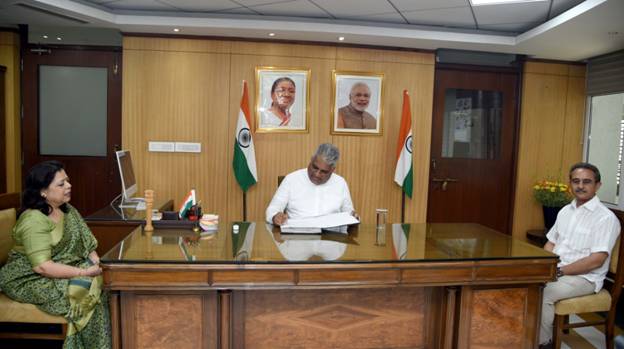
 Shri Bhupender Yadav today assumed charge as the Union Minister of Environment, Forest and Climate Change (MoEF&CC) on 11th June 2024. He was greeted at the office at Paryavaran Bhawan by Secretary Ms. Leena Nandan, Secretary(EF&CC) and other senior officials of the ministry. Shri Kirtivardhan Singh also assumed charge as Minister of State.

DSC_2431.JPG

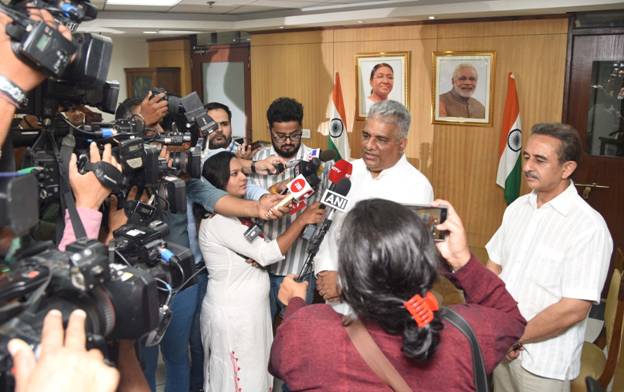
DSC_2459.JPG

DSC_2442.JPG

Briefing the media after assuming the charge, the Union Minister thanked Hon’ble Prime Minister for giving him this opportunity and said he is ready to discharge his duties and responsibilities in the Ministry. He also welcomed his colleague Shri Kirtivardhan Singh, Minister of State. He said many steps have been taken by this Ministry in the last 10 years under the leadership of PM Modi and that the Government was moving ahead taking environment and development together. He also said that the focus will remain on initiatives such as Mission LiFE- Lifestyle for Environment. He said that globally there is an environment crisis and Hon’ble PM announced Mission LiFE- Lifestyle for Environment at the Glasgow, Climate Conference 2021. He also said that Mission LiFE seeks to mobilize individuals for climate-positive behavior and to create an ecosystem to reinforce and enable environmental-friendly self-sustainable behaviours. It upholds mindful consumption rather than mindless consumption. 

DSC_2450.JPG

DSC_2454.JPG

Hon’ble Minister for MoEF&CC also said that the government believes environmental conservation and development can go hand in hand. He said that Hon’ble PM has also started a plantation initiative “एक पेड़ माँ के नाम” to counter escalating global warming and urged all citizens to take part in this initiative, launched by Hon’ble PM on World Environment Day, 2024 to promote mass plantation. This will help combat rising temperature, desertification and challenges facing biological diversity.

After assuming the charge, the Minister also held a meeting with the senior officers of the Ministry where he was briefed on the key initiatives and policy issues of the Ministry.

***

Forest fire prevention, post-fire restoration and forest certification as a tool for sustainable forest management

 Union Minister for Environment, Forest and Climate Change, Labour and Employment Shri Bhupender Yadav emphasized the importance of forest fire prevention, post-fire restoration and forest certification as a tool for sustainable forest management.

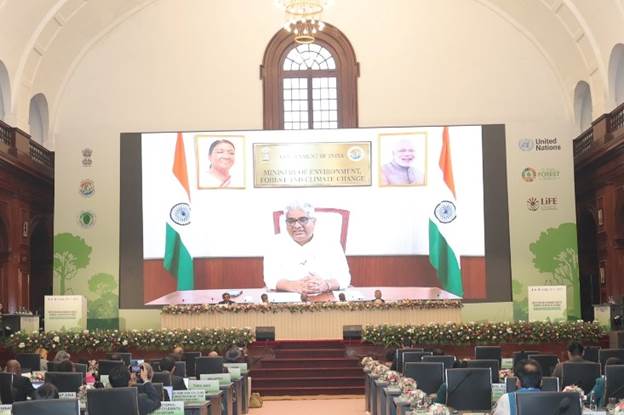
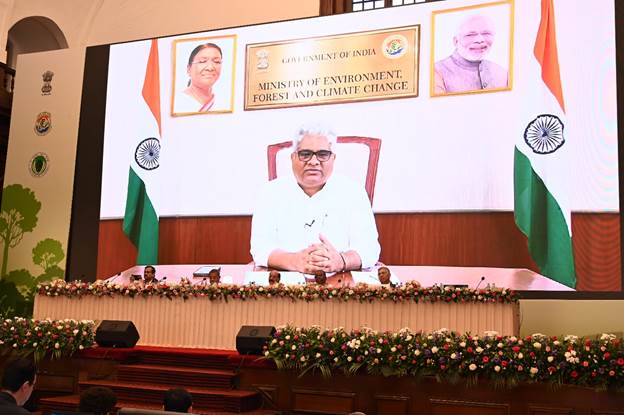
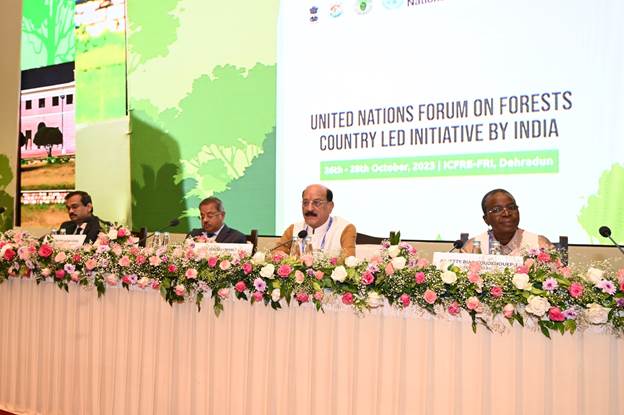
In his video message at the United Nations Forum on Forests (UNFF) at Forest Research Institute (FRI) Dehradun Shri Yadav stressed that forest fires not only cause irreparable damage to flora and fauna but also affect the livelihoods of communities living at forest peripheries. He emphasized that an important tool for promotion of sustainability of forests is forest certification, which nonetheless, presents numerous challenges notably for small-scale producers in developing countries. The Union Minister said India has embarked on its national forest certification scheme to address these challenges. He called on all participants to work together to create a sustainable future that is equitable, just, and resilient.

Minister of Forests, Languages & Technical Education, Government of Uttarakhand Shri Subodh Uniyal in his address today welcomed all distinguished delegates to “Dev Bhoomi”, the state of Uttarakhand. In his remarks he dwelled into the states initiatives and programmes and stated to minimize forest fire incidences, empowering communities living in proximity to forests and incentivizing them to work in tandem with the forest departments has been a strategy that has found success. He affirmed that Forest Certification is an equally important area, being a mechanism for forest monitoring, and is the focus within Global Forest Goals. He emphasized that all will benefit from the exchange at the Forum of traditional knowledge, technology innovation, and community engagement practices.

Director, UNFF, Ms. Juliette Biao Koudenoukpo said that issue of forest fires has been escalated as a global concern, and their detrimental impact on ecosystems, and communities makes action imperative and the second theme for the CLI being forest certification has been a long-standing topic for discussion and actionable solutions are now need of the hour. She highlighted the impact of forest fires on ecosystem are more profound now and mentioned about the challenges of numerous stakeholders and upcoming regulations that need attention. She stressed that the outcome of this CLI is very important and the success will lie in all our collective ability to identify areas for action and recommendations to UNFF 19.

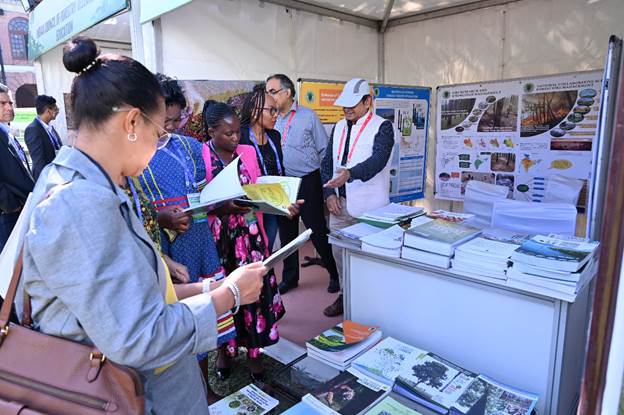
The Ministry of Environment, Forest and Climate Change, Government of India has taken the initiative for hosting a United Nations Forum on Forests (UNFF), from 26-28 October 2023, at Forest Research Institute (FRI) Dehradun. More than 80 delegates are participating from 40 countries and 20 International Organisations, both in person and online, are attending the programme, including Food and Agricultural Organisation (FAO) and International Union of Forest Research Organizations (IUFRO), along with delegates and organisations from India. The programme has adopted a hybrid, physical and online formats for enabling participation across the globe.

This Country Led Initiative (CLI) focuses on two thematic areas: forest fires/wildfires and best practices on its prevention and restoration in fire-affected areas, and forest certification and sustainable forest management.

Forest fires/wildfires profoundly impact biodiversity, ecosystem services, human well-being, livelihoods, and national economies. In recent years, forest fires/wildfires have increased in scale and duration. Accordingly, there is a need to enhance collaboration and action at local, regional and international level on its prevention, reduction of its impacts and restoration of impacted land.

Forest certification has received growing global attention in recent years. Between 2020 and 2021, the certified forest area increased by 27 million hectares, led mainly by Europe and Northern America. However, developing countries and marginal forest managers continue to face challenges with the certification process. The Forum aims to provide a platform to discuss these aspects and the aspect of aligning certification systems with trade rules.

The Forum is planned over two days of exchange on the thematic areas and will host sessions on how to live with fire in a warming world, policies needed for implementing integrated fire management, how to make best use of the newly developed Global Fire Management Hub, and Forest Certification and Sustainable Forest Management. The discussions will be followed by cultural programmes at the end of each day, and field trip to Rajaji National Park on the third day.

The Director-General, Ministry of Environment, Forest and Climate Change shared with the delegates the importance of CLI and deliberations in these meetings in enhancing international cooperation on global forestry related issues. He highlighted the issues that accompany these forest fires/wildfires and its negative impact on public health, economic activity and forest biodiversity. He also spoke about the current scenario in India where more than 62% of Indian states are prone to high-intensity forest fires and how India has significantly improved its forest fire monitoring systems and fire forecast models. He shared with the participants the country’s proposed global collaboration i.e. Gandhinagar Implementation Roadmap and Gandhinagar Information Platform, that emanated from G20 deliberations, to tackle restoration of forest fire and mining degraded lands.

The forum’s meeting witnessed today varied panel discussions on forest fires, policies enhancing prevention of forest fires and on the global forest management hub. Various countries and International Organisations participated as panelists including New Zealand, Madagascar, Colombia, Morocco, India, Portugal, Malawi, Botswana, Russia, Nigeria, South Africa, Spain, FAO, UNEP, ITTO and IUFRO. Subsequently many other countries and organizations expressed their views and suggestions on prevention and effective management including the role of community participation.

The forum on Thursday, the 27th October, 2023 will cover a round of interaction on Forest Certification and Sustainable Forest Management with country presentations from South Africa, Russia and India.

The outcome of the Forum will be a summary by the Co-chairs on the discussions held, which will be submitted to the 19th session of UNFF for consideration. UNFF19 will be held in May 2024 at United Nations headquarters.

******

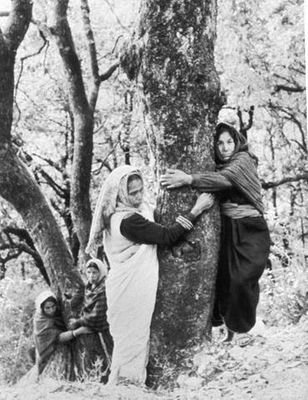
Gaura Devi who played an important role in Chipko Movement.

Gaura Devi (1925 – 1991) was a social activist and a rural women community leader from Uttarakhand, India who played an important role in the Chipko movement in 1970’s .
Gaura Devi was born in 1925 in a village named Lata of Chamoli district in the state of Uttarakhand. She got married at very young age, afer her marraige she moved to a nearby village named Reni by the Alaknanda River. At the age of 22 she was a widow with a child. After her husband death she moved to a new village which was near to the border of Indo-Tibet.

An environmentalist Sunderlal Bahuguna initially started the Chipko Movement . Gaura Devi became the leader of the Chipko movement in 1974. Gaura Devi was elected to lead the Mahila Mangal Dal (Women’s Welfare Association) in the wake of the Chipko movement. The organization worked towards protecting the forests of the community. On March 25, 1974, she learned from a young girl of the village that a local loggers of the village were logging a tree near the village. People in the village of Reni were told the news that according to government new policy, the government would pay compensation to the people for the land used by the army . Gaura Devi and 27 other women decide to take action against the loggers. She confronted the loggers and demanded that the men shoot her instead of cutting down trees, and she described the forest as “vandevta” (the jungle god) and her maika (mother’s house). Eventually, for the next three or four days Gaura Devi along with other village women’s protect the trees by hugging the trees , despite the insults and intimidation of the armed loggers,she was able to stop the logger’s work . After seeing the bravery of Gaura Devi and other village women’s how they protect the trees who are the important part of thier life other villagers from different villages joined the action with her . After this incident, the Uttar Pradesh government set up a specialized committee to investigate logging issues, and the logging company withdrew its subordinates from Reni. The Commission stated that the Reni Forest is an ecologically sensitive area where trees should not be logged. The Uttar Pradesh government who was in power of that area at that has since banned all logging in areas over 1150 km² for 10 years.

Some other important activist who played an important role in Chipko Andolan or Chipko movement along side Gaura Devi were :
Suraksha Devi, Sudesha Devi, Bachni Devi and Chandi Bhatt, Virushka Devi and others.

Gaura Devi passed away in July 1991, at the age of 66 in Reni village Chamoli.

“Ecology is permanent economy “

-Sunderlal Bahuguna

Definition under State of Forest Report

 As per decision 19/Conference of Parties (CP) 9-Kyoto Protocol, the forest can be defined by any country depending upon the capacities and capabilities of the country as follows:-

Forest- Forest is defined structurally on the basis of

  • Crown cover percentage: Tree crown cover- 10 to 30% (India 10%)


  • Minimum area of stand: area between 0.05 and 1 hectare (India 1.0 hectare) and


  • Minimum height of trees: Potential to reach a minimum height at maturity in situ of 2 to 5 m (India 2m)

India’s definition of forest has been taken on the basis of above three criteria only and very well accepted by United Nations Framework Convention on Climate Change (UNFCCC) and Food and Agriculture Organization (FAO) for their reporting/communications. The forest cover is defined as ‘all land, more than one hectare in area, with a tree canopy density of more than 10 percent irrespective of ownership and legal status. Such land may not necessarily be a recorded forest area. It also includes orchards, bamboo and palm’. The definition of forest cover has clearly been defined in all the India State of Forest Report (ISFR) and in all the International communications of India.

In ISFR 2021 recently published by the Ministry on 13th January, 2022, the forest cover figures are divided as ‘Inside Recorded Forest Area’ and ‘Outside Recorded Forest Area’. Those ‘Inside Recorded Forest Area’ are basically natural forests and plantations of Forest Department. The Forest cover ‘Outside Recorded Forest Area’ are mango orchards, coconut plantations, block plantations of agroforestry. Thus data of mango plantations etc. is automatically getting separated out as Forest Survey of India is reporting the figures of ‘Outside Recorded Forest Area’ separately.

The Interpretation of satellite data for classifying Very Dense Forest (VDF) is also supported by the ancilliary data like field inventory data of FSI, ground truthing data and high resolution satellite imagery wherever required.

At present, there is no plan to change the definition of forest cover and very dense forest. The definition of forest cover in ISFR represents true picture as described. 

All India State of Forest Reports having state wise forest cover maps and district wise forest cover figure are available at FSI website. 

****

Environment, Forest and Climate Change

 The Vision of this Ministry is to provide the citizens of India a clean, green and healthy environment with peoples’ participation and to support higher and inclusive economic growth through sustainable utilization of available natural resources.  This Ministry has achieved different milestones to plan, promote, co-ordinate and oversee the implementation of India’s environmental and forestry policies and programmes related to conservation of the country’s natural resources including its lakes and rivers, its biodiversity, forests and wildlife, ensuring the welfare of animals, and the prevention and abatement of pollution.  The major achievements during year 2021 are as follows: –

Azadi ka Amrit Mahotsav:

Green Good Deed of the Week campaign: In order to commemorate the 75thyear of independence, the country is celebrating a 75 week-long “Azadi ka Amrut Mahotsav”. An outreach programme for promoting sustainable lifestyle –“Green Good Deed of the Week” campaign is being organized as a part of this Mahotsav through Eco-clubs since 12th March 2021. State Nodal Agencies and Eco-clubs organized various activities to promote sustainable lifestyle like cleanliness/ plantation drives, painting/ slogan/ essay competitions, awareness on single-use plastics, awareness on environment-friendly ways of celebrating festivals, etc.

Iconic week celebration: The Iconic Week of the Ministry of Environment, Forest and Climate Change (MoEF&CC) as a part of the Azadi ka Amrut Mahotsav was celebrated from 4th to 10thOctober, 2021. The major themes identified for activities of the week were lake/ wetland conservation, curbing of use of single-use plastics, wildlife conservation, forest conservation and coastal conservation. Activities like Green Pledge, webinars, promotion of Green Good Deeds and screening of videos on the identified themes were organized in schools/ colleges across the country in co-ordination with Department of School Education & Literacy and SNAs.

Swachhta Campaign from October 2 –November 1, 2021

  • The Swachhta Campaign was observed for one month starting from 2nd October – 1st November, 2021. During the campaign, a big number of files have been reviewed by the various divisions in the Ministry of Environment, Forest and Climate Change which comes to a huge total of 45,154 files. Out of which around 41,758 files have been weeded out which has resulted in generation of paper waste of approximately 9 tonnes. A heavy duty shredder machine was specially brought to do the huge task. A revenue generation of Rs. 18 thousand has been generated out of the process of disposal of the waste generated by weeding of the files. A sufficient clear and open area in the Indira Prayavaran Bhawan appx 3000 sq.ft. has been reclaimed.
  • The Ministry has organised an auction of the e-Waste to dispose of all obsolete items including computers, printers, photocopiers and other electronic equipment. The e-waste bid has already been finalised at a price of Rs. 5.21 lakh to M/s. Clean Waste Management, Burari, Delhi. The shifting of e-waste material has been completed.
  • The Ministry has also organised an auction to dispose of all obsolete furniture items including tables, chairs, almirahs, side racks, sofa sets and other waste furniture items. The furniture waste bid has already been finalised at a price of Rs. 6.80 lakh to M/s Patel scrap.

Sustainable Development Goals (SDGs)

The UN General Assembly in its 70th Session considered and adopted the 17 Sustainable Development Goals (SDGs) and associated 169 targets for the next 15 years. The 17 SDGs came into force with effect from 1st January, 2016. Though not legally binding, the SDGs have become de facto international obligations and have potential to reorient domestic spending priorities of the countries during the decade ending 2030. The SDG 13, 15 and 12 have been mapped majorly to Ministry of Environment, Forest and Climate Change. Significant strides have been made in achieving SDG 13 (Urgent action to protect against Climate Change and its impact) as 24% reduction in emission intensity of GDP against 2005 levels has been achieved in 2016 itself. India has emphasized that Climate Finance from developed countries as promised in the Paris agreement is integral to achieve this goal. Similarly, country’s pledge on land degradation neutrality and intense afforestation are helping the country move towards SDG 15(Sustainable use of terrestrial Ecosystems and prevention of Biodiversity Loss). The commitment of the country in implementing the Extended Producer responsibility in plastics and ratification of Basel Convention to monitor hazardous substances is a remarkable step in moving towards SDG12 for ensuring sustainable production and consumption patterns. The 2030 Agenda also underscored that quality, reliable and disaggregated data will be needed for measurement of progress and to ensure that “No One is Left Behind”. MoEF&CC is strengthening its data systems for realistic monitoring of progress on the sustainable development goals.

Climate Change

As a responsible member of the International community of nations, the Government will continue to engage in a meaningful way with deliberations in the International fora/ UN climate summit duly keeping in mind the national developmental goals and priorities through the various international meets and at present India is a president of UNCCD.

  • Ministry of Environment Forest and Climate Change took part in the 26th Session of the Conference of Parties (COP-26) to the United Nations Framework Convention on Climate Change (UNFCCC) was held in Glasgow, United Kingdom for green net zero program The National Statement in the World Leaders Summit was delivered by the Hon’ble Prime Minister at COP-26, which the following mainly discussed and highlighted during the summit
    • India’s non-fossil energy capacity to reach 500 GW by 2030
    • India will meet 50 per cent of its energy requirements with renewable energy by 2030.
    • India will reduce its total projected carbon emissions by one billion tonnes from now to 2030.
    • India will reduce the carbon intensity of its economy by 45 per cent by 2030, over 2005 levels.
    • By 2070, India will achieve the target of net zero emissions.
  • The transfer of climate finance and low-cost climate technologies have become more important for implementation of climate actions by the developing countries. The ambitions on climate finance by developed countries cannot remain the same as they were at the time of Paris Agreement in 2015 and the Indian Delegation led by Hon’ble Minister for Environment, Forest & Climate Change attending the COP Summit through multilateral negotiations with major countries for adoption of greener norms in the global scenario.
  • The Glasgow Climate Conference adopted decisions, which inter-alia, include adoption of an overarching decision titled “Glasgow Climate Pact” that stresses the urgency of enhancing ambition and action in relation to mitigation, adaptation and finance in this critical decade to address the gaps in the implementation of the goals of the Paris Agreement. The Glasgow Climate Pact also noted with deep regret that the goal of developed country Parties to mobilize jointly USD 100 billion per year by 2020 has not yet been met. The COP 26 outcome also include completion of work related to rules, procedures, and guidelines for the implementation of the Paris Agreement including that for cooperative approaches, mechanisms and non-market approaches referred to in Article 6, enhanced transparency framework, and common timeframes for Nationally Determined Contributions (NDCs) and it was discussed with Ministers and Representatives from United Kingdom, Scotland, South Korea, Australia, BASIC countries, Nepal, Bhutan, Maldives, France, Canada, Brazil, USA, UAE, Germany, Norway, Singapore, Jamaica, Sweden, and Japan. Hon’ble Minister also held meetings with the Ministers of Like Minded Developing Countries and also with representatives from United Nations Environment Programme, United Nations Convention to Combat Desertification, and Green Climate Fund.
  • For strengthening impact, the Indian Delegation also participated in side events on the side-lines of COP 26 which include South Asia Co-operative Environment Programme, International Solar Alliance, CDRI, Leadership Group for Industry Transition and Namami Gange.

PARIVESH

In order to streamline the procedure for early grant of Clearances under this Ministry PARIVESH portal has been simplified for grant of Environmental Clearances which is now been reduced to 70 working days..

In pursuant to the spirit of ‘Digital India’ and capturing the essence of Minimum Government and Maximum Governance, a Single-Window Integrated Environmental Management System named PARIVESH (Pro-Active and Responsive facilitation by Interactive, Virtuous and Environmental Single Window Hub) has been developed by the Ministry of Environment, Forest and Climate Change for complete online, expeditious and transparent system for environment, forest, wildlife and CRZ clearances in the country. The facility is operational for processing of applications for Environmental Clearances (ECs), Forest Clearances(FCs), Coastal Regulatory Zone Clearances (CRZ). Over the years, the existing system of ‘PARIVESH’ has undergone numerous modifications and customization in alignment with statutory provisions and requirements.

Ministry in recent times has automated various processes through PARIVESH such as development of online module in PARIVESH for dispensation for requirement of EC for expansion / modernization with no increase in pollution load, aligning the EIA Notification with MMDR Amendment Act 2021, Online generation of EC with unique identification number etc.

Due to the above initiatives along with other Policy reforms, the average time taken for grant of EC in all the sectors has reduced significantly from more than 150 days in 2019 to less than 90 days. In some of the sectors, the ECs are being granted even within 60 days also accordingly, ECs for 7787 projects was granted under EIA Notification in 2021.

Ministry has decided to upgrade the existing PARIVESH to provide a “single window” solution for administration of environmental regulations. Centralized Processing Centre (CPC) has been proposed to be set up in the Ministry of Environment, Forest & Climate Change. Upgraded PARIVESH will not only strengthen the clearance processes but also encourages ease of doing business in the country. Know Your Approval module with inbuilt decision rules in the envisaged system will guide the Users about the applicability of clearances to the proposed project activity. In addition, it will minimize repetitive efforts of the Users and the same time will ensure single version of the truth across all applicable clearances. Further, in the envisaged system redundancies in the process flow will be minimized to maximum extant.

DPR of the project proposal has been approved. Total time line for overall development of modules is 64 weeks, however modules for critical major clearance processes would be made live in 42 weeks from the date of on boarding of NIC’s system integrator.

Nagar Van Yojana:

Ministery is implementing Nagar Van Yojana and revised its guidelines in October 2021 with an aim at developing 400 Nagar Vans and 200 Nagar Vatikas with the objective to significantly enhance the tree outside forests and green cover in cities leading to better environment, enhancement of biodiversity and ecological benefits to the urban and peri-urban areas apart from improving quality of life of city dwellers. The scheme will be funded from the National Fund under CAMPA at a total cost of Rs. 895.00 crore during the period 2020-21 to 2024-25.

School Nursery Yojana: Ministry is implementing School Nursery Yojana with an aim to associate students in the process of raising plantations as part of their learning and by providing an environment for the students to understand and appreciate the significance of plants in maintaining and sustaining the natural ecosystem. The scheme ‘School Nursery Yojana’ is proposed to be implemented for the period of five years..

Compensatory Afforestation Fund Management and Planning Authority (CAMPA)

The “National Compensatory Afforestation Fund Management and Planning Authority” (National Authority) came into existence in place of the Ad-hoc CAMPA with effect from 30.09.2018; the day the Compensatory Afforestation Fund (CAF) Act, 2016 and CAF Rules, 2018 came into force. Hon’ble Minister, Environment, Forest and Climate Change, Government of India is the chairperson of the Governing Body of the National Authority. The National Authority manages and utilises the “National Compensatory Afforestation Fund” (National Fund), which has been created under the public account of India. The other fund at the State/UT level is known as “State Compensatory Afforestation Fund” under the public accounts of respective States/UTs. CAF collected against approvals under the Forest (Conservation) Act, 1980 is distributed in the ratio of 90:10 between the concerned State Fund and National Fund and are made available to the National Authority and respective State Authorities through budgetary process. Until 07.10.2021 funds amounting to Rs 6,63,63.12 crore was transferred from state specific bank accounts maintained at New Delhi to the public Account of India and Rs. 48,606.39 crore was disbursed from the National Fund to 32 States, who have created their public accounts and completed reconciliation.  Until now, twenty-eight schemes amounting to Rs 1329.78 crore has been approved from the National Fund. Similarly, Annual Plans of Operation (APOs) of 31 States/UTs worth Rs 9,926.48 crore have been approved from the respective State Fund during current financial year. The activities included in the APOs are mostly related to forestry and wildlife management.  At national level, achievement of compensatory afforestation (CA) in 9,06,583 Ha against the target of 10,63,031 ha is major achievements of CAMPA. The average survival percentage of CA has been reported to be 73 percent.

Wildlife

The project Dolphin and the project lion have been initiated and the associated environmental impact of this are also strengthen at the major sanctuary and forest areas for cleaner Environmental Protection of endangered species.

  • The Protected Area coverage in the country has been steadily increasing. The coverage of Protected Areas which was 4.90% of country’s geographical area in 2014 has now increased to 5.03%. This includes an increase in Protected Areas in the country from 740 with area of 1,61,081.62 sq.kms. in 2014 to present 981 with an area of 1,71,921 sq.kms.
  • Population of several species like Tiger, Asiatic Lion, Greater one Horned Rhinoceros, Asian elephants, etc. increased. Wildlife health is being addressed to aggressively monitor zoonotic diseases.
  • India has taken a leadership role in conservation of migratory birds along the Central Asian Flyway and had organized a two day workshop  in October 2021, with  Central Asian Flyway (CAF) Range countries on conservation of migratory birds along the Central Asian Flyway.
  • The Ministry has released ‘Guidelines for sustainable ecotourism in forest and wildlife areas-2021 in October 2021. These guidelines emphasise on participation of local community in ecotourism activities.

Biodiversity Conservation

India enacted the Biological Diversity (BD) Act in 2002, and notified the Rules in 2004, through an extensive consultative process initiated in 1994. India was one of the first few countries to have enacted such a comprehensive legislation on biodiversity.

The Act is implemented through a three-tier institutional mechanism, at national, state and local levels: The National Biodiversity Authority (NBA) at the national level set up by the Government of India, State Biodiversity Boards set up by the State Governments at the State level, and Biodiversity Management Committees (BMCs) constituted by the elected bodies at the local level.

The Convention on Biological Diversity (CBD) will hold its second part of the 15th Conference of the Parties (COP 15) in Kunming, China in 2022 in which delegates will come together to adopt a “Post-2020 Global Biodiversity Framework”. The vision for proposed framework is that “By 2050, biodiversity is valued, conserved, restored and wisely used, maintaining ecosystem services, sustaining a healthy planet and delivering benefits essential for all people. 2021 is viewed as a decisive year on biodiversity action. India joined High Ambition Coalition for Nature and People which calls for protecting at least 30 percent of world’s land and ocean by 2030 where India has already reported about 27% of area as conserved under Aichi Target 11 to CBD.

The Biological Diversity (Amendment) Bill, 2021 is being introduced to simplify, streamline and reduce compliance burden in order to encourage conducive environment for collaborative research and investments, simplify patent application process, widen the scope of levying access and benefit sharing with local communities and for further conservation of biological resources, without compromising the objectives of United Nation Convention on Biological Diversity and its Nagoya Protocol and also national interests.’

National Biodiversity Authority

National Biodiversity Authority, a statutory body of the Ministry of Environment Forest and Climate Change established to implement the Biological Diversity Act, 2002 has ensured that 28 State Biodiversity Boards, 8 Union Territory Biodiversity Councils and 2,76,156 Biodiversity Management Committees have been constituted in all local bodies to implement the provisions of the Act. NBA has accorded approvals for over 3000 applications to access biological resources and traditional knowledge for undertaking research, commercial utilization and patents. The BD Act envisages its implementation through consultation with local communities living in forest and rural areas. India is a leading country in issuing Internationally Recognized Certificate of Compliance (IRCC) which recognizes stakeholders for legally accessing biological resources. Till date, out of the 3297 IRCCs issued globally, 2339 IRCCs have been issued by India. Besides, 22 Biodiversity Heritage Sites have been notified by 12 State Governments and 159 plants and 175 animals have been notified as threatened species in 18 states and 2 Union Territories. Seventeen institutions of national importance have been recognized as national Repositories for preserving voucher specimens of biodiversity

Wetland

  • The number of Ramsar sites (Wetlands of International Importance) in India have increased to 47 covering an area of 10,90,230 hectares which include 21 new sites designated during 2019-2021. India has the largest number of Ramsar sites in South Asia.  A dedicated web portal for wetlands has been developed and was launched on 2nd October, 2021 (Gandhi Jayanti). The portal indianwetlands.in is a publicly available information and knowledge platform to facilitate knowledge sharing, information dissemination, host capacity building material, and provide a single-point access data repository.
  • Health cards prepared for 500 wetlands under the four pronged approach for conservation of wetlands.

Vienna Convention, Montreal Protocol to Protection of Ozone

The Ozone Cell of the Ministry of Environment, Forest and Climate Change is the national ozone unit for implementation of the Montreal Protocol in India and phase out of substances controlled under the Montreal Protocol.

After successfully phasing out chlorofluorocarbons, carbon tetrachloride, halons, methyl bromide and methyl chloroform for controlled uses, India is now phasing out hydrochlorofluorocarbons as per the accelerated phase out schedule of the Montreal Protocol

The Government of India ratified the Kigali Amendment to the Montreal Protocol to phase down Hydrofluorocarbons on 27 September 2021 after approval by the Union Cabinet. Hydrofluorocarbons are used in air conditioners, refrigerators, aerosols, foams and other products, which even though do not deplete the stratospheric ozone layer, they have high global warming potential ranging from 12 to 14,000. As per the Kigali Amendment, to the Montreal Protocol, India will complete its phase down of Hydrofluorocarbons in 4 steps from 2032 onwards with cumulative reduction of 85% of production and consumption of HFCs by 2047. In line with the Cabinet decision, National Strategy in consultation with all the stakeholders will be developed by 2023 and funding for preparing the strategy has been secured from the Multilateral Fund

The Ministry of Environment, Forest and Climate Change has developed and launched the India Cooling Action Plan (ICAP) during March 2019, to provide an integrated vision towards cooling across sectors encompassing inter alia reducing cooling demand, refrigerant transition, enhancing energy efficiency and better technology options with a 20-year time horizon. Space cooling in buildings being the most important and can significantly contribute to achieving the goals in the ICAP, has been prioritized for implementation of the recommendations given in the ICAP. Action points for implementation of the recommendations for Space Cooling in Buildings was finalized and launched on the World Ozone Day held on 16th September 2021 and widely disseminated

Following studies were completed as part of non-investment component of HCFC phase out Management Plan Stage-II (HPMP Stage-II)

a) Application of non-ODS and low GWP alternatives in Cold Chain Sector in India

b) Public Procurement Policies for Refrigeration and Air-Conditioning Equipment Using Non-ODS based refrigerants

c) Good servicing practices and Energy efficiency in RAC sector

The above studies were published and launched on 16 September 2021 on the World Ozone Day and were widely disseminated

Preparation of Stage-III of HPMP has been initiated, to the implemented from 2023-2030, after securing funding from the Multilateral Fund for preparation of project proposal.

National Clean Air Program

Ministry of Environment, Forest and Climate Change (MoEF&CC) is implementing National Clean Air Programme (NCAP) for reducing levels of air pollution in non-attainment cities (NACs) of the country since January 2019. NCAP is implemented in targeted 132 cities.

A Commission on Air Quality Management in NCR and Adjoining Areas (CAQM) has been constituted by enactment of an Act by Parliament for better coordination, research, identification and resolution of problems surrounding the air quality index and for matters connected therewith or incidental thereto.

Avoiding Use of Single Use Plastics and Efficient and Effective Management of Plastic Waste.

  • To enhance the efficacy implementation of PWMR, the Ministry has notified the Plastic Waste Management Amendment Rules, 2021 on 12th August 2021 which also prohibits identified single use plastic items, which have low utility and high littering potential, by 2022.
  • As per the notification, the manufacture, import, stocking, distribution, sale and use of 12 identified single-use plastic items including polystyrene and expanded polystyrene, commodities shall be prohibited with effect from the 1st of July, 2022.
  • The thickness of plastic carry bags has been increased from fifty microns to seventy-five microns with effect from 30th September, 2021, and to one hundred and twenty microns with effect from the 31st December, 2022.
  • The Ministry has organized “Awareness Campaign on Single Use Plastic – 2021”.
  • The States/UTs have been requested to constitute a Special Task Force under Chairpersonship of Chief Secretary/Administrator for elimination of single use plastics and effective implementation of Plastic Waste Management Rules, 2016. 31 Task Forces have been formed.
  • The Ministry of Environment, Forest and Climate Change has notified the draft Regulations on the Extended Producer Responsibility for plastic packaging under Plastic Waste Management Rules, 2016, as amended from time to time on 6th October 2021 for public consultation.

Combating the Land Degradation, Desertification and Drought:

  • India committed to achieve Land Degradation Neutrality and restoration of 26 million hectares of degraded land by 2030, which includes 21 million hectares of Bonn Challenge and additional commitment of 5 million hectares as voluntary commitment. India presently holds the Presidency of UNCCD COP for 2 years till April 2022.
  • Hon’ble Prime Minister, Shri Narendra Modi graced the High level Dialogue on desertification, land degradation and drought of United Nations General Assembly, held on 14th June 2021 highlighting the initiatives taken by India on combating Land Degradation.

Integrated Coastal Zone Management

Blue Economy is one of the thrust area of the Government for sustainable development of coastal resources. The development will in due consideration of Conservation & protection of coastal and marine resources, Pollution abatement measures, Management of coastal and Marine ecosystem, Livelihood enhancement with security of coastal community, Capacity building and will also comprehend Sustainable development goals.

10 beaches in 7 States and One Union Territory, have been developed at par with international Standards and has been conferred with prestigious Blue Flag certification for its environmentally sound management and ecological sustainable infrastructures with adequate safety measures. This has resulted in better waste management, maintaining bathing water quality, self-sustaining solar energy-based infrastructure, containing marine littering, enhancing local level livelihood options and increased tourist based economy.

****

Environment, Forest and Climate Change

 The Vision of this Ministry is to provide the citizens of India a clean, green and healthy environment with peoples’ participation and to support higher and inclusive economic growth through sustainable utilization of available natural resources.  This Ministry has achieved different milestones to plan, promote, co-ordinate and oversee the implementation of India’s environmental and forestry policies and programmes related to conservation of the country’s natural resources including its lakes and rivers, its biodiversity, forests and wildlife, ensuring the welfare of animals, and the prevention and abatement of pollution.  The major achievements during year 2021 are as follows: –

Azadi ka Amrit Mahotsav: 

Green Good Deed of the Week campaign: In order to commemorate the 75thyear of independence, the country is celebrating a 75 week-long “Azadi ka Amrut Mahotsav”. An outreach programme for promoting sustainable lifestyle –“Green Good Deed of the Week” campaign is being organized as a part of this Mahotsav through Eco-clubs since 12th March 2021. State Nodal Agencies and Eco-clubs organized various activities to promote sustainable lifestyle like cleanliness/ plantation drives, painting/ slogan/ essay competitions, awareness on single-use plastics, awareness on environment-friendly ways of celebrating festivals, etc.

Iconic week celebration: The Iconic Week of the Ministry of Environment, Forest and Climate Change (MoEF&CC) as a part of the Azadi ka Amrut Mahotsav was celebrated from 4th to 10thOctober, 2021. The major themes identified for activities of the week were lake/ wetland conservation, curbing of use of single-use plastics, wildlife conservation, forest conservation and coastal conservation. Activities like Green Pledge, webinars, promotion of Green Good Deeds and screening of videos on the identified themes were organized in schools/ colleges across the country in co-ordination with Department of School Education & Literacy and SNAs. 

Swachhta Campaign from October 2 –November 1, 2021 

  • The Swachhta Campaign was observed for one month starting from 2nd October – 1st November, 2021. During the campaign, a big number of files have been reviewed by the various divisions in the Ministry of Environment, Forest and Climate Change which comes to a huge total of 45,154 files. Out of which around 41,758 files have been weeded out which has resulted in generation of paper waste of approximately 9 tonnes. A heavy duty shredder machine was specially brought to do the huge task. A revenue generation of Rs. 18 thousand has been generated out of the process of disposal of the waste generated by weeding of the files. A sufficient clear and open area in the Indira Prayavaran Bhawan appx 3000 sq.ft. has been reclaimed.
  • The Ministry has organised an auction of the e-Waste to dispose of all obsolete items including computers, printers, photocopiers and other electronic equipment. The e-waste bid has already been finalised at a price of Rs. 5.21 lakh to M/s. Clean Waste Management, Burari, Delhi. The shifting of e-waste material has been completed.
  • The Ministry has also organised an auction to dispose of all obsolete furniture items including tables, chairs, almirahs, side racks, sofa sets and other waste furniture items. The furniture waste bid has already been finalised at a price of Rs. 6.80 lakh to M/s Patel scrap.

Sustainable Development Goals (SDGs)

The UN General Assembly in its 70th Session considered and adopted the 17 Sustainable Development Goals (SDGs) and associated 169 targets for the next 15 years. The 17 SDGs came into force with effect from 1st January, 2016. Though not legally binding, the SDGs have become de facto international obligations and have potential to reorient domestic spending priorities of the countries during the decade ending 2030. The SDG 13, 15 and 12 have been mapped majorly to Ministry of Environment, Forest and Climate Change. Significant strides have been made in achieving SDG 13 (Urgent action to protect against Climate Change and its impact) as 24% reduction in emission intensity of GDP against 2005 levels has been achieved in 2016 itself. India has emphasized that Climate Finance from developed countries as promised in the Paris agreement is integral to achieve this goal. Similarly, country’s pledge on land degradation neutrality and intense afforestation are helping the country move towards SDG 15(Sustainable use of terrestrial Ecosystems and prevention of Biodiversity Loss). The commitment of the country in implementing the Extended Producer responsibility in plastics and ratification of Basel Convention to monitor hazardous substances is a remarkable step in moving towards SDG12 for ensuring sustainable production and consumption patterns. The 2030 Agenda also underscored that quality, reliable and disaggregated data will be needed for measurement of progress and to ensure that “No One is Left Behind”. MoEF&CC is strengthening its data systems for realistic monitoring of progress on the sustainable development goals.

Climate Change

As a responsible member of the International community of nations, the Government will continue to engage in a meaningful way with deliberations in the International fora/ UN climate summit duly keeping in mind the national developmental goals and priorities through the various international meets and at present India is a president of UNCCD.

  • Ministry of Environment Forest and Climate Change took part in the 26th Session of the Conference of Parties (COP-26) to the United Nations Framework Convention on Climate Change (UNFCCC) was held in Glasgow, United Kingdom for green net zero program The National Statement in the World Leaders Summit was delivered by the Hon’ble Prime Minister at COP-26, which the following mainly discussed and highlighted during the summit
    • India’s non-fossil energy capacity to reach 500 GW by 2030
    • India will meet 50 per cent of its energy requirements with renewable energy by 2030.
    • India will reduce its total projected carbon emissions by one billion tonnes from now to 2030.
    • India will reduce the carbon intensity of its economy by 45 per cent by 2030, over 2005 levels.
    • By 2070, India will achieve the target of net zero emissions. 
  • The transfer of climate finance and low-cost climate technologies have become more important for implementation of climate actions by the developing countries. The ambitions on climate finance by developed countries cannot remain the same as they were at the time of Paris Agreement in 2015 and the Indian Delegation led by Hon’ble Minister for Environment, Forest & Climate Change attending the COP Summit through multilateral negotiations with major countries for adoption of greener norms in the global scenario.
  • The Glasgow Climate Conference adopted decisions, which inter-alia, include adoption of an overarching decision titled “Glasgow Climate Pact” that stresses the urgency of enhancing ambition and action in relation to mitigation, adaptation and finance in this critical decade to address the gaps in the implementation of the goals of the Paris Agreement. The Glasgow Climate Pact also noted with deep regret that the goal of developed country Parties to mobilize jointly USD 100 billion per year by 2020 has not yet been met. The COP 26 outcome also include completion of work related to rules, procedures, and guidelines for the implementation of the Paris Agreement including that for cooperative approaches, mechanisms and non-market approaches referred to in Article 6, enhanced transparency framework, and common timeframes for Nationally Determined Contributions (NDCs) and it was discussed with Ministers and Representatives from United Kingdom, Scotland, South Korea, Australia, BASIC countries, Nepal, Bhutan, Maldives, France, Canada, Brazil, USA, UAE, Germany, Norway, Singapore, Jamaica, Sweden, and Japan. Hon’ble Minister also held meetings with the Ministers of Like Minded Developing Countries and also with representatives from United Nations Environment Programme, United Nations Convention to Combat Desertification, and Green Climate Fund.
  • For strengthening impact, the Indian Delegation also participated in side events on the side-lines of COP 26 which include South Asia Co-operative Environment Programme, International Solar Alliance, CDRI, Leadership Group for Industry Transition and Namami Gange.

PARIVESH

In order to streamline the procedure for early grant of Clearances under this Ministry PARIVESH portal has been simplified for grant of Environmental Clearances which is now been reduced to 70 working days..

In pursuant to the spirit of ‘Digital India’ and capturing the essence of Minimum Government and Maximum Governance, a Single-Window Integrated Environmental Management System named PARIVESH (Pro-Active and Responsive facilitation by Interactive, Virtuous and Environmental Single Window Hub) has been developed by the Ministry of Environment, Forest and Climate Change for complete online, expeditious and transparent system for environment, forest, wildlife and CRZ clearances in the country. The facility is operational for processing of applications for Environmental Clearances (ECs), Forest Clearances(FCs), Coastal Regulatory Zone Clearances (CRZ). Over the years, the existing system of ‘PARIVESH’ has undergone numerous modifications and customization in alignment with statutory provisions and requirements.

Ministry in recent times has automated various processes through PARIVESH such as development of online module in PARIVESH for dispensation for requirement of EC for expansion / modernization with no increase in pollution load, aligning the EIA Notification with MMDR Amendment Act 2021, Online generation of EC with unique identification number etc.

Due to the above initiatives along with other Policy reforms, the average time taken for grant of EC in all the sectors has reduced significantly from more than 150 days in 2019 to less than 90 days. In some of the sectors, the ECs are being granted even within 60 days also accordingly, ECs for 7787 projects was granted under EIA Notification in 2021.

Ministry has decided to upgrade the existing PARIVESH to provide a “single window” solution for administration of environmental regulations. Centralized Processing Centre (CPC) has been proposed to be set up in the Ministry of Environment, Forest & Climate Change. Upgraded PARIVESH will not only strengthen the clearance processes but also encourages ease of doing business in the country. Know Your Approval module with inbuilt decision rules in the envisaged system will guide the Users about the applicability of clearances to the proposed project activity. In addition, it will minimize repetitive efforts of the Users and the same time will ensure single version of the truth across all applicable clearances. Further, in the envisaged system redundancies in the process flow will be minimized to maximum extant.

DPR of the project proposal has been approved. Total time line for overall development of modules is 64 weeks, however modules for critical major clearance processes would be made live in 42 weeks from the date of on boarding of NIC’s system integrator. 

Nagar Van Yojana:

Ministery is implementing Nagar Van Yojana and revised its guidelines in October 2021 with an aim at developing 400 Nagar Vans and 200 Nagar Vatikas with the objective to significantly enhance the tree outside forests and green cover in cities leading to better environment, enhancement of biodiversity and ecological benefits to the urban and peri-urban areas apart from improving quality of life of city dwellers. The scheme will be funded from the National Fund under CAMPA at a total cost of Rs. 895.00 crore during the period 2020-21 to 2024-25.

School Nursery Yojana: Ministry is implementing School Nursery Yojana with an aim to associate students in the process of raising plantations as part of their learning and by providing an environment for the students to understand and appreciate the significance of plants in maintaining and sustaining the natural ecosystem. The scheme ‘School Nursery Yojana’ is proposed to be implemented for the period of five years..

Compensatory Afforestation Fund Management and Planning Authority (CAMPA)

The “National Compensatory Afforestation Fund Management and Planning Authority” (National Authority) came into existence in place of the Ad-hoc CAMPA with effect from 30.09.2018; the day the Compensatory Afforestation Fund (CAF) Act, 2016 and CAF Rules, 2018 came into force. Hon’ble Minister, Environment, Forest and Climate Change, Government of India is the chairperson of the Governing Body of the National Authority. The National Authority manages and utilises the “National Compensatory Afforestation Fund” (National Fund), which has been created under the public account of India. The other fund at the State/UT level is known as “State Compensatory Afforestation Fund” under the public accounts of respective States/UTs. CAF collected against approvals under the Forest (Conservation) Act, 1980 is distributed in the ratio of 90:10 between the concerned State Fund and National Fund and are made available to the National Authority and respective State Authorities through budgetary process. Until 07.10.2021 funds amounting to Rs 6,63,63.12 crore was transferred from state specific bank accounts maintained at New Delhi to the public Account of India and Rs. 48,606.39 crore was disbursed from the National Fund to 32 States, who have created their public accounts and completed reconciliation.  Until now, twenty-eight schemes amounting to Rs 1329.78 crore has been approved from the National Fund. Similarly, Annual Plans of Operation (APOs) of 31 States/UTs worth Rs 9,926.48 crore have been approved from the respective State Fund during current financial year. The activities included in the APOs are mostly related to forestry and wildlife management.  At national level, achievement of compensatory afforestation (CA) in 9,06,583 Ha against the target of 10,63,031 ha is major achievements of CAMPA. The average survival percentage of CA has been reported to be 73 percent.

Wildlife

The project Dolphin and the project lion have been initiated and the associated environmental impact of this are also strengthen at the major sanctuary and forest areas for cleaner Environmental Protection of endangered species. 

  • The Protected Area coverage in the country has been steadily increasing. The coverage of Protected Areas which was 4.90% of country’s geographical area in 2014 has now increased to 5.03%. This includes an increase in Protected Areas in the country from 740 with area of 1,61,081.62 sq.kms. in 2014 to present 981 with an area of 1,71,921 sq.kms. 
  • Population of several species like Tiger, Asiatic Lion, Greater one Horned Rhinoceros, Asian elephants, etc. increased. Wildlife health is being addressed to aggressively monitor zoonotic diseases. 
  • India has taken a leadership role in conservation of migratory birds along the Central Asian Flyway and had organized a two day workshop  in October 2021, with  Central Asian Flyway (CAF) Range countries on conservation of migratory birds along the Central Asian Flyway.
  • The Ministry has released ‘Guidelines for sustainable ecotourism in forest and wildlife areas-2021 in October 2021. These guidelines emphasise on participation of local community in ecotourism activities.

Biodiversity Conservation

India enacted the Biological Diversity (BD) Act in 2002, and notified the Rules in 2004, through an extensive consultative process initiated in 1994. India was one of the first few countries to have enacted such a comprehensive legislation on biodiversity. 

The Act is implemented through a three-tier institutional mechanism, at national, state and local levels: The National Biodiversity Authority (NBA) at the national level set up by the Government of India, State Biodiversity Boards set up by the State Governments at the State level, and Biodiversity Management Committees (BMCs) constituted by the elected bodies at the local level.

The Convention on Biological Diversity (CBD) will hold its second part of the 15th Conference of the Parties (COP 15) in Kunming, China in 2022 in which delegates will come together to adopt a “Post-2020 Global Biodiversity Framework”. The vision for proposed framework is that “By 2050, biodiversity is valued, conserved, restored and wisely used, maintaining ecosystem services, sustaining a healthy planet and delivering benefits essential for all people. 2021 is viewed as a decisive year on biodiversity action. India joined High Ambition Coalition for Nature and People which calls for protecting at least 30 percent of world’s land and ocean by 2030 where India has already reported about 27% of area as conserved under Aichi Target 11 to CBD.

The Biological Diversity (Amendment) Bill, 2021 is being introduced to simplify, streamline and reduce compliance burden in order to encourage conducive environment for collaborative research and investments, simplify patent application process, widen the scope of levying access and benefit sharing with local communities and for further conservation of biological resources, without compromising the objectives of United Nation Convention on Biological Diversity and its Nagoya Protocol and also national interests.’

National Biodiversity Authority

National Biodiversity Authority, a statutory body of the Ministry of Environment Forest and Climate Change established to implement the Biological Diversity Act, 2002 has ensured that 28 State Biodiversity Boards, 8 Union Territory Biodiversity Councils and 2,76,156 Biodiversity Management Committees have been constituted in all local bodies to implement the provisions of the Act. NBA has accorded approvals for over 3000 applications to access biological resources and traditional knowledge for undertaking research, commercial utilization and patents. The BD Act envisages its implementation through consultation with local communities living in forest and rural areas. India is a leading country in issuing Internationally Recognized Certificate of Compliance (IRCC) which recognizes stakeholders for legally accessing biological resources. Till date, out of the 3297 IRCCs issued globally, 2339 IRCCs have been issued by India. Besides, 22 Biodiversity Heritage Sites have been notified by 12 State Governments and 159 plants and 175 animals have been notified as threatened species in 18 states and 2 Union Territories. Seventeen institutions of national importance have been recognized as national Repositories for preserving voucher specimens of biodiversity

Wetland

  • The number of Ramsar sites (Wetlands of International Importance) in India have increased to 47 covering an area of 10,90,230 hectares which include 21 new sites designated during 2019-2021. India has the largest number of Ramsar sites in South Asia.  A dedicated web portal for wetlands has been developed and was launched on 2nd October, 2021 (Gandhi Jayanti). The portal indianwetlands.in is a publicly available information and knowledge platform to facilitate knowledge sharing, information dissemination, host capacity building material, and provide a single-point access data repository.
  • Health cards prepared for 500 wetlands under the four pronged approach for conservation of wetlands. 

Vienna Convention, Montreal Protocol to Protection of Ozone 

The Ozone Cell of the Ministry of Environment, Forest and Climate Change is the national ozone unit for implementation of the Montreal Protocol in India and phase out of substances controlled under the Montreal Protocol.

After successfully phasing out chlorofluorocarbons, carbon tetrachloride, halons, methyl bromide and methyl chloroform for controlled uses, India is now phasing out hydrochlorofluorocarbons as per the accelerated phase out schedule of the Montreal Protocol

The Government of India ratified the Kigali Amendment to the Montreal Protocol to phase down Hydrofluorocarbons on 27 September 2021 after approval by the Union Cabinet. Hydrofluorocarbons are used in air conditioners, refrigerators, aerosols, foams and other products, which even though do not deplete the stratospheric ozone layer, they have high global warming potential ranging from 12 to 14,000. As per the Kigali Amendment, to the Montreal Protocol, India will complete its phase down of Hydrofluorocarbons in 4 steps from 2032 onwards with cumulative reduction of 85% of production and consumption of HFCs by 2047. In line with the Cabinet decision, National Strategy in consultation with all the stakeholders will be developed by 2023 and funding for preparing the strategy has been secured from the Multilateral Fund

The Ministry of Environment, Forest and Climate Change has developed and launched the India Cooling Action Plan (ICAP) during March 2019, to provide an integrated vision towards cooling across sectors encompassing inter alia reducing cooling demand, refrigerant transition, enhancing energy efficiency and better technology options with a 20-year time horizon. Space cooling in buildings being the most important and can significantly contribute to achieving the goals in the ICAP, has been prioritized for implementation of the recommendations given in the ICAP. Action points for implementation of the recommendations for Space Cooling in Buildings was finalized and launched on the World Ozone Day held on 16th September 2021 and widely disseminated

Following studies were completed as part of non-investment component of HCFC phase out Management Plan Stage-II (HPMP Stage-II)

a) Application of non-ODS and low GWP alternatives in Cold Chain Sector in India

b) Public Procurement Policies for Refrigeration and Air-Conditioning Equipment Using Non-ODS based refrigerants

c) Good servicing practices and Energy efficiency in RAC sector

The above studies were published and launched on 16 September 2021 on the World Ozone Day and were widely disseminated

Preparation of Stage-III of HPMP has been initiated, to the implemented from 2023-2030, after securing funding from the Multilateral Fund for preparation of project proposal.

National Clean Air Program

Ministry of Environment, Forest and Climate Change (MoEF&CC) is implementing National Clean Air Programme (NCAP) for reducing levels of air pollution in non-attainment cities (NACs) of the country since January 2019. NCAP is implemented in targeted 132 cities.

A Commission on Air Quality Management in NCR and Adjoining Areas (CAQM) has been constituted by enactment of an Act by Parliament for better coordination, research, identification and resolution of problems surrounding the air quality index and for matters connected therewith or incidental thereto. 

Avoiding Use of Single Use Plastics and Efficient and Effective Management of Plastic Waste.

  • To enhance the efficacy implementation of PWMR, the Ministry has notified the Plastic Waste Management Amendment Rules, 2021 on 12th August 2021 which also prohibits identified single use plastic items, which have low utility and high littering potential, by 2022.
  • As per the notification, the manufacture, import, stocking, distribution, sale and use of 12 identified single-use plastic items including polystyrene and expanded polystyrene, commodities shall be prohibited with effect from the 1st of July, 2022.
  • The thickness of plastic carry bags has been increased from fifty microns to seventy-five microns with effect from 30th September, 2021, and to one hundred and twenty microns with effect from the 31st December, 2022.
  • The Ministry has organized “Awareness Campaign on Single Use Plastic – 2021”.
  • The States/UTs have been requested to constitute a Special Task Force under Chairpersonship of Chief Secretary/Administrator for elimination of single use plastics and effective implementation of Plastic Waste Management Rules, 2016. 31 Task Forces have been formed.
  • The Ministry of Environment, Forest and Climate Change has notified the draft Regulations on the Extended Producer Responsibility for plastic packaging under Plastic Waste Management Rules, 2016, as amended from time to time on 6th October 2021 for public consultation.

Combating the Land Degradation, Desertification and Drought:

  • India committed to achieve Land Degradation Neutrality and restoration of 26 million hectares of degraded land by 2030, which includes 21 million hectares of Bonn Challenge and additional commitment of 5 million hectares as voluntary commitment. India presently holds the Presidency of UNCCD COP for 2 years till April 2022. 
  • Hon’ble Prime Minister, Shri Narendra Modi graced the High level Dialogue on desertification, land degradation and drought of United Nations General Assembly, held on 14th June 2021 highlighting the initiatives taken by India on combating Land Degradation. 

Integrated Coastal Zone Management

Blue Economy is one of the thrust area of the Government for sustainable development of coastal resources. The development will in due consideration of Conservation & protection of coastal and marine resources, Pollution abatement measures, Management of coastal and Marine ecosystem, Livelihood enhancement with security of coastal community, Capacity building and will also comprehend Sustainable development goals.

10 beaches in 7 States and One Union Territory, have been developed at par with international Standards and has been conferred with prestigious Blue Flag certification for its environmentally sound management and ecological sustainable infrastructures with adequate safety measures. This has resulted in better waste management, maintaining bathing water quality, self-sustaining solar energy-based infrastructure, containing marine littering, enhancing local level livelihood options and increased tourist based economy.

****

Why is wildfire smoke potentially worse than other pollutants in the air?

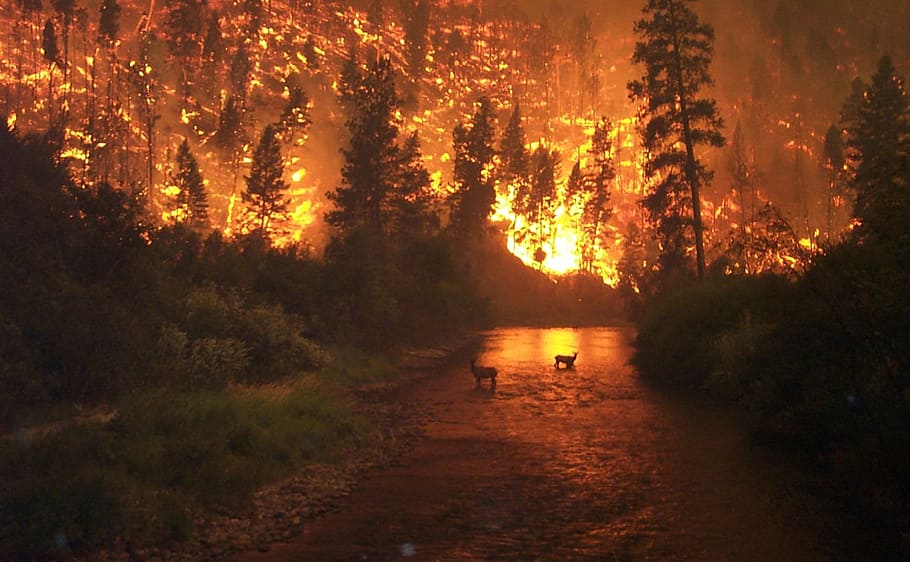
Wildfires in the Western United States have spread smoke across the landscape, posing a rising hazard to public health. The 2020 fire season was so terrible, because of climate change, that it nearly quadrupled the previous record for acres burned in California, and at-home monitoring of the smoke’s impact on air quality became practically ubiquitous. This year’s season is off to a disastrous start, with smoke from West Coast wildfires already darkening skies on the East Coast.

Smoke isn’t your typical form of pollution. According to studies published in the journal Nature earlier this year, the small particles present in smoke can be up to ten times more hazardous to human health than soot from other sources such as tailpipes and factories.

Fine particles, also known as PM2.5, are 30 times smaller than the diameter of a human hair follicle and were studied by researchers. When a fuel, whether it’s gas or plant, burns, tiny particles are released into the air and occasionally into our bodies. According to the study, fine particles from wildfire smoke resulted in 10% more respiratory hospitalizations than they would have been without the smoke. While pollution from other sources is also hazardous, it only increased hospitalizations by around 1%.

Rosana Aguilera, the study’s primary author and a postdoctoral researcher at the University of California, San Diego, spoke in an interview. She explained what she and other academics are doing to learn more about the effects of wildfire smoke on human health.

The interview was slightly altered for clarity.

What are “fine particles,” and why are they a concern?

Fine particles were investigated by the research group I work in since they are one of the primary components of wildfire smoke. These particles are distinct from others. Their chemical makeup varies depending on the items being burned. There are a variety of chemicals that may be found in wildfire smoke and fine particles, including carbon and heavy metals.

We’re concentrating on these small particles found in wildfire smoke right now because wildfire smoke is becoming increasingly prevalent as a source of emissions in various parts of the United States and the world. It’s one form of air pollution in California that appears to be on the rise in the foreseeable future. Some articles support the notion that wildfire smoke will be one of the primary sources of fine particulate matter in areas such as the Western United States.

What kind of impact may such tiny particles have on people’s health?

Because it’s tiny enough to infiltrate our respiratory system and reach deep into the lungs, it’s one of the air pollutants to be concerned about. It might enter the circulation and spread to other organs from there. It can make breathing difficult. It can irritate the skin and aggravate illnesses such as asthma and other respiratory and cardiopulmonary problems.

We mostly deal with acute impacts, which are the reactions that occur after being exposed to wildfire smoke for a few days. My study group isn’t focusing on long-term impacts right now, but I believe it’s an issue that needs to be explored more. Long-term exposure is more difficult to study since it requires following individuals who have been exposed to several wildfires.

So, how does wildfire smoke compare to other sources of pollution like vehicles, trucks, and industry?

When comparing wildfire smoke to non-smoke fine particles, we discovered that wildfire smoke is more hazardous in terms of increased hospitalizations.

The mix of traffic emissions and wildfire smoke may be extremely different. We haven’t looked at the chemical makeup of these tiny particles concerning their origins. However, several toxicological studies have delved into this further and shown that wildfire smoke toxicity may be enhanced. If it passes through a structure, it may pick up pollutants from homes and other structures.

What do you want to achieve with your research?

We’d like to investigate these differential effects of fine particles concerning emission sources, as well as try to learn more about the chemical makeup of various wildfires.

If wildfire smoke has a higher impact, and if it will be one of the primary sources of this sort of pollution in the future — or if it currently is — we need to learn more about why it is more damaging. Then, what kind of long-term impact can we expect?

In our foreseeable future do we have more forests or deserts?

Forests make up nearly 33% of the land area on our planet. 1.6 billion People rely on the benefits that forests offer, that include food, fresh water, medicinal herbs and shelter. Most o the world’s threatened and endangered animals live in forests.

Forests also counter the negative effects of climate change. They serve as carbon stores, taking in the carbon dioxide that would be left in the atmosphere.

Every year 58 thousand square miles are lost — the equivalent to one football field every two seconds. The study, from the nonprofit research organization Center for Global Development, predicts that as much as 2,890,000 square kilometers — or over a million square miles — of tropical forest could be lost to deforestation due to land being cleared for industrial agriculture. Jonah Busch, a coauthor on the report, said they found a pattern to the destruction.

“That amount of loss will have a big impact on the climate because trees store a lot of carbon,” Busch said, “and when they’re burned, and cleared for soy or beef pastures, or palm oil, all that the carbon that’s stored in the trees goes up to the atmosphere.” Busch and his colleagues estimated that 169 billion tons of carbon-di-oxide could be released, which is the annual quantity of pollution emitted from about fifty thousand coal-burning power plants. Busch also said that half of the projected deforestation could happen in Latin America, with the other half split between Asia and Africa.

The forest cover of the world will increase by at least 10 percent of its original value today in the next 5–10 years. A few countries will increase their forest cover drastically like northern parts of Africa and Mongolia. As far as the United States is concerned the forest cover has increased, at this point of time they have more trees now than what they had hundred years ago. The Indian and Chinese government will continue to implement their schemes unless they have reached their country’s goal. Hope other countries start to implement schemes and programs to improve their forest cover.

The Amazon Rainforest

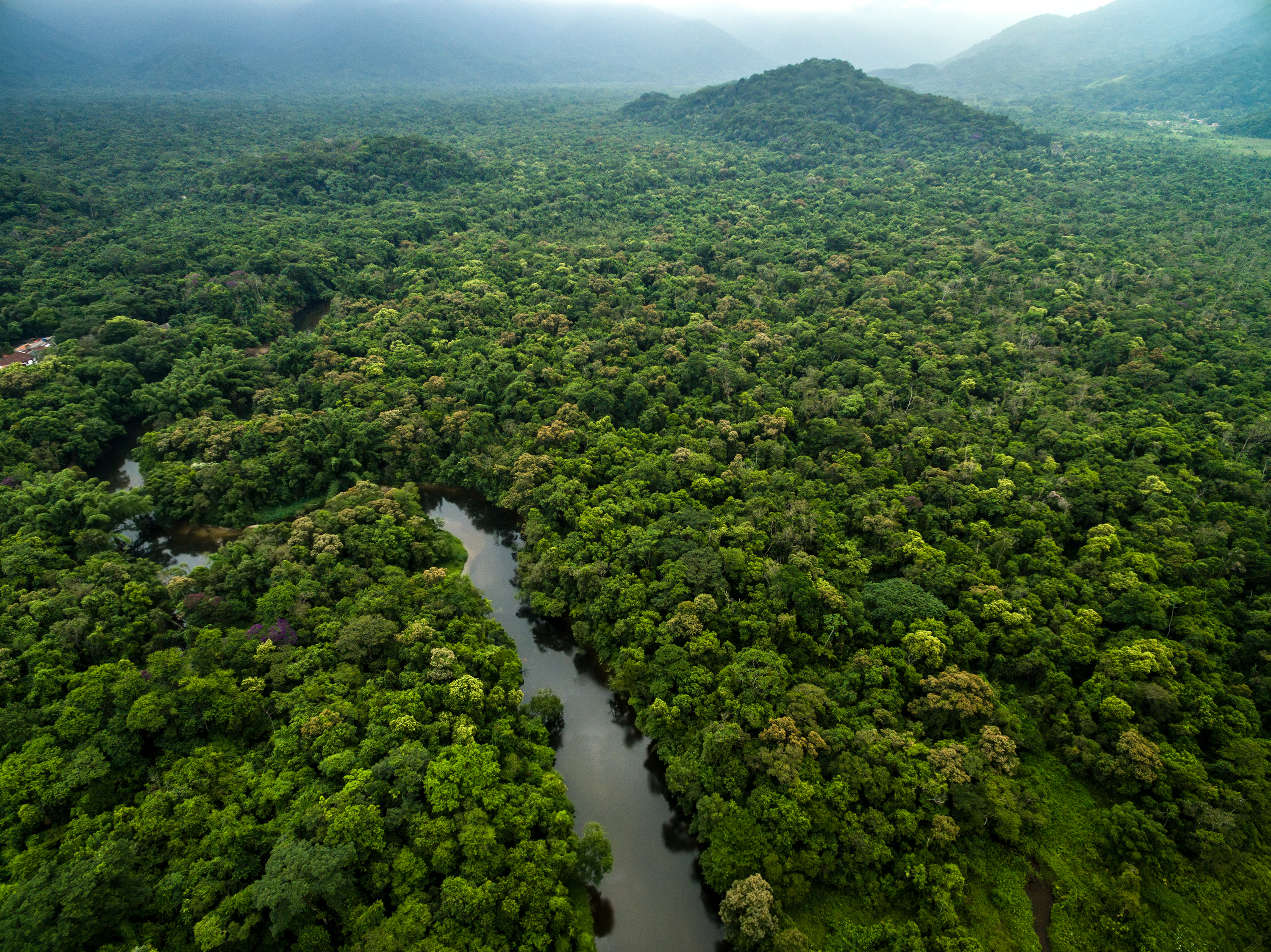
See the source image

The Amazon Forest is the biggest rainforest in the world with the highest density of plant and animal species anywhere, covering nine countries with 5,500,000 kmof forest cover. Moreover, it is bigger than all the other rainforests combined. It is home to more than thousands of species of animals, plants, and trees, making it the most bio-diverse rainforest on the planet. One in ten of the world’s known species live in the Amazon. It is also known as The Amazon Jungle and is located in the South American continent and has the Amazon basin acting as the source of the magnificent Amazon River.

Ecosystem

Amazon rainforest has the biggest ecosystem in the world. This ecosystem is driven by the great Amazon River, which covers thousands of miles and is the main foundation of the ecosystem. The river basin, with an average temperature of 26C and heavy humid and rainfall levels, has a direct impact on the ecosystem.

The presence of this hot and humid climate has influenced the presence of different species of both plants and animals, making the rainforest have the largest number of species for the kingdoms Animalia and Plantae, including many endangered species. Further, it is home not only to wildlife but also to indigenous people who have been living in the forest. The ecosystem of the rainforest is so big that it helps to control the entire planet’s atmospheric carbon levels. This is attributed to the Amazon basin, which is home to over ten times the annual carbon emissions from fuel consumption.

Plants & Animals

The Amazon biome is home to as many as 80,000 plant species in the Amazon. The tropical climate of the Amazon is the biggest contributing factor for the vast types of plants. The varying climate ensures that all types of plants can grow during the different seasons. The Amazon is home to over 2,000 different animal species. There are over 427 mammal species, 1,300 bird species, 427 amphibian species, 3,000 fish species, and 378 reptile species. In addition to this, there are over 2 million insect species in the Amazon rainforest. One in five of the bird species lives only in this rainforest.

Deforestation

There has been a massive reduction of the Amazon forest area by residents in the nine regions. According to National Geographic, about 17 percent of the Amazonian rainforest has been destroyed over the past 50 years. The major reasons for this are human settlement and search for agricultural land. The land surrounding any river basin is always suitable for farming, given that it harbors suitable nutrient content and, thus, soil fertility. Similarly, the presence of forest cover translates into better soil quality in terms of humus and water retention leaving no chance of soil erosion. Although the soil in the forest is fertile, there is a deterring factor. The fertility of the soils in the Amazon is easily depleted over a short time rendering farming on a single piece of land quite difficult. This is because the sandy soils are thin, thus not suitable for farming.

Wildfire in Amazon

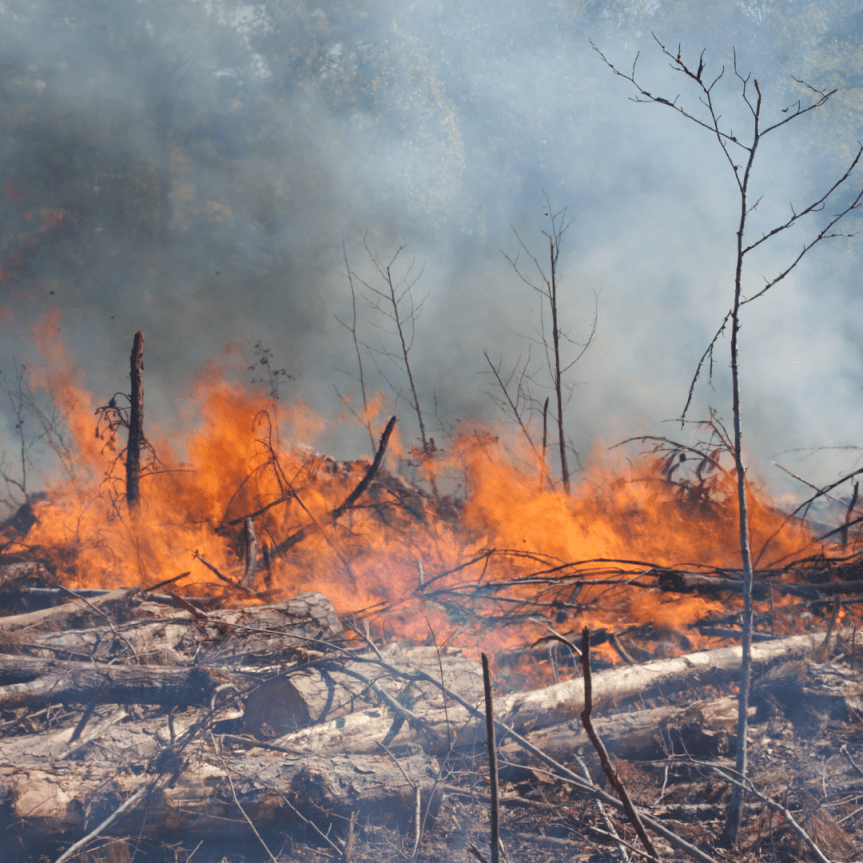
Fires breaking every year in the Amazon rainforest are often caused by accidents during the dry months. Every year, the dry season causes wild fires that destroy wildlife. However, many satellite photographs also show that the fires in the Brazil region of the Amazon were set deliberately to clear many acres of land.

Climate Change of the Amazon Rainforest

Over time, global climate change and more deforestation will likely lead to increased temperatures and changing rain patterns in the Amazon, which will undoubtedly affect the region’s forests, water availability, biodiversity, agriculture, and human health. Industrial farming, urban expansion, mining, petroleum extraction, dams and irresponsible timber production have also led to massive forest loss. As deforestation continues and the effects of climate change intensify, we run the risk of losing this spectacular ecosystem for future generations.

Brazil’s fight against deforestation

The Amazon rainforest is considered to be the largest rainforest in the world spread over 6 lakhs sq. km it contributes to more than half of the forests present in the world. Home to a variety of species of animals like the Amazon River dolphin, the Howler monkey and many other rare and endangered species. It also hosts the most beautiful and diverse flora and fauna that cannot be found anywhere on the planet except here.

The Amazon currently lies in almost nine different countries, but a major part of it is situated in Brazil. It is the home of over 2 million insect species and thousands of varieties of plants and at least 1000 different species of mammals and birds. It is considered a haven for several thousands of migratory birds that reside in these thick rainforests.

During the pre-Columbian period, parts of the forest were highly populated solely for agriculture. Once the Europeans arrived in the 16th century, the hunt began for Gold and rubber. But later on, these settlements were abandoned due to famines and some slavery revolts. The Amazon has not only been home to flora and fauna and several other species, but it has also provided immense support and resources for the local tribes to sustain their lives in the forest.

Presently, environmentalists are severely concerned about the future of the Amazon rainforest. They are concerned about the loss of biodiversity that might occur due to deforestation. Due to deforestation, there might also be a huge imbalance in the carbon cycle which could lead to severe issues.

Deforestation has increased exponentially over the past few years; we have witnessed the most amount of deforestation this month over the past 12 years. Deforestation mainly occurs due to many factors like exploitation of resources, cattle grazing, agriculture and many others.

Well according to a paper published by the World bank in 2004 the cattle sector which contributed towards beef and leather industries contributed to over 80% of the deforestation caused. In the year 2019, a devastating forest fire lasted for over half a year shrinking the forest cover by around 1300 sq.km. To add on to this in the year 2020 deforestation caused rose by almost 50% in the first three months.

In efforts to curb the rates at which deforestation is occurring the President of Brazil has ordered troops into the forest to protect the forest by preventing illegal activities like mining and slaughtering of wild animals. This action was forced onto the president after the severe surge in deforestation and criticism from numerous international organizations and media houses.  

The move from the President was applaudable but did not contain any details on the number of troops sent into the forest or the target they intend to achieve in this fight against deforestation. Moreover, it is immensely important to note that a move has been taken to control deforestation.

The Vice President stated that the operation will be kept active for two months since the current season in the Amazon is very dry and allows easy mobility into the forests. The government’s main intention is to take control over the illegal activities occurring in the rainforest and help make the forest a haven for the species dependent on it.

CIVILIZATION PROGRESSES ON THE LAP OF FOREST

“Earth provides enough to satisfy every man’s needs, but not every man’s greed.” ― Mahatma Gandhi

FORESTS: SOURCES OF MANY ESSENTIAL MATERIALS

Forests are very important for the survival of man on earth. They fulfil our fundamental needs-food, clothes and shelter. Whatever we eat are the product of plants and trees. The clothes we wear are made from the plant fibre. The houses we live in are made of wood or have wooden materials. Not only this, the plants and trees are the sources of many essential materials-firewood, varieties of resin and gum, herbal medicines, etc. They also attract clouds and thus cause rain which is essential for agriculture. They defend soil from erosion and purify atmosphere by absorbing carbon-di-oxide and releasing oxygen. They also give shelter to birds and animals.

POPULATION EXPLOSION AND DEFORESTATION: DANGEROUS

“To be poor and be without trees, is to be the most starved human being in the world. To be poor and have trees, is to be completely rich in ways that money can never buy.” ― Clarissa Pinkola Estés, The Faithful Gardener: A Wise Tale About That Which Can Never Die

But the growth of civilization has led to the removal of forests. The population explosion and industrialisation have led to the indiscriminate felling of trees. It has proved to be very dangerous. It has reduced the amount of rainfall. As a result, vast areas of land have become barren. Many pools and ponds have lost their existence. The rarity of pure air has led to many dangerous diseases. The pollution of air has caused crack in the ozone-layer which saves life on earth from the scorching sunrays. The rise of atmospheric temperature year by year is the result of deforestation.

PRESERVATION OF FORESTS IS VERY NECESSARY

“Wildness is the preservation of the World.”― Henry David Thoreau, Walking

So, the preservation of forests is indispensable. Deforestation was done for the progress of civilization; afforestation is necessary for the continuity of civilization. Destroy forest is to destroy life; to save forest is to save life. Nature does not betray the heart that loves her; she does not spare the heart that disturbs her. Man’s ignorance has upset the balance of Nature; Nature’s wrath has upset the joy of man.

Wonders of Western Ghats

Western Ghats, mountain range which is older than the Himalayas, is present parallel to the western coast of Indian peninsula covering 160,000 square km area in a stretch of 1600km. Western Ghats travel through the states of Karnataka, Goa, Tamil Nadu, Kerala, Maharashtra, and Gujarat. UNESCO identifies it as a World Heritage site and it is one of the hotspots of biological diversity in the world. The mountain influences the country’s monsoon. Western Ghats has a rich biodiversity. There are so many species of flora and fauna endemic to the place and make it rich.

Western Ghats has over 7,402 flowering plants species, 1,814 non-flowering plant species, 139 species of mammals, 179 amphibian species, 6,000 insect species and 290 freshwater fish species. There are at least 325 globally threatened species present.

SOME OF THE WONDER SPECIES OF WESTERN GHATS
  1. BENGAL TIGERS: Bengal tigers are known for their beauty and power. they are native to Indian subcontinent. These predators are present in western Ghats also. Western Ghats are home to 10% of the tiger population. they live in the tiger reserve. Ranthambor national park has 585 tigers.
  2. KING COBRA: This is the worlds largest venomous snake. This lives in rainforests and scrubs and grasslands of western Ghats. Adult king cobras are 3.18-4m long and weigh between 11 and 20lbs. Male snakes are little longer than females. They are snake eaters and also eat lizards rats etc. This is the only snake that builds nest for its eggs. Their behavior include aggressiveness and shy nature. It has enough venom to kill an elephant.
  3. INDIAN WILD DOG: It is one of the most dangerous wild animal of Western Ghats. They are classified as endangered and the main reason is habitat destruction. They are also called as Dhole. They can be seen in jungle roads, river beds etc. It has large round ears and hooded eyes. It is a highly social and co-operative animal.
  4. LION TAILED MACAQUE: This animal is endemic to Western Ghats and it is one of the endangered species. their population is below 4000. They are an old world monkey. This magnificent animal is the proof for the wonderful biodiversity of the western Ghats. These are omnivores but fruits are the major part of their diet. These get a part of their required moisture by licking the leaves.
  5. INDIAN GIANT SQUIRRAL: They are also called Malabar giant squirrel. Bhima Shankar wildlife sanctuary has a noticeable population. They mostly live on trees. They build their spherical nest with leaves and twigs. they have a long bushy tail. They are mostly seen solitary or sometimes in pair. They feed on nuts, fruits and bird eggs.
  6. PURPLE FROG: It is also an endangered species because of habitat loss. this species is formally described recently in 2003. They have a bloated body, short hind legs and sucker like mouthparts. Local people consume tadpoles of this frog. These frogs are found in damp soil which is well aerated and loose. Only 135 individuals are identified in which only 3 are females.
  7. MALBAR GREY HORNBILL: This is also endemic to Western Ghats. They have large beak. They are found in dense forest and are mostly fungivores. They are mostly 45cm in length and weigh 240-340g.

Green Warriors ~ Women in woods

“Two roads diverged in a wood , and I took the one less traveled by , and that has made all the difference…”

These lines fit well on those women who choose the paths which aren’t meant for them , according to the society.

On 8th March, everyone talks about the women in space , in politics , in engineering , in mining , in medical , in Police, in writing , in this , in that. So I think I should also write about the women in most underrated service of India, The Forest Services.

Well , I searched a lot , but couldn’t get any extra information about the first Green Warrioress of India except their names and their years of joining the woods.

” In 1980,three young Women, C.S.Ramalakshmi, Veena Sekhari and Meera Agarwal, made history by entering into the Indian Forest Service. “

Later , Veena Sekhari was also appointed as the principal chief conservator of forests of Uttarakhand in 2015. She was the first woman to reach at the post of PCCF.

Presently, there are 284 women IFS officers , three of them are heads of forest force in different states.

But women aren’t only limited to the post of IFS. It was only in year 2007, the Gujarat Forest Department recruited its first batch of 43 women.One of them was Rasila Wadher who was the first woman to join the the Forest Department in Gir. Since then she has managed to rescue around 1,100 animals.

Rasila Wadher, one of the lion queen of India.
~ From the forest guard to the head of Gir’s Rescue Department ~

Life in woods, isn’t that much easy , as everyone thinks. Unlike a policeman/woman in a city , a forest ranger is in a situation where there’s no one to help. They spend their nights and days in maintaining the coordination between humans and wild animals.

From the forest officers to forest guards, green warriors work not only for the welfare of forest and wildlife but also for the local tribes.And of course dangers are always there, from wild animals to bullets of poachers, from the rough terrains to the angry locals. Well , this explains that why I’m calling them Green Warriors.

And yes, the training is that much difficult & comprehensive as the job is. From the horse riding , shooting , swimming, rafting , trekking ,scuba diving to paragliding, it teaches the trainees everything from the endurance to the courage.

But these challenges are the love of our Green Warrioress ~

“We didn’t join as women guards, but as guards”, that’s what female guards say.

“Life needs purpose & empowerment needs confidence , IFS gives you both.” thinks a female IFS officer.

Women have came a long way , but still there’s a long way ahead. But as our inspiring warriors are risking their lives to save the wild & the wood, I remember these beautiful lines —-

“Woods are lovely dark & deep, but we have promises to keep.”🤝

I believe that there’s still beauty, peace & magic left in the world , & that’s in the forests. But these woods also have challenges. Ohh yeah , magic comes up with some challenges & responsibilities. If you also think of joining the green warriors club , then All The Very Best…

May the peace prevail on our Earth. May the hope abide in our Hearts. 🕊️

Happy Reading…🙂

Save Trees…💚🌱

51st @tiger reserve

Indian government recently approved a new tiger reserve .Srivilliputhur Megamalai Tiger Reserve in Tamil Nadu is the latest addition. It’s 51st tiger reserve in the country & 5th in the state of Tamil Nadu. The 50th tiger reserve was Kamlang , which was the first & only tiger reserve of Arunachal Pradesh, & was approved 6 years ago.

The land encompassing the Meghamalai Wildlife Sanctuary (spread across the districts of Theni and Madurai) and Srivilliputhur Grizzled Squirrel Wildlife Sanctuary, which adjoins Kerala’s Periyar Tiger Reserve and Tirunelveli’s Kalakkad Mundanthurai Tiger Reserve is declared as the 51st tiger reserve of the country.

This land is habitat of 63 mammal species & 323 bird species.

Meghamalai Wildlife Sanctuary hosts ungulates (hoofed mammals), spotted deers, Indian gaurs, wild boars and other carnivores.Srivilliputhur on the other hand,  is habitat of grizzled giant squirrels, flying squirrels, leopards, Nilgiri tahrs, jungle cats, Sambars, elephants and many species of birds, including the lion-tailed macaque.

This new tiger reserve is spread over 1,016,57 sq km (core area – 641.86 sq km, buffer area – 374.70 sq km) with the potential to provide much needed habitat for tigers dispersing from neighbouring Periyar Tiger Reserve & Anamalai Tiger Reserve.

This new tiger reserve will act as a boost in direction of restoration of the health of forests & wildlife.

As a tiger reserve, illegal entry into the area becomes a punishable offence, with five years of imprisonment & it also gets a better team of dedicated officers , researchers & guards.

Conservationists believe that by declaring the Meghamalai Srivilliputhur Tiger reserve, there are great chances for the Vaigai River rejuvenation.

As per latest estimation , the number of tigers in India is 2,967 (range 2,603 to 3,346). And the largest tiger reserve of the country is Nagarjunsagar Srisailam Tiger Reserve which covers 5 districts of the states of Andhra Pradesh & Telangana.