Disturbing discovery after finally reaching bottom of Great Blue Hole

 I’m all for the pursuit of information, but there are some things that seem best left alone. I’m talking about old Egyptian tombs, black holes, and massive, ominous caverns descending into the ocean’s depths.

Consider this: is whatever possibly horrific thing we discover really worth the lessons we learn from it?

My usual response would be no, but an exploration of Belize’s Great Blue Hole has shown that sometimes disturbing findings are worthwhile.

The massive hole in the ocean is about 60 miles off the shore of Belize and descends more than 400 feet into the water. Divers were unable to investigate much of the hole for a long time because they lacked the necessary equipment to reach its depths. But that altered as technology advanced, and when billionaire Richard Branson became interested in the hole.

When diver Fabien Cousteau traveled there to capture high-quality photographs and videos of the mysteries hidden beneath the surface, the Virgin founder went on an expedition to the hole. Unfortunately, what lay at the bottom of the beautiful, mysterious ocean formation sums up mankind as we know it in part.

The crew discovered a two-liter plastic bottle as well as a long-lost GoPro with photos from someone’s vacation on it. But that wasn’t the end of it. The crew also found two bodies in the hole; divers who had gone missing in the great cavern. Though the sight certainly would have been unnerving, the team chose to leave the bodies where they were, determining the hole to be a good final resting place. However, they did let the Belize government know the divers had been found.

When the team dove into the depths of the hole in a submersible vehicle, they discovered a large series of caves that were home to hanging stalactites – but scientists didn’t believe stalactites could develop beneath the surface of the water.
The discovery revealed that the caves, which are hundreds of feet beneath the ocean’s surface, were once on dry ground.
“The Blue Hole is made of a complex system of caves that once formed on dry land,” Branson wrote in a post on Virgin.com, emphasizing how disturbing this finding is for the state of the planet. It demonstrates how rapidly and catastrophically the oceans can rise.

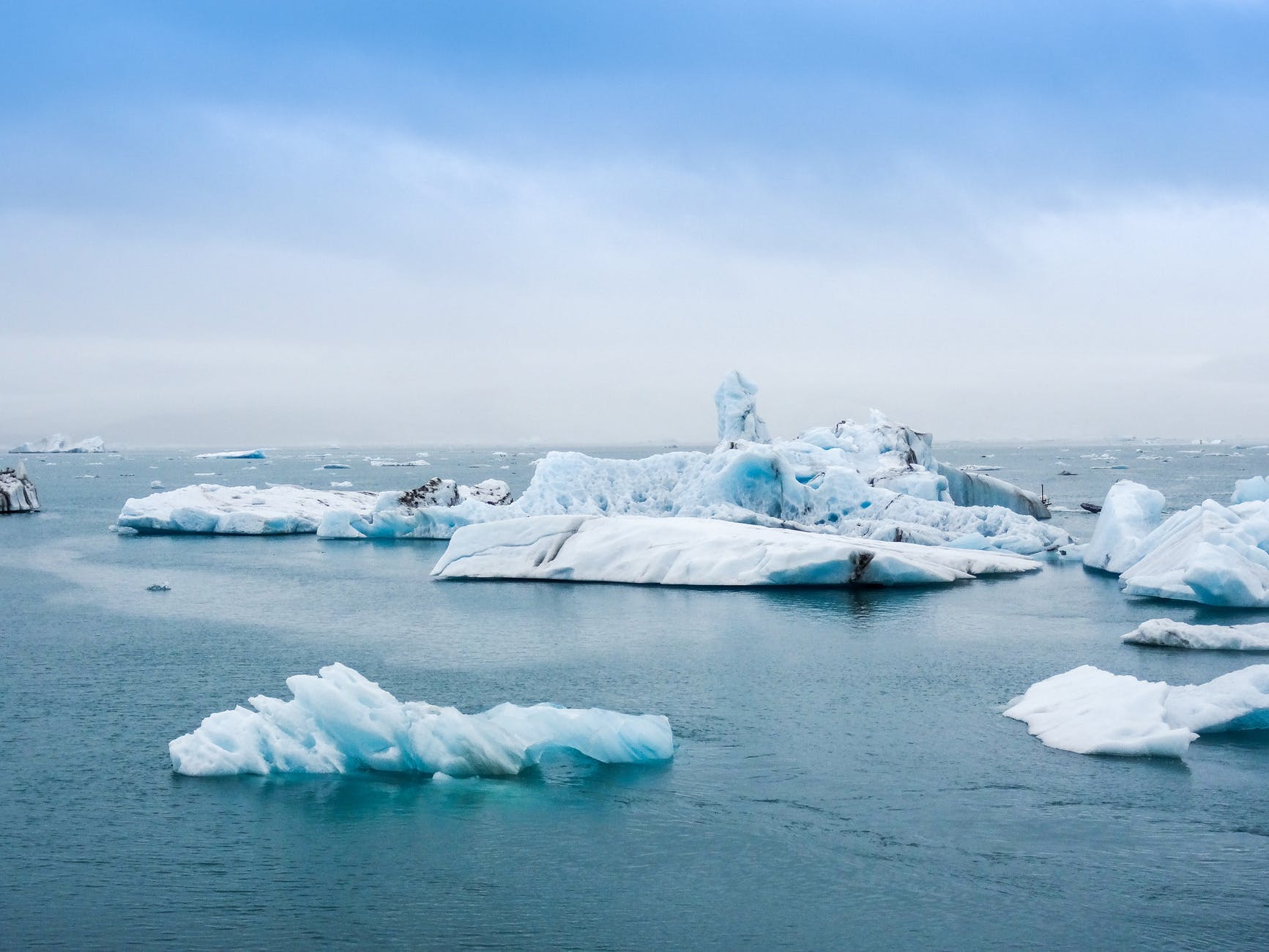
“Once upon a time, sea levels were hundreds of feet lower. When a lot of ice melted around the globe 10,000 years ago, the sea level rose by about 300 feet. At 300 feet down, you could see the change in the rock where land had become water.”

‘One of the starkest reminders of the dangers of climate change [he’s] ever seen,’ Branson said of the sight.

Global Warming

 Global warming is the long-term warming of the planet’s overall temperature. Though this warming trend has been going on for a long time, its pace has significantly increased in the last hundred years due to the burning of fossil fuels. As the human population has increased, so has the volume of fossil fuels burned. Fossil fuels include coal, oil, and natural gas, and burning them causes what is known as the “greenhouse effect” in Earth’s atmosphere.

The greenhouse effect is when the Sun’s rays penetrate the atmosphere, but when that heat is reflected off the surface cannot escape back into space. Gases produced by the burning of fossil fuels prevent the heat from leaving the atmosphere. These greenhouse gasses are carbon dioxide, chlorofluorocarbons, water vapor, methane, and nitrous oxide. The excess heat in the atmosphere has caused the average global temperature to rise overtime, otherwise known as global warming.

Global warming has presented another issue called climate change. Sometimes these phrases are used interchangeably, however, they are different. Climate change refers to changes in weather patterns and growing seasons around the world. It also refers to sea level rise caused by the expansion of warmer seas and melting ice sheets and glaciers. Global warming causes climate change, which poses a serious threat to life on earth in the forms of widespread flooding and extreme weather. Scientists continue to study global warming and its impact on Earth.

GLOBAL WARMING

Global Warming Definition:
“Global warming is a gradual increase in the earth’s temperature generally due to the greenhouse effect caused by increased levels of carbon dioxide, CFC’s, and other pollutants.”


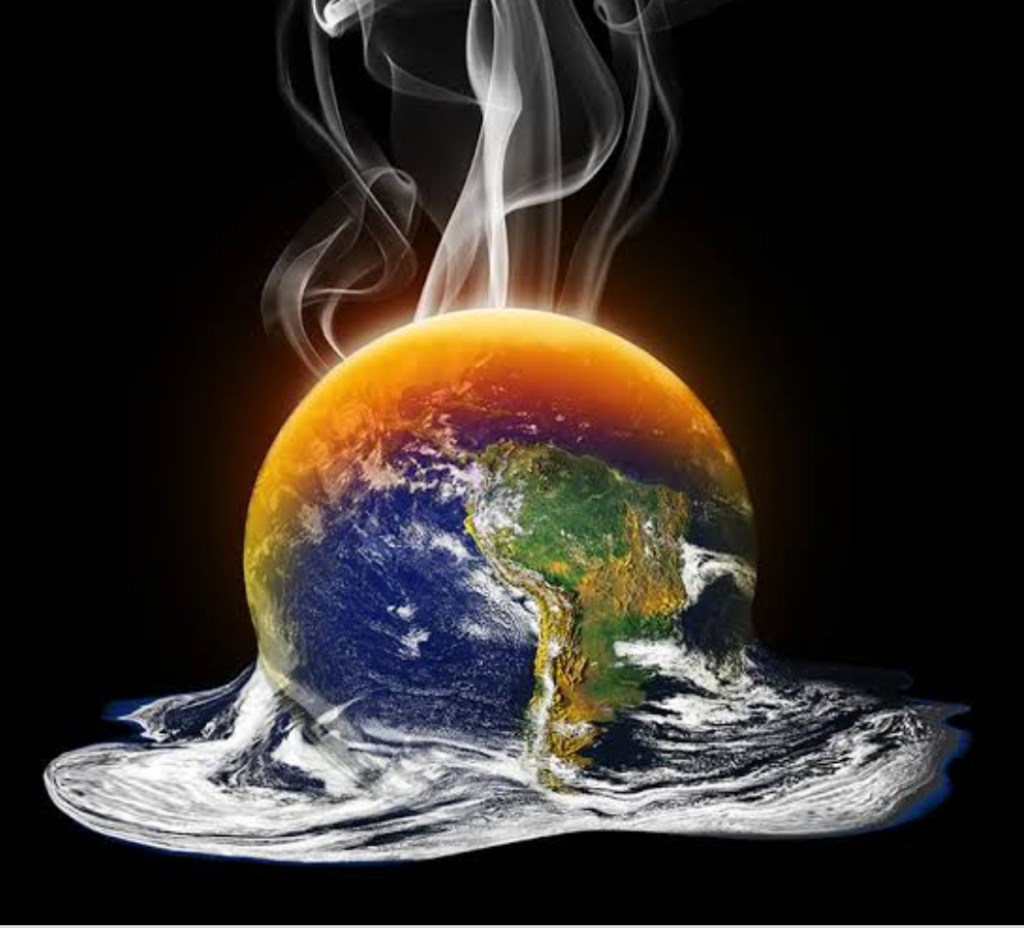
The Earth is warming up, and humans are at least partially to blame. The causes, effects, and complexities of global warming are important to understand so that we can fight for the health of our planet.
Global warming is the long-term warming of the planet’s overall temperature. Though this warming trend has been going on for a long time, its pace has significantly increased in the last hundred years due to the burning of fossil fuels. As the human population has increased, so has the volume of fossil fuels burned. Fossil fuels include coal, oil, and natural gas, and burning them causes what is known as the “greenhouse effect” in Earth’s atmosphere.
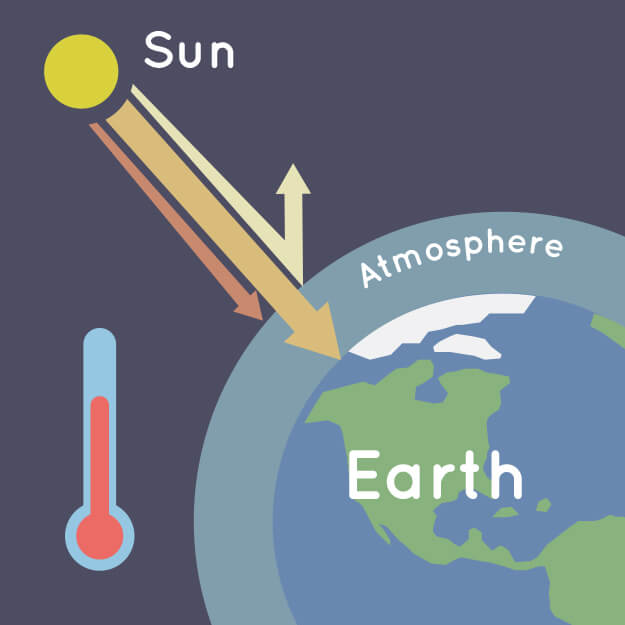
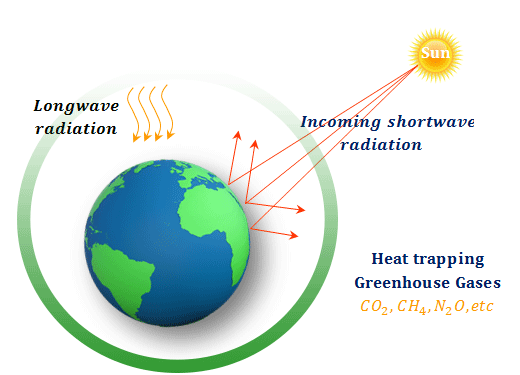
The greenhouse effect is when the Sun’s rays penetrate the atmosphere, but when that heat is reflected off the surface cannot escape back into space. Gases produced by the burning of fossil fuels prevent the heat from leaving the atmosphere. These greenhouse gasses are carbon dioxide, chlorofluorocarbons, water vapor, methane, and nitrous oxide.
The excess heat in the atmosphere has caused the average global temperature to rise overtime, otherwise known as global warming.

Global warming has presented another issue called climate change. Sometimes these phrases are used interchangeably, however, they are different. Climate change refers to changes in weather patterns and growing seasons around the world. It also refers to sea level rise caused by the expansion of warmer seas and melting ice sheets and glaciers. Global warming causes climate change, which poses a serious threat to life on earth in the forms of widespread flooding and extreme weather. Scientists continue to study global warming and its impact on Earth.

The Anthropocene

The Earth is divided into geological time scales, each denoting events that occurred in Earth’s geological history, by scientists. The scale begins with the formation of the Earth about 4.5 billion years ago, known as “Hadean”. The current geological epoch is known as the “Holocene”, which began approximately 11,700 years ago. The Holocene epoch is characterized by the rapid proliferation and spread of the human species on Earth. The “Anthropocene” is a proposed epoch that follows the Holocene and marks the period when human activity has started to have a significant impact on the planet’s ecosystem. The term “Anthropocene” was first proposed by the Dutch chemist Paul J. Crutzen and American biologist Eugene F. Stoermer (Crutzen & Stoermer 2000) to denote the current period in Earth’s geological history wherein, instead of the environment shaping humans it is the humans who are shaping and drastically altering the environment.

The Anthropocene, according to Steffen et al. is divided into three periods (616). It begins with the industrial revolution, wherein man first harnessed the energy of fossil fuels, coal, and oil and gas. The extensive use of the newfound wealth of energy in the form of fossil fuels stamped a significant imprint on Earth’s environment, evident in the increase in deforestation and rise in the concentration of methane, carbon dioxide, and nitrous oxide in Earth’s atmosphere (616). The second period, from 1945-to 2015, is known as the “great acceleration”. This period is characterized by an exponential increase in the impact of humans on the Earth system. An increase in the population of humans and an increase in industrialization resulted in a substantial increase in the concentration of greenhouse gases in Earth’s atmosphere (618). The third period, from 2015 onwards, is known as “stewards of Earth’s system”. This period is marked by the recognition of Anthropogenic influences on the Earth system and the subsequent filtration of this growing awareness on decision-making processes (618).

The major problem represented by the Anthropocene is the radical shifts in Earth’s temperature and biodiversity. These shift include global warming, extinction of species, habitat loss, and changes in the chemical composition of oceans and soils. Other probelms inlclude sustenance of human vices like greed, indifference, and intemperance.

There are, according to Steffen et al., three philosophical approaches to dealing with these problems. Firstly, is the business-as-usual philosophy (619), which employs a laissez-faire mindset when dealing with the changing global environment. The second is mitigation which is “based on the recognition that the threat of further global change is serious enough that it must be dealt with proactively” (619). And the third option is geoengineering (619), which attempts to solve the problem of climate change with technology.

Works cited

Crutzen, Paul J. and Eugene F. Stoermer 2000. The “Anthropocene.” Global Change Newsletter (41): 17–18.

Steffen, Will, et al. “The Anthropocene: Conceptual and Historical Perspectives.” Philosophical Transactions of the Royal Society A: Mathematical, Physical and Engineering Sciences, vol. 369, no. 1938, 2011, 842–67. Crossref, https://doi.org/10.1098/rsta.2010.0327.

Steffen, Will, Paul J. Crutzen, et al. “The Anthropocene: Are Humans Now Overwhelming the Great Forces of Nature.” AMBIO: A Journal of the Human Environment, vol. 36, no. 8, 2007, 614–21. Crossref. https://doi.org/10.1579/0044-7447(2007)36[614:taahno]2.0.co;2


Carbon Farming

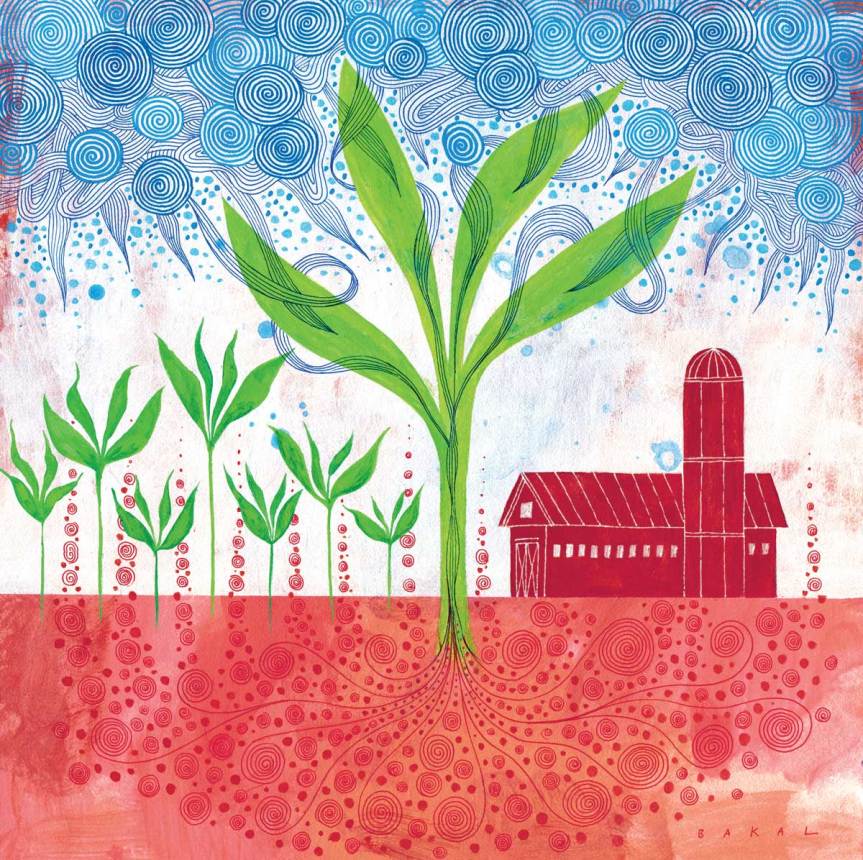
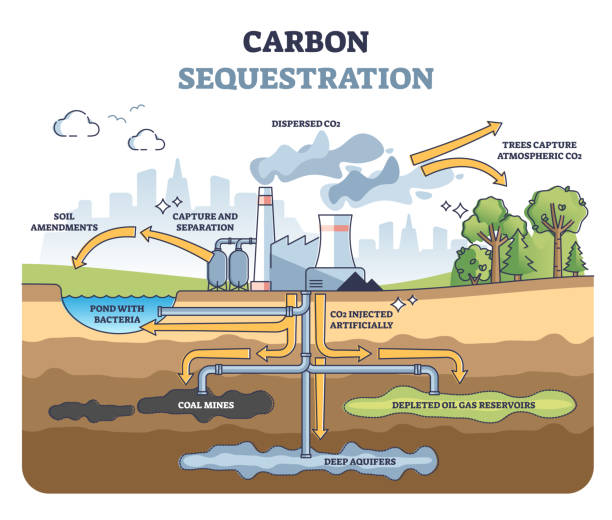
Carbon farming (also known as carbon sequestration) is a system of agricultural management that helps the land store more carbon and reduce the amount of Greenhouse Gases (GHGs) that it releases into the atmosphere. Carbon farming explicitly recognises that it is solar energy that drives farm ecosystem dynamics and that carbon is the carrier of that energy within the farm system.

Agriculture covers more than half of Earth’s terrestrial surface and contributes roughly one-third of global GHG emissions.

According to the Third Biennial Update Report submitted by the Government of India in early 2021 to the UNFCCC, the agriculture sector contributes 14% of the total GHG emissions.

Carbon Farming: a Viable Option

  • Climate Friendly: Carbon farming promises a bold new agricultural business model – one that fights climate change, creates jobs, and saves farms that might otherwise be unprofitable.
  • Optimising Carbon Capture: It is a whole farm approach to optimising carbon capture on working landscapes by implementing practices known to improve the rate at which CO2 is removed from the atmosphere and stored in plant material and/or soil organic matter.
  • Carbon farming can incentivise our farmers to introduce regenerative practices in their agricultural processes helping them shift their focus from improving yields to functioning ecosystems and sequestering carbon that can be sold or traded in carbon markets.
  • Farmer Friendly: It not only improves the health of soil but can also result in improved quality, organic and chemical-free food along with boosted/secondary income from carbon credits for the marginalised farmers.
  • Growth in Carbon Market: The total value of the global carbon markets grew by 20% in 2020 — the fourth consecutive year of record growth — and is well on its way in raising a critical mass of investors.

Carbon thus can effectively prove to be the ‘cash crop’ of the future for farmers

In India, Meghalaya is currently working on a blueprint of a ‘carbon farming’ Act to create a prototype of sustainable agriculture model for the entire North-East region. Sikkim became the first State in the world to become fully organic in 2016.

Steps can be Taken to Encourage Carbon Farming?

Soil is one of the most untapped and underutilised defences against climate change and acts as an efficient carbon sink.

Legal Backing for Carbon Farming: An extensive and pioneering carbon farming Act with a robust transition plan can effectively demonstrate the idea of creating a carbon sink on working land.

Carbon Credits and Carbon Banks: The farmers can be rewarded through globally tradable carbon credits. Carbon banks can also be created that would buy and sell carbon credits from farmers. Paying farmers to restore carbon-depleted soils offers a great opportunity for a natural climate solution and to stabilise global warming below 2°C.

GLOBAL WARMING

WHAT IS GLOBAL WARMING:-

Global warming is defined as the global annual temperature has increased in total by a little more than 1 degree Celsius, or about 2 degrees Fahrenheit. Global warming is mainly because of the industrial revolution, burning plastics.

CAUSES OF GLOBAL WARMING:-

* Greenhouse Gases Are the Main Reasons for Global Warming.

* Another main reason for global warming is the industries.

* Deforestation is one of the reason for global warming.

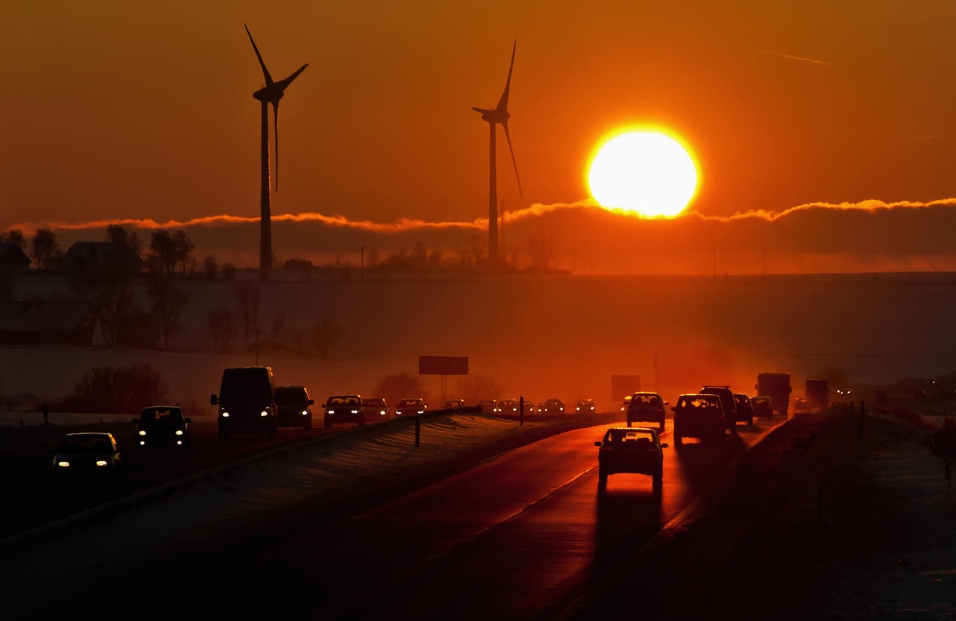
* The smoke from vehicles.

EFFECTS OF GLOBAL WARMING:-

* Global warming cause increase in temperature that raises sea level can cause flood.

* Global warming raises temperature in the atmosphere.

* Melting of glaciers are one of the most threat for the earth

* If global warming cause increase in temperature then there is threat for availablity of water.

* It also cause some diseases like allergies,chest pain etc.

CONTROLLING MEASURES OF GLOBAL WARMING:-

* By decreasing deforestation and encouraging affrostration

* By making awareness programmes.

* By using natural products instead of plastics.

* By reducing burning of fossil fuels.

* By recycling the products.

Global Warming

Global warming’ is the term used to describe the rise in global surface temperatures. The term is often used interchangeably with ‘climate change’. The phenomenon revolves around the rise in surface temperatures – over land and oceans – that have led to an accelerated increase in temperatures. This has in turn led to the progressive shrinkage of the glaciers and polar ice caps, leading to rise in sea level. Another observed effect has been the disruption of cyclical weather patterns and the rising number of freak natural disasters.

The rise in temperatures has been attributed to the build-up of greenhouse gases, such as carbon dioxide and methane, at especially accelerated levels as a result of the industrialisation of the past 100 years. A concerted global effort to counter and mitigate the effects of this phenomenon has been elusive, with developed nations and developing countries facing off over the respective levels of emission cuts they would have to effect domestically.

However, there is also a considerable minority, especially in the US, that holds the assumption that global warming as a hoax perpetrated by certain countries for their own benefit.

What are Carbon Markets ?


Carbon Markets: Carbon markets facilitate the trading of emission reductions. Such a market allows countries, or industries, to earn carbon credits for the emission reductions they make in excess of their targets. These carbon credits can be traded to the highest bidder in exchange of money. The buyers of carbon credits can show the emission reductions as their own and use them to meet their reduction targets. Carbon markets are considered a very important and effective instrument to reduce overall emissions.


A carbon market existed under Kyoto Protocol but is no longer there because the Protocol itself expired last year. A new market under Paris Agreement is yet to become functional. Developing countries like India, China or Brazil have large amounts of carbon credits left over because of the lack of demand as many countries abandoned their emission reduction targets. The developing countries wanted their unused carbon credits to be transitioned to the new market, something that the developed nations had been opposing on the grounds that the quality of these credits — the question whether these credits represent actual emission reductions — was a suspect. A deadlock over this had been holding up the finalisation of the rules and procedures of the Paris Agreement.


The Glasgow Pact has offered some reprieve to the developing nations. It has allowed these carbon credits to be used in meeting countries’ first NDC targets. These cannot be used for meeting targets in subsequent NDCs. That means, if a developed country wants to buy these credits to meet its own emission reduction targets, it can do so till 2025. Most countries have presented climate targets for 2025 in their first NDCs.

The resolution of the deadlock over carbon markets represents one of the major successes of COP26.

Achievements of the Glasgow Summit 2021


What was achieved?

Mitigation: The Glasgow agreement has emphasised that stronger action in the current decade was most critical to achieving the 1.5-degree target. Accordingly, it has:

1. Asked countries to strengthen their 2030 climate action plans, or NDCs (nationally-determined contributions), by next year.

2. Established a work programme to urgently scale-up mitigation ambition and implementation.

3. Decided to convene an annual meeting of ministers to raise ambition of 2030 climate actions.

4. Called for an annual synthesis report on what countries were doing.

5. Requested the UN Secretary General to convene a meeting of world leaders in 2023 to scale-up ambition of climate action.

6. Asked countries to make efforts to reduce usage of coal as a source of fuel, and abolish “inefficient” subsidies on fossil fuels
Has called for a phase-down of coal, and phase-out of fossil fuels. This is the first time that coal has been explicitly mentioned in any COP decision. It also led to big fracas at the end, with a group of countries led by India and China forcing an amendment to the word “phase-out” in relation to coal changed to “phase-down”. The initial language on this provision was much more direct. It called on all parties to accelerate phase-out of coal and fossil fuel subsidies. It was watered down in subsequent drafts to read phase-out of “unabated” coal power and “inefficient” fossil fuel subsidies. But even this was not liking to the developing countries who then got it changed to “phase down unabated coal power and phase out inefficient fossil fuel subsidies while providing targeted support to the poorest and the most vulnerable in line with national circumstances…”. Despite the dilution, the inclusion of language on reduction of coal power is being seen as a significant movement forward.


Adaptation: Most of the countries, especially the smaller and poorer ones, and the small island states, consider adaptation to be the most important component of climate action. These countries, due to their lower capacities, are already facing the worst impacts of climate change, and require immediate money, technology and capacity building for their adaptation activities.

As such, the Glasgow Climate Pact has:

Asked the developed countries to at least double the money being provided for adaptation by 2025 from the 2019 levels. In 2019, about $15 billion was made available for adaptation that was less than 20 per cent of the total climate finance flows. Developing countries have been demanding that at least half of all climate finance should be directed towards adaptation efforts.


Created a two-year work programme to define a global goal on adaptation. The Paris Agreement has a global goal on mitigation — reduce greenhouse gas emissions deep enough to keep the temperature rise within 2 degree Celsius of pre-industrial times. A similar global goal on adaptation has been missing, primarily because of the difficulty in defining such a target. Unlike mitigation efforts that bring global benefits, the benefits from adaptation are local or regional. There are no uniform global criteria against which adaptation targets can be set and measured. However, this has been a long-pending demand of developing countries and the Paris Agreement also asks for defining such a goal.


Finance: Every climate action has financial implications. It is now estimated that trillions of dollars are required every year to fund all the actions necessary to achieve the climate targets. But, money has been in short supply. Developed countries are under an obligation, due to their historical responsibility in emitting greenhouse gases, to provide finance and technology to the developing nations to help them deal with climate change. In 2009, developed countries had promised to mobilise at least $100 billion every year from 2020. This promise was reaffirmed during the Paris Agreement, which also asked the developed countries to scale up this amount from 2025. The 2020 deadline has long passed but the $100 billion promise has not been fulfilled. The developed nations have now said that they will arrange this amount by 2023.

What does the Glasgow Agreement say?

Following are the major observations of the Glasgow Summit :

1. A deal aimed at staving off dangerous climate change has been struck at the COP26 summit in Glasgow.

2. Expressed “deep regrets” over the failure of the developed countries to deliver on their $100 billion promise. It has asked them to arrange this money urgently and in every year till 2025.

3. Initiated discussions on setting the new target for climate finance, beyond $100 billion for the post-2025 period.

4. Asked the developed countries to provide transparent information about the money they plan to provide.

5. Loss and Damage: The frequency of climate disasters has been rising rapidly, and many of these cause largescale devastation. The worst affected are the poor and small countries, and the island states. There is no institutional mechanism to compensate these nations for the losses, or provide them help in the form of relief and rehabilitation. The loss and damage provision in the Paris Agreement seeks to address that.


Introduced eight years ago in Warsaw, the provision hasn’t received much attention at the COPs, mainly because it was seen as an effort requiring huge sums of money. However, the affected countries have been demanding some meaningful action on this front. Thanks to a push from many nations, substantive discussions on loss and damage could take place in Glasgow. One of the earlier drafts included a provision for setting up of a facility to coordinate loss and damage activities. However, the final agreement, which has acknowledged the problem and dealt with the subject at substantial length, has only established a “dialogue” to discuss arrangements for funding of such activities. This is being seen as a major let-down.

What are Carbon Markets ?

Glasgow Summit 2021


Carbon Markets: Carbon markets facilitate the trading of emission reductions. Such a market allows countries, or industries, to earn carbon credits for the emission reductions they make in excess of their targets. These carbon credits can be traded to the highest bidder in exchange of money. The buyers of carbon credits can show the emission reductions as their own and use them to meet their reduction targets. Carbon markets are considered a very important and effective instrument to reduce overall emissions.


A carbon market existed under Kyoto Protocol but is no longer there because the Protocol itself expired last year. A new market under Paris Agreement is yet to become functional. Developing countries like India, China or Brazil have large amounts of carbon credits left over because of the lack of demand as many countries abandoned their emission reduction targets. The developing countries wanted their unused carbon credits to be transitioned to the new market, something that the developed nations had been opposing on the grounds that the quality of these credits — the question whether these credits represent actual emission reductions — was a suspect. A deadlock over this had been holding up the finalisation of the rules and procedures of the Paris Agreement.


The Glasgow Pact has offered some reprieve to the developing nations. It has allowed these carbon credits to be used in meeting countries’ first NDC targets. These cannot be used for meeting targets in subsequent NDCs. That means, if a developed country wants to buy these credits to meet its own emission reduction targets, it can do so till 2025. Most countries have presented climate targets for 2025 in their first NDCs.

The resolution of the deadlock over carbon markets represents one of the major successes of COP26.

Five terms that came up at the climate change conference in Glasgow 2021


The main task for COP26 was to finalise the rules and procedures for implementation of the Paris Agreement. Most of these rules had been finalised by 2018, but a few provisions, like the one relating to creation of new carbon markets, had remained unresolved.

After two weeks of negotiations with governments debating over provisions on phasing out coal, cutting greenhouse gas emissions and providing money to the poor world, the annual climate change summit came to an end on Saturday night with the adoption of a weaker-than-expected agreement called the Glasgow Climate Pact.


The Glasgow meeting was the 26th session of the Conference of Parties to the UN Framework Convention on Climate Change, or COP26. The main task for COP26 was to finalise the rules and procedures for implementation of the Paris Agreement. Most of these rules had been finalised by 2018, but a few provisions, like the one relating to creation of new carbon markets, had remained unresolved. However, due to clear evidence of worsening of the climate crisis in the six years since the Paris Agreement was finalised, host country United Kingdom was keen to ensure that Glasgow, instead of becoming merely a “procedural” COP, was a turning point in enhancing climate actions. The effort was to push for an agreement that could put the world on a 1.5 degree Celsius pathway, instead of the 2 degree Celsius trajectory which is the main objective of the Paris Agreement.

Global Warming a Global Threat

“Global warming, a global threat”. We have heard a lot about global warming in the news debates general discussion and international discussions too. But are we really serious about it, we just hear it and leave it we never try to understand the seriousness of it. It has just turn to be a debate topic for us.

The temperature of the Earth is increasing drastically, even in Antarctica whoes normal temperature remain +10°C in summer experience 18.3 degree Celsius record temperature which is an alarm in one. Even Canada is facing about 50 degree celsius temperature which is the record highest in the history of Canada.

Cause of global warming is the CFC gases which are released by the AC, refrigerators and cars that we use. The clearing of forests that leads to deforestation is another cause of global warming as carbon dioxide is not been able to use by the trees. Global warming leads to melting of glaciers which ultimately leads to increase in sea level which is the main cause of tsunamis and other problems.

We always hear that action speaks Louder Than words and this is the real problem to take action upon. There are many steps taken internationally for this cause but we should contribute from our side too.

We can contribute by planting a tree or any small plant or by reducing the use of ACs, refrigerators and cars. Just think about it it might be a very small step from your side but will cause a great difference to this earth. Just bring the first step forward and other get inspired by you and will ultimately E result in reduction of the Global temperature.

Global Warming- Heating the mind to stress

Photo by Pixabay on Pexels.com
Photo by Guillaume Falco on Pexels.com

It is happening every summer that we find it hotter than the last one. Ever wondered why?

It is not because we can’t tolerate heat but try to blame it all on the season. It is a real phenomenon taking place namely, Global Warming. It points to the increasing heat in the atmosphere and on the surface of the Earth due to the presence of pollutants and carelessness of people.

The problem is increasing manifold with no concern among the people. They are continuing to use products which are harmful for the health of our planet and cause damage and depletion of its ecosystem.

The presence of smoke and melting of Glaciers clearly signals the need to conserve the environment. The issue is we notice the Smog covering the atmosphere and obstructing our vision during winters, but do not find reasons and solutions to it. We read and listen news about the Glaciers melting out rapidly but do not try to find out the reasons behind the same. Even when we know the problem, we leave it all to the government to sort it out for us. However it is equally important for us to participate in them and support the authorities which are working for it. Only few can’t solve a problem created by us all. We all are responsible for it and should work towards the solution. The pollution has been created because we all use ACs, refrigerators, Private vehicles or any of such products which emit pollutants harming the ecosystem. Industries are growing, so is the pollution. The ozone layer is depleting bringing in harmful sun rays that cause skin diseases, cancer, cataract. We are aware about them but still don’t work for them which is completely foolish. We are keeping ourselves in the dark. The effects may not be visible to the careless eyes now but it would lead to long term consequences which can destroy Life on the planet.

Photo by Pixabay on Pexels.com

Talking about the present, this increased heat on the surface of the Earth is affecting the mental health in a way. It becomes too hot during the summers and too cold during the winters which is all due to the Global Warming. These adversities of the climate affect the mind and the thinking skills of a human. They affect other life forms as well but focusing on the humans, they affect our power of mind.

You might have heard “Too much of anything is not good”. It implies in this situation as well. It’s important for it being hot in summers and cold during winters but too much of them affects the lifestyle. Our body is designed to adapt the natural changes that take place automatically but the changes in the nature that are happening due to our carelessness go against the environment, which is unfavorable for us as well. We cannot hold on to much of heat. It starts moving to our brain from the upper body surface and affects out mental capability.

Anger is the most observed and typical example to prove it. You must have seen people getting angry on small things, during the day, which is because they already handle load of work which is now being complemented by the harmful heat of the day. The sun rays affect the mind. The difference is, it is positive when in limits but converts to negative when exceeds the requirements of the human body. The stress shoots up and you might feel headache very often.

Greenhouse Effect.

Greenhouse effect, a warming of Earth’s surface and troposphere i.e. the lowest layer of the atmosphere caused by the presence of water vapour, carbon dioxide, methane, and certain other gases in the air. Of those gases, known as greenhouse gases, water vapour has the largest effect.

The atmosphere allows most of the visible light from the Sun to pass through and reach Earth’s surface. As Earth’s surface is heated by sunlight, it radiates part of this energy back toward space as infrared radiation. This radiation, unlike visible light, tends to be absorbed by the greenhouse gases in the atmosphere, raising its temperature. The heated atmosphere in turn radiates infrared radiation back toward Earth’s surface.

Some of the re-emitted energy remains within the atmosphere or returns to the surface and warms the lower atmosphere and surface. The rest of the re-emitted energy leaves the atmosphere and goes into space. The outcome of this absorption-emission process by the greenhouse gases is that less energy leaves the atmosphere than is emitted by the Earth below. Despite its name, the greenhouse effect is different from the warming in a greenhouse, where panes of glass transmit visible sunlight but hold heat inside the building by trapping warmed air.

The increased amounts of greenhouse gases human activities are adding to the atmosphere have upset the balance that has been in place since the end of the last ice age. Adding more greenhouse gases decreases the amount of infrared radiation energy leaving the atmosphere. To get the energy back in balance, the surface of the Earth has to warm up, so that it will emit more infrared energy, some of which will leave the atmosphere and compensate for the effect of the added greenhouse gases. Thus, the greenhouse effect, which is essential for creating the climate for life on Earth, is also responsible for the Earth getting warmer than it was before we started burning large amounts of fossil fuels.