Union Education Minister questions rationale of Karnataka Government over scrapping of NEP in the state

 Union Education & Skill Development Minister Shri Dharmendra Pradhan while addressing media today raised serious concerns over the Karnataka Government’s decision to scrap NEP in the state. The Minister asked about the repercussions, which such a decision will have for the younger generation.

He asked whether the Karnataka Government was opposed to early childhood care and education as a part of formal education, wondering if the State Government did not want children to achieve Foundational Literacy and Numeracy by the time they complete grade 2. He questioned if the State Government opposed Indian toys, games, play-based learning and ‘Chennemane’ in Karnataka.

He further asked if the State Government opposed education in Kannada and other Bharatiya Bhasha, along with the conducting of examinations, like NEET, CUET, JEE in Kannada, in a transparent manner.

He questioned if the State Government opposed multidisciplinary education, integration of vocational education, physical education, arts and sports as critical areas of study in school education. Does the State Government not want youth of Karnataka to avail world-class research facilities through the National Research Foundation, he further asked.

He questioned the decision of the State Government as to why it did not want students to learn about new and emerging technologies and consequent life skills in the 21st century, while utilising new textbooks relevant for 21st century education. He expressed concerns over the missed opportunities for earning while learning for Karnataka students.  Does the State Government not want teachers’ capacity building to be strengthened through reimagining DIETs and SCERTs as centers-of-excellence, Shri Pradhan further questioned. It’s a decision which would impact the collective future of the state,known for its IT prowess, in the future.

He asked the State Government not to weaponize Education, as such statements on NEP compromise the interests of students of Karnataka.

Ultimate aim of governance should be to empower the people

 The Vice President, Shri M. Venkaiah Naidu today emphasized that the ultimate aim of governance should be to empower the people and to move towards minimum government, which according to him, will happen only when the last mile has been traversed and the people at the bottom of the pyramid have been reached. He also said that the success of good governance lies in including and making the toiling masses equal stakeholders in the process of development.

Addressing the participants of 48th Advanced Professional Programme in Public Administration (APPPA) conducted by Indian Institute of Public Administration in New Delhi today, the Vice President said that the key to good governance lies in inclusivity, use of technology and maintaining high moral standards. “Technology fosters transparency and hence accountability, which is the basic feature of good governance, while moral standards impart legitimacy,” he added. He hoped that these two together will usher in a new political culture preparing the ground for bringing in transformational reforms.

Underlining that people’s participation is very important for inclusive and responsive governance, Shri Naidu said that reforms are only initiated by the Government but actually bear fruit only when people proactively work for the future of their country. Referring to the ongoing celebrations of Azadi ka Amrit Mahotsav, the Vice President urged every Indian to work with an aim of building a happy, healthy, prosperous and developed nation when we enter the 100th year of our Independence.

Observing that the focus today is shifting from government to governance, the Vice President said that India is on the move, shedding the baggage of its past and embarking on a journey towards hope and the fulfilment of its ultimate destiny which is to lead the world.

On this occasion, Shri Naidu also stressed the need to get out of the colonial mindset and asked the administrators to use people’s language while discharging their official duties. “You should interact with the people in their own language,” he told them. Referring to the adage — ‘service to man is service to God’, the Vice President wanted all officials to make ‘people’s service’ their main motto.

Lauding IIPA’s contribution to national development, Shri Naidu said that he is happy to see IIPA today is adapting itself to the needs of a dynamic and fast changing era, and to the rapidly changing socio-economic milieu. Calling for arresting the trend of falling standards in public life, he wanted the administrators and leaders to set examples in integrity and ethics.

Referring to the concept of Ram-Rajya, so often espoused by Mahatma Gandhi, he said that in Indian tradition, it is a metaphor to define how a well governed welfare state should look like and exhorted the administrators to follow these lofty ideals to build a society free from poverty, discrimination and inequality.

Role of civil services in a democracy .

In the process of governance, which involves several sets of activities to deliver effective services to people, civil services play a pivotal role in providing shape to policies that reflect people’s needs and put their suggestive, analytical and informative roles to implement the
policies. It is recognized that civil services play a crucial role in all societies. In the modern administrative state, public administration has become so significant that our development, upliftment and progress depend mainly upon the efficient functioning of civil services that are
the bedrock of public administration. Civil services have assumed more important role in democracy to ensure good governance, both in developing and developed countries. Civil Services form a part of bureaucracy, wherein the roles of civil servants are determined by
written rules. It’s an impersonal system operating on the basis of calculable rules and staffed by full time appointed officials. Usually, the civil servants are selected on basis of their technical
qualifications, receive fixed salaries, have a defined sphere of competence and work under a clearly defined hierarchy of offices.

The role of Civil Servants across the domains of policy making and policy implementation is critical to the development process. They assist in identifying major policy areas such as preparing major policy proposals, analyzing various alternatives and solutions to societal problems requiring urgent attention, dividing the major policies into sub-policies, determining
program of action and suggesting modification in the existing policy on the basis of its experience on the implementation front.Civil services carry on the governance when governments change due to elections etc. Ramsay
Muir has remarked that while governments may come and go, ministers may rise and fall, the administration of a country goes on forever. It is needless to say that civil services form the backbone of administration. E.g. In India, when the President’s Rule is imposed in a state, the
Governor runs the state through the Chief Secretary and other civil servants.The civil servants are responsible to the ministers of the departments in which they serve. The ministers are accountable to the people through the Parliament or State Legislatures, and the civil servants are accountable to the ministers. They should ideally serve the elected government of the day, as government policies are the functions of the civil services. However, an impartial civil servant is also accountable to the Constitution of India on which he has taken an oath of allegiance.

In India, bureaucracy or civil services is permanent and does not change with the government. The recruitment is based on merit and through competitive exams. This is in contrast to the system followed in the US, where civil servants, especially in the higher echelons, change with the government. This is called the spoils system where people who are close to the government of the day get posts.


With bad laws and good civil servants it’s still possible to govern. But with bad civil servants even the best laws can’t help.

-Otto von Bismarck

INCLUSIVE GROWTH AND ISSUES ARISING FROM IT

Inclusive growth means economic growth that creates job opportunities and contributes to poverty alleviation. This means that the poor have access to basic education and health services. This involves ensuring equal opportunities for all, as well as empowering everyone through education and skills development. For rapid and sustainable poverty reduction, everyone must be able to both contribute to and benefit from economic progress. Rapid growth is necessary for poverty alleviation, but it must be widespread across all sectors and include a large portion of the country’s workforce to be sustainable in the long term.

FEATURES OF INCLUSIVE GROWTH

About Overcoming the constraints of excluded and marginalized people. Participation of all segments of society, Reduce the disparity in per capita income between: Different sectors of the economy, Different segments of society Rural and urban areas different genres

No – discrimination Poverty reduction potential is higher Ensure people have access to basic infrastructure and basic services/capabilities such as health and basic education. This approach should include not only the quantity but also the quality of these basic services. Includes poor and lagging socio-economic groups and lagging regions, as well as partners in this growth.

ELEMENTS OF INCLUSIVE GROWTH

The elements of inclusive growth are Skills development. Harnessing the demographic dividend will depend on the employability of the working-age population, their health, education, vocational training and skills. Skills development plays an important role here. India faces a dual challenge in skills development: Firstly, there is a shortage of skilled labor Second, there is no employment of conventionally trained young people.

UNICEF 2019 reports statistics that at least 47% of young Indians do not have the education and skills necessary to get a job by 2030. Financial inclusion Financial inclusion is the process of ensuring access to financial services at a reasonable cost to vulnerable groups. Financial inclusion is necessary for inclusive growth because it leads to a culture of thrift, creating a virtuous circle of economic development. Technological Advancement The world is moving towards the era of industrial revolution 4.0. These technological advances have the potential to reduce or increase inequality depending on how they are used. Several initiatives have been taken by the government, e.g. Digital India Mission, so that a digitally literate population can leverage technology for endless possibilities. Technology can also help address other challenges, for example: Agriculture – Modern technology can make the agricultural value chain from farmer to consumer more efficient and competitive. Production – Technology can solve financial problems, provide raw materials, land and link with the user market. GST is only possible with the help of solid technology. Education – Advanced digital technologies can create new forms of adaptive and peer-to-peer learning, increase access to faculty and mentors, and deliver actionable data in real time. Health technologies can transform the delivery of public health services – expanding care through telemedicine services Governance – Technology can reduce delays, corruption and inefficiencies in public service delivery Economic growth India is one of the fastest growing major economies in the world. However, the Indian economy is currently facing a slowdown due to both cyclical and structural challenges. However, the goal of becoming a $5 trillion economy by 2024-25 could enable India to reduce inequality, increase social spending and provide jobs for all. Social development This means empowering all marginalized sections of the population such as SC/ST/OBC/Minorities, Women and Transgenders. Empowerment can be accomplished by improving the institutions of the social structure, i.e. hospitals, especially primary care in rural areas, schools, universities, etc. Investing in social structures will not only promote growth , but also create a healthy and capable generation. for future work management.

INDIA’S NEED FOR INCLUSIVE GROWTH

Many thinkers and government officials have emphasized the importance of inclusive growth for long-term prosperity and fair income distribution. Comprehensive growth is a difficult task in India. In a democratic country like India, the vast majority of people live in rural areas, and integration into society is a major concern. The Government of India faces the daunting task of spreading progress across all sections of society and across the country. The best way to achieve inclusive growth is to empower people. Government officials argue that progress requires a multifaceted approach to education and skills development. Public-private partnerships can help solve the problem of lack of skills. Since independence, India’s economic and social growth has improved significantly, enabling India to prosper in the 21st century.

The factors listed below allow India to focus on inclusive growth.

Poverty

Unemployment

Agricultural backwardness

Regional disparities

Issues relating to social development

GOVERNMENT MEASURES FOR INCLUSIVE GROWTH

  1. Pradhan Mantri Jan Dhan Yojana
  2. MUDRA (Micro Units Development and Refinance Agency)Bank
  3. SETU(Self Employment and Talent Utilization)
  4. Skill India
  5. Mahatma Gandhi National Rural Employment Guarantee Act (MGNREGA)
  6. Kisan Card
  7. Pradhan Mantri Krishi Sinchayee Yojana (PMKSY)
  8. National Agriculture Market (NAM)
  9. Pradhan Mantri Jeevan Jyoti Beema Yojana
  10. Pradhan Mantri Jeevan Suraksha Yojana
  11. Atal Pension Yojana(Social Security Schemes)
  12. Digital India programme

All these measures and policies will help in achieving inclusive growth and hence will help in developing country.

COMPARISION OF THE INDIAN CONSTITUTIONAL SCHEME WITH THAT OF OTHER COUNTRIES

The Constitution is a national rulebook that codifies the rule of law. It establishes the various institutions of government, namely the administrative, legislative and judicial frameworks and their main functions. It also establishes relationships between the government and those known as citizenship. The architects of the Indian Constitution passed all the major constitutions of the world that existed at the time before making their own drafts. The Indian Constitution is often referred to as a “bag of borrowings” because it is voluntarily drawn from another country. The Constitution is a national rulebook that codifies the rule of law.

INDIAN CONSTITUTION AS A BAG OF BORROWINGS

The Constitution of India provides for a parliamentary government, which has a federal structure with certain unified characteristics. The composition is written in part, by convention, and by judicial interpretation. Derived from various sources. Mainly from the Government of India Act 1935.

From Ireland: Directive Principles of state Policy, Representative of ability in Rajya sabha, Electoral System of the President of India, How to Nominate Members of Rajya sabha.

From the United States: Fundamental Rights;

From England: Parliamentary form of government.

From Germany: Emergency provision;

From South Africa: Amendment procedures for a majority of two-thirds in parliament, and elections for Rajya Sabha members.

Therefore, the Constitution of India is one of the longest known constitutions in the world due to the above characteristics.

COMARISIONS WITH OTHER COUNTRIES

INDIA AND FRANCE

SIMILARITY

Written Constitutions: India and France, however, have a written constitution; France has changed its constitution quite often due to instability. Currently, it is the 5th constitution in the history of France.

Government Type: Both countries elect leaders for their respective terms.

Amendment Process: The French Constitution can be amended with a 60% majority similar to the Indian amendment process. Republic: Both countries are Republics with elected Heads of State.

Ideas: India borrowed the ideas of freedom, equality and brotherhood from the Preamble of the French Constitution. Emergency provisions: Both countries have the right to emergency provisions.

DIFFERENCES

Political model: France adopts a semi-presidential system with the president having more power than the prime minister while India adopts a parliamentary form of government with more powers vested in the prime minister. Term of Head of Government: Prime Minister of India has a term of 5 years while the President of France has a term of 7 years. Philosophical Aspects: There are no provisions relating to due process or fair trial in the French Constitution. France has adopted complete separation of state and religion, while India has more distance in principle but not total separation. France operates under a unitary model, not federalism like in India. Judicial structure: The judiciary plays no role in conducting elections in India while in France the judiciary plays an important role. The French courts are divided into two divisions namely judicial courts and administrative courts, but in India there is no such structure.

INDIA AND CANADA

SIMILARITIES

Unitary / Federal: Both have a federal structure. Like India, Canada has residual powers at the center.

Appointment of Governors: The central government appoints governors for the states and provinces. Composition of the Executive Board: Members are elected the first past the post system. Both have governments that are jointly accountable to the lower house.

Judicial structure: The appointment and advisory jurisdiction of the Supreme Court is the same as in India.

Legislative structure: Laws promulgated by Parliament apply to the whole country.

DIFFERENCES

Written/Unwritten Constitution: Canada is guided by both written and unwritten laws, while India is guided by its written Constitution. Political Setup: Canada has a monarchy while India has a president as head of state. Executive Configuration: The Governor-General is appointed by the monarch on the advice of the prime minister, while in India the president is indirectly elected. Nationality: There is a dual citizenship provision in Canada while India does not grant dual citizenship. Judicial structure: The country has several legal systems while India does not.

INDIA AND GERMANY

SIMILARITIES

Republic: Both countries are Republics with elected Heads of State. Political Structure: Both have a parliamentary form of government in which the prime minister/prime minister is the head of government and the president has mainly ceremonial and supervisory functions. India borrowed on emergency provisions from Germany. Both have federal systems. Both are characterized by fundamental rights.

DIFFERENCES

Germany has a rigid Constitution while India has a flexible and rigid Constitution. Nationality: Dual citizenship is allowed under certain circumstances

INDIA AND JAPAN

SIMILARITIES

Both have written constitutions. Legislative structure: Both have Parliament as the supreme legislative body. Both have two houses in Parliament, with the lower house having more power than the upper house. As in India, the no-confidence movement led to the dissolution of the Lok Sabha.

Philosophical Aspects: Constitutional supremacy and judicial review. Both countries have a statutory procedure. Executive Configuration: Similar to India, the Prime Minister in Japan can belong to either House. The Council of Ministers is accountable to the House of Commons, as in India. Judicial configuration: The appointment, dismissal and fixed retirement age of judges in Japan is similar to that in India.

DIFFERENCES

Japan has a rigid Constitution while India has a flexible and rigid Constitution. The Japanese constitution provides for a unified state. Executive structure: ministers are appointed by the prime minister, but in the case of India, it is appointed by the president on the advice of the prime minister. In Japan, their parliament elects the Prime Minister from the majority party, while in India this is not the case. Political Structure: Japan is a constitutional monarchy while India is a republic. In Japan, all international treaties must be ratified by the Diet, which is not the case in India. Judicial structure: judges are appointed by the Diet, but in India Parliament has no role.

INDIA AND AUSTRALIA

SIMILARITIES

Both have written Constitution. India and Australia have federal parliamentary states with states and territories. Legislative Configuration: There is a provision to read a second time and forward it to a committee that can propose similar recommendations for India. India borrowed the concurrent list from Australia. The two countries have scheduled a joint session to resolve the deadlock between the two houses. Judicial structure: The Supreme Court is the court of last resort in Australia for all cases, as well as in India. Both countries have independent judiciary and emphasize separation of powers. The procedure for appointing and removing judges in Australia is the same as in India.

DIFFERENCES

Unlike India, emergency laws are different in each Australian state. There is a dual citizenship provision in Australia, which was added on 4 April 2002. Political structure: In Australia, the head of government in the Queen’s Commonwealth is represented. by a Governor-General. Legislative structure: The Australian Constitution can only be amended with voter approval through a national referendum in which all adult electors must vote. The Senate is elected by list system while in India it is elected by a single transferable vote. House legislators are elected for 3 years in Australia while in India they are elected for 5 years.

INDIA AND THE USA

SIMILARITIES

The two countries have a written Constitution. Both countries have the concept of fundamental rights. Both countries have a preamble as an introduction. Both countries have vice president offices. Legislative setting: Both countries have state representation in the legislature. Both countries have planned for the removal of the president, that is, the impeachment process. Philosophical Aspects: The concept of judicial review in India is borrowed from the United States. The procedural concept established by law in India was borrowed from the United States. There is a separation of powers between the different organs of government. There is a federal system in the United States similar to India. The United States has constitutional supremacy similar to that of India.

DIFFERENCES

USA has a rigid constitution while India has a rigid and flexible constitution. Political Setup: USA has a presidential form of government while India has a parliamentary form of government. Composition of the executive: In the United States the president is elected directly by the people while in India the president is elected indirectly. Amendment : The US Constitution has only been amended 27 times in 200 years. The remaining power belongs to the States while in India it belongs to the Union. Judicial structure: In India, judges reach retirement age while in the US judges can hold office until they are in good health. Each state has its own Constitution and its own Supreme Court, India’s case absent. USA offers dual citizenship which is not available in case of India.

INDIA AND UK

SIMILARITIES

Type of Government: Both have a parliamentary form of government. India adopted the rule of law from Britain. Executive Configuration: Both countries have a Cabinet System presence. Both countries have two heads of government present. Both countries have multi-party representation in Parliament. Possibility of Amendment: British law can be passed, amended and repealed by a simple majority as in India. Judicial configuration: The Removal of judges is the same as in India.

DIFFERENCES

The United Kingdom has an unwritten constitution, only a fraction of which is mentioned in a written document while India has a written constitution. The UK has a flexible constitution and it is a unified state. Political Structure: The United Kingdom is a constitutional monarchy while India is a republic. Offers dual citizenship in the UK. In the UK, the prime minister must be elected to the lower house, while in India he can be in either house of parliament. Legislative setup : In the UK there is a convention that once a president is always president, so a former president has no political party whereas in India the president is always a member of the party . Parliament has supremacy in the UK while the Indian Constitution has supremacy.

INDIA AND RUSSIA

SIMILARITIES

Executive structure: In both countries, the Prime Minister is appointed by the President. Legislative configuration: The lower house is more powerful, like in India. Both have provisions for fundamental rights.

DIFFERENCES

Political model: Russia has a semi-presidential system of government while India has a parliamentary form of government. Executive Configuration: Russia The Prime Minister performs the duties of the President in the event of resignation or resignation, while the same responsibility rests with the Vice President in the case of India. In Russia, the president cannot serve more than two consecutive terms, but in India there is no such limit. President is more powerful in Russia while prime minister enjoys more power in case of India. The term of the President of Russia is 6 years while the President of India is 5 years. Legislative setup: members of the House of Representatives in Russia are selected according to the proportional representation system while in India they are selected according to a back-and-forth system. Judicial structure: There is no single integrated justice system in Russia as in India.

CONCLUSION

Although many of India’s constitutional features have been adopted by other countries, it is an attempt to ensure that the government is efficient, fair, and accountable. It makes sure that the government follows the law. It establishes a system of checks and balances to ensure that when laws are enacted or amended, the government follows the appropriate legislative process.

Communalism

Communalism can be defined as an ideology stating the division of states on the Basis of ethnicity, religion, believes, values etc. The difference of two or more religious, Ethnic and social communities can sometimes produce clashes in the Society.

Communalism is a theory of government in which autonomous play song communities from Confederations. Communalism as a historical method follows the development of communities. It is a political trade in religion and an ideology On which communal politics is based. Communal Violence is conjectural consequence of communal ideology. Communalism has a major effect on the public it tends 2 separate people based on religion, language, territory, and ethnic origins. It leads to communal riots, Curfew situations, and can even cause terrorist activities. A communal Thought always tends to Establish political dominance Over a particular religious community. The country weakens when Political parties are formed and political activities are conducted on communal lines. The most negative impact of Communalism is riots, violence, and homicides. Communalism is a significant social issue in India, Bangladesh, Pakistan, and Sri Lanka.

When it comes to India, communal conflicts between religious communities in the country have Occurred since the period of British colonial rule, occasionally leading to serious inter communal Violence. Communalism is not just unique to South Asia as it can also be found in countries like Africa, America, Asia, Europe, and Australia.

The rising movement of communalism and the coexistence with violence have created a insecurity feeling between religious minorities among them Muslims, Sikhs and Christians in particular has feared of discrimination and confrontation in the coming days.

To prevent damages of the peace and integrity of the nation. It has many ways needed to analyse and debate the problem of communalism and communal violence. It’s became an absolute importance to be define communalism between people and also made equally pertinent to discovery of ‘commu-nal’.

The major factors towards the emergence and growth of communalism in modern India involves:

  • Indian Britishers create a new policy during the Indian colonial is ‘Divide and Rule’ this made division between two countries.
  • The disappointments and frustration among younger generations and aspiring middle class of youths, caused by static agriculture, absence of modern industrial development and inadequate employment opportunities, which is exploited by political opportunists.
  • Hindu and Muslim revivalist movements.
  • A communal and distorted view of Indian history, taught in school and colleges played a major role in rise and growth of communal feelings among the masses.
  • The separatism and isolation between religious communities.
  • The rise of communal and fundamentalist parties.

Factors that responsible for Communal Violence:

  • Politics division – Communalism is often defined as a political perspective that makes use of religious and cultural differences in achieving a political gains.
  • Economy problems – Uneven development, class divisions, poverty and unemployment aggravates insecurity in the common men which make them vulnerable to political manipulation.
  • History of Communal Riots – Probability of recurrence of communal riots in a town where communal riots have already taken place once or twice is stronger than in a town when such riots have never occurred.
  • Politics of Appeasement – Prompted by political considerations, and guided by their vested interests, political parties take decisions which promote communal violence.
  • Isolation and Economic Backwardness of minority religion Community – The failure to adopt the scientific and technological education and thus, insufficient representation in the public service, industry and trade etc has led to the feeling of relative deprivation among minorities.
  • The resurgence of religious economic competition, especially among the lower and middle class strata has fuelled the communal ideology.
  • The lack of Administrative – A weak law and order is one of the causes of communal violence.
  • Psychology problem between communities – The lack of inter-personal trust and mutual understanding between two communities often result in perception of threat, harassment, fear and danger in one community against the members of the other community , which in turn leads to fight, hatred and anger phobia.
  • Role of Media – It is often accused of sensationalism and disseminates rumours as “news” which sometimes resulted into further tension and riots between two rival religious groups.
  • Social media has also emerged as a powerful medium to spread messages relating to communal tension or riot in any part of the country.

Measures to Deal with Communalism

There is need to reform in present criminal justice system, speedy trials and adequate compensation to the victims, may act as deterrent.

Increase in representation of minority community and weaker sections in all wings of law-enforcement, training of forces in human rights, especially in the use of firearms in accordance with UN code of conduct.

Codified guidelines for the administration, specialised training for the police force to handle communal riots and setting up special investigating and prosecuting agencies can help in damping major communal disgruntlement.

Emphasis on value-oriented education with focus on the values of peace, non-violence, compassion, secularism and humanism as well as developing scientific temper (enshrined as a fundamental duty) and rationalism as core values in children both in schools and colleges/universities, can prove vital in preventing communal feelings.

Government can adopt models followed by countries like Malaysia that has developed early-warning indicators to prevent racial clashes.

The Malaysian Ethnic Relations Monitoring System (known by its acronym Mesra) that makes use of a quality of life index (included criteria such as housing, health, income and education) and a perception index to gauge people’s needs and feelings about race relations in their area.

Also the Hong Kong model of combating communalism by setting up a “Race Relation Unit” to promote racial harmony and facilitate integration of ethnic minorities, can be emulated by India.

RRU has established a hotline for complaints and inquiries on racial discrimination. Meanwhile, to create awareness about communal harmony, RRU talks to schools on culture of ethnic minorities and concept of racial discrimination.

Government can encourage and support civil society and NGOs to run projects that help create communal awareness, build stronger community relation and cultivating values of communal harmony in next generation.

There is a need for minority welfare schemes to be launched and implemented efficiently by administration to address the challenges and various forms of discrimination faced by them in jobs, housing and daily life.

A pro-active approach by National Foundation for Communal Harmony (NFCH), the body responsible for promoting communal harmony is needed.

NFCH provides assistance for the physical and psychological rehabilitation of the child victims of communal, caste, ethnic or terrorist violence, besides promoting communal harmony, fraternity and national integration.

A legislation is required to curb the communal violence. Communal Violence (Prevention, Control and Rehabilitation of Victims) Bill, 2005 must be enacted soon.

The enormous scope and changes for transformation due to our new generation and their progressive of the countries. The new generation can give new hopes and changes towards the making of new India which would help to free from all kinds of communal and caste conflicts, prejudices, hatred and discrimination, this may not possible through law but it can help us to have positive efforts of the new generation.

Panchayati Raj

The term “Panchayati Raj” in India signifies the system of rural local self-government. It has been established in all the systems of India by the Acts of the state legislative to build democracy at the grass root level. It is ensured with rural development. It was constitutional through 73rd Constitutional Amendment Act, 1992.

Ø A three-tier structure of Indian administration for rural development is called panchayati Raj. The aim of the panchayati Raj is to develop local self government in districts, zones and villages.

Ø Rural development is one of the main objectives of panchayati Raj and this has been established in all states of India except Nagaland, Meghalaya and Mizoram. In all union territories except Delhi and certain other areas. These areas include:-

a) The scheduled areas and the tribal areas in the states.

b) The hill area of Manipur for which a district council exists and

c) Darjeeling district of West Bengal for which Darjeeling Gorkha Hill council exists.

Evolution of Panchayati Raj

Ø The panchayati system in India is not purely a post-independence phenomenon. In fact, the dominant political institution in rural India has been the village panchayat for centuries. In ancient India, panchayat were usually elected councils with executive and judicial powers.

Ø The evolution of the Panchayati Raj system, however, got a trip after the attainment of independence after the drafting of the constitution. The constitution of India in Article 40 enjoined, The state shall take steps to organise village panchayats and endow them with such powers and authority as may be necessary to enable them to function as units of self-government.

Ø There were member of committees appointed by the government of India to study the implementation of self-government at the rural level and also recommend steps in achieving this goal.

Ø The committee appointed are as follows:-

a) Balwant Rai Mehta Committee

b) Ashok Mehta Committee

c) G V K Rao Committee

d) LM Singvi committee

A. Balwant Rai Mehta Committee and Panchayati Raj

The committee was appointed in 1957, to examine and suggest measures for better working of the community development programme and the national extensions services. The committee suggested the establishment of a democratic decentralised local government which came to be known as panchayati Raj.

Recommendations by the Committee

Ø Three tier panchayati raj system: Gram Panchayat, Panchayat Samiti and Zila Parishad.

Ø Directly elected representatives to constitute the gram panchayat and indirectly elected representative to constitute the panchyat samiti and zila parishad.

Ø Planning and development are the primary objectives of the panchayati raj system.

Ø Panchayat Samiti should be the executive body and zila parishad will act as the advisory and supervisory body.

Ø District collector to be made the chairman of the Zila Parishad

Ø It also requested for provisioning resources so as to help them discharge their duties and responsibilities.

v The Balwant Rai Mehta committee further revitalised the development of panchayati in the country, the report recommended that the panchayati raj institutions can play a substantial role in community development programmes throughout the country.

v The objectives of the panchyat, thus was the democratic decentralisation through the effective participation of locals with the help of well-planned programme. Even then prime minister of India, Pandit Jawaharlal Nehru, defended the panchyat system by saying, “authority and power to the panchayats”.

B. Ashok Mehta committee and Panchayati Raj

Ø The committee was appointed in 1977 to suggest measures to revive and strengthen the declining panchayati raj system in India.

The key recommendations are:-

Ø The three-tier system should be replaced with two-tier system: Zila parishad (District-level) and the mandal panchayat (a group of villages).

Ø District level as the first level of supervision after the state level.

Ø Zila Parishad should be the executive body and responsible for planning at district level.

Ø The institutions (zila parishad and the mandal panchayat) to have compulsory taxation powers to mobilise their own financial resources.

C. G V K Rao committee and Panchayati Raj

Ø The committee was appointed by the planning commission in 1985. It recognised that development was not seen at the grass root level due to bureaucratisation resulting in panchayat raj institutions being addressed as “grass without roots”. Hence, it made some key recommendations which were as follows:-

Ø Zila Parishad to be the most important body in the scheme of democratic decentralisation. Zila Parishad to be the principal body to manage the development programmes at the district level.

Ø The district and the lower levels of the panchayati raj system to be assigned with specific planning, implementation and monitoring of the rural development programmes.

Ø Post of district development commissioner to be created. He will be chief executive officer of the zila parishad.

Ø Elections to the levels of panchayati raj system should be held regularly.

D. L M Singhvi committee and panchayat raj

The committee was appointed by the government of India in 1986 with the main objective to recommend steps to revitalise the panchayati raj system for democracy and development. The following recommendations were made by the committee:-

1. The committee recommended that the panchayat raj system should be constitutionally recognised. It also recommends constitutional provisions to recognise free and fair election for the panchayati Raj system.

2. The committee recommended reorganization of villages to make the gram panchayat more viable.

3. It recommended that village panchayats should have more finances for their activities

4. Judicial tribunals to be set up in each state to adjudicate matters relating to the elections to the Panchayat Raj institutions and other matters relating to their functioning.

Ø All these things further the argument that panchayat can be very effective in identifying and solving local problems, involve the people in the villages in the development activities, improve the communication between different levels at which politics operate, develop leadership skills and in short help the basic development in the states without making too many structural changes. Rajasthan and Andhra Pradesh were the first to adopt panchayati raj in 1959, other states followed them later.

Ø  The act is a very significant step in creating democratic institutions at the grassroots level in the country. Art has transformed representative democracy into participating democracy.

Salient features of 73rd Constitutional Amendment Act , 1992

1. Gram sabha

2. Three-tier system

3. Election of members and chairperson

4. Reservation of seats :-

a) For SC and ST

b) For Women

c) The state legislatures are also given the provision to decide on the reservation of seats in any level of panchayat or office of chairperson in favour of backward classes.

5. Duration of panchayat

6. Disqualification

7. State election commission

8. Powers and functions

9. Finances

10. Finance commission

11. Audit of accounts

12. Application to union territories

13. Exempted state and areas

14. Continuance of existing law

15. Bar to interference by courts.

In India, the panchayati raj system is not a post-independence development. For decades, the village panchayat has been the most powerful political entity in rural India. Panchayats were elected councils in ancient India that had administrative and judicial authority. Panchayat Raj is a three-tiered administrative framework in India that focuses on rural development. The panchayati Raj is a system of local self-government that is used to build districts, zones and villages.


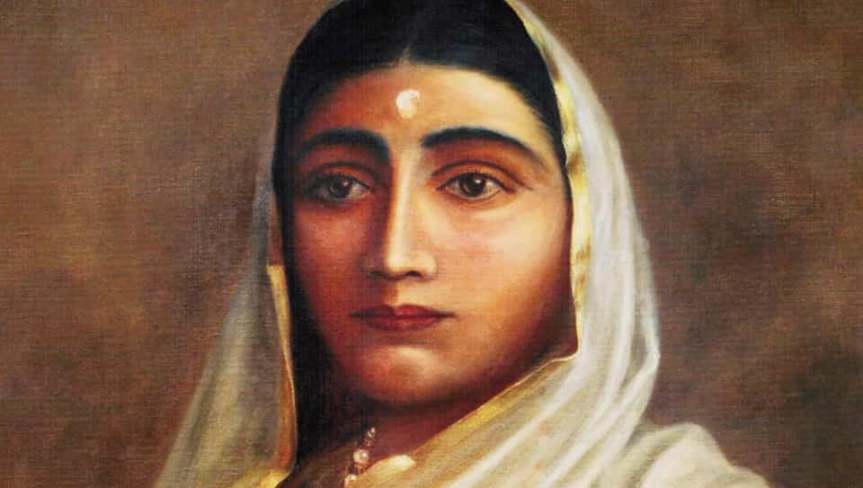
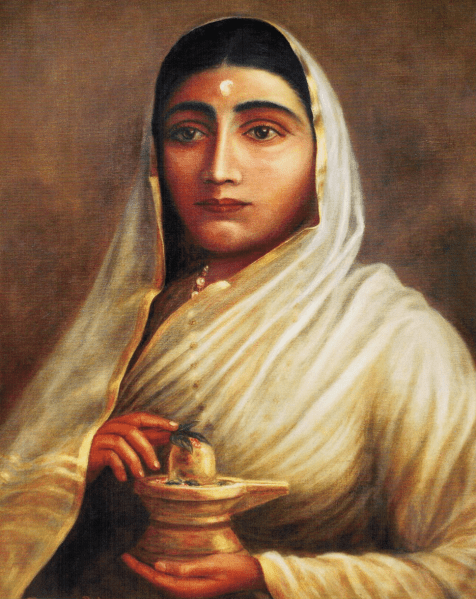
Noble Queen of the Maratha Empire Rani Ahilyabai.

Ahilya Bai was born write to Mankoji Shinde and Sushila Shinde in the village of Chaundi (now Ahmednagar district) in Maharashtra, and was born in the Marathi Hindu family. His father, Mankoji Shinde, a descendant of the magnificent Dhangar family, served as a patil. At that time, the woman were not allowed to attend school , but her father taught her how to read and write.


According to one legend, Ahiliya once stopped by Chaundi on her way to Pune, where Bajirao I, commander of the Maratha army, and Marhar Rao Holker, the ruler of Malwa, saw eight-year-old Ahilya in a temple worship service. Impressed by her devotion and her personality, Marhar, on the advice of Peshwa, married Ahilya and his son Khande Rao. She married Khande Rao in 1733. Ahilya accompanied Khande Rao on many campaigns. Throughout her marriage, she was raised by her mother-in-law, Gautama Bai. Gautama Bai is believed to have played an important role in bringing out the values that she had planted in Ahiliya. She trained them in administration, accounting, politics, etc. and finally delivered their Khasgi Jagir in 1759.

In 1754, Candelao, along with his father Marharla O’Holker, besieged Fort Kumar in Jatrajas Rajimar in Bharatpur at the request of Imadulmark and General Mirbakshi of Mugar Emperor Ahmadsha Bahadur. Suraj Mal supported Emperor Mugar’s rebellious Wajir Safdar Jang. Khande Rao was inspecting his army with an open litter when a shell fired by the Jat army during the battle hit him and died.
After the death of her husband, Ahilya Bye was prevented from playing sati by her father-in-law. After the death of her husband, she received military training by Malhar Rao Holker. After the death of Khande Rao.Ahilya Bai gave up all the desires of life and decided to perform a sati to accompany her husband’s funeral cremation. Her people urged her not to commit sati, but she said her husband promised to accompany her for the rest of her life, and now he walked in the middle of her. Finally, when she decided to play Sati and did not forgive her, it was her father-in-law, Malhar Rao, who made a fervent emotional plea to stop her from doing suicide. .


Marhar Rao Holker died in 1766, twelve years after his son Khande Rao died. Male Rao,the grandson of Marhar Rao and the only son of Khande Rao became the ruler of Indole under the rule of Ahilya Bai in 1766, but he also died within a few months in April 1767.

Ahiliya Bai died on August 13, 1795, at the age of 70. The reign of the modern woman Ahiliya Bai is remembered as a golden age in the history of the Maratha Empire. Ahiliya Bai was taken over by her nephew Tucozy Rao Holker, her commander-in-chief. He immediately abandoned the throne in 1797 in support of his son Kashi Rao Holker.

Ahiliya Bai was a great pioneer and builder of Hindu temples and built hundreds of temples and Dharmashala throughout India. Especially well known for the refurbishment and re-dedication of some of the most sacred sites of Hindu pilgrimages that were desecrated and destroyed by Emperor Aurangzeb in the last century.

SOCIAL EMPOWERMENT

Process of developing a sense of autonomy and self-confidence among Individual ,that allows them to act individually and collectively to have a say in social relationships and the institutions and discourses that exclude them,

The principle of personal and social empowerment is described as a process in which individuals or social groups come to acquire the skills necessary for taking control of their own lives. It is important for supporting and reinforcing the personal empowerment of other members of their group or community as well.

Social empowerment is understood as the process of developing a sense of autonomy and self-confidence. It also involves acting individually and collectively to change social relationships and the institutions and discourses that exclude poor people and lead to an increase in poverty.

Individual empowerment is influenced by individual assets like land, house, and savings along with social factors like health and education. Also, concepts of choice, liberty, agency, capacity, contribution, self-sufficiency and increased resources are all crucial to societal empowerment.

Social empowerment has both individual and community aspects related to it. Individual factors like self-esteem. Self-confidence, imagination, and aspirations all influence social full-fillment. People’s collective assets and capabilities such as voice, organisation, representation and identity also sway the social responsibility.

It is important that socially and economically backward classes of people get involved in local associations and inter-community cooperation mechanisms can contribute to social empowerment by improving their skills, knowledge, and self-perception.

Social Empowerment means all the sections of society in India, have equal control over their lives, are able to take important decisions in their lives and have equal opportunities. Without empowering all sections of society equally, a nation can never have a good growth trajectory.The government has been trying to empower different sections of our society by adopting a multi pronged strategy.

Social Empowerment – Women Empowerment

In the words of the current Prime Minister “empowering women means empowering the entire family.” In a country like India, a girl child faces challenges right from the time of her birth or one

can say a girl child has to fight even for her birth. Hence the Government of India has given a big focus on empowering women through various government sponsored schemes. Some of the important schemes are mentioned below.

  • Beti Bachao Beti Padhao –

Beti Bachao, Beti Padhao (BBBP) scheme was launched on 22 January 2015 by Prime Minister Narendra Modi. It aims to address the issue of the declining child sex ratio image (CSR) and is a

national initiative jointly run by the Ministry of Women and Child Development, the Ministry of Health and Family Welfare and the Ministry of Human Resource Development. It initially focused multi-sector action in 100 districts throughout the country where there was a low CSR.

Pradhan Mantri Vandana Yojana

It is a maternity benefit program run by the Government of India. It was introduced in 2017 and is implemented by the Ministry of Women and Child Development. It is a conditional cash transfer scheme for pregnant and lactating women of 19 years of age or above for the first live birth. It provides a partial wage compensation to women for wage-loss during childbirth and childcare and to provide conditions for safe delivery and good nutrition and feeding practices.

Sukanya Samriddhi Yojana

It is a Government of India backed saving scheme targeted at the parents of girl children. The scheme encourages parents to build a fund for the future education and marriage expenses for

their female child. The scheme was launched by Prime Minister Narendra Modi on 22 January 2015 as a part of the Beti Bachao, Beti Padhao campaign. The scheme currently provides high interest rates and tax benefits. The account can be opened at any India Post office or branch of authorized commercial banks.

Social Empowerment – Poor and Marginalized Sections

Marginalised sections of society are people belonging to Scheduled Castes (SC), Scheduled Tribes (ST), and Other Backward Classes  (OBC). For poor and marginalised sections, empowerment means access to basic education, livelihood, and equal opportunities for growth. Some of the Government measures to address this section of society are mentioned below.

  • Pradhan Mantri Jan Dhan Yojana

It is a financial inclusion program of the Government of India open to Indian citizens (minors of age 10 and older can also open an account with a guardian to manage it), that aims to expand affordable access to financial services such as bank accounts, remittances, credit, insurance pensions. This financial inclusion campaign was launched on 28 August 2014. Under this scheme 15 million bank accounts were opened on inauguration day.

  • Pradhan Mantri MUDRA Yojana

Any Indian Citizen who has a business plan for a non-farm sector income generating activity such as manufacturing, processing, trading or service sector and whose credit need is less than Rs 10 lakh can approach either a Bank, MFI, or NBFC for availing of Micro Units Development & Refinance Agency Ltd. (MUDRA) loans under Pradhan Mantri Mudra Yojana (PMMY).

Skill India

Skill India campaign was launched by Prime Minister Narendra Modi on 15 July 2015 to train over 40 crore people in India in different skills by 2022.It is managed by the National Skills Development Corporation of India. United Kingdom (U.K), Japan, Oracle have collaborated with India for the Skill India Programme. One of the prominent initiatives under it is Pradhan Mantri Kaushal Vikas Yojana (PMKVY). The aim of the PMKVY scheme is to encourage aptitude towards employable skills and to increase working efficiency of probable and existing daily wage earners, by giving monetary awards and rewards and by providing quality training to them. The

The scheme has a target to train 1 crore Indian youth from 2016-20.

Scholarship Schemes for Education

To meet its goal of educational empowerment of the SC population, a large portion of the budget of the Department of Social Justice and Empowerment is directed to scholarships and there has been considerable success in its distribution within the target group. Post-Matric Scholarship (PMS – SC) for SC students has been in operation since 1944 and is the single largest intervention by the Government of India for the educational empowerment of scheduled caste students. It covers approximately 55 lakh students per year, studying at the post matriculation or post-secondary stage, right up to PhD. It has had positive outcomes on literacy level of the target groups, on dropout rates, participation in higher education, and finally in achievement of excellence and building human capital for the service of the nation. Other scholarship schemes for SC students are the Pre-Matric Scholarship, Top Class Education Scheme for studying in premier educational institutions and the National Fellowship Scheme run in conjunction with UGC.

It focuses on integrated development of SC majority villages. The programme is being taken up in villages which have more than 50% SC population.

Social Empowerment – Senior Citizens

Many senior citizens feel neglected and unwanted in the twilight years of their life. Government has taken measures to enable them to lead a respectable life with economic self-sufficiency. Some of the schemes for senior citizens are listed below.

Atal Pension Yojana

It is a government-backed pension scheme in India, primarily targeted at the unorganised sector. All subscribing workers below the age of 40 are eligible for pension of up to ₹5,000 per month on attainment of 60 years of age.

Rashtriya Vayoshri Yojana

It is a scheme for providing Physical Aids and Assisted-living Devices for Senior citizens belonging to BPL category. This is a Scheme, fully funded by the Central Government. The expenditure for implementation of the scheme will be met from the “Senior Citizens’ Welfare Fund”. The Scheme will be implemented through the sole implementing agency – Artificial Limbs Manufacturing Corporation (ALIMCO), a PSU under the Ministry of Social Justice and

Empowerment.

Pradhan Mantri Vaya Vandana Yojana

This is a pension scheme for senior citizens.This to enable old age income security and welfare of Senior Citizens.

Social Empowerment – Disabled Group

For the differently able, their disability often makes them feel that they are a burden on society. Their requirements for empowerment are very different thereby requiring programmes customised to suit their needs. Some of the schemes to help them lead quality life are

mentioned below.

1. Deendayal Disabled Rehabilitation schemes

2. Accessible India campaign

Social Empowerment – Scheduled Tribes

National mainstream policies and compulsions result in the tribal communities feeling either isolated from the mainstream or losing their identity. Government has taken initiatives to handle the issues faced by the Scheduled Tribes which are listed below.

1. Forest Rights Act

2. Minimum Support Price (MSP) for Minor Forest Produce.

3. Schemes for Vocational Training

CHALLENGES OF CORRUPTION

Corruption is a global phenomenon and it’s everywhere. Corruption has increased progressively and is now spreading more and more in our society. Corruption around the world is believed to be endemic and is universal and is a important contributor to slow economic growth, to restrain investment, to inhibit the provision of public services and to increase inequality to such an extent that international organisations like the World Bank have identified corruption as ‘The single greatest obstacle to economic and social development’. Theorists believe that ”corruption is most prevalent during the most intense phase of modernization of a country and tends to decline with institutionalisation of advanced democracy”. Basically, Corruption is offence on the part of an authority or powerful party through means that are not legitimate, immoral, or not compatible with ethical standards.

In a broader sense, Corruption is not just the bad behaviour of government officials stealing off money for their own benefit. It also includes cases where the systems do not work efficiently , and ordinary people are left in a dilemma, needing to give a bribe to get a work done. The economy of the state also plays an important role in increasing corruption. Inequality of wealth distribution, exploitation by employers, and low wages and salaries provide ideal breeding ground for corruption. Corruption also violates human rights, challenges the rule of law, distorts the development process, and dis-empowers the Indian state. Corruption is a hindrance in the process of fulfilling civil, political, economic, social and cultural rights.

FORMS OF CORRUPTION

  • Embezzlement: The theft of resources by people itself who are put to administer it. It happens When unfaithful employees steal from their employers. This is a serious offence where a public officials is misappropriating public resources, when a state official steals from the public institution in which he or she is employed and from resources he is supposed to administer on behalf of the public.
  • Nepotism: Nepotism is typical favouritism, in which an officer prefers his proper kinfolk and family members. Many unrestricted presidents have tried to secure their power position by nominating family members to key political, economic and military/security positions in the state apparatus.
  • Favouritism: Favouritism is a tool of power abuse implying “privatisation” and a highly improper distribution of state resources, no matter how these resources have been accumulated in the first place. Favouritism is the natural human tendency to favour friends, family. Favouritism is closely related to corruption so far as it implies a corrupted distribution of resources. It can be said that this is the other side of the coin where corruption is the accumulation of resources.
  • Fraud: Fraud is a financial crime that involves some kind of deception or deceit. Fraud involves a manipulation or distortion of information, facts and expertise, by public officials positioned between politicians and inhabitants, who seek to draw a private profit. Fraud is when a public official, who is responsible for carrying out the orders or tasks assigned by his superiors , manipulates the flow of information to his private profit.
  • Bribery: This form of corruption is the payment that is given or taken in a corrupt relationship. A bribe is a fixed sum, a certain percentage of a contract, or any other favour in money of kind, usually paid to a state official who can make contracts on behalf of the state or otherwise distribute benefits to companies or individuals, businessmen and clients.

Characteristics of Corruption

  1. It is a gap between group and their individual interest.
  2. It is between two or more parties since one can hardly be corrupt with one’s own self.
  3. Consenting adults that have a common understanding.
  4. It is Beneficial in future.
  5. The Existence of power that could be grabbed, entrusted or otherwise available.
  6. The misuse of the power that often drives a wedge between intended and stated positions, for benefits that is unintended.

Corruption in India is a consequence of the nexus between bureaucracy, politics and criminals. It has been observed that in cities and villages throughout India, there is “mafia raj” consisting of municipal and government officials, elected politicians, judicial officers, real estate developers and law enforcement officials, who acquire, develop and sell land in illegal ways. Many state-funded construction activities in India, such as constructing roads, flyovers, are dominated by the construction mafia, which are groupings of corrupt public works officials, materials suppliers, politicians and construction contractors.

It is now well recognized that the State is mainly responsible for both formulating and enforcing policies relating to good governance and human rights. Good governance is a key factor. The good governance agenda includes protection and promotion of human rights and rule of law. Both these functions will not be fully accomplished if corruption is widespread in government. Major challenge is that Corruption is a strong violator of human rights, particularly the economic and social rights of individuals as well as those of the State. It not only weakens development and growth, it also hinders efforts aimed at poverty eradication, socio-economic transformation and creation of an egalitarian society in accordance with the Directive Principles of the State Policy.

ISSUES RELATING TO POVERTY AND HUNGER

India is a country which suffers a lot due to hunger and poverty. Hunger is very closely related to poverty as poverty is one of the main reasons for hunger. 

Indian economist and philosopher Amartya Sen said that lack of ability to pay for food is obviously caused by poverty.

POVERTY

Poverty is a condition caused due to lack of basic needs of life such as water, health care, food, unemployment etc. It is described as the low income level of people which leads them to poor standard of living. Poverty means that the income level from employment is so low that even the basic human needs are not fulfilled. The impact of poverty on children is substantial. Children who grow up in poverty typically suffer from severe and frequent health problems; infants born into poverty have an increased chance of low birth weight, which can lead to physical and mental disabilities. Poverty is a difficult cycle to break and often passes from one generation to the next. Typical consequences of poverty include alcohol and substance abuse, limited access to education, poor housing and living conditions, and increased levels of disease. 

Hunger and food insecurity are the most serious forms of extreme poverty. To eradicate these issues from society is the prime concern of international organizations.

HUNGER

Hunger is a global problem and a lot of countries are facing this problem. Hunger is a condition where both the adults as well as children do not have access to food and there is a constant decrease in food intake, nutrients, no proper diet is there and some days are even gone without food which eventually leads to their death.

Climate change is also one of the reasons for world hunger. The amount of rain determines the production of crops. Droughts also affects agricultural production and extreme rain also causes flooding that leads to destruction of crops . Use of outdated products, not using better quality seeds also leads to shortage of food and those who are capable and have money buys food even at higher prices, the ones who have to suffer are poor people. They do not have money to buy food and hence they remain hungry. Hunger has a lot of serious problems such as insufficient economic systems, climate changes, misinformation but the most serious problem of all is poverty. Many poor nations such as Kenya, Uganda etc. are in desperate need of food. The growing population is one of the major causes of rising hunger and poverty. In Indian scenario Hunger and malnutrition are closely related. The main outcome of poverty is hunger. India is a home to the largest undernourished population in the world, 14℅ of our population is undernourished, 20℅ of children under 5 are underweight, 34.7℅ of children are stunned, 51.4℅ of women in the in the reproductive age i.e. 15-49 are anemic.

DIFFERENT ISSUES RELATING TO HUNGER AND POVERTY

Overpopulation is a major issue of rising poverty. There are not enough resources to satisfy your need. Demand is more and resources are limited and this leads to no proper distribution of resources and a large amount of people are left with no food. India is a country with a large population, and hence everyone’s demand is not full and people remain hungry.

Poor health service– the health sector of India is not as efficient as compared to other developed Nations, which leads to less access to good health and sanitization and hence causes ill health and maintains poverty.

Malnutrition- It is a phenomena that occurs in a human body when it receives little or no nutrition as a result of it people easily get sick and it causes death. it is responsible for the death of people, especially young children.

Insufficient education and lack of training- due to Rising poverty children are not able to get basic education and again since they are not educated, they don’t get employed and this vicious cycle of poverty is continued. Lack of money is reason for them not attending proper School and they have to indulge in labour to provide for a minimal living also causes rise for child labour. Parents send their children to work at a very young age.

Inequality– different gender, ethnic, group and social classes face inequality due to poverty. Low rate of economic development, If a country is poor then its development is also very slow.

Rise in crime – Often due to poverty and hunger, people indulge in criminal activities. To fill their empty stomach many young children opt for wrong ways and indulge in theft and loot and its disturbance in the society.

Way Forward

To eradicate poverty and hunger from the society, there is a need for the government to implement schemes and methods. The government should spend more in health, nutrition, and education. The government should invest more in agriculture and provide the farmers with better quality seeds and advanced machineries and modern techniques for more agricultural production, Also it is necessary to decrease rural poverty. Subsidies address only short-term issues. There is a need to develop technologies, with the help of which farmers can practice all-weather agriculture. Government should focus on increasing employment opportunities creating jobs in modern sectors and promote labor-intensive industries. Reduction in corruption will lead to an overall development of the economy. A country with low poverty level will only develop in a better manner.

Sources: civilservicesindia.com

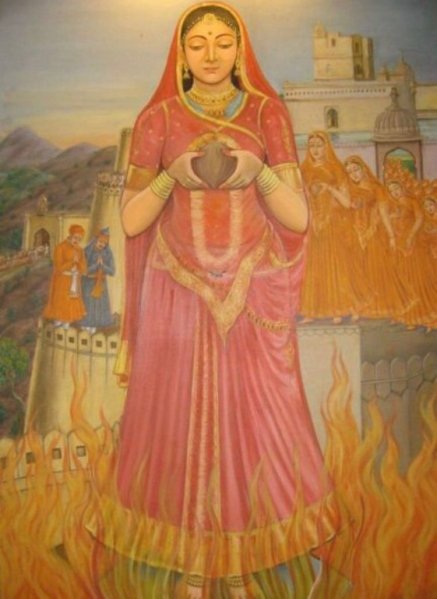
Story of a fierce Queen, Rani Karnavati.

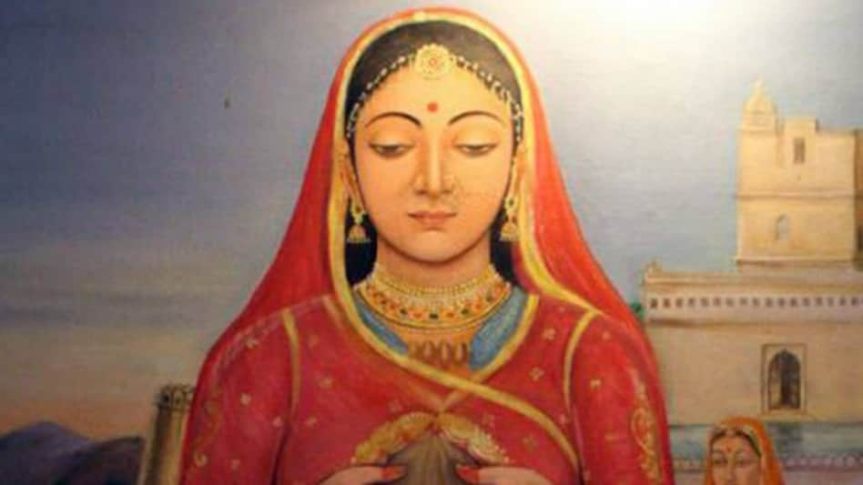
Rani Karnavati was a princess and temporary ruler from Bundi, India. She married Rana Sanga of Mewar in Chittorgarh, the capital of the Kingdom of Mewar. She was the mother of Rana Vikramaditya and Rana Uday Singh, and the grandmother of the legendary Maharana Pratap. During 1527 to 1533 the minority years of her sons she served as a regent for Mewar. She died on 8th March 1535.

After Babur seized the throne of Delhi in 1526, Rana Sanga of Mewar led a coalition of Rajput Kings against Babur to seize the throne of Delhi. In the starting Rana Sanga was able to defeat Babul in the Battle of Bayana, but in the Battle of Kanua, he was defeated because of Babur’s excellent tactics, guns, and artillery.Rani Karnavati took over as regent on behalf of his eldest son Vikramaditya who was a minor at that time. Meanwhile, Mewar was attacked a second time by Gujarat’s ruler Bahadur Shah against whom Vikramaditya had previously been defeated. It was very important issue for Rani Karnavati.

The nobles of Mewar Kingdom did not want to fight for Vikramaditya, and as the upcoming battle will certainly be another stain in the history of Sisodias. Rani Karnavati was able to persuade nobles to fight for Mewar and honor of Sisodias . Their only condition was that Vikramaditya and Uday Singh should go to Boondi for their personal security during the war. In some legends some also said, that Rani Karnavati also sent Rakhi to Emperor Humayun of Mugals calling him his brother and asking for help. Therefore, her name was irreparably linked to the Raksha Bandhan Festival. However, this is not supported by modern writers, and modern historians such as Satish Kumar consider it a fable rather than a historical fact.

Rani Karnavati agreed to send her sons to Bundi ,while knowing the situation being very critical and which can be dangerous for her two sons and send her trusted maid Panna Dai to accompany them and take care of them. Panna hesitated, but she left for Bundi with Vikramaditya and Uday Singh and accept the Queen’s wishes.

The Sisodias dynasty fought bravely, but the army of Mewar was outnumbered by Bahadur Shah army and they were defeated. Bahadur Shah entered Chittorgarh and it was his second attack on Chittor. The male nobles donned with saffron cloths fought with the enemy till thier death and commited Saka.Karnavati and other noble court women realized that defeat was imminent and to save their honour they committed suicide on March 8, 1534, in a fire called Jauhar. This was the second of the three Jauhar to take place in Chittor.

AGNIPATH SCHEME

On 14 June 2022, the central government launched the Agnipath scheme which is a recruitment of soldiers below the rank of commissioned officers into the three services of the armed forces. With this scheme, the central government hopes to fulfill the dream of an individual to join the armed forces and serve the nation. Various other reasons for the government to start this scheme were to reduce salaries and defence pension bill, to increase employment opportunities and higher skilled work force and to provide a youthful profile to the armed forces. One of the important reasons was also to have a large number of military trained and disciplined people in the society. The soldiers recruited through this scheme will be known as ‘AGNIVEERS’.

Under this scheme 45,000 to 50,000 youth aged between 17.5 to 21 years will be recruited annually for 4 years in the Navy, Air force & Armed forces. Enrollment will be based on an ‘All India All Class’ basis. The enrolment of the Agniveers to all the three services will be through a centralized online system, with special rallies and campus interviews at recognized technical institutes such as the National skills Qualifications framework, Industrial Training Institutes. In each batch, 25% of Engineers will be chosen for the permanent cadre in the armed services. The remaining 75% of Agniveers will receive an amount of Rs. 11.71 lakh as Seva Nidhi Package.

The salary per month of the Agniveers is Rs. 30,000 in 1st year, Rs. 33,00 in 2nd year, Rs. 36,500 in 3rd year and Rs. 40,000 in 4th year but the Agniveers contribution to Seva Nidhi will be 30% which means 30% will be deducted from the initial salary which means in hand they will receive 21,000 in first year, 23,100 in second year, 25,580 in third year and 28,000 in fourth year.

The Agniveers will also receive a non-contributory insurance cover of Rs. 48 lakh during the period.

Every demolished AGNIVEER will have a 10% reservation in CAPFs, Assam Rifle recruitment. They are also provided with the Upper age relaxation beyond the prescribed age limit for AGNIVEERS in CAPF & Assam Rifles. Other benefits include:

  • Priority in bank loan schemes in case they want to be entrepreneurs.
  • Many other states including Uttar Pradesh and Madhya Pradesh have stated that agniveers will be given priority in the recruitment of state police officers.
  • Some major companies and sectors like IT, Engineering Security, etc. have also announced that they will prefer hiring skilled, trained, and disciplined Agniveers.
  • It also stated that all those wishing to study further class 12 equivalent certificate and Bridging Course of choice for further studies.

The Upper age limit for recruitment has also increased only for 2022 under the Agnipath scheme to 23 years from 21 years for the first year of the scheme for enrolment of soldiers into the Army, Navy and Air Force.

AIM OF THE SCHEME

  • One of the important aims of the scheme is to make the army a future-ready fighting force with the youth of the nation capable of meeting multiple challenges.
  • To strengthen the national security
  • To provide the youth of the nation to serve the country.
  • To cut down salary and pension bills.
  • To harness the youth potential and make them future ready soldiers.
  • They will be provided with certificates and bridge courses that will help in creating future entrepreneurs.

CRITICISM OF THE SCHEMES

After the announcement of this scheme, there were several protests held throughout the country in several states. Students from throughout the country held riots, burned trains, and caused severe damage to the public as well as private properties. This scheme is criticized on a number of basis such as:

  • The service period that is 4 years is very less and it will provide employment for just 4 years. T
  • he real skills cannot be acquired in such a short period and what about those who want to serve the nation for longer terms.
  • only 25% of the candidates will be taken permanently and the rest 75% will again be unemployed.
  • No pension will be given to these candidates that will be appointed during this scheme.
  • The candidates that will be selected will only be selected for non-commissioned ranks like Naik, Sepoy, and Lance Naik.
  • The recruitment is only for candidates of 17.5 – 23 years of age.
  • After 4 years is over, there will be no job security.
  • Unlike other governments’ jobs no extra basic benefits will be provided to the candidates.
  • The salary will also be deducted for the Seva Nidhi contribution.

With the provided advantages and disadvantages of this AGNIPATH scheme it is way forward for a reform in the Defence policy. This schemes aims to increase employment opportunities with skills and training, to give a better opportunity to the youth who choose to serve the nation and it hopes to have a positive impact on the human resouces management of armed forces and for the country’s development.

Sources: https://byjus.com/free-ias-prep/agnipath-defence-policy-reforms/

GOVERNMENT BUDGET

Government is required to undertake various economic, social, and other activities in every country. It is like to pursue various policies to achieve certain objectives like economic development, reduction of inequalities of income and wealth. The government has to incur expenditure in performing these activities and in pursuing its policies. For instance, the government has to incur expenditure in maintaining law and order and in undertaking various developmental activities. As such, government has to raise necessary revenue to finance these expenditures.

Accordingly, the government has to draw a financial plan corresponding to various activities it wants to undertake during the coming year . Such a financial plan is known as the budget of the government. “Budget of the government is an annual financial statement describing in detail the estimated receipts and proposed expenditures and disbursements of the government under various heads for the financial or fiscal year. The budget is the indicator of government functioning. It also gives the actual financial accounts for the previous year and the revised estimates for the current ye . In other democratic countries ,the government budget is a constitutional obligation in India. Under Article 112 of the constitution, a statement of estimated receipts and proposed expenditures of the Central Government has to be prepared for every financial or fiscal year and has to be placed before the parliament. It is titled Budget of the central government.

Government budget is a subject of immense importance for a variety of reasons.

  • Planned approach to government’s activities: The importance of government budget arises because of the fact that the activities of the government have increased tremendously. This calls for mobilization of large resources to meet the expenditure required to undertake these activities. There has to be a definite planning with regard to the estimated revenue and proposed expenditure for the proper conduct of the government activities.
  • Integrated Approach to Fiscal Operations: All these decisions and policies are interconnected and they must form a part of the overall set of objectives which the government wants to pursue. Government’s fiscal policy as reflected in the budget is an essential part of its overall economic and social policy.
  • Public Accountability: Budget proposals are discussed in the parliament. A popular debate also takes place in the media about the budget proposals. Parliament also exercises control over the government expenditure through various committees – Public Accounts Committee, the Estimates Committee and the Committee on Public Undertakings. Thus, Budget serves as a powerful weapon of financial control in respect of both collection of revenues and their disbursement.

STRUCTURE OF THE GOVERNMENT BUDGET

Constitution of the country demands that the budget must distinguish expenditure on revenue account from the expenditure on capital account. Revenue account covers those items which are recurring nature, while capital account covers those items which are of the nature of creating or reducing the capital assets. Budget is necessarily presented in two parts:

  • REVENUE BUDGET
  • CAPITAL BUDGET

Revenue budget shows revenue receipts of the government and the expenditures met from these revenue receipts. It consists of revenue receipts and revenue expenditure. Revenue receipts of the government are all those receipts which are non-redeemable. They create no liabilities or involve no sale or reduction in the assets of the government. Revenue expenditures relate to expenditures incurred by the government on day to day normal functioning of the government and interest payment on government debts. These expenditures neither create any physical or financial assets nor reduce any liability of the government .

Capital Budget comprises capital receipts and capital expenditure of the government. It shows capital requirements of the government and financing of these expenditures. Capital receipts are the receipts of the government which create liabilities or reduce assets of the government. The main component is to borrowing of all kinds from the public, RBI and repayment of loans to the central government by state government and public sector enterprises. Capital expenditures are those expenditures of the government which lead to creation of physical and financial assets or reduction of financial liabilities.

BUDGET DEFICITS

An important issue which is raked up every year during the budget in India is the issue of budget deficit. In the past two to three decades, government spending has increased more than its receipts. As a result , budget deficits and the government borrowings have increased sharply. Although politicians regularly make fine speeches about the need to reduce deficit, cutting down spending or raising taxes so as to reduce deficit are not politically popular. In every budget , the government has been setting the target of reducing the budget deficit, but reaching the target of reducing budget deficit has been rather difficult.

Budget deficit is financed by increasing the money supply and by borrowing from public and from other countries. This involves burden both on present as well as the future generations. The present generation has to shoulder the burden of budget deficits in terms of inflationary rise in prices. Higher debt also means that interest payments eat away a large part of government expenditure, which could otherwise be used for providing various economic and social services to the public. This deficit is a liability for future generations as well. Taxes will have to be increased in future to pay interest on the debt and to repay the debt. This is the burden of the debt on future generations.

SOME FACTS ABOUT INDIAN BUDGET OVER THE YEARS

  • The budget system was introduced in India on 7 April,1860.
  • James Wilson, the first Indian Finance member, delivered the budget speech
  • The first budget after independence was presented on 26 November, 1947 by R.K.S. Chetty.
  • Yashwant Sinha, the then finance minister, moved the budget to 11a.m. in 1999, instead of 5 P.M. as was the practice till then.
  • Arun Jaitley, the present Finance minister, has advanced the presentation of the budget to 1st February from the 2017-18 Budget. He has presented 4 regular budgets till date.
  • 24 people have presented budget in independent India.
  • Morarji Desai holds the record for the most budget presented in independent India with 8 full budgets and 2 interim budgets.
  • P Chidambaram has matched Morarji Desai’s record of presenting 8 full budgets.
  • All the three Prime Ministers from the Nehru family- Jawaharlal Nehru, Indira Gandhi and Rajiv Gandhi have presented one budget each.

Sources: Frank ISC Economics Class XII

What a filibuster is.

Traditionally, the Senate filibuster was reserved for only the most controversial issues, but its use has escalated in recent years, often slowing business in the chamber to a halt. Some lawmakers acknowledge that the filibuster, which has effectively set a 60-vote super­majority requirement for passing legis­la­tion in the Senate, could doom many of the propos­als they have cham­pioned, including meaningful reforms on issues ranging from health care to climate change to gun control. Behind this dysfunc­tion, the filibuster also has a troubling legacy: it has often been used to block civil rights legislation intended to combat racial discrimination.

As advocates push for pro-democracy legislation, calls for eliminating the filibuster have grown louder. In his remarks at the funeral of civil rights hero and congressman John Lewis in July 2020, former President Barack Obama called the filibuster a “Jim Crow relic,” arguing that the procedure should be eliminated if it is used to block voting reforms. Others note that certain types of legislation are already exempt from the fili­buster’s super­majority require­ment and argue that a similar exemp­tion should be made for voting rights.The stakes were raised in March 2021, when the For the People Act — a comprehensive democracy reform bill — was passed by the House of Representatives and introduced in the Senate, where the filibuster may determine its fate. Whether through elimination or reform, the filibuster cannot be allowed to impede the expansion of Ameican democracy or the rights of all eligible voters.

What is the filibuster?

The filibuster is a 19th-century procedural rule in the Senate that allows any one senator to block or delay action on a bill or other matter by extending debate. While a final vote in the Senate requires a simple majority of 51 votes, a supermajority, or 60 votes, is needed to start or end debate on legislation so it can proceed to a final vote. Therefore, even if a party has a slim majority in the Senate, it still needs a supermajority to even move forward with legislation a tall task for a hyper-partisan Washington. The House of Representatives does not use the filibuster. Instead, a simple majority can end debate.

How can the filibuster rule be changed?

Senators have carved out exceptions to the filibuster rule before.One option to do so is called “going nuclear” — when senators override an existing rule, such as the number of votes needed to end debate. This is usually done by lowering the threshold needed to end a filibuster to 50 votes.In 2017, then-Senate Majority Leader Mitch McConnell, R-Ky., eliminated the filibuster for Supreme Court nominees, clearing the way for then-President Donald Trump’s first nominee to be confirmed.

Why a call for change now?

In the last 50 years, the filibuster has been used more and more to kill major legislation. And with Biden’s agenda stalled, Democrats are calling for a carve out to pass voting rights legislation. In the last year, at least 19 states passed 34 laws restricting access to voting, according to the Brennan Center for Justice. If the threshold to end debate on a bill is lowered to 50 votes, for instance, Democrats could end debate on their voting reform bill and eventually move to a final vote, with Vice President Kamala Harris serving as a tie-breaking vote in the 50-50 Senate to pass the legislation. Incidentally, Harris, as president of the Senate, would play a key role in any potential rules change. She would be expected to occupy the chair and preside over any rule change action.

What’s the differ­ence between “talking” and “silent” fili­busters?

Filibusters traditionally involved long speeches in which a senator attempted to block a vote from proceeding by refusing to yield the floor. To stage such a “talking” fili­buster, a senator would hold the floor by stand­ing and talking for as long as they could, sometimes overnight. This was popularized in the 1939 film Mr. Smith Goes to Wash­ing­ton. The longest filibuster ever recor­ded, by South Caro­lina Sen. Strom Thur­mond in opposition to the Civil Rights Act of 1957, lasted for more than 24 hours. But since the early 1970s, senators have been able to use a “silent” filibuster. Anytime a group of 41 or more senators simply threatens a filibuster, the Senate majority leader can refuse to call a vote.

How has the fili­buster changed over time?

The use of the filibuster, once reserved for only the most controversial issues, has increased dramat­ic­ally in recent years along­side grow­ing polar­iz­a­tion in Wash­ing­ton. There have been more than 2,000 fili­busters since 1917; about half have been in just the last 12 years. Crit­ics argue that this increased use has slowed busi­ness in the Senate to a halt, often entangling the cham­ber in proced­ural maneuv­er­ing instead of substant­ive debate and, ulti­mately, lawmak­ing.