Like SRK said if the ending is not happy ending then, “Picture abhi baki hai mere dost”. When the sky is in it’s beautiful colours and the sun is going down, may be they are trying to say us that look, “the endings can be beautiful too”, may be they are giving us hope, hope for better and beautiful future, may be, they are trying to say us that, let go what happened today, just forgot what happened in the past by looking at this beautiful sunset skies and look forward to every sunrise, it’s your golden opportunity to “RESET”.
It’s the nature of life that things don’t stay the same but sunsets are the proof that, they can end beautifully, so don’t give up, just keep going no matter what happens the end gonna be beautiful. After entire day work just you, a cup of coffee and beautiful sunset with your favourite music will help you to forgot about all your worries and you’ll just want to live in that moment forever when the sky is in it’s beautiful colours. The world is fighting against the virus and we are too young to dealing with all this, so much has happened, so much is happening, at some point in our life we all feel depressed, sad and lonely, sometimes we just want to give up and it’s a life but, DON’T, comfort yourself by looking at these beautiful sunset skies.
Some people may sound like that, you need to do something special in life, and that’s not true. They will judge you at every point in your life but, don’t think, don’t put so much thoughts into what you’re doing and what others are saying or what others will say, you just have to keep going. Start doing things for yourself let them call you selfish sometimes it’s really okay to be selfish.
Also always remember, you are just a little bit doubtful of your potential and unsure of your worth but you are as amazing as these sunset skies.
Poverty one of the major problem in India. India is the second most populous country after China with 1.2 billion people and it is the seventh largest country in the world in terms of area.
Around ⅔rd of people in India live in poverty in which 68.9 % of Indian population lives on less than 2 dollar a day and over 30% even have less than 1.25 dollar per day. And thus they are considered extremely poor.
India subcontinent is one of the poorest country in the world.
The most poor section of our country is children and Womens. They are considered as the weakest member of Indian society and that’s why they suffer the most.
In India womens are not considered as the strongest member of the society because of a patriarchy.
Education and job for womens are not considered important in our society.
By preventing education for Childrens and womens leads to the poverty and poverty is also preventing children from getting an education
Poverty in India impacts children and families in a variety of different ways:-
High infant mortality
Child labour
Malnutrition
Lack of education
Child marriage
High infant mortality rate
India is one of the country with highest child mortality rate.
Around 1.4 million children die each year in India their fifth birthday.
Major causes of death are due to pneumonia, malaria, diarrhoeal diseases as well as chronic Malnutrition.
Child labour
Child labour for children under the age of 14 in India is prohibited by law.
According to official figures 12.5 nilganj children between the age of 5 to 14 are working.
It is believed that Indian children’s contribute to the living wood of their poor family.
Children’s work in the field in factories, in quarries, private households .
Malnutrition
India is one of the world’s top countries when it comes to Malnutrition.
7.8 infants were found to have birth weight less than 2.5Kg
More than 200 million people don’t have sufficient access food.
Lack of Education
Most of childrens have no access to education in India.
Girls are excluded from the school in higher numbers with respect to boys.
We should have to treat them equally but it is believed to be inferior on lower caste.
Without education, chances of finding living from employment in India is impossible.
If educated peoples start teaching childrens at free of cost then it also be very useful in making a better world.
Like If 30 college students are studying in 1 course and they start teaching poor childrens only 1 day per month then the childrens study 1 month at free of costs.
We also have to put some efforts in making better world not for others, but for ourselves as well.
Child marriage
As we know Child marriage is crime according to Child marriage Restraint Act, 1929.
But it is still widespread in many regions of India.
Poverty is also the main reason behind this.
Overpopulation
Overpopulation leads to high competition in every aspects of life.
We see lack of job opportunities, education.
Food production is not as much to fulfill the need of this higher population.
Due to overpopulation, and not doing work after having such high population in India is main reason behind poverty.
If we utilise this overpopulation as the opportunity to increase country’s financial condition then it actually going to worth it.
We all know and accept the fact that different humans will have different characterstics, likes and dislikes but what about the physical appearance. Why is it that a standard is set for people which everyone accept them to follow . The ones who fail to meet the standard criteria are then “shamed” on the pretext of motivation.
Crticising someone for their body fat, “thin” built, hair texture and colour, hair density or bald looks, too much height or “such a shorty”, different body shapes, size of various body parts like small or heavy breasts or hips, skin tone etc comes under the broad term of BODY SHAMING. Not only just the looks but people are shamed with the accessories they decide to decorate their body with like tattoos, piercings etc and also with the marks that the diseases or some accidents leave. The memories of diseases and the accidents are traumatic enough, in addition to this one has to bear the addition burden of someone not liking some marks on their bodies which they have learnt to make peace with hereby scratching the old wounds making the person relive the trauma.
A person is defined by its physical and mental health. While the latter includes moral virtues , the former stands for a healthy body where all oragans function properly. Different skin colors , height, length of hair until and unless you have got an illness is all okay and acceptable. Anything which doesn’t threaten the working of your organs is completely normal. Sadly, this is not the case today.
This blog will tell you what leads people to body shame others and affect it has on the victim.
What causes people to BODY SHAME
It is like a chain reaction which goes on in the society. There are some standards set by the people themselves which they expect everyone to follow to be “an epitome of PERFECTION”. For example – If you are a male , you ought to have good height, good muscles, lusty dense hairs and if you are a female, then the list extends to a great measure. A “good Indian girl” ought to have “fair ” skin , should not be covered in the layers of “fat”, should have markless, flawless skin, medium height , good natural color hair, tattoos makes one characterless and piercings except the traditional ear and nose also contribute to the former category. Now I ask, which text or rule book has defined these charactersticcs of a man or woman. The most funniest thing is the third gender is not even mentioned and talked baout anywhere instead they are shamed. Because some “boys” prefer wearing make up with female clothing and some girls keep short hairs and speak for themselves. The onlything which are ancient texts teaches us is to be honest , hardworking and possess good moral virtues there was never a mention about the physical appearnce. History is evident of the fact that people who were beyond this tandard criteria , proved better than the ones who followed it . The best example being Physics genius STEPHENS HAWKING. It is a sort of revenge game which continues.Because the people were teased and criticsed about their looks by the others they continue to do it with the rest to take out their frustration. The origin of this “toxic game” being unknown.
A default reaction to something which someone says or does and we dont like is to comment on their physical attributes making that person feel guilty about themselves . Like if someone acts in the manner which we dont like, people are often heard saying, “Obviously, she/he will do that. Didn’t you see how ugly they are”. This process of making a person guilty by remarking about their physical attributes is very common in today’s world specially in this age of social media.
Affects of BODY SHAMING
Reduction of self esteem, self confidence because you think you are not worthy or capable because someone told you that you are “unfit”. Everyone is unique with a different story behind each of their “not normal looks”, until and unless the third person knows about it they should not comment about it. This is very common to feel because confidence is the belief we have on ourselves which motivate and enable us to do the things properly and our confidence specially in the teen years is based on what the people around us friends, peers or family feels about us. In these growing years, one needs motivation and support in the form of words not the harsh words making people to change their appearance and hate themselves. This often leads to anxiety, stress, eating disorders bringing the ACTUAL DISEASES, depression sometimes leading people to self harm themselves. And then people says today’s youth is so reckless and “Teenagers attempt suicide because they were CORRECTED ABOUT SOMETHING or Scolded for their won well being”. Correcting someone’s natural built is equal to meddling with the nature and we have enough evidences of the consequences of meddling with the nature. This all is the result of the trauma which sometimes lead people into the actual bad habbits like alchol, drugs fastening the process towards their mortality.
In order to fit into the “standard criteria” , people undergo diets, proteins for increasing weights and heights, laser treatments for those who have thin hair or bald look, dozens of products containing many harmful chemicals to whiten their skin tone. This not only takes a toll on financial health , but also on the mental physical health. The treatments are not always effective , it causes more harm than good at times. The stress and anxiety in the anticipation of the result is a very acute thing which is actually to be worried about.
We need to stop criticising people on the pretext of looking after them If you really want to look after your “loved ones” , then it should be to take care of their health in all aspects not to bring them on the verge of madness.
Sigmund Freud (1856–1939) is probably the most controversial and misunderstood psychological theorist. When reading Freud’s theories, it is important to remember that he was a medical doctor, not a psychologist. There was no such thing as a degree in psychology at the time that he received his education, which can help us understand some of the controversy over his theories today. However, Freud was the first to systematically study and theorize the workings of the unconscious mind in the manner that we associate with modern psychology.
Levels of consciousness
To explain the concept of conscious vs unconscious experience, Freud compared the mind to an iceberg and proposed 3 levels of consciousness.
Conscious mind
Conscious: This includes our current thoughts whatever we are thinking about or experiencing at a given moment.
Preconscious mind
Preconscious: Beneath the conscious is the much larger preconscious. This contains memories that are not the part of current thoughts but can be easily accessible with a moment’s reflection. For example, what we had for breakfast or our parents, first names.
Unconscious mind
Unconscious: Beneath the preconscious and forming the bulk of human mind is the unconscious.
(i) It includes thoughts, desires and impulses of which we remain largely unaware. Freud believed that much of it was once conscious but has been actively repressed driven from consciousness because it was too anxiety provoking. For example, Freud contended that shameful experiences or unacceptable sexual or aggressive urges are often driven deep within the unconscious.
(iii) The process of repression is itself unconscious and automatic. We do not choose to repress an idea or impulses, it just happens.
(iv) The fact that we are not aware of them, however in no way prevents them from affecting our behaviour. They continue to operate underground, often converting the repressed conflict into anxiety or even psychological disorders.
(v) It is storehouse of repressed libidinal energy.
Though the Camellia synesis is also native to India, and grew in the wild long before its actual value was understood, it is thought that tea was carried to India by silk caravans travelling from China to Europe centuries ago.
Native Americans ate the leaves occasionally, but they were largely employed for their medicinal powers.
It took a long time for it to evolve into what is currently known as chai, a flavorful black tea sweetened with sugar and milk, along with spices like cardamom and ginger, and used in cooking, vegetable dishes, and soup.
Tea was initially introduced to Indians by the British and is now an integral component of daily life. Tea originated in India thanks to the British, who sought to break China’s tea monopoly after discovering that Indian soil was ideal for growing these plants.
The presence of native flora indicated that the soil was suitable for transplanting Chinese seedlings, and the Assam valley and Darjeeling’s towering mountains were chosen as early tea planting sites.
Tea manufacturing in India began to blossom after 14 years of fruitless attempts, allowing the manufacture of a tea that was equivalent to, if not better than, its Chinese counterpart.
The native tea species
When Scotsman Robert Bruce identified a native type of Camellia sinensis plant in Assam in 1823, commercial tea plantations were first created under British rule.
According to legend, a local merchant named Maniram Dewan brought Bruce to the Singpho people, who drank a tea-like beverage. The Singphos gathered fragile leaves from a wild plant and dried them in the sun.
It’s worth noting that, at the time these changes were taking shape, the East India Company was attempting to break the Chinese monopoly on the global tea trade due to a growing conflict of interests.
In response to this scenario, one of the Company’s initiatives was to begin producing tea in British possessions, particularly India.
Around the year 1840, India’s tea industry began to take shape. Chinary tea plants, which were first tested in Assam, were later tested in the high-elevation districts of Darjeeling and Kangra, where they thrived.
Tea planting in Darjeeling began in 1841, when Archibald Campbell, the first superintendent of Darjeeling, experimented by planting a few chinar trees.
Tea consumption has evolved in a variety of ways, with each region of this large country producing its own chai variations. On one end of the scale are the gourmet stores that sell and serve good Indian tea, while on the other are the simple roadside chaiwallas who offer hundreds of steaming cups to people from all walks of life.
While India is today known for its high-quality tea and the countless cups of chai consumed by Indians, the custom of drinking tea as a regular beverage did not begin in India.
Tea had been used as a medicinal drink in India since ancient times (nearly identical to China), but it had never been used as a beverage.
After years of selling tea to Portugal, Japan opted to seal its doors to the rest of the world and isolate itself, leaving the global tea trade in the hands of the Chinese. While China was willing to trade, it was adamant about keeping the secrets of tea cultivation.
Darjeeling tea estates began in the 1850s, and the world soon sampled the “Champagne of teas,” Darjeeling tea.
The Chinese tea monopoly was fully broken with the creation of Darjeeling tea and widespread marketing by the British, and Indian teas quickly seized both the market and the imagination of worldwide tea consumers; and the rest, as we all know, is history.
Though the Camellia synesis is also native to India, and grew in the wild long before its actual value was understood, it is thought that tea was carried to India by silk caravans travelling from China to Europe centuries ago.
Native Americans ate the leaves occasionally, but they were largely employed for their medicinal powers.
It took a long time for it to evolve into what is currently known as chai, a flavorful black tea sweetened with sugar and milk, along with spices like cardamom and ginger, and used in cooking, vegetable dishes, and soup.
Tea was initially introduced to Indians by the British and is now an integral component of daily life. Tea originated in India thanks to the British, who sought to break China’s tea monopoly after discovering that Indian soil was ideal for growing these plants.
The presence of native flora indicated that the soil was suitable for transplanting Chinese seedlings, and the Assam valley and Darjeeling’s towering mountains were chosen as early tea planting sites.
Tea manufacturing in India began to blossom after 14 years of fruitless attempts, allowing the manufacture of a tea that was equivalent to, if not better than, its Chinese counterpart.
The native tea species
When Scotsman Robert Bruce identified a native type of Camellia sinensis plant in Assam in 1823, commercial tea plantations were first created under British rule.
According to legend, a local merchant named Maniram Dewan brought Bruce to the Singpho people, who drank a tea-like beverage. The Singphos gathered fragile leaves from a wild plant and dried them in the sun.
It’s worth noting that, at the time these changes were taking shape, the East India Company was attempting to break the Chinese monopoly on the global tea trade due to a growing conflict of interests.
In response to this scenario, one of the Company’s initiatives was to begin producing tea in British possessions, particularly India.
Around the year 1840, India’s tea industry began to take shape. Chinary tea plants, which were first tested in Assam, were later tested in the high-elevation districts of Darjeeling and Kangra, where they thrived.
Tea planting in Darjeeling began in 1841, when Archibald Campbell, the first superintendent of Darjeeling, experimented by planting a few chinar trees.
Tea consumption has evolved in a variety of ways, with each region of this large country producing its own chai variations. On one end of the scale are the gourmet stores that sell and serve good Indian tea, while on the other are the simple roadside chaiwallas who offer hundreds of steaming cups to people from all walks of life.
While India is today known for its high-quality tea and the countless cups of chai consumed by Indians, the custom of drinking tea as a regular beverage did not begin in India.
Tea had been used as a medicinal drink in India since ancient times (nearly identical to China), but it had never been used as a beverage.
After years of selling tea to Portugal, Japan opted to seal its doors to the rest of the world and isolate itself, leaving the global tea trade in the hands of the Chinese. While China was willing to trade, it was adamant about keeping the secrets of tea cultivation.
Darjeeling tea estates began in the 1850s, and the world soon sampled the “Champagne of teas,” Darjeeling tea.
The Chinese tea monopoly was fully broken with the creation of Darjeeling tea and widespread marketing by the British, and Indian teas quickly seized both the market and the imagination of worldwide tea consumers; and the rest, as we all know, is history.
India is rich in its flora fauna, one of the advantages that this brings is ample variety of medicinal plants in different Indian terrains. The use of medicinal herbs can be traced back before prehistoric time. The presence and use of Ayurveda in treatment is mentioned in the literature and this knowledge is used to develop medicine and treatment techniques that are effective. When COVID was at its peak people in India preferred Kardha and as prevention added herbs that have medicinal property in the food and beverages consumed on daily bases. Here is a list of some very common yet very useful medicinal plants-
• Tulsi (Holy Basil) Holy Basil or Tulsi is a flowering plant that can be found in almost every India household, it is worshipped in Hinduism and is among the top medicinal herbs. The plant has few varieties and is widely available, it has aromatic leaves and beautiful green colour. It is used since ancient times in medicine making and treatments. Its medical property can help prevent common cough and cold etc.
• Sandal wood Sandal wood also known as Chandan in Hindi is another aromatic variety that is used mainly in making medicine, sandalwood perfumes are quite famous but, additionally it also help in treatment of fever, urinary track infection, liver, cardiovascular diseases etc. Sandalwood has multiple uses It is used in Hindu rituals and sometimes as a flavouring agent in food and beverages. Many products are made using sandal wood like- sandalwood oil, sandalwood powder etc thus, it is available in different forms.
• Turmeric You must have heard of the colour Turmeric yellow; its yellow colour is its identity. The colour is extracted, and turmeric has many health benefits, as it is good for heart and prevent against serious diseases like cancer and Alzheimer’s. it is used in making medicine and easily available, apart from this it is good for skin when used in home -made face pack, keeps the blood sugar stable, and prevents inflammation.
• Neem Neem trees are often known to provide clean and fresh environment wherever they are planted. The green leaves and bitter taste of neem are its identity. The most popular variety in medicinal plant used in treatment and even products like shampoo and soap, it has anti- bacterial quality it can treat skin ulcers, gum problems, improves body metabolism, cuts body fat etc. it is used in Ayurveda since a long time and the leaves, the bark of neem tree both are very useful. It is available in the form of powder, paste or can be used directly.
Cinnamon Cinnamon is known as daalchini in Hindi, it looks like rolled pieces of wood, and has its own aroma, it has multiple uses and is also available in the form of powder, often used in cooking and baking. Cinnamon can give relief from digestion related problems and can prevent the body from bacteria and fungal infections, good for patients with type 2 diabetes it is anti-inflammatory and contains antioxidants as well.
The list is very long if we start counting and each medicinal plant or herb has its own unique quality. It is no less than a blessing of mother earth that we have access to such wide variety of resources.
In the first half of the year 2020, the citizens of our nation experienced their first-ever three-week lockdown. Initially, it was meant for a three-week duration which gradually grew to almost three whole months. Life has not yet revived to the usual normal, students and working professionals are still in the online phase even after a year. Some people condemn this as the worst phase faced by mankind of all time. While others are playing the blame game at their best. But we have not realized how the lockdown might have helped us. From improvising our hygienic habits, virtual meetings, family time and in various other ways.
Not only did mankind get benefitted from this lockdown but also the several other habitats dependent on our planet. According to a study, air pollution levels have been reduced by almost 20% in almost 20 countries. So, the lockdown not only helped contain the virus but also helped curb air pollution. This effort had been put by several countries to reduce the air pollution caused but was unsuccessful and finally, a virus had to come to the rescue.
The lockdown has also benefitted marine life, less movement in the ocean means less harm to the ocean and its habitants. The noise levels in the ocean have been reduced drastically saving hundreds of different species of marine life. To support this, a study in New Zealand proved that the ability of dolphins to navigate around the ocean doubled post the lockdown. This proves that the lockdown had a plus side to marine life.
Further, people have saved over 30% of their income because the lockdown has made people eat home. This not only lightens the pocket but also adds to healthy eating, improving the nutrition levels of a person. Apart from this, Work from home has made us connect on another level with people in our lives which would be nearly impossible in the normal scenario. Work from home has thought us technology has become a major part of our lives.
Although we were forced into our homes for almost a year we did learn new things and an experience is always a good thing in one’s life. So, we must take it positively and make the maximum of anything we are given in our lives.
Are you staring at your plate right now with suspicious eyes? If so, then relax and take off that crease from your forehead. If you are worried about lead being present in your dishes, then we are here for you. Here all your doubts about how to test dinnerware for lead will be addressed and you don’t have to worry.
Safety is the first thing anyone wants while buying any product. You wouldn’t have thought about searching for lead in your dinnerware. Did you? Dinnerware is the most regularly used item in our homes, but to find that unsafe for us is disappointing. And also you shouldn’t be even asking this question. Think about it, you bought a nice dinner set from a respectable company, but here you are getting suspicious? Don’t worry any further. We will clear all your suspicions. Come on, let’s have a look at how to test your dinnerware for lead?
Why is Lead unsafe?
Lead is a harmful toxin that if ingested, may cause serious damage to the body systems. Children and pregnant women stay at a higher risk of health issues from the toxic effects of lead. You may have heard of lead poisoning too. It is very real and lethal.
Lead does not leave your body after entering. It accumulates there and due to this, even small amounts are harmful to health. You need to remove lead from your dinnerware so that you can eat your food safely.
Why is Lead Used in Dinnerware?
Lead is used in dinnerware for glazes and bright colors. It is basically used to beautify the dishes. The glazes that make the dishes shine like glass, the bright red color designs, these all are lead. It seems nice but it’s lethal. Lead also provides strength to the dishes and prevents them from moisture.
How Does Lead Enter Our Body?
There are many ways in which lead can enter our bodies. Let us point them out for you.
If hot food is served on plates with glaze, the heat tends to extract the traces of chemicals from the surface and enter the food.
If you heat your food in the microwave, it can get lead into it. So don’t heat too many times.
Serving too much acidic food on a plate can also cause lead to enter the food. Acids tend to fast forward the process.
What Type of Dishes Contain Lead?
Dishes come in many varieties, so it can be hard to figure out the safest one. But we have something for you that can help. Now try to avoid the following things when looking for dishes:
Antique dishes that may be passed down in your family from generations.
Heavily designed dishes, especially with bright colors like red, yellow, or orange.
Used dinnerware found in thrift stores or second-hand dishes you bought at a lower price.
Terra cotta dishes which are heavily glazed
Handmade dishes or pots.
Any dish with corroded glaze, or old dishes with worn-out designs.
Dishes with designs made above the glazed surface.
How to Test For Lead in Dishes?
You didn’t think you can check for the lead with plain sight, did you? No, you can’t. But there are some ways to test dishes for lead. One of them is to avoid the above mentioned types of dishes. Another useful way is by testing the dinnerware by home kit for testing lead in dinnerware.
Home Kit for testing lead in dinnerware is mainly useful for high content lead testing. It does not detect if there are only small amounts of lead in the dishes.
Another way is to send the dishes to a laboratory. But this may be a bit of absurd advice considering everyone doesn’t have access to labs and it is a bit expensive as well.
Method to Test For Lead With Home Kit
Buy the chemically tested swabs, which are not very expensive.
Clean your dish with the swab.
If your dish contains lead, the lead detector on the swab with turn bright red indicating the presence of lead in your dish.
Or use a small chipped section of the glaze from the dish.
Peel a small part of the glaze and test it with the swab for more accuracy.
This method doesn’t tell you the exact amount of lead present in the dish. It is not much use but is fine for testing at home.
Method For Testing Lead in Laboratories
Laboratories use X-ray systems to test for lead in dishes.
This method tells the accurate amount of lead present in the dish by using some electron reactions (which you don’t need to know about).
There are many ways to test for lead in laboratories. But some of them might damage the dish in the process. So this method is not feasible.
How to Reduce Exposure to Lead From Dishes?
The following points might be of some help:
Stop using antique dishes
Don’t heat food in contaminated dishes
Don’t use highly glazed dishes for regular use
Stop storing food in contaminated dishes for a long time
Don’t wash the dishes containing lead in the dishwasher
Don’t serve acidic food on dishes containing lead. It speeds up the process.
Safest Lead Free Dinnerware
Choosing lead-free dinnerware for your safety is not that hard as it sounds. Just keep some points in mind next time while shopping for dishes.
Choose the dishes with minimum designs
Dishes with less glaze will be safe
Plain white plates or dishes is definitely a winner
Try to find less bright colored dishes
We recommend more glass dishes. With them, you can be sure they are lead-free.
If you are an appreciator for old, vintage dishes, you may want to restrict to the plain white ones.
Melamine is considered to be the safest as it is more plastic than a glazed surface.
Now you are just a step away from buying lead-free dinnerware. Step out, go to that store, keep these few points in mind and find the perfect dinner set for you. And we hope now you know how to test for lead in dinnerware.
Some people appear to be born with a natural talent for creativity. If you believe you are not one of the fortunate few who drew from an apparently limitless creative wellspring, this does not imply you are destined to a life of the ordinary and expected.
Creativity is not a lightning bolt that hits infrequently and cannot be predicted; rather, it is more like a muscle. To enhance your talents, you must continually practise, engage, and improve on your creativity.
Something to keep in mind is that creation is not a silent process. Sitting back and waiting for creativity to come to you is a sure way to lose enthusiasm and become disheartened. Alternatively, concentrate on finding methods to improve your own creativity. Look for activities that excite you and assist you in focusing your attention and brain power on the work at hand.
Irrespective of your life goals, creativity is a valuable ability to have. While starting new hobbies such as learning to play an instrument, and particularly if you are interested in a job that requires creative thinking, creative thinking can come in useful.
Here are some ways to boost your creativity:
Continue to keep learning
A creative mind is an inquisitive mind, therefore continue to master new skills and indulge your inquisitive nature to learn more about the world and everything around it. After you’ve honed your creative abilities, it’s critical to constantly push yourself and learn new things to motivate you and help you improve. Whether you just make an attempt to read more in your own time or research into taking more formal classes, continuous learning is essential for increasing your creativity.
Take a breather
While creativity is a talent that you can teach yourself to be better at it is also vital not to put a lot of strain on yourself. Take a break if you’ve been sitting at your desk for hours, frantically seeking new ideas and answers and coming up empty-handed. Have a change of pace, clear your thoughts, and clear your head off the work at hand: when you return to it with newer perspectives, you could discover the inspiration you’ve been looking for sitting there in front of you all along!
Discover the settings that allow you to be most creative
Certain people are morning people and find that they are most creative and productive in the early hours of the morning, before most people have even gotten out of bed. Many thrive on the solitude of the night, whilst some may feel that the normal 9 – 5 is ideal for creative thought. The trick is to figure out what work settings fit the best for you – not just the hours you work, but also factors like location, lighting, music, and the tools/equipment you use.
Do something you enjoy doing
When you genuinely enjoy your profession, you will automatically be more motivated and passionate about solving problems and new ideas. It will be quite difficult to approach work that you continually putting off with a positive, creative mindset. Find an activity that allows you to be creative that you like, such as playing an instrument, drawing, or participating in a sport that totally immerses you in the moment.
Get some physical exercise
Exercising can be a fantastic method to cleanse your thoughts when you’ve been feeling stressed or under strain. Several researchers have demonstrated that exercise (even as little as 30 minutes of aerobic activity) helps us become more creative and improves brain function. Therefore, the next time you’re stuck in a creativity slump, throw on your running shoes, get your heart rate going up, and see if you can get your creative juices flowing more easily.
We all are familiar with Yoga and many of us even practice it on a day-to-day basis. But, do we know what does the word “Yoga” means? And what benefits of Yoga are supported by science? Well, some of us may know and some of us don’t. So, let’s dive into the questions mentioned above, and let’s learn.
The word “Yoga” is derived from the Sanskrit root “Yuj,” which means ‘to join’ or ‘to yoke or ‘to unite’. It assimilates mediation and poses composed to stimulate relaxation and reduce stress. In simple words, Yoga is an ancient practice that brings our body and mind together.
Practicing Yoga can provide a lot of benefits for both our mental and physical health. Although not all the benefits are supported by science. Mentioned below are some of the many benefits of Yoga that are supported by science:-
I) Improves Flexibility and Balance
In several studies, it has been found that practicing yoga can improve flexibility and balance.
According to a study in 2017, a group of 26 male athletes who undertook Yoga for 10 weeks, had shown greater improvement in their flexibility levels compared to the control group.
II) Could Promote Sleep Quality
Poor sleep quality can cause a lot of trouble for a person. Although it has been found in studies that yoga could improve sleep quality.
In a study, in 2005, 69 old patients were assigned to either practice Yoga, herbal preparation, or be a part of a control group. It has been found that the Yoga group fell asleep faster, slept longer, and felt more rested than the other groups.
III) Can Decrease Stress
As mentioned in the above line Yoga is known for stimulating relaxation and stress.
Many studies have also shown that it decreases the secretion of the primary stress hormone (cortisol).
In an observation, 24 women labeled themselves emotionally distress, when completed a three-month yoga program, showed significantly lower levels of cortisol. They also had a lower level of stress, anxiety, fatigue, and depression.
IV) Could Improve Heart Health
The health of your heart is a very essential component of your overall health. And studies have shown that yoga may help in improving heart health and in reducing factors leading to heart disease.
A study has found that participants over 40 years of age who practiced yoga for five years had lower blood pressure and pulse rate than those who didn’t.
V) Improves Life Quality
For many individuals, Yoga has now become an accompaniment to improve the quality of life.
In a study, 135 elders were assigned to either practice Yoga for 6 months, walking, or join a control group. The Yoga group showed improved quality of life as well as mood, and fatigue, compared to other groups.
Though these were only a few benefits of Yoga that are supported by science, you can always go and google more. Science has also accepted the beneficiary of practicing Yoga, then you should too. Just by giving 1hr from your day to Yoga, you can improve both mentally and physically. In the end, it always depends on you.
We all are familiar with Yoga and many of us even practice it on a day-to-day basis. But, do we know what does the word “Yoga” means? And what benefits of Yoga are supported by science? Well, some of us may know and some of us don’t. So, let’s dive into the questions mentioned above, and let’s learn.
The word “Yoga” is derived from the Sanskrit root “Yuj,” which means ‘to join’ or ‘to yoke or ‘to unite’. It assimilates mediation and poses composed to stimulate relaxation and reduce stress. In simple words, Yoga is an ancient practice that brings our body and mind together.
Practicing Yoga can provide a lot of benefits for both our mental and physical health. Although not all the benefits are supported by science. Mentioned below are some of the many benefits of Yoga that are supported by science:-
I) Improves Flexibility and Balance
In several studies, it has been found that practicing yoga can improve flexibility and balance.
According to a study in 2017, a group of 26 male athletes who undertook Yoga for 10 weeks, had shown greater improvement in their flexibility levels compared to the control group.
II) Could Promote Sleep Quality
Poor sleep quality can cause a lot of trouble for a person. Although it has been found in studies that yoga could improve sleep quality.
In a study, in 2005, 69 old patients were assigned to either practice Yoga, herbal preparation, or be a part of a control group. It has been found that the Yoga group fell asleep faster, slept longer, and felt more rested than the other groups.
III) Can Decrease Stress
As mentioned in the above line Yoga is known for stimulating relaxation and stress.
Many studies have also shown that it decreases the secretion of the primary stress hormone (cortisol).
In an observation, 24 women labeled themselves emotionally distress, when completed a three-month yoga program, showed significantly lower levels of cortisol. They also had a lower level of stress, anxiety, fatigue, and depression.
IV) Could Improve Heart Health
The health of your heart is a very essential component of your overall health. And studies have shown that yoga may help in improving heart health and in reducing factors leading to heart disease.
A study has found that participants over 40 years of age who practiced yoga for five years had lower blood pressure and pulse rate than those who didn’t.
V) Improves Life Quality
For many individuals, Yoga has now become an accompaniment to improve the quality of life.
In a study, 135 elders were assigned to either practice Yoga for 6 months, walking, or join a control group. The Yoga group showed improved quality of life as well as mood, and fatigue, compared to other groups.
Though these were only a few benefits of Yoga that are supported by science, you can always go and google more. Science has also accepted the beneficiary of practicing Yoga, then you should too. Just by giving 1hr from your day to Yoga, you can improve both mentally and physically. In the end, it always depends on you.
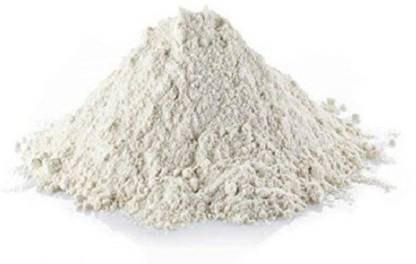
Chuna is a very familiar name also known as lime or calcium hydroxide.It is used for various purposes.But most importantly it is used to cure many health related issues.
Chuna that is used for eating is called edible chuna because it is the pure form of it. In ancient times people used to eat chuna by applying it on the beetle leaves because it has many benefits.
Benefits of Chuna
1.It is a good source of calcium
Calcium is very important for our body because it helps to strengthen our weak bones.Intake of calcium is necessary for each age group. But women above the age of 30 and old age group need more calcium for their body. So they have to take calcium supplements.Intake of chuna as calcium supplement can help to restore calcium in their body.
2.Helps to make teeth stronger
As chuna is a good source of calcium it helps to make our teeth stronger and prevents from early falling of teeth.
3. Increases height
One of the main problems of children is related with their height. Everyone want a good height.So if you want to increase your height take chuna regularly.
4. Periods
Women’s who do not have their periods regular or have very bad cramps during periods should take chuna regularly. Chuna helps to ease their problems.
5. Helps to boost memory
People who have problem in memorizing and tends to forget things easily,should intake chuna. It is also very helpful for people suffering with Alzheimer disease.
6. Helps to cure jaundice
If you are suffering from jaundice you should intake chuna by mixing it in water. It helps to cure jaundice.
7. Digestion
Intake of chuna increases the level of gastric juices which helps in proper digestion. Those who have the problem of constipation should intake chuna.
8. Eyesight
Regular intake of chuna mixed with water helps to improve eyesight. Those who wear spectacles should intake chuna.
9. Pregnancy
During pregnancy women body requires an lot of calcium to strengthen her and fetus bones.So intake of chuna helps to provide calcium during this period. Regular intake of chuna helps to reduce labor pain. Take grain size amount of chuna, mix it in the pomegranate juice and drink it daily. From this pregnant women gets both calcium and iron. It also helps to prevent miscarriage.
10. Inflammation of Joints
People have problem of inflammation of joints due to the deficiency of calcium and vitamin D. Inclusion of chuna in the diet helps to prevent such diseases due to regular supply of calcium.
11. Anemia
Anemia is a condition under which hemoglobin is less than the normal. Intake of chuna helps to increase hemoglobin.
12. Knee pain
Those who have the problem of knee pain should regular intake chuna to get relief from such pain.
13. Menopause
Women suffers with many problem when menopause starts. To have relief from such problem take chuna regularly.
Directions for use
Take grain size amount of chuna, mix it in the water and drink it daily. Do not take a large amount of chuna as it may result in bloating and gas.Those who have problem of kidney stones should not take chuna.
Availability of chuna
Edible chuna can be easily available at panwari shops and online stores.It has so many benefits but still its price is very low and anyone can afford it .
You probably know the meanings of the words’ workaholic’ and ‘alcoholic’.
What do you think a ‘foodaholic’ is? Walter Hudson was one.
How much do you weigh? Walter Hudson weighed more, much more. This is his obituary.
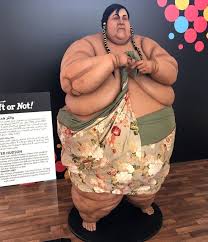
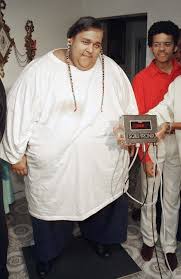
WALTER HUDSON, who has died at Hempstead, New York, age 46, was once listed in The Guinness Book of World Records as the heaviest man on earth. About 183 cm tall and 274 around, with cherubic features set off by pigtails braided in the Cherokee style, he long devoted himself to the pleasures of the table. Four years ago, Hudson-then tipping the industrial scales at his top weight of 543 kg gained worldwide notoriety (as “Whopping Walter”) when he became stuck in his bedroom door. He was wedged there for some four hours. It took eight firemen to free him.
Walter Hudson was born at Brooklyn in 1945 and, as he recalled, “began gorging at the age of six.” At 15 he was so obese his legs collapsed underneath him and he was confined to bed. Indeed, except for the time when his family moved to Hempstead in 1970 and he was transported by motor-car (his then 266kg broke the seat,) he remained inside. “I’m just a foodaholic,” he once confessed, “I have no excuse.”
Hudson’s eating habits were fuelled by food brought in by members of his family. He would generally start his day with a breakfast of two pounds of bacon, 32 sausages, a dozen eggs, a loaf of bread, jam and coffee.
For lunch, Hudson favoured four enormous bowls of rice, four double cheese- burgers, eight boxes of fried potatoes, six pies, and six large bottles of coca-cola. For dinner he would eat six roasted corns, half-a-dozen yams, and another six or seven baked potatoes, ending with a whole apple pie. Between these main meals, he would eat a chicken or two, followed by noodles, string beans, six large bottles of soda, not to mention colossal sandwiches, and copious amounts of ice-cream.
“All I cared about,” he recalled, “was food, FOOD!” When not eating and sleeping he would watch television, listen to tapes and read the Bible-he had a particular penchant for the psalms and was apt to recite Psalm 121. “I will lift up mine eyes unto the hills…”
Hudson, though, was advised against sitting up for longer than five minutes because of the risk of being smothered by flab. The only exercise he engaged in 8. was when he attended to his ablutions; it took him an hour to negotiate the six yards to the bathroom from his bedroom. Then in 1987, he found himself wedged in the door-way. “The day I got stuck in that door,” he recalled, “that when the Lord got me the help I needed.” The help to which he referred was offered by Dick Gregory, a comedian who masterminded the Slim Safe Diet Scheme.
“We think what might have happened,” said Gregory about his new client, “is that in 27 years of lying around he might, because of the reading of his Bible, have taken on the same characteristics as Buddhist monks – slowed down the biological processes. But we don’t know.” Gregory placed Hudson on a1,200 calorie-a-day diet of raw fruit and orange juice. For exercise he was advised to lie in bed waving his arms about like a conductor.
Hudson soon lost some four inches off his knees, and within three months had shed 178 kg. It began to look as if he might fulfil such ambitions as visiting his mother’s grave, riding on the New York subway, driving into the country-and even flying to a clinic in the Bahamas, from which he envisaged emerging as a sylph of 13 stones. 12. But it was not to be. At the time of his death, of an apparent heart attack, Hudson reportedly weighed 508 kg. Rescue workers had to cut a large hole in the wall of his bedroom to remove the body. He was unmarried.
SO HOW CAN OVERWEIGHT AND OBESITY BE REDUCED? It is not good for human body in this pandemic era……………….
Overweight and obesity, as well as their related noncommunicable diseases, are largely preventable. Supportive environments and communities are fundamental in shaping people’s choices, by making the choice of healthier foods and regular physical activity the easiest choice (the choice that is the most accessible, available and affordable), and therefore preventing overweight and obesity.At the individual level, people can:limit energy intake from total fats and sugars;increase consumption of fruit and vegetables, as well as legumes, whole grains and nuts; andengage in regular physical activity (60 minutes a day for children and 150 minutes spread through the week for adults).






















 Eduindex
You must be logged in to post a comment.