Arrival of Dutch in India

The Dutch are the people of Holland (now the Netherlands). The Dutch arrived in India shortly after the Portuguese. The Dutch have long been experts in sea trading. The Dutch government granted the United East India Company of the Netherlands license to trade in the East Indies, including India, in 1602. Dutch India was more of a geographical location than a political authority. In comparison to the Portuguese and the English, the Dutch had the shortest presence in India of all the European colonial powers.

Dutch history in India
The Dutch East India Company was founded in 1602 and signified the Dutch entrance in India. They arrived in Andhra Pradesh’s Masulipatam (now Machilipatnam). From 1605 to 1825, they occupied the Indian subcontinent. Given the growing demand for Indian spices from Asia in Europe, the Dutch arrived to India with the intention of trading. The establishment of the Dutch East India Company marked the beginning of the modern multinational company (MNC). Following a pact between the Zamorin of Calicut and the Dutch chief, Steven Van der Hagen, Dutch trading in India began on November 11, 1604. The goal was to force the Portuguese off the Malabar Coast, but this was never achieved. The Dutch, on the other hand, soon built commercial facilities in various parts of India and traded cotton, textiles, silk, Indigo, and Golconda diamonds. In 1661, the Dutch conquered the Portuguese and took control of all of Malabar. They had now mastered the pepper trade and made tremendous profits selling pepper, which was known in Europe as “Black Gold.” In the 17th century, nothing could stop the Dutch from capturing Pondicherry from the French in 1693. In the East Indies, the Dutch became a large producer of sugar and coffee, as well as a big exporter of spices and textiles. During their time in India, the Dutch tried their hand at currency manufacture as well. They established mints in Cochin, Masulipatam, Nagapatam Pondicherry, and Pulicat as their trade grew. Furthermore, the Pulicat mint issued a gold pagoda with an image of Lord Venkateswara (god Vishnu). The Dutch minted coins that were all based on local coinages.

The Decline of Dutch power The Dutch East India Company began to fade in the mid-eighteenth century. It was characterised by poor corporate practices, corruption, and political upheaval. Martanda Verma, the formidable monarch of Travancore, defeated the Dutch in 1741 and reclaimed control of Malabar. The fourth Anglo-Dutch war, in which the British navy sunk Dutch ships and seized trading ports, resulted to their bankruptcy in 1799. Finally, the Anglo-Dutch Treaty of 1825 ended the Dutch dominance in India by transferring all Dutch assets to the British.

Arrival of Dutch in India

The Dutch are the people of Holland (now the Netherlands). The Dutch arrived in India shortly after the Portuguese. The Dutch have long been experts in sea trading. The Dutch government granted the United East India Company of the Netherlands license to trade in the East Indies, including India, in 1602. Dutch India was more of a geographical location than a political authority. In comparison to the Portuguese and the English, the Dutch had the shortest presence in India of all the European colonial powers.

Dutch history in India
The Dutch East India Company was founded in 1602 and signified the Dutch entrance in India. They arrived in Andhra Pradesh’s Masulipatam (now Machilipatnam). From 1605 to 1825, they occupied the Indian subcontinent. Given the growing demand for Indian spices from Asia in Europe, the Dutch arrived to India with the intention of trading. The establishment of the Dutch East India Company marked the beginning of the modern multinational company (MNC). Following a pact between the Zamorin of Calicut and the Dutch chief, Steven Van der Hagen, Dutch trading in India began on November 11, 1604. The goal was to force the Portuguese off the Malabar Coast, but this was never achieved. The Dutch, on the other hand, soon built commercial facilities in various parts of India and traded cotton, textiles, silk, Indigo, and Golconda diamonds. In 1661, the Dutch conquered the Portuguese and took control of all of Malabar. They had now mastered the pepper trade and made tremendous profits selling pepper, which was known in Europe as “Black Gold.” In the 17th century, nothing could stop the Dutch from capturing Pondicherry from the French in 1693. In the East Indies, the Dutch became a large producer of sugar and coffee, as well as a big exporter of spices and textiles. During their time in India, the Dutch tried their hand at currency manufacture as well. They established mints in Cochin, Masulipatam, Nagapatam Pondicherry, and Pulicat as their trade grew. Furthermore, the Pulicat mint issued a gold pagoda with an image of Lord Venkateswara (god Vishnu). The Dutch minted coins that were all based on local coinages.

The Decline of Dutch power The Dutch East India Company began to fade in the mid-eighteenth century. It was characterised by poor corporate practices, corruption, and political upheaval. Martanda Verma, the formidable monarch of Travancore, defeated the Dutch in 1741 and reclaimed control of Malabar. The fourth Anglo-Dutch war, in which the British navy sunk Dutch ships and seized trading ports, resulted to their bankruptcy in 1799. Finally, the Anglo-Dutch Treaty of 1825 ended the Dutch dominance in India by transferring all Dutch assets to the British.

Arrival of Portuguese in India

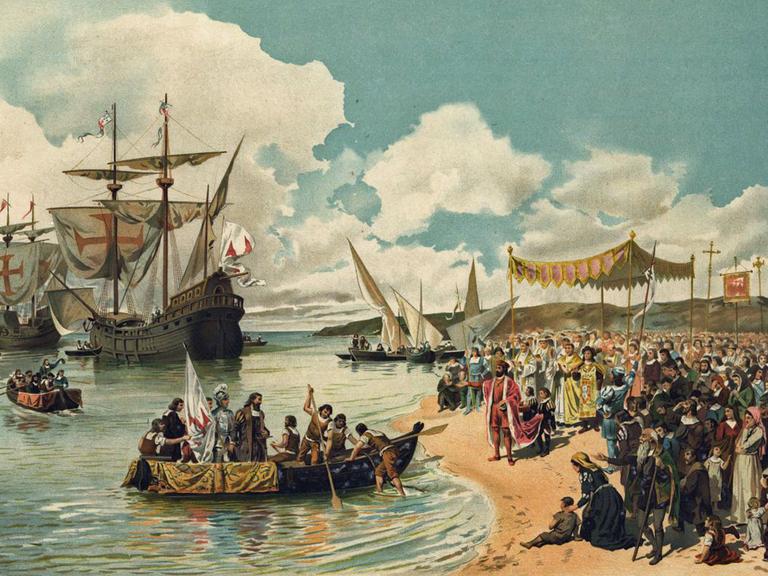
The Portuguese State of India was a Portuguese colonial state on the Indian Subcontinent. Vasco De Gama was the first Portuguese to set foot in India in 1498. However, Portuguese control in India is considered to have lasted from 1505 until 1961. Although Portuguese colonialism outlasted its English counterpart, it had little influence outside of its territories. The Portuguese were the first Europeans to arrive in India and the last to go.

Portugal’s Early Years in India
When Vasco da Gama arrived in Calicut on the Malabar Coast on May 20, 1498, Portuguese colonialism began in earnest. He met with the ruler of Calicut, the Zamorin, and received permission to trade in Calicut. But Vasco da Gama was unable to pay the customs duties and the cost of his merchandise. The Zamorin’s officials detained some of Vasco da Gama’s soldiers when the duties were not paid. This enraged him so much that he kidnapped some Indians and fisherman. However, the voyage was a success in the eyes of the Portuguese authorities in Lisbon. A sea path around the Ottoman Empire was discovered, and the expedition made a profit well in excess of its initial cost.

Expansion of Portuguese Colonialism
Vasco da Gama established a base of operations on the Malabar coast after further conflict with the Zamorin Kingdom. Francisco de Almeida, the first viceroy, placed his headquarters in what is now Cochin. Alfonso de Albuquerque, the second governer of the Portuguese territories in the East, was appointed in 1509. Off the coast of Calicut, a Portuguese fleet led by Marshal Fernão Coutinho arrives. Their orders were quite clear: destroy the Zamorin. The city was levelled and the palace of the Zamorins was taken, but the local soldiers rallied and attacked the invading Portuguese, forcing them to retreat and wounded Albuquerque. In 1510, Afonso de Albuquerque defeated the Sultanate of Bijapur, establishing Goa as a permanent settlement. It would later become the viceroy’s seat and the headquarters of the Portuguese colonial conquests in India. Modern-day Mumbai was likewise a colonial possession until 1661, when it was handed over to the British. From 1799 until 1813, the British conquered Goa for a brief while, eradicating the final vestiges of the inquisition. The capital was moved to Panjim, which was later renamed Nova Goa, in 1843, when it became the administrative center of Portuguese India. For the next century, Portuguese control would be limited to Goa and the enclaves of Diu and Daman.

Cause of Decline of Portugal in India
While the British granted independence to most of India, the Portuguese retained colonial colonies in India. Local anti-Portuguese demonstrations in Goa were violently suppressed. Despite repeated pleas from the Indian government, the Portuguese government, led by dictator António de Oliveira Salaza, refused to hand over its colonial holdings, saying that they were an intrinsic part of Portuguese territory. The invasion of Goa by the Indian troops took place in December 1961. The Portuguese attempted to resist against overwhelming odds, but were quickly crushed by the Indian Army. On December 19, 1961, the Governor of Portuguese India signed the Instrument of Surrender, freeing Goa after 450 years of Portuguese domination in India.

Arrival of Portuguese in India

The Portuguese State of India was a Portuguese colonial state on the Indian Subcontinent. Vasco De Gama was the first Portuguese to set foot in India in 1498. However, Portuguese control in India is considered to have lasted from 1505 until 1961. Although Portuguese colonialism outlasted its English counterpart, it had little influence outside of its territories. The Portuguese were the first Europeans to arrive in India and the last to go.

Portugal’s Early Years in India
When Vasco da Gama arrived in Calicut on the Malabar Coast on May 20, 1498, Portuguese colonialism began in earnest. He met with the ruler of Calicut, the Zamorin, and received permission to trade in Calicut. But Vasco da Gama was unable to pay the customs duties and the cost of his merchandise. The Zamorin’s officials detained some of Vasco da Gama’s soldiers when the duties were not paid. This enraged him so much that he kidnapped some Indians and fisherman. However, the voyage was a success in the eyes of the Portuguese authorities in Lisbon. A sea path around the Ottoman Empire was discovered, and the expedition made a profit well in excess of its initial cost.

Expansion of Portuguese Colonialism
Vasco da Gama established a base of operations on the Malabar coast after further conflict with the Zamorin Kingdom. Francisco de Almeida, the first viceroy, placed his headquarters in what is now Cochin. Alfonso de Albuquerque, the second governer of the Portuguese territories in the East, was appointed in 1509. Off the coast of Calicut, a Portuguese fleet led by Marshal Fernão Coutinho arrives. Their orders were quite clear: destroy the Zamorin. The city was levelled and the palace of the Zamorins was taken, but the local soldiers rallied and attacked the invading Portuguese, forcing them to retreat and wounded Albuquerque. In 1510, Afonso de Albuquerque defeated the Sultanate of Bijapur, establishing Goa as a permanent settlement. It would later become the viceroy’s seat and the headquarters of the Portuguese colonial conquests in India. Modern-day Mumbai was likewise a colonial possession until 1661, when it was handed over to the British. From 1799 until 1813, the British conquered Goa for a brief while, eradicating the final vestiges of the inquisition. The capital was moved to Panjim, which was later renamed Nova Goa, in 1843, when it became the administrative center of Portuguese India. For the next century, Portuguese control would be limited to Goa and the enclaves of Diu and Daman.

Cause of Decline of Portugal in India
While the British granted independence to most of India, the Portuguese retained colonial colonies in India. Local anti-Portuguese demonstrations in Goa were violently suppressed. Despite repeated pleas from the Indian government, the Portuguese government, led by dictator António de Oliveira Salaza, refused to hand over its colonial holdings, saying that they were an intrinsic part of Portuguese territory. The invasion of Goa by the Indian troops took place in December 1961. The Portuguese attempted to resist against overwhelming odds, but were quickly crushed by the Indian Army. On December 19, 1961, the Governor of Portuguese India signed the Instrument of Surrender, freeing Goa after 450 years of Portuguese domination in India.

Forgotten Inventions by Indian sages

Many modern-day scientists see themselves as the first to create all the technological advancements we use today. Yet many of the so-called discoveries are nothing more than re-inventions created by examining the knowledge of the ancients. Many things related to science and invention have their origins in the thoughts and imagination of the sages of Ancient India. Indian culture has evolved over the ages by India’s ancient Rishis, who at the banks of its holy rivers had ‘discovered’ the Vedic literature – the very foundation of Indian civilization. The term ‘Rishi’ originally denoted the composers and singers of Vedic hymns. However, the Rishi is also a ‘sage’ to whom the Gods revealed the Vedas (knowledge of the eternal truths about the Creator, His creation and means to preserve it).Some lost works of science by Indian sages are-

Acharya Sushruta – Father of Surgery

Acharya Sushruta was a great Indian Physician and was known to be as the Father of Surgery or Father of Plastic Surgery. The Sushruta Samhita is one of the most important survived ancient texts on medicine and it is considered a foundational text of Ayurveda. He was the world’s first surgeon who performed complicated surgeries 2600 years ago.The Sushruta Samhita has 184 chapters containing descriptions of 1,120 illnesses, 700 medicinal plants, 64 preparations from mineral sources and 57 preparation based on animal sources. It describes thoroughly the surgical techniques of making incisions, extractions of foreign body or particles, how to probe, excisions, tooth extraction, how to remove prostate gland, dilation of Urethral stricture, vesicolithotomy, hernia surgery, how to do C-section (Caesarian for baby delivery), laparotomy, management of intestinal obstruction, perforated intestines and accidental perforation of the abdomen with protrusion of omentum and the principle of fracture management. He also classified the eye diseases including cataract surgery.It is interesting to note that when surgery was not even heard and performed by the other parts of the world, here Sushruta was performing Rhinoplasty and many other challenging operations.

Panini – Father of Linguistics

Panini was an ancient Sanskrit philologist, grammarian and a received scholar in ancient India. He is considered as First Descriptive Linguist and is known as the Father of Linguistics. He is well known for his text Astadhyayi, a Sutra on Sanskrit grammar. He analyzed the noun compounds which is still been followed in the theories of the Indian language. Panini’s comprehensive and scientific theory on grammar is conventionally taken to mark the start of Classical Sanskrit.The Astadhyayi is the oldest linguistic and grammar text of any language and of Sanskrit surviving in its entity. His rules have a reputation for perfection – he described the Sanskrit morphology completely. Panini made use of technical metalanguage consisting of syntax, morphology and Lexicon. This metalanguage is organized according to a series of Meta – rules, some of which are explicitly stated while others can be deduced.The Astadhyayi consists of 3,959 sutras in eight chapters. This text attracted many of the ancient authors to upgrade their text in terms of Language.

Acharya Nagarjuna – Master of Chemical Science

Nagarjuna was a great Indian metallurgist and alchemistHe did his research for around 12 years in the field of chemistry and metallurgy. Textual masterpieces like “Ras Ratnakar”, “Rashrudaya” and “Rasebdramangal” are his renowned contributions to the science of chemistry. He also discovered the alchemy of transmuting base metals into gold. He did his experiments especially on mercury. He distinguished between the metals and the sub metals and also between solvents and soluble. He stated that Mercury could dissolve all metals. He also invented the processes of “Distillation” and “Calcinations”. He was the first person in the planet to use a Mercury as medicine. He found five types of mercury: red and grey were good; yellow, white or multi colored had so much of bad qualities and this should use as a medicine after several treatments.Alchemist or today what we called as Chemist was the Gifts for Nagarjuna. He made several discoveries which was the path to the other discovers to lead in this field.

Baudhayana – Discovered Pythagoras Theorem

Baudhayana was a great Mathematician, who was also called a priest. He is the author of the Sulba Sutra which contained several important mathematical results. He discovered the several concepts in mathematics which was later rediscovered by the other scientist in the western world. The value of the pie was discovered by him. Today all know how to use the pie and where to use (calculating the area and the circumference of a circle). He also discovered Pythagoras Theorem in Sulba Sutra. He provided how to find a circle whose area is the same as that of a square. The other theorems includes the diagonals of rectangle bisect with each other, diagonals of rhombus bisect at right angles, area of square formed by joining the mid points of a square is half of original.The mathematics given in the Sulba Sutras is there to enable the accurate construction of altars needed for sacrifices. It is clear from the writing that Baudhayana must have been a skilled craftsman. He was a great Practitioner.

Acharya Aryabhata – Motions of the Solar System

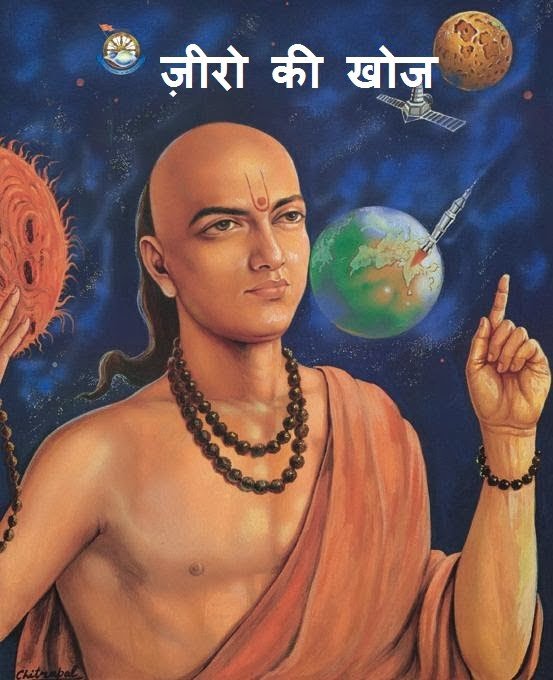
Acharya Aryabhata was the first mathematician astronomer from the classical age of Indian mathematics and Indian astronomy and is not an unknown name. His major work on Aryabhatiya was very successful. It is extensively referred in the Indian mathematical literature and has been survived to modern times.

Acharya Aryabhata correctly stated that the earth rotates about its axis dailyr. He also stated that the motion of the stars are being observed just because the earth is rotating. He was also succeeded in explaining the geocentric model of the Solar System. The positions and periods of the planet was calculated relative to uniformly moving points. He stated that the Mercury and Venus move around the earth at the same speed as of the sun. He was also succeeded in explaining eclipses in terms of shadows cast by and falling on earth. He also mentioned Units of Time or the Sidereal rotation that earth takes 23 hours, 56 minutes and 4.1 second to complete one revolution and the sidereal year has 365 days, 6 hours, 12 minutes and 30 seconds which in turn adds an extra one day every after four years which is called a leap year.Calendric calculation which was devised by him is still being used in India for Practical purposes for fixing the Hindu calendar. India’s first satellite Aryabhata and the lunar crater Aryabhata are both named in his honor.

Maharishi Bharadwaj –Invention of the First Airplane of Earth

In 1875, the Vymaanika Shaastra, a 4th Century BC text written by Sage Bharadwaj was discovered in a temple in India. The book greatly deals with the operation of ancient vimanas and included information on steering, precautions for long flights, protection of the airships from storms and lightning and how to switch the drive of solar energy or some other form of energy.

One of the chapter will reveal the secrets of constructing aeroplanes that cannot be broken or cut, that is indestructible, that is fire resistant. It also deals with the secret of making planes motionless and invisible. It also describes how to defeat the enemy planes etc. as per the Sage Bharadwaj the vimanas were classifies as per the Yugas. During the period of Krita Yuga, Dharma was establishes firmly. The pushpak Vimana which was used by Ravan was an Aerial vehicle. He used this vehicle to kidnap Sita from jungle and took him to his Kingdom Srilanka. Ramayana was during the Treta Yug in which the Vimanas were highly discovered. During this period “Laghima” gave them the power to lighten their vehicle do they can travel freely in the air.In present Kaliyuga both Mantra and Tantra Shakti are almost vanished from the earth and so the ability to control vehicle has also been gone. Today the artificial vehicles are built which is called as Kritaka Vimanas.

https://pravase.co.in/gyan-detail/86/indian-sages-scientist-invention-in-science-medicine

Forgotten Inventions by Indian sages

Many modern-day scientists see themselves as the first to create all the technological advancements we use today. Yet many of the so-called discoveries are nothing more than re-inventions created by examining the knowledge of the ancients. Many things related to science and invention have their origins in the thoughts and imagination of the sages of Ancient India. Indian culture has evolved over the ages by India’s ancient Rishis, who at the banks of its holy rivers had ‘discovered’ the Vedic literature – the very foundation of Indian civilization. The term ‘Rishi’ originally denoted the composers and singers of Vedic hymns. However, the Rishi is also a ‘sage’ to whom the Gods revealed the Vedas (knowledge of the eternal truths about the Creator, His creation and means to preserve it).Some lost works of science by Indian sages are-

Acharya Sushruta – Father of Surgery

Acharya Sushruta was a great Indian Physician and was known to be as the Father of Surgery or Father of Plastic Surgery. The Sushruta Samhita is one of the most important survived ancient texts on medicine and it is considered a foundational text of Ayurveda. He was the world’s first surgeon who performed complicated surgeries 2600 years ago.The Sushruta Samhita has 184 chapters containing descriptions of 1,120 illnesses, 700 medicinal plants, 64 preparations from mineral sources and 57 preparation based on animal sources. It describes thoroughly the surgical techniques of making incisions, extractions of foreign body or particles, how to probe, excisions, tooth extraction, how to remove prostate gland, dilation of Urethral stricture, vesicolithotomy, hernia surgery, how to do C-section (Caesarian for baby delivery), laparotomy, management of intestinal obstruction, perforated intestines and accidental perforation of the abdomen with protrusion of omentum and the principle of fracture management. He also classified the eye diseases including cataract surgery.It is interesting to note that when surgery was not even heard and performed by the other parts of the world, here Sushruta was performing Rhinoplasty and many other challenging operations.

Panini – Father of Linguistics

Panini was an ancient Sanskrit philologist, grammarian and a received scholar in ancient India. He is considered as First Descriptive Linguist and is known as the Father of Linguistics. He is well known for his text Astadhyayi, a Sutra on Sanskrit grammar. He analyzed the noun compounds which is still been followed in the theories of the Indian language. Panini’s comprehensive and scientific theory on grammar is conventionally taken to mark the start of Classical Sanskrit.The Astadhyayi is the oldest linguistic and grammar text of any language and of Sanskrit surviving in its entity. His rules have a reputation for perfection – he described the Sanskrit morphology completely. Panini made use of technical metalanguage consisting of syntax, morphology and Lexicon. This metalanguage is organized according to a series of Meta – rules, some of which are explicitly stated while others can be deduced.The Astadhyayi consists of 3,959 sutras in eight chapters. This text attracted many of the ancient authors to upgrade their text in terms of Language.

Acharya Nagarjuna – Master of Chemical Science

Nagarjuna was a great Indian metallurgist and alchemistHe did his research for around 12 years in the field of chemistry and metallurgy. Textual masterpieces like “Ras Ratnakar”, “Rashrudaya” and “Rasebdramangal” are his renowned contributions to the science of chemistry. He also discovered the alchemy of transmuting base metals into gold. He did his experiments especially on mercury. He distinguished between the metals and the sub metals and also between solvents and soluble. He stated that Mercury could dissolve all metals. He also invented the processes of “Distillation” and “Calcinations”. He was the first person in the planet to use a Mercury as medicine. He found five types of mercury: red and grey were good; yellow, white or multi colored had so much of bad qualities and this should use as a medicine after several treatments.Alchemist or today what we called as Chemist was the Gifts for Nagarjuna. He made several discoveries which was the path to the other discovers to lead in this field.

Baudhayana – Discovered Pythagoras Theorem

Baudhayana was a great Mathematician, who was also called a priest. He is the author of the Sulba Sutra which contained several important mathematical results. He discovered the several concepts in mathematics which was later rediscovered by the other scientist in the western world. The value of the pie was discovered by him. Today all know how to use the pie and where to use (calculating the area and the circumference of a circle). He also discovered Pythagoras Theorem in Sulba Sutra. He provided how to find a circle whose area is the same as that of a square. The other theorems includes the diagonals of rectangle bisect with each other, diagonals of rhombus bisect at right angles, area of square formed by joining the mid points of a square is half of original.The mathematics given in the Sulba Sutras is there to enable the accurate construction of altars needed for sacrifices. It is clear from the writing that Baudhayana must have been a skilled craftsman. He was a great Practitioner.

Acharya Aryabhata – Motions of the Solar System

Acharya Aryabhata was the first mathematician astronomer from the classical age of Indian mathematics and Indian astronomy and is not an unknown name. His major work on Aryabhatiya was very successful. It is extensively referred in the Indian mathematical literature and has been survived to modern times.

Acharya Aryabhata correctly stated that the earth rotates about its axis dailyr. He also stated that the motion of the stars are being observed just because the earth is rotating. He was also succeeded in explaining the geocentric model of the Solar System. The positions and periods of the planet was calculated relative to uniformly moving points. He stated that the Mercury and Venus move around the earth at the same speed as of the sun. He was also succeeded in explaining eclipses in terms of shadows cast by and falling on earth. He also mentioned Units of Time or the Sidereal rotation that earth takes 23 hours, 56 minutes and 4.1 second to complete one revolution and the sidereal year has 365 days, 6 hours, 12 minutes and 30 seconds which in turn adds an extra one day every after four years which is called a leap year.Calendric calculation which was devised by him is still being used in India for Practical purposes for fixing the Hindu calendar. India’s first satellite Aryabhata and the lunar crater Aryabhata are both named in his honor.

Maharishi Bharadwaj –Invention of the First Airplane of Earth

In 1875, the Vymaanika Shaastra, a 4th Century BC text written by Sage Bharadwaj was discovered in a temple in India. The book greatly deals with the operation of ancient vimanas and included information on steering, precautions for long flights, protection of the airships from storms and lightning and how to switch the drive of solar energy or some other form of energy.

One of the chapter will reveal the secrets of constructing aeroplanes that cannot be broken or cut, that is indestructible, that is fire resistant. It also deals with the secret of making planes motionless and invisible. It also describes how to defeat the enemy planes etc. as per the Sage Bharadwaj the vimanas were classifies as per the Yugas. During the period of Krita Yuga, Dharma was establishes firmly. The pushpak Vimana which was used by Ravan was an Aerial vehicle. He used this vehicle to kidnap Sita from jungle and took him to his Kingdom Srilanka. Ramayana was during the Treta Yug in which the Vimanas were highly discovered. During this period “Laghima” gave them the power to lighten their vehicle do they can travel freely in the air.In present Kaliyuga both Mantra and Tantra Shakti are almost vanished from the earth and so the ability to control vehicle has also been gone. Today the artificial vehicles are built which is called as Kritaka Vimanas.

https://pravase.co.in/gyan-detail/86/indian-sages-scientist-invention-in-science-medicine

India’s Freedom struggle and Different school of thoughts

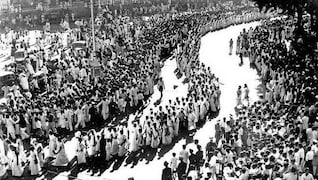
Quit India Movement: How August Movement became a watershed moment in India's  freedom struggle-India News , Firstpost

As commoners say every action can be viewed from more then one perspective. Similarly, India’s struggle for independence was interpreted in different ways by many historians who lived during that period. For some it was a worthless act by jobless people whereas for others it was their prime motive of life. Many viewed British rule over India as a means for civilising the uncivilised, poor people in India and for some others British rule was the symbol of exploitation.

In this seventy fifth year of independence, we could Look back to these thoughts and could identify the reality from the facts available before us. Let us look into some of these school of thoughts:

  1. Colonial Approach is influenced by the colonial ideology of domination. It focuses on criticism of indigenous society and culture, and praises the Western culture and values. James Mill, Vincent Smith etc., followed this approach.
  • Nationalist Approach evolved as a response to and in confrontation with the colonial approach. Before independence, this school dealt with the ancient and medieval periods of Indian history, and not the modern period. After independence this school focused on modern India. R.C. Majumdar and Tara Chand belonged to this school.
  • Marxist Approach focuses on the primary contradiction between the interests of the colonial masters and the native subjects. It also takes notice of the inner contradictions between the different sections of Indian society. R.P. Dutt and A.R. Desai were noted Marxist historians of India.
  • Subaltern Approach takes the position that the entire tradition of Indian historiography has an elitist bias and the role of the common masses has been neglected. Ranajit Guha belonged to this school.
  • Communalist Approach views Hindus and Muslims as permanently hostile groups whose interests are mutually different and antagonistic to each other.
  • Cambridge School envisages Indian nationalism as a product of conflicts among the Indians themselves for getting the benefits from the British rulers. For them Indian nationalist leaders were inspired by the greed of power and material benefits.
  • Liberal and Neo-liberal Interpretations imply that the economic exploitation of the colonies was not beneficial to the people of Britain as it delayed the development of the ‘new’ industries in Britain.
  • Feminist Historiography focuses on areas of research that analyse colonial structures, such as the legal structure, which affected women’s lives. It also focuses on women’s vulnerability due to the denial of ownership of productive resources.

When we closely examine these thoughts, we could find some of these extremely different from reality. It also symbolizes different ideologies that prevailed during the period. Even if bring it to discussion today, people may find it difficult to reach to an opinion accepted by all the people. It is because even today many stands with colonial thinkers and many are with nationalists.

Even though it is the case when we closely examine the historical text from ancient and medieval ages India was a civilised nation with rich historical background rooted in Indus valley civilisation and such golden ages. The present position of India as the torch bearer of world democracy also makes it clear that India never required an external intervention to be civilised. The people of India were capable of building a strong nation then, now and in future.

So, we could conclude that most of the thinkers who tried to give a communalist, colonial or any such face to this great struggle were mistaken. It was India’s struggle to reach its uncontrollable destiny and on fifteenth of august in 1947, it made its tryst with destiny.

India’s Freedom struggle and Different school of thoughts

Quit India Movement: How August Movement became a watershed moment in India's  freedom struggle-India News , Firstpost

As commoners say every action can be viewed from more then one perspective. Similarly, India’s struggle for independence was interpreted in different ways by many historians who lived during that period. For some it was a worthless act by jobless people whereas for others it was their prime motive of life. Many viewed British rule over India as a means for civilising the uncivilised, poor people in India and for some others British rule was the symbol of exploitation.

In this seventy fifth year of independence, we could Look back to these thoughts and could identify the reality from the facts available before us. Let us look into some of these school of thoughts:

  1. Colonial Approach is influenced by the colonial ideology of domination. It focuses on criticism of indigenous society and culture, and praises the Western culture and values. James Mill, Vincent Smith etc., followed this approach.
  • Nationalist Approach evolved as a response to and in confrontation with the colonial approach. Before independence, this school dealt with the ancient and medieval periods of Indian history, and not the modern period. After independence this school focused on modern India. R.C. Majumdar and Tara Chand belonged to this school.
  • Marxist Approach focuses on the primary contradiction between the interests of the colonial masters and the native subjects. It also takes notice of the inner contradictions between the different sections of Indian society. R.P. Dutt and A.R. Desai were noted Marxist historians of India.
  • Subaltern Approach takes the position that the entire tradition of Indian historiography has an elitist bias and the role of the common masses has been neglected. Ranajit Guha belonged to this school.
  • Communalist Approach views Hindus and Muslims as permanently hostile groups whose interests are mutually different and antagonistic to each other.
  • Cambridge School envisages Indian nationalism as a product of conflicts among the Indians themselves for getting the benefits from the British rulers. For them Indian nationalist leaders were inspired by the greed of power and material benefits.
  • Liberal and Neo-liberal Interpretations imply that the economic exploitation of the colonies was not beneficial to the people of Britain as it delayed the development of the ‘new’ industries in Britain.
  • Feminist Historiography focuses on areas of research that analyse colonial structures, such as the legal structure, which affected women’s lives. It also focuses on women’s vulnerability due to the denial of ownership of productive resources.

When we closely examine these thoughts, we could find some of these extremely different from reality. It also symbolizes different ideologies that prevailed during the period. Even if bring it to discussion today, people may find it difficult to reach to an opinion accepted by all the people. It is because even today many stands with colonial thinkers and many are with nationalists.

Even though it is the case when we closely examine the historical text from ancient and medieval ages India was a civilised nation with rich historical background rooted in Indus valley civilisation and such golden ages. The present position of India as the torch bearer of world democracy also makes it clear that India never required an external intervention to be civilised. The people of India were capable of building a strong nation then, now and in future.

So, we could conclude that most of the thinkers who tried to give a communalist, colonial or any such face to this great struggle were mistaken. It was India’s struggle to reach its uncontrollable destiny and on fifteenth of august in 1947, it made its tryst with destiny.

Howrah Bridge: The Living Heritage of Kolkata

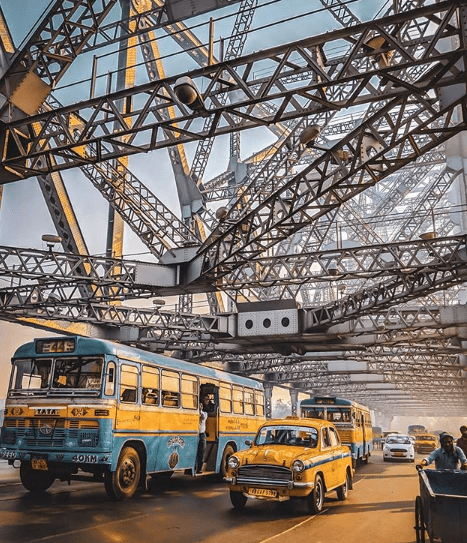
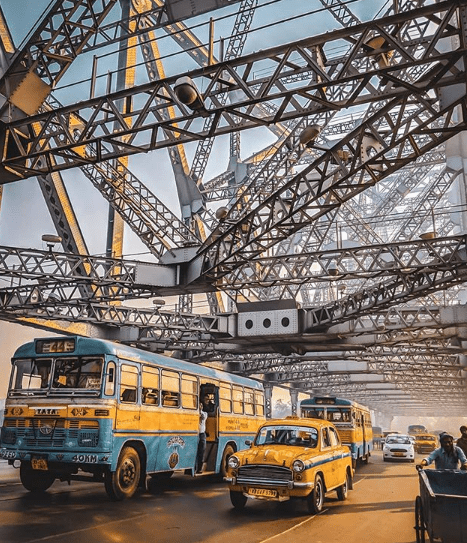
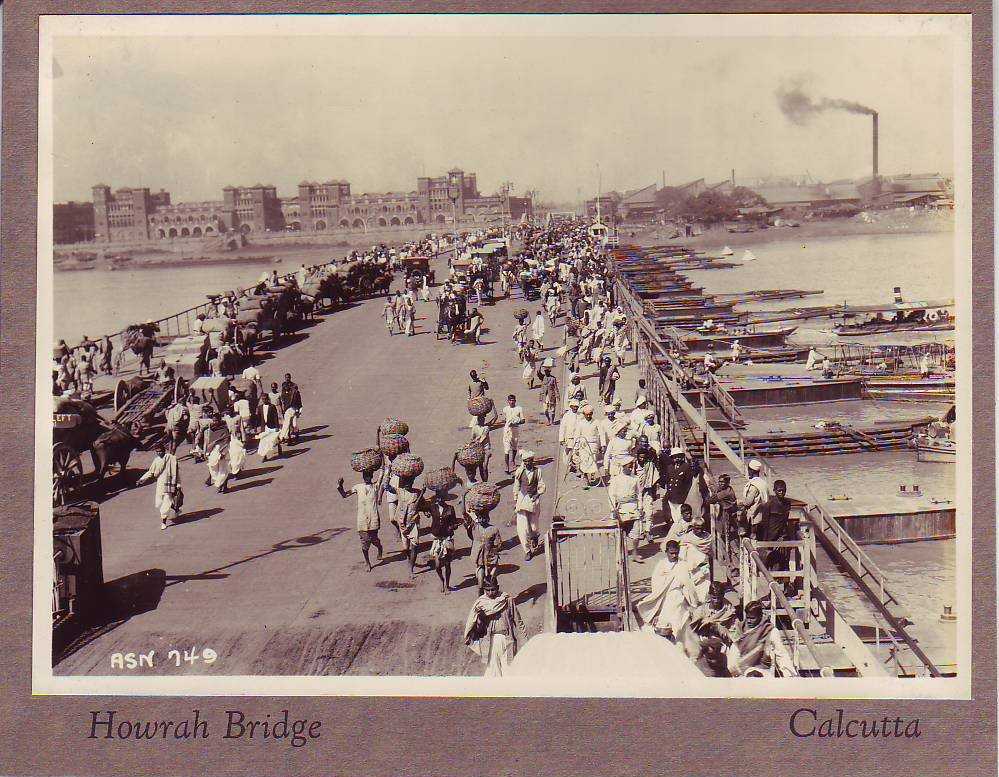
An everyday view of Howrah Bridge

Introduction

Howrah Bridge is an architectural marvel and a well-known Kolkata landmark. It has served as a backdrop for numerous movies since the 1950s, including a 1958 film named after the bridge. One can walk across the bridge and admire its unique construction or glide underneath while on a boat ride along the Hooghly River. With a central span of 1,500 feet (457 meters) between its two towers, this enormous steel structure is one of the longest cantilever bridges of its type in the world. Howrah Bridge extends across the Hooghly River, connecting the city of Howrah to Kolkata.

Historic Background

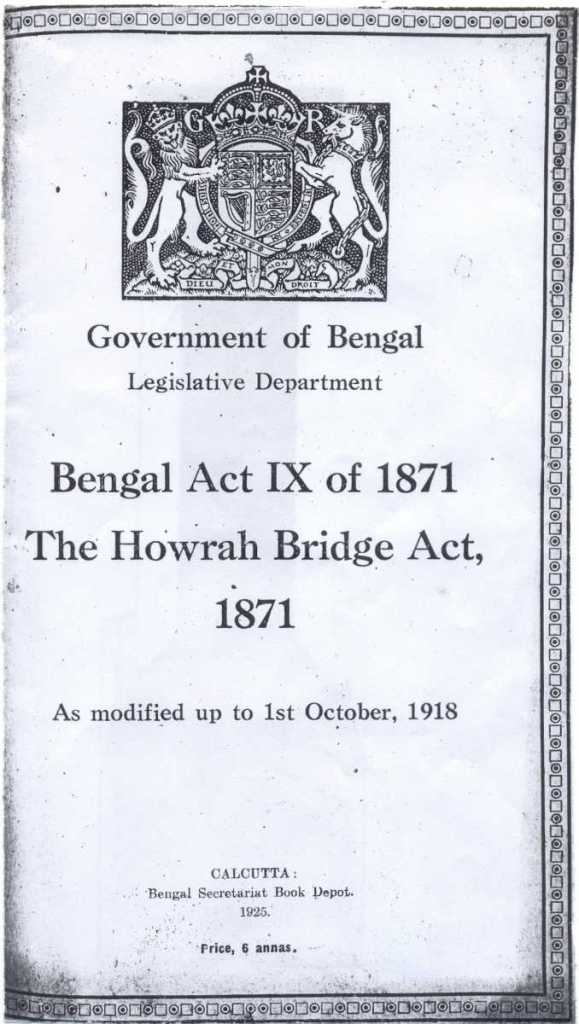
The construction of the Howrah Bridge  was first proposed in 1862. The Government of Bengal wanted to build a bridge over the Hooghly River. They asked the Chief Engineer of the East India Railway Company to study the feasibility of the idea and come up with a proposal. But for several reasons, his proposal never materialised.

Later in the 1800s, a pontoon bridge or floating bridge was built between Howrah and Kolkata. But it wasn’t strong enough to handle the huge traffic between the two cities or to weather the frequent storms in the area. So the Bengal government continued to look for alternatives and, several decades later, the new bridge was finally commissioned. The contract to build it was awarded to a company called The Braithwaite Burn and Jessop Construction Company.The design of the Howrah bridge was made by Rendel, Palmer and Tritton and the bridge was constructed by Cleveland Bridge & Engineering Company. The construction of bridge was started on 1936 and ended in 1942. It was opened for the public transport on 3 Feb 1943. It was renamed as Rabindra Setu in June 1965 after the first Indian Nobel laureate Rabindranath Tagore.

The Act for the construction of Howrah Bridge

Key Structure of The Bridge

The Howrah Bridge is a suspension-type balanced Cantilever Bridge. It has a central span of 1500ft between the main towers. The anchor and cantilever arms are 325ft and 468ft long, respectively.The suspended span has a length of 564ft. The main towers are 280ft-high above the monoliths and 76ft apart at the top. The bridge deck measures 71ft in width and features two footpaths of 15ft on either side.The super-structure is built up with riveted sections made of a combination of high tensile and mild steel. The bridge deck descends from panel points placed in the middle of the towers, which are located in the lower chord of the main trusses through hungers.The bridge deck consists of a 71ft carriageway and a 15ft pathway projected on both sides of the trusses and supported by a fascia girder.The carriageway outside the tower is backed on the ground by an anchor arm. The deck system includes cross girders suspended between pairs of hungers by a pinned connection. Six rows of longitudinal stringer girders are arranged between cross girders and floor beams support transversally on top of the stringers.These joints support a continuous pressed steel troughing system surfaced with concrete. Two main expansion joints are placed at the interfaces in the middle of the suspended span and the cantilever arms.Eight articulation joints exist at the cantilever arms and suspended portions and separate the bridge into segments by a vertical pin connection to allow the deck’s rotational movements. The bridge deck features a longitudinal ruling gradient at each end.The main tower is based on single monoliths with 21 chambers. The minimum vertical clearance for the carriageway is 5.8m and 8.8m for the river traffic.

The early days of Howrah Bridge

Specialities of The Bridge: What Made It A Heritage

Constructed without nuts and bolts, the Howrah Bridge was formed by riveting the entire steel structure. The bridge officially opened in 1943 when it was the world’s third longest cantilever bridge. Today, it is the sixth longest bridge of its type in the world. The Howrah Bridge is also thought to be the world’s busiest cantilever bridge.

In 1946, in a census carried out, it said that the bridge saw a daily traffic of 27400 vehicles and 12100 pedestrians. In fact ages ago the bridge had also carried trams that left from Howrah station terminus. However, it seemed like the bridge could not take the weight of the heavy weight and hence running trams on the bridge was discontinued. Currently, the bridge can bear the weight of 60,000 vehicles only but it still carried almost 90000 vehicles daily. The bridge also has a separate foot path for pedestrians to walk.While the bridge remains one of the key attractions in the city, the Howrah Railway Station at its Howrah end is another site of much historical significance as the country’s oldest railway station. At the Kolkata end, the bridge ends right by the stunning and colourful Mallick Ghat flower market, one of the city’s most vibrant markets.

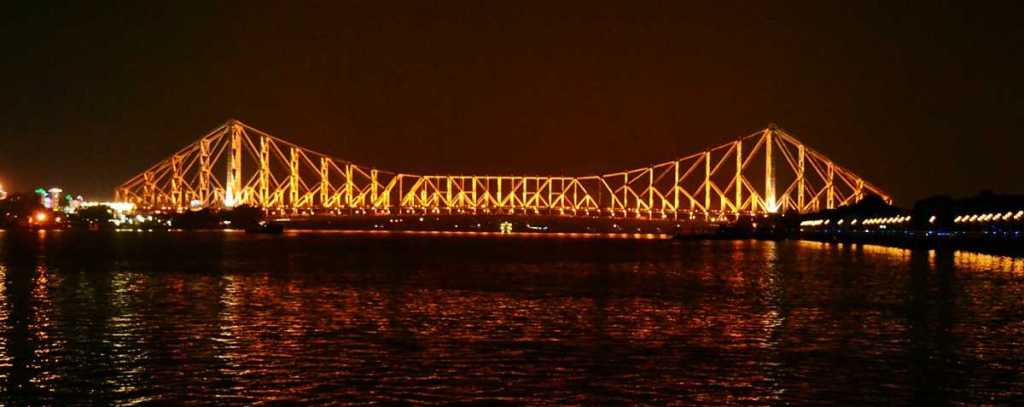
Night View of Howrah Bridge

Cultural Significance of The Bridge

Since the beginning of its journey, the bridge has been featured in numerous Bengali Hindi even International films, such as Do Bigha Zamin (1953), Bari Theke Paliye(1958), Parash Pathar(1958), Howrah Bridge(1958), Neel Akasher Neechey (1959), China Town(1962 ) and Amar Prem  (1971), Teen Devian(1965), Calcutta 71 1972), Padatik (1973), Richard Attenborough’s 1982 Academy Award winning film Gandhi, Paar(1984), Ram Teri Ganga Maili (1985) , Nicolas Klotz’s The Bengali Night(1988), Rolland Joffé’s  City of Joy  (1992), Florian Gallenberger’s  Shadows of Time (2004), Yuva(2004),  Parineeta (2005) and the list goes on.

Recent Renovations of The Bridge

The articulation joints at deck level were renovated in 2008, and the bridge was illuminated in colours of gold and magenta in November 2006.Bridge operator Kolkata Port Trust (KPT) invested Rs35M in the project for laying 13km of cable, 700 lights, a new control tower and a sub-station. Around Rs27.3m was spent on the maintenance of the bridge in 2005.The pylons, the steel-lattice inner structure, the under-deck and the pathway were fixed with white and the upper structure with blue LEDs. Painted in June 2005, the bridge required more than 26,500l of aluminium paint to cover 23,500t of steel, occupying a surface area of 2.2mm².Prime Minister Shri Narendra Modi launched the interactive light and sound show of the bridge in January 2020. The new Rabindra Setu decorative lighting features 650 power-efficient LEDs and spotlight fittings for programmable multi-colour lighting, including a music-syncing show.

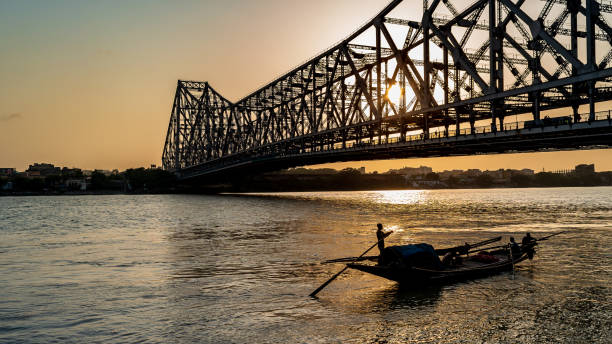
Silhouette of Howrah Bridge at the time of Sunrise. Howrah Bridge is a bridge with a suspended span over the Hooghly River in West Bengal.

Conclusion

The surprising fact about this bridge is that, despite being such a heritage, it has suffered a lot of damage. And the damage is not only because of trams plying heavy load, but it is also because of human spit and bird excreta.The corrosion on the bridge is because of prolonged chemical reaction that has occurred because of continuous bird droppings. Calcutta Port Trust is currently in charge for the maintenance of the bridge. Along with the authority, the citizens should also be responsible for protecting the living heritage of our country.

Dhakai Muslin: The Exclusive Bengal Silk from The Past

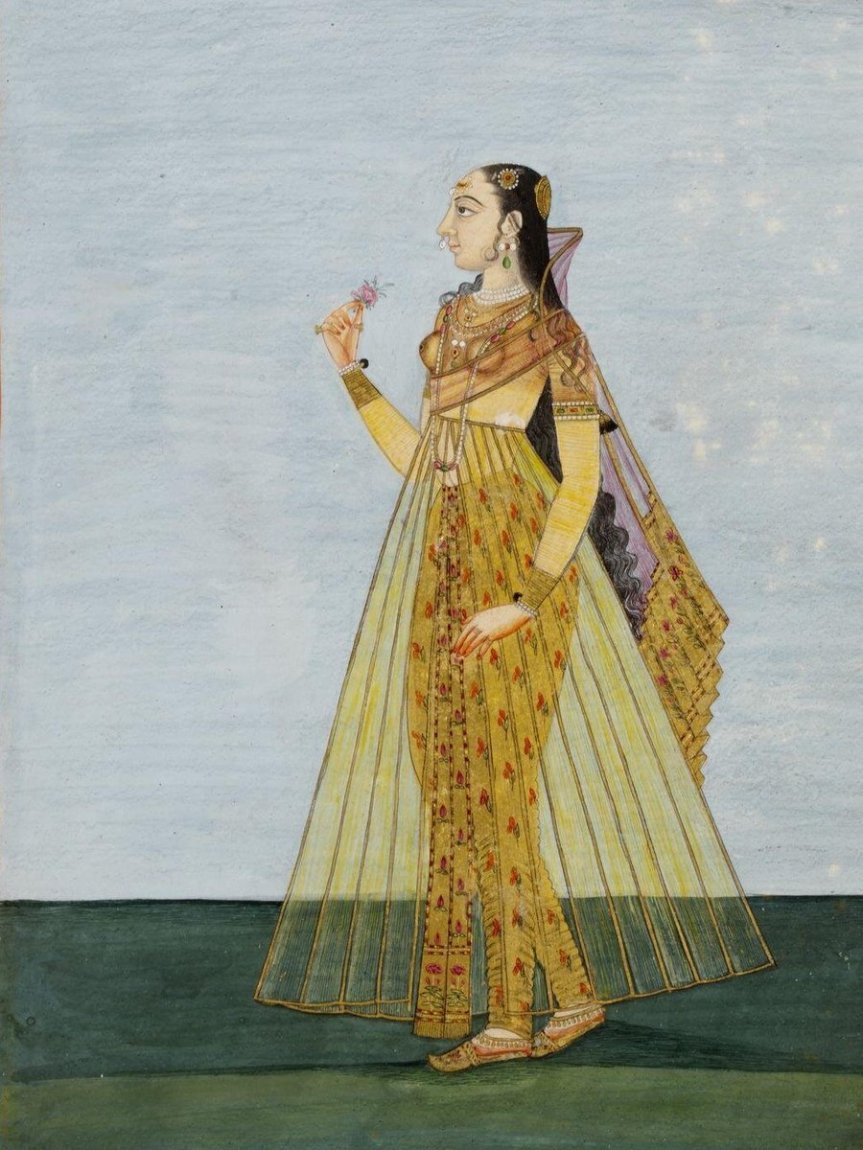
A portrait illustrating how Transparent Muslins were

Introduction

Muslin today has come to mean almost any lightweight, gauzy, mostly inexpensive, machine-milled cotton cloth. The word has lost all connection to the handwoven fabric that once came exclusively from Bengal. Cotton, stated the historian Fernand Braudel, was first used by the ancient civilizations on the Indus, while the art of weaving itself has been traced back to much earlier times. This head start perhaps was why ancient India became proficient in making cotton textiles. They became a staple export commodity to the Roman Empire, and they expanded in volume in the Middle Ages with the growth of the “maritime Silk Road” in the Indian Ocean.

Historic Background

Muslin a brand name of pre-colonial Bengal textile, especially of Dhaka origins. Muslin was manufactured in the city of Dhaka and in some surrounding stations, by local skill with locally produced cotton and attained world-wide fame as the Dhaka Muslin. The origin of the word Muslin is obscure; some say that the word was derived from Mosul, an old trade centre in Iraq, while others think that Muslin was connected with Musulipattam, sometime headquarters of European trading companies in southern India. Muslin is not a Persian word, nor Sanskrit, nor Bengali, so it is very likely that the name Muslin was given by the Europeans to cotton cloth imported by them from Mosul, and through Mosul from other eastern countries, and when they saw the fine cotton goods of Dhaka, they gave the same name to Dhaka fabrics. That the name Muslin was given by the Europeans admits of little doubt, because not only Dhaka cotton textiles, but cotton goods imported by the Europeans from other parts of India like Gujrat, Golconda, etc were also called Muslin.

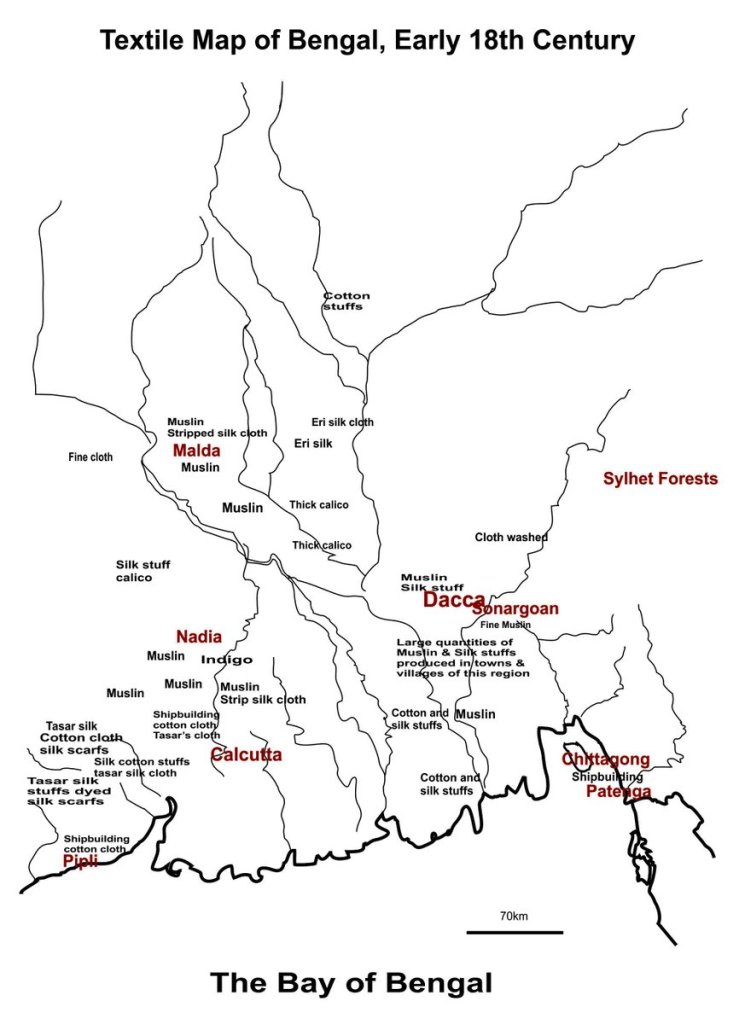
The route connecting the Hubs of Muslin Industry in Bengal

How Muslins Were Made

The textile industry of Bengal is very old. Bengal cotton fabrics were exported to the Roman and the Chinese empires and they are mentioned in Ptolemy’s Geography and the Periplus of the Erythraean Sea, and by the ancient Chinese travellers. But Dhaka Muslin became famous and attracted foreign and transmarine buyers after the establishment of the Mughal capital at Dhaka. The Muslin industry of Dhaka received patronage from the Mughal emperors and the Mughal nobility. A huge quantity of the finest sort of Muslin was procured for the use of the Mughal emperors, provincial governors and high officers and nobles. In the great 1851 Exhibition of London, Dhaka Muslin occupied a prominent place, attracted a large number of visitors and the British Press spoke very highly of the marvelous Muslin fabrics of Dhaka. Weavers in Dhaka, Bangladesh, used to make this incredibly fine cloth using a method called the discontinuous weft technique. This technique required the weaver to work two layers of weft – one as fine as spider’s silk to hold the cloth together and the other forming the pattern. Each pattern motif was worked individually, using fine bamboo sticks to interlace the pattern threads with the warp threads.

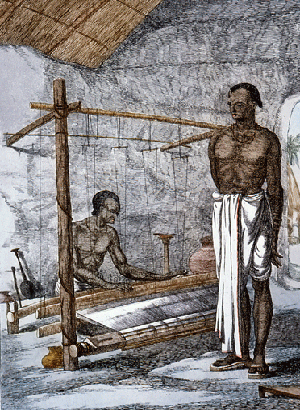
Weaving of Muslins under the supervision of royal official( Painting, in 1800s)

Types And Variations

The finest sort of Muslin was made of phuti cotton, which was grown in certain localities on the banks of the Brahmaputra and his branches. The other kinds of cotton called bairait and desee were inferior and were produced in different parts of Dhaka and neighbouring areas; they were used for manufacturing slightly inferior and coarse clothes.The productions of Dhaka weavers consisted of fabrics of varying quality, ranging from the finest texture used by the highly aristocratic people, the emperor, viziers, nawabs and so on, down to the coarse thick wrapper used by the poor people. Muslins were designated by names denoting either fineness or transparency of texture, or the place of manufacture or the uses to which they were applied as articles of dress. Names thus derived were Malmal (the finest sort), Jhuna (used by native dancers), Rang (of transparent and net-like texture), Abirawan (fancifully compared with running water), Khasa (special quality, fine or elegant), Shabnam (morning dew) Alaballee (very fine), Tanzib (adorning the body), Nayansukh (pleasing to the eye), Buddankhas (a special sort of cloth), Seerbund (used for turbans), Kumees (used for making shirts), Doorea (striped), Charkona (chequered cloth), Jamdanee (figured cloth). The finest sort of Muslin was called Malmal, sometimes mentioned as Malmal Shahi or Malmal Khas by foreign travellers. It was costly, and the weavers spent a long time, sometimes six months, to make a piece of this sort. It was used by emperors, nawabs etc. Muslins procured for emperors were called Malbus Khas and those procured for nawabs were called Sarkar-i-Ala. The Mughal government appointed an officer, Darogah or Darogah-i-Malbus Khas to supervise the manufacture of Muslins meant for the emperor or a nawab.

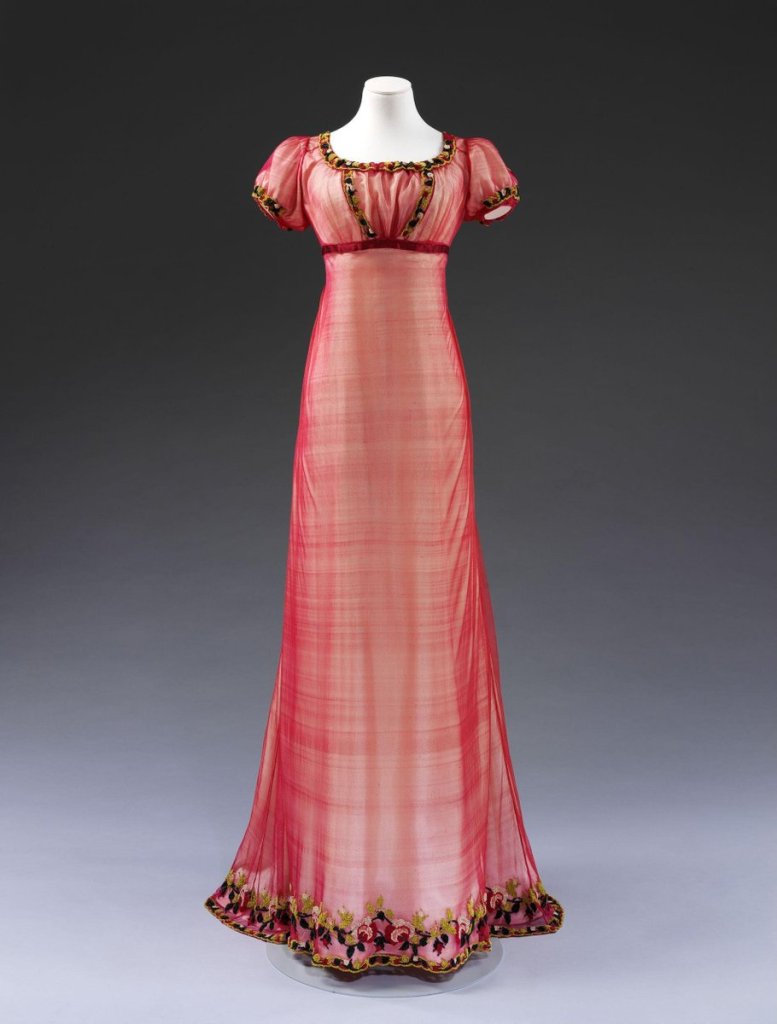
A real Muslin dress exported to England from colonized India

Areas of Production

Weaving was prevalent in the Dhaka district in almost every village, but some places became famous for manufacturing superior quality of Muslins. These places were Dhaka, Sonargaon , Dhamrai, Teetbady, Junglebary and Bajitpur.

Why It Was So Exclusive

The finest of Muslins were honoured with evocative names conjured up by imperial poets, such as “baft-hawa”, literally “woven air”. These high-end muslins were said to be as light and soft as the wind. According to one traveller, they were so fluid you could pull a bolt – a length of 300ft, or 91m, through the centre of a ring. Another wrote that you could fit a piece of 60ft, or 18m, into a pocket match-box. Dhaka muslin was also more than a little transparent.

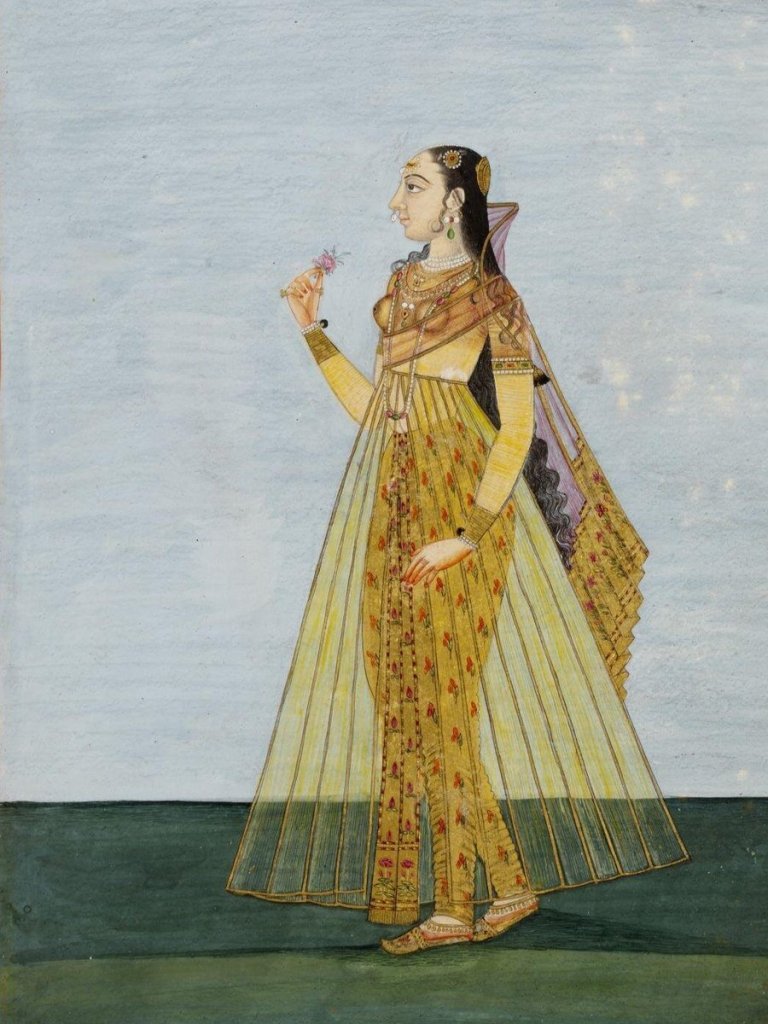
Muslins were adored by the elites

How The Industry Was Lost

Unfortunately, during the period of the East India Company, European manufacturers all but destroyed the industry by flooding the market with factory produced muslin equivalents. Through a combination of punitive taxes on locally produced textiles and the dissolution of local and influential patrons, Jamdani muslin became uneconomical to produce and the skills were almost lost.

Conclusion

Thankfully, there are organisations in Bangladesh today that are encouraging local weavers to continue to practice their craft. Coupled with the UNESCO listing of Jamdani muslin on its Representative List of the Intangible Cultural Heritage of Humanity, there is more impetus to continuing production, albeit on a very small scale. With the proliferation of mass produced and synthetic fabrics on the market today, it is important that these historical techniques aren’t lost forever. No factory can ever emulate the quality arising out of a skilled artisan. Their skills are part of our textile heritage and it’s wonderful they are being recognised and preserved.

Freedom fighters of India

On 15th August 1947, India got its independence. India’s freedom movement was against the British. India got its independence through many struggles and scarifies. Freedom fighters have the main role in India’s independence. In this blog, we are going to see some of the freedom fighters of India.

Freedom fighters of India

  1. Sardar Vallabhbhai Patel

Vallabhbhai Jhaverbhai Patel was born in 1875, he is a very brave man from a very young age. He earned the tittle Sardar after his heroic contribution in BardoliSatyagrah. Originally his profession was lawyer, but he left his profession and joined freedom movement to represent against British. He is also called the ‘Iron man of India’. After the independence of India, he became deputy PM of India.

2. Jawaharlal Nehru

Jawaharlal Nehru was born on 14 November, 1889. He is the only son of his father and mother. He served as the first Prime Minister of India. His passion for India’s independence influenced many people. He is considered one of the greatest statesmen in India. He joined freedom struggle, he became popular as India’s freedom fighter. His birthday is celebrated as Children’s day in India.

3. Mahatma Gandhi

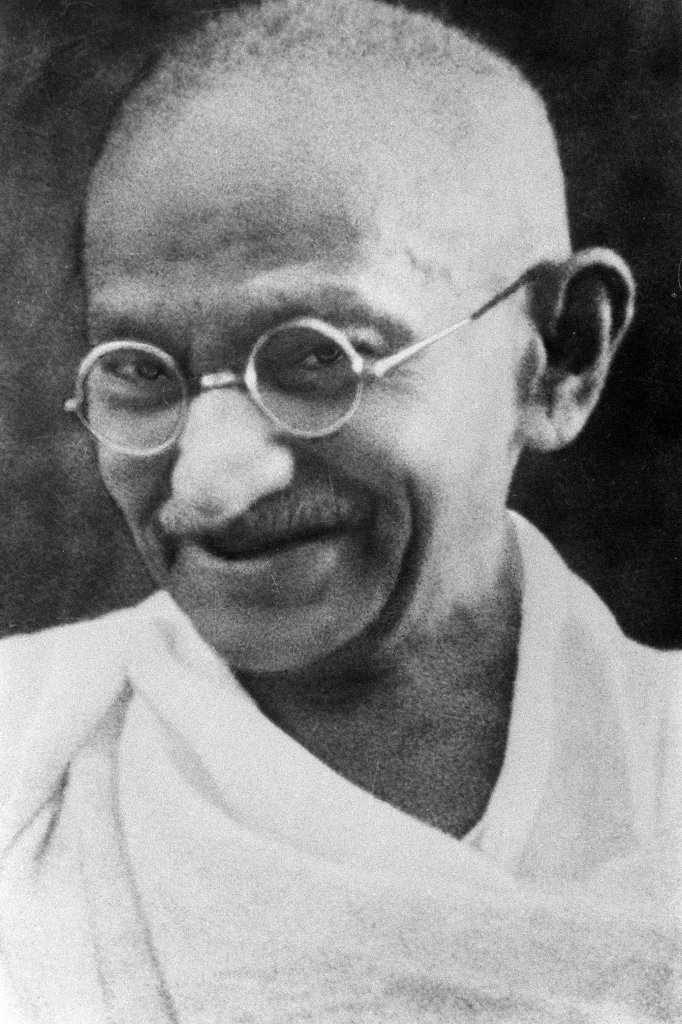
Mohandas Karamchand Gandhi was born on 2nd October he was raised in a Hindu family in Gujarat, 1869. He studied Law in London and went to South Africa to practice. He was entitled the ‘Father of Nation’ of India. After 21 years living in South Africa, he returned to India in 1915, when he was 45 years old. Gandhi ji led many non violent national campaigns for easing poverty, ending untouchability, expanding women rights, and Swaraj. He started Dandi Salt March against the British for imposing salt tax. He started Quit India Movement for British to leave India and many more. He has done many hunger strikes to stop religious fights.

4. Lal Bahadur Sastry

Lal bahadur Sastry was born on 2nd October, 1902. He is a silent freedom fighter. He was participated in many freedom movements such as Quit India movement, Salt Satyagraha Movement, Civil Disobedience movement etc led by Mahatma Gandhi. He served as the Home Minister of India and later as a Prime Minister in 1964. He received the tittle ‘Shastri’ after he completed his education at Kashi Vidyapeeth.

5. Rani Lakshmi Bai

Rani Lakshmi bai was born on 19 November, 1828, Varanasi. She is the queen of Jhansi, She is an important member in 1857 revolution. She became the symbol of resistance to the British raj for Indians. She is the wife of Maharaja Gangadhar Rao. After the dealth of Maharaja Gangadhar Rao, she defended her kingdom jhansi from British force invading it.

6. Bhagat Singh

Bhagat Singh was born on 28th September, 1907 in Banga(Present Pakistan).He was born and raised in a Sikh family of freedom fighters in Punjab. He is a famous revolutionary in India’s independence movement. He joined Non-cooperation movement in 1921 led by Gandhi ji. Chauri Chaura Incident changed him and makes him extreme in his fight against British.

7. Begum Hazrat Mahal

Begum Hazrat mahal was born on 1820, Faizabad. She worked with leaders like NanaSaheb and maulavi. She has participated in 1857 revolution. She single handed defended lucknow from leading troops. She also fought many wars for nepal.

That’s all from my side. I hope you like it.

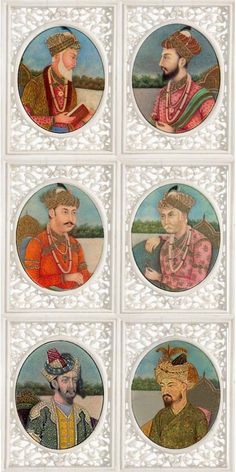
Rulers of the Mughal empire.

In India, the Mughal Empire was perhaps the best domain ever. The Mughal Empire administered countless individuals. India became joined under one guideline, and had extremely prosperous social and political years during the Mughal rule. There were numerous Muslim and Hindu realms split all through India until the organizers of the Mughal Empire came. There were a few men like Babar, grandson to the Great Asian victor Tamerlane and the vanquisher Genghis Khan from the northern district of Ganges, stream valley, who chose to take over Khyber, and at last, the entirety of India.

Babar (1526-1530):

the extraordinary grandson of Tamerlane and Genghis Khan, was the first Mughal sovereign in Quite a while. He went up against and crushed Lodhi in 1526 at the main skirmish of Panipat, thus came to build up the Mughal Empire in India. Babar governed until 1530, and was prevailed by his child Humayun.

Humayun (1530-1540 and 1555-1556):

the oldest child of Babar, succeeded his dad and turned into the second head of the Mughal Empire. He managed India for almost 10 years however was removed by Sher Shah Suri, the Afghan ruler. Humayun meandered for around 15 years after his loss. In the interim, Sher Shah Suri passed on and Humayun had the option to crush his replacement, Sikandar Suri and recapture his crown of the Hindustan. Nonetheless, before long, he kicked the bucket in 1556 at a youthful age of 48 years.

Sher Shah Suri (1540-1545):

was an Afghan chief who assumed control over the Mughal Empire in the wake of overcoming Humayun in 1540. Sher Shah involved the seat of Delhi for not over five years, but rather his reign end up being a milestone in the Sub-landmass. As a lord, he has a few accomplishments in his credit. He set up an effective policy management. He set up an income assortment framework dependent on the estimation of land. Equity was given to the everyday person. Various common works were completed during his short rule; planting of trees, wells and working of Sarai (hotels) for voyagers was finished. Streets were laid; it was under his standard that the Grand Trunk street from Delhi to Kabul was assembled. The money was additionally changed to finely printed silver coins called Dam. Notwithstanding, Sher Shah didn’t endure long after his increase on the seat and kicked the bucket in 1545 after a short rule of five years.

Akbar (1556-1605):

Humayun’s beneficiary, Akbar, was brought into the world in a state of banishment and was just 13 years of age when his dad kicked the bucket. Akbar’s reign holds a specific noticeable quality ever; he was the ruler who really invigorated the establishments of the Mughal Empire. After a progression of triumphs, he figured out how to curb the greater part of India. Regions not under the realm were assigned as feeders. He additionally embraced a placating strategy towards the Rajputs, henceforth diminishing any danger from them. Akbar was an incredible victor, yet a fit coordinator and an extraordinary manager too. He set up a large group of establishments that end up being the establishment of a managerial framework that worked even in British India. Akbar’s standard additionally stands apart because of his liberal approaches towards the non-Muslims, his strict advancements, the land income framework and his popular Mansabdari framework. Akbar’s Mansabdari framework turned into the premise of Mughal military association and common organization.

Akbar passed on in 1605, almost 50 years after his rising to the seat, and was covered outside of Agra at Sikandra. His child Jehangir then, at that point accepted the seat.

Jehangir:

Akbar was prevailed by his child, Salim, who took the title of Jehangir, signifying “Hero of the World”. He wedded Mehr-un-Nisa whom he gave the title of Nur Jahan (light of the world). He cherished her with dazzle enthusiasm and gave over the total reins of organization to her. He extended the realm through the expansion of Kangra and Kistwar and merged the Mughal rule in Bengal. Jehangir did not have the political endeavor of his dad Akbar. Be that as it may, he was a fair man and an open minded ruler. He strived to change society and was lenient towards Hindus, Christians and Jews. Be that as it may, relations with Sikhs were stressed, and the fifth of the ten Sikh masters, Arjun Dev, was executed at Jehangir’s orders for giving guide and solace to Khusrau, Jehangir’s defiant child. Craftsmanship, writing, and design succeeded under Jehangir’s standard, and the Mughal cultivates in Srinagar stay a suffering declaration to his imaginative taste. He passed on in 1627.

Shah Jahan:

Jehangir was prevailed by his second child Khurram in 1628. Khurram took the name of Shah Jahan, for example the Emperor of the World. He further extended his Empire to Kandhar in the north and vanquished the majority of Southern India. The Mughal Empire was at its apex during Shah Jahan’s standard. This was because of right around 100 years of unmatched thriving and harmony. Therefore, during this rule, the world saw the extraordinary advancement of expressions and culture of the Mughal Empire. Shah Jahan has been known as the “modeler ruler”. The Red Fort and the Jama Masjid, both in Delhi, stand apart as transcending accomplishments of both structural designing and workmanship. However regardless of anything else, Shah Jahan is recalled today for the Taj Mahal, the gigantic white marble sepulcher developed for his better half Mumtaz Mahal along the banks of the Yamuna River in Agra.

Aurangzeb:

Aurangzeb climbed the seat in 1658 and controlled preeminent till 1707. Along these lines Aurangzeb governed for a very long time, coordinating with Akbar’s reign in life span. However, lamentably he got his five children far from the regal court with the outcome that none of them was prepared in the specialty of government. This end up being exceptionally harming for the Mughals later on. During his 50 years of rule, Aurangzeb attempted to satisfy his aspiration of bringing the whole Sub-landmass under one principle. It was under him that the Mughal Empire arrived at its top in matter of region.

The Indus Valley Civilization

The Indus River Valley Civilization, 3300-1300 BCE, otherwise called the Harappan Civilization, stretched out from advanced upper east Afghanistan to Pakistan and northwest India.

Significant advancements of this civilization incorporate normalized loads and measures, seal cutting, and metallurgy with copper, bronze, lead, and tin.

Little is perceived about the Indus script, and subsequently, little is thought about the Indus River Valley Civilization’s establishments and frameworks of administration.

The progress probably finished because of environmental change and relocation.

Geology and time period

In 1856, British pilgrim authorities in India were occupied with checking the development of a railroad interfacing the urban communities of Lahore and Karachi in cutting edge Pakistan along the Indus River valley.

As they kept on working, a portion of the workers found many fire-prepared blocks stopped in the dry landscape. There were countless genuinely uniform blocks, which appeared to be very old. Regardless, the laborers utilized some of them to develop the street bed, ignorant that they were utilizing old antiques. They before long found among the blocks stone antiques made of soapstone, including multifaceted creative markings.

However they didn’t know it then, at that point, and however the main significant unearthings didn’t occur until the 1920s, these rail line laborers had stumbled upon the remainders of the Indus Valley Civilization, otherwise called the Harappan Civilization, after Harappa, the first of its destinations to be uncovered, in what was then the Punjab area of British India and is currently in Pakistan. At first, numerous archeologists thought they had discovered remnants of the old Maurya Empire, an enormous domain which overwhelmed antiquated India somewhere in the range of c. 322 and 185 BCE.

Prior to the unearthing of these Harappan urban communities, researchers imagined that Indian progress had started in the Ganges valley as Aryan migrants from Persia and focal Asia populated the area around 1250 BCE. The revelation of old Harappan urban communities agitated that origination and moved the course of events back another 1500 years,situating the Indus Valley Civilization in a completely unique natural setting.

Alleviation guide of Pakistan including the starting points of the Indus Valley realm, Mehrgarh, in the lower regions of a mountain pass. Guide shows Pakistan, Afghanistan, the northwest piece of India and Punjab, and part of the Arabian Sea.

Help guide of Pakistan including the starting points of the Indus Valley realm, Mehrgarh, in the lower regions of a mountain pass. Guide shows Pakistan, Afghanistan, the northwest piece of India and Punjab, and part of the Arabian Sea.

Alleviation guide of Pakistan. Picture kindness Wikimedia Commons.

Researchers are as yet sorting out data about this baffling civilization, however they have taken in an extraordinary arrangement about it since its rediscovery. Its starting points appear to lie in a settlement named Mehrgarh in the lower regions of a mountain pass in current Balochistan in western Pakistan. There is proof of settlement around here as right on time as 7000 BCE.

The Indus Valley Civilization is regularly isolated into three stages: the Early Harappan Phase from 3300 to 2600 BCE, the Mature Harappan Phase from 2600 to 1900 BCE, and the Late Harappan Phase from 1900 to 1300 BCE.

This guide shows the degree of the Indus Valley Civilization during the Mature Harappan Phase. Civilization is featured in brown in the space of current Pakistan and northern India. The remainder of the guide is green and is an incomplete guide of India and the region northwest of Pakistan.

This guide shows the degree of the Indus Valley Civilization during the Mature Harappan Phase. Progress is featured in brown in the space of advanced Pakistan and northern India. The remainder of the guide is green and is an incomplete guide of India and the region northwest of Pakistan.

Indus Valley Civilization in the Mature Harappan Phase (2600-1900 BCE). Picture civility Wikimedia Commons.

At its pinnacle, the Indus Valley Civilization may have had a populace of more than 5,000,000 individuals. The Indus urban communities are noted for their metropolitan arranging, a specialized and political cycle worried about the utilization of land and plan of the metropolitan climate. They are additionally noted for their prepared block houses, elaborate waste frameworks, water supply frameworks, and groups of huge, nonresidential structures.

The Indus Valley Civilization started to decay around 1800 BCE. Archeological proof shows that exchange with Mesopotamia, found to a great extent in present day Iraq, appeared to have finished. The high level seepage frameworks and showers of the extraordinary urban communities were worked over or impeded. Composing started to vanish, and the normalized loads and measures utilized for exchange and tax collection dropped out of utilization.

Metropolitan framework and design

By 2600 BCE, little Early Harappan people group had formed into huge metropolitan places. These urban areas incorporate Harappa, Ganeriwala, and Mohenjo-daro in cutting edge Pakistan and Dholavira, Kalibangan, Rakhigarhi, Rupar, and Lothal in current India. Altogether, in excess of 1,052 urban areas and settlements have been discovered, mostly in the overall locale of the Indus River and its feeders.

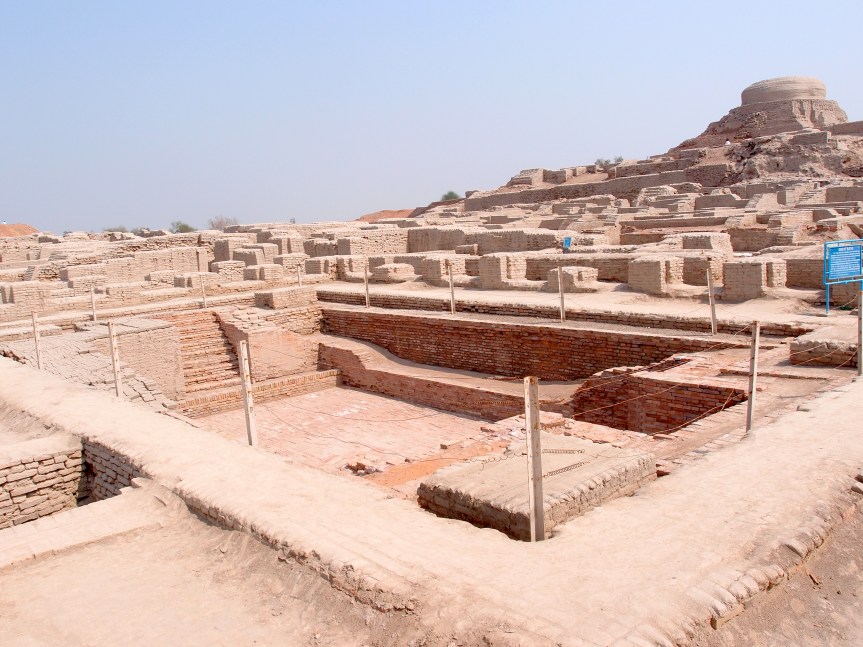
Mohenjo-daro is thought to have been underlying the twenty-6th century BCE; it became not just the biggest city of the Indus Valley Civilization however one of the world’s soonest major metropolitan communities. Found west of the Indus River in the Larkana District, Mohenjo-daro was quite possibly the most modern urban areas of the period, with cutting edge designing and metropolitan arranging.

Archeological remaining parts at the lower town of Lothal. The blocks are uniform in size and are dark earthy colored shaded. They are in a field of dead grass and are lined by low-lying green trees and bushes.

Archeological remaining parts at the lower town of Lothal. The blocks are uniform in size and are dark earthy colored hued. They are in a field of dead grass and are lined by low-lying green trees and bushes.

Archeological remaining parts at the lower town of Lothal, showing uniform fire-prepared blocks. Fire-prepared blocks will hold up to dampness, making them fit to building showers and sewers. Picture kindness Wikimedia Commons.

Harappa was a braced city in cutting edge Pakistan that is accepted to have been home to upwards of 23,500 inhabitants living in etched houses with level rooftops made of red sand and mud. The city spread more than 150 hectares—370 sections of land—and had sustained managerial and strict focuses of a similar sort utilized in Mohenjo-daro.

The two urban communities had comparative association and included strongholds, focal regions in a city that were vigorously sustained—ensured with protective military designs. Moreover, the two urban communities were arranged along the Indus River. This construction would have permitted those at the more significant levels of the structures in one or the other city to peer down the waterway and see into the distance.

The remaining parts of the Indus Valley Civilization urban communities show wonderful association; there were very much arranged wastewater seepage and garbage assortment frameworks and perhaps even open showers and silos, which are storage facilities for grain. Most city-inhabitants were craftsmans and shippers gathered in particular areas. The nature of metropolitan arranging proposes effective city governments that set a high need on cleanliness or strict custom.

Harappans exhibited progressed design with dockyards, silos, stockrooms, block stages, and defensive dividers. These huge dividers probably shielded the Harappans from floods and may have stopped military struggles. In contrast to Mesopotamia and Ancient Egypt, the occupants of the Indus Valley Civilization didn’t construct enormous, great designs. There is no convincing proof of royal residences or sanctuaries—or even of rulers, armed forces, or ministers—and the biggest designs might be storage facilities. The city of Mohenjo-daro contains the Great Bath, which may have been a huge, public washing and social region.


THE PALACE OF ILLUSIONS (BOOK REVIEW)

Re-imagining the Epic with The Palace of Illusions by Chitra Banerjee  Divakaruni
Image source: Google

Mahabharata; as written by Vyasa, is heard and known by almost every person within and out of the community. All thanks to either the creators of the show or the story we heard from our grandparents back then. Mahabharata is historical fiction and the longest epic poem ever written revolving around the Kauravas and Pandavas, the brothers, the men of the story. Crux revolves around the battle and Victory of either of the two, the story of the brothers, the men in the house.

The women too had a shared part in it but what if I tell you the same story with the perspective of the women of their house? Perhaps, a story from the perspective of one woman in particular?

The Palace of illusions is all about itself.

Written by the award-winning poet and writer Chitra Banerjee Divakaruni, its first edition was released in 2008. 

The narrator and the protagonist is Draupadi herself.

Narrating all aspects of her life, from her unnatural birth to her lonely childhood, her bond with her brother, her marriage, her children, her death.

Every intricate detail is covered about her whole life

and the justice to the story is one hundred per cent done.

There are so many instances within the novel where you’ll feel too sympathetic with her character,story,struggles, and life.

Banerjee has not only laid emphasis on her but all the characters are defined and penned amazingly which makes its flow well. There are so many lines and dialogues within the novel that makes you ready to appreciate the writer for even thinking about that In all, the novel, the Mahabharata of this century, has something remarkable to it that there’s no way you can skip reading this one. It’s a kind of novel that maybe will make you think more of the role and the life of women involved in the world of men of Mahabharata with a whole new perspective.

BRITISH INFLUENCE ON URBANIZATION IN INDIA

INTRODUCTION

India shares a long history of urbanization, with Indus Valley Civilization dating back to 2350 BC as its first stepping stone towards urbanization. After this and post-independence period, with the emergence of Planning Commission, India witnessed the urbanization which it had never seen before. And this period marks the progression and flourishing of urbanization in India. However, cities in India have been urbanized in number of phases. The urbanization history in India has 5 different phases (given by historians) :

  1. The Pre – Historic Period (Indus): 2350 – 1800 BC
  2. The Early Historic Period (Aryans and Dravidians): 600 BC – 500 AD
  3. The Medieval Period (Mughal): 600 – 800 AD
  4. The British Period: 800 AD – 1947
  5. Post Independence Period: 1947 – till date

URBANIZATION IN BRITISH PERIOD

The British came to India in 1858 when India was one of the most urbanized nations due to Mughal supremacy. But in the early phase of British rule, Indian cities witnessed decline in the level of urbanization and during the later phase of British rule, the Indian cities regained the lost importance and new towns and cities emerged and newer urban form was added to existing cities.

Fort St. William in Calcutta is one of the best examples of factories constructed during British Era and fortified for protection.

URBAN DECLINE IN 19TH CENTURY

The main reasons for urban decline during the British Period were:

  1. Lack of interest in British in economic development, prosperity and growth of India and their negative attitude towards the traditional industries of India which were present during that period.
  2. The alteration of urbanization in India due to the industrial revolution in England.
  3. The diversion in existing trade routes due to sudden growth and building of rail networks.
  4. Disrupted monopoly in trade especially in port towns.

BRITISH CONTRIBUTION TO URBANIZATION SCENES IN INDIA

  1. Emergence of three metropolitan port cities which emerged as leading colonial cities (Calcutta, Bombay and Madras).
  2. Creation of hill stations and plantation settlements.
  3. Modification of urban landscape in existing cities.
  4. Introduction of civil lines, camps and cantonments.
  5. Improvement in connectivity through railways.
  6. Enhanced scope of industrialization.
  7. Improvements in urban amenities and urban administration.

CONCLUSION

British era had both positive and negative impact in India but the extent of positive changes is more. The process of urbanization and building of new cities can be seen as the breaking of the continuum. During British Period, the Indian cities emerged as the focal points of urbanization and westernization. The westernization brought by the British Period continued to guide the destiny of urban elite in India. It helped in transforming the agriculture as a means of commerce by introducing new crops like indigo, tobacco, coffee etc. Thus, British Era can be seen a the period when India came across fundamental economic transition, mechanized industries and developed connectivity through railways and foreign trade. But the British Era didn’t consider the rural – urban conflict which increased the gap between urban and rural areas of India.

Thus, it can be concluded that British rule had definitely been useful in providing the foundation of development and urbanization to India. As per Census 1941, which is the last census before Independence, India had 49 one lakh cities and 2500 urbanized towns. So, when this urbanization is compared to previous trans, it can be seen that the urbanization attained zenith during the end of British period as compared to past events.

žIn 1941, which marks the last census before independence, There were 49 one-lakh cities in India and in all round 2500 urbanized towns. Urbanization attained zenith during end of this period compared to entire past events.