7th August is celebrated as the National Handloom Day to mark the significance of the Handlooms in Indian history. This day, in 1905, the Swadeshi movement was launched. The foreign clothes were discarded as a mark of protest against the colonial rule and revival of Swadeshi goods, especially the Indian textiles were promoted.
History of Indian Handloom
The origin of Indian Handloom can be traced back to ancient times. One of the earliest hand woven fabrics had a design of a swan (hansa). Some finely woven clothes were also found in Mohenjodaro which was from the era of Indus Valley civilization. The beautiful Indian Floral prints date back to the 18th century.
Many renowned personalities such as Bernier, Voltaire, and Daniel Defoe had expressed their love for the fine beauty of Indian Handlooms. The colonial era played a major role in the decline of Indian handloom industry. The machine made British clothes were promoted and Indian textiles were suppressed using heavy duty tax levied on it. This period saw a boom in the machine made clothes which were made available at a very affordable price.
The Indian Handloom has played a significant role in our fight for independence. Mahatma Gandhi reintroduced Khadi and popularized hand spinning and weaving. The spinning wheel, famously known as the “Charkha” became a symbol of self-reliance(Swadeshi) and boycott of British goods.
Because of the tough competition with the British clothes, many artisans in India lost their livelihood. Several families of weavers struggled to revive their livelihood in the post-independence period. A number of institutions were established to promote the handlooms. The All India Handloom Board was established in 1945. To popularize the Handloom industry, the All India Handloom Fabrics Marketing Co-operative Society was formed in 1953. Later, in 1982, two institutions were merged to form the All India Handlooms and Handicrafts Board.
There are different types of textiles made in different parts of India. Some popular works include, Chanderi work from Madhya Pradesh, Muga silk from Assam, Kanjeevaram silk from Tamil Nadu, Pashmina from Kashmir, Phulkari from Punjab, Daccai from West Bengal, Brocades from Banaras, Tie and Dye print from Gujarat and Rajasthan and many more.
The tourism sector has helped in increasing the foreign demand of Indian Handloom. Today, with the growth of international clothing brands, the Indian Handloom industry faces a tough competition. A large number of artisans from the rural and semi-urban areas are involved in the Handloom industry. It is a source of livelihood for many women in the rural areas.
These beautiful textiles are made manually, using skilled and detailed work by the artisans. Indian Handloom should be encouraged because it is an integral part of our history and the pride of our culture.
In this article we will look at things like the origin of Buddhism and the biography of the Buddha.
Biography of the Buddha
The Buddha’s given name was Siddhartha. He lived during the time when the Mahavira lived. Siddhartha was born in the Lumbini forest near Kapilvastu in Nepal born in BC 563. His father was Suddhodana, the leader who ruled Kapilvastu. His mother Mahamaya died when Siddhartha was seven days old. He was raised rich by his nephew. His father wanted his son to be king to rule the world. But the astrologers predicted that Siddhartha would become a monk if he happened to see an old man, a sick man, a dead man and a monk. So Siddhartha’s father started packing so that he could leave the palace.
Siddhartha grew up happily in the palace for many years enjoying all the comforts unknown to the outside world. He was raised to protect the sufferings of the world from his eyes. At the age of 16, he married his cousin Yasodhara. He was happily married and had a child, Rahula. After that, as predicted, Siddhartha saw an old man, a sick man, a dead man and a monk. Seeing them, Siddhartha began to think deeply about the cause of the world’s problems. Wanting to realize the truth of the monk, he left his wife and child one night at the age of 29 and left the palace without telling anyone.
Dressed in saffron, he wandered in the forest to learn a lesson from the sages. All the sages said that wisdom can be attained only by grieving their body and performing severe penance. Hearing this, Siddhartha mourned his body for many years. He gradually reduced his diet and eventually ate only one bite of rice a day. The body became bone and skin. But he felt that it was not the way to reach the truth because his body was exhausted and his brain was exhausted by such austerities. He started eating again. All five of his disciples, seeing that he had begun to eat regularly, lost faith in him and left him.
But he began to spend long hours in solitude thinking hard to find the facts he was looking for. One day while meditating under a fig tree, Siddhartha realized that his questions had been answered. He was 35 years old when he attained enlightenment. After that he was called Buddha. The place where he attained enlightenment is called Bihar Bodhgaya.
For the next 45 years he traveled throughout northern India and taught the truths he realized. Buddhists call their teachings the Four Truths.
The first truth human life is inherently miserable.
The second truth is that the cause of that suffering is selfishness and desire.
The third truth is that man can suppress selfishness and desire.
The fourth true man has 8 types of path to escape from selfishness.
These eight paths are,
1. honest opinion
2. honest thought
3. honest speech
4. honest action
5. honest life
6. honest effort
7. honest will
8. honest meditation.
The Buddha performed his first teaching at Sarnath, near Varanasi. His teachings were not written during his lifetime, nor were they written until centuries after his disappearance. That is one of the main reasons why there are so many branches of Buddhism.
There are currently two major divisions in Buddhism.
1. One is the Theravada faction. It flourished in Southeast Asia.
2. The second division is the Mahayana. The division prospered in Tibet, China and North Asia.
Desire is the cause of suffering. The basic teaching of the Buddha is that ignorance and caste divisions are the cause of all suffering. A man should be measured by virtue and not by birth. No one is born superior or inferior. The Buddha insisted that it should be determined by what he did. The Buddha lived for almost 80 years and taught many things. He died in BC 483 at Kushi Nagar in Uttar Pradesh. The Buddha was born, attained enlightenment, and swam this worldly life in a single day. That is, historical records say that May is the day of the full moon. That is why Vesak Day is best celebrated by Buddhists. All religions and denominations teach pure love.
Growth and development are inevitable and necessary to absorb the growing needs of the economy. But the problem lies in the truth that none of this growth is monitored. Giant machines dig the earth out and transport mud to all corners of the city. Ratty trucks with the broken remains of gigantic rocks can be seen ferrying the roads primarily during dusk or night. Most of this quarrying is illegal. Contractors excavate mud and destroy rocks in remote spots often under the dark cover of night for a paltry sum.
Mass destruction of rocks has exacerbated the depletion of green cover. Precious fauna and flora has been destroyed. Loss of these rocks has meant ground water depletion which has further compounded the city’s water woes. Years ago tiny lakes dotted the entire city including the famous Jubilee and Banjara hills localities. Today lakes are found only on the city outskirts in places like Shamirpet. Lakes closer to the city are shrinking every passing year.
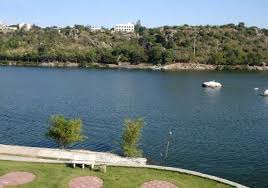
Durgam Cheruvu.
Fighting For Conservation :
Though Hyderabad has seen the gradual depletion of rock cover, ecological conservation is an issue that has not found much voice with the population. Most citizens, especially those new to the city, are too busy focusing on seeing a snazzy Hyderabad finding its spot on the global map. But even in this bleak scenario there is a ray of hope for the rocks.
Since 1996, a group of concerned citizens have come together to prevent indiscriminate destruction of the rocks and protect the rocky landscapes. Their organization ‘Society to Save Rocks’ (STSR) has since then been working hard to preserve the rocky ecosystem in the city and state.
Due to their dedicated campaigning, the Government of Andhra Pradesh has added nine rock formations in Regulation No. 13 of the Hyderabad Urban Development Authority (HUDA) for the protection of Heritage Buildings and Precincts. This act of the governments was hailed by conservationists across the country as a great step in recognising the importance of the rocks and the need to protect them. Today Hyderabad is the only city in India where rocks are protected as a natural heritage. Encouraging the government to preserve these rocks by promoting them as tourist attractions i5 an alternative that the Society is pushing for.
Image Source -google.
But despite STSR’s dedicated efforts, the city faces a challenge as much land in and around the city has already been sold off. Durgam Cheruvu, one of the designated heritage sites is the best place where the government’s attempt at conservation and apathy towards rocks, are both visible. Years ago the lake lay hidden between rocky cliffs and was inaccessible. A few years ago it was converted to a model tourist spot with boating and other leisure facilities. But entire stretches of hills on one bank of this protected area have been destroyed in the past decade to accommodate the fast-growing Hi-tech city. Durgam Cheruvu thus epitomises the ongoing conflict between development and protection in the city.
However some individuals have successfully managed to integrate rocks that abut their house into the structure of their homes. The rock forms as much a part of their home’s interior as does their sofa or any other furniture. Some builders and companies too have taken the initiative to include rocks in their building complexes. While they have included a natural rock structure within their building premise, their focus remains on decorative appeal rather than ecological consideration for the rocks.
Over the years, due to the efforts of organizations like the STSR, the rocks of Hyderabad have found a voice. But the din of the construction industry and growing needs of an expanding city are far louder than the voice of these few individuals. What the rocks require are greater public support and a deeper appreciation of their existence. Locals, tourists and governments need to take a pro-active approach to ensure that growth includes preservation of rocks and their eco-systems. After all if a booming economy overtakes billions of years nature, the consequences and blame will have to be borne by none other than the citizens themselves for the only people who stand to gain will in reality be the ones of who lose.
Look at the photograph given here. This is The Three Stooges, a bizarre rock formation that can be found in Goblin Valley. There are some exceptionally unique rock formations all over the world.
•Vanishing Rocks of Hyderabad:
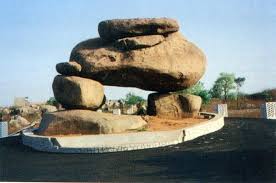
One of the most interesting facets of Hyderabad is the mammoth granite rocks in bewitching poses that capture one’s eye and imagination. Rocks large and small precariously balance on one another to form shapes that mesmerise the mind.These rocks, among the oldest in the world, are Hyderabad’s true heritage. Even the mighty Himalayas at 40-60 million years old are younger than these rocks!
Nature’s Sculptures:
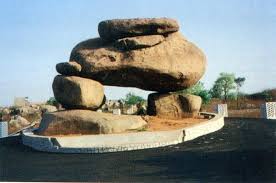
The gigantic boulders inspire creativity and reverence in people, forcing them to look beyond the obvious shapes to create imaginary forms. These rocks seem to strike poses and imitate life-a puppy seated on its hind legs with its front legs raised in the air, a car-shaped formation, flying saucer resting on rocks, four chambers of the heart, and a woman standing with her face to the a woman standing with her face to the breeze; these are just a few shapes that tickle your imagination. It is no wonder then that people have taken to naming certain rocks after the shape they think they resemble or the idea they think they epitomise.
Some of these names have stuck on and the rocks have thus become landmarks in the city. And in some other places, rocks with their symbolic shapes have inspired the devout. Natural openings and cave like structures formed by the rocks have been used as temples by locals. Many people even consider them as symbols of the divine and worship these silent sentinels.
Tortoise Rock
Maintaining ecological balance:
Apart from being a visual treat for viewers, these rocks play an integral role in preserving and nurturing the ecological balance of the region. Lakes and ponds have always formed on adjoining rocky patches. This is a as rocks help natural occurrence create the natural drainage system of the area. Subterranean passages created by these rocks result in the natural flow of rain water to that area, aiding the formation of ponds and lakes and recharging ground water levels.
And where there is green, there are birds and bees. Rocky hills often act as the biodiversity hub for the area. Prickly thick shrubs and dry deciduous forests ensconce the rocks. Along the lakebeds, tall grass grows in wild abandon. Often even medicinal plants and aromatic herbs are found in the area. And hidden in this medley of plants are insects, birds and reptiles. So don’t be surprised if a Baya weaver flies by or a snake wiggles past you, when you are trekking about the rocks. Fauna and flora of varied kinds thrive in rocky eco-systems. Nature is at its best in these spots and here is where people can go to for a whiff of the wild, But today, such spots are disappearing with alarming alacrity. Rocks are being destroyed indiscriminately; the price the city is paying for growth.
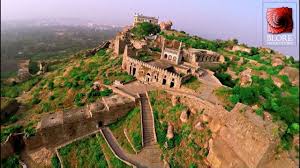
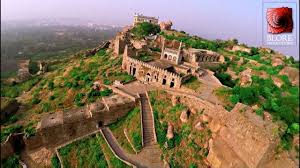
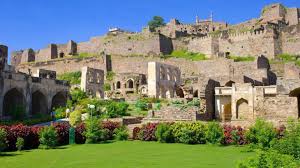
Image Source -google. Golconda fort of hyderabad.
Development at the cost of nature Part1:
It is easy to wonder why someone would destroy rocks that are billions of old. For centuries now these rocks have been the building material for the city. Even the famous Golconda fort of Hyderabad which sits atop a granite hill is made of the very same granite rock. The problem however lies at the speed and magnitude with which these rocks are now disappearing. Just consider the following statistics. The official 2001 census stated the Hyderabad population was around 3.7 million. But today the overflowing buses, traffic jammed streets, and expanding city borders tell a very different story. Today, this natural legacy is giving way to tall residential high-rises and software parks. Hills are being replaced with malls and buildings.
As the massive inflow of population continues, rocks are being quarried round- the-clock to cater to the exponential boom in the construction industry. Large tracts of land have been approved for residential or commercial use, without taking into consideration what actually lies on the land. The rocks are blown down, land is cleared and the hard crystalline rocks are used as construction material. In the past four years itself, vast stretches of hills around the city’s fringes have been turned to rubble or have completely disappeared. If you visit the places where the development is taking place your heart will bleed at the sight of the half quarried, half-eaten mountains…..
“Our flag does not fly because the wind moves it. it flies with the last breath of every fallen soldiers who protected it”
It’s been 22 years since the Indian army recaptured back all the Indian army posts in Kargil that was once occupied by the Pakistan’s army. Finally on 26th July 1999,we won this war and since then every year on this day we pay tribute to our hero’s who sacrificed life saving protecting our motherland.
Through this article let us understand in depth the story behind this 1999 war.
WHEN, WHERE and HOW
This war continued from May to July 1999 for a period of 84 days in the Kashmiri’s Kargil district.
The Pakistani’s soldiers and terrorists occupied the Indian territories and positioned themselves strategically in key position such that it would be advantage for the opponents to start the war.
The shepherds from the nearby locality informed Indian army about suspicious activity and they were able to decode this activity and launched “OPERATION VIJAY”
THE WAR
Initially the Pakistani government refused any role in this conflict and termed that this conflict was with Kashmiri freedom fighters. But later awarded medals to its soldiers who were part of the conflict.
The Pakistani troops had positioned themselves at higher altitude which proved to be advantage as it could fire down the Indian army during fight.
Finally the Pakistani troops withdrew their armed forces at few places while the Indian army attacked the rest of outposts and finally managed to get back their territory by 26th July 1999.
AFTER WAR EFFECT
According to the report, a total of 527 official death toll was reported on Indian side. On other hand in Pakistan’s side it was between 357 to 453.
The mission was considered successful on 26th july,1999 by Indian military and thereafter every year it is celebrated annually as Kargil Vijay Diwas.
Major Rajesh Singh Adhikari,Posthumous,18 Grenadiers
Major Vivek Gupta, Posthumous,2 Rajputana Rifles
Captain N Kenguruse, Posthumous,ASC, 2 RAJ RIF
Major Sonam Wangchuk, Ladakh Scounts
Naik Digendra Kumar,2 RAJ RIF
Captain Anuj Nayyar, 17 Jat Regiment, Posthumous
Lieutenant Keishing C Nongrum, 12 JAK Light Infantry
Major Padmapani Acharya, 2 Rajputana Rifles, Posthumous
The inspiring stories of of the war heroes taught us selflessness and courage. On this Kargil Vijay Diwas lets take a moment to appreciate the sacrifices of our soldiers who guarded us while we were sleeping safe and sound. The Kargil heroes will always be remembered.
Awards And Honors: Grammy Award (1970) Nobel Prize (1964)Notable Works: “I Have A Dream”
Occupation – Baptist, minister,activist
Known for – Civil rights movement, Peace movement
Awards – Nobel Peace Prize (1964) Presidential Medal of Freedom (posthumously, 1977) Congressional Gold Medal (posthumously, 2004)
About his Life:
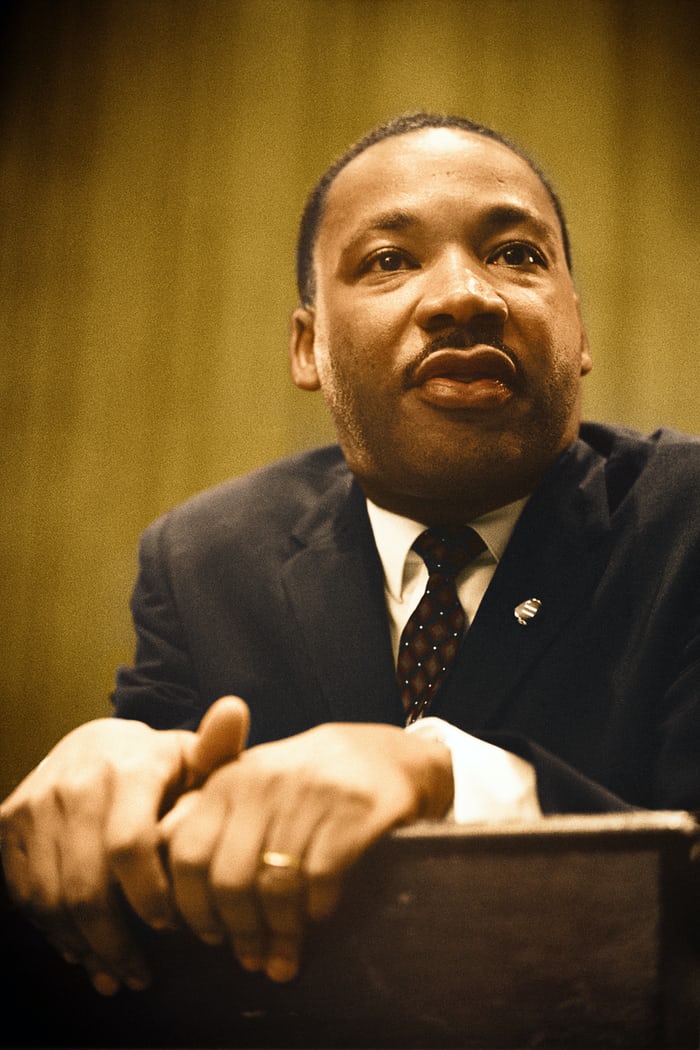
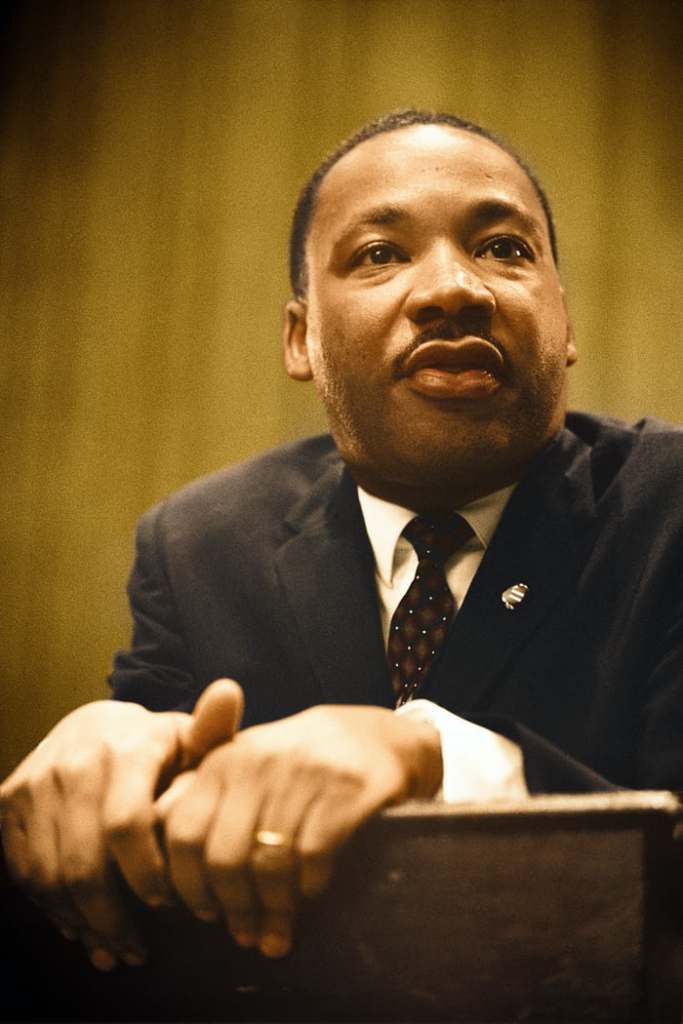
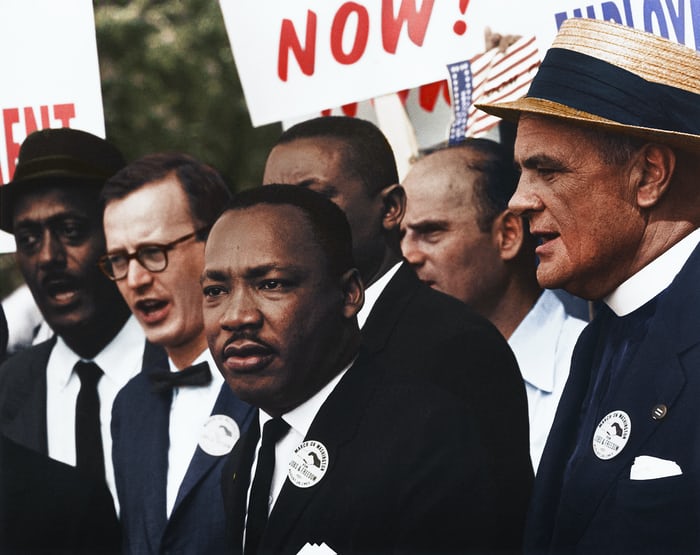
There are people who are able to defeat the ravages of the eternal enemy-time and continue to live on in the minds of men, There are a select few who challenge the limitations of a system that fails to deliver justice. Men like Martin Luther King Jr are soldiers of God who do not care for the consequences when it comes to fighting for the truth. King was born on 15 January 1929, at Atlanta and died on 4 April 1968, at Memphis. Not a very long life, but what he achieved during this time is enviable. Few men reach such dazzling heights of spiritual success even in several lives.
King was a US civil rights leader. The son and grandson of Baptist teachers, King was deeply influenced by the idea of non-violence while in college. The influence of Mahatma Gandhi was obvious. Ordained a Baptist minister himself in 1954, he became pastor of a church in Montgomery. University. He was elected to head the Montgomery Improvement Association whose boycott efforts eventually ended the city’s policies of racial discrimination on public transportation. 1955, he received a doctorate from Boston University. He was elected to head the Montgomery improvement association whose boycott efforts eventually ended the city’s policies of racial discrimination on public transportation.
History:
In 1957, he formed the Southern Christian Leadership Conference and began lecturing nationwide, urging active non-violence to achieve civil rights for African Americans. In 1960, he was back in Atlanta to become co-pastor of Ebenezer Baptist Church with his father.
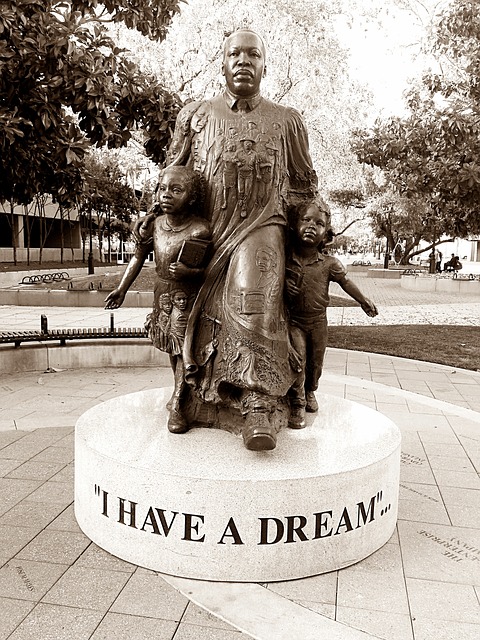
He was arrested and jailed for protesting segregation at a lunch counter. The case drew national attention and none other than the then presidential candidate, John F Kennedy, had to intercede to obtain his release. In 1963 King helped organise the March on Washington, an assembly of more than 200,000 protestors, at which he made his famous ‘I have a dream’ speech. This powerful and moving speech celebrates humanity as one big family where being human is more important than being black or white. The march influenced the passage of the Civil Rights Act of 1964. King was awarded the 1964 Nobel Prize for Peace.
In 1965, he was criticised from within the civil-rights movement for yielding to state troopers at a march in Selma and for failing in the effort to change Chicago’s housing segregation policies. Thereafter, he broadened his advocacy, addressing the plight of the poor of all races and opposing the Vietnam War. In 1968, he went to Memphis to support a strike by sanitation workers. There, on April 4, he was assassinated by James Earl Ray. A U.S. national holiday is celebrated in King’s honour on the third Monday of January in the USA. King, like Gandhi, was a gentle yet powerful prophet of a non- violent revolution who sacrificed his life for his principles. King lives through his work and words in the hearts of millions, and his untiring zeal to achieve justice motivates individuals to keep trying. The kind of following King has today undoubtedly makes us feel, ‘when one is willing, the Gods join in’. (Aeschylus).
MK day:After years of campaigning by activists, members of Congress and Coretta Scott King, among others, in 1983 President Ronald Reagan signed a bill creating a U.S. federal holiday in honor of King.Observed on the third Monday of January, Martin Luther King Day was first celebrated in 1986.
Assassination of Martin Luther King:
The events in Selma deepened a growing rift between Martin Luther King, Jr. and young radicals who repudiated his nonviolent methods and commitment to working within the established political framework.
As more militant Black leaders such as Stokely Carmichael rose to prominence, King broadened the scope of his activism to address issues such as the Vietnam War and poverty among Americans of all races. In 1967, King and the SCLC embarked on an ambitious program known as the Poor People’s Campaign, which was to include a massive march on the capital.
On the evening of April 4, 1968, Martin Luther King was assassinated. He was fatally shot while standing on the balcony of a motel in Memphis, where King had traveled to support a sanitation workers’ strike. In the wake of his death, a wave of riots swept major cities across the country, while President Johnson declared a national day of mourning.
James Earl Ray, an escaped convict and known racist, pleaded guilty to the murder and was sentenced to 99 years in prison. He later recanted his confession and gained some unlikely advocates, including members of the King family, before his death in 1998.
Martin Luther king Jr. Quotes:
“The ultimate measure of a man is not where he stands in moments of comfort and convenience, but where he stands at times of challenge and controversy.”
“Freedom is never voluntarily given by the oppressor; it must be demanded by the oppressed.”
“The time is always right to do what is right.”
“True peace is not merely the absence of tension; it is the presence of justice.”
“Our lives begin to end the day we become silent about things that matter.”
“Free at last, Free at last, Thank God almighty we are free at last.”
“Faith is taking the first step even when you don’t see the whole staircase.”
“In the end, we will remember not the words of our enemies, but the silence of our friends.”
“I believe that unarmed truth and unconditional love will have the final word in reality. This is why right, temporarily defeated, is stronger than evil triumphant.”
“I have decided to stick with love. Hate is too great a burden to bear.”
“Be a bush if you can’t be a tree. If you can’t be a highway, just be a trail. If you can’t be a sun, be a star. For it isn’t by size that you win or fail. Be the best of whatever you are.”
Parent(s) – Charles Chaplin Sr.Hannah Chaplin (née Hill)
Awards – Academy Award (1973): Music (Original Dramatic Score) ,Honorary Award of the Academy of Motion Picture Arts and Sciences (1972), Special Award of the Academy of Motion Picture Arts and Sciences (1929).
Works written – My trip abroad, A Comedian Sees the World, My Autobiography etc.
About Charlie:
Chaplin, one of the most financially successful stars of early Hollywood, was introduced to the stage when he was five. The son of London music hall entertainers, young Chaplin was watching a show starring his mother when her voice cracked. He was quickly shuffled onto the stage to finish the act. Chaplin and his older half-brother, Sydney, roamed London, where they danced on the streets and collected pennies in a hat. They eventually went to an orphanage and joined the Eight Lancashire Lads, a children’s dance troupe. Charlie Chaplin is considered a phenomenon in the world of acting. He is worshipped, studied, and imitated by millions of wannabe stars who want to ape his comic timing.
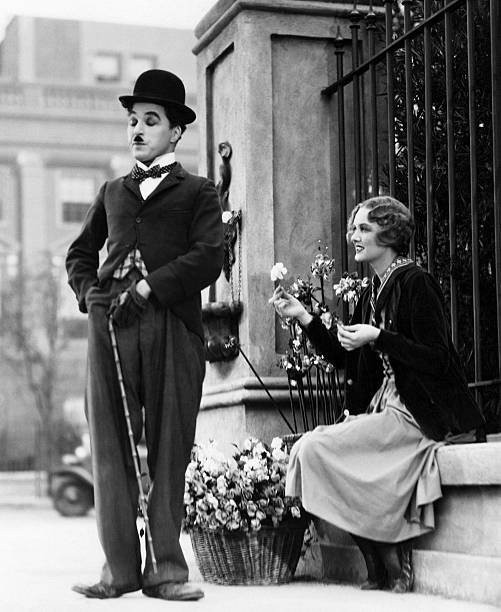
LOS ANGELES – 1931: Actors Charlie Chaplin as The Tramp and Virginia Cherrill as a blind flower seller in the film ‘City Lights’. (Photo by Donaldson Collection/Getty Images) /Getty Images)
His Life:
Charlie Chaplin had to struggle as a child. He was the son of poverty- stricken music-hall entertainers. Chaplin’s father, Charles Chaplin Sr was an alcoholic and had little contact with his son. His father died of alcoholism when Charlie was twelve. A larynx condition ended the singing career of Chaplin’s mother. After Chaplin’s mother (who went by the stage name Lilly Harley) was admitted to the Cane Hill Asylum, her son was left in the workhouse at Lambeth in South London. Charlie and his half-brother, Sydney, forged a close relationship in order to survive. They gravitated to the music hall while still very young and both of them were talented. Themes in Charlie’s films in later years would revisit the scenes of his childhood deprivation and poverty in Lambeth. A lot of his humour was rooted in pain.
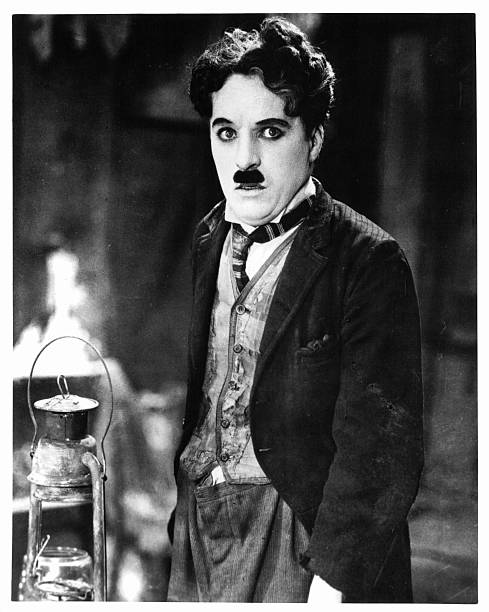
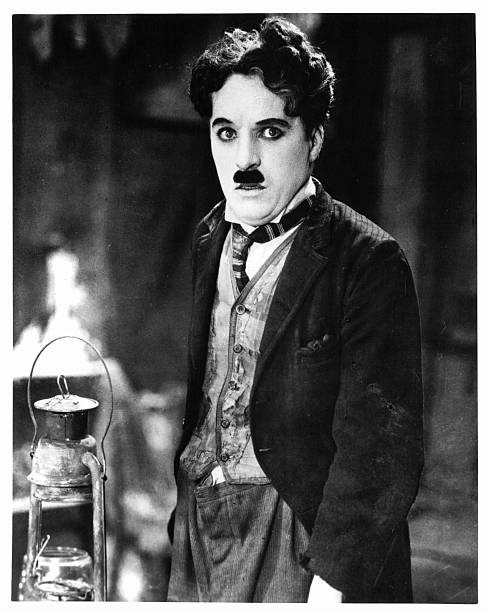
On tour in New York (1913), Charlie caught the who signed him to a film contract. Unfortunately, Chaplin had considerable initial difficulty adjusting to the demands of film acting, and his performance suffered for it, but destiny gave Charlie eye of Mark Sennet another chance and there was no looking back. Chaplin’s earliest films were made for Mark Sennet’s ‘Keystone Studios’, where he developed his ‘tramp’ character and very quickly learned the art and craft of film making. Chaplin developed the costume baggy pants, derby hat, oversized shoes, and cane-that was to become the hallmark of his famous “little tramp’ character. He was soon directing his own films, and he produced, directed, and starred in such classics as The Gold Rush (1925), City Lights (1931), Modern Times (1936), The Great Dictator (1940), Monsieur Verdoux (1947) and Limelight (1952).
Chaplin never spoke more than cursorily about his film making methods, claiming that such a thing would be tantamount to a magician spoiling his own illusion. In fact, until he began making spoken dialogue films with The Great Dictator, Chaplin never shot from a completed script. The method he developed was to start from a vague premise-for example ‘Charlie enters a health club’ or ‘Charlie enters a restaurant’. Then he had sets constructed, and worked with his stock company to improvise gags around them. This is creativity at its best. Charlie Chaplin’s unique film-making techniques became known only after his death, when his rare surviving cut sequences were carefully examined in the 1983 British documentary Unknown Chaplin.
5 Things You May Not Know About Charlie Chaplin:
1.Chaplin made his stage debut as a tot – Both of Chaplin’s parents were music hall entertainers in London. In his autobiography, he described how, at age 5, his mother’s voice suddenly failed in front of a crowd of rowdy soldiers. The stage manager—or possibly his father or one of his mother’s lovers—then ushered him onstage as a replacement. Chaplin first sang a popular song called “Jack Jones,” prompting the audience to shower him with coins. He purportedly drew big laughs by announcing that he would pick up the money before continuing. More laughter ensued when he began imitating his laryngitis-addled mother. A few years later, Chaplin made his professional debut as a member of a juvenile clog-dance troupe. He followed that up with a couple of theater roles, toured with vaudeville acts and did one disastrous night of stand-up comedy in which he was booed off the stage.
2. Chaplin partly grew up in an orphanage – As the health of Chaplin’s mother deteriorated, so too did the family’s finances. It got so bad that in 1896 Chaplin and his older half-brother were sent to a public boarding school for “orphans and destitute children.” Chaplin spent about 18 months there, the longest period of continuous schooling he would ever receive. He learned to read and write, but apparently suffered quite a few indignities, including a severe caning and the shaving of his head during a bout with ringworm. Shortly thereafter, his mother was committed to a mental institution. His father, meanwhile, played very little role in his upbringing and ended up dying of alcoholism at age 37.
Charles Chaplin in a scene from the film ‘The Gold Rush’, 1925. (Photo by United Artists/Getty Images)
3 Chaplin loathed his first film – During Chaplin’s second vaudeville tour of the United States in 1913, Keystone Studios hired him away for $150 a week. He made his first film appearance early the following year, playing an out-of-work swindler in “Making a Living.” Wearing a handlebar moustache, top hat and monocle, he got in a few funny gags, particularly while fighting the story’s hero, a journalist who at one point interviews a man trapped under a car instead of helping him. Overall, though, Chaplin was appalled by his performance. “I was stiff,” he later said. “I took all the surprise out of the scenes by anticipating the next motion.” He also accused the director of cutting his best material out of jealousy.
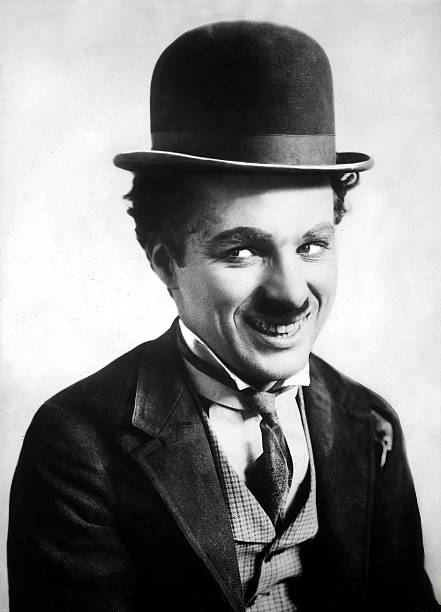
4. Chaplin played thr same character in all but a few movies – Prior to his second film, Chaplin dressed up one day in baggy pants, a tight coat, big shoes, a small bowler hat and a bamboo cane. He added a small fake moustache and is said to have strutted around while his co-actors were playing pinochle. Having witnessed the scene, the head of Keystone allegedly “giggled until his body began to shake.” “Chaplin,” he exclaimed, “you do exactly what you’re doing now in your next picture. Remember to do it in that get-up.” This so-called Little Tramp character immediately took off in popularity, spawning so many imitators and marketing schemes that the press labeled it “Chaplinitis,” and would become Chaplin’s onscreen persona for the next two-and-a-half decades. In 1914 alone, he appeared in dozens of short films as the Little Tramp, most of which he directed himself.
5 .Chaplin quickly became a millionaire – For $1,250 a week, plus a $10,000 bonus, Chaplin moved in December 1914 to Essanay Studios, which touted him as “the greatest comedian in the world.” He then signed with the Mutual Film Corporation for $670,000 a year, after which he agreed to make eight comedies for First National for over $1 million. Finally, in 1919, he founded his own studio with fellow Hollywood icons Douglas Fairbanks, Mary Pickford and D.W. Griffith. “I went into the business for money, and the art grew out of it,” Chaplin once said. “If people are disillusioned by that remark, I can’t help it. It’s the truth.”
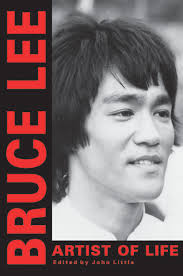
Bruce Lee, the very name breathes enthusiasm and life euphoria in the minds of thousands of action movie lovers. When we talk about action movies today, particularly in the martial arts genre, it is impossible to forget, that Bruce Lee was the one who began it all with movies like The Big Boss (1971), Fist of Fury (1972), Way of the Dragon (1972), Enter the Dragon (1973) and The Game of Death (1978). Gone were the days when action movie lovers would be pleased with the gun fight of Clint Eastwood or the epic chariot races of Charlton Heston. Kung Fu had made its entrance in the world of entertainment, courtesy the silver screen. Bruce Lee was born on 27 November 1940. His father, Lee Hoi Chuen, was Chinese and his Catholic mother, Grace Ho, was of three-quarter Chinese and a quarter German ancestry. Lee and his parents went from the US to Hong Kong when he was three months old. Lee’s father was one of the leading Cantonese opera and film actors at the time.
At the age of thirteen, Bruce Lee took Kung Fu lessons with Yip Man. Having learnt the basics from his father, Bruce showed keen interest in the art and a year later, in 1955, had private training with the man who would later become the President of the Australian Federation of Kung Fu, William Cheung. At this time, the martial artist, Wong Shun Leung, who was consistently involved with dangerous and brutal competitions, had Bruce Lee privately train with him. Both Wong Shun Leune and William Cheung were students of Yip Man in his school at the same time as young Bruce Lee. Despite the advantages of his family’s high social status during his youth in Hong Kong, the neighbourhood where Bruce grew up was dangerous and full of gang rivalry. Bruce Lee evolved in these conditions as a dangerous street fighter. No wonder then that at the high school level at St Francis Xavier’s College in Kowloon, Lee was part of the school boxing team in inter-school tournaments.
Through his father, Bruce was introduced into films, and by the time he was 18, he had acted in 20 films. While in the United States from 1959 to 1964, Lee abandoned thoughts of a film career in favour of pursuing a career in martial arts. Destiny had different plans for him and the lightning fast moves of Bruce Lee landed him the role of Kato in the TV series The Green Hornet. This led to a host of other television serials like Iron Side (1967) and Here Come the Brides (1969). Lee’s return to Hong Kong landed him in Raymond Chow’s The Big Boss and Fist of Fury, and Lee was a big star overnight. Lee became a god of action cinema with the Warner Brothers’ production Enter the Dragon, but a cruel and inexplicable death snatched him away from his fans six days before the release of this movie.
We remember Lee today as a man who redefined action on the silver screen. We remember his high kicks, his exceptionally fast punches and the spine-chilling fight sequences. ‘Lee, pound for pound, might well have been one of the strongest men in the world, and certainly one of the quickest,’ said Chuck Norris. When a child today watches Jackie Chan or Jet Li and gets excited to throw a punch, no father fails to remind him that these are compared to the master-Bruce Lee. hing Lee has left a unique legacy in the world of sports and cinema, imitated by millions but mastered by none.
Devoted Teacher:
Lee finished high school in Edison, Washington, and subsequently enrolled as a philosophy major at the University of Washington. He also got a job teaching the Wing Chun style of martial arts that he had learned in Hong Kong to his fellow students and others. Through his teaching, Lee met Linda Emery, whom he married in 1964. By that time, Lee had opened his own martial arts school in Seattle.He and Linda soon moved to California, where Lee opened two more schools in Oakland and Los Angeles. He taught mostly a style he called Jeet Kune Do, or “The Way of the Intercepting Fist.” Lee was said to have deeply loved being an instructor and treated his students like a clan, ultimately choosing the world of cinema as a career so as not to unduly commercialize teaching.Lee and Linda also expanded their immediate family, having two children — Brandon, born in 1965, and Shannon, born in 1969.
Mysterious Death:
Most of the people said that he died under mysterious circumstances .On July 20, 1973, just one month before the premiere of Enter the Dragon, Lee died in Hong Kong, China, at the age of 32. The official cause of his sudden and utterly unexpected death was a brain edema, found in an autopsy to have been caused by a strange reaction to a prescription painkiller he was reportedly taking for a back injury. Controversy surrounded Lee’s death from the beginning, as some claimed he had been murdered. There was also the belief that he might have been cursed, a conclusion driven by Lee’s obsession with his own early death.More rumors of the so-called curse circulated in 1993, when Brandon Lee was killed under mysterious circumstances during the filming of The Crow. The 28-year-old actor was fatally shot with a gun that supposedly contained blanks but somehow had a live round lodged deep within its barrel.
Supernatural creatures are not explainable by the laws of nature. They have abilities which are superhuman. Abilities like magic, levitation, mind control, extra sensory perceptions. They have been mentioned in various forklore and mythological books and contexts. It states that humans believe in a superior power, good and bad. We can know more about these supernatural creatures from various movies and tv shows like the vampire diaries, lucifer, twilight, conjuring, supernaturals, etc. But they have showed some creatures like hybrids (vampire and werewolf) , and heretics (vampires with magical powers) which are not mentioned in any mythological history and are fictional. Although there is no proof that they still exist but some paranormalists believe that ghosts and spirits do exist. Some supernatural creatures and phenomenons : 1. Deity – They are the believed to be god, a supreme power. They are worshipped by people. 2. Angels – They are said to be the intermediataries between god and earth. They protect the children of god. 3. Prophecy – They are said to be the ones who completes God’s task on earth. 4. Revelation – When god or the good spirit appreas in form of visions or dreams. 5. Reincarnation – When the supernatural starts living inside the bodies of others. 6. Spirits – They are ghosts or angels. 7. Demon – A bad entity as said in religious history. 8. Witchcraft – Practice of magical powers in a person. 9. Miracles – Events which are not explainable by nature or scientific laws. 10. Banshee – Female spirit who’s whining amd crying is fatel. 11. Elf – Legendary beings who are mysterious and small. 12. Devil – Evil subordinates or bad spirits who harm humans. 13. Dwarf – Small creatures with magical powers. 14. Fairies – Who are human like with magical powers and seem to keep others happy. 15. Genie – Creature who fulfils his master’s wishes. 16. Ghost – Spirit of a dead person who haunts people. 17. Giant – A mythical creature of superhuman size. 18. Golem – Artificially created human being by supernaturals. 19. Guarding angel – Who protects a person. 20. Imp – A small creature 21. Leprechaun – A small creature who is mysterious and troublesome. 22. Pixie – A fairy or elf. 23. Vampires – Human like creatures who cannot stand sunlight and drink human blood to survive. 24. Werewolf- A human like creature who turns into a wolf on certain specific occasions. 25. Wraith- A supermatural spirit who reanimates a dead body 26. Sirens – The legend of Greek mythology states that the monstrous women would sing enticing songs and lure sailors to their doom to eat them. 27. Basilisk – A serpentine creature who, much like the Gorgons of Greek myth, can kill with one look. 28. Phoenix – The golden bird who, at the end of its life, burst into flames only to be reborn again. 29. Cyclopes – The one-eyed giant who captured and ate people. 30. Centaurs – With the top half of a human and the full body of a horse. 31. Goblin – a small grotesque supernatural creature, regarded as malevolent towards human beings. 32. Troll – one of a class of supernatural creatures that dwell in caves or mountains and are depicted either as dwarfs or as giants.
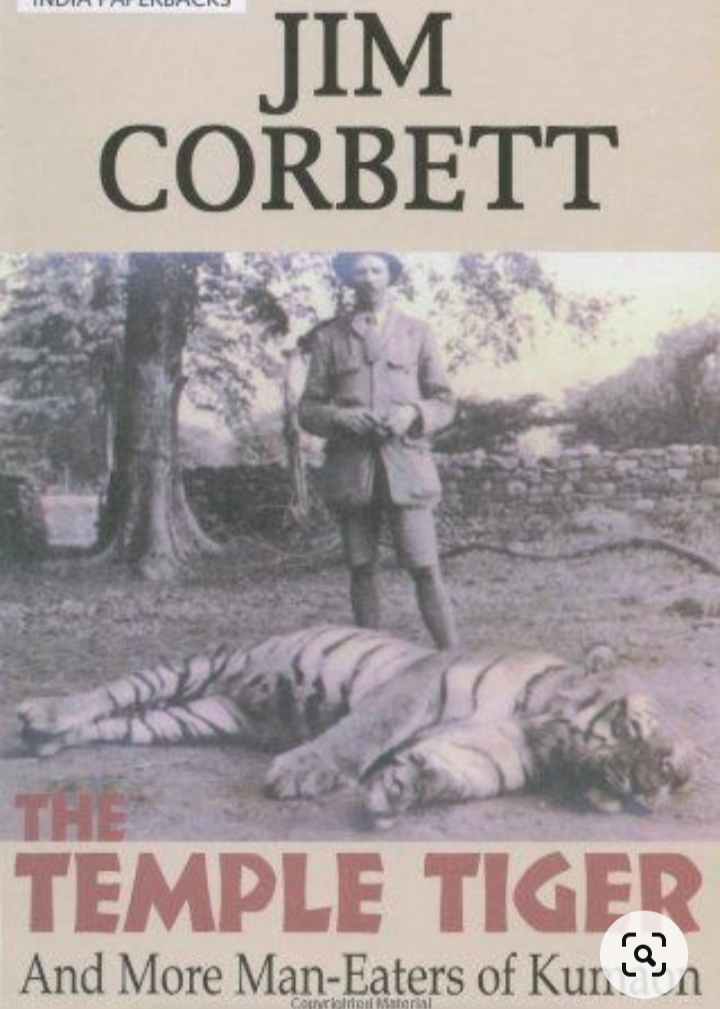
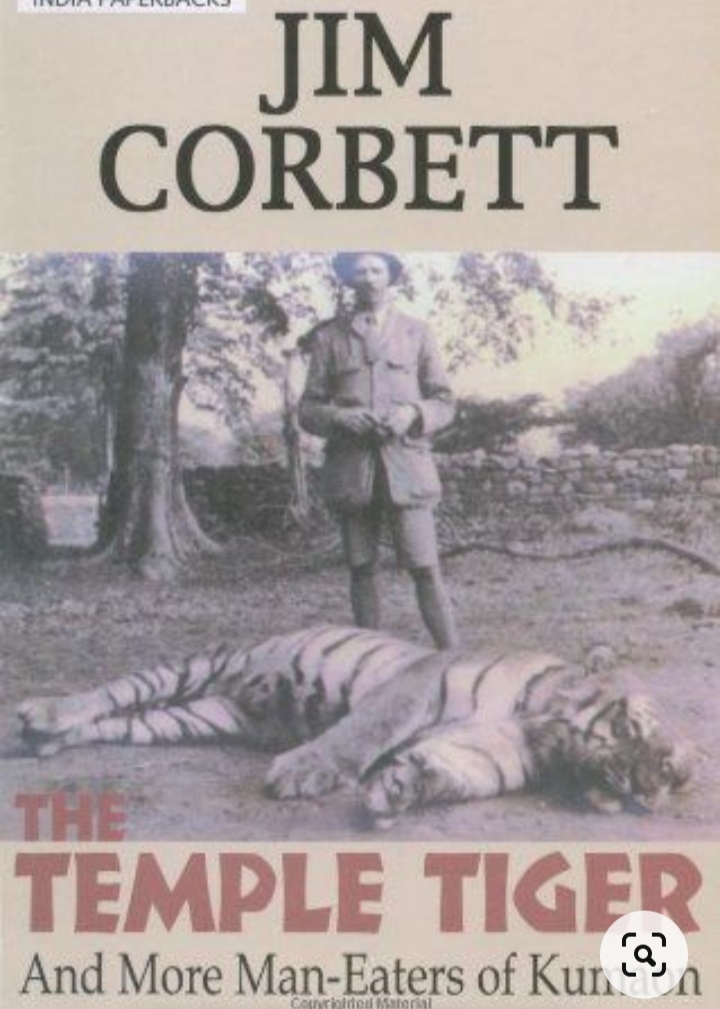
Full name – Edward James Corbett Born – 25 July 1875 ,Nainital, (North-Western Provinces, British India (now in Uttarakhand, India)) Died – 19 April 1955 (aged 79), Nyeri, Kenya Nationality – Indian Occupation – Hunter, naturalist, writer.
‘My India, about which these sketches of village life and work are written, refers to those portions of a vast land which I have known from my earliest days, and where I have worked; and the simple folk whose ways and characters I have tried to depict for you are those among whom I spent the great part of seventy years,’ -wrote Jim Corbett.
These words are not merely a description of a country by a man. These words reveal the life of a rare man who was British by blood but became an Indian at heart.
About Jim:
Edward James ‘Jim’ Corbett was born on 25 July 1875, at Nainital, United Province (now Uttarakhand) in British India. Corbett held the rank of Colonel in the British Indian Army, and worked for the Bengal and North Western Railway. Corbett was frequently called upon by the government of the United Provinces to slay man-eating tigers and leopards who had killed people in the villages of the Garhwal and Kumaon region. Corbett was able to succeed in many cases where numerous others had failed.
History:
Between 1910 and 1938, Corbett shot much-feared man-eaters such as the Champawat Tiger, the Leopard of Rudraprayag, the Tigers of Chowgarh and the Panar Leopard, who had cumulatively killed over a thousand people. His success in slaying the man-eaters earned him much respect and fame amongst the people residing in the villages of Kumaon, many of whom considered him to be a saint or sadhu because of his simple, dedicated and honest lifestyle. After his retirement, he authored The Maneaters of Kumaon, Jungle Lore, and other books recounting his hunts and experiences. Corbett’s stories became best-sellers because he narrated tales bubbling with spine-chilling reality in simple and enjoyable language.
Corbett had great admiration for tigers and photographed them avidly in his later years. His attraction towards the uncorrupted beauty of nature in the wild started in his childhood. He could identify the call of most animals and birds from a very young age, owing to his frequent visits to the wild. He never shot a tiger or a leopard unless it turned a man-eater. Corbett was a pioneer conservationist and lectured at local schools and societies to create awareness about the need to respect the wild.
A great human being who would even risk his own life for saving somebody else’s, Corbett continued to write and sound the alarm about the declining numbers of jungle cats till the last days of his life at Nueri, Kenya. He was distressed when people described the tiger as a blood-thirsty’ and ‘cruel’ beast. He refers to his childhood when a child freely roaming about the forest often ended meeting a tiger, the latter giving him a clear, ‘Hello child, what the hell are you doing here?” look and walking away.
. “”a tiger is a large-hearted gentleman with boundless courage and that when he is exterminated-as exterminated he will be unless public opinion rallies to his support-India will be the poorer, having lost the finest of her fauna,””- Jim Corbett had written. This quotation also makes it very obvious that Corbett had great respect for India and Indians. When you read his description of his experiences with men like Bala Singh in his stories or read about the manner in which he could identify the distinct grieving of an Indian wife for her husband, you know why he is still so revered. Corbett passed away on 19 April 1955. The Jim Corbett National Park in Uttarakhand is named after him.
Life of Jim corbett:
In childhood, he has a deep fascination for the forests and wildlife, and due to his interest in wildlife, he became a good tracker and hunter with time. Due to his amazing skill of tracking and hunting, he was often sought after by the then government of the united province to track and kill the tiger and leopard who becomes a man-eater. Even though he was the skilled hunter, he never killed any wild animal other than man-eaters.After many years as a celebrated hunter, he then developed a hobby of wildlife photography, especially, recording films of tigers in their natural habitat. He also used to give lectures on the rich natural heritage of India and the importance of the conservation of forests and wildlife to the school students.
He also penned his experience as a hunter and written many books on wildlife and hunting experiences. His most famous book was Man-Eaters of Kumaon that intensely portrayed his own hunting adventures. Many movies, TV episodes and documentaries have been made that are based on this critically acclaimed book.Later in his life, Jim Corbett started a movement to conserve the wild animals and forests. He strongly supported the All-India Conference for the Preservation of Wildlife and promoted the foundation of the Association for the Preservation of Game in the United Provinces. He also used his influence over the provincial government and lead the path that cleared the establishment of the first national park in India, the Hailey National Park, named after the Lord Malcolm Hailey in 1930s. The name later changed to the Jim Corbett National Park after the independence of India in 1957 in the honor of the legendary Jim Corbett.
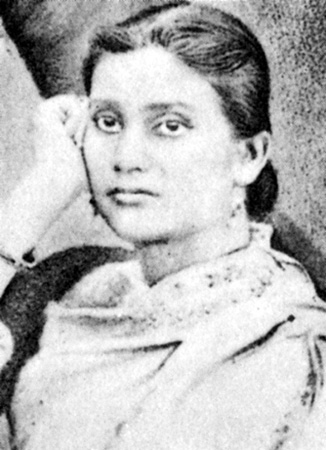
160 years ago, on this day, July 18, Kadambini Ganguly was born in a Bengali family in Bhagalpur, Bihar. As a child, she was rebellious with regard to sexism and patriarchy and was very hard-working as a student.
Picture of Dr. Kadambini Ganguly.
During her childhood, she had witnessed that in her area many women used to die without treatment as women could not get proper treatment because all doctors were males and Indian social culture didn’t approve a male doctor treating a female patient. From here, she dreamt of becoming a doctor during her childhood.
However, things didn’t happen according to her. She was married off at young age and thus she thought her dreams would go down the gutter. But it was then her husband who supported her in every walk of her life. She did her schooling partly at Banga Mahila Vidyalaya and partly at Bethune School. In 1878, she became the first female to pass the University of Calcutta entrance examination.
Within few years, she became one of the first few female graduates in the country alongside Chandramukhi Basu. When she wanted to study medicine, she was denied admission by University of Calcutta as the university wasn’t allowing female students back then. Dwarkanath Ganguly, Kadambini Ganguly’s husband challenged this patriarchal rule and in 1883 Kadambini Ganguly was the first female to take admission in Calcutta Medical College.
Kadambini Ganguly received a scholarship of two years and in 1886 she was awarded the GBMC award and thus making her the first female to have a degree in Western Medicine in the whole of South Asia.
It is also important to note that during that time people didn’t approve a female getting education and as a result she received strong opposition regarding her academical choices from conservatives even from her neighbourhood and relatives.
Bangabashi, a magazine of that time that was run by the then conservatives also called her a “whore” and this obviously didn’t go well with the Ganguly couple. Dwarkanath Ganguly legally filed a court case against the magazine and this resulted in 6 months jail term for the editor of the magazine.
Kadambini Ganguly also went abroad for her studies and got her further education in Edinburgh College of Medicines for Women. She quickly earned three different diploma degrees. Soon, she became popular in entire South Asia and Europe. Her name became so popular that the then King of Nepal invited her to treat his ailing mother.
Kadambini Ganguly had even advocated for social change in India and especially for women. It was due to her efforts that Bethune College in Kolkata added the Fine Arts course in their college. She was also one of the six female delegates to fifth session in Indian National Congress and even organised Women’s Conference in 1906 in Calcutta.
Authors of that time described Kadambini Ganguly as one of the “greatest” and the “most accomplished woman” of her time. And truly, all of us agree to it. Because of courageous women like her, so many women in the world must have got inspired to achieve their dreams. Kadambini Ganguly will always remain immortal in all her hearts.
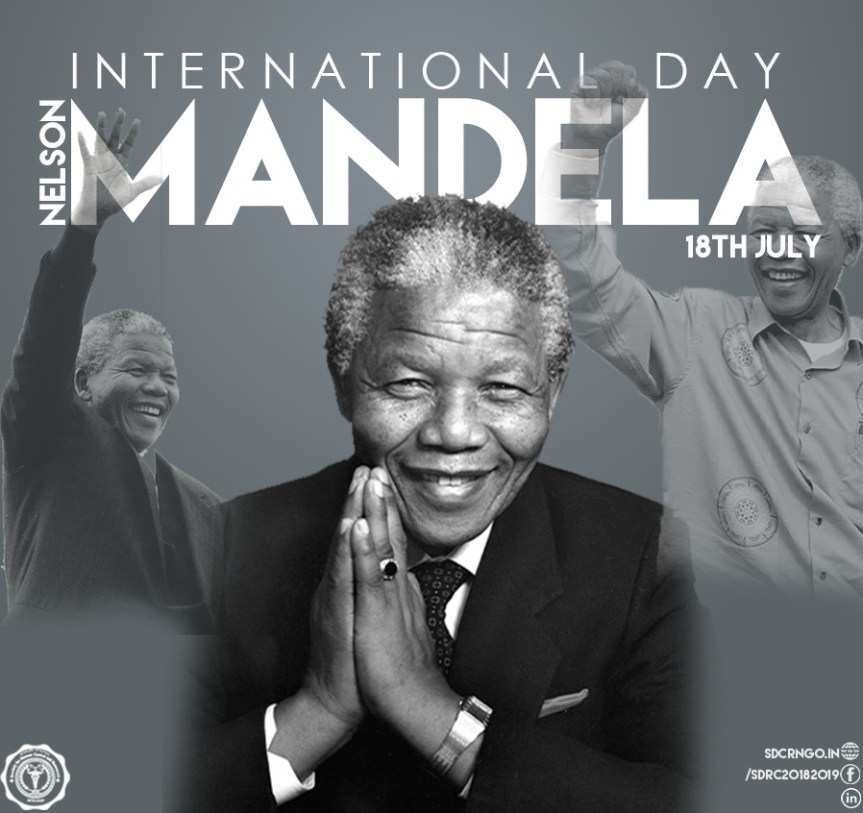
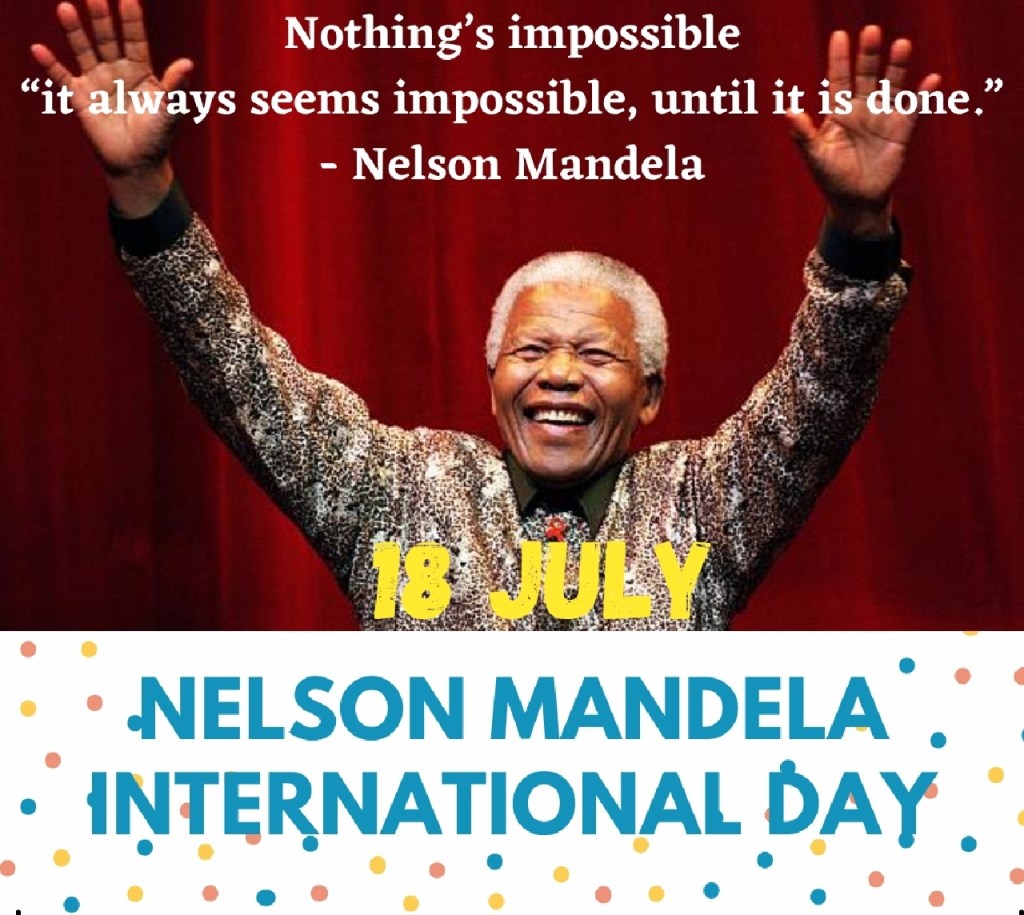
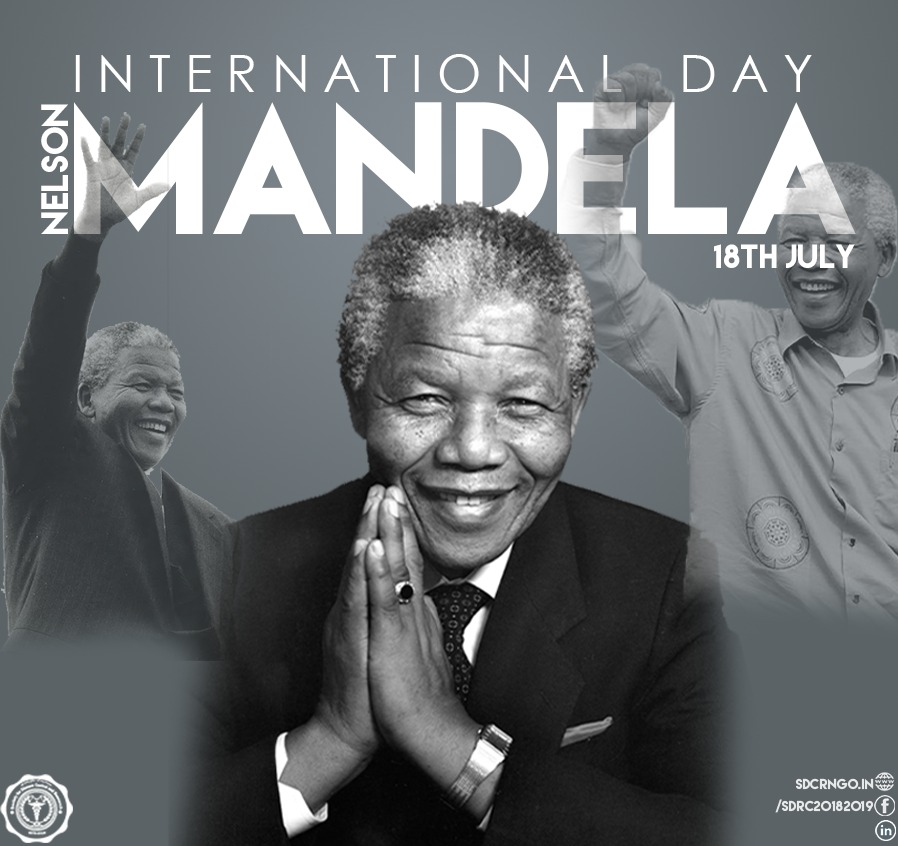
Nelson Mandela was born on 18 July 1918, at Umtata, Cape of Good Hope in South Africa. He is an iconic figure in today’s world when it comes to fighting for one’s rights as a human being. The son of a Xhosa Chief, Mandela studied law at the University of Witwatersrand, and in 1944 joined the African National Congress (ANC), After the Sharpeville massacre (1960), he was disillusioned to the extent that he gave up his non-violent stance and became one of those who helped found the Spear of the Nation, the ANC’s military wing. Arrested in 1962, he was sentenced to life imprisonment. The South African Court convicted him on charges of sabotage as well as other crimes committed while he led the movement against apartheid.
How is Nelson Mandela International Day celebrated?
Mandela provides service to others and always wants to create a better world for everyone. So, on this day if people find injustice in the neighbourhood, city, or state they do everything to alleviate the problem. Work in soup kitchens, marched with protesters, volunteer in local organisations, and work to help bring about civil liberties for everyone. Inspire change, and make every day a celebration of Mandela Day. People work for others and want to improve the lives of people around them. They will do this by volunteering or taking part in protests.
“After climbing a great hill, one only finds that there are many more hills to climb.”
This day provides a global call for people to recognise their ability and have a positive effect on others around them. People also inspire others about the values that Mandela shared like democracy, freedom, diversity, reconciliation, and respect. To promote Nelson Mandela Day, many people and organisations around the world take part in several activities. These activities are volunteering, sport, art, education, music, and culture. This day also celebrates a campaign known as “46664”, in reference to Nelson Mandela’s Robben Island prison number. The campaign was originally launched to raise awareness about HIV/AIDS. In 1995 and 1999 Children’s Fund and the Nelson Mandela Foundation were established.
“I learned that courage was not the absence of fear, but the triumph over it. The brave man is not he who does not feel afraid, but he who conquers that fear.”
His Movements And Struggles:
In accordance with the conviction, Mandela served twenty-seven years in prison. While in jail, Mandela’s reputation grew and he became widely known as the most significant black leader in South Africa. The conditions that he had to go through as a prisoner were appalling. He performed hard labour in a lime quarry. Prisoners were segregated on the basis of race, and the black prisoners received the fewest rations. Political prisoners were kept separate from ordinary criminals and received fewer privileges. Mandela himself describes how as a D-group prisoner, the lowest classification, he was allowed one visitor and one letter every six months. Letters, when they came, were often delayed for long periods and made unreadable by the prison censors. It calls for nerves of steel for a man imprisoned for life to get a degree of Bachelor in Law from the University of London through correspondence.
In February 1985, President PW Botha offered Mandela conditional release in return for renouncing armed struggle. Mandela spurned the offer, releasing a statement through his daughter Zindzi saying, ‘What freedom am I being offered while the organisation of people remains banned? Only free men can negotiate. A prisoner cannot enter into contracts.’
Throughout Mandela’s imprisonment, local and international pressure mounted on the South African Government to release him. In 1989, South Africa reached a crossroads when Botha suffered a stroke and was replaced as President by Frederik Willem de Klerk. De Klerk announced Mandela’s release in February 1990. His release from jail was broadcast live all over the world.
South Africa’s first multi-racial elections, in which full enfranchisement was granted, were held in April 1994. The ANC won 62 per cent of the votes in the election. Mandela became the first black President. As President from May 1994 to June 1999, Mandela presided over the transition from minority rule and apartheid, winning international respect for his advocacy of national and international reconciliation.
It is not surprising that Mahatma Gandhi should have inspired Mandela in his war against apartheid. The most universally respected figure of post-colonial Africa, Mandela was awarded the Nobel Peace Prize in 1993 along with De Klerk for their efforts to end apartheid and bring about the transition to non-racial democracy. Mandela remains an inspiring figure for any man in any corner of the world who becomes conscious of his rights and is willing to fight for the same.
Founder of: Ramakrishna Mission (1897), Ramakrishna Math, Vedanta Society of New York
Philosophy: Advaita Vedanta
Literary works: Raja Yoga (1896), Karma Yoga (1896), Bhakti Yoga (1896), Jnana Yoga, My Master (1901), Lectures from Colombo to Almora (1897) Death: 4 July, 1902
Place of Death: Belur Math, Belur, Bengal
Memorial: Belur math, west bengal
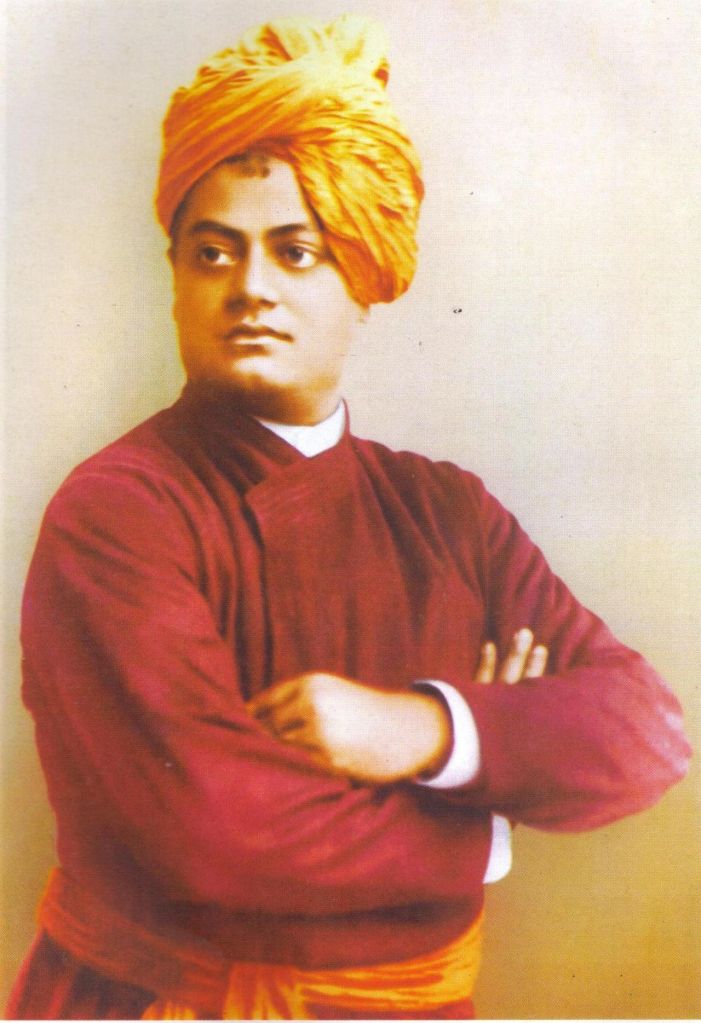
About Swami Vivekanand:-
There are some rare men who leave their footprints on the sands of time, becoming a source of motivation for thousands of lost wanderers in the battlefield of life. Swami Vivekananda is one such example. “Come up, o lions and shake off the delusion that you are sheep; you are souls immortal, spirits free, blest and eternal….’ These words of stunning optimism proclaimed the arrival of a prophet- philosopher no less than Swami Vivekananda on the stage of the world. Such were his words that shook the world in the Chicago address on 19 September 1893. A young, educated man, Narendranath Dutta once walked the path of scepticism and even cynicism when it came to religion.
“All the powers in the universe are already our. It is we who have put our hands before our eyes and cry that it is dark.”- –Swami Vivekananda“
A visit to Ramakrishna Paramahansa changed his life. He challenged Ramakrishna’s claims of having seen God. Ramakrishna put his fingers on Naren’s heart, and in a moment of overwhelmingly powerful spiritual vision, Naren discovered God everywhere- from the rich man in his mansion to the poor rickshaw puller on the streets of Kolkata. God was no more a wishful thinking confined to the Kali temple at Ramakrishna’s Dakshineshwar. He was a living entity beyond all limitations of caste, creed, religion, language, time and space. Thus Narendranath Dutta metamorphosed into Swami Vivekananda, a disciple of Ramakrishna. This, however, was merely the beginning. The master, Ramakrishna, had told him before his passing away that he, Naren, would have to do ‘Mother’s work’, to teach mankind and be like a banyan tree, giving shelter to the tired and weary. In January 1891, he left the company of his brother monks and traversed the country from the North to the South alone with God. He wept to see the suffering and ignorance of the poor, and was disturbed at the material complacency of the affluent classes. The picture of ancient India appeared vividly before his eyes in all its grandeur and glory, and the contrast was unbearable. Swamiji set upon himself the task of rebuilding a new and rejuvenated India.
“
“Learn everything that is good from others but bring it in, and in your own way absorb it; do not become others.” –Swami Vivekanand‘.
Be it his journey to America or the lecture at Chicago or the setting up of the Ramakrishna Mission in 1897, his main aim was service to mankind and the rebuilding of a young, vibrant and educated India. · Ramakrishna Mission today is a giant organisation which dedicates itself to the execution of extensive educational and philanthropic work in India and abroad, and expounds the profound Vedantic philosophy preached by Swamiji. The impact Swamiji had on India and across the world can be best understood by the comment made by The New York Herald about his speech at Chicago; ‘He (Swamiji) is undoubtedly the greatest figure in the Parliament of Religions. After hearing him, we see how foolish it is to send missionaries to this learned nation.
“Take up one idea. Make that one idea your life; dream of it; think of it; live on that idea. Let the brain, the body, muscles, nerves, every part of your body be full of that idea, and just leave every other idea alone. This is the way to success, and this is the way great spiritual giants are produced.”
― Swami Vivekananda
Narendranath Dutta was born on 12 January 1863, and Swam Vivekananda passed away on July 4, 1902. But the lionheart with his piercing eyes, mobile lips, swift movements, clad in yellow and orange, shining like the sun of India in the heavy atmosphere of Chicago, lives on in the memory of millions. He inspires every ma in the world to ‘arise, awake, and stop not till the goal is reached.
You have to grow from the inside out. None can teach you, none can make you spiritual. There is no other teacher but your own soul.” ― Swami Vivekananda
If anyone wants to study the origin of the Vedanta movement in America then study Swami Vivekananda travels across the US. He was a great thinker, great orator, and passionate patriot. It is not wrong to say that he was more than just a spiritual mind.
“Be the servant while leading. Be unselfish. Have infinite patience, and success is yours.” ― Swami Vivekananda
Hinduism is now the third largest religious community with more than 1 Billion followers around the world. After the British rule, the Hindu Religion came to known as Hinduism, but before that Hindu was termed as Sanatana Dharma, Which means the eternal Duty of life, No matter any caste, gender or race. Every Hindu People used to practice the Sanatana Dharam through their whole life. In texts, Sanatana Dharma Was written as a way of living a healthy Life with honesty, Purity, Goodwill, Mercy, & Patience. According to some Scholars, along with Hindu devotees and priests, beliefs that the Hinduism is the oldest religion and has always existed in this world. Around 90% of the total Hindu population lives in India (also Hindustan or Bharat) with different beliefs and culture. India is well known for their mix culture, traditions and the believe in their deities. In Fact, Buddhism and Jainism were also originated in India.
Hinduism Beliefs
As this religion has no specific founder, nobody knows that when and how it was originated, but as per the Hindu priests and many scholars had specified it as an oldest religion. Hindu believes in karma (law of cause and effect). They Worships a single god with a believe in the existence of the other gods or goddess. They believe in soul (Atman) and a pure & gentler way to live. Hindu believes that people should live together without harming any other religion or People in the name of God or as any part of their worshiping. They believe in Moksha (also called as Mukti) which is an Indian Philosophy & Religion, that means release from the cycle of Rebirth. Their Goal of Life is to live with their Dharma in the very proper way the Dharma asks their devotees to live. There many other Interesting beliefs of Hinudusim, one would know if they explore more about it.
Hindu Deities
Devas and Devis are called as the God and Goddess of Hinduism. Hinduism itself is very wide and have different traditions to worship their Deities and that’s the Beauty of this religion. People with different Traditions are united by Hinduism and they live together. Some of the Deities are:-
Lord Brahma
Lord Vishnu
Goddess Saraswati
Lord Shiva
Lord Krishna
Goddess Lakshmi
Many other religions have also adopted the Hindu Deities and the traditions outside the India. In the medieval era the texts of Hinduism describe the Human Body as Temple and the soul as the deities residing it.
The Yugs (Era)
There are 4 different Yugs (Era) Every Yuga is Shorter than the preceding one and in each Yuga the humanity will be found less than the Old Yugas. The 4 Yugs are:
Satya Yug
Treta Yug
Dvapara Yug
Kali Yug
Kali Yug Lasts for 4,320,000 years (12,000 divine years). The Kali Yug (Present Era) is Believed that started around 3102 BCE. In the ancient texts of Purans it was also written that the Kali Yug will be dominated by Hatred, intolerance, lust, and corruption.
Hinduism Origin
The Vedic Period where Vedas Were written was lasted around 1500 BC to 500 BC. At that period rituals Used to make sacrifices, chants, and many other mystical practices of that periodic time. It was really hard to be found the exact time period that when did the Hindu religion was actually originated. As per scholars the birth of Hinduism was found in the Indus River Valley, which runs through Northwest India to Pakistan. It was originated around 4500-5000 BCE. The Indus River Valley was diminished around 1800 BC cause of climatic conditions. It was also named as Sindhu as, a Sanskrit Word. It’s location created a lot of problems because of the Iranian plateau. Around 712 AD, Muslims invaded the The Indus Valley.
Around the 7th century, Muslim Arabs began Invading Areas in India. In 1200 to 1757, Islamic ruler prevented Hindus worshipping their Deities. Some of the Hindu Temples were also destroyed around 1757 to 1947, under British Control. Some Christaniers were also found to convert & westernize the Hindu people, which is still happening around the Country.
Hinduism Holy Books
The Vedas were written around 1500 BC. That Book was filled with prayers and verses written by the Hindu Saints in Sanskrit letters and it includes:
The Rig Veda
The Samaveda
Yajurveda
Atharvaveda
Hindu Festivals
Hindu festivals are well known for the way of believing & celebrating it, with full of Joy and worshipping Hindu deities, Devotees enjoy their festival days. Some Of the Hindu festivals Are:
Hindu Culture is filled with joy, teaches a better way of living, Unites the people, Gives freedom to worship the god that their devotees believe, and always wanted people to live in a better place with their family and to enjoy the worshipping.
The Tughlaq administration, also called as Tughluq or Tughluk dynasty, was a Muslim line of Turkey which managed over the Delhi sultanate in medieval India. Its rule began in 1320 in Delhi. Ghiyasuddin Tughlaq was the first ruler of this dynasty. Khusrau Khan, the last ruler of the Khilji administration was executed by Ghazni Malik. Slave dynasty was the one which mark the beginning of delhi sultanate.
He was intellectual of reasoning, philosophy, astronomy, mathematics, calligraphy and physical sciences. He had good knowledge of various languages such as Turkish, Sanskrit, Persian and Arabic. The famous traveller Ibn Battuta visited India during his reign. He was a liberal king who believed in equality. He gave freedom to Hindu as well as Jains.
Reforms- Taxation in the Doab: The Sultan made a stupid budgetary examination in the Doab between the Ganges and Jamuna. He expanded the rate of duty as well as restored and made some extra Abwabs or cessess, Transfer of Capital (1327): It seems that the Sultan needed to make Deogir as his second capital so that he may have the capacity to control south India better. Deogir was renamed Daulatabad. After two or three years, Muhammad Tughlaq chose to forsake Daulatabad basically on the grounds that he soon found out that he couldn’t control south India from Delhi and he couldn’t control north from Daulatabad, Introduction of Token Currency(1330): Muhammad Tughlaq chose to present bronze coins, which were to have the same worth as the silver coins. Muhammad Tughlaq may have been effective in the approach if he could keep individuals from moulding the new coins, Khurasan Expedition: The Sultan had a dream of widespread victory. He chose to win Khurasan and Iraq and activated a gigantic armed force for the reason. Be that as it may, his campaign demonstrated a disappointment, Quarachi Expedition: This campaign was propelled to counter Chinese attacks. It likewise gives the idea that the campaign was coordinated against some headstrong tribes in Kumaon-Garhwal district with the objective of bringing them under Delhi Sultanate.
He died in Thatta while battling in Sindh against Taghi, a Turkish slave.













 Eduindex


You must be logged in to post a comment.