TERRACOTTA- LET’S COLLECT KNOWLEDGE ABOUT IT

Sparkle of Terracotta

TERRACOTTA- AN UNIQUE STYLE OF ART
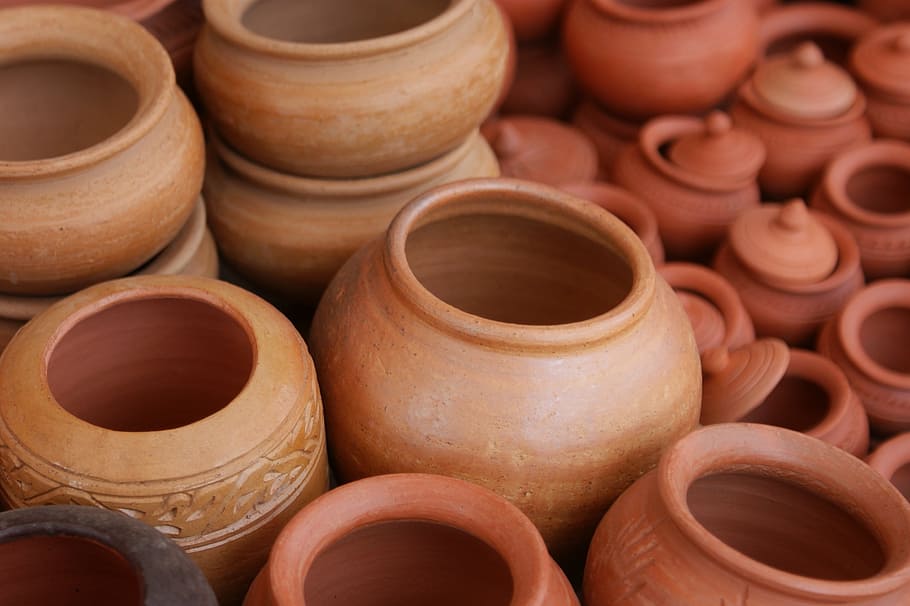
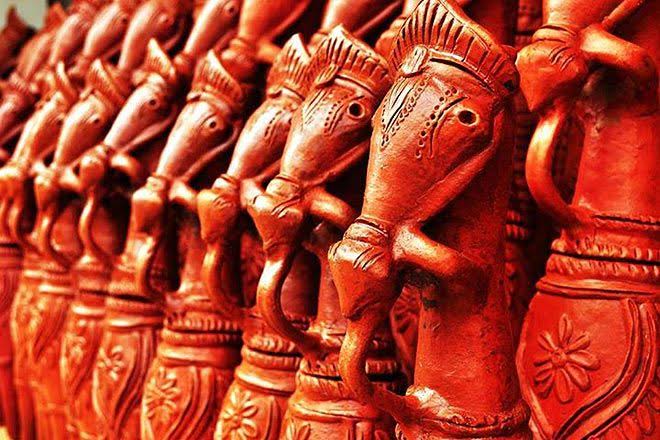
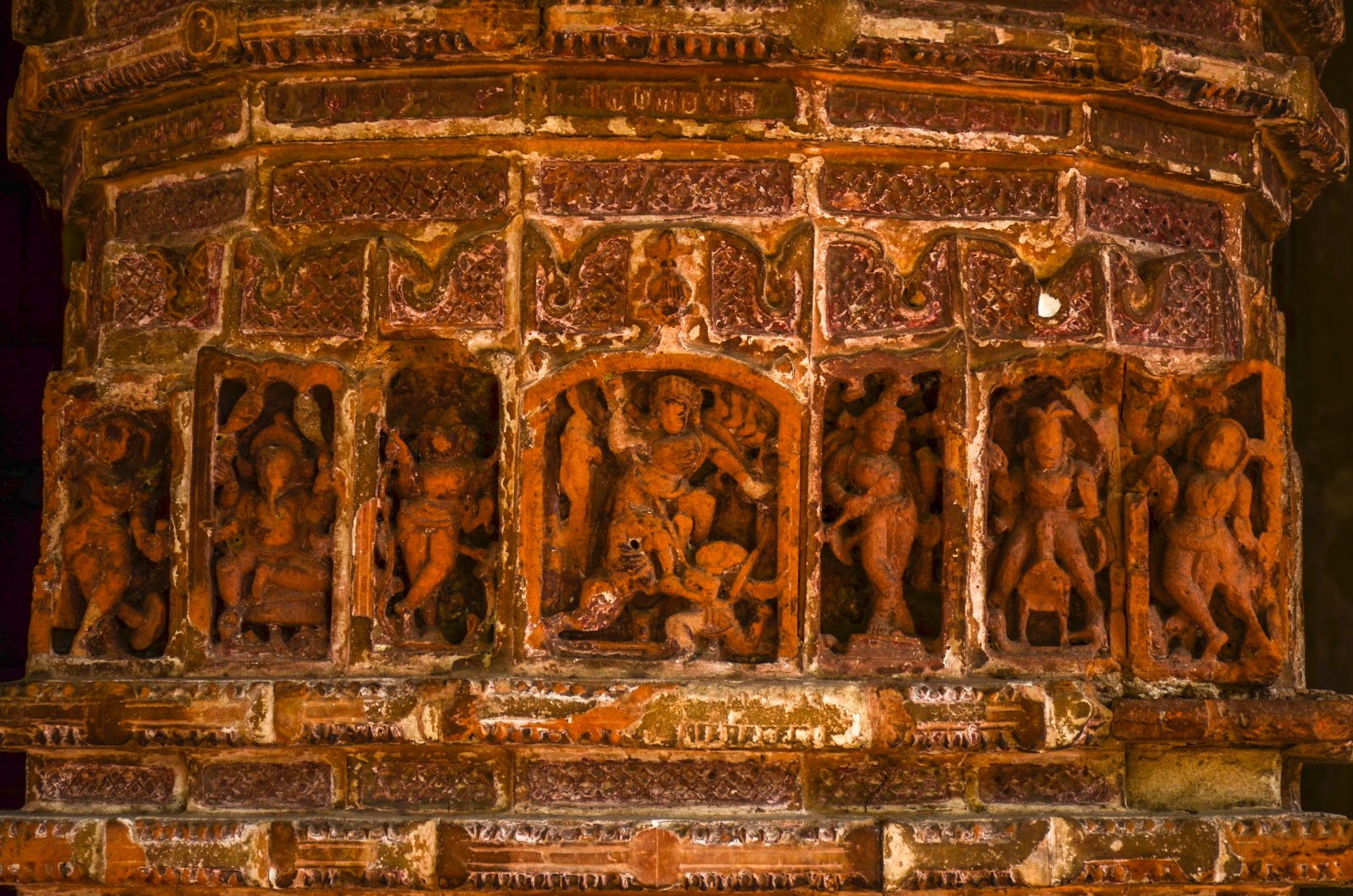
According to the dictionary the Terracotta art means hard,fired clay,brownish in colour when unglazed which is used to make architectural ornaments and facings, structural units, pottery and as a material for sculpture. The word ‘Terracotta’ came from Latin word ‘Terra-cotta’ and in Italian language Terrakotta means ‘baked-earth’.  
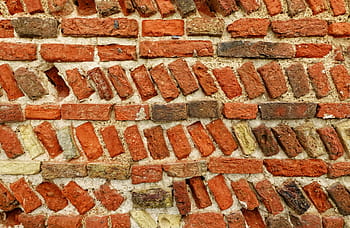
 Basically Terracotta is a type of earthenware or Ceramic pottery. At 1st we should have enough knowledge about earthenware. Earthenware is glazed or unglazed non-vitreous pottery which is made on fire below 1,200°C (2,190°F). So what do you say ? ‘baked-earth’ makes sense right? 
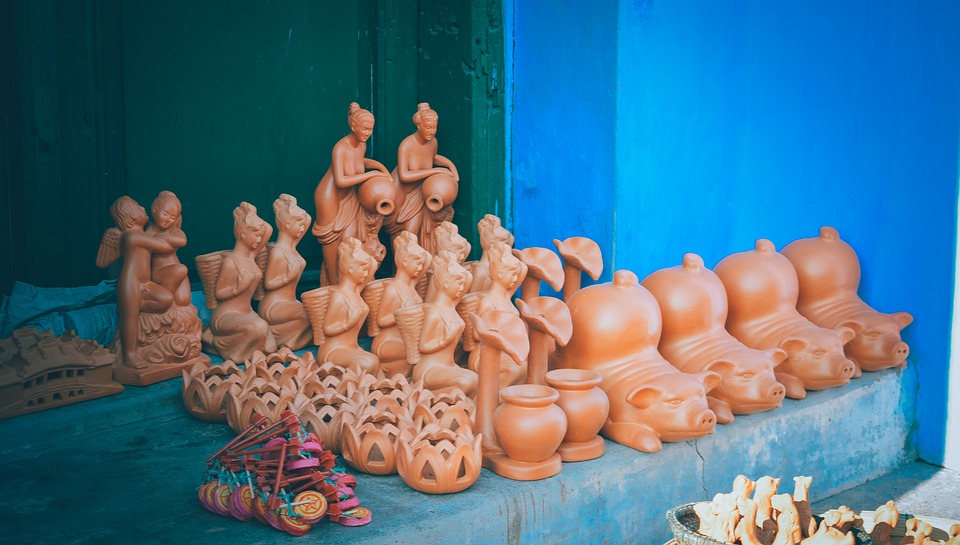
Normally Terracotta is used for sculpture making. But not only for sculpture but also for flower vas, doll,pot,water pipes, bricks,roofing tiles etc. Even there are also many temples of Terracotta. It is too flexible material for sculpture.Terracotta is usually a fairly coarse, porous type of clay. At first it has to be shaped then fired until hard. In the past, it was left to harden in the hot sun ,after that it was baked in primitive ovens. Ultimately, it was fired (at about 1000°C) in a special oven, kilns. After baking the clay became a brownish colour. Until it was glazed it was not watertight.terracotta is too simple than other bronze or other material work. 
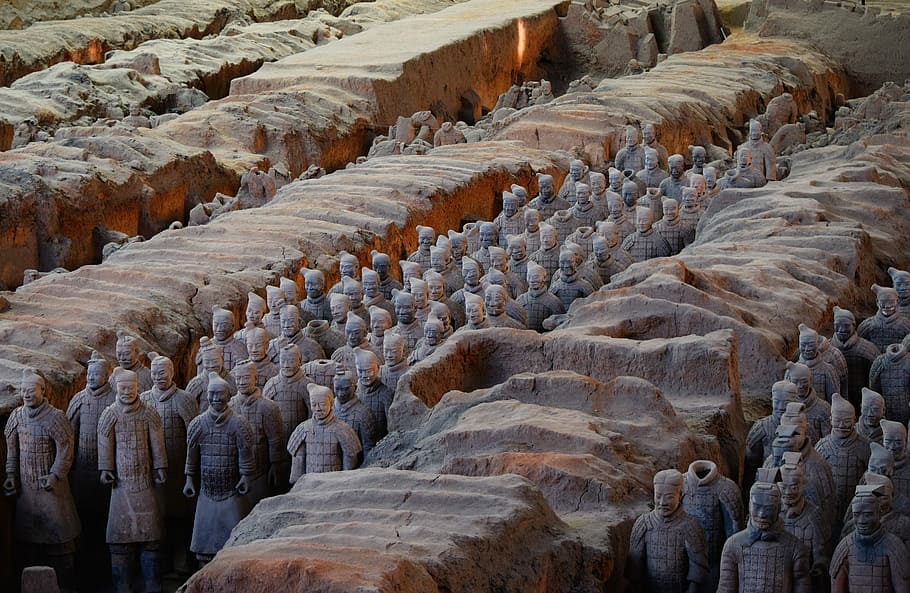
It was 1st used in Prehistoric art according to Venus of Dolni Vestonice (26,000-24,000 BCE) which was found buried in a layer of ash in Moravia at a paleolithic encampment. Some famous Terracotta figures are- The Thinker of Cernavoda(5000 BCE), The Enthroned Goddess Figurine(6000 BCE).Bronze and Iron Age artists kept the culture of the terracotta tradition, like the female fertility cult figures unearthed at Mohenjo-daro in Pakistan (3000-1500 BCE), and The Burney Relief (1950 BCE) from Ancient Mesopotamia. On the other hand we must say Chinese art created the biggest example of Terracotta art, those are-The Terracotta Army (246-208 BCE). Around the Mediterranean,such as early Egyptian, Minoan, Mycenaean, Greek and Etruscan cultures, employed terracotta for figurative works – such as the Tanagra Figurines from Boeotia in central Greece – besides  decorative art and architectural ornamentation.Particularly in the era of Hellenistic art (323-30 BCE) it was widely used by sculptors. It was also used in Early Christian art, for tomb reliefs (from c.200 CE). Terracotta is also famous in African sculpture, pre-Columbian art.
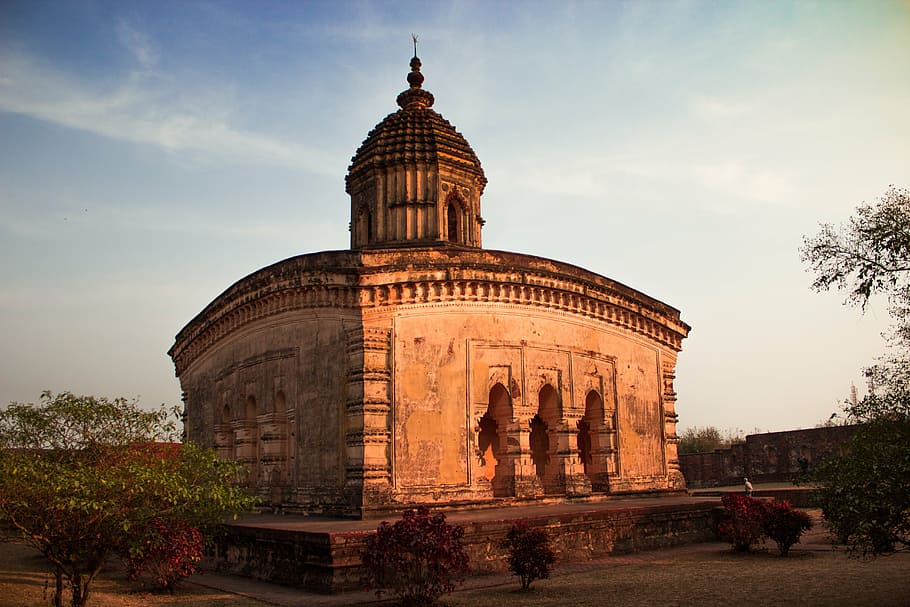
In India Terracotta is famous in the same way as in the past. In India Terracotta is a heritage culture. It is very common that there are many things of terracotta at most homes in India. ‘Bishnupur’ in West Bengal is a great source of Terracotta sculptures or other things. Murshidabad, Birbhum, Jessore, Digha (all are in West Bengal)  are also the treasure of Terracotta. There are also famous in Rajasthan, Bihar, Haryana, Himachal Pradesh, Odisha, Jammu and Kashmir etc.    
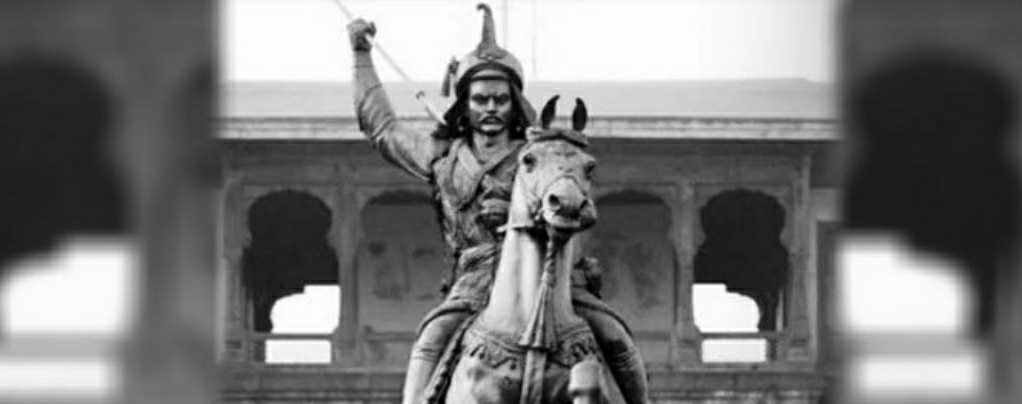
Man who never witnessed defeat

Have you ever lost in any sports, fight, or even a bet? Many of us have. Defeat is something that every man encounters at least once in their life yet not in the situation of Peshwa Bajirao. Incredible Peshwa Bajirao! At an exceptionally youthful age like 12, he went to the battlefield for the first time and since then he never witnessed defeat. He fought over 41 battles in his military career and defeated Nizam-ul-Mulk Asaf Jah of Hyderabad who is considered as his most prominent foe. There is no doubt in the fact that he is considered the best Indian cavalry general. He was truly a God-sent blessing to the Maratha Empire in the 18th century.

His personal life was as head as his career in the military. He married Mastani who is known to be his second spouse after Kashibai. He surely faced family resistance but it couldn’t stop him from marrying her. Therefore it is very clear that he didn’t lose his battles, not his love but unfortunately, he couldn’t survive a virulent fever and died at the age of 40. The history of the Maratha Empire would be a lot different if we could see him win more battles.

First Indian to earn ‘A’ standard Olympic quota

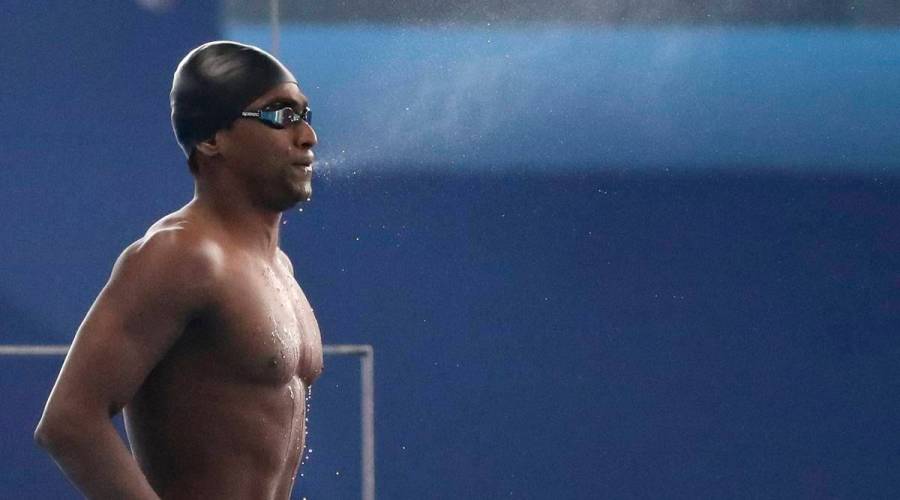
Sajan Prakash created history by becoming the first Indian ever to clear the ‘A’ standard of international swimming, clocking 1:56.38 minutes in the 200m butterfly. Eventually, heads to the Tokyo Olympics as the first Indian to make it to successive Games.

It wasn’t the fastest of races, which meant Sajan had to push himself to set the pace, with Israeli Marc Hinawi as a marker. The Indian was right behind Czech swimmer Lunak Sebastien in Lane 4 at the first turn, which he completed in 25.99s. Sajan would take the lead at 100m, clocking 29.57s on the return, and finish with identical, consistent splits of 30.41s in the second half.


27-year-old, Sajan Prakash from Kerala won gold which is his second in two weeks. After coming agonisingly close to slashing ‘A’ at Belgrade, Serbia, last week. Coach Pradeep Kumar said, “He was spending 19 seconds and 52 metres underwater over four laps, and we focussed on speeding his pace and gaining 80 centimetres in all to breach the ‘A’ Cut.”

Born in Idukki in the shadow of the tallest peak in the Western Ghats – the Anamudi mountains – Sajan swam under coach Saju Sebastien at Neyveli (Tamil Nadu) before heading off to his friend Pradeep Kumar. He would also work in a training stint in Thailand on a FINA scholarship, and was seen as the most consistent performer since his Rio Games outing. The pandemic saw him head to Dubai where he worked in an indoor pool, silently chipping away the seconds.


Former Asiad medallist Virdhawal Khade explained Butterfly is considered the hardest strokes. While Khade reckons said the Butterfly relies on strong shoulders, it is all in the kick that Sajan scores. He further contunied “Even now, he’s not the most dominant guys. But he works hardest and helps young swimmers and is generous with his help. It’s his time now to become the alpha of Indian swimming and lead the others. If youngsters ever needed someone to look up to, there’s none better than this nice guy. Sajan’s put a smile on everyone’s face in Indian swimming,”.

LEAST KNOWN SOCIAL REFORMERS OF INDIA

AHILYABAI HOLKAR- QUEEN OF MALWA KINGDOM

Looking back into the ancient times of the Indian History, we get to see that not only the people fought against the British Rule to free our country but some of them, mostly women, fought within their own community for the rights they were denied and for the wrong customs that were imposed on them.

One of those least known social reformers is AhilyaBai Holkar who came from the village of Choundi in Jamkhed, Ahmednagar, Maharashtra. Her stories of struggle are very inspiring for every man and woman.

STORY OF AHILYABAI

In the year 1733, MalharRao Holkar was on his way back home from his tour. On his way he decided to stop at the village of Choundi where he came across this young girl offering a prayer at the temple. They did not pass a single word between them. MalharRao Holkar for few minutes just kept looking at the devotion of this young girl. He was impressed by her vity and soon came to a decision that this girl should become my daughter-in-law as he thought that only someone like her could fix his stubborn son.

He came to know that this young girl was AhilyaBai, the daughter of Mankoji Shinde, a scion of a respectable Dhangar Yadav family residing at Choundi of the Beed district, was the Patil of that village. MalharRao wasted no time in securing the consent of Mankoji Shinde and on May 14,1733 AhilyaBai got married to Prince KhandeRao. It was long before AhilyaBai realized that KhandeRao was not an ideal husband. Fortunately, the same could not be said about her in laws. Her father-in-law MalharRao Holkar and her mother-in-law GautamaBai Holkar loved her. MalharRao even offered AhilyaBai to train her in the arts of warfare and statecrafts. AhilyaBai, in spite of everything she learnt and grew, did not give up on Prince KhandeRao. Instead she always used to discuss the things she learnt each day with him. She remained patient through all these times when Prince KhandeRao showed his stubborn behavior but after a long wait her patience finally paid off and now she saw an overtime change in his personality. He started taking active interest in the matters of the kingdom and learnt to first evaluate the things on his own and then listen to the problems of the people. With time his father MalharRao started to feel that he was becoming fit to take over the throne as his responsibility now.

Few years later, AhilyaBai gave birth to her son MaleRao. 3 years later, the couple had a daughter named MuktaBai. Even though she was a mother now, AhilyaBai was solely concerned with the domestic issues of the kingdom. She was an abled ruler in the absence of MalharRao. Her way of approaching the problems brought to her was quite impressive. She used to be way more attentive and patient. She also accompanied her husband and her father-in-law in various military campaigns. During one such campaign in Kumher(1754), a bullet hit her husband from the fort and he passed away. This incident devastated AhilyaBai and according to the norms of the society she was prepared to commit Sati. But MalharRao couldn’t bear to lose both, his son first and now his daughter-in-law. He requested AhilyaBai to change her mind for the sake of her father-in-law and she indeed did the same. Now her only aim was to live for her family and her kingdom.

In the year 1766, MalharRao set on a battle along with Raghu, the uncle of the Maratha leader MadhavRao Peshwa. Away from home MalharRao felt ill and passed away after that. By this time, AhilyaBai was completely heartbroken with the realization that she had lost both the people who would be her backbone and now she is all alone. Bad news didn’t stop here. Soon, her son MaleRao also departed. Her world was totally shattered but she knew that she had no time to grieve now as it was the time for an immediate call. The kingdom was now her responsibility. To the outsiders, the kingdom seemed to be weak and smelling blood they started to plan and conquer the same. But AhilyaBai did not give up and fought against each of them who tried to enter her capital. She appointed TukojiRao Holkar, who was the second son of MalharRao’s nephew, as the chief of her militia. After her first victory in protecting her kingdom she moved her capital to Maheshwar where she build temples, set-up schools and revived the tradition of Maheshwar sarees.

A society that can breach the stereotype in India .

I never feel confined by gender, by labels, by expectations, by stereotypes. I’m free to be myself.

Princess Nokia

Introduction

During the last two decades it is said that to be a women is the most precious gift a human can have . To be able to give birth to another human being that lives inside precisely 9 months at most .

But their is another dispute that a women can only be a insider . That can fulfill the needs of the dominant society.

Isn’t these two statements are contradictory. In first one a women is a precious gift and in another she can only fullfill one’s needs but only in four walls .

Aren’t they human or a thing that can only live under the roof of men for living ?

Women have always played an important role in the society . Even in the ancient times , they were considered as an equal with the men . So what change , the air , the water , the life style or the mindset . We can also say that the stereotype mindset in society .

Years and years before people grew their ego and think about their individual benefits. Women lead life with virtue , wisdom and respect .

When it start

It was all not same as it was now , their were times when women rule the nation . But due to the foreign invasion , women suffer immensely . At the mediaeval times , women came to be confined within the four walls of the house .

Mediaeval period also known as ‘DARK AGE ‘ as very few women’s were found to be a ruler at that period . It was the period when women brought to the deeds where they made to be inferior to men .

They were raped and brutally killed by the demons who think they can dominate them .

Rani Padmavati, Jodha Bai, Gulbadan Begum, Nurjahan, Jahan Ara , Mumtaj Mahal, Razia Sultan , Jija Bai are some of the women who fought for their right , safety , people , family and love also saved many .

“And one day she discovered that she was fierce, and strong, and full of fire, and that not even she could hold herself back because her passion burned brighter than her fears.”

– Mark Anthony

Modern era

It’s a century of love , reliability , equality and most important individuality .

Then why women are always compared to the men . Why they questioned when they are innocent . ( Well not all are innocent and victim , just for those who are ) .

I do believe that men and women are different . Their differences doesn’t make them weak . It’s just a perspective and view of people that make them vulnerable .

But do women care , it’s their own life not to say that anyone means ANYONE can come and stamp their ‘so called ’ rules on them . Not against the male gender but to those who think they can dominate and lock them in four walls .

Not to say, if women lock men in four wall room . So what will happen to them . Umm. Let’s think , they run like a horse at the time when the room unlocked .

If OJO -MOJO can’t stay in their rooms can’t OLLE do the same . Yes she can , also kick their humpy dumpy bum.

Let’s end the topic and eat some more . It’s a 21st century donot let someone walk on you , you can stand for yourself .

“Don’t let anyone speak for you, and don’t rely on others to fight for you.”

– Michelle Obama

This editorial is written under one’s perspective . Neither against any gender nor in favour .

THE ART MACHINE- JAMINI ROY

The great artist and his great creation

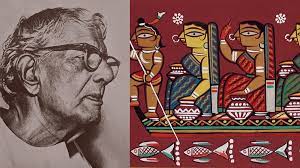
On 11th April of 1887 at Beliatore in Bankura,West Bengal the great Jamini Roy was born. His family was a simple middle class land-owner bengali family. He grew up with a lot of love for painting. His father , Ramanath Roy resigned Jamini Roy from the Government services  and was admitted to the Government College of Art in 1903 when he was 16 years only.

When he took admission in Art College then Abanindranath Tagore , the founder of Bengal School , was vice-principal of this college.Mr. Roy was taught under Abanindranath Tagore’s teaching. He was taught to print in the prevailing academic tradition by Abanindranath Tagore. He taught classical nudes and oil painting. In 1908 he finished his course and got a Diploma in Fine Art. 

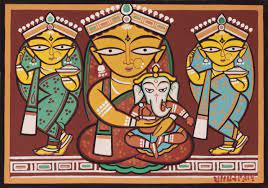
Jamini Roy started his painting with the western cultural art but his heart wanted to create something folk style traditional painting. He had a huge interest in traditional cultural  painting. Actually he got inspiration from ‘Kalighat Pat’ which is a kind of ‘Patachitra’ and it is drawn by bold sweeping brush-strokes. 

In the 1st stage of his career he painted portraits for commission but in depth he felt he was not satisfied with this. After that in 1925, he saw the ‘Kalighat Pat’ and was inspired by its style of painting.

Mr. Roy painted 20,000 paintings in his life for which he is famous by calling ‘Art Machine’. He focused always on the middle class culture or lifestyle for his painting. He believed that middle class ordinary people are more important than the higher class’ or Government because middle class people are the voice of his art. He did respect them too much. 

He had three motives: to capture the simplicity of middle class people in their daily life, to make them accessible to all over the people in India and lastly to give a own identity to the Indian Art. 

In 1938, it was his 1st art exhibition in Kolkata. In 1940, his painting came to a new light and became famous . He mixed up the Bengali middle class and the European community and it was the center of his art. After that in 1946 and in 1953 his art exhibited in London and New York City. His art was exhibited on international platforms and he was awarded by ‘Padma Bhusan’ in 1954. For most of his life he worked in Kolkata. We can see his art in many private and public collections like the London, Victoria and Albert museum .

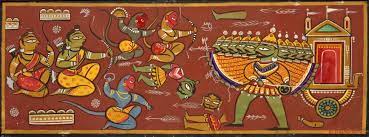
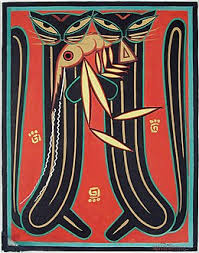
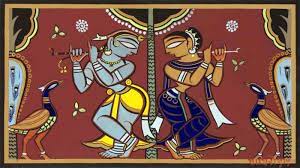
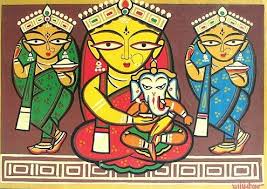
He liked to introduce himself as a ‘Patua’. His art collection is wonderful . In 1946, ‘Ramayana’ spread across 17 canvases. This painting is now displayed in the National Art Gallery .Jamini Roy created the ‘Dual Cats With One Crayfish’ series in 1968. In 1952 the ‘Bird and Two Companions’ standed out for its majestic indigo of Bengal. Besides these, ‘Crucifixion With Attendant Angels’ , ‘Krishna And Balaram’, ‘ Santal Boy With Drum’, ‘Krishna And Radha Series’ ‘Makara’, ‘St. Ann And The Blessed Virgin’, ‘Seated Woman In Sari’, ‘ Nol O Damayanti’ etc are famous creations .He was awarded by Viceroy’s gold medal in 1934 and Fellow of the Lalit Akademi in 1935. Unfortunately this wonderful personality passed away on 24rth April, 1972. 

THE GREAT ART OF JAMINI ROY

INDIAN CULTURE

We respect and honour our Indian culture a lot. India is a famous country all over the world for its culture and tradition. It is the land of various culture and tradition. It is the country of oldest civilizations in the world. The vital components of the Indian culture are good manners, etiquette, civilized communication, rituals, beliefs, values, etc. Even after the life styles of everyone has been modernized, Indian people have not changed their traditions and values. The property of togetherness among people of various cultures and traditions has made India, a unique country. People here live peacefully in India by following their own culture and traditions.
People beliefs and follow various customs and traditions according to their own religions. We celebrate our festivals according to our own rituals, keep fast, take bath in holy water of Ganga, worship and pray to God, sing ritual songs, dance, eat delicious dinner, wear colourful dresses and other lots of activities. We also celebrate some National festivals by getting together such as Republic Day, Independence Day, Gandhi Jayanti, including various social events. People of different religions celebrate their festivals in various parts of the country with great zeal and enthusiasm without interfering each other.
Variety of eras came and gone but no one was so powerful to change the influence of our real culture. The culture of younger generations is still connected to older generations through umbilical cord. Our ethnic culture always teaches us to behave well, respect elders, care helpless people and always help the needy and poor people. It is our religious culture that we should keep fast, do worship, offer Gange Jal, do Surya Namaskar, touch feet of elder in family, do yoga and meditation on daily basis, give food and water to the hungry and disabled people. There is great culture of our nation that we should always welcome our guests like a God very happily, that’s why India is famous for a common saying like “Atithi Devo Bhava”. The basic roots of our great culture are humanity and spiritual practices.
Festivals play an important role in Indian culture and tradition. People from different religions celebrate different festivals in India. Popular festivals like Diwali, Dussehra, Navratri, Janmashtami, Shivratri, Ganesh Chaturthi, etc. are celebrated by Hindu people in India. Whereas Eid-ul-Fitr, Bakrid, Muharram, etc. festivals are celebrated by Islamic people in India. Other than this, many harvest festivals like Makar Sankranti, Chapchar kut, Pongal, Sohrai, etc. are celebrated by farmers.

However, Christians also celebrate Christmas, Good Friday, etc. festivals in India. There also exist different regional festivals in each state of India like Teej, Onam, Ugadi, Saraswati Puja, Panna Sankranti, Chhath Pooja, Pongal, Lohri, and so forth.
Indian Costumes are different for the different states of India. It varies depending on the origin, climate, and heritage of the place. Indian culture still follows traditional costumes. In eastern states such as Odisha, West Bengal and southern states like Tamil Nadu and Karnataka, women wear saree as the authentic clothing. It is a single and long fabric piece draped around the body.

In a similar way, men wear Dhoti-Kurta or Kurta-Pyjama as the authentic clothing in eastern states. In northern states like Punjab, women wear salwar kameez and Kurti as traditional clothing. Whereas men wear headgear or turban known as the Dastar as the traditional clothing. In India, all the married Women wear Sindoor, a vermilion powder in the parting of their hair. They also wear bindi, Mehendi, bangles, and earrings as part of their attire.
India is a land of rich culture and tradition which teaches people kindness, generosity, and tolerance. Indian culture differs from place to place as it is a multilingual, multicultural, and multi-ethnic society. Indian culture is a unique blend of modern western culture and historical traditions. India is a country of great legends where many great people were born and remembered forever due to their sacrifice for the nation. People across the world come to enjoy and feel the culture and tradition of India. India is well known for its “UNITY IN DIVERSITY “, across the world. That means India is a diverse nation where many people live together peacefully having there own different cultures.

The New Silk Road

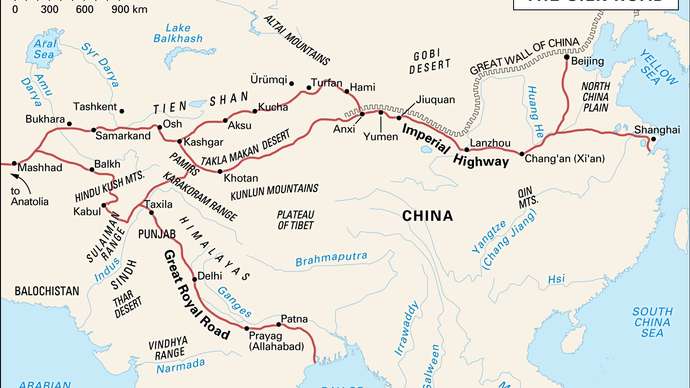
The Silk Road also called Silk Route was an ancient trade route, linking China  with the West, that carried goods and ideas between the two great civilizations of Rome and China. Silk went westward, and wool, gold, and silver went east. China also received Nestorian(Eastern) Christianity and Buddhism(from India) via the Silk Road.

The Silk Road began in north-central China in Xi’an (in modern day Shaanxi province). A caravan track stretched west along the Great Wall of China, across the Pamirs, touching the Indian province of Ladakh, then through Afghanistan, and into the Levant and Anatolia(Turkey). Its length was about 4,000 miles (more than 6,400 km). Goods were then shipped to Europe via the Mediterranean Sea.

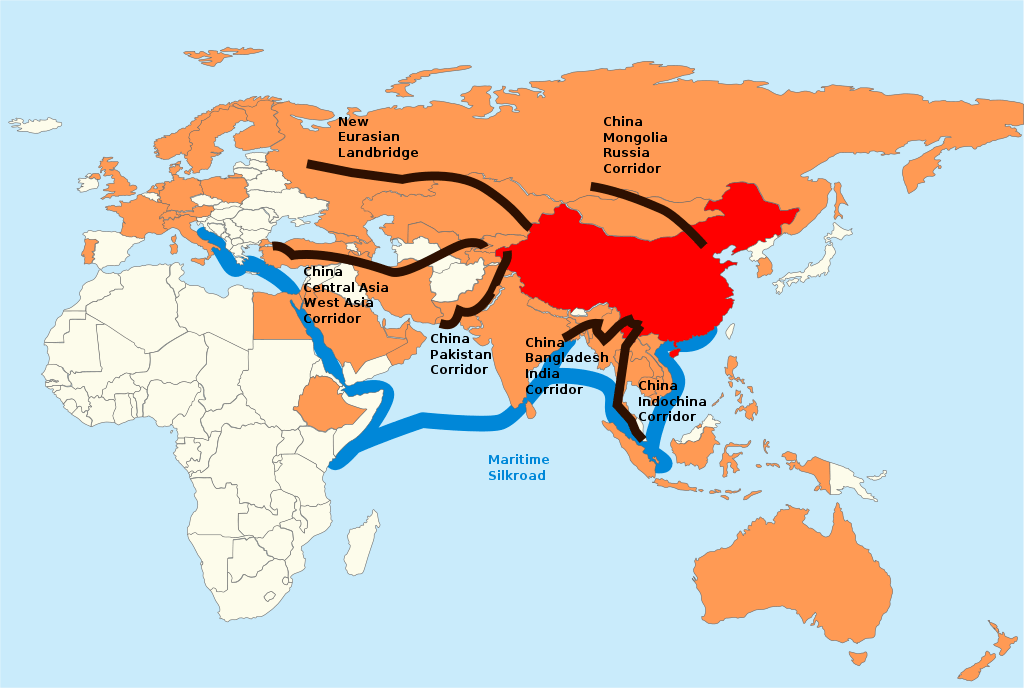
China, now a global superpower seeks to revive this ancient trade route to open new channels of trade with the West in light of various geopolitical and border disputes with her neighbouring countries.

Parts of the Silk Road survives in the form of a paved highway connecting Pakistan and China’s Uyghur Autonomous Region of Xinjiang. In the 21st century the United Nations planned to sponsor a trans-Asian motor highway and railroad. The Silk Road also inspired China’s Belt and Road Initiative, a global infrastructure development strategy authored by President and General Secretary Xi Jinping. The Asian Infrastructure Investment Bank and the Silk Road fund will be the financing this gigantic project.

It’s flagship projects include the China-Pakistan economic corridor(CPEC), where China will fund the construction and development of a big port in Gwadar, Pakistan for trade and maritime shipment to Africa & West Asia.

China is investing heavily in BRI which includes many railway, energy sector, roadway and agriculture projects. Which is not surprising as the country being the world’s biggest oil importer, it’s energy security is a very important concern while current sea routes used to import Middle Eastern Oil continue to be frequently patrolled by the US Navy.

It remains to be seen whether the modern revival of the famous trade route is a successful endeavor.

3 Indian Historical Monuments and Their Spine Chilling Back Stories

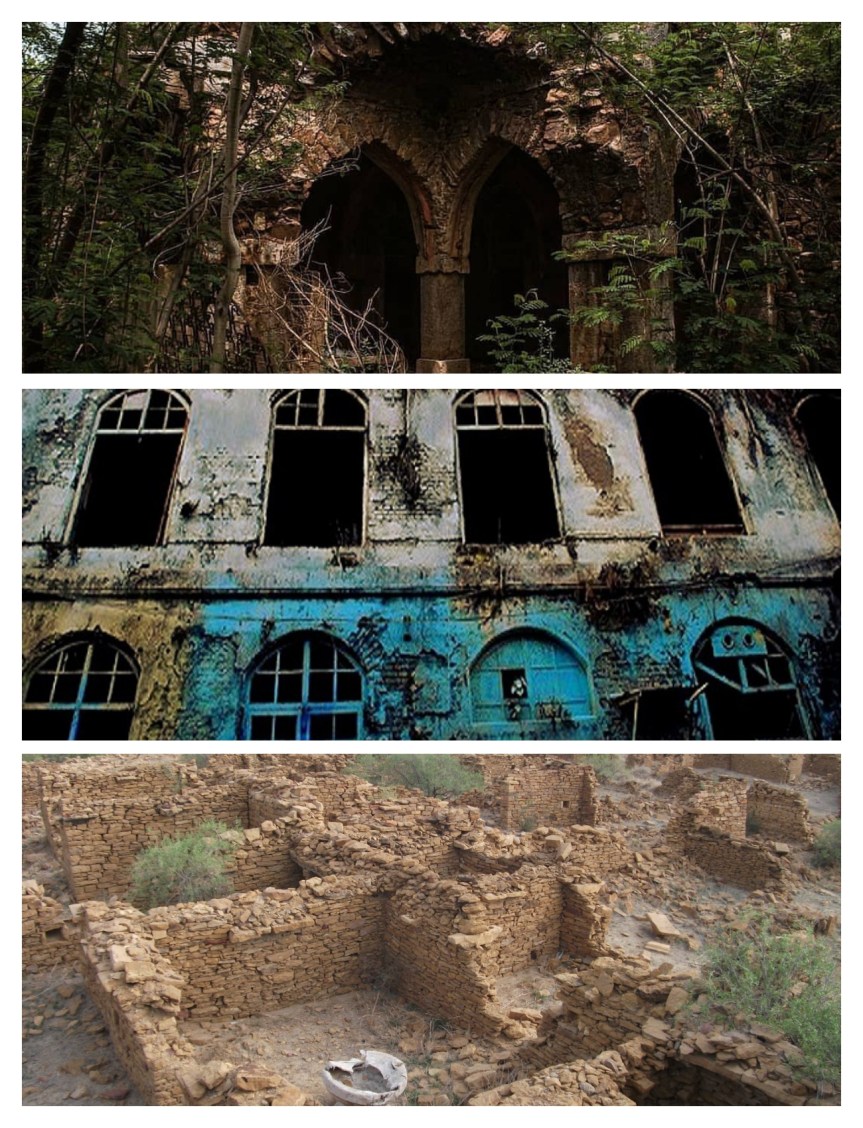
1. Malcha Mahal, Delhi – Delhi is home to many haunted places but i picked this because of its tragic back story. This mahal was inherited by Princess Wilayat but the property was seized by Britishers who ruled the country at that time which left the princess and her 2 kids homeless. After a 9 year long battle Princess Wilayat was given her place back in 1985 but it was all runied and infested. Depressed she committed suicide in 1993 consuming crushed diamonds, leaving her kids behind and since then those 2 people, the brother and the sister lived there all by themselves. It was said that anyone who went near that area was shot down by them. The brother died in 2017 due to some unknown cause and the sister died a few years before him, date and cause unknown. The mahal is still in ruins and not many people dare to go near it.

2. Mukesh Mills, Mumbai– As the name suggests, it was a mill back in the time, around the 1870s and had a good business. But something happened in the late 1980s and the business was shut down. An unexplained fire broke out at the place leaving the building coal black. This became a true attraction for bollywood directors and actors like Bipasha Basu, have unexplained events like someone possessing them, music heard when no one was around in the building, spotting of mysterious people etc. Many actors still fear shooting there.

3. Kuldhara, Rajasthan– Now maintained by the archeological survey of India, this village was abandoned by the villagers around 200 years ago. They say the Prime Minister, Salim Singh here was a really cruel person and would use unethical methods for collecting the tax. One day his eyes wandered and landed on the daughter of the village cheif. He declared his intentions to marry her. The Paliwal Brahmins were horrified by this proposal since there was no room for inter caste/religion marriages back then. Fed up with his torture all the villagers left the village. No one knows where they went and settled down but to this day, no one can live over night in the village. People who try to, witnessed unusal activites and some of them were even recorded. Some people spotted shadows moving around, weird noises coming or tap on their shoulder when no one was around. This place is still a tourist attraction and people from across the glove visit but no one dares to spend the night here.

Ladakh – The link between India and Central Asia

Ladakh, situated in northernmost India bordered by the Tibet autonomous region to it’s east, the Indian state of Himachal Pradesh to it’s south, both Indian Jammu & Kashmir and Gilgit-Baltistan(PoK) to it’s west and the southwest corner of the Chinese Xinjiang autonomous region across the majestic karakoram pass in the far north, has always been a land of intrigue. The name ‘Ladakh’ means the land of high passes is full of great mountain passes like the Karakoram, Khardungla etc.

The largest town and capital of Ladakh is Leh, followed by Kargil. The Leh district contains the Indus, Shyok and Nubra river valleys while the Kargil district has the Suri, Dras and Zanskar river valleys. Being administrated as a union territory recently, it is the largest and second least populous union territory of India.

Since past, Ladakh has been important due it’s strategic location at the crossroads of important trade routes. Most notably the renowned Silk Road, which was and still is a network of trade routes connecting the East and West, and was key to the economic, cultural, political and religious interactions between these regions from the 2nd century BC to the 18th century. It primarily refers to the land but also sea routes connecting East Asia & Southeast Asia with South Asia, Persia(Iran), the Arabian Peninsula, East Adrian and Southern Europe.

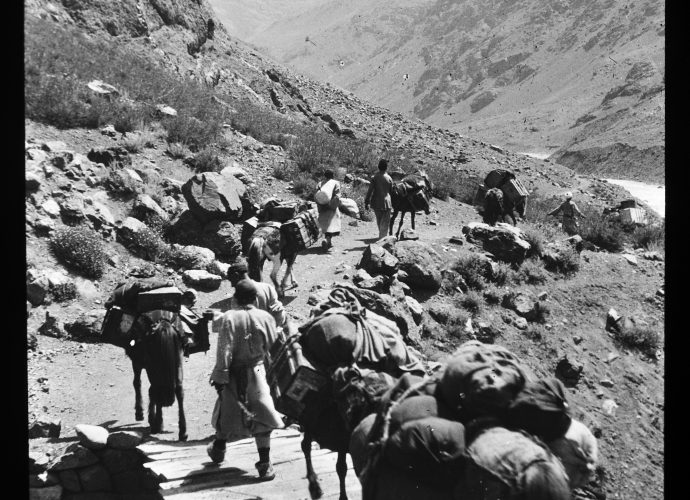
Due to its contiguity with Xinjiang and Tibet and its close proximity to Central Asia, and enjoying a central position in the network of overland caravan routes that were linked to the Silk Route, Ladakh acted as an important gateway in the Indo-Central Asian exchange of men, materials and ideas through the ages. The great mountain barriers of the Hindu Kush, Karakoram, Kun Lun mountains and western Himalayas where not successful in stopping the trade from thriving.

The Central Asian Museum in Leh celebrates this rich cultural & trade history with Central Asia having many artifacts, photographs and art installations depicting trade through Ladakh. Notable exports to Central Asia were the famous Pashmina Shawls, Tea, Indigo, Coral, Salt etc. Imports from Central Asia were Bukharan and Kokandi gold coins(from the area which is now the country of Uzbekistan), Silk Cloth, Russian currency etc.

The trade and the caravan traders even helped in the urbanisation of Ladakh and giving it’s unique identity.

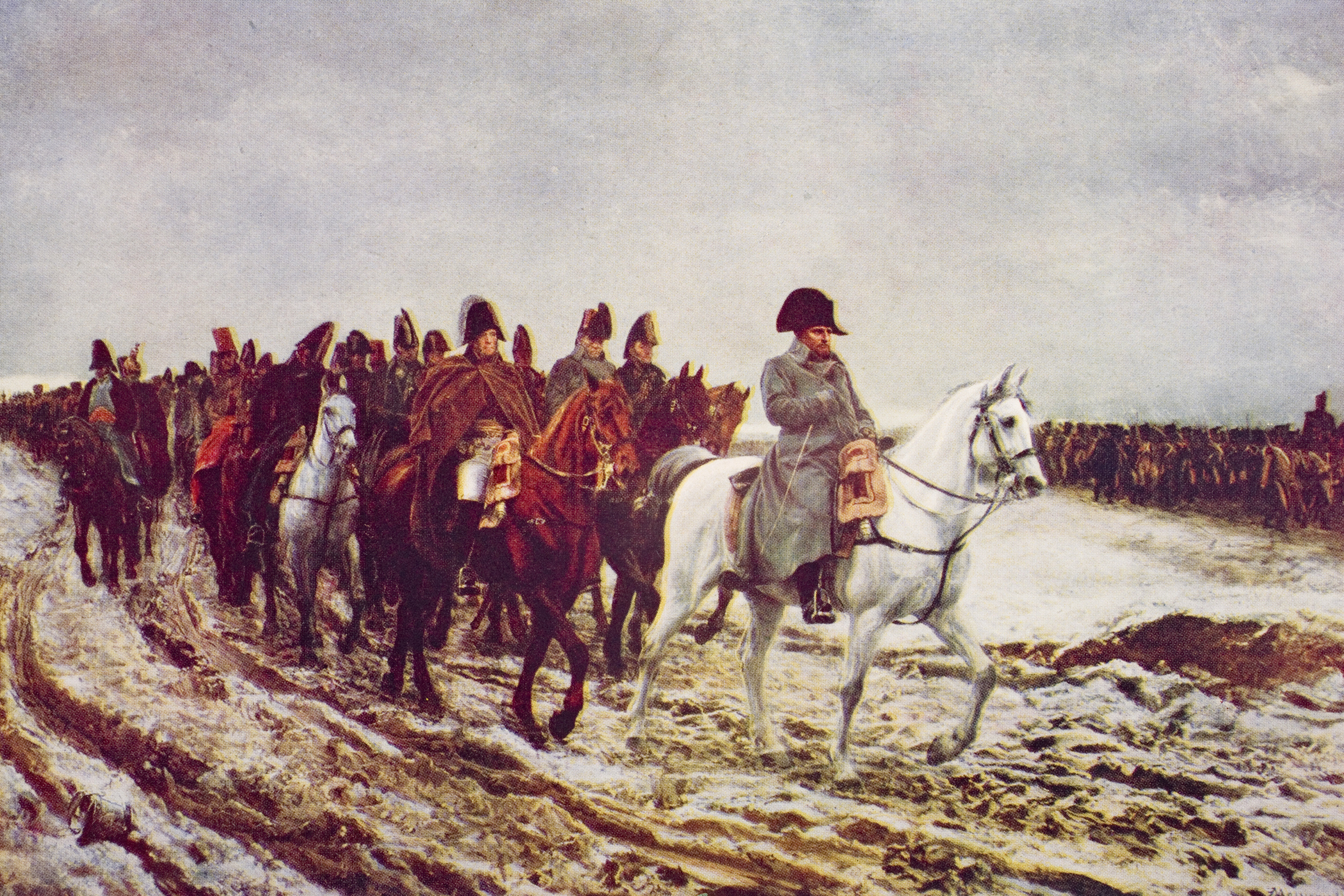
Russia invated by Napoleon and Grand Army

On 24 June, French Emperor Napoleon Bonaparte, crossed the Neman River, invading Russia from present-day Poland. Eventually this resulted in disaster for the French.

To intimidate Alexander, Napoleon massed his forces in Poland in the spring of 1812, but still the czar resisted. On June 24, Napoleon ordered his Grande Armée, the largest European military force ever assembled to that date, into Russia.


Which all started when Russian army refused to engage with Napoleon’s Grande Armée of all most 500,000 European troops. Though the Grande Armée did not have enough supplies or the distribution networks required for such a long march. However french strategists assumed the Grande Armée would be supplied by wagons, or would be able to gather supplies as they went. Furthermore, Grande Armée also failed to prepare for Russia’s harsh winter. Its troops were not dressed or trained for the kind of weather they faced.


Besides the invasion lasted six months, and the Grande Armée lost more than 300,000 men during the process. On the other side Russia lost more than 200,000 too. This single battle resulted in more than 70,000 casualties in one day. The invasion of Russia effectively halted Napoleon’s march across Europe, and resulted in his first exile, to the Mediterranean island of Elba.

The Art of Rogan Painting

India is a diverse country, rich in age-old traditions and culture. Throughout its history, India has witnessed the emergence of many exotic art forms and craftsmanship. However, with the rise of cutting-edge technology of industrial textiles, many traditional craft forms have taken a massive hit. Rogan painting is a classic example of an enthralling yet sadly dying art. 

What is Rogan Painting?

Rogan painting is a 400-year old inherited traditional textile craft of Gujarat. It is considered to be the oldest and most challenging printing art in the history of textile. The word Rogan means oil in PersiaWith origins in Persia, it was brought to India around 300 years ago, even though there is not enough historical evidence to support the statement. 

Preparation of the Ingredients

The chief ingredients required for Rogan painting are castor oil, wood, kerosene oil and dyes. The first step in the painting is the preparation of Rogan paste. 

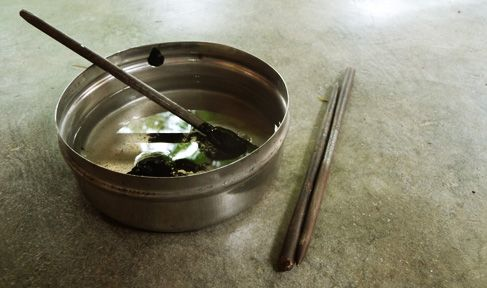
After preparing a furnace and selecting a suitable aluminium container, the local craftsmen boil a litre of castor oil for a minimum of four hours. The time required for boiling may vary depending upon the quantity of the oil taken. Then, they continuously stir the oil until it is time to remove the container from the furnace to let it cool down. While boiling, the castor oil may catch fire, after which it is immediately taken out and covered with a lid. During this, the impurities present in the oil gets thrown out in the form of fumes. This process is repeated several times until the oil forms a thick, gelatin-like consistency and turns yellowish. 

Traditionally, the dyes used in Rogan painting were derived from organic, natural sources such as stones and plants. But today, synthetic dyes are used too. Red, yellow, blue, white, green, and brown are the primary colours used in the painting. 

A manual stone grinder was used to mix naphthol dyes and white chalk powder and prepare the colour paste. With the gradual addition of water, the required consistency of the paste is reached. The Rogan paste is added to the colour paste and ground until it forms the desired soft, smooth, gelatinous dye paste. 

Process of Rogan Painting

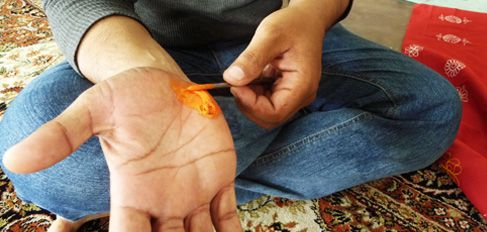
The process of painting is a very tedious and cumbersome task. Initially, the craftsmen lay the fabric to be painted on the floor. Next, they take a lump of the dye paste and put it on the palm of one hand. They hold a suya rod or a metal stylus in the other hand and mix the thick paste till it stretches into a thread-like structure. 

They carefully twist the rod to create beautiful motifs and patterns across the fabric without the rod touching the cloth. After that, they fold the fabric and press it evenly to obtain an identical impression on the other half of the fabric. Lastly, the fabric is left out in the sunlight for about six to seven hours to let it dry.

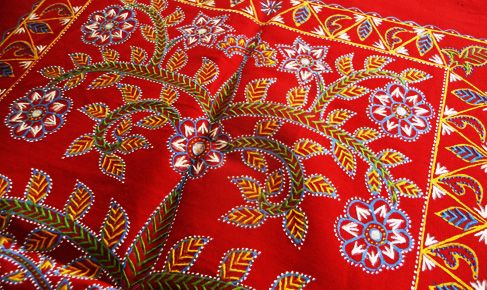
The intricate motifs that embellish the fabric, such as geometric flowers, peacocks, the tree of life, etc., are inspired by the history and folk culture of the Kutch region of Gujarat.

Originally, the Rogan Art was used to adorn the trousseau of a bride. But due to the limited resources, meeting the market demand has become a challenge. From almost becoming a dying art to gaining worldwide recognition, Rogan Art sure has come a long way.

LIFE HISTORY OF APJ ABDUL KALAM

Early life :
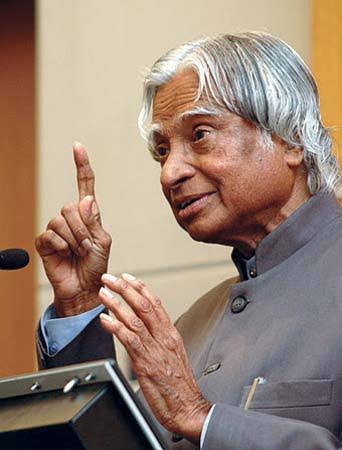
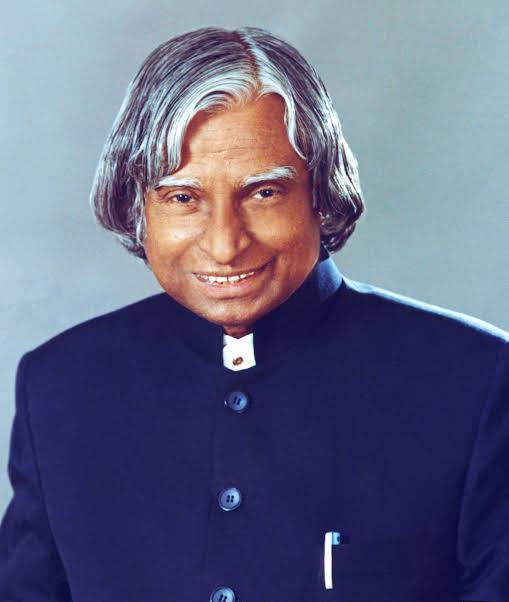
His full name is Abul Pakir Jainulabdeen Abdul Kalam. He was born on 15th October, 1931 in Rameswaram, Madras Presidency, British India which is presently known as Tamil Nadu, India. His father’s name was Jainulabdeen Marakayar who was a boat owner and imam of a local mosque. His mother’s name was Ashiamma. She was a housewife. He was the youngest of four brothers and one sister in his family. Even though his ancestors had numerous properties and were wealthy, they lost most of their fortunes by the 1920s. This is why Kalam was born and grew up during poverty.

Education:
He studied in Schwartz Higher Secondary School. Previously he had average grades but later he was described as a bright and hardworking student who had a strong desire to learn. He went to Saint Joseph’s College, Tiruchirapalli, then affiliated with the University of Madras. He graduated in Physics in 1954. In 1955 he moved to Madras to study Aerospace Engineering in Madras Institute of Technology. The Dean was dissatisfied with his lack of progress in a senior class project and threatened to revoke his scholarship unless the project was finished within the next three days. He met the deadline impressing the Dean who later said to him that he was putting Kalam under stress and was asking him to meet a difficult deadline. He narrowly missed achieving his dream of becoming a higher pilot, as he got ninth position and only eight positions were available in Indian Air force.

Career as a Scientist:
After graduating from Madras Institute of Technology in 1960 he joined the Aeronautical Development Establishment of the Defence Research and Development Organisation. He started his career by designing a small hovercraft but remained unconvinced by his choice of job. He was also a part of the INCOSPAR Committee. In 1969 he was transferred to the India Space Research Organisation (ISRO) where he was the project director of India’s first Satellite Launch Vehicle.

Presidency:
APJ Abdul Kalam served as the 11th President of India, succeeding KR Narayanan. He won the Presidential election held in 2002. His term lasted from 25 July 2002 to 25 July 2007.

Books written by Dr. APJ Abdul Kalam:
He played an important role in the second pokhran nuclear test in 1998. He was also associated with India’s Space Program and missile development program. Therefore, he is also called the “Missile Man” of India. He wrote many books. The name of these books are as follows:-
1. India 2020: A Vision for the New Millennium
Publishing year: 1998
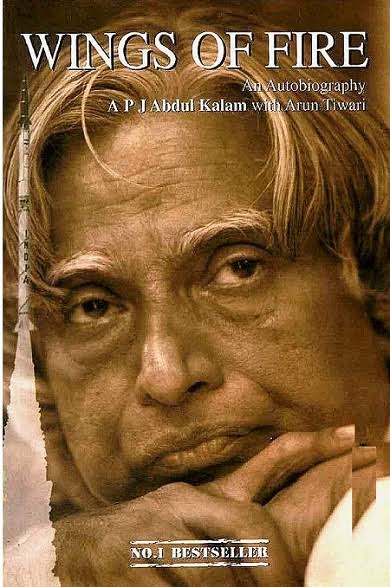
2. Wings of Fire: An Autobiography
Publishing year: 1999
wings-of-fire-biography-kalam
3. Ignited Minds: Unleashing the Power within India
Publishing year: 2002
4. The Luminous Sparks: A Biography in Verse and Colours
Publishing year: 2004
5. Guiding Souls: Dialogues on the Purpose of Life
Publishing year: 2005
Co-author: Arun Tiwari
6. Mission of India: A Vision of Indian Youth
Publishing year: 2005
7. Inspiring Thoughts: Quotation Series
Publishing year: 2007
8. You Are Born to Blossom: Take My Journey Beyond
Publishing year: 2011
Co-author: Arun Tiwari
9. The Scientific India: A Twenty First Century Guide to the World around Us
Publishing year: 2011
Co-author: Y. S. Rajan
10. Failure to Success: Legendary Lives
Publishing year: 2011
Co-author: Arun Tiwari
Ramnath Kovind: 10 facts about 14th President of India
11. Target 3 Billion
Publishing year: 2011
Co-author: ‎Srijan Pal Singh
12. You are Unique: Scale New Heights by Thoughts and Actions
Publishing year: 2012
Co-author: S. Poonam Kohli
13. Turning Points: A Journey through Challenges
Publishing year: 2012
14. Indomitable Spirit
Publishing year: 2013
15. Spirit of India
Publishing year: 2013
16. Thoughts for Change: We Can Do It
Publishing year: 2013
Co-author: A. Sivathanu Pillai
17. My Journey: Transforming Dreams into Actions
Publishing year: 2013
18. Governance for Growth in India
Publishing year: 2014
19. Manifesto for Change
Publishing year: 2014
Co-author: V. Ponraj
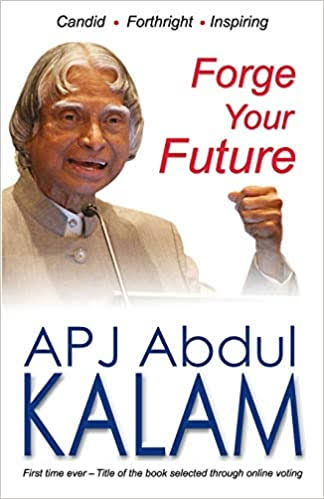
20. Forge Your Future: Candid, Forthright, Inspiring
Publishing year: 2014
21. Beyond 2020: A Vision for Tomorrow’s India
Publishing year: 2014
22. The Guiding Light: A Selection of Quotations from My Favourite Books
Publishing year: 2015
23. Reignited: Scientific Pathways to a Brighter Future
Publishing year: 2015
Co-author: ‎Srijan Pal Singh
24. The Family and the Nation
Publishing year: 2015
Co-author: Acharya Mahapragya
25. Transcendence My Spiritual Experiences
Publishing year: 2015
Co-author: Arun Tiwari

Awards:
He won many awards. The list are as follows:-
1981: Padma Bhushan- Government of India
1990 : Padma Vibhushan- Government of India
1997 : Bharat Ratna- Government of India
1997 : Indira Gandhi Award for National Integration- Government of India
1998 : Veer Savarkar Award- Government of India
2000 : SASTRA Ramanujan Prize- Shanmugha Arts, Science, Technology and Research Academy, India
2013 : Von Brown Award- National Space Society

Death:
Dr. APJ Abdul Kalam breathed his last on 27th July,2015 due to a cardiac arrest while delivering a lecture at th Indian Institute of Management, Shillong.

@track2traininginstitute @track2trainingseminar @edunewsnetwork @pen2prints

YOGA-Indian heritage

Yoga’s roots began in India thousands of years ago. Yoga is one of the greatest achievements of Indian civilization, which has spread its influence far and wide.
The ancient seers used yoga as a means to explore the exterior and interior world and ultimately achieve the knowledge and wisdom of Vedas, shastras and Upanishads which have been passed down to the world. Yoga was evolved by the ancient Indian Rishis as a practical method for complete physical, mental and spiritual transformation of an individual. Different periods of Indian history can tell the origin of Yoga.
(i) Pre-Vedic period : The excavation of Mohenjodaro and Harappa in Indus Valley reveals that yoga was practiced in some forms during that period. The idols as well as statues which were found in excavation, are in various yogic postures. The language which was used in Indus Valley Civilization, is still unknown to us, but it is sure on the basis of idols that yoga was performed during that period.
(ii)Vedic period : Vedas refer to the oldest “portion of the sacred canon of Hinduism, they are four RIG, ATHARVA, SAMA and YAJUR. The word ‘Yunjate’ used in Rigveda gives the idea of the yoga for sense control. Some concepts of yoga are partially developed from Vedas.
(iii) Upnishads period : It is the upnishads, from which the later parts of Vedas provide the main foundation of Yoga teaching and philosophy known as Vedanta i.e., ‘Absolute reality’ or consciousness. The real basis of yoga can be found in upnishads. Pran and Nadis are discussed in upnishads along with the physiological effects.
(iv) Epic period : Around 6th century B.C. appeared two massive epics; the Ramayana written by Valmiki and the Mahabharata written by Vedavyasa. Various types of yogic practices were used during that period. Bhagavad Gita is perhaps the best known of all yogic scriptures.
(v) Sutra’s period : The backbone is furnished by Patanjali Yoga Sutra. He was rightly called the father of Yoga, who around 200 B.C, compiled, sythesized, modified, systematised and refined yoga in a metaphysical whole.
(vi) Smriti Period : Smrities were written till about 1000 A.D. During this period, of Smriti literature, we find various change in ideas, beliefs, worship and customs. Pranayam and other purification techniques used to occupy a significant place in every ritual of people.
(vii) Medieval Period : In this period, the two cults i.e., Natha cult and Bhakti cult were very famous. The literature of these cult shows that yoga was very popular in these cults. Hathayoga was evolved and became very famous in the Natha cult. The saints of these periods used to do various yogic practices.
(viii) Modem period: Swami Vivekananda made Yoga very popular and continued to spread its knowledge outside India also. Modern men have adopted this oldest science of life as a tool for keeping the systems of the body and mind in good health. Interest in Yoga is again at high pace with good reason. Yoga is the oldest form of personal development in the world, encompassing body, mind and spirit.
Yoga has its roots in the Indus Valley Civilization. The Vedas, Upanishads, the famous epics Ramayana and Mahabharata specially the Gita, Smrities, Yogasutra are authentic evidences of development of Yoga in ancient times. The seeds of yoga were sowed and developed in India and now it is spreading all over the world by Swami Ramdev ji.

Dinman Hardoul Singh

Dinman Hardoul Singh or Lala Hardoul is a Hindu folk deity of Bundelkhand in India. He was the prince of Orchha and the son of maharaja Vir Singh Deo and the brother of Jhujhar Singh. He was born in 1664 and died in 1688 at the age of 24. A temple of Hardoul in Bundelkhand is a centre for pilgrims and according to local beliefs he is still alive and is worshipped as a deity.

He is sometimes considered to be a nephew of Alha and Udal of Mahoba (see Alhakhand), however Alha and Udal were Banaphars during Chandela rule, where as Lala Hardoul was a Bundela.

Local legend states that prince Hardoul, was resented by Jhujhar Singh (Hardoul’s elder brother) who suspected his wife of having an extra-marital affair with Hardoul. Jhujhar ordered his wife to poison Hardoul in order to prove her innocence, with Hardoul willingly accepting it.[1]

The legend further goes that when Jhujhar’s (now the king) sister asked for aid in getting her daughter married; he sarcastically asked her to seek the help of the dead Hardoul. The dead prince is then said to have not only attended the wedding but served the guests as well.[1]

It is still believed by the local people that Hardoul attends weddings he is invited to and people leave him a wedding card to seek his blessings

The legend of Lala Hardoul is popular locally and is performed as street theatre in Bundelkhand. Chundri Odhasi Mahro Bir (also released as Lala Hardaul) is a 2012 Indian historical drama film, based on the folklore, directed by Nishant Bhardwaj and produced by Cair Saangri.[3] It stars Sachendra Choubey as Hardaul, Divyanka Tripathi as Padmavati (the queen and wife of Jhujhar Singh) and Devendra Bhagat as the king Jhujhar Singh.