SECULARISM

Secularism is defined as a doctrine where all religions are given equal status recognition and support from the state. In other words ,secularism simply means as a doctrine that promote separation of state from religion.

Secularism stands for that there should be no discrimination and partiality on grounds of religion and everyone should get an equal opportunity to follow the religion of their choice.

The tradition of secularism is inhibited In The Deep roots of the history of India. In a nation India the first face of secularism is reflected in the preamble of India where the word secular holds the most importance. Indian secularism is also reflected in its fundamental rights article 25 to 28 where the government guarantees each of its citizens the right to practice any religion.

In the words of PB Gajendragadkar ,a former Chief justice of India, secularism is defined as the state does not all loyalty to any particular religion as such it is not irreligious or anti religious it gives equal freedom to all religion.

Indian philosophy of secularism is related to “Sarva Dharma Sambhavana” ,meaning the destination of the parts followed by all religions is the same though the parts them self maybe different simply meaning secularism means equal respect to all religions.

India is a secular country and India does not attached its politics with any individual religion. We Indians together celebrate every festival as well as Indians have the entire freedom and say to celebrate their religion in the country regardless of the caste and creed.

The ideology of Secularism also allows people to express their opinions and beliefs freely. As in a secular state ,no religious group can apply pressure of dominance . Through this ideology, their has been an increasing effect on the right to speech.

The history of secularism in India way backs to 1976 ,where during the 42nd Amendment of the Indian Constitution. The leaders of Independent India had visualised India,  as a country where religion is no bar for its citizens.

SECULARISM IN MODERN INDIA

India was under the control of the East India Company and the British Raj after Aurangzeb. The British East India Company pursued a divide and rule policy, yet the spirit of secularism was strengthened and enriched by the Indian Freedom Movement. The politics of “divide and rule” has contributed to some extent to the conflict of communities between different communities. The partition of Bengal in 1905 followed this policy. The Council of the Indies Act of 1909 made available to other voters for Muslims. This provision was extended by the Government of India Act 1919 to seeks in certain states, Christians in India, Europeans, and Anglo-Indians. Separate voters further extended the co-representative principle by providing separate voters to the depressed class (planned caste), women and workers (workers) through the Indian Governance Act of 1935. The establishment of the Indian National Congress in 1885, with its secular values, united people of all denominations and led the free movement to a constructive and successful path. Nehru issued a long report (1928) calling for the abolition of another voter to create a secular state. Gandhi’s secularism was based on a commitment to brotherhood in the religious community based on respect and pursuit of truth, but J.L. Nehru’s secularism was based on a commitment to scientific humanism, adorned with a progressive view of historical change.

 To conclude , Secularism allows the people of various religions to live peacefully without any fear of the majority. It safeguard democracy by limiting the powers of the majority. It ensures harmony in the nation. In absence of secularism, religious persecutions may take place which may result in dissent, conflicts or even a civil war.

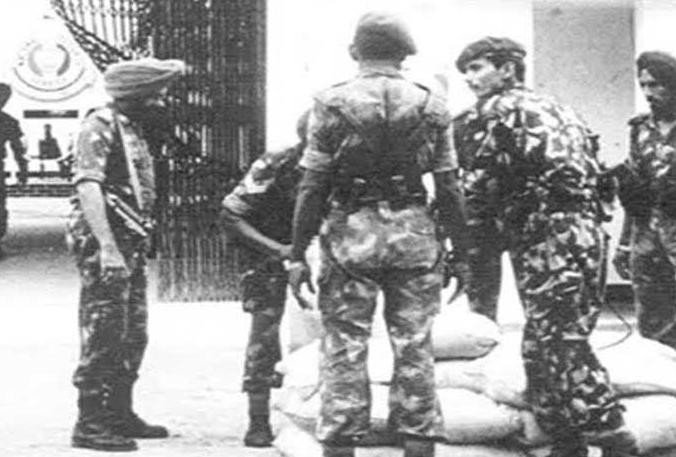
Operation Cactus by Indian Armed Forces which saved Maldives freedom.

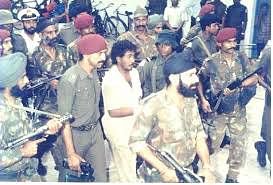
Operation Cactus, led by the Indian Armed Forces in 1988, to stop a group of Maldives mercenaries led by businessman Abdullah Rutufi, and armed mercenaries of the Tamil Elam People’s Liberation Organization (PLOTE), a separatist Tamil organization in Sri Lanka. It’s strategy was to overthrow the government in the Maldivian island republic.

Thier were two coup attempr done before 1988.The 1980 and 1983 coup attempts against President Maumoon Abdul Game were not considered serious, but the third coup attempt in November 1988 surprised the international community. About 80 armed PLOTE mercenaries boarded a speedboat from a Sri Lankan cargo ship hijacked in the capital Male before dawn. A similar number has previously invaded Male in the guise of a visitor. The mercenaries soon gained control of the capital. This includes major government buildings, airports, ports, television and radio stations. The mercenaries then marched to the presidential residence, where President Gayoom lived with his family. However, before they arrived at the presidential residence, President Gayoom was escorted to the Defense Minister’s house by a Maldivian national security forces. The Secretary of Defense then took the president to a safe home.

Meanwhile, the mercenaries occupied the presidential residence and managed to take the Maldivian Minister of Education hostage. President Gayoom called on Sri Lanka and Pakistan government to intervene in the military, but both refused to help because of lack of military power. The president then demanded Singapore’s intervention, but Singapore refused for the same reason. He then contacted the United States and was told that it would take a couple of days for the US military to reach the Maldives from the nearest military base in Diego Garcia, which was almost 1000 km away. The president then contacted Britain and who advised them to seek help from India. After that, President Gayoom sought help from the Indian government. India soon accepted their request and an emergency meeting was convened at the Secretariat Building in New Delhi. Within 16 hours of SOS, India was ready for thier missions.

Rejaul Karim Laskar, a member of India’s then ruling party, the Indian National Congress, said that intervention of India in coup d’etat was necessary because without India’s intervention, outsiders powers were tempted to intervene and establish base in the Maldives. . Therefore, India intervened through “Operation Cactus”. On the night of November 3, 1988, the Ilyushin Il-76 aircraft of the Indian Air Force took elements of the 50th Independent Parachute Regiment, the 6th Parachute Regiment Battalion, and the 17th Parachute Field Paratrooper Regiment under Brigadier General Farsala from Agra Air. He flew non-stop for over 2,000 kilometers (1,240 miles) and landed at Male International Airport on Hulhule Island. Indian Army paratroopers arrived in Hulhule nine hours after President Gayoom proceedings.

Indian paratroopers quickly secured an airfield and sailed to Male on a confiscated boat to rescue President Gayoom . Paratroopers handed over control of the capital to President Gayoom ‘s government within hours. Some of the mercenaries fled to Sri Lanka on a hijacked cargo ship. Those who could not arrive at the ship in time were immediately rounded up and handed over to the Maldivian armed Forces and government. According to reports, 19 people died in battle, most of them mercenaries. The dead included two hostages killed by mercenaries. And Operation Cactus took 18 hours for Indian Armed Forces from start to finish. Indian Navy frigate Godavari and Betwa intercepted a cargo ship off Sri Lanka and captured mercenaries. The swift intervention and accurate intelligence of the Indian Army was able to successfully subdue the coup attempted in the island nation.

Science and Technology- developments and their applications and effects in everyday life.

Science and technology are widely recognized as important tool to promote and enhance the country’s socio-economic development. India has made considerable progress in various fields of science and technology over the years and can now boast of having a strong network of Science & Technology institutions, skilled manpower and infrastructure. innovative knowledge. Given the rapid pace of globalization, the rapid depletion of raw materials, the increasing competition between countries and the growing need for intellectual property protection, the importance of strengthening the knowledge base becomes even more important. Agenda is to enhance application-oriented research and development to create technology; promote human resource development, including encouraging bright students to pursue scientific careers; encouraging research and application of science and technology for forecasting, prevention and mitigation of natural disasters; integrate the development of science and technology into all areas of national activities; and exploiting science and technology to improve livelihoods and create jobs; environmental protection and ecological security. Science and technology is of great importance for economic growth at the macro level and for enhancing the competitiveness of enterprises at the micro level. Globalization and liberalization have created great opportunities and some challenges for Science and technology.

DEVELOPMENTS

In India, the role of science and technology in national development has been recognized by the government. The second five-year plan emphasizes that “the most important factor to promote economic development is the will of the community to apply modern science and technology”. In 1971, the Department of Science and Technology (DST) was established to promote new fields of science and technology. Similarly, State Councils of Science and Technology have also been established at the state level. As part of national policy, the government promotes various research and development programs to encourage scientific activities. Thus, we see that modern scientific and technological knowledge has had an impact on almost all fields such as agriculture, industry, nuclear energy, space technology, electronics, medicine and science. Development of Health Sciences. In addition to these key areas, India has also made progress in several other areas. These include the activities of the Petroleum and Natural Gas Commission in oil exploration and refining and the National Environmental Planning Commission in environmental protection and solar power generation. A Central Ganges Administration has been established to control Ganga pollution using wastewater treatment plants, etc. Currently, the country has a solid foundation in modern technology. It also has the third largest science and engineering workforce in the world. India has become a major destination for outsourced R&D activities. We currently have more than 1,100 R&D centers established by multinational enterprises (MNCs) such as IBM, Google, Microsoft, Intel, Lupin, Wockhardt, etc. These R&D centers cover areas such as information and communication technology, biotechnology, aerospace, automotive, chemical and materials technology. India’s relatively strong intellectual property regime will enable the country to emerge as a major R&D hub. Indian scientists are at the forefront of some of the world’s ground-breaking works. Recent contributions by Indian scientists to cutting-edge research and technology have been encouraging. For example, 37 Indian scientists from 9 Indian institutions who played a key role in the discovery of gravitational waves received the 2017 Nobel Prize in Physics. Indian scientists also contributed. on the discovery of neutron star mergers at the Laser Interferometer Gravitational-Wave Observatory (LIGO), USA. The development of Brahmos, advanced supersonic anti-aircraft interceptors, various types of missiles and missile systems, remote control vehicles, light combat aircraft, etc. are examples. highlights India’s advances in strategic and defense technology. India currently ranks among the few countries with reliable space technology capabilities. The upgrade of SLV to ASLV and PSLV to GSLV, the first lunar orbiter project Chandrayan-1, the Mars Orbiter Mission and the recent simultaneous launch of 104 satellites are remarkable achievements of India. India is currently the third largest country in terms of number of startups. This number is predicted to grow exponentially in the coming years. The government has established the Atal Innovation Mission (AIM) to completely transform the country’s innovation, entrepreneurship and startup ecosystem.


Applications and Effects in Everyday Life

Science and technology affect us all, every day of the year, as soon as we wake up, day and night. Our digital alarm clocks, the weather, the vehicles we drive, the buses we take, our decision to eat a baked potato instead of fries, our cell phones. me, antibiotics for your sore throat, clean water and all the lights have brought us the contributions of science. It affects socialization and productivity. The power of the Internet has made it easier for global communities to form and share ideas and resources. The modern world would not be modern at all without the knowledge and technology created by science. The influence of science on people’s lives is growing. Although the recent benefits to humanity are unprecedented in human history, in some cases harmful or long-term effects raise serious concerns. Today, the public distrust of science and fear of technology is a significant metric. This is partly due to the belief of some individuals and communities that they will be the ones to bear the indirect negative consequences of technical innovations introduced for the benefit of a special minority. permission. The power of science to bring about change forces scientists to proceed with caution in what they do and what they say. Scientists should reflect on the social consequences of technology applications or partial disclosures about their work and explain to the public and policymakers the degree of uncertainty. or the scientific incompleteness of their findings. At the same time, however, the exploitation of the full predictive power of qualified science should not be avoided to help humans cope with environmental change, especially in the face of direct threats such as natural disasters. or water shortage. Science and Technology offers simple and affordable science-based solutions that help individuals save time, energy and increase income. Technology adds value to handicraft products, playing an important role in enhancing their competitiveness. In general, S&T can play an important role in extending informatics to the most remote areas of the country by emphasizing computer literacy, making it accessible to those without formal education. Information Technology. Thus, “problem populations” can be transformed into valuable “human resources” through activity-oriented training and skill upgrading, which develop entrepreneurship and facilitate for independent employment through the use of new technologies. S&T provides solutions to long-term problems such as drought, disease, lack of domestic water, nutrition, sanitation, health, housing, etc. and other everyday issues, including the transition to unconventional energy sources and product packaging. Knowledge of science and technology helps to find ways for people to have the habit of using natural resources more wisely such as wood, bamboo, medicinal plants, etc. through the application of environmentally friendly technologies.

INVESTMENT MODELS

Before starting with investment models we must understand what investment is. Investing is the exchange of money for profitable assets. The same profit is used to invest in other assets. Investment is important for a country’s economic well-being, as it contributes to growth and development. When a government invests in a business, agriculture, manufacturing, or support industry, it can create employment opportunities for its people. However, a strong investment scenario is when the government and the private sector work together to create investment opportunities. Also, we make an investment and choose a proxy for a investment model, we should keep in mind that the following factors are involved: Savings rate. National tax rate. (Net profit after tax). inflation. Bank interest rates. Potential rate of return on investment. Availability of other factors of production (cheap land, labor, etc.) and the infrastructure that underpins them-transportation, energy, telecommunications. Market size and stability.

TYPES OF INVESTMENT MODELS

The following are the main investment models Public investment models: In public investment models, the government makes investments in specific goods and services through the central or state government or with support from the public sector using the revenue generated from this activity. . Private Investment Model: As is the case with India, there are times when public sector revenues are not sufficient to cover some of the revenue shortfalls that may arise. Therefore, the government invites private members to invest in some of its companies. This investment can be domestic or foreign. Foreign direct investment (FDI) can improve existing infrastructure and create jobs in the process. This model is one of the most sought-after in terms of outside investment. Public-private partnership model: A public-private partnership (PPP, 3P, or P3) is a partnership agreement between two or more public and private sectors, usually on a long-term basis. The following sectors in India already have projects based on the PPP model: Health, Power industry, Railways, Urban housing.

There are also other investment models. They are as follows: Country investment model: can be public company or PPP Foreign investment model: can be mostly foreign or a mixture of foreign – domestic Sector-specific investment models: where investments are made in special economic zones or other related sectors Cluster investment models: Investment in manufacturing industries is an example.

INVESTMENT MODELS USED IN INDIA

The following investment models are used:

Harrod-Domar model: This model is biased towards an industry model in which the driver of economic growth depends on policies that increase saving and technological progress.

The Solow Swan Model: This is an extension of the Harrod-Domar model, with a particular focus on productivity growth.

Feldman – Mahalanobis Model: This model focuses on improving the domestic consumer goods sector, where there is sufficient capital sector commodity capacity. It then evolved into the four-zone pattern also known as the Nehru-Mahalanobis model.

Rao ManMohan Model: Named after Narasimha Rao and Dr. Manmohan Singh, this model applies the policy of economic liberalization and FDI inflows in 1999. Lewis model of economic development through supply unlimited labor.

Sources: https://www.insightsonindia.com/indian-economy-3/investment-models/

INCLUSIVE GROWTH AND ISSUES ARISING FROM IT

Inclusive growth means economic growth that creates job opportunities and contributes to poverty alleviation. This means that the poor have access to basic education and health services. This involves ensuring equal opportunities for all, as well as empowering everyone through education and skills development. For rapid and sustainable poverty reduction, everyone must be able to both contribute to and benefit from economic progress. Rapid growth is necessary for poverty alleviation, but it must be widespread across all sectors and include a large portion of the country’s workforce to be sustainable in the long term.

FEATURES OF INCLUSIVE GROWTH

About Overcoming the constraints of excluded and marginalized people. Participation of all segments of society, Reduce the disparity in per capita income between: Different sectors of the economy, Different segments of society Rural and urban areas different genres

No – discrimination Poverty reduction potential is higher Ensure people have access to basic infrastructure and basic services/capabilities such as health and basic education. This approach should include not only the quantity but also the quality of these basic services. Includes poor and lagging socio-economic groups and lagging regions, as well as partners in this growth.

ELEMENTS OF INCLUSIVE GROWTH

The elements of inclusive growth are Skills development. Harnessing the demographic dividend will depend on the employability of the working-age population, their health, education, vocational training and skills. Skills development plays an important role here. India faces a dual challenge in skills development: Firstly, there is a shortage of skilled labor Second, there is no employment of conventionally trained young people.

UNICEF 2019 reports statistics that at least 47% of young Indians do not have the education and skills necessary to get a job by 2030. Financial inclusion Financial inclusion is the process of ensuring access to financial services at a reasonable cost to vulnerable groups. Financial inclusion is necessary for inclusive growth because it leads to a culture of thrift, creating a virtuous circle of economic development. Technological Advancement The world is moving towards the era of industrial revolution 4.0. These technological advances have the potential to reduce or increase inequality depending on how they are used. Several initiatives have been taken by the government, e.g. Digital India Mission, so that a digitally literate population can leverage technology for endless possibilities. Technology can also help address other challenges, for example: Agriculture – Modern technology can make the agricultural value chain from farmer to consumer more efficient and competitive. Production – Technology can solve financial problems, provide raw materials, land and link with the user market. GST is only possible with the help of solid technology. Education – Advanced digital technologies can create new forms of adaptive and peer-to-peer learning, increase access to faculty and mentors, and deliver actionable data in real time. Health technologies can transform the delivery of public health services – expanding care through telemedicine services Governance – Technology can reduce delays, corruption and inefficiencies in public service delivery Economic growth India is one of the fastest growing major economies in the world. However, the Indian economy is currently facing a slowdown due to both cyclical and structural challenges. However, the goal of becoming a $5 trillion economy by 2024-25 could enable India to reduce inequality, increase social spending and provide jobs for all. Social development This means empowering all marginalized sections of the population such as SC/ST/OBC/Minorities, Women and Transgenders. Empowerment can be accomplished by improving the institutions of the social structure, i.e. hospitals, especially primary care in rural areas, schools, universities, etc. Investing in social structures will not only promote growth , but also create a healthy and capable generation. for future work management.

INDIA’S NEED FOR INCLUSIVE GROWTH

Many thinkers and government officials have emphasized the importance of inclusive growth for long-term prosperity and fair income distribution. Comprehensive growth is a difficult task in India. In a democratic country like India, the vast majority of people live in rural areas, and integration into society is a major concern. The Government of India faces the daunting task of spreading progress across all sections of society and across the country. The best way to achieve inclusive growth is to empower people. Government officials argue that progress requires a multifaceted approach to education and skills development. Public-private partnerships can help solve the problem of lack of skills. Since independence, India’s economic and social growth has improved significantly, enabling India to prosper in the 21st century.

The factors listed below allow India to focus on inclusive growth.

Poverty

Unemployment

Agricultural backwardness

Regional disparities

Issues relating to social development

GOVERNMENT MEASURES FOR INCLUSIVE GROWTH

  1. Pradhan Mantri Jan Dhan Yojana
  2. MUDRA (Micro Units Development and Refinance Agency)Bank
  3. SETU(Self Employment and Talent Utilization)
  4. Skill India
  5. Mahatma Gandhi National Rural Employment Guarantee Act (MGNREGA)
  6. Kisan Card
  7. Pradhan Mantri Krishi Sinchayee Yojana (PMKSY)
  8. National Agriculture Market (NAM)
  9. Pradhan Mantri Jeevan Jyoti Beema Yojana
  10. Pradhan Mantri Jeevan Suraksha Yojana
  11. Atal Pension Yojana(Social Security Schemes)
  12. Digital India programme

All these measures and policies will help in achieving inclusive growth and hence will help in developing country.

ROLE OF CIVIL SERVICES IN A DEMOCRACY

In a democracy, the civil services play an significant role in the administration, policy formulation and implementation, and in taking the country forward towards progress and development. Democracy is an egalitarian principle in which the people elect the people who govern over them. There are three pillars of modern democracy: Legislature Executive Judiciary.

The civil services form a part of the executive. While the ministers, who are part of the executive, are temporary and are reelected or replaced by the people by their will (through elections), the civil servants are the permanent part of the executive. The civil servants are accountable to the political executive, the ministers. The civil service is therefore a part of the government. Civil service officers are permanent employees of various government services. Basically, they are professional administrators. They are sometimes called bureaucracy or public service.

IMPORTANCE OF CIVIL SERVICES

The Importance of Civil Services

The Civil Service is present all over India and is therefore highly binding. It plays an important role in developing effective policies and regulations. It offers non- partisan advice to the country’s political leaders, even amid political turmoil. This service ensures effective coordination between different governing bodies, as well as between different departments, agencies, etc. It provides service delivery and leadership at different levels of governance.

FUNCTIONS

On the basis of government: There can be no government without an administrative apparatus. Law and policy enforcement: Public services are responsible for implementing laws and implementing policies set forth by the government. Policy formulation: The civil service is also primarily responsible for policy formulation. Civil service officers advise ministers on the matter and also provide them with facts and ideas.

In the context of political instability, public service brings stability and long-term. Although governments and ministers may come and go, civil service is a permanent fixture that gives the administrative organization a sense of stability and continuity. Tools for social change and economic development: Successful policy implementation will lead to positive changes in the lives of ordinary people. Only when the promised goods and services reach the intended recipients can the government call any program a success. The task of updating programs and policies rests with public service agents. Welfare services: Services that provide various social assistance regimes such as social security, benefits for the disadvantaged and vulnerable sections of society, pensions for the elderly, and hunger eradication. poverty reduction, etc. Development function: The service performs various development functions such as promoting modern technology in agriculture, promoting industry, commerce, banking function, bridging the digital divide, etc. Administrative Arbitration: Public services also provide quasi-judicial services by resolving disputes between the state and citizens, in the form of courts, etc.

CONSTITUTIONAL PROVISIONS RELATING TO CIVIL SERVICES

According to Articles 53 and 154, executive power of the Union and the Cantons rests with the President or the Governor directly or through his subordinate officers. These officers constitute the permanent civilian body and are governed by Part XIV of the Constitution (Services of the Union and the States (Articles 308-323)). Government of India Rules: The manner in which officers are required to assist the President or Governor in the performance of their executive functions is governed by the Rules. this. Article 311 – Dismissal, dismissal or dismissal of persons performing civil functions subordinate to the Union or a State. Section 312 – All India Services.

CONCLUSION

The civil servants are accountable to the Ministers of the agencies they serve. Ministers are accountable to the people through Parliament or state legislatures, and public servants are accountable to ministers. Ideally, they should serve the elected government of the day, as government policies are a function of public services. However, an impartial official is also responsible for the Constitution of India to which he has taken an oath allegiance.

Issues relating to development and management of Social Sector/Services relating to Health, Education, Human Resources.

For inclusive growth and employment, spending on social services as a share of GDP and investment in social infrastructure are of prime importance. The social sector pursues economic and social goals and is involved in providing social services to disadvantaged groups and communities, whether in urban or rural areas. Recent Economic Research focuses on social services including education, sport, arts and culture; public health and medical, family welfare; water supply and drainage and environmental sanitation; hotel; Urban Development; SC, ST and OBC welfare, labor and labor benefits; social security and welfare, nutrition, disaster relief, etc.

As education and health are two major areas of concern in the context of social sector development and human development achievements, this article explores their situation in India.

ISSUES REGARDING DEVELOPMENT AND MANAGEMENT OF SOCIAL SECTORS

In this regard, issues related to the development and management of social sectors/services are as follows:

1) Fundamental changes in the design of policies/programs needed to approach all segments of society.

2) Expand outreach equitably through people participation, outreach, use of technology, and direct transfer of benefits.

3) Access to education at all levels in rural and urban areas with necessary reforms of the education system to encourage career development.

4) Intensify efforts to impart skills needed to face the 4th industrial revolution, which is a fusion of the physical, digital and biological worlds.

5) An increase in total formal employment in the economy.

6) Challenges of providing both access to health care and access to quality health care nationally.

7) Construction rate of pucca structure housing in rural and urban areas.

EDUCATION

The liberalization of India’s economy has had a major impact on the country’s Gross Domestic Product (GDP) growth, with its economic growth accelerating f. The literacy rate has increased from 77.7% in 2020, while primary education universalization has largely been achieved and the dropout rate has decreased. However, despite significant progress, strong exclusions and disparities exist. Combining accessible affordability and quality assurance with good governance and adequate funding is always a concern.

HEALTH

Significant progress has also been made on the medical side, some diseases have been eradicated or are on the verge of eradication. There have been significant declines in the Index of Fertility (ISF) and the Infant Mortality Rate (IMR), and life expectancy has fallen from 36.7 years in 1951 to 69.66 In 2019. These achievements are impressive, but at the same time, our failures are more prominent. As such, this volume brings together the contributions of leading Indian scholars on a wide range of social issues, including the link between growth, poverty, and the social sector; efficiency of social sector spending in India; disparities in health status; Protecting IPRs in Health Innovations; pollution and health; universal primary education; problems encountered at higher education levels; and child labor issues.

ROLE OF CONSTITUTION IN ENSURING ECONOMIC AND SOCIAL JUSTICE

The right to health is not directly included as a fundamental right in the Constitution of India. The maker of the Constitution placed this obligation on the State to ensure economic and social justice. The fourth part of the Indian constitution is the Directive Principles of State Policy which has imposed obligations on the states. If we just look at these terms, we see that some of them are directly or indirectly related to public health. The Indian constitution does not stipulate the right to health care as a fundamental right. The Constitution orders the State to take measures to improve the health care conditions of the people. Thus, the preamble of the Constitution of India, among other things, aims to ensure social and economic justice for all its citizens. It provides a framework for achieving the goals set out in the introduction. The preamble is amplified and developed in the Guiding Principles of State Policy.

Article 38 of the Indian Constitution places on the state the responsibility that states must ensure social order to promote the welfare of the people, but without public health we cannot achieve this. this. This means that without public health, everyone’s happiness is impossible. Article 39(e) concerned workers to protect their health. Article 41 imposes on the State the obligation to provide public assistance mainly to the sick and disabled. Article 42 provides for the protection of the health of children and mothers through the maternity regime. In India, the guiding principle of state policy under Article 47 states that the primary duty of the state is to improve public health, ensure justice, the human condition at work, and prolong time sickness, old age, disability and maternity benefits are also being considered. In addition, state duties include the prohibition of intoxication and drugs harmful to health. Section 48A ensures that the state strives to protect and enforce a pollution-free environment for good health.

COMPARISION OF THE INDIAN CONSTITUTIONAL SCHEME WITH THAT OF OTHER COUNTRIES

The Constitution is a national rulebook that codifies the rule of law. It establishes the various institutions of government, namely the administrative, legislative and judicial frameworks and their main functions. It also establishes relationships between the government and those known as citizenship. The architects of the Indian Constitution passed all the major constitutions of the world that existed at the time before making their own drafts. The Indian Constitution is often referred to as a “bag of borrowings” because it is voluntarily drawn from another country. The Constitution is a national rulebook that codifies the rule of law.

INDIAN CONSTITUTION AS A BAG OF BORROWINGS

The Constitution of India provides for a parliamentary government, which has a federal structure with certain unified characteristics. The composition is written in part, by convention, and by judicial interpretation. Derived from various sources. Mainly from the Government of India Act 1935.

From Ireland: Directive Principles of state Policy, Representative of ability in Rajya sabha, Electoral System of the President of India, How to Nominate Members of Rajya sabha.

From the United States: Fundamental Rights;

From England: Parliamentary form of government.

From Germany: Emergency provision;

From South Africa: Amendment procedures for a majority of two-thirds in parliament, and elections for Rajya Sabha members.

Therefore, the Constitution of India is one of the longest known constitutions in the world due to the above characteristics.

COMARISIONS WITH OTHER COUNTRIES

INDIA AND FRANCE

SIMILARITY

Written Constitutions: India and France, however, have a written constitution; France has changed its constitution quite often due to instability. Currently, it is the 5th constitution in the history of France.

Government Type: Both countries elect leaders for their respective terms.

Amendment Process: The French Constitution can be amended with a 60% majority similar to the Indian amendment process. Republic: Both countries are Republics with elected Heads of State.

Ideas: India borrowed the ideas of freedom, equality and brotherhood from the Preamble of the French Constitution. Emergency provisions: Both countries have the right to emergency provisions.

DIFFERENCES

Political model: France adopts a semi-presidential system with the president having more power than the prime minister while India adopts a parliamentary form of government with more powers vested in the prime minister. Term of Head of Government: Prime Minister of India has a term of 5 years while the President of France has a term of 7 years. Philosophical Aspects: There are no provisions relating to due process or fair trial in the French Constitution. France has adopted complete separation of state and religion, while India has more distance in principle but not total separation. France operates under a unitary model, not federalism like in India. Judicial structure: The judiciary plays no role in conducting elections in India while in France the judiciary plays an important role. The French courts are divided into two divisions namely judicial courts and administrative courts, but in India there is no such structure.

INDIA AND CANADA

SIMILARITIES

Unitary / Federal: Both have a federal structure. Like India, Canada has residual powers at the center.

Appointment of Governors: The central government appoints governors for the states and provinces. Composition of the Executive Board: Members are elected the first past the post system. Both have governments that are jointly accountable to the lower house.

Judicial structure: The appointment and advisory jurisdiction of the Supreme Court is the same as in India.

Legislative structure: Laws promulgated by Parliament apply to the whole country.

DIFFERENCES

Written/Unwritten Constitution: Canada is guided by both written and unwritten laws, while India is guided by its written Constitution. Political Setup: Canada has a monarchy while India has a president as head of state. Executive Configuration: The Governor-General is appointed by the monarch on the advice of the prime minister, while in India the president is indirectly elected. Nationality: There is a dual citizenship provision in Canada while India does not grant dual citizenship. Judicial structure: The country has several legal systems while India does not.

INDIA AND GERMANY

SIMILARITIES

Republic: Both countries are Republics with elected Heads of State. Political Structure: Both have a parliamentary form of government in which the prime minister/prime minister is the head of government and the president has mainly ceremonial and supervisory functions. India borrowed on emergency provisions from Germany. Both have federal systems. Both are characterized by fundamental rights.

DIFFERENCES

Germany has a rigid Constitution while India has a flexible and rigid Constitution. Nationality: Dual citizenship is allowed under certain circumstances

INDIA AND JAPAN

SIMILARITIES

Both have written constitutions. Legislative structure: Both have Parliament as the supreme legislative body. Both have two houses in Parliament, with the lower house having more power than the upper house. As in India, the no-confidence movement led to the dissolution of the Lok Sabha.

Philosophical Aspects: Constitutional supremacy and judicial review. Both countries have a statutory procedure. Executive Configuration: Similar to India, the Prime Minister in Japan can belong to either House. The Council of Ministers is accountable to the House of Commons, as in India. Judicial configuration: The appointment, dismissal and fixed retirement age of judges in Japan is similar to that in India.

DIFFERENCES

Japan has a rigid Constitution while India has a flexible and rigid Constitution. The Japanese constitution provides for a unified state. Executive structure: ministers are appointed by the prime minister, but in the case of India, it is appointed by the president on the advice of the prime minister. In Japan, their parliament elects the Prime Minister from the majority party, while in India this is not the case. Political Structure: Japan is a constitutional monarchy while India is a republic. In Japan, all international treaties must be ratified by the Diet, which is not the case in India. Judicial structure: judges are appointed by the Diet, but in India Parliament has no role.

INDIA AND AUSTRALIA

SIMILARITIES

Both have written Constitution. India and Australia have federal parliamentary states with states and territories. Legislative Configuration: There is a provision to read a second time and forward it to a committee that can propose similar recommendations for India. India borrowed the concurrent list from Australia. The two countries have scheduled a joint session to resolve the deadlock between the two houses. Judicial structure: The Supreme Court is the court of last resort in Australia for all cases, as well as in India. Both countries have independent judiciary and emphasize separation of powers. The procedure for appointing and removing judges in Australia is the same as in India.

DIFFERENCES

Unlike India, emergency laws are different in each Australian state. There is a dual citizenship provision in Australia, which was added on 4 April 2002. Political structure: In Australia, the head of government in the Queen’s Commonwealth is represented. by a Governor-General. Legislative structure: The Australian Constitution can only be amended with voter approval through a national referendum in which all adult electors must vote. The Senate is elected by list system while in India it is elected by a single transferable vote. House legislators are elected for 3 years in Australia while in India they are elected for 5 years.

INDIA AND THE USA

SIMILARITIES

The two countries have a written Constitution. Both countries have the concept of fundamental rights. Both countries have a preamble as an introduction. Both countries have vice president offices. Legislative setting: Both countries have state representation in the legislature. Both countries have planned for the removal of the president, that is, the impeachment process. Philosophical Aspects: The concept of judicial review in India is borrowed from the United States. The procedural concept established by law in India was borrowed from the United States. There is a separation of powers between the different organs of government. There is a federal system in the United States similar to India. The United States has constitutional supremacy similar to that of India.

DIFFERENCES

USA has a rigid constitution while India has a rigid and flexible constitution. Political Setup: USA has a presidential form of government while India has a parliamentary form of government. Composition of the executive: In the United States the president is elected directly by the people while in India the president is elected indirectly. Amendment : The US Constitution has only been amended 27 times in 200 years. The remaining power belongs to the States while in India it belongs to the Union. Judicial structure: In India, judges reach retirement age while in the US judges can hold office until they are in good health. Each state has its own Constitution and its own Supreme Court, India’s case absent. USA offers dual citizenship which is not available in case of India.

INDIA AND UK

SIMILARITIES

Type of Government: Both have a parliamentary form of government. India adopted the rule of law from Britain. Executive Configuration: Both countries have a Cabinet System presence. Both countries have two heads of government present. Both countries have multi-party representation in Parliament. Possibility of Amendment: British law can be passed, amended and repealed by a simple majority as in India. Judicial configuration: The Removal of judges is the same as in India.

DIFFERENCES

The United Kingdom has an unwritten constitution, only a fraction of which is mentioned in a written document while India has a written constitution. The UK has a flexible constitution and it is a unified state. Political Structure: The United Kingdom is a constitutional monarchy while India is a republic. Offers dual citizenship in the UK. In the UK, the prime minister must be elected to the lower house, while in India he can be in either house of parliament. Legislative setup : In the UK there is a convention that once a president is always president, so a former president has no political party whereas in India the president is always a member of the party . Parliament has supremacy in the UK while the Indian Constitution has supremacy.

INDIA AND RUSSIA

SIMILARITIES

Executive structure: In both countries, the Prime Minister is appointed by the President. Legislative configuration: The lower house is more powerful, like in India. Both have provisions for fundamental rights.

DIFFERENCES

Political model: Russia has a semi-presidential system of government while India has a parliamentary form of government. Executive Configuration: Russia The Prime Minister performs the duties of the President in the event of resignation or resignation, while the same responsibility rests with the Vice President in the case of India. In Russia, the president cannot serve more than two consecutive terms, but in India there is no such limit. President is more powerful in Russia while prime minister enjoys more power in case of India. The term of the President of Russia is 6 years while the President of India is 5 years. Legislative setup: members of the House of Representatives in Russia are selected according to the proportional representation system while in India they are selected according to a back-and-forth system. Judicial structure: There is no single integrated justice system in Russia as in India.

CONCLUSION

Although many of India’s constitutional features have been adopted by other countries, it is an attempt to ensure that the government is efficient, fair, and accountable. It makes sure that the government follows the law. It establishes a system of checks and balances to ensure that when laws are enacted or amended, the government follows the appropriate legislative process.


REGIONALISM

Regionalism can be explained as an ‘insider-outsider’ thought process where the loyalties are tied to the region of origin. Regional movements fall under the category of “identity movements,” and they often call for special rights or self-government. People get united in their desire to establish their regional identity strongly and see it as the answer to the state’s unfavourable policies against them in the face of prolonged hardship or neglect (actual or imagined).

AIM OF REGIONALISM

Those who believe in regionalism and its ideology are interested in increasing the political power and influence of the inhabitants of a particular region. Their demands include, but are not limited to, sovereignty, separatism, separatism, and independence. Regionalists favour a coalition of deficit nations rather than a unified nation-state with a strong central government. At that time, they tended to embrace an alternative form of federalism.

For those who believe in regionalism, strengthening the governing body and political power in the region benefits the local people as it improves the regional economy through better resource allocation, regional development, and better implementation of regional policies, Claims to bring. Of course, this comes at the expense of weakening the central government and reducing its role in governance.

REGIONALISM IN INDIA

Although there is an essential sense of pan-Indian identity, various foreign sociologists / scholars focus on caste, tribes, languages, and adherence to the community. The counterargument is that India’s regionalism has led to the deepening of multi-party politics and federalism. Regionalism is not necessarily “anti-state” or even “anti-people”, but it has both functional and dysfunctional aspects to consider. It can be traced back to the colonial divide and rule policy sowed in India. Over the last 100 years, there have been many regional movements in India, and demand falls into the following broad categories:

Demand for Withdrawal-Extreme Form-Extremist / Fundamentalist Group-A New Country Separate from India Separatist Demand-We need to form a new state that can better serve the linguistic / ethnic minorities of the region.

Full State System – Over the years, some Union Territories of India have been granted full state system. Autonomy – Demands more power over political interference from the central government.

CAUSES OF REGIONALISM IN INDIA

  • Language.
  • Religion.
  • Regional Culture.
  • Economic Backwardness.
  • Rise of Political Parties with a regionalist agenda

It is difficult to contain regionalism in a large and diverse country like India. However, to mitigate some of the worst effects, we can do the following:

1. Elimination of regional imbalances

2. Economic development in underdeveloped regions

3. Rebuilding society to promote unity

4. Cultural awareness

We have seen how regionalism is good or bad for a country or a group of countries. Article 19 of the Constitution of India gives all citizens the fundamental right to move freely and settle in peace anywhere in the country. And as an Indian citizen, everyone should respect this basic human right and avoid conflicts . The need for hours is to develop all parts of India by delegating power to local governments and allowing people to participate in decision making. State-level governments need to explore alternative energy sources, sources of local employment, governance, planning, and the use of technology in agricultural development. The 12th Five-Year Goal for “Faster, Sustainable and Comprehensive Growth”, the Key to Balanced Regional Growth. In the future, by further integrating the different regions of each country, we will be able to respect and emphasise their needs. 

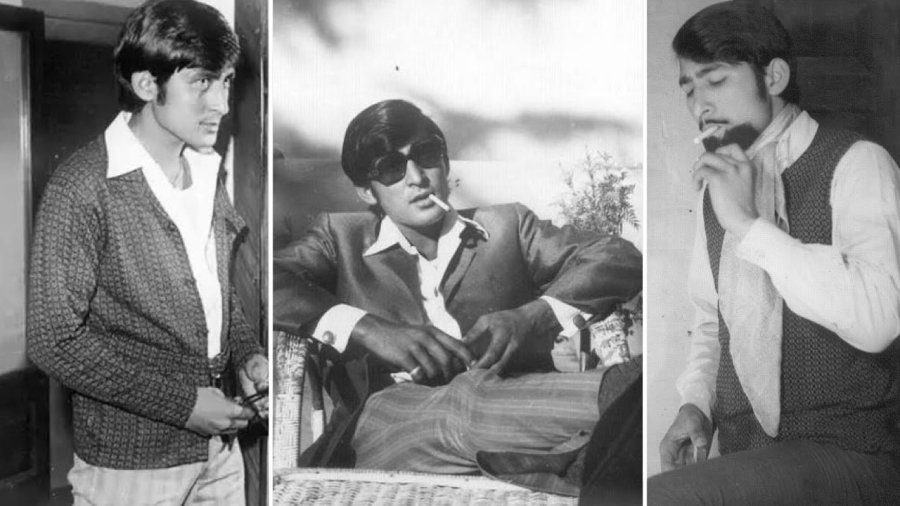
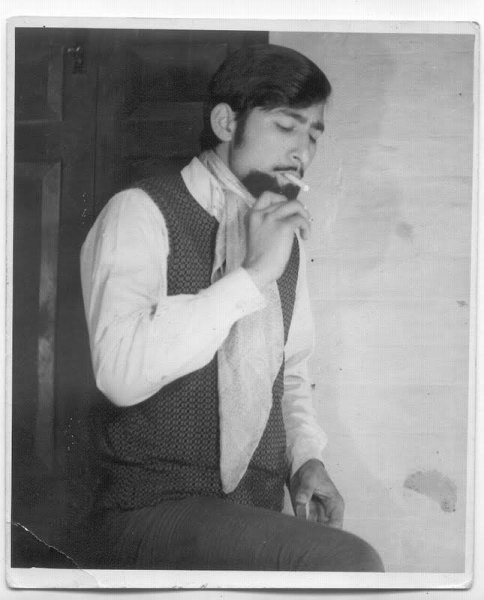
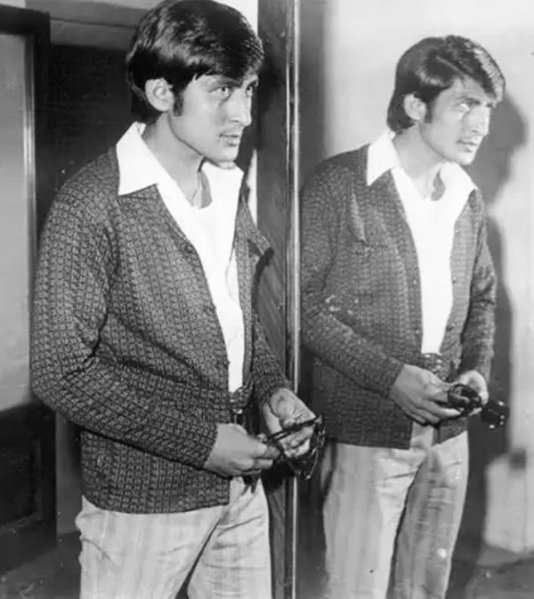
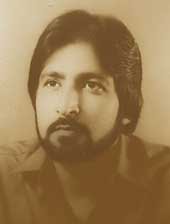
“Black Tiger” Of India Ravindra Kaushik.

Ravindra Kaushik who served in (R&AW) ,famously known as Black Tiger was born in Sri Ganganagar, Rajasthan on 11 April 1952 in a Brahmin family.
Ravindra during his graduation days used to do drama plays and during this time Kaushik displayed his talent at the national level dramatic meet in Lucknow, Uttar Pradesh, which was witnessed by officials from the Research and Analysis Wing. After which he was contacted and offered a job of being an undercover Operative for Research and Analysis Wing in Pakistan.

After agreeing to work for R&AW Kaushik was given extensive training in Delhi for two years. He underwent circumcision so he could pass as a Muslim. He was taught Urdu, given Islamic religious education and acquainted with the topography and other details about Pakistan. Being from Sri Ganganagar, a city near Rajasthan’s border with Punjab, he was well versed in Punjabi, which is widely understood in Punjab and Pakistan as well., India. In 1975, at the age of 23, He was sent to Pakistan.
Kaushik was given the cover name “Nabi Ahmed Shakir” and entered Pakistan in 1975. He was successful in getting admission in Karachi University and from where he completed his LLB. He then joined Pakistan Army as a commissioned officer and eventually promoted to the rank of a major. While living in Pakistan under his cover he married a local girl named Amanat, the daughter of a tailor in one of the army units, and with whom he fathered a boy .

From 1979 to 1983, while working as an officer, he passed on valuable information to R&AW which was of great help to India. He was given the title of ‘Black Tiger’ by India’s then home minister late S. B. Chavan.

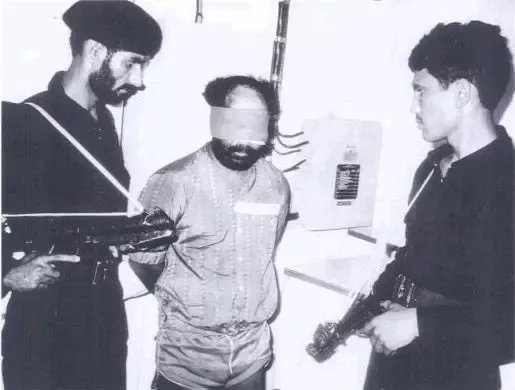
In September 1983, R&AW sent a low-level operative, Inyat Masih, to get in touch with Kaushik. However, Masih was caught by Joint Counterintelligence Bureau of Pakistan’s ISI and blew Kaushik’s cover. Kaushik was then captured, tortured for two years at an interrogation center in Sialkot. He was given the death sentence in 1985. His sentence was later commuted to a life term by the Supreme Court of Pakistan. He was kept in various jails in various cities, including Sialkot, Kot Lakhpat and in Mianwali jail for 16 years. He managed to secretly send letters to his family in India, which revealed his poor health condition and the trauma faced by him in Pakistani jails.He also adresses his thoughts on his country and department. In one of his letters he wrote:
“Kya Bharat jaise bade desh ke liye kurbani dene waalon ko yahi milta hai?” (Is this what people who sacrifice their lives for a big country like India get?”
In November 2001, he was caused with pulmonary tuberculosis and heart disease in Central Jail Mianwali in Pakistan.
He served for Research and Analysis Wing from 1975 to 1983.

“Writing about magic is harder than writing about spies because you’re dealing with something that doesn’t really exist.”

-Anthony Horowitz

EMPATHY, TOLERANCE AND COMPASSION TOWARDS WEAKER SECTION

Compassion is understanding or empathy for the suffering of others. Tolerance is respect, acceptance, and appreciation for those whose opinions, practices, race religion, nationality, etc. are different from one’s own. These qualities are very important for an individual living in a society.

India is a multicultural society with high numbers of vulnerable, Disadvantaged, and weaker sections. So efficient delivery of services and addressing their concerns are very important. India with its diverse cultures which traditionally evolved with the modern 21st century makes it unique in its existence. Tolerance and compassion have always played a major role throughout the transition of time for the unity of the nation in diversity. 

Weaker sections like SCs/STs and rural/urban poor are unaware of public policies, subsidies, and public utilities. Weaker sections are marginalized, deprived of justice, and illiterate. They have very low bargaining power and ability to assert their demands so helping them, being compassionate towards them, and supporting them can help them a lot.

The quality of being a compassionate persons is:

  • To understand the needs and the expectations of people.
  • Understanding the needs of marginalized and vulnerable sections of people living in a society.
  • To Undertake a faster approach and measures to address the issues of society.
  • To have an Unbiased approach to the distribution of government facilities.
  • To Make oneself accessible to all citizens and seeking for their feedback to improve better.
  • Respecting affirmative action toward the disadvantaged and implementing them with a positive attitude.

The quality of being a tolerant person is:

  • Freedom from Bigotry, respecting each other choices.
  • It helps in developing qualities like respect towards others, knowledge, openness, and communication between diverse sections of society.
  • Upholding natural rights which are Human rights, Democracy, Multiculturalism, Pluralism etc.
  • Protecting the constitutional principles of Fundamental Rights which forms the basic structure of the constitution.
  • Preventing tendency of intimidation, coercion, oppression, etc.

Poor and marginalized sections of the society that have faced negligence and left empty-handed for such a long duration of time have become afflicted that there is no one to listen to them and solve their issues. They have been dealt with harshness many times, and this behavior has inculcated in them a sense of inferiority and less importance they have stated attributing to themselves.

In a nation empowered and educated section perform better job and pay taxes to run a nation’s economy. This revenue are spent to alleviate poverty by enabling weaker section to become part of mainstream economy. This needs compassion to spend revenue on them and tolerance to provide them all chances for becoming self-sustaining. Hence, we must have tolerance and compassion toward them, as they are not exposed to newer technology, awareness of their own rights, nation’s outlook, programmes for themselves and nation’s expectation from them.

In egalitarian society, tolerance and compassion are two important qualities to be practiced by
every individual and Hence tolerance and compassion towards the weaker sections are
one of the basic qualities any individual should poses.

Equitable distribution of resources and welfare-oriented development should be among the primary goals of democratic government. To develop a country, not just the government but every individual in a society should have qualities like compassion, tolerance, and empathy towards the weaker section of the society.

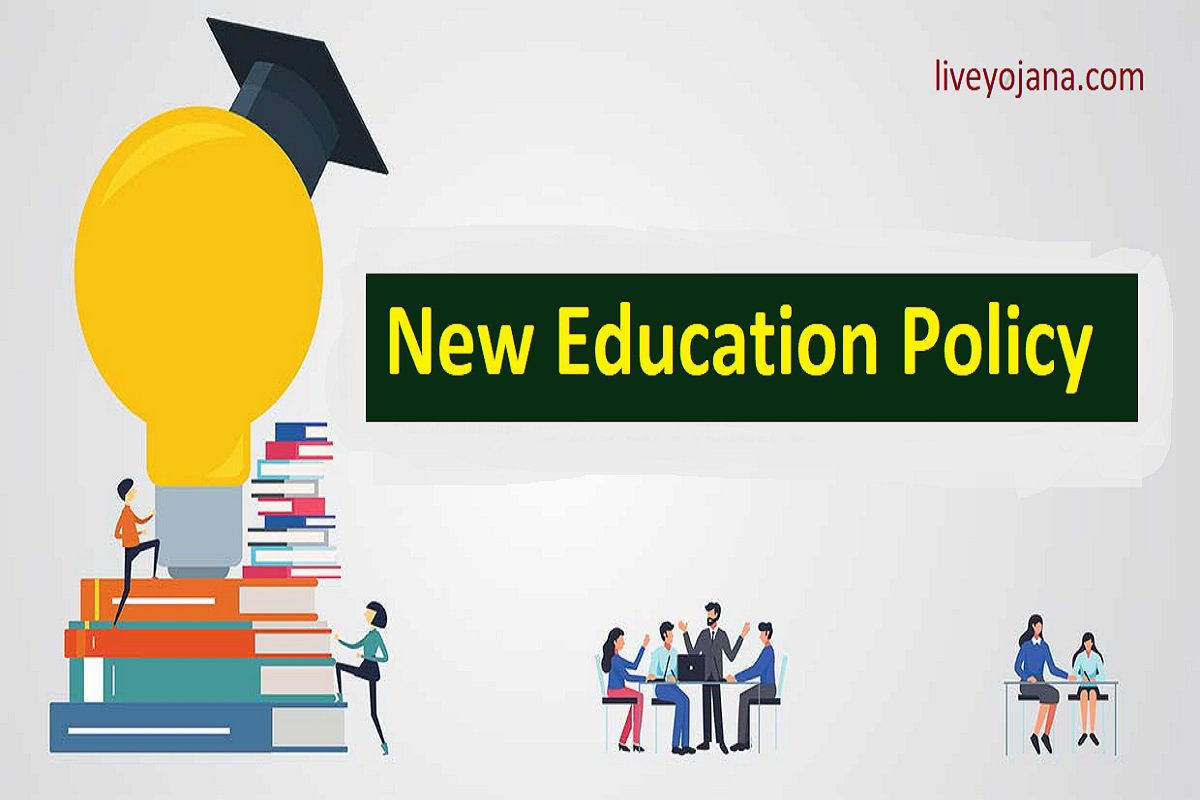
NEW EDUCATION POLICY TO BRING EVOLUTION IN THE EDUCATION SYSTEM.

NEW EDUCATION POLICY:
° Students are currently undergoing school exams conducted by responsible authorities in grades 3, 5, and 8.
° 10th and 12th grade board exams will continue, but will be redesigned for overall development.
° Mathematical reasoning and scientific temperament coding begins in 6th grade .Vocational training begins at school in sixth grade and includes internships.
° The 10 + 2 structure is replaced by 5 + 3 + 3 + 4. The new system consists of grades 12 and 3 years preschool / Anganwadi.
° Until 5th grade, this policy emphasizes the local / regional / native language as the teaching language.
° In schools and universities, Sanskrit is also included as a student option at all levels and consists of three language formulas.
° Under Graduate is now 3 or 4 years, with multiple degree options eligible for this period, such as a 1 year certificate, 2 years diploma, 3 years degree, 4 years bachelor’s degree in research, etc.
° An Academic Credit Bank (ABC) is created to store, transfer, and award bachelor’s degrees from digital learning achievements earned by students from various universities.
° The curriculum has been reduced to essentials for all subjects. They focus on critical thinking, discovery, inquiry, debate, and education based on analytical and holistic learning methods for education.
° Focus on e-learning so you can reduce your reliance on textbooks
Under the new policy, education will receive 6% of GDP, up from 1.7%. This definitely boosts the education system.
° By the end of 2040, all universities should be interdisciplinary institutions with more than 3000 students each. University affiliation will be phased out over the next 15 years.

Foucus on Regional /Mother Tongue Language:
As you know, young children learn new things as soon as they teach in their own language, not in another language they are unfamiliar with. This policy is aware of it, so children will be taught in their native language until the age of 5, but it can change to 8th grade .

NEW CURRICULUM STRUCTURE:
•) Rebuild the school curriculum and teaching methods into new 5 = 3 + 3 + 4 patterns.
•) The new curriculum structure is designed to attract the attention of learners at various developmental stages, such as 3-8 years old, 8-11 years old, 11-14 years old, 14-18 years old.
•) Elementary level lasts 5 years:
3 years before school, 1st and 2nd grade.
The preparatory stage lasts for 3 years: 3rd, 4th and 5th grade.
Middle school or high school lasts 3 years: 6th, 7th and 8th grade.
High school or junior high school lasts four years: 9th, 10th, 11th, 12th grade.
All of the above levels include Indian and regional traditions, ethical thinking, socio-emotional learning, quantitative and logical thinking, digital literacy, computational thinking, scientific manipulation, language and communication skills.

“Learning starts with failure; the first failure is the beginning of education.”

– John Hersey

Land Reforms in India

A Necessity for an Emerging Economy
Many people are not aware that a reform of land tenure is one of the steps in the economic policy of many countries to facilitate industrialization and promote agricultural growth. The problem with this is that it can lead to increased conflict between production and ownership rights. Yet, India’s Prime Minister Narendra Modi has made reforming the country’s outdated laws by going back to medieval-era customs a top priority for his government.

In May, he set up a five-member panel to recommend changes to the Hindu Succession Act, which is based on customary law and governs inheritance in India’s Hindu majority. The panel was created following the Bombay High Court’s decision that women could inherit ancestral property under the act. India has also rolled out land reform bills to facilitate transparency in transactions of agricultural land.
Under the tradition of a joint family system, or joint Hindu family system, one may wonder how land ownership and succession in India is regulated. This system has prevailed for centuries without outside interference or control. Joint families consists of males typically brothers and their wives who have to share property.
The main purpose of this system was to safeguard women’s rights to the property, in a country where the widow has been traditionally stigmatized and often impoverished by the death of her man.Land Reforms usually refers to redistribution of Land from rich to poor. Land reforms include Regulation of Ownership, Operation, Leasing, sale and Inheritance of Land. In an agrarian economy like India with massive inequalities of wealth and income, great scarcity and an unequal distribution of land, coupled with a large mass of people living below the poverty line, there are strong economic and political arguments for land reforms.

Land reform is the major step of government to assist people living under adverse conditions. It is basically redistribution of land from those who have excess of land to those who do not possess with the objective of increasing the income and bargaining power of the rural poor. The purpose of land reform is to help weaker section of society and do justice in land distribution.

The Indian Government was committed to land reforms and to ensure distributive justice as was promised during the freedom struggle. Consequently, laws were passed by all the State Governments during the Fifties with the avowed aim of abolishing landlordism, distributing land through imposition of ceilings, protection of tenants and consolidation of land- holdings.

Government land policies are implemented to make more rational use of the scarce land resources by affecting conditions of holdings, imposing ceilings and grounds on holdings so that cultivation can be done in the most economical manner.

Objectives of Land Reforms

From the beginning, land distribution has been a part of India’s state policy.
The abolition of the Zamindari system was perhaps the most revolutionary land policy of independent India (feudal landholding practices).

ZAMINDARI SYSTEM

Lord Cornwallis introduced the Permanent Settlement in 1793. Under this system, a class of landlords called Zamindars was created whose responsibility it was to pay a fixed rent to the government for the lands they owned. They gave out parcels of land to farmers who became their tenants. Their title to the land was hereditary. What was intended as a system beneficial for all parties concerned soon turned out to be exploitative? The State was only concerned with maximising revenue with minimum effort. The Zamindar too wanted maximum rent from his tenants irrespective of the land’s true potential. He could increase his own wealth by extracting most out of his farmer tenants since his due to the State was fixed. In addition, several layers of intermediaries were created between the Zamindar and the tenants adding to the burden. The landless farmers and labourers suffered greatly in poverty. Also, this led to the creation of a group of rich Indians whose loyalty lay largely with the British. As you can see the Permanent Settlement gave rise to the Zamindari system of tenancy in Bengal and soon was adopted in other regions.

RYOTWARI SYSTEM

Under this system, the proprietor of land gave the rent and taxes directly to the government in the absence of any middlemen. This started in Madras and was later adopted in Bombay as well.

MAHALWARI SYSTEM

This system was introduced by William Bentinck’s government under which landlords were responsible for the payment of revenue to the State. These landlords or Zamindars had a whole village or a group of villages under their control. The Mahalwari system prevailed in UP, the North Western Province, Punjab and parts of Central India.


India’s land reform policy had two specific goals:
The first is to remove any impediments to increasing agricultural production that arise from the agrarian structure that has been passed down from generation to generation.
The second goal, which is closely related to the first, is to “eliminate all elements of exploitation and social injustice from the agrarian system.
To provide security to the soil tiller, and to ensure equality of status and opportunity to all sections of the rural population.

Objectives of land reforms:

  • Redistribution of land across society so that land is not held in the hands of a few people.
  • Land ceiling to disburse surplus land amongst small and marginal farmers.
  • Removal of rural poverty.
  • Abolition of intermediaries.
  • Tenancy reforms.
  • Increasing agricultural productivity.
  • Consolidation of land holdings and prevention of land fragmentation.
  • Developing cooperative farming.
  • To ensure social equality through economic parity.
  • Tribal protection by ensuring their traditional land is not taken over by outsiders.
  • Land reforms were also for non-agricultural purposes like development and manufacturing.

Salient features of Indian Society, Diversity of India

Indian society is very unique and diverse. We have a lot of cultures, communities, religions, languages, etc

India is a plural society, characterized by its unity and diversity. A grand combination different cultures, religions and languages of the people belonging to different castes and communities has upheld its unity. This combination of different culture and ethnicities is what that has made India unique from other countries. Different events such as the foreign invasions, immigration from other parts of the world, and the existence of diverse languages, cultures and religions have made India’s culture open- minded , on the one hand, and a unique continuing and living culture, with its specificity and historicity, on the other. Not only we have diversity in racial compositions, religious and linguistic distinction but also in patterns of living, life styles, land tenure systems, occupational pursuits, inheritance and succession law, and practices and rites related to birth, marriage death etc. 

Post-Independent India is a nation united against several odds and obstacles. India is a secular state. It has one Constitution providing guarantees for people belonging to diverse regions, religions, cultures and languages. It covers people belonging to all socioeconomic strata. The Article 15 of the Indian Constitution talks about Prohibition of discrimination on grounds of religion, race, caste, sex or place of birth. Our Indian Constitution itself safeguards and protects the rights of every individual irrespective of their religion, race, caste sex or place of birth. It gives everyone opportunity and treats everyone equally.

DIFFERENT FEATURES OF INDIAN SOCIETY

MULTI RELIGIOUS SOCIETY

India consists of people from many different religions. Hinduism, Islam, Christianity, Buddhism, Jainism, Sikhism are some major religion in India, However there are other different religions as well. Hinduism is the most dominant religion in India.

As per the census 2021, there are approx. 110 crore people follow Hinduism in India. The Hindus are most numerous in 29 States/UTs except in Manipur, Arunachal Pradesh, Mizoram, Lakshadweep, Nagaland, Meghalaya, Jammu & Kashmir, and Punjab.

Approx.  20 crores of people are Muslims In India. The Muslims professing Islam are in majority in Lakshadweep and Jammu & Kashmir.

In 2021 approx. 3.20 Crores people are Christians in India. Christianity has emerged as the major religion in three North-eastern states, namely, Nagaland, Mizoram, and Meghalaya. 

In 2021 approx. 2.4 Crores people follow Sikhism in India.

In 2021 approx. 10 million or 1 Crore people are followers of Buddhism in India and In 2022 approx. 5 million or 50 Lakh people follow Jainism in India.

MULTI RACIAL SOCIETY

Race is a group of people with a set of distinctive physical features such as skin colour, type of nose, form of hair, etc. India is a country of people with different racial groups. The latest racial classification of the Indian people based on researches in this field has been given by B.S. Guha (1952). He has identified six racial types (1) the Negrito, (2) the Proto Australoid, (3) the Mongoloid, (4) the Mediterranean, (5) the Western Brachycephals, and (6) the Nordic.

MULTI LINGUAL SOCIETY

According to the latest analysis of a census more than 19,500 languages or dialects are spoken as mother tongue in India.

There are 121 languages which are spoken by 10,000 or more people in India, which has a population of 121 crore. Only 22 languages are listed in Schedule VIII of the Indian Constitution. The 96.71 per cent population in the country have one of the 22 scheduled languages as their mother tongue and the remaining 3.29 per cent is accounted for other languages. Not all these languages are, however, equally widespread. Many of them are tribal speeches and these are spoken by less than one percent of the total population so here we can clearly see see that in India there is a great deal of linguistic diversity as there are so many people of different languages and dialects.

MULTI CASTE SYSTEM

The term caste is generally used in two senses: sometimes in the sense of Varna and sometimes in the sense of Jati. In India, caste system is very much prevalent. The Varna system is basically a four fold system in the Hindu society based on their functional criteria, the four divisions are Brahmins, which is on the top of this system followed by kshatriya, Vaishyas and then shudra with their functions as learning or teaching, defense, trade and manual labour. We find castes among the Muslim, Christian, Sikh as well as other communities. One must have heard of the hierarchy of Shaikh, Saiyed, Mughal, Pathan among the Muslim. Similarly, caste consciousness among the Christian in India is not unknown. Since a vast majority of Christians in India are converted from Hindu fold, the converts have carried the caste system into Christianity. Among the Sikh again we have so many castes including Jat Sikh and Majahabi Sikh (lower castes).

In addition to the above described major forms of diversity, we have diversity of many other sorts like settlement patterns – tribal, rural, urban; marriage and kinship patterns along religious and regional lines; cultural patterns reflecting regional variations, and so on.

Some other of the salient features applicable to Indian Society are:

  1. Unity In Diversity
  2. Patriarchal Society
  3. Tribes
  4. Family
  5. Kinship System
  6. Balance between spiritualism and materialism
  7. Co-existence of traditionalism and modernity

India is a very diverse country and because of its unique feature it always attracts people from all parts of the world.

.

No use of ‘Martyr’ word in Army for death of on duty soldier .

History of the use of the word martyr:
The government has claimed for nearly a decade that the word “martyr” has not been officially recognized. In 2013 and 2014, in response to RTI’s request, the Ministry of Home Affairs revealed that the words “martyr” and “shahid” were not defined anywhere by the Government of India.
In December 2015, then Home Affair Minister Kireen Rijiju said in Lok Sabah that it is advised that the word “martyr” is not refer to any of the victims of the Indian army. He added that such terms were not used by Central Armed Police Forces (CAPF) and Assam Rifles personnel either.
In December 2021, Minister of State Home Nityanand Rai told Rajya Sabha again that there was no formal term like “martyr.”


Objections to the use of martyrs’ words:
The word “martyr” has religious implications and has historically been used to refer to people making sacrifices for their religious beliefs like in Christianity . The word “Shahid”, which is used as a Hindu alternative to the word “Martyr”, also has a religious meaning and is associated with the Islamic concept of Shahadat. The word “martyr” is said to be derived from the Greek word “martur”. In various dictionaries, “martyr” is defined as a person who is willing to die as a punishment for refusing to abandon religion.
Since the Indian army is not affiliated with any religion and does not sacrifice their lives for religious principles, the use of such words for their sacrifice is found wrong,including the supreme leader of the army. Using words like martyr may not be correct in context to armed forces especially in India according to many legal experts and prominent officers of army and retired officers.

Steps Taken By Government To Stop Use Of Martyr Word:
Despite the repeated assertions of the government about the word martyr having no official recognition, it was mostly used in government statements issued by various PR Officers for the defence services and the CAPFs. Many senior serving and retired officers also used it frequently to describe the death of soldiers in action. Thus, the word remained in common use.
The Army in 2022 issued a letter to all its commands asking them to abstain from using the word martyr as it may not be appropriate for soldiers who die in the line of duty. They have been, instead, asked to use phrases such as killed in action, supreme sacrifice for the nation, battle casualty, laid down their lives,veergati etc.

“Either I will come back after hoisting the tricolor, or I will come back wrapped in it, but I will be back for sure. “

-Late Captain Vikram Batra (PVC)