Colorism is the practice of favoring lighter skin over darker skin. The preference for lighter skin can be seen within any racial or ethnic background. Race can be defined as the attributes, traits and features which differentiates one group from the other existing social groups. In simple words, races are the physical qualities that one inherits biologically and serves as a way of self-identification from the other groups. Racism is a theory that one race is superior that the other based on the physical attributes, caste, creed, ethnicity or origin. A person is being racist when he displays the emotions of hatred, prejudice, biasness and intolerance against another person solely due to his skin color, structure of his lips, language, place of origin or any other attribute which he might have gained biologically.
Colorism in India
India is known as one of the most mega diverse nations in the world. It is indeed a diverse country and a home for people belonging to different caste, religion, color, creed, culture and traditions. Indians are known for their varied degrees of skin complexion termed as fair skinned and dark skinned. The skin color has always remained an important factor in determining a person’s value and worth. Fair skin people are considered to be of a superior status than to the people with a dark sin. Racism has been prevailing in India since the Rig Veda Period, followed by the Mughal era and the British rule. We live in a society where the people are highly obsessed with one’s skin tone. Indians have varied degrees of skin complexion and they are categorized as fair, dusky, dark etc. Indians believe that fair-skinned people are of a much more worth and value than those who are dark skinned. The fair is considered the intellectual and gets the respect, dignity and the social status while the dark are left behind struggling for their rights and status. We face color hatred and prejudice and somehow still choose to remain silent about it.
The people need to understand that a person’s worth or status is not determined by his or her color. There are numerous cosmetic brands promoting skin lightening creams and lotions. There are advertisements promoting the desperate need of looking fair. The question is why? No one has the right to question or judge one’s complexion. Racial discrimination brings down the morale and the enthusiasm of the dark, they do not get a chance to stand up and speak up or fight for themselves. The mindset of the Indian society should realize the fact that no matter what the skin tone is, what caste or origin a person belongs to, irrespective of all the other physical traits, a person is entitled to equality before the law and has every right to deserve the same respect and honor a fair person gets.Racism is a refuge for the ignorant. It seeks to divide and to destroy. It is the enemy of freedom, and deserves to be met head-on and stamped out.
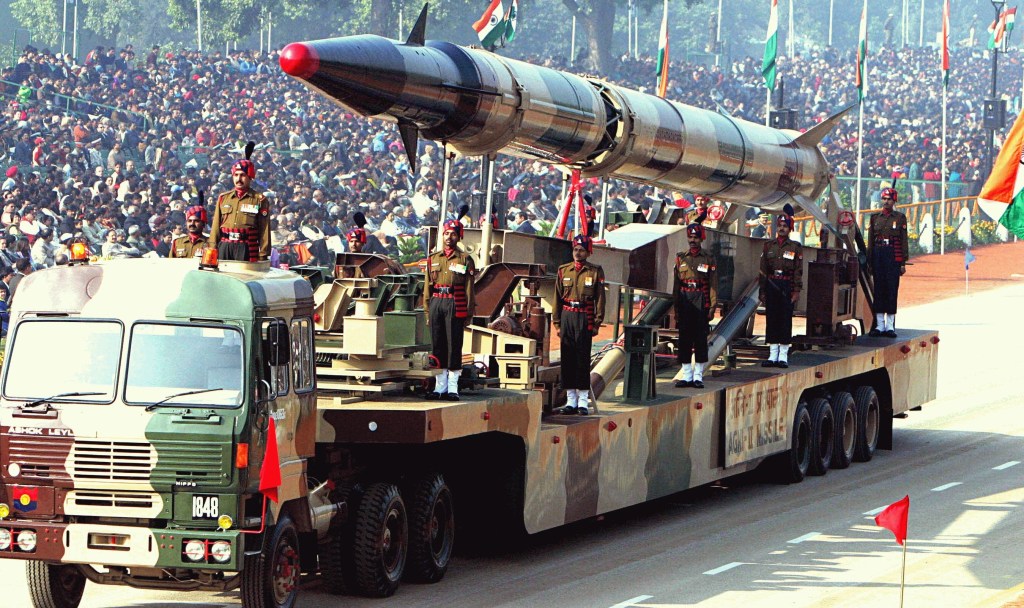
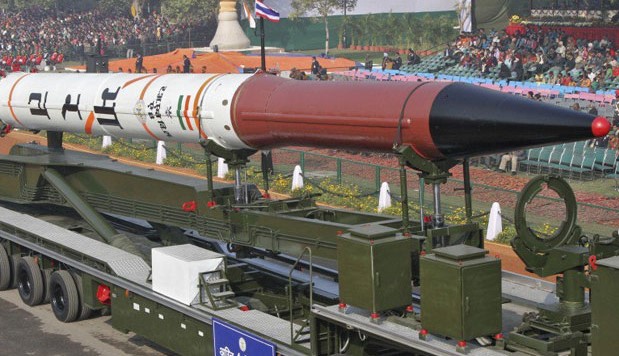
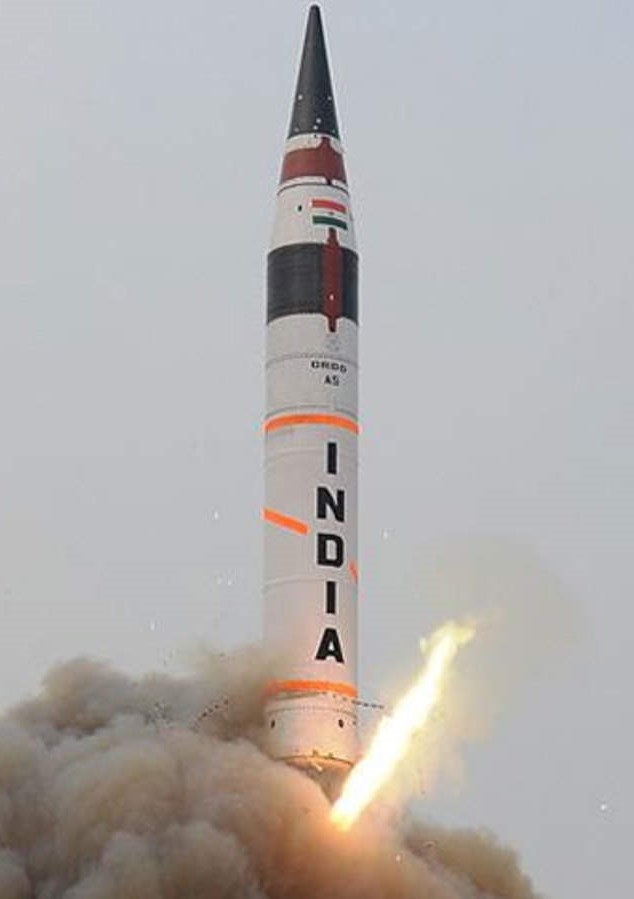
The name Agni(meaning fire) was given after one of the 5 elements in nature(Agni, Vayu, Prithvi, Akash, Jala). Agni missiles are medium to intercontinental-range ballistic missiles, developed under the Integrated Guided Missile Development Programme, INDIA. The family of missiles consists of AGNI I, AGNI II, AGNI III, AGNI IV, AGNI V, AGNI P, AGNI VI. And here is a brief description of each one of them.
India night-tests Agni-I missile
Agni I:
Agni I is an intermediate-range ballistic missile, it is 14.8 m long, with a diameter of 1.3 meters, and weighs 22,000 kgs. With a maximum payload of 1,000 kgs, the missile could extend its range up to 1,200 km of distance. Agni I is used by the SCF of the Indian Army. It is made of all-carbon composite materials to protect the payload during its re-entry stage. It is designed to be launched from Transporter-Erector-Launcher (TEL) vehicles, either by road or rail-mobile through transportation. The development of this missile began in 1999, and was first tested in January 2002 from a TEL vehicle at the Interim Test Range on Wheelers’ Island of India’s eastern coast. This missile has relatively high accuracy, simplicity, and due to its combination of an inertial guidance system with a terminal phase radar correlation targeting system on its warhead.
Agni II missile
Agni II:
Agni II is a medium-range, two-and-half-stage solid propellent ballistic missile, and is 20 m long, with a diameter of 1 m, and weighs around 26,000 kg. With a payload of 820-2,000 kgs, the missile could extend its range from 2,000 to 3,500 km. Agni II was first tested on 11th April 1999 at the Wheelers’ Island of the Odisha coast using IC-4 launch pad, over the range 2,000 to 2,200 km. The Agni II uses a combination of inertial navigation and GPS in its guidance module as well as dual-frequency radar correlation for terminal guidance. The 20-meter-long, two-stage ballistic missile has a strike range of 2,000 km to 3,000 km during the night trail of a nuclear-capable intermediate-range ballistic missile on 16th Nov 2019.
Agni-3 ballistic missile successfully launched by Indias Strategic Forces Command (SFC) from Wheeler Island, off the coast of Odisha on September 21, 2012.
Agni III:
Agni III is an intermediate-range, two-stage solid propellent ballistic missile, it is shorter (17 m and wider and 2 m in diameter) compared to other missiles (Agni I and Agni II), and weighs up to 44,000 kg. With a payload of 2,500 kg, Agni III could extend its range from 2,000 to 3,000 km. It is made using advanced carbon composite materials, while the second-stage booster is made of iron-based steel alloy. Agni-III was first tested on 9th July 2006 from Wheeler Island on the coast of the eastern state of Odisha, by Rail-mobile, possible road-based TEL( Transporter-Erector-Launcher). It was again tested on 12th April 2007 successfully, again from Wheeler Island. The third successive trail-test was fired on 7th May 2008 from Wheelers island, which had a range of 3,500 km,taking a warhead of 1.5 tonnes. It is the most accurate strategic ballistic missile which increases the “kill efficiency” of the weapon. It was reported that with a low payload Agni III and hit a target of over 3,500 km.
Agni IV missile
Agni IV:
Agni IV is an intermediate-range, two-stage nuclear-capable ballistic missile, it is 20 m long, with a diameter of 1 m, and weighs up to 17,000 kg. It was previously called as Agni II prime. Agni IV was first tested on 15th November 2011 and on 19 September 2012 from Wheeler Island(Abdul Kalam Island) off the coast of the eastern state of Orissa. It could reach the target up to the range of 3,500–4,000 km with a payload of 800–1,000 kg. On 20th January 2014, that is during its third test, the missile was lifted off from the launcher and after reaching an altitude of over 800 km, and impacted near the target in the Indian ocean with a remarkable accuracy carrying a payload of 900 kg. Agni IV is equipped with state-of-the-art technologies, that include indigenously developed ring laser gyro and composite rocket motor.
Agni V missile
Agni V:
Agni V is an intercontinental-range, three-stage solid-fuel ballistic missile, it is 17 m long, with a diameter of 2 m, and weighs up to 50,000 kg, developed by the Defense Research and Development Organisation of India. It could reach a target of more than 5,500 km. It was first test-fired on 19th April 2012, from Abdul Kalam Island formerly known as Wheelers Island off the coast of Odisha. It is a canister launch missile system and ensures that it has the requisite operational flexibility and can be swiftly transported and fired from anywhere. The second test launch of Agni-V was completed on 15th September 2013 and the canisterized version was launched in January 2015.
Agni P missile
Agni P:
Agni prime is a medium-range, two-stage solid-fueled ballistic missile, it is half of the weight of Agni III, developed by the Defense Research and Development Organisation, India. Both the first and second stage of the missile was made of composite materials. It could extend its range up to 1,000-2,000 km. As per DRDO, Agni-Prime is a new generation advanced variant of the Agni family, launched on 28th June 2021. “Being a canister-launched missile, Agni-P will give the armed forces the requisite operational flexibility to swiftly transport and fire it from anywhere they want. The test at 10:55 met all mission objectives with a high level of accuracy,” says DRDO. This missile has followed the Textbook trajectory with a great level of accuracy.
Agni VI under development
Agni VI:
Agni VI will be a four-stage intercontinental ballistic missile, currently in the hardware development phase and expected to have a Multiple Independently targetable Reentry Vehicle(MIRV) as well as a Maneuverable Reentry Vehicle(MaRV). It is expected as the latest and most advanced version among the Agni Missiles.
As the United States of America continues to pull out its troops out of Afghanistan, there has been wide discussions as to who would fill that vacuum
Biden’s decision to remove all US soldiers from Afghanistan has fueled domestic unrest in the nation, where violence is on the rise as the Taliban scores more combat successes against the Afghan government and foreign forces disengage. However, Washington’s decision to withdraw has prompted a regional struggle for power, with many parties ranging from China to Turkey, Russia to India, trying to capitalise on the diplomatic power vacuum in Afghanistan.
India, which has long provided diplomatic and financial assistance to the Afghan government, has allegedly altered its long-held policy of not interacting with the Taliban and is now engaging in direct discussions with the rebel group’s leadership. However, India’s presence in Afghanistan has long been balanced by the presence of the one nation that, whether it wants to or not, will have to pick up the majority of the pieces America leaves behind: Pakistan.
India is engaging with the Taliban because the Taliban are winning. Conservative, largely rural, and illiterate Afghans defeated the Soviet Union at its peak as the Mujahideen. They achieved it with enormous support from the United States, Pakistan, Saudi Arabia, China, and others. The same group has now vanquished the world’s sole superpower. They’ve done it with only Pakistan’s aid.
Before delving into the risks and advantages of dealing with the Taliban, it is important to reaffirm the primary objective of India’s Afghanistan policy, which is to maintain a strategic balance between Kabul and Islamabad. Despite the disparity of strength between two nations, India wants to guarantee that nationalist Afghan thought, which is critical of Pakistan’s interventionism, stays active and aggressive. This is why New Delhi has maintained its support for a “Afghan-owned, Afghan-led” peace process. Engaging with the Taliban is an exercise in averting harm to India’s interests as it is in determining the extent of the group’s nationalism.
The advantages of this successful outreach are obvious. The Taliban recognises India’s beneficial role in Afghanistan and does not want its diplomatic presence to be reduced.The outreach in Doha has given Indian authorities cautious hope that the Taliban will not be openly antagonistic and may even want deeper ties in the medium term.
However, the outreach is not without danger. One possibility is that the Taliban would break its pledges and, with a shove from Pakistan, will strike Indian interests. If this does not happen, the Taliban interlocutors with whom India is negotiating may be marginalised, or worse, replaced by pro-Pakistan supporters such as the Haqqanis. Second, reaching out to the Taliban might hasten the fall of Kabul while complicating India’s ties with existing allies.
Despite these concerns, India has solid reasons to engage the Taliban. For one thing, these worries would persist regardless of India’s approach. If nothing else, undoubtedly India’s absence from the Taliban’s calculus makes it much more vulnerable if the Islamic republic falls apart. For India, the only way to achieve long-term peace in Afghanistan is for there to be peace within Afghanistan and peace around Afghanistan, which will need aligning the interests of everybody, both inside and outside that country.
Jaipur is popularly known as the Pink City of Rajasthan, which is not only Pink but also the most colorful city of India. The city is the mixture and combination of Indian culture and modern experiences. Jaipur is probably the first planned city of India. It was planned to design in Pink color, as the color signs for hospitality. The city is known to give an unending experience to the tourist as well as the localities. Pink city has its own vibes and flavors which blends to perfection and brings a completely different exposure. Jaipur is all about forts, museums, food, monuments, shopping and many more things. As a tourist or a newbie in the city, it is always considered to explore the city as a local but in the end, it becomes too messy.
Why Jaipur is known as Pink City
The moment you arrive in Jaipur you will witness that the walls of most building are painted in “pink” terracotta color. The color resembles the city’s heritage and culture. Going back in the history, when Maharaja Sawai Ram Singh was in power and when Prince Albert came to Jaipur during the India tour in 1876. Maharaja wanted to impress the Prince and hence, he planned an extreme strategy. Maharaja constructed a large concert hall and named it after Prince Albert Hall Museum. Then, he decided to repaint the entire city for beautification and chose terracotta pink for the same. The color was durable in all weather conditions. The color represents hospitality. The queen of Maharaja Sawai Ram Singh loved the color and asked the Maharaja to make a law that every house in Jaipur should be pink in color and use of any other color is illegal. The law was passed in the year 1877 and it is effective till today.
PLACES TO VISIT IN JAIPUR
Jal Mahal- Jal Mahar, as per the name suggests is the water palace in Jaipur. Its tropical architectural style with a mixture of Rajput and Mughal structures are just amazing to human sight. It is located in the middle of the Man Sagar Lake and it was built for the royal family to on a summer gateway.
Amer Fort- One of the most famous forts of India. The Amer fort is located on a hill, earlier it was a strong defense around the city. The Indian and Mughal blend of architecture is immensely beautiful. It is said that even the attackers did not want to destroy it.
Hawa Mahal- It was built by Maharaja Sawai Pratap Singh in 1799. The Hawa Mahal was built for the royal women to enjoy festivals and events. It is made of beautiful pink and red sandstone. The structure is in such a way that royal women could enjoy the street view and city life without coming in the sight of the public. It’s shape is like a crown of Lord Krishna which has 953 jharokhas also called as windows in a five-story building.
Nahargarh Fort- Nahargarh fort beautifully displayed the unique blend of Indian and European architectural style. It was built by Madhavendra Bhawan, he built 12 similar suites for his queens. Its construction was done in such a way that Maharaja was able to visit any queen’s suite and none of the other could acknowledge it.
The following research paper discuses about the various aspects of the Indian economy, GDP, Economic slowdown etc. The COVID-19 pandemic ensued global economic downturn, the most severe one since the Global Financial Crisis. The lockdowns and social distancing norms brought the already slowing global economy to a standstill. Global economic output estimated to fall by 3.5% in 2020 (IMF January 2021 estimates).Governments and national banks across the globe conveyed different arrangement instruments to help their economies, for example, bringing down strategy rates, quantitative facilitating measures, and so forth India received a four-column methodology of control, financial, monetary, and long haul underlying changes: Calibrated financial and money related help was given, padding the defenseless during the lockdown and boosting utilization and speculation.
PRICES AND INFLATION
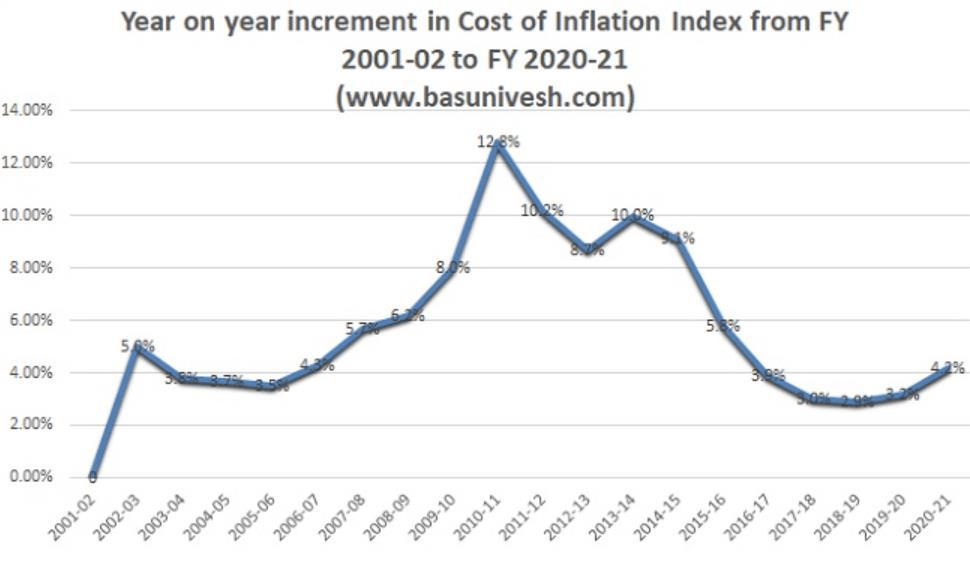
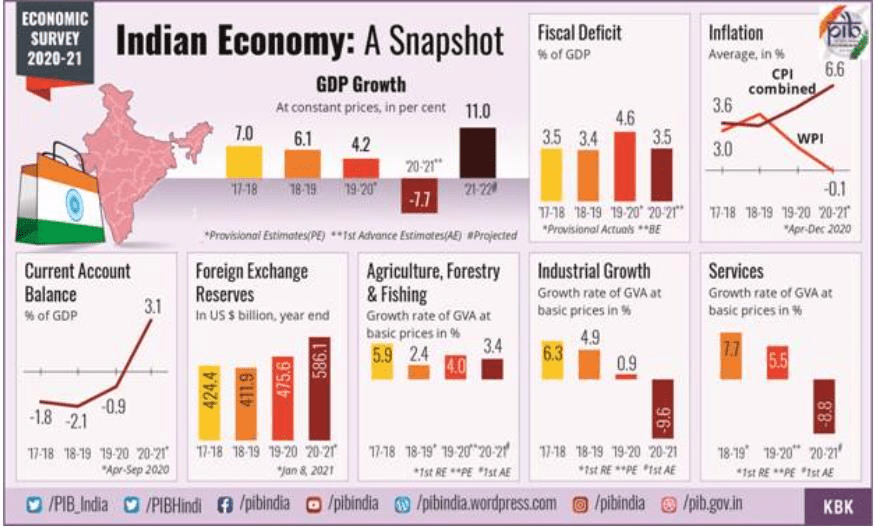
Averaged 6.6% during April-December, 2020 and remained at 4.6% in December, 2020, principally determined by ascend in food swelling (from 6.7% in 2019-20 to 9.1% during April-December, 2020, attributable to develop in vegetable costs) CPI feature and its sub gatherings saw swelling during April-October 2020, driven by significant expansion in value energy – because of the underlying interruptions brought about by COVID-19 lockdown Moderated value force by November 2020 for most sub gatherings, combined with positive base impact.
Sustainable Development and Climate Change
Voluntary National Review (VNR) presented to the United Nations High-Level Political Forum (HLPF) on Sustainable Development . Limitation of SDGs is significant to any methodology pointed toward accomplishing the objectives under the 2030 Agenda. Sustainable advancement remains center to the improvement technique regardless of the remarkable COVID-19 pandemic emergency .Eight National Missions under National Action Plan on Climate Change (NAPCC) zeroed in on the targets of variation, relief and readiness on environment chances. India’s Nationally Determined Contributions (NDC) states that money is a basic empowering influence of environment change activity . The financing contemplations will subsequently stay basic particularly as the nation ventures up the objectives considerably .The objective of mutually preparing US$ 100 billion every year by 2020 for environment financing by the created nations has stayed tricky.
GDP
India’s real GDP has recorded a growth of 11 per cent in 2021-22 and the nominal GDP by 15.4 per cent- which has been the the highest since independence. The V-shaped economic recovery is supported by the initiation of a mega vaccination drives with the hopes of a robust recovery in the services sector and prospects for robust growth in consumption and investment. The Union Minister for Finance & Corporate Affairs, Nirmala Sitharaman presented the Economic Survey 2020-21 in Parliament, which stated that the rebound will be led by the low base and continued normalization in economic activities as the rollout of COVID-19 vaccines gathers traction. The fundamentals of the economy remain strong as gradual scaling back of lockdowns along with the astute support of Atmanirbhar.
Conclusion
India has evolved through the pandemic on the back of strong policy initiatives by the government, along with an optimistic outlook for economic recovery. India has administered ~4 million doses of COVID-19 vaccines in two weeks since January 16, 2021, becoming the fifth-largest inoculated country globally. India has become the world’s vaccine hub and extended support to 90+ countries seeking to stock up vaccines.
Since March 2020, early lockdown, health-infra ramp-up, incremental unlocking, blanket testing, social distancing, tailored fiscal stimulus (to reduce supply-side disruptions and revive demand) and structural reforms initiated by the government have helped restrict the fatality rate in India to 1.2%—one of the lowest in the world. India is emerging as the world’s fastest-growing major economy, with the IMF holding its growth forecasts as high as 6.8% for FY23. Also, the Economic Survey 2020-21 has drawn attention to the V-shaped economic growth—a testament to the burgeoning Indian economy and its intrinsic strength. India is not yet out of the danger of the pandemic. Social distancing continues to be the most effective tool to combat the pandemic as activity levels continue to rise in the economy boosted by the rapidly escalating inoculation drive in the country. Infrastructure to boost sectors to grow with unlocking of economy Terming investment in infrastructure “quintessential” to boost growth, the Economic Survey on Friday said post unlocking of the economy, infra sectors are poised for growth and construction of roads is expected to return to the high pace attained before COVID-19. The infrastructure sector will be the key to overall economic growth and macroeconomic stability, the Survey said emphasizing that the year after the crisis (2021-22) will require sustained and calibrated measures to facilitate the process of economic recovery and enable the economy to get back on its long term growth trajectory.
With the COVID 19 pandemic surrounding the globe and in excess of 2 million active instances of the same, the caring administrations by the medical experts is the main redeeming quality going with the careful steps that are the duty of the considerable number of citizens. Be that as it may, the security of the residents is being taken consideration by the clinical organization yet what it involves for the clinical clique who is over and over being blamed for negligence in discharge of average duty. On one hand the medical practitioners are being hailed as ‘Corona warriors’ but on the other hand, with the increase in cases wouldn’t there be a increase in negligence?
India had only 111 Covid-19 testing centers to deal with a population of 1.35 billion people. This accounts to the medical negligence of the practitioners along with the hospital administrations especially at a time when every state is trying to reduce the number of cases. The number of beds available in the hospitals is comparatively less and as a result the citizens are dependent on understaffed and under-funded state run health facilities for COVID 19 diagnosis and treatment. This is a serious issue as people do not believe on the state authorities. A lady who was quarantined after her Spain visit states that there is a lack of basic amenities in the hospitals. People fear to come forward as they doubt the skills of the administration to treat their disease. Global health experts claimed that India does not have enough infrastructure and other facilities to face the pandemic. The claim nearly became evident with the increasing number of cases in India. Not only hospital authorities but the government has been lacking service, testing is another major concern. India has performed a little over 100,000 tests — a rate of nearly 47 tests per million people compared with 4,572 tests per million in the U.S., 2,753 tests per million in the U.K, and 8,800 per million in South Korea[1]. At present, India is not adequately testing to identify new cases, which might be hiding the true number of cases. An incident of severe medical negligence was noted when the Patna All India Institute of Medical Sciences (AIIMS-P) handed over the body of a COVID-19 positive patient to his family members.
In the midst of the vulnerability made by the COVID-19 pandemic, the judiciary remains the sole symbol of would like to review the worries of residents oppressed by the absence of satisfactory medical framework and the rising occasions of clinical negligence. There is trust that vital estimates will be taken by the Supreme Court, to safeguard the confidence and any expectation of the individuals.
VIEWS
Medical Negligence is, by and by, a hard issue to set up. On the off chance that negligence cases result from the current emergency, they will be tried comparable to target norms of care. The courts will think about the real factors and conditions of the case, including that the medicinal services staff were acting in an emergency. Considering past cases and the law’s methodology, the significance of clinical rules, conventions, staff preparing, ability appraisal, and enlistment expect a fundamental centrality, and all means should be completely reported. Documentation of steps taken in every one of these issues will demonstrate pivotal in safeguarding any cases brought. In any case, the COVID 19 is a phenomenal occasion and the relevance of the above laws in such conditions of most extreme criticality and affectability stays to be questionable. After the lockdown ends it would be unmistakable component of the lawful framework to observe such case emerging out of clinical carelessness in taking care of crown positive patients.
It isn’t expressed that specialists (doctors) are careless or reckless, however while carrying out a duty which requires a great deal of knowledge and care, regularly numerous experts fail to perform their duty towards the patient. Medication which is perhaps the noblest profession requires setting a domain which can profit the victims of different diseases. Numerous specialists even the expert in some cases dismisses little things to be dealt with while practicing which may bring about harms to the patients that could have been maintained with a permanent disability from that time or even the demise of the patients.
This type of negligence makes patients more prone to harm than to heal. And to avoid these sorts of accidents, prevention and careful behavior of doctors is important. The most prevalent way of doing this is relevant laws and statutes to ensure a patients well being. In a case where a US-based doctor who was Indian from origin lost his 29-year-old wife who was a child psychologist during their visit to India fifteen years ago. The Supreme Court asked the Kolkata-based hospital and three doctors to pay over Rs 11.41 crore[2]. “A bench of justices C K Prasad and V Gopala Gowda arrived at a figure of Rs 6.08 crore as compensation after considering aspects such as loss of consortium, pain and suffering and the cost of litigation.”
Another such case was noted where the Apex Court awarded a compensation of 1.8 crores to a women who had lost her eyes in 1996.[3] Cases like this are evidence of the medical malpractice in India. The government requires making strict rules to prevent the same, so that the justice prevails. People of India should be provided with adequate medical facilities, hygiene and sanitation. Laws should be strict for not only medicine but for all such professions to maintain a certain standard of care and prevent breach of duty.
There are various references in History which act as evidence that taxation existed in olden times also. Some references are ‘Arthashastra’ by Chanakya, King Dalip’s regime and Caesar Augustus. The word “Tax” originated from “Taxation” meaning ‘an estimate’. These were imposed and collected on the trade of commodities or livestock in a disorganised manner. The importance of tax increased with time and became a source of government income and expenditure.
TAX STRUCTURE IN INDIA
India has a well developed taxation structure. The tax system in India is mainly a three-tier system which is based between the Centre, State governments and the Local Government organisations. In most cases, these local bodies include the local councils and the municipalities. According to the Constitution of India, the Government has the right to levy taxes on individuals and organisations. However, the Constitution states that none has the right to levy or charge taxes except the authority of law.
The tax structure in India is divided into two components: Direct Taxes (such as income tax) and indirect taxes (such as custom duty).
I. Direct Taxes: Direct taxes are those taxes that are not shifted, that is, the incidence of which falls on persons who pay them to the government, the taxpayer. According to Article 265, each tax levied or collected has to be backed by an accompanying law, passed either by the Parliament or the State Legislature.
The direct taxes in India are: 1. Wealth Tax-
Wealth tax is one of the major direct taxes in India. It is also known as the Wealth Tax Act, 1957. This tax is applicable to all the citizens of India. Wealth tax is the cess levied on owned property. It applies to those who enjoy property ownership benefits. It is applicable to every property owner till he or she retains the ownership of that particular property. The tax paid on property depends entirely on the current market rate. In case the property is not generating any income, then also wealth tax has to be paid.
2. Corporate Income Tax-
Corporate income tax is levied in many different forms in India. Corporate Income Tax is primarily meant to be paid by domestic corporations. Domestic corporations in India pay a minimum income tax rate of 35 per cent along with a surcharge of 2.5 per cent. Corporate income tax is also applicable to foreign organisations that have their own economic bases working in the country. These types of corporations are required to pay tax on 40 per cent of their income along with a surcharge of 2 per cent. This surcharge goes as a reservation for funding the state‘s education. Corporate income tax is also applicable to all the people that are working for any corporation in or outside India.
3. Personal Income Tax-
This is the most common form of tax in India. The system of personal income tax in India is very similar to the taxation system in the United States of America. It is based on the personal income of an individual. If the annual income of an individual is under Rs. 1, 80, 000/- then he or she is exempted from paying any personal tax. There are further allowances made under the personal income tax domain for the physically handicapped and elderly.
II. INDIRECT TAXES: An indirect tax is defined as a tax levied on goods and services rather than on income or profits. Given below are the indirect taxes imposed in India:
1. Sales Tax-
Sales tax is the tax levied by the State Government on goods bought and sold in the country. This policy is followed in most industrially developed countries in the world. The taxes levied under sales tax are not the same for all kinds of goods.
2. Custom Duties-
Custom duties were introduced in India through the Customs Act in 1962. This duty was introduced with the aim of checking illegal exports and imports of goods. Taxes are charged for all the goods that are imported into the country, mainly to protect the industries in India.
Shortcomings of Indian Tax System:1. Canon of Justice: The increased activities of the Government of India to develop the infrastructure and economy indicate a regressive tax structure that is against the canon of justice. The lower and middle income groups have to bear more burden of taxation as compared to the higher income groups because the government tries to raise amounts by indirect taxation.
2. Agricultural Income: Agricultural income is not taxed in India. Hence, there is a higher burden of taxes on the urban areas.
3. Complex Tax Framework: India has a complex tax framework with contradictory tax exemptions. Efforts are being made by the IT Department to enhance and simplify transparency of the tax system to help the individual taxpayers by reducing their compliance costs.
4. Removal of Tax Incentives: Tax exemptions are given to achieve the objectives of development but they promote rent seeking behaviour, contributing to the complex tax laws. Exemptions lead to tax leakage and tax abuse which makes the system counterproductive and dysfunctional.
5. Refunds: Getting refunds of tax from the Income Tax Department is a difficult process. It should be made easier by easy accessibility through internet services and refunding electronically.
6. PAN: The tax base must be increased by extending PAN to cover all citizens serving as a Citizen Identification Number.
7. Monopolistic Power of Tax Officials: The tax officials operate within a geographical limit with ambiguously defined roles that leads to abusive behaviour on their part. A high degree of discretionary power and lack of adequate monitoring and reporting mechanisms leads to corruption. The tax officials misuse the rules of the government and extract illegal payments from taxpayers.
8. Lack of Supervision: There is a lack of supervision and monitoring of officers and holding them accountable for their actions. There must be promotion and enforcement of ethical standards, merit based recruitments, promotion procedures and regular staff rotation schemes to prevent the creation of a nexus.
9. Decrease in Tax Revenue due to Corruption: Corruption decreases tax revenue, which leads to a shortfall in the funds of the government. This forces governments to resort to public borrowing and public debt, thereby endangering fiscal sustainability. Corruption adds to the adverse effect over investment and growth.
10. Broadening the Tax Base: The majority in India do not file personal income tax. To bring them into the tax net, the government adopted a “one-in-six” scheme under which an individual satisfies one out of six criteria. This measure has increased the number of individual income tax payers, but a lot needs to be done still.
India was different from other countries as they were made by the Indian citizens without any sort of external interference.
There are different types of taxes in India. The system of taxation in India is clearly vested in the hands of authorities such as the central government, state government and the local governments. The taxes that are levied by the central government are on personal income, central excise, custom duties and service tax.
Natural Calamities are events that take place due to either natural activity or human-made activity. It leaves long-lasting effects on human lives and properties. It is increasing day by day all over the world. It is because of the misuse of environmental resources by humans. India suffers due to its vulnerable geographical location. Despite knowing it, the country still doesn’t have a proper disaster management unit.
There are different kinds of Natural Disasters in India that happen frequently and leave painful effects on the Indians’ Iives.
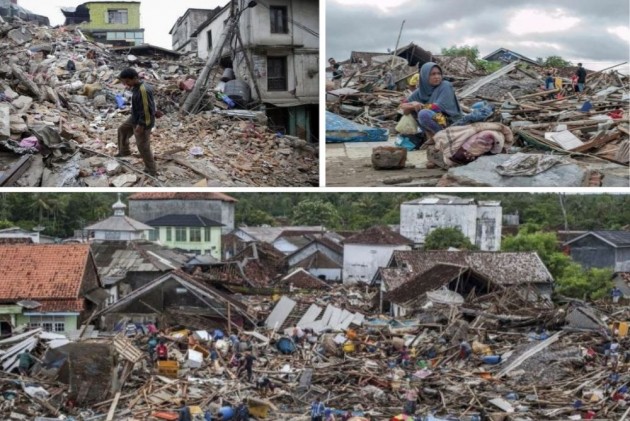
Earthquake is one of the frequently occurring natural disasters in India. It happens because of high internal pressure between huge rocks within the Earth’s crust. It causes them to break apart. It shakes the land. If the intensity is high, houses, apartments, etc. collapse or get damaged. India faces mild earthquakes frequently. However, the country has faced multiple severe earthquakes as well.
Drought is another major natural calamity that is caused by the absence of rain. There are three types of droughts – meteorology, hydrology, and agriculture-related. More than 10% area in India is prone to drought. The north-western part of India is particularly prone to dryness.
Cyclones occur in India mainly because of the Bay of Bengal and the Arabian Sea. Some states like West Bengal, Orissa, Tamil Nadu, Maharashtra, Gujarat, etc. are prone to it. Every year, India faces five to six cyclones. It happens because of the variation of temperature and pressure in oceans.
Wildfire or forest fire is also frequent in India as India has dry and warm forests prone to it. It is dangerous for wild animals, nearby local people, and the environment as well.
Apart from these, other natural calamities occur in India like floods, landslides, avalanches, etc.
Several human activities are aiding natural disasters. Growing population and consumerist tendencies are the main factors behind it. With the increasing population, the demand and use of natural resources are increasing. As a result, unwanted environmental change is occurring. Water scarcity, global warming, climate change are some effects of it. Apart from these, the neverending desire and want of humans is crucial for natural disasters. Water is going down the average level. Industrial solvents are polluting the rivers and the sea. Dirty, unclean gases from industries and vehicles are polluting the air. Many men made creations are destroying wildlife. Furthermore, excessive cutting of trees has contributed to global warming we are facing now. The more people will exploit nature; the more natural calamities will occur.
Solution
There are various ways in which the effect of natural calamities can be minimized. The government should have a secure financial backup for managing disasters. It is because floods destroy properties and effects human lives. Money is an essential thing for recovery. There should be a proper disaster management unit in every state that all well connected to every corner of the state. Here, strong leadership is of utmost importance. The government should invest more in researches on natural disasters. Suggestions from other countries should be taken. People should be thoroughly aware of any upcoming natural disasters so that they can take proper precautions. The government should focus on new inventions that help control natural disasters. Above all, we should leave our consumerist nature and start believing in sustainability. We should stop doing things that are not friendly to our environments. If these things can be maintained appropriately, not only India but any part of the world can efficiently handle the outcomes of a natural disaster.
India is fast transitioning from a developing to a developed country as a result of growing industrialization and globalization. Wherever there is progress, though, there will be disagreements. Increased competition, industrial growth, modernization, and technological advancements accompany increased growth and development, paving the way for more conflicts and cases to be heard by our country’s already overburdened courts and tribunals. With so many cases built up and waiting in the courts, the costs of litigation, and the unreasonable delays in redressing grievances, countless people are now driven to use Alternative Dispute Resolution (ADR) techniques to resolve their disagreements.
Physical harm or mental agony are the causes of personal injury cases, which are caused by the actions or negligence of another party. Auto accidents, defamation of character, product defects, and medical malpractice are just a few examples of personal injury claims. Contact a legal practitioner in your state to determine whether your personal injury case is valid in the eyes of the law. If you are injured or incur losses as a result of someone else’s negligence, that person or corporation is legally responsible (liable) and may be obliged to compensate you. The court looks for negligence—carelessness on the part of one of the parties involved—to assess liability.
Whoever is found to have been less cautious is legally liable for at least a portion of the damages. Compensation is usually determined by the quality of your evidence and the severity of your injuries. In Personal Injury cases, a legal specialist is suggested above all others in order to maximize your compensation in the face of insurance companies, which typically defend such cases. Personal injury situations are extremely serious. They frequently end in serious injury, long-term impairment, and even death.
Victims rely on a personal injury lawyer to get the financial damages they need to pay for medical treatment, replace lost income forever, and recompense them for their pain and suffering. They have a far lower chance of securing reasonable compensation if they are doing not hire a trained, experienced personal injury lawyer. That’s why, if you’ve been injured in a car accident, it’s critical that you hire the best personal injury lawyer to defend you. Here are some factors to believe when making your decision: Choose a personal injury lawyer who specializes in this type of case. Your personal injury lawyer should be ready to objectively assess a case’s merits, estimate its price , and identify the simplest approach for pursuing it. In addition, he or she should have a lot of experience in the field. Your personal injury lawyer should also stay up to date on the latest advances in the field. Choose a private injury attorney who has addressed insurance companies before. The majority of defendants in personal injury cases are represented by insurance company lawyers. Because these corporate lawyers want to disburse as little as possible, a novice personal injury lawyer may find himself at an obstacle in these talks. As a result, finding a private injury lawyer with a diary of successful settlements is critical. Choose a personal injury attorney who has handled cases in court. Despite the fact that the majority of personal injury claims are handled out of court, personal injury lawyers can sometimes achieve favorable settlements by threatening to go to trial.
To avoid costly trials, unfavorable publicity, and the possibility of a court awarding the plaintiffs more money, defendants are frequently eager to pay more money to the plaintiffs.
India is a over-populated country. It is the second most populated country in the world, after China. However, researchers say that India is all set to surpass China in population density by 2024. That means India is about to become the country with the highest population density across the world.
The population of India is increasing at an alarming rate. India is not the country with the highest number of people. There are countries which has more number of people than India like Russia. But they are not overpopulated. Those countries have enough space to fit in the number of people. India has more people than the country could fit in. The number of people residing in per unit square of land in India is much higher than that of other countries. This makes India an over-crowded country.
The huge population of India makes a lot of people live in poverty. The country’s economy is not enough to sustain its population. Adding to the problem, the country’s wealth is not equally distributed. The economic gap between the rich and the poor is widening. The major chunk of the country’s wealth is held by the rich and the powerful who are quite few in number compared to the country’s huge population. A large chunk of the population live below poverty line who do not have enough money to afford their meals thrice a day.
Also, the country does not have enough employment opportunities for all its citizens. This leads to unemployment, economic distress, stress and mental health problems. Unemployment increases the amount of crimes, theft and illegal business practices.
Along with wealth and job opportunities, India’s natural resources are also limited and not enough for its huge population. Over-consumption of natural resources would exhaust them and leave none for our future generations. Overpopulation is also a threat to our environment. The air and water bodies are becoming more and more polluted day by day. Too much burning of fossil fuels, congested roads and too many vehicles are releasing toxic gases in the air.
Accommodation is also a problem in India. Thousands of people live in slums which are over-crowded with unhealthy living conditions. More houses and buildings are being constructed which leaves no place for plants and nature. Forests are cut down to make room for construction projects. The cutting down of trees leads to increase in the level of carbon dioxide in the atmosphere.
Population explosion is a serious problem which needs to be addressed at any cost. The Indian population should be controlled to improve the lives of the people. Awareness drives and contraceptive alternatives should be adopted with immediate effect.
One of the significant regions that will be affected by environmental change in its furthest point in the near future is South Asia, particularly India principally due to its different territory. Environmental change is required to have a genuine effect around here as the nation is quickly debilitating its regular assets subsequently, annihilating its current circumstance generally because of “urbanization, industrialization and financial development.”
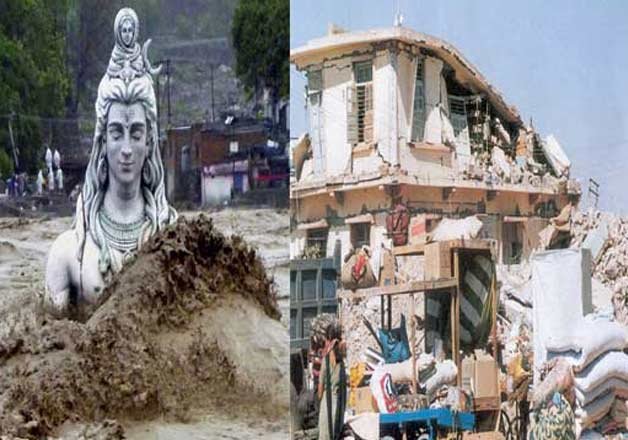
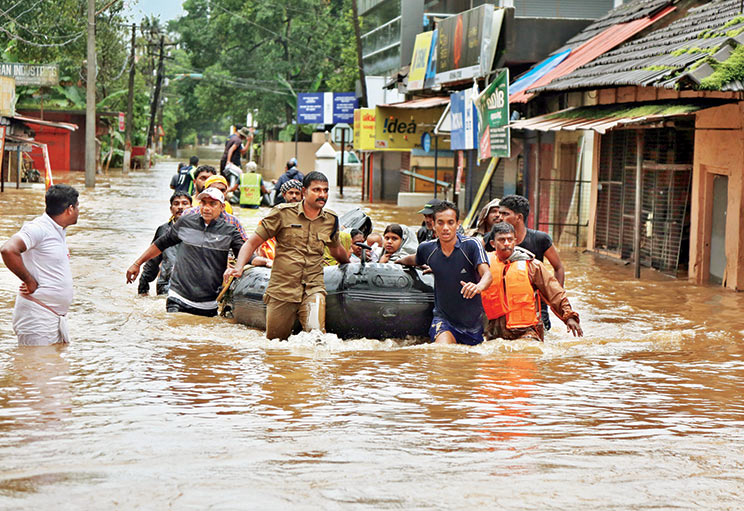
India faces a disturbing ecological and financial test in its push to ensure its quick draining of normal assets. Water and air quality are deteriorating step by step because of the increase of different toxins in the air. Furthermore, the areas that will be exposed to the most noteworthy openness to environmental change are the country’s waterfront eco frameworks, biodiversity and farming efficiency. Additionally, the locale is as of now subject to regular dangers, for example, the 2013 Uttarakhand floods, landslides, the 2015 Chennai flood and the 2016 dry spell.
There is additionally proof of unmistakable expansions in the force or potential recurrence of numerous outrageous climate occasions, for example, heat waves, expanded droughts and serious precipitation. The antagonistic effects of such calamities range from hunger, weakness to infections, loss of pay and livelihoods.15 According to the World Bank, an increment of 2°C on the planet’s normal temperature in the following not many years will just make India’s rainstorm more erratic. The change in downpour designs across India is anticipated to leave various regions submerged and others without enough water in any event, for drinking.
“In India, over 60% of the harvest region is downpour taken care of, making it profoundly defenseless against environment instigated changes in precipitation designs. It is assessed that by the 2050s, with a temperature increment of 2°C-2.5°C contrasted with pre-modern levels, water for rural creation in the stream bowls of the Indus, Ganges and Brahmaputra will decrease further and may affect food sufficiency for about 63 million individuals.”
A hotter environment is likewise expected to hinder the neediness decrease rate. Despite the fact that environmental change will influence everybody’s lives in the area, poor people will be the most influenced as they are the once generally subject to rain-based farming and have no or insignificant assets to support their business. An expansion of 2°C by the 2040s will hit crop creation in South Asia as well and will lessen the yield by 12%, requiring more imports to satisfy needs at home. Likewise, diminishing food accessibility would lead to extensive medical conditions particularly among ladies and youngsters. Dissolving of icy masses and loss of
Snow presents a critical danger to solid water assets in India. Fundamental waterways like the Ganges, Indus and Brahmaputra, rely altogether upon snow and frosty dissolved water, which makes them even more vulnerable to unfavorable effects of a dangerous atmospheric deviation. This could additionally expand the danger of flooding of low regions and represent a danger to horticulture. Having momentarily investigated the effect of environmental change, the accompanying area will have an endless supply of the new climate occasions that were generally an immediate consequence of environmental change in India.
Lower-carbon improvement, however, could yield quick advantages, for example, cleaner air, more prominent energy security and fast occupation creation. India’s environment targets are viewed as ‘2°C viable’, for example a decent amount of worldwide exertion. Be that as it may, seeking after a cleaner, more asset productive way could invigorate a quicker, more attractive monetary recuperation and secure India’s thriving and seriousness in the long haul.
Amidst the unpredictable English weather, New Zealand and India fight for the most coveted title after near misses in their recent ICC campaigns
The two talismanic captain are waiting for ICC World Test Championship to begin
The WTC final will be taking place in spite of the global pandemic at the now-famous Ageas Bowl, cricket’s original bio-secure venue, which in 2020 showed the cricketing world how to ensure that the show can go on in these tough times. The contest will also feature, indisputably the best two Test teams in the world- India and New Zealand who are taking on each other on 18th of June, 2021.
The Indian team announced their playing XI on the eve of the final where it was confirmed that Rohit Sharma is going to open with Shubman Gill and Mayank Agarwal failed to make the cut. India is going with two spinners as Ravindra Jadeja and Ravichandran Ashwin.
ICC WTC was played in two years cycle and the two teams at the top of the points table qualified for the final. India finished at the top of the points table with 12 wins in 17 matches while New Zealand won 7 out of 7 matches it played.
Here’s all you need to know about WTC 2021 Final
Start date – June 18, 2021
End date – June 22, 2021
Reserve day – June 23, 2021
Match starting time – 3:30 pm IST
Live broadcast on TV – Star Sports 1 and Star Sports 1 HD and Star Sports 1 Hindi and Star Sports 1 Hindi HD
Online streaming – Disney+Hotstar
Venue – Ageas Bowl, Southampton
Prize money – The winner of the ICC World Test Championship 2021 will get a purse of $1.6 million and the runners-up will receive a prize money of $800,000.
Playing Conditions –
Follow on-rule for WTC final
According to playing conditions of the five-day game, one team needs to have a lead of 200 runs, to enforce the follow-on. However, if the first day’s play has been washed out then the lead for follow-on rule is reduced to 150. But ICC has made a clarification in the rule stating that there is a reserve day for the WTC final thus if the first days is washed out then reserve day will come into play. Thus, to enforce a follow India and New Zealand need to have a lead of 200 or more runs.
What if final ends in a draw?
There has been talk that who will be declared the winner if final match ends in a draw or tie. Ahead of the start of WTC in 2018, ICC has said that if final end a draw or tie, the the trophy will be shared and in its latest media statement, it maintained the same stance.
Pitch Report – As informed by the head groundsman, Simon Lee, the pitch for WTC final will have pace, bounce and carry due to ‘a lot of sun’ in Southampton. It is likely to favor swing bowling for the initial two days and might assist the spinners on the final two days of the test match.
As the new coronavirus continues to spread around the world, the vaccine is seen as the best way to stop it. Everyone above 18 years of age will be eligible to get vaccinated against COVID-19 from May 1. Anyone who has an allergy to any component of the vaccine, should not take it. While COVID-19 vaccine supplies are limited, health workers at high risk of exposure and older people should be prioritized for vaccination.
Covaxin is an inactivated vaccine which means that it is made up of killed coronaviruses, making it safe to be injected into the body.Bharat Biotech, a 24-year-old vaccine maker with a portfolio of 16 vaccines and exports to 123 countries, used a sample of the coronavirus, isolated by India’s National Institute of Virology.The two doses are given four weeks apart. The vaccine can be stored at 2C to 8C.Some mild symptoms AEFIs may occur like injection site pain, headache, fatigue, fever, body ache, abdominal pain, nausea and vomiting, dizziness-giddiness, tremor, sweating, cold, cough and injection site swelling. No other vaccine-related serious adverse effects have been reported.It is your choice to receive or not receive COVAXIN . other vaccines. If you are pregnant or breastfeeding, you should not get the vaccine as the effect of the vaccine has not been studied in pregnant women and nursing mothers.
Covishild is a recombinant, replication-deficient chimpanzee adenovirus vector encoding the SARS-CoV-2 Spike (S) glycoprotein. Following administration, the genetic material of part of corona virus is expressed which stimulates an immune response.People aged 65 and older are less likely to experience common side effects.
More than 1 in 10 people may experience:
feeling tired tenderness, bruising, pain or itching in the arm where you had the vaccine injection headache muscle pain joint pain nausea fever (temperature of 38 degrees Celsius or above)
Sputnik V Covid-19 Vaccine: Sputnik V is a two-dose Covid-19 vaccine, which has an efficacy of over 91 per cent, according to a publication in scientific journal The Lancet.Made by the Gamaleya Research Institute of Epidemiology and Microbiology in Moscow, Sputnik V is a two-dose Covid-19 vaccine using a similar platform to Covishield — the most widely used vaccine in India since the government’s immunisation programme began in January. So far, DRL has only received 150,000 doses of this vaccine from Russia. The company expects more doses soon. According to its agreement with the Russian Direct Investment Fund (RDIF), which has been in charge of signing agreements for supply of this vaccine across the world, India is expected to get at least 250 million doses, which will be sufficient to inoculate 125 million people. However, it is unclear by when these doses will be supplied and distributed in India.The imported vaccine has been priced at Rs 948 per dose. However, including 5 per cent Goods and Services Tax, the price of this vaccine goes up to Rs 995.40 per dose.the most common side effects were: flu-likeillness, headache, fatigue, injection-site reactions.
There are several countries where Indians are not required to have a visa to travel. A total of 58 countries allow you a visa-free travel with your Indian passport.
>Indonesia
Indians travelling to Indonesia can go visa-free for 30 days. If the duration of travel is more than 30 days Indians can apply for visa after their arrival in Indonesia.
>Ecuador
Citizens of India don’t need a visa in advance to travel to Ecuador. The facility of visa-free stay here for Indians is of duration of 90 days. The travelers, though, need to carry their financial documents and passport with a validity of 6 months along with their return ticket and travel insurance.
>Serbia
Indian citizens can stay upto 30 days visa-free in Serbia from the date of entry within a year. A stay exceeding the mentioned duration would require a temporary residence permit.
>Montserrat
Indian citizens can travel visa-free for 30 days in Montserrat without a tourist visa.
>Macau
Indians can stay visa-free in Macau given the stay should not exceed 30 days. Visitors are required to ensure their passport validity upto 6 months from the date of visit.
>Svalbard
You don’t need a visa to travel, work and reside permanently in Svalbard.
>Nepal
Indians don’t need to have a visa to stay in Nepal. However, it is important to register to the Indian Embassy in Kathmandu after a stay of 6 months.
>Haiti
Haiti doesn’t ask for a tourist visa to Indian travelers who can live upto 90 days there. All non-Haitian traveler are, though, required to pay a tourist fee of 10USD on arrival and validate their passports of 6 months validity from the date of arrival.
>Turks and Caicos
A tourist visa is not needed to travel to Turks and Caicos. All you need is a valid visa for entry and exit.
>Jamaica
Indian visitors can travel to Jamaica visa-free for upto 30 days. A stamp on the passport by the immigration officer on arrival acts as a tourist visa for Indians.
In the recently released India Happiness Report 2020 Mizoram has been announced as the happiest Indian state followed by Andaman and Nicobar Islands and Punjab among the top three. It was the first time that all the union territories were surveyed along with the states.
The Happiness Survey was conducted between March and July 2020. The parameters of happiness index were:
>Personal relationships- family and friends
>Work related issues- income level, work pressure and growth
>Physical and mental health
>Social issues
>Impact of COVID-19
Further, it was observed that the above mentioned parameters are positively related to happiness.







![AN ANLYSIS ON OVERALL GROWTH IN THE INDIAN ECONOMY [2020-2021]](https://eduindex.org/wp-content/uploads/2021/06/1609833276_axhez7_istock_indian_economy_stocks_markets_915768_1605451970.jpg?w=700&h=1&crop=1)



 Eduindex
You must be logged in to post a comment.