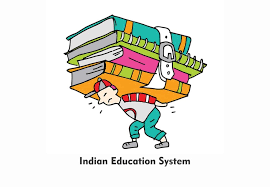
Indian Education System

Education plays an important role in the development of an individual and making him a knowledgeable citizen. It is the education that makes an individual self-reliant, helps to suppress the social evils and contribute towards the development of the society and nation as a whole. Education helps in unravelling the mystery of nature. It enables us to understand and improve the working of our society. It creates conditions for a better life. Education brings out the capabilities to fight injustice happening in society. Every individual has the right to education. 

Indian Education is one of the largest and complex education systems in the world along with China. India is committed to providing basic education to its citizens, the framework of which is defined in the National Policy of Education. Elementary education is now compulsory in India. At the time of Independence, only 14% of India’s population was literate. Now after so many decades since Independence, the number of literates has increased by fivefold.

History of Education System

The history of Indian education system comes from the times of Ramayana and Mahabharata. The historic Indian education system is also called the Gurukula system. There were gurus then who are now known as teachers and shishyas who are called students now. The gurus and the shishyas lived together under one roof in Gurukula until the completion of their education. The shishyas were expected to help the guru in all the daily chores as part of their learning. The children belonging to higher strata of the society were taught all the subjects from Sanskrit to Holy Scriptures and mathematics to metaphysics by the gurus. The Gurukulas during those times focused on the practical aspects of life. The students were taught in the open classroom in the surrounding area of nature. This early system of education in India continued for many years until the modern education system came into the picture in the nineteenth century.

In the early 19th century, during the British period, the modern education system was brought into our country by Lord Thomas Babington Macaulay. The basic strength of this modernized education system was the examinations and a well-defined curriculum, which gave importance to subjects like science and mathematics and subjects like philosophy, metaphysics were given a back seat. The brick and mortar classrooms replaced the open classrooms in the Gurukulas. The essence of the guru shishya bond was taken over by a more formal relationship between the teacher and the student. To understand the progress of any student, examinations were conducted at frequent intervals. The focus of the education system shifted from learning to memorizing of the concepts to score good marks in the examinations.

Problems of Indian Education System

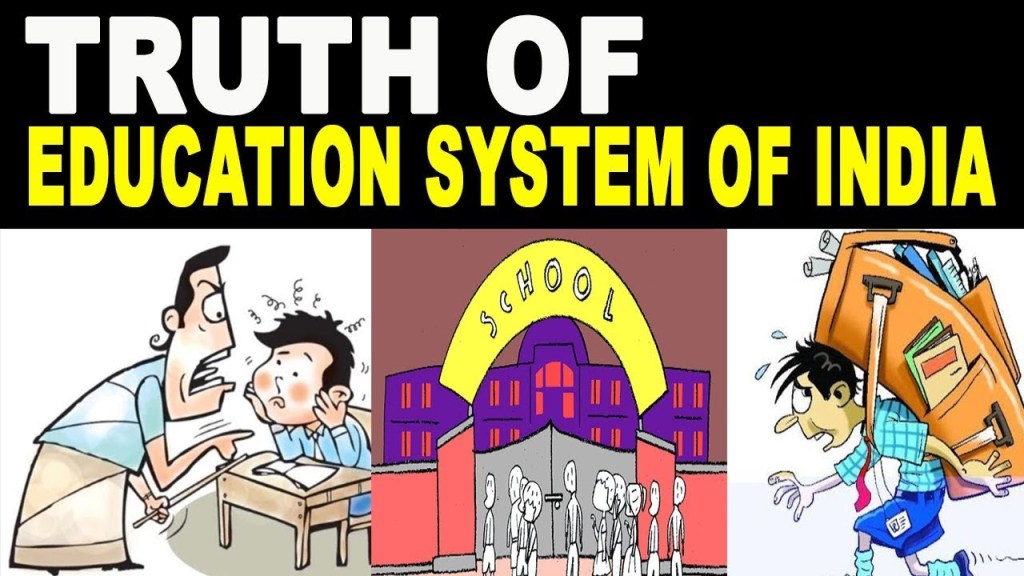
Over a period of time, it has been observed that there are many loopholes in the system of education in India. Instead of understanding the concepts, students started cramming and memorizing the lessons. Knowledge is given a backseat and scoring in high rankings takes importance. The modern parents have tuned their mindsets accordingly and their goal is to ensure that their children score good marks instead of acquiring knowledge right from the primary level. 

Private schools and colleges have been rapidly increasing in the country but the results produced by them are far beyond satisfactory. It has also been observed that the quality of teachers deteriorated with the passing of time. Our examination system is responsible for the wide skill gap. India is producing lakhs of engineers and professionals every year but only a fraction of this number is actually getting employed. This is because the Indian examination system focuses more on scoring good percentages rather than the actual continuous comprehensive evaluation. 

Research and development, which should be the cornerstone of our system, are given the least importance. The private schools and colleges focus on the admission of more students and are least interested in the quality of their education. This is the major reason why the faculties and the teachers lack skills and specialization. This is quite evident from the fact that a single professor is assigned to teach multiple subjects. 

How Can We Improve the Indian Education System?

First and most importantly we should improve the grading system. Rote learning should be discouraged completely. Teachers and faculties should focus more on the analytical skills of the students and grade them accordingly. There should be more focus on comprehensive evaluation instead of scoring only good marks. Workshops must be organized for teachers on a regular basis to keep them updated about the latest developments in the sector of education. At the same time, the curriculum should be reframed according to the present needs of education in India. 

The payroll structure of the teachers and the faculties especially in the government institutions should be improved. This step will help in motivating the teachers to develop their skills and they will take a keen interest in grooming or shaping up a student’s life and career. The government and other entities who are associated with the education sector, need to understand the importance of quality of education. Education should be a holistic process that must focus on the overall development of the physical, emotional, social and cognitive skills of a child. It needs to be a slow and cyclic process and must take place gradually to help the child develop into an autonomous, independent and knowledgeable individual.

Conclusion

An educated individual is an individual who should be able to contribute towards the betterment of the economic and social development of the society as well as the country. The true goal of education must exceed awarding the degrees and certificates to the students. Education is not a tool to earn livelihood but it is a way to liberate the mind and soul of an individual. 
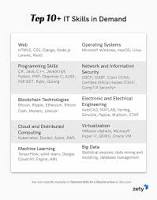
Technical skills

Technical skills are the abilities and knowledge needed to perform specific tasks. They are practical, and often relate to mechanical, information technology, mathematical, or scientific tasks. Some examples include knowledge of programming languages, design programs, mechanical equipment, or tools.

Some of the very famous tech. Skills:

1. Project Management. Being able to effectively coordinate resources, people and budgets as a project manager is one of the best technical skills that you can have.
2. Analysis of Big Data and Business 3.Intelligence.
4. Information Security.
5. Designer.
6. Marketing Assistant.
7. Writer. And many more…

Create a dedicated Technical Skills section for the resume.

If they’re heavily emphasized in the job description, then your Technical Skills section should be at the top of your resume, just below your introduction, and above your professional experience. A bulleted list will make it easy to read.

These are some of the basic tech. Skills:

* Word Processing Skills.
* Spreadsheets Skills.
* Database Skills.
* Electronic Presentation Skills.
* Web Navigation Skills.
* Web Site Design Skills.
* E-Mail Management Skills.
* Digital Cameras

How can you improve your technical skills? So, here are the steps to improves ones technical skill.

1. Enroll in Technical Classes or Workshops.
2. Get Technical Books.
3. Volunteer for Technical Projects.
4. Subscribe to Technical Sites and Magazines.
5. Develop Knowledge of a Second Language.
6. Practice What You Learned.

All you need to know about UGC( University grant commission)

Introduction

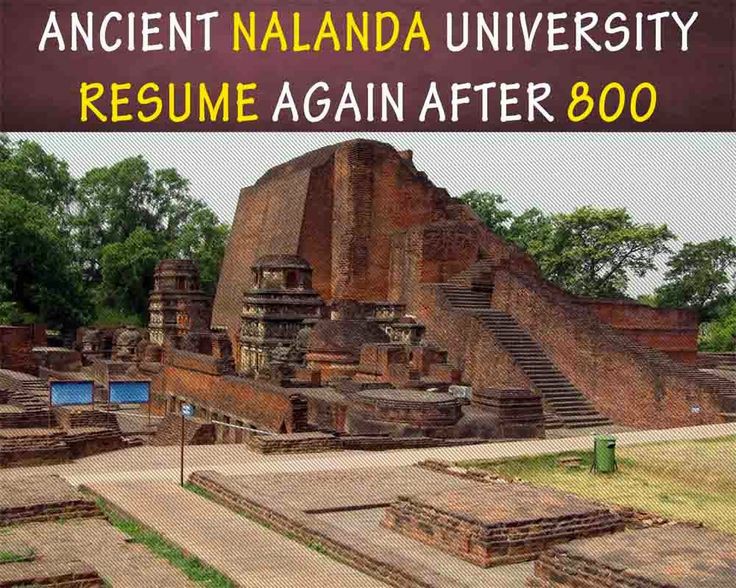
Since ancient times to the modern world, the Higher Education System has always been remarkable in our country, India. From ancient Bharat to modern India, higher education has always occupied a place of prominence in Indian history. In ancient times, Nalanda, Taxila and Vikramsila universities were renowned seats of higher learning, attracting students not only from all over the country but from far off countries like Korea, China, Burma, Sri Lanka, Tibet and Nepal. Today, India manages one of the largest higher education systems in the world.

UGC

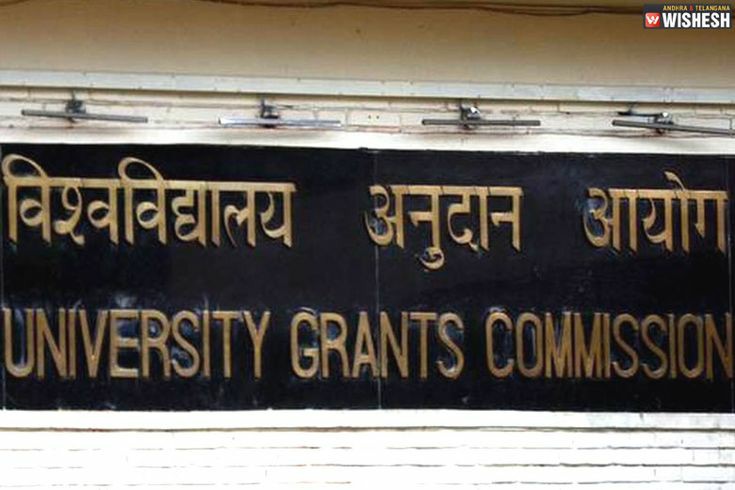
The University Grants Commission of India (UGC India) is a statutory body set up by the Government of India in accordance to the UGC Act 1956 under the Ministry of Education, and is charged with coordination, determination and maintenance of standards of higher education. It provides recognition to universities in India, and disbursements of funds to such recognized universities and colleges. The headquarters are in New Delhi, and it has six regional centers in Pune, Bhopal, Kolkata, Hyderabad, Guwahati and Bangalore. A proposal to replace it with another new regulatory body called HECI is under consideration by the Government of India. The UGC provides doctoral scholarships to all those who clear JRF in the National Eligibility Test. On an average, each year more than a $100 million is spent on doctoral and post-doctoral fellowships by the commission.

Basic information

Established
28 December 1953 First
executiveshanti Swaroop bhatnagar
Headquarternew Delhi
ChairmanDp Singh
Departmentdepartment of higher education, ministry of education
Sectorhigher education

History

  • The present system of higher education dates back to Mountstuart Elphinstone`s minutes of 1823, which stressed on the need for establishing schools for teaching English and the European sciences. Later, Lord Macaulay, in his minutes of 1835, advocated “efforts to make natives of the country thoroughly good English scholars”. Sir Charles Wood`s Dispatch of 1854, famously known as the ` Magna Carta of English Education in India`, recommended creating a properly articulated scheme of education from the primary school to the university. It sought to encourage indigenous education and planned the formulation of a coherent policy of education. Subsequently, the universities of Calcutta, Bombay (now Mumbai) and Madras were set up in 1857, followed by the university of Allahabad in 1887. The Inter-University Board (later known as the Association of Indian Universities) was established in 1925 to promote university activities, by sharing information and cooperation in the field of education, culture, sports and allied areas.
  • The first attempt to formulate a national system of education in India came In 1944, with the Report of the Central Advisory Board of Education on Post War Educational Development in India, also known as the Sergeant Report. It recommended the formation of a University Grants Committee, which was formed in 1945 to oversee the work of the three Central Universities of Aligarh, Banaras and Delhi. In 1947, the Committee was entrusted with the responsibility of dealing with all the then existing Universities.
  • Soon after Independence, the University Education Commission was set up in 1948 under the Chairmanship of Dr. S Radhakrishnan “to report on Indian university education and suggest improvements and extensions that might be desirable to suit the present and future needs and aspirations of the country”. It recommended that the University Grant Committee be reconstituted on the general model of the University Grants Commission of the United Kingdom with a full-time Chairman and other members to be appointed from amongst educationists of repute. In 1952, the Union Government decided that all cases pertaining to the allocation of grants-in-aid from public funds to the Central Universities and other Universities and Institutions of higher learning might be referred to the University Grants Commission. Consequently, the University Grants Commission (UGC) was formally inaugurated by late Shri Maulana Abul Kalam Azad, the then Minister of Education, Natural Resources and Scientific Research on 28 December 1953.
  • The UGC, however, was formally established only in November 1956 as a statutory body of the Government of India through an Act of Parliament for the coordination, determination and maintenance of standards of university education in India. In order to ensure effective region-wise coverage throughout the country, the UGC has decentralized its operations by setting up six regional centers at Pune, Hyderabad, Kolkata, Bhopal, Guwahati and Bangalore. The head office of the UGC is located at Bahadur Shah Zafar Marg in New Delhi, with two additional bureaus operating from 35, Feroze Shah Road and the South Campus of University of Delhi as well.
  • In 1994 and 1995 the UGC decentralized its operations by setting up six regional centres at Pune, Hyderabad, Kolkata, Bhopal, Guwahati and Bangalore. The head office of the UGC is located at Bahadur Shah Zafar Marg in New Delhi, with two additional bureaus operating from 35, Feroze Shah Road and the South Campus of University of Delhi as well.
  • In December 2015 the Indian government set a National Institutional of Ranking Framework under UGC which will rank all educational institutes by April 2016.

Role

  • The main aim & role of UGC in higher education is to provide funds to universities and coordinate, determine & maintain the ethics in institutions of higher education. The commission upholds the interpretation among the universities, government, and the community. UGC has also set some standards for the universities for being UGC Approved Universities. With the growth of higher education in India, many top, medium, and small universities are being established day by day. Among these universities, there are many universities that are fake and not fit as per the UGC standards. Therefore, the University Grants Commission has released the list of Fake Universities in India to help the students to recognize these rejected universities

Functions

It provides funds and it also arranges for the coordination and maintenance of the universities in India. The UGC controls the following in India:

1.Maintaining the standard of research, teaching and examination in the university maintaining standards of teaching, examination and research in universities & Framing regulations on minimum standards of education.

2.It is a link between the union government and the institutes of higher education system.

3. It also advises the government about the steps to be taken in order to improve the education system.

4.Allocates grants to the universities and colleges out of its own funds for their development or other general purpose.Advises the central and state government on disbursing grants to the universities out of the Consolidated Fund of India. Advises any authority on the establishment of new university or on the proposal seeking expansion of any university.

5.Collects information on university education in India and in other countries.

6.Seeks information from the universities from time to time. The information may range from the financial position of the university, their various branches of learning to the rules and regulations followed in a particular university.

Imparts education to the students in various streams through its Country wide classroom teachings and a four-year old 24 hours educational channel ‘Vyas’.

8.Conducts National Eligibility Test (NET) through its National Educational Testing Bureau in a bid to determine eligibility for lectureship. It also awards Junior Research Fellowship (JRF), which has been set as the minimum standards for Indian nationals to enter teaching profession and research. Humanities (including languages), Forensic Science, Computer Science, Social Sciences, Environmental Sciences, and Applications and Electronic Science are the subjects in which a student can appear for a JRF.

9.The University Grants Commission has recently launched an ‘e-scripting’ course in television for all those students who want to make a career in broadcast media. The course is being run by its Consortium of Educational Communication, an Inter University Centre of the UGC on electronic media.

10.Monitoring developments in the field of collegiate and university education; disbursing grants to the universities and colleges.

Types of universities under ugc

1.Central Universities

2.state universities

3.Deemed universities

4.private universities

for more information go the link below 👇

https://en.wikipedia.org/wiki/University_Grants_Commission_(India)

https://www.ugc.ac.in/

Jee mains 2021 exam date announced; Registration process begins for April/may session.

The most crucial engineering and medical entrance exams JEE Main and NEET UG have also been postponed due to the coronavirus outbreak.The February and March sessions of engineering entrance exam JEE Main 2021 were held while the April and May exams were postponed.

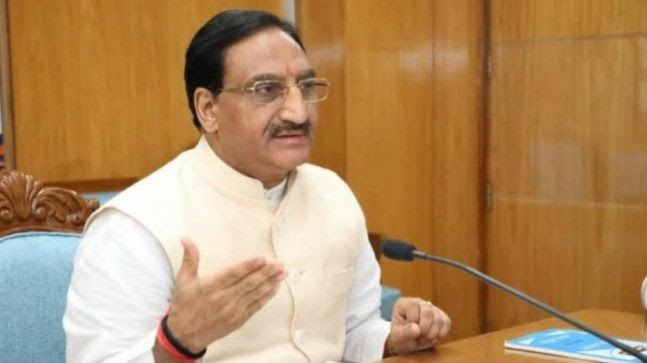
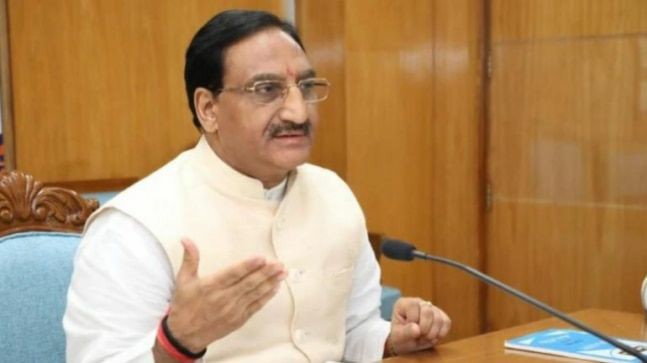
Education Minister Ramesh Pokhriyal has announced the exam schedule for JEE Main (April / May) sessions 2021 today. The minister made the announcement through a live session. The third session of JEE Main 2021 (April session) will be conducted from July 20-25. The fourth and last session of JEE Main 2021 (May session) will be conducted from July 27-August 2.Candidates can apply at jeemain.nta.nic.in. Those who wish to apply for the April session will be able to apply from tonight to July 8. JEE Main (May) session registrations will be open from July 9-12. Candidates will also be able to change their exam centres. Even to ensure social distancing amid the pandemic, the NTA has also increased the number of test centres for JEE Main (April and May) sessions. Earlier, the total number of test centres was 660. The test centres have now been increased to 828.

Social media reaction

Just within two hours of date announcement , the news started Trending over various social media plateform. On twitter the #jeemains2021reached in top ten trend within two hours only. Most of the people are making memes on the surprising announcement of exam date , while some are demanding for postponement of the exam .

What about jee advanced date announcement?

In this context, one thing has to be noted that the JEE Advanced 2021 Exam which was scheduled to take place July 3, 2021, also had to be postponed due to the COVID-19 situation in the country. However, recently, on June 25, 2021, IIT Kharagpur, the organising institute for JEE Advanced 2021 Exam has released the information brochure and list of documents that will be required for JEE Advanced 2021 Exam on the official website of JEE Advanced at jeeadv.ac.in. On the website, it is also mentioned that a new date for JEE Advanced 2021 Exam will be announced soon.

for more detail vist the link 👇

https://youtu.be/6x4aP17GXoE

https://www.dnaindia.com/education/report-nta-jee-main-2021-neet-2021-entrance-exam-dates-application-form-ntanicin-cbse-class-12-board-exam-2021-result-date-latest-updates-2898900

A society that can breach the stereotype in India .

I never feel confined by gender, by labels, by expectations, by stereotypes. I’m free to be myself.

Princess Nokia

Introduction

During the last two decades it is said that to be a women is the most precious gift a human can have . To be able to give birth to another human being that lives inside precisely 9 months at most .

But their is another dispute that a women can only be a insider . That can fulfill the needs of the dominant society.

Isn’t these two statements are contradictory. In first one a women is a precious gift and in another she can only fullfill one’s needs but only in four walls .

Aren’t they human or a thing that can only live under the roof of men for living ?

Women have always played an important role in the society . Even in the ancient times , they were considered as an equal with the men . So what change , the air , the water , the life style or the mindset . We can also say that the stereotype mindset in society .

Years and years before people grew their ego and think about their individual benefits. Women lead life with virtue , wisdom and respect .

When it start

It was all not same as it was now , their were times when women rule the nation . But due to the foreign invasion , women suffer immensely . At the mediaeval times , women came to be confined within the four walls of the house .

Mediaeval period also known as ‘DARK AGE ‘ as very few women’s were found to be a ruler at that period . It was the period when women brought to the deeds where they made to be inferior to men .

They were raped and brutally killed by the demons who think they can dominate them .

Rani Padmavati, Jodha Bai, Gulbadan Begum, Nurjahan, Jahan Ara , Mumtaj Mahal, Razia Sultan , Jija Bai are some of the women who fought for their right , safety , people , family and love also saved many .

“And one day she discovered that she was fierce, and strong, and full of fire, and that not even she could hold herself back because her passion burned brighter than her fears.”

– Mark Anthony

Modern era

It’s a century of love , reliability , equality and most important individuality .

Then why women are always compared to the men . Why they questioned when they are innocent . ( Well not all are innocent and victim , just for those who are ) .

I do believe that men and women are different . Their differences doesn’t make them weak . It’s just a perspective and view of people that make them vulnerable .

But do women care , it’s their own life not to say that anyone means ANYONE can come and stamp their ‘so called ’ rules on them . Not against the male gender but to those who think they can dominate and lock them in four walls .

Not to say, if women lock men in four wall room . So what will happen to them . Umm. Let’s think , they run like a horse at the time when the room unlocked .

If OJO -MOJO can’t stay in their rooms can’t OLLE do the same . Yes she can , also kick their humpy dumpy bum.

Let’s end the topic and eat some more . It’s a 21st century donot let someone walk on you , you can stand for yourself .

“Don’t let anyone speak for you, and don’t rely on others to fight for you.”

– Michelle Obama

This editorial is written under one’s perspective . Neither against any gender nor in favour .

Judicial Service Examination

Judicial Service Examination

The Indian government has three branches . Judiciary is one of them. The Judiciary is a judicial system that interpreting and applies Law. Clear Judicial service examination is the first dream of every law aspirants. Many Law aspirants graduate from the different different law school to clear Judicial Service Examination. In Law field many opportunities are there like advocacy, the litigation, the law firm, the legal officer the legal advisor but most of the law student dream to prepare and clear Judicial Service Examination and become a judge. The Judicial Services Examination ensures a safe and comfortable employment environment. Furthermore, it provides selected applicants with an opportunity to serve their country. Every year, between 50,000 and 60,000 people apply for the Judicial Services Examination, but only those are clear exam, who studied with a goal and in accordance with a philosophy, succeed. Judicial Services must be achieved.
India Judiciary exam are not Union exam means it not conducted by union government. It conducted by the State Government. Every state has its own eligibility, process ,qualifications, courses for Judiciary exam.
Mostly every state divide judiciary in 3 phase
• Preliminary Exams
• Mains Exam
• Interview round

1 Preliminary Exam – The preliminary exam is used to screen candidates for the main examination. It includes Inquiries that are objective in nature. The preliminary examination marks are not taken into account in the final selection. States have different percentages of qualifying marks. The preliminary examination requires a minimum score of 60% for general candidates and 55% for restricted candidates.
2 Mains Exam – This is a subjective sort of exam. Three to four papers form the exam. The ultimate selection is based on the candidates’ performance. The number of candidates called for viva-voce is three times the number of slots.
3 Viva-Voce/Personal Interview — This is the final stage of the selection process, during which candidates are evaluated on a variety of variables, including general interest, personality, and IQ.
This examination is conducted in English as well as in Hindi language. State has decided exam marks and pattern according to him.

Benefits to clear Judicial Services Examination:-

• In the Indian system, the position of deicide is the most prestigious.
• Candidates who are selected in the Judicial Services Examination have a safe and comfortable job.
• It also provide Allowances and Facility.

Tiers of Judiciary Exam
There are two tiers to a career in the legal system.
Lower judicial service:– which is allocated for recent graduates through an entrance examination administered by the various State Public Service Commissions (UP, MP, Rajasthan, and Haryana, Bihar, Punjab so on) or the high courts (Delhi). A career path through this ensures on-time promotions and a solid tenure.
Higher Judicial Services:- The chosen candidates get announce as extra District Judges, that and their promotion is quicker.
Civil decides (junior division) have Judicial Jurist (Second Class) powers, while Chief Judicial Jurists have Judicial Jurist (Second Class) powers (First Class).


Conclusion:
For those who want to serve the public in a high-status position, judicial service may be a good option. It provides a secure and safe job with a competitive wage package.

Indian Education System

The Indian education system is quite an old education system that still exists. It has produced so many genius minds that are making India proud all over the world. However, while it is one of the oldest systems, it is still not that developed when compared to others, which are in fact newer. This is so as the other countries have gone through growth and advancement, but the Indian education system is still stuck in old age. It faces a lot of problems that need to be sorted to let it reach its full potential.

Problems with Indian Education System

Our Indian education system faces a lot of problems that do not let it prosper and help other children succeed in life. The biggest problem which it has to face is the poor grading system. It judges the intelligence of a student on the basis of academics which is in the form of exam papers. That is very unfair to students who are good in their overall performance but not that good at specific subjects.

Moreover, they only strive to get good marks not paying attention to understanding what is taught. In other words, this encourages getting good marks through mugging up and not actually grasping the concept efficiently.

Furthermore, we see how the Indian education system focuses on theory more. Only a little percentage is given for practical. This makes them run after the bookish knowledge and not actually applying it to the real world. This practice makes them perplexed when they go out in the real world due to lack of practical knowledge.

Most importantly, the Indian education system does not emphasize enough on the importance of sports and arts. Students are always asked to study all the time where they get no time for other activities like sports and arts.

How Can We Improve Indian Education System?

As the Indian Education System is facing so many problems, we need to come up with effective solutions so it improves and creates a brighter future for students. We can start by focusing on the skill development of the students. The schools and colleges must not only focus on the ranks and grades but on the analytical and creative skills of children.

In addition, subjects must not be merely taught theoretically but with practical. This will help in a better understanding of the subject without them having to mug up the whole thing due to lack of practical knowledge. Also, the syllabus must be updated with the changing times and not follow the old age pattern.

Other than that, the government and private colleges must now increase the payroll of teachers. As they clearly deserve more than what they offer. To save money, the schools hire teachers who are not qualified enough. This creates a very bad classroom environment and learning. They must be hired if they are fit for the job and not because they are working at a lesser salary.

In conclusion, the Indian education system must change for the better. It must give the students equal opportunities to shine better in the future. We need to let go of the old and traditional ways and enhance the teaching standards so our youth can get create a better world.

What problems does the Indian Education System face?

Indian education is very old and outdated. It judges students on the basis of marks and grades ignoring the overall performance of the student. It focuses on academics side-lining arts and sports.

How can we improve the Indian education system?

The colleges and schools must hire well and qualified teachers. They must help students to understand the concept instead of merely mugging up the whole subject.

Role of Youth in Eradicating Corruption.

Once, Dr. A.P.J Abdul Kalam has rightly said, ” If a country is to be corruption free and become a nation of beautiful minds, I strongly feel there are three key societal members who can make a difference. They are – Father , Mother and the teachers.”

The truth is, corruption is now a worldwide phenomenon. But according to me the fourth and the most important societal member who can eradicate corruption is the YOUTH of our country. The real war has to be fought against these social evils and as the leaders of tomorrow it is our prime responsibility and duty. Why should we create awareness in small children about such vicious crimes ? Because – Things sowed in the minds of young take deep roots.

In reality, it is very difficult to root out the infectious disease known as corruption which has become rampant in every field of life. However instead of bearing it we must challenge it. Some years ago when social activist Anna Hazare started the anti-corruption moment, the maximum crowd was of schhool and college students. Their support is what made the purpose of the protest a succesful one. But was that enough?

Mahatma Gandhi- the father of our nation has quoted ,” A small act of good deed can cause endless ripples.” Youth of our country should remain vigilant and never allow themselves to be exploited by this social evil. Many people say that nothing can be done, but I believe things can change. Of course individual efforts can bring excellence but only collective efforts can be delivered effectively.

In the modern era, our Government is slowly accepting the opinions of young minds and their needs have been put forth as priority.I truly believe that the modernisation and dinamic attitude in the Indian parliament will slowly yet steadily change the phase of our nation. According to me it is not only the duty of politicians and government officials to boycott curroption but also the duty of each and every individual to war against it.

Whenever the circumstances may come, public should not bribe school or college managements to accomodate seat and admissions. We should not bribe traffic police for violating the traffic rules. Corruption has made our country lawless. Muscle and money power has come the law. Our freedom fighters fought all their lives to give us freedom from physical slavery. However we as a educated generation are not free from financial slavery.

Gandhi led the non-violent fight against the british but the currency note which bears his photo is the medium of corruption. What an irony ! Corruption is a virus which can be eradicated if the youth of our country decides to do so. No matter how much the delay we must not pay the bribe at any cost.

Albert Einstein has rightfully said that, ” Evils in the world exist not only because of those who do them but also because of the one’s who just see them annd do nothing to prevent it.” Corruption is like cancer which starts at one part of the system and spreads to every part if not treated or cured at an early stage.

Many years ago we had tryst with destiny and now the time has come when we shall redeem our pledge as the responsible citzens of this nation. Let us wake the Anna Hazare in us and stand for ” India against Corruption”. Only when the last tree has died and the last river has been poisoned and the last fish has been caught will we realise we cannot eat money.

Even if the older generations saw corruption as an immortal enemy, we millenials think of it as a mortal one. So my dear youngsters, ask not what your country can do for you. Ask what you can do for your Country and World at large as one family.

INDIAN EDUCATION SYSTEM

Although we are developing in the other sectors but our education system is still not developing. And if we talk about the future of education system, it totally depends on how we are developing our education system at present. If we see our way of teaching and our institution both are lacking in fulfilling student’s needs.

As we know and many psychologists had also proven that good learning depends on how much the child is satisfied with their basic needs and their surrounding environment. But if we look at the facilities present in government and public school, the facility is very poor. Schools don’t have proper drinking water, toilets which lead to droupout of many students especially girls when they start menstruating. Some schools even don’t have proper desks and fans in school. We can sit for even an hour without fan, cooler or AC so, how can we expect these children to study in these conditions.

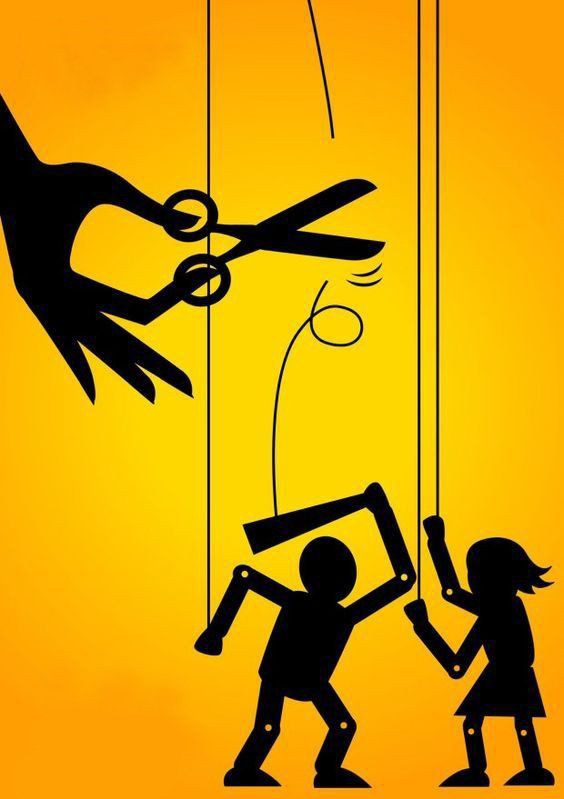
Apart from that if we talk about the teaching style and the curriculum, there are many things which are lacking in these. In our schools, education means making our children learn or we can se memorize theories and facts so that they can clear exams. Teacher teach them by giving stimulus and the children only have to respond. They condition students to behave in a certain way, where there is no use of mind. So in our schools, children (humans) are taught to memorize and write exams and taught in the same way as animals are taught to do stunts in circus i.e., they just have to imitate. In our schools, the whole focus is on result, teacher don’t even thought about what the child learned and how much he/she improved. There are no spaces where the child can explore, think in his/her own way of responding, doing experimentation, finding reasons and so on.

There is no inclusion in our education system and curriculum. Our education system is very much class or society centred i.e., working for a particular class or society. The languages we use in our classes i.e., Hindi and English are the standardized language which is very difficult for children coming from other background. There is no space for mother tongues in schools. The homework in small classes are usually those in which children need parent’s help or sometime the major or full work is done by parents only. So it creates a lot of difficulty for first generation learner.

Our education system is just like the race in which you have to complete this in a given period of time and there is no space for mistakes.

In this kind of education system, the children who can afford other facilities such as tutors, you tube videos, and whose parents are educated doesn’t find any problem but what about the child who is the first generation learner, who can’t afford other ways of learning, who can’t get exposure to our so called standard language i.e., English or Hindi, since childhood. These differences present in the school lead to droupout of these children from school.

So if our present education system continue to be like this, we never able to ‘educate’ our children. We will only able to make machines who can receive stimulus and give response. These are also only some children, because other children do not even included in our education system.

If we really want to educate our students and make our education system better in future we should try to improve our education i.e.,both our education institutions and our way to teaching. It is necessary that education should be provided in the sake of building a knowledgeable and better future leaders, not in the sake of making money. The real focus should be on what the students are learning not on the results. It is necessary to critically and honestly think about our education system and the problems present. Essential steps should be taken to improve our technique and infrastructure so that we are able to make our education system better in future, otherwise without a good education we are not able to develop in any sector.