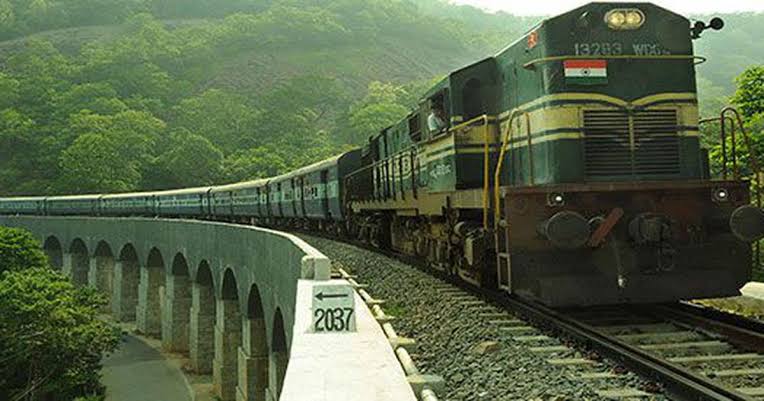
New Vande Bharat trains are on the cards

Indian Railways has been consistently putting in efforts in improving the condition of railways in our country. The main reason for that has been the general people of the nation who use it daily. The railways are the main commuter of the general middle public of the country. So, recently Railways has been trying to improve the experience of the people by introducing trains like Vande Bharat. There have also been efforts to run this train on multiple circuits. 

Until now, 6 Vande Bharat trains are running in our country. The trains have been introduced for the people with some attractive features. One of the prominent features has been the ability of the train to run at a top speed of 160 mph. But due to the outdated infrastructure, the trains at running at a much-reduced speed. 

Now, Indian Railways is planning to introduce Vande Bharat 2.0. In this train, there will be an increase of top seed by 20 kmph. But still, there is doubt that whether it will happen in the real world or not.

So, to improve the condition of the infrastructure. The government is planning to invest 17000 crore rupees in the Delhi to Kolkata circuit. This will improve the performance of the Vande Bharat train on the route drastically. But apart from that, there have also been questions regarding the safety of the train. It is because there have been various cattle-related incidents with trains. This has raised various questions related to safety. To counter these discussions are being made that will reduce such incidents in the future. There is also work in progress related to the implementation of Kavach in all the trains. This technology will specially be incorporated into the Vande Bharat trains. This technology will improve the capability of locomotives to avoid train collisions. 

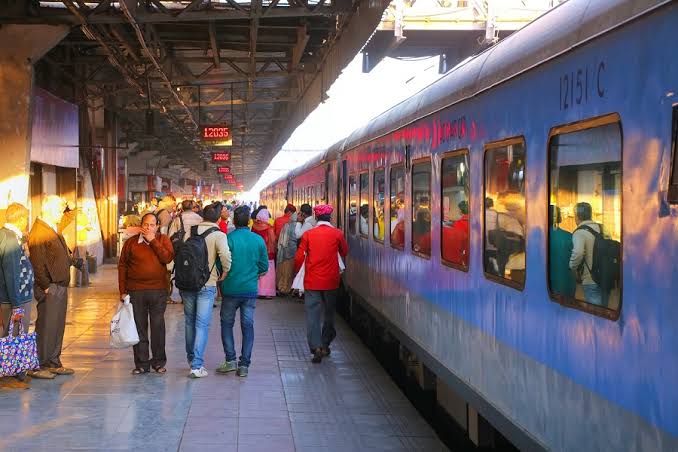
https://unsplash.com/photos/PJUbLL5g9BY

There are also efforts to manufacture sleeper coaches for the Vande Bharat trains. The new version of the prestigious Made in India train will also have a more compact 75-seater chair car coach. These trains are also being considered as a replacement for the ageing Shatabdi trains. It also acts as a flag bearer for the faster future of the Indian Railways. The trains also ensure safe travel for the passengers as they have automatic doors that can only be opened and closed from the locomotive. 

In recent times, there have also been some positive changes in the Indian Railways. The first one is the implementation of electric locomotives all over the country. Now, there are only a very few challenging routes where environmental hurdles are making it difficult. Now, there is also an implementation of 3AC economy class in some trains. This new class will make the journey more comfortable for the public as the new coaches have better seats and better air conditioning. There is also better waste management in these new coaches and there is also a greater number of seats in these coaches.

For a change, there is also a plan for developing various railway stations all across the country. The new railway stations especially in the bigger cities will likely provide an airport-like experience for the passengers. In the end, these passengers will bring about some much-needed freshness to the Indian Railways, the lifeline of the country.

Mission raftaar

 Mission Raftaar is a ‘Mission’ envisaged for speed enhancement and to achieve a target of doubling average speed of freight trains and increasing the average speed of Superfast /mail/Express trains by 25 kmph and not a stand alone ‘Project(s)’. The overall allocation and utilization of funds under Mission Raftaar can not be quantified.

CAG report tabled in budget session 2022 has analyzed the punctuality and travel time in train operations in Indian Railways as a whole. Mission Raftaar is only one of the document used as Audit criteria for preparation of report. Speeding up of trains is a constant endeavour and a continuous process on Indian Railways which is dependent on constant optimization of the investments made by Railways in modernization of technology, high powered locos, modern coaches and better tracks. To this end Indian Railways are inter alia proliferating Hofmann Busch (LHB) coaches which have higher speed potential, converting passenger trains operating with conventional coaches into MEMU services (which have higher acceleration/deceleration owing to distrusted power). As a part of “Mission Raftaar” and during the period 2015-16 and 2021-22, 414 passenger train services have been converted into MEMU services.

Indian Railway is constructing more than 3000 Km of Dedicated Freight Corridor(DFC), which would enable freight trains to run at speed of 100 kmph.

There is marked improvement in average freight train speed.

During financial year 2016-17 to financial year 2020-21, Average speed of freight train has increased from 23.7 kms/hr to 41.2 kms/hr.

Pan India Drive under ‘Operation Yatri Suraksha’ to enhance security of passengers

 Railway Protection Force (RPF) is an Armed Force of the Union under Ministry of Railways entrusted with the responsibility of security of railway property, passenger area and passengers. With the aim of improving the security of passengers travelling by Indian Railways, RPF has launched a Pan-India Operation under the code name “Operation Yatri Suraksha”. As part of this initiative, several steps are being taken to provide foolproof security to passengers i.e. Train Escorting, visible presence on stations, Surveillance through CCTV, Surveillance on active criminals, collection of intelligence about the criminals and action thereupon, identifying black spots and crime prone trains/sections and enhancing security thereat among others to formulate an actionable strategy to reduce crime against passengers. Regular coordination is being made with all the stake holders and joint action is planned to improve passenger security regularly.

In order to give an impetus to Operation Yatri Suraksha, a month long pan India drive was launched against criminals targeting passengers in July 2022 by RPF. During the drive, 365 suspects were nabbed by RPF personnel and were handed over to the concerned GRPs for legal action based on which 322 cases of Passenger Crime i.e. theft of Passenger Belongings, Drugging, Robbery, Chain Snatching etc. were detected.  Stolen property of passengers worth more than Rs. 1 Crore was recovered either from the possession of these criminals or in course of investigation of these offences.

RPF will continue its efforts to enhance security of passengers over Indian Railways in future too by launching drives, improving response, infusing technology and innovation in its working to enhance its response, effectiveness and reach and to realize its objective of SEWA HI SANKALP.

****

Magnitudes of Public Sector Enterprise for Policy making

Source: PSU.Watch

Government regulate the business activities of private enterprises for direct participation in business and set up public enterprises in areas like coal industry, oil industry, steel manufacturing, banking, insurance etc. These units are not owned by Central, State or local Government, managed and controlled by them and are termed as public sector enterprises.

Business activities were occupied to individual and organizations and the government was taking care of essential services such as railways, electricity supply, postal services etc. Private sector did not take interest in areas where investment is high and profit margin is low, such as machine building, infrastructure, oil exploration etc. Industries were also focus in some region that have natural advantages like availability of raw material, skilled labour.

Source: shutterstock

Public sector enterprises defined as any commercial or industrial undertaking owned and managed by the government with a view to maximize social welfare and upholds the Public interest. Public enterprises consist of nationalized private sector enterprises such as banks life insurance of India and enterprise set up by Hindustan, Gas Authority of India limited (GAIL) and State trading Corporation (STC).

During the colonial period, economic activities were limited to essential support facilitate for the maintenance and continued Growth of economy and defense such as railway transport, electricity project, ordinance factories, irrigation works, education and training Institutions.

The public sector to control certain key point in the economy such as the financial institutions for collecting saving of millions of individual and organizations making these available for investment.

By 1980s, besides traditional fields, the major banks and financial institutions, electricity undertakings, shipping, civil aviation, bus services and big enterprises in significance modern industries such as iron and steel, heavy machine building, light engineering, electronic, petroleum and Petro chemical, fertilizers, pharmaceuticals, cotton textiles and cement. The growth of investment in the central undertakings by way of contribution to share capital and long term loans. In addition, the central government had made large investment in departmentally run undertakings.

Characteristics of Public Enterprises

The public enterprises are owned and managed by the central or state Government or local authority. The government may either own the public enterprises or the ownership partly be with the government and with the private industrialists and the public. The control, management and ownership remain primarily with the government e.g, Oil and Natural Gas Corporation Limited (ONGC) and National Thermal Power Corporation (NTPC).

Public enterprises get their capital from government funds and the government has to make provision for their capital in it’s budget. Public enterprises are not move by profit motive. Their major focus on providing services or commodities at reasonable prices. GAIL Gas Authority of India and Indian Oil Corporation make available petroleum on subsidised price to the public.

Public sector enterprises concentrate on providing public utility services like transport, electricity, telecommunication etc. PE are governed by the government and are accountable to the legislature. The government rules and regulations force the Public enterprises to observe excessive formalities in their operations.

Role of Public Sector Undertaking in Public Policy

The public sector enterprises has been important role of achieving economic growth with social justice, generating larger social gains and strengthening country’s economy by removing regional disparities and promoting balanced development in different parts of the country. The impact of public sector undertaking on the regional development.

PSE through useful help and services in the development of human resources in underdeveloped areas. Investment in human capital is considered an essential ingredient of development planning. Such development is only possible if rural demographics ready to cope with modern knowledge and science & technology.

A large number of PSU have been set up in the regions or districts in order to capitalize the rural labour by equipping them with vocational education, technical training and managerial skills. The reason behind it is to transform the unemployed rural people to get self motivated and self inspired employment avenues in local areas economies.

PSU working as a vehicle of communication have taken the new learning to village and acted as agents for introducing changes in existing practices, initiating commercial use of appropriate village technologies in agriculture and allied activities, village artisan and handicrafts and local village industry by inducing use of productivity enhancing equipment and light machinery.

Improvement in economic infrastructure in the areas where policies cannot reach through PSU and active participation of PSU. Constructing and improving connection between village to make accessibility by modern means of transport, electricity for domestic use as well as for commercial and Industrial.

Dr E SREEDHARAN: THE MAN WHO ADDED WHEELS TO INDIA’S METRO DREAMS

Dr Elattuvalapil Sreedharan, popularly known as the “Metro Man”, is primarily credited for changing the face of public transportation in India through his leadership in building Konkan Railway, designed and built in a record time of eight years and Delhi Metro, the largest and busiest metro in India, when he served as its managing director between 1995 and 2012. He is well known for his exceptional leadership qualities and unwavering determination in shouldering arduous responsibilities. During the national railway strike by about 1.7 million workers in 1974 which spanned over 20 days, he was resolute to work on the Metro rail network in Calcutta without a halt. The construction of Konkan Railway headed by Sreedharan was the only project in India which managed to overcome all the adversities faced during the first Gulf War while many countries around the globe including India suffered excessive fuel shortage. These incidents stand out as a testimony for his clairvoyant and exhilarating personality.

Dr E Sreedharan was born on 12th  June 1932, in Palakkad district of Kerala. He completed his primary education and college from Kerala before moving to Andhra Pradesh from where he had his education of Civil Engineering from Government Engineering College in Kakinada. After completing his education, he joined the Government Polytechnic in Kozhikode where he taught Civil Engineering subjects. He passed the Indian Engineering Service (IES) examination in 1953 while working as a trainee in Bombay Port Trust and was further appointed as the Probationary Assistant Engineer in Southern Railways in 1954. 

Dr E. Sreedharan played a key role in bringing a revolution in the country as a metro. Country’s first Metro project, Kolkata Metro was entrusted to him and its foundations were laid in 1970. Cochin Shipyard got rejuvenated under his guidance and several projects which were hanging for a long time gained momentum. The construction of Konkan Railway, the biggest railway construction endeavour in independent India was carried out under the watchful eyes of Dr Sreedharan. Its construction effectively connected the southwestern coast of India with the rest of the country in a point-to-point straight line. The Delhi Metro Rail Project is another example of architectural marvel constructed under his excellency connecting Delhi and its satellite cities of Faridabad, Gurgaon etc. Being the chief advisor of major metro rail projects of Kochi, Lucknow and Jaipur, he is also associated with numerous metro rail projects across the country. The latest endeavour Dr Sreedharan has undertaken is the reconstruction of Palarivattom flyover in Ernakulam district of Kerala, which he promised to construct within 8 months using the leftover budget of other four bridges constructed by Kochi Metro Rail Corporation. The government of Kerala doesn’t need to spend a penny on the bridge’s reconstruction.
Dr E. Sreedharan, a man so dedicated to his cause and service was honoured with Padma Shri and Padma Vibhushan by the country for his exceptional and unfathomable services. He was also awarded Chevalier légion d’honneur by the French government in 2005.

RAILWAYS to run special trains for JEE, NEET AND NDA candidates in Bihar

The Indian Railways has decided to run 20 pairs of special trains from September 2 to 15 for the convenience of the candidates appearing for JEE, NEET and NDA exams in Bihar, A day after the Railways permitted NEET and JEE candidates to avail special suburban services in Mumbai on exam days.

Announcing the move, Railway Minister Piyush Goyal said the facility will also be extended to students appearing for the National Defence Academy  (NDA) exam.

“Indian Railways has decided to run 20 pairs of MEMU / DEMU special trains from September 2 to 15 for the convenience of candidates joining JEE Mains, NEET and NDA in Bihar,” Goyal said in a tweet.

The East Central Railway said in a press release that, the station enroute will have unreserved ticket counters and tickets can also be bought on the UTS ( unreserved ticketing system ) mobile ticketing app.

On Monday, Goyal had said the students and one guardian each will be allowed to travel on the exam days and the admit card will act as their letter of authority.

Around 8.58 lakh candidates have registered for the Joint Entrance Examination (JEE)-Main and 15.97 lakh students for NEET. These exams were earlier postponed twice in this pandemic.

While the National Eligibility cum Entrance Test (NEET) is scheduled to be held on September 13, engineering entrance exam JEE-Main has been planned from September 1-6. The common NDA 2020 exam is scheduled to be held on September 6.

The Railways has suspended the passenger, mail and express train services from March 25 amid the nationwide lockdown to combat the spread of Covid-19 pandemic.

The national transporter has started to run Shramik Special trains from May 1 to transport the stranded migrant workers, pilgrims, tourists and students.

The railways also started to operate 15 pairs of special air conditioned trains from May 12 and 100 pairs of Special time tabled trains from June 1.

Indian Railways go Solar: Clean Energy

Indian Railways has over 960 solar powered railway stations and placed an order for 198 MW solar rooftop capacity for 550 stations. This is going to speed up Indian Railways’ goal of becoming ‘Net Zero Carbon Emission Railway’ and being100% self-sustainable for its power consumption.

The Railways recently organised a meet of leading solar power developers who shared their expectations of being partners in the journey of Indian Railways to become “net zero carbon emitter” before 2030. About 51,000-hectare vacant land is available for the Indian Railways to extend support to the developers for installing solar power plants.

Some solar powered stations are New Delhi, Old Delhi, Jaipur, Varanasi, Kolkata, Guwahati, Secunderabad, Hyderabad and Howrah.

Railways is also seeking for 100% electrification by the year 2023 by utilizing solar energy to meet its traction power needs and become a complete ‘Green mode of transportation.’ This will contribute to national solar power needs.

All this is in line with the recent orders of Prime Minister Narendra Modi to solarise railway stations and use vacant railway land for renewable energy projects. These solar projects will also protect the land by the construction of boundary walls along the track.

Indian Railways – Lifeline Network of Indian Economy

Among the triumphant and majestic inventions of the modern world, is widespread transportation. Compared to other transports available today, railways transport as one of the eloquent one. No doubt aeroplanes and automobiles have provided much ease in everyday life but the importance of railway transportation is perpetual.

Railways have edge roadways as it carries more passengers and loads of heavy goods to long distance. Perhaps journey is more comfortable and faster also. Its operation is less affected by adverse weathers conditions like rain, floods, fog, etc. Railways also make it possible to conduct different activities like business, sightseeing, and pilgrimage along with transportation of goods over longer distances. Railways in India bind the economic life of the country as well as accelerate the development of the industry and agriculture.

World’s first railway line was opened between Stockholm and Darlington in northern England in 1825 and railways became important mode of transport. It occupies an important place in land transport system of India and is the most dependable mode of transport to carry goods and passengers over a long distance. Besides long distance, local transport of passengers is also provided by local trains or metro-rail in some metropolitan cities. Rail transport is available throughout the country except some hilly or mountainous regions.

Indian Railways plays a role of national integration. The railways were introduced in the country in 1853 by the British almost immediately after it established in England. The first railway on Indian sub-continent ran over a stretch of 21 miles from Bombay to Thane on 16 April 1853. The first passenger train steamed out of Howrah station destined for Hooghly, a distance of 24 miles, on 15 August 1854. In South, the first line was opened on 1 July 1856 by the Madras Railway Company. It ran between Veyasarpandy and Walajah Road (Arcot), a distance of 63 miles. In the North, a length of 119 miles of line was laid from Allahabad to Kanpur on 3 March 1859.

In 1947, at the time of independence, there were forty-two rail systems exist in the country.  40 percent of the railways then passed through the newly independent Pakistan and thirty-two lines owned by the former Indian states, spanning a total of 55,000 km, later these were merged into the Indian railways.

In 1951, the systems were nationalized as one unit, becoming one of the largest networks in the world. Thus Indian Railways was born.

India has a large network of railways throughout the country. There are two types of rails rolling on Indian railway tracks. One is passenger train and other is goods train. While passenger trains carry both human beings and a limited quantity of goods, the goods trains are exclusively used for carrying goods from one place to another. At present the Indian Railways have three types of engines – Steam engines, Diesel engines and the Electric engines. The Indian Railways is the largest public sector undertaking in the country.

Today, Indian Railways has one of the largest and busiest rail networks in the world. It transports 20 million passengers and more than 2 million tones of freight daily and is one of the world’s largest commercial employers, with more than 1.6 million employees. Indian Railways covers total 63,140 route kilometers as on 31.3.2002, including broad gauge (total 45,099 kilometers), narrow gauge (total 3,265 kilometers) and meter gauge (total 14,776 kilometers). The Indian Railway system is operated through several zones and other operating divisions. It is considered as the main part of the India’s transportation system.

Some major statistics related to Indian Railways are as follows :

•Wagons (units) – 2,16,717
•number of locomotives (operating) – 7,739
•Operating trains – 14,444
•Daily Passengers – 8,702
•Coaches – 39,236


East Indian Railway established a Carriage and Wagon Department as part of the Locomotive Works in 1855 in Howrah. Established in 1986, the Rail Coach Factory (RCF) was the second coach manufacturing unit of Indian Railways. Its foundation stone was laid by the then Prime Minister of India Mr. Rajiv Gandhi. At present there are  few  more rail coach factories like Internal coach  factory which  located in Chennai, Chittaranjan Locomotive  works, West Bengal and Diesel Locomotive  works, Varanasi. 

Apart from being fast, comfortable and cheap, railways play an important role in the economy of a country. Indian Railways carry more than a million ton of freight traffic encompassing around 6,856 numbers of rail stations. Being the primary infrastructural sector of India, Railways has been developing to maintain a pace with the development of Indian economy. Indian Railways is a department owned and controlled by the Government of India, under the aegis of Ministry of Railways. It is administered by the Railway Board.

The Himsagar Express, between Kanyakumari and Jammu Tawi, has the longest run in term of distance and time on Indian Railways network.  The Indian Railways started introducing the prestigious Rajdhani and Shatabdi services during the ‘70s and ‘80s respectively or to match the best in the world. The Bhopal Shatabdi : Express is the fastest train in India which has a maximum speed of 150 m/h on the Faridabad-Agra section. 
 

Fares on the Indian Railways across categories are among the cheapest in the world. In the past few years, despite a recessionary environment, the Indian Railways have not raised fares on any class of service. On the contrary, there has been a minor dip in fares in some categories. Indian Railways makes 70 per cent its revenues and most of its profits from the freight and uses these profits to cross-subsidies the loss-making passenger sector. It also owns locomotive and coach production facilities.

Since 1924-25, railway finances have been separated from General Revenue. Indian railways have their own funds in the form of Railway Budget presented to the Parliament annually. This budget is presented to the Parliament by the Union Railway Minster two days prior to the General Budget, usually around 26th February. It has to be passed by a simple majority in the Lok Sabha before it gets final acceptance. Indian Railways are subject to the same audit control as other government revenues and expenditure. The government of India has initiated a scheme, ‘National Vikas Yojna’ for the development of the Indian Railways. The scheme would focus on completion on strategic projects within a stipulated period of time. Railways are doing very useful service to the nation. This also creates impact on the Indian Economy.

To conclude, Indian Railways has played a vital role for the transportation needs of the country & Indian Railways have also emerged as the major strength of the Indian economy.


Proud moment for Indian Railways, producing high horse power locomotive indegenously.

First 12000 HP made in India Locomotive, manufactured by Madhepura Electric Loco Factory situated in Bihar, was put into operation by Indian Railways from Pt Deen Dayal Upadhyaya Jn Station yesterday.

New Design Locomotive at Madhepura Factory

The loco is named WAG12 with Number 60027. The train departed from DeenDayalUpadhyaya Station at 14:08 hrs in long haul formation for Dhanbad Division of East Central Railway, consisting of 118 wagons which travelled from Pt DeenDayalUpadhyayaJn to Barwadih via Dehri-on-Sone, Garhwa Road.

It was a proud moment for Indian Railways, as it became 6th country in the world to join the elite club of producing high horse power locomotive indegenously. It is the first time, high horse power locomotive has been operationalised on broad gauge track in the world. The locomotive has been produced under Make in India programme. The Madhepura factory is the largest integrated Green Field facility built to the highest standards of quality and safety with production capacity of 120 locomotives and spread across a massive 250 acres.

Main Factory Building

These locomotives are state of art IGBT based, 3 phase drive, 9000 KW (12000 horse power) electric locomotive. The locomotive is capable of maximum tractive effort of 706 kN, which is capable of starting and running a 6000 T train in the gradient of 1 in 150. The locomotive with twin Bo-Bo design having 22.5 T (Tonnes) axle load is upgradable to 25 Tonnes with design speed of 120 kmph. This locomotive will be a game changer for further movement of coal trains for Dedicated Freight Corridor. The locomotives can be tracked through GPS for its strategic use through embedded software and Antennae being lifted through the servers on ground through microwave link.

The locomotive is capable of working on railway tracks with conventional OHE lines as well as on Dedicated Freight corridors with high rise OHE lines. The locomotive has air-conditioned driver cabs on either side. The locomotive is equipped with regenerative braking system which provides substantial energy savings during operations. These high horse power locomotives will help to decongest the saturated tracks by improving average speed of freight trains.

Madhepura Electric Locomotive Pvt. Ltd. (MELPL) will manufacture 800 State of the Art 12000 HP Electric Freight Locomotives in 11 years and being one of the most power full electric locomotive in the world will increase the speed of freight trains and will allow faster, safer and heavier freight trains to move across the country, thus reducing congestion in traffic. It will also lead to considerable savings in energy consumption through re-generative braking. As part of the project, factory along with township has been set up in Madhepura, Bihar with capacity to manufacture 120 locomotives per year. The project will create more than 10,000 direct and indirect jobs in the country. More than Rs 2000 Crores has already been invested in the project by the company.

Along with the factory, socio-economic development in Madhepura is being driven by this project. As part of CSR initiative skill centres are being set up in Madhepura to impart training to local people.

It may be noted that Indian Railways entered into Procurement cum Maintenance Agreement with Madhepura Electric Locomotive Pvt. Ltd. (MELPL), as part of the largest Foreign Direct Investment project of Indian Railways to transform the heavy freight transportation landscape of the country. This is ‘Make in India’ Initiative by India Railways (IR).

The project started in 2018 and the Prime Minister of India inaugurated the project on 10th April’ 2018. The prototype locomotive was delivered in March 2018. Based on the test results having design issues, the complete locomotive including bogies has been redesigned. The new design of locomotive has been inspected by RDSO at Madhepura factory and cleared for dispatch from factory on 16th Nov’ 2019. Further RDSO has conducted oscillation trials at various speeds upto 132 kmph and the locomotive has passed oscillation trials successfully. The locomotive has made its maiden commercial run between DeenDayalUpadhaya Station to  Shivpur on 18.05.2020. The design was completed for the whole locomotive in a record time of four to six months and despite the initial hiccups and the onset of the COVID-19 pandemic, it could not dampen the spirit of August initiative of IR, surpassing all odds we could secure the permission of the Bihar Govt. to resume operations at the Madhepura Factory putting the project back on track.

****

Non-fare Revenue and FDI in Indian Railways

Several steps have been taken to increase non-fare revenue of Indian Railways by monetization of land and other assets. These include:

i. Policy for leveraging Mobile Assets, Out of Home Advertising, Rail Display Network, Unsolicited proposals and Content on Demand.

ii. Commercial utilization of vacant land through Rail Land Development Authority (RLDA).

Government of India has permitted 100% Foreign Direct Investment (FDI) on automatic route in the following activities/areas of Railway Infrastructure:

i. Suburban corridor projects through Public Private Partnership.

ii. High speed train projects.

iii. Dedicated freight lines.

iv. Rolling stock including train sets, and locomotives or coaches manufacturing and maintenance facilities.

v. Railway Electrification.

vi. Signalling systems.

vii. Freight terminals.

viii. Passenger terminals.

ix. Infrastructure in industrial park pertaining to railway lines or sidings including electrified railway lines and connectivities to main railway line.

x. Mass Rapid Transport Systems.

Foreign Direct Investment in these areas is subject to sectoral guidelines, which include necessary safety certification from central government or its authorized entity. The FDI policy is also open for U.S. businesses.

In order to give a facelift to the Indian Railways and cater to diverse needs of passengers, some of the steps taken include:

i. Significant step-up in investment for capacity enhancement, Safety and Modernization of Railways.

ii. Improvement and upgradation of various passenger amenities like foot over bridges, lifts, escalators, toilets, battery operated vehicles, wheel chairs, waiting rooms.

iii. Leveraging information technology for online ticketing and enquiry services.

iv. Introduction of various premium train services like Humsafar, Tejas, Antyodaya, Utkrisht Double Decker Air-conditioned Yatri (UDAY), Mahamana and coaches like Deen Dayalu and Anubhuti.

This information was given by the Minister of Railways and Commerce & Industry, Shri Piyush Goyal in a written reply to a question in Lok Sabha today.

****

Redevelopment of Railway Stations

Ministry of Railways through various agencies is undertaking techno-economic feasibility studies of Railway stations. Based on the outcome of these feasibility studies, stations are planned to be taken up for redevelopment in phases. The cost of station redevelopment project is to be met by leveraging commercial development of land and air space in and around the stations. Presently, work of redevelopment is in progress at Gandhinagar(Gujarat) and Habibganj(Bhopal) stations.

Redevelopment of Railway Stations

The facilities proposed in a redeveloped station include congestion free non-conflicting entry/exit to the station premises, segregation of arrival/departure of passengers, adequate concourse without overcrowding, integration of both sides of the city wherever feasible, integration with other modes of transport systems e.g. Bus, Metro, etc., user friendly international signage, well illuminated circulating area and sufficient provision for drop off, pick up & parking etc.

Various developers have shown interest in redevelopment of stations on Indian Railways. All major railway stations on Indian Railways are planned to be taken up for redevelopment, especially the stations located in major cities, pilgrimage centres and important tourist destination, including Sawai Madhopur station.

This information was given by the Minister of Railways and Commerce & Industry, Shri Piyush Goyal in a written reply to a question in Lok Sabha today.

****