Tired of the day-to-day struggle with gushing skin, choked pores, and dull skin? Bring back immaculate skin that looks immature and canvas-free with the power of Cranked Charcoal &Coffee.Crafted with the integrity of nature, Mamaearth Charcoal Face Wash pulls out poisons and contaminants from deep within the pores. The integrity of Coffee tightens skin pores and promotes yea skin tone to give you an canvas-free glowing complexion.
The reading response gives you an avenue to invite yourself into the written text and to make a connection with it. In many college courses you will be assigned to write papers about subjects with which you have no personal interest. Reading responses help to generate connections between the reader and text.
How?
The key to writing a compelling academic paper for any college course is being able to forge a personal connection on some level with your subject. You must care in some way about your subject, or else your writing will be lifeless, and your instructor, a human being, will have read a re-hashing of the facts of his/her course a million times before. Or, forget about writing for a college course. What about writing a report in the workplace? What about proposing a new idea to your boss? Such careful awareness of audience and tailoring your writing to a specific audience is an aspect of successful writing we’ll work on in this course. However, you can’t even get to the point of getting someone else to care about what you are writing if you don’t care yourself.
That doesn’t mean you should only write about subjects that interest you. On the contrary, half of the battle in writing a successful paper is coming up with an idea on a topic which is usually of little interest to you—finding an angle or connection through which you can approach or examine the text. What does it remind you of? Why do you respond emotionally? Or why do you not respond? Ask questions to find avenues into a piece of writing. The creativity involved in continually forging such difficult connections will help you develop into a writer who can grab a reader’s attention by approaching a topic or subject through your own unique personal lens, that is, by looking at something through an angle no one else can see.
Through active responding to reading, and examining your responses, you can learn to practice new approaches of interpretation to common themes. Many of the ideas you generate in the reading responses will prove useful when you sit down to write the short essays (or maybe even your research paper).
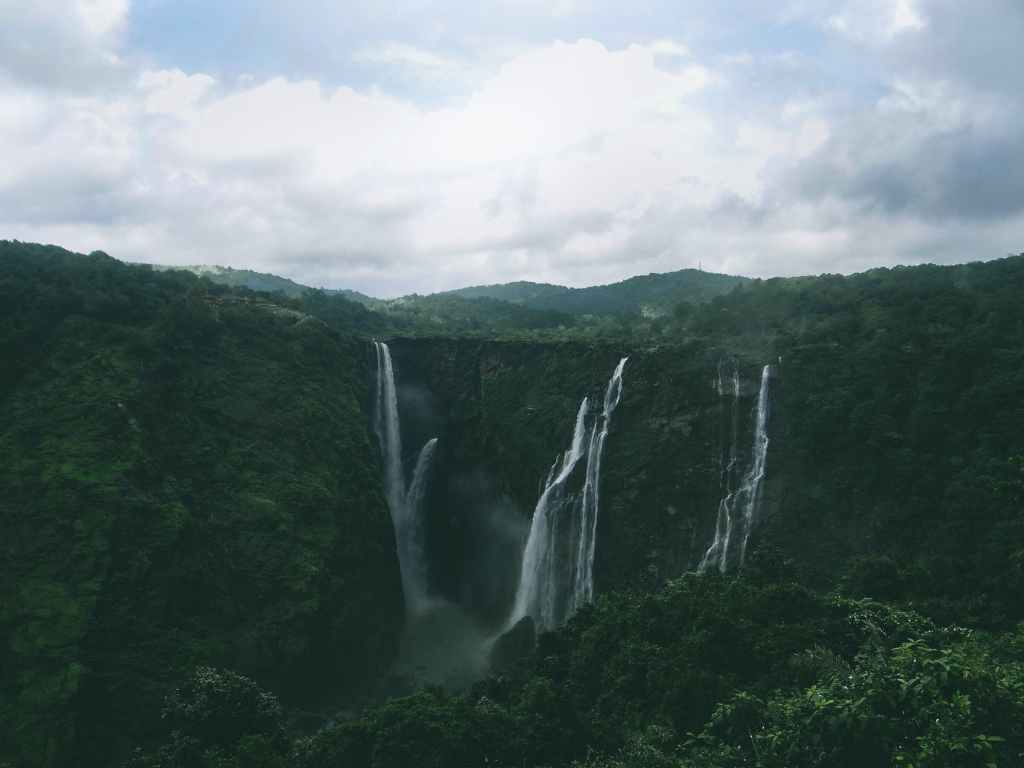
Karnataka is a state in southwest India with Arabian Sea coastlines. The capital, Bengaluru (formerly Bangalore), is a high-tech hub known for its shopping and nightlife. To the southwest, Mysore is home to lavish temples including Mysore Palace, former seat of the region’s maharajas. Hampi, once the medieval Vijayanagara empire’s capital, contains ruins of Hindu temples, elephant stables and a stone chariot.
Originally known as the princely State of Mysore, Karnataka was formed on 1st November 1956 and is located in the South-Western region of India. Close to the Arabian Sea and the Laccadive Sea, Karnataka is known for its beautiful yet unpopulated beaches and rich culture.
Karnataka is the largest state in South India and sixth largest in India. The state is in the south western region of India. It was formed on 1 November 1956, with the passage of the States Reorganisation Act. Originally known as the State of Mysore , it was renamed Karnataka in 1973. The state corresponds to the Carnatic region. Its capital and largest city is Bangalore.
Karnataka is bordered by the Arabian Sea to the west, Goa to the northwest, Maharashtra to the north, Telangana to the northeast, Andhra Pradesh to the east, Tamil Nadu to the southeast, and Kerala to the south. It is the only southern state to have land borders with all of the other 4 southern Indian sister states. The state covers an area of 191,976 square kilometres , or 5.83 percent of the total geographical area of India. It is the sixth largest Indian state by area. With 61,130,704 inhabitants at the 2011 census, Karnataka is the eighth largest state by population, comprising 31 districts. Kannada, one of the classical languages of India, is the most widely spoken and official language of the state. Other minority languages spoken include Urdu, Konkani, Marathi, Tulu, Tamil, Telugu, Malayalam, Kodava and Beary. Karnataka also contains some of the only villages in India where Sanskrit is primarily spoken
The economy of Karnataka is the fourth-largest of any Indian state with ₹16.99 trillion in gross domestic product and a per capita GDP of ₹231,000 . Karnataka has the nineteenth highest ranking among Indian states in Human Development Index.
The diverse linguistic and religious ethnicities that are native to Karnataka, combined with their long histories, have contributed immensely to the varied cultural heritage of the state. Apart from Kannadigas, Karnataka is home to Tuluvas, Kodavas and Konkanis. Minor populations of Tibetan Buddhists and tribes like the Soligas, Yeravas, Todas and Siddhis also live in Karnataka. The traditional folk arts cover the entire gamut of music, dance, drama, storytelling by itinerant troupes, etc. Yakshagana of Malnad and coastal Karnataka, a classical dance drama, is one of the major theatrical forms of Karnataka. Contemporary theatre culture in Karnataka remains vibrant with organisations like Ninasam, Ranga Shankara, Rangayana and Prabhat Kalavidaru continuing to build on the foundations laid by Gubbi Veeranna, T. P. Kailasam, B. V. Karanth, K V Subbanna, Prasanna and others. Veeragase, Kamsale, Kolata and Dollu Kunitha are popular dance forms. The Mysore style of Bharatanatya, nurtured and popularised by the likes of the legendary Jatti Tayamma, continues to hold sway in Karnataka, and Bangalore also enjoys an eminent place as one of the foremost centres of Bharatanatya.
Karnataka also has a special place in the world of Indian classical music, with both Karnataka (Carnatic) and Hindustani styles finding place in the state, and Karnataka has produced a number of stalwarts in both styles. The Haridasa movement of the sixteenth century contributed significantly to the development of Karnataka (Carnatic) music as a performing art form. Purandara Dasa, one of the most revered Haridasas, is known as the Karnataka Sangeeta Pitamaha (‘Father of Karnataka a.k.a. Carnatic music’). Celebrated Hindustani musicians like Gangubai Hangal, Mallikarjun Mansur, Bhimsen Joshi, Basavaraja Rajaguru, Sawai Gandharva and several others hail from Karnataka, and some of them have been recipients of the Kalidas Samman, Padma Bhushan and Padma Vibhushan awards. Noted Carnatic musicians include Violin T. Chowdiah, Veena Sheshanna, Mysore Vasudevachar, Doreswamy Iyengar and Thitte Krishna Iyengar.
Gamaka is another classical music genre based on Carnatic music that is practised in Karnataka. Kannada Bhavageete is a genre of popular music that draws inspiration from the expressionist poetry of modern poets. The Mysore school of painting has produced painters like Sundarayya, Tanjavur Kondayya, B. Venkatappa and Keshavayya. Chitrakala Parishat is an organisation in Karnataka dedicated to promoting painting, mainly in the Mysore painting style.
Saree is the traditional dress of women in Karnataka. Women in Kodagu have a distinct style of wearing the saree, different from the rest of Karnataka. Dhoti, known as Panche in Karnataka, is the traditional attire of men. Shirt, Trousers and Salwar kameez are widely worn in Urban areas. Mysore Peta is the traditional headgear of southern Karnataka, while the pagadi or pataga (similar to the Rajasthani turban) is preferred in the northern areas of the state.
Rice and Ragi form the staple food in South Karnataka, whereas Jolada rotti, Sorghum is staple to North Karnataka. Bisi bele bath, Jolada rotti, Ragi mudde, Uppittu, Benne Dose, Masala Dose and Maddur Vade are some of the popular food items in Karnataka. Among sweets, Mysore Pak, Karadantu of Gokak and Amingad, Belgaavi Kunda and Dharwad pedha are popular. Apart from this, coastal Karnataka and Kodagu have distinctive cuisines of their own. Udupi cuisine of coastal Karnataka is popular all over India.
Kannada is the official language of the state of Karnataka, as the native language of 66.5% of its population as of 2011 and is one of the classical languages of India. Other linguistic minorities in the state were Urdu , Telugu , Tamil , Marathi , Hindi , Tulu , Konkani , Malayalam and Kodava Takk .
Kannada played a crucial role in the creation of Karnataka: linguistic demographics played a major role in defining the new state in 1956. Tulu, Konkani and Kodava are other minor native languages that share a long history in the state. Urdu is spoken widely by the Muslim population. Less widely spoken languages include Beary bashe and certain languages such as Sankethi. Some of the regional languages in Karnataka are Tulu, Kodava, Konkani and Beary.
Kannada features a rich and ancient body of literature including religious and secular genre, covering topics as diverse as Jainism (such as Puranas), Lingayatism (such as Vachanas), Vaishnavism (such as Haridasa Sahitya) and modern literature.



 Eduindex
You must be logged in to post a comment.