Know about TRAI's proposal of displaying name with phone number.

In November last year, TRAI floated a consultation paper seeking comments about the potential introduction of Caller Name Presentation (CNAP).

The feature will allow users to know the identity of the person calling them. The basic idea is that if people are aware of the person who is calling them, they can make an informed choice about those calls. At the same time, such a feature could potentially help in curbing harassment and other spam calls.

The proposal CNAP will also be difficult to execute from a technical perspective given that a number of phones in the Indian market may not be able to support it, telcos have said.

Meanwhile, Truecaller, which already offers a similar service albeit through a crowdsourcing model has said since several people purchase SIM cards using forged identity cards, TRAI’s proposal to use SIM registration data to display callers’ names might be fraught with inaccuracies since “the identity of the actual user of a mobile number may not be the same as the subscriber”.

China's first population fall in six decades.

China’s population fell last year for the first time in six decades, a historic turn that is expected to mark the start of a long period of decline in its citizen numbers with profound implications for its economy and the world.

The country’s National Bureau of Statistics reported a drop of roughly 850,000 people.

China’s birth rate has been declining for years, prompting a slew of policies to try to slow the trend.

But seven years after scrapping the one-child policy, it has entered what one official described as an “era of negative population growth”.

Health experts says the next 40 days will be crucial for India amid covid surge in China.

.

There is still no clarity on what is happening in China, with experts raising alarm that the country is witnessing a steep increase in the number of COVID-19 cases due to coronavirus variant BF.7.

The Union Health Ministry has, however, said that the next 40 days will be crucial in India – with the country likely to witness a surge in January.

“In the past, whenever a NBCOVID-19 wave was reported in India, it used to hit us in 30-35 days, starting from East Asia, it used to hit Europe in 10 days, moving towards America and the Pacific region, and then finally hitting India which would normally take 30 days,” a senior health ministry official told media, requesting anonymity.

The official added that the number of deaths and hospitalisations is likely to be low this time, even if India is hit by a COVID wave by the end of January.

Meanwhile, the Ministry is likely to make mandatory, from next week, negative RT-PCR reports for passengers arriving from China, Hong Kong, Singapore, Japan, South Korea and Thailand.

Filling up of ‘air-suvidha’ forms and 72-hour prior RT-PCR testing could be mandatory for arrivals from these countries.

The government has made random coronavirus testing mandatory for two per cent of passengers arriving in each international flight from December 24. Union Health Minister Mansukh Mandaviya is likely to visit the Delhi airport to take stock of testing and screening facilities there.

Amid covid concerns, chinese are turning to black market India made meds.

Residents in China have been scouring the market for generic COVID-19 drugs and India seems to be the answer to their problem. In the recent past, the Chinese authorities have approved two Covid antivirals – Pfizer’s Paxlovid and Azvudine – for the treatment. While China has ran out of the medicine, the Indian market is filled with it and is slowly becoming the next favourite destination.

In the past few months, topics like “anti-Covid Indian generic drugs sold at 1,000 yuan (US$144) per box” has been making the rounds of the Chinese social media. Platforms like Weibo and WeChat are filled with such queries and experts believe that black market deals are being conducted on them.

While the distribution of drugs which are not approved in China is not illegal, there can be penalties imposed on the illegal imports. Even the doctors in China have warned the public against buying drugs on the black market with several patients displaying massive side effects to the medicines.

'Right to repair' portal launched to handle repair related issues among consumers.

Food and Consumer Affairs Minister Piyush Goyal on Saturday introduced a host of new initiatives, including a right to repair portal and an NTH mobile app and opened new premises of the National Consumer Helpline centre in the national capital.

On the ‘right to repair’ portal, manufacturers will share the manual of product details with customers so that they can either repair by self, by third parties, rather than depend on original manufacturers. Initially, mobile phones, electronic, consumer durables, automobile and farming equipments will be covered.

Speaking on the theme “Effective disposal of cases in consumer commission” on the occasion of National Consumer Day, Mr. Goyal lauded the consumer commissions for disposing of higher number of pending cases in last six months and expressed confidence of eliminating the backlog of cases across the country.

“In a short span of six months, we have doubled disposal of pending cases. About 90,000 pending cases were disposed (between July and November this year),” he said. About 38,000 pending cases were disposed of by consumer courts in the year-earlier period.

Health minister holds a meeting today on covid rising concern.

Union Health Minister Mansukh Mandaviya today reviewed the COVID-19 situation in the country in view of a sudden spurt in cases in some parts of the world, and directed officials to be alert and strengthen surveillance. “Use a mask if you are in a crowded space, indoors or outdoors. This is all the more important for people with comorbidities or are of higher age,” he said. “Only 27-28% of people have taken precaution dose. We appeal to others, especially senior citizens, to take precaution dose. Precaution dose is mandated and guided to everyone.”

In view of the rise in cases in Japan, the United States of America, Republic of Korea, Brazil and China the Union Health Ministry, urged all states and Union territories to ramp up the whole genome sequencing of positive samples of Covid to keep track of emerging variants.

In India, more than 220 crore vaccination doses have been administered, including booster shots. Many got reinfected or have already been exposed to omicron, its sub-variants, and sub-lineages. As a result, many Indians have developed ‘hybrid immunity’ or ‘super immunity’, due to a combination of extensive vaccination and natural infection. Nevertheless, in view of the sudden spurt of cases abroad, the government is reviewing the situation and has directed all relevant agencies to be alert.

Key points of UN COP15 summit held at Canada.

After four years of fractious talks, nearly 200 countries, including India, approved a historic Paris-style deal on Monday to protect and reverse dangerous loss to global biodiversity following an intense final session of negotiations at the UN COP15 summit here in Canada.

The UN Development Programme said the “historic agreement” meant people around the world could hope for real progress to halt biodiversity loss.

The main points include:

  • Maintaining, enhancing and restoring ecosystems, including halting species extinction and maintaining genetic diversity
  • “Sustainable use” of biodiversity – essentially ensuring that species and habitats can provide the services they provide for humanity, such as food and clean water
  • Ensuring that the benefits of resources from nature, like medicines that come from plants, are shared fairly and equally and that indigenous peoples’ rights are protected
  • Paying for and putting resources into biodiversity: Ensuring that money and conservation efforts get to where they are needed.

Furthermore, the framework also calls for increasing the amount of money sent to poor countries to at least $20 billion every year by 2025 which could be increased by $10 billion each year by the end of the decade. However, the document only calls for identifying subsidies by 2025 which can be reformed or phased out and work on reducing them by 2030. 

The draft comprised four broad goals and 22 targets addressing the protection of nature and sharing its benefits which included, the management of wildlife, working on the restoration of habitats and using less plastic. 

What is hooch tragedy, which is happening in Bihar recently.

The toll of dead in Bihar’s Chhapra Hooch tragedy has soared to 50, succumbing after consuming spurious liquor in the Saran district. People have died and several others hospitalised in India’s Bihar state after drinking toxic alcohol, authorities and local media said.

The deaths happened mainly in two villages in the impoverished eastern state, where the sale and consumption of liquor were banned in 2016 after women’s groups campaigned against poor workers splurging their meagre incomes on drinking.

Such bans are in force in several Indian states, driving a thriving black market for cheap alcohol made in unregulated backstreet distilleries that kills hundreds of people every year.

Hooch is a commonly used term for poor quality alcohol, derived from Hoochinoo, a native Alaskan tribe that was known to produce very strong liquor. Unlike branded liquor which is produced in factories with sophisticated equipment and rigorous quality control, hooch is made in more crude settings without any quality checks.

All that matters is to produce alcohol that will intoxicate, and hooch surely does that. The only problem is that if prepared incorrectly, it can kill. Importantly, it is near impossible to tell whether hooch is safe to consume before actual consumption.

Know about New Zealand's law that bans smoking for next generation.

In a bid to curb smoking for the next generation and make the country smoke-free by 2025, New Zealand passed the world’s first legislation prohibiting the sale of tobacco to anyone born on or after January 1, 2009.

According to the Guardian, the number of stores legally permitted to sell cigarettes will be reduced by a tenth, from 6,000 to 600 across the country. The law passed will go into effect in 2023, as New Zealand strives to become “smoke-free” by 2025.

New Zealand’s smoking rate is already at historic lows, with just 8% of adults smoking daily according to government statistic released in November – down from 9.4% last year.

It is hoped that the Smokefree Environments Bill will reduce that number to less than 5% by 2025, with the eventual aim of eliminating the practice altogether.

India and Chinese troops clashes on border.

Soldiers from India and China clashed last week along the two countries’ disputed Himalayan border. In 1962, when the countries fought a bloody, high-altitude war over the contested territories, China seized Arunachal Pradesh, which it claims as part of South Tibet, before returning it to Indian control, but the disputed area belongs to and will remain in the integral control of India.

It was the first reported standoff between troops from the two Asian giants since deadly clashes in 2020 strained their already tense relations. 

Both sides were involved with a few soldiers suffering minor injuries. China is yet to comment on the stand off. But Reuters reported an Indian army source saying at least six Indian troops were injured.

“Both sides immediately disengaged from the area,” the Indian army said.

It added that commanders from both sides had held a meeting immediately after “to restore peace and tranquility”.

India’s Defence Minister Rajnath Singh told the parliament on Tuesday that no Indian soldiers had been “hurt or seriously injured” in the clash and that the incident has been “taken up at diplomatic levels”. He added that because of “timely intervention of Indian military commanders, PLA soldiers went back to their positions”.

China and India share a disputed 3,440km (2,100 mile) long de facto border – called the Line of Actual Control, or LAC – which is poorly demarcated. The presence of rivers, lakes and snowcaps means the line can shift. The soldiers on either side – representing two of the world’s largest armies – come face to face at many points.

Seat belt to be mandatory for all passengers in car.

Passengers sitting in the rear seat of a car and not wearing seatbelts might also be fined soon, said Union Transport Minister Nitin Gadkari. In an exclusive interview, Gadkari said that although it was mandatory for rear-seat passengers to wear a seatbelt, people have not been following the same. Henceforth, they would be fined because at “any cost, lives have to be saved”. However, he emphasised that fining people was not the goal, but cutting down of road accidents by 50 per cent by 2024 was the aim. 

Although a fine of Rs 1,000 is already in place under Article 138 (3) of the Central Motor Vehicle Rules (CMVR), the problem seems to be more about user behaviour and enforcing the regulations. Most people in India overlook belting up in the rear seats of a car, often assuming they are in a much safer place since there is no dashboard or steering wheel right in front of them. 

The road transport and highways minister further said he was trying to work with the states to find ways to reduce accidents on National Highways as law and order comes under the state governments.

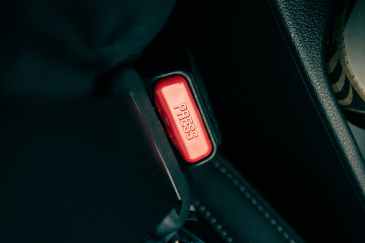
The government has asked online retail giant Amazon to stop selling devices designed to disable car seatbelt alarms, transport minister Nitin Gadkari told Reuters, citing potential safety risks. Apart from this, the Ministry of Road Transport and Highways has also written to the consumer affairs ministry to ask e-commerce companies to stop selling devices designed to disable car seat belt alarms, news agency PTI has reported citing a senior government official.

Doctrines of Indian constitution

India's founders gave us our Constitution. We must prove to them that we  can keep it

Indian constitution is one of the largest constitutions in the world. Even though it is a compilation of borrowed ideas from several parts of the world, it upholds the values and vision of the great freedom fighters who shed their blood for our nation. The constitution has played a significant role in holding together this huge diverse nation for a period of 75 years. On examining each and every aspect of the constitution the vision shared by the visionaries become more evident.

Doctrines of the constitution are general guidelines laid for enabling proper interpretation of the constitution. It is acts as a guide for the law makers as well as implementers.

The doctrines are:

Doctrine of eclipse

The Doctrine of Eclipse states that any law which is inconsistent with fundamental rights is not invalid. It is not totally dead but overshadowed by the fundamental right. The inconsistency (conflict) can be removed by constitutional amendment. This doctrine emanates directly from Article 13(1) of the Constitution that is a part of the fundamental rights, which states, “all laws in force in the territory of India immediately before the commencement of this Constitution in so far as they are inconsistent with the provisions of this Part, i.e. Part III, shall, to the extent of such inconsistency, be void.” The doctrine of eclipse envisages fundamental rights as prospective in nature. It states that a pre-constitutional law inconsistent with the fundamental rights is not nullity or void ab initio but only remains unenforceable, i.e., remains in a dormant state. They exist for all past transactions, i.e., for rights and liabilities that were acquired before the Constitution came into being.

Doctrine of severability

This doctrine of severability is also known as the doctrine of separability.  The word “to the extent of the inconsistency or contravention” makes it clear that when some of the provision of a statue when some of the provisions of a statute becomes unconstitutional on account of inconsistency with fundamental rights, only to the repugnant provision of the law in question shall be treated by the courts as void, and not the whole statute. The doctrine of severability means that when some particular provision of a statute offends or is against a constitutional limitation, but that provision is severable from the rest of the statute, only that offending provision will be declared void by the Court and not the entire statute.

Doctrine of judicial review

The doctrine of Judicial review is basically the power of the judiciary to decide on the constitutional validity of the acts of the other wings of the government (the executive and the legislative). The objective is to regulate any such acts which may contravene the constitution. For instance, if any act of the law-making bodies is such that it negates the provisions given in the constitution, it is important that it should be made null and void. In order to do so an organ is required to have the force or power to articulate such acts as void.

Doctrine of pith and substance

To disintegrate the doctrine to its molecular meanings, Pith denotes true nature or essence of something and Substance means the most important or essential part of something. The definition of this doctrine states, within their respective spheres the state and the union legislatures are made supreme, they should not encroach upon the sphere demarcated for the other. Doctrine of Pith and Substance is applied when legislation made by of the legislatures is challenged or trespassed by other legislatures. This doctrine says that when there is a question of determining whether a particular law relates to a particular subject the court looks to the substance of the matter. If the substance of the matter lies within one of the 3 lists, then the incidental encroachment by law on another lists, does not make it invalid because they are said to be intra vires.

Doctrine of harmonious construction

According to the Doctrine of Harmonious Construction, a Statute should be read as a whole and one provision of the Act should be construed with reference to other provisions in the same Act so as to make a consistent enactment of the whole statute. Such an interpretation is beneficial in avoiding any inconsistency or repugnancy either within a section or between a section and other parts of the statute.

What a filibuster is.

Traditionally, the Senate filibuster was reserved for only the most controversial issues, but its use has escalated in recent years, often slowing business in the chamber to a halt. Some lawmakers acknowledge that the filibuster, which has effectively set a 60-vote super­majority requirement for passing legis­la­tion in the Senate, could doom many of the propos­als they have cham­pioned, including meaningful reforms on issues ranging from health care to climate change to gun control. Behind this dysfunc­tion, the filibuster also has a troubling legacy: it has often been used to block civil rights legislation intended to combat racial discrimination.

As advocates push for pro-democracy legislation, calls for eliminating the filibuster have grown louder. In his remarks at the funeral of civil rights hero and congressman John Lewis in July 2020, former President Barack Obama called the filibuster a “Jim Crow relic,” arguing that the procedure should be eliminated if it is used to block voting reforms. Others note that certain types of legislation are already exempt from the fili­buster’s super­majority require­ment and argue that a similar exemp­tion should be made for voting rights.The stakes were raised in March 2021, when the For the People Act — a comprehensive democracy reform bill — was passed by the House of Representatives and introduced in the Senate, where the filibuster may determine its fate. Whether through elimination or reform, the filibuster cannot be allowed to impede the expansion of Ameican democracy or the rights of all eligible voters.

What is the filibuster?

The filibuster is a 19th-century procedural rule in the Senate that allows any one senator to block or delay action on a bill or other matter by extending debate. While a final vote in the Senate requires a simple majority of 51 votes, a supermajority, or 60 votes, is needed to start or end debate on legislation so it can proceed to a final vote. Therefore, even if a party has a slim majority in the Senate, it still needs a supermajority to even move forward with legislation a tall task for a hyper-partisan Washington. The House of Representatives does not use the filibuster. Instead, a simple majority can end debate.

How can the filibuster rule be changed?

Senators have carved out exceptions to the filibuster rule before.One option to do so is called “going nuclear” — when senators override an existing rule, such as the number of votes needed to end debate. This is usually done by lowering the threshold needed to end a filibuster to 50 votes.In 2017, then-Senate Majority Leader Mitch McConnell, R-Ky., eliminated the filibuster for Supreme Court nominees, clearing the way for then-President Donald Trump’s first nominee to be confirmed.

Why a call for change now?

In the last 50 years, the filibuster has been used more and more to kill major legislation. And with Biden’s agenda stalled, Democrats are calling for a carve out to pass voting rights legislation. In the last year, at least 19 states passed 34 laws restricting access to voting, according to the Brennan Center for Justice. If the threshold to end debate on a bill is lowered to 50 votes, for instance, Democrats could end debate on their voting reform bill and eventually move to a final vote, with Vice President Kamala Harris serving as a tie-breaking vote in the 50-50 Senate to pass the legislation. Incidentally, Harris, as president of the Senate, would play a key role in any potential rules change. She would be expected to occupy the chair and preside over any rule change action.

What’s the differ­ence between “talking” and “silent” fili­busters?

Filibusters traditionally involved long speeches in which a senator attempted to block a vote from proceeding by refusing to yield the floor. To stage such a “talking” fili­buster, a senator would hold the floor by stand­ing and talking for as long as they could, sometimes overnight. This was popularized in the 1939 film Mr. Smith Goes to Wash­ing­ton. The longest filibuster ever recor­ded, by South Caro­lina Sen. Strom Thur­mond in opposition to the Civil Rights Act of 1957, lasted for more than 24 hours. But since the early 1970s, senators have been able to use a “silent” filibuster. Anytime a group of 41 or more senators simply threatens a filibuster, the Senate majority leader can refuse to call a vote.

How has the fili­buster changed over time?

The use of the filibuster, once reserved for only the most controversial issues, has increased dramat­ic­ally in recent years along­side grow­ing polar­iz­a­tion in Wash­ing­ton. There have been more than 2,000 fili­busters since 1917; about half have been in just the last 12 years. Crit­ics argue that this increased use has slowed busi­ness in the Senate to a halt, often entangling the cham­ber in proced­ural maneuv­er­ing instead of substant­ive debate and, ulti­mately, lawmak­ing.

Writs and provisions

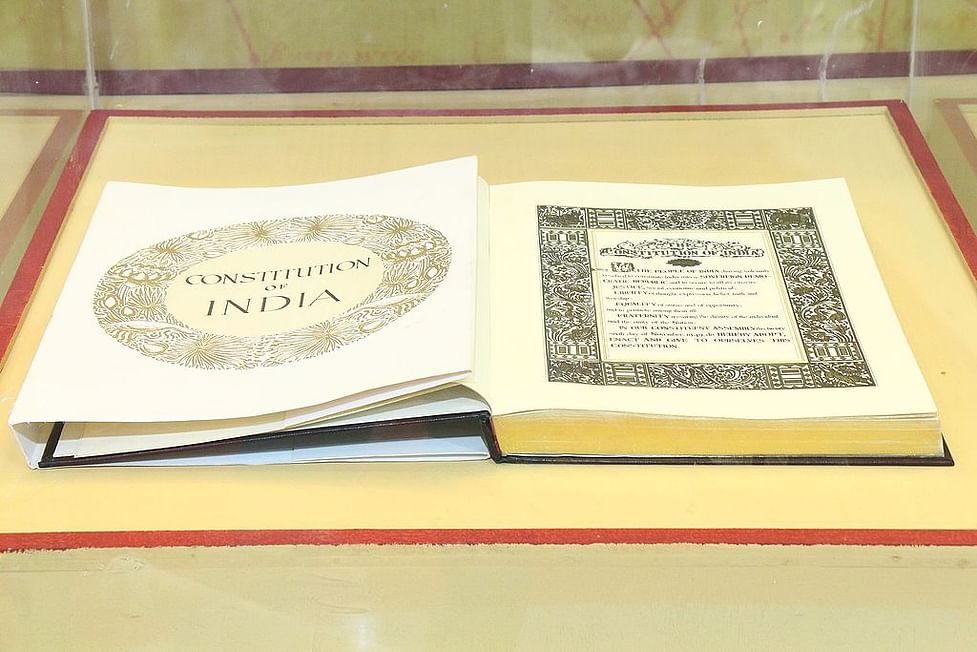
The Constitution of India. | Library of Congress

Judiciary is one of the most powerful organs of Indian democracy. It has got the power to uphold the provisions laid down by the constitutions. In order to facilitate this, there are several provisions and one such provision is writs.

A Writ means a command of the Court to another person or authority by which such person/authority has to act or abstain from acting in a certain way. Thus, writs are a very essential part of the judicial power of the Courts.

In India, the supreme court and high courts can issue several writs according to the provisions of article 32 and article 226 accordingly. Further, the parliament can empower any other court to issue these writs. So far, no such provisions have been made.

The writs are borrowed from English law where they are known as ‘prerogative writs. They are so called in England as they were issued in the exercise of the prerogative of the king who has and is still, described as the ‘fountain of justice’.

Some Writs mentioned in the constitution are:

Habeas corpus

It is a Latin term which literally means ‘to have the body of’. It is an order issued by the court to a person who has detained another person, to produce the body of latter before it. The court then examines the legality and cause of the detention. It would set the detained person free, if the detention is found to be illegal. Thus, this writ is a bulwark of individual liberty against arbitrary detention.

Mandamus

It literally means ‘we command’. It is a command issued by the court to a public official asking him to perform his official duties that he has failed or refused to perform. It can also be issued against any public body, a corporation, an inferior court, a tribunal or government for the same purpose.

Prohibition

Literally, it means ‘to forbid’. It is issued by a higher court to a lower court or tribunal to prevent the latter from exceeding its jurisdiction or usurping a jurisdiction that it does not possess. Thus, unlike mandamus that directs activity, the prohibition directs inactivity. The writ of prohibition can be issued only against judicial and quasi-judicial authorities. It is not available against administrative authorities, legislative bodies and private individuals or bodies.

Certiorari

In the literal sense, it means ‘to be certified’ or ‘to be informed’. It is issued by a higher court to a lower court or tribunal either to transfer a case pending with the latter to itself or to squash the order of the latter in a case. It is issued on the grounds of excess of jurisdiction or lack of jurisdiction or error of law. Thus, unlike prohibition, which is only preventive, certiorari is both preventive as well as curative. It is not available against administrative authorities, legislative bodies and private individuals or bodies

Quo warranto

In literal sense it means ‘by what authority or warrant’. It is issued by the court to enquire into the legality of claim of a person to a public office by a person. Unlike the other four writs, this can be sought by any interested person and not necessarily by the aggrieved person.

ELECTIONS AND COMMON MAN

Kerala Assembly Election 2021: Voting begins, fate of 957 candidates to be  decided today

“The elections are the greatest symbol of participation and political reform”

                                                -Mohammad Khatami (former president of Iran)

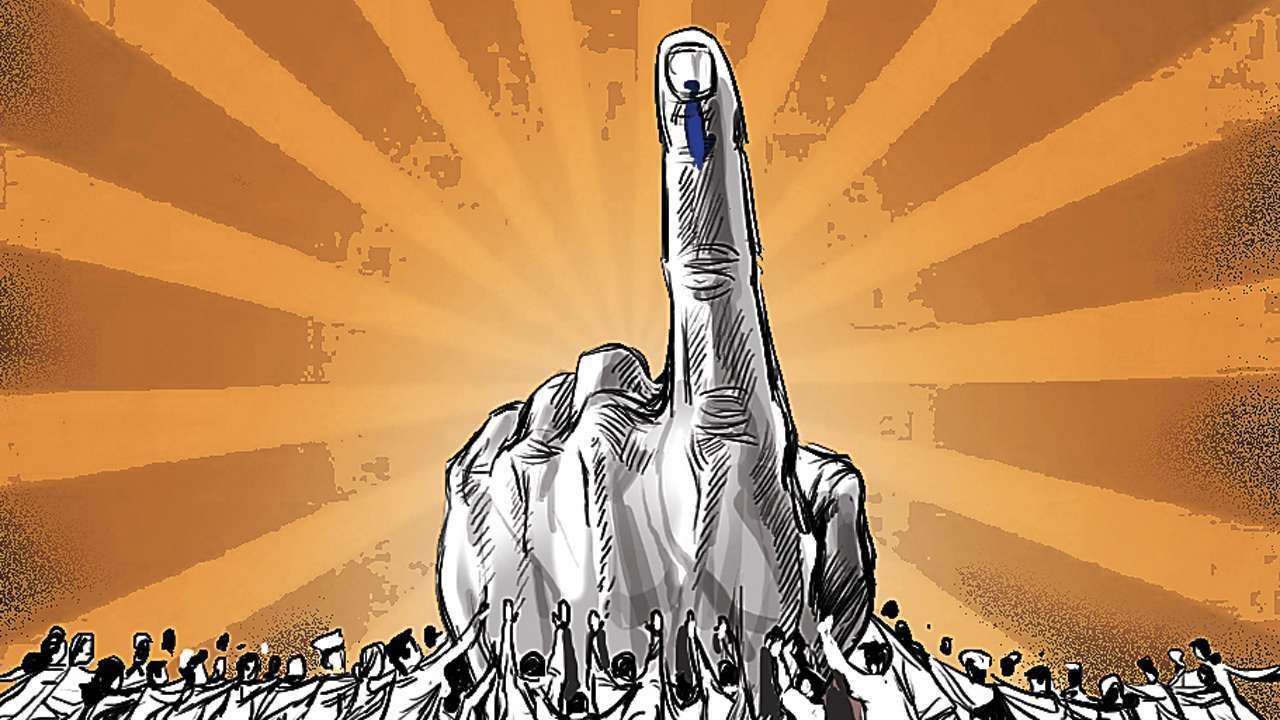
An election is a process by which the citizens of a democratic nation, irrespective of their caste and creed, decide who should take decisions on behalf of them. These have been the common mechanism for the functioning of representative democracies since the seventeenth century. The elections could be either direct elections or indirect elections. In direct elections, people could directly take part in the election process, whereas in indirect elections one individual is entitled to vote on behalf of a representative group. India being the largest democracy in the world considers elections as the “festivals of democracy” in which we celebrate the powers of common man.

            In India elections held once in five years normally. Representatives are elected on the basis of universal adult franchise. As per the conditions laid down by the makers of Indian constitution any citizen who has attained the age of 18 could cast their vote irrespective of their religion, economic and social status. Similarly, Indian constitution also enables any citizen to contest in elections without any discrimination. In order to monitor the equal participation in elections the constitution has also setup an independent body named “election commission”. Thus, elections in India are an inclusive process where common man is pivotal point.

            Indian democracy is the one in which all voters are considered equal thus, the contestants in elections are forced to treat each and every voter of his constituency with same importance at least at the time of elections. The truth is that, it is only during elections that the politicians will listen to the demands of common man. The elections instill a special power in the common man, who constitute a major portion of the society. Even the richest contestant is at the mercy of common man at times of election. It provides each and every individual an opportunity to shape the future of their nation regardless of their socio- economic conditions. Elections are the easiest way in which a citizen can express their discontent towards an existing government. Apart from this electoral system also lay down certain provisions by which common man could contest in elections and thereby contribute towards nation building directly. But many citizens are still unaware of this immense power.

            The voting percentages of elections make it evident that people are still reluctant towards casting their vote. Despite of providing holidays and several other measures to encourage people to vote, many people are not ready to play their role in nation building. Low literacy rates, apathy, unprincipled politics, lack of concrete effort on the part of the political parties in motivating the voters and local conditions in some part of the country can also be sited as the reason for lower public participation in elections. The corrupt, divisive, dishonest and exploitative practices might have decreased the confidence of people in this process. Increase in the use of money power, reliance on money power during elections, inciting communal and caste prejudice in the voters and the misuse of official machinery have shaken the foundations of the electoral process. The only remedy in these circumstances lies in bringing about systematic changes in the polity and elections.

 As John f Kennedy rightly quoted, “The ignorance of one voter in a democracy impairs the security of all”. It is necessary to make the voters aware of their rights and duties. The voters should be encouraged to cast their votes in an informed manner. The political system should take efforts to educate voters and bring back the trust in democratic system. The children should be taught about the need and worth of elections from a younger age. Above all, people should develop a feeling of obligation towards voting and should keep in mind that voting is their duty towards their nation.

By making proper use of the right to vote a common man could contribute immensely towards building their nation. On the whole as Roald Dahl said “Somewhere inside all of us is the power to change the world”. Elections are one the easiest way for a common man to contribute towards this change.