People who single handedly brought a CHANGE in the society

What we learn from our society we follow that and pass on the same to the generation which follows. In India, if anyone wants to make a change in the normal dynamical functioning of a society, they are generally demotivated by the statement that “What will happen by a SINGLE PERSON’s efforts”. This is what we have heard since ages and this is what is being passed on to us from the older generations. As people prefer security in every sense, whether it be life security, job or financial security. Because to make changes requires guts to stand alone and continue doing what one believes in.

Also, we inspire each other in the way we may have never thought of. How many of you after watching a sport inspired movies have at least once tried that sport? Inspiration lies in every corner of the world i.e. if you really open your eyes to see it.

This blog will tell you about some INDIANS who single handedly managed to bring a drastic change in the society.

  1. JADAV PAYENG– Popularly known as the “FOREST MAN OF INDIA”, a title which was conferred to him by the vice Chancellor of the Jawaharlal Nehru University in 2012, Jadav is a man responsible for creating the  forest that stands at 550 hectares today on the island of Majuli near Jorhat.

It all started when a teenager Jadav living in the state of Assam near the Brahmaputra river region noticed the decreasing number of reptiles and snakes from the forests near his house due to excessive cutting of the trees. The elders of his village told him that if a house is not made for the animals they will all die. He thought about how he will feel when instead of snakes, the number of human started to decrease. He knew he had to do something, so he went to the forest department with his problem which was actually everyone’s but it was conveniently ignored. The forest department then taunted him to start planting trees himself and that is what he did. He started planting saplings on a small deserted island near the Brahmaputra river for nearly three decades and now this full grown forests spread over many hectares of land.

People travel from across the globe to see his forest that is visited by 120 species of birds, including migratory ones; and elephants, rhinos, and tigers that visit from Kaziranga National Park. Also, a herd of 50 to 150 elephants remains in the forest for nearly three months a year. Locals call it ‘Mulai forest’; Mulai is Jadav’s nickname.

While rest of his friends have a stable , comfortable life in the cities, Jadav refused to leave the forests which was his home and live with his wife and 3 children in a hut in the village. He says that his awards are his wealth.

2.SUDHANSHU BISWAS- A revolutionary freedom fighter who was one of those many unsung heroes who were the support to the ones at front on the battlefront, is the founder of 18 schools which educates poor and orphan children with the aim of giving them a brighter life. After India gained Independence , Biswas wen toff to Himalayas to understand true purpose of life and when he came back , there was a new mission he decided to embark upon. Biswas established two Ashrams in South 24 Parganas. Later, in 1973, he set up Sri Ramakrishna Sevashram near Baruipur. By 1996, he had built 18 free schools for the poor and downtrodden in the most underdeveloped areas of Sundarbans. He also has a old age home for people from nearby villages .

It is truthfully said that a REVOLUTIONARY NEVER DIES. Now in his 90s, Biswas still continues to run the schools and even teaches mathematics to the students. Biswas has proved that Age is just a number, it is the will power that matters.

3. RITU BIYANI – After having suffered and recovered from Breast cancer herself, she made it a point to educate the women living in the tribal , urban and rural areas to educate them about Breast cancer and help them find adequate treatment for the same. In India, women generally tends to ignore their health problems as they do not wish to disturb the dynamics of her family by bringing forth her health issue. The reason being that In Indian households women carry the ultimate responsibility of the family from feeding to taking care of everyone. In the process of fulfilling their responsibilities , they often tend to care about themselves and this carelessness then leads to dangerous consequences.

Many women doesn’t know or fail to notice the early signs of breast cancer and even if they do , they fail to get proper help for the same. Ritu Biyani holds a LIMCA BOOK OF RECORDS recognition in being the only woman to travel across the four points of the country to spread awareness about the same. If she might also have “minded with her own business” after getting recovered, then the many whose lives have been saved because of her efforts may have died.

Her BREAST CANCER AWARENESS CAMPAIGN continues to help those who have been living under darkness and scaredness of this disease taking them away soon.

4.GANGADHARA TILAK KATNAM-Once on a rainy day in Hyderabad, the car driven by Mr. Tilak suddenly fell, into a pothole and he ended up accidentally spoiling the uniform of kids standing nearby. He felt so ashamed for the same but again it was not his fault. Gangadhar like many other Indians could have left the matter at this but no he decided to find a solution by himself as such things which are the responsibility of the authorities are blatantly ignored by them. Now, a retired railway officer at 67, instead of enjoying his retirement he set off every morning in his car filled with gunny sacks containing tar to repair the roads himself. He picks these left over sacks from the roadsides and when the quantity fell short of the required amount , he even uses money from his own pocket.

It is his dream to see a pothole -less Hyderabad. He has until now  fill over 1,125 potholes so far. For two and half years, he filled potholes single-handedly and with his own money. Now many citizens and software engineers are joining in Gangadhara’s Shramadaan (voluntary contribution of labor). From June 2012, the GHMC (Greater Hyderabad Municipal Corporation) started supplying BT MiX material to Gangadhara.

Mountains- A history (Part-2)- Tectonic plates

Photo by ROMAN ODINTSOV on Pexels.com

Now, before going any further with our mountains, let us first see the various types of interactions possible between our 2 types of tectonic plates- The Oceanic crust and the Continental crust: The 3 basic interactions are converging boundaries, diverging boundaries and transform boundaries.

  • Converging- It is defined as the two plates moving towards each other, colliding in the process. Now, there are 3 possibilities-
  1. Continental-continental collision- Here, two continental landmasses( eg.- The North American plate or the Eurasian plate or collision of Australia, South America and New Zealand (It formed the Great Australian Dividing range)) collide and the two plates fold over one another and lead to the formation of fold mountains. Try using a paper bringing it closer from the opposite ends. The raised structure represents the fold mountains. They have no volcanic activity (though earthquakes are possible). Examples are the Urals, the Atlas, The Rockies, the Alps, the Himalayas
  2. Oceanic- Oceanic Collision- In these types of collision, the heavier oceanic plate subducts under the lighter oceanic plate(forming trenches- eg. Mariana Trench). Due to subduction, it reaches the area of high pressure and temperature in the mantle and thus melts converting to magma. This magma later rises and when it finds an opening (like the one created by the diverging limbs) in the oceanic crust, it comes out. It, hence, forms oceanic volcanoes, ridges and later volcanic islands like those of Indonesia and the Phillipines.
  3. Continental Oceanic Collision- When a continental and an oceanic plate collide, it leads to the formation of either fold mountains(Rockies) or trenches(Philippines Trench) or both(Andes and the Peru- Chile Trench).
  • Diverging- When two plates or landmasses move away from each other ,in the opposite directions, it is known as diverging. Even here, there are 2 possibilities-
  1. Continental continental diversion- When two continental plates move away from each other, it leads to the formation of rift valleys and plateaus. Examples are- The east African rift valley (formed due to the drifting apart of Arabian peninsular plate from African plate- they were connected millions of years ago).
  2. Oceanic oceanic diversion- It occurs when two oceanic plates move away from each other, creating a ridge in its wake. The Atlantic ocean is divides by a ridge known as the Mid oceanic ridge (named so because it passes through the middle of Atlantic ocean). Here, the plate boundaries of Africa, Eurasia, North America , South America diverge from each other. The Pacific and the Indian ocean are the other two oceans that have ridges.
  • Transform – When one tectonic plate moves past another, it forms transform plate boundary. These plate movements most commonly produce earthquakes as during movements the plates experience friction and intermolecular force of attraction due to which one plate might find itself bounded to another plate. Then, when the plates move past one another it requires a lot of energy and produces heat and waves. Example- the boundary between Pacific plate and North American plate in Western California.

Now, that we know about tectonic plates, studying the formation of mountains becomes a lot easier. Stay tuned for the 3rd part where we will look into the formation of various mountains and the tectonic plates and movements involved . Till then, take care (a smiley emoji).

Global warming.

Since the Industrial Revolution, the global yearly temperature has expanded altogether by somewhat more than 1 degree Celsius, or around 2 degrees Fahrenheit. Between 1880—the year that precise recordkeeping started—and 1980, it rose on normal by 0.07 degrees Celsius (0.13 degrees Fahrenheit) like clockwork. Since 1981, nonetheless, the pace of increment has dramatically increased: For the most recent 40 years, we’ve seen the global yearly temperature ascend by 0.18 degrees Celsius, or 0.32 degrees Fahrenheit, each decade.

The outcome? A planet that has never been more blazing. Nine of the 10 hottest years since 1880 have happened since 2005—and the 5 hottest years on record have all happened since 2015. Climate change deniers have contended that there has been a “stop” or a “lull” in rising global temperatures, however various investigations, including a 2018 paper distributed in the diary Environmental Research Letters, have invalidated this case. The effects of global warming are now hurting individuals all throughout the planet.

Presently climate researchers have presumed that we should restrict global warming to 1.5 degrees Celsius by 2040 in case we are to stay away from a future wherein regular daily existence all throughout the planet is set apart by its most exceedingly terrible, most destroying impacts: the outrageous dry seasons, rapidly spreading fires, floods, hurricanes, and different calamities that we allude to by and large as climate change. These impacts are felt by all individuals somehow yet are capable most intensely by the oppressed, the financially minimized, and ethnic minorities, for whom climate change is regularly a vital driver of neediness, dislodging, yearning, and social agitation.

What causes global warming?

Global warming happens when carbon dioxide (CO2) and other air toxins gather in the climate and ingest daylight and sunlight based radiation that have bobbed off the world’s surface. Ordinarily this radiation would escape into space, yet these contaminations, which can keep going for quite a long time to hundreds of years in the climate, trap the warmth and cause the planet to get more sultry. These warmth catching poisons—explicitly carbon dioxide, methane, nitrous oxide, water fume, and engineered fluorinated gases—are known as ozone harming substances, and their effect is known as the nursery impact.

However regular cycles and variances have made the world’s climate change a few times in the course of the most recent 800,000 years, our present time of global warming is straightforwardly inferable from human action—explicitly to our consuming of petroleum derivatives like coal, oil, fuel, and flammable gas, which brings about the nursery impact. In the United States, the biggest wellspring of ozone harming substances is transportation (29%), followed intently by power creation (28%) and mechanical action (22%).

Controling perilous climate change requires exceptionally profound cuts in discharges, just as the utilization of options in contrast to non-renewable energy sources around the world. Fortunately nations all throughout the planet have officially dedicated—as a feature of the 2015 Paris Climate Agreement—to bring down their outflows by setting new principles and creating new arrangements to meet or even surpass those norms. The not very great news is that we’re not working quick enough. To stay away from the most noticeably terrible effects of climate change, researchers reveal to us that we need to decrease global fossil fuel byproducts by as much as 40% by 2030. For that to occur, the global local area should take prompt, substantial strides: to decarbonize power age by evenhandedly progressing from petroleum derivative based creation to sustainable power sources like breeze and sun oriented; to jolt our vehicles and trucks; and to amplify energy productivity in our structures, apparatuses, and enterprises.

How is global warming connected to outrageous climate?

Researchers concur that the world’s rising temperatures are energizing longer and more smoking warmth waves, more continuous dry spells, heavier precipitation, and all the more impressive typhoons.

In 2015, for instance, researchers reasoned that an extensive dry season in California—the state’s most noticeably awful water deficiency in 1,200 years—had been strengthened by 15 to 20 percent by global warming. They additionally said the chances of comparable dry seasons occurring later on had generally multiplied over the previous century. Furthermore, in 2016, the National Academies of Science, Engineering, and Medicine declared that we can now certainly ascribe some outrageous climate occasions, similar to warm waves, dry spells, and weighty precipitation, straightforwardly to climate change.

Confliction of one's mind

We all are well aware of the different conflicts in our minds. They arrive like impatient thunderstorms,  one right after the other. The times when there’s isn’t any hope to hold onto, we may thrive by words that might explain our mental states. Although, we often fail to do so and start drowning ourselves into the darkest depths of nothingness. 

One thing that never gets old in such situations is writing down your rough thoughts somewhere away from the eyes of anyone, and reading it later at a better stage or when you start feeling yourself again. 

WAYS TO CLEAR YOUR MIND

In a generation where social status depicts one’s nature and affects their state of mind, we often find ourselves getting lost in the world which we created for others to see us like. We should be capable of creating a difference between what’s imaginary and real, that not only helps us stay sane but provides a boundary to the inevitable confusions.

When we invariably replay a situation and can’t stop thinking about it, or think how we messed up; the more we delve into it the more that situation seems to tighten the blank spaces in our mind and start congesting it.

It’s normal to get stuck in the past and have a lot many things playing in your mind at the same time, our mind has a tendency to work funnily.

Instead of putting yourself in a self-inflicting pain, try performing the enlisted activities which will probably distract the course of your mind for the time being:

  • reconnect with an old friend
  • play and spend time with your pet
  • don’t force yourself to be productive
  • go easy on yourself and do some pampering
  • cook yourself an elaborate meal
  • watch youtube, movies and listen to an upbeat music
  • take a long drive to nowhere 
  • take a walk in nature
  • go out with a friend and hangout
SELF VALIDATION

We are forced to put ourselves in a position where it’s tough to concentrate on peace of mind, by comparing ourselves to the person who is superior to us. But we need to understand the concept of self-satisfaction and being content in what we already have.
We should stop comparing ourselves to others because we are unaware of the life that they have behind the scenes, or away from the eyes of the world. It’s natural to get inferiority complexes but that shouldn’t mess with one’s mind.
The positive motivation or the rush and drag to push ourselves to a better position is healthy, but if it makes one sulk and questions their existence then it won’t take long into turning toxic and harmful for the mental peace. 
You have had enough of the taunts and opinions that society has for you, you don’t have to necessarily add yours to it too. If not others, make yourself so focused and proud in what you do that even your conflictions think twice to reoccur in your mind. 
“Be who you are and say what you feel, because those who mind don’t matter, and those who matter don’t mind.”
― Bernard M. Baruch

MAGIC IN A CUP OF TEA!!!

Every morning won’t be complete without a cup tea right? Many people can’t do their work without a cup pf tea. Tea gives us refreshness and make us active. Though many like coffee, there are people who love tea too. The reason for me to talk about tea is nothing but today’s topic revolves around tea. Let me tell you an essay written by Eric Arthur Blair about a cup of tea.

Eric Arthur Blair, known by his pename George Orwell, was an English Novelist, journalist and a critic. He opposed totalitarianism and supported democratic socialism. He is best known for the Allegorical novella ‘Animal farm” and the dystopian novel “Nineteen Eighty Four”. He wrote an essay about ‘A nice cup of tea’ and it was published in London Evening Standards in 1946. It is about the discussion of the art of making tea. He states ten rules to be followed while making tea. Let me tell you about his essay.

Eric Arthur Blair (George Orwell)

The author said that there are no cookery books that has the preparation of tea as a recepie. Countries like Eire, NewZealand and Australia which has tea as a part of civilization. He says that Chinese tea has virtues but there is no much stimulation in it. So the author prefers Indian or Ceylonese tea.

  • The first rule is that one should prefer Indian or Ceylonese tea. One does not feel wiser or more optimistic after drinking it. ‘A nice cup of tea’ literally means Indian tea.
  • Second rule is that tea should be made in small quantities in a tea pot. The teapot should be made of China or earthenware. Silver and birtannia ware tea pots produce inferior tea and enamel parts are worse. In the army, the tea is made in a big cauldron, tastes of grease and whitewash.
  • Thirdly, the pot should be warmed beforehand rather than placing it with water in it.
  • Fourthly, the tea should be strong. He states that one strong cup of tea is better than twenty weak ones. All tea lovers not only love a strong tea but like it a little longer with each year that passes.
  • Fifthly, the tea should be put straight into the pot. Don’t use strainers or muslin bags to imprison the tea. One can swallow tea-leaves in considerable quantities without ill effect and if the tea is not loose in the pot it never infuses properly.
  • Sixthly, one should take teapot to the kettle and no other way about. The water should be boiling at the time, one should keep it on the flame while pouring it.
  • Seventhly, after making the tea, one should stir it, or better give it a good shake allowing the leaves to settle.
  • Eighthly, one should drink it out in a cylindrical type of cup rather than a shallow type of cup. The shallow cup will have the tea half cold before one starts, drinking it.
  • Ninthly, one should pour the cream off the milk before using it for tea. Milk with cream gives a sickly taste.
  • Tenthly, one should pour tea into the cup first and then add milk. By pouring the tea first, one can regulate the amount of milk to be added to the tea. He also says that one should drink tea without adding sugar. Adding sugar, destroys the taste of the tea. He also asks the question to the tea lovers, How can you call yourself a tea lover if you destroy the flavour of your tea by adding sugar into it? He also says that adding sugar is similar to drinking a hot water.

The points said by him are quite controversiable. But try to drink a cup of tea without sugar for a fortnight, and you will never ruin your tea by adding sugar to it. Think about yourself guys. This essay is quite interesting. I like this essay and how about you guys?

Read more;

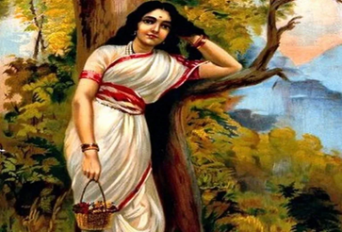
Panchakanya- The story of 5 Eternal Virgins despite being married.

अहिल्या, तारा, मंदोदरी, कुंती दृापदी स्मरणं, नित्यं, महापातक नाशनाम.

Ahalya, Tara, Mandodari, and Sita, while Draupadi and Kunti from the Mahabharata. Sita and Kunti are often replaced by each other according to people’s beliefs.

These five women were born in  Kanya Rashi or the constellation of Virgo. The word ‘Kanya’ is used to denote a woman who is a ‘Virgin’. These women were the symbol of “Purity” and were considered the Eternal Virgins group despite being married.

Virgin women were supposed to have great powers of ‘Tapa’. So, all these women, despite being married, had the power of Tapa. These panchakanya are ones who owned their virginity and could revive it. The panchakanya’s were so pure that even through the fire they could pass unharmed.

Ahalya

The Bala Kanda of the Ramayana mentions that Brahma molds Ahalya out of pure creative energy. Brahma created her out of the water as the most beautiful woman in order to break the pride of Urvashi, the foremost celestial nymph. Brahma places her in the care of Gautama rishi until she reaches puberty. When that time arrives, the sage returns Ahalya to Brahma, who, impressed by Gautama’s sexual restraint and asceticism, bestows her upon him. Indra, who believes that the best women are meant for him, resents Ahalya’s marriage to the forest-dwelling ascetic.

In another tale, it is said Ahalya is created from the ashes of the sacrificial fire by the Saptarishi (seven seers) and gifted to sage Gautama.

The king of the gods, Indra, was infatuated with her beauty and comes disguised as Gautama when the sage was away, and requests to have physical relationships with Ahalya. In some versions, Ahalya sees through his disguise but still complies out of “curiosity” and because her husband would neglect his matrimonial duties. In later versions, Ahalya falls prey to Indra’s trickery and does not recognize him. In all narratives, Ahalya and her lover Indra are cursed by Gautama. Gautama then curses Ahalya to remain invisible to all beings for thousands of years, fast by subsisting only on-air, suffer and sleep in ashes and be tormented by guilt. Nevertheless, he assures her that her sin will be expiated once she extends her hospitality to Rama, who will visit the ashram. Thereafter, Gautama abandons the ashram and goes to the Himalayas to practice asceticism. Indra was cursed to be castrated or be covered by a thousand vulvae that ultimately turn into a thousand eyes.

The Ayodhya prince Rama, with his brother Lakshmana and their guru, the sage Vishvamitra pass Gautama’s desolate ashram while travelling to King Janaka’s court in Mithila. As they near the ashram, Vishvamitra recounts the tale of Ahalya’s curse and instructs Rama to save Ahalya. Ahalya is said to have been touched by Rama’s feet and rises from her stone state to human form and goes to her abode, the Gautama’s hermitage.

Tara

Tara was the wife of the monkey king Bali who was presumed dead after a battle with a demon after which she married his twin brother Sugriva according to the custom of the time. The lack of the description of formal marriage suggests that Tara’s relationship to Sugriva is neither widow re-marriage nor polyandry, but simply appropriation by Sugriva. In the references of the coronation of Sugriva as king, Angada is also described as the heir-apparent crown prince, while Tara is mentioned as Sugriva’s wife. The Adhyatma Ramayana declares that Sugriva acquires Tara.

It turns out that Bali isn’t killed in reality. When Bali returned, he was livid and abducted Sugriva’s first wife, Ruma, as revenge. As battle lines between the brothers were drawn, wise Tara counseled her first husband to return Ruma to his brother. Tara said Sugriva had not snatched her but married her legitimately only because Bali’s death had been confirmed. Tara, the mother of Bali’s son Angad, finally managed to wrest a promise from him that he would not kill his own brother. The brothers fought a duel in which Bali was killed by Sugriva’s mentor Rama. Sugriva was crowned king of the kingdom of Kishkindha. As dowager queen, Tara diplomatically left the question of the ascension of her son to the throne for his stepfather to resolve. She knew well that the guilt-ridden uncle Sugriva would not deny her son his right to the throne.

In his dying breath, Bali reconciles with Sugriva and instructs him to follow Tara’s wise counsel in all matters.

While all was well with the king and his lustful nature got the best of him and he eventually ignored his promise to Rama to help him win Sita back. Lakshaman was livid to find Sugriva had backtracked on his words. He entered Sugriva’s personal chambers to bring upon his wrath on the king but Queen Tara very diplomatically pacified the prince.

Thus she was instrumental in saving the king from the wrath of the Lakshmana and brought coherence in the Rama camp to fight the great war to avenge Sita.

Mandodari

Mandodari is the daughter of Mayasura, the king of the Asuras, who are god-like demons. He rescued a beautiful girl child from the well. He and his, wife, Hema, adopted her and named her Mandodari. She was taught aspects of architecture by King Mayasura. He taught Mandodari about the various landforms of Bharatvarsh which were Swarga (heavenly plateaus), Bhoomi (plains) and Patala (underworld). When she turned fifteen, he started involving her in his projects and eventually met Ravana when he came to seek her counsel.

Valmiki’s Ramayana describes Mandodari as a very beautiful, pious and noblewoman whose appearance once led Hanumana to mistake her for Sita. She was known to be extremely patient with Ravana’s attitude towards women, but always questioning his actions and rebuking his choices.

Despite Ravana’s faults, Mandodari loved him and was proud of his strength. She was aware of Ravana’s weakness towards women. A righteous woman, Mandodari tried to lead Ravana to righteousness, but Ravana ignored her advice.

Draupadi

Draupadi is also referred to as Panchali (meaning one from the kingdom of Panchala), Yajnaseni (meaning one born from a Yajna or fire-sacrifice), Mahabhaaratii (great wife of the five descendants of Bharata) and Sairandhri (an expert maid, her assumed name during her second exile in which she worked as Virat kingdom’s queen Sudeshna’s hair-stylist).

Panchali is the Dharma Pathini of the Pancha Pandavas. The concept behind her marrying five people is that she is the Shakthi Roopa of the five devas, Dharma – Yudhishthira, Vayu – Bheema, Indra – Arjun, Nakul and Sahadev – Ashwini Kumaras.

No woman ever faced the trials and tribulations that Draupadi faced in her life. Even after being born out of the fire to Drupada, even if she had heroic husbands, she had to undergo Vastra harana, exile, Agnata. Post-war she was faced to watch her entire clan being killed.

Kunti

She is one true Matriarch of the Saga of Mahabharata. Kunti or Pritha was the daughter of Shurasena and the foster daughter of his cousin Kuntibhoja. She is the sister of Vasudeva. She was married to King Pandu of Hastinapur and was the mother of Karna and the first three Pandava brothers Yudhishthira, Bhima, Arjuna. She was the paternal aunt of Krishna, Balarama, and Subhadra. She was the stepmother or foster mother of Nakula and Sahadeva.

Kunti’s marital life was also unusual. Having chosen Pandu as her husband in a svayamvara ceremony, she never had a child by Pandu. Her husband had received a curse from the sage Kimdama that he would die on having intercourse with his wife because he had shot the sage with an arrow when he was copulating with his wife in the guise of a deer. Deeply hurt by the turn of events, Pandu decided to retire into the forest and live the life of renunciation. Kunti accompanied him. She invoked her boons for herself and Madri and had 3 children of her own and two for Madri. Pandu dies unable to abstain.

Cabbage for Our Health

Cabbage is one of the common vegetables. It is a leafy vegetable. It is usually of color green, but it also comes in white, red, purple and deep green. Cabbage comes from Brassica oleracea or wild cabbage species. Like other vegetable it also has many nutrients and very good for our health. Cabbage are very closely related to cauliflower broccoli.

Some Types of Cabbage from All Around the World:
Cabbage comes with different color, sizes and different types leaf. Let’s discuss about them ––

1)Common green cabbage: Scientific name — Brassica oleracea .It is the most commonly used head cabbage and it is available everywhere in world. The leaves of this cabbage are medium green. They are round shaped and thickly packed by leaves in a layer. The medium green color leaves are eaten cooked and the young and light white green color leaves can be eaten either cooked or uncooked as salad.

Common green cabbage

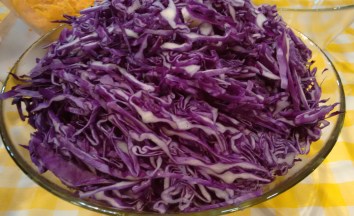
2)Red cabbage: Scientific name — Brassica oleracea . It is a same as common green cabbage, but the color is red purple or magenta. It is very similar to common cabbage. It is usually eaten as salad or with tacos. It has anthocyanins antioxidants in a huge amount.

Red Cabbage
Red Cabbage Plantation
Red Cabbage Salad

3)Savoy cabbage: scientific name – Brassica oleracea var. sabanda L. It is same as the common cabbage except the leaves of these cabbage is very curly and wrinkly not like the smooth leaves of a common cabbage. It is eaten as salad or stir-fried .

Savoy Cabbage Plant
Savoy Cabbage

4)Nape or Chinese cabbage: It is cabbage, but it is quite long like not as round as a common cabbage. It is famous for Korean traditional Spicy dish kimchi. Scientific name – Brassica Rapa ‘perkinensis’.

Nape Cabbage Plant
Korean Traditional Spicy Dish — Kimchi

5)Bok choy: Scientific name –Brassica rapa chinensis. It is also one type of Chinese cabbage, but it is quite different. It has long green leaves and this cabbage is not round shaped. These leaves have excellent amount of Vitamin A, vitamin k and Vitamin C and some amount of Vitamin B6.

Bok Choy in Market
Bok Choy
Bok Choy Plantation

6)January King cabbage: It is a head cabbage like common cabbage, but has unique color. The leaves of these cabbage are purple and green. Scientific name –Brassica oleracea Sabuda.

January King cabbage Plantation
January King cabbage

Apart from these there are white cabbage or Dutch cabbage, Kale or Leaf cabbage, Tuscan cabbage, Portuguese cabbage, Cannonball cabbage, Gonzales cabbage, Brussels sprouts, pointed cabbage. Cauliflower and broccoli are the also sometime considered as cabbage.

Kale
Kale Leaves
White Cabbages
Tuscan cabbage

Present nutrients:

100-gram raw common cabbage has flowing nutrients –

  1. It contains 5.8 gm of carbohydrates.
  2.  3.2 gm Sugars.
  3.  2.5g dietary fibers.
  4.  0.1g fat.
  5. 1.28 gm protein.
  6. Vitamin containing –— 1)0.2 mg vitamin B3. ; 2)36.6 mg Vitamin C. ; 3)76 microgram vitamin K. ; 4)0.2 mg of vitamin B5. ; 5)0.04 mg of vitamin B2. ; 6)0.12 mg of Vitamin B6.
  7. Minerals containing —- 40 mg calcium. ; 0.18 mg zinc. ;170mg potassium. ;26mgphosphorus. ;12 mg magnesium. ; 0.4mg iron. ;0.1mgmanganese. ;18mg sodium.
  8. It contains almost 92 gram water.
  9. It gives us 103 kilojoule or 25 Kcal energy.
  10. It has antioxidants in high amount.
  11. Various types of cabbage contain these nutrients in various amount but the nutrient elements are same for every cabbage .
Healthy Cabbage Salad

Benefits for health:

  1. Vitamin C is a major nutrient in cabbage which prevent common cold, cough and other ordinary health symptoms.
  2. Cabbage also fight against some chronicle disease like cancer.
  3. It also prevents the risk of inflammation due to containing of Vitamin C.
  4. Cabbage have lots of isolable fiber which is good for our digestive and our health and improve our digestion power.
  5.  It also helps to maintain the level of blood pressure and blood sugar in our body and prevent the heart problems.

Mountains- A history(Part-1)

Photo by Sam Kolder on Pexels.com

We have all seen mountains or hope to see them, after all they are a very famous holiday destination. All of us certainly have a wonderful mountain destination in our bucket list- be it the Himalayas, The Rockies, The Alps, Mt. Fuji or the Swiss Alps. But have you ever wondered how these mountains came into being? How is it that a flat piece of earth rose so high, almost touching the sky? Well, if you have, then here is the answer. And if you haven’t, even then a little extra knowledge never hurts anybody, right?

So, the mountains were formed millions and even billions of year ago (the oldest one-the Barberton Greenstone Belt in South Africa, is 3.6 billion year old) when the continents were being formed. The most widely accepted theory, currently, believes that the earth’s mantle(the astenosphere layer- a semi-solid) has convection current flowing through them(a result of differential heating- the lighter material rises whereas the denser material sinks ). This current belt in the astenosphere moves with it the lithosphere(continental crust, oceanic crust and the top-most part of mantle(upper mantle)). These movements in the lithosphere are the movements of continents and oceans that lead to earthquakes , volcanoes, tsunamis and the formation of volcanic islands, plateaus (all these for some other day) and fold mountains as well as volcanic mountains.

These convection currents move with them large pieces of land, ocean or both and these large pieces are termed as tectonic plates. There are currently 7 major and some minor tectonic plates. The major tectonic plates are-

  1. Indo-Australian plate
  2. North American plate
  3. South American plate
  4. Pacific plate
  5. Antarctic plate
  6. Eurasian plate
  7. African plate

The minor plates are-

  1. Fillipino plate
  2. Nazca plate
  3. Scotia plate
  4. Caribbean plate
  5. Indian plate
  6. Arabian plate
  7. Cocos plate
  8. Juan-de-fuca plate

Let us first see the types of mountains. There are 4 types of mountains-

  1. Fold mountains- These mountains are formed when one tectonic plate folds over the other, due to collision of two plate boundaries. The plates need not be continental as is in the case of the Alps , the Atlas and the Himalayas. An oceanic and a continental plate boundary collision can also form a fold mountain. The examples of such fold mountains are the Rockies and the Andes
  2. Block mountains- These mountains are formed due to the diverging plate boundaries. When two boundaries diverge, it creates a crack on the surface between them known as a rift. Later, the surrounding raised plate undergoes erosion and takes the shape of a mountain. Examples are The East African Rift Valley, The Rhine Valley, The Vindhyas and Satpuras .
  3. Volcanic mountains- Mountains formed due to fissures in the earth’s surface, that lead to release of magma. The examples are Mt. Fuji, Mt. Mayon. Also, they are known as mountains of accumulation.
  4. Residual mountains- Mountains that are either formed due to the erosion of existing mountains (denudation) or plateaus(dissection) by agents such as rivers, winds, glaciers. Examples are Mt. Manodnock (The Appalachians) , Highlands of Scotland, Scandinavia and Deccan Plateau.

The movement of the tectonic plates creates one of the above or even a combination of the above kind of mountains. Stay tuned for the next part to know how are many of the world mountains created and where are they located? Is there something common about their location? What is the reason for exceptions?

INDIAN AIR HOSTESS

Wanna fly with birds and get paid for that. Just jump and Start your career as Air Hostess .If you have a pleasing character then that’s it half is in your hand to get this Job . Let’s see the brief details about Air Hostess below.

Responsibility of An Air Hostess:

An air hostess has many responsibilities on a plane. Air hostess typically do the following tasks:

  • Greets the passengers and guides them to settle down in their seats.
  • attending a pre-flight briefing.
  • Answering passenger questions during the flight.
  • Serving meals and refreshments to passengers.
  • Prepares flight report.
  • Provides medical care to the passengers if needed.
  • Instruct  passengers on all safety procedures.

Courses offered in India:

  1. Degree courses: Degree courses are taken the duration of three years after 12th in any stream. The list of degree courses:
  • BBA (Aviation )
  • MBA (Aviation )
  • Post Graduate Diploma in Aviation and Hospitality Services
  • Post Graduate Diploma in Airport Ground Services
  • Post Graduate Diploma In Aviation, Hospitality, Travel & Customer Service

Top Colleges in India offer Air Hostess courses:

  • Rajiv Gandhi Memorial College of Aeronautics, Jaipur
  • Air Hostess Academy, Pune
  • Avalon Academy, Dehradun
  • Air Hostess Academy, Delhi
  • Frank Finn Institute of Air Hostess Training, Delhi
  • Frank Finn Institute of Air Hostess Training, Mumbai
  • Universal Airhostess Academy, Chennai.

How to do a case study ?

Preparing the Case

Before you begin writing, follow these guidelines to help you prepare and understand the case study:

  1. Read and Examine the Case Thoroughly
    • Take notes, highlight relevant facts, underline key problems.
  2. Focus Your Analysis
    • Identify two to five key problems.
    • Why do they exist?
    • How do they impact the organization?
    • Who is responsible for them?
  3. Uncover Possible Solutions/Changes Needed
    • Review course readings, discussions, outside research, your experience.
  4. Select the Best Solution
    • Consider strong supporting evidence, pros, and cons. Is this solution realistic?

Drafting the Case

Once you have gathered the necessary information, a draft of your analysis should include these general sections, but these may differ depending on your assignment directions or your specific case study:

  1. Introduction
    • Identify the key problems and issues in the case study.
    • Formulate and include a thesis statement, summarizing the outcome of your analysis in 1–2 sentences.
  2. Background
    • Set the scene: background information, relevant facts, and the most important issues.
    • Demonstrate that you have researched the problems in this case study.
  3. Evaluation of the Case
    • Outline the various pieces of the case study that you are focusing on.
    • Evaluate these pieces by discussing what is working and what is not working.
    • State why these parts of the case study are or are not working well.
  4. Proposed Solution/Changes
    • Provide specific and realistic solution(s) or changes needed.
    • Explain why this solution was chosen.
    • Support this solution with solid evidence, such as:
      • Concepts from class (text readings, discussions, lectures)
      • Outside research
      • Personal experience (anecdotes)
  5. Recommendations
    • Determine and discuss specific strategies for accomplishing the proposed solution.
    • If applicable, recommend further action to resolve some of the issues.
    • What should be done and who should do it?

Finalizing the Case

After you have composed the first draft of your case study analysis, read through it to check for any gaps or inconsistencies in content or structure:

  • Is your thesis statement clear and direct?
  • Have you provided solid evidence?
  • Is any component from the analysis missing?

Health Benefits Of Natural Medicines.

NATURE’S MEDICINES.

The plant world is an immense store of active chemical compounds. Nearly half = the medicines we use today are herbal in origin, and a quarter contains plant extracts or active chemicals taken directly from plants. Many more are yet to be discovered, recorded and researched; only a few thousand have been studied. Across the globe, the hunt will always be on to find species that could form the bases of new medicines. Humans have always used plants to ease their pains. They imbued them with magical powers and then gradually learnt to identify their properties. We can now enjoy the benefits of herbal medicines because, over thousands of years, our ancestors discovered which plants were medicinally beneficial and which were highly toxic.

Thousands of years ago, the ancient Egyptians discovered simple ways to extract and use the active ingredients within plants. Egyptian papyrus manuscripts from 2000 B.C. record the use of perfumes and fine oils, and aromatic oils and gums in the embalming process.

In ancient Greece in the 5th and the 4th centuries BC, Hippocrates, the father of medicine, was already recommending asparagus and garlic for their diuretic qualities, poppy as a way of inducing sleep and willow leaves to relieve pain and fever. In the 1st century AD, another Greek doctor, Dioscorides, established the first collection of medicinal plants. His treatise on the subject was translated into Arabic and Persian. Centuries later, his work was also used by the Muslim scholars who influenced great universities of the period, particularly at Montpellier, Europe’s most famous centre for the study of botany.

As a result of trade with Africa and Asia, the Western world’s store of herbal medicines was enriched by the inclusion of camphor, cinnamon, ginger, ginseng, nutmeg, sandalwood, turmeric and henna. For a long time, however, the use of both local plants and those with more distant origins was based on more or less fanciful beliefs. Throughout the Middle Ages herbal medicine consisted of a mixture of magic, superstition and empirical observation. From the Renaissance onwards, scientists and their scientific studies, discoveries and inventions came to the fore, rejecting alchemists’ elixirs and other magical remedies. Local plants were carefully collected and widely used to make infusions, decoctions and ointments. These plants make up the major part of the traditional cures that we have inherited.

Chandan or sandalwood sticks.

History behind Nature’s Medicines:

In the late 1700s, Carl Wilheim Scheele, a gifted Swedish chemist, obtained tartaric acid from grapes, citric acid from lemons and malic acid from apples. The techniques that he and his contemporaries used led to the isolation of the first purified compounds from plants that could be used as drugs. First came the isolation of morphine from the opium poppy in 1803, then caffeine from coffee beans in 1819, quinine from cinchona bark and colchicines from meadow saffron both in 1820 and atropine from deadly nightshade in 1835.

Image Source -google.

One tree that generated considerable interest among scientists was the willow. In the early 1800s, chemists from Germany, Italy and France began the search for the compounds responsible for the acclaimed pain-relieving effects of its bark. In 1828, the German pharmacist, Johann Buchner, was the first to obtain salicin, the major compound in a pure form. In 1838, the Italian chemist, Raffaele Piria also obtained salicylic acid from the bark by various chemical processes. But these early compounds caused blisters in the mouth, and stomach upsets when ingested. In 1853, a French chemist, Charles Frederic Gerhardt, synthesised a modified form of salicylic acid-acetylsalicylic acid. But still it wasn’t further modified form developed for more than 40 years until a German chemist, Felix Hoffman, working for Bayer, rediscovered Gerhardt’s compound. Hoffman gave it to his father who suffered from arthritis and reported the beneficial effects.

Bayer decided to market the acetylsalicylic acid as a new drug for pain relief and patented the compound acetylsalicylic acid in 1899. At last from the willow, the first modern drug was born and, with 12000 tons of aspirin sold every year throughout the world, it has kept its number one position.

From the 1930s onwards, advances in chemistry have made it much easier to reproduce the active ingredients in plants. But plants will continue to have a medicinal importance in their own right. Their active constituents may be slightly modified to improve their efficiency or to reduce their undesirable effects, but they are still vital for the treatment of disorders such as cancers and heart diseases or as a means of combating malaria. And they remain the essence of herbal medicine-an area that has still not been fully understood and explored.

Segmenting a market?

See everybody has their own likes and dislikes right? It is always possible that my need and your need can be different or even similar also. Market segmentation is just the most useful aspect in which a marketer can divide the whole market into subgroups of people having the same needs and wants. Must be wondering why it is done? So by this concept marketer gets the clear idea of the group demanding the same products and can easily satisfy their demand on that basis. Suppose if their is a group of teenagers than obviously their demand and needs about a product will be different from that of old age group. Likewise we have many different basis for market segmentation let us just understand them one by one:

  • Geographic Segmentation: This is the most simple method of market segmentation as in this the people living in one region of the country have different buying behaviours from that of the people living in some other region and thus this becomes the base for dividing the market .
  • Demographic Segmentation: Demographic elements such as age(teenagers/adults/retired), occupation, education, sex and income are used here for Segmentation.
  • Psycho-graphic Segmentation: Under this basis the consumers are divided into subgroups on the basis of their psychological attitude and also includes their personality and lifestyle.
  • Behavioral Segmentation: Consumers are here divided on the basis of the knowledge , attitude and use of actual products.
  • Volume Segmentation: It is assumed that most of the product is sold to a certain percentage of people. There are light , medium and heavy users of products. It is important for the business to give due consideration to the heavy users so that they must not switch to some other brand and also along with that they are required to adopt various techniques to convert light , medium and non users into the heavy one.
Easy explaination of its benefits.

THE AGRARIAN REVOLUTION

The term Agrarian Revolution implies the great changes that took place in the agricultural methods of England during the second half of the 17th century and the first half of the eighteenth century.

Causes of the Revolution:

  • The old open field system was wasteful of land because, according to this arrangement, every year one of the three fields was to be out of cultivation.
  • Secondly, come the old system of distribution of land was wasteful of time.
  • Thirdly, there was the necessity of confirming the customs of the village and thus made experiments in agriculture method possible.

In the 18th century, the population was increasing and so more food was needed. Owing to the scarcity of food materials there was a rise in prices. The old-fashioned farmers thought that they could get more money if they produce more. This idea was an incentive for them to improve their agricultural methods.

Reallocation of Lands:

Reallocation of lands in consolidated blocks which could be enclosed, several Enclosure Acts were passed in the reign of George II and George III. There were many cases of the poor peasants being not satisfied with the reallocation. Such people sold their small holdings to wealthy businessmen of the city who were eager to possess lands of their own. The final result of this tendency was that the class of rural inhabitants known as yeomen disappeared.

Advantages of enclosure system:

One of the advantages of the enclosure system was that it gave scope for many enterprising people to make experiments. Jethro Tull of Berkshire was the inventor of the drill for sowing seeds. He also emphasized the necessity of capital selection of seeds if good crops were to be obtained.

Another pioneer is Charles Townshend of Norfolk. He adopted Tull’s principles and paid much attention to the question of rotation of crops. He introduced the four-course rotation of turnips, barley, clover, and ryegrass, and wheat. These measures prevented an unprotective fallow. His innovation made Norfolk a leading agricultural country. With the result that in the thirty years the rental of the one farm rose from 180 pounds to 800 pounds a year.

The work of Townshend was continued by Thomas Cook. He followed the precepts of Tull and in addition fed the soil with manures including bones. In nine years he was able to grow excellent wheat crops. He also introduced new artificial foods such as oil cake under led the way in fattening cattle for the London markets. He held a yearly meeting for farmers at his house and these meetings farming topics were discussed and much advice was given and received. It is estimated that the annual rental of his estate Rose from 2,200 pounds in 1776 to 20,000 pounds in 1816.

Cattle farming:

While Norfolk landlords were thus making great improvements in arable farming, a Leicestershire farmer, Kama Robert Bakewell was revolutionizing English methods of stock breathing. Up to this time sheep had been valued chiefly for their wool, the production of mutton had been only secondary. Bakewell was the first to turn his attention to the production of meat as the main consideration of stock breeding. By patient choice and experiment, he succeeded in producing a new breed of sheep with fattened quickly and weighed heavy. His success attracted the attention of many. Farmers from far and wide visited his farm at Dishley and became converts to his new methods. Others who did pioneering work in this field were George Culley, Charles Colling, and John Salman.

Board of agriculture:

Royal patronage was also given to the moment of revolutionizing the agriculture methods. George III, affectionately known to his subjects as a farmer George, established a model farm at Windsor. The success of the moment was due to the writings of agriculture writers, the most famous was Arthur Young. When a board of agriculture was established in 1793. Young was made its secretary.

Conclusion:

With the advent of the enclosure system, the English banking system also grows, for even the wealthy landlords did not have money to do the fencing and other improvements. So they have to borrow money from the banks. Through all those methods was very desirable from the point of view of production, it had a harmful effect on the partition. The system deprived him of the privilege of grazing his cattle and cutting fuel from the commons.

What is a Novel

Picaresque Novel

How to Increase Productivity? (For Work)

“Focus on being productive instead of busy.”

– Tim Ferris

Introduction

The definition of productivity is the effectiveness of productive effort or the rate at which a person, company, or country does useful work. In these times every single person has a lot of work on their plate, be it work from the office, school, college, or work related to the house, some extra project you might be working on, or be it just your mental health. To finish the numerous tasks, we need to be productive to finish these effectively and still be left with some time to relax and hang back from the rush of daily life. So we can say that productivity is about getting the required result in less time and effort. Increased productivity is directly related to improved time management. This article aims to list ways to increase productivity for work.

Plan Ahead

The practice of approaching work at random is one of the hindrances to productivity. When you attack work at random, you are not sure about how much more is left and by when you will be able to get to it. To deal with this, you must plan ahead, it can be daily, weekly or monthly planning. It puts you in control of how much work you have and till when you can complete it. Planning offers you clarity.

Set Realistic Goals

You should set goals in such a manner that you have set milestones that help you in knowing your destination. The best way to set goals is to follow SMART.
S – specific, significant, stretching
M – measurable, meaningful, motivational
A – agreed upon, attainable, achievable, acceptable, action-oriented
R – realistic, relevant, reasonable, rewarding, results-oriented
T – time-based, timely, tangible, trackable.

Track and Limit

If you implement a tracking system through which you monitor how much time you take to finish one task, you will be able to understand if you are using your time effectively or not, and if not, then where are you wasting it. Every person has a different productive golden hour. By tracking your day, you will be able to understand when your golden hour is and you can schedule your work accordingly.

Be Proactive, Not Reactive

Being proactive helps you in avoiding the time you waste around and then rush to react in time. When you are reactive, you let others call the shot and give you the work to be done but when you are proactive, you are a few steps ahead of others and you get to call the shots.

Minimize Distractions

Most of our time gets wasted on the number of distractions that put us off our work path. Everyone has become addicted to being online and that is one of the major distractions. It is important to work smarter and set boundaries such as setting work hours during which time you will not be available to others, silencing notifications, setting time slots to check social media and emails, and not doing it during the work hour.

Get Enough Sleep

It is a known fact that not getting enough sleep has negative effects on our performance in all aspects of life but work gets affected the most. This happens because when you are working, you need logical reasoning which is done by your prefrontal cortex which gets impacted by the lack of sleep. Therefore, it is important to get at least 7-9 hours of sleep a night.

Conclusion

Once you understand the importance of productivity, you will learn that it will become a huge part of your whole life, not only when it comes to your work life but also your personal life, as when you are on top of all your work is only when you can give enough time to your personal life as well.

References

What Are The Five Love Language?

You might be showing affection to your partner on a daily basis, but do you take a moment to ensure that you’re conveying it in the manner that your spouse prefers to accept it? Whenever two couples have differing love languages, even love can be lost in translation.

Words of affirmation, quality time, receiving presents, acts of service, and physical contact are the five love languages, or means of expressing and receiving love. Not everybody expresses love in the same manner, and not everyone likes to accept love in the same way.

Gary Chapman, Ph.D., created the notion of love languages in his book The 5 Love Languages: The Secret to Lasting Love, in which he explains these five distinct methods of conveying love, categories he condensed from his expertise in marriage therapy and linguistics.

Here’s a rundown of each one of Chapman’s five love languages:

Words of affirmation

Those who use words of affirmation as a love language appreciate verbal expressions of affection, such as constant “I love yous,” praises, expressions of gratitude, vocal support, and often constant digital contact such as messages and social media involvement. These individuals value written and verbal expressions of love the most. They feel understood and valued when they hear these words.

Quality time

Those who have quality time as their love language feel the most appreciated when their spouse genuinely wants to spend more time with them and is always willing to hang out. They are especially fond of it when active listening, eye contact, and complete presence are stressed as relationship characteristics. 

This love language is all about providing your entire focus to that one particular person, without any of the distractions of television, phone displays, or any other outside interference. Individuals have a great desire to constantly spend some time with their loved one, holding deep talks or participating in leisure pastimes.

Acts of services

If acts of service are your love language, you appreciate it whenever your spouse goes out of their way to make your life simpler. It’s little gestures like getting you food when you’re ill, preparing your morning coffee, or going to pick up your laundry after a hard day at work.

This is the love language of those who think that gestures speak louder than words. People on this list, unlike those who want to hear how much they are cared for, desire to be shown how they’re being cherished. Such people value doing minor and large duties to make their life simpler or perhaps more pleasant.

Gifts

Gifts are a simple love language: you feel appreciated when others offer you “visual expressions of affection,” as Chapman puts it. It’s not so much about the monetary worth as it is about the emotional significance behind the gift. Those with this personality appreciate as well as acknowledge the gift-giving process: the thorough contemplation, the intentional selection of the gift to symbolize the connection, and the emotional rewards of getting the gift.

Individuals whose language of love involves getting presents like obtaining something both tangible and meaningful. The idea is to offer thoughtful gifts that are significant to them and represent their beliefs, rather than yours.

Physical touch

Physical touch as a love language makes a person feel cherished when they receive physical indications of love such as kissing, holding hands, snuggling on the sofa, and intimacy. For persons who use this love language, physical closeness and touch may be extremely encouraging and serve as a powerful emotional bond.

When they are hugged, kissed, or snuggled, those who convey their thanks in this language feel valued. They enjoy the sensations of warmth and protection that come from physical contact.

We all show and experience love in various ways. As a result, recognising such differences may have a significant influence on our relationships. Indeed, it is one of the easiest methods to strengthen your relationships.