Major World Religions

Religions exist in all parts of the world, in different forms. Religion is prominent worldwide because it gives answers to the age-old questions of where humans came from, what is our place in this world, and where do we go after we die. Religions are systems of belief that have developed in response to these and other eternal mysteries. Hence, they were formed as a way to explain humanity’s unanswerable questions and comfort us with the fact that there is some higher power(s) acting as the controlling force in the universe. With time, many new religions have developed in the world, each giving their own explanations and defining their own gods/principles. Obviously, it is impossible to know which religion is accurate, or whether any religion is accurate at all. However, it is important to understand the various religions we have in the world, as they provide meaning and purpose to many individuals. Here is a brief look at some of the major world religions.

Hinduism

It is the major religion of India, but is also present in other parts of the world. There are a variety of beliefs and spiritual practices in Hinduism, which is why it is sometimes referred to as a ‘way of life’ as opposed to a single organized religion. There is a pantheon of gods in Hinduism, and different people may worship different deities. Hindus believe in the doctrines of samsara (the continuous cycle of life, death, and reincarnation) and karma (the universal law of cause and effect). One of the key thoughts of Hinduism is atman, or the belief in a soul. This philosophy holds that living creatures have a soul, and they are all part of the supreme soul (paramatman). The goal is to achieve moksha, or salvation, which ends the cycle of rebirths to become part of the absolute soul. Furthermore, Hindus strive to follow dharma, which is a code of living that emphasizes good conduct and morality.

Judaism

Judaism is the world’s oldest monotheistic religion, dating back nearly 4,000 years. It is most commonly practiced in the USA and Israel. Unlike Hinduism, followers of Judaism believe in only one God who communicates to believers through prophets. The Jewish sacred text is called the Tanakh or the Hebrew Bible, and Talmud is a collection of teachings and commentaries on Jewish law and principles. Jewish people worship in holy places known as synagogues, and their spiritual leaders are called rabbis. The six-pointed Star of David is the symbol of Judaism.

Buddhism

Buddhism is a religion that was founded by Siddhartha Gautama (the Buddha) more than 2,500 years ago in India. Its practice has historically been most prominent in East and Southeast Asia, but its influence is growing in the West. Followers of Buddhism do not acknowledge a supreme god or deity. Instead, they focus on achieving enlightenment, which is a state of inner peace and wisdom. When followers reach this spiritual echelon, they are deemed to have experienced nirvana. The path to enlightenment is attained by following morality, meditation and wisdom. Buddha’s most important teachings, known as The Four Noble Truths, are essential to understanding this religion.

Christianity

Christianity is the most widely practiced religion in the world. The Christian faith centers on beliefs regarding the birth, life, death and resurrection of Jesus Christ. This is also a monotheistic religion. Christians believe there is only one God, and he created the heavens and the earth. This divine Godhead consists of three parts: the father (God himself), the son (Jesus Christ) and the Holy Spirit. The Holy Bible includes Jesus’s and his disciples’ most important teachings, and offer instructions for how Christians should live. The cross is the main symbol of Christianity, representing the crucifixion of Jesus Christ and how he died as a sacrifice for everyone’s sins.

Islam

Islam is the second largest religion in the world after Christianity, with about 1.8 billion Muslims worldwide. Muslims are also monotheistic and worship only one, all-knowing god known as Allah. Islam teaches that Allah’s words first reached the people in Mecca, through the divine messenger known as prophet Muhammad. Muslims live a life of complete submission to Allah, and believe that all that happens in life is god’s will. The Quran is the major holy text of Islam, and Mosques are the places of worship for Muslims. Followers worship Allah by praying and reciting the Quran. They believe there will be a day of judgment, and life after death.

Conclusion

The religions mentioned here are only some of the most popular ones in the world. In fact, there are hundreds of religions with different beliefs and practices. Religion has been an aspect of culture for as long as it has existed, and its main purpose is to provide a person with insight into life and give them some meaning. A person can choose to follow whichever religion fulfils his spiritual needs and gives him something meaningful to believe in.
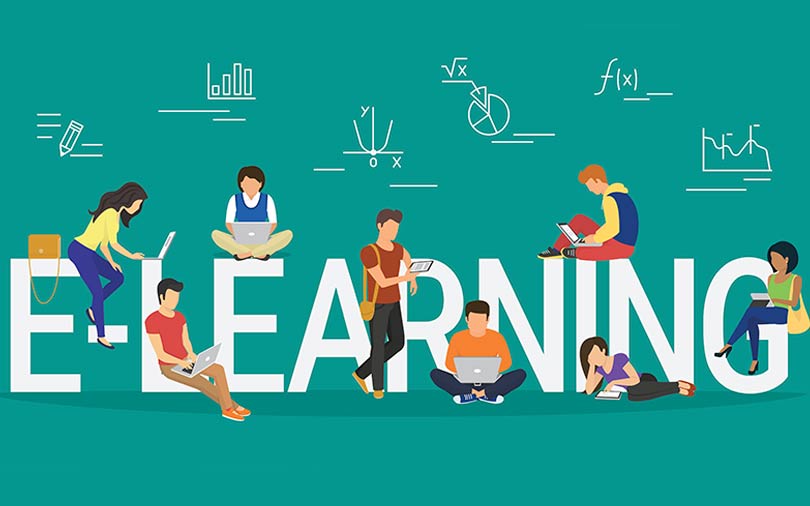
MEANING OF LEARNING

Why Learning Experience Matters | Litmos Blog

Generally people think that learning through practice is to make someone better than what he/she was earlier . To think so is not complete appropriate . However, it cannot be denied that there is an improvement as a result of learning . But it can lead towards unwanted or undesired changes . A child who plays football, may also learn wrong technique . Indeed , learning has a detailed explanation . The process of learning begins from the birth and continues throughout life. That is why it is said that learning takes place from womb to tomb. Learning means to adjust or adapt oneself according to the situation . There is a change in the behaviour of an individual after learning and he changes himself according to situations . The various psychologists have defined learning in different ways. However, they reach approximately at the same point . There are following definitions of learning by some eminent psychologists.

  • According to Guilford, ”We may define the term very broadly in saying that learning is any change in behaviour resulting from behaviour.”
  • According to R.S. Woodworth and D.G. Marquis, Learning consists in doing something new provided, this something new to be retained by the individual and reappears in his later activities.’
  • According to G. Murphy , ‘‘From this point of view it would be legitimate to regard learning as modification both of behaviour and of the way of perceiving.”
  • According to Whitkar, ”Learning may be defined as the process by which behaviour originates or is altered through training or experience.”

On the basis of the above-mentioned definitions, the following conclusions can be drawn :

  • Learning is adaptation and adjustment .
  • Learning is a continuous process.
  • Learning is universal.
  • Learning is a change in behaviour.
  • Learning is improvement and development .
  • Learning is a new organisation of experiences.
  • Learning is purposive and goal directed.

10 TIPS TO END A CONVERSATION

1. I’d better get going.

2. I have to rush off now.

3. Let’s meet up again son, bye for now.

4. Let’s get together soon. Take care.

5. You have been amazing

6. It was wonderful to talk with you. I must be going

7. It was great to see you again.
8. Sorry I’ve gotta go

9. Its been good talking to you

10. I look forward seeing you again soon.

MAJOR LEARNING LESSON FROM THE BOOK- TALK LIKE TED

1. The speaker must love and should be genuinely passionate about his topic, if the speaker himself is not inspired by what he is speaking then it cant inspire others. So always choose the topic which you would love to speak about.

2. No one wants to hear the same boring and old stuff. People want something new, thus reveal information that’s completely new to your audience, and they will be your devoted listener.

3. Deliver jaw dropping moment in your presentation. Share something by which your audience will get surprised because that moment makes your presentation remarkable.

4. Don’t try to make your talk too long or too short that the audience cant even get what you have to say. According to the author, the ideal length of a talk should be 18 minutes. Because it forces you to say only what is important.

5. The best way to teach the heart and soul of your audience is to tell them stories, especially your own stories. Because they will only listen to what you are saying only if they feel familiar and connected to what you have to say.

Ways to Manage Stress

Stress is part of being human, and it can help motivate you to get things done. Even high stress from serious illness, job loss, a death in the family, or a painful life event can be a natural part of life. You may feel down or anxious, and that’s normal too for a while. Talk to your doctor if you feel down or anxious for more than several weeks or if it starts to interfere with your home or work life. Therapy, medication, and other stategies help. In the meantime, there are things you can learn to manage stress before it gets to be too much. Consider these suggestions:

Exercise

To start with, physical activity can help improve your sleep. And better sleep means better stress management. Doctors don’t yet know exactly why, but people who exercise more tend to get better deep “slow wave” sleep that helps renew the brain and body. Just take care not to exercise too close to bedtime, which disrupts sleep for some people. Exercise also seems to help mood. Part of the reason may be that it stimulates your body to release a number of hormones like endorphins and endocannabinoids that help block pain, improve sleep, and sedate you. Some of them (endocannabinoids) may be responsible for the euphoric feeling, or “runner’s high,” that some people report after long runs.

People who exercise also tend to feel less anxious and more positive about themselves. When your body feels good, your mind often follows. Get a dose of stress relief with these exercises:

Applications

Property Rights

What Are Property Rights?

Property rights define the theoretical and legal ownership of resources and how they can be used. These resources can be both tangible or intangible and can be owned by individuals, businesses, and governments. In many countries, including the United States, individuals generally exercise private property rights or the rights of private persons to accumulate, hold, delegate, rent, or sell their property. In economics property rights form the basis for all market exchange, and the allocation of property rights in a society affects the efficiency of resource use.

Understanding Property Rights

Property is secured by laws that are clearly defined and enforced by the state. These laws define ownership and any associated benefits that come with holding the property. The term property is very expansive, though the legal protection for certain kinds of property varies between jurisdictions.Property is generally owned by individuals or a small group of people. The rights of property ownership can be extended by using patents and copyrights to protect:

  • Scarce physical resources such as houses, cars, books, and cellphones
  • Non-human creatures like dogs, cats, horses or birds
  • Intellectual property such as inventions, ideas, or words

Other types of property, such as communal or government property, are legally owned by well-defined groups. These are typically deemed public property. Ownership is enforced by individuals in positions of political or cultural power. Property rights give the owner or right holder the ability to do with the property what they choose. That includes holding on to it, selling or renting it out for profit, or transferring it to another party.

Acquiring Rights to a Property

Individuals in a private property rights regime acquire and transfer in mutually agreed-upon transfers, or else through homesteading. Mutual transfers include rents, sales, voluntary sharing, inheritances, gambling, and charity. Homesteading is the unique case; an individual may acquire a previously unowned resource by mixing his labor with the resource over a period of time. Examples of homesteading acts include plowing a field, carving stone, and domesticating a wild animal. In areas where property rights don’t exist, the ownership and use of resources are allocated by force, normally by the government. That means these resources are allocated by political ends rather than economic ones. Such governments determine who may interact with, can be excluded from, or may benefit from the use of the property.

Private Property Rights

Private property rights are one of the pillars of capitalist economies, as well as many legal systems, and moral philosophies. Within a private property rights regime, individuals need the ability to exclude others from the uses and benefits of their property. All privately owned resources are rivalrous, meaning only a single user may possess the title and legal claim to the property. Private property owners also have the exclusive right to use and benefit from the services or products. Private property owners may exchange the resource on a voluntary basis.

Private Property Rights and Market Prices

Every market price in a voluntary, capitalist society originates through transfers of private property. Each transaction takes place between one property owner and someone interested in acquiring the property. The value at which the property exchanges depends on how valuable it is to each party. Suppose an investor purchases $1,000 in shares of stock in Apple. In this case, Apple values owning the $1,000 more than the stock. The investor has the opposite preference, and values ownership of Apple stock more than $1,000.

Financial Literacy

What Is Financial Literacy?

Financial literacy is the ability to understand and effectively use various financial skills, including personal financial management, budgeting, and investing. Financial literacy is the foundation of your relationship with money, and it is a lifelong journey of learning. The earlier you start, the better off you will be, because education is the key to success when it comes to money.

Read on to discover how you can become financially literate and able to navigate the challenging but critical waters of personal finance. And when you have educated yourself, try to pass your knowledge on to your family and friends. Many people find money matters intimidating, but they don’t have to be, so spread the news by example.

Understanding Financial Literacy

In recent decades financial products and services have become increasingly widespread throughout society. Whereas earlier generations of Americans may have purchased goods primarily in cash, today various credit products are popular, such as credit and debit cards and electronic transfers. Indeed, a 2019 survey from the Federal Reserve Bank of San Francisco showed that consumers preferred cash payments in only 22% of transactions, favoring debit cards for 42% and credit cards for 29%.

Other products, such as mortgages, student loans, health insurance, and self-directed accounts, have also grown in importance. This has made it even more imperative for individuals to understand how to use them responsibly. Although there are many skills that might fall under the umbrella of financial literacy, popular examples include household budgeting, learning how to manage and pay off debts, and evaluating the tradeoffs between different credit and investment products. These skills often require at least a working knowledge of key financial concepts, such as compound interest and the time value of money. Given the importance of finance in modern society, lacking financial literacy can be very damaging to an individual’s long-term financial success.

Being financially illiterate can lead to a number of pitfalls, such as being more likely to accumulate unsustainable debt burdens, either through poor spending decisions or a lack of long-term preparation. This in turn can lead to poor credit, bankruptcy, housing foreclosure, and other negative consequences. Thankfully, there are now more resources than ever for those wishing to educate themselves about the world of finance. One such example is the government-sponsored Financial Literacy and Education Commission, which offers a range of free learning resources.

Strategies to Improve Your Financial Literacy Skills

Developing financial literacy to improve your personal finances involves learning and practicing a variety of skills related to budgeting, managing and paying off debts, and understanding credit and investment products. Here are several practical strategies to consider.

Create a Budget—Track how much money you receive each month against how much you spend in an Excel sheet, on paper, or with a budgeting app. Your budget should include income (paychecks, investments, alimony), fixed expenses (rent/mortgage payments, utilities, loan payments), discretionary spending (nonessentials such as eating out, shopping, and travel), and savings.

Pay Yourself First—To build savings, this reverse budgeting strategy involves choosing a savings goal (say, a down payment for a home), deciding how much you want to contribute toward it each month, and setting that amount aside before you divvy up the rest of your expenses.

Pay Bills Promptly—Stay on top of monthly bills, making sure that payments consistently arrive on time. Consider taking advantage of automatic debits from a checking account or bill-pay apps and sign up for payment reminders (by email, phone, or text).

REINVENT YOURSELF: A chance to improve…

“IF YOU THINK YOU ARE BETTER NOW, DON’T FORGET THERE IS SOMEONE, SOMEWHERE BEST THAN YOU.”

In life we always have reasons and excuses to hide our mistakes and weakness but, when it comes to our personality and lifestyles we always had new ideas to be best. Reinventing does’nt mean to change your life for society or people but, to change your weakness and to improve your life, habits and living for yourself.

IT’s NEVER LATE TO BE BETTER THAN WHAT YOU ARE…

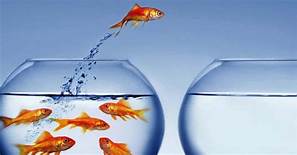
There are people with a reason that ‘we are happy for what we are, we don’t have to change ourself for others.’ Yes, I admire their thoughts and confidence and I am one of them only. With time i realised it’s wrong to change yourself for others but, there is nothing wrong in improving ourself to be a better personality. There is difference between changing and improving and everyone has to know and realise it sooner or later. You don’t have to be one of ‘them’, you have to better own self and choose your way to be better. Just like a fis moving out of crowd to another pond for own survival and betterment.

AN EMPTY START IS BETTER THAN STICKING TO CROWD…

I am not asking you to leave your society and move alone but, to start a step to improve your bad habits, weakness, persona and life to be better and trust me you will find new ‘You’ and there will people wanting to be like you. If improving yourself is better than changing yourself so do not hesitate to take a step. Explore now and start a day with one thought to improve yourself so that, you can reinvent the hidden better ‘You’.

A STEP FORWARD IS KEY TO YOUR BETTER SELF…

“IT’S NEVER LATE TO BE BETTER”…

THANK YOU :]

IIT-MADRAS, AVISHKAR HYPERLOOP TEAM QUALIFIES FOR EUROPEAN HYPERLOOP WEEK

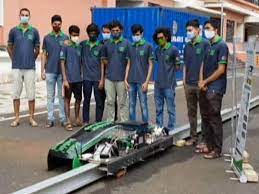
A group of students with team named “AVISHKAR” from IIT Madras have been working tremendously towards the technology behind the future of transportation, HYPERLOOP. The team comprises of forty students from various department of IIT, madras. They have been working on this new prototype hyperloop project since last November.

BUT, WHAT IS HYPERLOOP?

Basically, hyperloop is a high speed mass transportation system. A hyperloop is a super speed ground-level transportation system in which people could travel in a hovering pod inside a vacuum tube at speeds as high as 760 mph (1220 km/h).

While talking about the product, Neel said, “Hyperloop is a proposed mode of transportation in which many pods will be traveling inside a vacuum tube, capable of attaining high speeds due to no air friction and reduced air drag.” It IS the fifth and most efficient mode of transportation that the world is moving towards, he added. Further he said, “Because Hyperloop is sustainable, it works on electrical energy, we can install Solar panels on top of the tube, which could store energy and the same energy could be used to propel the hyperloop. This is way more sustainable .”

HOW DOES A HYPERLOOP WORK?

It has three major components: a tube, pod, and terminal. The tube is a large low pressure system that is sealed and tube can be constructed either above or below the ground. A pod is a coach that runs inside this controlled system and this pod employs magnetic or aerodynamic levitation along with electromagnetic or aerodynamic propulsion to glide along a fixed guideway. The terminals are used for arrivals and departures. Hyperloop is based on simple science called Magnetic levitation. But one thing that needs to be noted is, that it requires complex machinery and sensors to make a Pod travel at nearly 1000 km/h inside a vacuum tube. However the team has cracked that and named their pod “GARV”, which translates to “PRIDE”. It consists of Carbon Fiber shell, packed with advanced machinery and sensors.

STATEMENT:

Pranit, who is Head of Braking Module, said that Garv is their second Pod which is more efficient and lighter than the one they designed for SpaceX. “This time we are introducing several technologies like linear induction motor to achieve ‘contactless propulsion’ and ‘contactless braking. The motor produces a magnetic field which makes the Pod move forward and the contactless Braking has magnets which come closer to the rail, creating a Braking force and decelerating the Pod,” Pranit added.

Parth, a member of the Controls team, said, “Our team started in November. Everything we did online such as brainstorming sessions and discussions about the simulations. Once we were confident, we came back to the institute and started working on the Pod.” He said, “We are participating in European Hyperloop Week which will be conducted on 19th – 25th July and Valencia, Spain. Because of the pandemic, we are forced to compete virtually, but that is not a setback for us.”

EUROPEAN HYPERLOOP WEEK SELECTION:

With all their hard work, they have now crossed the hurdle and are qualified for the European Hyperloop Week that is to be held in Valencia, Spain from July 19 to 25. The team will participate virtually due to pandemic restrictions. With upgraded prototype, the team estimates the travel time between Chennai and Bangalore to be a mere 30 minutes ride instead of a six hours journey. They are also working on the study of energy, costs, demands and other aspects of hyperloop so as to access the economic feasibility of hyperloop in India.

Status Signalling among birds

Paragraph 1

Many birds that form flocks compete through aggressive interaction for priority of access to resources such as food and shelter. The result of repeated interactions between flock members is that each bird gains a particular social status related to its fighting ability, with priority of access to resources increasing with higher status. As the number and intensity of interactions between birds increase, however, so increase the costs to each birds in terms of energy expenditure, time, and risk of injury. Thus, birds possessing attributes that reduce the number of costly interactions in which they must be involved, without leading to a reduction in status, are at an advantage. An external signal, such as a plumage type, announcing fighting ability and thereby obviating the actual need to fight, could be one such attribute.

Paragraph 2

The zoologist Rohwer assented that plumage variations in “Harris sparrows” support the status signaling hypothesis (SSH). He reported that almost without exception birds with darker throats win conflicts with individuals having lighter plumage. He claimed that even among birds of the same age and sex the amount of dark plumage predicts relative dominance status.

Paragraph 3

However, Rohwer’s data do not support his assertions: in one of his studies darker birds won only 57 out of 75 conflicts; within another, focusing on conflicts between birds of the same age group or sex, darker birds won 63 and lost 62. There are indications that plumage probably does signal broad age-related differences in status among Harris sparrows: adults, usually dark throated, have higher status than juveniles, who are usually light throated; moreover, juveniles dyed to resemble adults are dominant over undyed juveniles. However, the Harris sparrows’ age-related plumage differences do not signal the status of individual birds within an age class, and thus cannot properly be included under the term “status signaling.”

https://www.google.com/url?sa=t&source=web&rct=j&url=https://www.researchgate.net/publication/247193944_Plumage_Coloration_as_a_Signal_of_Social_Status&ved=2ahUKEwjlsZqa2ufxAhW7zzgGHYn5BbAQFnoECCAQAQ&usg=AOvVaw3yf5mNLgJJUHPQqo0l7lNS

https://www.google.com/url?sa=t&source=web&rct=j&url=https://www.jstor.org/stable/1369578&ved=2ahUKEwjlsZqa2ufxAhW7zzgGHYn5BbAQFnoECAgQAQ&usg=AOvVaw10FfMYrcscYgJr0eqziwI_

Is mathematics a kind of language

What it means to “explain” something in science often comes down to the application of mathematics. Some thinkers hold that mathematics is a kind of language–a systematic contrivance of signs, the criteria for the authority of which are internal coherence, elegance, and depth. The application of such a highly artificial system to the physical world, they claim, results in the creation of a kind of statement about the world. Accordingly, what matters in the sciences is finding a mathematical concept that attempts, as other language does, to accurately describe the functioning of some aspect of the world


At the center of the issue of scientific knowledge can thus be found questions about the relationship between language and what it refers to. A discussion about the role played by language in the pursuit of knowledge has been going on among linguists for several decades. The debate centers around whether language corresponds in some essential way to objects and behaviors, making knowledge a solid and reliable commodity; or, on the other hand, whether the relationship between language and things is purely a matter of agreed-upon conventions, making knowledge tenuous, relative, and inexact.

Lately the latter theory has been gaining wider acceptance. According to linguists who support this theory, the way language is used varies depending upon changes in accepted practices and theories among those who work in particular discipline. These linguists argue that, in the pursuit of knowledge, a statement is true only when there are no promising alternatives that might lead one to question it. Certainly this characterization would seem to be applicable to the sciences. In science, a mathematical statement may be taken to account for every aspect of a phenomenon it is applied to, but, some would argue, there is nothing inherent in mathematical language that guarantees such a correspondence. Under this view, acceptance of a mathematical statement by the scientific community–by virtue of the statement’s predictive power or methodological efficiency–transforms what is basically an analogy or metaphor into an explanation of the physical process in question, to be held as true until another, more compelling analogy takes its place.

https://www.google.com/url?sa=t&source=web&rct=j&url=https://www.mathnasium.com/southtowns/news/httpswwwthoughtcocomwhy-mathematics-is-a-language-4158142textin20order20to20be20consideredthis20definition20of20a20languagetextmath20is20a20universal20languageevery20country20of20the20world%23:~:text%3DIn%2520order%2520to%2520be%2520considered,than%2520spoken%2520form%2520of%2520communication.&ved=2ahUKEwjJnY6r2efxAhVpxDgGHcNZB8AQFjABegQIBBAF&usg=AOvVaw2TPelQCqxZ_C_u4XYX52ah

https://www.google.com/url?sa=t&source=web&rct=j&url=https://www.cut-the-knot.org/language/MathIsLanguage.shtml&ved=2ahUKEwjJnY6r2efxAhVpxDgGHcNZB8AQFnoECA4QAQ&usg=AOvVaw27gzEEM6urdLNhpvwaJxAJ

Health Education

A sound mind lives in a sound body’.

Introduction

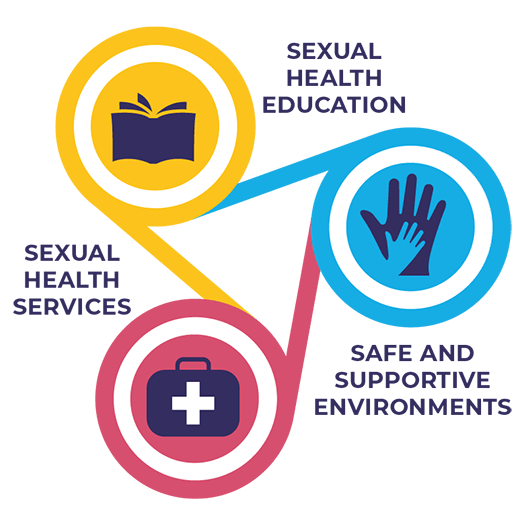
Health education is a profession of educating people about health. Areas within this profession encompass environmental health, physical health, social health, emotional health, intellectual health, and spiritual health, as well as sexual and reproductive health education.

Health education teaches about physical, mental, emotional and social health. It motivates students to improve and maintain their health, prevent disease, and reduce risky behaviours. It also focuses on emotional, mental and social health too. Educating students on the importance of health builds their motivation.

Health education is one strategy for implementing health promotion and disease prevention programs. Health education provides learning experiences on health topics. Health education strategies are tailored for their target population. Health education presents information to target populations on particular health topics, including the health benefits/threats they face, and provides tools to build capacity and support behavior change in an appropriate setting.

History

From the late nineteenth to the mid-twentieth century, the aim of public health was controlling the harm from infectious diseases, which were largely under control by the 1950s. By the mid 1970s it was clear that reducing illness, death, and rising health care costs could best be achieved through a focus on health promotion and disease prevention. At the heart of the new approach was the role of a health educator.

Code of ethics

The Health Education Code of Ethics has been a work in progress since approximately 1976, begun by the Society for Public Health Education (SOPHE).

“The Code of Ethics that has evolved from this long and arduous process is not seen as a completed project. Rather, it is envisioned as a living document that will continue to evolve as the practice of Health Education changes to meet the challenges of the new millennium.”

Importance of Health Education .

Health education builds student’s knowledge, skills, and positive attitudes about health. Health education teaches about physical, mental, emotional and social health. It motivates students to improve and maintain their health, prevent disease, and reduce risky behaviours.

Health education curricula and instruction help students to learn skills so that they will use to make healthy choices throughout their lifetime.

Health education teaches people of all ages about how diet and exercise contribute to a healthy lifestyle. It also encourages positive changes in behaviour and lowers the risk of addiction to drugs, alcohol and unsafe sexual practices. The majority of schools around the country have courses aimed at teaching health education to students. These courses often revolve around the body, healthy eating, sex and exercising. Some students are taught basic health and physical fitness early on. More in-depth courses are designed for middle and high school students.

Health education encourages a person to make healthy choices. They are instructed to avoid unhealthy habits. ‘A sound mind lives in a sound body’. Rabindranath Tagore and C.V. Raman, if they were confined to sick bed, could not have won the Nobel Prize. In fact, a sickly student with all his talents and abilities lags behind in the race of life.

Health education also teaches about the emotional and mental health of the student. A healthy person is the happiest person in the world.

Link

ALL ABOUT YOUR ZODIAC SIGNS

1) ARIES:

CHARACTERISTICS:

  1. More energetic than any other zodiac sign.
  2. They never fails to grab attention because of their magnetic aura.
  3. They are headstrong , strong-willed and straightforward.
  4. Don’t hesitate to take risk.
  5. Popular in social circle.
  6. They were stubborn and Impatient makes it difficult to deal with them.

2)TAURUS:

CHARACTERISTICS:

  1. They are reliable, persistent, and stable.
  2. They are very generous and down to earth.
  3. They are very dependable and patient.
  4. If they do not feel motivated, they are very laid-back and lazy.
  5.  Bulls can be huge perfectionists. If something or someone isn’t absolutely perfect, Taureans are known to turn up their noses and walk away.
  6. They are hardworking persistent in their efforts.

3) gemini:

CHARACTERISTICS:

  1. Geminis are easy-going and adjustable. 
  2. They are extremely knowledgeable, Intelligent and filled with loads of enthusiasm.
  3. They’re also very flexible and able to change according to situations.
  4. They have sharp wit and sense of humor.
  5. The people born under this sign are very restless and anxious.
  6. Lack of consistency and decision-making ability.

4) CANCER:

CHARACTERISTICS:

  1. Cancerians are intense, incredibly charismatic and attractive.
  2. Crabs are very intuitive and rely greatly on their intuition for taking important decisions. 
  3. Cancerians are very emotional people
  4. They may seem a bit isolated and distant.
  5. Suspicious and take time to trust people.
  6. Possessive and over emotional in their relationships.

5)LEO:

CHARACTERISTICS:

  1. Leos are warm and loyal people.
  2. They are confident,passionate and generous.
  3. The presence of a Leo cannot be ignored in a gathering.
  4. They are usually dominating , headstrong and Egoistic.
  5. They often feel unhappy because they care too much about how others think of them.
  6. Leos are very kind and helpful to people around them.

6)virgo:

CHARACTERISTICS:

  1. They are very practical beings and do not believe in whims or fantasies. 
  2. virgos are very watchful, cautious and analytical in their approach.
  3. They are reliable and trustworthy friends.
  4. Virgos do not like sugar coating their words and thus can get too harsh sometimes.
  5. Very conservative and like to do things in old-fashioned ways.
  6. Virgos are also humble and affectionate.

7)libra:

CHARACTERISTICS:

  1. Librans are very loving and romantic souls
  2. They are diplomatic but very charming people.
  3. Decision-making can be a tedious task for the Librans.
  4. They are very tactful and know how to get things done by people. 
  5. They have sense of fairness and an outgoing nature.
  6. You may find a Libra taking selfies everywhere they go.

8)scorpio:

CHARACTERISTICS:

  1. The Scorpions are highly ambitious and focused people.
  2. They are very intuitive and can guess what is going on in somebody’s mind.
  3. They are brave and can deal with most difficult situations with utmost ease.
  4. Sometimes , Scorpions can hurt people with their words and actions.
  5. If a Scorpio is committed to someone or something, they stick with it.
  6. Their trust is hard to earn, but once they do trust someone, they dedicate their whole self to that person.

9) sagittarius:

CHARACTERISTICS:

  1. Sagittarians are optimistic,freedom Lovers, hilarious, honest and intellectual.
  2. They like truth, nothing but the truth
  3. They are very generous and love to help everyone.
  4. They cannot be consistent in anything they do and thus get bored easily. 
  5. They are straightforward in their dealings too. 
  6. They are spontaneous ,fun and best conversationalists.

10)CAPRICORN:

CHARACTERISTICS:

  1. Highly ambitious and driven, the Capricorns have big goals in life.
  2. Capricorn sign is pessimistic, work-obsessed, and stubborn.
  3. They are loyal and true friends.
  4. They are very practical and disciplined in their approach towards life. 
  5. They are friendly, but they like to be in the company of a few selected people.
  6. Capricorns are one of the most serious, diligent signs of the zodiac.

11)Aquarius:

CHARACTERISTICS:

  1. They are very friendly and generally have a large circle of friends.
  2. Once committed in any relationship, Aquarians will remain faithful till the end.
  3. They like to be financially and emotionally independent.
  4. They sometimes become distant or aloof for no reason.
  5. Aquarians are future-oriented people, often described as visionaries.
  6. because of visionary nature they may become dissatisfied, frustrated, and even depressed.

12) pisces:

CHARACTERISTICS:

  1. Pisceans are very affectionate,oversensitive and gentle souls.
  2. They are great thinkers and can come up with great ideas.
  3. They greatly rely on their intuition when in doubt.
  4. They are lazy beings and often opt for escape.
  5. Pisces are extremely generous and known for putting others needs before their own.
  6. Pisces are empathetic and in tune with the emotions of others.

Deserts

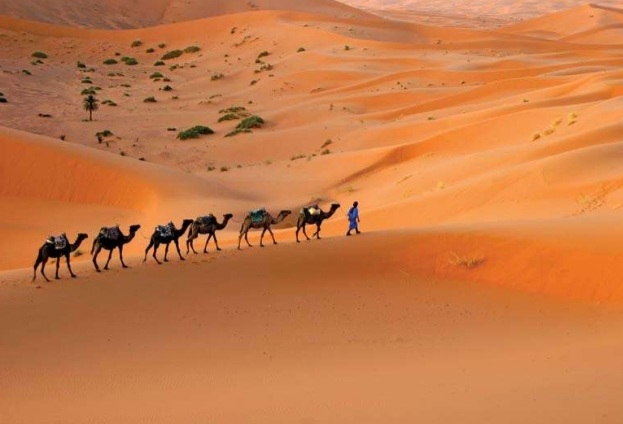
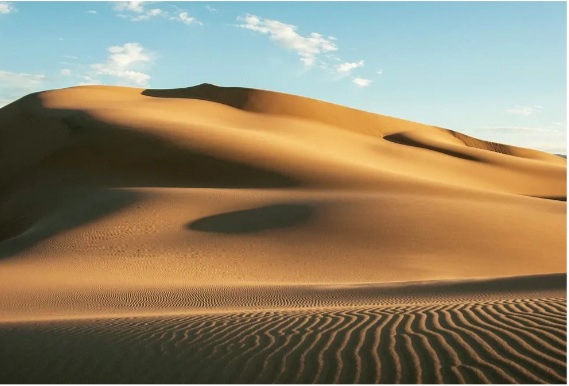
In the world we find varied geographical regions which includes mountains, plains, deserts, plateaus all with their own physical features. Desert is basically a piece of barren land which is filled with sand and lacks water bodies and have dry weather all along. In day time deserts are extremely heated up and at night it becomes chilling cold at the same place. In the Indian subcontinent we find desert in the western part of the subcontinent in the state of Rajasthan.

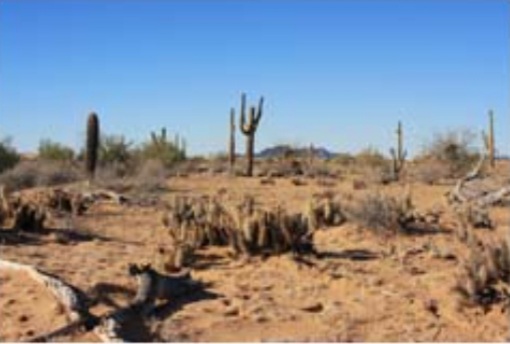
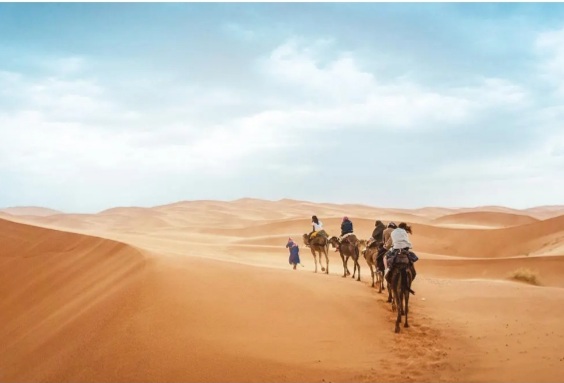
The animals and plants in the deserts have their own adaptations, among plants we find a variety of cactus, cactus plants have special adaptations to survive in the desert, they have fleshy stem which holds water in them which turns out to be useful when there is scarcity of water also they have very long roots which can penetrate deep inside the soil in search of water also they don’t have leaves and have thorns in place of them in cactus the food is prepared in the step as it contains chlorophyll and is green in color. Also, we find camel in desert their feet have adaptation to walk on the sand also they can survive with less water and they have long eyelashes to protect their eyes from dust storms.

Types of Deserts :

1. Coastal Deserts :

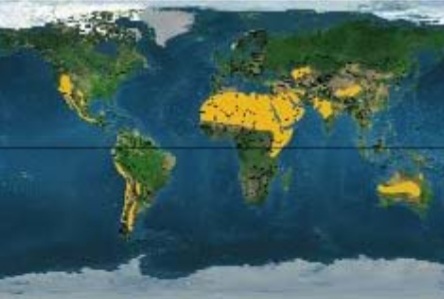
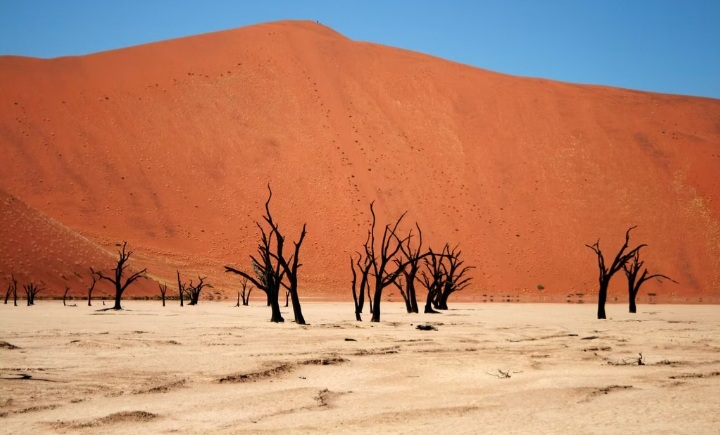
Coastal deserts occur in cool to warm areas along the coast. They have cool winters and long, warm summers. Coastal deserts are located on the west coasts of continents between 20° to 30° lattitude. Winds off the coast blows in an easterly pattern and prevents the moisture from moving onto the land. The Namib desert in Africa and the Atacama desert in chile are coastal deserts.

2. Subtropical Deserts :

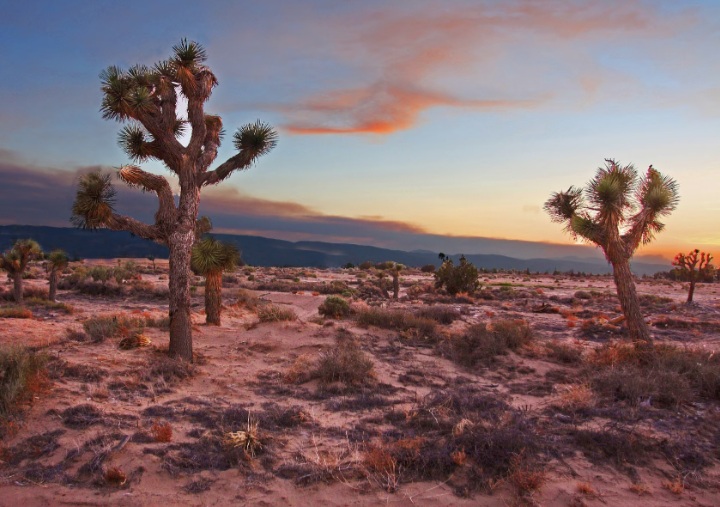
Subtropical deserts the hottest deserts. They are found in Asia, Australia, Africa and North and south America. In the united states, the chilhuahuan, sonoran and Mojave are all subtropical deserts. Subtropical deserts are very hot and dry in the summner and cooler but still dry in the winter. Rainfall happens in short bursts. The air is so hot and dry in these deserts that sometimes rain evaportaes before it even has a chance to hit the ground. The soil in subtropical deserts is usually either sandy or coarse and rocky.

Plants and animals in subtropical deserts must be able to withstand the hot temperatures and lack of moisture. Shrubs and small trees in the subtropical desert usually have leaves adapted to retain moisture. Animals in sbtropical deserts are usually active at night, when it is cooler.

3. Cold wintet Deserts :

Cold winter deserts are also known as semiarid deserts . They have long, dry summers and cold winters with low rain or snowfall. In the united states the Great basin, the colorado plateau and the Red Desert are all cold winter deserts. Other cold winter deserts include the Gobi desert in china and Mongolia and the patagonian desert in Argentina. The lack of rainfall in cloud winter deserts is often caused by the rainshadow effect. The rainshadow effect happens when a high mountain range stops moisture from reaching an area. The Himalayan Mountain prevent rainfall from reaching the Gobi desert.

4. Ploar Deserts :

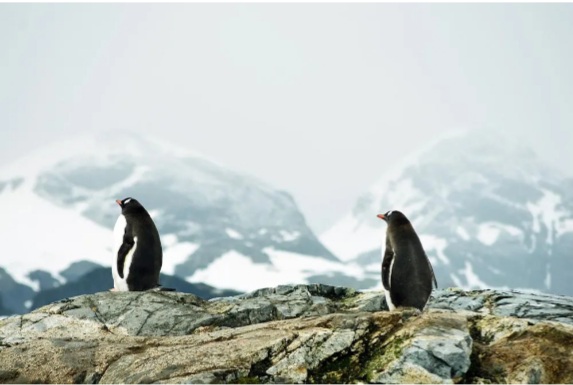
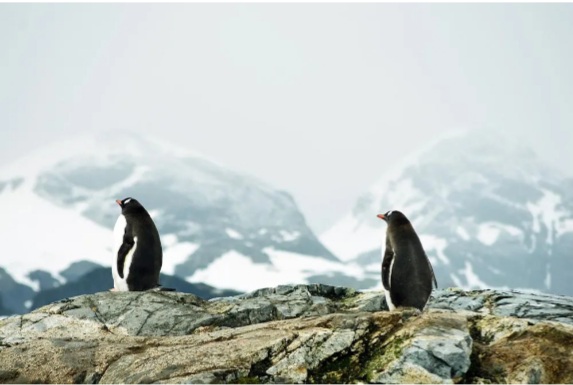
Polar deserts are found in the Arctic and Antarctic regions. Like warmer deserts, they also get very little precipitation.polar deserts are cold year- round.

Largest Desert in the world :

The antarctic polar Desert, which makes up the vast majority of Antarctica, is the largest desert in the world. In fact this single desert is larger than the combined size of the Gobi Desert, the Arabian Desert, and the sahara Desert.

* The driest desert of the world Atacama is surely the most dangerous desert of all.

The strongest animal in the Desert :

Based on strength to weight ratio, the dung beetle of the scarab is the strongest creature on earth. They can lift 1141 times their own body weight. It helps them a lot in finding the mate and food. The dung beetles also constitute a large percentage of scarab family.

The 7 hardest Animals to Hunt :

* Leopards

* Mountain Goats.

* Elk

* Eland.

* cape Buffalo

* Roan and sable

* Bears.

what can kill you in the Desert?

Aside from the oppressive heat and lack of water, the desert is also full of critters that can bite and sting. Some of these guys can even kill you if you aren’t able to find medical help. Spiders, scorpions, centipedes, and snakes are all found in dark places , abandoned builidings and under rocks.

Most Famous Deserts :

* Namib Desert – Africa

* Atacama Desert – South Americs.

* sahara Desert – Africa

* Gobi Desert – china

* Mojave Desert – Nevada

* Antarctic Desert – Antarctica

* Sonoran Desert – USA

* Thar Desert – India

* Rub’al khali – saudi Arabia

* Tabernas Desert – spain

* Taklamakan Desert – central Asia

* pinnacles Desert – Australia

* Salar de uyuni Desert – Bolivia

* Dasht- e kavir – Iran

* Chihuahuan Desert –New Mexico

* White Desert, Farafra – Egypt

5 new skills you should learn this 2021

In today’s world, regardless of the field we’re currently working in, everyone should learn these 5 skills listed below or atleast have a basic understanding of each of them. And one of the best ways to leverage your spare time is by trying on new things.
At the current rate downfall of economy, unemployment is also increasing rapidly. As learning skills are undoubtedly helpful to all of us, and we should always keep on learning new skills.

What can be a better way to celebrate World youth skills day other than learning new skills?

So, here’s a list of 5 new skills to learn this 2021

Basic Writing

This includes all kind of writing like : Creative writing, email writing, Research papers, or be it Personal Bio
No doubt, one of the most significant skill among all. Take one step at a time. Start with journaling and maybe then push your creative standards to higher levels. This skill improves not only communication but also thinking skills. Also, the creativity helps in academic and professional life.
The resources that’ll help you in your this journey are :

  • Grammarly
  • Read
  • Thesaurus

Data Management & Analytics

This skill helps you analyse, interpret and communicate data with confidence and can be done by visualization, business analysis, reading trends or sorting & management. Anyway recognizing patterns, collecting, sorting, & data visualization skills always come in handy.
The resources where you’ll find more about it :

  • Google Analytics
  • Google Trends
  • Excel
  • Youtube

Tech Fundamentals

This includes basic knowledge of Cloud computing, AI, Machine learning, Block chain, Virtual and Augmented reality, Big data, etc. Even if you’re not in the IT field, it is good to know the basics of these fundamentals. The resources are as follows:

  • Coursera
  • MOOC.org
  • Udacity
  • edX
  • YouTube

Editing

This includes basic video editing, Video and audio production and basic presentation skills. Creative exercises like editing help build our problem-solving skills and finding a new method of completing an old task is generating something new. The resources are as follows:

  • iMovie
  • Openshot
  • Canva
  • GarbageBand
  • YouTube

Foreign Language

Practise the 4 core skills – Reading, Writing, Speaking and Listening
This helps us to get a better concept formation, mental flexibility, multitasking, listening skills, problem-solving skills, and also improves our social interaction. The resources to learn from are as follows:

  • YouTube/ Podcast
  • Alliance François
  • Coursera
  • Max Muller

By this, I don’t mean you have to expertise any of them, just have a basic understanding.

Job roles and responsibilities are ever- changing and becoming interdependent. Knowing these skills will make your future employer know that you can help with other tasks rather then the ones mentioned in your profile.

Learning and living go hand in hand. So the more you learn, the better you live