


India is that the world’s biggest producer and consumer of dairy. In 2018 alone, India produced 186 million metric tonnes of milk — about 410 billion pounds and 22 percent of the milk produced globally. Almost all of that is consumed domestically thanks to India’s dairy-heavy diet — think creamy curries, yogurt drinks, and a popular type of butter called ghee. A quick note before we proceed: this includes milk from buffaloes, which are an important source of milk in many developing countries. the point is that India loves milk.

In 2011, the French dairy company Danone hoped to capitalize on this by opening a division in India. Danone opened its own processing plant in Haryana and tried to capture some of India’s 1.2 billion dairy lovers. But less than a decade later, Danone shuttered their dairy business in India. That same year, the corporate made 28 billion dollars worldwide and was within the top three global dairy companies. With all this success, elsewhere, why did Danone’s dairy business sour in India? Let’s start with some background on Danone. Their business is broken down into three categories:
- 1.specialized nutrition, like supplements and formula for babies;
- bottled waters and seltzers;
- dairy and plant-based alternatives.
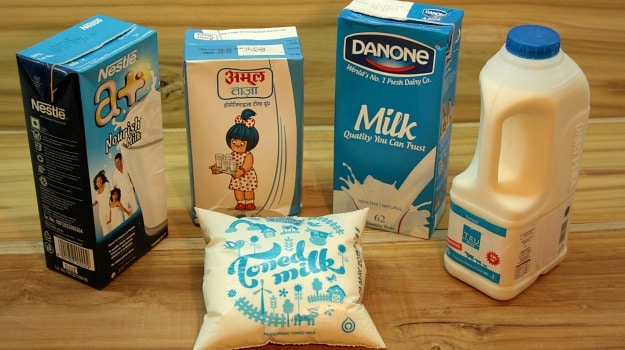
That one makes up over half of their global sales, but it’s also the one that failed in India. Danone does still sell specialized nutrition products in the country, but they don’t break out those sales figures separately. This is the same company as Dannon in the U.S. The company decided to rebrand to make the spelling less confusing for American consumers. Anyway, now for some background on India’s dairy industry. There are about 75 million dairy farmers in India. Most of them are women who own one or two buffaloes or cows to supplement the family’s income. Nearly half of India’s milk is not sold, but consumed by the farmers household. This makes India’s dairy industry much more fractured and localized than other countries where Danone operates. Take the company’s native France and one of its biggest customers, the U.S. Each has far fewer dairy farms with herds that dwarf India’s one or two animal average. This was Danone’s first big problem in India: sourcing milk is difficult. Of the half not consumed by farmers’ households, only about 15 percent goes to big organized companies or government run cooperatives. The rest goes to hundreds of small, local milk processors.

The largest companies like Amul, Mother Dairy, and Nestlé have tiny percentages of the market, and they’ve been there for decades. Market research firms Mintel and Euromonitor declined to release specific market share numbers to CNBC. However, a 2016 piece in The Economic Times of India citing Euromonitor put the figures at about 7 percent for Amul, 3.7 percent for Mother Dairy, and 2.9 percent for Nestlé. In short, tapping into the existing dairy infrastructure is effective but time consuming. Imagine the effort of contacting dozens or hundreds of local and regional dairies, processors, or individual farmers. But establishing a separate supply chain altogether is very expensive — a lesson Danone learned the hard way. And when Danone did get milk, the company focused on the wrong products. Danone pushed plain yogurt and flavored yogurt drinks — popular in places like the U.S. and France with high profit margins to boot. But in India around the time when Danone arrived, yogurt comprised only 7 percent of the dairy consumed.
The real money was in ghee, a type of clarified butter, and plain old fluid milk, a product with razor-thin margins dominated by those hundreds of local small-scale producers. Analysts explained to CNBC the simple reason why Indian consumers shunned Danone’s prepackaged yogurt. And if Indian consumers did want to buy premade yogurt, they had a slew of cheaper options than Danone. Dairy never accounted for more than 10 percent of Danone’s sales in India, a far cry from its global 50 percent. Its specialized nutrition arm picks up the slack, and the company announced a renewed focus on that division when it shuttered its dairy operation. Meanwhile, two of their biggest competitors, Amul and Nestlé, made nearly five billion and 750 million from dairy, respectively. But not all hope is lost for Danone’s dairy in India.
In January 2018, the same time that Danone ended its dairy production there, the investment arm of the company announced its part in a 26.5 million dollar investment in Epigamia, an Indian yogurt startup. This could be a sustainable move for Danone in India’s dairy industry because Epigamia offers consumers products that add value onto the plain yogurt they will make cheaply reception . But perhaps most importantly is this: while much of the population still makes yogurt the old-fashioned way, analysts predict that a growing number of consumers will want to buy premade options as they move into corporate jobs in developing urban centers. Very large numbers indeed. If only 5 percent of India’s 1.35 billion people decides to buy prepackaged yogurt, that’s over 67 million consumers — more than the entire population of Danone’s native France.
 Eduindex News