Who is the actual winner of the FIFA world cup 2022?

Who won the FIFA World Cup in reality? Are the teams, the players, or the host the winners?

Qatar, one of the most popular nations on the planet, wants to host the FIFA World Cup. Qatar typically registers temperatures greater than 40. Qatar will serve as the host nation for this tournament due to its improved facilities and infrastructure. 

Al Bayt Stadium, Lusail Stadium, Ahmad Bin Ali Stadium, Al Janab Stadium, Al Thumama Stadium, Education City Stadium, Khalifa International Stadium, and Stadium 974 are the eight locations where the matches will take place.

The stadium seats are broken down into four categories, with category 1 including the seats that are closest to the ground. The seats in category 2 are just behind the front seats, while category 3 contains the middle row of seats. The rear set is included in the fourth and final category. Seat costs vary from match to match and category to category.

  During the first game, category-1 seats cost $618, category-2 seats cost $440, category-three seats cost $302, and category-four seats cost $55. The cost of a category-1 ticket for a group stage match is $220; for categories 2, 3, and 4, the prices are 165, 69, and 11 dollars, respectively. Tickets for the round of 16 are more expensive than those for group matches. The costs are as follows: 275$ for category 1, 206$, 96$, and 5$ for categories 2, 3, and 4, accordingly. Tickets for the quarterfinal matches range in price from 426 dollars to 302 dollars to 20 dollars to 82 dollars, depending on the category you fall under. In the quarterfinals, the price of the fight match tickets for third place is comparable. For category 1, the cost is $426. For category 2, it is $302. For category 3, it is 206. For category 4, it is 82.

 One of the most watched games is the semifinal. Hence, the prices have increased. For category 1 seats, the cost is 956, while for categories 2 and 3, it costs 659, 357, and 137 dollars, respectively. Any tournament’s finals are the game-changer. The final game always has the most spectators and the most expensive tickets. The cost for category 1 is $1067, category 2 is $1003, category 3 is $604, and category 4 is $200.

With a capacity of over 60,000, Al Bayt stadium is one of Qatar’s biggest and most well-known stadiums. Out of 60,000 seats, around 11,000 are in category 1, 14,000 in category 2, 17,000 in category 3, and 20,000 in category 4, correspondingly. In the Al Baty stadium, the first game will take place. 20.428,000 dollars should be made from the first game. (If every ticket is sold, the computation is based on the ticket price and the location of the seats.)

Counting the initial match, there will be a total of five group matchups. After the group matches, the income will be $32,815,000. A round of 16 games will be played. There will be around $8,191,000 in revenue from the round of 16 games. The income from the quarterfinal game will be around 14,712,000 dollars. The Al Bayt stadium will host both the semifinal game and the final. Around 26,796,000 dollars will be made from semis. After the competition, the stadium should earn a total of around 109,505,000 dollars.

With a capacity of 80,000, Lusail Stadium is the largest stadium in Qatar. Out of 80,000 seats, 13,000 are in category 1, 17,000 in category 2, 23,000 in category 3, and 27,000 in category 4, respectively. There will be a total of six group games played at Lusail Stadium. After the games on the group stage, the stadium will earn about $45,090,000. A total of $9,420,000 will be generated by the round of 16 games. There will be a semifinal contest as well. The semis will generate around $35,541,000 in income. The championship game will take place in Lusail Stadium. The total match income will be around 57,396,000 dollars. After the competition, the stadium will have earned around 147,447,000 dollars in revenue.

The Khalifa stadium can accommodate 40,000 people in total. Eight games will be played in the stadium in total, including a third-place fight, one quarterfinal, one round-of-16 encounter, and six group matches. After the competition, the stadium will have earned a total of 16,483,000 dollars.

40,000 people can fit at Stadium 974 and Alof Janoub Stadium. There will be a total of seven matches at each of the two venues. Six group matches and one round of 16 matches will be played at each stadium. The combined income from the two stadiums will be around $8,021,000.

The Education City stadium can accommodate 40,000 people. Eight games will be played in the stadium, including one round-of-16 game, one quarterfinal, and six group matches. The Education City Stadium will bring in around $14,005,000 in total income.

Al Thumama Stadium can accommodate 40,000 people. There will be a total of eight games, comprising one quarterfinal, one round of 16, and six group matches. After the competition, the stadium will have earned about $24,931,000 in total.

The Ahmad Bin Ali stadium can hold close to 40,000 people. Seven matches, comprising six group matches and one round of 16 encounters be played. After the competition, the stadium will have earned about $8,021,000 in total. 

After the FIFA World Cup, Qatar expects to earn a total of about 336,434,000 dollars. This equals Rs. 277,283,183,42.

The 32 teams that make it into the competition will receive certain benefits. These are the pricing. Eliminator for the group stage will receive $9 million. The losers of the 16th round will receive 13 million dollars. The losers of the Qatar finals will receive 17 million dollars. A 25 million dollar prize will be given to the fourth-place team. A 27 million dollar prize will be given to the third-place finisher. 30 million dollars will be given to the runner-up. and 42 million dollars will be given to the tournament’s victor or winners.

A total of 440,000,000 dollars will be distributed in price. FIFA, not the host nation, will choose how much each item costs. With accommodation and training expenses included, they will undoubtedly make around 336,434,000 dollars.

The event is advantageous for the participating teams, athletes, and the host nation. This is why nations like the United States, South Korea, and Japan aspired to host the competition. Overall, this event will provide good financial revenue for the host nation. The economy of Qatar will be greatly impacted by this money. More than 1.5 million new employment in important industries including construction, real estate, and hospitality are expected to be created as a result of Qatar hosting the FIFA World Cup.


Perfume: The Story of A Murderer Book Review

Cover of Perfume: The Story of A Murderer (1985)

Introduction

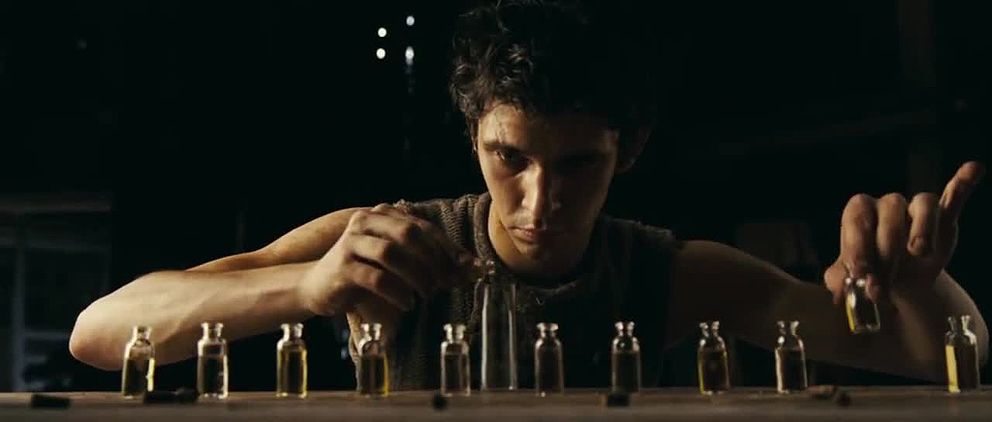
 Perfume: The Story of a Murderer (German: Das Parfum: Die Geschichte eines Mörders ) is a 1985 literary historical  fantasy novel by German writer Patrick Süskind. The novel explores the sense of smell and its relationship with the emotional meanings that scents may have. An acclaimed bestseller and international sensation, Patrick Suskind‘s classic novel provokes a terrifying examination of what happens when one man’s indulgence in his greatest passion – his sense of smell – leads to murder. This novel was later adapted into a famous movie in 2006 with the same name, starring Ben Whishaw, Alan Rickman, Karolina Herfurth and others.

Ben Whishaw as Grenouille in Perfume: The Story of A Murderer (2006)

About The Author

Patrick Süskind ( born 26 March 1949) is a German writer and screenwriter, known best for his novel Perfume: The Story of a Murderer, first published in 1985. Süskind lives as a recluse in Munich, in Seeheim , and in France at Montolieu. After spending the 1970s writing what he has characterized as “short unpublished prose pieces and longer un-produced screenplays”, Patrick Süskind was catapulted to fame in the 1980s by the monodrama Der Kontrabass [The Double Bass, 1981:], which became an instant success and a favourite of the German stage. In 1985 his status as literary wunderkind was confirmed with the publication of the novel Das Parfüm. Die Geschichte eines Mörders [Perfume. The Story of a Murderer], which quickly topped the European best-seller list and eventually sold millions of copies worldwide.The public knows little about him; he has withdrawn from literary society and does not grant interviews or allow himself to be photographed.

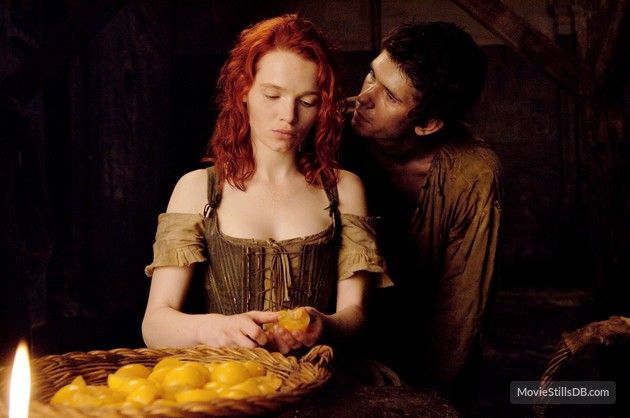
Ben Whishaw as Grenouille and Karolina Herfurth as Girl with Plums in Perfume: The Story of A Murderer (2006)

Storyline of The Novel

The novel is set in Paris in the 1700’s and follows the life of a man named Jean-Baptiste Grenouille who is born with an incredibly strong sense of smell. His nose is so keen that he is able to smell people coming, can locate lost items simply by their scent, and can catalogue smells in his mind. Whilst his sense of smell may be keen, his heart is empty and he seems to be completely unrestrained by everyday emotions. As a young lad, Grenouille encounters the irresistible smell of a young girl entering puberty. He promptly murders her and sniffs every inch of her body to catalogue the unique scent. Believing it is his destiny to bottle such a scent, Grenouille decides to pursue a career as a master perfumer, he works as an apprentice where his unique skills quickly make him the best perfumers in France. The story then follows Grenouille as he becomes a famed perfumer and experiments in scents that allow him to either go unnoticed or incite various emotions among those who smell it. His obsession with scents goes on to reaches a head with extreme consequences for all.

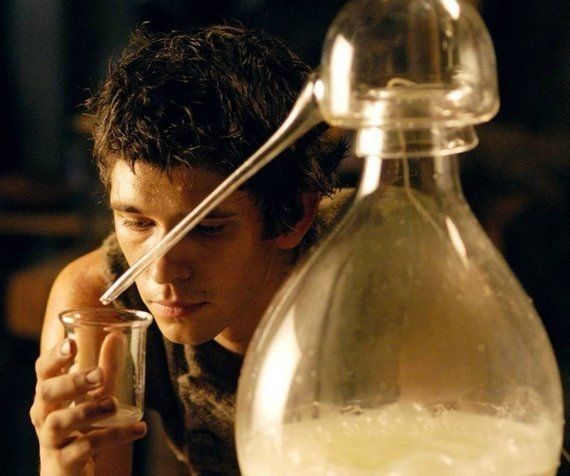
Ben Whishaw as Grenouille in Perfume: The Story of A Murderer (2006)

Analysis of The Storyline

A book about the sense of smell could have been a dull affair, were it not for the excellent way it is written by Suskind. His use of language is beautiful and his descriptions make even some with a dull nose like mine feel like they can smell the essences on the page. It’s not hard to see why this book has become such a modern classic given how excellent Suskind’s prose is. I challenge anyone not to read this and not then start using their nose a little more.

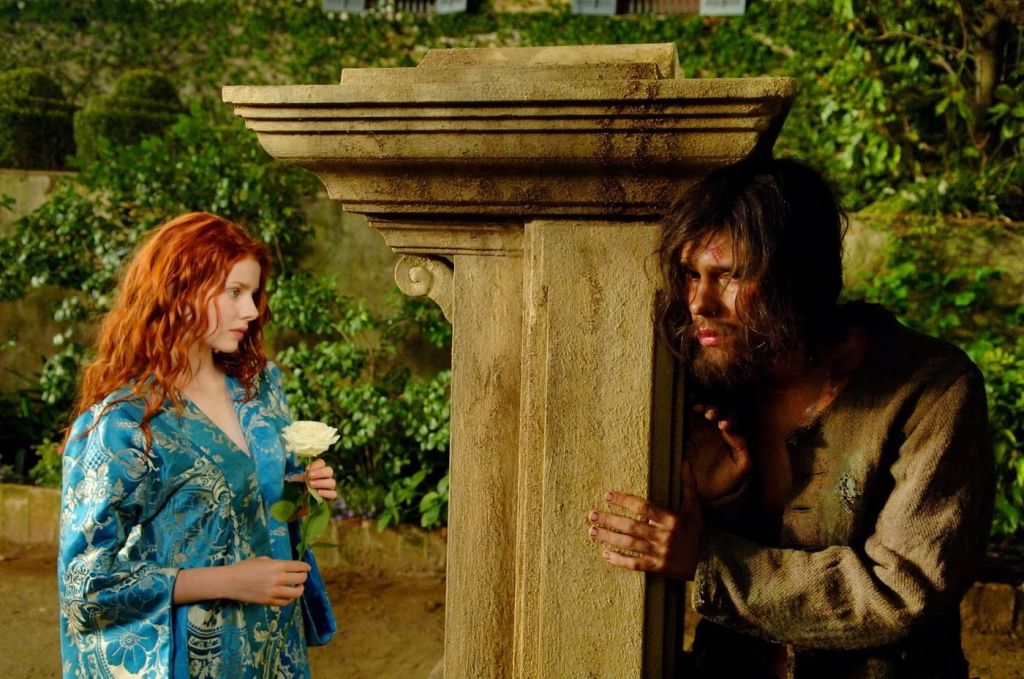
Scene from Perfume:The Story of A Murderer (2006)

The character of Grenouille is both fascinating, sympathetic, and yet also repulsive. In early life he is beat down at every corner and one can’t help but root for the character as he tries to rise above his terrible beginnings. As he becomes more in control of his life, Grenouille quickly becomes insidious and deceptive and there’s something very creepy in the way he is described as living like a tick. Grenouille does indeed live like a parasite, taking whatever he needs from people. As he becomes more unstable, eventually resorting to killing a young virgin, Grenouille turns into a monster, but a compelling one nonetheless. Like Humbert Humbert from Lolita, he’s a character you feel bad for sympathising with, though Grenouille may be a little more redeemable.

Scene from Perfume: The Story of A Murderer (2006)

Criticism of The Storyline

this is in every sense an olfactory novel gives a striking sensory immediacy to the fiction itself. ”Perfume” is a historical novel but one in which the sheer physicality of its theme lends it an honorary present tense. And if Grenouille is the hero of the novel, his obsessions are also its informing presence. Just as he has difficulty with words ”designating non-smelling objects, with abstract ideas and the like,” so the novel itself creates an elemental world in which such abstract matters are only of token significance. The nose is defined here by a priest as ”the primitive organ of smell, the basest of the senses,” with its powers springing from ”the darkest days of paganism”; but it flourishes in Grenouille, even in an age of ”enlightenment,” and the unspoken message of ”Perfume” is that it flourishes still. The point about genuine historical fiction is that it is primarily concerned with the contemporary world. This is not a historical romance, full of ”Prithees!” and strange objects known as poniards, but a meditation on the nature of death, desire and decay.

Scene from Perfume: The Story of A Murderer (2006)

Conclusion

The story of perfume made us really re-evaluate the importance of scents and how certain smells can influence us on a subconscious level. It makes one wonder how much of our everyday lives are dictated by scents without us even realising it. Throughout the book, you get the feeling pressure is mounting and it ends in a finale that sees an orgy of scents come together in one hell of an ending that isn’t likely to leave you any time soon.

Analyzing Alfred Hitchcock: The Psychological Genius Mind

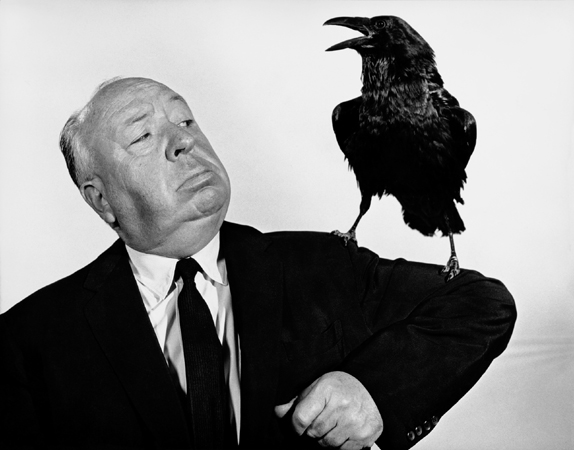
Sir Alfred Hitchcock

Introduction

The movies of Alfred Hitchcock, seem to have a permanent place in both American and Global Cinematic history. He is a common topic to turn when discussing auteur directors, film history,  suspense and psychoanalysis. His visual style is very distinct, the close-ups, subjective camerawork, unusual camera angles and the list goes on. Today, in this article, we intend to analysis the visual choices of Hitchcock’s most well known works including Vertigo, Rear Window and Psycho.

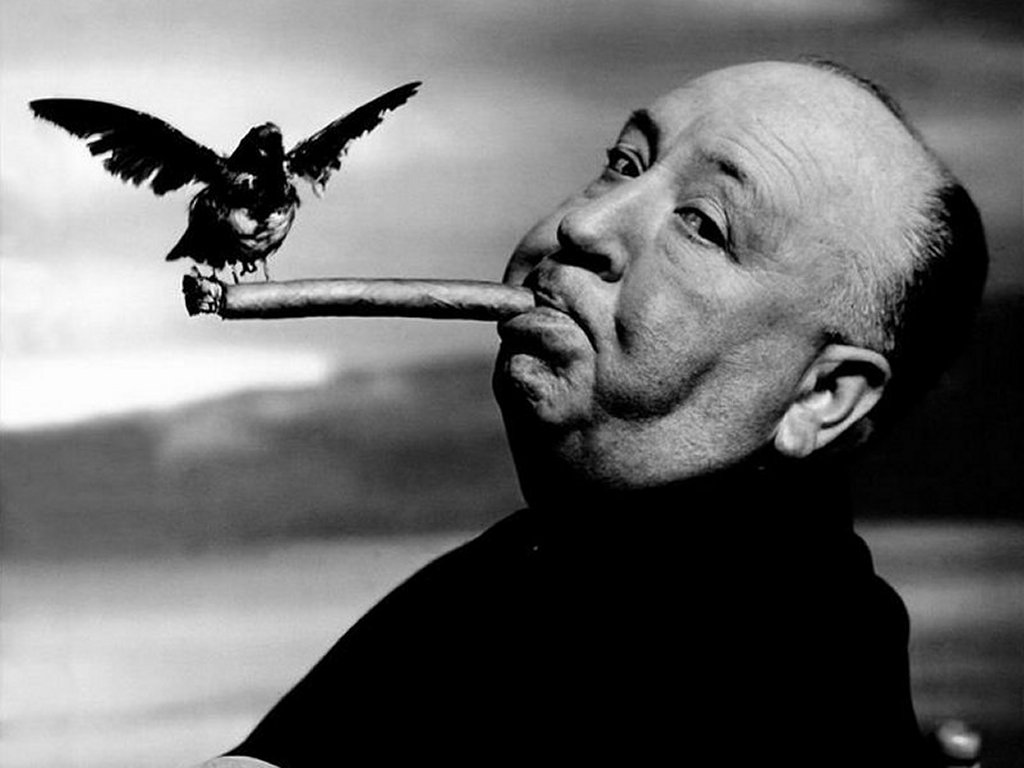
Sir Hitchcock before the shooting for Psycho (1960)

About Alfred Hitchcock

Sir Alfred Joseph Hitchcock  (13 August 1899 – 29 April 1980) was an English filmmaker who was one of the most influential figures in the history of cinema. In a career spanning six decades, he directed over 50 feature films, many of which are still widely watched and studied today. Known as the “Master of Suspense“, he became as well known as any of his actors thanks to his many interviews, his cameo roles  in most of his films, and his hosting and producing the television anthology Alfred Hitchcock Presents  (1955–65). His films garnered 46 Academy Awards nominations, including six wins, although he never won the award for Best Director despite five nominations.

Sir Hitchcock

Techniques and Methodology of Hitchcock’s Works

Alfred Hitchcock’s attention to detail in his films is one of the many things that makes him one of the most recognized film auteurs of all time. He was very particular what about he wanted seen on screen and how he wanted to get those shots. From camera movements to the things found in the mise-en-scène, Hitchcock was very precise about every little thing that is seen in his on screen worlds. He would strategically place objects throughout the mise-en-scène and have characters wear certain clothing. By doing this, Hitchcock is able to let the audience know things about the characters and the plot without it having to be said on camera. Hitchcock once said that “If it’s a good movie, the sound could go off and the audience would still have a perfectly clear idea of what was going on” . To Hitchcock, the conversations in his films were not important.  Visuals were of the utmost importance.  He loved point of view shots, which showed a shot of the actor and then cut to a shot of what the actor was looking at in order to convey what the actor is looking at; pretty much, the Kuleshov effect.

Sir Alfred Hitchcock on the set of one of his movies

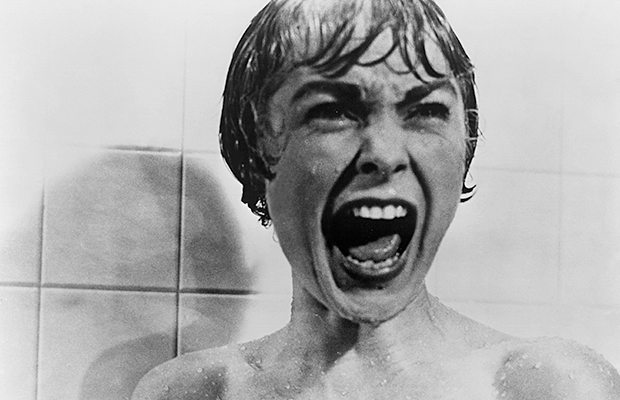
The soundtrack was extremely important to Alfred Hitchcock, as he managed to sync the music with the actions of the scenes.  His most famous scene would be the shower scene in Psycho, where the orchestra is perfectly correlated with the murder.  In his famous film, Hitchcock also incorporated the use of shot/reverse shot, a standard shot pattern that directors use to film conversations between two characters. In general, the actors avoid speaking directly to the viewer, because doing so acknowledges the audience’s presence and destroys the illusion of a naturally unfolding story. From panning shots, to tracking shots Alfred Hitchcock used his techniques in filming and editing in order to create great products that continue to intrigue audiences to this day.

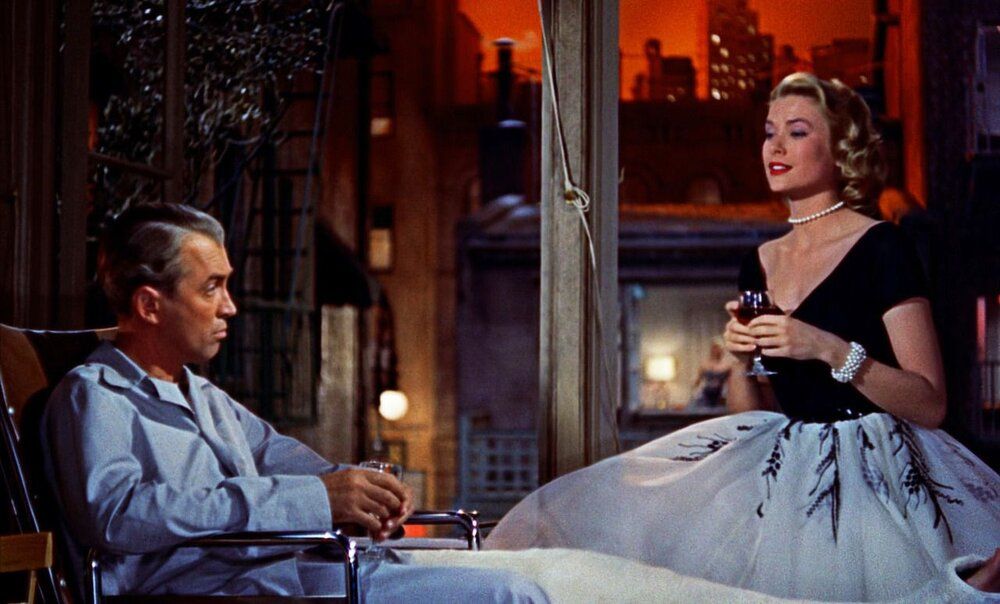
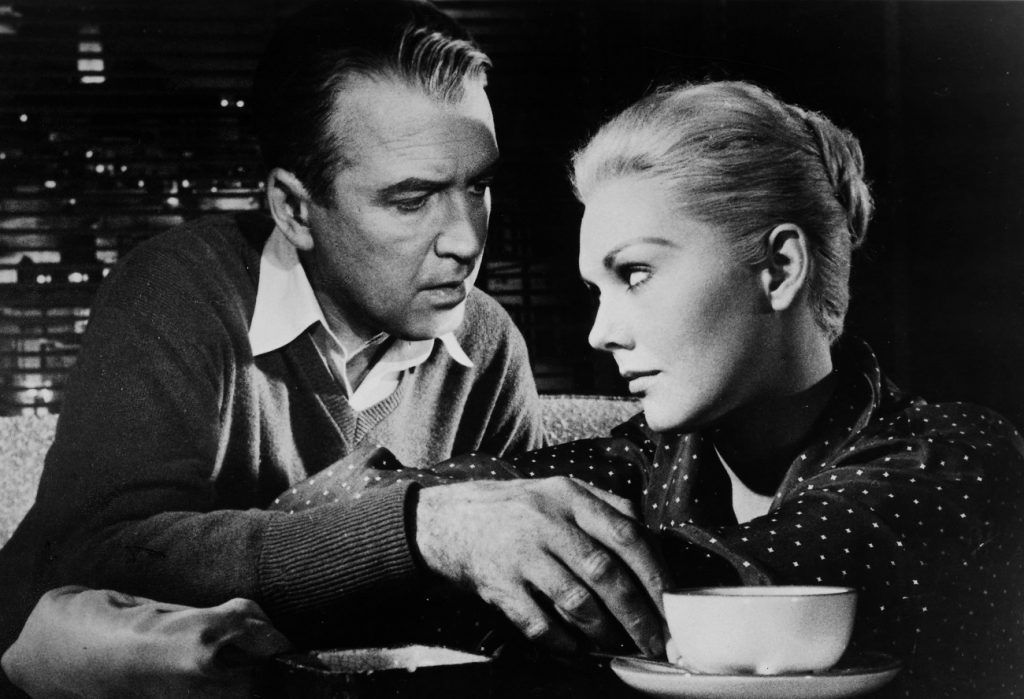
James Stewart as Jeff and Grace Kelly as Lisa Carol in Hitchcock’s Rear Window (1954) movie

Analysis of The Film “Rear Window” (1954)

The cinematography of Rear Window mainly focuses on the use of lighting and shadows. With the darkness and mystery of the film, Alfred Hitchcock was able to use his lighting to his best advantage. The light always is picking up on important symbols or messages in the scene. Such as the scene when the salesman finally comes into Jeff‘s room, the light only picks up on Jeff’s most valuable senses; his hands and eyes. Along with the lighting, the interesting angles are very common.  Not only did it create suspense, it creates confusion and the viewer wants to see more. Mise en Scene was very important in this film, as all of the scenes happened in the same group of apartments. In the city of New York, everything is very tight because of the huge population. The use of the differently decorated rooms also created personality and character for the roles who didn’t even speak

Scene from Hitchcock’s Rear Window (1954) movie

Although sound and music weren’t always in the film, it was there when it needed to be. The traffic and sounds of the city were placed delicately to remind the viewer of the area. The mix of piano from the songwriter in one apartment, from the screeching violins during nail-biting moments, created emotions for the viewer. Editing was evident everywhere, especially during a fight scene, or used very consciously during high suspense. The fades were apparent from day to day, which helped the viewer better understand the passage of time.

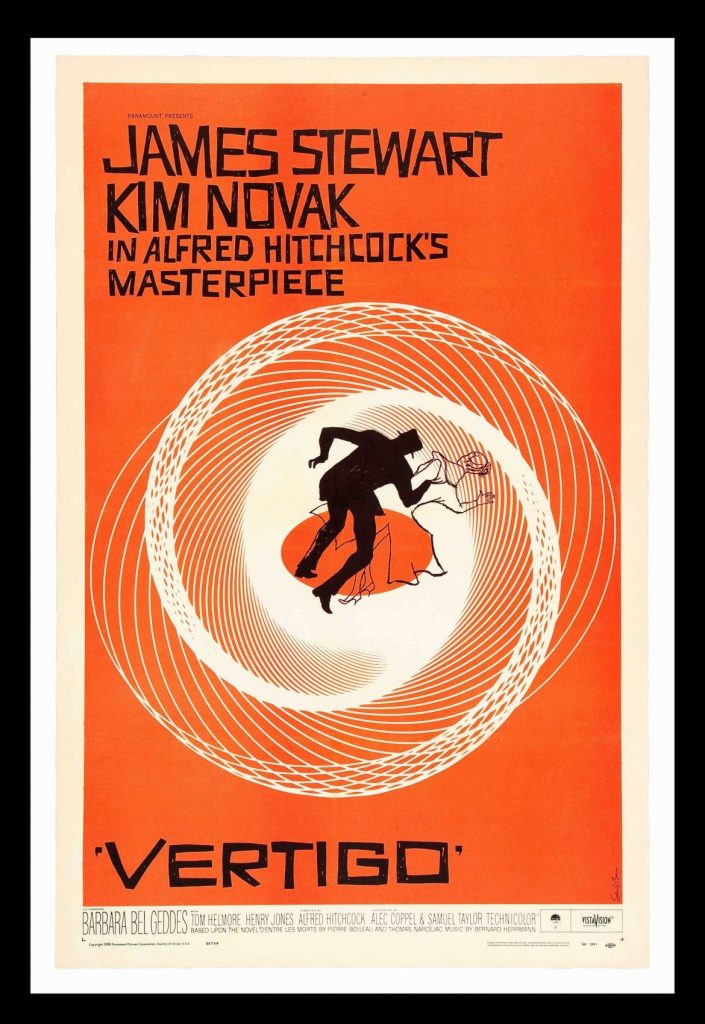
Poster of Hitchcock’s Vertigo (1958) movie

Analysis of The Film “Vertigo” (1958)

Vertigo is a 1958 suspense thriller directed by Alfred Hitchcock, written by Alec Coppel and Samuel Taylor and based upon the 1954 novel ‘D’entre Les Morts’ by Pierre Boileau and Thomas Narcejac. Starring James Stewart, Kim Novak and co-starring Barbara Bel Geddes.

James Stewart as John Ferguson and Kim Novak as Madeleine in Hitchcock’s Vertigo (1958) movie

Vertigo is a film which functions on multiple levels simultaneously. On literal level it’s a mystery suspense story of a man hoodwinked into acting as an accomplice in a murder, his discovery of a hoax, and the unravelling of the threads of the murder plot. On a Psychological level, the film traces the twisted , circuitous routes of a psyche burdened down with guilt, desperately searching for an object on which to concentrate its repressed energy. Finally, on an allegorical or figurative level, it is a retelling of a immemorial tale of a man who has lost his love to the death and in hope of redeeming her descends into the underworld,  the most famous of these stories being that of Orpheus and Eurydice in Greek Mythology. Vertigo’s complexity however does not end with this multilevel approach to its tale, the film also succeeds in blurring the already fine line between objectivity and subjectivity . It takes the viewers so far into the mind of its main characters ( Scottie, played by Hitchcock veteran James Stewart), that audiences’ own objectivity, at least initially, is lost and replaced by complete identification with Scottie’s fantasies and obsessions.

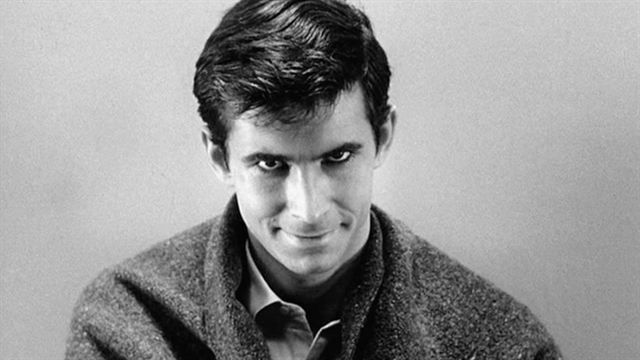
Anthony Perkins as Norman Bates in Hitchcock’s Psycho (1960) movie

Analysis of The Film “Psycho” (1960)

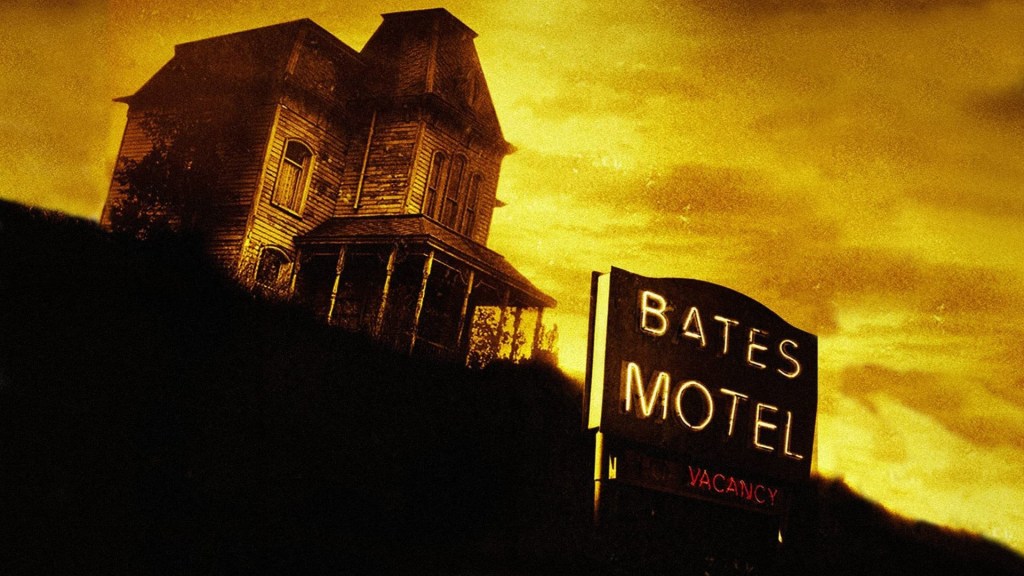
Hitchcock’s Psycho has been commended for forming the archetypical basis of all horror films that followed its 1960 release. The mass appeal that Psycho has maintained for over three decades can undoubtedly be attributed to its universality.

Scene from Hitchcock’s Psycho (1960) movie

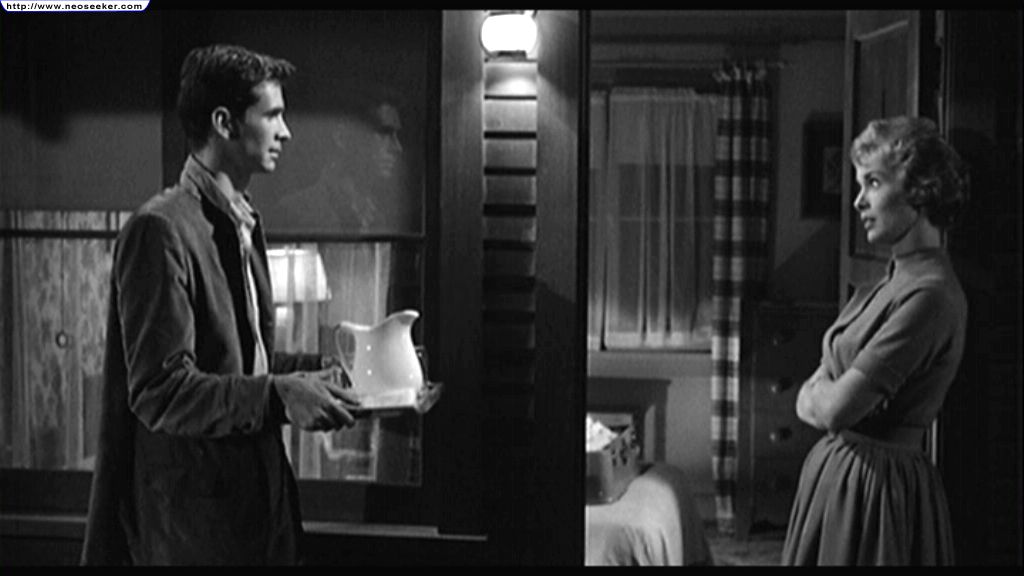
In Psycho, Hitchcock allows the audience to become a subjective character within the plot to enhance the film’s psychological effects for an audience that is forced to recognize its own neurosis and psychological inadequacies as it is compelled to identify, for varying lengths of time, with the contrasting personalities of the film’s main characters. Hitchcock conveys an intensifying theme in Psycho, that bases itself on the unending subconscious battle between good and evil that exists in everyone through the audience’s subjective participation and implicit character parallels. The initial confrontation between Marion and Norman Bates is used by Hitchcock to subtly and slowly sway the audience’s sympathy from Marion to Norman. Hitchcock compels the audience to identify with the quiet and shy character whose devotion to his invalid mother has cost him his own identity. Upon the introduction of Norman, Hitchcock introduces the first of several character parallels within Psycho. The clash between Marion and Norman, although not apparent to the audience until the end of the film, is one of neurosis versus psychosis.

Anthony Perkins as Norman Bates and Janet Leigh as Marion Crane in Hitchcock’s Psycho (1960) movie

The fear that Psycho creates for the audience does not arise from the brutality of the murders but from the subconscious identification with the film’s characters who all reflect one side of a collective character. Hitchcock enforces the idea that all the basic emotions and sentiments derived from the film can be felt by anyone as the unending battle between good and evil exists in all aspects of life.The effective use of character parallels and the creation of the audience’s subjective role in the plot allows Hitchcock to entice terror and convey a lingering sense of anxiety within the audience through a progressively intensifying theme. Hitchcock’s brilliance as a director has consolidated Psycho’s place among the most reputable and profound horror films ever made.

Scene from Hitchcock’s Psycho (1960) movie

Conclusion

Alfred Hitchcock who has been entitled to the master of apprehension, suspense and fear, entices the audience to discern his unknown inner in a simulation over cinema curtain. Human, sets back his instincts for years; withholds sex and anger and wrap it in his inner depths where even is impenetrable for himself. But there is always probability of arising it in the society as a coarse event. Eruption of anger from sub-consciousness of Hitchcock’s characters brings along murder, crime and often imagination, tragic psychic disturbances. Anyone might be involved with the condition of these characters in real world. Most of Hitchcock’s movies create suspense in very first minutes of the show. The propensity to know arouses in him. He limits and draws attention of the audience to the film.Dark spaces, long and fearsome roads, deserted places and empty of habitat, are signs and symbols which sometimes refers to unaware and its inner events. Making use of sharp-pointed lines and thorn-shaped edges in locations and shades, which are taken from Gothic style, makes the movies horror and terror. Hitchcock through increasing vigilance, guides the audience toward making a powerful “ego” against incidents which mostly indicates determinism.

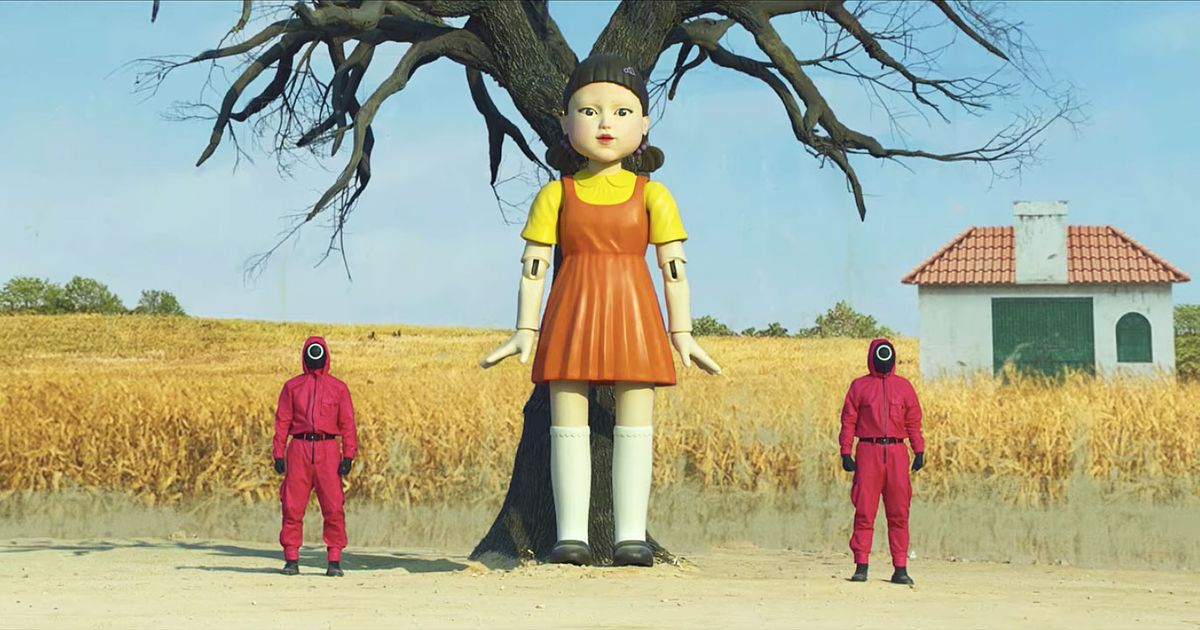
Squid Game (2021)

Squid Game is a highly bingeable nine-episode show that can be described as a variation of the Hunger Games series (albeit better, less generic, and even more brutal). It is a dystopian flick that nobody wanted until everybody did—with this ruthless South Korean hit trending as on Netflix. I can’t say that it is one of my all-time favorite shows, nor would I necessarily consider it to be “high art” per se. But I do recommend it. To me, it seems that there are two main types of popular television: the cheesy shows that consist mostly of instant gratification, and the anomalies that not only generate insane traffic but are also well-done. Moreover, the show features some scintillating social commentary on the rich vs. the poor. This—combined with equally striking action—renders a scrumptious blockbuster.


The pilot episode takes a while to draw viewers in, with some backstory that dragged at times. But once you’re in, you will remain on the edge of your seat. The central plot is as follows: 456 people (particularly people facing insurmountable debt) are lured into an elaborate game on a secret island with a prize of nearly $40 million. The rules are simple. 1. Contestants play children’s games. 2. There are six rounds, each containing its own game. 3. Each round, those who lose will be eliminated until only one winner emerges from the final round. The assumption is that losers will simply leave. Little did they know that “elimination” entails something far more nefarious: death, which they don’t discover until over 200 people are killed in cold blood. Another interesting facet is the guards. They too are moved around like cannon fodder by the elites who run this sick, elaborate spectacle.


Squid Game has plenty of redeeming factors. The quality of the acting, which I found too histrionic in the beginning, is ultimately believable. The screenwriting is as sharp as it is creative. The cinematography paints a surreal, colorful world that feels like the backdrop of a video game, all exaggerated shapes, sizes, and harsh edges. Also, the characters are compelling; you find yourself rooting for some to win triumphantly and others to fail dramatically. Many of them undergo enormous trauma and transformation, and the actors rise to the challenge of portraying believable emotions in an unbelievable setting. To be fair, this show will not go down in my head as a “classic,” but it was enough to lure me into devouring all nine episodes in less than 24 hours. Granted, Squid Game is too graphic for even some of you who tolerated the Hunger Games series. Otherwise, this is truly an immersive and stupendous experience with some crazy twists that will leave you shocked.

Rating: 10/10

Written by : Ananya Kaushal

Historical mysteries unlikely to be answered

There are a lot of unexplained things in the world. A lot of questions about history which needs to be answered but due to lack of evidence they might always be left unexplained.

Below is the list of few of those incidents.

Where is Cleopatra’s tomb?

Historians believe that Cleopatra and her lover Mark were buried together in the same tomb after their deaths. It was believed that the tomb was located near the temple of Egyptian goddess; Isis. It was also said that the monument was filled with treasures like ruby, gold etc. Except this no other information was found on the tomb. An excavation was done in 2010 near Alexandria which revealed the tombs dated back to the era in which Cleopatra ruled but her tomb was not among them.

Who was Jack the ripper?

Jack the Ripper, was the name given to the famous serial killer of London in 1888 who mutilated five woman in the same pattern. Following those incidents a number of letters were send to the police taunting their failed efforts at finding him. The letter was written by Jack the ripper and hence the origin of that name. Some experts even believed that it might not even be Jack who sent those letters. Needless to say the authorities could never find the real Jack. Dozen of arrests were made but none of them held enough evidence to conduct a trial. A book even stated that it was actually a woman named Lizzie Williams who was behind those murders but there was no proof for that. Over a century later and yet this remains one of the biggest mysteries of the world. Our infamous killer however inspired a lot of media works to write books or feature the similar incident in series.

Does the city of Atlantis exist?

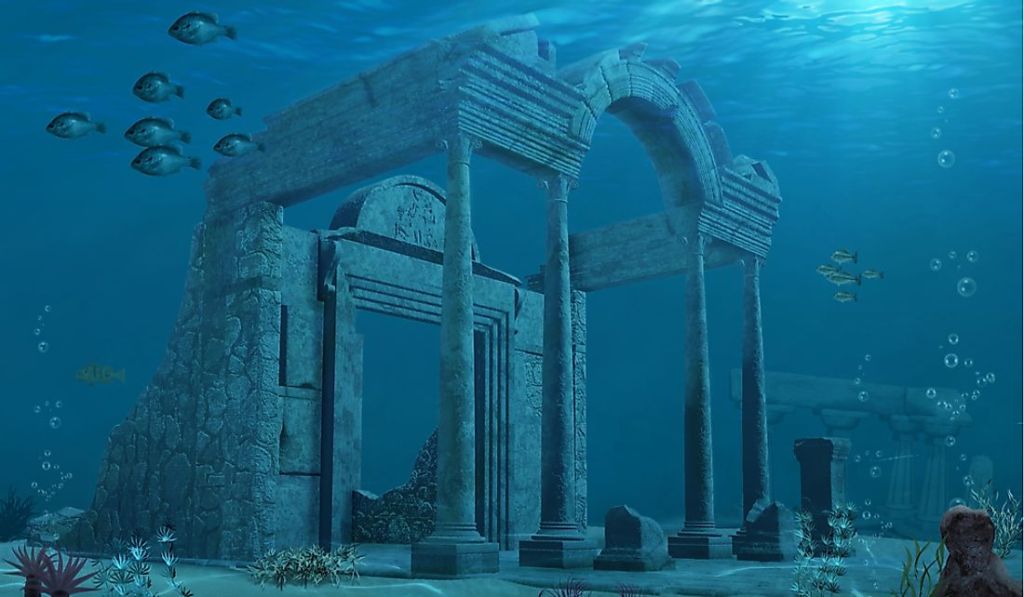
Greek philosopher Plato talked about a land named Atlantis which supposedly was situated in Atlantic Ocean. It was even stated to be larger than Asia. In the texts it is stated that the Athenians attacked Atlantis causing it to sink deep in the ocean. Most scholar believe that this was a myth invented by Plato but some speculate that it could be inspired by the events of the Greek history. One such event talks of Minoan civilization which was on an island in Mediterranean and was destroyed during the eruption of a volcano. It seems that this particular city will remain a myth as nothing has been found about it. This doesn’t deter the people from drawing their own theories and conspiracies about it.

Where is the Ark of Covenant?

After the attack of Babylonian army on Jerusalem, first temple; building used by Jews to worship God was destroyed. Ark of Covenant with tablets recording ten commandments was kept here and disappeared. Some say that it was taken by Babylon, others think it was hidden before the city was captured. Many stories came out after it. Some saying that it found its way to Ethiopia, while some even think that divine powers hid it and it will only be revealed at the arrival of messiah however this question is unlikely to be answered anytime soon.

The Girl on the Train – A bewildering tale


                                                                       (Photo: Twitter)

The Girl on the train is the story of Rachel Watson’s life, post-divorce. She is an alcoholic who rides on a train aimlessly. On her way, she travels past an old house where she and her then-husband, Tom used to live. However, there is one house that she waits to see each day. She watches Megan in her seemingly perfect relationship with her husband. Then one day Rachel sees Megan cheating on her husband. So, she decides to communicate with her. However, she has a blackout and is awaken with bruises in her apartment. Soon she learns that Megan is missing and detective Rilly interrogates her since she was seen wandering in the area.

The language used in this book is simple, understandable, and subtle which makes the readers get interested in reading the book. The themes of the novel are that of gaslighting, manipulation through questioning or validating a person’s sanity as the three women are abused by the men in their lives. It also deals with a very strong theme that some things are not always what they seem to be. In some respect, the novel is a connectional mystery.

Rachel Watson is the titular girl on the train and novel’s protagonist. She is complicated and an invaluable character. She is a divorced and deeply depressed person because of her impotence and failed marriage. Megan Hipwell is a young, sensitive woman with a dark past. Megan is not at all the model wife that Rachel imagines her to be. Megan begins dwelling into the depth of her trauma of losing her baby. Anna Watson is threatened by Tom’s ex-wife for calling and texting Tom all the time. She fails to see the unearthed trauma and pain in Rachel’s odd behavior and views her as a loser. Tom Watson disguises himself as a loving husband but in reality, he is a liar, cheater, murderer, and antagonist of the novel.

The Girl on the Train is a 2015 psychological thriller novel by Paula Hawkins. The novel debuted in the number one spot on The New York Times Fiction Best Sellers of 2015 list dated 1 February 2015, and remained in the top position for 13 consecutive weeks. In January 2016, it became the number 1 best seller again for two weeks. The book has also sold 15 million copies around the world. The readers of this book loved it warm-heartedly. The author did a really great job with the three character’s voices. It deals with powerful themes all the while weaving the story into a heart wrenching tale of obsession and madness. One cannot help but get reeled into the chaos of it all, questioning oneself at times of who is what, and whether everything is as it is.

There is no need of any suggestions for this novel as it is one of its kind. The writing is quite masterful as the writer gives away only enough with each chapter. Hence, this novel is perfectly paced.

Why you should watch/read MONSTER?

MONSTER is the magnum opus of mangaka Naoki Urasawa and a Cold War psychological thriller – it is a seinen manga manga also adapted into an anime following the whole story exactly. It follows a Japanese neurosurgeon, Dr. Kenzo Tenma, who has residence in Germany to work at Eisler Memorial. Engaged to his boss’ daughter and with optimistic prospects in his medical career, Tenma’s values soon hijacks any stable life as a darkly dramatic irony – he was only trying to do the right decision(s) morally: a tragic statement that ‘right’ doesn’t entail the best results. His life is sidetracked into revolutionary conspiracies from the Soviet bloc, violent machinations of a criminal underworld and a boy, Johan, who’s a nihilistic catalyst of chaos; all these intense affairs are to the backdrop of relatively ordinary existence as a shocking duality showcasing the thin veil between horror and normalcy as is also applicable to our own nature. Stylishly European in every day as an atmospheric overture, with the location rife for intrigue as close to the Iron Curtain, MONSTER is an incisive examination of human nature – the cause of ‘evil’, why and who is truly responsible; the whole work, too, acts as a character study in conscientiously designed personalities who’re palpable as representations to the human condition.

A difficult choice

Dr. Kenzo Tenma sacrifices his career to save Johan as a child in a dilemma of choosing a patient for his expertise – the town’s mayor or an innocent boy shot in the head – and although demanded to save the mayor for financial reasons, he opts for Johan as he arrived first in the staunch belief ‘all lives are equal’. These philosophical and moral systems are the root of MONSTER – how these inform and challenge one’s life choices to the darkness we may encounter as aberrant of all we thought as usual; beliefs are easier in a vacuum of a solitary life or with a confirmation bias. Tenma’s choice would have unforeseen, destructive ramifications for which he takes responsibility, too, for which no attitude could prepare him – he had saved a boy who would evolve into a ruthless, charismatic leader of mass destruction. If he knew of the outcome, would he still have performed his duty as a doctor and thought of Johan as ‘equal’ – this is the central concept that tests Tenma’s view on the worth of lives, his right, too, to intervene and act. As he’s demoted for his failure with the mayor, and his lover leaves him as no longer financially secure, the senior staff at the hospital responsible for his punishment all coincidentally die in a poisoning while the boy, Johan, disappears.

The investigation leads to nowhere and Tenma is restored in his role, he subsequently becomes the Chief of Surgery at the hospital nine years later. Destiny would have him reencounter Johan who’s an adult, however, who callously executes a patient as a clear reality the boy he rescued was indeed evil. This refocuses the old investigation onto Dr. Kenzo Tenma who benefited the most – a detective, Inspector Lunge, of a federal agency is convinced Tenma is behind all these crimes, ‘Johan’ a mere persona of his. Escaping from his normal life as the police seek to frame him, and determined to resolve his responsibility of ‘Johan’, Tenma embarks on a tenacious journey as a fugitive.

Excellent Characters

Supported with a vast cast, who are each developed in an immaculate fashion, and each embroiled into extensive subplots concerning these, MONSTER is a ‘coup de maître’ as a psychologically intimate drama with an array of emotions from these characters as an expository fiction of humanity – powerful from the complex dilemmas and philosophical challenges we see engage them throughout the voluminous narrative. Deliberately meticulous in characterization, contemplative in tone and purposeful in each plot point, MONSTER is a crafted tale sure to resonate with audiences for a long time at a fundamental level – it indulges in themes perpetually inherent to society, no matter the current state. Patience is rewarded in appreciation of the story as an emotive tale crafted into an intricate character study.

Themes

The plot structure is a slow-burn of side plots and miscellaneous errands to establish a vibrant world consisting of of various personalities, agendas and their interactions: no man is the same – each one has their own history – and valid perspective along with sympathetic emotions. The characters and situations are also not limited to the overpowering arc of a showdown between Johan and Tenma – people have their own multifaceted lives to not merely be props for the plot. As a result, Naoki Urasawa’s depicted world is tangibly immersive, both in the depth and also sober art, which explores darkness in a manner that’s not crudely exploitative, it is innocently inquisitive: a treatise of our morals in conflict to the worst of humans.

MONSTER accomplishes itself as a darkly philosophical work on society, people and their beliefs – it is the finest psychological horror, mystery drama and crime thriller in the history of manga as a comprehensive feat; it is a multi-layered narrative – little contrived or for some cheap ulterior purpose – with equally compelling characters. The setting of Eastern Europe in the throes of the oppressive Iron Curtain is unique an aesthetic that feels authentic – a dangerous regime where the authorities are unreliable and a sense of overbearing danger throughout from leadership which does not truly care for the people. I would rank MONSTER on level with Fyodor Dostoevsky’s ‘Crime and Punishment’ as a testament to the quality and feel only the medium, manga/anime, besets a prejudice on qualifying MONSTER to the canals of worthy artistic heritage.

Tardigrades

The tardigrade, better known as a water bear or moss piglet, is the real star in the race of survival. This eight-legged, water-dwelling animal, which is a closer relative to nematodes (roundworms) than they are to their look-alikes, the arthropods (insects, myriapods, arachnids and crustaceans), has gone unseen for a significant part of our existence. Astonishingly, there are over 1200 different species of tardigrades, and it is believed that less than 10% of the species have been identified.

How big are tardigrades?

The biggest adults reach a body length of only around 1.5 mm, while the smallest is less than 0.1 mm. Newly hatched tardigrades may be even smaller than 0.05 mm. You would need microscopic vision to see these impeccable wonders of nature. Tardigrades are nearly translucent and they average about half a millimeter (500 micrometers) in length, about the size of the period at the end of this sentence. In the right light you can actually see them with the naked eye. But researchers who work with tardigrades see them as they appear through a dissecting microscope of 20- to 30-power magnification—as charismatic miniature animals.

What do tardigrades eat?

They feed on the fluids of plant and animal cells, piercing their cell walls and membranes, with the help of primitive piercing mouthparts, called stylets. Some species of water bears are known to engulf entire live organisms, such as rotifers. Tardigrades even eat other tardigrades! Yes, cannibalism is very much alive and well among certain species of tardigrades. When they have enough food and water to support their bodily functions, they live out the natural course of their lives. They are probably the most paradoxical animals on this planet. These organisms are impossibly cute, like tiny blimps bumbling around harmlessly on their stubby little legs, but they also enjoy a legendary reputation as the toughest and most indestructible creatures on Earth.

Tiny but Robust

Tardigrades are biologically immune to apocalyptic events like Gamma Ray Bursts (left) or meteor showers (right).

Tardigrades have been reported to survive the piping hot sulphur springs amidst volcanic mountains; they have survived atop the Himalayas, beneath layers and layers of thick ice, remaining unscathed by the immense pressures and exceedingly low temperatures. Tardigrades are fully capable of surviving complete global mass extinctions caused by astrophysical events, such as gamma-ray bursts and giant meteorite impacts.

Tardigrades and Ant-Man

Ant-Man and the Wasp(2018)

Pop culture seems to love tardigrades. And with good reason! Tardigrades have been a part of several sci-fi movies, shows, and documentaries. Science fiction loves good space monsters that are biologically dominant to their heroic counterparts. Tardigrades are no stranger to this culture; they have been featured in various movies like Star Trek: Discovery, Ant-Man, and Harbinger Down. However, was it just their terrifying and gruesome appearance that inspired the filmmakers to caste these critters, or were they well aware of their dominant stature amongst other mortal creatures? Either way, they weren’t wrong!

Tardigrades in Space

In 2007, a group of researchers pushed the resilience of these extraordinary animals to the extreme, in conditions that would be impossible for any other known living creature to survive. A sample of dehydrated tardigrades was exposed to outer space for ten whole days. The vacuum of space, which results in severe dehydration and cosmic radiation, was not a problem for water bears. When those same specimens were returned to earth and rehydrated, 68% of those shielded from the radiation survived; even a handful of those without radiation protection not only came back to life but also produced viable offspring

Cryptobiosis

The adaptation that allows tardigrades to live through such barbarous conditions is their ability to enter a dehydrated state, one that closely resembles death, and this is what makes all the difference. When encountered with environmental stresses, a tardigrade will moult its skin, and inside the shed skin, it curls up into a dry, lifeless ball called a tun. This reduces its metabolic activity immensely, to around 0.01% of its normal levels, but still protects their DNA. To do this, their body produces trehalose, a natural protective sugar that forms a gel-like medium that suspends and preserves the cell organelles and membranes. In the tun, a tardigrade can survive for decades or more. Once immersed in water, their bodies return to a normal metabolic state over the course of a few hours. In one such incident, a group of dehydrated tardigrades was reportedly taken from a museum sample of 100-year-old dried moss and was brought back to life by simple rehydration. That being said, the longer a tardigrade persists in a dehydrated state, the lower are its chances of being successfully revived.

Conclusion

Whether it is the scorching heat of thermal vents, the icy cold of subglacial lakes, or even the vacuum of space, these hard little critters will survive it all. Boil them, mash them, stick ’em in a stew… they are versatile and probably the most durable creatures on the planet. Having survived five great mass extinctions over a period of half a billion years, they might be the strangest combination of cute and terrifying that anyone has ever experienced while looking through a microscope. Extreme conditions that terrify us and would most certainly kill almost any life form, barely even faze them. These tiny tots have expanded the notion of habitable environments, and understanding their indestructibility will have profound implications for both earthbound medicines and survival on other worlds.


John Titor : Time Traveler

Who is John Titor?

John Titor described how he was an American historian with a specialism in the 20th century. His academic funding had been provided by the army, whilst he was as an enlisted soldier.

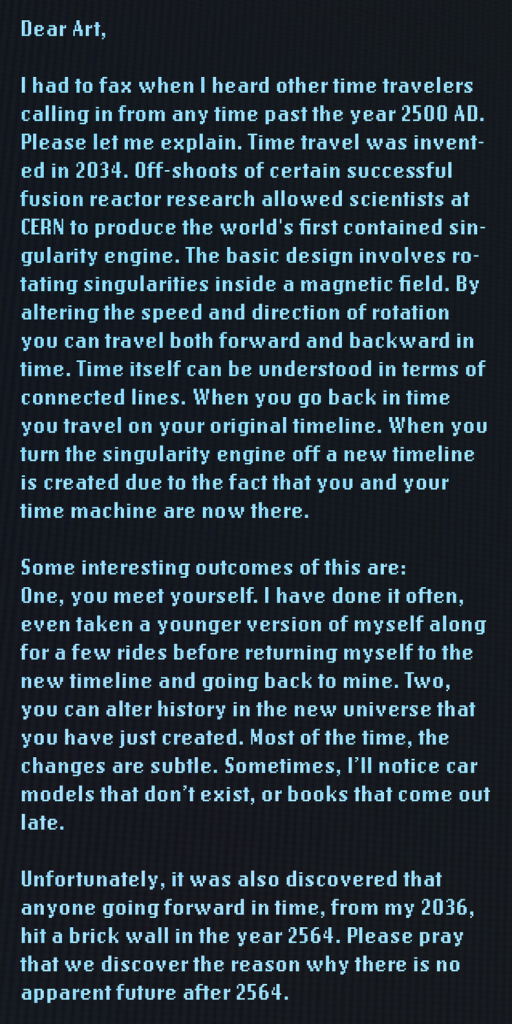
By the year 2036, he claimed, time travel had been developed by the government and had been used for several years by the time of his expedition. Titor said that he had been chosen to be sent to the year 1975, with the mission of retrieving an IBM 5100, a portable computer, which contained an outdated piece of coding that was needed in the future. The army had chosen Titor because of his historical knowledge, and because his grandfather had been one of the people who had worked on the very computer needed.

Why Did He Travel Back In Time?

According to Titor, he was sent back in time to pick up an IBM 5100, which his grandfather had helped design. Supposedly, he needed this model – one of the first portable personal computers – to correct predicted issues with Unix in his timeline. After acquiring the computer, he stopped in the year 2000 for “personal reasons” – and to warn people about the threat of Creutzfeldt-Jakob disease (which would be spread through beef products).

How Does The IBM 5100 Play Into This?

One of the oddest parts about the John Titor story is the part played by the IBM 5100. Why would someone from the future need such an old computer? In 1975, IBM released the 5100 as one of the world’s first personal computers, and it came with one feature that set it apart from other computers of the time: It could debug and emulate code written in other programming languages, such as BASIC and APL.

According to Titor, this feature would allow people of the future to keep their technological architecture running after a Unix timeout error in 2038. He said he wanted to snag a 5100 and help debug the code that would keep the world’s computers from having a meltdown.

The future according to John Titor

As well as describing his personal history, John Titor also revealed information about a future marred by warfare. A common theme in all of his posts is the detail he provides in describing alleged future events.

Titor Warns Of World War III

In his short time on the Internet, Titor made a series of interesting predictions that have seen mixed accuracy. One of his early messages warned of a Y2K disaster that would leave the US in a state of martial law.

His most dire warning was of a second American civil war that would begin in 2004. That turned out to be untrue, but his claim about the occurrence of a “Waco type event every month” – referring to the 1993 siege in Waco, TX – was not entirely inaccurate if you add up worldwide incidents of violence. He went on to say that by 2008, the world as we knew it will have disappeared, and that the US would split into multiple sovereign nations. He also predicted a short but intense World War III.

The invention of time travel

With peace reinstated, time travel was invented by the year 2034. However, Titor pointed out that – in his future – it has not yet been made available for public use.

Although it is reserved solely for official purposes, the general public are aware of its existence. In his forum posts, Titor is happy to discuss time travel at length, including its moral implications which he said are discussed in his own time. Titor claimed that the state, for example, had considered using time travel as a sort of punishment. 11

Is John Titor a Hoax?

The tenacity with which John Titor stated that he does not expect, or want to be, believed is an element of this story which – perhaps ironically – serves only to increase people’s general willingness to believe him. Unless, that was his intention all along. If an elaborate hoax, it stands to reason why someone would state this as an act of reverse psychology: a lack of motive makes the persona of John Titor inherently more enigmatic, and more importantly, more believable.

The debate surrounding the reality of John Titor is not an easy one to unpick. Both sides make genuine and sympathetic points. On the one hand, it all seems rather fantastical, and, as we already live in this future, redundant. Yet, the 2.5% divergency effect neatly explains away any inconsistencies, thus redeeming the argument.

4 Mysterious places that one must visit!


Have you ever been curious
regarding something mysterious or extraordinary? Do you like to wander into the
woods, or a place which has its own unexplainable aura? Have you ever wanted to
explore the place where you could actually experience Sherlock Holmes in real
life?


If yes, then here are the most 4 interesting and
mysterious places that you would love to visit which could quench your thirst
for curiosity, adventure and can awaken your inner detective as well!


1. Chamoli: The lake of skeletons

Roopkund Lake is located in Uttarakhand. This lake
represents tragedy , melancholy and despair. About 300-600 skeletons can be
seen beneath this frozen lake  every year when the ice melts. According to
, the radiocarbon tests and forensics results state that the corpses date back
to 15th century!

The residents believe that the corpses might be of the
king and queen of Kanauj, who were on their way to pilgrimage but they died in
this lake because of the heavy hailstorm.


2.  ” No Door village”: Houses of
Shani Shingnapur

Shani Shignapur is a small village in Maharashtra
located 35 km away from Ahmednagar. In this place, no building, houses, schools
and shops have doors! The mysterious fact about this village is that in spite
of doors not being there, no single crime or theft has occurred or committed!


People residing in the village believe Lord Shani from
the core of their heart and they also believe that it is due to his blessings
that there is zero crime rate in the village!


 3. ” Cursed Rock” at Shivapur

The Hazrat Qamar
Shrine is listed among the extraordinary places in India as well. It is
famous for its special rock that weighs 70 kg and can only be carried via
single method. 

Eleven people are
required to gather around the rock and they have to chant the name of the saint
loudly who cursed the rock and then the rock rises up in the air magically. The
rock could not be lifted by any other methods no matter how effective those methods
were!  


4. 
Malappuram Mystery!

Malappuram
village is known for its large number of twin births . As soon as one
enters in to the village, one can see twins or triplets everywhere! According to Travel Triangle, The
village is currently home to over 200 pair of twins and two
sets of triplets!
  Moreover, the women who marry a person outside the
village bear twins or triplets too!

According to
doctors, the possible reason behind this mysterious situation might be due to
the chemicals present in the water in that village. The village is also known
as Kodinhi.


Crop Circles

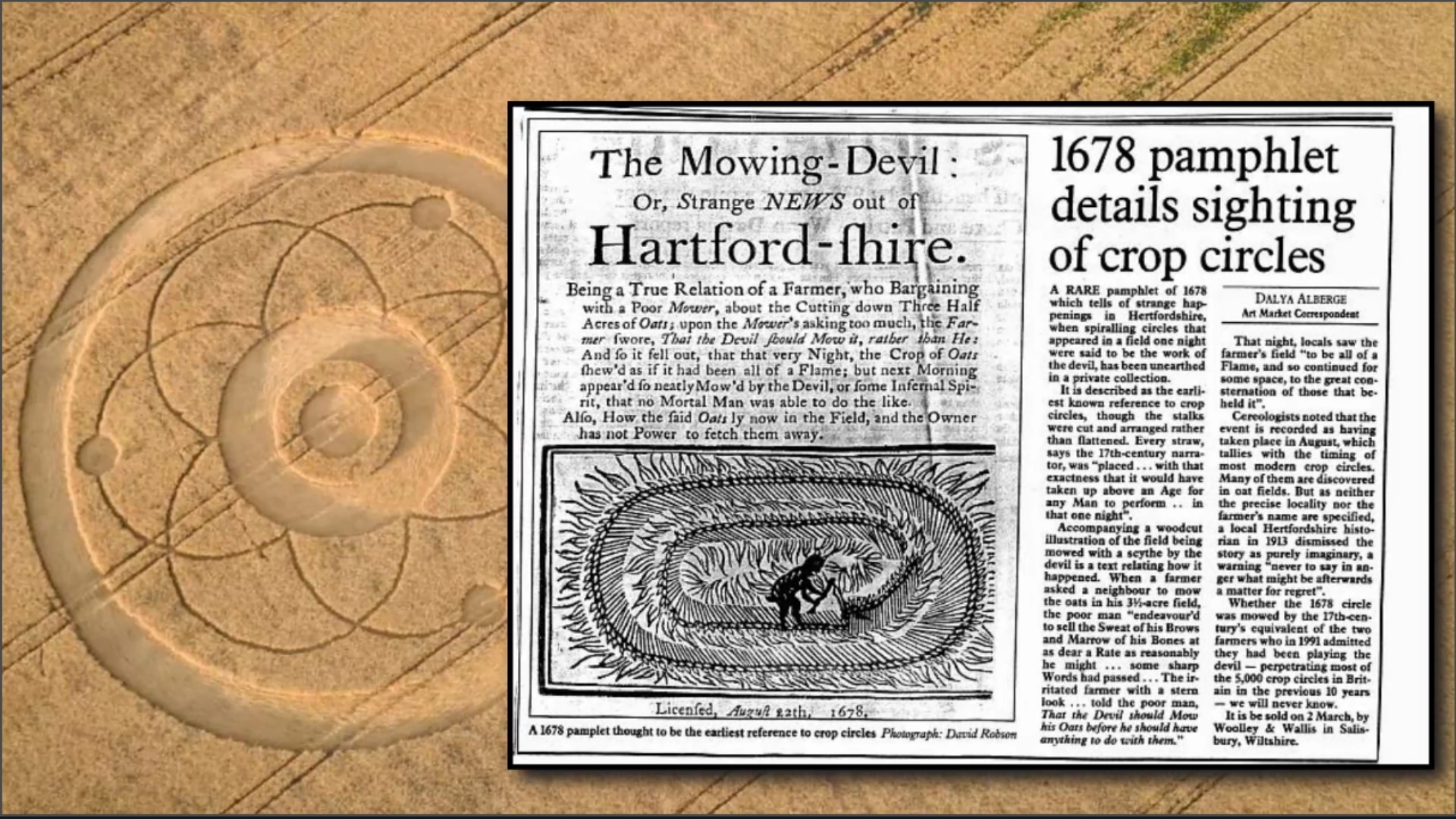
Crop circles are the strange patterns that appear mysteriously overnight in farmers’ fields—provoke puzzlement, delight and intrigue among the press and public alike. The circles are mostly found in the United Kingdom, but have spread to dozens of countries around the world in past decades. The mystery has inspired countless books, blogs, fan groups, researchers and even Hollywood films. Crop circles and their mysterious origins have spawned years of debate and speculation about whether or not they are formed by aliens. Some people believe that crop circles are used as a message from a foreign species. That perhaps they represent some sort of alien language. Others believe that they are a hoax by people who wish to scare or stun the people who view them. But whatever the reason people believe what they do, crop circles have a long and vibrant history that has many legends swirling around it.

The first appearance of a crop circle was in England 1678. The “Mowing Devil” was the first reported incident of a crop circle, and the farmer who found the circle said that there was a devilish entity that visited his farm. That goes against the usual descriptions of crop circles because they are typically described as being patted down into the shape and not cut. Since then, many crop circles have popped up in the countryside of the United Kingdom, but throughout the years, crop circles have begun to appear in other countries. In 1966 in Australia, a farmer said that he saw a flying saucer leave a swampy area, and when he investigated the area he found a circular pattern lain into the reeds and swamp grass. The crops in his field were trampled or cut down in the shape of a circle. The circle was recorded on a wood engraving.

Man-made crop circle

The theories on the origins of crop circles are wide and varied. One explanation in the 1980s said that they are formed from overactive hedgehogs. Another theory says that specific wind patterns to an area could cause the crop to lie down. One theory includes earth’s energy fields and meridians. The force of the energy on the land would cause the crop to fall. But many people who believe in an extraterrestrial origin think that aliens use their enhanced technology to send energy down from outer space to create patterns in the crop. Others still believe that spaceships are the cause for the varying patterns in the ground.

Benjamin Radford, a contributor for LiveScience, said that  one case from the United Kingdom in 1991 had two men come forward and admit to creating hundreds of crop circles, which leads people to believe that mostly the circles’ origins are very human. They were inspired by the case in Australia, so they tried to blame the circles on UFOs. Many of the examples of crop circles being linked to UFOs gets confused about whether it’s really about the UFO or the crop circle. Like with the case in Australia, the legend becomes more about the sighting of a UFO or an alien spaceship than it is about the actual crop circle. It’s an interesting debate that is waged between believers in science and believers in the supernatural. Many people, like the man in Australia who allegedly saw a UFO by a crop circle, claim that they can see unusual light sources or flying objects near the place they find a circle. Others, and the vast majority of people who investigate crop circles, believe that it is pure science and trickery that form these circles.

At any rate, with the technology and advancements that we have in this day and age, it doesn’t seem so unlikely that a human could make such a sophisticated design in crops. Taylor notes that crop circle artists aren’t going to give up their secrets any time soon, either. Whether the creation is supernatural or not, the mystery behind the creation of the circles is still key to holding people’s interest in the designs.  The human race has advanced by leaps and bounds in the last century and certainly has the capacity to develop technologies beyond our wildest dreams that could be the source of crop circles.

Mariana Trench

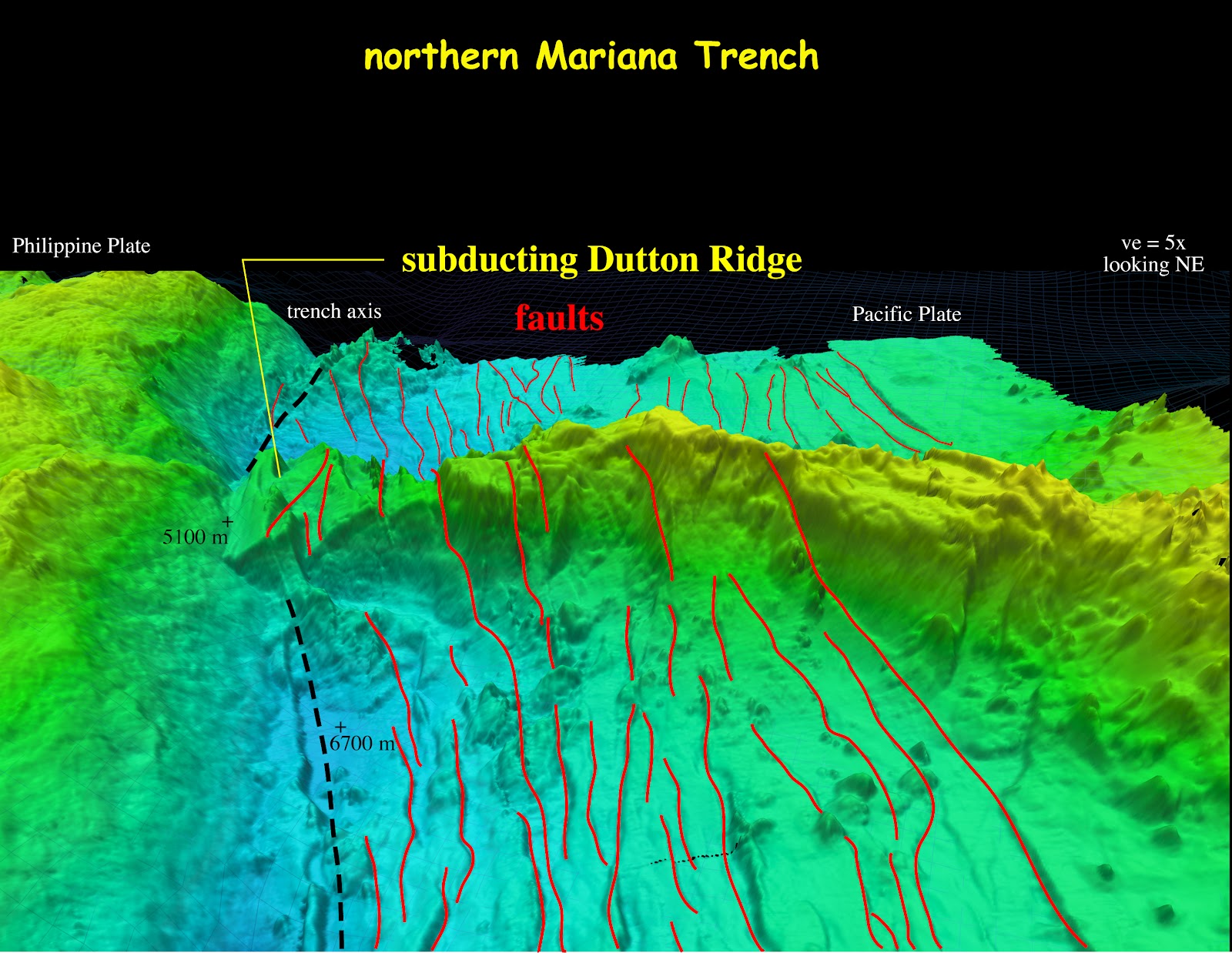
The Mariana Trench is a crescent-shaped trench located in the western Pacific, just east of the Mariana Islands near Guam. The region surrounding the trench is very remarkable and is the cradle for many unique environments. The Mariana Trench contains the deepest points on Earth, bubbling vents of liquid sulfur and carbon dioxide, active mud volcanoes, and marine life adapted to pressures a thousand times greater than sea level. The Mariana Trench is the deepest place you can find in the ocean. Its depth is difficult to measure from the surface, but modern estimates vary by less than 1,000 feet.

Discovery

In 1860, Charles Wyville Thomson, wanted to make a boat trip to conduct oceanographic studies. On December 21, 1872, he sailed on the HMS Challenger, a modified warship for the voyage carrying everything from fishing gear to microscopes. The main objective was to travel the oceans to measure depth, temperature and salinity. On March 23, 1875, while the team was conducting studies near the Mariana Islands, the sea literally swallowed 8 kilometers of a measuring line they were carrying. It was at that moment that the researchers had managed to discover the abyss. In the nineteenth century, it was discovered that there was a place where no one had yet arrived, the deepest place that existed in the ocean, known as the black hole or the Mariana Trench. In 2012, the first expedition was made by James Cameron, who was the first person in charge of continuing studies on the grave.

Characteristics

The main characteristics of the Mariana Trench are as follows:

  • It is considered to be the deepest area in the oceans.
  • It is located in the Pacific Ocean, east of the Mariana Islands.
  • They coincide with a subduction zone, a place where two tectonic plates collide.
  • It is approximately 2,550 kilometers long and 69 kilometers wide.
  • The deepest part of the pit is known as the Challenger Abyss.
  • They have an amount of water equivalent to 1000 times more than the earth has.
  • It lacks illumination.

Location

The Mariana Trench is located in the Pacific Ocean, east of the well-known Mariana Islands. It lies at the bottom of the Pacific Ocean, on the north western side, east and south of the islands. It has 11° 21´ north latitude and 142° 12´de east longitude, near Guam, a place located between the coast of Indonesia and China.

Fauna & Fauna

Image taken by James Cameron’s Odyssey

In 2016, the U.S. National Oceanic and Atmospheric Administration carried out an expedition with the aim of trying to gather information on the area. Some of the creatures they found are:

  • Bellota worms: it is a mollusk with a snail shell. It is considered as a new species, although there is no idea about its geology, habitat or origin.
  • Elf Shark: Its color is pink, and its consistency is very viscous. They are capable of growing several meters.
  • Dumbo Octopus: The most eye-catching thing are their jumped eyes and their furrowed mouth. It can swallow its prey whole.
  • Dragon Fish: Its teeth are large, and it is a hunter by nature. It has no scales and its skin is slippery, very similar to an eel.
  • Eel Shark: Its body is rounded, and its head flattened, it is very similar to a dinosaur. Apparently it has been living for 80 million years. It has 20 rows of teeth and gills in its body.

Challenger’s Abyss

At 10,994 meters deep, it is considered the deepest point in the ocean. Its name was given in 1872. Only one man has managed to reach 10,898 meters in the submarine Deepsea ChallengerJames Cameron. He described the trench as an environment very much like a lunar desert. The only thing he could see were blind worms that had adapted to the situation. In 2013, scientists discovered that the abyss was full of life. onar beams sent to the ocean floor are updated many times per second, and verified by Global Positioning Satellites. These maps clearly indicate the Mariana Trench as the deepest of its kind, and so far the Challenger Deep is its lowest measured point.

The Curious Case of D.B. Cooper

What Happened?

On the 24th of November, 1971, a nondescript man bought a ticket under the alias Dan Cooper (who later came to be known by his pseudonym, D.B. Cooper) for a Boeing 727 aircraft at Portland, Oregon bound for Seattle, Washington in the USA. Thus began one of the great unsolved mysteries in FBI history which puzzles people to this day.

Cooper was a quiet man who appeared to be in his 40s, wearing a business suit with a black tie and white shirt. He settled down into his seat and ordered a bourbon and soda drink while waiting for the flight to take off. A while later, he handed the flight attendant a note informing her that he had a bomb in his suitcase, and that he wanted her to sit next to him. The flight attendant did as she was told and took the seat next to him. Cooper opened his suitcase, revealing a bunch of wires and red sticks, proving to the flight attendant that his suitcase did in fact comprise of a bomb.

He then communicated his demands to the flight attendant and made her write them down. Cooper had demanded 4 parachutes and $200,000 in $20 bills on arrival at Sea-Tac Airport (Seattle). The flight attendant then notified the captain of the plane, who further communicated this information to the relevant authorities in Seattle. The police and ground forces in Seattle hurriedly assembled the money and parachutes to be delivered to Cooper. Meanwhile, the pilots were flying the aircraft in circles above Seattle Airport, with the fabricated excuse that there was some minor mechanical problem so they could not land safely. In reality, they were simply stalling for time as the money and parachutes were being brought in.

After about 3.5 hours of delay, the flight landed in Seattle and Cooper’s requirements were met immediately. With the money and parachutes delivered, he dismissed the 36 passengers in the aircraft, as well as 2 of the 6 crew members. After this, the aircraft refuelled, and Cooper ordered the pilots to set a new course for Mexico City via Reno and Yuma. Following his orders, the plane took off for the said destination.

While on course, on the first leg of the journey towards Reno, Cooper ordered all the remaining crew members to go and enter the cockpit of the plane. It was at this point of time that Cooper lowered the rear stairs of the airplane and jumped out of it wearing a parachute and carrying his $200,00 in ransom money. He had jumped at 8:00 p.m. straight into an ongoing thunderstorm and was never seen again, and his fate remains a mystery to this day. Although the most probable outcome is that he died, the possibility that he survived could not be ruled out due to lack of evidence of his death.

Furthermore, his real identity also remains an eternal mystery. The only traces Cooper left behind were some cigarette butts, a hair on the headrest of his seat, and his clip-on necktie. However, no DNA samples could be drawn from these items. The case was taken up by the FBI, and their investigation went on for decades and came to be known as the ‘NORJACK’ (Northwest Hijacking) case.

Conclusion to the Case

The only significant lead on this case came in 1980, when an 8-year-old boy wandering the banks of the Columbia River came across a rotting package full of $20 dollar bills amounting to $5,800. The serial numbers on the bills found by the boy matched those on the bills of money given to Cooper during the time of the hijacking, and so the FBI continued their investigations.

However, there were no more significant findings, and the FBI were not able to ascertain the real identity of D.B. Cooper even after following around 800 leads and questioning numerous suspects. Finally, in 2016, the FBI announced that it was giving up their investigations of this case and had decided to dedicate their resources to other cases.

The Bermuda Triangle

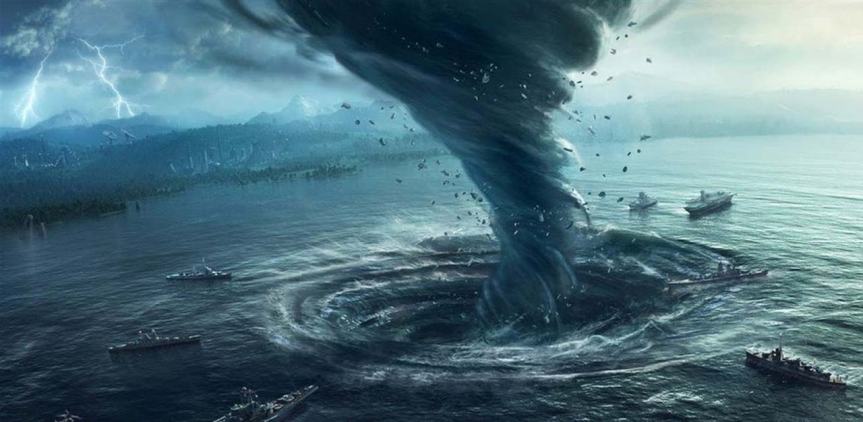
The Bermuda Triangle is a region in the north-western part of the Atlantic Ocean, near the USA. It is also called the ‘Devil’s Triangle’, because of all the disappearances and supernatural activity that is associated with it. Till date, around 50 ships and 20 airplanes have gone missing in the Bermuda triangle, never to be heard of again. Not even the wreckage or debris of any vessel has been found. One such case was in 1945, when a squadron of US Navy bombers became disoriented while flying over the area and thereafter disappeared, never to be found again. Even the rescue plane sent after them disappeared with no trace. No one knows what happens to the vessels, or the people inside them after entering the Bermuda triangle. Oftentimes the boats and planes have vanished without even sending out a distress call or signal, and planes have been known to go off the radar in this region of the ocean.

What are the possible explanations?

Many people like to suggest supernatural or other-worldly causes as possible explanations, like alien abductions or some mythical sea creature. However, it is more likely to have a scientific explanation, with geophysical and environmental factors at play. One such factor is that the agonic line (imaginary line connecting the earth’s north and south magnetic poles) passes through this area, which pilots may fail to account for. This may have caused discrepancies in interpreting the magnetic compass and thereby led to significant navigational error, resulting in catastrophe. Another scientific explanation is that the region often has massive rogue waves passing through it (reaching up to 100 feet) which are enough to carry away and engulf any evidence of a ship or airplane, which is why none has been found. Since multiple storms may converge in the Bermuda triangle, and hurricanes often sweep by in that area, it is possible to form massive waves and winds that destroy, carry away, and leave no sign of any vessels.

Furthermore, the National Oceanic and Atmospheric Administration of America has said that “There is no evidence that mysterious disappearances occur with any greater frequency in the Bermuda Triangle than in any other large, well-travelled area of the ocean,” This means that though there have been mysterious disappearances, a larger number of ships and airplanes have travelled through the region, and continue to do so today, without any incident. So, the few cases in which disappearances did occur might have been due to certain unfortunate circumstances and events.

Conclusion

There is a lot of mystery and fantasy involved when talking about the Bermuda triangle, but this is because human minds are drawn towards things that are bizarre and memorable, and we are more likely to remember things that seem exceptional in nature. In this process, however, we often disregard the ordinary things that offer a more realistic view. We prefer to think about a mysteriously disappearing ship rather than a ship that simply sank in a hurricane. This leads to something known as the ‘frequency illusion’ where once we’re introduced to something, we tend to notice it more often in our lives. This makes us believe that that thing is more common and frequent than it really is. Hence, the world may suffer from a frequency illusion that makes us want to think that the Bermuda triangle keeps swallowing up vessels very often, when in reality it has been a select few cases. In fact, mysterious disappearances happen in every part of the world, and not just the Bermuda triangle. The classic example of this being Malaysia Airlines flight 370.

Regardless, the Bermuda triangle has managed to capture human imagination with the unexplained disappearances in its area, and has also been referenced in may pop-culture pieces of media like the Gulliver’s Travels and Percy Jackson movies. This shows the impact that any strange phenomenon can have on human minds, and its ability to impress us. Today the Bermuda triangle is a safe destination that even tourists can visit to see for themselves, without any risk of disappearing.

Unsolved mysteries of all time

Is there Treasure in the Oak Island?

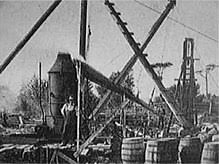
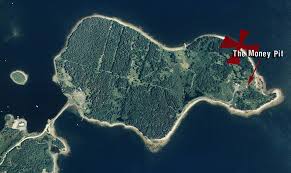
Oak Island located on the south shore of Nova Scotia, Canada has been an attraction for treasure Hunters since the late  1700s. It was rumoured that Captain Kidds treasure has been buried in the Oak Island.With a little evidence found in the early excavation peoples started to publish stories and documents in 1856. The original Searchers spot on the island which attracts the Treasure Hunters called ‘The Money pit’

Money pit

Theories about the artefact that are present on the island range from pirate treasure to  Shakespearean manuscripts, to possibly the Holy Grail or the Ark of the Covenant, with the Grail and the Ark.The items found on the surface have been carbon dated and found to be hundreds of years old. However, no item such as treasure has been found in the excavation. ‘The curse’ said that 7 men will die in the search of the treasure and after their death the treasure will be found.Six men have died till now.

More than 50 books have been written on the hidden treasure but no confirmed treasure has been found still. A television series ‘Curse of the Oak Island ‘ is based on the treasure search .Humans are still in search of the treasure of the oak island.

Disappearance of the Malaysian Flight 370

While flying from Malaysia to China on 8th March 2014 the Malaysian flight 370 carrying 239 passengers and crew members got lost into thin air. A multinational search was carried out which was the largest search in the history of aviation.A lot of conspiracy theories were developed .Nothing of the ship was found except some pieces of aircraft debris.   

the passengers of the flight

   The prime minister of Malaysia said nothing other than the disappearance of the flight over the Indian ocean.Theories includes hijacking,capture by the united nations or the crew suicide ,fire aboard the aircraft, alien abduction, meteor strike or entry into the sea.Almost after 6 years now and expenditures of millions of dollars in search of the flight, the disappearance of the flight and the 239 passengers still remains a mystery unsolved.

Mary Celeste ship

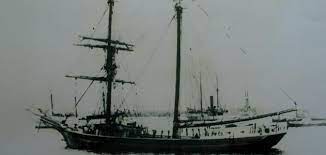
On 4th December 1872 the ship Mary Celeste was found deserted in the Atlantic ocean with no human onboard and a lifeboat missing. The ship had left New York on 7th November 1872 and when found was in proper sail worthy condition with everything intact.The belonging of the crew members was also undisturbed. None of the people who were on board were ever seen or heard again.  The ship was captained by Benjamin briggs who went on board with his wife and a 2 year old daughter. Brigges chose his crew with great care. The last log written on the ship was 10 day before the ship was found by a Canadian brigantine Dei Gratia .

mary celeste

        Mary Celeste was built in Spencer’s  Island  and launched under British administration as Amazon in 1861. She was transferred to American ownership and registration in 1868, when she acquired her new name. Thereafter she sailed eventually, until her 1872 voyage. At the hearings in Gibraltar following her recovery, the court’s officers considered various possibilities of foul play, including fraud  by Mary Celeste’s crew, piracy by the Dei Gratia crew or others, and conspiracy to carry out insurance or  fraud. However ,no convincing evidence supporting  these theories were found.

            Hypotheses  include the effects on the crew of alcohol fumes rising from the cargo,submarineearthquake,watersports,  attack by a giant squid or sea monsters, and paranormal intervention. A lot of false story about the ship were rumoured and films,  plays and novels were written about the ship .After the hearing the ship was taken back to work under her new owner until 1885 when it was taken off coast.The mystery about the  missing crew members and the ship being deserted is still unexplained.

BY ISHITA PILLAY