Have you ever seen woodpeckers striking trees with its long beaks? Woodpeckers hit the trees 20 times per second. Yet they don’t get a headache or any other head injury. The reason for thus is that woodpeckers are born with a helmet for the brain, which is formed of strong, thick muscles and sponge like bones in their skull. A woodpecker’s body too is specially designed to absorb the impact of the hit.
A millisecond before a woodpecker’s bill strikes on a tree dense muscles in the neck contract. Some of the force radiates down the neck muscles and protect the skull from a huge impact. A compressible bone in the skull offers a cushion effect too.
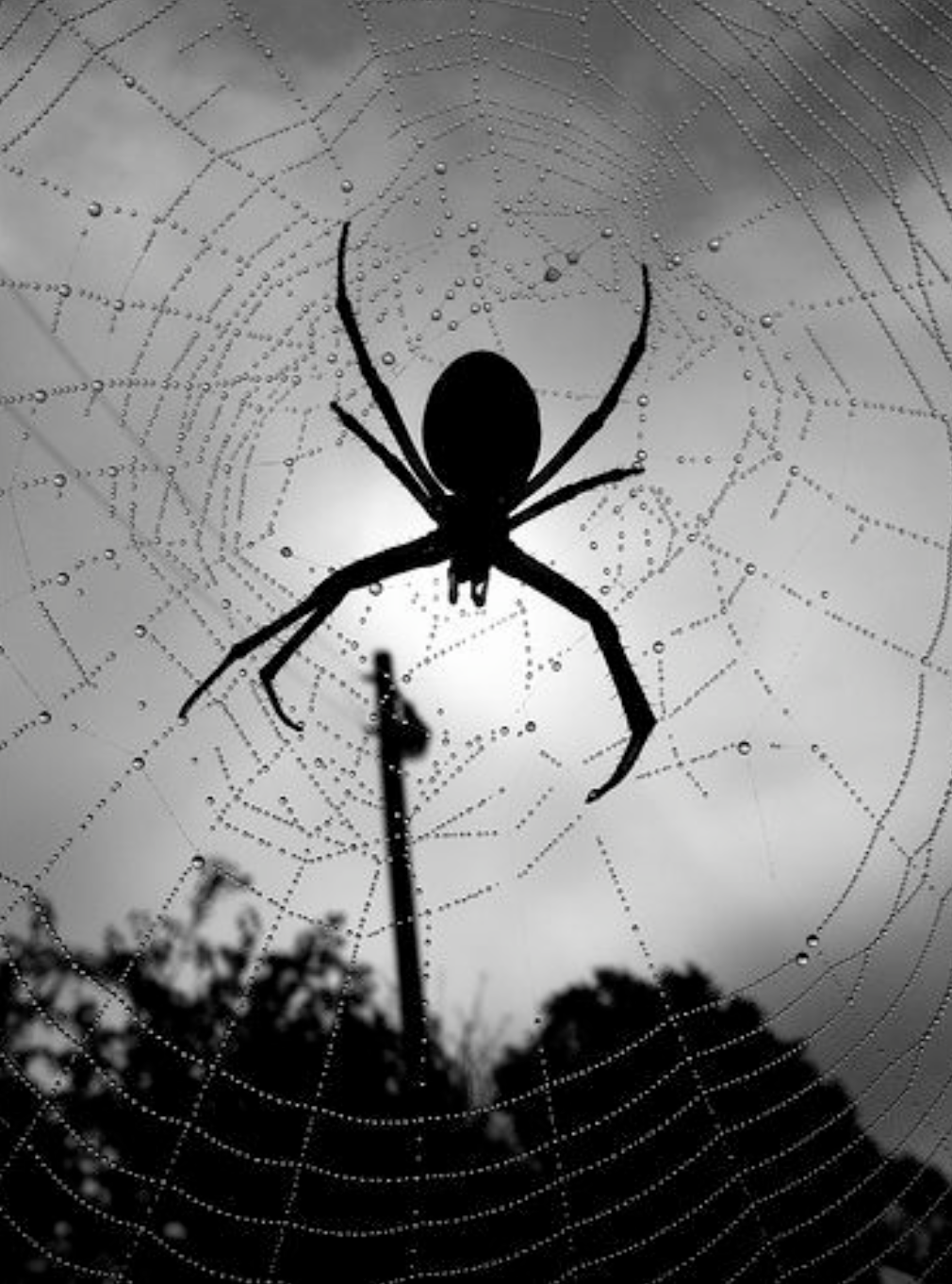
• Why aren’t spiders caught in their own webs?
Spiders spin their webs in a circular pattern that is spotted with sticky glue. When an insect brushes against these drops – each thread can carry several dozen per millimetre – it gets stuck and the spider rushes over to inject it with venom or cocoon it in silk. The question of course is how does the spider escape its own glue tracks? The answer lies in the fact is that the web is the spider’s home and it knows its way around the glue traps. There are some threads in the web that have no glue on them and the spider is careful to move only on these threads. It is also believed that spiders use an oily coating on their legs to protect themselves from getting stuck in their own webs!
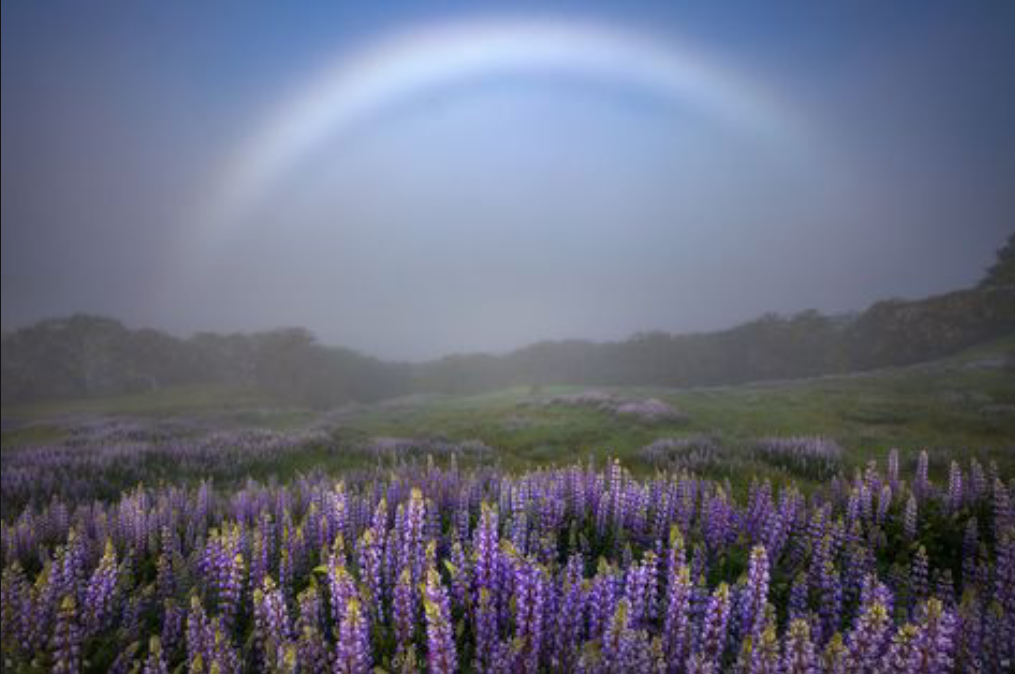
Colourlessrainbow
There are some rainbows that are colourless. They are called fogbows and are formed when the sun shines through a fog. The drops of water in the fog are too small to split up light into it’s different colours, so the fogbow is white in colour.
• What do we know about left handed animals?
Most people are right handed, though about one in ten among us is left handed. Animals like chimps, hump back whales and even toads favour one hand, paw, claw or fin over the other. Chimpanzees use both hands with ease, but have a preference for the right hand. Toads also prefer their right side to perform differ functions. Polar bears on the other hand, are left handed.
Some species of parrot such as the sulphur- crested cockatoo are entirely left handed, while others, including the king parrot are mainly right handed. The majority of parrots – including the budgie, galah and rainbow lorikeet use both claws comfortably. Female cats are more inclined to be right handed while male cats favour their left paws. The same is true for dogs. Interestingly, dogs wag their tails to the right when relaxed and to the left when agitated!
These Indian villages are more liveable and happier than any other Indian cities, villages and towns. They are model villages of India resulting from individual initiatives and NPO initiatives often using the Indian government schemes.
Piplantri
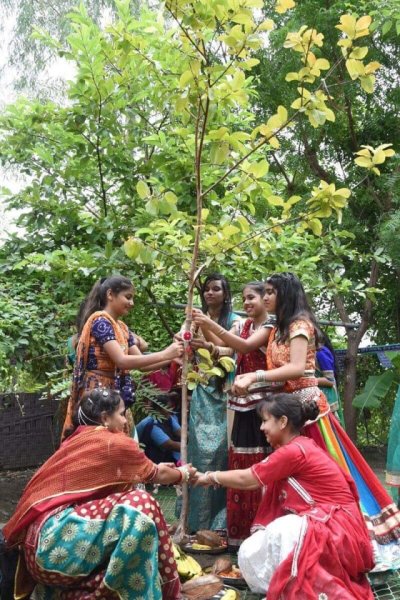
Piplantri village of Rajasthan is a hope for Indian development and prosperity as many families still mourn the birth of a female in the community. Whenever a girl is born in the village, her family and all villagers come together to celebrate this occasion by planting 111 trees. Both are raised with equal respect. To provide financial security, a sum of Rs. 21,000 is contributed by the villagers and Rs. 10,000 is given by the family for every girl and kept as a fixed deposit which can be liquidated once she turns 20. In return, the parents are asked to sign a legal affidavit, which makes it mandatory for them to educate her, and prohibits them to make her marry before the age of 18. This move also tries to demolish the notion of girls being a burden on their parents. To save the plants from termite, villagers plant aloe vera around them. More than 3 million trees and aloe vera plants have been planted till now which is generating livelihood for many families. The trees planted include Neem, Sheesham, Mango, and Amla. This unique initiative was started by former village sarpanch Shyam Sundar Paliwal as ‘The Kiran Nidhi Yojana’ after he lost his daughter named Kiran in 2006. On Raksha Bandhan, girls tie Rakhi to tress. The villagers claim that this tradition has brought immense harmony in the village, and not a single police case has been registered in the last 7-8 years. Several villages nearby have started to adopt similar practice. The village today has eco-friendly gas stoves, toilets, solar lights, anganwaadi, healthcare centres, air-conditioned panchayat hall and modern schools.
Piplantri village picture source: speakzeasy.wordpress.com
Punsari village
Punsari village of Gujarat is regarded as India’s smartest village. It is rurban village. The word ‘rurban’ (rural+urban) refers to an area which has the economic characteristics and lifestyles of an urban area while retaining its essential rural area features. The village has clean and proper roads, schools and education system, 24-hour electricity supply in every household, school bus and public transport system, proper water supply and RO treated drinking water with minimum charges. The classrooms are air-conditioned. There is a good communication system between the panchayat office and the whole village to keep people well-informed and be available for help anytime they need. A public address system which covers the entire population with the help of about 140 loudspeakers installed all over the village. The village has good healthcare services and employment opportunities. It is a model village of India where there is WIFI, all chowk monitoring by CCTV cameras, solar street lights, with literacy rate of 100%. There is a bio metric system for Gram Panchayat Employees. The transformation of this village is achieved by the efforts of the village sarpanch (headman) Himanshu Patel through effective planning and utilization of central and state government funds. Mr Patel leads an 11-member committee which runs the village affairs including five are female members. Mr Patel says the village council has spent 140m rupees ($2.28m; £1.43m) on development schemes between 2006 and 2012. The state chief minister at that time was Narendra Modi, current Prime minister of India who envisioned to stop migration out of the village. It has been a partial success , as 15-20 families have returned to the village from the cities like Mumbai in recent years.
Punsari village documented
Mendha Lekha village
To enter this Maharashtrian village, we have to walk through a bamboo entrance, which points to the rich growth of bamboo in this village. The villagers living here are mostly the Gond tribe of Madhya Pradesh. There is a notice board at the entrance which says “At the centre, there is Delhi government. At the state, there is Mumbai government, but here we are our own government.” This shows the pride the 450 people take in the way they have used an unexpected opportunity that came their way to reap a fortune. Mendha Lekha became the first village in India to secure community forest rights (CFR). The village is famous for the bio-diversity of its deciduous forest and the struggle of its tribal community towards self-rule. Nearly 80% of the village area is forested and under the legally-recognised control of the villagers represented by the village general assembly (gram sabha). This whole land can be inherited and used but cannot be not sold. Mendha Lekha has proved that legal security of their rights to control, use, manage and protect their own resources and lives, through processes of self-powering, can make people end poverty, maintain food and water supply, and protect local biodiversity. And all this takes place much more effectively than capitalism and development programs created by central government.
Mendhe Lekha village and its story
Dharnai village
This village in Bihar has never seen electricity until 2014. The village is now fully solar powered. With the help of Greenpeace, the village installed a solar-powered micro-grid, which provides 24×7 electricity to more than 450 households and 50 commercial establishments. The entire project cost them 3 crores. Earlier, were forced to struggle with kerosene lamps and expensive diesel generators. This changed the lives of the villagers in many socio-economic and personal aspects. It created opportunities for female residents to access the public and personal spaces and move after sunset. Children can now study after sunset. People no longer needed to finish cooking before the sunset.
Dharnai village documented
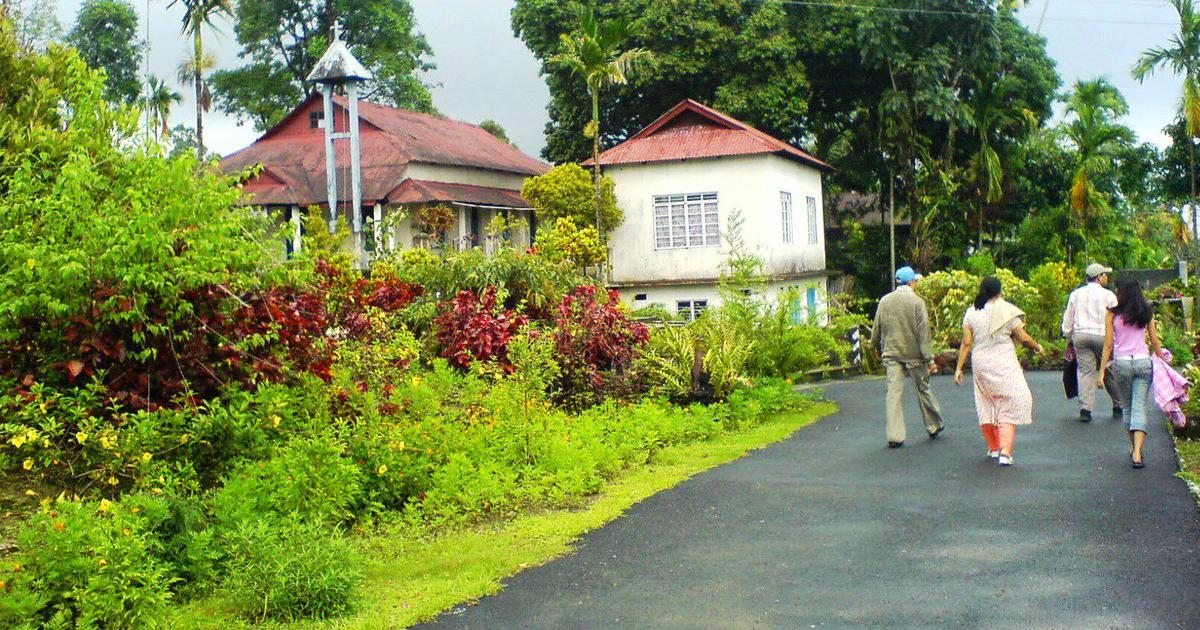
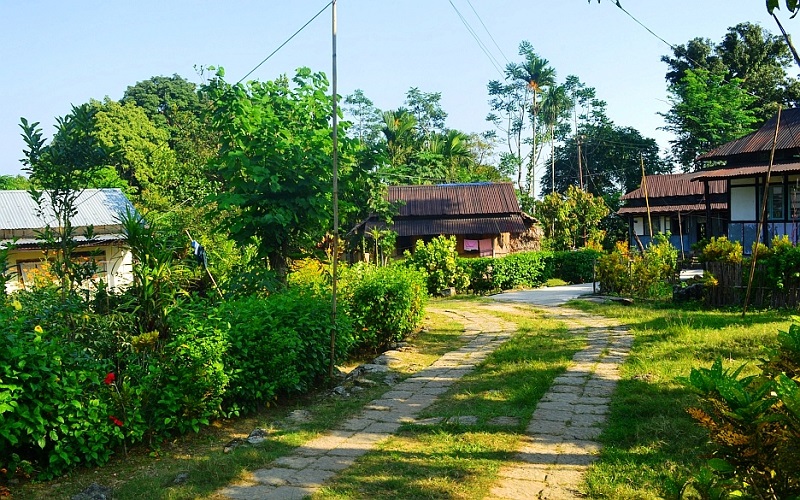
Mawlynnong
This north-eastern village of India is considered as Asia’s cleanest village. Located in Meghalaya, the village has many beautiful and interesting places which include a strange sight of a big rock balancing on another rock. The main occupation of the villagers is agriculture and also offer community based eco-tourism opportunities. A dustbin made from bamboo plant is found throughout the village. All the waste from the dustbins is collected and stored in a pit, which is later used as manure. The villagers plant trees to ensure that the virgin forest is kept intact and also replenished and are currently working towards plastic ban. The village has a literacy rate of 90%.
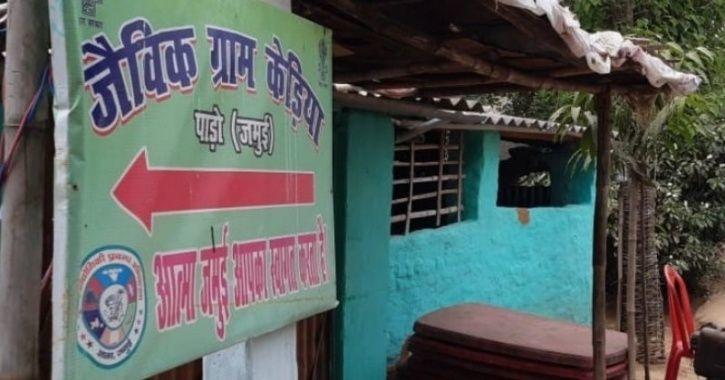
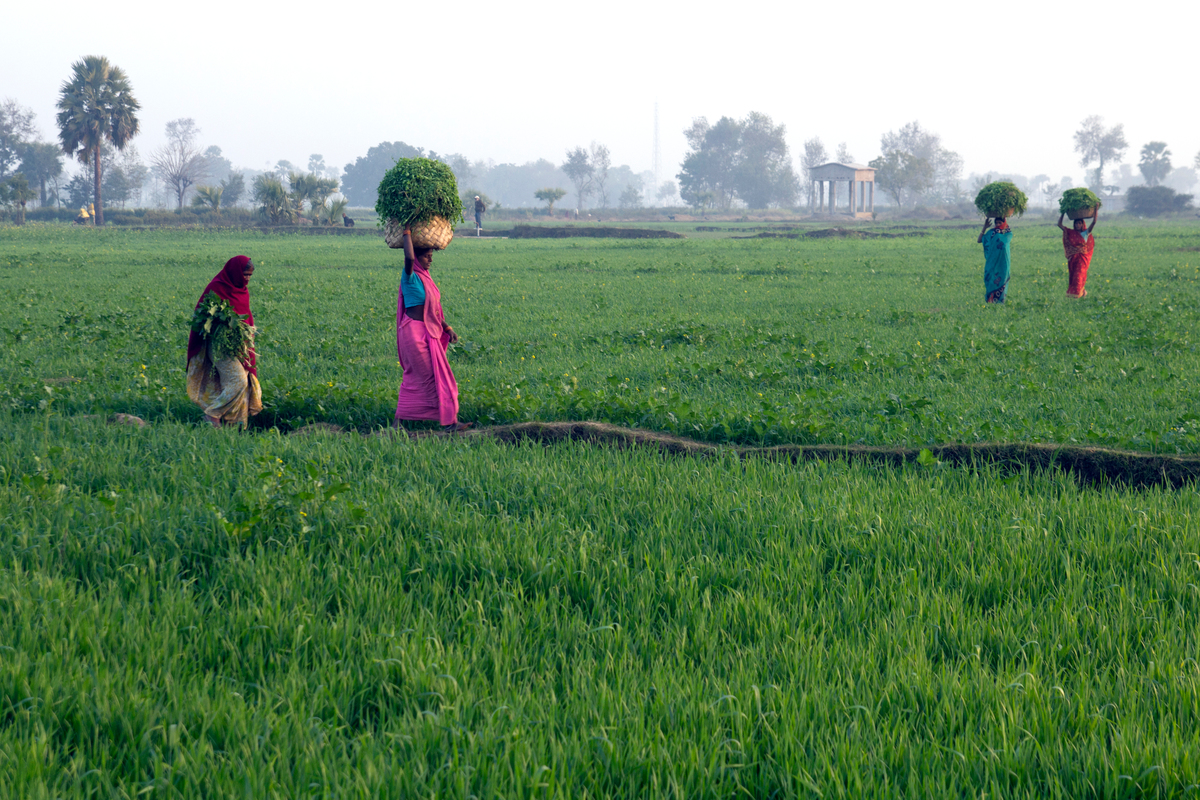
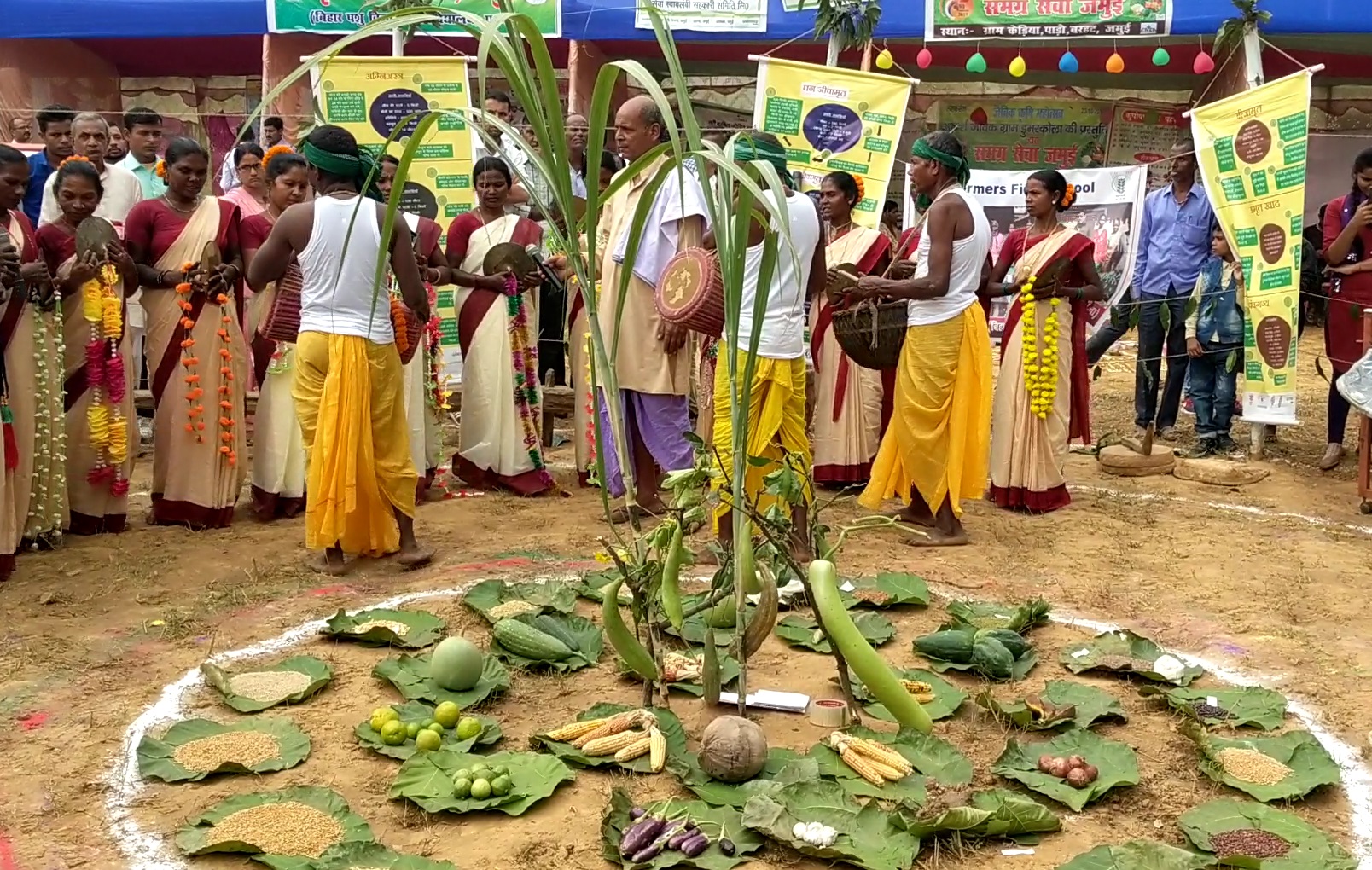
This Bihari village is an ecological village which practices organic farming and have prospered since then. Apart from that, the village has proper water conservation systems and cleanliness is maintained throughout the village. No one in the village is suffering from any kind of serious illness. Every house in the village has electricity supply and uses biogas to save electricity and fuel. All the farmers of Kedia village, followed the ‘Living Soils’ approach under ‘Food for life’ campaign’ run by Greenpeace. This approach is targeted to restore the ruined agricultural practices, by reducing chemical dependency and improve soil health through nourishment of the soil with biomass-based organic practices and materials. By applying scientific methods, existing knowledge and experiences the farmers successfully restored the soil of their village by coordination and collaboration with government for machinery. The villagers till date use only groundwater and lake water for irrigation. The unique toilets of the village households have no underground tanks so that the human waste can be used as a natural manure later on. The results have brought prosperity and happiness to the villagers by ending the dependence on commercial chemical-based materials and enjoying healthier yields with a up to 80% reduce in cost of inputs. The village organizes and celebrates a festival of organic farming called ‘Jashn-e-jaivik’. Greenpeace mentioned that they were able to make organic farming easier and successful in this village “With the help of many governmental schemes like ‘Swachh Bharat Mission’ and ‘Jaivik Krishi Yojana’ besides MNGREGA. Inspired by this, other villages around Kedia have also started adopting similar methods.
Picturesources: 1. India times, 2. Gaon connection and 3. Greenpeace.
“Clean was our environment and so were our surroundings,animals were happy and strong were the bondings. In the race to change our selves, we changed everything around, with scarcity of resources, and humanity deeply drowned”. In todays era, where work culture is mostly preferred, and least preferences are given to people, their feelings,emotions and most importantly to the nature. With increasing pollution and leading scarcity of resources all around, human has destroyed the purest form of living standards and shifted to the artificial ones. Man is using all sorts of natural resources available around him for his own benefits and is harming our health as well as nature indeed. But the Awareness and concern has been seen since last few years and people are getting aware about the bad affects of these and how it’s utilization is harming our health and nature and how few terms like “Global warming” and “Climate change” have come up. Most of the countries are working on this issue and trying best resources to counter the effects of these.
But the main thought which comes into mind is that ” Do we humans really care for our nature and thus saving it’s resources from getting replenish” or there is some more in addition to it, which may include the “Thought of utilizing these resources in future,when the other alternatives are not more effective”. And will this shift towards more cleaner resources or sustainable resources prove to be more effective and efficient.
But the major concern for the same is that do we really care for these non-sustainable resources and want them to be with us forever. Possible thoughts could be : 1. That yes, we do care for the natural and non sustainable resources and we want their presence with us for a longer duration of time so as to maintain a proper balance in our environment. 2. Most of the countries are shifting towards cleaner energy. But if they have a thought of saving these for future reserve, it’s still better, as these will remain with us, till further usage. 3. But the truth is that most people hardly care about these natural and non-sustainable resources and believe in just working as it’s going on without any change, which surely needs to be changed.
But the question still arises is that why should we shift to sustainable energy as a source of energy and stop using these resources which we know are less and are harming our nature. This may include- 1. Quantity of these resources is endless 2. These are Ecofriendly. 3. These are more cost effective and require just installation charges.
We have these alternatives and know about these, then why are we still not shifting to these new methods and still using the old traditional ones. The main points include: 1. Technological deficiency. 2. Basic information on how these resources can be brought into physical form and bring out maximum output. 3. Lack of interest of people, as most of them hardly care and others are afraid to shift to new things.
Having a glance around our surroundings, we can easily acknowledge that we have made our life’s horrible and also destroyed or nature. The need to shift to natural and clean source of energy is the prior requirement at present as well future so as to live in a clean environment . Saving our nature through the act of finding alternatives to the energy as a source generation can be the change we want and thus make our planet “Greener” and “Cleaner”
Literature the mirror of the society. India refers to the country of the literature. In India the earlier works of literature was orally transmitted. Sanskrit literature begins with the oral literature of the Rig Veda a collection of literature during the period of 1500-1200 BCE. The Sanskrit epics Ramayana and Mahabharata appeared towards the end of the 2nd millennium BCE. In India literature was not only limited to the language Sanskrit but it was spread as the Hindi literature all across the world and gives the frame to the Indian literature. The literature that was based on reality, the literature that portrays the life of normal peoples of the country, the literature that shows the tradition, culture and beliefs of the Indian society.
India is the fusion of many cultures, traditions, languages, festivals, beliefs, customs etc and this was only shown in the great ancient Indian literature which was popular all across the world. That literature portrays the life of the Indian villages. It’s Simplicity, its innocence; it’s down to earth nature. That literature represents the life of the ordinary peoples, their struggles, their challenges. Indian literature is very ancient it is coming from the times of rishi, minis and will last forever because of its reality. That literature teaches us the real meaning of our life, teaches us the ways to live your life happily in the amount of materials you have. That literature allows us to meet from our inner self, form our reality, from the reality of the country and even many old television shows was based on this only. Earlier television used to be the face of the society, the face of the reality. The show of the doordarshan allows us to relate the instances of the shows with our surroundings but now the time has changed.
Today everyone is running for the money, frame and for the life of glamour which takes them out from the real world. Today people just want to become famous; they don’t love the lives of simplicity, the life near the nature. Everyone wants to fulfil their needs by destroying environment. Now they don’t love those farmlands where they have spend their childhood, today’s children’s want the video game in place of those gilli danda, in place of their traditional outdoor games like kabaddi, kho-kho and many more which was also responsible for their healthy lifestyle and this might be the reason the literature is also changed . Today the children’s love the fiction stories, fictious world in place of their traditional literature which gives the sense, the sweet smell of their soil.
When come the difference between fiction and nonfiction i.e. reality Joseph Salvatore, Associate Professor of writing & Literature at The New School in New York City, says
I teach a course on the craft, theory, and practice of fiction writing, and in it, we discuss this topic all the time. Although all of the ideas and theories… are disputed and challenged by writers and critics alike. I’d say there are some basic components of fiction.
Fiction is just based on author’s imaginations and that what he/she wants readers/viewers to do just imagine and this is what happening in today’s world where children are following the fictitious superheroes like superman, ironman instead of the real superheroes likes Mahatma Gandhi, APJ Abdul Kalam etc.
Today people are liking the supernatural movies, shows and stories instead of the real stories and this is the reason that the story of the struggles of the real hero in not liked by the people because they want the stories of the visual hero’s with their powers and with all thei
They are not ready to face the tough situations, the challenges of their life and this is what happening everywhere. Now no one likes the story of the normal boy who faces lots of struggles and takes India to the world of space, who takes ISRO to the impossible space research organisations to Indian Space Research organisation, who just vanish the word impossible of the field of space research in India. Now a person wants a story of the superhero that does all its work just by moving their hands or by using its power and that is the reason everyone wants to become superman and ironman.
It’s not the thing to just sit and just writing an article or just having a discussion, it’s the topic to think where we are today, it’s the topic to realize the need of an hour i.e. to come out of this virtual world and accept the reality, the reality of life. It’s not the time to just think it’s the time do the action, it’s the time to realize what we have done to our planet, it’s the time to realize that we have to fight for our rights, we have to face each and every challenges of our life and we only have to come out of it no superman will come with her powers to protect us. We only have to wake up and go through the road of success and we only have to defeat every difficulties of our life. “We are only responsible for every good or for every bad thing, we are only responsible!!




 Eduindex
You must be logged in to post a comment.