Positive and Negative impact of COVID-19 on environment

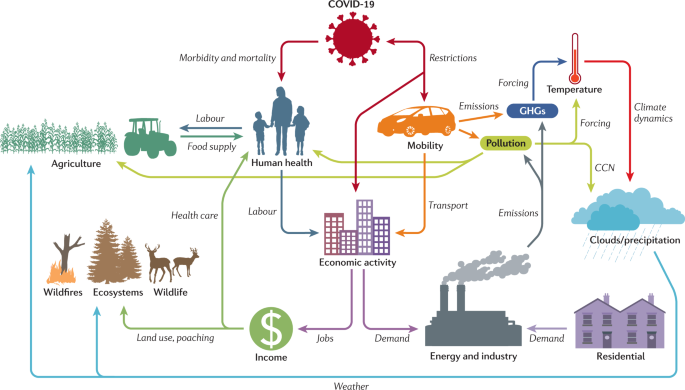
As Work from Home becomes the new norm, 23% of carbon emissions have dropped globally just because of a decrease in transportation.

Here are few positive as well as negative impacts the COVID-19 pandemic has brought to the environment.

  • Positive impact of the pandemic on the environment
  • There is more freshwater available

As the majority of industries have reduced activities, the water consumption of the industrial sector has decreased to about 20-30%. The hotels and health clubs are not functioning to full capacity either, hence a decrease in water consumption has been observed. It has also been noted that people tend to be more efficient with water at home than hotels and resorts.

  • The vegetation is growing better

Due to less human interference, plants are exposed to better air quality and clean water. The amount of oxygen and other nutrients required for their growth are not polluted and hence allow plants to grow.

  • Reduction of air pollution

A drop of 25% in carbon dioxide emissions along with 40% in nitrogen oxide emissions was

observed in Italy during the self-isolation period. Energy-related CO2 emissions in India is on track with value 1.8 as per SDG report 2020. Air quality improved because of a reduction in road traffic, air traffic, and factory emissions of carbon dioxide, Nitrogen oxide and particular matter formation.

  • Decreasing demand for oil

Due to the decrease in fuel demands for factories and travel, there has been a sharp decline by 435,000 barrels a day in the first quarter of 2020, due to the pandemic. Oil pollution also harms animals and insects, disrupts the food chain, and prevents photosynthesis in plants. Oil contamination can make water unsuitable for irrigation and damage irrigation plants.

  • Negative impacts of the pandemic on the environment
  • Increasing organic waste

Due to a sharp decline in the cargo transportation services, the export and import of various essential commodities have come to a standstill.

  • Waste management is getting difficult

Garbage contaminated with Medical waste has increased. There has been no evidence related to human contact of waste leading to the transmission of the virus. Many local waste recycling centers have suspended their activities

over the fear of virus circulation in the recycling centres.

Increasing non-recyclable waste

With increasing home deliveries during the lockdown, meals and online shopping surged which requires a lot of plastic packaging. Production and disposal of surgical masks, gloves, protective equipment and body bags have increased due to the COVID-19 crisis but all the waste generated ends up adding on the landfills and the environment.

Ecosystem at risk – Illegal deforestation, fishing and wildlife

Environment protection workers at national parks, land, marine conservation zones were required to stay at home during lockdown resulting in leaving these areas unmonitored. The decline in ecotourism activity has led to an increase in unemployment in the regions frequented by tourists.

Impact of Covid-19 on environment

The activities human does has its impact directly on the environment which in turn affect humans in the long term . In the last two centuries the concern for the environment protection arose first during the Industrial Revolution in Europe which changed the entire dynamics of the world leading to revolutionary changes but the burning of coal to run the machines in the industries led to smoke pollution. With time as the number of industries increased globally so did the number of harmful pollutants released in the air causing high smog level, acid rain , respiratory diseases among many other things. It was not just the air but also the water where the waste from industries was directly released making water misfit for humans as well as posing threat to the animals in there. Everything on the surface of earth is interrelated , the cycle of destruction which once starts consumes everything within it fueled by the human greed. Extensive mining , improper waste disposal, excessive noise from honking of cars and other sources leads to different forms of air, soil and noise pollution . Over the years, different governments have come up with different plans to preserve and protect the natural resources and environment along with various methods to reduce the negative impact of globalization and industrialization on the environment.

The covid-19 pandemic which hit the world in early 2020 and has claimed almost a million lives till now had the countries going into the complete lockdown to prevent the further spread of the disease. Lockdown ceased the normal routines of the people as everyone was caged inside their houses with many loosing their jobs, many getting rest from the normally hectic lives, the conditions of the medical professionalists being worse as they had to deal with a foreign deadly disease which they had no idea about. The lockdown which closed all industries and workplaces brought down the world economy to a major level. Despite all these hardships, the only positive thing which happened was the clearance of the environment such as air and water which had been polluted beyond repair by the humans.

Everything has its own pros and cons. This blogs will tell you about the positive and negative impact of covid-19 on environment.

Positive impacts

  • There was a phenomenal reduction observed in the emission of green house gases such as carbon dioxide , methane and nitrous oxides due to closed industries and shut down of transportation which led to cleaner air. According to a study, China which had an average of 2,00,000 metric tones of carbon dioxide emission saw the emission being reduced by 25% which according to the Earth system scientists saved the lives of over 77000 people in two months. The decrease in air pollution brought with it 50% reduction of nitrogen dioxide and oxides of carbons levels which also decreased the rain in that particular time period being acidic. Acid rain which had led to many diseases and corrosion of metals and monuments such as our mighty Taj Mahal is caused by the combination of nitrogen dioxide with oxygen and water vapor present in the atmosphere which leads to the production of the harmful nitric acid along with water.
  • India, where the AQI(Air Quality Index) had worsen in the last decade, saw a drastic improvement in the air quality. The AQI obtained by the Central Pollution Control Board(CPCB) was assessed by comparing the level of pollutants degrading the air quality( PM10, PM2.5, Carbon monoxide and sulphur dioxide) in the unlock (pre covid-19) phase to that in the four lockdowns which the country experienced. It was observed that there was a gradual to rapid reduction in the level of these harmful pollutants and increment in ozone concentration due to the reduction in Nitrogen dioxide concentration by almost 80%.
  • Water Pollution which is a major problem in India and Bangladesh with industries releasing their waste water without its proper treatment in the water bodies causing the decrease in oxygen level in the water affecting the aquatic life present there and also making it unfit for human use. According to various reports, the Ganga and Yamuna rivers of the country which were one of the highly polluted rivers due to the dumping of garbage and industrial releases pre covid showed the signs of rejunevation during the lockdown. No discharge of harmful affluent in these water bodies led to the decline in nitrite concentration in water increasing the dissolved oxygen level. Further, it was reported that the districts in Ganga river basins experienced 60% more rainfall than what it normally experiences which led to the increased discharge of water in river further contributing towards the dilution of remaining pollutants.
  • Also, the animals which were rarely found in open such as the sea turtles finally retreated to their original natural habitant with many sea turtle and rare species of fishes being spotted in the open and on the beaches which were deserted in the lockdown.

Negative Impacts

  • People were advised to use masks and gloves as a precaution against covid-19. The inappropriate disposal of masks and gloves along with other bio medical waste which was used to treat the covid-19 patients will lead to more harm in the long term. Governments advised people against the open disposal of the bio medical wastes but lack of proper knowledge led people to do the otherwise contributing in the water and soil pollution.
  • Also, the flora and fauna which was protected by human guards against the illegal human activities was also at risk. As with lockdown, decrease in man power guarding the reserved forests and sanctuaries decreased which led to the increase in illegal deforestation, wildlife hunting among other things.

Covid-19 can be seen as the nature’s warning to humans to stop interfering in the natural things and to mend its relation with the environment , else the consequences will be terrible.

Positive and Negative Impacts of Industrialization

How Can Industrialization Affect National Economies of Less Developed  Countries (LDCs)?

IMPACT OF THE INDUSTRIAL REVOLUTION

The Industrial Revolution started in the 18th century in the United Kingdom and later spread too many other parts of the world, during which the agrarian and handicraft economies changed rapidly to industrial and machine-manufacturing-dominated ones. Not only did this economic change alter how work was done and goods were produced, but it also altered how individuals related to each other and to the world as a whole. Today, this wholesale shift in social organization continues and has created many impacts that have rippled through the political, ecological, and cultural spheres of the World.

POSITIVE IMPACTS OF INDUSTRIALIZATION

Goods became cheaper and more affordable:

The factories and equipment they housed started making goods faster and cheaper than they could make by hand. As the availability of different goods increased, their cost to the customer declined (see supply and demand). Shoes, clothes, household goods, equipment, and other products have become more common and less costly to improve people’s quality of life. For these products, international markets were also established, and the balance of trade changed in favor of the consumer, bringing increased prosperity to the businesses that manufactured these products and adding tax revenue to government coffers. It has, however, also led to the disparity in income between countries producing products and consuming goods.

Manual labour was replaced by machine work:

The rapid manufacture of hand tools and other useful objects has led to the development of new types of instruments and vehicles for moving goods and people from one location to another. The development of road and rail transport and the formation of the telegraph (and its related telegraph infrastructure and later telephone and fiber optic lines) meant that progress in manufacturing, agricultural harvesting, energy production, and medical techniques could be easily communicated between stakeholders. Also well-known products of the Industrial Revolution are labor-saving machines such as the spinning jenny (a multi-spindle machine for spinning wool or cotton) and other inventions, particularly those driven by electricity (such as home appliances and refrigeration) and fossil fuels (such as cars and other fuel-powered vehicles).

Evolution in the field of medicine:

The Industrial Revolution was the catalyst behind numerous medical advancements. Industrialization has made it possible to manufacture medical instruments more rapidly (such as scalpels, microscope lenses, test tubes, and other equipment). Using machine production, refinements to these tools could be more effective for the doctors who wanted them to roll out. When contact between doctors in various fields increased, it was possible to easily spread the information behind new cures and disease treatments, resulting in better care.

Increased standard of living:

Mass production reduced the cost to the common (i.e. non-aristocratic) people of much-needed tools, clothing, and other household goods, which allowed them to save money for other things and create personal wealth. Furthermore, new job opportunities emerged as new manufacturing devices were developed and new factories were established. The average citizen was no longer so tightly tied to land-related issues (such as being dependent upon the wages farm labor could provide or the plant and animal products farms could produce). The emphasis on land ownership as the chief source of personal wealth was diminished by industrialization. The increasing demand for manufactured goods meant that as factory workers and as employees of companies that sponsored the factories, average individuals could make their fortunes in towns, paying better salaries than farm-related positions.

Rise of Professional jobs:

As industrialization advanced, in search of better pay in the factories, more and more rural folk flocked to the towns. To improve the overall productivity of the factories and to take advantage of new business opportunities, factory employees have been qualified to perform specific tasks. The owners of the factory divided their employees into numerous groups, each group concentrating on a particular mission.

Some groups secured and transported the raw materials used in the mass production of goods (namely iron, coal and steel) to factories, while other groups worked different machines. When they broke down, some groups of workers repaired equipment, while others were tasked with making changes to them and the overall operation of the plant.

Additional teachers and trainers were required to pass on advanced skills as the factories expanded and employees became more specialized. Furthermore, factory workers’ lodging, transportation, and leisure needs contributed to the rapid growth of cities and towns. To support these, governmental bureaucracies expanded, and new specialized departments were formed to manage traffic, sanitation, taxation, and other services. As more builders, doctors, attorneys, and other staff were added to handle the diverse needs of the new inhabitants, other industries inside the cities also became more skilled.

NEGATIVE IMPACTS OF INDUSTRIALIZATION

Over crowded cities:

The prospect of better pay attracted refugees, who were ill-prepared to manage them, to cities and manufacturing cities. Although initial housing shortages ultimately gave way to construction booms and the development of new buildings in many areas, first existed crowded shantytowns made up of shacks and other types of poor-quality housing. The sudden influx of people overwhelmed local sewerage and sanitation schemes, and drinking water was frequently polluted. Ideal conditions for outbreaks of typhus, cholera, smallpox, tuberculosis, and other infectious diseases were provided by people living in such close proximity, fatigued by bad working conditions, and consuming contaminated water.

Environmental degradation:

In India two centuries ago, factories emitted toxins such as carbon di oxide, carbon monoxide, and other harmful gases that caused air pollution along with vehicular exhausts that were not heard or seen before. Because of Greedy Indians and their Expansionist conquests, India lost many of its forests and natural ecosystems and botanical and zoological species became Endangered or Extinct overnight. Water contamination is caused by heavy metals, arsenic, lead; hard water and industrial hazardous waste are released into lakes, rivers and other water bodies. Aquatic and aquatic animals are dying as a result of water bodies being polluted. As the human population of the planet continues to rise and more and more people are chasing the material benefits promised by the Industrial Revolution, more and more of the resources of the Earth are appropriated for human use, leaving a diminishing stock of plants and animals on which ecological services the biosphere depends (clean air, clean water, etc.).

Moreover, more than 40 percent of the Earth’s land-based net primary production is used by human beings, a measure of the rate at which plants transform solar energy into food and development. Coal, which had to be extracted or obtained after wood burning, was used by most factories, creating smoke and photo chemical smog in North Indian cities such as New Delhi, where visibility and breathing was difficult. Fossil fuels had to be imported from foreign countries and would again produce smoke, Green House Effect, Global Warming by using them for industrial purposes.

Poor working conditions:

Their owners valued production and profit above all else as factories appeared in the cities and industrial towns. Security and salaries of employees were less important. Compared with farm workers, factory workers received higher wages, but this also came at the cost of time and less than desirable working conditions. Factory staff frequently work six days a week for 14-16 hours a day. Human beings (employees) have become more vulnerable to exploitation, violence at work, more working hours and fewer fixed payments, job instability, and after retirement or termination of their employment, a bleak future. Also, finished Indian products were not on par with global standards and labels, but were more costly than comparatively cheaper imports from countries such as China, Hong Kong, Japan, etc.

Other problems

Nuclear plants are a threat to health and different forms of diseases can be caused by human beings living in close proximity. Farmers, who were in heavy debt to pay their dues to industrialists and real estate sharks, sold agricultural land with fertile and cultivable soil, and these lands have now become less yielding as factories or buildings have been constructed upon them. Inflation in India has always been increasing due to scarce natural resources or lack of availability.


SLEEP DEPRIVATION CAUSED BY THE UNHEALTHY USE OF GADGETS

It is said that “Sleep deprivation will kill you more quickly than food deprivation.” A good night’s sleep is one of the basic necessities of the human body for its active metabolism and better productivity. An average adult human requires 8 hours of continuous sleep each day. Any interference in the natural regular sleeping patterns can have a tremendous impact on one’s health: mentally as well as physically. Nowadays, people tend to sleep less than they did in the past and their quality of sleep has also faced a downturn.

We live in the middle of a world full of technologies and are surrounded by screens of smartphones, laptops, tablets, e.t.c. Though these gadgets make our lives easy and fast, we are least bothered about its negative effects on our lives. The overuse of technology causes eye strain, musculoskeletal health issues, sleep deprivation, etc. not only in adults but also in teens and kids. According to the American Optometric Association (AOA), prolonged use of computers, tablets, and cellphones can lead to digital eye strain which results in blurred vision, dry eyes, headaches, due to screen glare, bad lighting, and improper viewing distance. The unnatural way of holding the smartphones induces a lot of stress on the neck, shoulder and spine. Initially, these physical strains might seem negligible but can cause severe health impacts in the long run. 

Technology in the bedroom can interfere with sleep in a number of ways. Studies have found that 90% of US citizens use screening devices in the hour before going to bed, which can cause immense psychological and physiological impacts, capable enough to disrupt one’s sleep. Scientifically speaking, the blue light emitted from the gadgets suppress the sleep-inducing hormones like melatonin disturbing the biological clock. Lack of sleep causes stress, increased blood pressure, memory issues, weakened immunity, increased risk of heart diseases etc, thus dramatically decreasing our quality of life. Studies reveal that the increasing number of depression and anxiety among people, especially youth, has a correlation with the overuse of gadgets and social networks. Kids who are exposed to television, video games, mobile phones, and tech toys beyond the recommended time limit is seen to have retarded brain growth than other kids. They too experience sleep problems in addition to behavioural and social problems. 

From buying groceries to attending online classes, from consulting a distant doctor virtually to paying bills and dues, technology and gadgets plays an intangible role in making our lives smooth and less hectic. The technologies which we depend on for our comforts should never be the reason for our own distress. For that, we should always make sure to keep a balance between technology and healthy lifestyle.

INFERTILITY AND THE IMPACT OF GADGETS

We live in a century where technology and gadgets are closely knitted to our everyday life and it is hard for us to imagine that the generations before our’s existed with near to zero exposure to the kind of technologies we have today. With the introduction of modern technologies, a significant change in the basic routine of people’s lives is clearly visible. Though these technologies are meant to make life easier and better, they do come with several drawbacks as well. Many aspects of the modern lifestyle have severe impacts upon our health both mentally as well as physically. 

While new technologies are introduced every day, simultaneous attempts are made by the researchers to understand its various health impacts. Of all the identified threats caused by the excessive use of technology, especially electronic gadgets, infertility stays high in the order followed by cancer, poor mental being etc. People often overlook the health consequences and carry these gadgets most of the time because of the convenience it provides. Many have a habit of scrolling through their phones right before they go to sleep. Apart from sleep deprivation, studies have revealed that this habit can cause far more shocking repercussions like reproductive disorders in both males and females.

According to studies, the electromagnetic radiations are transferred directly to the reproductive organs when cell phones are kept in trouser pockets for a longer period. Evening or late-night exposure to short-wavelength light(SWL) emitted from electronic gadgets and digital media devices can result in poor sperm quality, reducing sperm motility, sperm progressive motility and sperm concentration. The long-term exposure and its proximity affect the ovarian activity in women leading to infertility. The radiation from mobile phones affects one’s DNA destroying our cell’s natural ability to recover and might result in abortions.

Abstinence from electronic gadgets is not practical but their excessive use must be reduced. The people suffering from fertility issues must consider reducing the use of electronic gadgets. Cutting down the screen time helps one to avoid health consequences like sleep deprivation, fatigue, headache caused by the overexposure to digital gadgets. Pregnant women should limit their exposure to cell phones as it is known to affect the growth of the fetus. Exposure to EMF radiation / RF from laptops, cell phones, Wi-Fi and other personal devices are known to be key detriments to the mental health of a child in its pre-term and neonatal days.

Modern technologies and gadgets are invented to reduce physical efforts and make life easier and better for. The introduction of new technologies every day is revolutionising our world and lifestyle. But the comforts provided by these technologies should never be the ground for us to move away from our basic instincts. Exploiting these technologies without its proper and limited usage will be similar to digging our own grave.