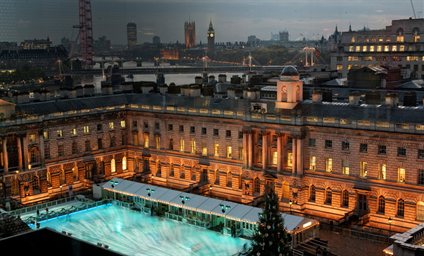
King\'s College London

Image result for King\'s College London
ABOUT
King\’s College London is one of the top 25 universities in the world (2016/17 QS World University Rankings) and among the oldest in England. King\’s has more than 27,600 students (of whom nearly 10,500 are graduate students) from some 150 countries worldwide, and some 6,800 staff.
King\’s has an outstanding reputation for world-class teaching and cutting-edge research. In the 2014 Research Excellence Framework (REF) King’s was ranked 6th nationally in the ‘power’ ranking, which takes into account both the quality and quantity of research activity, and 7th for quality according to Times Higher Education rankings. Eighty-four per cent of research at King’s was deemed ‘world-leading’ or ‘internationally excellent’ (3* and 4*). The university is in the top seven UK universities for research earnings and has an overall annual income of more than £684 million.
King\’s has a particularly distinguished reputation in the humanities, law, the sciences (including a wide range of health areas such as psychiatry, medicine, nursing and dentistry) and social sciences including international affairs. It has played a major role in many of the advances that have shaped modern life, such as the discovery of the structure of DNA and research that led to the development of radio, television, mobile phones and radar.
King\’s College London and Guy\’s and St Thomas\’, King\’s College Hospital and South London and Maudsley NHS Foundation Trusts are part of King\’s Health Partners. King\’s Health Partners Academic Health Sciences Centre (AHSC) is a pioneering global collaboration between one of the world\’s leading research-led universities and three of London\’s most successful NHS Foundation Trusts, including leading teaching hospitals and comprehensive mental health services. For more information, visit: www.kingshealthpartners.org.
King’s £600 million campaign, World questions|KING’s answers, has delivered huge global impact in areas where King’s has particular expertise. Philanthropic support has funded new research to save young lives at Evelina London Children’s Hospital; established the King’s Dickson Poon School of Law as a worldwide leader in transnational law; built a new Cancer Centre at Guy’s Hospital; allowed unique collaboration between leading neuroscientists to fast-track new treatments for Alzheimer’s, Parkinson’s, motor neurone disease, depression and schizophrenia at the new Maurice Wohl Clinical Neuroscience Institute; created the Cicely Saunders Institute: the first academic institution in the world dedicated to palliative care, and supported the King’s Sierra Leone Partnership in the Ebola crisis. Donations provide over 300 of the most promising students with scholarships and bursaries each year.More information about the campaign is available at www.kcl.ac.uk/kingsanswers.

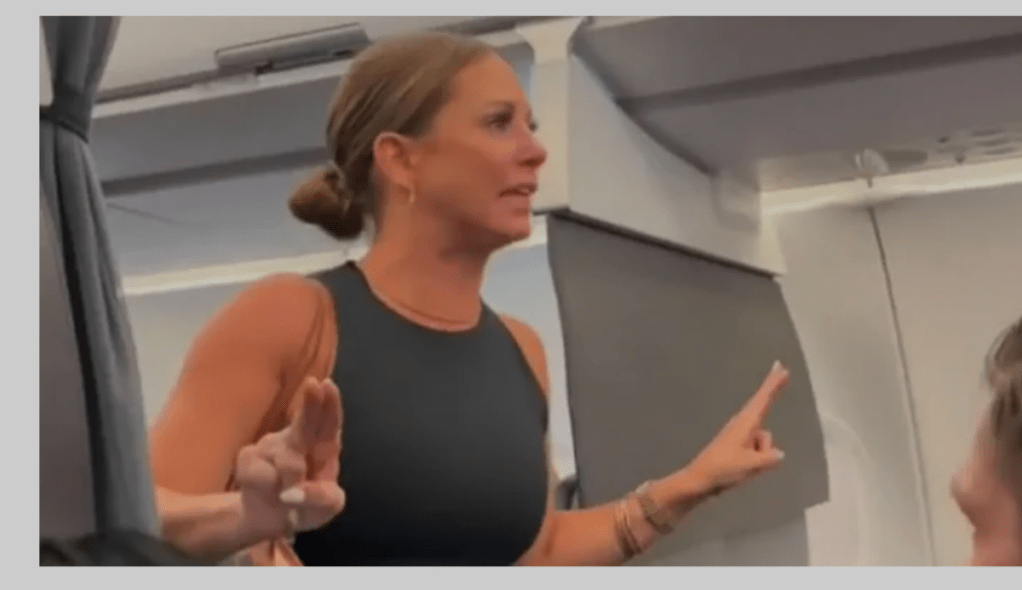
Woman disrupts American airlines

A Dallas lady started off an American Carriers departure from Texas to Orlando in the wake of going ballistic on video had the option to get back to the solid side of the air terminal after various endeavors to go through a Transportation Security Organization designated spot, police records uncover.

Tiffany Gomas, a 38-year-old promoting leader, was accused of intruding after the viral implosion before departure from Dallas-Post Worth Worldwide Air terminal July 2.

She deliberately got off the plane and left the terminal, however at that point supposedly attempted on numerous occasions to help back through air terminal security.

In spite of the fact that her ticket had been repudiated, evidently it was as yet dynamic in the TSA framework, as per a police report.

Tiffany gomes

Amid covid concerns, chinese are turning to black market India made meds.

Residents in China have been scouring the market for generic COVID-19 drugs and India seems to be the answer to their problem. In the recent past, the Chinese authorities have approved two Covid antivirals – Pfizer’s Paxlovid and Azvudine – for the treatment. While China has ran out of the medicine, the Indian market is filled with it and is slowly becoming the next favourite destination.

In the past few months, topics like “anti-Covid Indian generic drugs sold at 1,000 yuan (US$144) per box” has been making the rounds of the Chinese social media. Platforms like Weibo and WeChat are filled with such queries and experts believe that black market deals are being conducted on them.

While the distribution of drugs which are not approved in China is not illegal, there can be penalties imposed on the illegal imports. Even the doctors in China have warned the public against buying drugs on the black market with several patients displaying massive side effects to the medicines.

Center to introduce Bhagavad Gita in NCERT syllabus.

On Monday, 19 December, the Centre informed the Lok Sabha that the National Council of Education Research and Training (NCERT) should include Shlokas from Shrimad Bhagavad Gita and knowledge from Vedas in textbooks in Sanskrit from classes 11th to 12th. Besides, references from Bhagavadgita should be incorporated in NCERT textbooks of classes 6th to 7th. 

Annapurna Devi, Minister of State for Education, stated in a written response that the ministry formed the Indian Knowledge System (IKS) Division in the All India Council for Technical Education (AICTE) in 2020 with the goal of promoting interdisciplinary and trans-disciplinary research on all facets of Indian Knowledge Systems (IKS), preserving and disseminating IKS knowledge for further research and societal applications.

Minister Devi stated that NCERT has begun the development of National Curriculum Frameworks (NCF) where inputs from various ministries, departments, states, and union territories are invited from grass root levels. 

She added that the National Education Policy (NEP) 2022, paragraph 4.27, refers to Indian traditional knowledge that is both sustainable and strives for the welfare of all. She also laid emphasis on teaching the world the “Indian way of doing things.”

How to Blow Up a Pipeline

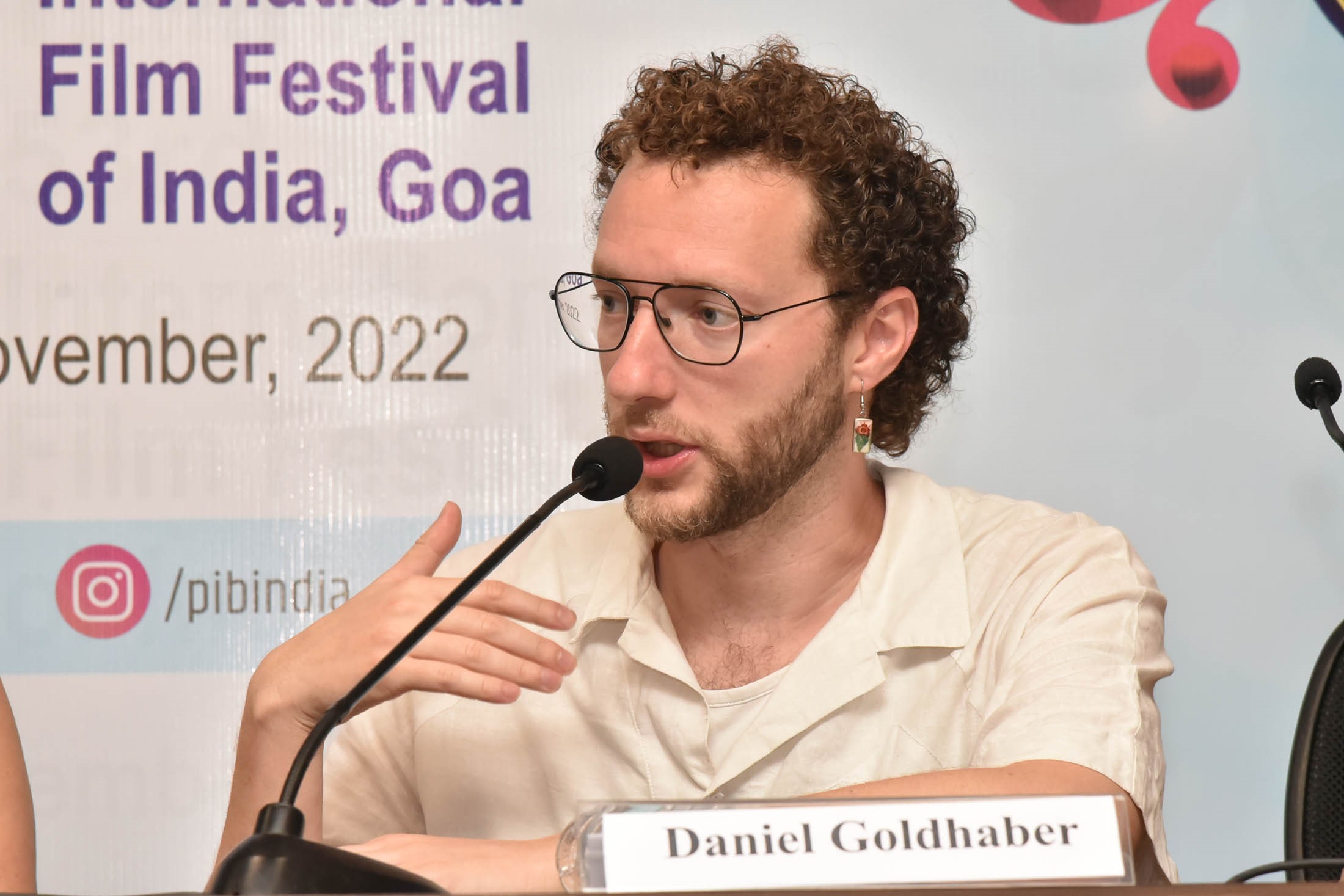
 There is no magic bullet or immediate remedy to tackle climate change.  Only the right kind of conversations and interventions are the key.  Through ‘How to Blow Up a Pipeline’ we are trying to provoke the right conversation on this burning issue, said Director of the movie Daniel Goldhaber.

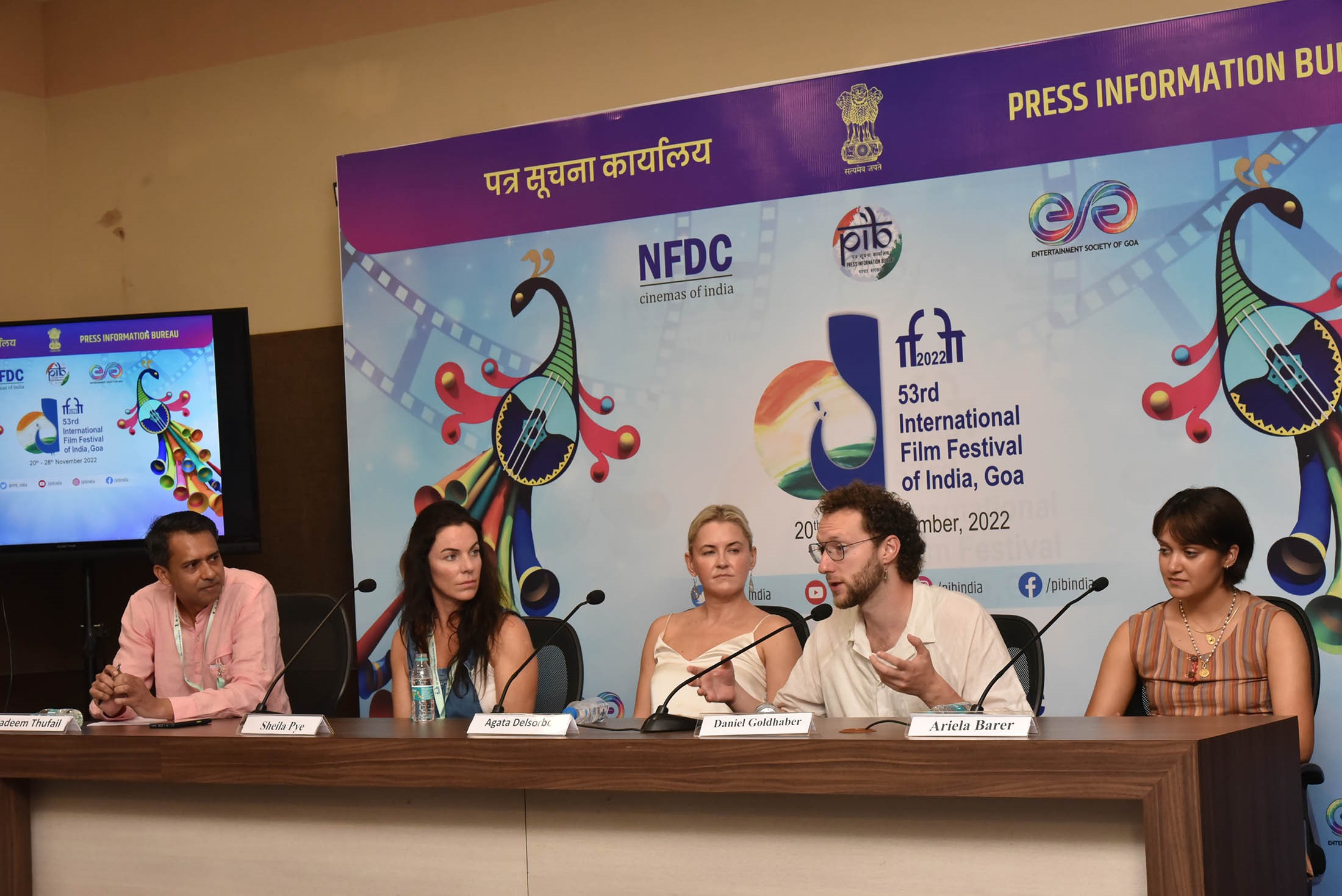
While interacting with the media and festival delegates at the ‘Table Talk’ session by PIB on the side-lines of the 53rd International Film Festival of India in Goa, Daniel Goldhaber resolutely expressed that the film neither intends to support nor explore environment extremism. “We are trying to understand why some are being pushed to engage in environmental extremism. It also tries to be frank about the consequences of such extreme acts,” he added.  The film had its Asian Premiere at IFFI53.

 Asserting that conversations on climatic changes and tactics to face the same are very limited, Daniel added, “Such conversations are predominantly led by corporations and countries profiting from the impact of climate change.”

Emphasizing that climatic issue is an ocean we haven’t really explored, Daniel opined that the consequences of climatic change are not being felt immediately by those countries which cause the reason, but in other places in another place of the planet. “There is a massive responsibility on us to deal with that,” he added.

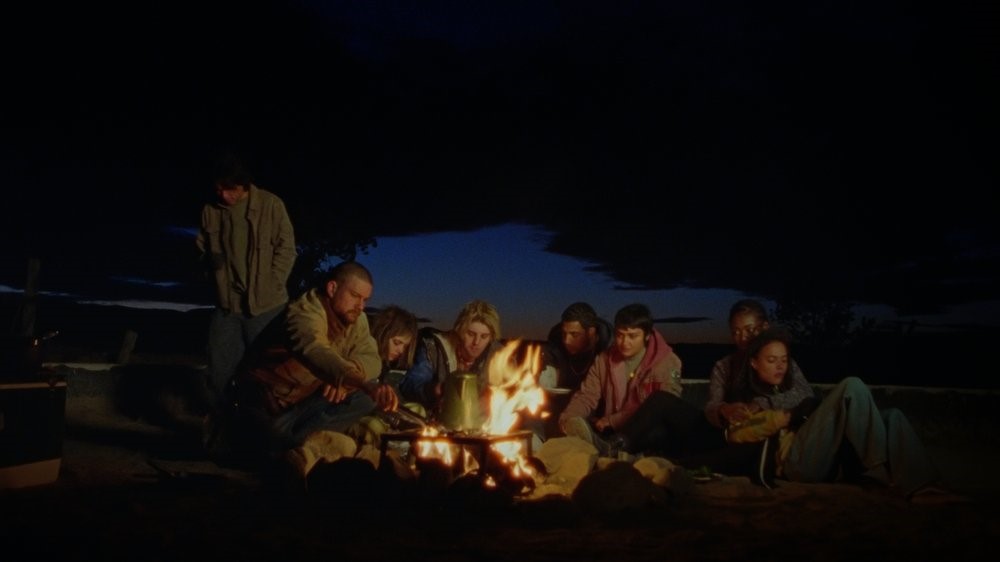
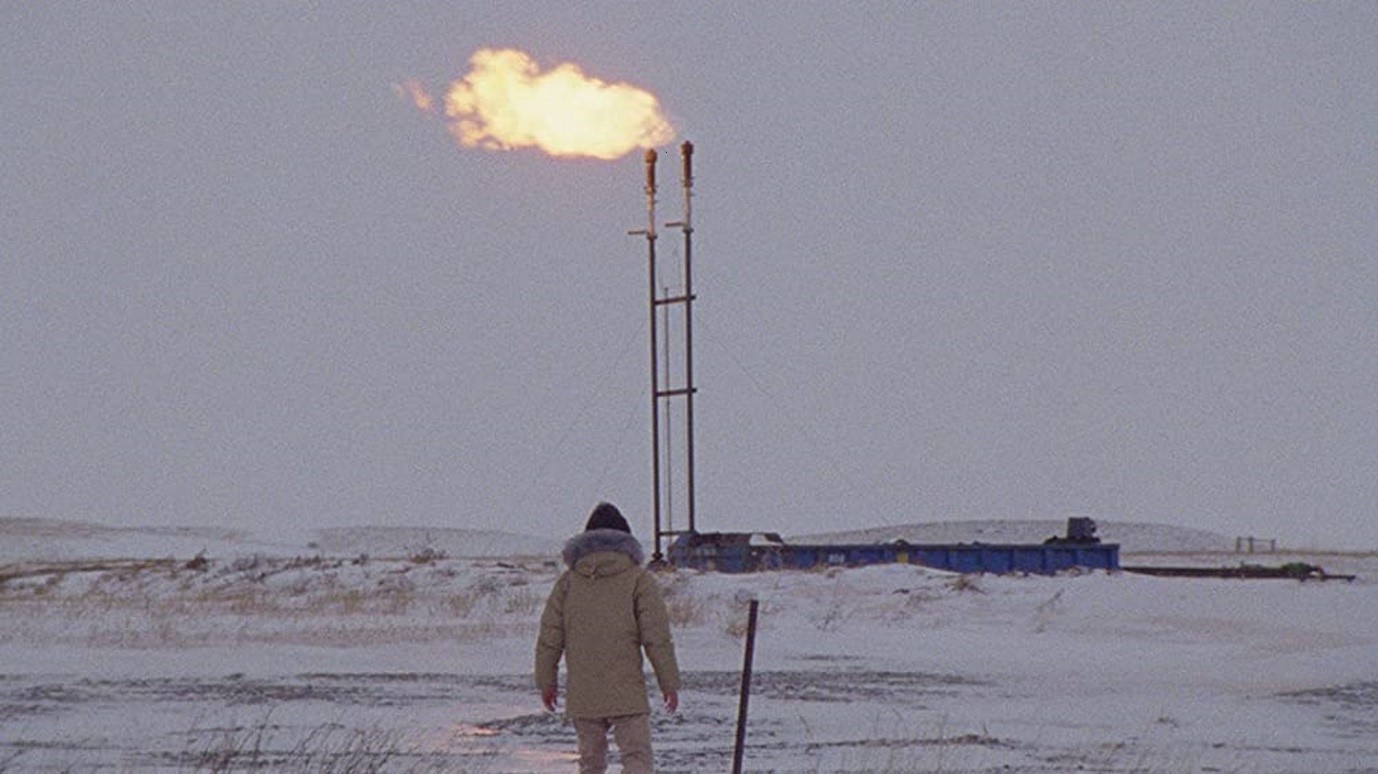
How to Blow Up a Pipeline’- A taut and timely thriller portrays the story of a crew of young environmental activists who with their radical resolve dares to execute a mission to sabotage an oil pipeline. They engage in the act as a reciprocation to the deeds meted out by the system resulting in climate crisis.

The movie is an adaptation of Andreas Malm’s 2021 book, How to Blow Up a Pipeline- Learning to fight in a world of fire’. According to Daniel, the book basically tries to advocate that every social justice movement in the global history in the last decades has had at least some component of property destruction and sabotage. “By making a movie on the book, we wanted to see what would happen if we dramatize the theme though it is fundamentally different from the book, he added.

Narrating the reason for making a movie on a subject, which is the defining issues of our times, Daniel Goldhaber said he had always been looking for a story on climate activism since he is so accustomed to the subject. “My parents are climate scientists. I have been brought up in an environment knowing climatic changes and the activisms associated with it.”

Sharing his joy over the screening of his movie in IFFI53, Daniel said the film is an American film, completely based on an American concept adapted from an European book, but it is always great to get the movie propagated at Asian as well as other countries since the issue is universal.


About the movie

Synopsis: A crew of young environmental activists execute a daring mission to sabotage an oil pipeline in this taut and timely thriller that is part high-stakes heist, part radical exploration of the climate crisis.

Daniel Goldhaber is a director, writer and producer based in Los Angeles and New York.He graduated from Harvard University where he studied Visual and Environmental Studies. Goldhaber’s first feature was ‘Cam’ (2018). Goldhaber was named as one of Filmmaker

‘How to Blow Up a Pipeline’ premiered in the Platform Section of Toronto International Film Festival.

* * *

Biography of Mulayam Singh Yadav

Mulayam Singh Yadav (22 November 1939 – 10 October 2022) was
an Indian politician and the founder-patron of the Samajwadi Party. He served
for three non-consecutive terms as the Chief Minister of Uttar Pradesh, and
also served as the Minister of Defence, Government of India. A long-time
parliamentarian, he was the Member of Parliament, representing the constituency
of Mainpuri in the Lok Sabha, and has also earlier served as the Member of
Parliament from Azamgarh and Sambhal constituencies. He was often referred to
as Netaji (meaning respected leader in Hindi) by party leaders and workers.

Early life and education

Mulayam Singh Yadav was born to Murti Devi and Sughar Singh
Yadav on 22 November 1939 in Saifai village, Etawah district, Uttar Pradesh,
India.


Yadav had three degrees in political science — a B.A. from
Karm Kshetra Post Graduate College in Etawah, a B.T. from A. K. College in
Shikohabad, and an M.A. from B. R. College, Agra University.


Personal life

Yadav has married twice. His first wife, Malti Devi, was in
a vegetative state from 1974 until her death in May 2003 following
complications while giving birth to their only child, Akhilesh Yadav. Akhilesh
was Chief Minister of Uttar Pradesh from 2012 to 2017.


Mulayam had a relationship with Sadhana Gupta while still
married to Malti Devi in the 1990s. Gupta was not well known until February
2007, when the relationship was admitted in India’s Supreme Court. Sadhana
Gupta has a son named Prateek Yadav (born 1988), from her first marriage.


Prateek’s wife Aparna Bisht Yadav (born 1990) joined BJP in
2022. Sadhana Gupta died in July 2022 after a brief illness.


Early political career

Groomed by leaders such as Ram Manohar Lohia and Raj Narain,
Yadav was first elected as a Member of the Legislative Assembly in Legislative
Assembly of Uttar Pradesh in 1967. Yadav served eight terms there In 1975,
during Indira Gandhi’s imposition of the Emergency, Yadav was arrested and kept
in custody for 19 months. He first became a state minister in 1977. Later, in
1980, he became the president of the Lok Dal (People’s Party) in Uttar Pradesh
which became a part of the Janata Dal (People’s Party) afterwards. In 1982, he
was elected leader of the opposition in the Uttar Pradesh Legislative Council
and held that post until 1985. When the Lok Dal party split, Yadav launched the
Krantikari Morcha party.


Chief Minister

First term

Yadav first became Chief Minister of Uttar Pradesh in 1989.


After the collapse of the V. P. Singh national government in
November 1990, Yadav joined Chandra Shekhar’s Janata Dal (Socialist) party and
continued in office as chief minister with the support of the Indian National
Congress (INC). His government fell when the INC withdrew their support in
April 1991 in the aftermath of developments at the national level where it has
earlier withdrawn its support for Chandra Shekhar’s government. Mid-term
elections to Uttar Pradesh assembly were held in mid-1991, in which Mulayam
Singh’s party lost power to the BJP.


Second term

In 1992, Yadav founded his own Samajwadi Party (Socialist
Party). In 1993, he allied with the Bahujan Samaj Party for the elections to
Uttar Pradesh assembly due to be held in November 1993. The alliance between
Samajwadi Party and Bahujan Samaj Party prevented the return of BJP to power in
the state. Yadav became chief minister of Uttar Pradesh with the support of
Congress and Janata Dal. His stand on movement for demanding separate statehood
for Uttarakhand was as much controversial as his stand on Ayodhya movement in
1990 was. There was a firing on Uttarakhand activists at Muzaffarnagar on 2
October 1994, something for which Uttarakhand activists held him responsible.
He continued holding that post until his ally opted into another alliance in
June 1995.


Third term

In 2002, following a fluid post-election situation in Uttar
Pradesh, the Bharatiya Janata Party and Bahujan Samaj Party joined to form a
government under Dalit leader Mayawati, who was considered to be Yadav’s
greatest political rival in the state. The BJP pulled out of the government on
25 August 2003, and enough rebel legislators of the Bahujan Samaj Party left to
allow Yadav to become the Chief Minister, with the support of independents and
small parties. He was sworn in as chief minister of Uttar Pradesh for the third
time in September 2003.


Yadav was still a member of the Lok Sabha when he was sworn
in as chief minister. In order to meet the constitutional requirement of
becoming the member of state legislature within six months of being sworn in,
he contested the assembly by-election from Gunnaur assembly seat in January
2004. Yadav won by a record margin, polling almost 94 per cent of the votes.


With the hope of playing a major role at the centre, Yadav
contested the 2004 Lok Sabha elections from Mainpuri while still Chief Minister
of Uttar Pradesh. He won the seat and his Samajwadi Party won more seats in
Uttar Pradesh than all other parties. However the Congress party, which formed
the coalition government at the centre after the elections, had majority in the
Lok Sabha with the support of the Communist parties. As a result, Yadav could
not play any significant role at the centre, Yadav resigned from the Lok Sabha
and chose to continue as chief minister of Uttar Pradesh until the 2007
elections, when he lost to the BSP.


Cabinet minister

In 1996, Yadav was elected to the eleventh Lok Sabha from
Mainpuri constituency. In the United Front coalition government formed that
year, his party joined and he was named India’s Defence Minister. That
government fell in 1998 as India went in for fresh elections, but he returned
to the Lok Sabha that yearfrom Sambhal parliamentary constituency. After the
fall of Atal Bihari Vajpayee government at the centre in April 1999, he did not
support the Congress party in the formation of the government at the centre. He
contested Lok Sabha elections of 1999 from two seats, Sambhal and Kannauj, and
won from both. He resigned from Kannauj seat for his son Akhilesh in the
by-elections.


Positions held

Mulayam Singh Yadav has been elected 10 times as MLA and 7
times as Lok Sabha MP.

Criticism over comment on rape

The crime of rape became a capital offence in India
following the 2012 Delhi gang rape incident. Yadav has opposed this change in
the law, saying that “Boys will be boys. Boys commit mistakes”. In
response to 2014 Badaun gang rape and Yadav’s comments, UN Secretary-General
Ban Ki-moon said “We say no to the dismissive, destructive attitude of,
‘Boys will be boys'”. On 19 August 2015, Yadav remarked that gang-rapes
are impractical and rape-victims in those cases tend to lie. He was summoned by
the Judicial Magistrate of Mahoba district court in Uttar Pradesh for that
remark.


Support for a sovereign independent Tibet

Yadav has said it is necessary for India to support a
sovereign and independent Tibet. He said that a past government had made a
“big mistake” on the issue and noted that he had spoken against it at
the time.He believed that Tibet was a traditional buffer between China and
India and that India should support the Dalai Lama and Tibetan independence. Claiming
that China had secreted nuclear weapons in Pakistan, he cautioned that
“China is our enemy, not Pakistan. Pakistan can do us no damage”.


Family feud

Since the young Akhilesh Yadav became Chief Minister of
Uttar Pradesh in 2012, surpassing Mulayam’s brother Shivpal Singh Yadav, the
Yadav family was divided into two feuding groups. One of the groups, led by
Akhilesh, enjoyed the support of his father’s cousin and National General
Secretary Ram Gopal Yadav. The rival group was led by Mulayam Singh and
supported by his brother and State Chief of Party, Shivpal Yadav, and a friend,
former MP Amar Singh. Akhilesh had fired his uncle twice from his cabinet as it
was seen by many as a direct challenge to his father, who has steadily
supported Shivpal over Akhilesh. On 30 December 2016, Mulayam Yadav expelled
his son Akhilesh and his cousin Ram Gopal from the party for six years on the
grounds of indiscipline, only to revoke the decision 24 hours later. Akhilesh,
in response, stripped his father off the party presidency and instead named him
the chief patron of the party following the national convention of the party on
1 January 2017. Mulayam termed the national convention as illegal and directly
expelled his cousin, Ram Gopal Yadav, who had convened the national executive
convention. But the Election commission of India ruled that Ram Gopal Yadav had
the right to convene that executive convention, and reversed Mulayam’s order.
Hence Akhilesh Yadav officially became the new national leader of the party.


Know about India's first Solar village

The Modhera village, located in the Mehsana district of Gujarat, declared as India’s first solar-powered village.

Modhera has a deep, historical Sun connection, thanks to the Sun Temple, or Surya Mandir, it hosts on the banks of river Pushpavati.

The renowned temple was built close to a thousand years ago, in 1026-27 CE, during the reign of Chalukya King Bhima I (1022-1063 CE). Connecting the old and the new, Modhera, which hosts this ancient architectural marvel, is heading into a modern, renewable future through the production of electricity using the energy of the Sun.

This initiative came about from a programme led by both the centre and state, called the “Solarisation of Modhera Sun Temple and Town.” As part of the project, they developed a ground-mounted solar power plant in addition to installing 1,300 rooftop solar systems on top of residential and government buildings. The solar systems are integrated with a 15Mwh battery energy storage system. This makes up a 6MW grid.

Solar energy is thus available to Modhera round the clock. According to the Gujarat government, the village residents will be able to save 60 to 100 per cent on their electricity bills with the solar push.

Why were Noida's twin tower demolished.

The Supertech twin towers were demolished on Sunday (August 28). The demolition of the Emerald Court project in Noida is leading to a loss of about Rs 1,000 crore to developer Supertech. It also took nearly Rs 20 crore to raze the building. 

A part of Supertech’s Emerald Court project, the two 40-story towers, that stand on Noida-Greater Noida expressway, houses over 900 flats in an area of around 7.5 lakh sq. feet. The twin towers (namely Apex and Ceyane) are located at Sector 93A in Noida. One of the buildings has an altitude of 103 metres, while another is around 97-metre tall.

The twin towers are being demolished because of serious violations of building codes. Supreme Court said, the Noida Authority and Supertech had engaged in “nefarious complicity” and ordered the company to demolish the buildings at its own expense under the guidance of the Noida Authority.

The ‘Supertech Emerald Court’ housing society was proposed to be built in Noida’s Sector 93A in 2004. The next year, the Noida authority sanctioned the building plan that showed 14 towers and nine floors. 

But this plan was later revised. And in 2012, the Noida authority reviewed the new plan, in which the height of the twin towers was fixed at 40 floors.

Following this, Residents’ Welfare Association (RWA) of the society moved to Allahabad High Court stating that the construction was illegal. Accordingly, in 2014, the court directed the authority to demolish the twin towers within four months (at its own expense) from the date the order was filed.

Later, in August 2021, Supreme Court upheld the Allahabad HC order, and ordered the demolition, noting that the structures had come up violating construction norms.

The Supreme Court’s decision was the result of a number of petitions submitted by homebuyers in support of and opposition to the Allahabad High Court’s ruling.  According to the Supreme Court, August 28 had affirmed as the date of destruction.

For the demolition, about 3,700 kg of explosives were brought from Palwal (Haryana) to be used. It was a mix of dynamite, emulsions and plastic explosives.

"Using UPI is not going to be chargeable" Clarified.

The RBI discussion paper issued earlier this month said, UPI as a fund transfer system is like IMPS and therefore, it could be argued that the charges in UPI need to be similar to charges in IMPS for fund transfer transactions.

To clarify, Ministry of Finance quoted  “UPI is a digital public good with immense convenience for the public and productivity gains for the economy. There is no consideration in government to levy any charges for UPI services,” the Ministry of Finance said in a statement.

The clarification came amid speculations that UPI transactions could be charged, as a discussion paper released by the Reserve Bank of India (RBI) on August 17 sought feedback related to the subject. “Charges for payment services should be reasonable and competitively determined for users while also providing optimal revenue stream for the intermediaries,” the central bank said in a release. The feedback received would be used to guide policies and intervention strategies.

In the context of UPI, the RBI, in the discussion paper, has questioned if UPI transactions are charged, they should be administered by the regulator, or whether they should be market determined. While clarifying it was not considering any service charge on UPI transactions, the finance ministry reiterated its support for the further adoption of the digital payments system.

What is Journalism ? Write different aspects of journalism?

What is Journalism?

Journalism is the collection and distribution of news and related updates on what’s happening around the world on social media, distributing posters and pamphlets, e-mails, magazines, blogs and many more. Journalism is the main pillar of our society or for our whole world because they work hard and they update news so we can watch, and read it. 

As in today’s world, the channels are increasing so much and the audience is also increasing watching it. Without journalism or journalist, we are nothing, we will not know any single news whatever is happening around us.

In today’s world if any student is making up their mind to start a career in journalism. You have taken the right decision. You will end up with a beautiful career in the Journalism field.

What are the different aspects of Journalism?

News

News is the most important factor in Journalism. News should be very much clear and it should be true. Remaking and over-repeating news bore citizens. Straightforward news likes people very much as they want to hear the fact.

Investigate

Before delivering any news on any platform we should investigate the matter. The investigation is necessary. If a matter has not been investigated and news has been delivered it shows a very bad impact on the news channel or the company.

Reviews

People share their reviews and their feedback. Reviews help a lot to understand the importance of the thing and help to improve or not. It might help in any way. Without review, nothing is accepted as good.

Columns

Columns are based primarily on the personality of the author, allowing him or her to write about subjects in a personal style. Column writers can take a humorous approach, or specialise in a particular subject area or topic. IColumnists need to develop a voice that is recognisable by their readership. Columnists can interpret events or issues or write about their own experiences or thoughts. Columns are usually published weekly.

Journalism is a very good profession and hard working. Journalists are the main pillar of our world.

Central Government to remove air fair cap from 31st august.

India will remove the fare caps it imposed on domestic airlines in 2020 during the COVID-19 pandemic from August 31, the country’s civil aviation ministry said on Wednesday, lifting restrictions on ticket prices. The government, in a rare move, had regulated fares by imposing a minimum and maximum band based on the flight’s duration to prevent ticket prices from spiking due to pent-up demand arising from restrictions on air travel easing. Given the current situation, airfares may go up as carriers as jet or aviation turbine fuel (ATF) prices have almost tripled in the last two years.

The ministry had imposed lower and upper limits on air fare after the resumption of services in May, 2020 following the two-month nationwide lock-down to contain the spread of Covid-19. Thereafter, the limits were relaxed in a phased manner as per the improvement in air traffic in the country. The lower caps were meant as a relief for airlines struggling after the pandemic. At the same time, the upper caps on air fare were fixed ensuring that passengers do not have to pay a hefty amount for air travel.

Earlier, discussions on removing the fare bands for domestic air fare were held among the stakeholders, including the government authorities and airlines. The airlines were of the view that removal of the pricing cap is required for the full-fledged recovery of domestic air traffic.

The World Runs on Finance

Wherever you go, you hear the terms of budget, loans, bonds, stocks, crypto, and many more. Finance has become one of the highest searched topics that people want to learn. People want to get control, build different streams of income, build passive income, buy real estate, buy bonds and increase their wealth. Compared to 1980s to the present day, finance has developed and spread its branches across the world. With technology, finance has become easier to access.

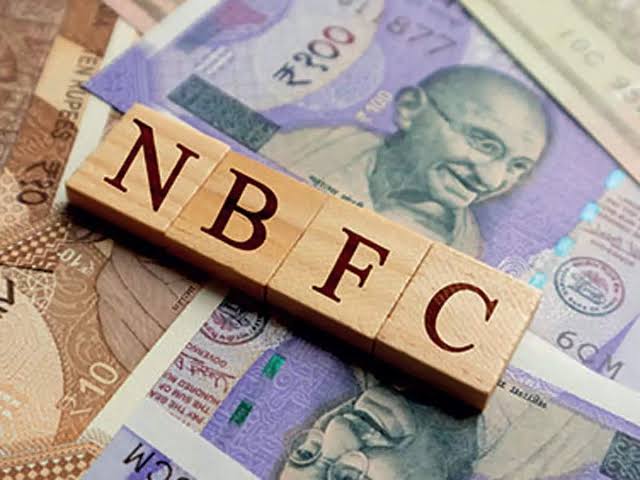
Small NBFCs( Non-Banking Financial Corporations) have created apps that people can get for small amounts of loan. From 100₹ to 1,00,000₹, these corporations have found an untouched market in loan requirements, small loans. The term may be quite little, but it has huge potential. A lot of people take loans or borrow money from loan sharks at high interest rates, but do they always have money to give?

This question itself has created this part of market. With technology, payments have become quicker and able to move in a matter of minutes. NBFCs found this to be their best advantage of all time. People sign up on these apps with all their details and take the loan at exorbitant rates. They charge interest for each passing day ( 3% or more) and disburse the amount with the click of a button.

As many people are, no one wants to go through the terms & conditions because it is long and boring. Here lies the secret to the destruction of your reputation between you and the world. Many think that these apps are to be taken simply and not to be minded when the payment date comes. These NBFCs aren’t banks so they don’t give repeated notices for the payment, instead, they send your contacts all your details, with the amount of money you have taken and ask them to pay. They use godawful ways to get the payment.

Few messages are so disgusting and low that it breaks your reputation into pieces. You cannot rebuild your reputation and it keeps going on till the payment has been done. It’s a small yet such powerful blow that you cannot recover from. After the payment has been made, they don’t send a message stating that you have made the payment which doesn’t help you in any way but makes you droop down more. These interest rates on meager amounts is how they make the most money on.

Every time you borrow money, you are robbing time from your future self.

Nathan W. Morris

Loans are not a joke. You learn from the mistakes you make. Scars are lessons for what we have gone through. Learn from your experiences, teach them to your kith and kin, no matter what they are aged. If an 18 year old with a bank account, comes across the app and doesn’t know the effect of not paying on time, it’s not a wound that they can recover from easily.

Teach your younger ones about finance, how to maintain, when and where to use them but not teaching them leads to a higher damage. Be careful and do not go down this path unless you know how to come back from it.

Xiaomi Looking To Supercharge Displays In Its Mid-Range Phones.

According to a new report, Xiaomi is planning to supercharge displays in its mid-range Android phones. The company is looking to bring LTPO displays that go down to 1Hz to its mid-range smartphones.

Xiaomi is planning to supercharge displays in its mid-range smartphones
This will, of course, help with power consumption. Those displays can dynamically raise or lower their refresh rates, from 1Hz to the max they offer, usually 120Hz. Pretty much all LTPO panels we’ve seen go all the way up to 120Hz.

This information comes from Digital Chat Station, a well-known tipster. Xiaomi is seemingly testing such a display in one of its mid-range smartphones. That display supports a 120Hz refresh rate, can go down to 1Hz, and it also offers DC dimming.

Xiaomi has been offering 120Hz displays in its mid-range smartphones for a while now. That includes Redmi and POCO phones as well. So, this move is not surprising, LTPO panels were expected to be offered in some mid-range devices sooner or later.

Xiaomi is a company that tends to offer really well-specced phones for reasonable price tags, so this is their forte. It remains to be seen what phone will break the ice, though.

LTPO displays have been around for quite some time now, and they keep evolving
LTPO displays have been around for quite some time now, and we’re seeing the third-gen of this tech in flagship smartphones these days. Not all LTPO displays can go way down to 1Hz, though, keep that in mind.

Many people value great displays, high refresh rates, and certainly displays that require less power to run at the same time. Some OEMs are still way behind in that regard, but Xiaomi is not one of them.

We also don’t know when will the first mid-range Xiaomi smartphone with such a display see the light of day, nor how much will it cost. Such a phone is now in testing, so it may take Xiaomi a bit of time to deliver it.

Samsung Could Start Beta Testing Android 13 On The Galaxy S22 Soon.

A beta firmware update seems to show testing for Android 13 could begin soon for the Samsung Galaxy S22.The test could start in some parts of the world in July 2022.The beta will also include Samsung’s latest One UI 5.0 skin.

Android 13 is currently in its third beta version for Google’s Pixel phones. However, there’s word that a beta for the OS could soon be made available for the Samsung Galaxy S22 family of smartphones.

Read more: Android 13 schedule – When will it launch?

According to Tizenhelp, it has spotted beta firmware for the Galaxy S22 series in South Korea. The firmware beta, with the user number of S906NKSU2ZVF6 is for the Android 13 beta, which is also for the company’s own One UI 5.0 skin. The story says that the firmware’s appearance could mean that beta testing for the Galaxy S22 Android 13 update could begin in South Korea, and perhaps other parts of the world, as soon as July 2022.

While many of Android 13’s new additions and improvements have been revealed, there hasn’t been much in the way of news for Samsung’s One UI 5.0. Hopefully, we will get some concrete info about that phone skin’s new features soon as well.  While the Galaxy S22 phones will get first crack at the Android 13 beta, it’s expected that other high end Samsung phones will be allowed to enter the beta testing program in the weeks and months to come.

Comments.

What a filibuster is.

Traditionally, the Senate filibuster was reserved for only the most controversial issues, but its use has escalated in recent years, often slowing business in the chamber to a halt. Some lawmakers acknowledge that the filibuster, which has effectively set a 60-vote super­majority requirement for passing legis­la­tion in the Senate, could doom many of the propos­als they have cham­pioned, including meaningful reforms on issues ranging from health care to climate change to gun control. Behind this dysfunc­tion, the filibuster also has a troubling legacy: it has often been used to block civil rights legislation intended to combat racial discrimination.

As advocates push for pro-democracy legislation, calls for eliminating the filibuster have grown louder. In his remarks at the funeral of civil rights hero and congressman John Lewis in July 2020, former President Barack Obama called the filibuster a “Jim Crow relic,” arguing that the procedure should be eliminated if it is used to block voting reforms. Others note that certain types of legislation are already exempt from the fili­buster’s super­majority require­ment and argue that a similar exemp­tion should be made for voting rights.The stakes were raised in March 2021, when the For the People Act — a comprehensive democracy reform bill — was passed by the House of Representatives and introduced in the Senate, where the filibuster may determine its fate. Whether through elimination or reform, the filibuster cannot be allowed to impede the expansion of Ameican democracy or the rights of all eligible voters.

What is the filibuster?

The filibuster is a 19th-century procedural rule in the Senate that allows any one senator to block or delay action on a bill or other matter by extending debate. While a final vote in the Senate requires a simple majority of 51 votes, a supermajority, or 60 votes, is needed to start or end debate on legislation so it can proceed to a final vote. Therefore, even if a party has a slim majority in the Senate, it still needs a supermajority to even move forward with legislation a tall task for a hyper-partisan Washington. The House of Representatives does not use the filibuster. Instead, a simple majority can end debate.

How can the filibuster rule be changed?

Senators have carved out exceptions to the filibuster rule before.One option to do so is called “going nuclear” — when senators override an existing rule, such as the number of votes needed to end debate. This is usually done by lowering the threshold needed to end a filibuster to 50 votes.In 2017, then-Senate Majority Leader Mitch McConnell, R-Ky., eliminated the filibuster for Supreme Court nominees, clearing the way for then-President Donald Trump’s first nominee to be confirmed.

Why a call for change now?

In the last 50 years, the filibuster has been used more and more to kill major legislation. And with Biden’s agenda stalled, Democrats are calling for a carve out to pass voting rights legislation. In the last year, at least 19 states passed 34 laws restricting access to voting, according to the Brennan Center for Justice. If the threshold to end debate on a bill is lowered to 50 votes, for instance, Democrats could end debate on their voting reform bill and eventually move to a final vote, with Vice President Kamala Harris serving as a tie-breaking vote in the 50-50 Senate to pass the legislation. Incidentally, Harris, as president of the Senate, would play a key role in any potential rules change. She would be expected to occupy the chair and preside over any rule change action.

What’s the differ­ence between “talking” and “silent” fili­busters?

Filibusters traditionally involved long speeches in which a senator attempted to block a vote from proceeding by refusing to yield the floor. To stage such a “talking” fili­buster, a senator would hold the floor by stand­ing and talking for as long as they could, sometimes overnight. This was popularized in the 1939 film Mr. Smith Goes to Wash­ing­ton. The longest filibuster ever recor­ded, by South Caro­lina Sen. Strom Thur­mond in opposition to the Civil Rights Act of 1957, lasted for more than 24 hours. But since the early 1970s, senators have been able to use a “silent” filibuster. Anytime a group of 41 or more senators simply threatens a filibuster, the Senate majority leader can refuse to call a vote.

How has the fili­buster changed over time?

The use of the filibuster, once reserved for only the most controversial issues, has increased dramat­ic­ally in recent years along­side grow­ing polar­iz­a­tion in Wash­ing­ton. There have been more than 2,000 fili­busters since 1917; about half have been in just the last 12 years. Crit­ics argue that this increased use has slowed busi­ness in the Senate to a halt, often entangling the cham­ber in proced­ural maneuv­er­ing instead of substant­ive debate and, ulti­mately, lawmak­ing.