The National Education Policy (NEP) 2020, envisions a comprehensive revision and revamping of the education system, including its governance and regulation. The Department of School Education & Literacy remains committed to supporting students in achieving better learning outcomes, thereby ensuring an inclusive and effective education system.
In line with this commitment, the Central Government, through notification (G.S.R. 777(E)) dated 21st December 2024, published in the Gazette of India, has amended the rules under the Right of Children to Free and Compulsory Education (RTE) Act, 2009, as revised by the RTE (Amendment) Act, 2019. The amended rules, titled the Right of Children to Free and Compulsory Education (Amendment) Rules, 2024, introduce significant changes to promote student learning while ensuring equity and inclusion.
The amendment is the introduction of a revised “Detention Policy” applicable to students in Grades 5 and 8 of school established, owned or controlled by the Central Government, or the administrator of the Union Territory, having no legislature.
Under this, if a student fails to meet the promotion criteria after annual examination, he or she will be provided additional instruction and an opportunity to appear for a re-examination within two months of the declaration of results. In the event the student does not meet the promotion criteria even after the re-examination, he/ she will be continued in the same grade. During this period, the class teacher will actively engage with the student and the parents, providing specialized guidance and addressing identified learning gaps through targeted interventions.
Though the RTE Act was amended in 2019 it was decided to await finalisation of National Education Policy (NEP), 2020 and National Curriculum Framework for School Education (NCFSE), which was put up in public domain on 23.08.2023. After due consultation with stake holders, the rules have been notified.
As reported by States and Union Territories, 18 States/UTs have issued notification for implementation of provisions of RTE(Amendment) Act, 2019, these include Assam, Bihar, Gujarat, Himachal Pradesh, Jammu & Kashmir, Jharkhand, Madhya Pradesh, Meghalaya, Nagaland, Punjab, Rajasthan, Sikkim, Tamil Nadu, Tripura, Uttarakhand, West Bengal, NCT of Delhi and Dadar & Nagar Haveli & Daman & Diu. State of Haryana and UT of Puducherry are yet to take a decision in the matter.
The States/UTs of Andhra Pradesh Arunachal Pradesh, Chhattisgarh, Goa, Karnataka, Kerala, Maharashtra, Manipur, Mizoram, Odisha, Telangana, Uttar Pradesh, Andaman & Nicobar Island, Chandigarh, Ladakh and Lakshadweep continue to follow the no detention policy from Class I to VIII.
The amendment reinforces that no child shall be expelled from school until the completion of elementary education ensuring every child’s right to education.
This unique opportunity provides medical students with up to 12 months of practical training in the fundamentals of journalism, communications, and global health reporting on a variety of media platforms in order to build a generation of physician-storytellers who can combat medical misinformation and shine a light on untold global health stories. About the Fellowship
In order to overcome medical misinformation and build public trust, the world needs more physicians who are also versed in journalism and communication.
This year-long fellowship, the first of its kind in the U.S., teaches physicians-in-training to use various media channels to advocate and inform on global health issues. The selected fellow learns how reporting on global health issues can impact health and human rights efforts, foundation and government health assistance, and individual health choices.
Through coursework, independent reporting, and a CNN internship, fellows gain an understanding of how to tell compelling stories and work with local, national and international media outlets in order to share valuable medical and global health information with the general public.
Each year, one fellow is chosen from a pool of students enrolled in U.S. medical institutions committed to a career in global health (candidates do not have to be from Stanford). This opportunity provides medical students with up to 12 months of practical training in the fundamentals of journalism, communications, and global health reporting on a variety of media platforms, including print, online, broadcast, and social and digital media.
Each fellow participates in three rotations over the course of their fellowship year. The fellow spends the fall quarter (September through December) on campus taking courses in Stanford’s Graduate Program in Journalism <http://journalism.stanford.edu/>. In the winter, the fellow is embedded at CNN in Atlanta with Dr. Sanjay Gupta’s health reporting team to learn the fundamentals of health reporting and gain hands-on experience. In late spring, the fellow conducts a capstone project based on their interests and focused on developing the skills they most wish to hone to improve their global health storytelling and mass communication capabilities.
A modest travel stipend is awarded in addition to the fellowship stipend. Fellows receive a stipend from CNN during their internship portion.
—————————— Eligibility
This fellowship is available to current allopathic medical and osteopathic (D.O.) students; the fellowship is not open to residents. Applicants must be currently enrolled in medical school at an institution in the United States to be considered. Fourth-year medical students interested in applying can opt to delay their residency and do a fifth year of medical school in order to be eligible. —————————— Timeline
Applications for the 2025-26 fellowship will open December 2, 2024 and the deadline to apply is January 21, 2025.
Finalists will be contacted and interviewed in mid-late February. A fellow is typically selected by early-mid March.
The fellowship begins in September and runs through the following July. —————————— Goals and Objective
We want to grow the audience for global health stories and we want to make sure the stories that are told are accurate. To help physicians engage with journalists, we designed this program to teach fellows:
– How journalists and TV medical correspondents select and frame topics, stories, and issues in the field of global health; – Techniques to present and write persuasively about global health, medicine, and science; – How to access new channels and technologies for persuasive communication.
Upon completion, the fellow will produce an in-depth article or other substantive media creation on a global health topic.
The Fellow will return to medical training with the expectation that in addition to treating patients, conducting research or teaching, she or he will also become an advocate and spokesperson for global health issues. ——————————
The Central Teacher Eligibility Test (CTET) is a national-level examination conducted by the Central Board of Secondary Education (CBSE) to assess candidates’ eligibility for teaching positions in schools. Qualifying CTET opens the door to various teaching opportunities in both government and private schools across India. This article provides a comprehensive overview of the career prospects available after clearing the CTET exam.
Why CTET is Important?
Mandatory Qualification: CTET is a prerequisite for applying to teaching positions in central government schools like Kendriya Vidyalayas (KVs) and Navodaya Vidyalayas (NVs).
Enhanced Credibility: CTET certification adds weight to a candidate’s profile, even in private and unaided schools.
Nationwide Acceptance: The CTET score is recognized by schools across India, providing broader career opportunities.
Teaching Opportunities After CTET
1. Central Government Schools
Examples: Kendriya Vidyalayas (KVs), Navodaya Vidyalayas (NVs), Tibetan Schools, and other schools under the administrative control of the central government.
Roles:
Primary Teacher (PRT) for Classes I-V.
Trained Graduate Teacher (TGT) for Classes VI-VIII (requires additional qualifications).
Benefits:
Competitive salary.
Job security and pension benefits.
Opportunities for professional development.
2. State Government Schools
Many state governments consider CTET scores for recruitment in state-run and aided schools.
Candidates may need to meet specific state eligibility criteria, such as proficiency in the local language.
3. Private and Unaided Schools
Role: Teachers in reputed private schools often prioritize candidates with CTET certification.
Advantages:
Higher chances of selection due to CTET qualification.
Negotiable salary packages in high-ranking schools.
4. Education Departments
Role: Educational officers or trainers for teacher training programs.
Scope: Opportunities to work in curriculum development, teacher training, and educational policy implementation.
5. Special Category Schools
Examples: Schools run by the Ministry of Defence, such as Army Public Schools and Air Force Schools.
Role: Primary and secondary teachers for children of defense personnel.
6. E-Learning and EdTech Platforms
Role: Content developers, online tutors, or subject matter experts in educational technology companies.
Scope: Creating teaching material, video lessons, or conducting live classes.
7. International Schools
Some international schools in India and abroad recognize CTET and prioritize candidates with this qualification for teaching positions.
Non-Teaching Opportunities After CTET
Educational Content Development
Designing teaching aids, lesson plans, and curriculum resources for publishers and educational organizations.
Teacher Training
Assisting in the professional development of teachers by conducting workshops and training sessions.
Education Consultant
Advising schools or educational bodies on curriculum design, teaching methodologies, and assessment practices.
Salary Prospects After CTET
Government Schools:
Primary Teacher (PRT): ₹35,000 to ₹50,000 per month.
Trained Graduate Teacher (TGT): ₹40,000 to ₹60,000 per month.
Post Graduate Teacher (PGT): ₹50,000 to ₹70,000 per month.
Private Schools:
Salaries vary based on the school’s reputation and location, ranging from ₹20,000 to ₹60,000 per month.
EdTech Platforms:
Online tutors or content developers may earn ₹25,000 to ₹75,000 per month, depending on experience.
Career Advancement Opportunities
Promotions:
With experience, teachers can advance to positions like Head of Department (HOD), Vice Principal, or Principal.
Further Qualifications:
Pursue courses like Bachelor of Education (B.Ed.), Master of Education (M.Ed.), or specialized certifications to enhance career prospects.
Research and Higher Studies:
Opportunities to work in educational research or pursue higher studies in pedagogy and child development.
Preparation for Further Exams
CTET qualification also makes candidates eligible to apply for other competitive exams, such as:
State TET Exams: To qualify for state-level teaching positions.
KVS/NVS Recruitment Exams: For higher-level positions in central government schools.
NET (National Eligibility Test): For college and university-level teaching positions.
Conclusion
Qualifying CTET is a significant milestone for aspiring teachers. It not only opens the doors to rewarding teaching positions in government and private schools but also provides opportunities in diverse educational roles. With the growing emphasis on quality education, the demand for CTET-qualified teachers is set to rise. Those passionate about teaching can look forward to a fulfilling and impactful career.
The Staff Selection Commission (SSC) is one of the most prestigious organizations in India, conducting various competitive exams for recruitment into government departments and organizations. Clearing SSC exams opens the door to secure, respectable, and well-paying jobs in the public sector. This article provides a detailed overview of the job opportunities available after qualifying in SSC exams.
Major SSC Exams and Their Scope
1. SSC Combined Graduate Level (CGL) Exam
The SSC CGL exam is conducted for graduate-level candidates and offers positions in Group B and Group C posts in various government departments.
Job Roles After SSC CGL:
Assistant Section Officer (ASO): In ministries, departments, and organizations.
Inspector (Income Tax, Customs, GST): Enforcement and compliance roles in financial departments.
Sub-Inspector (CBI, NIA): Investigative positions in security and intelligence agencies.
Auditor/Accountant: Roles in offices under the Comptroller and Auditor General (CAG) or other departments.
Statistical Investigator: For candidates with expertise in statistics and analysis.
The SSC CHSL exam is conducted for candidates who have completed their higher secondary education (10+2).
Job Roles After SSC CHSL:
Lower Division Clerk (LDC): Administrative support roles in various departments.
Data Entry Operator (DEO): Handling data and maintaining records.
Postal Assistant/Sorting Assistant: Managing postal services and sorting operations.
Court Clerk: Assisting judicial officers in courts.
Key Benefits:
Entry into government service at an early age.
Opportunities for further education and promotions.
3. SSC JE (Junior Engineer) Exam
This exam is conducted for candidates with a background in engineering disciplines.
Job Roles After SSC JE:
Junior Engineer (Civil, Electrical, Mechanical): Technical roles in government construction and maintenance projects.
Engineering Assistant: Support in implementing technical solutions in departments like CPWD, MES, and BRO.
Key Benefits:
Lucrative salary and perks.
Involvement in national infrastructure projects.
4. SSC MTS (Multi-Tasking Staff) Exam
The SSC MTS exam recruits for Group C posts suitable for candidates who have passed the 10th standard.
Job Roles After SSC MTS:
Peon, Daftary, Chowkidar: Supporting administrative and operational functions.
Junior Gestetner Operator: Handling duplicating and copying equipment.
Gardener, Gatekeeper: Maintenance and security roles.
Key Benefits:
Easy entry-level jobs in government sectors.
Scope for career progression through departmental promotions.
5. SSC Stenographer Exam
This exam is for candidates proficient in stenography, providing opportunities in Group C and D posts.
Job Roles After SSC Stenographer Exam:
Stenographer in Ministries and Departments: Assisting in documentation and correspondence.
Personal Assistant: High-profile roles assisting senior officers.
Key Benefits:
Direct interaction with senior government officials.
Opportunities to work in prestigious government offices.
6. SSC GD Constable Exam
This exam is for recruitment into paramilitary forces and CAPFs.
Job Roles After SSC GD Constable Exam:
Constable in BSF, CRPF, ITBP, CISF, and SSB: Security and law enforcement roles.
Rifleman in Assam Rifles: Regional security roles.
Key Benefits:
Respectable job in national defense and security.
Adventure and opportunities to serve the nation.
7. SSC CPO (Central Police Organization) Exam
This exam recruits candidates for sub-inspector and assistant sub-inspector roles in police forces and paramilitary organizations.
Job Roles After SSC CPO Exam:
Sub-Inspector in Delhi Police, CAPFs: Crime investigation and law enforcement.
Assistant Sub-Inspector in CISF: Administrative support in industrial security.
Key Benefits:
Hands-on involvement in maintaining law and order.
Prospects for promotions to higher ranks like Inspector or Assistant Commissioner of Police (ACP).
Advantages of Jobs Through SSC Exams
Job Security: Permanent roles in government sectors with stability.
Attractive Salary: Competitive pay scales, allowances, and pension benefits.
Work-Life Balance: Fixed working hours with ample leave provisions.
Social Prestige: High regard for government employees in society.
Career Growth: Opportunities for promotion through departmental exams and seniority.
Preparation Tips for SSC Exams
Understand the Syllabus: Analyze the exam pattern and topics thoroughly.
Practice Mock Tests: Regular practice improves speed and accuracy.
Stay Updated: General awareness and current affairs are crucial for success.
Time Management: Allocate time wisely during preparation and in exams.
Conclusion
Qualifying SSC exams opens doors to diverse career opportunities in the government sector, offering job security, financial stability, and societal respect. Whether you are a graduate, a 10+2 candidate, or have a technical background, there’s an SSC exam tailored for you. With diligent preparation and dedication, a rewarding career in the public sector awaits.
The Street Space Index (SSI) is a concept used primarily in urban planning and transportation studies. It is a measure that assesses the efficiency, accessibility, and utilization of street spaces in cities. The index evaluates how well the street environment accommodates different functions like walking, cycling, driving, and public transport. The goal is to help cities improve the design and use of their streets for more sustainable and livable urban spaces.
Multimodal Transport Integration: The SSI often takes into account various transportation modes—cars, buses, bicycles, pedestrians, etc.—and measures how well these modes coexist and are prioritized in the street design.
Space Allocation: It looks at how much space is dedicated to each mode of transportation and public space (e.g., sidewalks, bike lanes, lanes for cars, parking spots). A high-quality street space prioritizes pedestrians and cyclists over cars, enhancing safety and reducing congestion.
Accessibility and Connectivity: It considers how easily people can access public transport, walkways, or bike paths, and how well-connected the street is to other key areas of the city.
Public Space and Amenities: The SSI may also evaluate the presence of public amenities such as benches, trees, lighting, and street furniture that contribute to the street’s overall livability.
Environmental Impact: The environmental sustainability of street space is also a consideration. This includes assessing factors like green spaces, water drainage, and the presence of nature, as well as the promotion of low-carbon transport options.
Purpose of the Street Space Index:
Urban Planning: The SSI helps city planners identify areas where streets are underutilized or poorly designed. This information can guide interventions to make streets more efficient and inclusive for all users.
Sustainability: It aids in designing streets that promote sustainable transport modes like cycling or public transport and reduce dependency on private cars.
Quality of Life: By improving the design and functionality of street spaces, cities can enhance residents’ overall quality of life, making neighborhoods more pedestrian-friendly and less car-dominated.
In essence, the Street Space Index provides a quantitative and qualitative evaluation of how streets function and how they could be improved to meet the needs of urban communities.
Asia, a continent known for its rich history, diverse cultures, and rapid economic growth, is also home to some of the world’s top-performing educational institutions. With an increasing emphasis on global competitiveness, the quality of education in many Asian countries has risen to new heights in recent decades. Schools in Asia are recognized for their academic rigor, innovative teaching methods, and focus on developing global citizens. This essay will explore some of the top schools in Asia, highlighting the factors that contribute to their success and influence.
1. The International School of Beijing, China
The International School of Beijing (ISB) is one of the premier international schools in China. Located in the capital city, ISB offers an education primarily based on the International Baccalaureate (IB) curriculum, with an emphasis on inquiry-based learning. It serves students from pre-kindergarten through grade 12, drawing families from over 50 countries. One of ISB’s key strengths is its commitment to fostering cultural diversity and international-mindedness. The school offers a wide range of extracurricular activities, including sports, music, drama, and Model United Nations (MUN), which help develop leadership and communication skills.
ISB’s strong academic results are also a testament to its high standards. The school’s high school students consistently perform well in the IB Diploma Programme, and its university placement record is excellent, with graduates attending prestigious universities across the globe.
2. Singapore American School (SAS), Singapore
The Singapore American School (SAS) is widely regarded as one of the best schools in Asia. Founded in 1956, SAS offers a rigorous American-style education from pre-kindergarten to grade 12. The school is renowned for its high academic standards, exceptional facilities, and outstanding faculty. SAS is particularly known for its focus on developing well-rounded individuals, with a strong emphasis on both academics and extracurricular activities.
The school offers Advanced Placement (AP) courses, and its students routinely perform well in these exams, with many going on to attend top universities in the United States, such as Ivy League schools. SAS is also known for its focus on STEM (science, technology, engineering, and mathematics) education, with state-of-the-art laboratories and robotics programs. Its commitment to character development and service learning makes it a leader in educating global citizens. You can view website to get an in-detailed idea of international schools in Singapore.
3. The International School of Hong Kong (ISHK), Hong Kong
The International School of Hong Kong (ISHK) is one of the top international schools in the region. It offers the International Baccalaureate (IB) curriculum, catering to students from early childhood through to high school. ISHK is particularly known for its personalized approach to education, focusing on individualized learning paths that meet the needs of each student. The school emphasizes inquiry-based learning, which allows students to actively engage with the material and develop critical thinking skills.
ISHK’s strong emphasis on cultural diversity is also a standout feature. Hong Kong is a melting pot of cultures, and ISHK fosters a global perspective, encouraging students to understand and appreciate different cultures and backgrounds. Its high school students consistently achieve impressive results in the IB Diploma Programme, which enables them to gain entry to top universities around the world.
4. Nanjing International School (NIS), China
Nanjing International School (NIS) is another top international school in Asia, located in Nanjing, China. NIS offers a challenging and well-rounded education, focusing on both academic excellence and holistic development. The school follows the IB curriculum and places a strong emphasis on inquiry-based learning, which nurtures independent thinkers and problem solvers.
NIS has a reputation for offering a well-integrated approach to education, with a robust arts and sports program. The school also encourages service learning and social responsibility, helping students develop a sense of global citizenship. NIS graduates regularly gain acceptance into prestigious universities worldwide, making it one of the top choices for expatriate families in China.
5. Seoul Foreign School, South Korea
Seoul Foreign School (SFS) is one of the top international schools in South Korea, offering a curriculum that blends American and international standards. Established in 1912, SFS has a long history of providing an excellent education to expatriates in Seoul. The school serves students from preschool through to grade 12 and offers a diverse range of extracurricular activities in addition to its rigorous academic programs.
SFS offers both the Advanced Placement (AP) and IB Diploma Programmes, allowing students to choose the educational pathway that best suits their needs. The school has consistently high academic standards, and its graduates have gone on to attend prestigious universities, particularly in the United States. SFS’s commitment to developing well-rounded individuals is reflected in its strong focus on sports, arts, leadership, and community service.
6. The British International School, Phuket, Thailand
The British International School (BISP) in Phuket is a prominent institution in Thailand, known for its high academic standards and focus on developing global citizens. Following the British curriculum, BISP offers a strong academic program from early childhood through to the A-levels. The school is particularly well-regarded for its emphasis on extracurricular activities, including sports, music, drama, and outdoor education.
BISP’s commitment to holistic education is demonstrated by its focus on both academic achievement and personal development. The school boasts a strong university placement record, with graduates attending top institutions in the United Kingdom, United States, and other parts of the world. Its picturesque location in Phuket provides a conducive learning environment, and its international community ensures a diverse, inclusive atmosphere.
7. Jeddah International School, Saudi Arabia
Jeddah International School (JIS) is one of the top international schools in the Middle East and has earned a strong reputation for its academic excellence. Offering both the IB and American curriculums, JIS provides a rigorous academic environment for its students, alongside a diverse array of extracurricular activities. The school places a strong emphasis on moral values, social responsibility, and leadership.
JIS has a highly dedicated teaching staff and offers a range of extracurricular activities, such as sports, arts, and community service, that encourage students to grow in a well-rounded manner. Its university placement program is highly successful, with many students gaining entry to prestigious universities in the US, UK, and other countries.
8. Tata Institute of Social Sciences (TISS), India
While India is home to a multitude of prestigious schools, Tata Institute of Social Sciences (TISS) stands out due to its unique focus on social sciences and social work education. Based in Mumbai, TISS offers undergraduate, postgraduate, and doctoral programs in various fields, including social work, education, health systems, and public policy. TISS is known for its rigorous academic curriculum, combined with a strong emphasis on social responsibility and community engagement.
Although TISS is more of a university-level institution, its influence and reputation for academic excellence make it a leader in higher education in Asia. The university has consistently ranked among the top in India and offers a transformative educational experience.
Conclusion
The top schools in Asia exemplify excellence in education, each with its unique approach to developing students into successful, well-rounded global citizens. Whether following international curriculums like the IB or offering specific country-based systems, these schools are shaping the future of education in Asia and beyond. With their emphasis on academic rigor, cultural diversity, and holistic development, these institutions set the stage for the next generation of leaders, thinkers, and innovators. As Asia continues to play a central role in global development, the quality of education in its schools will undoubtedly remain a critical factor in shaping the future of the continent and the world. Visit the website to get more insights on international schools in Asia.
Gukesh Dommaraju ; commonly known as Gukesh D, is an Indian chess grandmaster and the 18th World Chess Champion. He is the youngest world chess champion in history, third-youngest grandmaster in history, the third-youngest to reach a chess rating of 2700, the youngest to reach a rating of 2750, and is the eighteenth-highest rated player in history with a peak rating of 2794. He is also the youngest Candidates Tournament winner and the youngest World Chess Championship winner beating Ding Liren of China. He has won one team and two individual gold medals at the Olympiad as well as one bronze team medal. He is a silver medalist at the Asian Games.
Gukesh Dommaraju, an 18-year-old Indian chess prodigy, made history on December 12, 2024, by becoming the youngest-ever undisputed World Chess Champion. He achieved this remarkable feat by defeating reigning champion Ding Liren in a tense and closely fought match that ended with a score of 7.5–6.5 in Gukesh’s favor
Hailing from Chennai, India, Gukesh began playing chess at the age of seven. Over the years, he trained under the mentorship of Indian chess legend Viswanathan Anand, who played a crucial role in nurturing his talent. Gukesh’s rise to prominence included several milestones, such as surpassing Anand in 2022 to become India’s top-ranked player—a position Anand had held for 36 years
In 2024, Gukesh won the prestigious Candidates Tournament, becoming the youngest winner in its history. He carried this momentum into the World Chess Championship, where his skill, preparation, and psychological resilience were on full display. His journey to the title also saw him shine in the 2024 Chess Olympiad, where he led India to its first-ever team gold medal
Gukesh’s victory marks a new era for chess, as he not only broke records set by legends like Garry Kasparov but also demonstrated the growing dominance of young talent on the global stage
Vernacular architecture refers to a style of building that is rooted in local traditions, materials, and construction techniques. It evolves organically over time, reflecting the culture, climate, and lifestyle of the people in a specific region. Unlike modern or formal architecture, which often follows standardized designs, vernacular architecture is deeply connected to its surroundings, embodying sustainable and community-driven practices.
Builders use materials readily available in the environment, such as mud, timber, stone, bamboo, or thatch.
This not only reduces costs but also minimizes the environmental impact.
Climatic Responsiveness:
Structures are designed to adapt to local weather conditions. For instance, thick mud walls provide insulation in hot climates, while sloped roofs are common in regions with heavy rainfall.
Cultural Expression:
Reflects the customs, beliefs, and social practices of the local community.
Ornamentation and layout often have symbolic or ritualistic significance.
Sustainability:
Low environmental footprint due to the use of natural and renewable materials.
Passive cooling and heating techniques reduce reliance on energy-intensive systems.
Adaptability:
Structures are often modified over generations to suit changing needs and lifestyles.
Historical Context of Vernacular Architecture
Vernacular architecture has been practiced since ancient times and varies significantly across the globe. Each region developed its unique style based on:
Geography and Resources: Coastal areas often use shells or coral stones, while mountainous regions rely on stone and wood.
Climate: Hot arid zones feature courtyards and thick walls, while cold regions emphasize insulation and compact layouts.
Cultural Practices: Religious beliefs, rituals, and social structures shape the design and use of spaces.
Examples of Vernacular Architecture Around the World
India:
Havelis of Rajasthan: Intricately carved mansions with courtyards to combat extreme heat.
Kerala Houses: Sloped roofs and verandas suited for heavy monsoons.
Bhunga Houses of Kutch: Circular structures with mud walls, resistant to earthquakes.
Japan:
Minka Houses: Wooden structures with sliding panels and thatched roofs, designed for flexibility and climatic adaptation.
Africa:
Zulu Huts: Beehive-shaped structures made of grass and wood, ideal for the subtropical climate.
Adobe Houses: Mud-brick constructions seen in North African deserts, offering excellent insulation.
Europe:
English Cottages: Stone and thatch houses designed for cold weather.
Alpine Chalets: Wooden houses with steep roofs to shed snow.
South America:
Chilean Rucas: Cone-shaped huts made from natural fibers, used by the indigenous Mapuche people.
Amazonian Malocas: Communal structures using palm leaves and bamboo.
Climatic Adaptations in Vernacular Architecture
Hot and Arid Climates:
Thick walls and small windows reduce heat gain.
Courtyards enhance air circulation and cooling.
Whitewashed exteriors reflect sunlight.
Tropical Climates:
Large overhangs and verandas provide shade.
Elevated structures prevent flooding and improve ventilation.
Cold Climates:
Compact layouts retain heat.
Use of insulating materials like wood or thick stone.
Fireplaces and central hearths provide warmth.
Rainy Climates:
Sloped roofs to drain rainwater quickly.
Raised plinths to protect from flooding.
Modern Relevance of Vernacular Architecture
Sustainability:
With growing concerns over environmental degradation, vernacular practices offer insights into eco-friendly construction.
The use of local materials reduces transportation emissions and costs.
Resilience:
Many vernacular techniques are inherently disaster-resistant, such as earthquake-proof Bhunga houses or flood-adaptive stilted homes.
Cultural Preservation:
Reviving vernacular architecture helps preserve intangible heritage and traditional craftsmanship.
Affordable Housing:
Cost-effective construction methods make it suitable for low-income housing projects.
Challenges in Practicing Vernacular Architecture Today
Urbanization:
Rapid urban growth often sidelines traditional practices in favor of modern construction methods.
Loss of Traditional Knowledge:
The decline in skilled artisans and transmission of traditional techniques poses a significant challenge.
Perception Issues:
Vernacular architecture is sometimes viewed as outdated or unsuitable for contemporary lifestyles.
Material Scarcity:
Depletion of local resources, like timber and clay, affects the viability of traditional practices.
Future of Vernacular Architecture
Vernacular architecture is seeing a resurgence, especially in sustainable design movements. Architects and planners are integrating traditional principles with modern technologies to create hybrid designs that meet contemporary needs while respecting the environment. Some notable examples include:
Earthship Biotecture: Combines vernacular earth-building techniques with renewable energy systems.
Green Roofs and Walls: Inspired by traditional vegetative insulation techniques.
Conclusion
Vernacular architecture is more than just a building style—it is a testament to humanity’s ability to harmonize with nature while meeting functional and cultural needs. As the world grapples with climate change and resource scarcity, revisiting these age-old practices can guide us toward sustainable and resilient built environments. Integrating vernacular principles with modern design approaches will not only preserve this invaluable heritage but also provide innovative solutions for a sustainable future.
As urbanization accelerates worldwide, cities are increasingly vulnerable to disasters and the adverse effects of climate change. Rising sea levels, extreme weather events, and resource shortages threaten urban infrastructure, economies, and populations. Building resilience—the ability of a city to anticipate, prepare for, respond to, and recover from adverse events—is crucial for ensuring sustainable urban development. This article explores strategies to make cities resilient against disasters and climate change.
Understanding Urban Resilience
Urban resilience encompasses a city’s capacity to:
Minimize risks and vulnerabilities.
Absorb, recover, and adapt to adverse conditions.
Maintain functionality despite disruptions.
The concept of resilience is holistic, addressing physical infrastructure, social systems, governance, and environmental sustainability.
Strategies to Enhance Urban Resilience
1. Adopting Climate-Smart Urban Planning
Cities should incorporate climate change scenarios into their urban planning processes. This includes:
Zoning regulations to prevent development in high-risk areas such as floodplains and coastal zones.
Promoting mixed-use development to reduce travel demand and associated emissions.
Implementing green infrastructure like parks, wetlands, and green roofs to manage stormwater and reduce the urban heat island effect.
2. Investing in Resilient Infrastructure
Robust infrastructure systems can withstand disasters and adapt to changing climatic conditions. Key measures include:
Designing flood-resistant buildings and elevated roadways.
Strengthening existing infrastructure against earthquakes and other hazards.
Developing energy-efficient systems powered by renewable energy sources.
3. Strengthening Early Warning Systems
Timely information about impending disasters can save lives and reduce damage. Cities should:
Deploy advanced monitoring technologies for weather and environmental changes.
Develop community-based alert systems that ensure everyone, including marginalized groups, receives warnings.
Conduct regular emergency drills to improve preparedness.
4. Enhancing Community Participation
A resilient city relies on the active participation of its citizens. Strategies to empower communities include:
Establishing climate adaptation policies aligned with global frameworks like the Paris Agreement.
Encouraging multi-stakeholder collaborations between governments, businesses, and civil society.
Case Studies of Resilient Cities
1. Rotterdam, Netherlands
Rotterdam is a global leader in urban resilience. Its innovative water management system, including flood barriers, floating buildings, and water plazas, demonstrates the city’s commitment to combating sea-level rise.
2. Sendai, Japan
Sendai’s reconstruction after the 2011 earthquake and tsunami showcases a model for disaster resilience. The city emphasized community engagement, robust infrastructure, and sustainable energy systems.
3. Medellín, Colombia
Once plagued by violence and poor infrastructure, Medellín transformed into a resilient city through inclusive urban planning, such as its famous cable cars and green corridors.
Conclusion
Making cities resilient to disasters and climate change is no longer optional; it is a necessity. The integration of innovative planning, robust infrastructure, community involvement, and sustainable practices can enable cities to thrive in the face of adversity. Governments, urban planners, and citizens must collaborate to build cities that are not only safe and sustainable but also adaptable to an uncertain future.
Investing in urban resilience today will pay dividends in securing the wellbeing of future generations.
References
Acuti, D., & Bellucci, M. (2020). Resilient cities and regions: planning, initiatives, and perspectives. Climate Action, 763-774.
Greenwalt, J., Raasakka, N., & Alverson, K. (2018). Building urban resilience to address urbanization and climate change. In Resilience (pp. 151-164). Elsevier.
Jabareen, Y. (2013). Planning the resilient city: Concepts and strategies for coping with climate change and environmental risk. Cities, 31, 220-229.
Khan, A., Carlosena, L., Khorat, S., Khatun, R., Das, D., Doan, Q. V., … & Niyogi, D. (2023). Urban cooling potential and cost comparison of heat mitigation techniques for their impact on the lower atmosphere. Computational Urban Science, 3(1), 26.
Orsetti, E., Tollin, N., Lehmann, M., Valderrama, V. A., & Morató, J. (2022). Building resilient cities: climate change and health interlinkages in the planning of public spaces. International journal of environmental research and public health, 19(3), 1355.
Sharma, S. N. (2018). Review of National Urban Policy Framework 2018. Think India Journal, 21(3), 74-81.
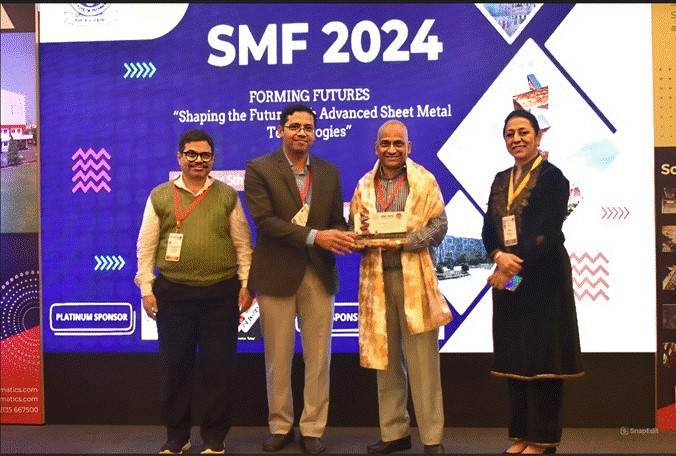
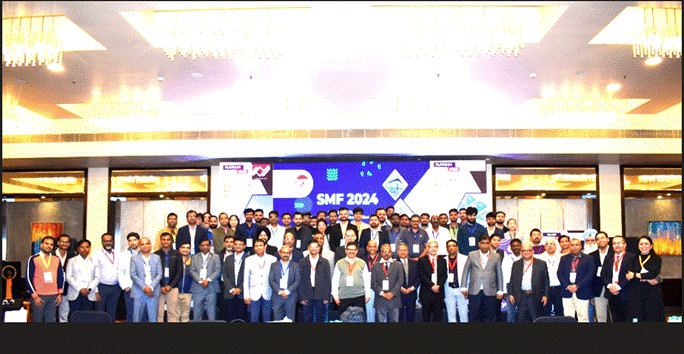
Rupnagar, 9th December 2024: IIT Ropar successfully hosted the Sheet Metal Forming (SMF) 2024 conference, attracting a large gathering of national and international delegates. The event featured eminent speakers from IITs and prominent industry partners, including Auto form, Electropneumatics & Hydraulics, Altair, Tata Steel, Tata Technologies Ltd., Ford India, Felss System GmbH, and JBM Auto Ltd. SMF 2024, the flagship conference of the Sheet Metal Forming Research Association (SMFRA), provided a platform for researchers and developers from India and abroad to present and exchange ideas on metal forming technologies.
The conference commenced on December 5th with an inaugural ceremony. Prof. Anupam Agrawal, from the Department of Mechanical Engineering at IIT Ropar and Organizing Secretary of SMF 2024, welcomed the attendees, including speakers, SMFRA members, scholars, and industry guests. Prof. Rajeev Ahuja, Director of IIT Ropar, conveyed his best wishes for the success of the conference. This was followed by an address by Dr. Prabhat K. Agnihotri, Head of the Department of Mechanical Engineering and Chairman of the conference. Chief Guest Dr. Santosh Kumar, Vice President, Jindal Stainless Ltd., delivered the Rasquinha Memorial Lecture, sharing insights on the latest advancements and challenges in the field of sheet metal forming. Prof. K. Narasimhan, Secretary of SMFRA and Professor at IIT Bombay, highlighted the key challenges in metal forming for academia and underscored the importance of the SMF conference series in bridging academia and industry. The ceremony concluded with a vote of thanks by Prof. Navin Kumar, Department of Mechanical Engineering, IIT Ropar, and Co-Organizing Secretary of SMF 2024.
The event was supported by Platinum Sponsors Auto Formand Electropneumatic & Hydraulics (I) Pvt. Ltd., along with Silver Sponsor Altair Engineering India Pvt. Ltd.
Day 1 of the conference showcased presentations by leading researchers, professors, and industry leaders on the latest advancements in sheet metal forming. Day 2 included technical sessions on diverse topics, such as lightweight metal forming, hot forming for lightweight construction, and challenges in skin panel forming. Attendees had the opportunity to engage with experts and exchange ideas on cutting-edge research in sheet metal forming.
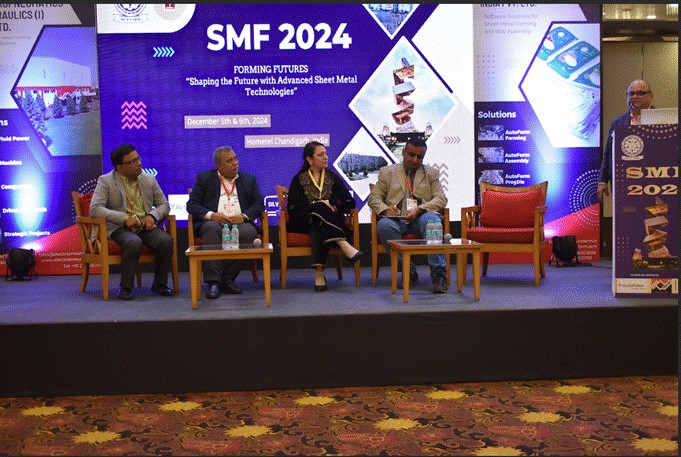
SMF 2024 featured a panel discussion on day 2, moderated by Mr. Avinash Khare, Consultant at Tool Maker’s Facility, India. The panel included distinguished experts such as Prof. Hariharan K. (Associate Professor, IIT Madras), Mr. Prashant Kulkarni (Regional Manager, Altair Engineering India Pvt. Ltd.), Dr. Rahul Kumar (Tata Steel), and Prof. Ekta Singla(Associate Professor, IIT Ropar).
SMF 2024 aimed to provide insights into the future of metal forming research and promote knowledge-sharing among experts. The biennial event concluded successfully, with SMF 2024 Organizing Secretary Prof. Anupam Agrawal and Co-Organizing Secretaries Prof. Navin Kumar and Prof. Ekta Singla—receiving widespread appreciation for their efforts. The conference ended on Day 2 with a valedictory address by Prof. Anupam Agrawal.
The Department of School Education and Literacy, Ministry of Education, Government of India has been implementing a rolling programme of sample based National Achievement Survey (NAS) aimed at classes III, V, VIII and X with a cycle period of three years. The last National Achievement Survey (NAS) was held on 12th November, 2021.
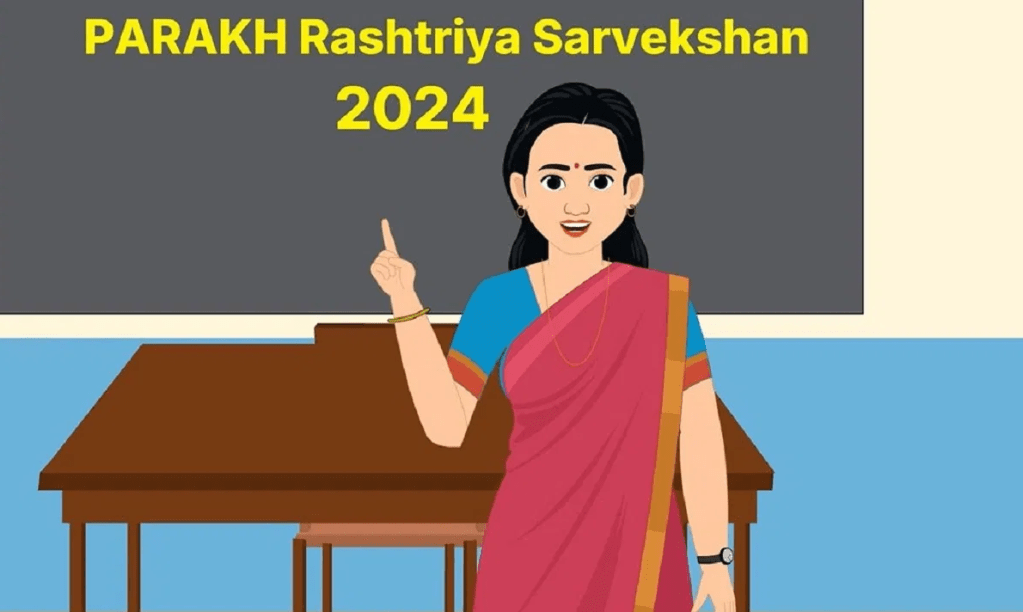
In pursuance of the recommendations of the National Education Policy (NEP) 2020, National Assessment Centre, PARAKH (Performance Assessment, Review, and Analysis of Knowledge for Holistic Development) has been setup by the Ministry of Education under the National Council of Educational Research and Training (NCERT) and has been entrusted with the responsibility of carrying out the next round of NAS, hereafter referred to as PARAKH Rashtriya Sarvekshan 2024. The survey will be held on 4th December, 2024 across the country and will help to assess the competencies developed by students at the end of foundational, preparatory and middle stages (i.e., Students currently in 3rd, 6th and 9th Grades) and help to take remedial measures. The instrument development, testing, finalization of the test items and survey tools have been developed by PARAKH, NCERT. However, the administration of the test in the sampled schools will be done by CBSE in collaboration with the respective States/UTs.
The PARAKH Rashtriya Sarvekshan is a baseline study to understand the achievement of the stage specific competencies at the end of foundation, preparatory and middle stages as per NEP 2020. It will cover the entire spectrum of schools i.e., Government Schools (Central Government and State Government), Government Aided Schools and Private schools across the country. It is expected that around 23 lakh students of approximately88 thousand schools spread out in 782 districts across 36 States and UTs will be covered in the PARAKH Rashtriya Sarvekshan 2024. Students of Grades 3, 6, and 9 will be assessed in the subjects, Language, Mathematics, the World Around Us, Science and Social Science. The Test would be conducted in 23 mediums of instructions covering Assamese, Bengali, Gujarati, Hindi, Kannada, Konkani, Malayalam, Manipuri, Marathi, Nepali, Oriya, Punjabi, Sanskrit, Santhali, Sindhi, Tamil, Telugu, Urdu, Bodo, English, Mizo, Garo & Khasi.
For smooth and fair conduct of the survey 94878 Field Investigators, 75,565 Observers, 3128 District Level Officers and 180 State Nodal Officers from 36 States and Union Territories have been appointed. Also, 782 Board Representatives along with 38 National Level Observers have been appointed in the districts for monitoring the overall functioning and ensuring fair conduct of the Survey. All the personnel have been provided extensive training regarding their roles and responsibilities.
A National Steering Committee has been constituted for conduct of PARAKH Rashtriya 2024 headed by Secretary, Department of School Education and Literacy, Ministry of Education. A Portal https://ncert.nic.in/parakh/rashtriyasarvekshan.php has been launched to enable coordination with various key functionaries for smooth conduct of PARAKH Rashtriya 2024. National, State and District Report cards for all Stages covered under the survey will be released and placed in public domain.
Union Minister for Education, Shri Dharmendra Pradhan, will launch the PM e-VIDYA DTH Channel No. 31 for Indian Sign Language (ISL) tomorrow (6 December,2024) in New Delhi. Union Minister of State (Independent Charge) for Skill Development and Entrepreneurship and Minister of State for Education, Shri Jayant Chaudhary will also grace the event. The programme will witness participation from Hearing Impaired (HI) children, HI achievers, special educators, ISL certified interpreters and organisations working for mainstreaming the Hearing-Impaired community.
This critical initiative supports the objectives of the National Education Policy (NEP) 2020 which recommends promotion of Indian Sign Language to foster a more inclusive educational environment. Para 4.22 of NEP states that ‘Indian Sign Language (ISL) will be standardized across the country, and National and State curriculum materials developed, for use by students with hearing impairment. Local sign languages will be respected and taught as well, where possible and relevant.’
An exclusive PM e-Vidya channel devoted to the promotion of the Indian Sign Language has been conceptualised to promote ISL as a language as well as a school subject, so that the larger population has access to learning the language. The Channel will disseminate learning content for school children (Central & State Curriculum), teachers, teacher educators and other stakeholders in the area of career guidance, skill training, mental health, class-wise curricular content, communication skills, as well as promotion of Sign Language as a language subject, just like verbal languages like Hindi, English etc., for all.
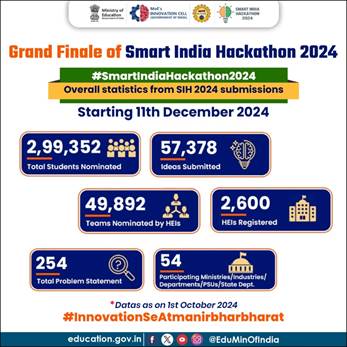
The 7th edition of the Smart India Hackathon (SIH) will concurrently begin on 11th December, 2024 at 51 centres nationwide. Union Minister for Education, Shri Dharmendra Pradhan, will virtually inaugurate the event. SIH is a nationwide initiative to provide students with a platform to solve some of the pressing problems we face in our daily lives and thus inculcate a culture of product innovation and a problem-solving mind set. Like past editions, the student teams will work on either the problem statements given by the Ministries/Departments/Industries or submit their idea in the Student Innovation Category against any of the 17 themes.
For SIH 2024, more than 250 problem statements have been submitted by 54 Ministries, Departments, State Governments, PSUs, and Industries. This year, an impressive 240% increase has been recorded in internal hackathons at the institute level, growing from over 900 in SIH 2023 to over 2247 in SIH 2024, making this the largest edition so far. More than 86000 teams have participated in SIH 2024 at the institute level and around 49,000 student teams (each consisting of 6 students and 2 mentors) have been recommended by these institutes for the national level round. SIH grand finale also serves as a ground for open interaction between officials from different Ministries/government departments and students, teachers from educational institutes which is very unique and also very encouraging for the students and teachers.
The challenges identified and addressed cover 17 major areas/themes linked to sectors of national importance and national priorities. These are Healthcare, Supply chain & Logistics, Smart Technologies, Heritage & Culture, Sustainability, Education & Skill Development, Water, Agriculture & Food, Emerging Technologies, and Disaster Management.
SIH has profoundly influenced India’s innovation landscape, empowering students and professionals to address real-world challenges. A pivotal element ensuring this success is the SIH Alumni Network, which, through its well-designed portal (https://alumni.mic.gov.in/), has seamlessly documented success stories, showcasing transformative outcomes. Till date, SIH Alumni have established over 100 Startups, many of which have strong social dimensions.
Effective office safety training is key to a safe workplace. Every employee deserves a safe, hazard-free workplace.
Office safety training prevents injuries. It also gives employees the skills and knowledge to use safety measures effectively.
This guide will detail the best practices for office safety training.
Understanding the Importance of Office Safety Training
Office safety training is crucial for creating a safe working environment. It trains employees to spot dangers and act.
Proper training can significantly reduce workplace injuries. An organization that invests in safety training protects its employees. It also boosts productivity and morale.
Identifying Workplace Hazards
Being aware of office hazards is the first step towards prevention. Common office hazards include slips, trips, and falls from clutter or wet surfaces.
To ensure safety, assess risks regularly and reduce them. Encourage employees to report any unsafe conditions immediately. This proactive approach fosters an environment of accountability and vigilance.
Integrating Ergonomic Safety Training
One of the significant aspects of office safety training is ergonomic safety. Long hours at desks put employees at risk for musculoskeletal disorders.
Ergonomic training teaches employees to set up their workstations. This minimizes discomfort and prevents injuries. This includes adjusting chair heights, monitor positions, and keyboard placements.
Focusing on ergonomic safety can boost productivity and comfort. It can also reduce injury risk.
Implementing Emergency Response Procedures
Emergency response procedures are a critical component of office safety training. Train all employees to respond to emergencies. Having a well-structured plan helps minimize chaos and ensures everyone understands their role.
Conduct regular drills to familiarize staff with evacuation routes. Be sure to designate emergency contacts and ensure all employees know them. Keep first-aid kits accessible and well-stocked
Regularly reviewing and updating these procedures based on feedback and changes is vital. A prepared workforce is key to minimizing risks in unexpected situations.
Training Programs and Resources
Effective office safety training often includes interactive programs, workshops, and online resources. Many organizations offer training sessions.
They tailor them to their workplace’s specific needs and hazards. Using expert trainers in workplace injury prevention can improve the training.
Also, safety training courses boost employees’ confidence in emergencies. To improve employee safety skills, provide resources on workplace hazards.
A culture of continuous learning about safety will keep employees prepared. For further assistance in office safety training, visit Cprcertificationnow.com.
Creating a Safety Culture
Beyond formal training, developing a safety culture within the organization is vital. This means making safety a priority at every level, from management to new hires. Regular safety meetings and open discussions about hazards promote employee involvement.
When employees take ownership of their safety, they become more engaged. Celebrate safety achievements to reinforce positive behavior. Remember, a collective effort is more effective than individual actions.
Conducting an Office Safety Training
Office safety training is indispensable for a healthy work environment. Organizations can cut workplace injury risks by using best practices. These include hazard awareness, ergonomic training, and emergency response. Make safety a priority. Foster a culture of care among employees.
If you enjoyed this article and would like to read more like it, please check out the rest of our blog today.
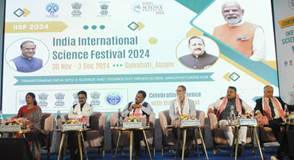
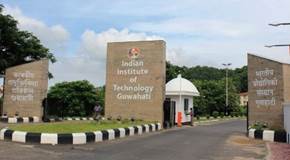
India International Science Festival (IISF) is going to be celebrated at Indian Institute of Technology Guwahati during 30 Nov. to 3 Dec. 2024. The Council of Scientific and Industrial Research (CSIR) is the nodal department for this year IISF and a constituent laboratory of CSIR namely National Institute for Interdisciplinary Science and Technology (CSIR-NIIST, Thiruvananthapuram) is coordinating the whole festival. IISF is a unique festival of science society engagement which was initiated in the year 2015 and the very first IISF was organised at IIT Delhi. Vijnana Bharati, a science movement of India conceptualized this science festival. North East India will witness this festival for the first time. To date, India International Science Festival has been the largest science event in the country with a participation of thousands of people who come together annually to foster scientific collaboration, inspire young minds and propel economic growth through scientific approaches.
“IISF is not only meant for the people who do science. The key philosophy of IISF is the celebration of science by all, and thus it also engages common people in a joyful and entertaining manner”.
This year in 2024, IISF is being organized at IIT Guwahati, Assam from November 30th – December 4th, 2024. The theme of this 10th edition of IISF is “Transforming India into an S&T driven Global Manufacturing Hub”. It reflects the government’s aim to merge science and technology with industrial growth, making India global leader in manufacturing.
IISF Organizers and Organizing Partners
The Ministry of Science and Technology (MoS&T), through their departments viz. Department of Science & Technology (DST), Council of Scientific & Industrial Research (CSIR), Department of Biotechnology (DBT) and Ministry of Earth Science (MoES) is responsible for conducting this mega annual event. Along with government organizations Vijnana Bharati has been a consistent organizing partner of IISF since the inception of this event.
The other organizations that took active part in IISF are office of Principal Scientific Advisor (PSA) to Govt. of India, Department of Space (DoS), Department of Atomic Energy (DAE), Directorate of Defence Research & Development (DDR&D), Ministry of New And Renewable Energy (MNRE), Ministry of Health & Family Welfare (MoH&FW), Department of Agricultural Research and Education (DARE), Ministry of Environment, Forest and Climate Change (MoEFCC), Ministry of Ayush, Ministry of Electronics and Information Technology (MeitY), Ministry of Rural Development (MoRD), and many other concerned ministries, their departments, councils and organizations.
The IISF-2024 is being coordinated by the CSIR, convened by CSIR-NIIST and partnered by all the major ministries and scientific departments of the Government of India in collaboration with Vijnana Bharati.
Thematic Events of IISF-2024
IISF has various themes that aim to indulge scientific and common people for diverse scientific discussions and activities. Here, everyone gets a chance to engage and learn scientific approaches due to the themes that have been planned after keeping in mind the needs of various stakeholders. For IISF some new themes have been added as per the need of North East India and here a little information is been given about all themes.
To begin with, IISF 2024 has one special event “Chandrayaan – The Museum of the Moon” where an artistic model by British artist Dr. Luke Jerram will be placed among the attendees to showcase and celebrate India’s success of Chandrayaan Mission. The model is a replica of the moon that measures about seven meters in diameter and will showcase the real like imagery of lunar surface where Chandrayaan was landed on August 23, 2023.
Mega Science and Technology Exhibition will showcase accomplishments and success stories of India in the field of Science, Technology, Engineering, and Mathematics (STEM). In the expo various technologies developed by Indian Scientific and R&D Institutions across the country kept on display for all four days of the festival to show and educate students, scientists, and the general public.
Make in India, Make for theWorld event aims to attract national as well as international organizations involved in manufacturing, technology, and logistics to discuss about things required to make India a global manufacturing hub.
The New Nalanda known earlier as Student Science Village will enable interaction of students and teachers. The event aims to ignite students’ interest in STEM through interactive exhibits, demonstrations, educational games and challenges.
Pragya Bharat event will discuss New Frontiers in S&T that are needed to make India Viksit Bharat by 2047. The event aims at promoting cutting edge research across various scientific disciplines like AI, Biotechnology, Cybersecurity, Robotics, Quantum Computing etc. which can make India developed and self-reliant.
Nari Shakti – Women’s Development to Women-led Development in S&T event will focus on active participation of women in STEM and Entrepreneurship and discuss about various schemes provided by Government of India to empower women in S&T.
S&T Hackathon – Ideas for Viksit Bharat event is designed to encourage school and college students to develop innovative solutions related to science and technology, focusing on Viksit Bharat Sankalp. Teams comprising of students and mentors will be allowed to participate in the competition and winners will get attractive prizes whereas final participants will get special benefits like internships, project positions etc.
Young Scientists Conclave intends to bring together young researchers, scientists and innovators below the age of 45 years belonging to academia, research and industry fraternities. It enables young researchers to be aware of the scientific policies of India and the recent developments in science and technology of India including infrastructure development, funding opportunities etc.
Thought Leaders Round Table – Minister – Secretary – Councils – CEO Conclave will bring the leaders and policy makers like Central and State Government Ministers, Departmental Secretaries, S&T Councils and CEOs of Industries on one platform. The event will have discussions on important issues and establish collaborations for making big changes in public and private sectors that can align with the goal of Viksit Bharat.
The Gurukula – Aspiring Educators and Teachers Workshop earlier known as The National Science Teachers Workshop aiming at the professional development of science teachers by equipping them with innovative teaching methodologies, modern tools and strategies to effectively impart scientific knowledge to students.
Mission Start-up eventoffers the opportunity to Start-ups and supporting enablers like incubation centres. Start-ups in this event can showcase their products and services to the investors and associates which in turn help them grab the further opportunities under Start-up India mission and other initiatives available in the country.
Reimagining Bharat Exhibition – Transformation through New Age Technologies aims to showcase emerging technologies and prototypes/models developed by Governmental Agencies and Departments. The S&T areas targeted for this event are not limited to fundamental and applied sciences, agriculture, healthcare, space, education, strategic sectors, robotics, etc.
Sagarika – The Tale of Earth Sciences event as name suggest aims to engage and educate people on different areas of earth science such asmeteorology, oceanography, ecology etc. Through this event, IISF desires to raise public awareness on environmental issues.
Science beyond Borders event is aimed at fostering international collaboration, partnerships and exchange of dialogues among scientists, researchers and institutions to address global challenges in S&T.
Vigyanika event celebrates Science Literature Festival which aims to promote science literacy and effective science communication strategies in Indian languages. The interactions done through keynote lectures, panel discussions and scientific sessions among S&T authors, Vigyan Kavi Sammelan, Science Drama and arts, and related competitions.
Fusion Forum – The Atomic Assembly event will discuss the current perspectives, future benefits, and pressing challenges in implementing nuclear energy in India for various sectors like Generation of power, nuclear medicine, agriculture, Additive manufacturing etc.
Student – Scientist Interaction Program – Face to Face with New Frontiers in Science mediates interaction and short discussion based sessions of students/researchers with experts of various disciplines of S&T to inspire students to pursue science and research career.
National Social Organizations and Institutions Meet (NSOIM), well understand the role of social organizations promotion of S&T and thus provides them platform to discuss scientific interventions and sustainable models for societal development and nation-building.
Vision Sansad aims at bringing together key leaders like Directors, Vice Chancellors, Presidents and Senior Leaders from every possible science institution of the country where discussions can take place strategies for advancing scientific research, collaboration and policy development to address current challenges and shaping the future of Indian science in an inclusive manner.
Science Safari Science through Games and Adventures provides a platform to display science-based toys and games and also workshops are being organized to let the teachers learn the ways these toys used for teaching purposes.
S&T Media Conclave will bring media personnel, journalists, communicators and general public on a platform where they can discuss the challenges and opportunities of communicating science to a wide audience, best ways of science communication and preventing misinformation, and strategies to enhance collaboration between scientific community and media.
Saga of Science Chronicles is an evening event that will tell the history and recent developments of Indian science and scientists through LED light show that will happen during 7:30 pm – 9:30 pm during each day of IISF 2024.
Science Odyssey of the North East will address the challenges that hinders the growth of science and technology in North East and discuss the ways of promotion of science and technology of North East.
The Taste of the Hills- North East Food Street will showcase the food heritage of North East and let the people eat and enjoy their traditional food items. The Food Street will remain open throughout IISF 2024.
North East Symphony- North East Cultural Fest will portray North East India’s diverse traditions, customs, and arts through experience of music, dance, crafts, and traditional practices. The fest is staged during the whole duration of IISF 2024.
IISF 2024, promises to be a landmark event in promoting science and technology. With the current theme it seeks to celebrate India’s scientific achievements and foster collaboration across various sectors. The event will feature diverse activities, engaging both scientific professionals and the general public. It is open for all and free so one has to attend the event to see India’s scientific achievements.



























 Eduindex
You must be logged in to post a comment.