
OBSESSIVE COMPULSIVE DISORDER(OCD)

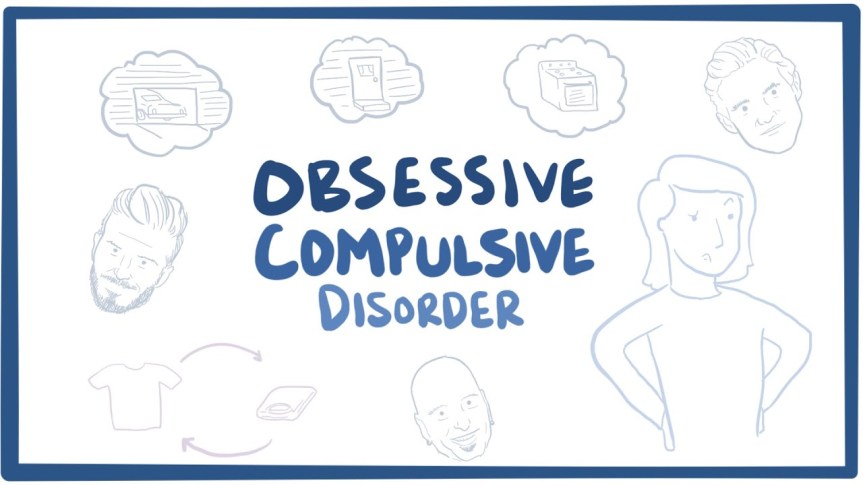
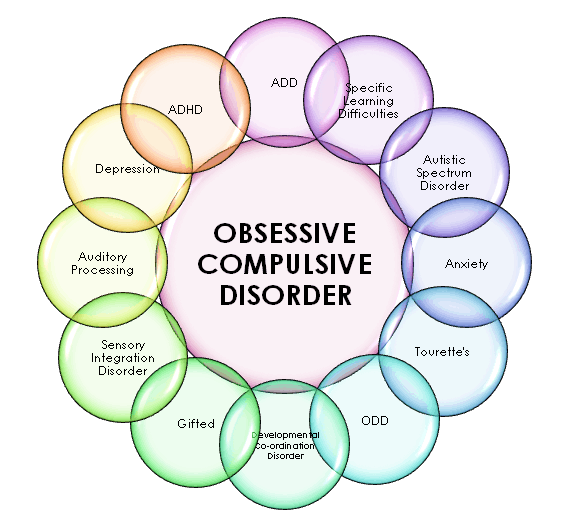
Diagram chart of Obsessive Compulsive Disorder .

Obsessive compulsive disorder is a mental health disorder that affects people of all ages and walks of life . It occurs when an individual gets caught in a cycle of obsessions and compulsions . It can be said that person with OCD are plagued by constant thoughts of fears that cause them to perform rituals or routines . The disturbing thoughts are called obsessions and rituals are called compulsions .

In simple words , OCD is a type of mental of disorder that causes repeated unwanted thoughts . To get rid of the unwanted thoughts , he/she performs the same task/activity again and again . For example, a person may fear that everything he/she touches has germs on it . So , to get rid of that fear he/she washes his/her hands again and again . Persons suffering from OCD might understand that their obsessions are unreasonable , but trying to stop or ignore them causes anxiety and stress . There are some symptoms of OCD , which may range from mild to severe . Some of the obsession and compulsions are mentioned below.

Main obsessions

  • A fear of harm to yourself or loved one .
  • A fear of contamination by germs .
  • A forceful or driving need to perform things perfectly or correctly .
  • Having excessive doubt on any individual .
  • A fear of being embarrassed .
  • A fear of getting dirty .
  • A fear of making mistakes.

Main compulsions

  • Repeating things or always moving items to keep them in exact order .
  • Bathing or washing hands several times.
  • Checking things over and over again.
  • Repeating specific words.
  • Hoarding .
  • Constant praying.

Causes of OCD

The exact cause of obsessive compulsive disorder is still unknown . Research studies suggest that there may be a problem with the way one part of the brain sends information to another part . Serotonin is the chemical in the brain that sends messages from one part to another . Insufficiency of serotonin may help in causing OCD . Stress and anxiety do not cause OCD but they may worsen the symptoms of OCD.

Recent studies have indicated that there may be considerable genetic basis for OCD. Depression is also thought to be the cause of OCD but the experts’ opinion is split .

Treatment of OCD

Obsessive compulsive disorder (OCD) is a debilitating neuropsychiatric disorder with a lifetime prevalence of 2 to 3 percent and is established to be 10th leading cause of disability in the world. Patients with OCD experience recurrent, intrusive thoughts (obsessions) and/or repetitive, stereotyped behaviors (compulsions) that last for at least one hour per day and significantly interfere with the individual’s normal level of functioning. 

OCD was once thought to be extremely rare, but recent epidemiological studies have shown it to be the fourth most common psychiatric disorder.

OCD is often a chronic disorder that produces significant morbidity when not properly diagnosed and treated.

OCD can be treated. The treatment recommended will depend on how much it’s affecting your life.

These treatments can be very effective, but it’s important to be aware that it can take several months before you notice the benefit. A short course of therapy is usually recommended for relatively mild OCD. If you have severe OCD, you may need a longer course of therapy and/or medicine. 

The most effective treatments for OCD are called Exposure and Response Prevention (ERP), which has the strongest evidence supporting its use in the treatment of OCD, and/or a class of medications called serotonin reuptake inhibitors, or SRIs.  During ERP, anxiety and obsession-inducing stimuli are systematically presented in a controlled environment and patients are prevented from engaging in their usual compulsions. Exposure and Response Prevention is typically done by a licensed mental health professional (such as a psychologist, social worker, or mental health counselor) in an outpatient setting. Taken together, ERP and medication are considered the “first-line” treatments for OCD. About 70% of people will benefit from ERP and/or medication for their OCD. 

What if Outpatient ERP Hasn’t Worked? Are There More Intensive Options?

  • Traditional Outpatient – Patients see a therapist for individual sessions as often as recommended by their therapist generally one or two times a week for 45-50 minutes. 
  • Intensive Outpatient – Patients may attend groups and one individual session per day several days per week. 
  • Day Program – Patients attend treatment during the day (typically group and individual therapy) at a mental health treatment center usually from 9am – 5pm up to five days a week. 
  • Partial Hospitalization – Same as the Day Program but patients attend the treatment at a mental health hospital. 
  • Residential – Patients are treated while living voluntarily in an unlocked mental health treatment center or hospital. 
  • Inpatient – This is the highest level of care for a mental health condition. Treatment is provided on a locked unit in a mental health hospital on a voluntary or sometimes involuntary basis. Patients are admitted into this level of care if they are unable to care for themselves or are a danger to themselves or others. The goals of inpatient treatment are to stabilize the patient, which generally takes several days to a week, and then transition the patient to a lower level of care.

Other recommendations from the APA Practice Guideline, cite research showing that ERP delivered in a group format, as well as ERP therapy delivered via videoconferencing (teletherapy), might be effective. Also, there is some promising new research showing that Acceptance and Commitment Therapy may be helpful for OCD. 

OCD is a chronic and severe psychiatric disorder that is often incapacitating when left untreated. Patients suffering from OCD often attempt to hide their symptoms due to the embarrassing or disturbing content of their thoughts. Many individuals isolate themselves as a consequence of their symptoms and avoid their exposure to potentially anxiety-provoking situations. Unfortunately, there is often a long delay between the time when an individual develops OCD symptoms and when they first obtain treatment. Early diagnosis and treatment minimizes symptom severity and level of disability.