Trade Policy of India

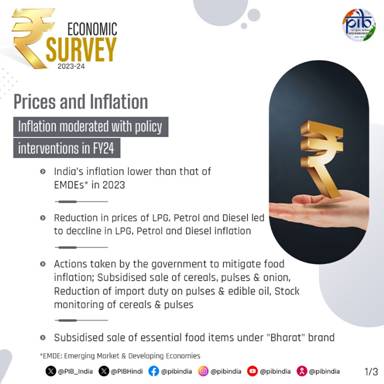
 The Economic Survey 2023-24, that was tabled in Parliament today, lays special emphasis on controlling Prices and Inflation as ‘Low and stable inflation is key to sustaining economic growth.’ It states that Governments and Central Banks face the challenge of keeping inflation at a moderate level while ensuring financial stability. Achieving this delicate balance requires careful monitoring of economic indicators and taking appropriate and timely corrective actions. With the commitment of the Reserve Bank of India (RBI) to the goal of price stability and policy actions by the Central Government, India has successfully managed to keep retail inflation at 5.4 per cent in FY24, the lowest level in 4 years, since the Covid-19 pandemic period.

The Economic Survey highlights the fact that India’s retail inflation is lower than the emerging markets & developing economies (EMDES) and world average in 2022 and 2023 as per IMF data. Survey states that factors such as established monetary policies, economic stability, well-developed and efficient markets that balance supply and demand conditions, and stable currencies contribute to the effective management of inflation. Historically, inflation in advanced economies has generally been lower than in EMDEs.
Inflation Management

With the goal of maintaining price stability, many countries have established their own inflation targets based on various factors that serve their economic objectives best. Lauding India’s Inflation Management, the Economic Survey states that interestingly, India is performing better than various developed and emerging economies in relation to its inflation target. In 2023, India’s inflation rate was within its target range of 2 to 6 per cent. Compared to advanced economies like the USA, Germany, and France, India had one of the lowest deviations from its inflation target in the triennial average inflation from 2021-2023. Despite the challenges posed by global demand- supply imbalances due to ongoing geopolitical tensions, India’s inflation rate was 1.4 percentage points below the global average in 2023.

Since 2020, countries have been facing challenges in controlling inflation. India has been able to bring about a declining trend in Headline and Core Inflation through its prudent administrative measures and monetary policy. As per the Economic Survey, since May 2022, monetary policy broadly focused on absorbing excess liquidity in the system by increasing the policy repo rate by 250 basis points from 4 per cent in May 2022 to 6.5 per cent in February, 2023. Thereafter, the policy rate was kept unchanged by focusing on the gradual withdrawal of accommodation, aiming to align inflation with the target, while simultaneously fostering growth. Consequently, the persistent and sticky core inflation observed in FY23 declined to 3.1 per cent in June, 2024

The Survey further asserts that administrative measures such as price cuts for LPG, petrol, and diesel led to lower LPG and petroleum product inflation. LPG inflation rate has been in the deflationary zone since September 2023 while retail inflation in petrol and diesel moved to the deflationary zone in March 2024. Additionally, global commodity prices declined in 2023, reducing price pressure in energy, metals, minerals, and agricultural commodities through the imported inflation channel. Low fuel and core inflation ensured a downward trajectory for headline inflation, despite volatility in food prices in FY24. As per the recent data released by MoSPI, the retail inflation rate was 5.1 per cent in June 2024.

Core inflation, measured by excluding food and energy items from CPI headline inflation has witnessed a four year low in FY24. From the pandemic-driven highs, inflationary pressures in India eased in FY22, aided by softening food inflation. Inflationary pressures firmed up in FY23 yet again driven by the Russia-Ukraine war disrupting the recouping supply chains leading to a rise in food and fuel prices. In FY24, the price situation improved. CPI inflation moderated, driven by a decline in core inflation in both goods and services. Core services inflation eased to a nine-year low in FY24; at the same time, core goods inflation also declined to a four-year low.
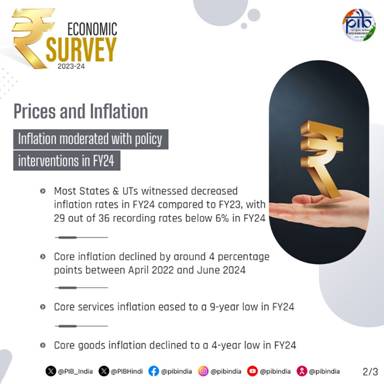
Trends in core inflation are important in determining the contours of monetary policy. Assessing the emerging patterns of price pressures, the RBI increased the repo rate gradually by 250 basis points since May 2022 to curtail inflationary pressures, leading to reduction of around 4 percentage points in core inflation between April 2022 and June 2024. This was aided by moderation in housing rental inflation, with a significant increase in the stock of new houses in 2023.

Consumer durables inflation increased progressively between FY20 and FY23 by more than 5 percentage points, mainly due to increase in gold prices in FY21 and clothing in FY22 and FY23. With the improvement in the supply of key raw materials, the inflation rate for consumer durables declined in FY24. However, record-high gold prices, driven by anticipated Fed rate cuts and escalating geopolitical uncertainty, have exerted upward pressure on overall durables inflation. Consumer non-durables (CND) inflation plunged in FY20, it started to inch up in FY21, reached an all-time in FY22, and declined sharply in FY23 and FY24.

Food Inflation has been a global phenomenon in the last two years. Research indicates the rising vulnerability of food prices to climate change. In FY23 and FY24, the agriculture sector was affected by extreme weather events, lower reservoir levels, and damaged crops that adversely affected farm output and food prices. So, food inflation based on the Consumer Food Price Index (CFPI) increased from 3.8 per cent in FY22 to 6.6 per cent in FY23 and further to 7.5 per cent in FY24. However, the government took prompt actions, including open market sales, retailing in specified outlets, and timely imports, to ensure an adequate supply of essential food items. Additionally, to ensure food security for the poor, the Pradhan Mantri Garib Kalyan Anna Yojana, which provides free food grains to more than 81 crore beneficiaries, was extended for a period of five years starting from January 2024.

Global Food Prices and Domestic Inflation

Global food prices also have an impact on domestic inflation. In India, the edible oil market is heavily depends on imports, with more than 50 per cent of the total edible oil requirement being imported, making it sensitive to global prices. The Government closely monitors global market trends to ensure the availability of edible oils for consumers at an affordable price. Efforts are also made to balance imports with domestic production to mitigate the risks associated with global price volatility. In this context, the National Mission on Edible Oils Oil Palm aims to increase domestic crude palm oil production to reduce the import burden. In the case of sugar, the Government announced restrictions on export in June 2022 to ensure sufficient local supplies and thereby manage sugar inflation. These export restrictions have indeed played a role in stabilising domestic sugar prices. As a result, even though the global sugar price index inflated and has been showing volatility since February 2023, domestic sugar prices have remained much less volatile.

Elaborating on the Interstate variations in Retail Inflation, the Economic Survey asserts that inflation rate was less than 6 per cent in 29 out of the 36 States and Union Territories. These Interstate variations in inflation are more pronounced in rural areas since rural consumption basket has a much higher weightage of food items (47.3%) than the urban (29.6%). Hence, in the last two years, States that witnessed elevated food prices also experienced higher rural inflation.

Future Inflation Projections

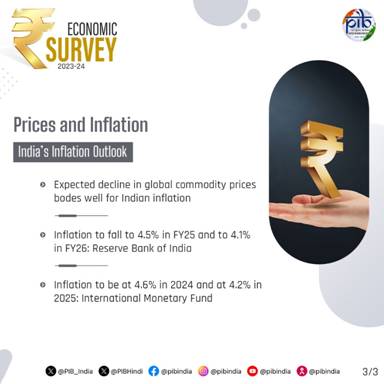
RBI and IMF have projected India’s consumer price inflation will progressively align towards the inflation target in FY26. Assuming a normal monsoon and no further external or policy shocks, the RBI expects headline inflation to be 4.5 per cent in FY25 and 4.1 per cent in FY26. IMF has projected an inflation rate of 4.6 per cent in 2024 and 4.2 per cent in 2025 for India. The World Bank expects that the global supply of commodities will increase, and so will their demand due to improved industrial activity and trade growth. It projects a 3 per cent decline in the commodity price index in 2024 and a 4 per cent decrease in 2025, mainly driven by lower energy, food and fertiliser prices. The energy price index is expected to reduce due to significant declines in coal and natural gas prices this year. Fertiliser prices are likely to weaken but remain above 2015-2019 levels due to strong demand and export restrictions. Base metal prices are projected to rise, reflecting increased global industrial activity and clean energy production. In general, the current downward movement in the prices of commodities imported by India is a positive for the domestic inflation outlook.
The short-term inflation outlook for India is benign. However, from the angle of long-term price stability, the Economic Survey suggests exploring the following options as the way forward:

1. Reducing import dependence for edible oils by increasing domestic production of major oilseeds, Exploring potential of non-conventional oils such as rice bran oil and corn oil and expanding scope of National Mission on Edible Oils

2. Expand the area under pulses, particularly lentils, tur, and urad, in more districts and rice- fallow areas. Promoting the summer cultivation of urad and moong in areas with assured irrigation facilities.

3. Further improving and developing modern storage and processing facilities for vegetables, especially tomatoes and onions.

4. Improving swiftness and effectiveness of administrative action by the Government to deal with price flare-ups in specific items by collating high-frequency price monitoring data, from the farm gate to the final consumer, in a quantifiable manner. Expediting producer price index for goods and services for better grasp on episodes of cost-push inflation and

5. Revising the consumer price index with fresh weights and item baskets using Household Consumer Expenditure Survey, 2022-23.


*****
Efforts to Ensure Sustainable Mining

 The National Mineral Policy, 2019 emphasizes on prevention and mitigation of adverse environmental effects due to mining in accordance with the latest scientific norms and modern afforestation practices to form integral part of mine development strategy in every instance. All mining operations have to be undertaken within the parameters of a comprehensive Sustainable Development Framework to ensure that environmental, economic and social considerations are integrated effectively in all decisions on mines and minerals issues. The policy also aims at encouraging use of renewable sources of energy at mining sites with a view to reducing pollution, carbon footprint and operational costs, through appropriate incentives, including sensitization training, workshops about environmental issues to all workers involved in mining operations.

Section 18 of Mines and Minerals (Development and Regulation) Act, 1957 empowers Central Government to frame rules for the mineral conservation, systematic development of minerals, protection of environment by preventing or controlling any pollution which may be caused by prospecting or mining operations. Accordingly, Mineral Conservation and Development Rules (MCDR), 2017 were framed, wherein Rule 40 and Rule 43 provides for:

(i) Rule 40 – Precaution against air pollution – Every holder of prospecting licence or a mining lease shall take all possible measure to keep air pollution due to fines, dust, smoke or gaseous emissions during prospecting, mining, beneficiation or metallurgical operations and related activities within permissible limits. 

(ii) Rule 43 – Permissible limits and standards – The standard and permissible limits of all pollutants, toxins and noise shall be such as may be notified by the concerned authorities under the provisions of the relevant laws for the time being in force. 

Further, before commencement of mining operations, lease holder has to obtain certain statutory clearances, licenses and approvals including Environmental Clearance from Ministry of Environment, Forest and Climate Change (MOEF&CC). As per the conditions of Environmental Clearance, the project proponent has to monitor fugitive emissions in the plant premises at least once in every quarter through labs recognised under Environment (Protection) Act, 1986 and Appropriate Air Pollution Control (APC) system shall be provided for all the dust generating points including fugitive dust from all vulnerable sources, so as to comply with prescribed stack emission and fugitive emission standards.

(c) & (d): Pollution levels in mines are monitored by State Pollution Control Board (SPCB) and Central Pollution Control Board (CPCB) as per their guidelines. Ambient air monitoring is carried out in core zone as well as buffer zone as per CPCB guidelines through laboratory recognized by MOEF&CC under Environment (Protection) Act, 1986. For Core and Buffer zone, for monitoring the fugitive dust emission, the National Ambient Air Quality Standard, 2009 is adhered to. Following practices are in general adopted at the mechanized mines to minimize the fugitive dust emissions: 

  1. Deploying modern fuel-efficient machines.
  2. Eliminating dust at source by maintaining roads in good condition by deploying motor grader and by spraying of water.
  3. Development of green cover along the haul roads.
  4. Emission levels of the mining machinery are kept under check by carrying out timely maintenance as per manufactures recommendations.
  5. Arrangements for wheel wash during exit of trucks/dumpers from mine.
  6. Preventing overloading of trucks and properly covering the cargo with tarpaulin before the truck goes out of mine.
  7. Dedicated manpower to clean the ore spillage on the public road by manual sweeping and washing.
  8. Dust suppression on mines through water sprinkling.
  9. Use of road sweeping machine for cleaning the public road/Mine Haul Road.

Policy Measures & Reforms in Mining Sector

 Government of India through Ministry of Mines has introduced various transformative policy measures since 2015 aimed to unleash the potential of mineral sector and to increase mineral production and employment generation in the sector. The Mines and Minerals (Development and Regulation) Act, 1957 [MMDR Act, 1957] was amended through MMDR Amendment Act, 2015 with effect from 12.01.2015. The most important feature of the said amendment was the provision for grant of mineral concessions through auction to bring in greater transparency and remove discretion at all levels in grant of mineral concessions. The method of auction also ensures that the State Governments get their fair share of revenue accruing from the auction process. Through the said amendment, the provision for establishing District Mineral Foundation was made with an objective to work for the interest and benefit of persons and areas affected by mining related operations. A provision was also made for establishing National Mineral Exploration Trust for providing impetus to exploration.

In order to maintain sustainable production of minerals in the country considering the fact that a large number of mining leases were expiring in March, 2020 under Section 8A(6) of the MMDR Act, the Central Government amended the MMDR Act through the Minerals Laws (Amendment) Act, 2020 with effect from10.01.2020. The reforms included seamless transfer of valid clearances to the new lessee selected through auction for a period of two years and allowing State Governments to take advance action for auction of mineral blocks even before the expiry of lease period to sustain the mineral production in the country.

The MMDR Act was further amended through the MMDR Amendment Act, 2021 with effect from 28.03.2021 with the objective of inter-alia increasing mineral production and time bound operationalization of mines, increasing employment and investment in the mining sector, maintaining continuity in mining operations after change of lessee and increasing the pace of exploration and auction of mineral resources. The reforms included the following:

(i) Removed the distinction between captive and merchant mines by allowing all captive mines to sell upto 50% of the minerals produced during the year after meeting the requirement of attached plant subject to the payment of additional amount as prescribed under sixth schedule of the MMDR Act.

(ii) Removed end-use restriction for future auctions to encourage participation of more bidders in auctions and facilitate increased pace of auctions.

(iii) Resolved all pending cases under section 10A(2)(b) of the Act. The existence of these cases was anachronistic and antagonistic to the auction regime.

(iv) All the valid rights, approvals, clearances, etc. granted to the previous lessee in respect of a mine shall continue to be valid on expiry or termination of lease and such clearances shall be transferred to the successful bidder of the mining lease selected through auction.

(v) To ensure ease of doing business, restrictions on transfer of mineral concessions for non-auctioned mines have been removed.

(vi) Payment of additional the amount to the State Government on extension of mining lease of Government companies to allow extension of many PSU mines which were not being extended by the State Governments.

(vii) Central Government has been empowered to conduct auction in cases where the States face challenges in conduct of auction or fail to conduct auction within prescribed time fixed in consultation with State Government.

(viii) Empowered the Central Government to issue directions regarding composition and utilization of funds under DMF. Direction to include the MPs/MLs and MLCs in the Governing Council was issued on 23.04.2021.

(ix) The exploration regime has been simplified by allowing accredited private exploration agencies which have been notified under second proviso to Section 4(1) of the MMDR Act for conducting exploration without prospecting licence.

Thereafter, considering that at present the availability of the critical minerals or technologies for their extraction and processing are concentrated in a few geographical locations which may lead to supply chain vulnerabilities and even disruption of supplies, the Central Government has amended the MMDR Act, 1957 through the MMDR Amendment Act, 2023.

Through the said amendment the Central Government has been empowered to exclusively auction mining lease and composite licence for 24 critical minerals listed in the new Part-D of the First Schedule to the said Act which includes minerals such as Cobalt, Graphite, Lithium, Nickel, Tantalum, Titanium etc. The objective of the said amendment is to increase exploration and mining of critical minerals and ensure self-sufficiency in supply of critical minerals which are essential for the advancement of many sectors, including high-tech electronics, telecommunications, transport, and defence. They are also vital to power the transition to a low-emission economy, and the renewable technologies that will be required to meet the ‘Net Zero’ commitment of India by 2070.

The auction of critical and strategic minerals brings several key benefits, including bolstering domestic production, reducing import dependency, promoting sustainable resource management, attracting investments in the mining sector and the development of key industries crucial for India’s industrial and technological advancement. This is a step towards creating a reliable supply chain of these mineral and a step towards making an ‘Atma Nirbhar Bharat’ and contribute towards increased economic growth.

The Central Government has launched the first tranche of e-auction of 20 mineral blocks of critical and strategic minerals on 29.11.2023 which include blocks of Lithium, Rare Earth Elements, Platinum Group of Minerals, Nickel, Potash etc. The auction of these blocks aims to expedite the General Exploration (G2 level), achieve the operationalization of mines and create a steady supply of these minerals, thus reducing our reliance on imports and ensuring a more secure and resilient supply chain.

Besides auction of critical minerals by the Central Government, in order to further boost exploration of critical and deep-seated minerals, a new mineral concession namely, exploration licence has been introduced for 29 critical and deep-seated minerals. Critical and deep-seated minerals such as Cobalt, Lithium, Nickel, Gold, Silver, Copper are difficult to explore and mine as compared to surfacial or bulk minerals. The country is mostly dependent on imports of these minerals. The exploration licence granted through auction shall permit the licencee to undertake reconnaissance and prospecting operations for critical and deep-seated minerals mentioned in the newly inserted Seventh Schedule to the Act.

Exploration license is foreseen to create an enabling mechanism wherein the Junior Mining Companies will bring in expertise from across the world in acquisition, processing and interpretation value chain of exploration and leverage the risk-taking ability in discovery of deep-seated mineral deposits through adoption of expertise and latest technologies.

National Logistics Policy

 To complement PM GatiShakti National Master Plan (NMP) , the National Logistics Policy (NLP) was launched on 17th September 2022 by the Prime Minister, Shri Narendra Modi. While the PM GatiShakti NMP addresses integrated development of the fixed infrastructure and network planning, the NLP addresses the soft infrastructure and logistics sector development aspect, inter alia, including process reforms, improvement in logistics services, digitization, human resource development and skilling.

Vision

The vision of NLP is to drive economic growth and business competitiveness of the country through an integrated, seamless, efficient, reliable, green, sustainable and cost-effective logistics network by leveraging best in class technology, processes and skilled manpower. This will reduce logistics cost and improve performance.

Targets

The targets of the NLP are to: (i) Reduce cost of logistics in India; (ii) improve the Logistics Performance Index ranking – endeavor is to be among top 25 countries by 2030, and (iii) create data driven decision support mechanism for an efficient logistics ecosystem.

Comprehensive Logistics Action Plan (CLAP)

To achieve these targets, a Comprehensive Logistics Action Plan (CLAP) as part of the NLP was launched covering eight action areas including (i) Integrated Digital Logistics Systems; (ii) Standardization of Physical Assets and Benchmarking of Service Quality Standards; (iii) Logistics Human Resource Development and Capacity Building; (iv) State engagement; (v) EXIM Logistics; (vi) Services Improvement Framework; (vii) Sectoral Plans for Efficient Logistics (SPEL); and (viii) Facilitation of Development of Logistics Parks.

Outreach Events/meetings:

Since the launch of the NLP, significant progress has been made with respect to the implementation of the Policy. By means of regional conferences, one-on-one interactions, and inter-Ministerial meetings, DPIIT has facilitated the implementation of NLP. An overview of these outreach activities is given below.

1. Inter-Ministerial meeting on 28th July 2023

  • On completion of ten months of the launch of the National Logistics Policy (NLP), an inter-Ministerial meeting to review the progress of its implementation was held by DPIIT, on 28th July 2023. During the meeting measures taken by different Ministries to improve logistics efficiency in the country were showcased.
  • The meeting saw participation from eleven infrastructure and user Ministries including M/o Road Transport & Highways (MoRTH), M/o Port Shipping and Waterways (MoPSW), M/o Coal, D/o Food & Public Distribution, M/o Civil Aviation (MOCA), M/o Steel, D/o Commerce, D/o Fertilizer, D/o Revenue, M/o Skill Development and Entrepreneurship (MSDE) and M/o Power and, National Industrial Corridor Development Corporation Limited (NICDC).
  • The meeting was Chaired by Special Secretary (Logistics). Secretary DPIIT had joined during the closing session. The meeting was divided into two sessionsSession, I focussed on review of measures undertaken by DPIIT and Session II covered progress in implementation of the NLP by participating Ministries.

2. Regional Workshops (between 20th March and 12th April 2023)

  • DPIIT organised five regional workshops between 20th March and 12th April 2023. All workshops had a dedicated session on NLP, wherein key features and progress of NLP was showcased and participating States/UTs presented the status and key highlights of respective State Logistics Policy and other interventions.
  • Over 500 participants covering Officials from all 36 States/UTs and concerned line Ministries/Department, and representatives from knowledge partners and multilateral organisations, attended these workshops.


3. Other one-on-one Interactions / Meetings:

  • Meetings on Logistics Performance Index (LPI): In an endeavor to further improve India’s ranking in the LPI, DPIIT has undertaken several measures. To apprise the World Bank team about the several initiatives and reforms of the Government of India and draw their attention on need for greater emphasis on objective based methodology for LPI scoring, Secretary, DPIIT met senior officials of World Bank Group at their headquarter in Washington DC.
    • In continuation with that DPIIT held a series of meetings with the World Bank Group [Logistics and Infrastructure India team] and concerned line Ministries.
    • dedicated Unit is being set up within the Logistics Division to develop and implement an action plan for improving India’s LPI ranking.
    • In addition, concerned line Ministries are setting up a dedicated cell for a focused project-based approach to improving India’s performance across the six LPI parameters.
  • Services Improvement Group (SIG) meetings: In line with approved institutional mechanism for the NLP, an Inter-Ministerial SIG was constituted on 14th March 2023Chaired by SS (Logistics), this group comprises of representatives from MoRTH, MoR, MoPSW, MNRE, MoP, DoT, MoPNG, MoCA, NITI Aayog, MoEFCC, MoHUA, DoR and DoC.
  • Objective: The SIG has been constituted to facilitate speedy resolution of logistics services and processes related issues of the industry, in a coordinated manner. Resolution of issues through SIG shall promote inter-operability; eliminate fragmentation in documentation, formats, processes, liability regimes and reduce gaps in regulatory architecture.
  • E-LoGs portal (digital system for registering logistics related issues by logistics sector associations): As on date 29 logistics sector associations are registered on the E-LoGs portal, with total 71 issues, of which 34 issues have been resolved.
  • Regular roundtables with industry players and SIG meetings are held.  Till date, six meetings of SIG, along with industry associations have been held.


Progress on Implementation of NLP & CLAP

Since the launch of the NLP, progress made in implementation of the CLAP is summarised below:

  • Unified Logistics Interface Platform (ULIP): For digital integration in logistics sector and to provide single sign to users who are trading goods and using multiple modes of transport – the Unified Logistics Interface Platform (ULIP) was launched along with the NLP.
    • ULIP is an indigenous data-based platform which integrates 34 logistics-related digital systems /portals across Ministries / Departments. It is worth noting that GST data is also being integrated with ULIP.
    • ULIP provides opportunities to private sector to develop use cases on ULIP. By signing Non-Disclosure Agreements (NDAs) and after due diligence, data on ULIP can be accessed through API integration and private players can develop apps/use cases.
      • Over 614 industry players have registered on ULIP.
      • 106 private companies have signed NDAs
      • 142 companies have submitted 382 use cases to be hosted on ULIP.
      • 57 applications have been made live.


  • EXIM Logistics: To promote trade facilitation and streamline EXIM logistics, following measures have been undertaken:
    • Infrastructure gaps are being addressed and digital initiatives undertaken (under National Committee on Trade Facilitation);
    • An EXIM Logistics Group has been constituted;
    • A Comprehensive port connectivity plan developed by M/o port shipping and waterways, to address last and first mile infra gaps and promote seamless movement of goods to ports. 60 projects of MORTH and 47 of Railways have been sanctioned to improve last mile connectivity to ports.
    • To improve port productivity and address issues, several meetings have been held with MOPSW, port authorities, etc.; Port Processes studies have been conducted at 3 Major Ports (Chennai, JNPT and Vishakhapatnam); Visit to ports are being undertaken by DPIIT.
    • The Logistics Data Bank (LDB) is an application that tracks and traces of EXIM cargo. greater predictability, transparency and reliability, logistics cost will come down and wastages in supply chain will reduce.
      • Using LDB data, new analysis of port-wise vessel turnaround time is being prepared. Congestion between port and nearest check post is provided in the form of Port to CFS/ICD (For import cycle); CFS/ICD to Port (For export cycle); Port to nearest toll plaza. Using these analytics, port authorities are taking measure to improve performance.


  • Human Resource Development
  • To promote professionals in the sector, Government is notifying qualification packs for different job roles in the sector.
  • Webinar with Capacity Building Commission, Central Training Institutes (CTIs) and State Administrative Training Institutes (ATIs) was held in July 2023.
  • To further give traction to training and capacity building in Logistics and Infrastructure Development, Syllabus and training modules is being developed.
  • Sectoral Plan for Efficient Logistics (SPEL)
  • To address sector-specific needs in the logistics sector and streamline movement of bulk and break-bulk cargo in the country, Sectoral Plans for Efficient Logistics (SPEL) are being developed by user Ministries. These include sector specific action plans /interventions necessary for seamless movement of goods across different origin-destination pairs.
  • So far, Comprehensive Port Connectivity Plan (CPCP) to bridge last mile gaps to ports, has been developed by M/o Port, Shipping and Waterways. The CPCP consisting of 107 Port connectivity projects (47 of MoR and 60 of MoRTH) has been notified.
  • A Coal Logistics Plan for efficient coal evacuation has been developed by M/o Coal.
  • M/o Steel is also developing its sectoral plan.


  • State Engagement
  • State Logistics Policy: To bring holistic focus on ‘logistics’ in public policy at State level, States/UTs are developing State Logistics Plans (SLPs) aligned with NLP. So far, 22 States have notified their respective State Logistics policies.
  • Logistics Ease Across Different States (LEADS): An indigenous logistics performance index on lines of the World Bank’s LPI, called ‘Logistics Ease Across Different States (LEADS)’ index for logistics performance monitoring across states has been developed. The survey is conducted annually and States are ranked according to their performance. The main objective is to identify areas of improvement and support State Governments to undertake adequate infrastructure, services and regulatory reforms to improve their logistics performance. The LEADS 2023 report will be unveiled soon.
  • Logistics Cost Framework
  • Logistics Division, DPIIT, has initiated an endeavour to estimate Logistics cost, since no official estimates available and they vary from 8-14% of GDP.
  • In the past studies in private sector (Armstrong & Armstrong and NCAER):
      • Armstrong & Armstrong – 13% of GDP;
      • NCAER, 2018 – 8.10% of GDP.
  • Hence a need was felt for developing accurate estimates based on holistic data and relevant statistical models.

STEPS TAKEN:

  • In March 2023, Government organized a workshop with international experts to brainstorm on best practices.
  • Task Force with members including Senior Officials from concerned line Ministries and experts from academia, industry and think tanks, notified in March 2023.
  • Several meetings of Task Force held.
  • Using secondary data available in public domain baseline estimates for logistics cost achieved (using MOSPI’s Supply Use Tables). A long-term survey-based framework for logistics cost calculation developed.
  • Despite data limitations (data available in public domain is mainly aggregated estimates of transportation cost). This estimate will be used as a baseline for carrying out comprehensive trend analysis in future. This long-term survey-based study will help in arriving at robust logistics cost estimates at a disaggregated level so that targeted interventions across sectors / modes can be undertaken.

***
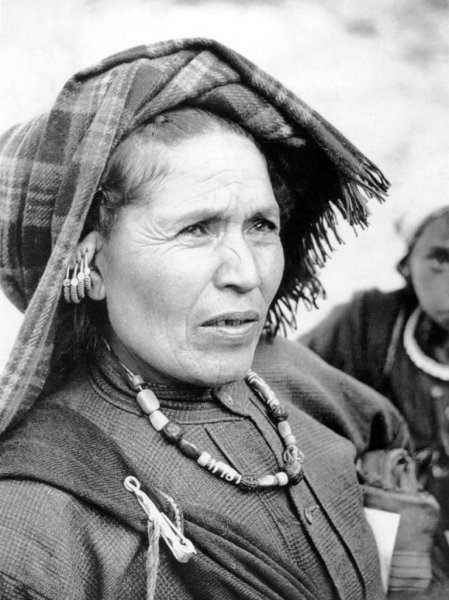
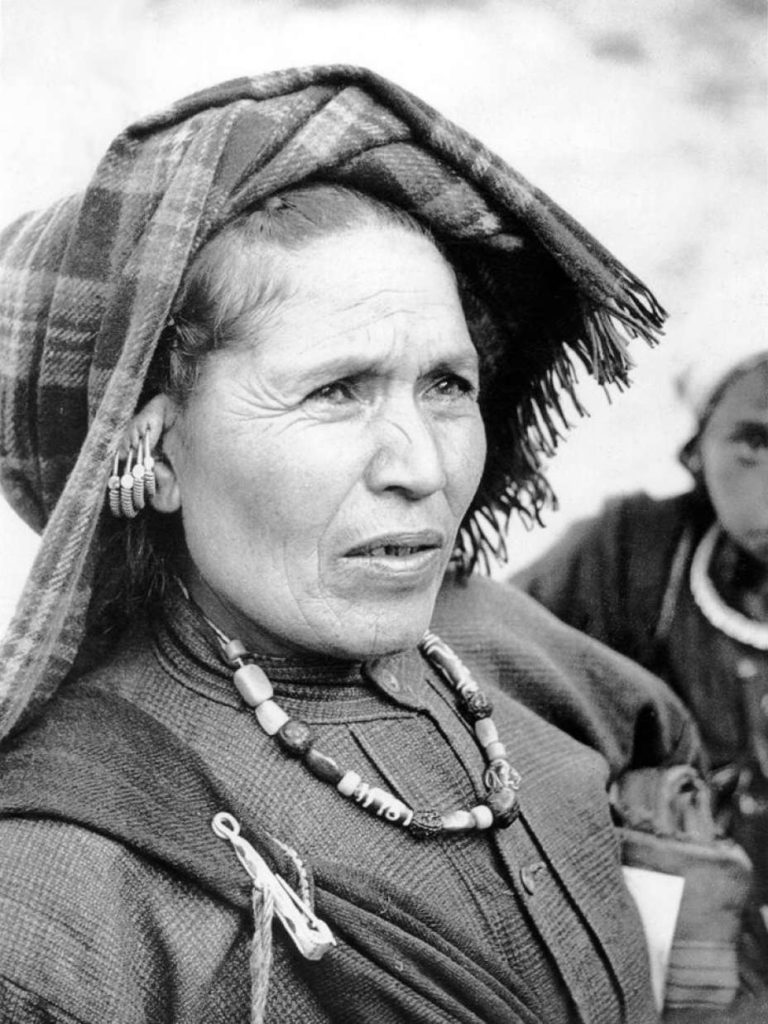
Gaura Devi who played an important role in Chipko Movement.

Gaura Devi (1925 – 1991) was a social activist and a rural women community leader from Uttarakhand, India who played an important role in the Chipko movement in 1970’s .
Gaura Devi was born in 1925 in a village named Lata of Chamoli district in the state of Uttarakhand. She got married at very young age, afer her marraige she moved to a nearby village named Reni by the Alaknanda River. At the age of 22 she was a widow with a child. After her husband death she moved to a new village which was near to the border of Indo-Tibet.

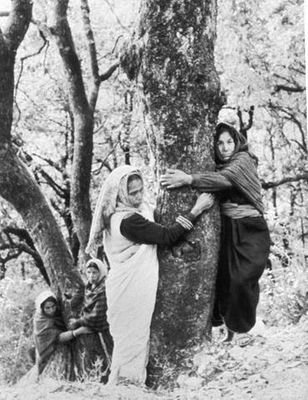
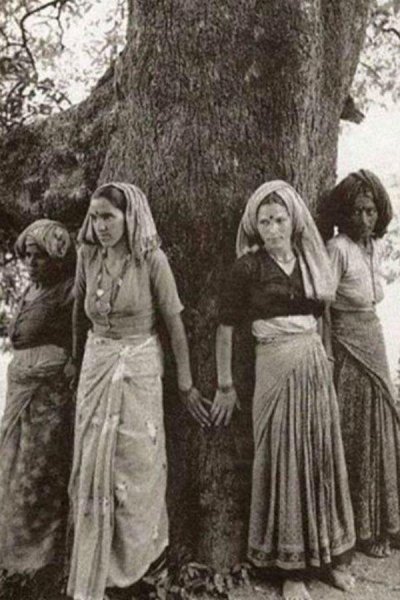
An environmentalist Sunderlal Bahuguna initially started the Chipko Movement . Gaura Devi became the leader of the Chipko movement in 1974. Gaura Devi was elected to lead the Mahila Mangal Dal (Women’s Welfare Association) in the wake of the Chipko movement. The organization worked towards protecting the forests of the community. On March 25, 1974, she learned from a young girl of the village that a local loggers of the village were logging a tree near the village. People in the village of Reni were told the news that according to government new policy, the government would pay compensation to the people for the land used by the army . Gaura Devi and 27 other women decide to take action against the loggers. She confronted the loggers and demanded that the men shoot her instead of cutting down trees, and she described the forest as “vandevta” (the jungle god) and her maika (mother’s house). Eventually, for the next three or four days Gaura Devi along with other village women’s protect the trees by hugging the trees , despite the insults and intimidation of the armed loggers,she was able to stop the logger’s work . After seeing the bravery of Gaura Devi and other village women’s how they protect the trees who are the important part of thier life other villagers from different villages joined the action with her . After this incident, the Uttar Pradesh government set up a specialized committee to investigate logging issues, and the logging company withdrew its subordinates from Reni. The Commission stated that the Reni Forest is an ecologically sensitive area where trees should not be logged. The Uttar Pradesh government who was in power of that area at that has since banned all logging in areas over 1150 km² for 10 years.

Some other important activist who played an important role in Chipko Andolan or Chipko movement along side Gaura Devi were :
Suraksha Devi, Sudesha Devi, Bachni Devi and Chandi Bhatt, Virushka Devi and others.

Gaura Devi passed away in July 1991, at the age of 66 in Reni village Chamoli.

“Ecology is permanent economy “

-Sunderlal Bahuguna

Operation Cactus by Indian Armed Forces which saved Maldives freedom.

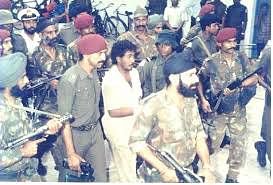
Operation Cactus, led by the Indian Armed Forces in 1988, to stop a group of Maldives mercenaries led by businessman Abdullah Rutufi, and armed mercenaries of the Tamil Elam People’s Liberation Organization (PLOTE), a separatist Tamil organization in Sri Lanka. It’s strategy was to overthrow the government in the Maldivian island republic.

Thier were two coup attempr done before 1988.The 1980 and 1983 coup attempts against President Maumoon Abdul Game were not considered serious, but the third coup attempt in November 1988 surprised the international community. About 80 armed PLOTE mercenaries boarded a speedboat from a Sri Lankan cargo ship hijacked in the capital Male before dawn. A similar number has previously invaded Male in the guise of a visitor. The mercenaries soon gained control of the capital. This includes major government buildings, airports, ports, television and radio stations. The mercenaries then marched to the presidential residence, where President Gayoom lived with his family. However, before they arrived at the presidential residence, President Gayoom was escorted to the Defense Minister’s house by a Maldivian national security forces. The Secretary of Defense then took the president to a safe home.

Meanwhile, the mercenaries occupied the presidential residence and managed to take the Maldivian Minister of Education hostage. President Gayoom called on Sri Lanka and Pakistan government to intervene in the military, but both refused to help because of lack of military power. The president then demanded Singapore’s intervention, but Singapore refused for the same reason. He then contacted the United States and was told that it would take a couple of days for the US military to reach the Maldives from the nearest military base in Diego Garcia, which was almost 1000 km away. The president then contacted Britain and who advised them to seek help from India. After that, President Gayoom sought help from the Indian government. India soon accepted their request and an emergency meeting was convened at the Secretariat Building in New Delhi. Within 16 hours of SOS, India was ready for thier missions.

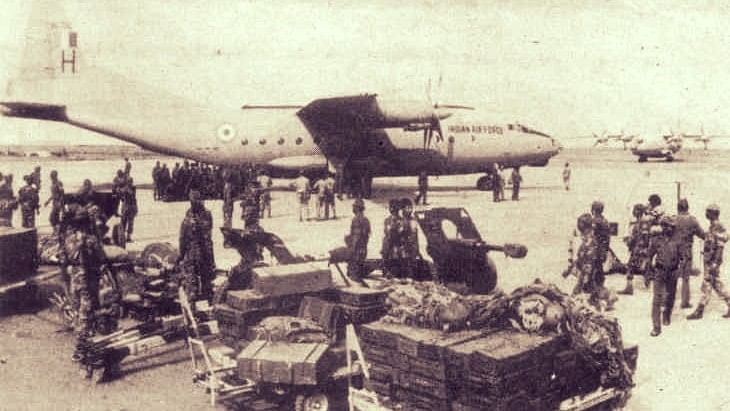
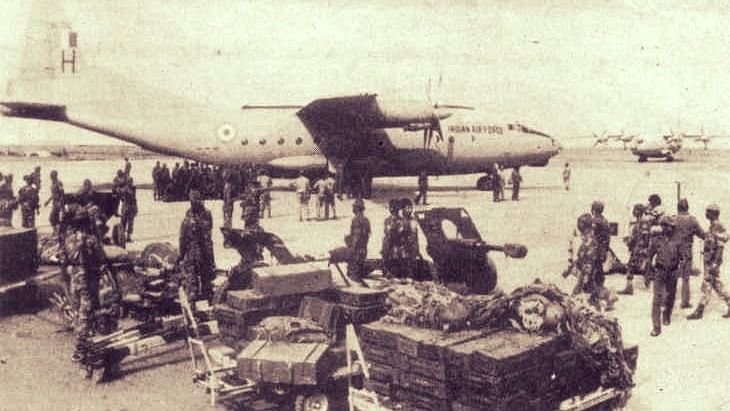
Rejaul Karim Laskar, a member of India’s then ruling party, the Indian National Congress, said that intervention of India in coup d’etat was necessary because without India’s intervention, outsiders powers were tempted to intervene and establish base in the Maldives. . Therefore, India intervened through “Operation Cactus”. On the night of November 3, 1988, the Ilyushin Il-76 aircraft of the Indian Air Force took elements of the 50th Independent Parachute Regiment, the 6th Parachute Regiment Battalion, and the 17th Parachute Field Paratrooper Regiment under Brigadier General Farsala from Agra Air. He flew non-stop for over 2,000 kilometers (1,240 miles) and landed at Male International Airport on Hulhule Island. Indian Army paratroopers arrived in Hulhule nine hours after President Gayoom proceedings.

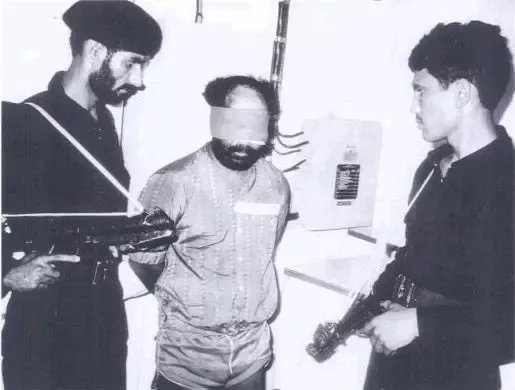
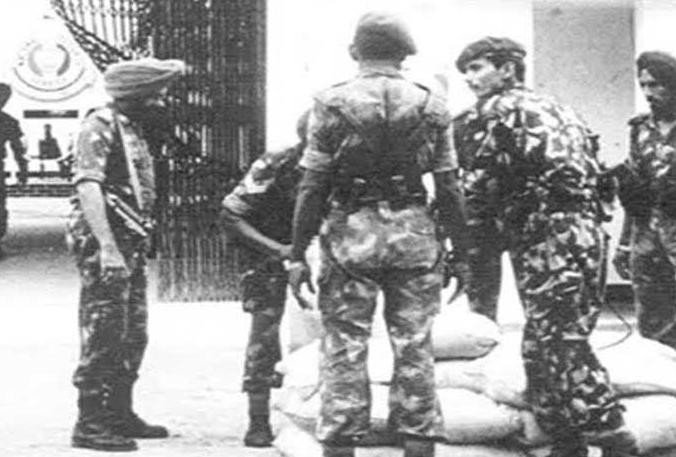
Indian paratroopers quickly secured an airfield and sailed to Male on a confiscated boat to rescue President Gayoom . Paratroopers handed over control of the capital to President Gayoom ‘s government within hours. Some of the mercenaries fled to Sri Lanka on a hijacked cargo ship. Those who could not arrive at the ship in time were immediately rounded up and handed over to the Maldivian armed Forces and government. According to reports, 19 people died in battle, most of them mercenaries. The dead included two hostages killed by mercenaries. And Operation Cactus took 18 hours for Indian Armed Forces from start to finish. Indian Navy frigate Godavari and Betwa intercepted a cargo ship off Sri Lanka and captured mercenaries. The swift intervention and accurate intelligence of the Indian Army was able to successfully subdue the coup attempted in the island nation.

“Black Tiger” Of India Ravindra Kaushik.

Ravindra Kaushik who served in (R&AW) ,famously known as Black Tiger was born in Sri Ganganagar, Rajasthan on 11 April 1952 in a Brahmin family.
Ravindra during his graduation days used to do drama plays and during this time Kaushik displayed his talent at the national level dramatic meet in Lucknow, Uttar Pradesh, which was witnessed by officials from the Research and Analysis Wing. After which he was contacted and offered a job of being an undercover Operative for Research and Analysis Wing in Pakistan.

After agreeing to work for R&AW Kaushik was given extensive training in Delhi for two years. He underwent circumcision so he could pass as a Muslim. He was taught Urdu, given Islamic religious education and acquainted with the topography and other details about Pakistan. Being from Sri Ganganagar, a city near Rajasthan’s border with Punjab, he was well versed in Punjabi, which is widely understood in Punjab and Pakistan as well., India. In 1975, at the age of 23, He was sent to Pakistan.
Kaushik was given the cover name “Nabi Ahmed Shakir” and entered Pakistan in 1975. He was successful in getting admission in Karachi University and from where he completed his LLB. He then joined Pakistan Army as a commissioned officer and eventually promoted to the rank of a major. While living in Pakistan under his cover he married a local girl named Amanat, the daughter of a tailor in one of the army units, and with whom he fathered a boy .

From 1979 to 1983, while working as an officer, he passed on valuable information to R&AW which was of great help to India. He was given the title of ‘Black Tiger’ by India’s then home minister late S. B. Chavan.

In September 1983, R&AW sent a low-level operative, Inyat Masih, to get in touch with Kaushik. However, Masih was caught by Joint Counterintelligence Bureau of Pakistan’s ISI and blew Kaushik’s cover. Kaushik was then captured, tortured for two years at an interrogation center in Sialkot. He was given the death sentence in 1985. His sentence was later commuted to a life term by the Supreme Court of Pakistan. He was kept in various jails in various cities, including Sialkot, Kot Lakhpat and in Mianwali jail for 16 years. He managed to secretly send letters to his family in India, which revealed his poor health condition and the trauma faced by him in Pakistani jails.He also adresses his thoughts on his country and department. In one of his letters he wrote:
“Kya Bharat jaise bade desh ke liye kurbani dene waalon ko yahi milta hai?” (Is this what people who sacrifice their lives for a big country like India get?”
In November 2001, he was caused with pulmonary tuberculosis and heart disease in Central Jail Mianwali in Pakistan.
He served for Research and Analysis Wing from 1975 to 1983.

“Writing about magic is harder than writing about spies because you’re dealing with something that doesn’t really exist.”

-Anthony Horowitz

NEW EDUCATION POLICY TO BRING EVOLUTION IN THE EDUCATION SYSTEM.

NEW EDUCATION POLICY:
° Students are currently undergoing school exams conducted by responsible authorities in grades 3, 5, and 8.
° 10th and 12th grade board exams will continue, but will be redesigned for overall development.
° Mathematical reasoning and scientific temperament coding begins in 6th grade .Vocational training begins at school in sixth grade and includes internships.
° The 10 + 2 structure is replaced by 5 + 3 + 3 + 4. The new system consists of grades 12 and 3 years preschool / Anganwadi.
° Until 5th grade, this policy emphasizes the local / regional / native language as the teaching language.
° In schools and universities, Sanskrit is also included as a student option at all levels and consists of three language formulas.
° Under Graduate is now 3 or 4 years, with multiple degree options eligible for this period, such as a 1 year certificate, 2 years diploma, 3 years degree, 4 years bachelor’s degree in research, etc.
° An Academic Credit Bank (ABC) is created to store, transfer, and award bachelor’s degrees from digital learning achievements earned by students from various universities.
° The curriculum has been reduced to essentials for all subjects. They focus on critical thinking, discovery, inquiry, debate, and education based on analytical and holistic learning methods for education.
° Focus on e-learning so you can reduce your reliance on textbooks
Under the new policy, education will receive 6% of GDP, up from 1.7%. This definitely boosts the education system.
° By the end of 2040, all universities should be interdisciplinary institutions with more than 3000 students each. University affiliation will be phased out over the next 15 years.

Foucus on Regional /Mother Tongue Language:
As you know, young children learn new things as soon as they teach in their own language, not in another language they are unfamiliar with. This policy is aware of it, so children will be taught in their native language until the age of 5, but it can change to 8th grade .

NEW CURRICULUM STRUCTURE:
•) Rebuild the school curriculum and teaching methods into new 5 = 3 + 3 + 4 patterns.
•) The new curriculum structure is designed to attract the attention of learners at various developmental stages, such as 3-8 years old, 8-11 years old, 11-14 years old, 14-18 years old.
•) Elementary level lasts 5 years:
3 years before school, 1st and 2nd grade.
The preparatory stage lasts for 3 years: 3rd, 4th and 5th grade.
Middle school or high school lasts 3 years: 6th, 7th and 8th grade.
High school or junior high school lasts four years: 9th, 10th, 11th, 12th grade.
All of the above levels include Indian and regional traditions, ethical thinking, socio-emotional learning, quantitative and logical thinking, digital literacy, computational thinking, scientific manipulation, language and communication skills.

“Learning starts with failure; the first failure is the beginning of education.”

– John Hersey

Land Reforms in India

A Necessity for an Emerging Economy
Many people are not aware that a reform of land tenure is one of the steps in the economic policy of many countries to facilitate industrialization and promote agricultural growth. The problem with this is that it can lead to increased conflict between production and ownership rights. Yet, India’s Prime Minister Narendra Modi has made reforming the country’s outdated laws by going back to medieval-era customs a top priority for his government.

In May, he set up a five-member panel to recommend changes to the Hindu Succession Act, which is based on customary law and governs inheritance in India’s Hindu majority. The panel was created following the Bombay High Court’s decision that women could inherit ancestral property under the act. India has also rolled out land reform bills to facilitate transparency in transactions of agricultural land.
Under the tradition of a joint family system, or joint Hindu family system, one may wonder how land ownership and succession in India is regulated. This system has prevailed for centuries without outside interference or control. Joint families consists of males typically brothers and their wives who have to share property.
The main purpose of this system was to safeguard women’s rights to the property, in a country where the widow has been traditionally stigmatized and often impoverished by the death of her man.Land Reforms usually refers to redistribution of Land from rich to poor. Land reforms include Regulation of Ownership, Operation, Leasing, sale and Inheritance of Land. In an agrarian economy like India with massive inequalities of wealth and income, great scarcity and an unequal distribution of land, coupled with a large mass of people living below the poverty line, there are strong economic and political arguments for land reforms.

Land reform is the major step of government to assist people living under adverse conditions. It is basically redistribution of land from those who have excess of land to those who do not possess with the objective of increasing the income and bargaining power of the rural poor. The purpose of land reform is to help weaker section of society and do justice in land distribution.

The Indian Government was committed to land reforms and to ensure distributive justice as was promised during the freedom struggle. Consequently, laws were passed by all the State Governments during the Fifties with the avowed aim of abolishing landlordism, distributing land through imposition of ceilings, protection of tenants and consolidation of land- holdings.

Government land policies are implemented to make more rational use of the scarce land resources by affecting conditions of holdings, imposing ceilings and grounds on holdings so that cultivation can be done in the most economical manner.

Objectives of Land Reforms

From the beginning, land distribution has been a part of India’s state policy.
The abolition of the Zamindari system was perhaps the most revolutionary land policy of independent India (feudal landholding practices).

ZAMINDARI SYSTEM

Lord Cornwallis introduced the Permanent Settlement in 1793. Under this system, a class of landlords called Zamindars was created whose responsibility it was to pay a fixed rent to the government for the lands they owned. They gave out parcels of land to farmers who became their tenants. Their title to the land was hereditary. What was intended as a system beneficial for all parties concerned soon turned out to be exploitative? The State was only concerned with maximising revenue with minimum effort. The Zamindar too wanted maximum rent from his tenants irrespective of the land’s true potential. He could increase his own wealth by extracting most out of his farmer tenants since his due to the State was fixed. In addition, several layers of intermediaries were created between the Zamindar and the tenants adding to the burden. The landless farmers and labourers suffered greatly in poverty. Also, this led to the creation of a group of rich Indians whose loyalty lay largely with the British. As you can see the Permanent Settlement gave rise to the Zamindari system of tenancy in Bengal and soon was adopted in other regions.

RYOTWARI SYSTEM

Under this system, the proprietor of land gave the rent and taxes directly to the government in the absence of any middlemen. This started in Madras and was later adopted in Bombay as well.

MAHALWARI SYSTEM

This system was introduced by William Bentinck’s government under which landlords were responsible for the payment of revenue to the State. These landlords or Zamindars had a whole village or a group of villages under their control. The Mahalwari system prevailed in UP, the North Western Province, Punjab and parts of Central India.


India’s land reform policy had two specific goals:
The first is to remove any impediments to increasing agricultural production that arise from the agrarian structure that has been passed down from generation to generation.
The second goal, which is closely related to the first, is to “eliminate all elements of exploitation and social injustice from the agrarian system.
To provide security to the soil tiller, and to ensure equality of status and opportunity to all sections of the rural population.

Objectives of land reforms:

  • Redistribution of land across society so that land is not held in the hands of a few people.
  • Land ceiling to disburse surplus land amongst small and marginal farmers.
  • Removal of rural poverty.
  • Abolition of intermediaries.
  • Tenancy reforms.
  • Increasing agricultural productivity.
  • Consolidation of land holdings and prevention of land fragmentation.
  • Developing cooperative farming.
  • To ensure social equality through economic parity.
  • Tribal protection by ensuring their traditional land is not taken over by outsiders.
  • Land reforms were also for non-agricultural purposes like development and manufacturing.

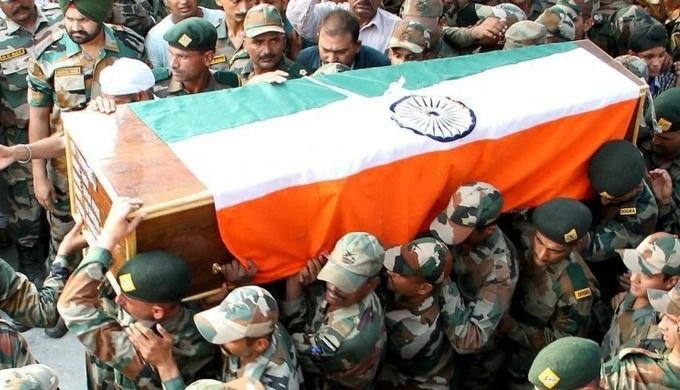
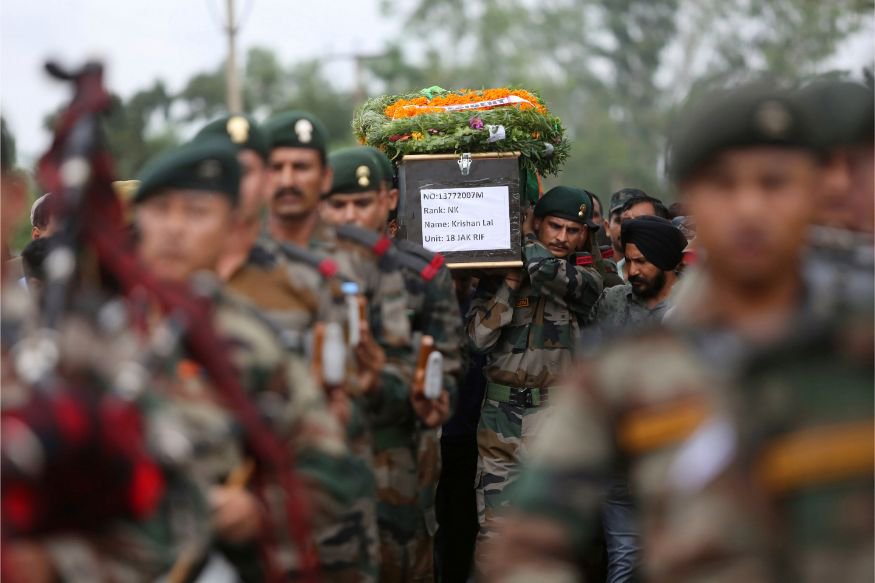
No use of ‘Martyr’ word in Army for death of on duty soldier .

History of the use of the word martyr:
The government has claimed for nearly a decade that the word “martyr” has not been officially recognized. In 2013 and 2014, in response to RTI’s request, the Ministry of Home Affairs revealed that the words “martyr” and “shahid” were not defined anywhere by the Government of India.
In December 2015, then Home Affair Minister Kireen Rijiju said in Lok Sabah that it is advised that the word “martyr” is not refer to any of the victims of the Indian army. He added that such terms were not used by Central Armed Police Forces (CAPF) and Assam Rifles personnel either.
In December 2021, Minister of State Home Nityanand Rai told Rajya Sabha again that there was no formal term like “martyr.”


Objections to the use of martyrs’ words:
The word “martyr” has religious implications and has historically been used to refer to people making sacrifices for their religious beliefs like in Christianity . The word “Shahid”, which is used as a Hindu alternative to the word “Martyr”, also has a religious meaning and is associated with the Islamic concept of Shahadat. The word “martyr” is said to be derived from the Greek word “martur”. In various dictionaries, “martyr” is defined as a person who is willing to die as a punishment for refusing to abandon religion.
Since the Indian army is not affiliated with any religion and does not sacrifice their lives for religious principles, the use of such words for their sacrifice is found wrong,including the supreme leader of the army. Using words like martyr may not be correct in context to armed forces especially in India according to many legal experts and prominent officers of army and retired officers.

Steps Taken By Government To Stop Use Of Martyr Word:
Despite the repeated assertions of the government about the word martyr having no official recognition, it was mostly used in government statements issued by various PR Officers for the defence services and the CAPFs. Many senior serving and retired officers also used it frequently to describe the death of soldiers in action. Thus, the word remained in common use.
The Army in 2022 issued a letter to all its commands asking them to abstain from using the word martyr as it may not be appropriate for soldiers who die in the line of duty. They have been, instead, asked to use phrases such as killed in action, supreme sacrifice for the nation, battle casualty, laid down their lives,veergati etc.

“Either I will come back after hoisting the tricolor, or I will come back wrapped in it, but I will be back for sure. “

-Late Captain Vikram Batra (PVC)

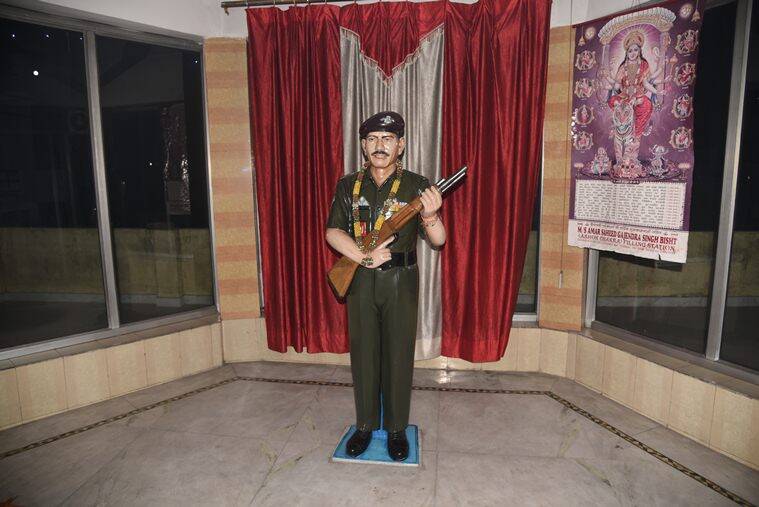
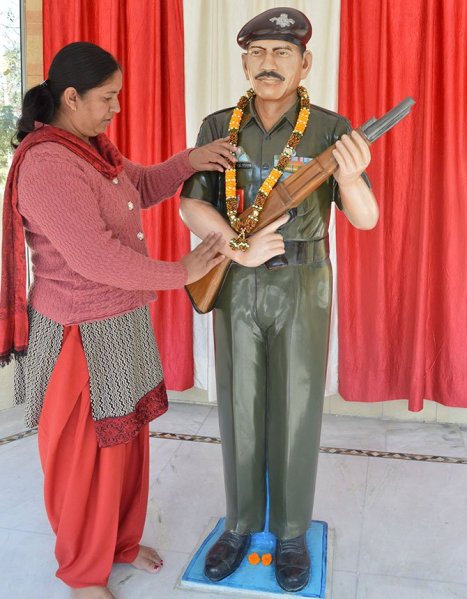
A warrior who can not be forgotten Hav. Gajender Singh Bisht.

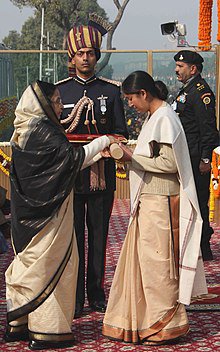
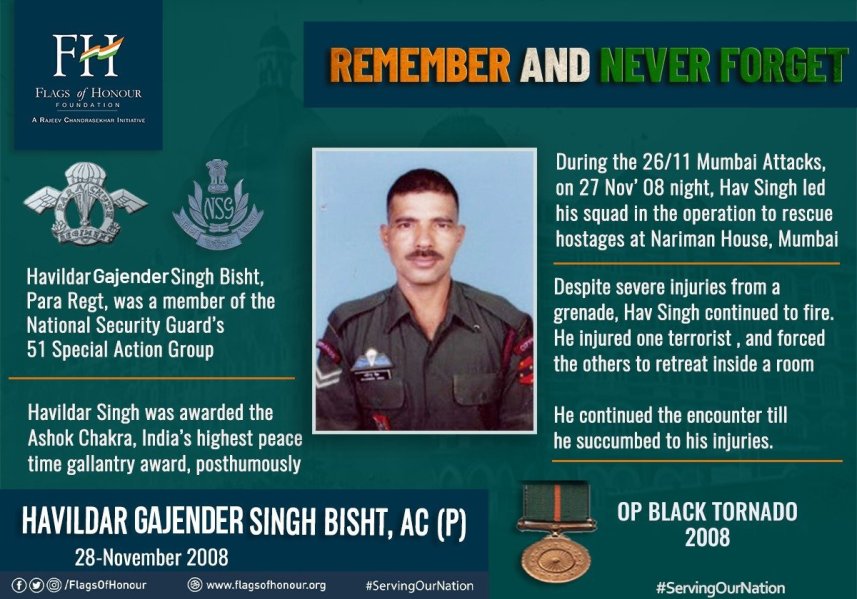
Havaldar Gajender Singh Bisht was an NSG commando who was martyred in the 2008 Mumbai attack. His bravery received the Ashoka Chakra Award from the President of India on January 26, 2009, on the Anniversary of the Republic of India.
He was born on 1 July,1972 in Dehradun, Uttarakhand.

He persued his education from the Janata Inter College in Naya Gaon.As a student he used to participate in every event organised in the school, sports or cultural activities. But he had a particular interest in boxing. Havaldar Gajendra Singh joined Garhwal Rifles in 1991 and later decided to become part of the 10 Para (Special Forces). Havaldar Gajendra also actively participated in Operation Kargil in 1999. Havaldar Gajendra was a trained commander of the Indian Army Special Forces, but he was commissioned to serve the National Security Guard’s Elite Special Action Group.
Gajendra Singh Bisht was a member of the 51st Special Action Group of the National Guard. He was part of a team of NSG Command rushed to the roof of Nariman’s house to neutralize an terrorist inside the building who had at least six hostages.


According to NSG Secretary Jyoti Krishna Dutt, Bisht led one of the teams entering the building. The team was hit by a violent terrorist attack and returned to fire while trying to contain the situation. Terrorists also threw some grenades at Commando. At this point,Bisht had the opportunity to retire with his team. But he realized they needed to seize this opportunity and went forward with thier mission.Instead of turning his back on the militants, he made the way to other troops instead, despite the grenades being thrown. He suffered multiple gunshot wounds in the process, but moved forward and was eventually injured. This allowed his team to secure a dominant position in the encounter. On the night of November 27, 2008, Havildar Gajender Singh Bisht led his army in an operation to rescue hostages from terrorists at the Nariman House in Mumbai. While securing the Nariman House during Operation Black Tornado, Bisht got fatally injured at Jewish center attack and died.

Agnipath Scheme a new vision for future India?


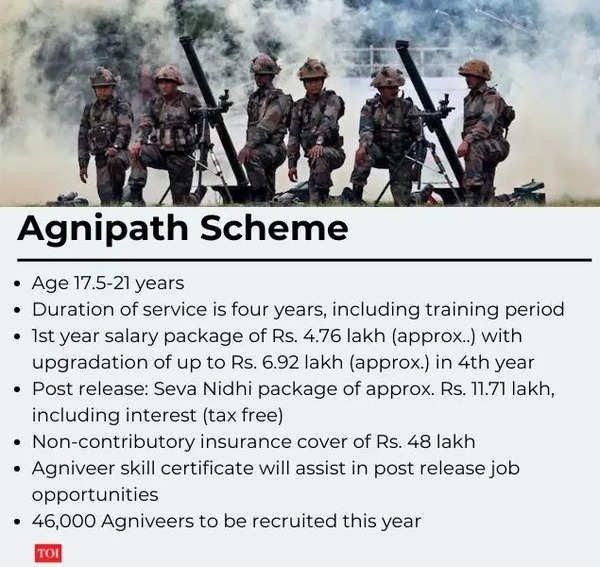
The Agnipath Program is a new program launched by the Government of India on June 14, 2022 to recruit soldiers under Corporal into three armies. The Agnipath program will be the only means of recruiting the military. All new employees will only be hired for 4 years. The personnel hired under this system are called Agniveers, a new military rank. The introduction of this system has been criticized for lack of consultation and open debate. The program is scheduled to start in September 2022. The Agnipath program was approved by the Government of India in June 2022 and will be implemented from September 2022. The announcement was made on June 14, 2022. This program is intended for both male and female applicants between the ages of 17.5 and 21. In widespread protests against the Agnipath program, the central government raised the cap from 21 to 23, but only in 2022. Recruitment under this program is held twice a year by the Indian Army, Indian Navy, and Indian Air Force. The available posts are below the executive list. The Agnipath program is the only way to serve in the army.


New employees, under the Agnipath scheme will be called “Agniveers,”who will have a four-year tenure, including six months of training followed by a 3.5-year deployment. After leaving the service, they have the opportunity to apply to continue in the army. Less than 25 percent of the retired group’s total strength is selected for the permanent roster. Employees who retire after four years of work are not eligible for a pension, but will receive a lump sum of approximately Rs 11,71,000 at the end of their tenure. The Government of India plans to hire 45,000-50,000 new employees each year through this program. In September 2022, 46,000 young people will be hired through this program. Prior to the start of the Agnipath program, soldiers were in the army for more than 15 years of service on a lifetime pension. As of 2019, there was no military recruitment for three years. The Government of India quoted the COVID-19 pandemic in India tye reason for no recruitment. Meanwhile, 50,000 to 60,000 soldiers continued to retire each year, leading to labor shortages and beginning to affect the military’s operational capabilities.


On June 16, 2022, fierce protests took place in several Indian states, where military candidates who were preparing for the armed forces were angry at the new system, demanding its rollback, and damaging public property. By June 17, 12 trains had been fired, affecting the movement of 300 trains. 214 trains were canceled, 11 trains were detoured, and 90 trains ended short of their destination. This scheme does not include long-term holdings, pensions and other benefits that existed in the old scheme. Individuals who wanted to join the army were disappointed with the rules of the new system. Of particular concern were short tenure, no early retirement pension, and an age limit of 17.5-21 years, making many of the current candidates unsuitable for serving in the Indian Army.

On June 20, a national strike called Bharat Bandh was summoned by a protesting organization calling for the withdrawal of the program. The call was made via social media without naming the organization. More than 600 trains were canceled due to a strike. Section 144 was imposed in parts of Rajasthan, Punjab, Uttar Pradesh and Haryana.

Shortage in Indias Power Supply.

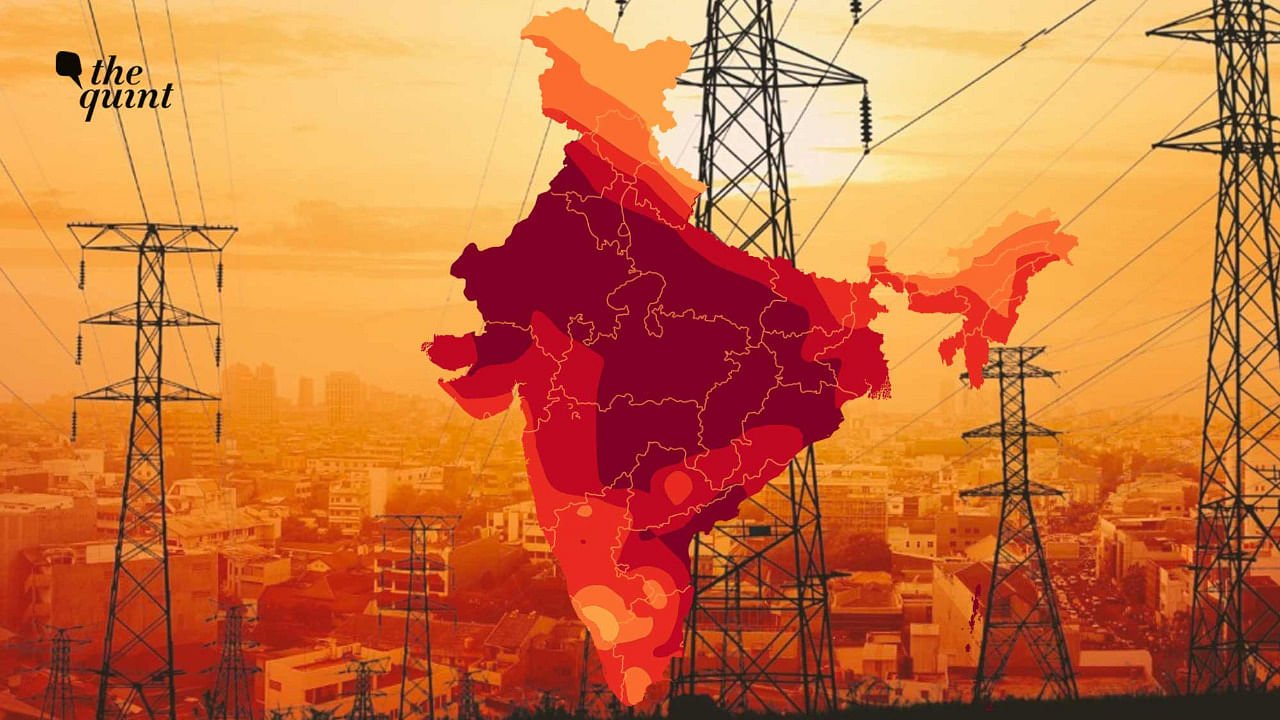
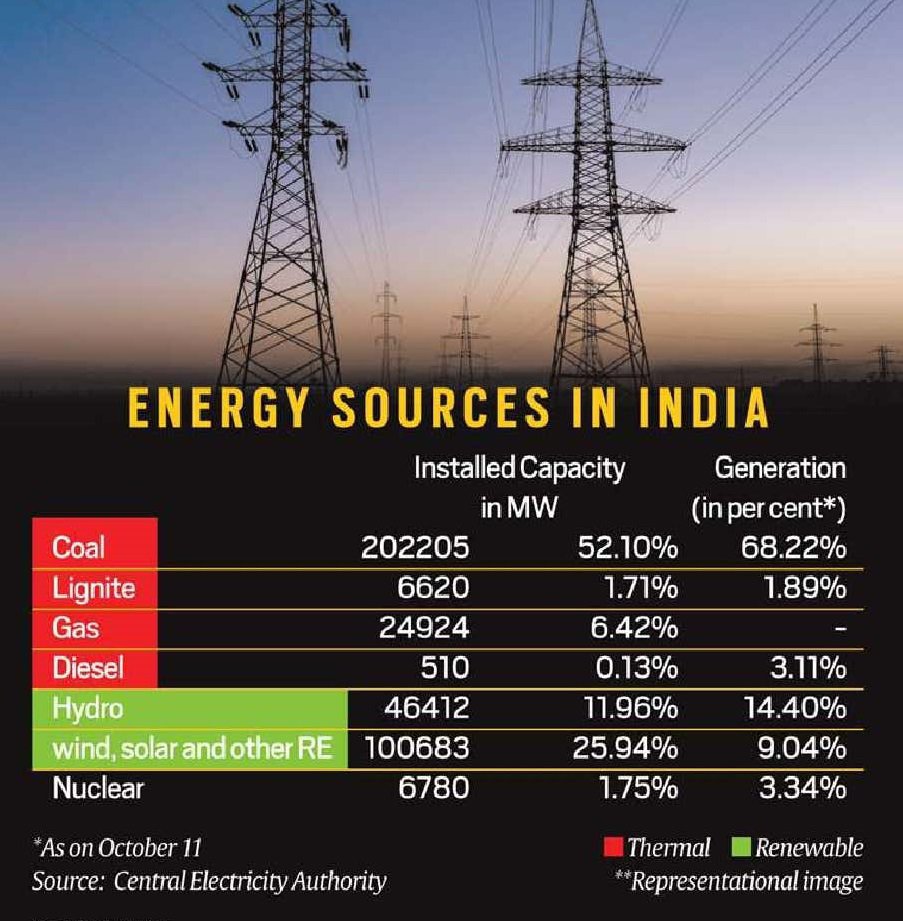
India has the fourth largest coal deposit in the world. It is the second largest fossil fuel producer after China and is home to Coal India, the world’s largest coal mining mine, which accounts for 80% of domestic production. Already allocated coal block mining capacity exceeds expected demand in 2030 by approximately 15% to 20%.


So why are India’s power plants facing coal shortages each year, leading to widespread power outages, exposing parts of the country to darkness and endangering industry?
There are several factors. India has a long time policy of minimizing coal imports. In February 2020, Coal Minister Pralhad Joshi announced that the country would stop importing steam coal from 2023 to 2024.
Mr Joshi said the Ministry of Coal will work with the Ministry of Railways and the Ministry of Shipping to allow Coal India, prisoners and commercial miners to discharge more coal from their supply by 2030. And the coal supply at power plants is running out at an alarming rate. The Department of Energy is currently blaming the decline in coal imports due to the current crisis. In 2018-19, 21.4 million tonnes of coal were imported for mixing, down to 23.8 million tonnes in 2019-20 and 8.3 million tonnes in 2021-22.


Power plant coal inventories have fallen by about 13% since April, reaching pre-summer lows. And for the first time since 2015, Coal India will import fuels used by state-owned and private power companies. The Ministry of Energy said almost all states showed that multiple state bids for coal imports would cause confusion and that the decision was made after calling for centralized procurement by Coal India.
Imported coal costs five times as much as domestic mining, so the center is being pushed back by the state.
Recently, the government has also pressured utilities to increase imports to mix with local coal. Last year, after a two-year break, three tranches of coal auctions were held and nine blocks were successfully awarded.

In September 2021, the Ministry of Coal issued a strict warning to owners of confined coal blocks, stating that their mines should increase production or face restrictions on coal supply by the CIL.
The ministry has discovered that these mines are producing below target.

Of the 43 coal mines outsourced to private companies in the energy, steel and metals sectors, none have met their annual production targets.
On May 6, Coal India announced that it would provide the private sector with 20 closed and abandoned underground coal mines and reopen and operate its revenue sharing model.

According to journalist Shreya Jai the current power supply chain does not seem ready to handle periods of high growth and state discos cannot pay gencos, but the power supply chain starts with state discos and needs repairs. Railroads, on the other hand, are struggling to align the thermal power industry’s demands for faster coal supply with those from other industries. Rakes must be prepared to meet the growing demand for almost all other bulk commodities, from cement and steel to sand and edible grains. By strengthening the value chain of the electric power sector, it is possible to resolve the coal supply-demand mismatch in the long run.

Integration of Indian States of Independent India.

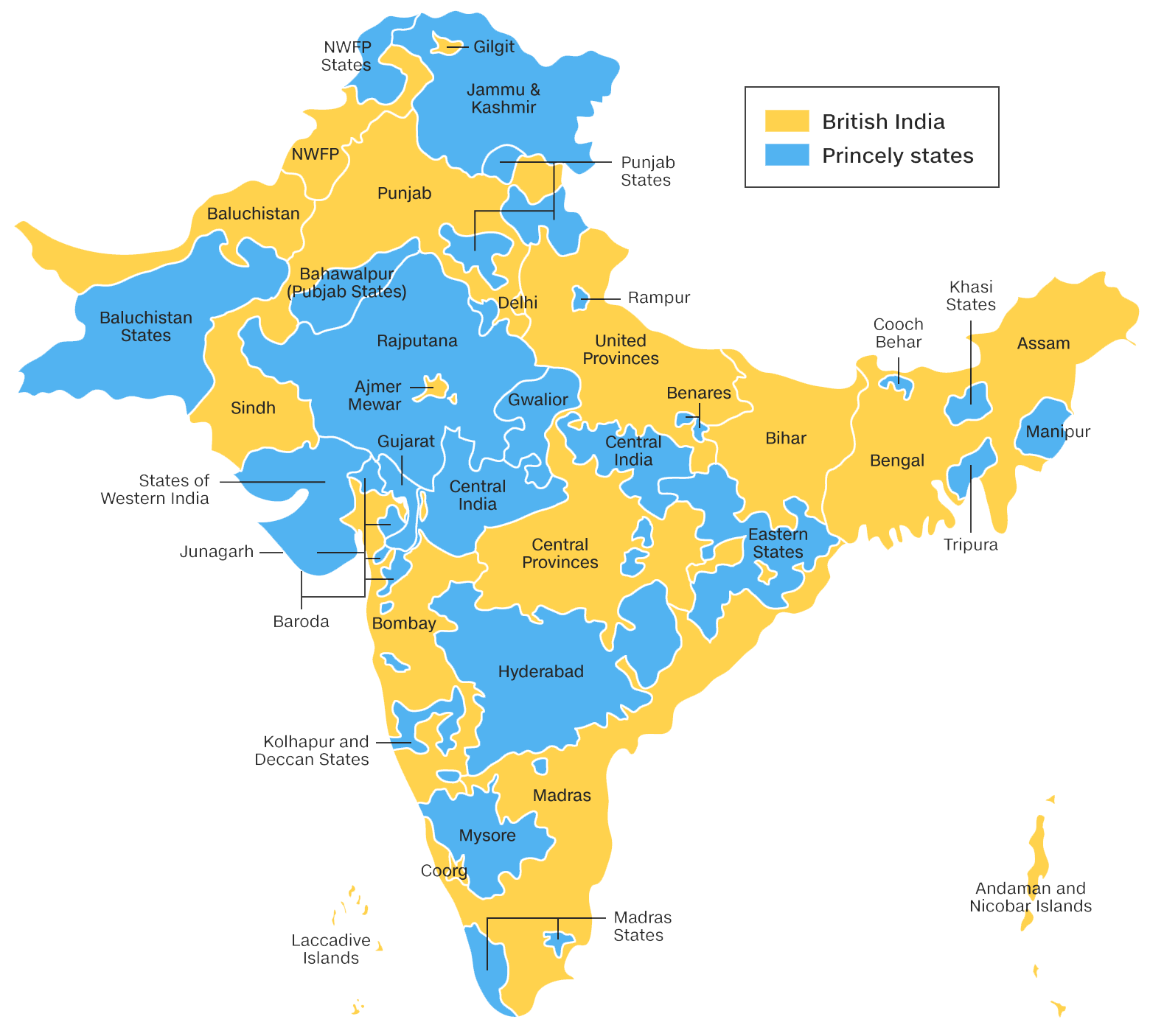
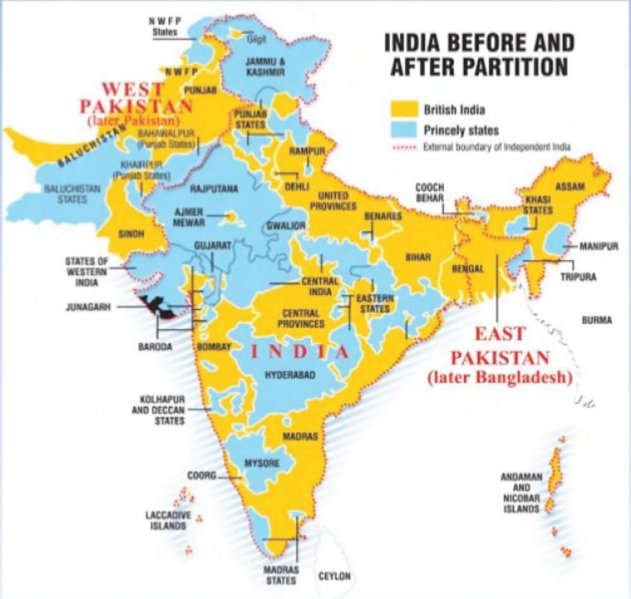
Sardar Vallabhbhai Patel played an important role in the integration of the princely state into the Dominion of India. This achievement laid the foundation for Patel’s popularity in the post-independence era. He is still remembered as the man who united India today. In this respect he is compared to Otto von Bismarck, who united many German states in 1871. The June 3 plan gave more than 565 princely states the option of joining India or Pakistan or choosing independence. Most Indian nationalists and the masses were afraid that most people and territories would be fragmented without the participation of these states. Parliament and British officials considered Patel to be the best man on a mission to secure the conquest of the princely state from Indian rule. According to Gandhi only Patel could solve this problem. Patel had practical insight and determination to accomplish monumental work. Patel asked V.P. Menon, a senior official involved in the division of India, to become his right-hand man as Principal Secretary of State. Patel used a social gathering and informal setting to involve most monarchs and invite them to their home in Delhi for lunch and tea. At these meetings, Patel stated that there was no essential conflict between Congress and the prince’s order. Patel aroused the patriotism of the Indian monarchs and urged them to embrace the independence of their country and act as responsible rulers who care for their people’s future. He persuaded the rulers of 565 states about the impossibility of independence from the Republic of India, especially in the face of rising opposition from their subject. He proposed favorable conditions for the merger, including the creation of a secret purse for the descendants of the ruler. Patel encouraged the rulers to act patrioticly, and to thought about his states people and their futur, but he did not rule out violence. He emphasized the need for the princes to join India in good faith and gave them to sign the membership certificate until August 15, 1947. All but three states were willing to join the Indian Union. Only Jammu and Kashmir, Junagad and Hyderabad were States which were tough to brought under Indian Dominion.


Junagadh being situated in Gujrat it was very important for Patel to bring it under Indian’s dominion. This was also important because there was the super-rich Somnath Temple (a temple where different stones were their including emeralds, diamonds, and gold which were looted by Mohd. Ghazni) in the Kathiawar district. Bieng under the pressure from Sir Shah Nawas Bhutto, a Nawab who joined Pakistan. However, it was far from Pakistan, with 80% of its state population being Hindus.Patel combining diplomacy and power, Pakistan invalidated Pakistan’s accession and demanded that Nawab join India. Patel sent troops to occupy the three principalities of Junagadh to show his determination. After widespread protests and the formation of the civilian government, or Aarzi Hukumat, both Bhutto and Nawab fled to Karachi, and under Patel’s orders, Indian troops and police forces invaded the state. A later organized referendum resulted in 99.5% of the votes in favor of the merger with India. After taking over, Patel, who spoke at the University of Bahauddin in Junagad, emphasized his sense of urgency regarding Hyderabad. He believes this is more important to India than Kashmir.


Hyderabad was the largest of the princely states and which included States parts of which are now Telangana, Arndra Pradesh, Karnataka and Maharashtra. Its ruler, Nizam Osman Ali Khan, was Muslim, but more than 80% of the population of state was Hindu. Nizam called for independence or accession to Pakistan. Under Kasim Razvi, an army of Nizam-faithful Islamic troops called Razakar urged Nizam to confront India and at the same time organize an attack on the people of India’s soil. The standstill agreement was signed by Lord Mountbatten’s in desperate efforts to avoid the war, but Nizam refused to trade and changed his position. At a cabinet meeting in September 1948, Patel emphasized that India should stop speaking and reconciled Nehru and Governor Chakravarti Rajgoparachari with military action. After preparation, Patel ordered the Indian troops to invade Hyderabad (in his position on behalf of the Prime Minister) when Nehru traveled to Europe. This action, called Operation Polo, in which thousands of Razakar troops were killed , but Hyderabad was secured and integrated into the Republic of India. Mountbatten and Nehru’s main goal was to avoid forced annexation to prevent the outbreak of Hindu and Muslim violence. Patel argued that if Hyderabad was allowed to survive as an independent state surrounded by India, the government’s fame would decline and neither Hindus nor Muslims would feel reassured in their empire. After defeating the Nizam, Patel held him as the head of state of the ritual and met with him. India had 562 princely states after addition of Junagarh, Heydrabad and Jammu& Kashmir.

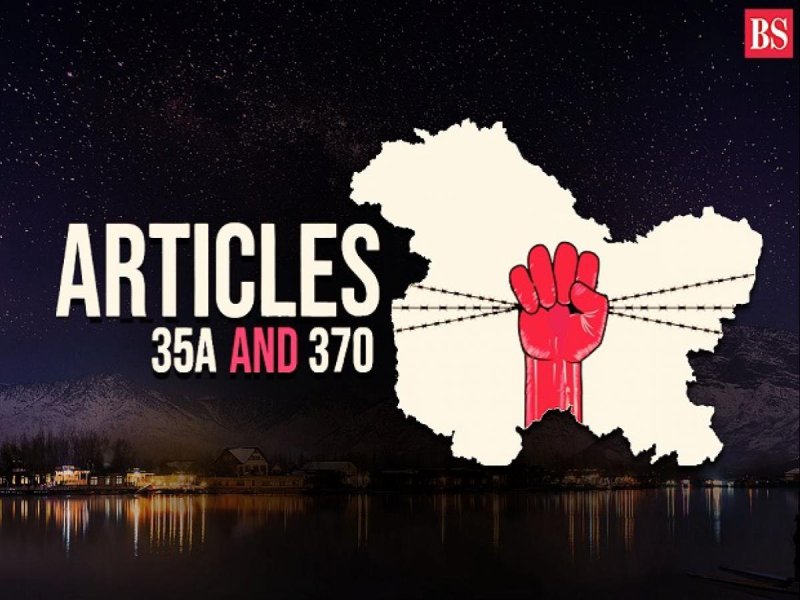
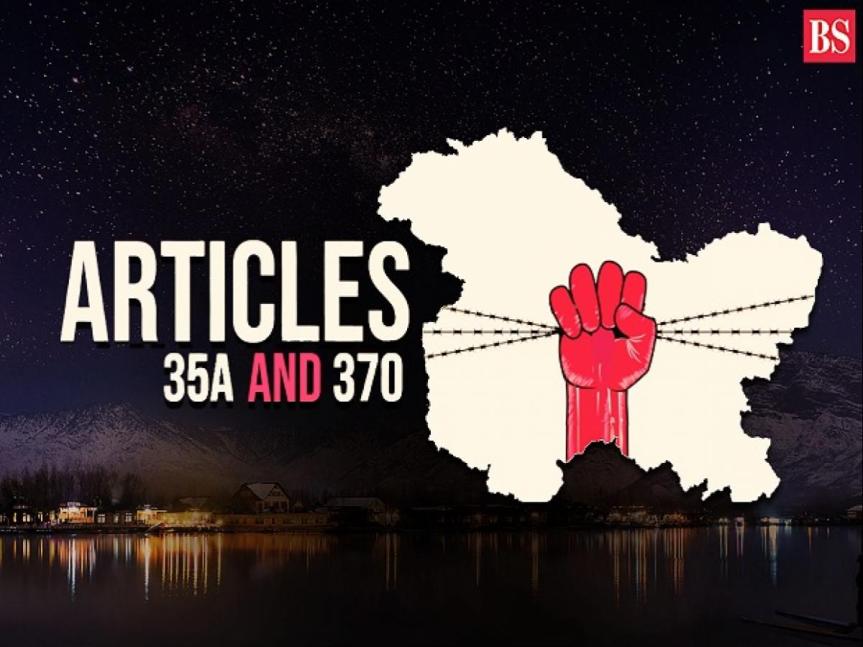
Article 370 & Article 35A

Article 370
The first accession of Jammu and Kashmir, like all other princely states, involved three issues: defense, diplomacy, and communications. All princely states were invited to send representatives to the Constitutional Parliament, which drafted the Constitution across India. They were also encouraged to establish a constituent parliament for their own state. Most states were unable to establish a parliament in time, but some states, especially Saurashtra Union, Travancore-Cochin, and Mysore. The State Department had drafted a model state constitution, but on May 19, 1949, the governors and Chief ministers of each state met in the presence of the State Department and agreed that no separate state constitution was needed. They accepted the Indian Constitution as their own constitution. The state in which the elected constituent council proposed some changes that were accepted. Therefore, the status of all states has been placed on par with the status of ordinary Indian states. In particular, this meant that the subjects available for legislation by central and state governments were consistent and same throughout India.

In the case of Jammu and Kashmir, state politicians have decided to establish a separate constitutional council for the state. Representatives of the Indian Constitutional Assembly applied only the provisions of the Indian Constitution corresponding to the original accession documents to the state, and demanded that the state Constitutional Assembly decide on other matters. The Government of India agreed to the request shortly before its meeting with the other states on 19 May. Therefore, Article 370 was included in the Constitution of India, which provided that other provisions of the Constitution empowering the central government would apply to Jammu and Kashmir only with the approval of the State Constitutional Assembly.This was a “provisional provision” because it was applicable until the State Constitution was enacted and adopted. However, the State Constitutional Assembly was dissolved on January 25, 1957, and did not recommend the abolition or amendment of Article 370. This article was considered an integral part of the Indian Constitution, as confirmed by various recent April 2018 rulings by the Supreme Court of India and the Supreme Court of Jammu & Kashmir.

Article 35A
Article 35A of the Constitution of India was a provision authorized by state to define the “permanent residents” of Jammu and Kashmir State and to give them special rights and privileges. It was added to the Constitution by an Executive Order, the 1954 Constitutional Order (application to Jammu and Kashmir). It was issued by the President of India under Article 370. Jammu & Kashmir has these privileges, the ability to acquire land and real estate, vote and participate in elections, pursue government employment, and receive the benefits of other governments such as higher education and medical expenses. Defined to include. Non-permanent residents of the state were not eligible for these “privileges”, even if they were Indian citizens.