Overpopulation problems

As of now July 2021, there are 7.9 billion people in this world. Day by day, the population of humans in this earth is increasing rapidly, especially in countries like China and India. Excess of everything is big problem. Like that excess of population is also a big problem. There many problems with overpopulation. Especially in India, day by day the population is expanding rapidly. In this blog, we are going to discuss what is overpopulation? Why population of India is high? Overpopulation problems in India? How to control overpopulation?

WHAT IS OVERPOPULATION?

Overpopulation is the state at which population becomes so excessive that people must be managed to live. When overpopulation occurs the available resources will become limited or exploited. This makes the population hard to survive. As of now China is the world’s most populated country followed by India.

WHY POPULATION OF INDIA IS HIGH?

Birth rate and death rate are the two aspects that determine the population. If the birth rate is higher than death rate then the population will increase. If the death rate is higher than birth rate than the population will decrease. In India the birth rate is much higher than death rate. India was able to control death rate but it failed to control the birth rate. That’s why India’s population is high. Child marriages is also a reason for overpopulation, even though the law states that the marriageable age for the girls is 18 and boys is 21 years. But in some places the practice is continuing. Old culture norms is also one of the reason in India’s overpopulation. Parents of newly married couple often forces them to have a child. In order to have a male child, couples have more children.

OVERPOPULATION PROBLEMS IN INDIA

The population of India is 1.3 billion alone. India is the second most populated country in the world after china. Experts suggest that India will overtake china in 10 to 15 years. Due to high population there is more competition for everything in India, whether it is a job, college admission etc. Overpopulation generates huge unemployment causing poverty. There will be more unemployed people in India. Which slows down the development of the country. With high population, the resources like land, water and forests will be exploited. With high population, the food prices will rise because there is limited food. Inflation is the major consequence of overpopulation. Overpopulation will cause unequal distribution of money, which widens the difference between rich and poor. In an survey the population density of India in about to be 454 inhabitants live per square kilometre. India ranks 7 position with land.

HOW TO CONTROL OVERPOPULATION?

Government should aware people the consequences of over population. Government should make a population policy regarding the growing population. Increasing the awareness of use of contraceptive devices and free distribution of condoms among the poor. Government should spread the awareness of sex education and family planning. They should encourage people not to specify the birth of the child. Women empowerment should also be encouraged. Organizing campaigns to spread awareness about overpopulation. All these methods will help to control the population of India.

That’s all from my side. I hope you like it.
Population control bill in uttarpradesh

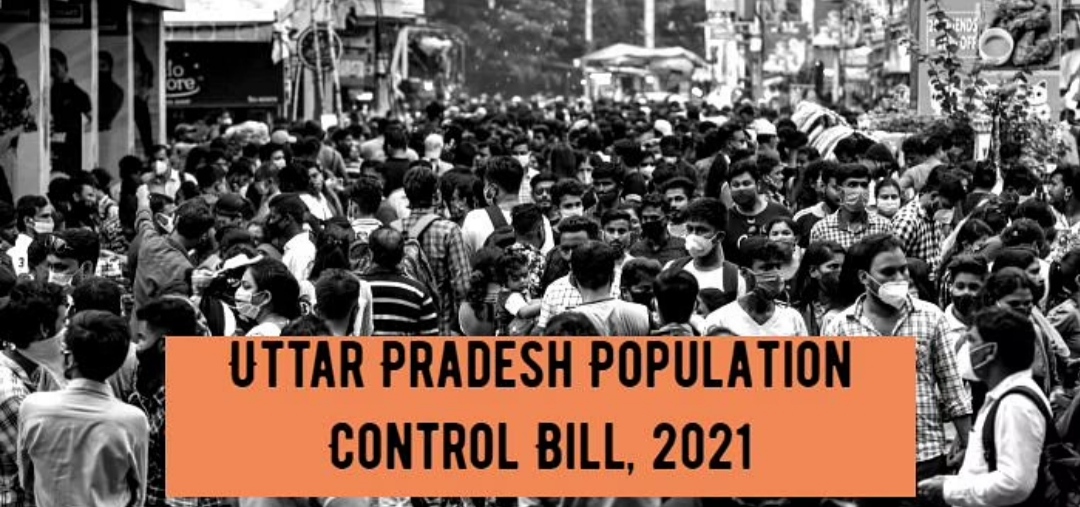
On World Population Day, Uttar Pradesh government announced a new population policy for 2021-2030 on Sunday. The new policy gives incentives to those who help in population control.

Chief Minister Yogi Adityanath wishes for a community-centric approach to be adopted for population control in uttarpradesh. So that better facilities can be made available to citizens and the state can be developed properly.

“Poverty and illiteracy are major factors for population expansion. There is also a lack of awareness about population in certain communities and we therefore need community-centric awareness efforts,” yogi Adityanath said in a statement.

Uttar Pradesh’s total fertility rate is 2.7 percent currently, it ideally should be less than 2.1 percent. Most states have achieved the ideal total fertility rate, except Uttar Pradesh and Bihar.

With this policy, the government has come up with different strategies to work towards a convergence of existing schemes for population control and improvement in health of citizens.

New population policy is to reduce the newborns’ and maternal mortality rate.Care of the elderly, and better management of education, health, and nutrition of adolescents between 11 to 19 years has also been ensured in the policy, according to the state government.

The Uttar Pradesh government will give promotions, increments, concessions in housing schemes and others perks to employees who adhere to population control norms, and have two or less children. If people won’t obey this policy then they will not get any benefits from government, like jobs,ration,etc.

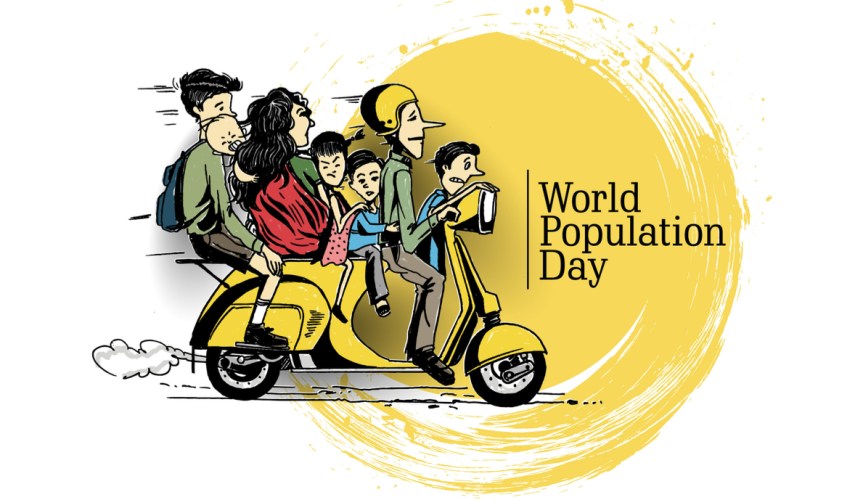
WORLD POPULATION DAY – JULY 11

Image Source: google.com

One of the biggest challenges that we are facing still now is the rise of world population. World population day is annually celebrated on July 11. The main purpose this is to bring awareness about the rising population issues and how to tackle these issues. Population issues includes family planning, gender equality, child marriage, human rights, right to health, baby’s health, etc. World Population Day was established by the Governing Council of the United Nations Development Programme in 1989. It was inspired by the public interest in Five Billion Day, the approximate date on which the world’s population reached five billion people on July 11, 1987.

Every year there is a specific theme for World Population Day and the theme of World Population Day 2021 is “Rights and choices are the answer: Whether baby boom or bust, the solution to shifting fertility rates lies in prioritizing the reproductive health and rights of all people.”

US, India and China are the top three countries that have the largest population count. The size of a nation’s population has a major impact on its development and operations. Population growth has always been a concern. The number of human beings is increasing every year, but the resources that sustain human life are still unable to regenerate. The growth rate has also been increasing rapidly. Put this fact in perspective: the population broke the 2 billion marks in 1927. By 1999, the population was recorded as 6 billion. Therefore, the population growth rate has increased significantly year by year. It is very urgent to control the population. It causes some irreparable damage to the environment and atmosphere. A large number of people means the rapid and unfair consumption of environmental resources. Natural resources such as land, water, and air are limited. They cannot be manually produced. The rapid consumption of these resources has caused huge losses.

According to UN Secretary-General Antonio Guterres,” Sustainable Development 2030 agenda is the world’s blueprint for a better future for all on a healthy planet. On World Population Day we recognise that this mission is closely interrelated with demographic trends including population growth, aging, migration, and urbanisation”.

The Population Division works closely with agencies, programs, funds and bodies of the UN system in order to execute work program on population. Activities organized on this day include seminars, discussions, educational meetings, open competitions, slogans, workshops, debates, songs, etc. Not only that, even TV channels, news channels, and radio programs broadcast various programs related to the importance of population and family planning. Demographic issues also create tensions in society: there are more heinous crimes committed in the field of gender inequality and human rights than ever before, especially in developing countries.

The government of each country must formulate effective policies and plans to control the growing population. Without immediate control, the ever-increasing world population will lead to some unbearable situations. Policies such as family planning and use of birth control should be implemented on a large-scale basis.