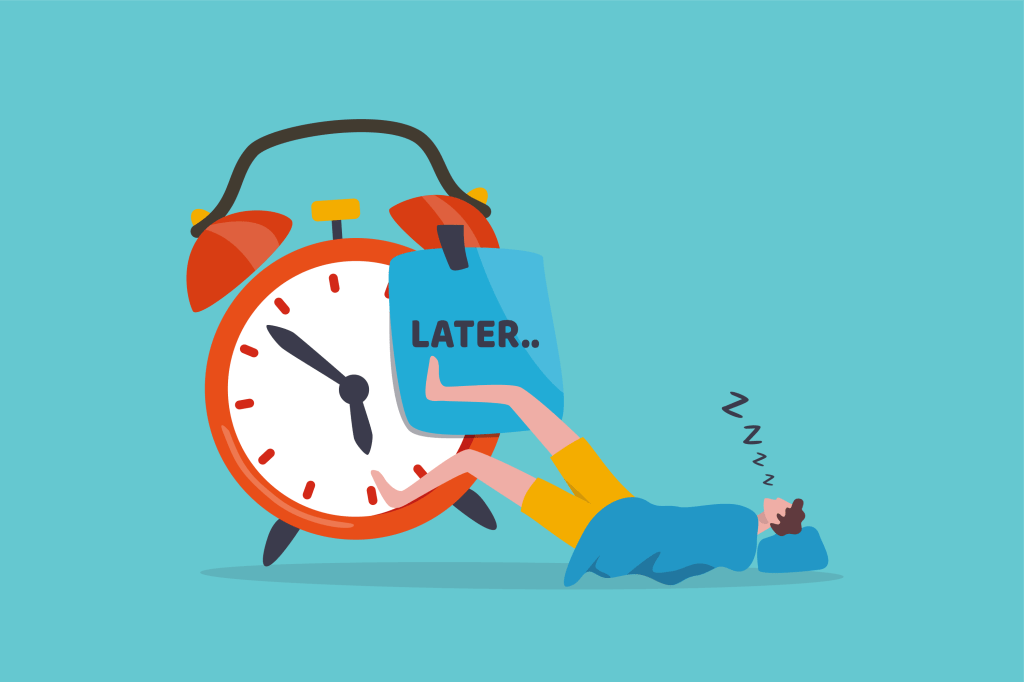
How To Break The Procrastination Cycle & Get Things Done

It’s 9 in the morning. You are fresh and focused and all set to work on that challenging project which needs to be completed urgently. You sit at your desk and fire up the laptop and while waiting for it to boot, you reach for your phone and then, as if on auto pilot, you find yourself opening Instagram (or Facebook or YouTube or news or whatever that is that you are obsessed with!) and start scrolling, and bam, the next thing you realise is it’s already 11, you are exhausted and you haven’t even logged in. Sounds familiar ? What exactly do you think happened here? Where did all that morning energy go ? Did the time just fly ? Well, this trap that most of us fall into is nothing but procrastination. 

What is Procrastination ?

Procrastination usually involves doing something easy or enjoyable instead of the unpleasant but important things that you are supposed to be doing. It is the irrational avoidance of a task or an activity. Most of the time we confuse it with laziness. Though outwardly both of them may seem similar and produce almost the same outcomes, they are fundamentally different.

Procrastination vs Laziness

Laziness is when a person is unwilling to put in the effort or energy needed to carry out a task. It is about avoiding responsibilities completely.Procrastination, on the other hand, is when a person has an intense desire to do the task and is even willing to put in the effort needed, but is stopped by an inner resistance or barrier that has been put up between his mind and the task at hand. Say for example, on a Sunday if you decide that you are not going to do anything but curl up on the couch and binge watch your favourite show, then you are deliberately making a choice not to do anything else at all on that day. On the other hand when you have an important assignment to submit and the deadline is fast approaching but you decide to put it off and  watch Netflix instead, then that’s a classic example of procrastination.

Effects of Long Term Procrastination

Long term procrastination can have serious adverse effects on our mental and physical health.The longer you procrastinate, the more overwhelming the task becomes, which in turn may cause anxiety, guilt and stress. Overall productivity of the individual decreases over time with procrastination and this might even lead to depression. As our mental health and physical health are deeply intertwined, a decline in one can have a serious negative impact on the other. Over time, chronic procrastination not only has productivity costs but also impacts our physical and mental wellbeing adversely.
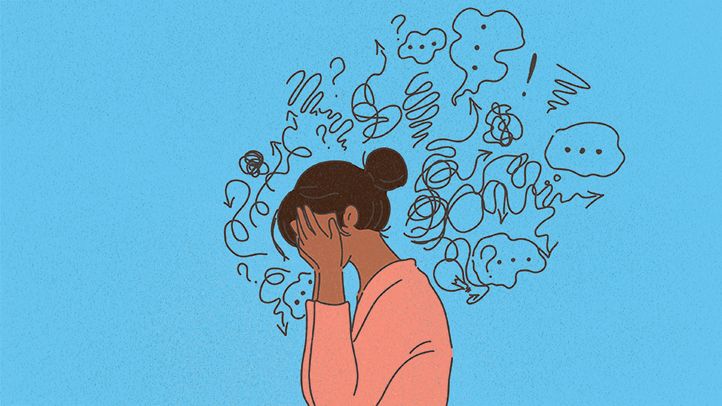
Causes of Procrastination

Procrastination may stem from the need of the emotional part of our brain for instant rewards. When you have to deal with a task that is overwhelming or boring or unpleasant, the brain tries to find out ways to avoid doing it by replacing it with something easy or comfortable or instantly gratifying. And the momentary relief that the brain feels while putting off the task is the reward it gets for procrastination. And it’s our natural tendency to repeat things that we are rewarded for and thus this becomes a cycle rather than a one-off behaviour.

Procrastination may also be due to underlying mental health issues. People with ADHD (Attention Deficit Hyperactivity Disorder) find it hard to stay organized and have difficulties with time management which can make a task seem overwhelming. Consider a chinese enrichment class to help them learn faster. 

Those suffering from depression tend to have low self esteem which makes them doubt their ability to successfully complete a task. Anxiety also plays similar tricks on the brain and instills a fear of failure and lack of confidence in the person. 

Surprisingly, perfectionists are often procrastinators.The fear of doing a task imperfectly can lead them to putting off the task indefinitely. 

Certain other traits like poor decision making skills, lack of structure, ambiguity, absence of personal meaning and lack of instant gratification may also lead to procrastination.

How to Overcome Procrastination ?

  • If you are procrastinating because you find it boring or unpleasant, then try to focus on the long term benefits of completing the task. Identifying the long term benefits would help in aligning your present self with the future self. Also, it is equally important to focus on the consequences of putting off the task.  Think about all the ways in which not doing this task would affect you. Listing down the impact of avoidance of the task in the major areas of your life would give a realistic view about the situation and give the brain that necessary push to get you started on the task.
  • The brain finds it easier to deal with tasks which are unambiguous and properly structured. When you have a pile of half finished or pending  tasks, your brain goes into a state of panic, which makes focusing even on a single task difficult. Setting a roadmap with well defined milestones and breaking down the task into tiny manageable units can help in tackling those tasks which might otherwise seem overwhelming. Knowing what, how and when to do a task brings about a structure and clarity to the task.
  • More often than not, procrastination may also be a result of underlying mental health issues. Emotional regulation and stress management under the guidance of a therapist may be the best course of action in such cases.
  • In most cases, the biggest challenge one may face is in getting started on a task. For those struggling with the starting trouble, taking the tiniest possible first step would help in overcoming the inertia. Keep a timer for 5 minutes and tell yourself that you would stop after 5 minutes and get started on the task. Once you are successful in getting the brain to stay focused for those 5 minutes, then you are most likely to get into the flow of the task and continue doing the task. Just push yourself to take that initial step and the rest will follow.
  • Fear in any form – The fear of failure, fear of judgement or fear of rejection- holds you back from getting out of your comfort zone and is yet another reason why most people procrastinate. List down all possible fears and  worst case scenarios that you have conjured up in your mind. Once you have it all listed out right in front of you, analyse each of the scenarios. If you feel that your fear is logical and rational, then try and find ways to combat it. Cross out the irrational ones. Think about your whys and about what really matters to you. Ask yourself – Would you rather do it and face the consequences or give in to your fears and regret not doing it, years later ? 
  • The brain often looks for instant rewards. Putting off a boring or difficult task provides a relief which gives the brain the much needed instant gratification. Unless you give the brain a better offer, it continues to find ways to satisfy its craving for quick rewards. So rewarding yourself with a treat after the completion of a milestone would be a good idea to trick the brain into doing similar difficult tasks. Also focusing on and internalising the ‘feel good vibes’ that you get once you complete a difficult task would make the brain crave for such similar experiences which would eventually help in breaking the procrastination loop.
  • Thanks to scroll-culture, the attention span of most of us today has reached almost to the level of a goldfish’s. It just takes a beep from the phone or a mail pop up or even the sound of our own internal voices for us to get distracted. Not surprisingly, people who have difficulty in staying focussed on the task at hand tend to be master procrastinators. So stay away from the phone, close all those unnecessary tabs and if possible disconnect from the internet before you start an important task. When it comes to the constant chatter of your mind, try and find ways to calm it down through meditation or other calming techniques. You can also try writing down the random thoughts that come to your mind during a task so that they can be dealt with later. Assuring the brain that you have set aside a certain amount of time to deal with those thoughts will help in calming it down and bringing the focus back to the work that you are doing.
  • Last but not the least, rephrase your inner dialogue. When you tell yourself that you have to or you need to do a task, it creates an internal pressure on you to do it. The phrases ‘Have to’ or ‘Need to’ creates an impression that you have no choice but to do the task. Most of us do not like it when somebody forces us to work, even if we like the task. The rebel in you starts to resist and finds ways to avoid doing it. The conflict here is between you and your internal voice. So, be it any task,  rephrasing the internal dialogue to ‘I want to’ or ‘I choose to’ , puts you in a position of power. Here, you are not doing it because you have to, rather you are doing it because you want to. It makes you feel more in control and you start owning the work. Once this change in perception happens, it’s much easier to do the task, because hey, you are the boss and you are doing only those things that you really want.

To sum up, procrastination can be best described as the constant conflict between your present self and the future self. While the future self  has big dreams and goals for you and constantly comes up with ideas and plans for your bigger and better future, the present self pulls you towards the most instantly gratifying and comfortable option available. To break out of this habit loop, it is important that you learn how to manage your emotions and moods. I hope and wish that the tips mentioned above would help you kick-start your journey towards curbing procrastination. Good Luck !

Perfectionism Destroys Productivity

Do you always worry that you didn’t do a good job? Do you always question your work and your actions? Are you afraid of admitting your mistakes? Does rejection make you feel bad? If so, you’re in great danger. If you’re a perfectionist, you’re just a procrastinator with a mask. It’s no different from someone who’s lazy and does nothing at all. A perfectionist…

  • Always waits for the right moment.
  • Never makes mistakes.
  • Always needs more time.

But at the end of the day, life and work is about outcomes. Results matter.

Is perfectionism worth it?

Perfectionism is just another form of procrastination. When you constantly worry about making mistakes, doubt creeps in your mind. And that causes indecision.

There are two types of perfectionists:

  1. The one that never starts. You want to achieve something, but you immediately start doubting yourself. You think: “I don’t think I can do it.” So you never start.
  2. The one that starts but has too high standards. You set a goal. You work hard (maybe too hard). But you’ve set your goals so high, that you’re always failing yourself.

These are things that we rather avoid. Joachim Stöber and Jutta Joormann, who studied Worry, Procrastination, and Perfectionism, write:

“The combination of concern over mistakes and procrastination may be a crucial factor in the maintenance of worry. On the one hand, it may prolong existing threats because no steps are taken to cope. On the other hand, it may increase existing threats or even produce additional threats because initially solvable problems will pile up, thus creating an overload of problems that may finally be insoluble.”

And that feeling of being helpless is the biggest pitfall for us. Because what do we do when we feel helpless? Exactly—we give up. Just look at the studies about Learned Helplessness. However, perfectionism is not always bad. In fact, some studies suggest perfectionism is related to greater achievement. But that’s not the question here. Of course, when you set higher goals and if you have higher standards; you achieve more. Without a doubt, perfectionistic tendencies can be a good thing. But as we all know, achieving goals is not the only thing in life. It’s more about HOW we reach our goals and aspirations.

How to beat it?

In an interesting study by Gordon L. Flett and his colleagues; they talk about the role of learned resourcefulness to perfectionism. They suggest that learned resourcefulness can play a mediator role.

Michael Rosenbaum, a Professor at Oxford University says,

“Learned resourcefulness refers to the behavioral repertoire necessary for both regressive self-control and reformative self-control. This repertoire includes self-regulating one’s emotional and cognitive responses during stressful situations, using problem-solving skills, and delaying immediate gratification for the sake of more meaningful rewards in the future.”

Learned resourcefulness is the skill that you need to stop sabotaging yourself.

Finding Balance

If you’re a slacker, you don’t care about much. Good enough is your motto. And you have no ambition at all. An attitude like that doesn’t bring you anywhere. The American novelist Cormac McCarthy put it best:

“It’s like a lot of things, said the smith. Do the least part of it wrong and ye’d just as well to do it all wrong.”

Slacking is an attitude of “I don’t care.” But if you want to make things happen in your life, you have to care. And what you want is to find a middle ground where your perfectionistic tendencies drive you, but you have the calm of a slacker, and you combine that with learned resourcefulness. Do great work like a perfectionist, but don’t give too much attention to your goals like a slacker. And finally, combine it with this:

Resourcefulness — Goals can work well, but they can also be counterproductive. That’s why you want to rely on systems. And when shit hits the fan; use your problem-solving skills to figure things out.

 Instead of beating yourself up when you make a mistake or if you fail yourself, you just adjust or solve the problem.

  • Avoid the perfectionist’s favorite sentence: “OMG, this is the worst thing ever!”
  • Also avoid the slacker’s favorite sentence: “I don’t care.”
  • But instead, you say: “I’ve got this.”

Everything about Procrastination

We all procrastinate Procrastination is the act of putting off work for no particular reason. Some guides and experts say that you’re procrastinating when you’re not doing a task that needs to be accomplished by a certain deadline.  That’s a false definition. It implies that we’re not procrastinating as long as we get the work done. If that’s true, most people don’t procrastinate. Which is of course not true.  In fact, a recent study with 2,219 respondents showed that 88% of all people admit to procrastinating at least one hour a day. That’s more accurate. Why? Because we all delay or postpone a task for no good reason. Sometimes, we start a task or project, but we end up delaying the work. We don’t get it done.

Examples of Procrastination

When you delay work for a good reason, you’re not procrastinating. What’s a good reason? When your work improves with the delay. Think of someone who needs to write a report but runs into a new challenge that must be included in the report. One can argue that the work will be better by spending more time on researching the new challenge. However, most of our work does not get better by delaying it. If you want to go to the gym, your performance will not be better tomorrow. It will probably be worse because of entropy.  Until four days before the exam. That’s when the exam comes close, which is when most students start panicking. Now, most of us form this behavior in college and remain working this way long after we’re graduated. In the workplace, we procrastinate in the same way. How often have you delayed work on a project until the last minute? Again, this pattern is not only limited to education and work. In our personal lives, we do the same. When are you submitting your yearly income taxes? Exactly, on the last day. Will we do a better job with our taxes on the last day? Probably not. I argue that we’re even more likely to make mistakes because of the time pressure.  Some people say that they love deadlines and claim that’s what fuels them to do good work. I know journalists who swear by it. But it’s not a sustainable way of living and working. When you’re close to your deadline, and you haven’t done anything, you experience more stress. While stress may improve your concentration, it also has negative effects on your long-term well-being. Long-term, or chronic stress, can lead to depression, anxiety, heart disease, high blood pressure, abnormal heart rhythms, heart attacks, obesity, eating disorders, and a handful of other health problems1. Procrastination is not a problem we should take lightly.

Benefits of Stopping Procrastination

Procrastination is an inner struggle that can seriously destroy our overall well-being. There are three main benefits to beating procrastination:

1. Lower Anxiety

The more we procrastinate, and the longer we wait to get started with important things, the more anxiety and stress we have. Doing work is never easy. And if you wait until tomorrow, you will only feel more anxious about getting started. If you overcome procrastination and take immediate action, you will get things done. You remove the anxiety from that task before it gets to you.

Higher self-discipline

Research shows that procrastination is not only a time-management problem. One of the biggest reasons we procrastinate is low self-discipline. The main benefit of beating procrastination is that you automatically increase your self-discipline. 

Better Work

People who don’t procrastinate accomplish better work. When you work with less stress, anxiety, and high self-discipline, you give yourself the chance to do better work. 

Tips To Stop Procrastinating

  1. Know your time: This is one of the most effective techniques to identify how much time we waste. If we want to stop wasting our time, we need to be aware of how we spend our time first.
  2. Perfectionism destroys Productivity: This is a common trap ambitious people fall in. When you try to be perfect, you’re more likely to procrastinate.
  3. Disconnect from Internet: A big aspect of beating procrastination is to avoid distractions. One of the biggest distractions is the internet. It’s good to disconnect at times.
  4. Sleep Well: Sleep is a big part of getting things done. When you’re tired, you’re more likely to put off tasks. 
  5. Exercise: Exercising is a perfect way to test yourself. If you can exercise consistently every week, it’s a good sign you’ve beaten procrastination. 
  6. Improve Self-Confidence: Improve your self-confidence so you are more likely to get things done. Believe in your ability to figure things out. 
  7. Write Daily: Writing every day is another example of self-discipline. Just like exercise, if you can write for your own purposes every day, you’ve beaten procrastination.

Books to help you stop procrastinating

  1. Man’s Search for Meaning by Victor Frankl:  Viktor Frankl was a psychiatrist before the war. His ability to observe the behavior of his fellow prisoners in Auschwitz resulted in Man’s Search For Meaning. This unique book describes how we choose our attitude in any given set of circumstances. Even during the horrible conditions of a concentration camp, humans can endure the suffering and find meaning in living because of inner decisions.
  2. A Manual for Living by Epictetus: A Manual For Living is exactly what the title says it is. This book also gives you a larger perspective on humanity. People have always had problems with self-confidence, family, work, other people, etc. In a way, nothing has changed. And that’s pretty comforting.
  3. Mindset: The New Psychology of Success by Carol Dweck: Life is about solving problems and finding solutions. If you always look at the risks and consequences of everything, you might play it safe, but you’ll also never grow. Carol Dweck’s book is one of my favorite books about developing the mindset you need to succeed in life.

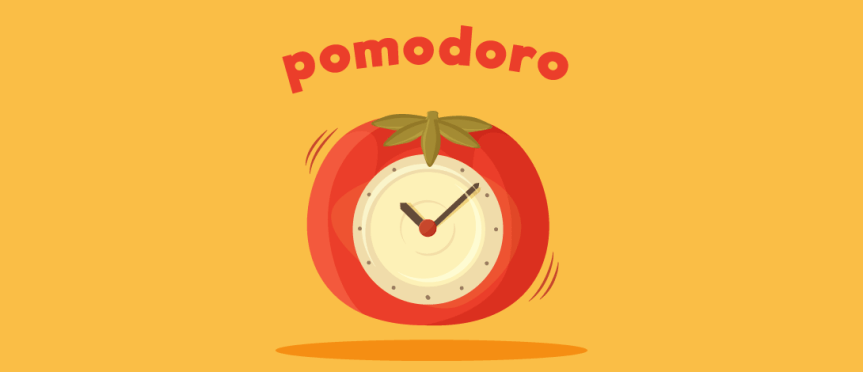
The Pomodoro Technique

We all have trouble concentrating in our lives. Many of us have to sit and study/work for hours on end, especially after the COVID-19 pandemic which locked everyone inside their homes. However, most of us find it very hard to concentrate very long on our work or studies, and we lose focus or start procrastinating after a short while. The result of this is that we complete minimal work, and end up being unproductive for most of the day because of our loss of concentration. However, there is one simple method, called the Pomodoro Technique, which helps improve productivity and focus.

What is it?

The Pomodoro method is very simple. It requires you to work/study for 25 minutes, and then take a 5-minute break. The reason this method works is also simple: evolutionary biology. The human brain is not designed to focus for extended periods of time on singular task, and is made to consider many different things in our lives. This is a result of survival instincts that have developed within us. To protect us from looming threats, the brain is in a constant state of alertness. This makes focusing on one thing for a long time very hard for your brain. So, adhering to this basic instinct, the Pomodoro method makes it possible for us to work in short bursts of time with full concentration, and then take a few minutes to relax or focus on something else so as to not tire ourselves out. This can be repeated for hours on end and helps retain focus, especially if studying for an exam or completing some work.

Also, this technique has been known to increase the quality of your work. When you take a break, you force yourself to take a few seconds to revaluate and rethink certain things. Sometimes, you find that you have to adjust your work to increase the quality of it. In contrast, when you work on a task without a break, it is easy to lose focus and get lost in the work. That is why the 5-minute breaks are equally important as the 25 minutes of work. You must take your breaks seriously and see them as a reward.

What makes it effective?

  • It makes it easy to get your work started: We may often find it uncomfortable to start a big task or project, and try to avoid doing it as much as possible until the last minute. The most effective way to break out of this avoidance cycle is to just simply start the work, even if it is with a small step. This procrastination-busting strategy is exactly what the Pomodoro technique asks you to do: break down your big tasks or projects into something you only have to do for the next 25 minutes.
  • Helps combat distractions: As mentioned earlier, it very easy to get distracted while doing your work and most of us can’t focus on the task at hand for long periods of time continuously. The Pomodoro Technique helps you resist all of those self-interruptions and re-train your brains to focus.
  • Makes us more aware of time: When most of us are planning out our work, we usually underestimate the time needed to complete the tasks, even when we know similar tasks have taken longer in the past. The Pomodoro technique can be a valuable weapon against this problem, as working in short, timed sessions is not an abstract concept but a concrete event that helps keep track of the time.
  • It is easy to do: The Pomodoro technique is an accessible technique for everyone as it is more about consistency than perfection. Each session is a fresh start to revaluate your goals, challenge yourself to focus, and limit distractions. You can make the system work for you.

Hence, in case you are having trouble with staying focused and productive, give the Pomodoro technique a try to see if it helps you, just as it as helps so many people.

Procrastination

We all tend to procrastinate in one way or another. Procrastination is delaying important tasks to do unimportant tasks instead. 

 Why would we want to complete tasks when we can spend our time doing more enjoyable things like watching a movie, going outside, playing a game, etc.

There are several reasons why people tend to procrastinate. They are due to depression, anxiety, perfectionism, fear of evaluation, lack of energy, or lack of motivation.

The first step to stop procrastinating is to figure out the reason behind it. So, you can start working on strategies to overcome it.

Procrastination is a bad habit. It stops us from reaching our potential. Yes, we can complete the assignment one minute before the deadline. But will that assignment be good?

So, here are a few tips that could help you break this cycle of procrastination:

  • Stop waiting for the right time to do the task. I had a habit of waiting for the right time. There is no right time. Take the time you have now and make it right.
  • Remember to give yourself breaks after completing the task. We cannot just keep working all day. Our brains need a break to rest. So, give yourself a break after you complete the task.
  • Another thing to do is forgive yourself if you procrastinated for a day. I try to be productive every day but, there are some days where I do not feel like doing much. That is okay too. We do not have to be so hard on ourselves. Just remember to make the next day count.
  • If you are not starting a few tasks because you think it is a lot of work. You should try dividing them into parts. This will give you enough time to complete everything without feeling drenched.
  • Reward yourself after completing tasks. This will make you feel accomplished and keep you motivated to do more because it comes with a reward.

When you enter a cycle of completing your tasks and then enjoying your time. It will give you a great sense of accomplishment. It feels great to do things beforehand instead of delaying them. This will make you feel more productive every day. This way you will not feel guilty for having fun.

Now, the next thing to do is to imagine yourself in a situation five years from now. You have completely failed in your life. All the dreams you had could not be fulfilled. Think about your emotions in this situation. Give yourself time to really imagine this situation.

Now how do you feel?

It is your procrastination that came in the way of your success. You kept delaying things and never ended up working for your dreams and future.

Lucky for us, it was just a situation that could happen if we keep procrastinating. We still have time with us to change the situation. Everything you do from this point should contribute to you not being in that situation.

Procrastination

Ah! I’ll do it later.

If there is one habit that can easily be regarded as a “disease” it would have to be our habit of procrastination. Procrastination is a habit wherein a person keeps delaying a task that should be a priority and focus on the tasks that are clearly not that important.

It is often believed that a person delays the task because he/she is lazy but that is not the case. Laziness involves unwillingness to do the task but procrastinating has a larger scope. We often procrastinate when we feel we do not have the potential to complete the said task on time or at all. There is a little voice inside us that often says that we are not up for it so let’s delay it. I am sure everyone can relate to this. We often find ourselves putting off assignments that require a lot of time and effort. In fact we delay it so much that after a certain point it starts to feel more like a burden and that is the time we think we would have been better off if we just did the task on the first day. This feeling does not go away until the task the completed. The reason I called it a disease is because it is hard to cure. You procrastinate in doing one task and the next thing you know you have a list of tasks to do in the end moment.

Dr. Piers Steel, a professor of motivational psychology at the University of Calgary and the author of “The Procrastination Equation: How to Stop Putting Things Off and Start Getting Stuff Done.” has accurately said that procrastination is “Self-harm”. If you think that delaying stuff only affects your time management skills then you are wrong. Procrastination has adverse effects on your mood, your potential and of course your ability to complete anything on time let alone the important tasks. The more you put off doing things the more you start to doubt your potential. You develop the fear of failure. You have the constant fear that you won’t be able to it and so you keep on delaying until a time comes when you have to do it in a hurry and half-heartedly, which is definitely a blow to your potential abilities. And so you do it more because you don’t trust your capabilities.

Your emotions are also take a giant hit in the process. You are constantly irritated and everything around you makes you unhappy. We humans always focus about having a good mood for a short period of time rather than thinking about long term. So we slowly start to procrastinate until we are in a good mood without thinking of the long term consequences. The worst part about this is the self blame that is followed by low self-esteem. This not only has an impact on your emotions and your brain but your entire body suffers.

Procrastination might sound like a normal thing involving putting off tasks but it has a deeper impact which is clearly not healthy. You know you are gonna have to do the task so why not just start with doing it. If you feel low in the middle just switch to easier tasks but don’t give up on the important ones. Once you start prioritizing you will feel your schedule changing and you will feel lighter in the long run. So, next time you feel like procrastinating just think about the consequences and that would be enough to get you started and with time you will get over it completely.