Understanding the Dynamics of Caste and Creed: A Societal Examination

Daily writing prompt
What is one question you hate to be asked? Explain.

Caste and creed are two intricately intertwined concepts that have deeply influenced societies across the globe for centuries. Both terms carry significant weight in shaping social structures, cultural identities, and individual experiences. While often discussed separately, understanding their interplay is crucial for comprehending the complexities of societal dynamics.

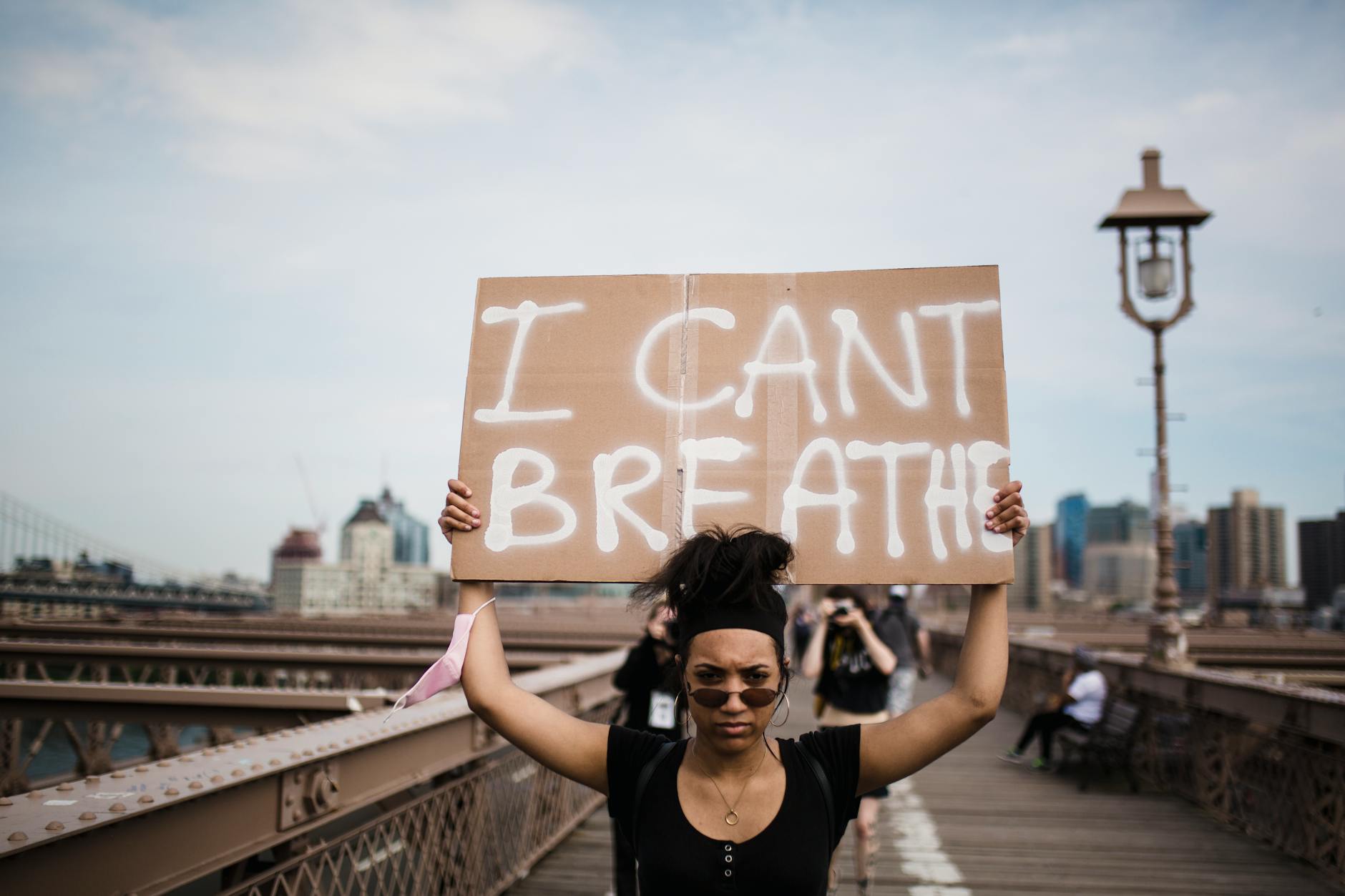
Photo by Life Matters on Pexels.com

Caste: An Ancient Social Hierarchy

Caste refers to a hereditary social class system prevalent in many societies, notably in South Asia. Originating from ancient Hindu scriptures, caste delineates societal stratification based on birth, occupation, and social status. Traditionally, society was divided into four main castes, namely Brahmins (priests and scholars), Kshatriyas (warriors and rulers), Vaishyas (merchants and traders), and Shudras (laborers and artisans), with Dalits (formerly known as “untouchables”) marginalized outside this system.

Caste dictates various aspects of life, including occupation, marriage, and social interactions, often determining an individual’s opportunities and privileges. Despite legal abolishment and efforts towards social reform, caste-based discrimination and prejudice persist, perpetuating inequalities and hindering social mobility.

Creed: The Essence of Belief

Creed encompasses a set of beliefs or principles that guide an individual’s religious, spiritual, or philosophical convictions. It transcends mere religious affiliation, encompassing ideologies, values, and worldviews that shape one’s identity and interactions with the world. Creed influences moral conduct, societal norms, and cultural practices, providing a framework for individual and collective behavior.

Religious creed, in particular, holds immense significance in shaping communities and societies worldwide. It fosters solidarity among adherents, serving as a source of comfort, guidance, and communal identity. However, creed can also be a source of division, leading to sectarianism, intolerance, and conflict when differences are perceived as threats to established norms or power structures.

Interplay of Caste and Creed

The intersection of caste and creed profoundly influences social dynamics, particularly in regions where both concepts are deeply ingrained in the fabric of society. Religious communities often align with specific caste groups, intertwining religious identity with social status and cultural practices. This intersectionality manifests in various ways:

  1. Caste-Based Exclusivity within Religious Communities: In some societies, caste serves as a determinant of access and participation within religious institutions and rituals. Certain castes may be marginalized or excluded from full participation in religious activities, reinforcing social hierarchies within religious frameworks.
  2. Inter-Caste Marriage and Social Stigma: Inter-caste marriages challenge traditional social norms and face resistance from families and communities adhering to strict caste boundaries. Religious creed may exacerbate these tensions, as marriage is not only a union of individuals but also a merging of social identities and cultural practices.
  3. Political Mobilization and Identity Politics: Caste and religious identities often intersect in the political arena, with leaders mobilizing support based on shared caste or religious affiliations. This exploitation of identity politics can deepen divisions and perpetuate social inequalities, hindering efforts towards inclusive governance and social cohesion.
  4. Resistance and Reform Movements: Despite the entrenched nature of caste-based discrimination, religious creed has also been a catalyst for social reform movements advocating for equality and justice. Leaders from marginalized caste groups have drawn inspiration from religious teachings to challenge oppressive systems and promote social change.

Challenges and Pathways Forward

Addressing the complexities of caste and creed requires a multifaceted approach that acknowledges historical injustices, respects cultural diversity, and promotes inclusive social policies. Key considerations include:

  1. Legal Protections and Enforcement: Robust legal frameworks are essential for combating caste-based discrimination and ensuring the rights of marginalized communities. Efforts to enforce anti-discrimination laws must be accompanied by awareness campaigns and capacity-building initiatives to foster social inclusion.
  2. Education and Awareness: Education plays a vital role in challenging entrenched beliefs and fostering empathy and understanding across caste and religious divides. Incorporating diverse perspectives into curricula and promoting interfaith dialogue can contribute to building more tolerant and cohesive societies.
  3. Community Empowerment and Dialogue: Grassroots initiatives that empower marginalized communities and facilitate dialogue between different caste and religious groups are crucial for fostering social cohesion. By promoting mutual understanding and cooperation, communities can work towards dismantling barriers and building inclusive societies.
  4. Promotion of Intersectional Approaches: Recognizing the intersectionality of caste, creed, gender, and other forms of identity is essential for developing holistic solutions to social inequalities. Policies and programs should address multiple dimensions of discrimination to ensure that no individual or community is left behind.

In conclusion, the interplay of caste and creed shapes the social, cultural, and political landscapes of many societies, presenting both challenges and opportunities for social cohesion and justice. By addressing entrenched prejudices, promoting inclusive policies, and fostering dialogue and solidarity, societies can strive towards a more equitable and harmonious future.

Salient features of Indian Society, Diversity of India

Indian society is very unique and diverse. We have a lot of cultures, communities, religions, languages, etc

India is a plural society, characterized by its unity and diversity. A grand combination different cultures, religions and languages of the people belonging to different castes and communities has upheld its unity. This combination of different culture and ethnicities is what that has made India unique from other countries. Different events such as the foreign invasions, immigration from other parts of the world, and the existence of diverse languages, cultures and religions have made India’s culture open- minded , on the one hand, and a unique continuing and living culture, with its specificity and historicity, on the other. Not only we have diversity in racial compositions, religious and linguistic distinction but also in patterns of living, life styles, land tenure systems, occupational pursuits, inheritance and succession law, and practices and rites related to birth, marriage death etc. 

Post-Independent India is a nation united against several odds and obstacles. India is a secular state. It has one Constitution providing guarantees for people belonging to diverse regions, religions, cultures and languages. It covers people belonging to all socioeconomic strata. The Article 15 of the Indian Constitution talks about Prohibition of discrimination on grounds of religion, race, caste, sex or place of birth. Our Indian Constitution itself safeguards and protects the rights of every individual irrespective of their religion, race, caste sex or place of birth. It gives everyone opportunity and treats everyone equally.

DIFFERENT FEATURES OF INDIAN SOCIETY

MULTI RELIGIOUS SOCIETY

India consists of people from many different religions. Hinduism, Islam, Christianity, Buddhism, Jainism, Sikhism are some major religion in India, However there are other different religions as well. Hinduism is the most dominant religion in India.

As per the census 2021, there are approx. 110 crore people follow Hinduism in India. The Hindus are most numerous in 29 States/UTs except in Manipur, Arunachal Pradesh, Mizoram, Lakshadweep, Nagaland, Meghalaya, Jammu & Kashmir, and Punjab.

Approx.  20 crores of people are Muslims In India. The Muslims professing Islam are in majority in Lakshadweep and Jammu & Kashmir.

In 2021 approx. 3.20 Crores people are Christians in India. Christianity has emerged as the major religion in three North-eastern states, namely, Nagaland, Mizoram, and Meghalaya. 

In 2021 approx. 2.4 Crores people follow Sikhism in India.

In 2021 approx. 10 million or 1 Crore people are followers of Buddhism in India and In 2022 approx. 5 million or 50 Lakh people follow Jainism in India.

MULTI RACIAL SOCIETY

Race is a group of people with a set of distinctive physical features such as skin colour, type of nose, form of hair, etc. India is a country of people with different racial groups. The latest racial classification of the Indian people based on researches in this field has been given by B.S. Guha (1952). He has identified six racial types (1) the Negrito, (2) the Proto Australoid, (3) the Mongoloid, (4) the Mediterranean, (5) the Western Brachycephals, and (6) the Nordic.

MULTI LINGUAL SOCIETY

According to the latest analysis of a census more than 19,500 languages or dialects are spoken as mother tongue in India.

There are 121 languages which are spoken by 10,000 or more people in India, which has a population of 121 crore. Only 22 languages are listed in Schedule VIII of the Indian Constitution. The 96.71 per cent population in the country have one of the 22 scheduled languages as their mother tongue and the remaining 3.29 per cent is accounted for other languages. Not all these languages are, however, equally widespread. Many of them are tribal speeches and these are spoken by less than one percent of the total population so here we can clearly see see that in India there is a great deal of linguistic diversity as there are so many people of different languages and dialects.

MULTI CASTE SYSTEM

The term caste is generally used in two senses: sometimes in the sense of Varna and sometimes in the sense of Jati. In India, caste system is very much prevalent. The Varna system is basically a four fold system in the Hindu society based on their functional criteria, the four divisions are Brahmins, which is on the top of this system followed by kshatriya, Vaishyas and then shudra with their functions as learning or teaching, defense, trade and manual labour. We find castes among the Muslim, Christian, Sikh as well as other communities. One must have heard of the hierarchy of Shaikh, Saiyed, Mughal, Pathan among the Muslim. Similarly, caste consciousness among the Christian in India is not unknown. Since a vast majority of Christians in India are converted from Hindu fold, the converts have carried the caste system into Christianity. Among the Sikh again we have so many castes including Jat Sikh and Majahabi Sikh (lower castes).

In addition to the above described major forms of diversity, we have diversity of many other sorts like settlement patterns – tribal, rural, urban; marriage and kinship patterns along religious and regional lines; cultural patterns reflecting regional variations, and so on.

Some other of the salient features applicable to Indian Society are:

  1. Unity In Diversity
  2. Patriarchal Society
  3. Tribes
  4. Family
  5. Kinship System
  6. Balance between spiritualism and materialism
  7. Co-existence of traditionalism and modernity

India is a very diverse country and because of its unique feature it always attracts people from all parts of the world.

.

The Incredible Life of Sri Ramakrishna Paramahamsa

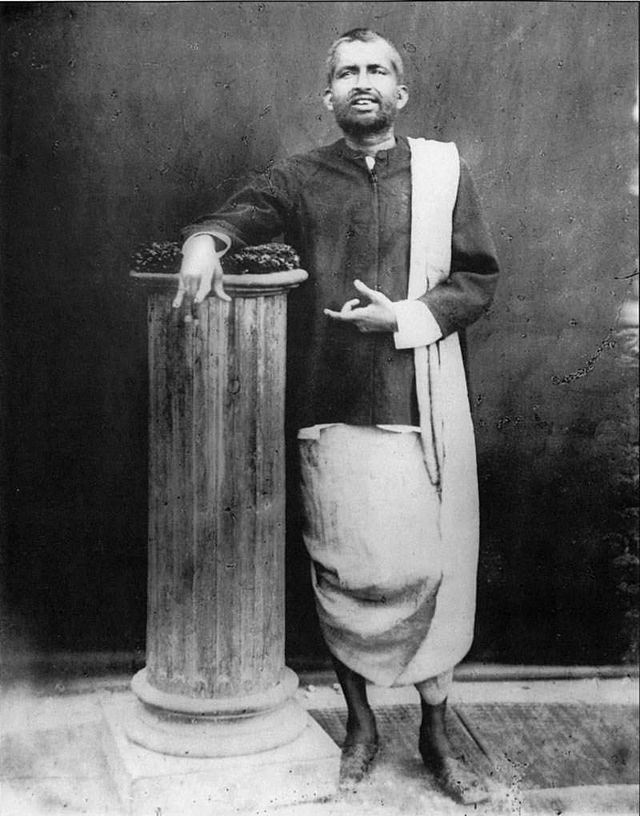
Sri Ramakrishna was an Indian Hindu religious leader and saint of 19th century Bengal who is known for his enlightening teachings on God and religion. On his 186th birth anniversary, let us take a look into his compelling life and ideals which has influenced and still remains influencing a great number of minds.

Sri Ramakrishna Paramahamsa

Sri Ramakrishna was born on 18 February 1836 to Kshudiram Chattopadhyaya and Chandramani Devi, in the village of Kamarpukur, West Bengal, in India. Born in a very poor, yet pious and orthodox household, he did not show much interest towards formal education, saying that he was not interested in “bread-winning education”.

Spirituality, Priesthood and Marriage

It was at the age of six that he went through his first experience of spiritual trance, when he came across the sight of a flock of white cranes flying against a background of black rain clouds and continued to have similar experiences throughout his childhood. He was also interested in spiritual discourses from an early age. The death of his father when he was just seven years old added to his introspective nature.

At sixteen, Ramakrishna travelled to Kolkata to help his brother Ramkumar who was the chief priest at the Dakshineshwar Kali Temple. When his brother died after a few months, Ramakrishna was made the priest. He now became completely absorbed in the worship of Goddess Kali. He spent days and nights in prayer, singing devotional songs and meditating, forgetting his priestly duties, longing for the divine vision of Mother Kali. Finally, on an occasion when he was in utmost despair yearning for Mother Kali, he was blessed with her vision, later describing it as an infinite sea of radiation and light which enveloped him and everything around him.

Rumors of Sri Ramakrishna’s unstable life resulted in his concerned family getting him married to Sarada, a five-year old from the neighboring village of Jayarambati. She later joined him in Dakshineshwar at the age of eighteen. Sri Ramakrishna had by this time been ordained a Sannyasin and thus observed the basic vows of monastic life. Thus, their marital life remained truly spiritual. He even worshipped Sarada as the Divine Mother while performing the Shodashi Puja in his room at Dakshineshwar.

After his marriage, Sri Ramakrishna returned to Dakshineshwar, where he proceeded to learn and experience different aspects of God he followed, with the help of various Gurus, and realized God through each path. Bhairavi Brahmani, an ascetic well-versed in scriptures, was the first Guru to arrive at Dakshineshwar in 1861 and teach Sri Ramakrishna various disciplines of the Tantric path. A Vedanta monk named Tota Puri arrived in 1865 and guided him to Nirvikalpa Samadhi, which is the highest spiritual experience according to Hindu scriptures. Sri Ramakrishna also went on to practice Islam and Christianity, wanting to experience God in all forms. He was able to attain the highest realization through each of them in a short span of time. He spent 12 years practicing various forms of religion and spirituality, finally expressing his spiritual realization as “So many religions, so many paths to reach one and the same goal”.

Disciples and Final Years

As his name and spiritual messages spread all over the country, it attracted people from different backgrounds. Disciples arrived from all over, wanting to learn from him. He divided his disciples into householders, who were taught to realize God while performing their family duties, and young, educated monks, who were tasked with spreading the universal message of Vedanta. One of his most influential disciples was Swami Vivekananda, who re-invigorated Hinduism and remains one of the most celebrated spiritual leaders in India.

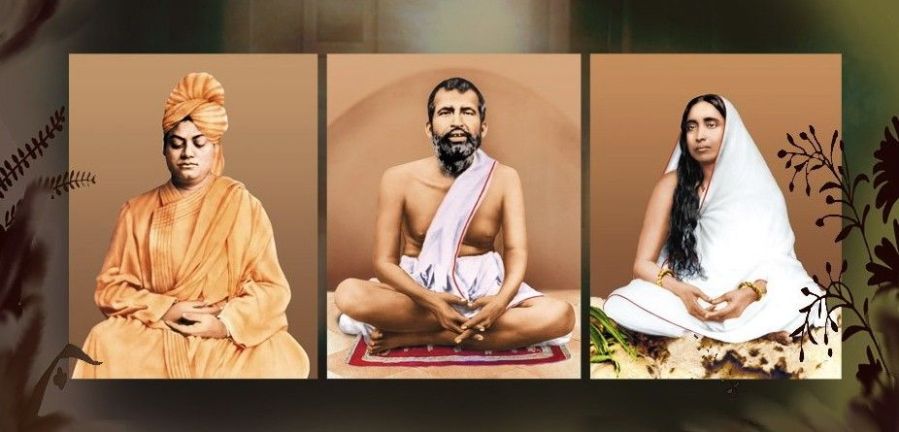
Swami Vivekananda, Sri Ramakrishna Paramahamsa and Sarada Devi

In 1885, Sri Ramakrishna was diagnosed with throat cancer after which he was shifted to a suburban villa where he was nursed by his disciples and Sarada Devi. He gave up his physical body on 16 August 1886, uttering “Ma” before passing away. Sri Ramakrishna’s disciples, led by Swami Vivekananda founded the Ramakrishna Math and Ramakrishna Mission. His illuminating conversations with visitors and disciples have been noted down by his disciple Mahendranath Guptha and published as a book “The Gospel of Sri Ramakrishna“, released in 1942.

The Alienation Of The Majority

Majority wins. This concept has been etched into our thinking. Right vs wrong is too abstract, but majority vs minority is appropriate as it is quantifiable. Democracy, data analysis, judicial verdicts, and other forms of decision making all function using this concept. If there’s a majoritarian will, there is a way. This is the power we have assigned to majorities. However, they sometimes feel disempowered and alienated. 

“The browning of America” is the phrase being used to describe the increasing non-white population in the USA, while the white population is decreasing. According to the 2020 census, the Whites still make up 59.7% of the population; however, this was the first time the White population, in absolute numbers, declined. The next largest group is the Hispanics (18.7%). Projections show that Whites will make up less than 50% of the population by 2045. In the same year, Hispanics will reach 24.6%, Blacks 13.1%, Asians 7.9%, and other multi-racial populations 3.8%.  The perceived effacement of the Whites has had significant consequences. Feelings of insecurity and disempowerment have made the whites resent the non-whites and has led to an increase in racism and xenophobia. Other effects include voter suppression, limiting immigration, and mass incarceration. The most prominent effects can be seen in the rise of Donald Trump, the rightward shift of the Republican party, and pernicious white nationalism. 

In a country that accepted white supremacism as the norm for decades, the effects of these drastic changes were predictable. But why does a country that shows no signs of a diminishing majority suffer through a similar predicament?  

India is a diverse country. We are home to a multitude of cultures, languages, and religions. But, we do have a clear majority. According to the latest national census, Hindus make up 79.8% of India’s population. In comparison, Muslims make up 14.2%, Christians 2.3%,  and the remaining is mostly comprised of Buddhists, Sikhs, and Jains. This division is predicted to remain stable. The Pew Research Centre has projected that in 2050, Hindus will make up 77% of the population, Muslims 18% and Christians 2%. Despite this overwhelming majority, Hindus often feel threatened by minorities and this has had devastating effects on our country. 

The perceived marginalisation of Hindus is not due to changing demographics, it stems from the fear of losing identity and power. In 1947, partition divided the subcontinent into Islamic Pakistan and secular India. Attempts to make India a theocratic state failed. While most Indians cherished secularism, certain right wing organisations hoped to accrue support for the creation of a “Hindu Rashtra”. Consecutive liberal and centrist governments ennobled this secularism that served athwart communal and divisive forces. Successive governments’ focus on welfare schemes and social justice and failure to implement a Uniform Civil Code were interpreted as minority appeasement. Coupled with propaganda created by right wing organisations, the feeling of neglect in the Hindu population led to an increase in animosity and a need to protect one’s Hindu identity at all costs. Hindus were seen as victims, not beneficiaries of secularism. The culmination of these feelings was the election of Narendra Modi and the BJP. 

The BJP is an openly Hindu nationalist party. This can be adduced by public hate mongering by BJP members, lack of condemnation for hate crimes against minorities, and active association with right wing organisations. The Babri Masjid demolition in 1992  and the Gujarat riots in 2002 were harbingers for the destructive communalism that would plague our country. Yet, Hindus felt that they needed to be protected from “the other” and elected Modi and the BJP. The ruling party has astonishingly managed to instil fear in the majority. The misrepresentation, even rewriting of history, is used to propound the need for revenge against Muslims and Christians for harm caused by the Mughal and British empires. Canards are used to arrogate that Hinduism could become a minority religion in the near future. The politics of polarisation is a tactic used by the BJP to evade responsibility for an economy that is in free fall, increasing unemployment rates, rising inflation, widespread income disparity, dismantling of democracy, and mismanagement of the COVID situation. “Sabka Saath Sabka Vikas” does not advocate for a society and economy that works for every Indian, but imbues a reassurance that Hindus will be empowered by the government. 

Sadly, state supported Hindu extremism has sown seeds of intolerance in all parts of society. There is growing hate in this country. I am going to focus on three aspects of this hatred: violence against minorities, rise of Islamophobia and misuse of anti conversion laws. 

India under the BJP has witnessed a rise in threats, harassment, harm, and murders of minorities. Events that have taken place recently are paragons. In Gurgaon (Haryana), Muslims are prevented from publicly praying on Fridays by right wing organisations. The way this is done is truly abhorrent — cow dung is spread throughout the prayer ground and chants of “Jai Sri Ram” are used to disrupt prayers. Muslims who wish to pray are continuously intimidated and those who wish to help are threatened. In Haridwar (Uttarakhand), Hindutva leaders called for a Muslim Genocide. Members of the BJP were present. The speeches made were disturbing, but the applause and cheering after each speech were sickening. India’s police have had no qualms in misusing anti terrorism and sedition laws to arrest minorities — often with no proof. However, no arrests of these chauvinists have been made yet. This inaction valorises the reprehensible hate spewed by these individuals. There was no condemnation or calls for arrest from the powers that be. Complete silence while real threats are made to Muslims proves, beyond doubt, who the BJP really serves —  Hindi, Hindu, Hindustan. 

Violent right wing organisations — such as the Rashtriya Swayamsevak Sangh (RSS), Vishva Hindu Parishad (VHS), and Bajrang Dal — are not treated as national security threats, but are seen as nationalists. Lynching of Muslims occur in broad daylight and with complete impunity. Muslims are underrepresented in our government, but overrepresented in our jails. They are also disproportionately affected by police brutality. This behaviour has infected the youth as well, as seen by the attacks on JNU conducted by the Akhil Bharatiya Vidyarthi Parishad (ABVP) — a right wing student organization affiliated with the RSS  —  in January 2020. Our cricket team members and TV advertisements aren’t safe from this Islamophobia either. Another concern is mainstream media’s deliberate ignorance of Islamophobia. Violence against Muslims is usually reported by a handful of investigative journalists and independent media houses. Reports by the mainstream media use euphemisms to avoid reporting the truth; for instance: the word “right wing activists” is used instead of violent right wing organisations or domestic terrorists. Labelling of protesting farmers as “Khalistanis”, the Citizenship Amendment Act, cow vigilantism, reprisals for violence against Hindus in other countries, the baseless arrest of Muslim journalist Siddique Kappan and Muslim comedian Munawar Faruqui are few other examples of state supported discrimination against minorities. 

Arunachal Pradesh, Chhattisgarh, Gujarat, Himachal Pradesh, Jharkhand, Madhya Pradesh, Odisha, Uttar Pradesh, and Uttarakhand are states that have laws restricting religious conversion. This article will focus on the irrationality and effects of the anti-conversion law proposed in Karnataka, my home state. The proposed bill, ironically called the Karnataka Protection of Right to Freedom of Religion Bill, 2021, passed the Legislative Assembly (lower house) by voice vote on 23rd December. The bill is expected to pass the Legislative Council (upper house) in January 2022.   

Under the ostensibly innocuous guise of protecting vulnerable Hindus, the provisions of the bill blatantly attack religious freedom. The vagueness of the bill will make it prone to radical interpretations and loopholes: Should charity be considered goodwill or allurement? Will children from marginalised sections of society be denied opportunities to create a better life for themselves at Christian educational institutions? What specific criteria must be satisfied to determine if a conversion is legal or illegal? The bill also entices public vigilantism as it allows “…any other person who is related to him [the converted] by blood, marriage or adoption or in any form associated or colleague…” to lodge complaints of such conversions. The bill oddly does not criminalize re-conversion — a provision that codifies the wishes of right wing organisations. According to section 12 of the bill, the burden of proof is on the accused, and not the prosecution — this violates traditional judicial norms. The entire bill violates the right to profess one’s chosen religion as enshrined in the constitution. The notion that the poor and marginalised sections of society convert only due to force — and not because they find the message of a different religion more meaningful — is demeaning. 

Even though the implementation of this bill has not started, its devastating effects are conspicuous. A report by the United Christian Forum (UCF), Association for Protection of Civil Rights (APCR), and United Against Hate notes that there have been 32 incidents targeting Christians and their places of worship in Karnataka this year. Karnataka ranks third among the states, after only Chhattisgarh (47) and Uttar Pradesh (66). There is a high possibility that the actual number is much higher than these reports. Since the government announced its intention to pass an anti conversion law, 5 attacks against Christians have occurred in quick succession. The People’s Union for Civil Liberties (PUCL) has also documented 39 attacks on churches in Karnataka between January and November 2021. Disruption of worship, burning of the Bible, vandalisation of worship places, threatening of priests,  prevention of Christmas celebrations in schools by right wing Hindu organizations have taken place recently. 

Karnataka is the only southern state where the BJP is in power; it therefore experiences the domineering tactic of divide and rule. It should be noted that the government did not wait for the report of the Legislative Committee to survey all Christian churches in preparation for an anti-conversion law.  Moreover, a Pew Research Centre survey found that “religious switching has a minimal impact on the size of religious groups”. With a population that comprises only 1.87% of the state’s population, claims that Christians engage in “mass conversions” that threaten the Hindus, who make up 84% of the state population are inane. The lack of data on these “mass conversions” should have halted the government’s plans to pass such a dangerous bill. The government chooses to deny Christians their fundamental right to worship just to appease right wing organisations. This divisive agenda will damage the state’s progressive reputation and enmesh the citizens in a cycle of hate. Forceful conversions are wrong, but they need to be solved through education and socio-economic empowerment, not violent mobs. 

Can we reverse the damage done? Considering recent events, it’s easy to believe that we’ve crossed the point of no return, but we must not give up. We must acknowledge that bigotry is no longer individual action, but is a part of the structural systems of our country. We must focus less on isolating and containing a few “bad apples” and more on reducing the fertile ground in which intolerant and hateful ideologies thrive. As an Op-ed argued, we are entering the Jim Crow era of Hindutva, as seen by lynchings and the notion that minorities are second class citizens. Our complicity will lead to the Nazi era of Hindutva, in other words, the fruition of the plans discussed in Haridwar.  Waiting for legislative action to counter intolerance is infructuous. There is also the possibility that this hatred does not stop with the Prime Minister — as seen by the backlash he received for his Eid greetings on Twitter. Opposition parties are also unlikely to fight for the protection of minorities in fear of alienating the majority. Only joint action by ordinary citizens of India can bring real change. 

Sadly, we’ve been desensitized and have accepted this changing social fabric as normal. The government may have legalised mob violence against minorities, but we cannot afford to remain indifferent to the current and potential sufferings that India’s minorities face. This need to establish supremacy, at all costs, does not reflect the aspirations of the Indian Hindu. However, their silence only fuels the hatred espoused by these domestic terrorists. Denying the existence of this problem is a privilege that many can ill-afford. As Martin Luther King Jr said: “In the end, we will remember not the words of our enemies, but the silence of our friends”. In the name of “protecting Hinduism”, right wing organisations propagate their vile agenda that repudiates the true values of Hinduism.  Insecurity and fear — sustained by constant propaganda — must be fought with fact and reason. We must actively speak out against hate, while overcoming the prejudices we may hold ourselves. The belief that we’re too far gone must be countervailed with hope. The fragility and impermanence of our secularism have never been this exposed. We must resist divisive powers by building a resilient unity that does not depend on the government in power.  

As a society, we must introspect and combat bigotry from the grassroot level. It is becoming increasingly difficult to live in India as a minority; the constant fear of violence and threats causes harmful emotional distress and fatigue. This new normal of division, intolerance, and hate must be replaced with a better normal of empathy, compassion and love. These may seem like naive emotions, but they are the only solutions to hate that have ever worked. 

We must realise that anti nationals are not those who oppose the policies of a temporary government, but those that threaten the very idea of India that has thrived for more than 70 years. An egalitarian society protects democracy and the rule of law; a majoritarian one produces authoritarianism and violence. The survival of our country needs every Indian. Belonging to a minority religion does not make anyone less Indian. We must not confuse chauvinism with patriotism. Our constitutionally protected diversity will help us move forward as a country, homogeneity is nothing but regressive. The government must stop focusing on the othering of Muslims and Christians and instead focus on the achievements in education, healthcare and social welfare of institutions run by minorities. Us vs them is nothing but a distraction and an attempt to paint a narrative in which minorities are disloyal to India. We must work together to save India, so that future generations can witness the plurality that we took for granted. The vestige of inclusivity we enjoy must be preserved by all of us. 

The majority is winning. The cost of this victory? The very idea of India. 

“Differences are not intended to separate, to alienate. We are different precisely in order to realize our need of one another.”

Desmond Tutu

RELIGIOUS AND PHILOSOPHICAL ELEMENTS IN THE NOVEL ‘THE SLAVE’ BY ISAAC BASHEVIS SINGER

Written in the socio-political background of Polish- Cossack war and the Khemelnsky massacre, the novel The Slave unfolds many layers of religion, philosophy, vulnerabilities and guilt of man. The novel also portrays the critical or unbiased representation of the jew community. Isaac Bashevis Singer is a Jewish immigrant writer, and he is known for his unbiased representation of the Judaism. In this novel also Singer portrays this criticism of religion and Judaism and he questions the aim or meaning of the religion if it only serves for the separation of humans. The novel carries various religious allusions, symbols and philosophical truths.

The protagonist Jacob is a religious Jew, with extreme beliefs. He is described as ” he resembles the men in the holy pictures that hung in the chapel in the valley”. He upholds his Jewish identity. At the same time he is in a religious conflict and dilemma. Being an ardent believer , sexual relations and marriage with an “outsider” or non Jew is not allowed in Judaism. But his intense love for Wanda is in conflict with this. Here, a juxtaposition between free will and determinism is evident. The question that does God control his destiny or does Jacob controls his destiny is always in juxtaposition in his mind. In the relationship between Jacob and Wanda the novel questions the religion and the customs by giving the notion that, why do we follow certain rituals if it intends the seperatedness of individuals rather than their union. Apart from this internal dilemma, one external dilemma is there, that is the thought of discrimination or exclusion in the village. And this made him to tell that Wanda is deaf and mute to hide her ethnic Identity.

Another question of choice, righteousness comes in the instance where Teresa tries to seduce Jacob. But Jacob refuses and Teresa feels guilt and she laments.

There are several biblical allusions present in the novel. When Jacob changes Wanda’s name to Sarah, he is alluded to Abraham who changes his wife’s name to Sarah. The name of their son Benjamin also carry biblical allusion. And he takes him to Jerusalem for pilgrimage. Towards the end novelist presents the ultimate philosophy of life by the growing cemetery, which included the remains of Sarah, which was not accepted by the community because of Sarah not being a Jew. So here Singer portrays the ultimate philosophy and truth of life, the death. Death is the leveller, which is equal for everyone irrespective of race and religion. And everyone gets equality through death.

Uniform Civil Code in India

Introduction

India is a very diverse nation having several different cultures, traditions and religions. This diverse nature of India makes it a vibrant and varied country, where it reconciles different religious and cultural views to form one unified nation. However, this also necessitates the need for personal laws that govern each religion and allow their followers to live according to certain religion-specific laws and regulations. For example, Hindus have the Hindu Marriage Act (1955), Muslims have the Muslim Personal Law (Shariat) Application Act (1937), Christians have the Indian Christian Marriage Act (1871), etc. The personal laws are aimed at giving each religion a fair opportunity at following their own customs and traditions. However, many instances in Indian history are evidence to the fact that distributing justice on the basis of religion leads to a multitude of communal issues. Moreover, numerous personal laws have been found to be discriminatory in nature and thereby in derogation of the Fundamental Rights as given in the Indian Constitution. Many a times, these personal laws are regressive in nature and represent ancient societal views that show no congruence to the current, progressive Indian society. It is in view of this that the framers of the Indian constitution, and many other prominent figures during the period of drafting, made efforts to implement a ‘Uniform Civil Code’ in the interest of national consolidation and communal harmony.

The Uniform Civil Code

The Uniform Civil Code refers to a single set of rules or a singular code of law that is applicable to all the citizens of India, regardless of their religious affiliations or which community they belong to. Such a code is the hallmark of a contemporary, progressive nation that has ascended the need for segregation based on religion, caste, race, etc. Article 44 of the Indian Constitution states that a ‘Uniform Civil Code’ is to be implemented for the citizens of India. The Article reads: “The State shall endeavour to provide for its citizens a uniform civil code throughout the territory of India.” Therefore, the idea of a uniform civil code is enshrined in the Indian constitution and stands as a something that the country should strive for. However, it is included as one of the Directive Principles of State Policy, and not as a Fundamental Right or constitutional guarantee. Hence, despite being mentioned in the constitution, there have been no significant steps taken by India to realise such a code.

Goa is the only state in India to have a fully functioning uniform civil code called the Portuguese Civil Code (1867). This code replaces the personal laws based on religion in Goa, and introduces a common law for all its residents regardless of their religion, caste, gender, etc. For example, according to the code, a Muslim man whose marriage is registered in the State of Goa cannot practice polygamy. Although polygamy is a part and parcel of the Muslim personal law, it is nullified in the State of Goa due to the presence of a UCC. Furthermore, a married couple share equal property and divide their assets equally, and succession rights for men and women are similar in Goa. Thus, Goa acts as a contemporary example as to how a uniform civil code works, and what it involves.

Evaluation of the Uniform Civil Code

It can be said that the uniform civil code is a very polarising concept, and that it can bring about both benefits and adversities. It is important to understand these before a solid decision about it can be made. In case it seems like the benefits outweigh the adversities, then it should be implemented, and vice-versa. These can be discussed as:

Pros

  • The application of a uniform code will allow for a much more coherent and efficient system of administration, mitigating a lot of the confusion and conflict created due to the existence of numerous personal laws.
  • A uniform civil code is the hallmark of a secular democracy like India. As mentioned in the Preamble, India is a secular country and does not identify any particular state religion. It is acceptive of all faiths, and gives the freedom to practice and preach any religion its citizens deem suitable for themselves.
  • A common feature seen among most personal laws is discrimination towards women. This is again a reflection of ancient and obsolete beliefs that have no place in modern society. The uniform civil code, however, is devoid of any such discrimination and promotes equal treatment of both genders.
  • Possibly the most important pro is that the implementation of a uniform civil code will infuse the Indian legal system to make it one well-oiled machine. As of right now, the segregation of different personal laws implies different practices in different religions.

Cons

  • Although aiming for communal harmony, the uniform civil code may cause some divisiveness in the Indian society. Communities such Hindus and Muslims have deep-rooted hate against each other, and neither one will be pleased to follow the same code as the other. Hence, the UCC may cause some communal disharmony.
  • It will be a very lengthy and cumbersome process to come up with a uniform civil code that is equitable and non-discriminatory in nature. Realistically, it will take numerous years and make use of many resources, which might not be the best idea considering the many issues India has to focus on in the current times.
  • Most importantly, as mentioned before, people in India have deep emotional ties to their religions. The introduction of such a code that trumps their personal laws is not advisable and can lead to antipathy from the citizens of India.

Conclusion

Ultimately, the debate around the uniform civil code does have valid arguments both for and against it. It boils down to whether it is worth sacrificing some diversity for a stable law and order situation in India. I believe that the UCC could be the need of the hour, and could help in building the egalitarian society India is striving for. India’s long history of communal disputes and discrimination can come to an end, or at least be reduced exponentially, and there can be national integration and unity. However, such a uniform code cannot be suddenly implemented with the hope that it will rectify issues. People should be educated and made aware about it, and a gradual approach should be administered in introducing the UCC.  This will allow it to be effective and accepted in society. Furthermore, each community’s interests should be taken into consideration. In this way, the secular nature of India will be preserved and it will allow for India to progress and grow.

Who is the Dalai Lama?

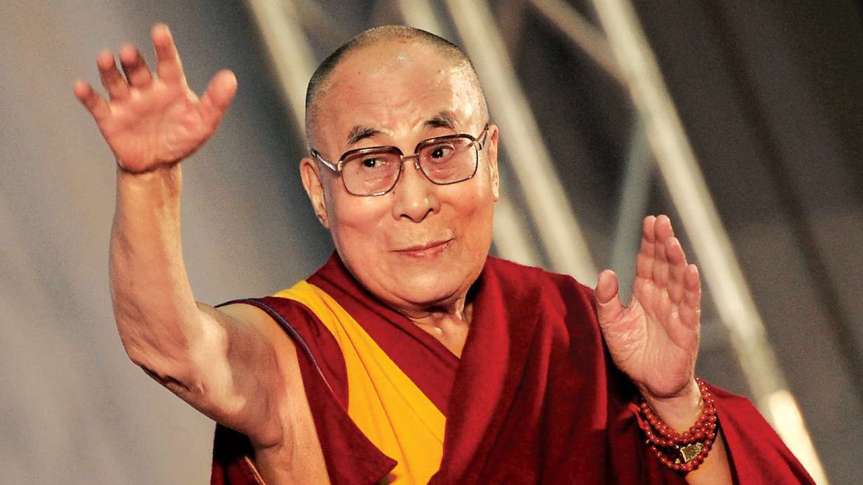
In Tibetan Buddhism, a ‘Lama’ is a spiritual teacher and ritual expert who fulfils many types of roles for his community, and ‘Dalai’ generally refers to big or mighty. So, the Dalai Lama is a title conferred to the spiritual and political leaders of the Tibetan People. The Dalai Lamas are believed by Tibetan Buddhists to be manifestations of Avalokiteshvara or Chenrezig, the Bodhisattva of compassion and the patron saints of Tibet. Bodhisattvas are realized beings, inspired by the wish to attain complete enlightenment, and who have vowed to be reborn in the world to help all living beings. Throughout much of history, the Dalai Lamas were just as much political leaders as they were spiritual leaders. Tibetan Buddhists believe that the Dalai Lama reincarnates as a child when he dies, and thereby establish a line of successors based on who they identify as the reincarnations of the previous Dalai Lama.

The Current Dalai Lama

Tenzin Gyatso is the 14th and current Dalai Lama of Tibetan Buddhism. He was born on July 6, 1935, to a farming family located in Taktser, Amdo, north-eastern Tibet. He was recognized as the incarnation of the 13th Dalai Lama in 1937, and was thereafter enthroned as the 14th Dalai Lama in 1940. After China’s invasion of Tibet in 1950, His Holiness was vested with full political powers as head of state in Tibet. Using his political power, In 1954 he went to Beijing and met with Mao Zedong and other Chinese leaders to negotiate over China’s invasion of Tibet. Eventually, in 1959, following the brutal suppression of the Tibetan national uprising in Lhasa by Chinese troops, His Holiness was forced to escape into exile for fear of being kidnapped by the Chinese government. Since then, he has been living in Dharamshala, northern India.

The Dalai Lama set up a government-in-exile in Dharamshala, in the Himalayan Mountains. In 1989 he was awarded the Nobel Peace Prize for his non-violent struggle for the liberation of Tibet. He has consistently advocated policies of non-violence, even in the face of extreme aggression. He also became the first Nobel Laureate to be recognized for his concern for global environmental problems. Despite his past as a political leader, in 2011 he gave up his political powers and focused more on religious and ethical teaching.

The succession of the current Dalai Lama is under threat, due to his history of anti-Chinese resistance in Tibet, and the Chinese government has long worked to undermine the Dalai Lama’s authority. They have banned displaying a photo of the Dalai Lama and have launched re-education campaigns that force Tibetan dissenters to disown the Dalai Lama and embrace Chinese authority. In the first decade of the 21st century, the Dalai Lama suggested that his successor could be appointed by him rather than selected as his reincarnation, but this idea was rejected by the Chinese government. The Chinese government declared that the tradition of appointing a new Dalai Lama had to be upheld, as the title of ‘Dalai Lama’ itself is granted by China’s central government. Since 2011, after he stepped down as head of the Tibetan government-in-exile, he has written a number of books on Tibetan Buddhism and an autobiography.

The Future

The current Dalai Lama has gone on record to say that he may be the last Dalai Lama. He stated that the Dalai Lama institution will cease one day, and that there is no guarantee that some incompetent Dalai Lama won’t come next, who will disgrace himself or herself. So, it is much better that a centuries-old tradition should cease to exist at the time of a quite popular Dalai Lama.

Even if the institution continues, the Dalai Lama has stated that no recognition or acceptance should be given to a candidate chosen for political ends by anyone, including those in the People’s Republic of China. In other worlds, the Dalai Lama cannot be chosen as political puppet by anyone, especially China who would benefit from having a candidate that is submissive to their interest. Therefore, on 24 September 2011, clear guidelines for the recognition of the next Dalai Lama were published, leaving no room for doubt or deception.

As of today, the Dalai Lama has still not made his intentions clear, but has said that he will consult leading Lamas of Tibet’s Buddhist traditions, the Tibetan public, and other concerned people with an interest in Tibetan Buddhism to assess whether the institution of the Dalai Lama should continue after him. However, the Chinese government probably has their own plans too. This is an example of politics and religion being intertwined. As a historically political figure, the reincarnation of the Dalai Lama is not just a matter of theology and doctrine, it also has major implications on the future of the Tibetan people and the future of religious freedom rights in China.

UNIFORM CIVIL CODE

In areas like as marriage, divorce, inheritance, and adoption, the Uniform Civil Code (UCC) advocates for the creation of a single law for India that would apply to all religious sects. The law is based on Article 44 of the Constitution, which states that the state must work to ensure that citizens throughout India have access to a uniform civil code.

For over a century, the subject has been at the forefront of political discourse and discussion, and it is a top priority for the Bharatiya Janata Party (BJP), which has been pressing for legislation in Parliament. The saffron party was the first to vow that if it wins power, it will adopt UCC, and the subject was included in its Lok Sabha election program for 2019.

The central family law acts were extended to Jammu and Kashmir when Article 370 was repealed. Although this is another step toward adopting UCC across India, there is still a long way to go in this endeavor. 

Human rights and the values of equality, fairness and justice all support the creation of a standard civil code. Article 44 of the Indian constitution’s directive principle is important because its goal is combat discrimination against vulnerable groups and to bring disparate cultural groupings together across the country. While drafting the Constitution, the father of our constitution “Dr. B R Ambedkar” stated that while a UCC is desirable, it should remain voluntary for the time being, and so Article 35 of the draft Constitution was added as part of the Directive Principles of State Policy in Part IV of the Constitution of India as Article 44. It was included into the Constitution as a condition that would be met when the nation was ready to embrace it and the UCC could gain societal acceptability.

The UCC aims to provide the following:-

  1. Protection of Vulnerable Portions of Society: The UCC strives to safeguard vulnerable sections of society, like women and religious minorities, as envisioned by Ambedkar, while simultaneously encouraging nationalistic ardour via unity.
  2. Rules will be simplified: The code will make the complicated laws of marriage ceremonies, inheritance, succession, and adoptions more accessible to everyone. All citizens, regardless of their faith, shall be subject to the same civil law. When passed, the code would strive to simplify laws that are now divided based on religious views, such as the Hindu code bill, Sharia law, and other similar legislation.
  3. Secularism: A goal established in the Preamble, and a secular republic requires a single law for all people rather than differentiating regulations based on religious customs.
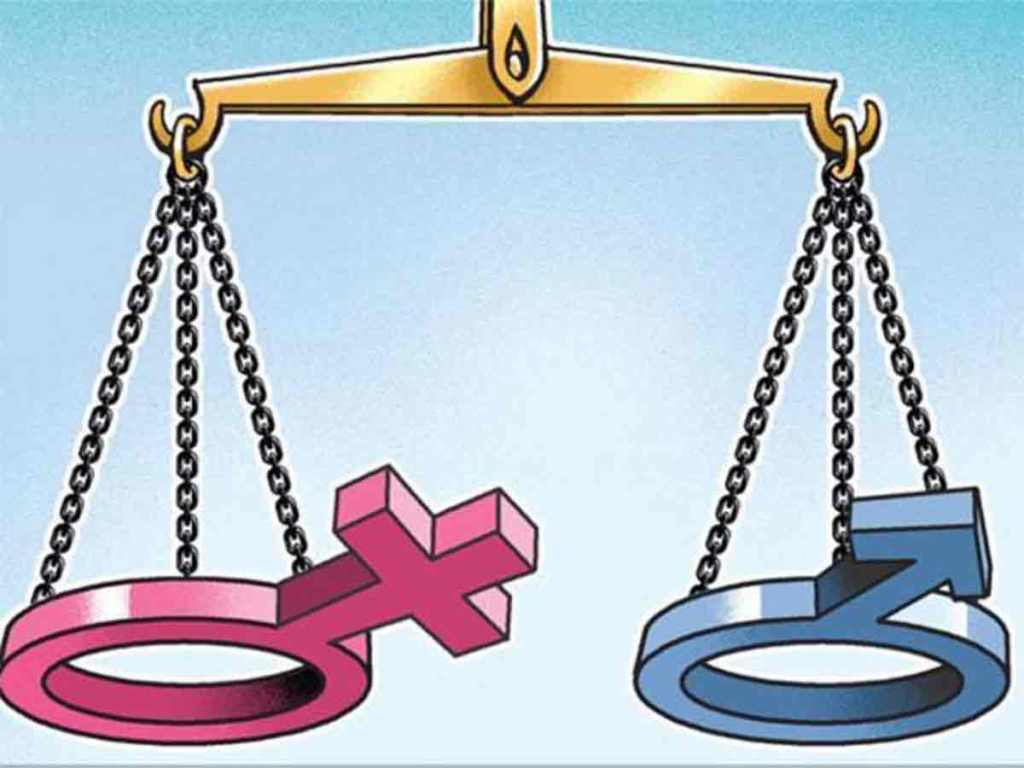
  4. Gender justice: Each religion in India has its own set of personal rules covering weddings, divorce, succession, adoption, and maintenance. Women’s rights, however, are typically restricted by religious legislation, whether Hindu or Muslim. A famous example is the practice of triple talaq which is now been held unconstitutional.

All personal laws will be abolished if an unified civil code is established. 

Therefore, the people’ fundamental rights to equality before the law and equal protection under the law, as guaranteed by the Constitution, need a comparable response throughout these regions. Article 44, which requires the state to make reasonable efforts to ensure that citizens have access to an unified civil code across India, has the same effect.

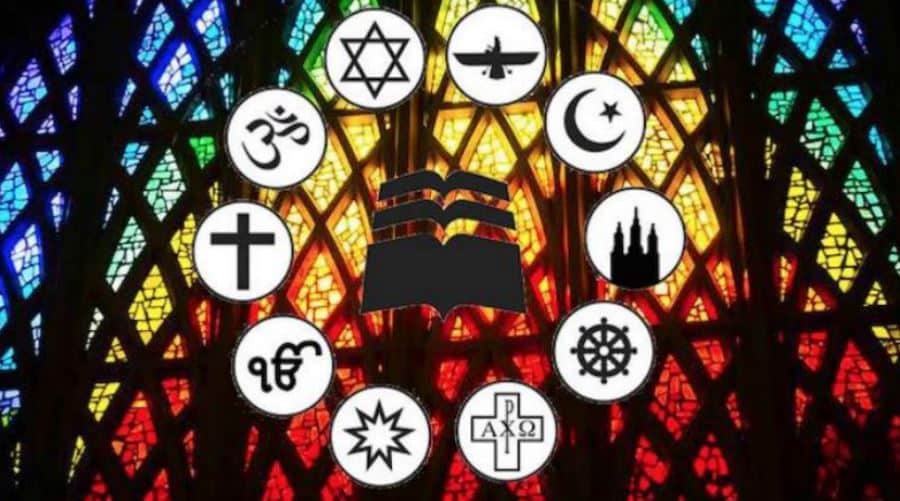
Major World Religions

Religions exist in all parts of the world, in different forms. Religion is prominent worldwide because it gives answers to the age-old questions of where humans came from, what is our place in this world, and where do we go after we die. Religions are systems of belief that have developed in response to these and other eternal mysteries. Hence, they were formed as a way to explain humanity’s unanswerable questions and comfort us with the fact that there is some higher power(s) acting as the controlling force in the universe. With time, many new religions have developed in the world, each giving their own explanations and defining their own gods/principles. Obviously, it is impossible to know which religion is accurate, or whether any religion is accurate at all. However, it is important to understand the various religions we have in the world, as they provide meaning and purpose to many individuals. Here is a brief look at some of the major world religions.

Hinduism

It is the major religion of India, but is also present in other parts of the world. There are a variety of beliefs and spiritual practices in Hinduism, which is why it is sometimes referred to as a ‘way of life’ as opposed to a single organized religion. There is a pantheon of gods in Hinduism, and different people may worship different deities. Hindus believe in the doctrines of samsara (the continuous cycle of life, death, and reincarnation) and karma (the universal law of cause and effect). One of the key thoughts of Hinduism is atman, or the belief in a soul. This philosophy holds that living creatures have a soul, and they are all part of the supreme soul (paramatman). The goal is to achieve moksha, or salvation, which ends the cycle of rebirths to become part of the absolute soul. Furthermore, Hindus strive to follow dharma, which is a code of living that emphasizes good conduct and morality.

Judaism

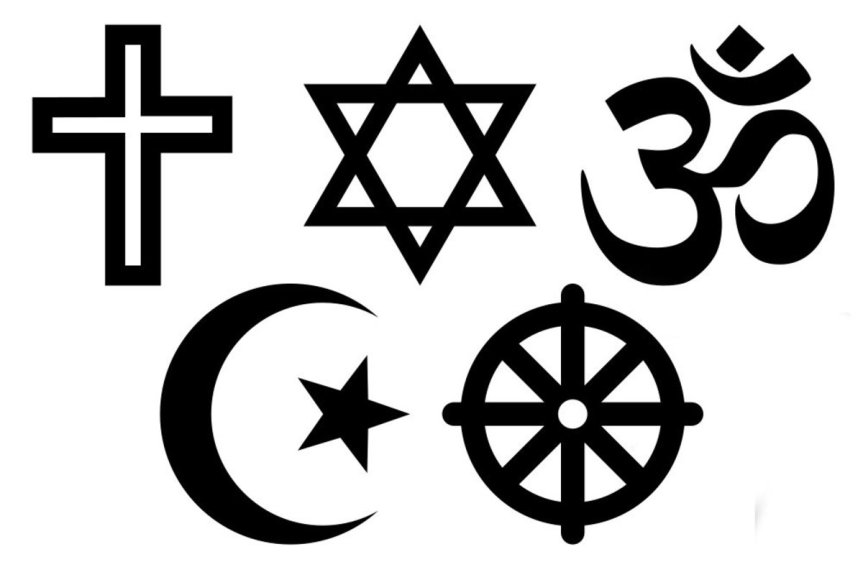
Judaism is the world’s oldest monotheistic religion, dating back nearly 4,000 years. It is most commonly practiced in the USA and Israel. Unlike Hinduism, followers of Judaism believe in only one God who communicates to believers through prophets. The Jewish sacred text is called the Tanakh or the Hebrew Bible, and Talmud is a collection of teachings and commentaries on Jewish law and principles. Jewish people worship in holy places known as synagogues, and their spiritual leaders are called rabbis. The six-pointed Star of David is the symbol of Judaism.

Buddhism

Buddhism is a religion that was founded by Siddhartha Gautama (the Buddha) more than 2,500 years ago in India. Its practice has historically been most prominent in East and Southeast Asia, but its influence is growing in the West. Followers of Buddhism do not acknowledge a supreme god or deity. Instead, they focus on achieving enlightenment, which is a state of inner peace and wisdom. When followers reach this spiritual echelon, they are deemed to have experienced nirvana. The path to enlightenment is attained by following morality, meditation and wisdom. Buddha’s most important teachings, known as The Four Noble Truths, are essential to understanding this religion.

Christianity

Christianity is the most widely practiced religion in the world. The Christian faith centers on beliefs regarding the birth, life, death and resurrection of Jesus Christ. This is also a monotheistic religion. Christians believe there is only one God, and he created the heavens and the earth. This divine Godhead consists of three parts: the father (God himself), the son (Jesus Christ) and the Holy Spirit. The Holy Bible includes Jesus’s and his disciples’ most important teachings, and offer instructions for how Christians should live. The cross is the main symbol of Christianity, representing the crucifixion of Jesus Christ and how he died as a sacrifice for everyone’s sins.

Islam

Islam is the second largest religion in the world after Christianity, with about 1.8 billion Muslims worldwide. Muslims are also monotheistic and worship only one, all-knowing god known as Allah. Islam teaches that Allah’s words first reached the people in Mecca, through the divine messenger known as prophet Muhammad. Muslims live a life of complete submission to Allah, and believe that all that happens in life is god’s will. The Quran is the major holy text of Islam, and Mosques are the places of worship for Muslims. Followers worship Allah by praying and reciting the Quran. They believe there will be a day of judgment, and life after death.

Conclusion

The religions mentioned here are only some of the most popular ones in the world. In fact, there are hundreds of religions with different beliefs and practices. Religion has been an aspect of culture for as long as it has existed, and its main purpose is to provide a person with insight into life and give them some meaning. A person can choose to follow whichever religion fulfils his spiritual needs and gives him something meaningful to believe in.

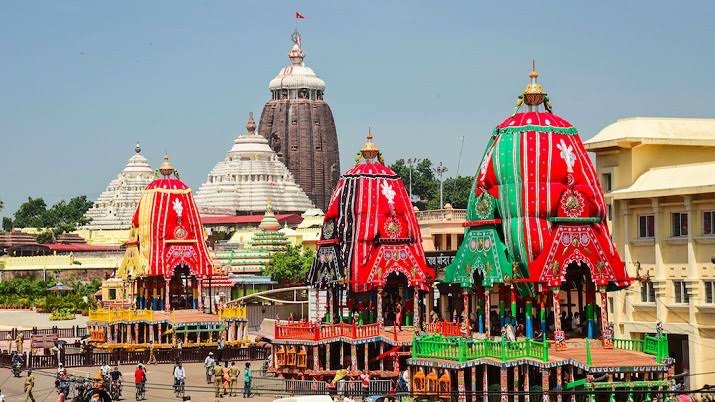
Jagannath Puri Rath Yatra: 5 Fast Facts about the temple.

One of India’s biggest festivals, Rath Yatra begins today, July 12 and that is celebrated all across the world by millions of Indians. The festival has its primary significance in Indian states like Odisha, Jharkhand, West Bengal and Assam.

Picture Credits: India TV. Location: Puri Jagannath Temple.

As everyone has their eyes on Puri Jagannath Temple’s grand celebration for this festival, let us know some of the important facts about the temple.

1) Formation of Temple.

The temple was first built by the Ganga Dynasty ruler Anantavarman Chodaganga in 12 Century CE and was further developed by several other kings including that of the Ganga Dynasty as well as the Suryvamshi Dynasty.

2) Deities Worshipped

Lord Jagannath, Lord Balabhadra and Goddess Subhadra are worshipped inside the temple. The deities are adorned with different jewelleries and accessories according to different seasons.

3) Structure of the Temple.

The Temple has four distinct structures:

a) Deula, Vimana or Garba Griha where the triad deities are kept on the ratnavedi, the throne of pearls, in Deula Style.

b) Mukhashala, the frontal porch

c) Nata Mandir, Natamandapa which is known as Jagmohan, the audience hall or the dancing hall.

d) Bhoga Mandapa, the offerings hall.

The main temple is a curvilinear temple and crowning the top is the Srichakra, an eight spoked wheel of Lord Vishnu. It is also known as Nilachakra which is made out of Ashtdhatu and is considered sacrosanct.

4) The Food Offerings:

The food is offered to the Lord six times a day. The breakfast that is offered early morning is called Gopala Vallabha Bhog, the next offering at about 10 am is known as Sakala Bhog and another offering after some time is called the Sankhudi Bhoga which consists of Pakhala with curd and Kanji Payas.

The noon offering is known as Madhyanha Dhupa and that is followed by evening food at 8 pm known as Sandhya Dhupa. The last offering to Lord is called the Bada Simhara Bhoga.

5) Rosaighara- Temple’s Kitchen.

The temple’s kitchen is considered to be the largest in the world. About 56 varieties of food are produced which are purely vegetarian and prepared without the use of onions, garlic or chilies as prescribed by some Hindu Texts. Cooking is done only by using earthen pots with some water that comes from two nearby tube-wells known as Ganga and Yamuna. The most awaited food offering is known as Kotho Bhoga, offered during Mid-Day. After being offered to Lord Jagannath and other deities, the food is sold in a nearby market.

The relevance of religion

I write about this topic with the utmost care because i accept this is bigger than us and i am sure even the most unwavering atheist would agree.

This is not an article about the history of religion, there are enough of those already, however this is an exploratory venture into a field even science has little to contribute to.

I have never believed in much, and didn’t give god much of a chance either. But a person changes, and he has to give himself room and enough open mindedness to accept those changes.

So what is the relevance of religion? Why did we design a god for ourselves? And more importantly, why are there so many of them? The latter question establishes that there is no one particular god, because if one of them is true the others become mere figments of imagination. This seems like a safe deduction and a relatively scientific place to start off with.But the fact that numerous cultures and people around the world came up with the idea of a higher power without any flow of information between them can be mind boggling too. Which bring us to our second deduction, a more adventures one this time. We need religion.

When i say we need it, i do not mean on a survival basis like we need water or food. Humans by nature are conscious beings, with a mind of their own, capable of critical thinking and problem solving. But a fallacy arising out of this very state of consciousness is that it doesn’t provide answers as much as it likes exploring questions. This very article is an apt example. But what about the questions we have no answers for? That’s where religion comes in.

It gives a sense of calm to the restless and a peaceful sense of relinquishment to the defeated but unbowed. It says to them it’s alright and that there is a place for everyone. It tells the sinners, what happens on earth stays on earth, and shoulders their burdens and it lays down a path for the unexceptional but steady.

This said, i still don’t believe that religion can give life meaning. Responsibilities do that. What religion can give you is strength and humbleness. Humbleness that some things are beyond your control.

Like anything religion too has evolved from the days of bowing to deities and sculptures. It took a spiritual turn with Buddhism in the 6th century(a religion which completely separates itself from any one particular god). A religion should not lock your mind in with its narrow scope, but instead give it wings.

In my humble opinion have an atheists attitude to religion but an agnostics mind.You can glean what you glean when you’re ready to glean what you glean. Do not buy into it, but don’t dismiss it either. One makes you helpless and the other hopeless.

COMMUNALISM: A CURSE

The Christian is not to become a Hindu or a Buddhist, nor a Hindu or a Buddhist to become a Christian. But each must assimilate the spirit of the others and yet preserve his individuality and grow according to his own law of growth.…SWAMI VIVEKANANDA

HOW DIABOLICAL!

The most glorious tradition of the Indian civilization is the basic unity among the people in spite of the various diversities that exist in our life. There are different religions in India and in matters of food, dress, language and manners and custom, we are distinctly different. But in spite of all these, we are Indians from the very beginning, birth to death and we are proud of this unity.

OUR COUNTRY HAS TRACKED ITS PASSAGE

But such divisive forces as communalism, linguism and religious feeling often plague our country. Communalism is the greatest evil. It is responsible for the division of India. The British fanned the communal feelings of the Muslims and the latter wanted a separate State for themselves. Thus, Pakistan was created. Now we suffer the consequences of the partition of India. Had we lived together, many problems such as population, food and shelter could not have been so acute. Moreover, our long- standing disputes over the borders would not have poisoned our relationship.

SOCIETY AND ITS PEACE ARE ON TARGET

Communal feelings are often whipped up in India by interested people and parties. There are often quarrels between two communities in States like Bihar and Uttar Pradesh and they often culminate in murders. Different religious sects or linguistic minorities raise their voice for separate States. Such fanaticism will lead to the division of India into many parts. India will be weakened and foreign powers will take advantage of the weakness of India. India to-day has to deal with the Punjab problem, Gorkha problem in Darjeeling, Jharkhand problem, the problem of tribals in Tripura, Boro problem in Assam and many other communal problems. Some politicians are responsible for whipping up casteism for their self-interest. This is very unfortunate. There are people of different regions and languages, casts and creeds but there is basic unity in India’s culture and religion.

MAKE PEACE…..NO WAR

So, it is necessary to combat the evils of communalism. India is one and indivisible. United India can hold its own and play a significant part in the international world. Communal harmony is the need of the time. Fanaticism must be checked so that India’s unity is not damaged.

Why the UP unlawful-conversion law should be struck down.

The Uttar Pradesh Prohibition of Unlawful Conversion of Religion Ordinance, 2020 was promulgated on November 27, 2020.  The Ordinance specifies the procedure for undergoing religious conversion and prohibits unlawful religious conversion. The prison term for unlawfull conversion is 1 to 5 years with a minimun fine of Rs.15,000.

Causes

 The Ordinance prohibits conversion of religion through: (i) force, misrepresentation, undue influence, and allurement, or (ii) fraud, or (iii) marriage.  It also prohibits a person from abetting, convincing, and conspiring to such conversions.

The ordinance prohibits the conversion of religion through marriage by “assuming” that the person is converted forcefully thorugh marriage. It oversees the free will of the individual to change his/her’s religion. The article 25 of the Constitution Of India, guarantees the freedom to practise any religion in accordance with their conscience.

Drawbacks

According to the ordinance, a complaint or an FIR can be filed by the following persons if they feel that the religious conversion is unlawful ;  (i) any aggrieved person, (ii) his/her parents or siblings, or (iii) any other person related to them by blood, marriage, or adoption.

According to the statute is/ her famiily memebers can file an FIR against the persons involved in the conversion, which is quite ironic. In the conservative society of India, most parents or family members are slaves of religiomania, they cant resist the fact that their kins are converting their religion. Because of the religiomania, family memebrs or parents will take any step to stop the conversion; including filing an FIR against the conversion, just because they feel it is wrong. This provision clearly violates article 25 of the constitution, as the person is deprevied of the right to practise and profess their desired religion.

The statute also mentions that, the FIR can be filed by “any aggrieved person” which poses greater threat to the person converting as any person from an extremist group can file an FIR against the conversion and halt the conversion. Religious Extremists groups are often offended when a person of their religion decides to convert to other forgetting the persons right’s to convert according to his free and with full conscience as guaranteed by the constitution.

The ordinance declares a marriage void if it was done for the sole purpose of unlawful conversion or “vice versa”.The term “vice versa” is to be seen with utmost importance as that word declares a marriage void just because unlawful conversion was practised is order to get married. The ordinance also declares a marriage void if the procedure mentioned in the statute is not followed to get married. The procedure involves a waiting period too long for the couple to wait, who might be targeted by their family members, extremist groups and any aggrieved person.

Deemed to be unconstitutional

Numerous experts have described the law as unconstitutional including former Law Commission chairman Justice A.P Shah & former Supreme Court judge Madan Lokur. 104 former bureaucrats have written an open letter to Cheif Minister Yogi Adityanath asking him to repeal the law on the grounds that the law  denying the right to freedom of religion and restricting women’s rights to choose their partner.

Colorism in India.

Ethnic complexities or relations in India have historically been complex. “Ethnic relations” refers to attitudes, behaviors and opinions towards people of other ethnicity or races. India is one of the most ethnically diverse countries, with more than 2,000 different ethnic groups. There is also significant diversity within regions, and almost every state/province has its own distinct mixture of ethnicities, traditions, and culture. Throughout the history of India, ethnic relations have been both constructive with mutual cultural influences and destructive with discrimination against other ethnicities. In this research paper we will talk about the progress or the current scenario of racial discrimination in India and its various problems.

Racism is most commonly used to name a form of prejudice in which a person thinks that their “race” is better or superior over other races. This most often takes the form of believing that those with other skin colors especially darker skin colors are inferior physically, intellectually, morally, and/or culturally, and mistreating and discriminating against them because of this. Such a belief typically promotes the notion that white people are “the default” that whiteness is “normal” and that people with other appearances are the ones who are “different” (and “inferior”).Racism has existed in our society from ages right from the time of colonization of India.

According to local sources, unity in diversity has been growing in India, making the country more tolerant. One World Values Survey reported 43.5% of Indians responded that they would prefer not to have neighbors of a different race.

What is race?

To fully understand racism, we have to understand the meaning of race. Throughout history, the word race has been used to classify humans based on various physical characteristics, especially skin color, facial form, and eye shape. But sorting people into such races is truly arbitrary they’re not based on meaningful scientific differences (like, for example, those used to determine legitimate scientific classifications such as species and genus). The obsession with the difference in people’s skin color is one of the foundations of racism.

Biases related to the caste system

Racism is linked to the prevalent caste system which is hierarchical in nature. The broad orderings and the sub-orderings in India seem complex and confusing as classifications are often overlapping: region, religion, caste, sub-caste, Jati, Gotra, Kula, Varna and language. “Any effort to simplify them beyond a point can lead to a distortion of social reality.”

earliest classification, as found in Rig Veda, was not based on birth but on the hierarchy that was determined by one’s occupation; however, it is certain that at some particular point in history it became birth-based and rigid

The killing or discrimination was not rooted in color, which some scholars mistakenly believe it to be the case rather this was a time of constant wars and conflicts between the invader immigrants and the actual tribal population of the time..

earliest classification, as found in Rig Veda, was not based on birth but on the hierarchy that was determined by one’s occupation; however, it is certain that at some particular point in history it became birth-based and rigid

The killing or discrimination was not rooted in color, which some scholars mistakenly believe it to be the case rather this was a time of constant wars and conflicts between the invader immigrants and the actual tribal population of the time.

Status of Racial discrimination in the 21st century

  • The next part of this research paper will discuss how skin tone is still so deeply      attached to the normal Indian psyche that it gets confused with the societal value system  of caste, class, and religion
  • Skin tone also forms various strata of variables and acceptability in society. Beauty ideals are now governed by the media, which glorifies lighter skinned models–both male and female–who are chosen to advertise almost all products over darker skinned models
  • In the wake of George Floyd’s death the debate about colorism and skin tone in India has been discussed in several media outlets, and as part of the general critique a big Indian matchmaking website, Shaadi.com has removed a filter where people could use to mark skin color preferences for their potential partner

In the state of Maharashtra, a group of young tribal girls trained to be flight crew through a government scholarship program that aimed to empower women; however, the program seems to have actually disempowered darker skinned women. The majority of girls were denied employment due to their darker skin tone. A few of those women obtained jobs, but only as out-of-sight ground crew.

SECULARISM- IS IT JUST A THEORETICAL CONCEPT IN INDIA?

BY: VAIBHAVI MENON

“Preamble declares India to be a sovereign, socialist, secular and democratic republic.” With the Forty-second Amendment of the Constitution of India enacted in 1976, the Preamble to the Constitution asserted that India is a secular nation. This very line from the Preamble of India raises the question that is India really a secular country? Secularism is the principle of separation of the state from religious institutions. It allows no discrimination on the grounds of religion. People are allowed to practice any religion or choose not to practice any without getting judged or discriminated by others. However various instances in India have proved to be contradictory to this statement.

India is a diverse country with many religions cultures traditions values yet at times these aspects are not respected. Religious violence in India includes acts of violence by followers of one religious group against followers and institutions of another religious group, often in the form of rioting. Some of these examples range from Exodus of Kashmiri Hindus, Gujarat communal riots (1969), Anti-Sikh riots (1984), Religious involvement in North-East India militancy, Anti-Hindu violence to Violence against Muslims, Anti-Christian violence, Anti-atheist violence. India is characterized by more ethnic and religious groups than most other countries of the world. Aside from the much noted 2000-odd castes, there are eight “major” religions, 15-odd languages spoken in various dialects in 22 states and nine union territories, and a substantial number of tribes and sects. Three ethnic or religious conflicts have stood out of late: two occurred in the states of “Assam and Punjab; another, the more widely known Hindu-Muslim conflict, continues to persist. The Assam problem is primarily ethnic, the Punjab problem is based on both religious and regional conflicts, while the Hindu-Muslim problem is predominantly religious. It is easier to outline these problems than suggest what should be done about them. In a situation of mutual distrust, almost any solution will generate controversy. Still, three solutions seem plausible. First, further decentralization of power to states would be of considerable help. This would partly address the problems in Punjab and Assam, both of which have complained of the gap between the resources they are entitled to and the resources they actually process. Second, a conscious attempt needs to be made to improve the educational attainment and economic level is easily demonstrated of Muslims whose socio-economic backwardness is easily demonstrated. The Muslim elite could do much in this respect. Special educational privileges are constitutionally sanctioned but they ought to be worked on. Modern liberal, as opposed to religious, education would be of great help. The government, for its part, could allay the apprehensions of the Muslim community by better representing Muslims in the police and paramilitary forces. Third, the secular leaders, to the extent that they exist, must make a sustained effort to reintroduce and deepen secular, socioeconomic concern in democratic politics. Partisan communal leaders and communal electoral mobilization, both within and outside the communal parties, but particularly within the ruling party, should be exposed.

From the above information it can be understood that secularism can be taken as a theoretical concept until the mindset of people can change because in the end only we can bring a change and do something about it.