

Tag: research
Legal and policy challenges in space technology

(Photo: Outlook India)
“History is agreed upon as an uninterrupted process in time and space.”
India before independence was very different from the India that we see today. Of course, it is common knowledge that pre 1947 India consisted of modern day, Pakistan and Bangladesh. The after-independence chase of India faced major developments and changes that we can see today. India has an impressive array of achievements in the development of space transport as well as aviation industry for various applications. From a humble beginning with a small RH 75 rocket in the sixties to the successful launch of PSLV-D2 with 804 kg IRS-P2 in October, 1994, the Indian space programme has made remarkable progress through a well-integrated, self-reliant programme. On the other hand, the civil aviation industry of India has emerged as one of the fastest growing industries in the country during the last three years. India has become the third largest domestic aviation market in the world and is expected to overtake UK to become the third largest air passenger market by 2024.
Every country’s success depends upon its government. The way it handles the whole economy largely affect its economic environment. In such a globalized environment, the governmental policies act as the key factor in determining its real success, be it in field of aviation, space technology or any other. The government however has reviewed its aviation policies from time to time and tried to make it friendlier however it lagged in certain jurisprudence. In the recent past, the outlook of the government of India has undergone substantial change. It has tried to adopt emerging trends and include different terminologies, ownership of private companies, more new projects, financing, hassle free management and its operations. The government has increased its investment in this sector. Moreover, it has tried to devise the privatization method to solve many problems attached to this sector. Privatization is needed for solving the problem of “distressed state syndrome”. The complete or partial privatization will give positive impact on efficiency, productivity and profitability. Trends of privatization is rising all around the world and it is important to analyze all consequences and specific results, which will be helpful to understand better difficulties and structural changes.
During the COVID time, there was a dramatic drop in demand for passenger air transport. This threatened the viability of many firms, putting many jobs at stake. While the aviation industry has often been a target of government policies, the COVID-19 crisis has precipitated a new suite of loans, loan guarantees, wage subsidies and equity injections, raising concerns about efficient use of public resources. The COVID-19 crisis has hit hard to the economy.
Although the aviation and space sector contribute a lot to the economy, however every coin has two sides. The other side of the story is that we have grown, but grown at the cost of our mother nature. The question that we need to dwell into is: “Do we belong to this earth or does this earth belong to us”. Commercial aviation is experiencing dramatic growth in various regions throughout the world but at the cost of what. It is leading to the pollution of the environment. Over the past 50 years global demand for air travel has risen by 9 per cent per annum. The environmental impact it has caused is very degrading. This has become a cause of concern.
INVESTMENT
According to the data released by Department for Promotion of Industry and Internal Trade (DPIIT), FDI inflow in India’s air transport sector (including air freight) reached US$ 2.79 billion between April 2000 and June 2020. The government has allowed 100% FDI under the automatic route in scheduled air transport service, regional air transport service and domestic scheduled passenger airline. However, FDI over 49% would require government approval.
India’s aviation industry is expected to witness Rs. 35,000 crore (US$ 4.99 billion) investment in the next four years. The Indian Government is planning to invest US$ 1.83 billion for development of airport infrastructure along with aviation navigation services by 2026.
Key investments and developments in India’s aviation industry includes:
- In October 2020, Zurich Airport International signed the concession agreement for the development of Jewar Airport on the outskirts of Delhi. The agreement has granted Zurich Airport International the license to design, build and operate Noida International Airport (NIAL) for the next 40 years.
- In October 2020, the Airports Authority of India (AAI) announced plan to upgrade runways at seven airports across the country by March 2022.
- In January 2020, IndiGo became first Indian carrier to have an aircraft fleet size of 250 planes and became the first airline to operate 1,500 flights per day.
- In December 2019, AAI announced its plans to set up India’s first three water aerodromes in Andaman & Nicobar.
- As of December 2019, France-based Safran Group planned an investment of US$ 150 million in a new aircraft engine maintenance, repair and overhaul (MRO) unit in India to cater to its airline customers.
- AAI plans to invest Rs. 25,000crore (US$ 3.58 billion) in next the five years to augment facilities and infrastructure at air transport.
THE NEED FOR SPACE LEGISLATION
What we can sketch out is that there’s a greater need for space legislation. With no legal obligation, the dream of ‘DIGITAL INDIA’ can’t be achieved. A robust legal regime would instill investor confidence, attract FDI and new technologies, reduce administrative and regulatory uncertainties, provide clarity on stamp duty, registration requirements, insurance, transfer of property, contractual obligation, space debris liability and intellectual property rights concerning space-related issues, and flourish space entrepreneurship by providing a level playing field to the private entities.
The policymakers need to resolve the following issues in virtue of requisite space legislation:
· Single Independent Regulator – In contradiction to the present multiple ministries, agencies and departments, namely, the Ministry of Home Affairs, the Department of Space, the satellite divisions of Department of Telecom, the Department of Telecommunications, the Telecom Engineering Centre, the Network Operation and Control Centre, the Ministry of Defense, and the Ministry of Defense, a single independent regulator is required to perform regulatory processes including the issuance of a place in orbit to launch a satellite and/or rocket, mandatory licenses to launch it, spectrum to communicate with it, and clearance for the technology and/or space equipment to be used.
· Space debris – Space debris or space junk encompasses both man-made and natural (meteoroid) particles that enhance the probability of disastrous collision that may cause damage to space vehicles. Although there is no specific international treaty or convention dealing with the imposition of liability, some long-standing guidelines were issued by NASA, on ‘how to deal with space debris’ which were later adopted by the UN General Assembly and COPUOS. However, well-defined provisions on liability of the launching state need to be formulated to reduce the persisting or potential conflicts among countries.
· Security measures – With the rising threats to national peace and security by potential space and cyber warfare possibilities, countries need to invest adequately in adopting cyber and military security measures. Rules and regulations on lines with the Data protection laws need to be formulated to ensure that adequate cyber security measures are in place.
· Granting of license – The process for granting a license is yet to be developed, but section 5 of the Bill envisages that there will be eligibility criteria, and a fee to pay, without giving any detail or indication as to what those criteria or fees might be. In particular, it sets out the obligation to provide a financial guarantee or insurance, which essentially addresses the broader liability question and the principles of liability that flow under the international space regime.
· Intellectual property rights- Section 25 of the Bill states, “Any invention, or other form of intellectual property rights, developed, generated or created during the course of any space activity shall be protected by any law for the time being in force, with the primary objective of safe guarding national security.“ such a provision might deter the potential participation of the private sector in the Indian space industry and thus needs to be looked into by the policymakers to enable innovation in the space industry.
CONCLUSION
“Without your involvement you can’t succeed. With your involvement you can’t fail.”
Well said by APJ Abdul Kalam.India’s aviation and space transport are largely untapped with huge growth opportunities. It’s the need of the hour to grab these opportunities and the government should deeply involve in this process by making key changes in its policy and legal framework. A single policy should be adopted. In aviation industry, a lot of digital transformation is required. A big vision and strategy are needed to get through stormy waters. Cost pressure should be taken into account. New technology should be adopted. With the increase in competition and entry of private players, only the companies who do best will be able to survive. On the other hand, in space industry, policy changes are needed to make the space sector more accessible to private players. There’s a need of single space legislation. Changes are needed in New Space India Limited (NSIL). Last year, the finance minister announced the opening up of the ISRO’s facilities to the country’s private sector as part of its COVID-19 special economic stimulus. This was an early but a commendable step. Many a thing have changed since COVID.
As it is said, “Every cloud has a silver lining.” We should also hope for the best. It is at these times when the government was able to realize its incapability and failure and hopefully it has started considering legal and policy aspect that needs deeper consideration
Domestic violence

(Photo: Bar and Bench)

Domestic violence (also named domestic abuse or family violence) is violence or other abuse in a domestic setting, such as in marriage or cohabitation. Domestic violence may be used as a synonym for intimate partner violence, which is committed by a spouse or partner in an intimate relationship against the other spouse or partner, and can take place in heterosexual or same sex relationships, or between former spouses or partners. In the broadest sense, domestic violence can also involve violence against children, parents, or the elderly. It takes a number of forms, including physical, verbal, emotional, economic, religious, reproductive and sexual abuse, which can range from subtle, coercive forms to marital rape and to violent physical abuse such as choking, beating, female genital mutilation, and acid throwing that results in disfigurement or death. Domestic murders include stoning, bride burning, honor killing and dowry death(which sometimes involve non-cohabitating family members).
FORMS OF DOMESTIC VIOLENCE
Physical abuse is that involving contact intended to cause fear, pain, injury, other physical suffering or bodily harm. In the context of coercive control, physical abuse is to control the victim. Physical violence can be the culmination of other abusive behavior, such as threats, intimidation, and restriction of victim self-determination through isolation, manipulation and other limitations of personal freedom. Denying medical care, sleep deprivation, and forced drug or alcohol use, are also forms of physical abuse.
Sexual abuse, is defined by World Health Organization as any sexual act, attempt to obtain a sexual act, unwanted sexual comments or advances, or acts to traffic, or otherwise directed, against a person’s sexuality using coercion. Aside from initiation of the sexual act through physical force, sexual abuse occurs if a person is verbally pressured into consenting, unable to understand the nature or condition of the act, unable to decline participation, or unable to communicate unwillingness to engage in the sexual act. This could be because of underage immaturity, illness, disability, or the influence of alcohol or other drugs, or due to intimidation or pressure.
Emotional abuse includes minimizing threats, isolation, public humiliation, unrelenting criticism. Stalking is a common form of psychological intimidation. Victims tend to feel their partner has nearly total control over them, greatly affecting the power dynamic in a relationship, empowering the perpetrator, and disempowering the victim. Victims often suffer from depression, putting them at increased risk of eating disorders, suicide, and drug and alcohol abuse.
Economic abuse (or financial abuse) is a form of abuse when one intimate partner has control over the other partner’s access to economic resources. Marital assets are used as a means of control. Economic abuse diminishes the victim’s capacity to support themselves, increasing dependence on the perpetrator, including reduced access to education, employment, career advancement, and assets acquirement. Forcing or pressuring a family member to sign documents, to sell things, or to change a will are forms of economic abuse.
CAUSES
A partner’s domination may take the form of emotional, physical or sexual abuse. Studies suggest that violent behavior often is caused by an interaction of situational and individual factors. That means that abusers learn violent behavior from their family, people in their community and other cultural influences as they grow up. They may have seen violence often or they may have been victims themselves. Some abusers acknowledge growing up having been abused as a child.
Children who witness or are the victims of violence may learn to believe that violence is a reasonable way to resolve conflict between people. Boys who learn that women are not to be valued or respected and who see violence directed against women are more likely to abuse women when they grow up. Girls who witness domestic violence in their families of origin are more likely to be victimized by their own husbands. Although women are most often the victim of domestic violence, the gender roles can and are reversed sometimes.
Alcohol and drugs may contribute to violent behavior. A drunk or high person will be less likely to control his or her violent impulses toward their partner, so keeping such drinking or drug use episodes to a minimum may be valuable for a person living in a domestic violence situation.
No cause of domestic violence, however, justifies the actions of the abuser, nor should it be used as a rationale for their behavior. These possible causes are only to better understand why an abuser believes it is acceptable to abuse their partner physically, sexually, psychologically or emotionally. Ultimately an abuser needs to get help for their unhealthy and destructive behavior, or find themselves living a solitary and lonely life.
STATISTICS OF DOMESTIC VIOLENCE
• 1 in 4 women and 1 in 7 men will experience severe physical violence by an intimate partner in their lifetime. (CDC, 2017)
• 1 in 10 women in the United States will be raped by an intimate partner in her lifetime. (CDC, 2010)
• Approximately 16.9% of women and 8.0% of men will experience sexual violence other than rape by an intimate partner at some point in their lifetime. (CDC, 2010)
• Data on sexual violence against men may be underreported.
• An estimated 9.7% of women and 2.3% of men have been stalked by an intimate partner during their lifetime. (CDC, 2017)
• Nearly half of all women and men in the United States will experience psychological aggression by an intimate partner in their lifetime. (CDC, 2017)
GOVERNMENT SCHEMES TO CURB DOMESTIC VIOLENCE
- Beti Bachao, Beti Padhao, meant for uplifting women in the sphere of women’s education
- Sukanya Samriddhi Account, meant to help families’ save for their daughters
- One Stop Center scheme meant to offer easy access for women suffering from domestic abuse or violence, and needing support
- Pradhan Mantri Ujjwala Yojana meant to offer free LPG connections to women living below poverty line
- Mahila Haat meant to support women entrepreneurs and women self-help groups
- Rajiv Gandhi National Crèche Scheme for Children of Working Mothers meant to provide affordable daycare services to working women
- Maternity Benefit Scheme meant for pregnant women and lactating mothers
- Women’s Helpline 1091 meant to provide emergency assistance to women in trouble, especially those facing violence of any kind
WHAT CAN WE DO?
• Calling the police if you see or hear evidence of domestic violence.
• Speak out publicly against domestic violence.
• Consider reaching out to your neighbor, friends, family.
• Educating others on domestic violence.
• Organize campaigns special in rural areas.
- Donating to domestic violence counselling programs
India's long road: Rural development
“The village is the cell of the national body and the cell-life must be healthy and developed for the national body to be healthy and developed.” – well alluded by SRI AUROBINDO.
India as it is said is the “land of villages.” The heart of our nation resides in the rural areas. As quoted by the father of our nation, Mahatma Gandhi, “India lives in her seven hundred thousand villages.” Although the term “Rural development” has been widely used, what constitutes it seems to have changed significantly. So, the question is what exactly is rural development. Rural development means improving the living conditions of the people living in rural areas. There are many definitions to it. The fact is that today more than half of the Indian population lives in rural areas and most of them depends upon agriculture as their primary source of income. Agriculture is an integral part of many world economies, especially the developing ones, and hence plays a significant role in the rural development. The strength and prosperity of our nation depends upon the strength and prosperity of rural areas. Therefore, it is important to free the rural India from poverty.
Our government is trying its best to bring rapid growth and development in the villages. We derive major contributions to GDP from rural workers. Upwelling schemes for rural electrification, open defecation free villages, skill development, Prime Minister rural housing mission, Prime Minister Gram Sadak Yojana, Deen Dayal Upadhyaya Grameen Kaushalya Yojana, National Rural Livelihood Mission, National Rural Employment Guarantee Act, Sampoorna Grameen Rozgar Yojana, Sarv Siksha Abhiyan, Sansad Adarsh Gram Yojana, National Social Assistance Programme etc., has modified the doddering face of Indian villages.
Empowering rural economy through digitalization schemes, regeneration of traditional industries schemes, entrepreneurship schemes, water conservation schemes, MGNREGS, has further added to the rural development and has brought direct benefit transfer. Achieving hygiene and sanitation through government initiatives like SWACHH BHARAT MISSION has further added to the list.
According to the World Bank, “Rural development as a strategy designed to improve the economic and social life of a specific group of people – The rural (people) poor. It involves extending the benefits of development to the poorer among those who seek a livelihood in rural areas. The group includes small-scale farmers, tenants and the landless.” Rural development is a strategy that encompasses all the aspects and factors to achieve an overall spectrum of development and growth. This development is needed to benefit the poor and weaker sections of the society. Rural development seeks to transform all the sectors of rural economy – the primary sector, the secondary sector and the tertiary sector. It is concerned with the improvement of the standard of living of the rural people through the provision of health and medical facilities, employment opportunities including vocational training, educational facilities, etc. It brings about significant improvement in the socio-economic conditions of the scheduled castes, scheduled tribes, the landless agricultural labourers and the marginal and small farmers.
The village land of India is adorned with lush green land, protected livestock and unexplored pool of species which needs special attention of the government. The recent extent of India from the Regional Comprehensive Economic Partnership (RCEP) did mark the promise of self-sustained indigenous production of India. The decision was to safeguard the interests of industries like agriculture and dairy.
Rural development should include social, economic and overall development of a rural area. It should be an all- round project. Employment creation is the main component of rural development. Therefore, to generate employment opportunities in villages, there is a need to strengthen agriculture sector and also set up other industries. A digital platform should be built for active labourers to check the process of employment generation. Integrated and organic farming methods should be promoted. Economic models like Gig’s – economy must be brought in action to counter seasonal as well as disguised unemployment from rural economy. Better planning must be done by the government, to boost up local economy of a village. Better roads connectivity should be put in the major plan of action. Basic amenities should be made available.
“Education is the most powerful weapon which you can use to change the world”, well said by Nelson Mandela. Six Indian states account for about 70per cent of all illiterates in India. India currently has the largest population of illiterate adults in the world with 287 million people, with major proportion in the rural India. While India’s literacy rate rose from 48 per cent in 1991 to 63 per cent in 2006, “population growth cancelled the gains so there was no change in the number of illiterate adults”, says the UNESCO report.
Thus, education is the most important tool which can pave the way for the development of every other factors. The government has been trying to come up with schemes to strengthen education and integrated skill development of youth of rural India. Primary education has been made free and compulsory for the rural people so that the maximum number of the villages may be literate. Schemes like Beti Bachao Beti Padhao, has been proved effective. Women in rural India are still devoid of their ‘fare-share’ in the field of agriculture and labour. Strengthening of service sector has emerged as a boon for women. The problem of the ownership of the land should be resolved. The cottage industries should be established to further accelerate the growth. The villages should be in sync with the urban areas.
Another matter of concern is the crime rate which has increased in rural areas and specially against the marginalized sections of society. The death rates in rural areas due to domestic violence has also not seen any change. Banning of liquor consumption in states like Bihar has provided to be an effective step. People should be made aware and educated about the rights and wrongs. Proper healthcare facilities should also be provided with adequate number of doctors and nurses. Other robust steps should be adopted towards rural development.
It is often felt that the migration of people from rural to urban, in search of employment or better lifestyle, is putting severe pressure on urban amenities. The low wage migrants are thus left with no other option than to live in unhygienic condition. There is a need to make rural economy stronger and create employment opportunities in rural India. This will help in reducing the disparity in per capita income of rural and urban which has always remained high. A significant growth is required in rural area. Non farming activities should also be encouraged.
The development of rural India is of utmost importance for the development of the country. If India needs to become the next superpower in the world, it needs to tap into the potential of rural India. Given its size and population, no business house can afford to neglect the consumer spending power of rural India. India has many heroes that rural population should look up, like M.S. Swaminathan, the father of the green revolution in India, Varghese Kurien, the father of the white revolution in India. The progress of a nation depends upon the progress of its villages. We can say that the rural areas are the backbone of a nation.
Our rural areas have undergone major changes since independence. We should try to keep in mind the Sustainable Development Goals (SDGs) while trying to achieve the rural development goal. We need to join our hands with the government in embellishing its goal of the development of rural India.
Social network and its contemporary flow of language phraseology


With the rapid growth in the usage of social networks worldwide, uploading and sharing of generated content, both text and visual, has become increasingly prevalent.
Today, social media refers to a wide range of Web sites and Internet-based services that allow users to create content and interact with other users. Language is an evolving thing. It’s naive to think that the language of social media isn’t affecting the way we use English in day-to-day life. It’s more appropriate to consider just how much of an effect it’s having on the way we communicate. A whole host of words originating from social media and the wider Internet have become so commonplace that they’ve now slipped into popular usage, and we don’t even realize it.
Just a few interesting words that have their origins in technology are blogosphere (the collective word for personal websites called blogs), troll (someone who creates conflict online by starting arguments or upsetting people)
Modern companies (like Adidas, mad over marketing or even celebrities) use their presence on social media platforms for diverse business goals. Social media present a new and unique way for direct interaction between the company and different users, right down to the customer as well. While most social media platforms offer some way to measure user engagement, many focus on customer conversion, rather than content.
The emphasis on linguistics and user-generated keywords on social sites
Multilingualism:
As of now, and according to the data of http://www.internetworldstats.com, the Internet has eight-hundred fifty million English-speaking users out of one billion five hundred million total users. This means that the market for the English language is more or less than one-third of the total market. All this means that there is an enormous body of information being constantly generated which is also being constantly lost behind language usage this proves language diversity in Internet ecology is of paramount importance.
We consider linguistic features in two classes: variations of English, including spelling, and differences in emotive and personal language, including pronouns, interrogatives, and exclamations but emotive language, and personal informal language are used more frequently than the formal tone.
Variation in Lexical Conventions Tweets in the social chats are more likely to contain apostrophes commas and full stop (such as “can’t”), with missing apostrophes (such as “cant” and “didn’t”) or abbreviations (e.g., “u” for “you” or “k” for “ok”)
Emotive and Personal Language The two collections also show striking differences in tone and the degree to which posts describe personal experiences or opinions. The social community collection has more instances of exclamations and questions, and more non-standard strings of exclamation and question marks. The abundance of exclamations suggests the messages are more likely to be strongly emotive.
Emotions of one kind are also suggested by the number of messages containing any of several dozen grammatically incorrect or swear words or and those all in upper case. Pronouns too are much more prominent in tweets that include the first-person pronoun, and sometimes include the abundance of “ and ” as a word is partly due because we treated “&” as a word boundary.
The infrequent use of the second person pronoun indicates people are not as involved in discussions. Users in this collection also make much greater use of Twitter hashtags to label their posts. We believe this points to more careful use of the posts and a curatorial intent, where hashtags serve to direct a tweet or post to the right audience when the two individuals do not know each other.
There are also instances of online brands becoming so powerful that words have crept into the English language based on them. ‘Google’ is the world’s leading search engine and it has become so universal in its usage that the phrase ‘Google it’ has virtually replaced the phrase ‘search for it’ in common speech. There are examples of this lifted directly from social media too; ‘tweet it’ refers to writing a message using Twitter, but has essentially come to mean ‘share it’
Colors are also being widely used to indicate the source of topics: Topics triggered by the page owners on Instagram or Twitter are highlighted through a light blue color. All data is available in an all-time overview.
To summarise, not all social media language is the same. In our collection, talk in the science or work arena is more formal, with more care taken to address an audience, and more concerned with passing on non-personal information, while the tweets or posts in the social environment are more on a personal note, expressing emotions, describing experiences and asking more questions. This mirrors what could be the equivalent genres in other media: a conversation, on the one hand, scientific writing on the other
The not so scientific techniques of language phrasing on social sites
Some of these tools, such as multi-party chats, discussion forums, blogs, and online reviews, have been a focus of “natural language processing (NLP) research for quite some time now. But within the last decade, NLP work has expanded rapidly to cover an immense variety of new social media content—microblogs such as Twitter, social networks such as Facebook, comments on news articles, captions on user-contributed images such as on Instagram, and forums dedicated to specialized topics and needs (e.g., health and online education)”. Simultaneously, many other research communities are carrying out work using social media data information science, social science, psychology, and linguistics.
Today, a large number of businesses are also centered on or benefit from, analytics and language usage performed on social media. Given these vast research and commercial interests in the social media domain, we are at a time where we should seek to clearly understand what role language has in the field of social media analysis, both in terms of the key and interesting language questions, as well as contributions NLP had made to the research carried out in other fields.
Identifying patterns of usage:
People use the same language for different purposes; most of the time similar content or language used receives millions of views over a week or a course of few hours( likely because of the language which probably have been making the headlines) timing as well play a major role in deciding how fast that particular language or a keyword is being transferred across a particular location for example if there’s a news related to examination during the pandemic chances are the search engines related to that particular news topic will continue to be on the topmost chart among students on a wider range thus making these words ‘lockdown’, ‘online exams’, and covid, etc a specific headlines on Google or social media sites.
Social network and language impact on Cultural awareness
People using social media primarily collect cultural and language examinations through their own experiences and general mobility: by traveling, working, and studying. Nevertheless, they can also gain additional knowledge on languages, cultures, and cultural awareness through social media itself and through other collaborative virtual communities in which they participate.
From unfriend to selfies, social media is having an impact on language and cultural changes. As someone who writes about social media, I’m aware of not only how fast these online platforms change, but also of how they influence the language in which a person writes.
But how much can we trust different categories of social media, such as Instagram for example? The quality and certainty of available materials remain an open question. For that reason, Many researchers suggest the use of authorized materials already available over the Web and in different virtual communities, but not necessarily social media
Most social media users use social media tools for information gaining or cultural acknowledgment particularly through knowing the names of foods consumed by various people over the world, places or the type of clothes worn by people of different cultures and the everyday experiences of populations, (e.g, cottage cheese which is a generic term used around the world is known by a specific name in other world countries like Feta in Greece, Ricotta in Italy, and paneer in India so on )
Conclusion
What social media has done is enable us to communicate with a much larger number of people on a global scale in a way that we only really used to be able to do on a local level. It is a rich playground for experimenting, creating new words, and repurposing old ones; it also provides a platform for people who aren’t consumed by grammatical rules and syntax, giving the freedom to flout the usual maxims of conventional English Language and be innovative, creative and forward-thinking. Language is and always has been ever-evolving. Although the developments and trends we witness in language over time are significant, the foundation of the English language remains as strong and infallible as it always has been.
Call for Papers – IJR Journal
Why Choose Us
International Journal of Research (IJR) with ISSN 2348-4868 is an online open-access journal. Publishing articles from more than 50 countries in the field of Engineering and Applied Science, Management and Humanities & Social Sciences
- IJR is International Peer-reviewed, Refereed Journals, and Open Access Journal.
- Publication fees with free DOI
- Multidisciplinary, Monthly, Indexing in all major database
- IJR having more than 50,000 articles downloads per year.
- Soft Copy of Certificates within 2 hour of publication.
- Fast, Transparent & Easy Publication process.
Send papers for review to ijr@ijrjournal.com

IJR FEATURES
Easy and effective way to get your article publish.

Fast service
IJR publishes articles within 48 hrs as it has a wide team of reviewers
Publication Fees
Fees is very low.
Expert team
IJR has board members from Top Institutes and University
E-Certificates
IJR provides e-certificates for all publishes articles within 2 hrs.
ISSN

Google Searchable
All published articles are searchable different search Engine like Google
Access current issue of IJR Journal from https://ijrjournal.com/index.php/ijr
Send papers for review to ijr@ijrjournal.com
Importance of Skill Development Training
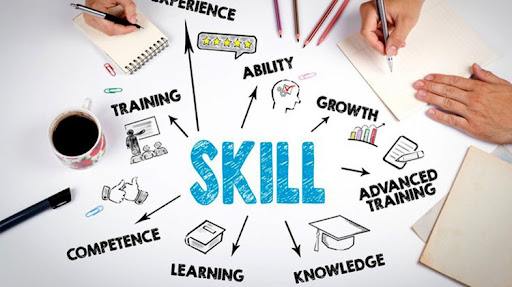
In today’s competitive world, its very important for people to invest their time and resources to improve their skills, potential capabilities. One needs to do so in order to be future ready. One’s skills determines their ability to carry out any task effectively and efficiently.
(Photo: doaram.com)
Skill development is a powerful tool to safeguard the future of youth and for their overall development. It is an important way to increase the employment rate of India. Skills are as essential as one’s academic qualifications. Education and skills should now go hand in hand to be successful. In today’s world, lack of education and skill development restricts people from realizing their potential capabilities and abilities. Eventually, this prevents them from contributing to the economic growth of a country. Thus, education and skill training is vital for the overall growth and personality development of an individual.
Illiteracy is one such reason for lack of skill training. The capability of the poorest sections of society to start business is restricted owing to because of their lack of business skills, illiteracy, their inability to take risks, capital, lack of investment, etc. It would be far better to upgrade their skills so that they can get employed. The strategy of the Ministry of Labor to specialize on skill upgradation has contributed significantly to this mission.
According to the World Trade Organization, the GDP level can increase up to 3%-5% in 2035, if India focuses on skill development and training. India has taken many initiatives in this regard. The Ministry of Skill Development and Entrepreneurship (MSDE) is responsible for coordinating skill development activities in India. It has supported various organizations like National Skill Development Corporation (NSDC), which aims to promote skill development in the country by establishing institutes across the country and National Skill Development Agency (NSDA), which seeks to coordinate the efforts of the government and the private sector and aid in skill development.
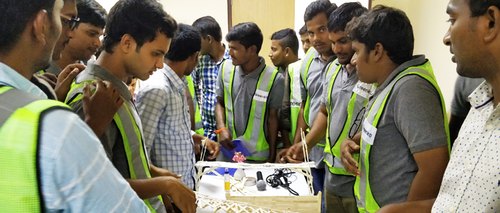
Hon’ble Prime Minister Shri Narendra Modi launched the Skill India Mission, under the Ministry of Skill Development and Entrepreneurship on 15 July 2015, which aims to train over 40 crore people in India in different skills by 2022. The mission seeks to vocational training and certification of Indian youth for a better livelihood and respect in the society. Various initiatives under this campaign are National Skill Development Mission, National Policy for Skill Development and Entrepreneurship, 2015, Pradhan Mantri Kaushal Vikas Yojana (PMKVY), Skill Loan scheme, Rural India Skill etc.
(Photo: Indiamart)
Schemes & Initiatives through NSDC
- Pradhan Mantri Kaushal Vikas Yojana (PMKVY)
- Rozgar Mela
- Pradhan Mantri Kaushal Kendras (PMKK)
- Capacity Building Scheme
- Udaan
- School Initiatives and Higher Education
- India International Skill Centres (IISCs)
- Pre Departure Orientation Training (PDOT)
Schemes related to Entrepreneurship
- Pradhan Mantri ‘YUVA’ Yojana
Other Schemes and Initiatives
- Skill Loan Scheme
- Indian Institute of Skills (IISs)
- SANKALP
- Academic Equivalence to Vocational Qualifications
- Aspirational Districts
- Swachh Bharat Abhiyan
- Technology Initiatives
To encourage enterprise and boost employment generation, skill training initiatives are coming up with specialized courses on entrepreneurship in different sectors. Skill development is a very important tool to boost self-confidence of an individual and to instill trust on themselves. With proper skill development training, one can surely become confident and successful. It not only nurtures the inner will but also boosts the personality of an individual.
<
p style=”background: rgb(255, 255, 255);border: 0px;font-family: Roboto, sans-serif;font-size: 16.1px;line-height: 23px;margin: 0px 0px 15px;padding: 0px;vertical-align: baseline”>
Advent of Fast-food chain in Indian Market
We all are very much familiar with the fast-food chains. With the revolution in food, the world has become so fast-moving that it’s very difficult to keep a track. With the demand for fast-food came the entry of fast-food joints. It has garnered the market to a wide level.
(Photo: PMQ Pizza Magazine)
Increasing demand for fast food
Is there anyone who doesn’t like fast-food? It has become so inevitable and specially among children. The youth mainly crave for fast-food in everyday life. This increase in demand has benefitted the fast-food chains at a rapid pace. The children specially like burger and pizza more than dal or roti. Demand for McDonald’s, Subway, KFC has increased rapidly over the years. Who knew that they will capture the market at such a level?
Why they are so much in demand?
· If we see from the customer’s view, we can say that it’s highly desirable.
· The prices are also low as compared to dine in restaurants.
· It is spread across many locations.
· The taste is also good and it’s very convenient.
The fast-food has become very………Fast
If a fast-food restaurant wants to remain in business, then it has to be very fast. This pace has been very well maintained by the fast-food chains of Indian market. Many people after work grab their fast-food while going back to home.It’s everywhere and that’s why it is very convenient to order. The faster order arrives, the happier customer is. Delay in delivery should be prevented as it can cause dissatisfaction and it can also harm the goodwill of the fast-food chain.
Cuisines around the world under one roof
· In this era of globalization, to be one step forward, this fast-food chain has turned towards different method to maintain its uniqueness.
· It’s like a cat race. To be faster, you have to be better.
· They think globally and apply it locally. The fast-food chain which offers more cuisine to its menu is more preferred by the customers.
· Getting everything under one roof. What do you want more? For example, Haldiram offers south Indian, north Indian, street food, Chinese etc. It’s not just limited to one cuisine. There are many other examples too. Like Dunkin’ Donuts, KFC, McDonald’s. They aim at adding taste to your buds.
S Smarter than You Think
Fast-food chains adopt various approaches to target customers. They mainly target children as fast-food is more popular among children. They very well know how to sell their product and execute their plan accordingly. For example, the use of characters such as Ronald McDonald and The Trix Rabbit, it is a tactic to emotionally bond with the children. They also organize birthday parties and offer happy meal to give happiness to children. They keep kids hooked up on happy meals. This is what is called as “SMART PLAY”.
The fast-food chain can be seen everywhere. It has increased rapidly around the globe. The demand for fast-food has also increased competition. In India, increase in disposable income has in turn increased the frequency of people going out for meals. India is now heavily dominated by global players. Despite of its potential growth, Indian food chain still faces many challenges due to the change in trend. So, we can say that India still has a long way to go.
<
p class=”MsoNormal”>
Importance of Training and Internship
Internships and training are also like practicing the theoretical lessons in reality. It gives exposure to real-world activities. Nowadays, when employers give so much attention to resume, it shows you a far better opportunity to have some internship involved and your studies. A practical background pays a lot of effect on your resume and job opportunities. When you are looking for gaining experience, internships and training look the best way. If you take part in an internship at your college time then it can give you a job even before completing your college. A summer internship can be a distinguishing factor for winning a job opportunity. There are a lot of NGOs which provide the internship free of cost to meritorious and able students. A few of them are SNSMKS, TZF, YEF, TCSion, etc.

So, In this article, I would be discussing a few special importance of Internships and training. The importance can be pointed as follows:-
The exposure to the real-world and work environment
There are differences among being a Student, Intern, and trainee. As a student, you just learn the things but as an intern or trainee, you practice the things. You convert your learned theories to work. Here you learn how to behave with your seniors, managers and how to react to people. These things help a lot when you get your first job. As it is quite specific towards that companies and industries so you become able to know a lot about that company and its job and work structure. It also gives you a chance to try new ideas as here responsibilities are quite limited and the people are quite helpful.
Teaches you the importance of resume and work experience
When you go for an internship, either paid or unpaid, they normally give you a completion certificate. But when you do excellent in your work then gives you a Letter of Recommendation, as that is just another certificate but this has quite an excellent effect upon your future work. Here you come to know the real value of a resume. So, try to build a resume so that it shows a mirror image of you.
It allows you to know yourself better as a professional person
When you would search your mind for answers of this importance you will find that there you pass your day as an employee. You are having some work pressure, and you will be getting few more new problems. As when I was doing my last internship of fundraising I found that I am having a quite limited connection with people so I can’t collect any funds just with the help of family and friends. So, there I came to know that I should build a better network with people so that whenever I am part of such things, I may tell them and complete the work.
Creating a big network of professional people
When you go for an internship, it connects you with a lot of people other than your academic career. Here you get a chance to come in contact with a lot of successful business professionals, with them you may create your own network that helps you a lot when you try to get a job in companies. There are a lot of companies which hire people mostly with skills along with a reference, as a reference helps to believe upon that new person.
Helps you to get a job as a full-time career
As an intern when you become part of a company or an NGO and work for them, they also invest their time and money in you so they have some expectation out of you. If you do far better in your work as an intern then they offer you a full-time job, immediately or in the future as a full-time career.
So, an internship is an important time in one’s life upon which one should focus.
Now coming to our next topic which is the role of NGOs to help students in their internship.
There are a lot of job seekers who belong to a poor family, they can not afford to pay for their internship. The different NGOs help such people by allowing them to feel the corporate world and learn to compete with them.
Business War – Apple Music vs Spotify vs YouTube Music
Hi everybody. We all know that Spotify is by far the most successful audio streaming platform in the world. In fact, even during the pandemic itself, the stock price of Spotify went up by 70%. Now, on the outside if you look at the numbers while Apple Music has only 72 million users Spotify has more than 345 million users and the rest of the competition is not even close. On top of that, its recommendation and playlist have been so amazing that you’ll agree that it has given you an incredible experience every single time. But you know what guys? Fortunately or unfortunately, in 2021, Spotify is in deep-deep trouble.

While on one side the losses of the company have been stacking up rapidly On the other side with the giants entering the streaming market Spotify is officially in a business war. And what we are witnessing right now is perhaps one of the most interesting Internet business wars in history. And if you pay very close attention you’ll be able to learn some incredible business lessons that you can apply to your startup and most importantly, as an investor, if you’re investing into US stocks this streaming war is going to be very very crucial. The question is- What is this business war and most importantly as an entrepreneur, what are the business lessons that you can learn from this iconic case study.
People, the music streaming revolution of the world started way back in the 1990s. Now, back then from 1984 to 1999 CDs were the ultimate instrument of the music industry. The distribution channels of the music CDs made the record labels and musicians billions of dollars every single year. But in the 1990s the Internet and the computer revolution began to pick up resulting into massive penetration of both, computers and web, into the American household. Now, people if you see this is a fine culmination of technology and connectivity and if you observe closely every time this golden combination happens, it gives rise to a new generation of startups. In the music industry, it was the company called Napster which was started way back in 1999 by Shawn Fanning and Sean Parker.

In simple words Napster was nothing but a music torrent instead of buying a CD for 20 dollars you can download an MP3 file for free and share it with your friends And you know what guys? This invention was a disruption in the making because what followed next was the first wave of music streaming. And this wave did not just change the way people listen to music it literally changed the entire music industry. Within a few months it had 4 million song downloads and in less than a year, Napster had 20 million users. Now, initially, people thought that it’s no big deal. But in sometime, the numbers of Napster exploded further, to 60 millions users by 2001. And this is when the record labels began to realize that their stores are incurring losses and when they actually computed it shocked them to see that they were incurring more than $100 million in losses due to Napster.
And that’s when hell broke loose for Napster. They got slapped with a lot of lawsuits and what followed next was the historic suit that led Napster to pay millions of dollars to artists, creators and record label companies eventually they had to shut down their operation in sometime. Now, while most people thought that piracy will be gone and that CDs will be back as it turns out, Napster left the market but the behavioural design of the society had been so strongly altered that people just didn’t go back to CDs at all.
The CD stores were still closing down and other piracy websites took the place of Napster. Companies were still incurring millions of dollars of losses because people just wouldn’t pay $20 for an album. And this is where record labels were desparately looking out for an alternative to actually get their distribution channel back on track. And while all of this drama was going on, there was one man who noticed this and decided to become an opportunist during the times of chaos. And this man was none other than the legendary Steve Jobs himself and the solution that he brough to the table was to give people ultra cheap music and to give record labels a non-piratable distribution channel for their music. And this solution was none other than the iconic iPod and the rest is history.
The record labels again started to make billions of dollars customers fell in love with the iPod as it brough along the second wave of music streaming revolution. There were two major problems over here. Number one, not everyone owned an iPod or a Macbook and number two, not everyone could pay for each album. but everyone had the computers and the Internet. So, guess what? This culmination of technology and connectivity, again, gave rise to another generation of startups and the most successful player in this segment turned out to be none other than Spotify which started way back in 2006.
Spotify learnt from the pains of the customers and decided to build a music streaming platform that could be used by everyone and could be used by everyone for free and this is where Spotify deploys its freemium model with an option to subscribe but this time it wasn’t easy because they knew what happened to Napster and the subscription model was way more complex than the discreet model of iTunes. Because when it comes to CDs or iTunes, it was pretty straightfoward if you buy a $1 album from iTunes 80% of that goes to record labels and 20% of that is mediator fees and that’s it.

Whereas in case of subscription, it’s quite difficult because you are giving unlimited access to everyone for a defined fees. So, the revenue distribution itself becomes very very complex. But fortunately the Spotify guys got through it and they spent about $9.8 billion dollars between 2006 to 2018 just to get the music rights without legal issues and they built the freemium model to make music accessible to everyone. And what followed next was the third wave of music streaming that is, unlimited legal music which could be listened for free. As a result of which, again, Spotify exploded and today it is a market leader with the highest number of paid subscribers. But again there were 3 problems.
Number one, ad revenue was not enough to pay the artists well and because the music is free, very few people actually opted in for a subscription. Number two, there was no profit for Spotify, in fact the company suffered massive losses during its rise. And last and most importantly things got really ugly with the artists. Taylor Swift and Adele broke up with Spotify over low pay. And again it led to a series of troubles for them from the creators’ side. Now, the company was badly cornered. With massive losses on one side annoyed artists on the other and on top of that they’ve now got freebie loving customers. And this gave them no option but to run a lot of ads to push their customers to buy Spotify Premium and hence a lot of interruptions. And this is when ladies and gentlemen 2 more giants decided to step into the game.
In 2015, Apple introduced that it’s going to kill iTunes and launch the subscription model which was Apple Music as direct competition to Spotify. And in just 5 months, in November 2015, YouTube entered the streaming wars with YouTube Music. Now, if you observe this streaming war very very closely guys, you’ll see that both these services, that is, Apple Music and YouTube Music are built over the weaknesses of Spotify. And with just a few moves here and there Spotify could be killed and there could be another wave of social media revolution on YouTube. The question is- How is that even possible? If you look at this table, Apple Music deploys a premium model and its only for Apple users while Spotify and YouTube Music is for everyone and they use the freemium model which gives them a wider audience.
Now, if you look at the user base, Apple has 1.65 billion users Spotify has 345 million users and YouTube, well it’s got 2.1 billion users. But when it comes to paid subscription Spotify is way ahead of Apple because of its accessibility through both Android and Apple. While Apple Music has only 72 million users but all of them are paid Spotify has 345 million users out of which 155 million of them pay. Now, the X factor for Spotify over here is its amazing playlists and podcasts that is integrated into the app. And this is where we saw Spotify coming out with Spotify Originals like 22 Yarns and signing up creators like Joe Rogan to become Spotify exclusive. But Apple and YouTube both also have their podcast but separately. YouTube has Google Podcasts and Apple has Apple Podcasts. And now, guys here comes the big difference.
While Apple Music generates a revenue of $4.1 billion with very less profits because it’s just an ecosystem product Spotify being a standalone incurred a loss of $698 million inspite of generating a revenue of $9.2 billion. And YouTube? Well it’s way ahead of the game with $19.7 billion dollars in revenue and this is mainly because of it’s video service. Fun fact: YouTube is one of the most popular platforms to discover musicians and artists. Now, guys, if you take a step back (I don’t know if you see this) but YouTube can literally accommodate every single X factor of Spotify and Apple Music in the YouTube app itself. Number one You kind of already search for songs through lyrics from Google and YouTube which is the USP of Apple Music.

Number two, you can ask Google which song is playing and it will find that out for you which is nothing but a Shazam feature. And most importantly Google has Google Podcasts and a huge base of creators who are already making podcast on YouTube. Now, every single creator knows that YouTube is by far the best platform for creating content. And users know very well how well YouTube understands them and their preferences. Now, if YouTube rolls out an update tomorrow saying that Google Podcasts is now integrated into YouTube as YouTube podcasts.

Do you realize what’s going to happen? It is going to lead to another huge wave of creators who will flock to upload their audio content on YouTube because there are already a ton of audio creators who are desperately wanting to be on YouTube. And if given a chance with YouTube algorithm, it’s going to be a game changer for them. And the best part is, because it’s available on both Android and iOS the user base is insanely huge. So, basically YouTube literally has the best of both Spotify and Apple. And when integrated together, it will become unbeatable in the content space just like Instagram is right now for social media networks. And my sense is, one day there will be a grand announcement that’s going to change everything for Spotify. This is what, ladies and gentlemen is happening in the streaming wars. Now let’s move on to the most important part of the video and that is what are the lessons that we can learn from this iconic case study.
Now, let’s talk about the lesson from the case study. Lesson number one. People, always remember that being the first mover can sometimes be a terrible thing and as far as my observation goes it’s almost every time a terrible thing. And it’s always better to be a second mover so that you can build upon the mistakes made by the first mover. In this case if you see, iTunes built over Napster Spotify built over iTunes and Apple Music and YouTube music built over Spotify. So, if you’re the first mover, you’ve got to be very very careful and if you’re the second mover you’ve got to be very very happy, at the same time, very very sharp about the mistakes that have been made by the first mover.
Lesson number two companies might come and go but the behavioral design they leave behind will stay forever. In this case, it was the paradigm shift from CDs to streaming. So, while most people will neglect it and try to reverse it you as an entrepreneur can be an opportunist and can bring about a solution which is forward looking rather than backward looking. In this case the opportunist was none other than the legendary Steve Jobs himself who built upon the behavioral design left behind by Napster.
And most importantly, always remember guys the culmination of technology and connectivity is always the sweet spot for innovation and it will give rise to the most revolutionary startups. In this case, it was the computers and the Internet but in the next 3 years it’s going to be the green tech and the Internet, blockchain and the Internet and most importantly Artificial intelligence and the Internet. Bye-Bye.
Journalism and it’s importance in our life
WHAT IS JOURNALISM ??
Journalism is the production and distribution of reports on current events based on facts and supported with proof or evidence. The word journalism applies to the occupation, as well as collaborative media who gather and publish information based on facts and supported with proof or evidence. Journalistic media include print, television, radio, Internet, and, in the past, newsreels.
Concepts of the appropriate role for journalism vary between countries. In some nations, the news media are controlled by government intervention and are not fully independent. In others, the news media are independent of the government but instead operate as private industry. In addition to the varying nature of how media organizations are run and funded, countries may have differing implementations of laws handling the freedom of speech and libel cases.
The proliferation of the Internet and smartphones has brought significant changes to the media landscape since the turn of the 21st century. This has created a shift in the consumption of print media channels, as people increasingly consume news through e-readers, smartphones, and other personal electronic devices, as opposed to the more traditional formats of newspapers, magazines, or television news channels. News organizations are challenged to fully monetize their digital wing, as well as improvise on the context in which they publish in print. Newspapers have seen print revenues sink at a faster pace than the rate of growth for digital revenues

SOME FAMOUS PEOPLE ON JOURNALISM’S IMPORTANCE IN LIFE
Without journalism, the world would be ignorant. Journalism is important because it gives current and relevant information and news to the public. Benjamin Franklin said, “Whoever would overthrow the liberty of a nation must begin by judging the freeness of speech.”
Coach Currie, an 8th grade social studies teacher and football coach at Dobie Jr. High, said, “Journalism is important because it spreads truth to people; they need to know things.”
Mrs. Preyor-Johnson, a journalism teacher at Dobie Jr. High, used to work as a full time journalist. She said, “Journalism is essential to our freedom.”

IMPORTANCE OF JOURNALISM IN SOCIETY
Journalism means the works of a journalist regarding news, views, reports, etc. It is an investigation and reporting of current world affairs which include fashion trends, political or general issue and events to a broad audience. It is apparent writing on any issue of an affair.
Though there are various purposes for it, the most important aspect is the freedom of expression. The root of journalism comes from people’s right to have an opinion.
Today people depend on the press on being informed of what’s happening. A modern newspaper is something very much more than a mere purveyor of the news; it is also a store-house of current information, an instrument of public criticism, a creator of public opinion. The media plays a vital role in a democratic society. Their influence on forming a public opinion is very great. They may be said to do political thoughts on behalf of the man in the street. Then there is the news-editor and his staff. They receive news from different agencies, staff reporters and correspondents. They edit, arrange, and display them. They can flash a headline and create a sensation. The staff-reporters interview people, elicit views by “scooping” news in advance.
Journalism is for the ‘voice of a voiceless’- expressing opinions of all those in our society. It’s like a bridge between the authorities and people. A modern newspaper must also have on its staff competent artists, cartoonists, photographers, etc. There must be advertisement managers and circulation managers. All these people who are on the staff of a newspaper are known by the general name of journalists, or newspapermen.
Wealthy and influential newspapers always maintain their own correspondents, home and abroad. The modern world could not exist without such an elaborate organization and agency of information gathered from various sources.
Therefore its primary purpose is to make sure all citizens are aware of their rights. Journalism is a difficult profession. “To write weekly”, says Virginia Woolf, “to write daily, to write shortly, to write for busy people catching trains in the morning, or for tired people coming home in the evening is a heartbreaking task for men who know good writing from bad. Oscar Wilde once stated, “By giving us the opinion of the uneducated, journalism keeps us in touch with the ignorance of the community”.
Journalism is important to the world because we are now a global economy and almost a global society. A good journalist creates his own peculiar style. He knows the art of creating the taste and demand for what he offers. The most important thing to understand about journalism is that its entire purpose is to serve the citizens. One aspires to literary excellence; another sets greater store by propaganda. Its coverage is very wide, and its scope for improvement is unlimited. But the journalist should guard against the present tendency for trivializing and fragmenting news items, imposing the editor’s opinions upon readers. Finally, journalism provides what Kovatch and Rosenstiel call “a public forum for criticism and comment.” This is an essential thing for a democratic society to have.

ROLE OF SOCIAL MEDIA IN DIFFERENT ASPECTS OF LIFE
Social Media plays a very important role in today’s life, social Media are web-based online tools that enable people discover and learn new information, share ideas, interact with new people and organizations. It has changed the way people live their life today, it has made communication much easier.
In students Life
Social media plays an important role in every student’s life. It is often easier and more convenient to access information, provide information and communicate via social media. Tutors and students can be connected to each other and can make good use of these platforms for the benefit of their learning and teaching

Alpha through Kappa: Why COVID is unlikely to subside soon.
2020 January – the whole world was scared by the idea of a new virus overtaking all of humanity. There were lockdowns followed by a host of other measures – some very severe, some probably less by governments all over the world. The idea that most doctors and scientists presented was isolation, quarantine and social distancing.
A survey conducted by researchers in England and published by Springer suggests that about 93% participants did not adhere to the covid protocols strictly and 47% of them did so intentionally. The research also statistically established a strong correlation between non-adherence to the COVID guidelines and vulnerability to COVID-19 itself.
Now, COVID is a disease that has no known cure except for a host of vaccines that were prepared in a great show of human endeavour. However, the vaccines were created keeping in mind the initial variants of COVID-19. The world and the governments all over were scared of the simple numbers of May 2020, which are simple given the numbers the world is facing today. The increase in numbers is however not in the same geographic location as the previous spikes, but the unfortunate thing is that it took place in larger population groups, in groups where social and economic security is not guaranteed effectively or at all by the government to all people and in groups where non-adherence to even simpler rules is more common than the previously infected groups. India, Brazil and the US – all three fall under this category. While some may argue various reasons for breaching the covid norms in their respective country or might even blame the governments for the failure, which it must be, but the fact remains that the consequences include a higher infectivity and hence increased death rates. But is that all? Well, no.
Scientist claim that an infectious virus is suppressed when the herd immunity thresh-hold is reached. The best number to reach is 80% of the population. However, in cases of Israel, the government reopened the country after 58% population was inoculated. If the herd immunity is not achieved, the virus gets enough time to mutate and as covid has quite effectively proven, these mutations are not always good. This means that the slow pace of vaccination in countries like India (I say slow given the huge population the country has), Brazil and even slower and probably negligible rates in the poorest nations gives the virus a strong and assured method to mutate and evolve. Most pharma giants and as many countries like Germany too have shown a greater interest in trading the vaccines commercially rather than quickly addressing the possibility of a stronger covid wave every time the poorest nations are denied vaccines. The richer countries indeed need to save their revenue. But a middle ground must be found otherwise the savings of revenue and the vision of a strong pharma market might lead to a civil breakdown like the one towards which protests in Brazil had pointed towards.
More variants are appearing, more people are being infected every day. The vaccinated nations of Israel, US and the UK are back to masks and social distancing. Is the COVID wave going anywhere? Well, probably no. And let us wait for the xhi or phi variant. And then maybe a greek god appears to take the virus away.
Comet NEOWISE : A new cosmic Discovery
One 27th MARCH 2020, a long periodic comet with near parabolic orbit was discovered by a group of astronomer during the NEOWISE Mission the Wide-field Infrared Survey Explorer (WISE) space telescope. At that time, it was an 18th-magnitude object, located 2 AU (300 million km; 190 million mi) away from the Sun and 1.7 AU (250 million km; 160 million mi) away from Earth.

Discovered by
NEOWISE
Discovery date
March 27, 2020
Orbital characteristics A
Epoch
2458953.5 (April 14, 2020)
Observation arc
113 days
Number of
observations
376
Orbit type
Long period comet
Aphelion
538 AU (inbound)
710 AU (outbound)
Perihelion
0.29478 AU
Semi-major axis
270 AU (inbound)
355 AU (outbound)
Eccentricity
0.99921
Orbital period
~4400 yrs (inbound)
~6700 yrs (outbound)
Inclination
128.93°
Node
61.01°
Argument of
periapsis
37.28°
TJupiter
−0.408
Earth MOID
0.36 AU (54 million km; 140 LD)
Jupiter MOID
0.81 AU (121 million km)
Dimensions
~5 km (3 mi)
Last perihelion
July 3, 2020
Next perihelion
unknown
HISTORY AND OBSERVATION
The object was discovered by a team using the WISE space telescope under the NEOWISE program on March 27, 2020.It was classified as a comet on March 31 and named after NEOWISE on April 1. It has the systematic designation C/2020 F3, indicating a non-periodic comet which was the third discovered in the second half of March 2020.
Comet NEOWISE made its closest approach to the Sun (perihelion) on July 3, 2020, at a distance of 0.29 AU (43 million km; 27 million mi). This passage through the planetary region increases the comet’s orbital period from about 4400 years to about 6700 years.Its closest approach to Earth occurred on July 23, 2020, 01:09 UT, at a distance of 0.69 AU (103 million km; 64 million mi) while located in the constellation of Ursa Major.
In early July, the comet could be seen in the morning sky just above the north-eastern horizon and below Capella. Seen from Earth, the comet was less than 20 degrees from the Sun between June 11 and July 9, 2020. By June 10, 2020, as the comet was being lost to the glare of the Sun, it was apparent magnitude 7,when it was 0.7 AU (100 million km; 65 million mi) away from Sun and 1.6 AU (240 million km; 150 million mi) away from Earth. When the comet entered the field of view of the SOHO spacecraft’s LASCO C3 instrument on June 22, 2020, the comet had brightened to about magnitude 3, when it was 0.4 AU (60 million km; 37 million mi) away from the Sun and 1.4 AU (210 million km; 130 million mi) away from Earth.
By early July, Comet NEOWISE had brightened to magnitude 1, far exceeding the brightness attained by previous comets, C/2020 F8 (SWAN), and C/2019 Y4 (ATLAS). By July, it also had developed a second tail. The first tail is blue and made of gas and ions stretching almost 70° from its nucleus. There is also a red separation in the tail caused by high amounts of sodium which is nearly stretched 1°. The second twin tail is a golden color and is made of dust stretched almost 50°, like the tail of Comet Hale–Bopp. This combination resembles comet C/2011 L4 (PANSTARRS). The comet is brighter than C/2011 L4 (PANSTARRS), but not as bright as Hale–Bopp was in 1997. According to the British Astronomical Association, the comet brightened from a magnitude of about 8 at the beginning of June to −2 in early July.This would make it brighter than Hale–Bopp. However, as it was very near to the Sun, it was reported as 0 or +1 magnitude and remained that bright for only a few days. After perihelion, the comet began to fade, dropping to magnitude 2. Its nucleus activity subdued after mid-July, and its green coma was clearly visible after that.
On July 13, 2020, a sodium tail was confirmed by the Planetary Science Institute’s Input/Output facility. Sodium tails have only been observed in very bright comets such as Hale–Bopp and C/2012 S1 (ISON).
From the infrared signature, the diameter of the comet nucleus is estimated to be approximately 5 km (3 mi). The nucleus is similar in size to Comet Hyakutake and many short-period comets such as 2P/Encke, 7P/Pons-Winnecke, 8P/Tuttle, 14P/Wolf, and 19P/Borrelly. NASA’s Parker Solar Probe had captured an image of the comet, from which astronomers also estimated the diameter of the comet nucleus at approximately 5 km (3 mi). Later in July 2020, other observations were also reported, including those related to coma morphology and spectrographic emissions. On 31 July 2020, strong detection of OH 18-cm emission was observed in radio spectroscopic studies at the Arecibo Observatory. On August 14, 2020, the rotation period of the comet was reported to be “7.58 +/- 0.03 hr”.

TRAJECTORY
Comet NEOWISE retrograde orbit crossed to the north of the plane of the ecliptic, to which it is inclined at approximately 129 degrees, on June 29, 2020, 01:47 UT. It made its closest approach to the Sun (perihelion) on July 3, 2020, at a distance of 0.29 AU (43 million km; 27 million mi). This passage increases the comet’s orbital period from about 4400 years to about 6700 years.On July 18 the comet peaked at a northern declination of +48 and was circumpolar down to latitude 42N. Its closest approach to Earth occurred on July 23, 2020, 01:09 UT, at a distance of 0.69 AU (103 million km; 64 million mi) while located in the constellation of Ursa Major.

Excess Irrigation Over North India Shifting Monsoon Towards North West – report
Excess Irrigation Over North India Shifting Monsoon Towards North West

According to a report of climate researchers, heavy irrigation in north India could be the reason for shifting monsoon to the North West part of the subcontinent, increasing the land temperature in central India. These meteorological threats may lead to crop failure.

One of the chief causes of monsoons is the difference between annual temperature trends over land and sea. As peddy irrigation in North India starts way before the monsoon, the irrigated land remains flooded with water during this time. As the water evaporates, land tends to cool during the period of August-September.
It’s known that air travels from a high-pressure zone to a low-pressure zone. (Gravity plays the role here)
Low pressure is associated with rising air and high pressure associated with sinking air. Thus, when the land is hotter than the sea, the pressure difference is created.

Air carrying water vapours from the high-pressure zone travels to the low-pressure zone resulting in rising air which is linked to cloud formation that causes rain.
Notwithstanding the previous pattern, the sinking air is unlikely to travel north due to cooling; rather it goes toward the northwest region which is hotter than North India.
These hazardous trends and shifting the monsoon could pose great threats not only to the farmers but also to the people living there. Excessive irrigation can lead to water scarcity that needs to be debated.
A new membrane production could desalinate water with 99.9% efficiency.
According to the World Health Organization, more than 785 million people lack clean drinking water. Although 71% of the Earth’s surface is covered with seawater, we can’t drink it. Scientists around the world are working to find effective means of desalinating seawater at a low cost. Now, a team of Korean scientists may have figured out how to do it in a matter of minutes.
The freshwater necessary for most human activities represents only 2.5 percent of the total water available on the planet. Rivers and lakes hold only a fraction of them, but that is what life on Earth depends so much on.. Unfortunately, human activities are putting this vital resource under tremendous strain.

It is hardly surprising that desalination of seawater is the easiest way to address this issue. But these processes have their limitations. One such limitation is membrane wetting. Wetting the membrane pores eliminates dry pathways where contaminants, like particles, gels, or bubbles could pass through, resulting in high defect levels in your process. Polymer membranes are natively hydrophobic or hydrophilic.
• Hydrophobic – having a natural aversion to water
• Hydrophilic – having a natural affinity to water
If a membrane is hydrophobic, it is difficult to wet with water. This results in a high contact angle, or a very round bead of water sitting on top of the membrane. If a membrane is hydrophilic, it is easily wet with water, and the water will penetrate the pores of the membrane.
When using membranes to filter seawater, the membrane must remain dry for long periods. If the membrane becomes moist, the filtration process becomes inefficient and permits large quantities of salt to pass through the membrane. For long-term operations, progressive membrane wetting has been observed regularly, which be resolved by changing the membrane.
Researcher Yunchul Woo and his team at the Korea Institute of engineering and Building Technology (KICT) have now developed a membrane that’s less vulnerable to wetting and is stable within the future .
The membrane is formed of nanofibres that are fabricated into a three-dimensional hierarchical data structure , This was achieved by employing a sort of nanotechnology called electrospinning. Using this technology, the researchers were ready to fabricate a highly hydrophobic membrane — i.e. water repellent.
The hydrophobic nature of the membrane is valuable because it is designed to keep water molecules from passing through. Instead, a temperature differential is applied on both sides of the membrane which causes the water to evaporate from one end to the water vapor. The membrane allows water vapor to pass, which then condenses onto the cooler side. Called, membrane distillation, this is a commonly used method of desalination using membranes. Because salt particles are not transformed into gas, they are set aside on one side of the membrane, giving highly purified water on the other side.
The Korean researchers also used silica aerogel in their membrane fabrication process which further enhanced the flow of water vapor through the membrane, providing quicker access to desalinated water.
In tests, the team ran the new membrane for 30 days, and found that it still filtered out 99.99 percent of the salt after that time. That’s a far longer runtime than other electrospun nanofiber membranes, which the team says struggle to last more than 50 hours of continuous use before they begin to leak.
“The co-axial electrospun nanofiber membrane have strong potential for the treatment of seawater solutions without suffering from wetting issues and may be the appropriate membrane for pilot-scale and real-scale membrane distillation applications,” says Dr. Yunchul Woo, lead researcher on the study.
 Eduindex
You must be logged in to post a comment.