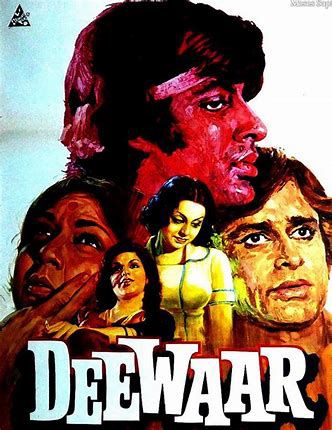
Review of Deewara (1972)

Deewara (1972)

Deewara is a classic Bollywood film directed by Yash Chopra, released in 1972. The movie stars Sharmila Tagore, Rajesh Khanna, and Hema Malini in lead roles.

Plot

The story revolves around two brothers, Vijay (Rajesh Khanna) and Ravi (Randhir Kapoor), who are separated during their childhood. Vijay grows up to become a smuggler, while Ravi becomes a police officer. Their paths cross when Ravi is assigned to capture Vijay.

Complications arise when Vijay falls in love with Ravi’s love interest, Radha (Hema Malini). Meanwhile, Vijay’s past catches up with him, threatening to destroy his relationships and future.

Themes

Deewara explores themes of:

  1. Family and separation
  2. Love and sacrifice
  3. Crime and redemption
  4. Identity and self-discovery

Music

The film’s soundtrack, composed by R.D. Burman, features iconic songs like:

  1. “Koi Hotaa Jisko Apna”
  2. “Yadoon Ki Barat”
  3. “Deewana Hua Badal”

Awards and Legacy

Deewara was a commercial success and received critical acclaim. It won several awards, including:

  1. Filmfare Best Supporting Actor Award (Randhir Kapoor)
  2. Filmfare Best Story Award (Salim-Javed)

Deewara is considered one of Yash Chopra’s best works and a landmark film in Indian cinema.

Cast

  1. Rajesh Khanna as Vijay
  2. Hema Malini as Radha
  3. Sharmila Tagore as Chanda
  4. Randhir Kapoor as Ravi
  5. Balraj Sahni as Advocate
  6. Nirupa Roy as Mother

Production

  1. Director: Yash Chopra
  2. Producer: Gulshan Rai
  3. Screenplay: Salim-Javed
  4. Cinematography: Kay Gee
  5. Music: R.D. Burman

Release

Deewara was released on November 25, 1972, and ran for over 50 weeks, becoming a golden jubilee hit.

Impact

Deewara’s success solidified Rajesh Khanna’s status as a Bollywood superstar and established Yash Chopra as a prominent director. The film’s themes and music continue to influence Indian cinema.

"Rich Dad Poor Dad" by Robert T. Kiyosaki

“Rich Dad Poor Dad” by Robert T. Kiyosaki is a financial classic that has left an indelible mark on the minds of readers seeking financial wisdom and success. The book is structured as a memoir, recounting the author’s upbringing and the divergent financial philosophies of his “rich dad” (his best friend’s father) and his “poor dad” (his biological father).

One of the book’s strengths lies in its simplicity and accessibility. Kiyosaki breaks down complex financial concepts into easy-to-understand anecdotes and lessons. He emphasizes the importance of financial education, challenging conventional notions about money, investing, and wealth-building.

The central theme revolves around the idea of assets versus liabilities and the significance of making money work for you. Kiyosaki stresses the importance of acquiring assets that generate passive income, rather than solely relying on earned income from a traditional job. The book encourages readers to adopt an entrepreneurial mindset and take calculated risks to achieve financial independence.

What sets “Rich Dad Poor Dad” apart is its ability to inspire a shift in mindset. It encourages readers to question societal norms around money, education, and employment, urging them to think differently about their financial future. The narrative is filled with practical advice and actionable steps, making it a valuable guide for those eager to embark on a journey towards financial literacy.

However, some critics argue that the book lacks specific, detailed instructions on how to achieve financial success. While Kiyosaki emphasizes the importance of financial education, some readers may yearn for more concrete strategies and step-by-step guidance.

In conclusion, “Rich Dad Poor Dad” is a compelling and thought-provoking read that has influenced countless individuals worldwide. Its enduring popularity attests to its impact on reshaping perspectives on wealth and financial independence. Whether you’re a seasoned investor or a novice in the world of finance, this book provides valuable insights that can spark positive changes in your financial journey.

Fourth Wing (The Empyrean Book 1) Kindle Edition

 Fourth Wing (The Empyrean Book 1) Kindle Edition

“Suspenseful, sexy, and with incredibly entertaining storytelling, the first in Yarros’ Empyrean series will delight fans of romantic, adventure-filled fantasy.” —Booklist, starred review

“Fourth Wing will have your heart pounding from beginning to end… A fantasy like you’ve never read before.” ―#1 New York Times bestselling author Jennifer L. Armentrout

Enter the brutal and elite world of a war college for dragon riders from New York Times bestselling author Rebecca Yarros

Twenty-year-old Violet Sorrengail was supposed to enter the Scribe Quadrant, living a quiet life among books and history. Now, the commanding general—also known as her tough-as-talons mother—has ordered Violet to join the hundreds of candidates striving to become the elite of Navarre: dragon riders.

But when you’re smaller than everyone else and your body is brittle, death is only a heartbeat away…because dragons don’t bond to “fragile” humans. They incinerate them.

With fewer dragons willing to bond than cadets, most would kill Violet to better their own chances of success. The rest would kill her just for being her mother’s daughter—like Xaden Riorson, the most powerful and ruthless wingleader in the Riders Quadrant.

She’ll need every edge her wits can give her just to see the next sunrise.

Yet, with every day that passes, the war outside grows more deadly, the kingdom’s protective wards are failing, and the death toll continues to rise. Even worse, Violet begins to suspect leadership is hiding a terrible secret.

Friends, enemies, lovers. Everyone at Basgiath War College has an agenda—because once you enter, there are only two ways out: graduate or die.

Product details

  • ASIN ‏ : ‎ B0BGDM197Q
  • Publisher ‏ : ‎ Entangled: Red Tower Books (May 2, 2023)
  • Publication date ‏ : ‎ May 2, 2023
  • Language ‏ : ‎ English
  • Text-to-Speech ‏ : ‎ Enabled
  • Screen Reader ‏ : ‎ Supported
  • Print length ‏ : ‎ 663 pages

From the Bottom to the Top: Story of a Man Called Larry

body {
font-family: Arial, sans-serif;
line-height: 1.6;
margin: 20px;
}

    h1 {
        color: #333;
    }

    img {
        max-width: 100%;
        height: auto;
        margin-bottom: 15px;
    }

    .rating {
        display: inline-block;
        unicode-bidi: bidi-override;
        color: #888;
        font-size: 24px;
        height: 1em;
        position: relative;
    }

    .rating span {
        display: inline-block;
        position: absolute;
        overflow: hidden;
        color: #FFD700;
    }

    .rating input {
        display: none;
    }

    .rating label {
        cursor: pointer;
        width: 1em;
        font-size: 24px;
        text-align: center;
        line-height: 1.6;
    }

    .rating label:before {
        content: '★';
    }

    .rating input:checked ~ label,
    .rating input:checked ~ label ~ label {
        color: #FFD700;
    }


<h1>Book Review: From the Bottom to the Top: Based on a Story of a Man Born in West Africa: Story of a Man Called Larry</h1>

<strong>Author:</strong> <a class="a-link-normal" href="https://www.amazon.in/s/ref=dp_byline_sr_book_1?ie=UTF8&field-author=Peter+Cole&search-alias=stripbooks">Peter Cole</a></p><div class="separator" style="clear: both;text-align: center"><a href="https://m.media-amazon.com/images/I/61Oe6hwKZ1L._SY466_.jpg" style="margin-left: 1em;margin-right: 1em"><img border="0" height="466" src="https://m.media-amazon.com/images/I/61Oe6hwKZ1L._SY466_.jpg" width="311" /></a></div><br /><p><br />

<div class="rating">


</div>

<h2>"From the Bottom to the Top: Story of a Man Called Larry" by Peter Cole is an extraordinary journey through the life of an individual born in West Africa, showcasing resilience, determination, and the triumph of the human spirit against all odds. In this captivating narrative, Cole masterfully weaves together the personal story of Larry, offering readers a glimpse into the challenges and triumphs that shaped his life.

The book’s strength lies in its ability to transcend cultural boundaries and resonate with readers on a universal level. Larry’s story, born in West Africa and navigating life’s complexities, becomes a metaphor for the broader human experience. The author skillfully captures the essence of Larry’s character, portraying him as not just an individual with a unique background but as a symbol of tenacity and the pursuit of dreams.

Peter Cole’s storytelling is engaging and evocative, drawing readers into Larry’s world from the very beginning. The vivid descriptions of West Africa, its vibrant culture, and the challenges faced by Larry contribute to the book’s immersive quality. The narrative is rich with details, providing readers with a deep understanding of the socio-economic landscape that shapes Larry’s early years.

As the title suggests, the book follows Larry’s journey from the bottom to the top, highlighting his struggles and triumphs along the way. Through poignant storytelling, Cole addresses themes of poverty, adversity, and the transformative power of self-belief. Larry’s resilience becomes a source of inspiration, urging readers to reflect on their own capacity to overcome obstacles and pursue their aspirations.

The pacing of the narrative is well-executed, maintaining a balance between the exploration of Larry’s personal challenges and the broader socio-economic context. Cole skillfully navigates through Larry’s life, providing a nuanced portrayal that is both authentic and relatable. The book avoids sensationalism, presenting the story in a sincere and heartfelt manner.

While the narrative primarily focuses on Larry’s journey, the book also raises broader societal questions about equity, social justice, and the impact of systemic challenges. The reader is prompted to contemplate not only Larry’s individual triumphs but also the larger implications for communities facing similar struggles.

“From the Bottom to the Top: Story of a Man Called Larry” is not just a biographical account; it is a testament to the human spirit’s capacity to overcome adversity. Peter Cole’s writing is a compelling blend of empathy and insight, making this book a worthwhile read for those seeking inspirational stories that transcend cultural and geographical boundaries. Larry’s journey is a testament to the belief that, with determination and resilience, one can indeed rise from the bottom to the top.

<!--Other review sections go here-->

Book Review – Rich Dad Poor Dad

Book Review: Rich Dad Poor Dad

<span style="--tw-border-spacing-x: 0;--tw-border-spacing-y: 0;--tw-ring-color: rgba(69,89,164,.5);--tw-ring-offset-color: #fff;--tw-ring-offset-shadow: 0 0 transparent;--tw-ring-offset-width: 0px;--tw-ring-shadow: 0 0 transparent;--tw-rotate: 0;--tw-scale-x: 1;--tw-scale-y: 1;--tw-scroll-snap-strictness: proximity;--tw-shadow-colored: 0 0 transparent;--tw-shadow: 0 0 transparent;--tw-skew-x: 0;--tw-skew-y: 0;--tw-translate-x: 0;--tw-translate-y: 0;border: 0px solid rgb(217, 217, 227);color: var(--tw-prose-bold);font-weight: 600">Author: Robert T. Kiyosaki</span>


Rating: ⭐⭐⭐⭐⭐ (out of 5 stars)

Introduction:
“Rich Dad Poor Dad” by Robert T. Kiyosaki is a groundbreaking personal finance classic that challenges conventional wisdom about money and investing. With a narrative framed around the author’s upbringing with two father figures, Kiyosaki shares invaluable lessons that have the potential to transform the reader’s mindset about wealth and financial success.

Summary:
The book revolves around the dichotomy of “Rich Dad” and “Poor Dad,” representing two contrasting approaches to money. Kiyosaki contrasts the traditional, job-focused mindset (Poor Dad) with the entrepreneurial, wealth-building mindset (Rich Dad). Through anecdotes and practical advice, Kiyosaki introduces fundamental concepts such as assets, liabilities, and the importance of financial education.

Strengths:
Kiyosaki’s straightforward and engaging writing style makes complex financial concepts accessible to readers of all backgrounds. The book challenges the conventional path of education and employment, encouraging readers to think critically about their financial decisions. The emphasis on financial education as a key determinant of success is empowering, and the book serves as a wake-up call for those seeking financial independence.

Weaknesses:
While the book provides valuable insights, some critics argue that Kiyosaki oversimplifies certain aspects of wealth creation and may not offer a one-size-fits-all solution. Additionally, the narrative style, while compelling, may not resonate with everyone, as personal anecdotes and allegories are used extensively.

Characterization:
The characters of Rich Dad and Poor Dad serve as powerful symbols, representing contrasting approaches to money and life. The characterization is effective in conveying the author’s key messages and principles.

Writing Style:
Kiyosaki’s writing is clear, concise, and accessible. He combines personal anecdotes with financial principles, making the book engaging and relatable. The conversational tone helps demystify financial concepts and keeps the reader invested in the narrative.

Themes:
The primary themes revolve around financial education, the importance of assets over liabilities, and the mindset required for wealth creation. Kiyosaki challenges societal norms and encourages readers to break free from the traditional employment mindset.

Conclusion:
“Rich Dad Poor Dad” is a must-read for anyone seeking financial literacy and independence. It goes beyond mere financial advice and serves as a catalyst for a paradigm shift in how readers approach money. While not without its critics, the book’s impact on countless individuals worldwide is a testament to its enduring relevance and influence on the way we perceive and manage wealth. Highly recommended for those ready to challenge their financial beliefs and embark on a path toward financial freedom.

The Heaven &amp;amp; Earth Grocery Store: A Novel Kindle Edition by James McBride

Review
Praise for The Heaven & Earth Grocery Store:

“I keep thinking every time I read one of his books, ‘That’s his best book.’ No. THIS is his best book.” —Ann Patchett
“This is one of those novels that becomes a part of you. It’s a great book. Every character is rich; every detail is rich. I can’t recommend this one highly enough. He’s a great author and I think this is his best work.” —Harlan Coben
“With this story, McBride brilliantly captures a rapidly changing country, as seen through the eyes of the recently arrived and the formerly enslaved . . . And through this evocation, McBride offers us a thorough reminder: Against seemingly impossible odds, even in the midst of humanity’s most wicked designs, love, community and action can save us.” —The New York Times Book Review
“The Heaven & Earth Grocery Store is one of the best novels I’ve read this year. It pulls off the singular magic trick of being simultaneously flattening and uplifting.” —NPR
“[A] tour de force . . . [a] mesmerizing, moving, almost magical tale . . . [McBride] writes sentences and paragraphs that swing like jazz melodies.” —The Associated Press
“Classic McBride: He doesn’t shy away from bold statements about the national catastrophes of race and xenophobia, and he always gives us a spoonful of sugar to help the medicine go down. The sugar is McBride’s spitfire dialogue and murder-mystery-worthy plot machinations; his characters’ big personalities and bigger storylines; his wisecracking, fast-talking humor; and prose so agile and exuberant that reading him is like being at a jazz jam session. . . . Reading McBride just feels good—we are comforted and entertained, and braced for the hard lessons he also delivers.” —The Atlantic
“Sharp and nimble and warm as a wool hat, James McBride’s prose seems to transcend all earthly concerns, allowing him to write with compassion, humor and authority.” —The Philadelphia Inquirer
“A story of community, care, and the lengths to which we’ll go for justice, McBride’s tale is a wondrous ode to the strength of humanity in a small town.” —Time Magazine
“Enchanting . . . [a] rich, carefully drawn portrait of a Depression-era community of African Americans and Jewish immigrants as they live, love, fight, and, of course, work.” —The Boston Globe
“McBride . . . would never advance any of his books as candidates for the Great American Novel. . . . I’d like to make a case, though, for Deacon King Kong and, now, The Heaven & Earth Grocery Store as better contenders for the 21st-century GAN than many other, more vaunted specimens. . . . In the words of Walt Whitman (an American writer McBride often brings to mind), they contain multitudes.” —Slate
Amazon.com Review
An Amazon Best Book of August 2023: In Deacon King Kong, James McBride spun a story of a Brooklyn neighborhood filled with beguiling and booze-filled characters that showed just how vital communities can be—and he’s done it again with The Heaven & Earth Grocery Store. Except this time, we’re in Chicken Hill, a small town in Pennsylvania, where Black, Jewish, and European immigrants, rich and poor, old and young, collide—defending, fighting, entertaining, feeding, and sheltering one another. This cacophonous melody of characters with all of their schemes and dreams reveal how home is where you make it—and how all of these “outsiders” are anything but. With spunky detail, McBride masterfully makes you feel like you’re part of the neighborhood, that these are your neighbors, your friends, and enemies, drawing you in, so that you, too, know the secrets they keep, the grudges they hold, and kindness they offer. Chock full of the social, racial, and ethnic politics of a small town, The Heaven & Earth Grocery Store is another irresistible stand-out from McBride.—Al Woodworth, Amazon Editor –This text refers to the hardcover edition.
Review
Praise for The Heaven & Earth Grocery Store:
“I keep thinking every time I read one of his books, ‘That’s his best book.’ No. THIS is his best book.” —Ann Patchett
“This is one of those novels that becomes a part of you. It’s a great book. Every character is rich; every detail is rich. I can’t recommend this one highly enough. He’s a great author and I think this is his best work.” —Harlan Coben
“With this story, McBride brilliantly captures a rapidly changing country, as seen through the eyes of the recently arrived and the formerly enslaved . . . And through this evocation, McBride offers us a thorough reminder: Against seemingly impossible odds, even in the midst of humanity’s most wicked designs, love, community and action can save us.” —The New York Times Book Review
“The Heaven & Earth Grocery Store is one of the best novels I’ve read this year. It pulls off the singular magic trick of being simultaneously flattening and uplifting.” —NPR
“[A] tour de force . . . [a] mesmerizing, moving, almost magical tale . . . [McBride] writes sentences and paragraphs that swing like jazz melodies.” —The Associated Press
“Classic McBride: He doesn’t shy away from bold statements about the national catastrophes of race and xenophobia, and he always gives us a spoonful of sugar to help the medicine go down. The sugar is McBride’s spitfire dialogue and murder-mystery-worthy plot machinations; his characters’ big personalities and bigger storylines; his wisecracking, fast-talking humor; and prose so agile and exuberant that reading him is like being at a jazz jam session. . . . Reading McBride just feels good—we are comforted and entertained, and braced for the hard lessons he also delivers.” —The Atlantic
“Sharp and nimble and warm as a wool hat, James McBride’s prose seems to transcend all earthly concerns, allowing him to write with compassion, humor and authority.” —The Philadelphia Inquirer
“A story of community, care, and the lengths to which we’ll go for justice, McBride’s tale is a wondrous ode to the strength of humanity in a small town.” —Time Magazine
“Enchanting . . . [a] rich, carefully drawn portrait of a Depression-era community of African Americans and Jewish immigrants as they live, love, fight, and, of course, work.” —The Boston Globe
“McBride . . . would never advance any of his books as candidates for the Great American Novel. . . . I’d like to make a case, though, for Deacon King Kong and, now, The Heaven & Earth Grocery Store as better contenders for the 21st-century GAN than many other, more vaunted specimens. . . . In the words of Walt Whitman (an American writer McBride often brings to mind), they contain multitudes.” —Slate –This text refers to the audioCD edition.

Product details

  • ASIN ‏ : ‎ B0BPNP7YQB
  • Publisher ‏ : ‎ Riverhead Books (August 8, 2023)
  • Publication date ‏ : ‎ August 8, 2023
  • Language ‏ : ‎ English
  • File size ‏ : ‎ 1898 KB
  • Text-to-Speech ‏ : ‎ Enabled
  • Screen Reader ‏ : ‎ Supported
  • Enhanced typesetting ‏ : ‎ Enabled
  • X-Ray ‏ : ‎ Enabled
  • Word Wise ‏ : ‎ Enabled
  • Sticky notes ‏ : ‎ On Kindle Scribe
  • Print length ‏ : ‎ 400 pages
  • Page numbers source ISBN ‏ : ‎ 1399620401

    About the author

    James McBride is the author of the award-winning New York Times bestseller, The Color of Water. A former reporter for The Washington Post and People magazine, McBride holds a Masters degree in journalism from Columbia University and a B.A. from Oberlin College.

    Write Book Review and Suggest your Book

    How to write a review of a book

    Step 1. Provide a summary

    Have you ever watched a movie only to realize that all the good bits were already in the trailer? Well, you don’t want the review to do that. What you do want the summary to do is reveal the genre, theme, main conflict, and main characters in the story — without giving away spoilers or revealing how the story ends.

    A good rule of thumb is not to mention anything that happens beyond the midpoint. Set the stage and give readers a sense of the book without explaining how the central issue is resolved.


    Emily W. Thompson’s review of The Crossing:

    In [Michael] Doane’s debut novel, a young man embarks on a journey of self-discovery with surprising results.

    An unnamed protagonist (The Narrator) is dealing with heartbreak. His love, determined to see the world, sets out for Portland, Oregon. But he’s a small-town boy who hasn’t traveled much. So, the Narrator mourns her loss and hides from life, throwing himself into rehabbing an old motorcycle. Until one day, he takes a leap; he packs his bike and a few belongings and heads out to find the Girl. Read more…

    Non-fiction summary tip: The primary goal of a non-fiction summary is to provide context: what problems or issues has the book spotted, and how does it go about addressing them? Be sure to mention the authors of the title and what experience or expertise they bring to the title. Check Stefan Kløvning’s review of Creativity Cycling for an example of a summary that establishes the framework of the book within the context of its field.

    Step 2. Present your evaluation

    While you should absolutely weave your own personal take of a book into the review, your evaluation shouldn’t only be based on your subjective opinion. Along with presenting how you reacted to the story and how it affected you, you should also try to objectively critique the stronger and weaker elements of the story, and provide examples from the text to back up your points.

    To help you write your evaluation, you should record your reactions and thoughts as you work your way through a novel you’re planning on reviewing. Here are some aspects of the book to keep in mind as you do.

    Your evaluation might focus heartily on the book’s prose:

    Donald Barker’s review of Mercenary

    Such are the bones of the story. But, of course, it is the manner in which Mr Gaughran puts the bones back together and fills them with life that makes “Mercenary” such a great read. The author’s style seems plain; it seems straightforward and even simple. But an attempt at imitation or emulation quickly proves that simple it is not. He employs short, punchy sentences that generate excellent dialogue dripping with irony, deadpan humour and wit. This, mixed with good descriptive prose, draws the characters – and what characters they are – along with the tumultuous events in which they participated amidst the stinking, steaming heat of the South American jungle, out from the past to the present; alive, scheming, drinking, womanising and fighting, onto the written page.

    You can give readers a sense of the book by drawing comparisons to other well-known titles or authors:

    Laura Hartman’s review of The Mystery of Ruby’s Mistletoe:

    Reading Ms. Donovan’s book is reminiscent to one of my favorite authors, Dame Agatha Christie. Setting up the suspects in a snowbound house, asking them to meet in the drawing room and the cleverly satisfying conclusion was extremely gratifying. I can picture Miss Marple and Hercule Poirot nodding at Ms. Donovan saying “Well done!”

    Not everyone’s tastes are the same, and you can always acknowledge this by calling out specific story elements in your evaluation: 

    Kevin R. Dickinson’s review of The Heart of Stone:

    Whether you enjoy Galley’s worldbuilding will depend heavily on preference. Galley delivers information piecemeal, letting the characters, not the author, navigate the reader through Hartlund. A notable example is the magic system, an enigmatic force that lacks the ridge structures of, say, a Brandon Sanderson novel. While the world’s magical workings are explained, you only learn what the characters know and many mysteries remain by the end. Similar choices throughout make the world feel expansive and authentic.

    Non-fiction evaluation tip: A book’s topic is only as compelling as its supporting arguments. Your evaluation of a nonfiction book should address that: how clearly and effectively are the points communicated? Turn back to Stefan’s critique for an example of a non-fiction critique that covers key takeaways and readability, without giving away any “big reveals.”

    Step 3. Give your recommendation 

    At the end of the day, your critique needs to answer this question: is this a book you would (or wouldn’t) recommend to other readers? You might wrap up by comparing it to other books in the same genre, or authors with similar styles, such as: “Fans of so-and-so will enjoy this book.” 

    Let’s take a look at a few more tips:

    You don’t need to write, “I recommend this book” — you can make it clear by highlighting your favorable opinion:

    Emily W. Thompson’s review of The Crossing:

    Following in the footsteps of Jack Kerouac and William Least Heat-Moon, Doane offers a coming of age story about a man finding himself on the backroads of America. Doane’s a gifted writer with fluid prose and insightful observations, using The Narrator’s personal interactions to illuminate the diversity of the United States.

    Despite his flaws, it’s a pleasure to accompany The Narrator on his physical and emotional journey. The unexpected ending is a fitting denouement to an epic and memorable road trip.

    Add more punch to your rating by mentioning what kind of audience will or won’t enjoy the book:

    Charleigh Aleyna Reid’s review of The King of FU:

    I would recommend this book to anyone who grew up in the 90’s and would like to reminisce about the time, someone who is interested to see what it was like to be a 90’s kid, or perhaps anyone who is looking for a unique, funny story about someone’s life.

    Unless you found the title absolutely abhorrent, a good way to balance out a less favorable book review it to share what you did like about the book — before ultimately stating why you wouldn’t recommend the novel:

    Nicola O’s review of Secrets of the Sea Lord:

    Overall, there are plenty of enjoyable elements in this story and fans of Atlantis and mer mythology should give it a try. Despite this, it does not rise above a three-star rating, and while I had some difficulty pinning down why this is, I concluded that it comes from a surprisingly unsophisticated vocabulary. There are a couple of graphic sex scenes, which is absolutely fine in a paranormal romance, but if they were removed, I could easily imagine this as an appealing story for middle-schoolers.

    Non-fiction recommendation tip: As with fiction book reviews, share why you did or didn’t enjoy the title. However, in one of the starkest divergences from fiction book reviews it’s more important than ever that you mention your expectations coming into the non-fiction book. For instance, if you’re a cow farmer who’s reading a book on the benefits of becoming a vegetarian, you’re coming in with a large and inherent bias that the book will struggle to alter. So your recommendation should cover your thoughts about the book, while clearly taking account your perspective before you started reading. Let’s look once more at Stefan’s review for an example of a rating that includes an explanation of the reviewer’s own bias.

    Bonus tips for writing a book review

    Let’s wrap up with a few final tips for writing a compelling review.

    • Remember, this isn’t a book report.If someone wants the summary of a book, they can read the synopsis. People turn to book reviews for a fellow reader’s take on the book. And for that reason…
    • Have an opinion. Even if your opinion is totally middle-of-the-line — you didn’t hate the book but you didn’t love it either — state that clearly, and explain why.
    • Make your stance clear from the outset. Don’t save your opinion just for the evaluation/recommendation. Weave your thoughts about the book into your summary as well, so that readers have an idea of your opinion from the outset.
    • Back up your points. Instead of just saying, “the prose was evocative” — show readers by providing an actual passage that displays this. Same goes for negative points — don’t simply tell readers you found a character unbelievable, reference a certain (non-spoiler) scene that backs this up.
    • Provide the details. Don’t forget to weave the book’s information into the review: is this a debut author? Is this one installment of a series? What types of books has the author written before? What is their background? How many pages does the book have? Who published the book? What is the book’s price?
    • Follow guidelines. Is the review you’re writing for Goodreads? For The New York Times? The content and tone of your review will vary a good deal from publication to publication.
    • Learn from others. One of the best ways to learn how to write a great review is to read other reviews! To help you out with that, we’ve published a post all about book review examples.

    Writing book reviews can be a rewarding experience! As a book-lover yourself, it’s a great opportunity to help guide readers to their next favorite title. If you’re just getting started as a reviewer and could use a couple more tips and nudges in the right direction, check out our comprehensive blog post on how to become a book reviewer. And if you want to find out which review community is the right fit for you, we recommend taking this quick quiz:

    Write your Book Review and Get Published on this portal for free. Send mail to editor@eindex.org

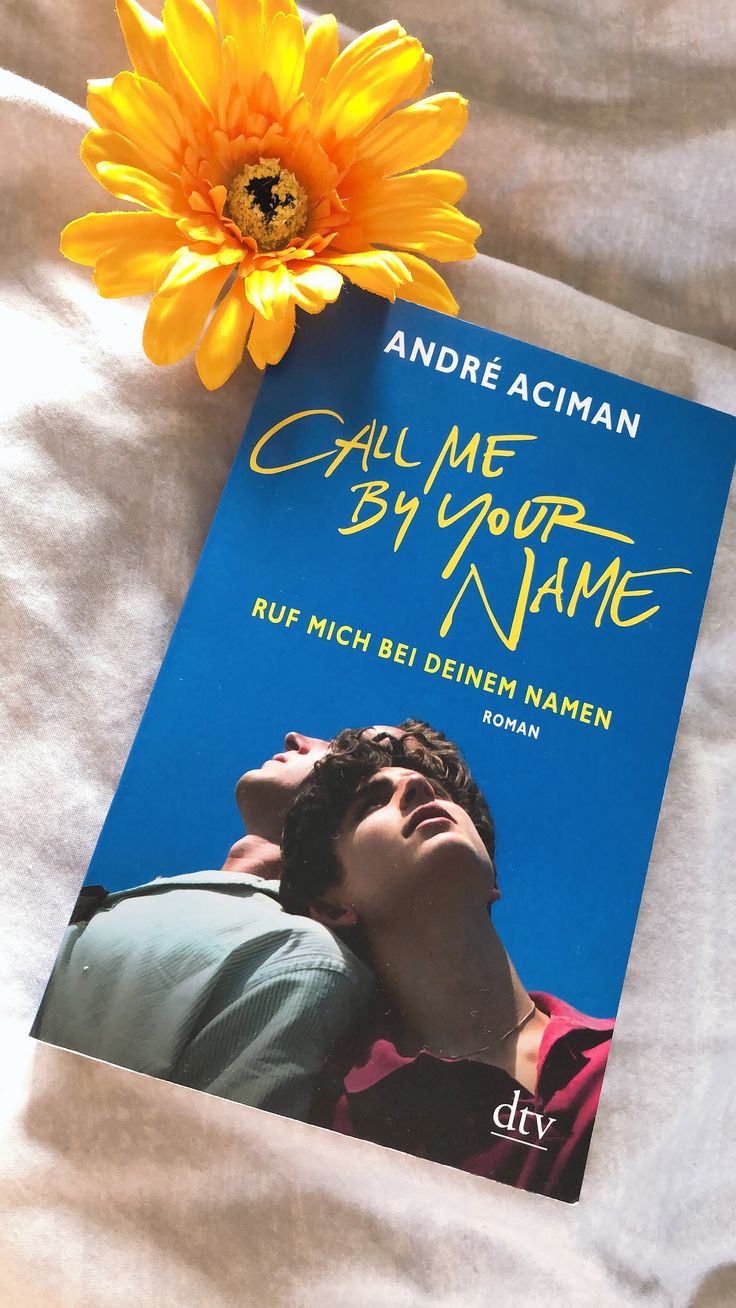
    Call Me By Your Name: The Book Review

    Call Me By Your Name, Cinematic Adaptation

    Introduction

    Call Me By Your Name is a book that throbs with desire. André Aciman’s 2007 novel (and the basis for the film of the same franchise in 2017) is a portrait of adolescent love and lust, experienced for the first time with an intensity that’s almost frightening in how all-consuming it feels. And Aciman devotes himself to chronicling every fleeting fantasy, every caress, with a fervour that matches what his characters are feeling.

    About The Author

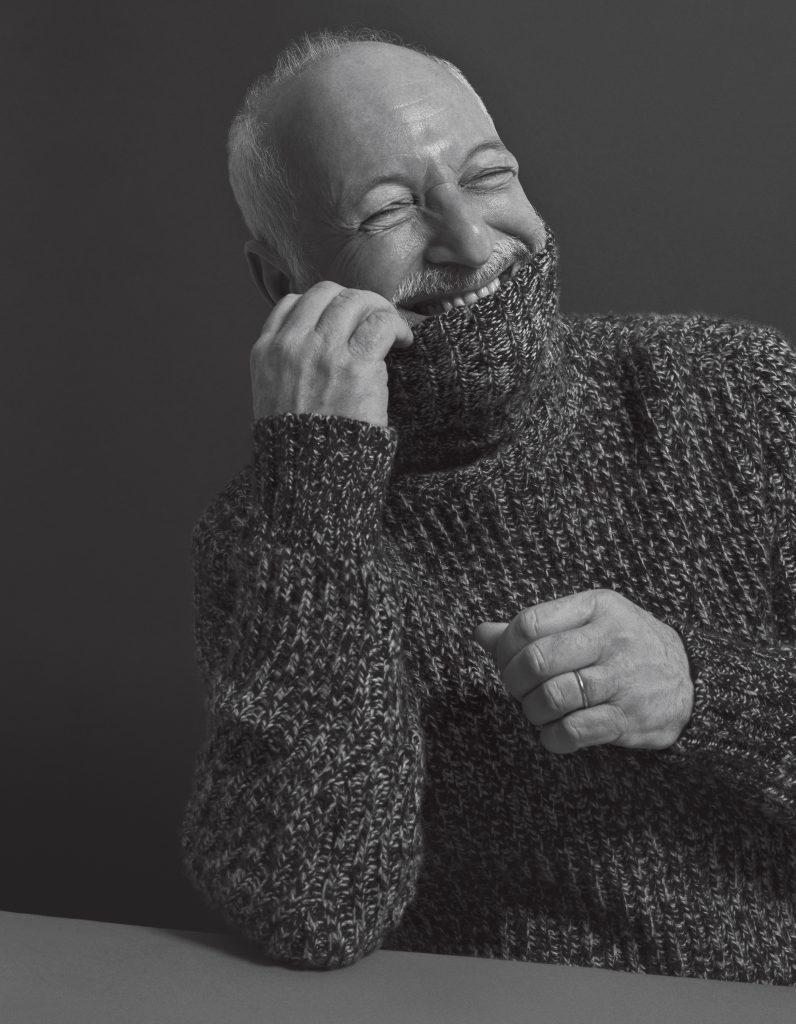
    André Aciman is an Italian-American writer. Born and raised in Alexandria,Egypt, he is currently distinguished professor at the Graduate Center of City University of NewYork, where he teaches the history of literary theory  and the works of Marcel  Proust.

    He is the author of several novels, including Call Me By Your Name and a 1995 memoir, Out of Egypt, which won a Whiting Award.  Although best known for Call Me by Your Name, Aciman stated in an interview in 2019 that his best book is the novel Eight White Nights.

    André Aciman

    Storyline of The Novel

    It tells the story of a blooming romance between 17-year-old Elio Perlman, and 24-year-old visiting scholar Oliver, who comes to the summer home of Elio’s parents in Italy, 1983.

    The story is told in retrospect, with grown-up Elio recalling the events of that fateful summer. He always resented his parents’ tradition of taking a doctorate student into their home for six weeks each year, forcing him to vacate his bedroom (that sacred space of a teenage boy) to make room for their guest. That all changed when Oliver, a Harvard graduate student comes to stay with the academic expat family in the Italian Riviera, where he will oversee the translation of his dissertation on Heraclitus. As he wins the family over with his breezy charm and preppy insouciance, Oliver also inspires the adoration of the professor’s teenage son, Elio, who relays to us each stage of his infatuation.

    Elio catalogues every aspect of Oliver—his gazes, his phrases—and even augurs meaning from his clothing: “He had, it took me a while to realize, four personalities depending on which bathing suit he was wearing.” Elio, in turn, dazzles Oliver with his precocity—he’s a virtuoso on piano and on an enviously easy footing with literature from Ovid to Celan. But he is unsure and untested in carnal matters. His desire for Oliver literally false-starts when he accidentally (and discreetly) ejaculates in his presence (the scene recalls Marcel’s embarrassing tussle with Gilberte). But when Oliver starts sleeping with a local girl, it seems that Elio’s fantasies of consummation will never be realized. He muses about killing, or at least crippling, Oliver: “If he were in a wheelchair, I would always know where he was, and he’d be easy to find.”

    But then, just as Elio has given up hope, it happens: He slips into Oliver’s room one night and so begins their five-week love affair. They have adventurous, almost incessant sex, during which, at Oliver’s prompting, they call each other by the other’s name. As a strategy for subsuming the other’s self, this verbal masquerade is strikingly successful. At first shameful for Elio, their passion quickly becomes all-consuming. The lovers revel in their sameness—they are both young Jews, “brothers in the desert”; they experience the same sexual pains and pleasures; their minds travel along the same currents to catch the right literary references.

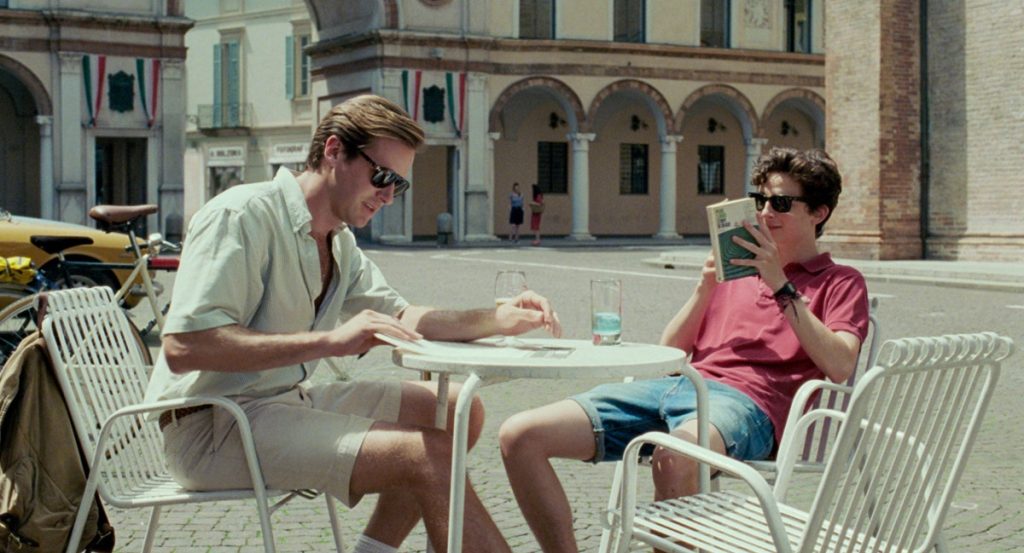
    Timotheé Chalamet as Elio Perlman and Armie Hammer as Oliver, in Call Me By Your Name (2017)

    Analysis of The Story

    Call Me by Your Name is the story of a sudden and powerful romance that blossoms between an adolescent boy and a summer guest at his parents’ cliff-side mansion on the Italian Riviera. Unprepared for the consequences of their attraction, at first each feigns indifference. But during the restless summer weeks that follow, unrelenting buried currents of obsession and fear, fascination and desire, intensify their passion as they test the charged ground between them. What grows from the depths of their spirits is a romance of scarcely six weeks’ duration and an experience that marks them for a lifetime. For what the two discover on the Riviera and during a sultry evening in Rome is the one thing both already fear they may never truly find again: total intimacy.

    The psychological manoeuvres that accompany attraction have seldom been more shrewdly captured than in André Aciman’s frank, unsentimental, heartrending elegy to human passion. Call Me by Your Name is clear-eyed, bare-knuckled, and ultimately unforgettable.

    Timotheé Chalamet as Elio Perlman

    Criticism of The Story

    Despite the fact that it’s a coming-of-age story, Call Me By Your Name is hardly a young adult book. For one, it’s quite erotic, albeit in a highly literary way. All of the sexual encounters (including one truly smutty incident with a peach) are depicted in detail, but not to titillate. It feels more like Aciman is simply demonstrating the depth and desperation of Elio and Oliver’s desire.

    Call Me by Your Name ends with a series of unsatisfactory but still charged meetings between Elio and Oliver later in life. They have a rendezvous in New England, where Elio is traveling and where Oliver teaches and lives with his family. The novel, despite its melancholy send-off, ultimately holds out an extremely un-Proustian, optimistic promise: Love and understanding can endure hand in hand. Elio can still say of Oliver, “This was my favourite Oliver: the one who thought exactly like me.” Twenty years later, when they return to one of their cherished spots in Italy, Elio asks only to be called once more by the name Oliver—as if to imply that nothing has changed. For Proust, such naming is inevitably fraught with failure (Marcel at one point wishes he could give a different name to each of the Albertines he knows). The notion that the past could ever obey such a summons, that anyone could ever be so static, suggests that Elio has breached, but finally resisted, Proustian knowledge. This shying away leaves us with something less than we might have expected from Aciman’s previous reckonings with time.

    Scene from the Movie Call Me By Your Name

    Conclusion

    Even with all the critical analysis, the storyline wins millions of hearts with the sweet message of love, that can happen to anyone under any circumstance. The story broke some stereotypes about how the meaning of Love is mostly depicted in society. It normalizes the simplicity, the beauty and the agony of love between two men, in a never seen before way. And that makes the book an ultimate winner for its modern day readers.

    PANCHAYAT – A REVIEW

    The 2020 comedy – drama, Hindi web series Panchayat is a social commentary on the prevailing system in most part of rural India. As the title, the plot revolves around a Pnnchayat office in a remote village called Phulera. Abhishek Tripathi is a fresh engineering graduate who didn’t got placement in his final year. As he got this job opportunity as the panchayat secretary, he decides to give an attempt, as there are no other options left after his graduation. The series opens with his arrival at Phulera and meets former village Sarpanch who is the husband of current village Sarpanch, the deputy sarpanch and his assistant. Through a series of funny episodes, the director shows the present condition of the panchayat office, the people and the ruling system. Jitendra is working to crack CAT so that he can switch his job. The first season of Panchayt consists of eight episodes named “Gram Panchayat Phulera”, “Bhootha ped”, “Chakke wali Kursi”, “Hamara Neta Kaisa Ho?”, “Computer Nahi Monitor”, “Bahot Hua Samman”, “Ladka Tez Hai Lekin”, and “Jab Jago Tabhi Seva”. Each episodes carry sarcastic portrayal of the Panchayat, such as the issue of solar plantation and the revolving chair. Sarpanch feels diminished in the eyes of villageres, because of not possessing a revolving chair like that of the secretary. A poorly phrased slogan for the family planning leads to a chain of events later.

    The script, actors, characters and situations are well connected. The system of village politics, the low level corruption, simple lifestyle, the role of women in politics, kindheartedness of villagers are presented in a realistic manner. The present woman Panchayat secretary is the perfect example for the role of women in Indian politics. Even though she is a representative , as part of women reservation, the power is still in the hands of her husband. The performance of Jitendra Kumar, Neena Gupta, Raghubir Yadav and other artists made the series more realistic and gained many critical acclamation.

    ALICE IN WONDERLAND FILM REVIEW.

    What will be your response if your dreams become your reality? Wouldn’t you be delighted to live your alternate reality! What it’s a goofy fantasy? Let me take you all in the world of fantasy; Alice in Wonderland is a movie directed by Tim Burton, is a 3-D blend of live action and animation of Lewis Carroll novel Alice in Wonderland.

    SYNOPSIS

    The story starts with a girl named Alice who has a reoccurring dreams since her childhood. She has turned 19 year old mourning over the death of her father. She is attending a garden party at Lord Ascot’s estate, she is confronted into an unwanted marriage relation with Ascot’s son. Taking some time to take a decision she in haste follows a rabbit to a rabbit hole under a tree, unintentionally falling into it. The story takes a drastic turn by that incident and opens a portal to her recurring dream world from where she begins her journey to the Wonderland and also finding her true self. On her journey she meets the different characters of wonderland ; the Caterpillar (played by Alan Rickman), Mad Hatter (played by Johnny Depp), White Rabbit (played by Michael Sheen), Red Queen (played by Helena Bonham Carter), White Queen (played by Anne Hathaway) and many more. The destiny unfolds the secret of her presence in Wonderland. She was brought her to fulfill the pronounced Oracle. This adventure helps Alice to overcome her fears, insecurities and emerge as victorious. The adventure helps Alice to realise her potential and follow her own will and doesn’t get lost in the society rituals or let them decide your potential and future.

    Overall the movie is pretty good, it’s a bit intense and scary at times for younger children who could not understand the film depictions just because of the scary secens. As it’s the Lewis Carroll bizzare imagination not many can match that level of fantasy creativity. The cast was great, everyone perfectly fits into their allotted characters. Their costumes, the makeup, the dialogue delivery everything was perfectly done. My personal favourite would definitely be The Red Queen I feel her presence on screen always keep’s the audience jolly and entertained. Her carzy acting her weird dressing sense everything just speaks confidence it just creates a feeling of nostalgia. I love everything about her in my opinion well sorry on advance for being baised! I feel the cinematography was substantial thr visual effects makes a person experience the scenes. According to me the story unfolds quite briskly. The direction was great but the writer could have added more parts of the actual novel, the film can be more descriptive. But what can we say after all it’s Tim Burton film who is unique in his work. So it’s a must watch movie .

    Mini Movie Review|It touched the hearts but not the brains

    A character played by Kirti Sanon personifies surrogacy through Mimi who was aspired to chase her dreams but couldn’t fulfill it.

    Nothing like you are expecting!!

    Cast: Kirti Sanon, Pakaj Tripathi, Sai Tamhankar, Supriya Pathak, Manoj Pahwa

    Director: Laxman Utekar

    In a patriarchal society like India, women have always been under the umbrella of the community. It’s barely seen in the families who support a girl’s dream and accept her to be a dancer.

    The movie begins with the introduction of a foreign couple who came to India in the search of a surrogate. After long hours of work, they were finally able to find a girl with the help of the driver (a role played by Pankaj Tripathi) in a hotel. Mimi(the girl) was a dancer and getting influenced by its flexibility they decided to offer her 20 lakhs to be the surrogate. Being an ambitious 25-year old woman agrees to take the risk for the same of becoming a famous Bollywood actress. She decides to live at her friend’s house by convincing the parents saying, she is going to a film shoot. With the required procedure, Mimi becomes the surrogate, and for the first four months, she was having a good time with the pregnancy. However, after eight months tests revealed that the baby is suffering from some mental disorder. This news outraged the couple and they decided not to accept the baby after birth and told Mimi to abort. This became the turning point in her life. She sacrificed all her dreams by deciding to give birth to the child and raise him. Later, the couple returned to her after 2 years when they came to know that the baby was born healthy. Mimi refused to give the child back and in the end, they decided to adopt a girl.

    Message

    • A girl is also born with a dream and her character is not decided with what she pursues but what she is.
    • The support of family is crucial in the darkest times. Mimi faced all the criticisms from society but her parents never let her alone and accepted her as she was.
    • Killing is not an option. It’s not the fault of a child to be born unhealthy.
    • One loyal friend is more important than a group of unloyal ones. The driver and the friend were with Mimi till the end, helping her go through all the difficulties with a smile.

    Every coin has two sides. Even though the movie won the hearts of the audience, it faced several criticisms like not following the laws related to a sensitive topic of surrogacy, using the term casually, and disrespect towards the decision of abortions.

    It played with the emotions well, yet failed to manipulate the thoughts.

    Rich dad poor dad : review

    Book Review


    Name of the Book: Rich Dad Poor Dad
    Name of the Author: Robert Kiyosaki
    Publisher: Plata Publishing; Second edition (11 April 2017)
    Language: English
    Originally published: 1997
    Pages: 336
    Genres: Personal finance, Economics, Non-fiction

    About Robert Kiyosaki
    Robert Kiyosaki is an American businessman who founded Rich Global LLC and the Rich Dad Company. The latter focuses on private financial education through the mediums of books, videos, and speeches. He is also the author of over 26 books, including this book.
    Introduction
    Rich Dad Poor Dad has been called the number one personal finance book of all time. Robert Kiyosaki illustrates the mindsets and beliefs that define those who become wealthy. He contrasts these mindsets with those who are poor. In this book, Robert’s example of a poor man was his dad, while the rich man was Robert’s financial mentor. Robert’s father was a genius, while his mentor didn’t even finish eighth grade. The only meaningful difference was their mindset.
    Summary
    Education & two perspective
    In this book Kiyosaki believes that an individuals attitude towards money and their tendency to be richer or poorer can be traced back to the education they receive at home. Parents are responsible for teaching the fundamentals of finances as it’s not something that schools focus on. Kiyosaki explains that this education at home is the driver behind the rich getting richer, the poor getting poorer and the middle class continues to struggle with constant debt. He believes that the considerable debt that countries face is a result of politicians and government officials having very little education on money, yet being in a position of power.
    Robert Kiyosaki emphasizes six key points through out the book. These points — which differentiate between his “poor” dad (his real dad) and the “rich” dad that helped him understand business and become wealthy — are:
    The rich don’t work for money
    The importance of financial literacy
    Minding your own business
    Taxes and corporations
    The rich invent money
    The need to work to learn and not to work for money
    Good Points in this Book
    Flawed Educational System
    As Robert mentions many times in the book, our traditional educational system is flawed. Our education system is designed primarily to create employees and could be a negative influence for an entrepreneur. As Kiyosaki mentions, he’s not suggesting that people skip higher education; he’s suggesting higher education does not assist with “street smarts.” Financial literacy is something that is rarely discussed in school, and if it is discussed, it is only at basic levels. Based upon my personal background, I’ve made this a personal focus and will make sure my children are well educated in this subject.
    Strong Points:
    The original idea of the book Rich Dad,Poor Dad, and also the extremely effective presentation of educational financial concepts are not as simple as they seem.
    An incredibly motivating book inspired by the personal experience of the author, who is himself a millionaire,
    Weak Points:
    A certain lack of detail in some areas mentioned by the author is regrettable.
    As he says himself, his books are motivational tools, not books by a financial expert.
    Why I chose this book
    This book teaches us many important lessons which apply in our daily life. In this book Robert describes how you can get started in your journey towards financial education and wealth which was not included in any bookbook in easy language.
    My Learning from this book
    I learned many important things from this book that is:

    • Choose your friends carefully: Don’t choose your friends based on how much money they have. That said, you should be careful about being around cynics or people who don’t like talking about money. They will rub off on you. Do your best to learn from people who support you, teach you, and make you a better person.
    • Pay yourself first: If you don’t do this, you’ll find nothing left to pay yourself. This is an essential shift in mentality.
    • Assets buy luxuries: Don’t buy a luxury until you have created an asset that pays for it.
    • Teach, and you shall receive: The more you teach people, the more you will learn.
    • Look for new ideas: Read books on different subjects and learn from them.
    • Be willing to learn: Learn every skill you can. Never assume you are already knowledgeable enough on a topic.
    • Learn from history: Study successful people from the past and emulate them.
    • Action always beats inaction: If you are not sure what to do, you should just do it. Imperfect action is better than perfect inaction
    • Conclusion- Rich Dad, Poor Dad is an extraordinary book, in the literal sense. I cannot fully express how much this book transformed my vision of money and most especially my perception of wealth. Before I read this book part of me was convinced that all “rich people” were born that way. That you needed to have money to get rich and that the only solution was to join the rat race, although that is not what I called it at the time. Nowadays, I am firmly convinced that you can learn how to become rich and that financial freedom is a realistic goal if you move towards it methodically and patiently.
    • The poor and the middle class work for money. The rich have money work for them.Fear is what keeps people in jobs that they don’t enjoy. Assets and liabilities are different. Assets generate money whereas liabilities suck up your money.A rich man’s perspective is that your income is a direct result of your assets, not your job. Therefore you need to commit to investing in the right assets.
      In order to be rich, you need to have a decent financial IQ. This is made up of considerable knowledge in accounting, investing, understanding markets, and the law. Rich people “groom” their children so that they can have a complete understanding of business operations and how the family manage their finances. Management skills that should be taught include managing cash flow, managing systems and managing other people.
      Reference
      Rich Dad Poor Dad Book by Robert Kiyosaki

    OnePlus launched Nord 2 5G in India, details here…


    OnePlus launched Nord 2 5G in India. It has been almost a year since the launch of the OnePlus Nord. Though OnePlus has brought major changes in the new Nord 2 5G like, it is the first OnePlus device to support MediaTek’s Dimensity Chipset rather than Qualcomm chipset. 

    The device has been priced at Rs. 27,999 for the basic variant, which comes with 6GB of RAM and 128GB. Additionally, two more variants come with 8GB/12GB of ram with 128GB and 256GB storage, respectively. The device will be available in 3 colors namely; Blue Haze, Gray Sierra, and Green Woods. The Green Woods color will be available exclusively in India. 

    The phone will go on sale from the 28th of July via Amazon, the OnePlus online store, and via offline stores. Also, for early access, a buyer can get the device on the 26th of July if they have membership of Red Club and Prime membership via the OnePlus online store and Amazon Prime Day sale, respectively.

    The OnePlus Nord 2 5G comes with a 6.43-inch Full HD Amoled display with 90Hz refresh rate. It comes with MediaTek Dimensity 1200 AI Chipset. Also, it comes with dual 5G SIM slots. Also, OnePlus promised to give major Android updates for 2 years and security updates for 3 years. The device comes with a 4,500 mAH battery which supports 65W VOOC charging. Regarding the battery, OnePlus claims that the device will provide a backup of one day by just charging it for 15 minutes. 

    Talking about the cameras, the phone comes with a triple camera setup; a 50-megapixel primary lens, an ultra-wide 8-megapixel lens, a 2-megapixel mono lens. The front-facing camera comes with a punch-hole design which houses a 32-megapixel lens.

    Though OnePlus has always been a promising company, it is yet to be seen what the new Nord 2 5G can do. 

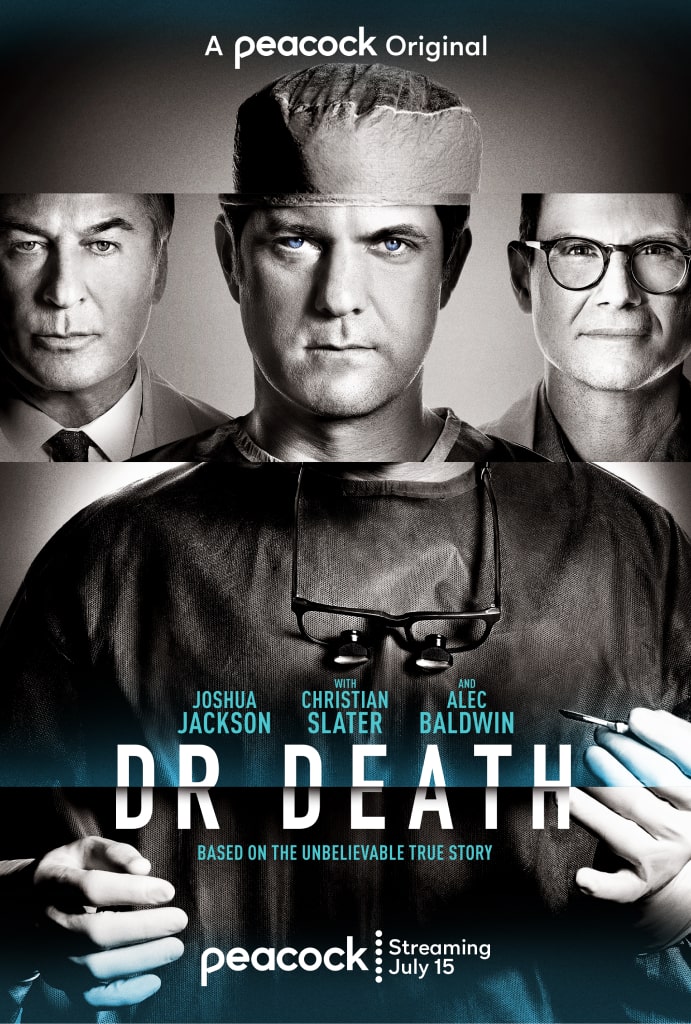
    Dr. Death (2021)|Review| A completely chilling series

    Who is Dr. Death? How did he come to be? How did he continue practicing medicine despite hurting a terrifying number of patients? This series unfolded politics with an operating room, hospitals, and law.

    A real-life story about a doctor who maimed and killed his patient relentlessly and without guilt.

    Plot:

    The story revolves around Christopher Duntsch, a former neurosurgeon who “Intentionally” maimed and even killed his patients. His two fellow colleagues and a prosecutor Michelle Shughart’s journey to stop him and bring justice. The drama miniseries is based on the podcast(by Wondery), with the same name, which covered his heinous crime.

    Release date: 15 July 2021

    No. of episodes: 8

    Network: Peacock

    Genre: True Crime

    Writer(s): Patrick Macmanus

    Executive producers: Jason Blumthal, Marshall Lewy, Steve tisch and more.

    Running time: 43-60 minutes.

    Let’s start with introduction of characters and their stories!

    Christopher Duntsch aka DR. Death or Dr. D.

    From the start, it is very obvious that he is a very obnoxious, extremely narcissist with God complex ( someone who thinks they has been divinely blessed or has an exceptional talent compared to everyone else, that they can perform risks to save someone’s life because they can’t make mistakes. Even if they do make mistakes they can either miraculously correct them or it is the fault of people around them which they then discard to take action upon) and who is in denial of his abilities.

    “I don’t have complications”, “The attending interrupted which distracted me”, “I can leave kindness and become a stone-cold killer, and the way he slammed every doctor’s procedure to prove his way of surgery screams an insane amount of sociopath vibes and terrifying negligence. These were some of the red flags

    He has said to have performed 37 surgeries, out of which 33 have intense complications and some dead. A neurosurgeon who brags about educational accomplishment all the time, doesn’t accept the existence of human error

    Roles Portrayed:

    Each and every actor portrayed their roles excellently. You could feel their irritation and anger radiating through the screens. Patient’s nervousness, excitement, desperation makes you imagine yourself to be in their or their loved one’s situation. The nonchalance of Duntsch ( By Joshua Jackson), his ability to use charm and threats to remain a doctor and get selected in other hospitals infuriates you to the bone. Dr. Robert Henderson’s (Alex Baldwin) immeasurable patience and Dr. Randall Kirby’s (Christian Slater)relatable impatience and anger take you on a rollercoaster ride.

    Review:

    The show starts with his patients at Dallas Medical. 3 days, 3 patients. One dead, one woken with extreme pain and no mobility in legs, and one is said to be recovering.  Dr. Robert Henderson had to perform a revision surgery on Madeleine Beyer, who woke up with extreme pain. During surgery he found out that there were many holes which were from the attempted attachment of screws, her fragments of bone dispersed and piercing main nerves. He wonders what did Duntsch do to her since her bones were completely shattered.

    Through his course in Dallas, his circulating nurse, Josh Baker(Hobert Point-Du) consults and preps his OR. He is concerned about Duntsch as well as his patients. He questions and tries to protect patients. You get to see how nurses and everyone else except the doctor is treated with so little respect. Their voice of concern went not only unheard but also was looked upon as an interruption. Although one can understand that surgery is complex and doubts by people around us is effective, but in this scenario, the patients lost around 1700-2000 CC’s of blood and the nurses decided to voice their opinion. How can this be disregarded and the voices getting unheard? How can continuing to operate while a patient is hemorrhaging be ignored when these issues were brought to the Texas Medical Board? How is aggressively asking for a procedure like a craniotomy in a hospital where craniotomy is not performed (SO, they won’t have any instruments to do that and to counteract if it goes wrong isn’t there) okay when the situation could have been handled by simply transferring the patient to another hospital? It clearly shows that his intent was either to cover up his harm and to show doctorly care by performing a procedure

    While writing the plot, I preferred to choose “Intentionally” since trained doesn’t just mean only that a superior/ attending is responsible for imparting knowledge. The learner/ resident has the equal responsibility to learn and practice what they have been taught. It also means that an attending, as well as a resident themselves, recognize what are they capable of and what are their limitations since it is someone’s life we are talking about. Just like Kayla Gibson said, he should have stuck to research.

    Intentionally, because it is no wonder he knew he doesn’t know how to operate and yet he went on to shut everyone off and to continue operating the way he thought was right, i.e. recklessly treating his patients as mere Guinea pigs with little to no regard to human anatomy.

    The series had me completely hooked till the end. Waiting for someone to listen to them, wanting to help them even it took place long back, feeling for each character since they seemed so genuine. I hated Duntsch and how calmly he dealt with everything. I hated how he easily went up the food chain and be unscathed. Joshua’s acting got me for real.

    Well, let’s look at it objectively. Before, During and After. ( Spoilers ahead, if you haven’t seen the series completely)

    He “compassionately” tells his patient about how not getting done a surgery could lead to what-nots, boats about degrees to nervous family members, wears the same scrubs with holes to operations. Then, during surgery, he erratically operates, slices through a vertebral artery takes a piece out of the esophagus, damaged vocal cords, intends to remove a disc but in the end, doesn’t even go near it, and perform surgery around the disc. Keeps asking for more follow-up to perform surgeries. But, would never check up on a patient, ignore their calls, and completely abandon them. He even operates on his best friend leaving him quadriplegia, blames others, and abandons him.

    Dr. Kirby and his childlike behavior gets me since that’s how most of us would feel in the moment. The face of disbelief he carried all the way is remarkable.

    To imagine that he would be still practicing medicine if his colleagues hadn’t reported and taken every measure to stop him, it is truly horrifying to imagine how many more lives he would have destroyed.

    Note:

    I applaud each and everyone who took a step against him and try to mend the system which is so broken. This series was so well made. The storyline was continuous, his behavioral relation between present and past, coldness, and the lives he affected out of surgery world; everything was so well thought and executed.

    Seeing the series, might help you understand the world of surgery.

    Although, the negativity of Dr. D is the main focus, we can always believe that there good doctors out there and we can ourselves support good ones and protect ourselves from Dr. D by asking questions regarding procedures and not being afraid to listen to our hesitation. Don’t let people like Duntsch affect other doctors whose only intention to save lives and help people. Do not get discouraged to reach out to medical care and do everything in our power to treat ourselves and our loved ones. Just remember to ask, have an open mind to all kinds of people, and be mentally prepped to go for treatments.

    LEARNING LESSONS FROM THE BOOK : THE PSYCHOLOGY OF MONEY

    1. Use money to gain control over time, because the ability to do what you want, when you want, with whom you want , for as long as you want to, pays the highest dividend that exists in finance.

    2. Wealth is what you don’t see, its hidden, it is the oncome that you have not spent and that is the fastest way to be wealthy, not spending the money you have and doing its opposite will never make you wealthy.

    3. Wealth is just the accumulated leftovers after you spend what you take in. And since you can build wealth without a high income, but have no chance of building wealth without a high savings rate, its clear which one matters more.

    4. Do not aim to be coldly rational( by looking at the spreadsheet) when making financial decisions. Aim to just be pretty reasonable. Reasonable is more realistic and you have a better chance of sticking with it for the long run.

    5. Like everything else worthwhile, successful investing demands a price. But its currency is volatility, fear, doubt, uncertainity, and regret and you have to view them as fees( a price worth paying to get something nice in exchange).