Implementation of New Education Policy

 A number of action points/activities for implementation in school education as well as higher education are mentioned in the National Education Policy 2020 which inter-alia include following:-

  1. Ensuring Universal Access at All Levels of schooling from pre-primary school to Grade 12;
  2. Ensuring quality early childhood care and education for all children between 3-6 years;
  3. Introducing New Curricular and Pedagogical Structure (5+3+3+4);
  4. Ensuring no hard separations between arts and sciences, between curricular and extra-curricular activities, between vocational and academic streams;
  5. Establishing National Mission on Foundational Literacy and Numeracy;
  6. Emphasis on promoting multilingualism and Indian languages; The medium of instruction until at least Grade 5, but preferably till Grade 8 and beyond, will be the home language/mother tongue/local language/regional language.
  7. Assessment reforms – Introducing Board Exams on up to two occasions during any given school year, one main examination and one for improvement, if desired;
  8. Setting up of a new National Assessment Centre, PARAKH (Performance Assessment, Review, and Analysis of Knowledge for Holistic Development);
  9. Equitable and inclusive education – Ensuring special emphasis to be given on Socially and Economically Disadvantaged Groups(SEDGs);
  10. Establishing a separate Gender Inclusion fund and Special Education Zones for disadvantaged regions and groups;
  11. Robust and transparent processes for recruitment of teachers and merit based performance;
  12. Ensuring availability of all resources through school complexes and clusters;
  13. Setting up of State School Standards Authority (SSSA);
  14. Providing Exposure of vocational education  in school and higher education system;
  15. Increasing GER in higher education to 50%;
  16. Introducing Holistic Multidisciplinary Education with multiple entry/exit options;
  17. Introducing Common Entrance Exam for Admission to HEIs to be offered by NTA;
  18. Establishment of Academic Bank of Credit;
  19. Setting up of Multidisciplinary Education and Research Universities(MERUs);
  20. Setting up of National Research Foundation(NRF);
  21. Framing ‘Light but Tight’ regulation;
  22. Setting up of single overarching umbrella body for promotion of higher education sector including teacher education and excluding medical and legal education- the Higher Education Commission of India (HECI)-with independent bodies for standard setting- the General Education Council; funding-Higher Education Grants Council (HEGC); accreditation- National Accreditation Council (NAC); and regulation- National Higher Education Regulatory Council (NHERC);
  23. Expansion of open and distance learning to increase GER.
  24. Internationalization of Education.
  25. Professional Education will be an integral part of the higher education system. Stand-alone technical universities, health science universities, legal and agricultural universities, or institutions in these or other fields, will aim to become multi-disciplinary institutions.
  26. Teacher Education – Introduction of 4-year integrated stage-specific, subject- specific Bachelor of Education.
  27. Establishing a National Mission for Mentoring.
  28.  Creation of an autonomous body, the National Educational Technology Forum (NETF) to provide a platform for the free exchange of ideas on the use of technology to enhance learning, assessment, planning, administration. Appropriate integration of technology into all levels of education.
  29. Achieving 100% youth and adult literacy.
  30. Introducing multiple mechanisms with checks and balances to combat and stop the commercialization of higher education.
  31. All education institutions will be held to similar standards of audit and disclosure as a ‘not for profit’ entity.
  32. The Centre and the States will work together to increase the public investment in Education sector to reach 6% of GDP at the earliest.
  33.  Strengthening of the Central Advisory Board of Education to ensure coordination to bring overall focus on quality education.
  34.  Ministry of Education: In order to bring the focus back on education and learning, it may be desirable to re-designate MHRD as the Ministry of Education (MoE).

A detailed consultation process with various stakeholders including educationists have been held before and after announcement of National Education Policy 2020. Suggestions have been invited from States / UTs Government and also from other stakeholders through MyGov platform. Department of School Education & Literacy has constituted subject-wise/theme-wise implementation committees of experts for implementation of National Education Policy 2020. Similarly, UGC and AICTE have also constituted Expert Groups on various themes of higher education sector for formulation of Implementation Plan of National Education Policy.

As per National Education Policy 2020, implementation of the Policy requires multiple initiatives and actions, which will have to be taken by multiple bodies in a synchronized and systematic manner. Therefore, the implementation of this Policy will be led by various bodies including Ministry of Education, CABE, Union and State Governments, education-related Ministries, State Departments of Education, Boards, NTA, the regulatory bodies of school and higher education, NCERT, SCERTs, schools, and HEIs. Since Education is in the concurrent list of Constitution of India, hence, State/UT Government will play a vital role in the implementation of the National Education Policy. Ministry of Education has communicated to all States/UT Governments for taking steps for implementation of NEP 2020. In this direction, Ministry of Education had organised ‘Shikshak Parv’ from 8th September to 25th September, 2020 to deliberate on various themes and implementation of NEP 2020 aimed at eliciting suggestions. Ministry had also organised a Conference of Governors on “Role of National Education Policy in Transforming Higher Education”. In the conference, Governors and Lt. Governors of State and Union Territories, Education Minister of State and UTs, Vice Chancellors of State Universities and other dignitaries participated. Majority of states have taken steps toward implementation of NEP 2020. Further, Ministry and other implementing agencies under its purview have started taking initiatives towards implementation of NEP 2020.

How to review your year?

Reviewing Your Year

It is a healthy activity to reflect on the time gone by, objectively, before making plans for the year ahead. However, most of us are moving towards one of the two extremes:

  • Self-ridicule or lamenting the stuff we didn’t do or did wrong.
  • Self-congratulation of patting oneself on the back for all the great stuff we did, while ignoring the mistakes.
Reviewing The Year: Achievement And Effort

While reflecting on the past, we normally look at our achievements and appreciate what we have been successful at.
Despite our best efforts, we sometimes do not get success due to other factors like luck, timing etc. The right approach is to learn from the experiences and to appreciate one’s effort.
Example: Going for various interviews that didn’t go well wasted a lot of our time, energy, effort and resources, but we still have to appreciate our effort and what all we learned from the rejections.

Reviewing The Year: Self-Change

If we learned and changed during the past year/decade, we are on the path towards growth, even though it may not be visible or tangible as of now.
Personal growth means your experiments are paying results. The troubling thing would be to remain completely unchanged, as stagnancy is a cause for concern.

Reviewing The Year: The Boss-Like Evaluation

It’s a great idea to have an objective assessment for one’s achievements and efforts, reviewing them like a supportive boss would do while providing an appraisal.
To maintain an ideal balance, give yourself constructive feedback (25 per cent) and appreciate the hard work and achieved goals (75 per cent).

“Follow effective action with quiet reflection. From the quiet reflection will come even more effective action.” – Peter Drucker

Reviewing The Year: Understand What Worked

Sometimes the reason for your success is the failure you endured. The good night’s sleep that helped you shine the next day for the interview, is an important aspect of success.
Most of the time it is our self-care and other unidentified reasons that become a cause for our eventual success, and one needs to think holistically while reflecting to find the hidden reasons.

reference

https://www.forbes.com/sites/sophiamatveeva/2019/12/24/how-to-review-your-year/?sh=28c36ae4140a

Samagra Shiksha Scheme for School Education

 The Cabinet Committee on Economic Affairs, chaired by Prime Minister Shri Narendra Modi, has given its approval for continuation of the revised Samagra Shiksha Scheme for a period of five years i.e., from 2021-22 to 2025-26 with a total financial outlay of Rs.2,94,283.04 crore which includes Central share of Rs.1,85,398.32 crore.

Benefits:

The scheme covers 1.16 million schools, over 156 million students and 5.7 million Teachers of Govt. and Aided schools (from pre-primary to senior secondary level).

Details:

The Samagra Shiksha scheme is an integrated scheme for school education covering the entire gamut from pre-school to class XII. The scheme treats school education as a continuum and is in accordance with Sustainable Development Goal for Education (SDG-4). The scheme not only provides support for the implementation of the RTE Act but has also been aligned with the recommendations of NEP 2020 to ensure that all children have access to quality education with an equitable and inclusive classroom environment which should take care of their diverse background, multilingual needs, different academic abilities and make them active participants in the learning process.

The major interventions, across all levels of school education, proposed under the scheme are: (i) Universal Access including Infrastructure Development and Retention; (ii) Foundational Literacy and Numeracy, (iii) Gender and Equity; (iv) Inclusive Education; (v) Quality and Innovation; (vi) Financial support for Teacher Salary; (vii) Digital initiatives; (viii) RTE Entitlements including uniforms, textbooks etc.; (ix) Support for ECCE; (x) Vocational Education; (xi) Sports and Physical Education; (xii) Strengthening of Teacher Education and Training; (xiii) Monitoring; (xiv) Programme Management; and (xv) National Component.

Following new interventions have been incorporated in the revamped Samagra Shiksha based on the recommendations of the National Education Policy 2020:

  • In order to enhance the direct outreach of the scheme, all child centric interventions will be provided directly to the students through DBT mode on an IT based platform over a period of time.
  • The scheme will have an effective convergence architecture with various Ministries/ developmental agencies of the Centre and State Governments. The expansion of vocational education will be done in convergence with the Ministry of Skill Development and Entrepreneurship and other Ministries providing funding for Skills. The existing infrastructure of schools and ITIs and Polytechnics will be used to ensure optimum utilization of the facilities, not only for school going children but also for out of school children.
  • Provision of training of Master Trainers for training of Anganwadi workers and In-service teacher training for ECCE teachers.
  • Provision of upto Rs 500 per child for Teaching Learning Materials (TLM), indigenous toys and games, play based activities per annum for pre-primary sections in Government Schools.
  • NIPUN Bharat, a National Mission on Foundational Literacy and Numeracy to ensure that every child achieves the desired learning competencies in reading, writing and numeracy at the end of grade III and not later than grade V has been launched under the scheme with provision of TLM upto Rs 500 per child per annum, Rs 150 per teacher for teacher manuals and resources, Rs 10-20 lakh per district for assessment.
  • Specific   training   modules   under   NISHTHA  by NCERT to train Secondary teachers and Primary teachers.
  • Strengthening of infrastructure of schools from pre-primary to senior secondary, earlier pre-primary was excluded.
  • Incinerator and sanitary pad vending machines in all girls’ hostels.
  • Addition of new subjects instead of Stream in existing senior secondary schools.
  • Transport facility has been extended to secondary level @ upto Rs 6000 per annum.
  • For out of school children at 16 to 19 years of age, support will be provided to SC, ST, disabled children, upto Rs 2000 per child per grade to complete their secondary/senior secondary levels through NIOS/SOS.
  • Financial support for State Commission for Protection of Child Rights @ Rs 50 per elementary school in the state, for protection of child rights and safety.
  • Holistic, 360-degree, multi-dimensional report showing progress/ uniqueness of each learner in the cognitive, affective, and psychomotor domains will be introduced in the form of Holistic Progress Card (HPC).
  • Support for activities of PARAKH, a national assessment centre (Performance, Assessments, Review and Analysis of Knowledge for Holistic Development)
  • Additional Sports grant of upto Rs. 25000 to schools in case atleast 2 students of that school win a medal in Khelo India school games at the National level.
  • Provision for Bagless days, school complexes, internships with local artisans, curriculum and pedagogical reforms etc included.
  • A new component Appointment of Language Teacher has been added in the scheme- components of training of teachers and bilingual books and teaching learning material added, besides support for salary of teachers.
  • Provision made for all KGBVs to be upgraded to class XII.
  • Enhanced financial support for existing Stand-alone Girls’ Hostels for classes IX to XII (KGBV Type IV) of uptoRs 40 lakh per annum (earlier Rs 25 lakh per annum).
  • Training for 3 months for inculcating self-defence skills under ‘Rani Laxmibai Atma Raksha Prashikshan’ and amount increased from Rs 3000 to Rs 5000 per month.
  • Separate provision of stipend for CWSN girls @ Rs. 200 per month for 10 months, in addition to student component from pre-primary to senior secondary level.
  • Provision of annual identification camps for CWSN at block level @Rs. 10000 per camp and equipping of Block Resource centres for rehabilitation and special training of CWSN.
  • Provision for Establishment of New SCERT has been included and new DIETs in districts created upto 31st March 2020.
  • Setting up of assessment cell preferably at SCERT to conduct various achievement surveys, develop test materials & item banks, training of various stakeholders & test administration, data collection analysis and report generation, etc.
  • The academic support of BRCs and CRCs has been extended for pre-primary and Secondary level also.
  • Support   under   Vocational   Education   extended   to Government aided schools also in addition to Government Schools and grant/number of job roles/sections linked to enrolment and demand.
  • Provision of Classroom cum workshop for Vocational Education in schools serving as Hub for other schools in the neighbourhood. Provision of transport and assessment cost for schools serving as spokes has been made.
  • Provision of ICT labs, Smart classrooms including support for digital boards, smart classrooms, virtual classrooms and DTH channels have been provided.
  • Child tracking provision included for students of Government and Government aided schools
  • Support for Social Audit covering 20% of schools per year so that all schools are covered in a period of Five years.


Implementation Strategy and Targets:

The Scheme is implemented as a Centrally Sponsored Scheme through a single State Implementation Society (SIS) at the State level. At the National level, there is a Governing Council/Body headed by the Minister of Education and a Project Approval Board (PAB) headed by Secretary, Department of School Education and Literacy. The Governing Council/body will be empowered to modify financial and programmatic norms and approve the detailed guidelines for implementation within the overall Framework of the scheme. Such modifications will include innovations and interventions to improve the quality of school education.

In order to enhance the direct outreach of the scheme, all child centric interventions will be provided directly to the students through DBT mode on an IT based platform over a period of time.

The Scheme covers 1.16 million schools, over 156 million students and 5.7 million Teachers of Government and Aided schools (from pre-primary to senior secondary level) by involving all stakeholders of the school ecosystem i.e. Teachers, Teacher Educators, Students, Parents, Community, School Management Committees, SCERTs, DIETs, BITEs, Block Resource Persons, Cluster Resource Persons, Volunteers for providing quality, inclusive and equitable education. Further, the scheme will have an effective convergence architecture with various Ministries/ developmental agencies of the Centre and State Governments. As envisaged in NEP 2020, there will be a greater focus on imparting skills among the students. The expansion of vocational education will be done in convergence with the Ministry of Skill Development and Entrepreneurship and other Ministries providing funding for Skills. The existing infrastructure of schools and ITIs and Polytechnics will be used to ensure optimum utilization of the facilities, not only for school going children but also for out of school children.


Major Impacts:

The Scheme aims to universalize access to school education; to promote equity through the inclusion of disadvantaged groups and weaker sections, and to improve the quality of education across all levels of school education. The major objectives of the Scheme are to Support States and UTs in: 

  1. Implementing the recommendations of the National Education Policy 2020 (NEP 2020); 
  2. Implementation of Right of Children to Free and Compulsory Education (RTE) Act, 2009; 
  3. Early Childhood Care and Education; 
  4. Emphasis on Foundational Literacy and Numeracy; 
  5. Thrust on Holistic, Integrated, Inclusive and activity based Curriculum and Pedagogy to impart 21st century skills to the students; 
  6. Provision of quality education and enhancing learning outcomes of students; 
  7. Bridging Social and Gender Gaps in School Education; 
  8. Ensuring equity and inclusion at all levels of school education; 
  9. Strengthening and up-gradation of State Councils for Educational Research and Training (SCERTs)/State Institutes of Education and District Institutes for Education and Training (DIET) as nodal agency for teacher training; 
  10. Ensuring safe, secure and conducive learning environment and maintenance of standards in schooling provisions and 
  11. Promoting vocational education.


AtmaNirbhar Bharat:

Recognizing the crucial role of Foundational skills in the national development, it was announced under the ‘AtmaNirbhar Bharat’ campaign that a National Foundational Literacy and Numeracy Mission will be launched, for ensuring that every child in the country necessarily attains foundational literacy and numeracy in Grade 3 by 2026-27. In this context, “National Initiative for Proficiency in Reading with Understanding and Numeracy (NIPUN Bharat)” has been launched on 5th July 2021 under Samagra Shiksha.

Details and progress of scheme if already running:

The Scheme is being implemented as a Centrally Sponsored Scheme in partnership with State and UT Governments to support  the   States  and  UTs  in  universalizing  access  and improving quality of school education across the country. The achievements of Samagra Shiksha are as follows:


•      During 2018-2019 to 2020-2021, 1160 schools have been upgraded at Elementary, Secondary and Higher Secondary level, 54 new residential schools/ hostels have been opened, 41180 schools have been strengthened (including Additional classrooms), 13.51 lakh schools have been provided library facilities, 13.14 lakh schools have been provided sports equipment facility, 12633 schools have been covered under ICT & Digital initiatives, 5579 schools have been covered under vocational education, 783 KGBVs have been upgraded from class VIII to class X, 925 KGBVs have been upgraded from class VIII to class XII and 11562 separate girls toilets have been constructed.

•      In addition, during 2018-2019, 4.78 lakh out of school children have been provided special training at elementary level, 4.24 lakh children have been provided transport and escort facility, 16.76 lakh children have been covered under Section 12(l)(c) of the RTE Act, 6.96 cr children have been provided free uniforms, 8.72 cr children have been provided free textbooks at elementary level, 0.74 cr children have been provided remedial teaching, 14.58 lakh teachers have been trained, 69173 schools provided self defence training to girls, 3.79 lakh CWSN girls have been provided stipend and 23183 special educators have been provided financial assistance.

•      Also, during 2019-2020, 5.07 lakh out of school children have been provided special training at elementary level, 6.78 lakh children have been provided transport and escort facility, 21.58 lakh children have been covered under Section 12(l)(c) of the RTE Act, 6.89 cr children have been provided free uniforms, 8.78 cr children have been provided free textbooks at elementary level, 1.76 cr children have been provided remedial teaching, 28.84 lakh teachers have been trained, 166528 schools provided self defence training to girls, 3.22 lakh CWSN girls have been provided stipend and 24030 special educators have been provided financial assistance.

•      Also, during 2020-2021, 3.23 lakh out of school children have been provided special training at elementary level, 2.41 lakh children have been provided transport and escort facility, 32.67 lakh children have been covered under Section 12(l)(c) of the RTE Act, 6.57 cr children have been provided free uniforms, 8.84 cr children have been provided free textbooks at elementary level, 1.44 cr children have been provided remedial teaching, 14.32 lakh teachers have been trained, 81288 schools provided self defence training to girls, 3.52 lakh CWSN girls have been provided stipend and 22990 special educators have been provided financial assistance.


Background:

Union Budget, 2018-19 has announced that school education would be treated holistically and without segmentation from pre-primary to class XII. It is, in this context, that the Department launched the Integrated Scheme for School Education, Samagra Shiksha in 2018 by subsuming the erstwhile Centrally Sponsored Schemes of Sarva Shiksha Abhiyan (SSA), Rashtriya Madhyamik Shiksha Abhiyan (RMSA) and Teacher Education (TE). The scheme treats school education as a continuum and is in accordance with Sustainable Development Goal for Education (SDG-4). The scheme not only provides support for the implementation of the RTE Act but has also been aligned with the recommendations of NEP 2020 to ensure that all children have access to quality education with an equitable and inclusive classroom environment which should take care of their diverse background, multilingual needs, different academic abilities and make them active participants in the learning process.

*******

IMPACT OF COVID-19 ON EXPORTS

 India’s merchandise exports in April-November 2021 was USD 263.78 billion which is 65.95% of export target of USD 400 billion for 2021-22, while till October 2021, merchandise exports was USD 233.90 billion.

Government has increased the present period of realization and repatriation of the amount representing the full export value of goods or software or services exported from nine months to fifteen months from the date of export, for the exports made up to or on July 31, 2020. In addition, the Government has taken the following measures to boost exports throughout the country, including Gujarat:

  1. The mid-term review (2017) of the Foreign Trade Policy (2015-20) was carried out and corrective measures were undertaken.
  2. Foreign Trade Policy (2015-20) extended by one year i.e. upto 31-3-2022 due to the COVID-19 pandemic situation.
  3. Assistance provided through several schemes to promote exports, namely, Trade Infrastructure for Export Scheme (TIES) and Market Access Initiatives (MAI) Scheme.  
  4. A Central Sector Scheme –‘Transport and Marketing Assistance for Specified Agriculture Products’–for providing assistance for the international component of freight to mitigate the freight disadvantage for the export of agriculture products.
  5. Remission of Duties and Taxes on Exported Products (RoDTEP) scheme and Rebate of State and Central Levies and Taxes (RoSCTL) Scheme have been launched with effect from 01.01.2021.
  6. Common Digital Platform for Certificate of Origin has been launched to facilitate trade and increase Free Trade Agreement (FTA) utilization by exporters. 
  7. Promoting and diversifying services exports by pursuing specific action plans for the 12 Champion Services Sectors.
  8. Promoting districts as export hubs by identifying products with export potential in each district, addressing bottlenecks for exporting these products and supporting local exporters/manufacturers to generate employment in the district.
  9. Active role of Indian missions abroad towards promoting India’s trade, tourism, technology and investment goals has been enhanced.
  10. Package announced in light of the COVID pandemic to support domestic industry through various banking and financial sector relief measures, especially for MSMEs, which constitute a major share in exports.

MOST APPRECIATED DRAMA OF DIFFERENT LANGUAGES IN INDIA

Being one of the most viewed programmes on Indian channel and getting good TRP with desi viewers many different dubbed shows were appreciated from pakistan, turkey, korean, ukranian etc.

1. ZINDAGI GULZAR HAI(PAKISTANI)

This serial was a phenomenon that made its stars insanely popular in both Pakistan and India, boosting the steady trickle of cultural exchange into a river of cross-border friendship. Powerful performances from Sanam Saeed, Samina Peerzada and Fawad Khan made this serial an international favourite.

ZINDAGI GULZAR HAI (2012)(2014 in India)

This was the show that made Pakistani actor Fawad Khan a popular face in India. The show that premiered in 2012 on Hum TV in Pakistan was based on a novel by Umera Ahmad and was also inspired from Jane Austen’s Pride and Prejudice. It was a love story of Kashaf played by Sanam Saeed and Zaroon played by Fawad Khan. It was a classic poor girl and a rich boy love story and focussed on women’s struggle in the orthodox Pakistani society. The show instantly became a hit in Pakistan. And when the show travelled to India two years later, it re-created the history. The charms of the male protagonists, played by Fawad Khan floored TV Ji and many Indian female fans.

2. DESENDENT OF THE SUN(KOREAN)

 Korean heartthrob Song Joong Ki plays the role of a Special Force Officer. He is considered to be one of Korea’s hottest actors with a huge fan following across South East Asia. The series will premiere on Indian television on 8 February 2017 and became one of the first K-dramas to be available on a widely known Indian cable network.

DESENDENT OF THE SUN(2016)(2017 in India)

‘Descendants of the Sun’ is the story of Special Force Officer and a surgeon who fall in love at first sight. Their contrasting ideologies and values (as one kills to protect lives while the other one saves lives to protect them) makes them shy away from one another. Destiny plays an interesting role and after almost a year of having parted ways, they meet at a warzone ‘Uruk’, a land far from Seoul. Now, circumstances bring them face to face where they must work closely together driven by their principles.

3. FERIHA(TURKISH)

The first Turkish drama on Indian television was aired on 15th September 2015, Adını Feriha Koydum (Feriha) which had become a huge success. And from that time the Turkish TV Series has been very popular in India.

FERIHA(2011)(2015 in India)

It is a story of a young ambitious girl, who belongs to a poor family. But with the dreams of making it big out in the world. Beautiful, intelligent, and young, and with the thirst to see and travel the world, Feriha works hard to secure a scholarship to a private university.

But the new life at the university, where she goes to study on a scholarship, which awaits Feriha, about which she has no clues, wraps its arms around her and spins her around. Coming from a poor family and intimidated by the riches of the people around her at the university, Feriha soon entangles herself in a whirlwind of lies and made up stories. Emir Sarrafoglu, a rich son of a rich dad soon becomes the center of attraction of Feriha’s world, and telling lies, her new lifestyle.

4. SNOWDROP(UKRAINIAN)

“Snowdrop” was premiere in India on January 16 , 2017. This captivating story of love and revenge from the heart of Ukraine will not only enchant viewers with its superlative content but also give the audience an experience of a global palate.

SNOWDROP(2015)(2017 in India)

The show revolves around Nadya, an innocent, good hearted and hard working girl, who gets wrongly framed for an accident. Irina, her beautiful, spoilt and manipulative step sister and the man that both of them are in love with is Igor. He is the heir to a cosmetics empire. A tragic accident kills Igor’s beloved sister. Igor, who loved Nadya loses all his trust in her after the ill-fated incident. Irina, takes advantage of the situation and convinces Igor to marry her. The drama starts with a very exciting jail break. In first episode, Nadya will be seen escaping prison and rushing to a hotel where she confronts Irina as she is getting engaged to Igor. The confrontation ends with the stepsisters handcuffed to each other, falling off a roof. As they fall, Nadya wonders how they came to this juncture in life and remembers her past. The show depicts Nadya’s fight to prove her innocence and get the real culprit punished.

5. BOYS OVER FLOWER

This is the most popular K-Drama that dubbed in Hindi and become famous in the whole subcontinent. This drama didn’t only get popularity but the whole cast get popularity from this drama. This is another High school story with rich boy and the poor girl but intense triangle love story.

BOYS OVER FLOWER( 2009)(2017 in India)

Geum Jan Di comes from a poor family who owns a dry-cleaning shop. One day, she visits Shinhwa High School, a prestigious school for the wealthy, and saves a student trying to commit suicide because of bullying. For her heroic act, Jan Di receives a swimming scholarship and starts attending the school. In school, she meets the notorious F4, the most popular and powerful group of boys at the school, consisting of Gu Jun Pyo; the leader of F4 and heir to the Shinhwa Group, Yoon Ji Hu; the grandson of a former president of Korea, So Yi Jung; a skilled potter who comes from a family that owns the country’s biggest art museum, and Song Woo Bin; whose family runs the country’s largest construction company. Her life at school starts out miserable, as she doesn’t fit in with other students because of her status, and later becomes worse when she is labeled as the new bullying target of the F4.

these are the some international shows which was well appreciated with the Indian desi viewers and become hit and was trend setter for the other drama of different countries.

The Road Not Taken

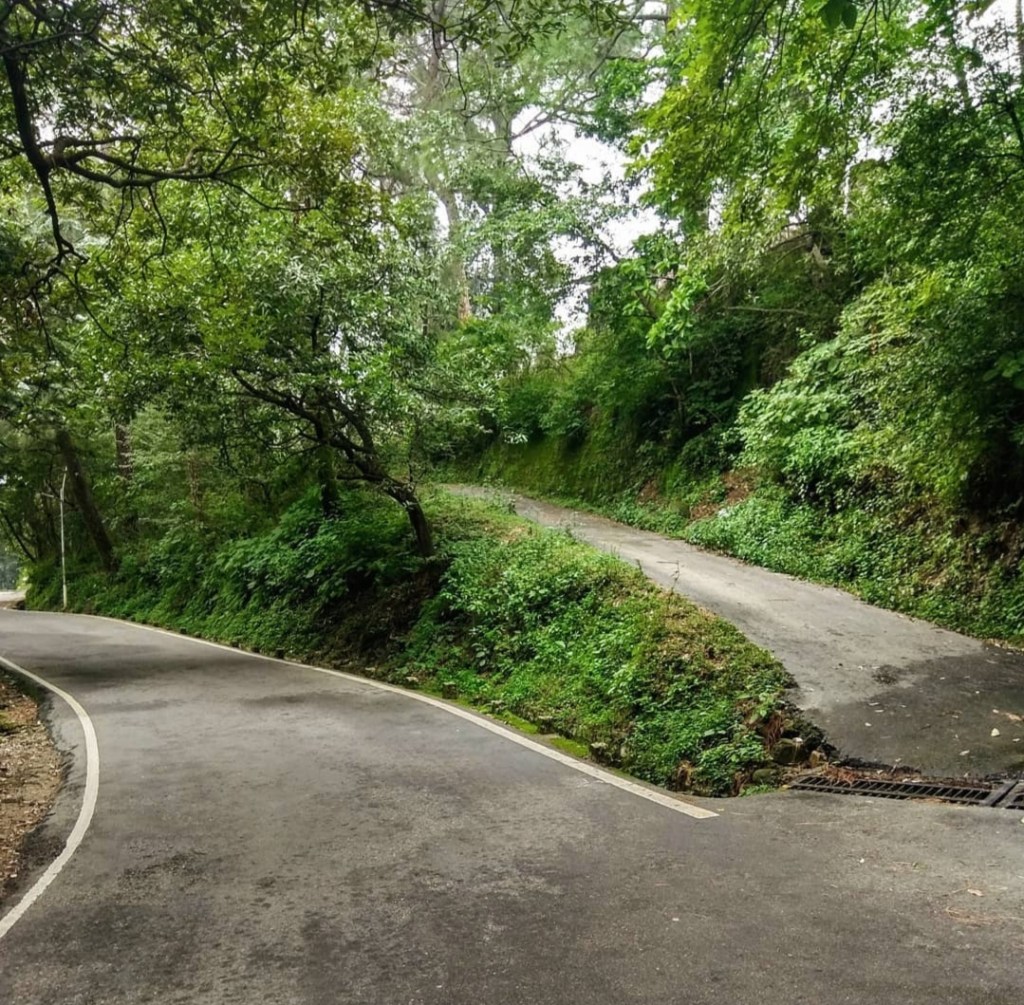
When every choice involves the loss of opportunity, which path will you choose? When your choices come with incomplete information, how can you be certain? How long will you stand still before making your choice? How confident are you when you realize you can’t save the first road for another day when the road you chose tends to lead onward to another? Whichever road you choose will make all the difference. In order to be different and do something great, you have to think different and implement things with a different approach. You have to take a different lane; the road not taken.

Remember the poem “The Road Not Taken” penned by Robert Frost?

Two roads diverged in a yellow wood,

And sorry I could not travel both

And be one traveler, long I stood

And looked down one as far as I could

To where it bent in the undergrowth…

The poem describes someone standing at a fork, or turning point, in a road in the woods, trying to decide which path he is going to take. He looks down one road as far as he can see, and after thinking for another minute, decides to take one because it looks like nobody’s been that way yet, and he is curious about where it leads. He thinks maybe he might come back another day and try out the other path but he has a feeling that the road he has chosen will lead him to new places and discoveries, and he probably won’t be back. He thinks wistfully about that road, which he did not take, and where he might have wound up if he’d gone that way instead. Part of him regrets his decision, but he also realizes that the things he’s seen and the places he’s gone because of the direction he chose has made him who he is.

This poem tells a lot about life in general. Life is all about making choices, whether it’s about choosing to change your daily diet or choosing the right partner. Every choice has its significance in some way or the other.

It makes me remember that past is always dynamic because it shapes my present and therefore, I should be careful about my present as it will take care of my future. Most importantly, this poem makes me think wisely about my choices. It reminds me that I should not make such a choice which I would regret one day and say ‘if I would have taken the other road, it would have been better’. Rather I should be proud of my decision and say ‘Yes! Since I chose the right path, it has led to all this difference’. The difference is what makes it different. Just as Frost ended the poem: “I took the road less travelled, and that’s all that matters”. There are no bad roads, there are only different battles that births different results.

In my opinion, the poet encourages the readers to create opportunities that may be overlooked by us because we all are in search of solutions for our problems rather than trying to sort out the things in the less conventional way.

Analysing the first 10 pages of ‘the immortals of meluha’

  1. Meet the protagonist. Exposition through inner monologue

Things established:

  • Today is special
  • Shiva is currently troubled
  • Bhadra is a trusted associate

In the first page itself, three important peices of information are given to the reader, but reasons are not specified, yet.

2. Important plot point introduced and dramatic question.

  1. Shiva does NOT like battle or bloodshed of any kind (important character description)

2. New character introduced(not explained)

Introduction of a character through another character is my favorite form of introduction. It helps in creating a sort of mystery around the character also the reader starts to get their own opinions on the character that the writer can later mould.

3.The most important part: A dramatic question is raised—Will Shiva accept the offer to go to Meluha?

3. About the protagonist and establishing stakes

  1. Again Shiva’s displeasure towards violence is reinforced.
  2. Information about bhadra and Shiva’s relationship and its change after Shiva became the chief is given.
  3. Shiva’s Uncle is introduced in the story.

All three of these things are developed further in the book.

4.Activity

  1. The name of the character previously introduced is revealed
  2. An idea introduced: There is a mention of a greater destiny, this will be present in the readers subconcious mind throughout the story until its explained.
  3. Again, the Readers are given more trivia about shiva’s uncle thus establishing him as an important person in Shivas life.

Just as the readers start to think about the idea, a violent scene takes place so as to bring the readers in an active state of mind. This scene helps both the protagonist as as well as the readers to form a strong opinion on the darmatic question.

5. Answering the dramatic question.

  • The dramatic question is answered.

They are going to meluha.

6. The showdown

Again there is attack from the prakritis but this time this scene shows Shiva letting the prakriti soldiers to go without harming them.

This is an illustration of the character description in the beginning:

They arent blood-thirsty idiots.

When will this violence end.

The Immortals of Meluha

And now in the end of the scene we see what we’ve been waiting all along, Meluha.

Amish sets up the story in such a way that within a few pages the plot is explained, stakes are made clear, relationships are established and we know enough about protagonist.

Amish nails the most important textbook rule of writing:

Set up immediately, don’t make the reader wait.

The rest of the book also follows the example of the beginning. It doesn’t drag, its precise and to the point. Overall immortals of meluha is a engaging and interesting book, definately deserves a read.

Gradescope: Assessment Platform by Turnitin

 To cope up with the increasing reliability of technology we have a new and advanced tool for grading & assessment which will reduce the manual workload of assessing papers and will provide valuable feedback to the students which will have a learning curve for them. The time saved by the instructors in checking papers manually will help them utilize their time more productively & this will also help the institute to keep records for easier accessing with intuitive reports & analysis.


Gradescope  is  a  leading remote assessment  and feedback platform that will be a step forward in this new digital world.
Leveraging the digital rubrics and AI in Gradescope will help instructors cut grading times by up to 80%, increase grading consistency and quality of feedback, and dramatically improve instructor/TA workflow vs. traditional grading.

Gradescope provides actionable feedback to both the students & the instructors.Here are 10 ways Gradescope can help your institute turn grading into learning:
 
1. Gradescope Modernizes Traditional Grading
Gradescope was founded with the belief that there has to be a better way to evaluate student work. By combining deep instructor expertise with the latest machine learning (ML) and artificial intelligence (AI), Gradescope leverages modern technology to dramatically reduce the pain and time associated with traditional grading.
 
2. Gradescope Streamlines the Workflow
By creating a digital record of student work, Gradescope restructures the traditional grading workflow. Gone are the logistical nightmares associated with transporting and returning stacks of paper, marathon grading parties, and lost in-class time; gains are efficiencies that enable high-quality assessment from anywhere at any time.
 
3. Gradescope Promotes Student Equity
Gradescope helps mitigate opportunities for unconscious bias in two key areas:
By helping graders focus exclusively on the content of an individual answer rather than the students’ overall submission or identity.
By helping teams of graders to build, maintain, and apply one aligned grading standard for all students
The result is a fairer learning experience for students and greater consistency across graders.
 
4. Gradescope Enhances Scoring Flexibility
Built in advance or created on the fly, Gradescope’s Dynamic Rubrics can be constructed collaboratively and adjusted at any time, automatically applying changes to previously graded work and creating a reliable real-time standard for all students. Keyboard shortcuts can help speed up the workflow, helping cut grading time even further.
5. Gradescope Promotes Meaningful Feedback
In addition to quick and consistent feedback, Dynamic Rubrics ensure students receive detailed insight into how points were awarded or deducted. With a richer understanding of evaluation criteria and guidelines around concept mastery, instructors can direct students to the best resources for their individual needs.
 
6. Gradescope Systematizes Grading Patterns
Answer groups and AI-Assisted Grading deliver a more methodical approach to reviewing student work. Gradescope helps instructors digitize student submissions and identify patterns, subsequently arranging them in assessable groups. This process helps eliminate redundancies, saves time, and produces higher quality and consistent feedback at scale.
 
7. Gradescope Accelerates Feedback Loops
Once assessment is complete, graders can immediately publish and notify students with a single click, either directly via Gradescope, emailed, or exported to their institutions’ LMS. Students can then review the feedback and quickly manage confusion or disagreement by initiating a Regrade Request. With the Gradescope workflow, feedback can be timely, detailed, and developmental.
 
8. Gradescope Supports Existing Assessments
The breadth of compatible assignment types is wide-ranging – from paper-based exams, quizzes, and homework, to online assignments, programming assignments, and multiple-choice. Gradescope can accommodate assessment preferences, existing assignments without adjustment, and a variety of disciplines, from humanities to the sciences.
 
9. Gradescope Highlights Student Learning
Gradescope produces meaningful and detailed student performance data to help identify knowledge gaps. Per-question and per-rubric item analytics deliver insight into which concepts were mastered and which were misunderstood. Graders can also measure course-level progress and align to key learning objectives with assignment statistics.
10. Gradescope Helps Refine Instruction
The Gradescope data can also inform improvements to assessment and course content. With targeted visibility into students’ areas of strength and weakness, instructors can address potential roadblocks in real-time and scaffold new concepts appropriately. Gradescope also surfaces insights that can guide long-term curricular improvements and refined lessons that ensure critical learning objectives are truly understood.