On February 1st, a comet named C/2022 E3 (ZTF) with a bright green color will come close to Earth for the first time in 50,000 years. It will pass by at a distance of 26 million miles (42 million kilometers) from Earth, providing a unique night sky view that hasn’t been seen since the time that modern humans roamed the Earth alongside one of the many extinct human species, the Neanderthals.
In the Northern Hemisphere, the green comet should be visible just before dawn in late January, according to NASA. Amateur astronomers have already begun photographing the green comet to show what you could see.
Comet ZTF will pass about 26 million miles from Earth — the closest it will get — on February 2. That’s nearly 109 times the average distance of the moon, but the comet is burning so bright that it could still be visible in the night sky.
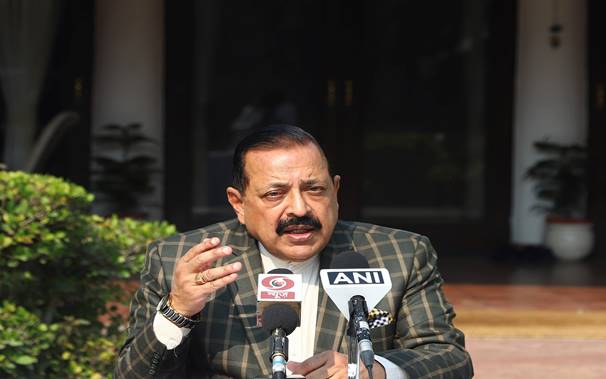
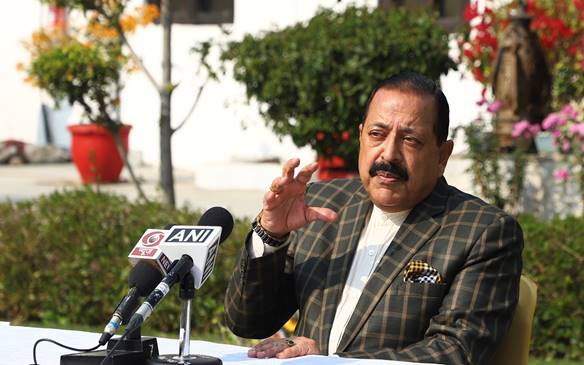
In a media interaction on the first day of the New Year, Union Minister of State (Independent Charge) Science & Technology; Minister of State (Independent Charge) Earth Sciences; MoS PMO, Personnel, Public Grievances, Pensions, Atomic Energy and Space, Dr Jitendra Singh today said, 2023 Science Vision will define India at 2047.
Dr Jitendra Singh added that the year 2023 also happens to be the first of the last 25 years or the last quarter of the calendar before independent India turns 100 at 2047 and realizes its century dreams.
This is also the year, the Minister said, when India under PM Narendra Modi reiterates its stature in the international fora as the host of G20 as well as the Nation on whose proposal the world is observing International Year of Millets.
Dr Jitendra Singh said, “The future belongs to those who have innovative ideas and out-of-box goals, and have the conviction and courage to achieve the same. The Minister emphasized that today we have a Prime Minister, who not only thinks out of box, but inspires 130 Crore Indians to take decisions with courage of conviction.
Referring to Prime Minister Narendra Modi’s penchant for “Innovation”, Dr Jitendra Singh pointed out to his Independence Day address, where he had said, “Till today we always remember our revered Lal Bahadur Shastri ji for his inspirational clarion call ofJai Jawan Jai Kisanmeaning “Hail the Soldier, Hail the Farmer”. Later Atal Bihari Vajpayee ji added a new link ofJai Vigyanwhich meant “hail science” and we gave it utmost importance. But in this new phaseAmrit Kaalnow it is imperative to addjai anusandhaanthat is “hail innovation”.“Jai Jawan Jai Kisan Jai Vigyan Jai Anusandhaan.”
Dr Jitendra Singh underlined that in the Centre –State Science Conclave held in September, 2022 also, Modi had highlighted that in order to make India a global center of research and innovation in this Amrit Kaal, we have to work on many fronts simultaneously and stressed the need to take science and technology-related research to the local level.
Departments dealing with Science and Technology have already outlined their focus and thrust areas for the year 2023.
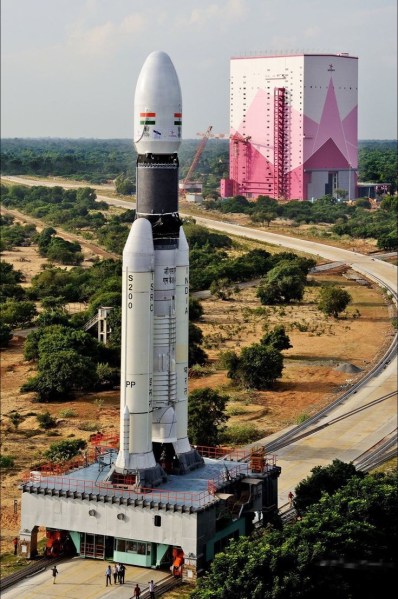
ISRO, after the opening up of Space Sector to private participants on the intervention of PM Modi, today has more than 100 StartUps in a short span of time. At the same time, its focus is on scientific exploration missions, Technology Demonstration missions and Human spaceflight programme “Gaganyan” in 2024.
The department of Biotechnology(DBT)would take forward the successes of COVID-19 vaccine mission by investing in improvement of vaccines for the existing and emerging diseases. Significantly, major missions would also be launched on millets and patho-genomics of plant viruses in the International Year of Millets.
CSIRin 2023 will also focus on Green Hydrogen as it has already made a headway in Green Hydrogen indigenous as part of clean energy mission.
The Ministry of Earth Sciences(MoES)will focus on Deep Sea mission & technologies which will add value to India’s economy in the years to come. 2023 will also witness further headway in Blue Economy. Significantly, PM Modi referred to Deep Ocean Mission twice in his Independence Day address, first in 2021 and then again in 2022.
Department of Atomic Energy,DAEin its contribution to India’s Electoral Management will deliver about 21.00 lakh equipment for the Election Commission of India which includes Ballot Units (BU), Control Units(CU) and Voter Verifiable Paper Audit Trail (VVPAT) to be completed by ECIL by Sept/Oct 2023.
The test-firing of the missile from the APJ Abdul Kalam Island off Odisha coast came amid India’s lingering border row with China.
The Agni-V project is aimed at boosting India’s nuclear deterrence against China which is known to have missiles like Dongfeng-41 having ranges between 12,000-15,000 km.
Agni-V can bring almost the entire Asia including the northernmost part of China as well as some regions in Europe under its striking range.
While the test was carried out days after the clashes, it had been planned earlier. India had announced its intention to test a long-range missile and issued a NOTAM or Notice to Airmen well before the incident in Arunachal’s Tawang.
Notably, Agni-5 is the most advanced missile in the Agni series with a strike range of over 5000 kms. Apart from Intercontinental Ballistic Missiles (ICBMs) Agni-5, the Indian armoury of the Agni series includes Agni-1 with a 700 km range, Agni-2 with a 2,000 km range, Agni-3 and Agni-4 with a 2500 km to more than 3500km range.
With plans under way to build Saudi Arabia’s smart city Neom, it is set to be a place in the desert unlike anything else on Earth.
NEOM is being called as what ‘New Future might look like’ by Saudi Arabia. Neom is a portmanteau of the Greek word neos. NEOM is being built on the Red Sea in northwest Saudi Arabia. It can be imagined as a place where entrepreneurship and innovation would frame the course for this New Future. The city is being marketed as a new model for sustainable living, working and prospering. Saudi officials describe it as “the world’s most ambitious project.”
Unveiling the project, Crown Prince Mohammed bin Salman said the 170-kilometre coastal strip in the north-west of the country would be free of cars and streets and have zero carbon emissions.
The smart city will be powered entirely by clean energy, a major step in Saudi Arabia’s shift away from an oil-based economy.
The Line is to be built in Neom and will be home to nine million people, who will live in interconnected societies run by artificial intelligence designed to coexist with nature, with excavation on this massive project having now started.
Confronting the traffic, pollution and infrastructure challenges that overshadow urban life in conventional cities, this futuristic development will prioritise walkability, clean energy and technology to create a new way of living.
For the uninitiated, a partial solar eclipse is one where the Earth moves through the lunar penumbra as the moon travels between the earth and the sun. It is referred to as ‘partial’ because the moon does not block the entirety of the sun, when witnessed from the Earth.
After Diwali on October 25, India and many parts of the world witnessed a partial solar eclipse which was visible in the different regions.
A Solar eclipse occurs when the Moon comes between Sun and Earth and blocks the light of the sun, casting a shadow onto Earth.
When the sun and moon are not perfectly aligned in a straight line, a partial solar eclipse occurs. The sun takes on a crescent shape as if the moon has taken a bite out of it and the Moon only reflects the outer part of Earth’s shadow, known as the penumbra.
Today’s eclipse is special as the last partial solar eclipse was seen from India in 2007 and the next such event would occur only in 2032. Although another partial solar eclipse will occur only in 2025 but that event would not be visible from India.
National Institute of Science Communication and Policy Research NIScPR), New Delhi is a constituent laboratory of the Council of Scientific & Industrial Research (CSIR) which serves the Nation with its mandates of policy research and science communication related studies. To strengthen the ‘Fit India Mission’ of Government of India, CSIR-NIScPR is organizing ‘Fit India Activities during 2-31 October 2022. Many sports activities are scheduled under this endeavor.
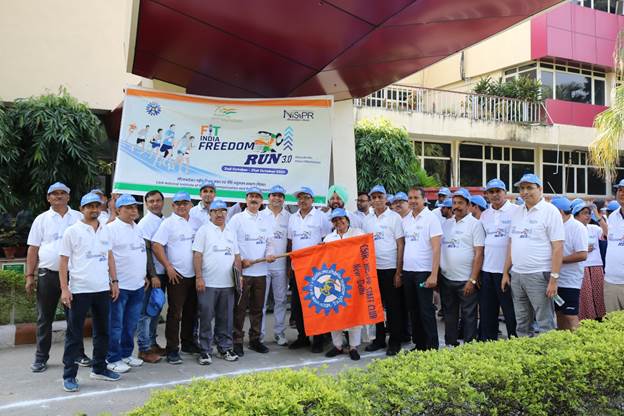
Dr. Sujit Bhattacharye, Director In-Charge, CSIR-NIScPR flagging off ‘Fit India Freedom Run 3.0’
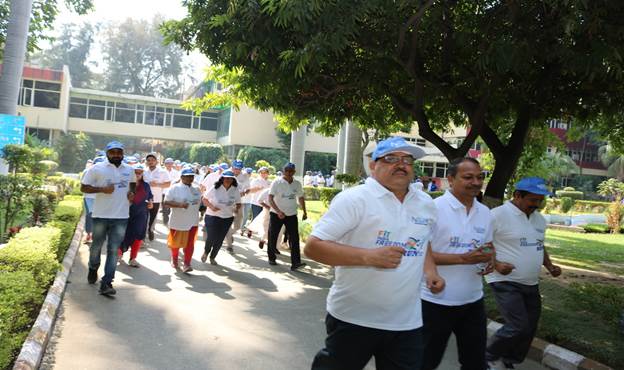
Today, CSIR-NIScPR organizes ‘Fit India Freedom Run 3.0’ of 3 Kilometer distance for its staff members, Project Associates, Research Interns, AcSIR Students, Outsource manpower, friends and family members. NIScPR’s Director In-Charge Dr. Sujit Bhattacharya flagged off this Fit India Freedom Run from its New Delhi Pusa Campus at 10:30 AM. On the occasion, Dr. Bhattacharya says that Fit India Run is an innovative gesture to make aware the staff members and other human resources of the institute for health and fitness. The Chairman of CSIR-NIScPR Committee for the Fit India Mission, Shri Ashwani Kumar Brahmi briefed all the participants of Fit India Freedom Run about the concerned guidelines of the Govt. of India. In this activity, Dr. Mohammad Rais, Dr. Naresh Kumar, Dr. L. Pulamte, Dr. B. L. Garg, Dr. Sandhya Wakdikar, Dr. Madhulika Bhati, Dr. Suman Ray, Dr. Puspanjali Tripathy, Dr. Shiv Narayan Nishad, Dr. Arvind Meena, Dr. Manish Mohan Gore, Dr. Meher Wan, Dr. Paramananda Barman (Scientists of CSIR-NIScPR), Shri Rajesh Kumar Singh Roshan, Controller of Administration, Shri Ajay Kumar, Controller of Finance & Accounts, Shri Pankaj Goswami, Administrative officer and other staff members of the Institute actively participated in this Fit India Run. The number of participants was more than 200.
Staff members of CSIR-NIScPR are participating in Fit India Freedom Run
CSIR-NIScPR is very active in sports activities and it regularly participates in Shanti Swarup Bhatnagar Memorial Tournaments (SSBMT) along with the in-house sports activities. The SSBMT is a platform created by CSIR Sports Promotion Board to bring together the participation of different CSIR institutes to build a committed CSIR family and create team spirit, leadership and zeal to excel against all odds. Under SSBMT, competitions in games of Cricket, Volleyball, Table Tennis, Badminton, Chess, Carrom and Bridge are organized. CSIR-NIScPR is an active member of SSBMT.
Stress is a natural part of life, and like many things, it’s important to learn how to manage it. If you’re suffering from stress, here are some helpful tips for coping:
Find a hobby
If you’re looking for a way to manage stress and unwind, a hobby can be an excellent option. It doesn’t have to be something specific or intense; you could simply enjoy doing something that inspires you every day.
Whatever it is that makes your heart race with excitement, there’s probably an outlet for it in your life—if not now then at some point in the future. Taking up knitting or painting might seem like an odd choice when you’re stressed out by midterms and finals, but these activities can become routine sources of relaxation as well as hobbies!
When we were kids growing up, many of us were fond of playing sports: football or baseball games were favorite pastimes at our houses during the summer months because they gave us something physical (and occasionally competitive) to do together after school hours were over. Nowadays however there are plenty other ways for parents and kids alike alike enjoy getting involved together outside on weekends – whether through volunteering with community organizations like Habitat For Humanity; going camping together on family camping trips; taking part in organized activities such as dance lessons where everyone learns new moves together while having fun at once too 🙂
Build a daily routine
The first step to managing stress is building a daily routine. A morning routine, afternoon routine and evening routine are all good places to start.
Make sure you have your coffee (or tea) before 7:30 AM. This will help you get going in the morning and prevent late-night cram sessions later on in the day when you’re tired or distracted by something else that needs doing.
Get through at least one workout session per week—even if it’s just walking around campus for 30 minutes with friends or playing basketball with teammates after class! Exercise helps burn off energy so that mentally challenging tasks don’t seem insurmountable anymore; moreover, exercise has been shown to reduce anxiety levels as well as improve moods overall.* Go grocery shopping once per week rather than buying food from convenience stores because they tend to have higher prices than supermarkets do; however replacing fast food with healthy alternatives like salads instead of burgers will save money while still providing nutritious meals throughout each day.* Try not using social media sites like Facebook or Twitter too frequently either during lunch breaks at work because this causes users’ lives outside office hours become blurred together into one giant blur which makes everything seem more difficult than before since now there’s no separation between work life & personal life anymore.
Eat healthy food
Eating a balanced diet is key to managing stress. It helps you feel more energized and less tired, which can help you avoid getting sick or stressed out by hunger pangs. If possible, eat a healthy breakfast every morning—this will give you the energy boost that makes it easier for you to get through your day!
If eating junk food is something that stresses out your stomach (and let’s be honest here: who doesn’t love pizza?), try finding healthier snacks like fruit salad bites or even granola bars instead of sugary ones. The key here is moderation; no one should ever eat too much junk food because this will only make them feel worse afterwards.
Get in touch with your family
Stress is a normal part of life and as such, it’s important to find ways to manage your stress. One way you can do this is by talking with your family about how they can help.
Family members are a great source of support when it comes to helping you manage stress—and they may not even realize how much they’re helping! If you have parents or siblings who live nearby, consider asking them if they’d like some help managing their own lives and those around them. You could even offer up some of your time (or money) in exchange for their assistance so that everyone benefits from their efforts together.
Get enough sleep
Sleep is important for learning and memory.
It’s also linked to stress reduction.
Getting enough sleep can help reduce your stress levels, which will make you more productive at school or work.
Go for a walk
You can get away from the stress of school by going for a walk.
Go for a walk alone or with friends if you’d like, but don’t worry about being seen—the point of walking is just to move your body, not impress others. Listen to music while you walk (or listen in silence), and try to take in some fresh air too. Take your dog for a long walk around the neighborhood; they’ll love it! If possible, try walking at least 10,000 steps each day—that’s equivalent to running one mile per hour continuously for 30 minutes straight! When I was younger and had more energy than I do now as an adult who’s trying everything she can think of not only stay healthy but also keep fit at age 55+.
Listen to music
Music is a great way to relax and de-stress. You can listen to any music you like, but try not to choose something that’s too hard or fast. Music can also help you focus on what’s important in your life, which will help keep things in perspective when they get overwhelming.
Music can also help with sleep! I recommend listening before bed because it helps calm your mind enough so that it doesn’t keep tossing and turning at night because of all the stressors going through your head during the day (or even week).
Meditate
Meditating is a great way to relax and unwind. It can help you deal with stress, anxiety and depression, improve your memory and creativity, even slow down the aging process.
If you’re new to meditation or have never tried it before there are plenty of ways that beginners can begin:
Sit comfortably in a comfortable position (sitting or lying down).
Close your eyes if possible – this might help you focus better on what you are doing (most people choose not to cover their eyes).
Start by breathing normally through both nostrils for one minute without counting the breaths or trying anything else at first; this will help clear any thoughts from your mind so that when they come back again later on during meditation they won’t distract us from our task at hand which is meditating.
Talk to someone about your stressors
Talking to someone about your stressors is an important part of managing them. You can talk to your friends and family, but it’s also helpful to talk about the stressors with a therapist or counselor. If you feel comfortable talking about this issue with a doctor, go for it! The same goes for religious leaders, coaches and mentors who have experience dealing with similar issues in their own lives. And if none of these people are available yet, teachers are usually willing to listen when students come seeking guidance from them (or even just want advice on how they should handle their own problems).
Few more steps to encounter stress
Stress can be caused by a variety of factors including work-related issues, relationships with friends and family members or even just having too much on your plate at once. In order to manage stress effectively there are some steps that you can take:
Start taking breaks from time to time during the day (even if only for 5 minutes). This will help you relax and recharge so that when you return back into work mode again; everything feels fresh again.
Try getting outdoors more often during the day so that there’s less time spent indoors where all these feelings tend to accumulate over time because there isn’t much else going on besides watching TV shows while eating pizza as opposed being outside enjoying nature around us all… You get what I mean? 🙂
I hope this article has given you some useful tips for managing your stress. Remember that the best way to deal with a stressful situation is to stay calm and take action. Use our tips above and find something that helps you relax, like giving yourself time away from your responsibilities or getting some exercise – anything will do.
Rainwater harvesting is a sustainable process that helps in preserving water for future needs. Water scarcity is a major concern in today’s scenario. The process of rainwater harvesting is a good way to conserve water. Rainwater Harvesting is one of the most used methods to save water. It refers to storing rainwater for various uses. The notion behind rainwater harvesting is to not waste the rainwater and prevent it from running off. In other words, it is done to collect rainwater using simple mechanisms. It is usually collected at the place the rain falls from the ground or rooftops. Rainwater harvesting is an alternative to reduce the stress of public water supply sources. The recharge of rainwater to the ground in the coastal regions prevents seawater immersion into the freshwater. Finally, rainwater harvesting reduces water supply bills.
Rainwater Filtration -:
Rainwater can be harvested or purified in multiple ways. The catch area before harvesting must be cleaned thoroughly, and the pipelined must be flushed regularly. Initially, the water flow is diverted to wash or rinse the area. Rainwater contains contaminants or other waste materials that affect the quality of the water. Contaminants such as dust, Bird excreta, pollution, leaves, and sand particles can affect water quality.
Filtration removes contaminants and other impurities and purifies rainwater for drinking and other purposes. However, the harvested water must be treated and tested before consumption to ensure the right quality check. Industries use the practice of pre-filtration to ensure that the purified water is directed water to the tank. The pre-filtration measure is a vital step that the water supply system should not compromise in terms of water quality.
Some techniques of rainwater purification are solar sterilization, the use of chemicals like iodine or chlorine, or sediment filtration. However, harvested rainwater used for drinking purposes can be filtered through Reverse Osmosis (RO).
Favorable aspects of Rainwater Harvesting -:
Rainwater Harvesting positively affects underground water quality. It dilutes the number of nitrates, fluorides, and salinity of the underground water. It contains zero hardness and almost neutral pH, making it highly suitable for industries, homes, institutions, industries, and other commercial establishments. Rainwater Harvesting reduces water supply bills. It is an excellent method that solves the water shortage crisis and lessens the energy consumption in water disturbance. Rooftop Rainwater harvesting controls urban flooding. The recharge of rainwater to the ground in the coastal regions prevents seawater immersion into the freshwater. Rainwater harvesting is an alternative to reduce the stress of public water supply sources. Construction of deeper wells can damage the natural environment as well as upscale. Therefore, the source of rainwater is highly effective and dependable. Stored harvested rainwater can be used as an alternative to municipal water and used during the water crisis.
Rainwater harvesting can be done in a variety of methods, including -:
1. A watershed is a region where precipitation flows directly into a river or another reservoir.
2. There are two ways to keep water: on the roof or the ground.
3. Normally, rainwater is collected on the rooftops. The rainwater from the roof is usually collected in PVC pipes and stored in a sump (a deep pit dug into the earth) or a tank.
4. The water in the tank can then be used for home purposes after it has been filtered.
5. Rainwater collection also helps to restore natural aquifers.
The two types of rainwater harvesting -:
1. Surface runoff harvesting -:
In this method, rainwater flows away as surface runoff and can be stored for future use. Surface water can be stored by diverting the flow of small creeks and streams into reservoirs on the surface or underground. It can provide water for farming, cattle, and for general domestic use. Surface runoff harvesting is most suitable in urban areas.
Rooftop rainwater/storm runoff can be harvested in urban areas through:
• Recharge Pit
• Recharge Trench
• Tubewell
• Recharge Well
Groundwater recharge -:
Groundwater recharge is a hydrologic process where water moves downward from surface water to groundwater. Recharge is the primary method through which water enters an aquifer. The aquifer also serves as a distribution system. The surplus rainwater can then be used to recharge Grothe underwater aquifer through artificial recharge techniques.
3. Rainwater in rural areas can be harvested through -:
Although rainwater harvesting measure is deemed to be a desirable concept for the last few years, it is rarely implemented in rural India. Different regions of the country practiced a variety of rainwater harvesting and artificial recharge methods. Some ancient rainwater harvesting methods followed in India includes Madaras, Ahar Pynes, Surangas, Taankas, etc.
Advantages of Rainwater Harvesting -:
1. Less cost.
2. Helps in reducing the water bill.
3. Decreases the water demand.
4. Reduces the need for imported water.
5. Promotes both water and energy conservation.
6. Improves the quality and quantity of groundwater.
7. Does not require a filtration system for landscape irrigation.
8. This technology is simple and easy to install and operate.
9. It reduces soil erosion, stormwater runoff, flooding, and pollution of surface water with fertilizers, pesticides, metals, and other sediments.
10. It is an excellent source of water for landscape irrigation with no chemicals, or dissolved salts, and is free from all minerals.
Disadvantages of Rainwater Harvesting-:
1. In addition to the great advantages, the rainwater harvesting system has a few disadvantages like unpredictable rainfall, unavailability of the proper storage system, etc.
2. Listed below are a few more disadvantages of the rainwater harvesting process.
3. Regular maintenance is required.
4. Requires some technical skills for installation.
5. Limited and no rainfall can limit the supply of rainwater.
6. If not installed correctly, it may attract mosquitoes and other waterborne diseases. 7. One of the significant drawbacks of the rainwater harvesting system is storage limits.
The world faces an increasingly critical need to address climate change, and the impact that water conservation has on a sustainable environment is undeniable. Groundwater is the primary source of freshwater that caters to the demand of the ever-growing domestic, agrarian, and industrial sectors of the country. Over the years, it has been observed that the necessity for the exploitation of groundwater resources for various everyday needs, like toileting, bathing, cleaning, agriculture, drinking water, industrial and ever-changing lifestyles with modernization is leading to tremendous water wastage. Harvesting and collecting rainwater is an adequate strategy that can be used to address the problem of water crisis globally. The use of a rainwater harvesting system provides excellent merits for every community. This simple water conservation method can be a boost to an incredible solution in areas where there is enough rainfall but not enough supply of groundwater. It will not only provide the most sustainable and efficient means of water management but also unlock the vista of several other economic activities leading to the Empowerment of people at the grass-root level.
For this, the Government should come out with an appropriate incentive structure and logistic assistance to make it a real success. Rainwater harvesting is something that thousands of families across the world should participate in rather than pinning hopes on the administration to fight the water crisis. This water conservation method is a simple and effective process with numerous benefits that can be easily practiced in individual homes, apartments, parks, and across the world. As we all know that charity begins at home, likewise, a contribution to society’s welfare must be initiated from one’s home.
Solar energy is any type of energy generated by the sun. Solar energy is created by nuclear fusion that takes place in the sun. Fusion occurs when protons of hydrogen atoms violently collide in the sun’s core and fuse to create a helium atom. Solar technologies convert sunlight into electrical energy either through photovoltaic (PV) panels or through mirrors that concentrate solar radiation. This energy can be used to generate electricity or be stored in batteries or thermal storage.
The Process of Solar Energy –
This process, known as a PP (proton-proton) chain reaction, emits an enormous amount of energy. At its core, the sun fuses about 620 million metric tons of hydrogen every second. The PP chain reaction occurs in other stars that are about the size of our sun and provides them with continuous energy and heat. The temperature for these stars is around 4 million degrees on the Kelvin scale (about 4 million degrees Celsius, 7 million degrees Fahrenheit).
In stars that are about 1.3 times bigger than the sun, the CNO cycle drives the creation of energy. The CNO cycle also converts hydrogen to helium but relies on carbon, nitrogen, and oxygen (C, N, and O) to do so. Currently, less than 2% of the sun’s energy is created by the CNO cycle.
Nuclear fusion by the PP chain reaction or CNO cycle releases tremendous amounts of energy in the form of waves and particles. Solar energy is constantly flowing away from the sun and throughout the solar system. Solar energy warms the Earth, causes wind and weather, and sustains plant and animal life.
The energy, heat, and light from the sun flow away in the form of electromagnetic radiation (EMR).
The electromagnetic spectrum exists as waves of different frequencies and wavelengths. The frequency of a wave represents how many times the wave repeats itself in a certain unit of time. Waves with very short wavelengths repeat themselves several times in a given unit of time, so they are high-frequency. In contrast, low-frequency waves have much longer wavelengths.
The vast majority of electromagnetic waves are invisible to us. The most high-frequency waves emitted by the sun are gamma rays, X-rays, and ultraviolet radiation (UV rays). The most harmful UV rays are almost completely absorbed by Earth’s atmosphere. Less potent UV rays travel through the atmosphere and can cause sunburn.
The sun also emits infrared radiation, whose waves are much lower frequency. Most heat from the sun arrives as infrared energy.
Sandwiched between infrared and UV is the visible spectrum, which contains all the colors we see on Earth. The color red has the longest wavelengths (closest to infrared), and violet (closest to UV) the shortest.
Natural Solar Energy
1. Greenhouse Effect
2. Photosynthesis
3. Fossil Fuels
• Harnessing solar Energy (The methods use either active solar energy or passive solar energy)
• Photovoltaics
• Concentrated solar energy
• Solar Architecture
Advantages & Disadvantages of Solar Energy
1. Advantages • Solar energy is clean. After the solar technology equipment is constructed and put in place, solar energy does not need fuel to work. It also does not emit greenhouse gases or toxic materials. • There are locations where solar energy is practical. Homes and buildings in areas with high amounts of sunlight and low cloud cover have the opportunity to harness the sun’s abundant energy. • Solar energy complements other renewable sources of energy, such as wind or hydroelectric energy.
Homes or businesses that install successful solar panels can produce excess electricity. These homeowners or business owners can sell energy back to the electric provider, reducing or even eliminating power bills.
2. Disadvantages
• Solar energy equipment is also heavy. To retrofit or install solar panels on the roof of a building, the roof must be strong, large, and oriented toward the sun’s path.
• Both active and passive solar technology depends on factors that are out of our control, such as climate and cloud cover. Local areas must be studied to determine whether or not solar power would be effective in that area.
• Sunlight must be abundant and consistent for solar energy to be an efficient choice. In most places on Earth, sunlight’s variability makes it difficult to implement as the only source of energy.
Artificial intelligence (AI) refers to the simulation of human intelligence in machines that are programmed to think like humans and mimic their actions. The term may also be applied to any machine that exhibits traits associated with a human mind such as learning and problem-solving.
The ideal characteristic of artificial intelligence is its ability to rationalize and take actions that have the best chance of achieving a specific goal. When most people hear the term artificial intelligence, the first thing they usually think of is robots. That’s because big-budget films and novels weave stories about human-like machines that wreak havoc on Earth. But nothing could be further from the truth. Artificial intelligence is based on the principle that human intelligence can be defined in a way that a machine can easily mimic it and execute tasks, from the simplest to those that are even more complex. The goals of artificial intelligence include learning, reasoning, and perception.
Application of AI in different fields.
Personalized Online Shopping.
Personalizing users’ experience has become the latest pantheon for all the leading tech giants. Ecommerce stores aren’t behind either, and have been the biggest platforms to implement the personalization domain of AI.
Marketing.
One of the greatest artificial intelligence examples applications, Marketing, has been a key area for improvement and the latest trends in AI. With the growing advancement in AI, in the near future, it may be possible for consumers on the web to buy products by snapping a photo of it.
Social Media.
The most common use of AI in social media is for face verification and to detect facial features. AI in social media can be associated with big data and machine learning where deep learning is used to extract every minute detail from an image by using a bunch of deep neural networks. On the other hand, machine learning algorithms are used to design your feed based on your interests.
Agriculture.
The latest artificial intelligence applications in the form of image recognition identify possible defects in the crops through images captured by the user’s smartphone camera. Users are then provided with soil restoration techniques, tips, and other possible solutions to deal with the identified defects.
Video Games.
The gaming world is the best example of intelligent applications of artificial intelligence as it is at this platform where there are a lot of alterations in the purpose. AI is used for designing the game, developing the characters, and also frame the story to a certain extent.
Healthcare.
The Healthcare sector has been amongst the top adopters of AI technology. It boils down to the power of AI to crunch numbers fast and learn from historical data, which is critical in the healthcare industry. AI has taken a critical step in helping people with looking after patients as well. The automated bots and healthcare applications ensure proper medication and treatment of patients in the facilities.
Smart Homes.
The most advanced form of applications of artificial intelligence in the real-world are being implemented in homes, and are becoming smarter every day. Various devices like smart locks, smart switches, ect., are increasingly becoming compatible with various devices, and the application of smart homes is becoming more accessible to the general population every day.
Banks.
A lot of banks have already adopted AI-based systems or software to provide customer support and detect anomalies and credit card fraud. By tracing card usage and endpoint access, security specialists are more effectively preventing fraud. Organizations rely on AI to trace those steps by analyzing the behaviors of transactions.
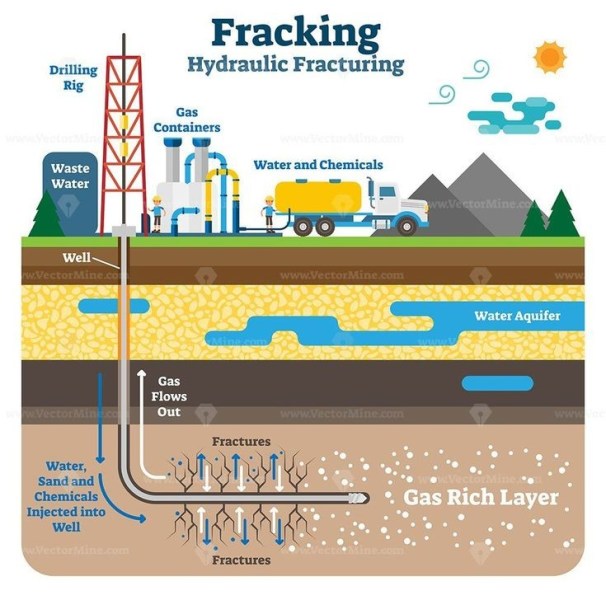
Fracking is short for “hydraulic fracturing”, which is the process of creating fractures in rocks and rock formations by injecting specialized fluid into cracks to force them to open further. The larger fissures allow more oil and gas to flow out of the formations and into the wellbore. It is easier to extract oil and gas there.Fracking has resulted in many oil and gas wells attaining a state of economic viability due to the level of extraction that can be reached. It has also allowed drilling firms access to previously difficult-to-reach sources of oil and gas.Fracking is an extraction technique for oil and gas wells in which rocks are fractured artificially using pressurized liquid. The process involves drilling down into the earth and injecting a highly pressurized mixture of water, sand, and thickening agent, also called “fracking fluid,” into a wellbore to create cracks in rock formations. Once the hydraulic pressure is removed from the well, the remnants of the fracking fluid hold the fractures open, making it easy to extract the oil and gas inside. Fractures can also exist naturally in formations, and both natural and human-made fractures can be widened by fracking. As a result, it is possible to extract more oil and gas from a given area of land.
Fracking increases the rate at which water, petroleum, or natural gas can be recovered from subterranean wells. It has also allowed the extraction of unconventional oil and gas resources from low permeability sites where traditional extraction technologies fail. Fracking as a method for oil and gas extraction is also more economically viable than conventional or horizontal drilling. In the United States, domestic oil production has grown significantly with the introduction of fracking. The process has driven down gas prices and offered gas security to both the United States and Canada for about 100 years.
Most of the opposition to fracking revolves around its potential negative impact on the environment. Fracking typically produces methane emissions, which reduce air quality. Furthermore, methane gas contributes significantly to global warming.Fracking requires forcing large volumes of water and chemicals into the ground, which can seep and contaminate local soil and water resources. Moreover, due to the high pressures involved, fracking is also associated with increased seismic activity. It also releases large quantities of methane gad and other air pollutants that can cause health problems and contribute to climate change.Fracking has allowed for the cost-effective extraction of harder-to-reach deposits of oil and gas, which has increased the supply of available fossil fuels. In general, greater supply leads to lower prices; however, several other factors also impact the price of oil and gas.
Dream is a succession of images, ideas, emotions, and sensations that usually occur involuntarily in the mind during certain stages of sleep.
The content and function of dreams have been topics of scientific, philosophical, and religious interest throughout recorded history. Dream interpretation was practiced by the Babylonians in the third millennium BCE and even earlier by the ancient Sumerians. .Dreams figure prominently in major world religions. The dream experience for early humans, according to one interpretation, gave rise to the notion of a human ‘soul’ as a central element in much religious thought.
Psychologist Calvin S. Hall considered dreams part of the cognition process or a type of thinking that happens as you sleep. Hall believed dreams could offer important insight into how you view yourself and others, your problems and conflicts, and the world in general. Many psychologists believed dreams played an important role in cognitive processes including memory and emotion regulation. Domhoff also noted that, although dreams may shed some light on heavy concerns, they might not have any real purpose, because he stated normally human beings forget most of their dreams. William Dement, who helped found the field of sleep medicine, suggested that, while dreams may lack a clear purpose, they can still convey meaningful messages.
Image credits – Google
Many experts do not believe dreams have much meaning but believe they still serve a purpose. The existing theories outline a few of these purposes.
1. Threat simulation theory
2. Activation-Synthesis theory
3. Dreams as emotional regulation
4. Continual-activation theory
Psychotherapist, Eliza Boquin, states “For vivid dreamers, our body can often experience what is happening in the dream.”
Certified dream analyst and speaker Lauri Loewenberg says while you are sleeping your brain is conjuring up around five dreams per night. That is a lot of subconscious thoughts to unpack. And although every dream is unique, they do tend to follow certain symbolic patterns.
How to examine your own dreams -:
1. Make sure you are getting proper sleep –: Research says that if we get enough sleep (7 to 9 hours) each night. This may, in turn, boost dream recall.
2. Review the dream –: when you wake up from the dream, lie calmly and analyze the visions, emotions, people, and places and mainly pay attention to small details because it would play a significant role in examining the dream.
3. Write it down –: Have a journal and start writing what all you saw the colors and visions, also your moods and feelings.
4. Make connections to your own life -: connecting these facts to your everyday life, would connect to your past life experiences and in some cases might even show some glimpses of your future. There are also many dreams interpretation books that you can interpret and gain more insights into.
Dreaming and sleep are intertwined. Dreams occur mainly in the rapid-eye movement (REM) stage of sleep when brain activity is high and resembles that of being awake. No one knows for certain what purposes dream serve. But at the end of the day, their true function might not really matter. It depends on each individual If you find them meaningful, then they add value to you or do not concern you.
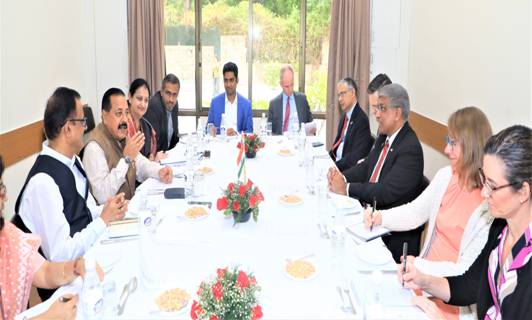
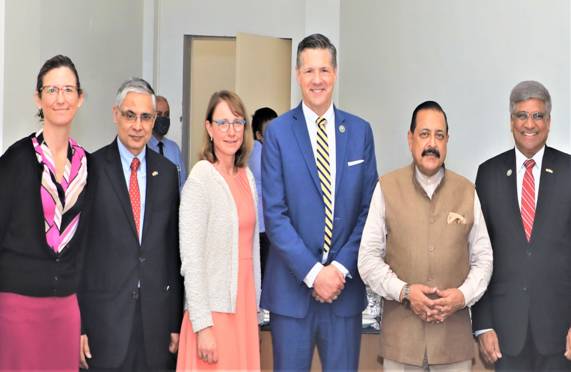
A US delegation of the premier National Science Foundation (NRF), currently on visit to India, today called on Union Minister of State (Independent Charge) Science & Technology; Minister of State (Independent Charge) Earth Sciences; MoS PMO, Personnel, Public Grievances, Pensions, Atomic Energy and Space, Dr Jitendra Singh and discussed bilateral collaboration between the two countries as well as the ways to carry this collaboration to the next level.
Dr. Kendra Sharp, Head, Office of International Science and Engineering (OISE), National Science Foundation (NSF) of USA, Brian Stone, Chief of Staff, NSF, USA, Dr. Bridget Turaga Program Director, Office of International Science and Engineering (OISE), NSF, Drew Schufletowski, Minister Counselor for Economic, Environment, Science and Technology Affairs, United States Embassy in India, William Harford Chief of Environment, Science, and Technology Unit, United States Embassy and Dr. Sethuraman Panchanathan Director, National Science Foundation of United States, among others, were part of the delegation joined the meeting.
During the delegation level talks, Dr Jitendra Singh said, both the sides have already identified the sectors and collaboration is on in areas like healthcare, technology, Space, earth and ocean science, energy, emerging technologies and cooperation in Science & Technology education. The Minister underlined that India and the United States have a long-standing connection and shared interest when it comes to scientific discovery and technological innovations and time has come to strengthen and leverage these connects for larger global good.
Director, National Science Foundation (NSF) of United States and head of the delegation Dr. Sethuraman Panchanathan assured Dr Jitendra Singh that the subjects identified in the two-day brainstorming session would be taken to logical conclusion. He also promised to open new avenues of cooperation in areas like Artificial Intelligence, Biotechnology, Geosciences and Astrophysics.
Dr Jitendra Singh said, Prime Minister Narendra Modi has always accorded highest priority to scientific pursuits and takes keen personal interest in each of the subjects. He said, since 2014, in every Independence Day speech, PM Modi has flagged key scientific challenges and projects like Cleanliness, Hydrogen Mission, Digital Health Care system, clean energy, net zero emission and Start-ups.
Dr Jitendra Singh told the NSF delegation that both sides must focus on meaningful, targeted, deliverable-driven R&D partnerships in technology areas such Quantum, Metaverse, Clean Energy Technologies, Cyber-Physical Systems, Advanced Materials and Communications Technologies. The Minister pointed out that the Indian Scientific diaspora is one of the world’s largest and powerful diaspora communities in shaping global discourse, particularly in the technological innovation landscape. He said, both the countries must explore avenues for the US and India to jointly identify, nurture, and promote deep-tech start-ups in areas of mutual interest.
Dr Jitendra Singh also sought the support of NSF for the proposed Integrated Data System. He said, data collection at present is being done by various institutions in different ways, but the Integrated Data System will go a long way in data analytics and associated benefits. The Minister said, the knowledge partnership with NSF-National Centre for Science and Engineering Statistics will be of great value addition in terms of long-term capacity development in this area.
Dr Jitendra Singh also called for scaling up the cooperation in the Space sector and mainly in emerging areas like management of space debris. He also recalled that the NASA-ISRO Synthetic Aperture Radar satellite is expected to be launched in 2023. The Minister said, Science and technology education partnership has been another dimension of the outreach—to establish linkages between American and Indian institutions and students. Education Roundtable held last year with participation of a number of STEM-focused universities.
Prof. Ajay Kumar Sood, Principal Scientific Adviser (PSA) to the Government of India, Dr. Parvinder Maini, Scientific Secretary, Office of PSA, Dr. Preeti Banzal, Adviser, Office of PSA, Dr. Monoranjan Mohanty, Adviser, Office of PSA, Dr. Sindura Ganapathi, PSA Fellow, hri Shirish Panda, Scientist ‘D’, Office of PSA and Dr. B. Chagun Basha, Senior Specialist, Office of Principal Scientific Adviser to the Government of India joined the talks from Indian side.
Today India’s achievements are numerous and include a strong Democracy, higher Education, Nuclear power, stunning economic growth and revival of numerous aspects of traditional Wisdom. Owing to the talent and will of the countrymen, we can see that India has reached among the top countries of the world especially in science and technology and various other fields. India has the 44th rank in technology level among the world. Also, India is considered one of the top five countries in space exploration. India has become an important source of creative and fundamental scientific development and in all the perspectives around the world. All great scientific discoveries and technical achievements have improved the Indian economic situation in our country and have created many new approaches for the new generation to develop a technologically advanced environment. Much new scientific research and development is possible in the field of mathematics, architecture, chemistry, astronomy, medicine, metallurgy, natural philosophy, physics, agriculture, health care, pharmaceuticals, astrophysics, atomic energy, space technology, application, defence etc. The introduction of scientific research, ideas and techniques in the field of education has brought a huge change in the new generation at large and has given a variety of new and innovative opportunities to work in their own interests. Modern science in India has made people aware of their constant and hard efforts by scientists. India’s scientist is great, who has made scientific progress of the highest international calibre. Technical development in any area enhances the economy of any country. In order to improve the power of science and technology in India, the Government of India established the Council of Scientific and Industrial Research in 1942 and the Board of Scientific and Industrial Research in 1940. India has achieved so many achievements in the field of science and technology that every Indian is proud of his country. Let’s know all your achievements in detail.
•Atomic clock by ISRO: The atomic clock is an amazing technology developed by ISRO and it is used to measure precise location data in navigation satellites. Proudly, ISRO is one of the Few Space organisations in the world, those who have developed this amazing technology.
•Mars Orbiter Mission : Mars orbiter mission is a great success achieved by India in the field of science and technology. India is the only nation in the world to reach Mars in the first attempt. Indian space research organisation (ISRO) launched Mangalyaan on 5 November 2013 and it was placed into mars orbit on 24 September 2014. The cost of the project was 74 million US dollars which are cheaper than anything that others can achieve.
•Chandaryaan 2 Mission The moon landing of Chandrayaan 2’s Vikram lander is also a very special Indian technological achievement for India. Chandrayaan 2 mission marks India’s first lunar exploration mission and ISRO put lots of effort into making this mission a success. With this mission, India has emerged as the fourth country in the world to have hoisted its flag on the lunar surface. This achievement is a matter of great Honour for the nation.
•PARAM – India first Super Computer India’s first-ever super Computer named ‘Param’ is also a great achievement for India in science and technology. Param is designed and assembled by the Centre for the development of advanced computing in Pune. Today there are 11 supercomputers in India and they are used in the development of nuclear weapons and space programmes.
Even though India has only 140 researchers per 10 lakh population this has never been a shortcoming in the development of Science and Technology. We Indians must feel proud of our technological advancements and try to utilise them in the best manner possible.
Achievements of India in the field of Science and Technology
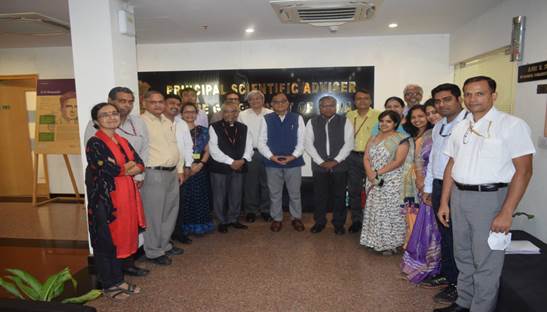
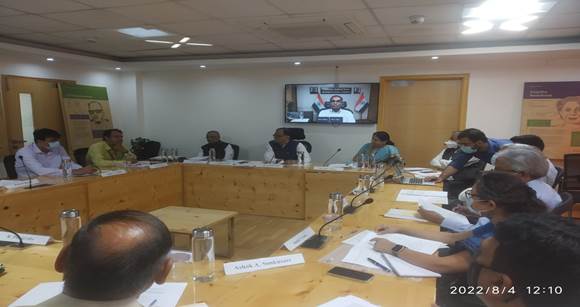
The first meeting of the National Advisory Committee of the NationalInitiative on Science, Technology and Innovation Statistics (NISTIS) discussed the way forward for the initiative.
It was decided that the Detailed Project Report (DPR) for the Centre for Science, Technology and Innovation Statistics will be prepared by the Project Monitoring Unit (PMU) at the Indian Institute of Science (IISc) Bengaluru.
Principal Scientific Adviser to the Government of India, Professor Ajay K Sood, who chaired the meeting, underlined the importance of the initiative and the urgent need to establish the centre to start focused work on it.
“Data is critical for knowledge-based decisions. While data is being collected by the different ministries, its centralised management is essential for taking critical decisions in the future,” he pointed out.
Secretary, Department of Science and Technology (DST), Dr Srivari Chandrasekhar, welcomed the initiative, highlighting the range of data that is already available with the department and emphasized the need to add to it.
Senior Adviser, DST, Dr Akhilesh Gupta, stressed on the need for a one-stop coordinated effort to bring the various efforts of accumulation of data and presented the tentative structure of the centre. He gave examples of international best practices of such efforts in USA and Japan.
Director Indian Institute of Science (IISc), Professor Govindan Rangarajan, elaborated on the functioning of the future centre at IISc.
Experts from scientific establishments discussed the governance, functioning and way forward for the center.


















 Eduindex
You must be logged in to post a comment.