Psychological impact of Covid-19

As a result of the emergence of coronavirus disease 2019 (COVID-19) outbreak caused by severe acute respiratory syndrome coronavirus 2 (SARS-CoV-2) infection in the Chinese city of Wuhan, a situation of socio-economic crisis and profound psychological distress rapidly occurred worldwide.

So this blog will look into various forms of psychological distress bought in by this pandemic due to educate and sensitize the readers about these issues.

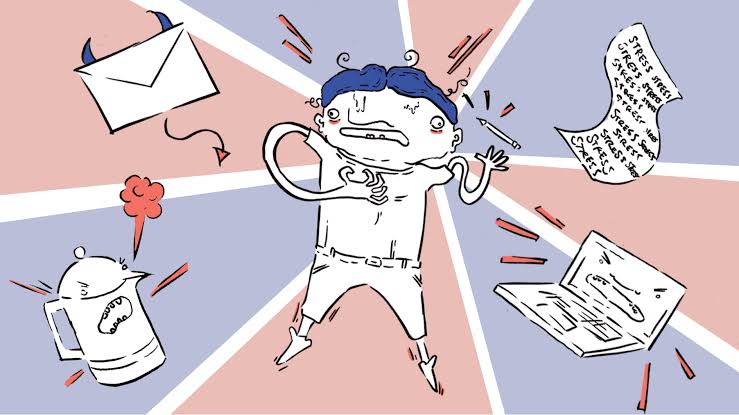
Many psychological problems and important consequences in terms of mental health including stress, anxiety, depression, frustration, uncertainty during COVID-19 outbreak emerged progressively.Common psychological reactions related to the mass quarantine which was imposed in order to attenuate the COVID-19 spread are generalized fear and pervasive community anxiety which are typically associated with disease outbreaks, and increased with the escalation of new cases together with inadequate, anxiety-provoking information which was provided by media.The psychological reactions to COVID-19 pandemic may vary from a panic behavior or collective hysteria to pervasive feelings of hopelessness and desperation which are associated with negative outcomes including suicidal behavior.Importantly, other health measures may be compromised by abnormally elevated anxiety.

As the general population became increasingly exposed, anxiety-provoking topics related to this emergence of the health and socio-economic crisis need to be rapidly identified to early detect dysfunctional processes and maladaptive lifestyle changes potentially leading to the onset of psychiatric conditions.

So let us discuss the most important psychological impacts of COVID which are the root cause of other mental disorders :

-uncontrolled fears related to infection

This is commonly one of the most frequent psychological reaction to pandemics. Several existing studies demonstrated that those who have been exposed to the risk of infection may develop pervasive fears about their health, worries to infect others and fear infecting family members.

-Pervasive anxiety

Social isolation related to restrictions and lockdown measures are linked to feelings of uncertainty for the future, fear of new and unknown infective agents resulting in abnormally increased anxiety.Anxiety may be directly related to sensorial deprivation and pervasive loneliness.

-Frustration and boredom

Distress, boredom, social isolation and frustration are directly related to confinement, abnormally reduced social/physical contact with others, and loss of usual habits.

-LONELINESS

The final effect of social isolation is pervasive loneliness and boredom, which have potential dramatic effects on both physical and mental individual well-being. Pervasive loneliness may be significantly associated with increased depression and suicidal behavior.Unfortunately, the isolation is progressively enhanced by anxiety, panic or collective hysteria. Cognitive functions and decision making are firstly impaired by hyperarousal and anxiety and later by disabling feelings of loneliness.

After looking at these gruesome psychological impacts,it is crystal clear so as to how psychologically damaging this pandemic has been!The protective factors against these impacts include social support and psychological support.

Implementing community-based strategies to support resilience and psychologically vulnerable individuals during the COVID-19 crisis is fundamental for any community.The psychological impact of fear and anxiety due to the horrible spread of pandemic needs to be clearly recognized as a public health priority for both authorities and policy makers who should adopt clear behavioral and interventional strategies to reduce the burden of disease and the dramatic mental health consequences of this outbreak.


Bulimia:An Eating Disorder

In today’s instagram world,People especially adolescents are getting image and body conscious.They look at the perfect bodies of celebrities and aspire to be like them.In this aspiration,they are psychologically and physically wounded.Most of such people experience eating disorders where in they undergo extreme changes in their eating and exercise habits.Ultimately they damage themselves.

So,in today’s blog lets look at one of the eating disorders called Bulimia Nervosa,it’s causes and it’s impacts.Let’s get started.

Bulimia nervosa is an eating disorder characterized by episodes of binge eating—consuming a lot of food quickly—followed by compensatory behavior, most commonly vomiting or “purging.” People who are bulimic often feel a lack of control over their eating. A bulimic can consume as many as 3,400 calories in little more than an hour and as many as 20,000 calories in eight hours.

People with bulimia often know they have a problem and are afraid of their inability to stop eating. Bingeing is then followed by purging — namely, self-induced vomiting or the abuse of diuretics or laxatives. Bingeing and purging are often performed in secret, with feelings of shame alternating with relief.

The bingeing and purging cycle is usually repeated several times a week. As with anorexia, people with bulimia often have coexisting psychological illnesses, such as depression, anxiety, and substance abuse problems. Many physical dysfunctions result from the purging, including electrolyte imbalances, gastrointestinal troubles, and dental problems.

An estimated one to four percent of females have bulimia nervosa during their lifetime. The prevalence in males is unknown, but bulimia nervosa is far less common in males than females. Most cases begin in the late teens and early 20s, but can go undetected until the 30s or 40s.

SYMPTOMS

Bulimia signs and symptoms may include:

  • Being preoccupied with your body shape and weight
  • Living in fear of gaining weight
  • Repeated episodes of eating abnormally large amounts of food in one sitting
  • Feeling a loss of control during bingeing — like you can’t stop eating or can’t control what you eat
  • Forcing yourself to vomit or exercising too much to keep from gaining weight after bingeing
  • Using laxatives, diuretics or enemas after eating when they’re not needed
  • Fasting, restricting calories or avoiding certain foods between binges
  • Using dietary supplements or herbal products excessively for weight loss

CAUSES

Exact causes are not completely known and are believed to complex.Hence there is no single known cause of bulimia, but there are some factors that may play a part,such as:

  • Culture:As in strict body expectations:Slim and trim girls wanted for marriage in India.
  • Families:Constant pressure and criticism from parents on looks of children
  • Life changes or stressful events: can trigger bulimia.
  • Personality traits: Those with bulimia may have low self-esteem and feel hopeless.
  • Biology.:Genes, hormones, and other biological factors may contribute to development of bulimia.

Impact

Bulimia has a great impact on the individual and can lead to following complications:

  • Negative self-esteem and problems with relationships and social functioning
  • Dehydration leading to kidney failure
  • Heart problems
  • Severe tooth decay and gum disease
  • Absent or irregular periods in females
  • Digestive problems
  • Anxiety, depression, personality disorders or bipolar disorder
  • Misuse of alcohol or drugs
  • Self-injury and suicidal thoughts.

Management

If left untreated,bulimia can create major complications in life as mentioned above.Hence if you see your loved ones experiencing symptoms of bulimia,support them and console them.If the symptoms are unbearable,immediately consult a doctor and psychologist who will be able to help the patient successfully.

Please spread empathy and kindness.Acceptance and kindness can prevent bulimia in such insecure people.Every difficulty can be defeated with empathy,patience and willingness to improve and come out.

If you all found the article useful,do give it a like.

Thankyou!

Stay Kind!

Creative Things to do When You Feel Lonely

According to a study of more than 170,000 people published at the Psychology Bulletin in 2013, the average adult’s network of friends have reduced in the past decades. It’s no wonder many people feel lonelier than ever.

Feeling lonely, however, is not a direct cause of being alone. It’s possible to feel lonely in a crowd.

Loneliness, in fact, is more dangerous than isolation because it increases a person’s mortality rate.

If it’s so dangerous, how do we fight loneliness then?

Wondering What to Do When You Feel Lonely?  Here Are some Tried and Tested Tips.

  • Watch Inspiring Ted Talks.
Rob Greenfield Speaking - Inspire Your Community with Rob!

Ted Talks are inspiring and informative. I don’t know why, but watching a few Ted Talks really help when I feel lonely and helpless. Watching TED talks will not only give you a motivational boost while your studying, it could also inspire your next career move. Better than that, it could help you improve your interview techniques and confidence in meetings helping you advance your career once you get your foot in the door.

  • Look Through Old photos
Remembering Through Photographs Stock Image - Image of photographs ...

Old photos bring back a time, a place, and a life that are long gone. Perhaps, it reminds us all; that everything shall come to an end at some point. I believe an old photo is a physical instillation of our memory from the past.Human emotions are fickle things. They are ever changing. Tears don’t indicate anything in particular. They’re just a bodily response.

  • Dance (Naked)
And I Feel Alive: Learning To Dance Alone

Sometimes, we feel lonely because we’re actually alone. So take this chance to do the things you can only do when you’re alone, like dancing naked or jumping on the bed with your shoes on. Doing crazy stuff alone will give you a good laugh.

  • Take A Bath
Do You Have To Take A Shower After A Bath Bomb? | Shower+Bath

Where do good ideas come from? In the shower, right? Taking a nice, long, and relaxing bath is a great way to be bask in your alone time, instead of drowning in self-pity.  Ladies, prepare a glass of red, chocolates and magazines. Gents, take a bubble bath with that scotch and enjoy life.

  • Adopt A Cute Pet
Cute babies - Babies Pets and Animals Photo (17268865) - Fanpop

All pets are cute no matter whom you want to adopt. A furry cat or dog will cheer you up. The playfulness of pets, plus the troubles (and fun) you’ll experience while training them will make you forget about your troubles. Even a goldfish or pretty parrot can do wonders for your mood.

  • Go on a solo date to eat your favorite food
Coffee Date with Myself - Chopstick Panorama

You know the problem with group and couples dates? The annoying “So what do we do?” and “Where do we eat?” questions. When you go on a date with yourself, you’re sure to go somewhere you actually like and you don’t have to wait around for others to decide.

  • Start Gratitude Journal
Dear Diary: The "Write" Way to Journal | Project Best Life

It’s hard to feel down when you know that you have a lot to be thankful for.  When you don’t know what to be thankful for, just write what you feel. Sometimes, it can help you identify why you feel lonely in the first place.

  • Create Something New
25 Easy To Do Waste Material Craft Ideas for Children

Wondering how to not feel lonely, when you actually prefer to be alone? Getting bored is a prerequisite of feeling lonely. And what’s one of the main causes of getting bored? Having nothing to do. So keep yourself occupied! Try a new recipe. Create a scrapbook. Finish that DIY project you’ve been postponing for so long.

  • Behave like a tourist in your own city and do crazy things
Tourist traps worth visiting - Insider

Dress up like a tourist, and do all the cheesy touristy things in your city. Eat the local delicacy, tour the crowded tourist spots and explore new locations you’ve never heard of. Take pictures with monuments and come home and rejoice those memories.

  • Read any book especially a fiction
Pin on Photography

Please don’t pick a Dummies book on how to stop feeling lonely.  Reading self-help when you’re feeling miserable will make just you feel worse. Read a good novel instead. Losing yourself in a good story or identifying with a powerful character will boost your confidence and fill you with a sense of adventure.

  • Sing your heart out and have your own concert in your room
Singing in Home Images, Stock Photos & Vectors | Shutterstock

The part “your heart out” basically means with vigorous or intense conviction. This is the basic intent of the sentence — that it’s okay to do that something as long as the person is doing it with great conviction or considerable effort.

To sing your out more literally means to sing with great conviction or great gusto and sincerity. Of course, it doesn’t mean to sing loudly at the top of your voice, which then isn’t necessarily a positive thing. To sing care-free like there is nobody else in this world except you.

  •  Go For A Quick Run
Feeling anxious? Run it out! — Neurofantastic

Running is scientifically proven to make you happier. Even 30 minutes of walking can instantly lift your mood, according to a 2006 study published at Medicine & Science in Sports & Exercise.

  • Volunteer for a cause
About Us – Butterfly Hospice Care

Focusing on the needs of others steers your mind away from sad thoughts. It’s impossible to feel lonely when you’re feeding the homeless, reading to kids at an orphanage, or dancing with grandmas at a salsa class. Helping the less fortunate will also fill you with immense gratitude.

  • Watch a Movie or Series
7 Best Apps To Watch Movies Together Online With Your Friends

Watch a movie alone or call some friends to go with you—it doesn’t matter. What’s important is you immerse yourself in an interesting story that’ll erase your gloomy thoughts. Watch a chick-flick, or a super hero movie—anything but a tear jerker, really —and grab lots of candy and popcorn.

“What to do when you feel lonely?”

I can’t imagine how many people have Googled that phrase when they felt the pangs of loneliness. Unfortunately, it’s not the best question to ask. Would you ask a doctor for a prescription before they check your symptoms?

Instead of trying things randomly, hoping one solution will do the trick—losing hope and feeling worse when it doesn’t—it’s better to identify the cause of your loneliness first. If you were previously happy in your own company, what could’ve caused you to feel lonely this time? Do your friends make you feel lonely? Is it your work or surroundings, perhaps? The cause of your loneliness will clue you in on the appropriate solution.

Do your friends make you feel lonely? Is it your work or surroundings, perhaps? The cause of your loneliness will clue you in on the appropriate solution.

Loneliness is an emotion, mostly triggered by a sad memory. Unfortunately the brain loves to overanalyze things, so even momentary loneliness can escalate to longer spells because of thoughts like “Why do I feel so alone?” and  “Am I a loser no one loves?” When this happens, just acknowledge the feeling and don’t overreact.

These are some of the things I do when I’m hit by this gruesome feeling of being alone even if I have more friends than I can count. What are your tips to feel less lonely? Do share in the comments!

Why worry about the future and regret over the past? Live in this moment|This moment is your life

No one could predict what is going to happen next but our human tendency is to worry about the future and regret over our past. Neither we can change our past nor we can predict the future. The present moment is your life. Okay, I want to ask a question. Many of you surely had vacation plans? I surely think most of you say yes but unfortunately, the world suddenly lockdown and your plans spoiled.

The purpose of this article is just to make you realize that daydreaming about the future and regretting over the past will hold you back and sadly you will not able to enjoy the present moment.

We always seem to have a moment in a day where we think about our past. The mistake we made. What we thought and what actually happened and this sadly makes us emotionally unstable and negative thoughts start striking our minds. Uncertainly we move further and start daydreaming about the future. What will happen? if it doesn’t have a good outcome and the list of question is very long. Humans rarely live peacefully in the present moment. That exactly the problem.

Even the problem is bigger than you think. All habits are not good, it’s not right to make yourself the victim of time. It breaks you emotionally and filled you with negative thoughts when you think about the struggle in the past and thoughts of future outcomes.

I know over and over this has become our habit to think about the struggle of our past and thinking about the future. But not every habit is good. Even most of you know about the importance of living in the moment but still, we deprived by time. If you don’t know the next passage cover the importance of living in the moment.

Living in the moment has uncountable benefits. When we start living in the moment stress and anxiety start diminishing from one’s life and one could possibly avoid health problems and that’s not all your relation starts to build stronger as you aren’t only physically available but also mentally present and thus begin to enjoy your time with friends and family.

Okay, there are uncountable benefits when you start living in the moment you will uncover it yourself.

Okay, let me explain with the example that what is going wrong. Students were assigned a project but rather to enjoy the process of learning new insights they start worrying about the deadline. There’s the problem arises.

When you commence thinking about it you will find how you were holding back yourself. Rather enjoying weekends with your friends and family you were worrying about what going to happen on monday in colleges or offices.

Through the article, I think I make you realise the importance of living in the moment. That how much it is important to peacefully enjoy every second of your life. No, one can guarantee of future. So start living in the moment. This moment is your life.

Please let me know your thoughts in the comment below and have a wonderful day.

How to stay positive always?

Positivity is crucial in our day to day life. To feel positive, we need to work on our perspectives, our outlooks towards life. With a positive attitude, one can become more confident, and confidence is the key to success, as we all know. But, positivity takes a setback whenever we face hard, rough days. Now, that is precisely the moment when you need to look through the difficult times and hold on to the ray of hope, otherwise known as positivity. Here is a list of ways, following which you can move past the negativity and welcome your life’s positive values.

List of Ways to become more Positive

  • Always look at the brighter side

Most important point to become more positive, is to always look for the happy moments, cheerful memories, whenever you face a difficult situation. You need to become optimistic, and think of the brighter side; only then, you will be able to come out of negativity.

  • Choose to stay with positive-minded people.

You cannot choose your family members, but you can definitely choose your friends. Hence, you need to make a suitable choice when it comes to your peer group. Don’t go for an unstable environment, and know when to leave. To stay positive, you need friends who make you happy and values you. Don’t mix with the wrong crowd. It would inevitably affect your mental health.

  • Think before you act

This is extremely important. We tend to act first, which ends in disastrous consequences, leading to negative thoughts. Always think about the results, take slow steps, and you will reach success in no time. Don’t hurry or choose crooked methods. They would only lead to the feeling of guilt, and you would fall in the trap of negativity.

  • Don’t overexaggerate situations

We, as human beings, tend to overexaggerate certain situations, and overthink about the consequences more, rather than working on the present. This tends to self-doubt and low confidence levels. Many times, we face anxiety or nervous breakdown due to overthinking. This should be severely neglected, and not all encouraged. Try not to panic and put your mind only on the present situation rather than anticipate the future.

  • Get rid of your Fears

Fear is the only feeling that holds us back. To gain a positive outlook, you need to face your fears. Facing your fears would lead to increasing of more confidence and positivity in life. You need to do the impossible, achieve the extraordinary, and only then realize how easy it is to live without fear. Positivity leads to self-independence, which is extremely important for everyone.

Positivity is exceptionally essential, and it should be preached everywhere. People miss out on the decisive moments in life, out of fear, out of staying with negativity. You need to search for the light and come out of the dark. We all should work on ourselves and get rid of our negative approach towards life. It is only through positivity, we can achieve heights and stand tall, happy, and cheerful always. So, let’s work on our outlook, and towards a better, positive future.

How Emotional Intelligence contributes to IQ+EQ=SUCCESS.

When we visit our relatives, we often hear this child is so intelligent. But that’s not actually what they are defining. They basically complement the kid’s emotional intelligence and not on their IQ. Emotional intelligence is a slippery topic, people usually have misconceptions about it. We all have different ways to show our emotions and different ways to deal with them too. 

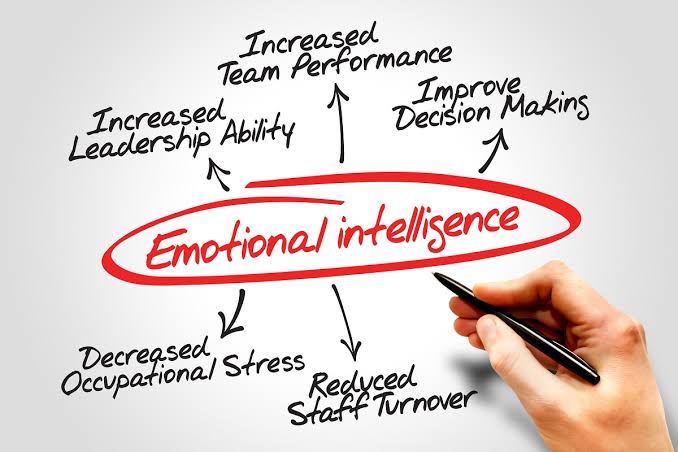
Emotional intelligence or emotional quotient (EQ) is the ability to understand and recognize your emotions and how to deal with numerous emotional situations of an individual. People with high emotional intelligence have more chances to become successful in most aspects of their life. If a job requires emotional labor, it is demanding to be emotionally intelligent.

Characteristics of Emotional Intelligence.

In a book titled “Emotional Intelligence – Why It Can Matter More Than IQ” 1995, Daniel Goleman, an American psychologist, expanded a framework of five components that characterize emotional intelligence:

  • Social skills– People find it attractive to talk with individuals with good social skills. People with emotional intelligence are good communicators too and are excellent in maintaining relationships.
  • Motivation– High emotional intelligence improves motivation. These people are usually motivated and make the surroundings too. These are productive and very effective in whatever they do.
  • Self-regulation– They can easily regulate their emotions which means they can control emotions and can tackle every situation and these think before they act. 
  • Self-awareness– These people understand their emotions and don’t let them rule them. These are super confident and believe in their intuition.

More the emotional intelligence, more maturity.

How to improve?

The biggest mistake that people make is that they are judgemental. They make a judgment without even knowing the whole story. This stuff should be avoided. Put yourself in their situation and then react. Humility can be a good thing and practicing this can make you confident about things. Just give opportunities to outshine others and don’t bother much to get applause for yourself. Self- evaluation also plays a crucial role. Admit your weakness and know where you have to work on in spite of giving false gratification that you’re perfect. In the business world or any other sector, it is highly necessary to be patient. Also taking responsibility, the responsibility of your work, or even hurting someone and apologizing. By being empathic and responding to their feelings we can make them feel comfortable. 

For example, if you ask an employee overtime and even if he agrees you may see a slight disappointment in his voice, so in spite of just ordering and walking off, appreciate his will to work.

What emotional intelligence affects.

Physical health – If you’re unable to manage your emotions probably you may affect your health by suffering from various diseases.

Mental health – Anxiety and depression can be a result of a lack of emotional intelligence.

Relationships – Communicating emotionally can be a booster in a relationship. Lacking this skill can also ruin your relationship.

Social intelligence – Tuning with your emotions may help you connect with the surrounding. Whereas being anti-social may cut your presence and make you feel less loved and less needed.

The basic idea of EQ:

  1. Identify your feelings.
  2. Identify other’s feelings.
  3. And then reacting accordingly.

Yes, of course, IQ matters but EQ enhances the value of IQ and every organization expects employees to be emotionally strong and intelligent.

Motivational Factors that Will Encourage Student to Study Well

Climbing a mountain does not happen at once. More than 40% of high school students are chronically disengaged from their educational institutions as reported by The National Research Council.

Most probably, these children don’t realize the importance of learning, especially education . Taking under consideration it’s impossible to continue the tutorial trip without passing the initial stage, school, many modern kids fail to succeed at the first stages. It is difficult to revive later.

Visualize Yourself Taking Action
Numerous researches discovered that visualization features a strong, positive impact on the training process. Even in sports, it makes a difference to the performance of athletes. Students can be compared to those athletes as well, so it might be a good idea to visualize things for them too.

Interactive content will do:

In-class PPT presentations
Photographs and images
Videos and documentaries
Games
After-class practice
A teacher should dedicate longer to attending theatres, museums, and cinemas to let the scholars imagine particular scenarios. Vivid life examples will help to know the topic better.

As for the scholar , it’s necessary to pretend you’re already taking certain actions (e.g., writing the last page of a search paper, collecting study materials, getting enrolled in the dream college, etc.) This technique assists in accomplishing things on your list.

Remember: Even Smallest Actions Add up
Many times in our life, we can get bogged down being sick and tired of things happening around us.

Working on 10,000-word research or composition could be one among the explanations for facing stress. No teacher assigns such large assignments on the submission eve. It means every student features a few weeks or maybe months to organize the paper. Thus, if you come up with 5-10 sentences per day, you’ll manage to end the project before the deadline. Postponing it to the last minute will not help.

Right, every action adds up to accomplishing a big , long-term goal.

The best thing a student can do trying to make a strong dissertation is handling 500 words a day . If you finish earlier, it is still better than being late. Late papers result in F in 90% cases.

Writing 500 words a day will cause you to complete the project in only 20 days, and it’s but one month! Even if you propose to go away weekends aside, which will do. Remember: worry disappears in the face of action.

Keep Telling Yourself It Will Not Last Forever
Knowing that at some point the “nightmare” will end, and you’ll obtain far more freedom may be a perfect motivation. Who knows: perhaps, at some point you’ll become a manager in some cool firm, which can cause you to tell people what to try to to , and not the other way around .

Focusing and Keeping Things in Mind
Start re-reading the study materials 3 times from today. An old and really wise teacher shared this hint with us a while ago. We managed to find out some historical episodes by memory and even improved the knowledge of some languages.

You should not go into every detail – the photographic memory will help you to scan the letters and store them somewhere deep inside your head. And yes – ask questions whenever you revise the fabric and find out things that sound weird to you.

Break down the Readings Classes like World’s History or English Literature demand students to read long swathes of content. It would be easier to review by dividing the whole material into chunks of one page (approximately 500 words). Put down at least 5 questions related to the discussed topic and ask your tutor or experts to answer.

A better idea to organize the things would be involving the flash cards in the educational process. The sooner you get the answers, the sooner you will master the topic.

Cooperate in Teams
Get together with your peers to speed up the learning process. Brainstorm in groups to gather sources and find replies to the essential questions. It will also help to improve communication skills, analysis, and critical thinking.

It is impossible to write down huge volumes during one evening. Besides, the teachers shouldn’t overwhelm students with multiple homework assignments, so it’s okay to urge professional help if your teacher breaks the rule.

It’s all good until you are Breathing.

The meaning of “LIFE” is incomplete without worries. We try really hard to get out of a situation where we don’t feel comfortable at all. The more we try, the more anxious we appear. This does not mean, you should not try, but what you should be more concerned about is the consequences. Every human on the globe is somehow worried about some of the other aspects. Worries may depend from person to person and of course the financial condition. People from below the poverty line are starving, while some people are worried about what dish they will get for dinner. Some are giving pain to themselves by cutting wrists, while some don’t even have hands. Some are attempting to suicide just due to stress, whereas some eagerly want to survive but are hospitalized or coping with the illness. Some were relieved after passing in semesters exams while a girl lost her scholarship. It’s necessary to admit and analyze the worries. The point is everything is smooth until you are living. Everyone will notice your existence, once you stop existing. There ain’t any massive topic more than your life. We can actually train our brains to think slightly differently. Taking stress, being worried, will only result in forehead layers and it won’t affect the root or the cause of the trouble.

Being Practical and Sensible!

While traveling on a local delayed train, the passengers usually come up with a discussion speaking about the time and arrival of the different trains or making perceptions about the actual delay. We just assume things, make perception. Ya, it’s true what else you could have done sitting inside, what is the result of such discussion. If we have the will to improve then why don’t we do something productive and contribute? The point is at some point I think it’s necessary to be more logical.

Psychological tricks.

  • Developing a realistic understanding of control- Analyze the situation whether it can be controlled or not. This means what’s within your control and what’s not. If you think it’s controllable then make sure you believe in it too.
  • Schedule duration for worry- People usually visit therapy to avoid worrying. But they want it done to be real quick. Issues like this don’t have a pill or some magic tricks that will let this go right away. 

This may sound funny but it actually helps. We can not schedule time like just 15 mins to worry throughout the whole day, but we can train our brain. Make sure the scheduled time isn’t before going to bed otherwise you won’t get a nap thinking about the worries.

  • Becoming mentally stable- There are many factors that we can not control like how someone should behave, how someone should feel for you, and much more. That’s the bitter truth. Being mentally strong and reaching greater peaks is a characteristic of a healthy mind. When you end bothering about things you can’t control, you’ll have more energy and vitality to assign to the things you do have management over.

How Do I Motivate Myself to Stay Motivated?

Making a decision to achieve success is not enough. Many do so, but they are doing not back their decision with action.

It is so easy and pleasant to daydream, watch programs on TV about celebrities and follow them on Instagram, Twitter or Facebook. This might be sweet, but it will not make you successful.

To achieve success you need to act. You need to do things. You need to follow through with your decisions, even if it is difficult and inconvenient and you need leave your comfort zone.

You need to motivate yourself constantly, until motivation become a habit.

Decisions and plans need to be backed by strong desire and strong ambition, steady motivation, and perseverance. You have to keep your goal constantly in your mind, and avoid negative thoughts and doubts about your ability to achieve your goal. To do so, you need a constant supply of motivation.
We read about successful and rich people and want to be like them. A weak desire is not enough. It must be burning desire that is not stopped by obstacles and by failures.

Almost every successful person experienced failure and rejection, but they found the inner strength to rise above them and continue trying.

Many try to reach far, but only the ones who do not give up win.

What do you choose, to be on the ranks of those who:

Only daydream.
Try, fail, and quit.
Go all the way, despite obstacles, fears and failures.
It is natural to be at times frustrated, exhausted, or discouraged. Sometimes, plans do not work out as expected. At other times, we feel tired and lack energy. Yet, you can awaken renewed motivation.

Here are few actions that can help you motivate yourself:

  1. If you have a certain goal that you want to achieve, you need to remind yourself often, about the importance of your goal and how much you want it accomplished.
  2. Think often, what proportion your goal means to you. Think of details, visualize it, and feel as if it is already accomplished.
  3. Repeat your decision to achieve your goal, every day, several times a day.
  4. Always try to find ways to replenish our motivation and enthusiasm.

One of the way to do so, is to do small acts that get you closer to your goal. Sometimes, it is difficult to awaken enthusiasm, especially when the goal looks too big and far away. In this case, do a few minor actions that are easy to do, and which get you closer to achieving it. This will keep the zest and enthusiasm alive.

  1. Think of the benefits of achieving your goal, and how your life will be after achieving it.
  2. Read about people who have achieved success, and let their stories inspire you. Be careful of negative thoughts that might rise up, telling you that you cannot do what they did. Reject these thoughts, no matter how many time they return.
  3. Read inspiring quotes by people who achieved success. Every quote is like a tiny sparkle of wisdom and inspiration. You can many quotes, here, at the quotes directory.
  4. When frustrated or discouraged, exercise your body, take a walk or go the gym. This will fill you with renewed energy and strength.
  5. Surround yourself with positive and happy people. A positive mental attitude is contagious, and so are feelings of happiness. Of course, if you are too negative, there might be inner resistance at first, but you should not let negativity win.

SELF-CONFIDENCE

When self-confidence is present, you’re not afraid to require risks and to undertake new things.

Self-confidence is important for a cheerful and successful life and may be a quality of character that the majority people appreciate, once they see it in people .

When you possess self-confidence, you are doing not allow what people think and say about you to affect you, and you don’t take things too personally. This means a more peaceful life.

Most people aren’t born with this quality of character. However, you can build it up. You can build self-confidence by changing your mindset and your attitude toward life, albeit various personal experiences within the past caused you to break down .

Self confidence is usually suffering from how you think that and believe people see you. If you’ve got low self-esteem, you’d probably believe and feel that folks don’t have a high opinion of you, which can in fact , undermine your self-worth .

If you see yourself in your mind’s eye as lacking self-worth , you’ll behave accordingly, and other people would treat you accordingly.

If you see yourself in your mind’s eye as strong and assertive, you’d broadcast this attitude to the people you meet, who would sense your inner strength and treat you accordingly.

How to Build Your Self-Confidence
I would wish to suggest a couple of simple tips to assist you build self-confidence.

  1. believe what you’ve got already wiped out your life
    Even if you experienced failure and unhappiness in your life, there certainly are a couple of achievements.

These needn’t be great achievements, but quite simple ones, like getting good grades at college or college, promotion at work, getting along well together with your neighbors, getting your driving license, or learning to swim.

Thinking about those achievements causes you to realize that you simply have experienced success in your life, and not all is failure.

This would cause you to feel better about yourself and about your life, and improve your self-esteem.

  1. specialise in what you probably did and achieved, not on what you probably did not do and didn’t achieve

Why fill your mind with scenarios of failure?

If you retain brooding about failure, you unconsciously expect and anticipate it, and might eventually attract it to you. This would further spoil your sense of self-confidence.

You should replace this negative movie in your mind with a movie about success. If you retain watching a movie of success in your mind, you will eventually attract success. This process would build up your self-confidence.

  1. Write down an inventory of your achievements and success

Take another step toward building your self-confidence and write down an inventory of your achievements and success, and at check out this list often.

You might say that you simply haven’t experienced success.

You are wrong about that.

You might haven’t experienced great success, but you surely had, albeit only occasionally, experienced some quite success. Even baking an honest cake, being in good relations together with your spouse or children, or going for a walk almost a day may be a sort of success.

  1. Think about your talents and abilities

Set a time every day to believe your talents and skills , and find ways to develop and use them. Do not say that you simply haven’t any talents and skills. Everyone has some. You just need to find them.

  1. Strengthen your willpower and self-discipline
  2. Set small, simple goals

I am talking about really small goals, like cleaning and arranging your wardrobe or drawers, inviting friends to your house, beginning to learn swimming, taking a brief walk, or talking with someone whom you don’t like.
These small acts will cause you to feel better about yourself and increase your self-confidence.

  1. Develop a positive attitude

Instead of that specialize in negative events and expecting the more severe , make the trouble to specialise in the positive and expect positive results.

This won’t be easy if your mindset has always been negative. However, with persistence, you’ll change your mental habits and build a positive attitude.

  1. Give yourself motivational talks

Remove any negative commentary running in your mind. Be firm, and don’t allow negative comments about you and about your life to run in your mind. You need to be more conscious of what’s happening in your mind and not allow negative self-talk to travel on in your mind.

  1. What we wear, often, affects how we feel

What kind of clothes makes you feel better? What colors make you feel more confident?

Choose the garments and colours you wish , and therefore the ones that cause you to feel more confident.

  1. Your body posture is important

Keep your back straight while walking and while sitting.

  1. Act confidently

Act confidently, even if you are faking it. In time, acting confidently will become a habit.

  1. Let your voice be heard

When talking, speak up and clearly and don’t be afraid to precise your opinions.

Personal Development

Personal development can include any skill that you build to improve yourself—your emotions, thoughts, or behaviors. It doesn’t really matter which skills you want to improve; the key to personal development is taking the right steps — steps that help ensure that you reach whatever goal you are pursuing.

What are the most important personal development skills? It really depends on what you’re trying to achieve. But here are 9 that I have found to be important to successful personal development.

1. Start by figuring out which personal development skills you need to build. The first step in any personal development strategy is to figure out how to best use your time. It makes little sense to learn how to code if you don’t plan to be a coder or to bench press 400 pounds if you don’t plan to be a weight lifter. These can be hobbies, but personal development is more about building skills to reach your goals. So it’s good to take some time to self-reflect. (If well-being is a goal of yours, take this well-being quiz to see which skills you need to build.)

2. Develop entrepreneurial thinking. Everyone can benefit from learning how to think like an entrepreneur, regardless of whether or not you are one. Why? Because entrepreneurs are innovative, good at planning for all possible outcomes, and skilled at getting others to buy into their vision or dream. And perhaps more importantly for personal development, they tend to be adaptable to all sorts of situations.

By developing entrepreneurial thinking, you better adapt to whatever your circumstances are so you can more easily achieve your goals, whether those goals are to start a business that makes a positive impact in the world, to set yourself up for an early retirement, or climb Mount Everest.

3. Develop a growth mindset. If we have a “fixed mindset,” we may shy away from challenges that could help us grow. But this can be problematic because our fear of making mistakes can lead us to avoid challenges and new experiences—experiences which would help us grow, improve ourselves in important ways, and create the life we desire.

If we have a “growth mindset” we seek out challenges because we value learning and growth more than we value feeling smart or knowing what we’re doing. That’s why those with a growth mindset often build new skills more easily: They believe they can and so they really work at it.

4. Develop your self-soothing mechanism. High levels of stress are not only bad for our health and well-being, they can prevent us from effectively pursuing and achieving our self-development goals. By learning effective, long-lasting stress-reducing strategies, your body and mind will be more equipped to handle the inevitable challenges that arise when you’re trying to develop yourself.

5. Develop resilience. Resilience is that super-important skill that helps you bounce back quickly after being knocked down. This is one of the most important skills for success because none of us will achieve anything if we don’t keep trying when we fail. We can build resilience by improving skills like emotion-regulation, mindfulness, and positivity.

6. Develop your value compass. It’s not always easy to live by our core values. But when we go through life without following our personal values, we can easily get lost. We may suddenly “wake up” and realize that we are not who we want to be or where we want to be. This is why it’s so important to stay in alignment with our personal values.

What are your values? Perhaps: kindness, curiosity, creativity, hard work, or personal relationships. Define your personal values so you know which actions are in alignment with those values.

7. Create a personal development plan. A good personal development plan takes all these factors into consideration — the WHAT, the HOW, the WHY, and the WHEN. So ask yourself:

What skills will you build?

How will you build them?

Why will you build them?

And when will you build them?

8. Record your progress towards personal development. Keeping track of our progress as we move toward our personal development goals is key to making sure we’re on the right track. Then we can pause and take a different direction if we’ve gone off course. By maintaining self-awareness and frequently checking in with ourselves, we can identify things that we need to devote more attention to. As a result, we can make better progress toward our personal development.

9. Keep developing yourself in new ways. The science is clear: The more ways we develop ourselves, the broader our skill set, and the more success we tend to have. So try learning some new emotional skills or do some activities to build new skills. You just might learn something that changes your life.

HOW PERSONALITY WILL HELP YOU SEARCH FOR A JOB

GET TO KNOW YOURSELF BETTER:You may prepare to research your strengths and shortcomings during an interview, yet how well does one truly comprehend them? “You’ll want to assess any gaps in your skills, but once you check out these from the attitude of your personality and values, you’ll gain a sensible , genuinely insightful understanding of your true pattern of strengths and weaknesses,” Schofield states. The outcome? You will seem more genuine, mature and mindful just in case of applications and interviews. Everyone has shortcomings; on the off chance that we can exhibit that we as of now perceive our own, and know how to overcome or direct them in a positive manner, this may run over much superior to a half-hearted stock-phrase
You will come better off with your interview preparation, and when you’re straightforward about whether you’re a solid match for the job, you’ll have a superior chance of getting an interview call.
YOU WOULD BETTER YOUR COMMUNICATION SKILLS AND BECOME a far better PROSPECT:Communication skills are critical for qualifying for majority jobs, and they’re vital in terms of getting the specified career opportunities.
Getting to understand others’ communication styles and the way they convey with you is similarly as critical as going to know your own. When you got a firm grip on your own abilities, personas and interests as they identify together with your job search, you’ll be a far better off applicant and more inclined to get the job post interview.
YOU WOULD REFRAIN FROM APPLYING FOR UNSUITABLE JOBS:You can be more sure and assured when trying to find employment on the off chance that you simply comprehend what has clothed wrong previously. On the off chance that you simply continue missing on career opportunities that appear to be perfect matches, you’ll wish to point your finger on what clothed wrong.
Schofield states that “Self-assessment and an understanding of organizational culture and cultural fit can help us recognize the explanations why previous applications or positions might not have figured out .”
NARROWING DOWN ON YOUR JOB/CAREER OPTIONS BECOMES POSSIBLE:Try to not consider the foremost generic factors about the job/career, e.g. regardless of whether it’s the right pay grade, prospects and site . These are extremely critical factors to think about , however numerous positions fit these fundamental, practical criteria.
Do you incline towards a more organized environment with hands-on guidance, or an adaptable one where initiative is awarded? Is it more vital to possess a supportive, friendly team of work-mates , or the prospect to fill in as independently as would be prudent?
Your persona will direct your responses to those questions. Schofield describes, “When you cut down the choices , it allows you to specialise in quality over quantity – a smaller number of more tailored applications with a better probability of success.”
YOU WOULD KEEP SURPRISES AT BAY:Organizations know the value of deciding on a poor hiring decision, and that they are progressively attempting to differentiate and parse individual differences and sync with cultural fit. While not all organizations incorporate a personality evaluation as a neighborhood of the appliance , it isn’t bizarre for potential and current employers to anticipate applicants and current will finish some sort of psychometric test. This is what Schofield has to say.
On the off chance that you comprehend the information and procedures engaged with psychometric assessments, you’ll have a head start on replying to difficult questions and mollify concerns employers may have about your fit. The most ideal approach to try to to this is often to require self-evaluation tests yourself so you’ll be all around informed and prepared .
These were a couple of inputs with regards to your personality and the way wouldn’t it help to land employment .

HOW TO STUDY PROPERLY

Studying for long hours is only beneficial if done in the proper way. If you are not studying in the right manner, it is a certainty that all those hours would not lead to desired results. By tweaking your studying techniques backed by research project you’ll improve the standard of the content learnt and may also retain it for a extended time. 

1. Focused and diffused learningUse both focused and diffuse modes of learning. Focused mode is when you focus attentively on a topic and study it with no distraction. After doing this for some time (can follow the Pomodoro technique), you can switch over to some other tasks. In this time period, the brain works on the material learnt, processing and understanding it. This is a reason why if you can’t understand something, you’ll grasp it easily once you visit it later. 

2. Play hard, study smartInclude activities like exercising, walking, playing any sport in your daily timetable. These physical activities assist your brain in understanding unfamiliar topics and ideas . Do not think of them as just another pastime. It is not smart to only study for the whole day with zero physical activity. 

3. Sleep!Sleeping is very crucial to your learning. Waking up the night before the exam and cramming the entire night can help in the short term but it is not at all helpful when it comes to longer retention span. Sleeping helps in clearing the toxins produced in the brain during the day and consolidates the material learnt.

4. Spaced studyingMake sure that your learning is spaced over a period of days. Learn every day, this gives the time to make the previous concepts stronger and understand the new things in a better way. It is not smart to study a lot one day and then not studying anything for the next five days.

5. Apply what you have learntPractice what you have learnt. If you cannot solve a problem, do not see the solution immediately. Try using the concepts that you have learnt and if you are still stuck use hints if available. After exhausting all paths, you can check the solution but make sure to actually work it out. Just reading the solution is not enough. 

6. Mixing up thingsAfter mastering one topic do not stick to it, move to newer concepts. This might seem difficult and it is quite likely that you would end up procrastinating, but start anyhow. Reading the same concepts might give you the sense of progress but you should be real to yourself. 

7. Learning from basicsWhen learning a new concept, approach it right from the basics and then explain it to yourself in simpler terms. This is also known as Feynman’s technique and it is very effective when dealing with difficult and layered topics.

8. Watch out for new ideasBe open to new ideas and techniques when solving problems. If you are acquainted with a method, you might often feel that it is the most effective approach. This can block you from knowing and trying better techniques that exist. So be receptive to learning new things.

9. Consistent learningLearning compounds with consistency. Even if you’ve got started late, do a daily portion everyday. An essential aspect of smart study is to spot the facility of normal learning. Throughout human history, there are many samples of people that have started late and achieved mastery in their field.

IMPROVE YOUR FOCUS

In this fast-paced world we’ve created, we’re only going to feel more overwhelmed by the ever-increasing directions and distractions we feel pulled toward. With exponentially increasing demands on us in our work and personal lives, sustaining and improving focus on things which matter is getting tougher and tougher.
You’ll be pleasantly surprised to learn that keeping focused is no longer about trying to discover secret weapons of willpower or self-discipline. With these initial self-reflective exercises and different brain-training exercises, you’ll no longer be having arguments with yourself to get on with the job!
Here’re 7 ways on how to improve focus.
1. Have a Plan You Feel Clear AboutOne of the foremost common reasons we struggle to take care of focus is because we lack clarity about what we’d like to try to to next. The next best action step doesn’t feel clear to us.
If you are trying to lose weight but aren’t clear on exactly what activities you need to do, with what intensity, the food you need to eat and the timing of when all this needs to happen, you increase your chances of staggered progress.
If there are not enough parts early in the process to that feel clear for you to make the next step, these emotional obstacles will derail you.
You must also recognize the amount of detail in the steps you need to feel ready and confident to move forward — this will differ between you and the next person. You and another person are often given precisely the same instructions to find out a task. He/she might feel completely ready and confident to get to work. On the other hand, you hesitate.
Work on developing enough detail clarity until you are feeling you’ve got enough resources and know enough to require the steps.
2. Set Your Mood and Environment to maximise Your Capacity to FocusIt’s been argued that in slightly-above-ambient temperatures, you’ll be more creative. You feel more relaxed and your productivity increases. Conversely, lower temperatures have also been found to more positively influence decision-making ability and alertness.
Cornell University conducted a study of office administration workers whereby their productivity positively correlated with increased office temperatures.[1] At 25℃, the workers were typing with 90% accuracy. However, with a drop of 5℃, the typing rate nose-dived along side an increased error rate of 25%. The study also identified other factors which could greatly affect productivity and focus such as air quality and pollution.
It’s not just temperature you need to pay attention to. Good lighting is essential. The wavelength of blue light emitted from neon lights and most electronic devices generally ignites our serotonin levels and keeps us awake. Consider though that natural light is best where possible. When your body is truly getting tired, you can honor its natural rhythms and listen to its cues for rest.
Switch off communication applications (e.g. Facebook messenger, Slack, Yamma). Make it hard for yourself to access such applications and devices by physically putting them in places that are inconvenient for you to access (try the 20-second rule and make it take more time to access). If you have to go outside to the garden shed to retrieve your phone (and it’s cold and raining outside), you’re less likely to do it!
Maximize your exposure to visual messages which direct you to remain on task. Rather than have your eyes cast across post-it-note messages such as: “Don’t get distracted”, have messages of what you want to direct yourself to do: “Keep going. Stay focused.” Surround where you propose to execute most of your day’s work with deliberate messages that directly tell you to remain on target .
3. Create a Distraction Procrastination To-Do ListWhen you know you have to prepare a complex report or assignment, the temptation to be carried away with the social flittings of your friends on Facebook or your colleagues chatting nearby will likely be stronger than ever. That story you spin yourself that you’re only spending a smidgin’ of your time getting ‘up-to-date’ so it can’t really do any harm becomes the sole story you would like to believe.
Trying to resist the temptation completely can cost you valuable time and psychic energy . The guilt you harbor for contemplating digressing from your important activity inflicts an emotional cat-o-nine tails upon you. That doesn’t serve you either.
Submit half-way. Fully indulge at a designated time period to soak up that dopamine rush from scrolling through sporadic events and sponsored posts on your newsfeed or chat to whoever is online at the time. 
After pounding through a piece of labor , undergo that guilty pleasure. When you engage in it, do it fully. If you’ve been studying straight for three hours, it’s time to stand up, stretch and stroll to your favourite coffee shop and back. Go for a walk or swing on the swings in your closest public park.
If you work from home, bake a batch of scones, put on a face mask as you soak your feet in a foot spa. Or watch half of the football match you recorded but haven’t gotten ‘round to reviewing yet.
Cold-turkey abstinence is hardly ever effective. Not only are you wasting time and energy resisting the urge. You make the urge stronger by denying yourself! So, don’t deny yourself but manage it wisely.
4. Practice Meditation and MindfulnessIf you’re yet to be convinced of how meditation can help you improve focus, look no further than the declarations made by the American Psychological Society praising its benefits.More and more studies are demonstrating how meditation can reduce rumination, stress, anxiety and improve relationships, emotional stability, focus and working memory capacity.
If you’re not meditating, you are doing yourself a gross disservice. Meditating allows to practice regaining focus. As you practice, you learn and increase your skills to notice when your mind is wandering off track. You then practice bringing it back to what you ought to be directing your attention to.Include in your morning preparations for the day a gentle but directed review of what you need to devote your time to today. Throughout the day, consider that your attention span swings like a pendulum. Exercise it one direction and let it swing into a free-thought space for moments of reprieve.
The world, our bodies and our minds work in rhythms. Learn to exercise your mind and focus intrinsically . If you try to beat yourself cognitively into submission, you’re unlikely to win. You’ll be unnecessarily exhausting yourself in repeated attempts of trying.
Here’s a beginner guide for meditation: Meditation for Beginners: How to Meditate Deeply and Quickly
5. Schedule Planning, Review and Recognition Periods Throughout Your DayManagement consultant and best-selling author of 18 Minutes, Peter Bregman recommends a simple plan to help train your brain to remain focused and help you track your progress.
Before the computer goes on, the first 5 minutes of your day, you invest in planning and write out your ‘today’s activities’ list. Physically writing down your activity goals for the day (using paper and pen, not electronic word processing) engages more functions within your brain (e.g. the generation effect[3]) which train it to acknowledge these activities are highly important.
Bregman then recommends that for 1 minute at the end of each of the next 8 hours, you stop and recall what you have accomplished in that hour. You congratulate yourself for what you have achieved and regain focus, recalibrate expectations and take a pause. You slow down to speed up.
By reviewing what you’ve got accomplished, you attach a positive emotional experience to your work and progress. This action in itself will improve your focus as you fuel your motivation to stay the wheels of your momentum, rolling.
The final 5 minutes at the end of the day are spent in reviewing and planning the next day. Doing so makes it easy for you to sustain laser focus from at some point to subsequent , to subsequent .
These 18 minutes of planning serve as plain but powerful guard rails to keep you mentally on track.
6. Create Goals and Activities That Satisfy Your Highest Priorities and ValuesWhenever you’re resisting doing something, it’s highly likely because it’s not topping your desirability charts.
As a human being, you behave and act in ways which ultimately keep you feeling safe and comfortable. As long as we can see we will get to continue feeling safe and comfortable, it doesn’t matter what activity we’re asked to do.
However, the moment a notion arises of your needing to do something that feels unfamiliar (and hence, uncomfortable), you can guarantee you’ll feel a sting of resistance. It might be slight but it will be there. However, life doesn’t allow us to simply avoid whatever we please.
The key is to examine and reframe what you need to do in a way that does satisfy your highest values and priorities.
If you believe you know what your values and priorities are, take a look at the results you have against the goals you’ve set for yourself thus far.
For example, if you believe one of your highest priorities is to have a healthy bank balance yet your balance statement shows more outgoings than revenue, having a lot of money is actually not a high priority for you.
At now , you would like to explore the variability of activities that yield a healthy bank balance that you’re not currently exercising. Saving, reducing costs, modifying and monitoring spending habits, making wiser purchase choices and finding ways to extend your income are all activities you would like to explore. These things might sound dull and like diligence .
7. Transform Information to Make Things More InterestingAccording to neurobiologists’ findings, we learn better when we actively do different things with the information. Not only are our experiences of learning more enjoyable, we activate more parts of our brain. This serves lessons and memories to be more effectively encoded into LTM .
You need to become clever at delighting and regularly stimulating your senses through variety.
If you’re studying, engage a spread of the way to exercise using the knowledge and skills you want to develop. Discussion groups, creating informal quizzes, teaching someone the knowledge you would like to find out involves you exercising verbal communication skills where you want to both give and receive information. You must adapt to your audience.
Drawing pictures and diagrams, creating voice memos about what you’re learning, using colors and symbols again different activates different parts of the brain. More connections are developed in your neural circuitry to aid your recall.
Furthermore, you become more adaptable and adept at applying what you learn to different situations.
Creating your own personalized manuals and notes becomes a passion project which pushes the personal gratification scale higher and higher.
Before you know it, staying focused no longer feels like a chore

How can one develop reading habits?

The basic reasons why reading is important is that it helps in the growth of of emotional, mental and psychological aspects of a human behaviour. Every book you read would give you an opportunity to learn new ideas and implement them in your day to day life. Reading not only makes you intelligent but also smarter. For an author, writing a book takes a hell lot of efforts and dedication. He passes through several pains to come up with a single book. As readers we gain years of experiences by reading them. Reading improves our focus and concentration. Many of us spent our time surfing through the internet, watching videos and reading unnecessary memes. This is the reason people are losing focus. Thus, reading is an effective way to gain focus back. It helps in the discovery of yourself. When you read a book, you connect to various experiences and emotions. This not only makes you engrossed into the books but also guides you to to act in particular ways when you face such situations in life.

Reading also leads to the improvement of your emotional health. While reading a book you encounter many emotions such as happiness, anger, sorrow, surprise etc. But at the end, we always wish our hero to win. Your memory is also enhanced as you come across many words which you need to remember. U tend to become more creative and self motivated.

There are many reasons to be listed that why one should read books on a daily basis. Now, here are the ways to develop reading habits:

  • The foremost step to start developing reading habits is to stop looking it as a chore. Start reading few pages everyday and steadily increase the number as you begin to enjoy the story. It will take time to be able read 500 pages at a stretch.
  • Choose your genre of books such as fiction, non-fiction, fantasy or biography. It is better to know your taste of reading first rather than getting them halfway done and leaving.
  • Start small. Reading short stories can be a a very good start for the budding readers.
  • It is not necessary to complete a book till the end if you are not not finding it interesting. You may better leave it if you think that the book is not worth of your time.
  • Don’t start reading a book having tough language. Obviously, you can take help of a dictionary but better start with those books which have simple vocabulary. Gradually you can move on to to reading such books.
  • Paper is no more exciting. You can read from Amazon’s Kindle having millions of books of various genre.
  • Read the books on a daily basis. Do not pressurise yourself if you don’t feel like reading a book for long hours. Start with reading 20-30 minutes daily and then gradually increase over time.
  • Try to read before going to bed. This would not only improve your mental health but also would provide you a sound sleep.
  • Read at quiet places where there are no disturbances at all.
  • You can also keep a short diary with you to make notes for further references.