The Power of Connection: Why Communication Skills Matter

Effective communication is the foundation of successful relationships, careers, and communities. It’s the key to conveying ideas, building trust, and resolving conflicts. In today’s fast-paced, interconnected world, strong communication skills are more crucial than ever.
Benefits of Good Communication Skills:
1. _Builds Trust and Relationships_: Clear communication fosters deep connections and understanding.
2. _Enhances Career Opportunities_: Strong communication skills make you a valuable asset in the workplace.
3. _Resolves Conflicts_: Effective communication helps navigate disagreements and find mutually beneficial solutions.
4. _Boosts Confidence_: Articulating thoughts and ideas with clarity empowers individuals.
5. _Facilitates Collaboration_: Good communication skills promote teamwork and drive collective success.
6. _Improves Problem-Solving_: Clear communication ensures everyone is on the same page, leading to better solutions.
7. _Enhances Personal Growth_: Communication skills help individuals express themselves, leading to self-awareness and self-improvement.
Developing Strong Communication Skills:
1. _Practice Active Listening_: Pay attention, ask questions, and clarify understanding.
2. _Be Clear and Concise_: Avoid jargon, use simple language, and stay focused.
3. _Use Nonverbal Communication_: Body language, tone, and facial expressions convey just as much information as words.
4. _Ask for Feedback_: Encourage constructive criticism to refine your communication style.
5. _Embrace Emotional Intelligence_: Recognize and manage emotions to communicate effectively.
Conclusion:
In today’s interconnected world, strong communication skills are essential for personal and professional success. By developing these skills, individuals can build meaningful relationships, achieve their goals, and make a lasting impact. Remember, effective communication is the power that connects us all.


Top Skills and Training for Youths in 2024

  I can provide some general insights into skills that were considered valuable for youth. However, keep in mind that the landscape of skills can evolve rapidly due to technological advancements, economic changes, and other factors. Here are some skills that were deemed important, and they might still be relevant or have evolved by 2024:

  1. Digital Literacy and Coding:
    Understanding digital technologies and being able to code were increasingly seen as essential skills. Programming languages such as Python, JavaScript, and others were in demand across various industries.

  2. Critical Thinking and Problem Solving:
    The ability to analyze information critically, solve complex problems, and make informed decisions remains crucial in many professions.

  3. Communication Skills:
    Effective communication, both written and verbal, was highly valued. This includes the ability to collaborate with diverse teams and present ideas clearly.

  4. Adaptability and Resilience:
    The pace of change in the job market and technology requires individuals to be adaptable and resilient. This includes a willingness to learn new things and adapt to new situations.

  5. Emotional Intelligence:
    Understanding and managing one’s emotions and the ability to navigate social complexities were considered important for personal and professional success.

  6. Creativity and Innovation:
    Creativity is essential for problem-solving and driving innovation. This includes creative thinking, design thinking, and the ability to generate new ideas.

  7. Data Literacy:
    As data continues to play a significant role in decision-making, understanding how to work with and interpret data becomes increasingly important.

  8. Entrepreneurial Mindset:
    Encouraging an entrepreneurial mindset involves fostering traits like initiative, risk-taking, and the ability to identify and pursue opportunities.

  9. Financial Literacy:
    Basic financial literacy, including understanding budgeting, investing, and financial planning, is important for personal and professional life.

  10. Cybersecurity Awareness:
    With the increasing reliance on digital technologies, knowledge of cybersecurity best practices is essential to protect personal and organizational data.

  11. Health and Well-being Skills:
    Focusing on physical and mental well-being, including stress management, mindfulness, and a healthy lifestyle, contributes to overall personal success.

Remember that the specific skills in demand can vary depending on regional and industry-specific factors. It’s advisable to stay updated with the latest trends in education and job markets to ensure that training efforts align with current demands.

Skill Development Initiative for Underprivileged Women, Hamari Pahchan NGO’s

In the realm of social change, women stand as pillars of resilience, strength, and transformation. Hamari Pahchan NGO has embarked on a transformative journey, dedicated to empowering women and fostering their financial independence through the dynamic Skill Development Programme.

The Imperative of Women’s Empowerment: At the core of societal progress lies the empowerment of women—an endeavor that Hamari Pahchan NGO champions with unwavering commitment. The organization recognizes that investing in women’s education and economic empowerment is not just a choice but a crucial step toward creating a positive ripple effect that benefits everyone.

Navigating Challenges Faced by Underprivileged Women: The path to women’s empowerment is riddled with challenges, especially for those facing economic hardships. Underprivileged women often encounter barriers such as limited access to resources, restricted educational opportunities, and entrenched societal norms that confine them to lower-paying jobs. Hamari Pahchan acknowledges these hurdles and is determined to dismantle them.

Hamari Pahchan NGO’s Response: Enter the SKILL DEVELOPMENT PROGRAMME—a beacon of hope and catalyst for change. This initiative conducts workshops and training sessions, addressing the unique needs of underprivileged women and equipping them with skills essential for securing better employment opportunities and financial independence.

Addressing Skill Gaps: The NGO begins its journey by conducting thorough surveys to identify skill gaps within the target communities. This meticulous approach allows Hamari Pahchan to tailor its training programs, ensuring they directly address the specific needs of the women they aim to empower. It’s not just about teaching skills; it’s about instilling the confidence to apply those skills in real-world scenarios.

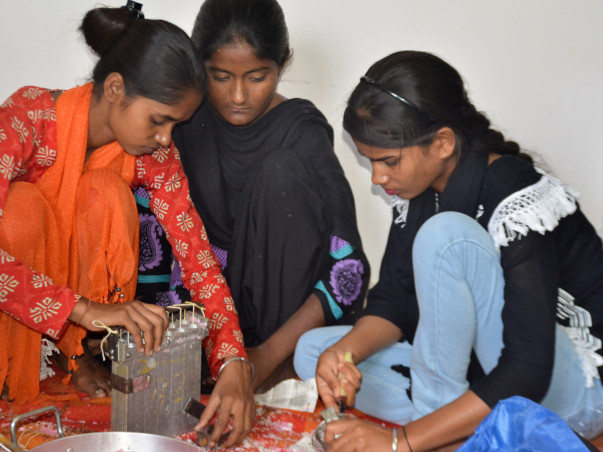
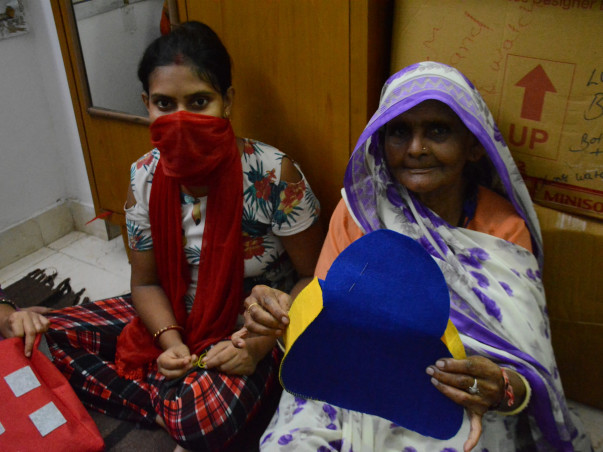
Diverse Skill Development Initiatives: The Skill Development Programme embraces diversity, offering workshops in makeup, handicrafts, knitting, sewing, embroidery, candle and diya making, music, and more. By presenting a wide array of skills, Hamari Pahchan ensures that women have the autonomy to choose paths aligned with their passions and aptitudes.

A Platform for Empowerment: Beyond imparting skills, the NGO provides a platform for unemployed women to showcase and sell their products. This not only boosts their confidence but also creates a sustainable income stream. The proceeds from these sales directly contribute to the financial security and independence of the women involved.

Professional Training and Certification: Hamari Pahchan goes the extra mile by engaging skilled professionals to conduct training sessions. Participants not only gain practical skills but also receive certificates upon completion, validating their capabilities and enhancing their employability.

In the tapestry of Hamari Pahchan NGO’s Skill Development Programme, each thread symbolizes a step toward women’s empowerment and financial independence. By addressing skill gaps, providing diverse training opportunities, and creating platforms for economic growth, the NGO sparks a ripple effect that transforms not just individual lives but entire communities. As we applaud the strides made, let’s unite in supporting initiatives like https://hamaripahchan.org/, where women are architects of their destinies. Together, we can break barriers, empower women, and weave a future where every woman possesses the tools to carve her unique path to success.

Online Platforms for Learning.

An online learning platform is a webspace or portal for educational content and resources that offers a student everything they need in one place: lectures, resources, opportunities to meet and chat with other students, and more. It is also an excellent way for the student and the teacher to monitor student progress. Whether you want to learn a new language or obtain career-advancing certifications, signing up for an online course could be just the perfect solution. The online class is typically provided through online learning platforms. 

Online learning has numerous advantages over traditional learning methods. Some of these include the possibility for students to make use of self-paced learning and to choose their own learning environments. Additionally, e-learning is both cost-effective and cost-efficient, as it removes the geographical obstacles often associated with traditional classrooms and education. The benefits of an online course platform are that both students and teachers can track the students’ progress through the course material, and everything is neatly organized in one place. Additionally, students may also have an option of interacting with each other on the platform.

Some of the popular Online learning (e-learning) platforms.

Coursera.

Coursera isn’t just a place to take classes that are like college courses—it actually offers real academic courses from real professors and universities at a fraction of the cost of getting an online degree. The platform partners with over 200 universities and companies to provide real learning experiences that can connect to real-world benefits. In some cases, you can even earn certifications or degrees entirely through Coursera, which can then potentially lead to professional benefits like raises, promotions, and more. 

Course Hero.

Course Hero is home to study resources, 24/7 homework help and textbook guides to provide students across top institutions with tailored reinforcement of the courses in which they are enrolled. The library of materials uploaded to Course Hero’s platform can be searched by either school or textbook to find the exact resource a student needs, with tutors available to provide total support.

Edx.

Generally, this online learning platform has a high-end pedigree. edX was established by graduates from both MIT and Harvard University. Real college courses that are generated and taught by real college tutors are available in a vast array of topics and fields. They have a slight leaning toward the Science, Technology, Mathematics, and Engineering fields. Nonetheless, there are plenty of topics in the humanities, arts, and languages as well. By partnering with the universities, this course provides professional degree certificates as well as the “micro” degree programs at both the bachelor’s and the master’s levels. In this sense, they largely serve as tools for professional development. 

Skill Share.

Whereas many online class platforms do confer college-style classes, Skillshare is not formal and is mainly targeted at boosting creative skills. Some business and marketing classes exist on this online education platform. Most of the courses though tend to have a focus on the creative fields and are administered by practicing experts in various fields. Common examples of these fields are interior design, visual arts, animations, films, and photography. 

LinkedIn Learning.

Formerly called Lynda.com, LinkedIn Learning is an educational platform that confers professional course training in the fields of technology, business, creative fields, and technology-related areas mainly in the form of videos. The online learning marketplace is largely available as a premium service for the users of LinkedIn and has so far provided well over 16,000 courses in a whopping 7 languages. Its focus is mainly to aid individuals in investing in their professional development. 

Udemy.

If you want to learn something, it’s probably on Udemy. The site is less of a unified platform and more of a portal or repository where students can access well over 100,000 courses on every topic imaginable. There’s not one standard format for a Udemy course—the platform allows instructors to design multimedia lectures with audio, video, and text elements, plus readings, quizzes, and other activities. Udemy allows students to preview classes they’re interested in and does offer a 30-day refund if you’re dissatisfied.

FutureLearn.

FutureLearn lets you learn online from universities and companies all over the world, including Anglia Ruskin University, King’s College London, Monash University, and the University of Wollongong. On top of their university partnerships, they also partner with specialist organizations such as Accenture, Amnesty International, the British Library, and UNESCO. From personal development video lessons to employment-related course content, FutureLearn definitely deserves its place near the top of our best online learning platforms list.

Key Skills for Professionals

 Key skills for Professionals

Key skills are employability skills that you need for work and they are very important for life also. By developing these skills, you can improve the chances of a better job and better career. These play a great role in your CV also. You have better chances of selection for the job if you have better skills.


Key skills are of two types:


  • Soft skills- Soft skills are personal qualities that show your personality trait such as leadership, communication, problem-solving, Work ethic, Interpersonal Skills, Leadership skills, Stress Management, Organizational skills, Analytical skills, etc.

  • Hard skills- Hard skills are based on the job you need to perform. They are related to specific technical knowledge and training like technical Skills, Presentation skills, Design skills, Data analysis skills, Writing Skills, Marketing skills, Project management skills, etc.

Soft skills

1. Communication skills

Communication skills are the most common and frequently used professional skills in our life. You use communication skills to give and receive different kinds of information, and it helps you to understand and be understood by others while communicating. These skills may include sharing ideas with others, actively listening to conversations, responding, and public speaking.

2. Teamwork skills

Teamwork skills are the qualities and abilities that allow you to work with a group of people during conversations, projects, meetings, or other collaborations to achieve a common goal. Your teamwork skills are dependent on your ability to communicate well, actively listen and be responsible and honest. 

3. Time management

Time management is the process of organizing, planning, and dividing your time between specific activities. Good time management skills enable you to work smarter, not harder. If you work smartly, you will get more done in less time, even when time is tight and pressures are high. Failing to manage your time while performing a task will damage your effectiveness and cause stress.

4. Problem-solving skills

Problem-solving skills help you determine the source of the problem and find effective solutions and will advance your professional skills. Companies rely on people who can assess both types of situations and quietly identify solutions. Problem-solving skills are valued by employers in any job and are extremely useful in other areas of life such as relationship building and day-to-day decision-making.

5. Creativity

Creative thinking means your ability to use the imagination to generate new ideas or the ability to think about a task or a problem in a new or different way. Creative thinkers look at things from a unique perspective that is invisible to others. They can find patterns and make connections to find opportunities in complex systems. If you are a creative thinker, it will assist you to solve complex problems or find interesting ways to approach tasks.

Hard Skills

1. Technical Skills

Technical skills include specialized knowledge and expertise in fields such as IT, engineering, or science. Typical technical skills are abilities to use specialized software or equipment.

2. Presentation skills

If you want to deliver effective and engaging presentations to a variety of audiences, you need to have good presentation skills. It includes interaction with the audience, transmitting messages with clarity, engaging the audience in presentation, etc.

3. Design skills

The design industry is growing nowadays. As a designer, you can bring out your creative side with interesting visuals and graphics. There is no limit to what a designer can illustrate with their unique skill. If you want to be self-employed and work as a freelancer, you should learn how to design, and it is an excellent skill to have.

4. Data Analysis Skills

Data analysis is the process of retrieving, organizing, and analyzing information to help a company to improve production, efficiency, or other valuable aspect of the business’s operations. Data analysts generally work in all industries, from retail to academia. They have to collect their data. From the collected data they create reports that summarize patterns and offer solutions to their customers in the form of updated systems, procedures, or protocols.

5. Writing skills

Writing is one of the important skills that is used in almost every organization. Effective written content help to influence the reader. These skills are also used in technical and scientific jobs, to write emails, documents, etc.


Thus, we came through various key skills that are useful to work effectively. If you want to get the job you should work on improving your skill whether it is soft skills or hard skills.

Synergy between education and skills for making a future-ready workforce

 Addressing the CII’s virtual special plenary session on ‘Job Creation & Entrepreneurship – Way Ahead for Livelihood Generation’, Union Education and Skill Development Minister Shri Dharmendra Pradhan said that under the leadership of Prime Minister Shri Narendra Modi, the economy is growing at a rapid pace and the future of India is looking very promising. He added that building skill capacity is a key to enhance productivity and drive the economy ahead. 

Shri Pradhan highlighted that continuous efforts are being made to equip our youth with the 21st Century Skills. He said that as envisioned in the National Education Policy (NEP) -2020, the Government is working to create greater synergy between education and skills for making a future-ready workforce. NEP will contribute in creating a robust education ecosystem and eventually facilitating economic growth, he added.

The Minister informed that Educational institutions and skill development centers have been affected during the pandemic but Government ensured continuity of education by developing digital content at a large scale. He further informed that in the near future every village will be connected with high-speed Internet and these mass-scale digitization efforts are creating new education, skilling, and entrepreneurial ecosystems. 

Shri Pradhan stressed that teachers play an important role in building society and technology is reshaping society. With the greater advent of technology and changing society, our teachers need to be re-skilled and up-skilled, he added. 

Shri Pradhan urged that as we celebrate “Azaadi ka Amrut Mahotsav”, we must work together to make our youth future-ready who will lead India towards the goal of an Aatmanirbhar Bharat. He stated that with this goal, India is going to witness rapid economic growth and will become the engine of global growth. The Minister called upon the industry to contribute to this mission.

Shri Ajay Shriram, Chairman and Senior MD, DCM Shriram Ltd, Shri Chandrajit Banerjee, Director General, CII , Dr. Gayathri Vasudevan , Pratham Education Foundation and other industry experts attended the session.

*****

Importance Of Effective Communication Skills

Contemporary World

People feel generally competent and confident when discussing matters of communication. Some perceive communication as one of the fundamental differences between human and other animal species, and as the very element that led to human change, development, adaptation, and domination. But to try and define such a broad term is a difficult task – one that many scholars have undertaken. The essence of communication though can be expressed in simple words: communication is the transfer of thoughts, feelings, ideas, and opinions from one person to another (or to a group of others) through specific channels.

The Virtual Scenario

Virtual communication clearly has many advantages including increased productivity, reduced business costs and a better work/life balance of the workforce. However, virtual communication also entails numerous challenges and obstacles which are often neglected in light of the benefits.

When communication is effective, it leaves all parties involved satisfied and feeling accomplished. By delivering messages clearly, there is no room for misunderstanding or alteration of messages, which decreases the potential for conflict. In situations where conflict does arise, effective communication is a key factor to ensure that the situation is resolved in a respectful manner. How one communicates can be a make or break factor in securing a job, maintaining a healthy relationship, and healthy self-expression.

In contemporary virtual  scenario, effective communication  fosters trust with others. Your ability to listen attentively and embrace different points of view helps others trust that you are making optimal decisions for everyone in the group. The ability to communicate effectively plays a large role in resolving conflicts and preventing potential ones from arising. The key is to remain calm, make sure all parties are heard and find a solution that is ideal for everyone involved. With people feeling more confident in their work and in their understanding of what they need to do, they become more engaged with their work as a whole. To cite a day-to-day example, video-conference with clients on another continent or even replying to a flood of emails for that matter, can be two of the very prominent instances, one may come across quite frequently.

A video-conference with clients on another continent, can be best accomplished only with one’s spontaneous communication skills, virtually. It is definitely not as easy as it may seem in an authentic face-to-face scenario.

The same holds true for online classes as well. Communicating with teachers, and students, virtually, isn’t as fun as it used to be in the past in a non-virtual scenario. To make situations like these more welcoming. One must have good communication skills and must know the right way to make use of it too. Being able to communicate effectively is one of the most important life skills to learn.

Don’t misspend your teenage time

We are very well know how important teenage life is important and the most crucial part of life. It is the time you make the most important decisions in life and realize your goals and dreams. It is really a small age wherein, we are asked to make decisions on how our next 10yrs of life should be or wish to be. It is not acceptable and stressful to take such huge decisions in a confused state of mind. Do we never know what we really want to ask ourselves what do you really want? most of us don’t get the answers. We all are streamlined to travel in certain paths in life as others did or elders did and that is what we should be doing irrespective of interests, likes, or talents. It is ruthless to have pressure on teenagers to decide on their life. But, we definitely know that we have enough time to build a proper career and assemble the stones properly to see the view behind those huge rocks. This time you will never ever get it back never set back to relax keep running with mild breaks but do not lose the consistency and zeal to run to succeed in the race. We have enough time to gain experience in our interests, skills, and talents.

Most of us really don’t know what to do with so much idle time and misspend it on other unwanted things. But using it in the right way will lead to the best life. Use this time to hustle, learn, grow, ask, think, restructure, reframe, understand and be honest to your work. It is okay to make mistakes that’s when you learn how to face the next and prevent making another one. Mistakes teach you so much than one could ever. They shouldn’t be intentional but if it is accidental it should help you open your eyes and grow from the mistakes. Learn new skills, and improve on your interests they help a lot for your future.

These may sound boring and exhausting now but few years down the line you will be thankful to your past self for not misspending time and using it for career building. Even such small things help a lot in resume building. The users look for other qualities in your resume alongside your degree. They improve your chances of getting jobs and may experience an increase in stipend for the qualities you possess. This may sound so much now but taking slow-steady steps will add so much. Develop these qualities in this time and your experience has a lot of value in the future. You never know what really happens and people your age may waste their time partying and hang out with friends limitlessly. But, it is your option to choose whether to misspend or use it wisely. Because it is not their future or career, they are there today and not tomorrow but, your time never comes back to you. Your future your time is completely in your hands. Know what you need to spend time on at the end of the day it is you who is hustling hard and strongly wanting to have the best life. Find your stones and build them wisely.

THREE TIPS FOR GOOD COMMUNICATION

From our childhood we are speaking daily with your family, friends, relatives but we can’t speak a good communication skills we the people who are strange to us. But few people have brilliant skill in communication. So, here are some steps to improve the communication skills.

1)BUILT A COMMUNICATION WITH EYE CONTACT

First and main steps to build the communication is eye contact. This plays a important role in the communication. Many of us do mistake while we are speaking like we don’t look at them, we use cellphone during the communication. So, first of all we should correct them and practice eye contact. Many business people use eye contact as the advantage in the negotiation for their purpose. So practice eye contact.

2) Be patience for their speech

Always be patience to the speaking partner. Patience is one of the most valuable skill in the world which may enables us to help in improve decision making, communication and power solving situation. Listen and explore them with your mind what they are taking.

PEOPLE WHO ARE GOOD COMMUNICATOR ARE THE GOOD LISTERS.

Here are some tips practising patience

  1. Be a good listener
  2. Be in present moment
  3. Make smile

3)Look them with smile

When you are starting the conversation starts with smile which may boost your confidence and ensure that you will be kind. Many people things smiling may unwelcome to others but smiling will help you to better communications. Smile is the way to tell the feedback to your partner and also boost our mood.

THE GREATEST SELF IS A PEACEFUL SMILE, THAT ALWAYS SEES THE WORLD SMILING BAD

_

How to expand skill-set.

A skill set is a combination of abilities, qualities and experiences you can apply to perform tasks well. These can include soft skills such as interpersonal skills, organization and leadership as well as technical skills such as research, computer programming, accounting writing and more.

Spending time on improving your skills can help you achieve personal career goals such as earning a promotion or becoming an expert on a certain topic. Your skill set can be applied to progress in your current career or expanded to earn a job in a different field or industry.

You can gain and improve skills with education and experience. The more advanced you are in performing certain skills, the more likely you are to get or progress in a job.

While employers are struggling with a skills shortage, this means that professionals who have the right skill sets will find many opportunities in the job market. However, the practice of actually keeping your skills up-to-date is often easier said than done. Between full-time work and personal responsibilities, many professionals wonder how one finds the time to continue working toward their next career goal. As a result, finding new ways to continue learning on the job is crucial to not just staying up-to-date with current industry trends, but also keeping yourself marketable for future opportunities.

To continue working to develop your skills on the job, start with these steps:

Think about your career goals

As you consider how you can expand your skill set at work, start by thinking about your career goals. What kind of position do you want to have in the long-term? Once you answer that question, you can better determine where your current skill set is lacking. To do so, start by searching for relevant jobs that match your career goals. Once you see a job description of a role that interests you, you can begin to piece together where you need to improve. For example, perhaps you would like to manage a team of your own in the future, but you lack the leadership experience.

Look for more problems to solve

While it’s easy to get stuck in day-to-day operations, looking for ways to improve your (or your team’s) workflow or goals can give you more opportunities to learn new skills. This could mean that you identify and research how you can simplify a process, or help a colleague work through an issue. When you find a problem to solve, you could end up learning new software or even a new technique that improves everyone’s performance.

Kannauj 🌹- The Perfume Capital of India

“Kannauj is to India what Grasse is to France”

Kannauj, India’s Grasse, has been producing attar (Perfumes) for over four centuries, well over 200 years before France’s Grasse rose to prominence. In the old days, this town had over 800 perfume distilleries. Around 85,000 folks dwell in this city, with about 4,000 employed in the attar business. Ittar making is a skill that’s been passed down through generations.

Attar is an aromatic oil derived from natural sources like roses, musk, camphor, saffron, or agarwood. Except in rare cases, these natural perfumes are free of alcohol and chemicals.

Both men and women are drawn to attars. They possess rich flowery, earthy, musky, smoky, or grassy notes. Attars can be both warming (cloves, cardamom, saffron) and cooling (jasmine, vetiver, marigold) depending on the season.

Kannauj, the fascinating mitti attar, conjures the aroma of the earth after a downpour.

Shamama, a distilled blend of 40 or more flowers, herbs, and resins that takes days to prepare and months to age, is another sought-after concoction. The scent combines sweetness, spice, smoke, and dampness to create an ethereal experience for the wearer.

White jasmine blossoms and vetiver plants are used in summer varieties. The soil is utilized for monsoon varieties like Mitti ittar, which smells of damp earth, and winter varieties include Heena ittar and musk ittar.

ATTAR MAKING PROCESS

Attar is made by skilled craftsmen known as ‘dighaas‘ using a traditional steam distillation method called ‘deg and bhapka,’ which translates to ‘large pot and little pot.’

The dighaas begin by pouring the key ingredient into the deg, followed by cold water, then sealing it with a special clay. The concoction is brought to a boil by logs burning under the deg. The dighaas must ensure that the temperature remains constant during the process and that the attar doesn’t overheat or become contaminated.

Next, the steam travels from the ‘deg’ to the ‘bhapka’ (receiver) via a bamboo pipe known as the ‘chonga’. A layer of oil traps the evaporating scent molecules there, Sandalwood oil was formerly utilized for this layer, but because of its hefty price and scarcity, alternative oil-like substances are now employed instead.

Depending on the intended concentration of the final attar, the distillation process is repeated numerous times. It may take up to 25 days to complete the process.

CURRENT CRISIS

The number of perfume distilleries has dwindled from over 800 to just over 100 in recent years, as synthetic fragrances outpace attars in popularity. Kannauj is witnessing a crisis at present. Demand for attar started plummeting as power transferred to British India. Pure Mysore sandalwood was and still is expensive, but when the Indian government banned the trade of sandalwood in the late 1990s, the price of attar soared. In place of sandalwood, natural replacements such as liquid paraffin are used, and although this kind of attar is similar to the original, it falls short. At the same time, affluent Indians transferred their loyalty to imported Western fragrances and deodorants to portray themselves as modern and upper class.

Only a few people in India still purchase attars. It is crucial to resolve the issue for these historic perfume industries to sustain their uniqueness and viability.

WAYS TO IMPROVE SPEAKING SKILLS

Speaking is the art of conveying thoughts and feelings vocally through language. It may be an informal speech or a formal one. Informal speech is the casual conversations that you have in our day-to-day life. Formal speech is the conversations that you have in official meetings, schools, and colleges. It is one of the communication skills that are necessary to maintain good relationships in the work environment. This skill gives the ability to speak with others effectively. Here are few tips that will help you to improve your verbal skills.

  • EXPAND YOUR VOCABULARY

Learning new words and phrases every day can widen your vocabulary. Have a target to learn few words per day and follow that throughout the year. For example, if you learn one word per day then you should have learned 365 new words in one year. These targets help you to have gradual increments daily. While you are learning be specific in what you are learning. Analyze what terms you require and learn accordingly.

  • CONCENTRATE ON YOUR PRONUNCIATION

You might know a lot of words, but do you pronounce them all correctly? You may or may not. When you are learning words have the habit of learning them with the right pronunciation. You may also need to learn how to use the word, intonation, and stress. Try to use a particular accent throughout your speech and don’t mix up different accents. This will showcase your speaking efficiency.

  • SPEECH SHADOWING

Shadowing helps to improve your language fluency. Shadowing is the technique of repeating a speaker right after him. It is like giving an echo to the speaker’s speech. Take a video of a good speaker and listen to it. Shadow the speaker with subtitles first, then try without transcripts. Start from simple videos, practice until you speak them perfectly, and move on to the next higher-level video.

  • IMITATE GOOD SPEAKERS

This is an effective way of improving your style and proficiency by listening to others. Listen to many good speakers and try to imitate them. Here, copying is not wrong rather it is good to do so as it helps in betterment your style and outlook. First, listen, observe then imitate. While you imitate record yourself to compare with the original one. You can repeat to listen as many times as you need until you are ready.

  • PRACTICE DAILY

Have a good practice of speaking the language. You may practice by speaking with your friends, colleagues or even with your family members. Start your practice from normal conversations and improve it gradually. You may also attend online classes to practice and speak along with a teacher to guide you. Practice by seeing yourself in the mirror. This self-talk enables you to know your expressions and body language. Record yourself when you practice and listen to it to correct your mistakes. Always speak with confidence in yourself. This shows your speech up. Try to keep the natural flow of the language. Use shortened forms and learn to use the word stress correctly. Participate in public events and competitions without hesitation. This will be a great learning for anyone because you gain confidence and lose fear as you do it in front of an audience.

These are some of the points that you could follow if you want to improve your speaking skills. Always keep in mind that even the best speakers emerged from the worst. So, practice hard until you master the skill. HAPPY LEARNING😊.

HOW TO IMPROVE WRITING SKILLS?

Writing is an art and not everybody could become an expert without practice. Maybe, everyone can write generally like blogging and things. But professional writing needs certain steps to be followed and practiced. It is not an inborn quality for anyone, it lies in the person’s interest to learn and master it. To stand unique from others and gain appreciation, the person should have a passion for writing from the heart. Here are few steps one could take and follow while writing.

  • HAVE THE HABIT OF READING

Read articles, blogs, and other kinds of stuff as much as you can. The more you read the more you get the ideas and intuitions to write properly. You will also get some inputs before writing. You can notice that it is easier to write after gaining inputs. Reading also helps to improve your vocabulary. One can start the practice of reading from the newspaper. When you read the newspaper, you could get to know at least 5 new words every day. 

  • BRUSH UP YOUR BASICS

Before starting to write, revise the rules in English grammar and writing. Although you don’t need to complete a course on grammar, the basics are required. Build a strong basement with the basics of spelling and grammar. Grammar is very important while writing although it is not paid attention to while speaking.

  • RESEARCH WELL

Ensure you have made the necessary research on the topic. Reach out to the available resources of that topic, make a thorough study and note the key points that are required. This will make you more knowledgeable and you could write easily with a flow. Unless you know more about a topic, you couldn’t expand your ideas and write well.

  • PRACTICE WRITING

To improve your writing, do as much practice as you can. It is the only helper to mould you in the right shape. Learn to frame paragraphs and sentences. Try to bring a coherent sequence of sentences. When you write never doubt yourself or your skills. Don’t do it as a practice, think of it as your job and give your best every time you write. Take up workshops and internships until you feel confident and have become a passionate writer.

  • REVIEW AND EDIT

When you are writing, always start with the rough draft. Read what you have written and make the required changes to make it a better one. Check for spellings and grammatical errors. Edit the rough draft, remove unnecessary words, proofread and frame a fair copy. Try to deliver the content with simple words so that anyone who reads could understand it. Finally, check for plagiarism from the available online tools. This is essential to ensure that your work is not copied from other sources and is unique.

  • HAVE SOMEONE TO READ WHAT YOU’VE WRITTEN

Try to have a person by your side to read, guide, and organize you. The person may be your teacher, colleague, friend, or anyone with enough knowledge in grammar and the language to suggest and give a true opinion on your work. 

These are some of the tips to become a better writer. Nothing comes without effort and so as any language. “Practice makes a man perfect” – so practice more and become a perfect writer. Start simple, make gradual increments and then master the art. Happy learning😊.

THE LUXIRIOUS LOTUS SILK

Lotus silk is one of the world’s most exquisite and rare fabrics, made exclusively in Myanmar, Cambodia, Vietnam, and parts of Manipur. Lotus silk can ultimately cost ten times as much as regular silk.       

LOTUS SILK possesses incredible features such as lightweight, soft-touch, breathability, Crease-resistant, pilling resistance, tear-resistant, Cellulosic fibre, stiffness, neatness, moisture absorption, Antibacterial, Self-cleaning and tensile strength. The stems of lotus flowers are used to produce this silk thread. As a result, this fibre is free of animal cruelty.

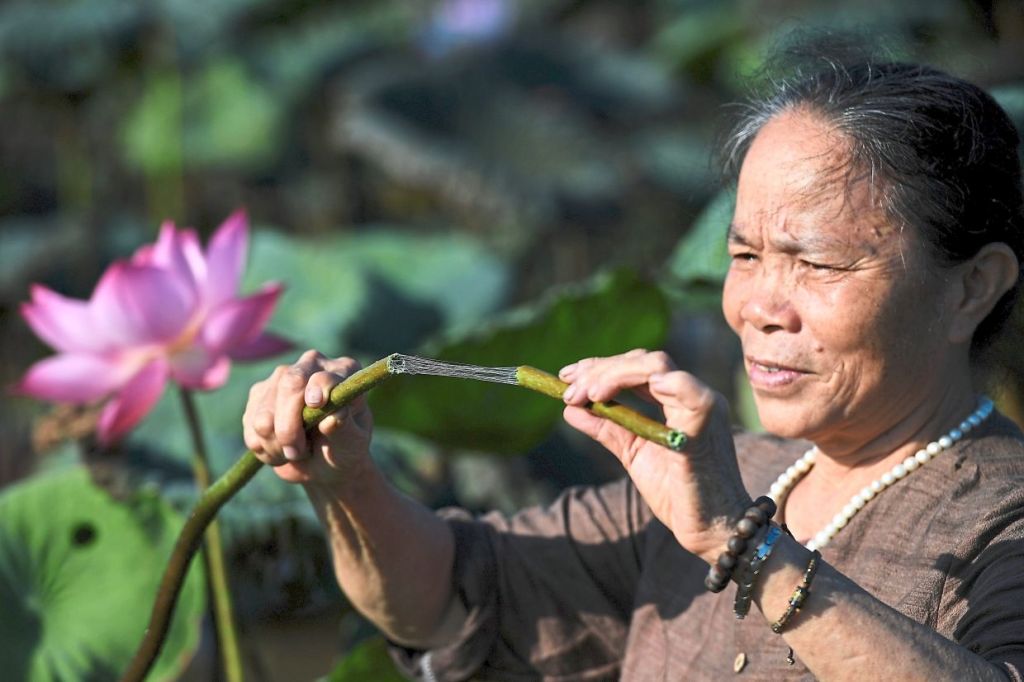
Vietnamese weaver, Phan Thi Thuan checking the quality of natural raw material from a lotus stem to be processed into silk, at a pond in Hanoi.

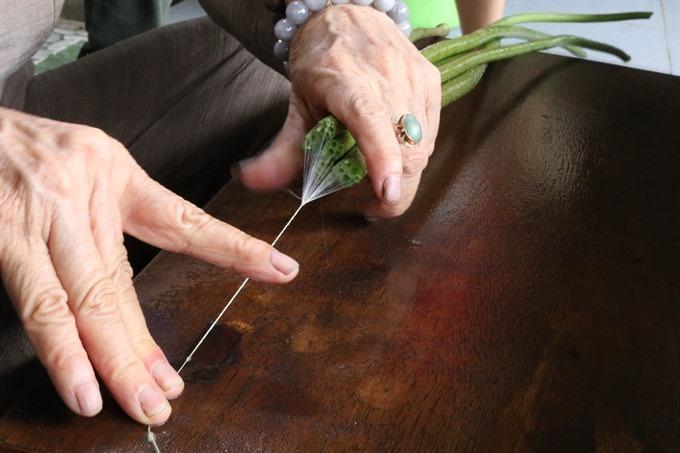
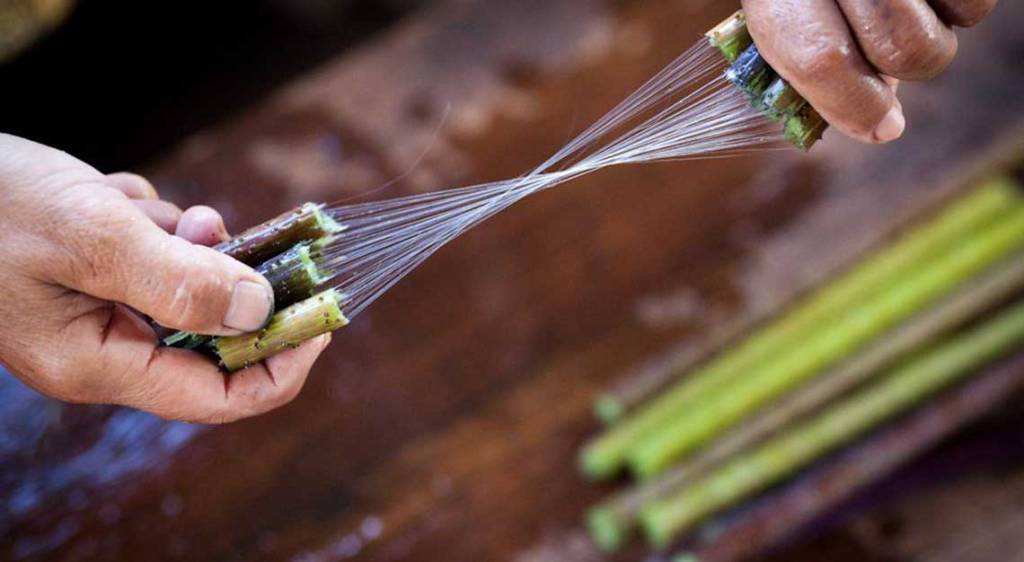
Lotus stems first cut in small portions. A single lotus stem contains a tiny quantity of fine, sticky fibre which is twirled and pulled to reveal a web of thin filaments. The filament is placed on a wooden surface and kept damp by intermittent water splashes. The artisan rolls the wet fibre together to create a denser and stronger thread as the practice occurs with new stems. A new length is welded on to the last to form a continuous thread. dried off together.

To preclude fibre degradation the lotus fabric must be woven in 24 hours. These parched yarns would then be weighed carefully, skillfully hand-crafted, and put into the loom at last. The natural fibre is delicate at this stage but, it can be just as workable as traditional silk once woven.

Lotus fibre is manufactured entirely by hand and is only obtained by a few skilled craftsmen worldwide.  It also takes a lot of time. To extract one kilogram of fibre, it can take up to two months. In addition, only a minuscule amount of fabric can be produced.

STEP 1- Gathering

Lotus plant stems for the production of fibre are collected from the lake. The lotus flower is ideally expected to flower in full when the stem is collected. the deep pink flowers make the best lotus fibres.

Step 2- Extraction of lotus fibre

5-6 Lotus plant stems are gleaned with a shallow knife, sliced, tore and contorted to reveal 20-30 fine white filaments of fibre. These stalks are cut with a low cube and the 5-6 stalks are simultaneously snapped, revealing 20-30 fine white fibre filaments.

Step 3- Yarn production process

Prepared skeins are placed on the bamboo spinning frame and then relocated to winders for the warping phase. Yarn is coiled in plastic bags to mitigate tangling. The weft yarn is wound on bamboo bobbins. Crude lotus threads are a creamy colour, and coloration is usually done with natural dyes.

Step 4 – weaving

To weave the material in an outfit, strands of 120,000 lotus stalks are required. In a single day, a spinner can produce a thread of up to 250 metres. Around 30 kg of stems is required to produce 250 metres of thread. A skilled weaver could weave one metres of lotus fabric daily.

Ways To Boost Your Creativity

Some people appear to be born with a natural talent for creativity. If you believe you are not one of the fortunate few who drew from an apparently limitless creative wellspring, this does not imply you are destined to a life of the ordinary and expected.

Creativity is not a lightning bolt that hits infrequently and cannot be predicted; rather, it is more like a muscle. To enhance your talents, you must continually practise, engage, and improve on your creativity. 

Something to keep in mind is that creation is not a silent process. Sitting back and waiting for creativity to come to you is a sure way to lose enthusiasm and become disheartened. Alternatively, concentrate on finding methods to improve your own creativity. Look for activities that excite you and assist you in focusing your attention and brain power on the work at hand.

Irrespective of your life goals, creativity is a valuable ability to have. While starting  new hobbies such as learning to play an instrument, and particularly if you are interested in a job that requires creative thinking, creative thinking can come in useful.

Here are some ways to boost your creativity:

Continue to keep learning

A creative mind is an inquisitive mind, therefore continue to master new skills and indulge your inquisitive nature to learn more about the world and everything around it. After you’ve honed your creative abilities, it’s critical to constantly push yourself and learn new things to motivate you and help you improve. Whether you just make an attempt to read more in your own time or research into taking more formal classes, continuous learning is essential for increasing your creativity.

Take a breather

While creativity is a talent that you can teach yourself to be better at it is also vital not to put a lot of strain on yourself. Take a break if you’ve been sitting at your desk for hours, frantically seeking new ideas and answers and coming up empty-handed. Have a change of pace, clear your thoughts, and clear your head off the work at hand: when you return to it with newer perspectives, you could discover the inspiration you’ve been looking for sitting there in front of you all along!

Discover the settings that allow you to be most creative

Certain people are morning people and find that they are most creative and productive in the early hours of the morning, before most people have even gotten out of bed.  Many thrive on the solitude of the night, whilst some may feel that the normal 9 – 5 is ideal for creative thought. The trick is to figure out what work settings fit the best for you – not just the hours you work, but also factors like location, lighting, music, and the tools/equipment you use.

Do something you enjoy doing

When you genuinely enjoy your profession, you will automatically be more motivated and passionate about solving problems and new ideas. It will be quite difficult to approach work that you continually putting off with a positive, creative mindset. Find an activity that allows you to be creative that you like, such as playing an instrument, drawing, or participating in a sport that totally immerses you in the moment.

Get some physical exercise

Exercising can be a fantastic method to cleanse your thoughts when you’ve been feeling stressed or under strain. Several researchers have demonstrated that exercise (even as little as 30 minutes of aerobic activity) helps us become more creative and improves brain function. Therefore, the next time you’re stuck in a creativity slump, throw on your running shoes, get your heart rate going up, and see if you can get your creative juices flowing more easily.