
Why should one get enough sleep?

We all need sleep, get most of us take it for granted by staying up for  long hours at night watching a screen or blocking the brain with caffeine and other harmful drugs . Many people do not get enough quality sleep, and this can affect their health, well-being, and ability to do everyday activities.

You may think nothing is happening when you sleep. But parts of your brain are quite active during sleep. And enough sleep (or lack of it) affects your physical and mental health. When you sleep, your body has a chance to rest and restore energy. A good night’s sleep can help you cope with stress, solve problems or recover from illness. Not getting enough sleep can lead to many health concerns, affecting how you think and feel.

How much sleep do I need?

Many factors affect how much sleep you need. Age is a big factor:

  • Infants need about 16 hours a day.
  • Toddlers and preschoolers need about 12 hours.
  • Teenagers need about nine hours.
  • Adults need seven to eight (though some are fine with five and others need closer to 10).
  • Pregnant people often need more sleep during the first trimester.

If you haven’t slept well or long enough for a few days, you might create a sleep debt. Once your debt builds up, you may feel physically and mentally exhausted. Try to make sure you get enough sleep every night to avoid creating this debt. You can’t necessarily make up your debt by sleeping a lot on the weekends. It’s best to get enough sleep all week long. A person who is getting too little quality sleep may experience a range of symptoms including: fatigue, irritability, mood changes, difficulty focusing and remembering, reduced sex drive

In1965 , an experiment was conducted where a high school boy stayed up for 264 hours or 11 days. He slowly lost focus of the eye, became moody and irritable, he stopped sensing stimuli and could not concentrate or retain memories. We grow sleep due to signals from our body hormones like melatonin and adenosine that send us into a deep doze.

During the night, you cycle through two types of sleep: non-rapid eye movement (non-REM) sleep and rapid eye movement (REM) sleep. Your brain and body act differently during these different phases. During non-REM stages, your body-Builds bone and muscle, Repairs and regenerates tissues, Strengthens the immune system. When you enter REM sleep, brain activity increases again, meaning sleep is not as deep. The activity levels are like when you’re awake. That’s why REM sleep is the stage where you’ll have intense dreams. Usually, REM sleep arrives about an hour and a half after you go to sleep. The first REM period lasts about 10 minutes. Each REM stage that follows gets longer and longer.

Sleeplessness may result in inflammations, hallucinations, high blood pressure and is also related to obesity and diabetes and obesity along with impairment in memory mood, reaction time etc.

How does sleep deprivation cause such immense effects?

 Our brain collects a lot of unwanted information during the day that can be proceed as useful and waste while we sleep. Our brain uses a lot of energy source that leads to build up of adenosine, which increases the urge to sleep and caffeine blocks the pathway of this that causes us to be awake. Waste products if not cleared away overload the brain leading to the negative symptoms of sleep deprivation. A glymphatic system is present in all which acts as a clean-up machine that removes this build up and is active mostly when we are asleep. hence if the brain doesn’t get its sufficient recharge it could lead to dire consequences like insomnia and other fatal disorders that a person can develop. For now, we can be sure that slipping into slumber is a necessity to maintain our health and sanity.

Takeaway

Sleep deprivation can harm a person’s mental and physical health, their performance at school or work, and their overall quality of life. Also, a persistent lack of sleep can lead to complications or indicate an underlying health problem, such as sleep apnea or anxiety. Anyone who is concerned about a lack of sleep should contact a medical professional.
Why should one get enough sleep?

We all need sleep, get most of us take it for granted by staying up for  long hours at night watching a screen or blocking the brain with caffeine and other harmful drugs . Many people do not get enough quality sleep, and this can affect their health, well-being, and ability to do everyday activities.

You may think nothing is happening when you sleep. But parts of your brain are quite active during sleep. And enough sleep (or lack of it) affects your physical and mental health. When you sleep, your body has a chance to rest and restore energy. A good night’s sleep can help you cope with stress, solve problems or recover from illness. Not getting enough sleep can lead to many health concerns, affecting how you think and feel.

How much sleep do I need?

Many factors affect how much sleep you need. Age is a big factor:

  • Infants need about 16 hours a day.
  • Toddlers and preschoolers need about 12 hours.
  • Teenagers need about nine hours.
  • Adults need seven to eight (though some are fine with five and others need closer to 10).
  • Pregnant people often need more sleep during the first trimester.

If you haven’t slept well or long enough for a few days, you might create a sleep debt. Once your debt builds up, you may feel physically and mentally exhausted. Try to make sure you get enough sleep every night to avoid creating this debt. You can’t necessarily make up your debt by sleeping a lot on the weekends. It’s best to get enough sleep all week long. A person who is getting too little quality sleep may experience a range of symptoms including: fatigue, irritability, mood changes, difficulty focusing and remembering, reduced sex drive

In1965 , an experiment was conducted where a high school boy stayed up for 264 hours or 11 days. He slowly lost focus of the eye, became moody and irritable, he stopped sensing stimuli and could not concentrate or retain memories. We grow sleep due to signals from our body hormones like melatonin and adenosine that send us into a deep doze.

During the night, you cycle through two types of sleep: non-rapid eye movement (non-REM) sleep and rapid eye movement (REM) sleep. Your brain and body act differently during these different phases. During non-REM stages, your body-Builds bone and muscle, Repairs and regenerates tissues, Strengthens the immune system. When you enter REM sleep, brain activity increases again, meaning sleep is not as deep. The activity levels are like when you’re awake. That’s why REM sleep is the stage where you’ll have intense dreams. Usually, REM sleep arrives about an hour and a half after you go to sleep. The first REM period lasts about 10 minutes. Each REM stage that follows gets longer and longer.

Sleeplessness may result in inflammations, hallucinations, high blood pressure and is also related to obesity and diabetes and obesity along with impairment in memory mood, reaction time etc.

How does sleep deprivation cause such immense effects?

 Our brain collects a lot of unwanted information during the day that can be proceed as useful and waste while we sleep. Our brain uses a lot of energy source that leads to build up of adenosine, which increases the urge to sleep and caffeine blocks the pathway of this that causes us to be awake. Waste products if not cleared away overload the brain leading to the negative symptoms of sleep deprivation. A glymphatic system is present in all which acts as a clean-up machine that removes this build up and is active mostly when we are asleep. hence if the brain doesn’t get its sufficient recharge it could lead to dire consequences like insomnia and other fatal disorders that a person can develop. For now, we can be sure that slipping into slumber is a necessity to maintain our health and sanity.

Takeaway

Sleep deprivation can harm a person’s mental and physical health, their performance at school or work, and their overall quality of life. Also, a persistent lack of sleep can lead to complications or indicate an underlying health problem, such as sleep apnea or anxiety. Anyone who is concerned about a lack of sleep should contact a medical professional.
Psychological Disorders Part 5

Introduction

In Psychological Disorders Part 4, Eating Disorders were discussed. It is very important to consult a psychologist if you are facing any of the eating disorders as they can be life-threatening. This article will discuss Sleep Disorders.

Sleep Disorders

These disorders involve interruptions in the sleeping pattern which leads to distress and affects the daytime functioning of the person.

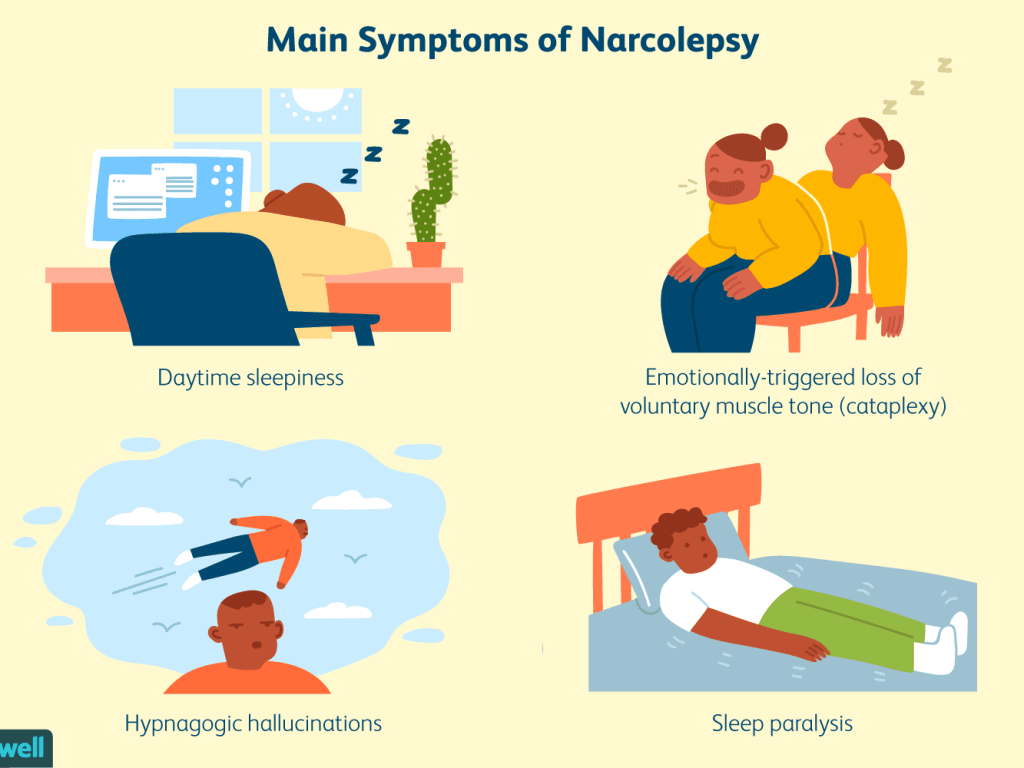
Narcolepsy is a chronic sleep disorder in which the person has overwhelming daytime drowsiness and sudden attacks of sleep. People with this disorder find it difficult to stay awake for long periods and this can cause excessive disruptions in their daily routine. There are two types of narcolepsies, one that is accompanied by a sudden loss of muscle tone, called cataplexy, this is type 1 narcolepsy and type 2 is without cataplexy. The symptoms for this are excessive daytime sleepiness, decreased alertness, sudden loss of muscle tone which can cause slurred speech, sleep paralysis, changes in REM sleep, and hallucinations. This is a chronic disorder so there is no cure for it but it can be managed with medication and some changes in the lifestyle. The cause for this is unknown but it is observed that in type 1, people have low levels of the chemical hypocretin which is important for the regulation of wakefulness and REM sleep.

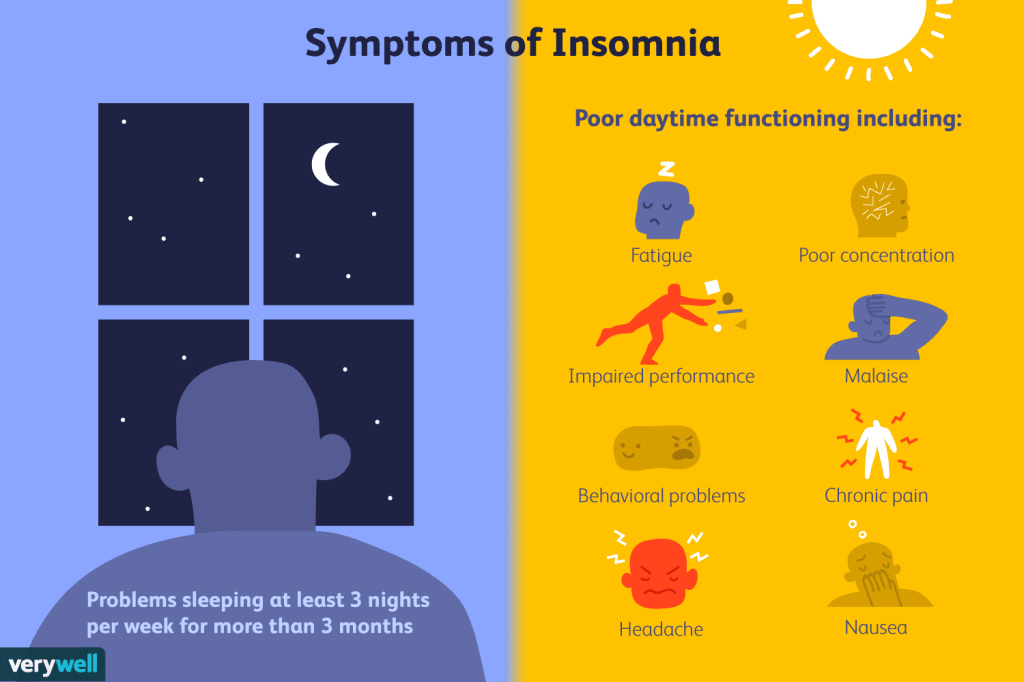
Insomnia Disorder is a disorder in which a person has trouble falling or staying asleep, it can be acute or chronic. There are two types of insomnia, primary and secondary. In the case of primary insomnia, the sleep problems are not related to any other health problem, whereas, in the case of secondary insomnia, the trouble in sleeping is because of another health condition. The causes for primary insomnia can be stress, noise, light, temperature, jet lag. Symptoms of insomnia are sleepiness during the day, grumpiness, problems with concentration and memory, and fatigue. You are more likely at risk of insomnia if you are a woman because of the hormonal shifts.

Hypersomnolence is when a person suffers from excessive sleepiness despite having slept enough. Symptoms for this are falling asleep several times during the day, taking naps to deal with the sleepiness but still not waking up refreshed, sleeping more than 9 hours but still not feeling rested, feeling confused when waking up, having difficulty waking up. This can cause problems at work, school, or other daily routines.

Sleep Apnea is a serious sleep disorder in which breathing continuously stops and starts. There are three main types of sleep apnea; firstly, Obstructive sleep apnea is when the throat muscles relax; secondly, Central sleep apnea is when the brain fails to send proper signals to the muscles which are responsible for controlling breathing; lastly, Complex sleep apnea syndrome is when someone is suffering from the combination of the first and second type of sleep apnea. Symptoms are gasping for air during sleep, loud snoring, episodes in which you stop breathing, morning headache, awakening with dry mouth, hypersomnia, difficulty staying asleep, irritability, and difficulty paying attention while awake.

Parasomnia involves unusual and undesirable physical which disrupt sleep. It includes abnormal movements, talk, or other unusual things during sleep. There are two types of parasomnias, Non-REM and REM, this distinction is based on the stage of sleep in which they happen. Parasomnias during Non-REM include sleep terrors, sleepwalking, and sleep-related eating disorders. Parasomnias during REM include nightmare disorder, recurrent isolated sleep paralysis, and REM sleep behaviour disorder. Symptoms are waking up confused or disoriented, being tired during the day, difficulty sleeping through the night, and finding cuts and bruises which you do not remember.

Restless Legs Syndrome causes an uncontrollable urge to move your legs because of an uncomfortable sensation. Symptoms are sensations that begin after rest, relief with movement, worsening of symptoms in the evening, and nighttime twitching.

Conclusion

These sleep disorders are very serious. As we know sleep is very important for our health, it is important to sleep properly for the health of your body and if you think you have any of these sleep disorders, please consult a psychologist who can help you regulate your sleep.

References

Note: this is just Part 5 of the Psychological Disorders series.