Red Planet Day: A Celebration of Mars and Its Mysteries

Daily writing prompt
What are your two favorite things to wear?

Red Planet Day is an annual event celebrated on November 28 to honor the fascinating planet Mars, often referred to as the “Red Planet” due to its reddish appearance caused by iron oxide (rust) on its surface. The day is an opportunity to reflect on humanity’s interest in Mars, its exploration, and the ongoing research that helps us understand its potential to support life.

Why November 28?
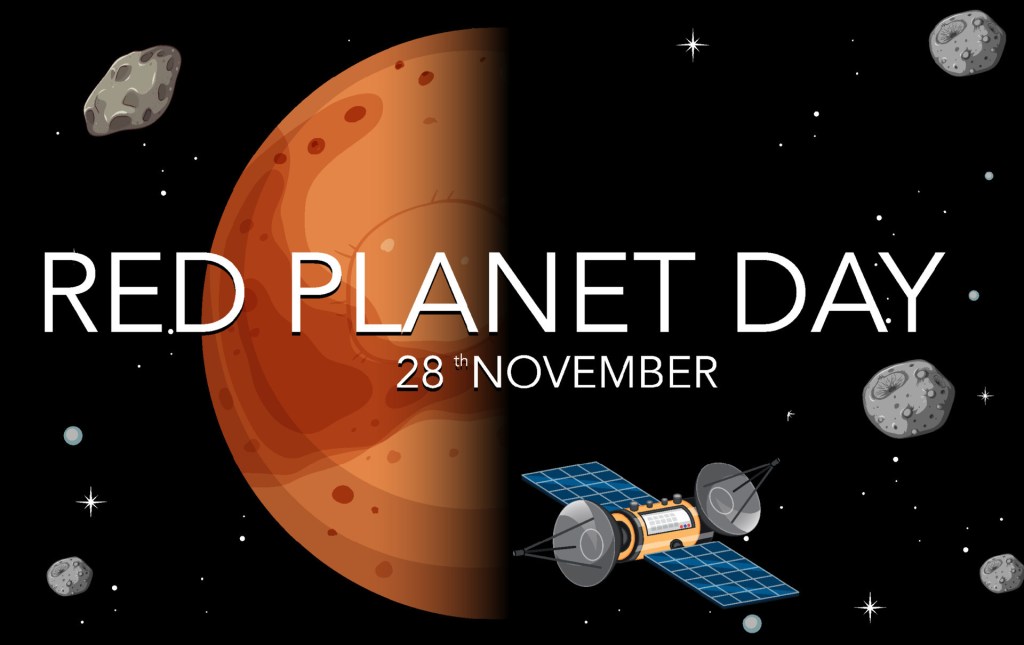
Red Planet Day marks the anniversary of the launch of Mariner 4, NASA’s first successful mission to Mars. On November 28, 1964, Mariner 4 was launched, and it became the first spacecraft to send back close-up images of the Martian surface, providing humanity with its first glimpse of the planet beyond telescopic observations. These images revealed a barren, cratered landscape, shattering some of the earlier misconceptions about Mars, such as the idea that it harbored canals built by intelligent life.

Mars: The Red Planet

Mars has been a subject of fascination for astronomers and science fiction writers for centuries. It is the fourth planet from the Sun and, like Earth, it has seasons, polar ice caps, and weather patterns. However, Mars differs significantly from Earth in its environment and atmospheric conditions.

Mars has:

  • A thin atmosphere, mostly carbon dioxide, which offers little protection from the harsh solar radiation.
  • The largest volcano in the solar system, Olympus Mons, which stands nearly three times the height of Mount Everest.
  • The longest canyon, Valles Marineris, stretching over 4,000 km, which dwarfs the Grand Canyon.
  • Evidence of past water flows, with dried riverbeds and ancient lake basins suggesting that liquid water may have once existed on its surface.

Despite its inhospitable surface, Mars remains one of the most studied planets in our solar system because of its potential for past life and its suitability for future human exploration.

The History of Mars Exploration

Over the decades, various space missions have explored Mars, and each has revealed new secrets about the planet. Here are a few key milestones:

  1. Mariner 4 (1964) – As mentioned, it was the first spacecraft to send back images of Mars, proving that the planet was not as Earth-like as once believed.
  2. Viking Program (1976) – NASA’s Viking 1 and Viking 2 orbiters and landers provided crucial data about the Martian atmosphere, surface, and geology, as well as the first in-depth studies of its potential for supporting life.
  3. Mars Rovers – In the 21st century, rovers such as Spirit, Opportunity, Curiosity, and Perseverance have landed on Mars to explore its surface, conduct experiments, and search for signs of past life. Perseverance, which landed in February 2021, is tasked with collecting rock samples that could one day be returned to Earth.
  4. Mars Helicopter Ingenuity – As part of the Perseverance mission, the small helicopter Ingenuity made history in 2021 by becoming the first powered flight on another planet. It successfully flew on Mars, providing aerial reconnaissance for scientific studies.

Why Celebrate Red Planet Day?

Red Planet Day serves multiple purposes:

  • Education: It’s an opportunity to educate people of all ages about Mars, its exploration, and what we’ve learned from it. Schools, observatories, and museums often host special events or activities focused on Mars-related science and space exploration.
  • Inspiration: Mars continues to inspire the imagination of people around the world. Celebrating the day can ignite curiosity about space and foster a sense of wonder about our universe.
  • Scientific Advancement: As new missions to Mars are planned, including NASA’s Artemis Program aiming to return humans to the Moon and eventually send astronauts to Mars, Red Planet Day reminds us of the long-term goals of space exploration and the scientific advancements being made in the process.
  • Future Exploration: Red Planet Day is also an opportunity to look forward to the future of Mars exploration, especially as private companies like SpaceX and governmental agencies like NASA are working towards the goal of human missions to Mars, potentially establishing the first human colony on another planet.

How Is Red Planet Day Celebrated?

While it is not a widely recognized holiday in the same way as some other observances, space enthusiasts, astronomers, and scientists mark Red Planet Day in various ways:

  • Public Events: Some observatories and space museums host special exhibits, workshops, and presentations about Mars exploration.
  • Social Media Campaigns: On Red Planet Day, many space organizations, including NASA and SpaceX, share information, updates, and fun facts about Mars on their social media platforms.
  • Stargazing: Many amateur astronomers take the opportunity to observe Mars with telescopes, especially when the planet is in close proximity to Earth during opposition (when Earth is directly between Mars and the Sun).
  • Educational Outreach: Schools and universities might engage in special lessons or activities centered on Mars, its exploration, and space science.

The Future of Mars Exploration

The future of Mars exploration is incredibly exciting. Several planned missions aim to further unravel the mysteries of Mars and explore its potential for human settlement:

  • NASA’s Mars Sample Return Mission: In collaboration with the European Space Agency (ESA), NASA aims to bring Martian soil samples back to Earth by the late 2020s or early 2030s.
  • SpaceX’s Starship Missions: SpaceX is developing the Starship vehicle with the goal of sending humans to Mars. Elon Musk’s vision is to eventually establish a sustainable human presence on Mars, potentially as soon as the 2020s or 2030s.
  • Colonization: While still a long way off, there are ongoing discussions about establishing permanent human colonies on Mars. These would require advanced technologies for life support, food production, and protection from radiation.

Conclusion

Red Planet Day is not only a celebration of the Mariner 4 mission but also a reminder of our collective curiosity and ambition to explore Mars. As we continue to explore and learn about Mars, the planet holds promise as a stepping stone for humanity’s future in space. Whether through scientific discoveries, technological innovations, or inspiring the next generation of explorers, Red Planet Day is a chance to celebrate humanity’s ongoing journey to the stars.
Green Comet, a rare sight on earth appearing after 50000 years.

On February 1st, a comet named C/2022 E3 (ZTF) with a bright green color will come close to Earth for the first time in 50,000 years. It will pass by at a distance of 26 million miles (42 million kilometers) from Earth, providing a unique night sky view that hasn’t been seen since the time that modern humans roamed the Earth alongside one of the many extinct human species, the Neanderthals.

In the Northern Hemisphere, the green comet should be visible just before dawn in late January, according to NASA. Amateur astronomers have already begun photographing the green comet to show what you could see.

Comet ZTF will pass about 26 million miles from Earth — the closest it will get — on February 2. That’s nearly 109 times the average distance of the moon, but the comet is burning so bright that it could still be visible in the night sky.

Green Comet, a rare sight on earth appearing after 50000 years.

On February 1st, a comet named C/2022 E3 (ZTF) with a bright green color will come close to Earth for the first time in 50,000 years. It will pass by at a distance of 26 million miles (42 million kilometers) from Earth, providing a unique night sky view that hasn’t been seen since the time that modern humans roamed the Earth alongside one of the many extinct human species, the Neanderthals.

In the Northern Hemisphere, the green comet should be visible just before dawn in late January, according to NASA. Amateur astronomers have already begun photographing the green comet to show what you could see.

Comet ZTF will pass about 26 million miles from Earth — the closest it will get — on February 2. That’s nearly 109 times the average distance of the moon, but the comet is burning so bright that it could still be visible in the night sky.

Key achievements of the Department of Space for the last 8 years

 Indian Space Programme and its ecosystem have been in a state of unprecedented vibrancy with various achievements. The glimpse of key milestones embraced by the department since 2014 till date is highlighted as below:

Key missions

  • Altogether 44 spacecraft missions, 42 launch vehicle missions and 5 technology demonstrators, have been successfully realized, since 2014 till date.
  • In January 2014, the first successful flight with indigenous Cryogenic Upper Stage, in the GSLV-D5 launch vehicle was achieved and GSAT-14 was placed into GTO.
  • In September 2014, India’s Mars Orbiter Spacecraft successfully entered into an orbit around planet Mars, putting India into a league of select nations which had sent a spacecraft to the Red Planet. The spacecraft is still functional even after 7 years of operation against the designed life of 6 months and serving nation with a lot of interesting science data.
  • In December 2014, the country witnessed the experimental flight of the next generation launch vehicle – the GSLV MKIII. The LVM3-X/CARE Mission, the first experimental suborbital flight of the vehicle, launched the Crew Module Atmospheric Re-entry experiment (CARE).
  • AstroSat launched by PSLV in September 2015, is the first dedicated Indian astronomy mission aimed at studying celestial sources in X-ray, optical and UV spectral bands simultaneously. AstroSat has made major breakthroughs by discovering five new galaxies.
  • ISRO has established and operationalised Navigation with Indian Constellation (NavIC) which provides highly accurate Position, Navigation and Time information to users in India and its surroundings. A total of 7 satellites form the Indian Regional Navigation Satellite System [IRNSS] – all launched by PSLV, with IRNSS-1G completing the constellation in 2016. 
  • Various NavIC based services have been rolled out in many key sectors like  – integration of NavIC-enabled devices with the enrolment architecture of UIDAI Aadhar enrolment, incorporation of NavIC in the Continuously Operating Reference Stations (CORS) network, In agricultural drones and Radio Technical Commission for Maritime Services (RTCM) etc.
  • Successful flight testing of Reusable Launch Vehicle-Technology Demonstrator (RLV-TD) was done on May 23, 2016 from Satish Dhawan Space Centre (SDSC) SHAR, Sriharikota. RLV-TD is one of the most technologically challenging endeavours of ISRO towards developing essential technologies for a fully reusable launch vehicle to enable low cost access to space.
  • The first experimental mission of ISRO’s Scramjet Engine towards the realisation of Air Breathing Propulsion System was also successfully conducted in 2016 from SDSC SHAR, Sriharikota.
  • In 2017, PSLV C-37 created a world record by successfully placing 104 satellites in orbit during a single launch.
  • As idea mooted by the Hon’ble Prime Minister in 18th SAARC summit, ISRO has launched the 2.2 Ton communication satellite in 2017 to support neighbouring countries.
  • The first developmental mission of GSLV Mk-III D1 was successfully accomplished in June-2017 and boosted GSAT-19 satellite into geosynchronous transfer orbit.
  • ISRO demonstrated a crucial technology element of Human spaceflight in July 2018- The Pad Abort Test (PAT) to qualify the Crew Escape System (CES). The Pad Abort Test flight was a demonstration of the capability of CES to evacuate the Crew in case of a contingency at launch Pad.
  • In the Independence Day address – 2018, the Hon’ble Prime Minister announced the “Gaganyaan Programme”, marking India’s foray into the new age of human space exploration.
  • GSAT-29 high throughput communication satellite was successfully launched on November 14, 2018, on-board GSLV Mk III-D2. It is providing satellite based connectivity to Jammu & Kashmir and North Eastern regions of India.
  • In 2018, ISRO’s next generation high throughput communication satellite, GSAT-11 was successfully launched on December 05, 2018 from Kourou, French Guiana by Ariane-5 VA-246. Weighing about 5854 kg, GSAT-11 is the heaviest satellite built by ISRO.
  • India’s second mission to Moon, Chandrayaan-2 was successfully launched on July 22, 2019 on-board GSLV Mk III-M1, first operational flight of this new launch vehicle. Chandrayaan-2 Orbiter is providing valuable science data for the research community.
  • The launch of PSLV-C48/ RISAT-2BR1 in Dec 2019 marked the 50th launch of PSLV, the workhorse launch vehicle.
  • Quantum entanglement based real time Quantum Key Distribution (QKD) over 300m atmospheric channel along with quantum-secure text, image transmission and quantum-assisted two-way video calling was demonstrated on 27 January 2022.
  • The Hon’ble Minister of State (Department of Space) dedicated ISRO System for Safe & Sustained Operations Management (IS4OM) to the nation in  Jul-2022.
  • LVM3 (GSLV MkIII) M2/OneWeb India-1 Mission was successfully accomplished on 23rd October 2022. With this launch, LVM3 exemplifies Atmanirbharata and enhances India’s competitive edge in the global commercial launch service market.
  • As part of Gaganyaan programme, new Test Vehicle for testing critical systems is developed. ‘Integrated Main Parachute Airdrop Test (IMAT)’ of crew module deceleration system was successfully carried out at Babina Field Fire Range (BFFR), Jhansi, Uttar Pradesh on 18th November 2022.
  • ISRO successfully demonstrated new technology with Inflatable Aerodynamic Decelerator (IAD) – a game changer with multiple applications for future missions.
  • Recently, PSLV-C54 was successfully launched EOS-06 satellite on 26th   November 2022 along with Eight Nano-satellites including INDIA-BHUTAN SAT (INS-2B).

Academic support, Capacity building and Outreach

  • In order to boost the space research activities, Space Technology Incubational Centres (STIC) at some of the key locations of the country were established, since 2018. Under this initiative, at present, nine Space Technology Cells (STC) are operational at academic institutions, six Space Technology Incubational Centres (STIC) are operational at Agartala, Trichy, Jalandhar, Rourkela, Nagpur & Bhopal and six Regional Academic Centre for Space (RACS) at Varanasi, Kurukshetra, Jaipur, Guwahati, Suratkal & Patna. Recently, Satish Dhawan Centre for Space Sciences is jointly established by ISRO/DoS and Central University of Jammu. A number of Non-Disclosure agreements (NDAs) and MOUs have been signed between ISRO and Academia.
  • In June 2018, India announced a capacity building training programme UNNATI (UNispace Nanosatellite Assembly &Training by ISRO) on Nanosatellites development through a combination of theoretical coursework and hands-on training on Assembly, Integration and Testing (AIT). First batch of UNNATI Programme was conducted from 15th January to 15th March 2019 wherein 30 participants from 17 countries had benefitted. Second batch was held in Oct-Dec 2019 and third batch was held in Oct-Dec 2022. 
  • In 2019, ISRO launched an annual special programme called “Young Scientist Programme” or the YUva VIgyani KAryakram” (YUVIKA) in 2019, in line with the Government’s vision “Jai Vigyan, Jai Anusandhan”. The Program is primarily aimed at imparting basic knowledge on Space Technology, Space Science and Space Applications to the young talents with the intent of encouraging them in the fascinating domain of outer space. Second batch of YUVIKA programme was held in May 2022.
  • Indian Space Research Organisation (ISRO) and Social Alpha today signed an MoU in Dec 2022 to launch SpaceTech Innovation Network (SpIN), India’s first dedicated platform for innovation curation and venture development for the burgeoning space entrepreneurial ecosystem.

Reforms and enhanced participation of industries

  • In 2019, the NewSpace India Limited (NSIL) got incorporated, as a wholly owned Government of India Undertaking/ Central Public Sector Enterprise (CPSE), under the administrative control of Department of Space (DOS), to enable Indian Industries to scale up high-technology manufacturing base for space programme and to commercially exploit the products and services emanating from the Indian Space Programme for meeting the domestic and global customer needs
  • On June 26, 2020, the Government of India announced Space Sector Reforms – a major transformation of Indian Space Sector with enhanced participation of private players in Indian space programme and playing key roles to boost India’s market share in Global Space Economy. IN-SPACe Headquarters at Ahmedabad was inaugurated by the Hon’ble Prime Minister in Jun-2022.
  • Setting up of Indian National Space Promotion and Authorisation Centre (IN-SPACe) and enhancing the role New Space India Limited (NSIL) are the two major thrust areas in the Reform.
  • The establishment of IN-SPACe was announced in June 2020 by Government of India, as an autonomous body under Department of Space, to create eco-system of industry, academia and start-ups and to attract major share in the global space economy, by authorizing and regulating activities of NGEs in space sector through detailed guidelines and procedures.
  • Launch of Vikram-S (Prarambh mission), a suborbital launch vehicle from M/s Skyroot Aerospace Pvt. Ltd., Hyderabad, was accomplished successfully on 18th November 2022.
  • First private launchpad & mission control center established by M/s Agnikul Cosmos Pvt. Ltd., Chennai in ISRO campus at SDSC, SHAR on 25th November 2022. Agnilet Semi-cryogenic rocket engine developed by Agnikul was successfully hot tested at ISRO facility on 04th November 2022.
  • HAL and L&T consortia will be Indian Industry partner for end-to-end production of 5 Nos. of PSLV, with a contract value of Rs. 824 crores.
  • Two nano-satellites from Indian space start-up M/s DhruvaSpace were launched as a rideshare passenger in PSLV-C54 mission. Gen-1 satellites from M/s OneWeb was launched using LVM3 (GSLV Mk-III).
  • GSAT-24 communication satellite which is the first demand driven mission of NSIL was launched from Kourou, French Guiana, in June 2022.
  • NSIL has signed 19 Technology Transfer Agreements and has successfully transferred 8 ISRO developed Technologies to Indian Industry.
  • Indian Space Policy – 2022 policy is cleared by the Space Commission. The Policy has undergone extensive deliberations with industry groups, inter-ministerial consultations, has been reviewed by Empowered Technology Group and is under further approval process.

Disaster Management

Monitoring flood inundation (about 250+ flood inundation maps/ flood season), generation of flood hazard zonation atlases (Assam, Bihar, Odisha, West Bengal, Andhra Pradesh & Uttar Pradesh) of flood prone states, developing flood early warning models (Brahmaputra, Godawari & Tapi), multiple daily detections & dissemination of active forest fires (>35,000 detections/ forest fire season), forecasting cyclone track; intensity & landfall, damage assessment due to earth quakes and landslides, etc. were carried out.

COVID-19 related supports

During the COVID-19 pandemic period, devices like Mechanical Ventilator & Medical Oxygen Concentrator were developed and the technologies are transferred to Indian industries.

ISRO’s new achievement : launches 36 satellite for UK based OneWeb.

The Indian Space Research Organisation (ISRO) has successfully deployed the latest batch of 36 satellites for satellite operator OneWeb, aboard its heavyweight configuration Geosynchronous Satellite Launch Vehicle (GSLV)-Mk.III rocket. The launch marked the first commercial mission that used ISRO’s GSLV, also known as the Launch Vehicle Mark III (LVM3).

The collaboration is a result of ISRO’s commercial arm NewSpace India Limited’s two service contracts, signed with One Web for launching low Earth orbit (LEO) broadband communication satellites. ISRO said that as part of the contract, 36 satellites will be placed into orbit by one LVM3, from Satish Dhawan Space Centre in Sriharikota in Andhra Pradesh.

The mission marked the second launch of the year for OneWeb, backed by Bharti Enterprises, after the conflict in Ukraine disrupted the UK operator’s plan for completing its satellite launches this year. Prior to the Ukraine-Russia war, OneWeb was using Russia’s central space agency Roscosmos’ commercial launch services through its Soyuz rockets.

However, amid geopolitical sanctions imposed on Russia by nations including the UK, erstwhile Roscosmos head Dmitry Rogozin said that the OneWeb satellites would not be released back to the company — unless the UK government ceded to the nation’s demand of removing the sanctions.

ISRO's new achievement : launches 36 satellite for UK based OneWeb.

The Indian Space Research Organisation (ISRO) has successfully deployed the latest batch of 36 satellites for satellite operator OneWeb, aboard its heavyweight configuration Geosynchronous Satellite Launch Vehicle (GSLV)-Mk.III rocket. The launch marked the first commercial mission that used ISRO’s GSLV, also known as the Launch Vehicle Mark III (LVM3).

The collaboration is a result of ISRO’s commercial arm NewSpace India Limited’s two service contracts, signed with One Web for launching low Earth orbit (LEO) broadband communication satellites. ISRO said that as part of the contract, 36 satellites will be placed into orbit by one LVM3, from Satish Dhawan Space Centre in Sriharikota in Andhra Pradesh.

The mission marked the second launch of the year for OneWeb, backed by Bharti Enterprises, after the conflict in Ukraine disrupted the UK operator’s plan for completing its satellite launches this year. Prior to the Ukraine-Russia war, OneWeb was using Russia’s central space agency Roscosmos’ commercial launch services through its Soyuz rockets.

However, amid geopolitical sanctions imposed on Russia by nations including the UK, erstwhile Roscosmos head Dmitry Rogozin said that the OneWeb satellites would not be released back to the company — unless the UK government ceded to the nation’s demand of removing the sanctions.

Insurance and it’s Types

N kavya

Insurance is a means of protection from financial loss. It is a form of risk management, primarily used to hedge against the risk of a contingent or uncertain loss. An entity that provides insurance is known as an insurer, an insurance company, an insurance carrier, or an underwriter. an arrangement with a company in which you pay them regular amounts of money and they agree to pay the costs if, for example, you die or are ill, or if you lose or damage something.

Insurance is a contract in which an insurer indemnifies another against losses from specific contingencies or perils. It helps to protect the insured person or their family against financial loss. There are many types of insurance policies. Life, health, homeowners, and auto are the most common forms of insurance. insurance is a contract, represented by a policy, in which a policyholder receives financial protection or reimbursement against losses from an insurance company. The company pools clients’ risks to make payments more affordable for the insured.

Insurance policies are used to hedge against the risk of financial losses, both big and small, that may result from damage to the insured or their property or liability for damage or injury caused to a third party.

Key Takeways :

1. Insurance is a contract (policy) in which an insurer indemnifies another against losses from specific contingencies or perils.

2. There are many types of insurance policies. Life, health, homeowners, and auto are the most common forms of insurance.

3. The core components that make up most insurance policies are the deductible, policy limit, and premium.

How Insurance Works :

A multitude of different types of insurance policies is available, and virtually any individual or business can find an insurance company willing to insure them—for a price. The most common types of personal insurance policies are auto, health, homeowners, and life. Most individuals in the United States have at least one of these types of insurance, and car insurance is required by law. Businesses require special types of insurance policies that insure against specific types of risks faced by a particular business. For example, a fast-food restaurant needs a policy that covers damage or injury that occurs as a result of cooking with a deep fryer. An auto dealer is not subject to this type of risk but does require coverage for damage or injury that could occur during test drives. There are also insurance policies available for very specific needs, such as kidnap and ransom (K&R), medical malpractice, and professional liability insurance, also known as errors and omissions insurance.

Insurance Policy Components:

A firm understanding of these concepts goes a long way in helping you choose the policy that best suits your needs. For instance, whole life insurance may or may not be the right type of life insurance for you. Three components of any type of insurance are crucial: premium, policy limit, and deductible.

1. Premium -:
A policy’s premium is its price, typically expressed as a monthly cost. The premium is determined by the insurer based on your or your business’s risk profile, which may include creditworthiness.

2. Policy Limit -:
The policy limit is the maximum amount that an insurer will pay under a policy for a covered loss. Maximums may be set per period (e.g., annual or policy term), per loss or injury, or over the life of the policy, also known as the lifetime maximum.

3. Deductible -:
The deductible is a specific amount that the policyholder must pay out of pocket before the insurer pays a claim. Deductibles serve as deterrents to large volumes of small and insignificant claims.

Types of Insurance :

There are many different types of insurance. Let’s look at the most important.

1.Health Insurance -:
Regarding health insurance, people who have chronic health issues or need regular medical attention should look for policies with lower deductibles. Though the annual premium is higher than a comparable policy with a higher deductible, less expensive access to medical care throughout the year may be worth the tradeoff.

2. Home Insurance -:
Homeowners insurance (also known as home insurance) protects your home and possessions against damage or theft. Virtually all mortgage companies require borrowers to have insurance coverage for the full or fair value of a property (usually the purchase price) and won’t make a loan or finance a residential real estate transaction without proof of it.

3. Auto Insurance -:
When you buy or lease a car, it’s important to protect that investment. Getting auto insurance can offer reassurance in case you’re involved in an accident or the vehicle is stolen, vandalized, or damaged by a natural disaster. Instead of paying out of pocket for auto accidents, people pay annual premiums to an auto insurance company; the company then pays all or most of the costs associated with an auto accident or other vehicle damage.


4. Life Insurance -:
Life insurance is a contract between an insurer and a policy owner. A life insurance policy guarantees that the insurer pays a sum of money to named beneficiaries when the insured dies in exchange for the premiums paid by the policyholder during their lifetime. Life insurance. life insurance provides for your family if you unexpectedly die. This is especially important if your family is dependent on your salary. Industry experts suggest a policy that pays out 10 times your yearly income. But not everyone can afford the cost. When estimating the amount of life insurance you need, factor in funeral expenses. Then calculate your family’s daily living expenses. These may include mortgage payments, outstanding loans, credit card debt, taxes, child care, and future college costs.


5. Travel Insurance -:
Travel insurance is a type of insurance that covers the costs and losses associated with traveling. It is useful protection for those traveling domestically or abroad.

6. Long-Term Disability Coverage -: Long-term disability insurance is the type of insurance most of us think we will never need. Yet, according to statistics from the Social Security Administration, one in four workers entering the workforce will become disabled and will be unable to work before they reach the age of retirement. Often, even workers who have great health insurance, a nice nest egg, and a good life insurance policy don’t prepare for the day when they might not be able to work for weeks, months, or ever again. While health insurance pays for hospitalization and medical bills, you’re still left with all of the expenses that your paycheck had covered.

Is insurance an asset?

Depending on the type of life insurance policy and how it is used, permanent life insurance can be considered a financial asset because of its ability to build cash value or be converted into cash. Simply put, most permanent life insurance policies can build cash value over time.

Conclusion:

Insurance plans will help you pay for medical emergencies, hospitalization, contraction of any illnesses and treatment, and medical care required in the future. The financial loss to the family due to the unfortunate death of the sole earner can be covered by insurance plans.


Evolution Of Camera

N kavya

The history of the camera began even before the introduction of photography. Cameras evolved from the camera obscura through many generations of photographic technology – daguerreotypes, calotypes, dry plates, film – to the modern day with digital cameras and camera phones.

Camera obscura (Before the 17th century) -:

The forerunner to the photographic camera was the camera obscura. Camera obscura (Latin for “dark room”) is the natural optical phenomenon that occurs when an image of a scene on the other side of a screen (or for instance a wall) is projected through a small hole in that screen and forms an inverted image (left to right and upside down) on a surface opposite to the opening. The oldest known record of this principle is a description by the Han Chinese philosopher Mozi (c. 470 to c. 391 BC). Mozi correctly asserted that the camera obscura image is inverted because light travels in straight lines from its source. In the 11th century, Arab physicist Ibn al-Haytham (Alhazen) wrote very influential books about optics, including experiments with light through a small opening in a darkened room. It was wildly successful after debuting to the public in 1839 when both it and the calotype began introducing photography to the masses. Normally, having portraits taken was an activity exclusive to the upper classes. The cost and amount of time needed to produce such works were unreasonable for most working-class people. The speed of the camera, which only increased as time went on, made it possible for anybody to have quality portraits.

Early photographic camera (18th–19th centuries) -:

The development of the photographic camera, it had been known for hundreds of years that some substances, such as silver salts, darkened when exposed to sunlight.[9]: 4  In a series of experiments, published in 1727, the German scientist Johann Heinrich Schulze demonstrated that the darkening of the salts was due to light alone, and not influenced by heat or exposure to air.[10]: 7 The Swedish chemist Carl Wilhelm Scheele showed in 1777 that silver chloride was especially susceptible to darkening from light exposure and that once darkened, it becomes insoluble in an ammonia solution.[10] The first person to use this chemistry to create images was Thomas Wedgwood.

The first permanent photograph of a camera image was made in 1825 by Joseph Nicéphore Niépce using a sliding wooden box camera made by Charles and Vincent Chevalier in Paris.[10]: 9–11  Niépce had been experimenting with ways to fix the images of a camera obscura since 1816. The first photographic camera developed for commercial manufacture was a daguerreotype camera, built by Alphonse Giroux in 1839. Giroux signed a contract with Daguerre and Isidore Niépce to produce the cameras in France,[9]: 8–9  with each device and accessories costing 400 francs.[13]: 38  The camera was a double-box design, with a landscape lens fitted to the outer box, and a holder for the ground glass focusing screen and image plate on the inner box. By sliding the inner box, objects at various distances could be brought to as sharp a focus as desired. After a satisfactory image had been focused on the screen, the screen was replaced with a sensitized plate. A knurled wheel controlled a copper flap in front of the lens, which functioned as a shutter. The early daguerreotype cameras required long exposure times, which in 1839 could be from 5 to 30 minutes.

Within a decade of being introduced in America, 3 general forms of the camera were in popular use: the American- or chamfered-box camera, the Robert’s-type camera or “Boston box”, and the Lewis-type camera. The American-box camera had beveled edges at the front and rear, and an opening in the rear where the formed image could be viewed on the ground glass. The top of the camera had hinged doors for placing photographic plates. Inside there was one available slot for distant objects, and another slot in the back for close-ups. The lens was focused either by sliding or with a rack and pinion mechanism. The Robert’s-type cameras were similar to the American box, except for having a knob-fronted worm gear on the front of the camera, which moved the back box for focusing.

Early fixed images -:

The first partially successful photograph of a camera image was made in approximately 1816 by Nicéphore Niépce,[18][19] using a very small camera of his own making and a piece of paper coated with silver chloride, which darkened where it was exposed to light. His unhardened bitumen was then dissolved away. One of those photographs has survived.

Daguerreotypes and calotypes -:

After Niépce died in 1833, his partner Louis Daguerre continued to experiment and by 1837 had created the first practical photographic process, which he named the daguerreotype and publicly unveiled in 1839.[21] Daguerre treated a silver-plated sheet of copper with iodine vapor to give it a coating of light-sensitive silver iodide. After exposure to the camera, the image was developed by mercury vapor and fixed with a strong solution of ordinary salt (sodium chloride). Henry Fox Talbot perfected a different process, the calotype, in 1840. As commercialized, both processes used very simple cameras consisting of two nested boxes. The rear box had a removable ground glass screen and could slide in and out to adjust the focus. After focusing, the ground glass was replaced with a light-tight holder containing the sensitized plate or paper and the lens was capped.

Dry plates -:

Collodion dry plates had been available since 1857, thanks to the work of Désiré van Monckhoven, but it was not until the invention of the gelatin dry plate in 1871 by Richard Leach Maddox that the wet plate process could be rivaled in quality and speed. The 1878 discovery that heat-ripening a gelatin emulsion greatly increased its sensitivity finally made so-called “instantaneous” snapshot exposures practical.

The invention of photographic film -:

The use of photographic film was pioneered by George Eastman, who started manufacturing paper film in 1885 before switching to celluloid in 1888–1889. His first camera, which he called the “Kodak”, was first offered for sale in 1888. It was a very simple box camera with a fixed-focus lens and single shutter speed, which along with its relatively low price appealed to the average consumer.

35 mm -:

Some manufacturers started to use 35 mm film for still photography between 1905 and 1913. The first 35 mm cameras available to the public, and reaching significant numbers in sales were the Tourist Multiple, in 1913, and the Simplex, in 1914.

TLRs and SLRs -:

The first practical reflex camera was the Franke & Heidecke Rolleiflex medium format TLR of 1928. Though both single- and twin-lens reflex cameras had been available for decades, they were too bulky to achieve much popularity. The Rolleiflex, however, was sufficiently compact to achieve widespread popularity and the medium-format TLR design became popular for both high- and low-end cameras.

Instant cameras -:

Polaroid Model 430, 1971
While conventional cameras were becoming more refined and sophisticated, an entirely new type of camera appeared on the market in 1948. This was the Polaroid Model 95, the world’s first viable instant-picture camera. Known as a Land Camera after its inventor, Edwin Land, the Model 95 used a patented chemical process to produce finished positive prints from the exposed negatives in under a minute.

Automation -:

The first camera to feature automatic exposure was the selenium light meter-equipped, fully automatic Super Kodak Six-20 pack of 1938, but its extremely high price (for the time) of $225 (equivalent to $4,331 in 2021)[23] kept it from achieving any degree of success.

Digital cameras -:

Digital cameras differ from their analog predecessors primarily in that they do not use film but capture and save photographs on digital memory cards or internal storage instead. Their low operating costs have relegated chemical cameras to niche markets.

Digital imaging technology -:

The first semiconductor image sensor was the CCD, invented by Willard S. Boyle and George E. Smith at Bell Labs in 1969.[24] While researching MOS technology, they realized that an electric charge was the analogy of the magnetic bubble and that it could be stored on a tiny MOS capacitor.

Early digital camera prototypes -:

The concept of digitizing images on scanners, and the concept of digitizing video signals, predate the concept of making still pictures by digitizing signals from an array of discrete sensor elements. Early spy satellites used the extremely complex and expensive method of de-orbit and airborne retrieval of film canisters. Technology was pushed to skip these steps through the use of in-satellite development and electronic scanning of the film for direct transmission to the ground. The amount of film was still a major limitation, and this was overcome and greatly simplified by the push to develop an electronic image-capturing array that could be used instead of film.

Analog electronic cameras -:

Handheld electronic cameras, in the sense of a device meant to be carried and used as a handheld film camera, appeared in 1981 with the demonstration of the Sony Mavica (Magnetic Video Camera). This is not to be confused with the later cameras by Sony that also bore the Mavica name.

Early true digital cameras -:

In the late 1980s, the technology required to produce truly commercial digital cameras existed. The first true portable digital camera that recorded images as a computerized file was likely the Fuji DS-1P of 1988, which recorded to a 2 MB SRAM (static RAM) memory card that used a battery to keep the data in memory. This camera was never marketed to the public.

Digital SLRs (DSLRs) -:

Nikon was interested in digital photography since the mid-1980s. In 1986, while presenting to Photokina, Nikon introduced an operational prototype of the first SLR-type digital camera (Still Video Camera), manufactured by Panasonic.[48] The Nikon SVC was built around a sensor 2/3 ” charge-coupled device of 300,000 pixels. Storage media, a magnetic floppy inside the camera allows recording of 25 or 50 B&W images, depending on the definition.

Camera phones -:

The first commercial camera phone was the Kyocera Visual Phone VP-210, released in Japan in May 1999.[54] It was called a “mobile videophone” at the time,[55] and had a 110,000-pixel front-facing camera.[54] It stored up to 20 JPEG digital images, which could be sent over e-mail, or the phone could send up to two images per second over Japan’s Personal Handy-phone System (PHS) cellular network.

JAMES WEBB SPACE TELESCOPE (JWST)

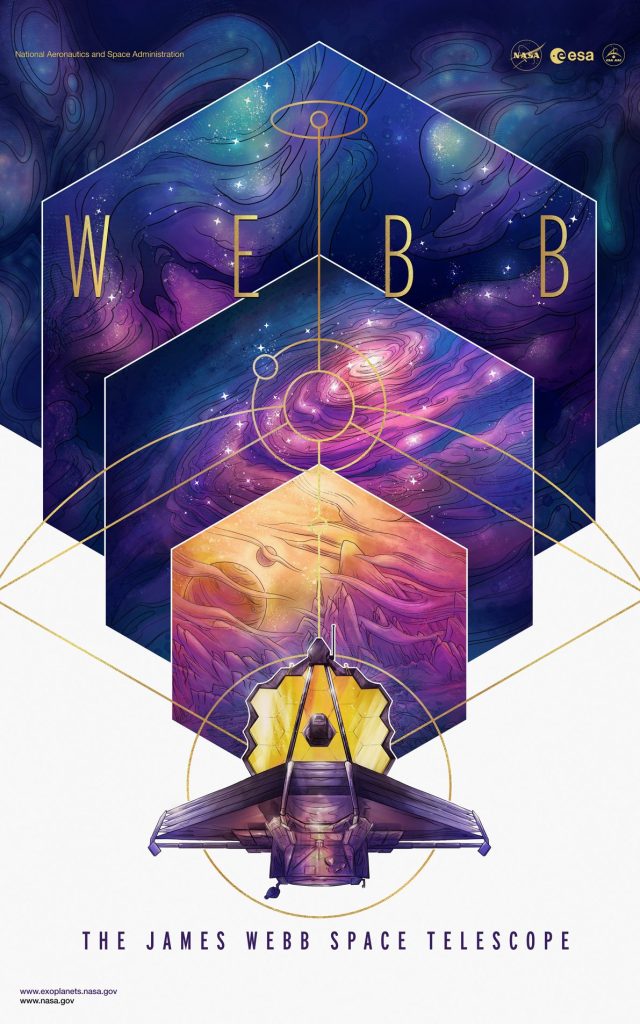
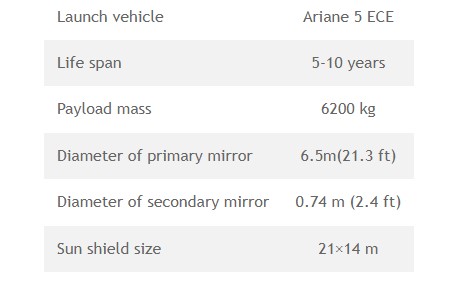
The European Ariane 5 rocket launched NASA’s James Webb Space Telescope (JWST), the biggest and most powerful space telescope yet constructed, from French Guiana, on the northeast coast of South America.

It is the successor of the Hubble Telescope and most powerful infrared telescope of National Aeronautics and Space Administration (NASA).

It is designed to explore a period known as the Epoch of Reionization, which came after the dark ages that followed the big bang. The telescope will study the atmospheres of a wide diversity of exoplanets. It will also search for atmospheres like Earth’s, and for the signatures of key substances such as methane, water, oxygen, carbon dioxide, and complex organic molecules, in hopes of finding the building blocks of life.

Goals 

  • Search for the first galaxies that formed after the Big Bang. 
  • Determine how galaxies evolved from their earlier formation until now.
  • Observe the formation of stars from the first stages to the formation of planetary systems.
  • Measure the physical and chemical properties of planetary systems and investigate the potential for life in such systems

ORBIT 

  • JWST will be finally placed in second Lagrange Point (L2).
  • Webb’s orbit follows a special path around L2 that allows it to stay on Earth’s night side (directly ‘behind’ the Earth as viewed from the Sun) and track along with Earth while moving around the Sun. 
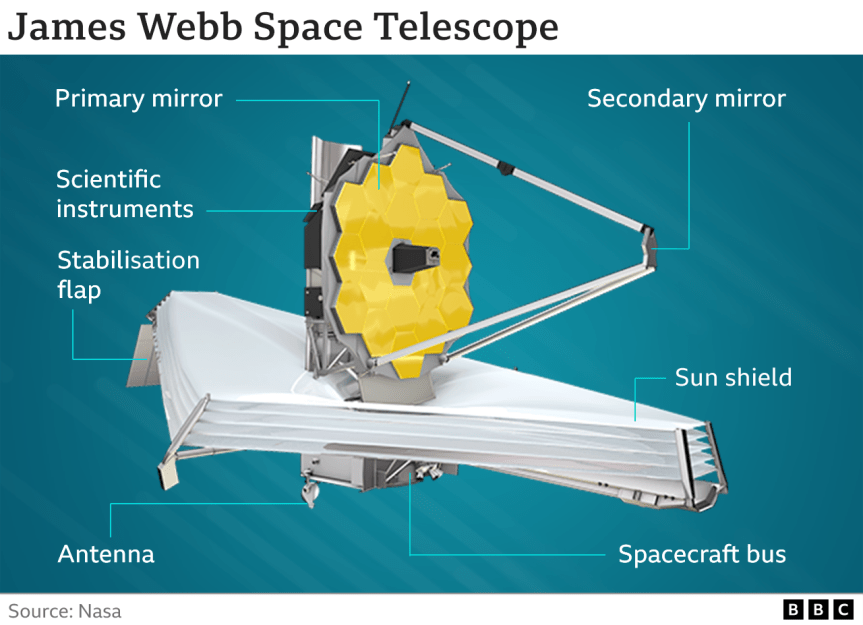
  • As an infrared observatory, Webb must be protected from all bright, hot sources to see the faint heat signals of distant objects in the universe. Because Webb will always stay on Earth’s night side as it moves around the Sun, its orbit ensures that one side of its sunshield will continuously face the Sun, Earth and Moon to block their view from the telescope’s optics.

Features that make it special

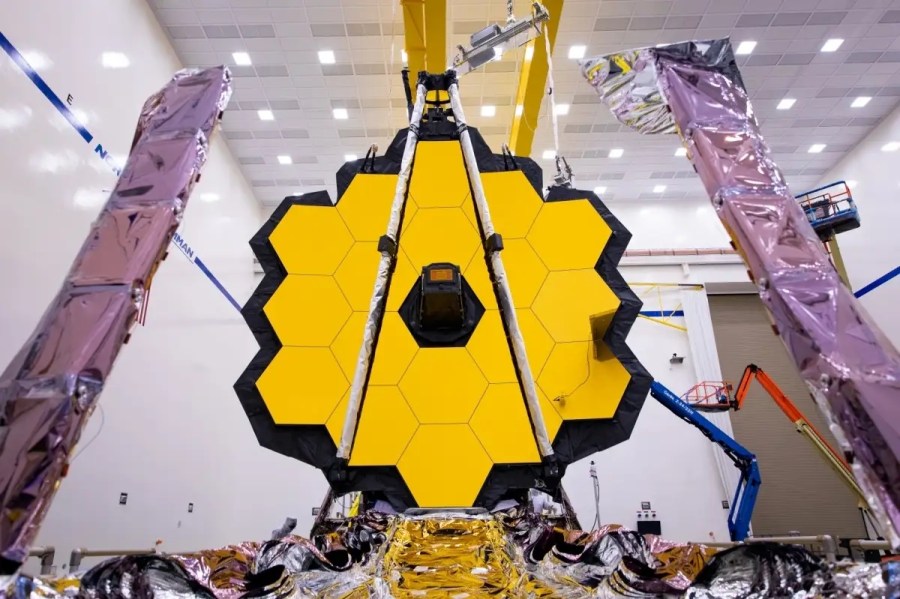
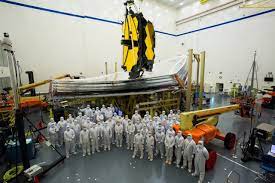
  • While looking away from the Sun, JWST features one huge mirror with a diameter of 21 feet (the height of a standard two-story structure) that will collect infrared light flowing in from the deep space. 
  • It will be protected by a five-layer, tennis court-sized, kite-shaped sunscreen that will block the sun’s heat and maintain the exceptionally cold temperatures that the sensors are meant to work at.
  • Temperatures on the sun-facing side may reach 110°C, while the temperature on the opposite side is kept at –200° to –230°C. 
  • To detect the exceedingly weak heat signals from faraway galaxies, extremely low temperatures are required. 
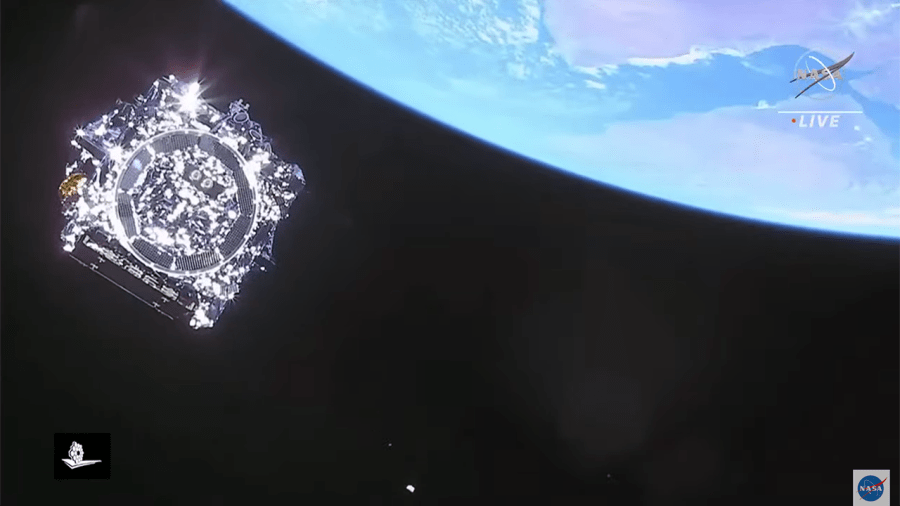
  • The mirror, as well as the sunscreen, are much too huge to fit inside any rocket. They were designed to be collapsible and would be unfolded in space. 

GAGANYAAN

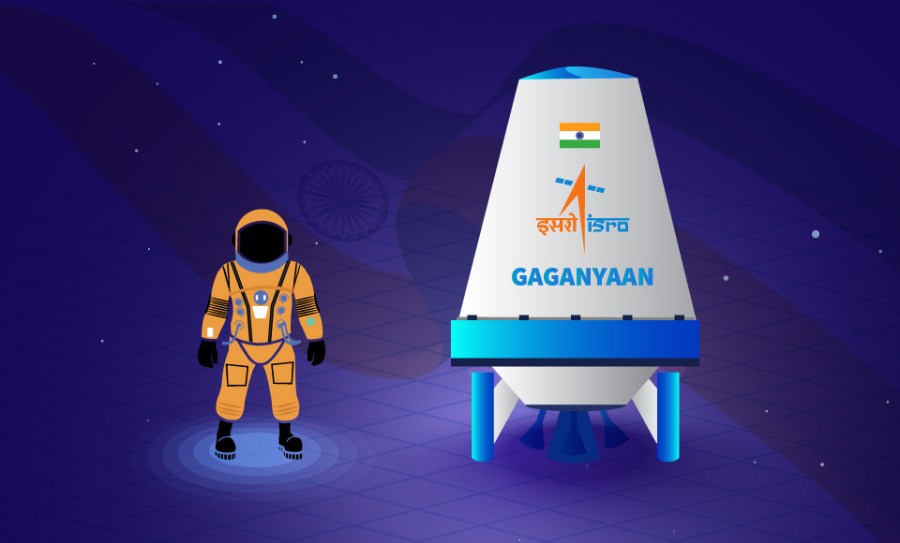
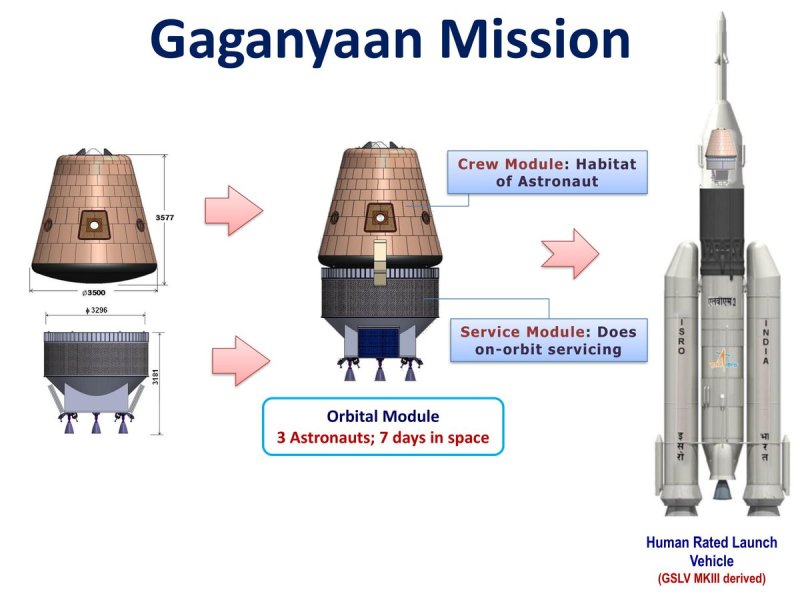
Recently the Union Cabinet approved Rs 10,000 crore for India’s 1st Human spaceflight programme, Gaganyaan, to be launched by 2022. It will include two unmanned flights and one human space flight. India’s first human spaceflight will carry 3 astronauts to a low earth orbit of 300 to 400 kilometres on board GSLV Mark III vehicle, for at least 7 days. ISRO is also launching test flights with humanoids to conduct micro-gravity experiments. If successful, India would be the 4th country to send manned mission after Russia, USA, and China. 

COMPONENTS OF GAGANYAAN

1. Rocket

The rocket will take the crew to the low-earth orbit (300-400 km)

2. Crew Module

A crew module carrying three Indians will be attached with a service module. The crew members will be selected by the IAF and ISR. The crew will perform micro-gravity and other scientific experiments for a week.

3. Crew Module Atmospheric Re-entry technology (CARE)

4. Crew Escape System (PAT)

It is an emergency accident avoidance measure designed to quickly get astronauts and their spacecraft away from the launch vehicle if a malfunction occurs during the initial stage of the launch. 

5. Environmental Control & Life Support System (ECLSS) 

It will maintain steady cabin pressure and air composition, remove carbon dioxide and other harmful gases and control temperature and humidity o manage parameters like fire detection and suppression.

Why we need Space exploration? It it a waste of money?

Poverty still rising all over the world, COVID-19 pandemic made it even worse. About 1.89 billion people, or nearly 36% of the world’s population, lived in extreme poverty. Nearly half the population in developing countries lived on less than $1.25 a day. Why should we spend money on space exploration when we already have so many problems here on Earth? Is it really that important? It’s like What if our ancestors thought that it would be a waste of time to figure out agriculture while we can do hunting? Or why should we spend so much time on exploring new lands while we have so many problems in our land? Each year, space exploration contributes to a lot of innovations on earth. It gave answers to many fundamental questions about our existence, and a lot of questions there to be answered if only we could increase our investment on space exploration.

Benefits of space exploration

    Improves our day to day life

       Since 1969, Neil Armstrong became the first human to ever set foot on moon, our interest in science and technology has improved a lot. In 22nd February 1978, US space agency launched the first satellite for its program of global positioning system (GPS). Currently there are 31 global positioning system (GPS) satellites orbiting the earth.Space exploration helped us to create many inventions like television, camera phones, internet, laptops, LED’s, wireless gadgets, purifying system of water and many more that we are using in our day to day life. There are nearly 3,372 active satellites providing information on navigation, business & finance, weather, climate and environmental monitoring, communication and safety.

   Improving health care

       The international space station plays a vital role in health and medical advancements. The Astronauts who works on the ISS able to do experiments that aren’t possible on earth due to the difference in the gravity. The project of Exomedicine – the study of medicine and microgravity, gravity has an effect on a molecular level so working in an environment where it can be eliminated from the equation allows discoveries that would otherwise be impossible. Medical advancements due to space exploration include,

  • Diagnosis, treatment, and prevention of cardiovascular diseases
  • Treatment of chronic metabolic disorders
  • Better understanding of osteoporosis
  • Improvements in Breast cancer detection
  • Programmable pacemakers
  • Laser angioplasty
  • NASA’s device with Space technology for Asthma
  • ISS plays vital role in vaccine development
  • Early detection of immune changes prevents shingles
  • Development of MRIs and CT or CAT Scans
  • And invention of ear thermometers.

Need for space colonization

       Overpopulation is one of the major crises in our planet. Currently we have 7.8 billion people alive on earth. Experts predict that there will be 9.7 billion people by 2050 and 11 billion by 2100, our earth can carry only 9 billion to 12 billion people with the limited food and freshwater resources. That means we have to find an exoplanet with suitable conditions soon. We already went to moon 6 times, we already sent a rover to Mars. Robotic missions are cost efficient, but if one is considering the future of human race we have to go there ourselves. Elon Musk announced that SpaceX is going to send people to Mars I 2022. NASA planned to make a colony on Mars by 2030. These missions are not something we need at this moment. But it may play an important role on our future. Proxima Centauri b is an exoplanet which is 4.24 light years away from us. With our current technology, it is impossible to reach it in our lifetime. But we should make it as an aim for interstellar travel over the next 200 to 500 years. Stephen hawking said that the human race has existed as a separate species for about 2 million years. Civilization began about 10,000 years ago, and the rate of development has been steadily increasing. If the human race is to continue for another million years, we will have to boldly go where no one has gone before.

The day we stop exploring is the day we commit ourselves to live in a stagnant world, devoid of curiosity, empty of dreams. –Neil deGrasse Tyson

All about James Webb Space Telescope

History

The success of Hubble Space Telescope after its repair mission in 1993 motivated the organizations to make a larger infrared light telescope that could see the past better. Hubble telescope system’s temperature interfered with the infrared radiation it received from the outer space. A new innovative next generation telescope was needed which was faster , better and cheaper. In 2003, NASA’s initial contract for James Webb Space Telescope(JWST) was $824.8 million collaborating with European Space Agency (ESA) , Canadian Space Agency(CSA). in 2005 after major redesign and re-planning , the mission cost reached a hefty amount of $4.5 billion. The telescope has a history of major cost overruns and delays due to backlashes from people and lack of funds.

Nevertheless, JWST launched on December 25, 2021 in Ariane 5 rocket from NASA Goddard Space Flight Centre, French Guiana. this orbiting infrared observatory will complement and extend the discoveries of the Hubble space telescope.

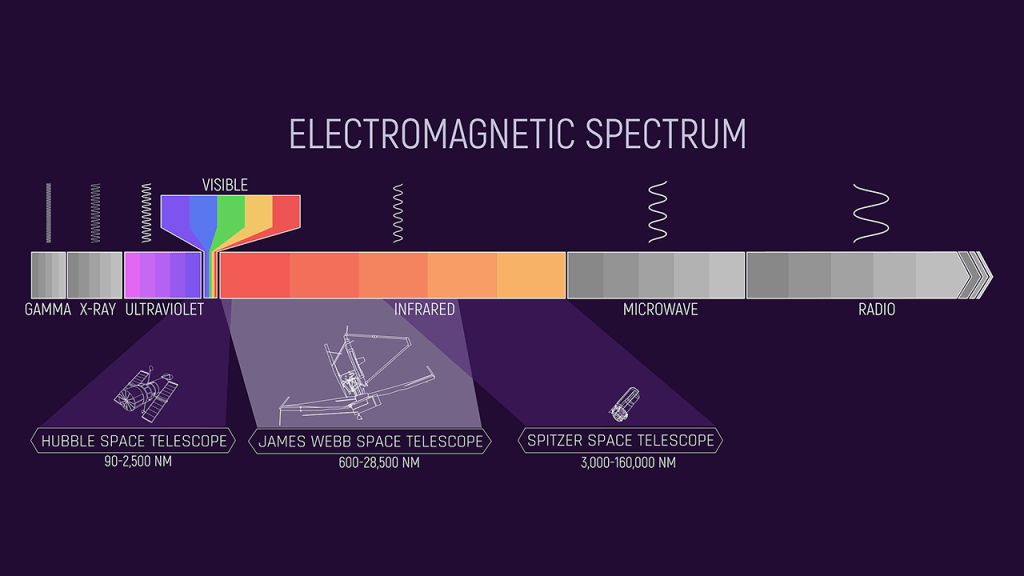
The telescope will cover a wavelength of 0.6 – 28.5 microns for the light falling from red till mid infrared wave spectrum .

Location

JWST will not orbit earth but will be move in a orbit of second Lagrange point(L2 point) which is about 1.5 million km away from the earth. The L2 point is sufficiently near to the earth allowing proper signal communication and the sun shield will prevent any infrared radiation coming from the Sun.

Sun-shield protection

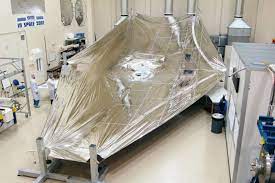
For it to make observation in the infrared spectrum , it must be kept under 50K (−223.2 °C) otherwise the infrared radiation from its system , the earth , moon and sun will interfere with the data. It uses a large 5 layered tennis court sized sun-shield to block that radiation and maintains its surface temperature. the single layer is as thin as a human hair and made with polyamide films . the membranes are coated with aluminium from both sides and a silicon doped layer facing the sun. the shield can be folded 12 times to fit in the Ariane rocket .

The Honeycomb mirrors

The primary optical mirror is beryllium reflector with area 25.4 m2 . gold is used to coat all the 18 mirror segments because it is a highly reflective material for infrared wavelength. The honeycomb pattern utilizes the best use of space available and are also deployable .

Mission goals

  1. Search for galaxies formed after the big bang . It can look 13.5 billion years into the past , about 400 million years after the big bang.
  2. How galaxies evolve.
  3. Observe the formation of stars.
  4. Measure physical and chemical properties of the planetary systems including the Solar System.

This mission will take the Space Science to the next level, thanks to our Scientists……

Feed your soul with some Astronomy….

Astronomy is a subject that produces a spark in everyone. Who doesn’t like gazing at the stars with awe or secretly trying to make a wish when looking at the falling stars or more precisely ‘meteors’ . As it is famously said-

You are not a human being looking at the Universe but the universe looking itself in human form .

Some say, time travel is impossible but often we don’t realise that when gazing at the night sky , you are literally looking millions of years into the past. This thought can make anyone’s heart dance and excite them to explore such a gigantic cosmos.

Astronomy takes your imagination to the next level. We are connected to this field since the arrival of human on this planet. From ancient times , farmers used sky to decide the sowing seasons of crops, astrologers for predicting fortune and astronomers for making calendars and navigation routes for ships. Our ancestors knew the significance of Sun and thus worshipped it. The ancient Mayan Civilisation and Egyptians constructed the pyramids in such a way that their location coincided with that of the positions of the Constellations above.

Certainly this suggests that Astronomy is in our blood . Renowned astronomer Carl Sagan quoted “ The Cosmos is within us. We are made up of star stuff. We are a way for the Universe to know itself.” By studying Astronomy , you understand there are no limitations to what we can achieve, you surrender yourself and your ego before this humongous Cosmos, you feel free and connected to the Nature. If one is interested in going to the depths of this field , one can follow these tips:

1) Be curious- Curiosity kills fear more than courage will ever do.

2) Be patient- Good things take time.

3) Seek knowledge and wisdom- Your soul is most happy when you are in a learning state.

4) Be truthful- A scientist must always be truthful to herself/himself and to the world. Truth is the ultimate thing that a being chases.

5) Be fearless- Know in your mind that you are as old as this Universe and there is nothing to be afraid of because we all are essentially same at the root level.

Always be hopeful because somewhere in this vast universe something incredible is waiting to be known.

The incredible journey of Elon Musk’s SpaceX – The engineering masterpiece

The Falcon super heavy launch vehicle was designed to transport people, spaceships, and various cargos into space. Such a powerful unit wasn’t created instantly and it also had its predecessors. The history of the Falcon family of vehicles began with the creation of the Falcon 1- a lightweight launch vehicle with a length of 21.3 meters and a diameter of 1.7 meters and a launch mass of 27.6 tones; the rocket could carry 420 kilograms or 926 pounds of payload on board. It became the first private device that was able to bring cargo into low earth orbit. Construction of the Falcon 1 of only two stages, the first of them consisted of a supporting element with fuel tanks, an engine and a parachute system. They chose kerosene as the fuel and liquid oxygen became its oxidizing agent.


The falcon heavy side boosters landings -SpaceX
The second stage also contains fuel tanks and an engine; though the latter had less thrust compared to the one in the first stage despite the huge launch cost $7.9 million. Totally five attempts were made to send the Falcon 1 beyond the of our planet nut not all of them were successful. During the debut launch of the rocket, a fire started in the first stage engine; this led to a loss of pressure which caused the engine to shut down in the 34th second of flight. The second attempt to start the Falcon 1 incurred a problem with the fuel system of the second stage fuels stopped flowing into its engine at 474 second of flight it shut down as well. The third time of the Falcon 1 went on a flight, it wasn’t alone of the serious cargo the rocket carried onboard the trailblazer satellites and to NASA micro-satellites. In phase one with the first stage he flight went normally but when the time came to separate the stages, the first hit the second when it started engine, so the second stage couldn’t continue its flight.

The fourth and fifth launches showed good results but that wasn’t enough. The main problem with Falcon 1 was low demand due to its low payload abilities. For this reason, they designed Falcon 9; this device can carry on onboard 23 tons of cargo. It’s also a two stage launch vehicle and uses kerosene and l liquid oxygen as fuel. The device is currently in operation and the cost of its launch is equal to $62 million. The first stage of the rocket is reusable; it can return to earth and can be used again. The Falcon 9 is designed to not only launch commercial communication satellites but also to deliver dragon 1 to the ISS. Dragon 1 can carry a six ton payload from the earth, this drone supplies the ISS with everything they needs and it also takes goods back.


The prototype of SpaceX starship had its first free flight on July 25, 2019
The dragon 2 is designed to deliver a crew of four people to the ISS and back to earth. Now there is an ultra heavy launch vehicle with a payload capacity of almost 64 tones. It is the most powerful and heavier device called the Falcon heavy. This rocket was first launched on February 6th 2018 and the test was successful. The rocket sent Elon Musk’s car into space- a red Tesla Roadster. After this debut subsequent launches were also conducted without problem. The launch cost is estimated to $150 million.

The first stage of the Falcon heavy consists f three parts. There are three blocks contain 27 incredibly powerful engines in nine each one. The thrust created when takeoff is comparable to 18 Boeing 747s at full power. The second stage is equipped with a single engine. It is planned that the device would be used for missions to the moon and mars. Currently, SpaceX working on the star-ship manned spacecraft. According to its creators, this device will be much larger and heavier than all of the company’s existing rockets. This device will able to deliver cargo into space weighing more than a hundred tons. The launch of star-ship into pace is planned for 2022 to mars with a payload. Who knows, one of the mankind’s largest dreams may come true within the next year.
“When something is important enough, you do it even if the odds are not in your favor.” – Elon Musk

CHANDRAYAN-II

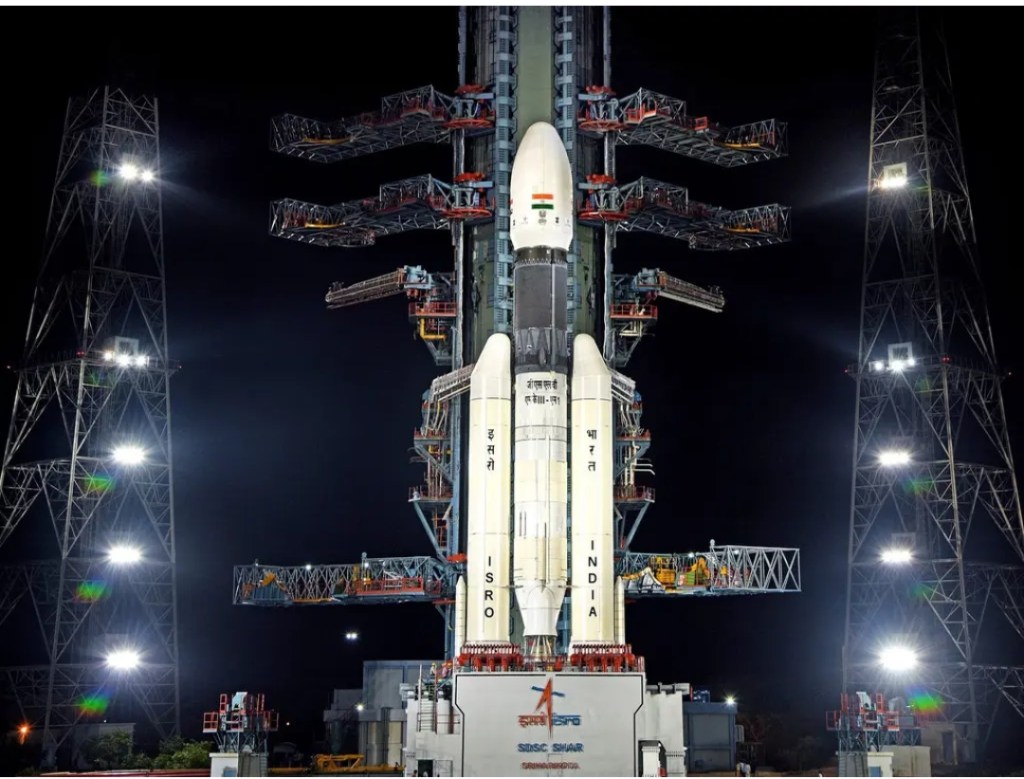
CHANDRAYAN-II is one of the successful satellite in CHANDRAYAN-II is the second lunar exploration mission developed by the Indian Space Research Organisation (ISRO), after Chandrayaan-1. It consists of a lunar orbiter, and also included the Vikram lander, and the Pragyan lunar rover, all of which were developed in India. CHANDRAYAN-II launched in 22 July 2019 in GSLV Mark III M1 rocket launched from Satish Dhawan Space Centre Second Launch Pad.

Isro chief K Sivan said that the spacecraft has completed 9,000 revolutions of the Moon during a workshop. Two years after its lander, rover combination crash-landed on the far side of the moon, the Chandrayaan-2 mission is still delivering critical observations to India as it completes 9,000 orbits around the Moon.06-Sept-2021.

Chandrayaan-2 Orbiter continues to orbit the Moon in an orbit of 96 km x 125 km and both the Orbiter and Lander are healthy. The first de-orbiting maneuver for Chandrayaan-2 spacecraft was performed successfully today (September 03, 2019) beginning at 0850 hrs IST as planned, using the onboard propulsion system.