Investing in Value ETFs: How to Invest in a Basket of Value Stocks

 Introduction

Investing in value stocks has long been considered a prudent approach for investors seeking steady long-term returns. One effective way to gain exposure to a diversified portfolio of value stocks is through Value ETFs (Exchange-Traded Funds). These investment vehicles offer a cost-effective and convenient way to capitalize on the potential of undervalued companies. In this article, we will explore what Value ETFs are, their advantages, and how investors can benefit from them. Additionally, if you are starting to invest in crypto, you may consider knowing about strengthening communication.

What are Value ETFs?

Photo by Leeloo Thefirst on Pexels.com

Value ETFs are a type of exchange-traded fund that primarily focuses on investing in stocks deemed undervalued by the market. These funds typically follow an index that selects companies based on fundamental factors such as low price-to-earnings ratios, low price-to-book ratios, and high dividend yields. By investing in a basket of value stocks, investors can diversify their holdings and potentially achieve better risk-adjusted returns over time.

The Advantages of Value ETFs

Diversification: One of the key advantages of investing in Value ETFs is the instant diversification it offers. By owning shares in a single Value ETF, an investor gains exposure to a wide range of undervalued companies across different industries. This diversification can help reduce the risk associated with individual stock investments.

Lower Costs: Value ETFs are known for their cost-effectiveness. Compared to actively managed funds, which often charge higher management fees, Value ETFs typically have lower expense ratios. This means that investors can keep more of their returns, enhancing their long-term gains.

Less Active Management: Value ETFs are passively managed, meaning they aim to replicate the performance of a specific index. As a result, investors don’t have to worry about the fund manager’s active decisions, reducing the risk of human error and potential bias.

Long-Term Focus: Value investing is based on the premise that undervalued stocks will eventually realize their true worth over time. Therefore, Value ETFs tend to have a long-term investment horizon, aligning well with investors who are seeking sustainable growth rather than short-term speculation.

Considerations Before Investing

Before diving into Value ETFs, investors should conduct thorough research and consider the following factors:

Investment Goals: Assess your investment goals and risk tolerance. While Value ETFs are generally considered less volatile than growth stocks, they are still subject to market fluctuations. Investors should align their investment strategy with their financial objectives.

Expense Ratios: Compare the expense ratios of different Value ETFs. Lower expenses can significantly impact overall returns, especially in the long run.

Track Record: Review the historical performance of the Value ETFs you are considering. Past performance does not guarantee future results, but it can provide insights into how the fund has performed in various market conditions.

Fund Holdings: Examine the fund’s holdings to ensure it aligns with your investment preferences. Different Value ETFs may have varying concentrations in specific sectors or industries.

Diversification: Although Value ETFs provide broad diversification, consider how it complements your existing portfolio. Avoid over-concentrating in a single investment strategy.

Investing in Value ETFs with Online Platforms

For investors seeking to invest in Value ETFs, platforms offer a user-friendly and efficient way to access these investment vehicles. Through the platform, investors can easily research different Value ETF options, analyze their performance, and execute trades with just a few clicks.

Creating a Portfolio of Value ETFs

Selecting Multiple Funds: Diversification within Value ETFs can further reduce risk. Consider allocating funds across multiple Value ETFs to gain exposure to different value strategies.

Rebalancing: Regularly review and rebalance your portfolio to maintain the desired asset allocation. Rebalancing ensures that your investments remain aligned with your financial goals and risk tolerance.

Monitoring Performance: Keep an eye on the performance of your Value ETFs and the underlying holdings. While long-term investing is the primary focus, periodic evaluations help ensure your investments are on track.

Conclusion

Investing in Value ETFs can be a smart approach for investors seeking exposure to a basket of undervalued stocks. The benefits of diversification, lower costs, and long-term focus make Value ETFs an attractive addition to any well-rounded investment portfolio. Before investing, it is essential to conduct thorough research and consider factors such as investment goals and expense ratios. Online platforms provide a convenient way to access and invest in Value ETFs, making it easier for investors to implement their investment strategies effectively. By carefully crafting a portfolio of Value ETFs and monitoring its performance, investors can potentially unlock the rewards of value investing while managing their risk in a well-structured manner.


Impact of Covid-19 on the Corporate Sector in India


The impact of coronavirus pandemic on India has been largely disruptive in terms of economic activity as well as a loss of human lives. Almost all the sectors have been adversely affected as domestic demand and exports sharply plummeted with some notable exceptions where high growth was observed. An attempt is made to analyze the impact and possible solutions for some key sectors.


Food & Agriculture

Since agriculture is the backbone of the country and a part of the government announced essential category, the impact is likely to be low on both primary agricultural production and usage of agro-inputs. Several state governments have already allowed free movement of fruits, vegetables, milk etc. Online food grocery platforms are heavily impacted due to unclear restrictions on movements and stoppage of logistics vehicles. RBI and Finance Minister announced measures will help the industry and the employees in the short term. Insulating the rural food production areas in the coming weeks will hold a great answer to the macro impact of COVID-19 on Indian food sector as well as larger economy.


Aviation & Tourism

The contribution of the Aviation Sector and Tourism to our GDP stands at about 2.4% and 9.2% respectively. The Tourism sector served approximately 43 million people in FY 18-19. Aviation and Tourism were the first industries that were hit significantly by the pandemic. The common consensus seems to be that COVID will hit these industries harder than 9/11 and the Financial Crisis of 2008. These two industries have been dealing with severe cash flow issues since the start of the pandemic and are staring at a potential 38 million lay-offs, which translates to 70 per cent of the total workforce. The impact is going to fall on both, White and Blue collar jobs. According to IATO estimates, these industries may incur losses of about 85 billion Rupees due to travel restrictions. The Pandemic has also brought about a wave of innovation in the fields of contactless boarding and travel technologies.


Telecom

There has been a significant amount of changes in the telecom sector of India even before the Covid-19 due to brief price wars between the service providers. Most essential services and sectors have continued to run during the pandemic thanks to the implementation of the ‘work from home’ due to restrictions. With over 1 billion connections as of 2019, the telecom sector contributes about 6.5 per cent of GDP and employs almost 4 million people. Increased broadband usage had a direct impact and resulted in pressure on the network. Demand has been increased by about 10%. However, the Telco’s are bracing for a sharp drop in adding new subscribers. As a policy recommendation, the government can aid the sector by relaxing the regulatory compliances and provide moratorium for spectrum dues, which can be used for network expansions by the companies.


Pharmaceuticals

The pharmaceutical industry has been on the rise since the start of the Covid-19 pandemic, especially in India, the largest producer of generic drugs globally. With a market size of $55 billion during the beginning of 2020, it has been surging in India, exporting Hydroxychloroquine to the world, esp. to the US, UK, Canada, and the Middle-East.

There has been a recent rise in the prices of raw materials imported from China due to the pandemic. Generic drugs are the most impacted due to heavy reliance on imports, disrupted supply-chain, and labour unavailability in the industry, caused by social distancing. Simultaneously, the pharmaceutical industry is struggling because of the government-imposed bans on the export of critical drugs, equipment, and PPE kits to ensure sufficient quantities for the country. The increasing demand for these drugs, coupled with hindered accessibility is making things harder. Easing the financial stress on the pharmaceutical companies, tax-relaxations, and addressing the labour force shortage could be the differentiating factors in such a desperate time.


Oil and Gas

The Indian Oil & Gas industry is quite significant in the global context – it is the third-largest energy consumer only behind USA and Chine and contributes to 5.2% of the global oil demand. The complete lockdown across the country slowed down the demand of transport fuels (accounting for 2/3rd demand in oil & gas sector) as auto & industrial manufacturing declined and goods & passenger movement (both bulk & personal) fell. Though the crude prices dipped in this period, the government increased the excise and special excise duty to make up for the revenue loss, additionally, road cess was raised too. As a policy recommendation, the government may think of passing on the benefits of decreased crude prices to end consumers at retail outlets to stimulate demand.


Beyond Covid: The new normal

In view of the scale of disruption caused by the pandemic, it is evident that the current downturn is fundamentally different from recessions. The sudden shrinkage in demand & increased unemployment is going to alter the business landscape. Adopting new principles like ‘shift towards localization, cash conservation, supply chain resilience and innovation’ will help businesses in treading a new path in this uncertain environment.

Coronavirus (COVID-19), a virus that grew stealthily has become one of the deadliest viruses that are killing people worldwide. This virus took birth in Wuhan city of China and since then have traveled to more than 160 countries. The World Health Organization (WHO) has declared Coronavirus as a pandemic. It has become a mass scare and is leading to the deaths of thousands of people in numerous countries including China, Italy, Iran, Spain, the US, and many more. In India, this pandemic started on 30 January 2020 by affecting an individual who had a travel history from Wuhan, China.


The world economy is seeing its greatest fall ever. Coronavirus has largely impacted the growth of almost every country and is responsible for the slump in GDP worldwide. Like other countries, India is also impacted by this virus but not largely. Almost every industry sector has seen a fall in their sales and revenue. India’s GDP growth has fallen to 4.7% in the third quarter of 2020.


Inflation and Affected Industry:

China is one of the largest exporters of many raw materials to India. Shutting down of factories has damaged the supply chain resulting in a drastic surge in the prices of raw materials. Some of the other products that have seen a rise in their prices are gold, masks, sanitizers, smartphones, medicines, consumer durables, etc. The aviation sector and automobile companies are the hardest hit among the rest. With no airplane landings or take-offs globally and restricted travel has brought the aviation and travel industry to a halt.


Slump in Share market:
Share markets that include Sensex and Nifty are on nose dive since the occurrence of this pandemic (COVID-19). Sensex has declined close to 8000 points in a month. As of 12 March 2020, share market investors have lost approximately Rs. 33 lakh crore rupees in a month. This could be the beginning of a recession that the Indian market will never want to witness. Investors are advised to stay safe and invested in this virus-infected stock market. Few industries that can benefit from novel coronavirus during the time of the market crash are pharmaceuticals, healthcare, and Fast Moving Consumer Goods (FMCG).


Cash flow Issue:
Due to this outbreak, almost 80% of Indian companies have witnessed cash flow difficulty and over 50% of companies are facing operations issues. As per the Federation of Indian Chambers of Commerce and Industry (FICCI), 53% of companies are impacted by COVID-19. Slow economic activity is resulting in cash flow problems eventually impacting repayments, interest, taxes, etc.


Coronavirus (COVID-19), a virus that grew stealthily has become one of the deadliest viruses that are killing people worldwide. This virus took birth in Wuhan city of China and since then have traveled to more than 160 countries. The World Health Organization (WHO) has declared Coronavirus as a pandemic. It has become a mass scare and is leading to the deaths of thousands of people in numerous countries including China, Italy, Iran, Spain, the US, and many more. In India, this pandemic started on 30 January 2020 by affecting an individual who had a travel history from Wuhan, China.


The world economy is seeing its greatest fall ever. Coronavirus has largely impacted the growth of almost every country and is responsible for the slump in GDP worldwide. Like other countries, India is also impacted by this virus but not largely. Almost every industry sector has seen a fall in their sales and revenue. India’s GDP growth has fallen to 4.7% in the third quarter of 2020.


Efforts from CII and Govt. of India:
Confederation of Indian Industry (CII) has suggested the RBI reduce repo rate up to 50 basis points and also asked for a reduction of 50 basis points on the cash reserve ratio. The government is planning to set up an amount to support MSMEs to overcome the crisis during this phase of shut down, cash flow difficulty, and working capital issues.

Written by: Ananya Kaushal

STOCK MARKET IS A GAMBLING ??

Majority of population in India thinks that stock market is a gambling like casino. To be honest that’s not the reality.

Being in the stock market field for 1 year , I have realized that stock market is a far bigger concept that what normal people think it is. Even if you blindly invest in stocks of any company you are still speculatively investing and not gambling! The simple reason is that there is a sort of ownership here.

Investing in stocks involves careful analysis of company’s performance and future forecast. So as to own a handful of shares for some period of time, to claim trust on the products of the company, further gearing the economy.

as said by WILSON MIZNER : Gambling is the sure way of getting nothing from something.

When you gamble , you get to own nothing. You play with the available probabilities and are run by emotions or gut to chase a win.

Hence from this blog I just want to convey a message to all the readers that Investing in stocks is a gambling is a MYTH !!

TIPS TO MAKE YOURSELF FINANCIALLY LITERATE

Have you ever heard or read in a newspaper that a person who won millions of dollar got broke after few years, why is this so ? This is because of lack of financial education, and the reason behind many of the people after good degree and jobs and a good salary still facing financial issues is the same lack of financial education.

1. Listen to podcasts, like the Rich Dad Radio Show.

2. There are plenty of you tube channels of financial experts, subscribe their channels and follow them.

3. Read newspapers, magazines, or books based on money, finance, and investing.

4. Follow peoples or pages sharing financial knowledge on social media.

5. Hang around with people smarter than you beyond all this have a keen interest and a burning desire. That’s all you need to be financially literate.

Stock Exchange India

Stock exchange is something about which many people are still unaware, here I am talking specifically about India its stock exchange and other facts related to it. A stock exchange is basically a place where an individual can buy and sell stocks. The oldest stock exchange in India happened in the year 1857 in Bombay (Mumbai)
A stock which is also known as an equity lets a common man invest into a corporation and they get a share in companies’ asset and profit depending upon how much share they own. The costliest share in India is approximately seventy-two thousand for one, it is of MRF and the costliest share of the world is Berkshire Hathaway. If we go into the technicality of the topic there are number of concept and terms.

Bull and Bear
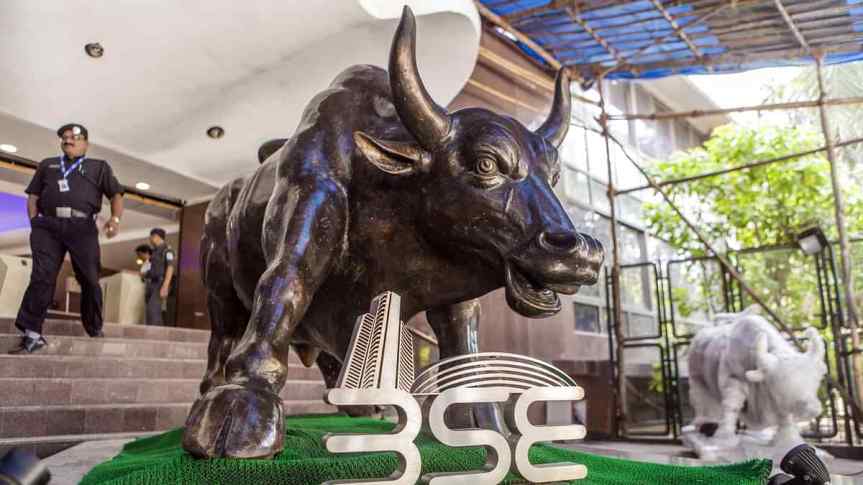
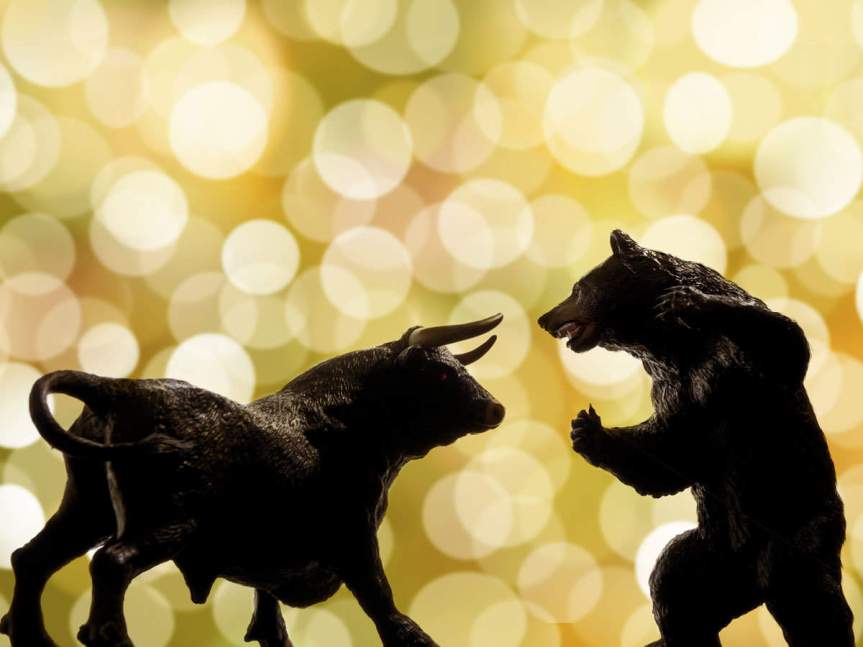
This concept of Bull and Bear is the most common one it basically reflects the condition of stock market just like the name a bull is considered an active and fierce animal and a bear is lazy, a bull here stands for a purchaser who invest in stocks and earns great profit as he invested at the right time where as a bear is just the opposite, he sells stock. Both resembles different condition.

Rule of 72
Which is a beginner rule, used to calculate the time required to double the capital, the calculation is done by number 72.

In India there are two popular stock exchange venue The Bombay Stock exchange and the national stock exchange. Out of the two BSE is the older one it was established back in 1875 and it is the first ever stock exchange of Asia, apart from this on-line trading was introduced through Bombay stock Exchange, it is the 12th biggest market place for stock exchange in world.
Then, there is National Stock exchange, which came in 1992 and bought electronic exchange with it, this changed the traditional style. It is the 10th biggest stock exchange market. It is more advanced as compared to Bombay stock exchange in terms of facilities and both are separate. Both have different value as in capital and enjoy different position in the world and Indian market. There are in total 9 stock exchange in India including Bombay Stock Exchange and National Stock Exchange.
A stock market plays a significant role in an economy that is why they exist, it is a platform that links a buyer, a seller, a company and most importantly they reflect the condition of a country’s economy.
Stock marked is termed risky because in case the market falls a purchaser will have to face high loss but, if the value of share increases it will lead to profit.
But as a responsible citizen we should always be aware about the ongoing trends and condition of stock market even if we don’t want to invest. There is a small population that invest into stock market reason can be many like the risk associated etc. but, at the same time we have great investors like Rakesh Jhunjhunwala and others.

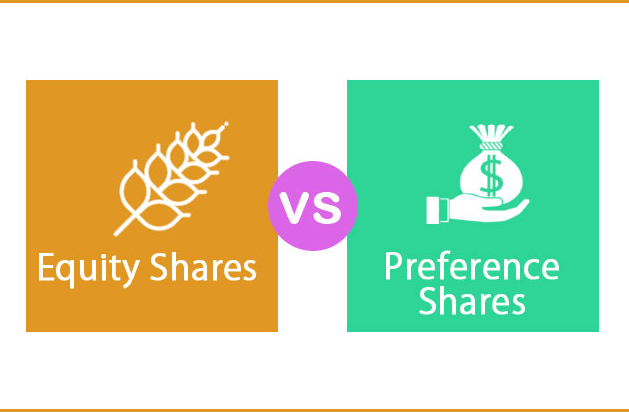
Equity vs Preference shares

We keep hearing the term ‘shares’ or ‘stock’ nowadays as it is a common topic of discussion. However, it is essential to know the different types of shares available in the market to be aware of our options as investors and also to determine which type suits the objectives of the investor better.

According to section 86 of the companies act, a company can issue only two types of shares:
(a) Preference shares
(b) Equity shares

PREFERENCE SHARES

As the name suggests, a preference share gives a preferential right to its shareholder, to get a fixed rate of dividend over other types of shares. This implies that preference shareholders are entitled to receive their dividends BEFORE any dividend is paid to equity shareholders from the profits.

Preference shareholders are also entitled to return of share capital before equity shareholders when the company is winding up. This implies, that after the company has paid off its debts to outsiders, the surplus and remaining assets are used to return the share capital to preference shareholders before equity shareholders. The remaining assets and surplus, if any, is distributed among the equity shareholders.

However, Preference shareholders don’t get to enjoy voting rights. They are only allowed to vote on

a) Any resolution affecting their rights

b) All resolutions when dividend has not been paid to them for the time period mentioned in the Act.

Types of Preference shares

Different kinds of shares have different rights associated with them.

  • Cumulative Preference Shares– Dividends not declared and paid in the current year (due to loss or inadequate profit), is accumulated and can be paid out of profits of subsequent years before dividend is paid to equity shareholders. Preference shares are always cumulative, unless the contrary is expressly stated in the Articles of Association.
  • Non-Cumulative Preference Shares- In the case of non-cumulative preference shares if dividend is not paid in any particular year, it lapses. It does not accumulate. Hence, it is not paid in the subsequent years.
  • Participating Preference Shares- In addition to the fixed rate of dividend, these shares carry a further right to participate with the equity shareholders in the surplus profits which remain after paying a certain rate of dividend to equity shareholders. Thus, they get two kinds of dividend, one fixed rate and the other changing every year depending on the level of excess profits. Similarly, such preference shares have a right to participate in the surplus assets of the company on its winding up after paying in full the preference and equity share capital.
  • Non-Participating Preference Shares– These shares are entitled to only a fixed rate of dividend. They do not participate either in the surplus or in the surplus assets on winding up after paying in full the preference and equity share capital. Preference shares are presumed to be non-participating unless specifically stated otherwise in the articles.
  • Convertible Preference Shares– These shares can be converted into equity shares within a specified time period.
  • Non-Convertible Preference Shares- These shares cannot be converted into equity shares. Preference shares are presumed to be non-convertible unless specifically stated otherwise in the articles.
  • Redeemable Preference Shares- Capital raised by means of these shares can be returned after a specified period or at any time at its options after giving notice as per terms of issue. These shares can be redeemed either out of profits or out of the proceeds of a fresh issue of shares.
  • Irredeemable Preference Shares- Any preference share that cannot be redeemed during the lifetime of the company is known as irredeemable preference Shares. Such shares are not offered anymore.

EQUITY SHARES

Equity shareholders are entitled to get dividend only after the fixed rate of dividend is paid to preference shareholders. Similarly, at the time of winding up of the company, only after returning preference share capital in full, and if there is any surplus, it will be paid to equity shareholders.

The rate of dividend is not fixed as it varies from year to year and depends on the profit earned every year. Higher the profits, higher the dividends of equity shareholders. However, in case of loss or inadequate profits, equity shareholders often do not get dividends for that year. Moreover, even in case of profits, the company can choose to retain the surplus in the business instead of paying dividends to equity shareholders. Hence, dividends for equity shareholders are not assured.

However, equity shareholders are considered as the owners of the company and hence, get voting rights on all resolutions.

To conclude, equity shares are quite risky since dividends and return of capital when the company is winding up is not assured. However, if the company is reputed and does well, equity shareholders dividends are usually more than fixed dividends of preference shareholders. Moreover, equity shareholders enjoy voting rights and are more involved in the management of the company as they are the owners.

On the other hand, for investors looking for fixed rate of return (dividends) and assured return of capital invested, preference shares should be a good investment.

Declaration of Dividend

As more and more people invest in the stock market, dividends as a source of income gains popularity. Therefore, it is important to understand the legal framework of the process and its details in order to make a well-informed investment.

Sources of Dividend declaration

The basic principle of declaration of dividend is that it shall be paid out of profits only. However as per companies act dividend can be paid out of-
1) Current year’s profit of the company, or
2) Undistributed or accumulated profits of the previous years, or
3) Out of money provided by the Central Government or a State Government for the payment of dividend by the company in pursuance of a guarantee given by that Government.

Dividend Declaration Provisions

1) Depreciation: – Before the declaration of dividend, a company shall provide depreciation to all its depreciable assets, in accordance with the rates or useful life, as the case may be provided in Schedule – II of Companies Act -2013.
2) Transfer to Reserves:- A company may, before the declaration of any dividend in any financial year, transfer such percentage of its profits for that financial year, as it may consider appropriate to the reserves of the company.
3) Set off of previous year losses and depreciation: –A company shall not declare dividend unless carried over previous losses and depreciation not provided in previous year or years, are set off
against profit of the company for the current year.
4) Free Reserves: – A company shall not declare or pay dividend out of its reserves, other than free reserves.

Conditions for declaration of dividend out of surplus reserves

As per Companies (Declaration and Payment of Dividend) Rules, 2014 a company may declare dividend out of surplus reserves subject to the fulfilment of the following conditions, namely: –
1) Rate of Dividend: – The rate of dividend declared shall not exceed the average of the rates at which dividend was declared by it in the three years immediately preceding that year. However, this condition shall not apply to a company, which has not declared any dividend in each of the three preceding financial year.
2) Total Amount to be withdrawn: – The total amount to be drawn from such accumulated profits shall not exceed one-tenth of the paid-up share capital and free reserves as appearing in the latest audited financial statement.
3) Utilization of withdrawn amount: – The amount so drawn shall first be utilized to set off the losses incurred in the financial year in which dividend is declared before any dividend in respect of equity shares is declared.
4) Balance amount of Reserves:- The balance of reserves after such withdrawal shall not fall below 15% of its paid up share capital as appearing in the latest audited financial statement.

Payment of dividend: According to section 123(5):

■ Dividends are payable in cash. Dividends that are payable to the shareholder in cash may be paid by cheque or
warrant or in any electronic mode.

■ Dividend shall be payable only to the registered shareholder of the share or to his order or to his banker.
■ This subsection shall apply to the company, subject to that any dividend payable in cash may be paid by crediting the same to the account of the member, if the dividend is not claimed within 30 days from the date of
declaration of the dividend
.
■ Nothing in sub-section 5 of section 123, shall prohibit the capitalization of profits or reserves of a company for the
purpose of issuing fully paid-up bonus shares or paying up any amount for the time being unpaid on any shares held by the members of the company.

Video Game crash of 1983

In 1983 the video games industry was hit with a recession that almost ended the existence of video games of that time period. This period lasted for almost two years from 1983 to 1985. Many people and journalists who were critical were calling video gaming a fad. Numerous companies went bankrupt or stopped making video games entirely. This recession is known as the Great North American Video Game Crash or Atari Shock (Primarily in Japan).

Video games in the 1970s were dominated by arcade machines and by the end of the decade home game consoles were also getting popular. With the start of the 1980s, the video gaming industry witnessed a boom with numerous companies like Mattel, Atari, and Coleco dominating the market. The early 80s was a time of innovation and growth in the video game industry but there was instability in the industry as well. This was a time period when video games were becoming more mainstream and popular. Many new players entered the market ranging from industries to small developers that had no association or prior experience in game development in general.

Pacman was a big hit in the early 80s and it was not of the most popular video games in the arcades. Its successor Miss. Pacman improved on the formula and was a success as well. After the success of Pacman in the arcades, Atari wanted to replicate the success in the home game consoles. But with the limited constraints with the memory and short development period, the game was not well received by the consumers and critics alike. In 1982 Atari also brought the license to release the video game of the movie for 21 million. The game was developed in a time period of only 5 weeks. The game was negatively received and only 1 million copies of the game were sold off the 5 million manufactured. Many of the sales were also returned to the retailers furthering the damage. During this period video games were being published by small developers with very poor quality and many big developers were producing games that were more of a marketing token than the game. There were many clones of the same games with little to no redeeming quality and replayability. There were also numerous consoles unlike today with too many options that were no different from one another. With the abundance of supply and low sales of games, retailers started to remove stocks of video games and this led to the shrinking of the industry. Atari had lost $500 Million in 1983 and had to cut its workforce from 10,000 employees to just 400 employees.

During the 1980s there was a boom in the Personal Computers market as well. The PCs were much more powerful than consoles and they could play games and do many tasks like word processing and spreadsheets. The PC industry was unaffected by this low point of video game consoles.

In 1985 Nintendo Corporation launched the Nintendo Entertainment systems in North America and Nintendo ensured that only a limited number of games to be released under their license agreement. This ensured a certain threshold of quality for the games that were released for the system and Nintendo emerged out of the survivor from the video game crash. The Nintendo Corporation started to dominate the video game industry with an assurance of quality that was unmatched by any other corporation at that time. Many other entrants like SEGA also emerged after the crash. Nintendo with its approach and license and quality assurance of video games has left a big impact on the industry to this date. Video games industry has only grown since then and also overtaken other source of entertainment. Nintendo can be credited to provide the industry a trajectory that was severely needed after the crash of 83.

References:

Greed vs Generosity: Which Gives a Better Competitive Advantage?

Many people think that in the professional world, selfishness and greed are the characteristics that pay dividends. But the truth is, excepting win-lose situations, that the most successful people in the medium and long term are those who are the most generous in their business and personal lives.

Ambition is a desire to take on more than you can realistically accomplish, to constantly strive for improvement, to grow both personally and professionally, and, of course, the desire to generate more income. However there comes a time when ambition crosses a line, and when that happens it becomes greed. Greed is the desire to chew more than you can eat, a desire that distracts you from realistically possible goals. Greed is wanting to get more than what you have actually earned, obtaining maximum profit at minimum cost, or as an old adage has it: “Grasp all, lose all.”

Today there is an abundance of courses and books on finance, limitless knowledge on hand with a simple click. But to know what is right, to subdue the pirates of greed and to follow your trading plan- this is another story. People who look for easy money invariably find that there is no such thing, paying a heavy price for this lesson. Ego, vanity, and revenge play a part, causing people to fail on their trading accounts. This is one of the factors that explains why people might not fall into the exclusive 10% that ‘win’, and find themselves one of the 90% that lose.

Literature and film are full of greedy and stingy characters, and the moral of films like ‘A Christmas Carol’ or ‘The Wolf of Wall Street’ is always the same: the fate of the greedy is heartbreaking. Their addiction to work means that they live a lonely life, and their search for wealth means that at the end of their lives, they have only the sober memory of their friends from the Stock Exchange.

GIVE AND TAKE

People do not realize that giving without expecting something in return could be a competitive advantage, as well as making ones outlook more positive. Studies have shown that the most successful people are generous. At least this is the affirmation of Adam Grant, a psychologist and professor at Wharton and author of “Give and Take”.

A generous person builds bigger and stronger networks, improves communication with their existing contacts, and also finds it easier to interact with people outside of their core network- this gives them access to new contacts and valuable sources of information. Generous people inspire in others a predisposition, or positive receptivity, to reconnect with them, as well as a greater willingness to collaborate.

Moreover, being a giver encourages persistence because givers are able to enthusiastically motivate people, inspiring confidence, because they are liberal with praise. They create a generally positive environment. Talent is important, but the most important factor in success is persistence. And what’s even more interesting is that being a giver has an energizing effect that increases levels of happiness.

According to Bill Williams, famous trader and writer of “Trading Chaos”, people with a ‘giving’ mindset enjoy more happiness and success. For example, later in his career Bill always traded two accounts, one for himself and one for his charities. The charity account always made more money, even though he traded using the same method with both accounts. In the charity account he never veered from his strategy, while in his own account he would sometimes take a trade based on a “feel”, or get in a trade before the actual signal. This shows us the importance of sticking to a plan, but also the importance of being a ‘giver’.

Giving distracts us from our problems, adds meaning to our lives and helps us feel valued by others. This explains why avidity and egoism are the trader’s worst enemy. Having a benevolent mindset while trading helps the trader to increase performance. Happy people earn more money on average, score higher yields, make better decisions and contribute more to their organizations. Furthermore, traders who are givers are at the top of the most successful trading operations.

THE GREED EFFECT

Focusing only on money results in the ‘greedy effect’, something that all professional traders know. In fact, one of the most common pieces of (rarely followed) advice that newbies receive is to shift their focus from trade results to the trading process, analyzing and following the rules of their trading system. Another suggestion is to start reasoning in pips and ticks instead of dollars. This reduces the greedy mindset and develops a more reliable attitude.

However we can make a further effort to improve our performance by shifting our focus to be more generous. One example is trading for charitable purposes like the aforementioned Bill Williams, another could be simply committing a small part of your monthly or annual profit to microcredits, which promote a world of stability and self-sufficiency, key to overcoming poverty.

Material things can be recovered, but feelings of guilt, helplessness and loneliness cannot be solved with money. If humans would be more understanding of and generous to others, the world would be a very different place. And that is why those who practice generosity, making it part of their daily lives, experience an uplifting of their mental and emotional state, and are generally filled with more satisfaction in their professional and personal lives.

In conclusion, we see that generous people are the most successful in their daily trading performance for the reasons described above. Having a giving mindset helps professionals become part of that exclusive group, the 10% of winners.

The stock market bubble

A real concern or confused market parameters?

Introduction

An assertion like ‘Had you invested in the stock markets in 2011, your investments would have doubled by now’ triggers an urgent rush to invest in the market, bringing in the feel good hormones in most people. But often times, it is extremely misleading and the results could be catastrophic.

A stock market bubble is when the prices of assets rise exponentially, often not justifying their actual value.

Investors in 2020 faced a similar conundrum. With the pandemic induced lock-downs causing normal life and businesses to go haywire, the general investor felt it was better if they pulled their money out of the market. This led to the leading market index NIFTY50 dropping to 7,500 levels,a 40% decline from its value in January 2020(NSE india). As a result, the market became almost risk free and the only way ahead was up.

Investments started pouring in as the Covid-19 cases eased by August and significant institutional and foreign investors started pouring in money into the Indian stock markets because of their abnormally low levels. The domestic average investor soon followed suit and the markets saw a revival. In fact they rose to record highs( From record lows just a few months ago!) and the expectation of ‘winning’ a trade led to impulsive buys.

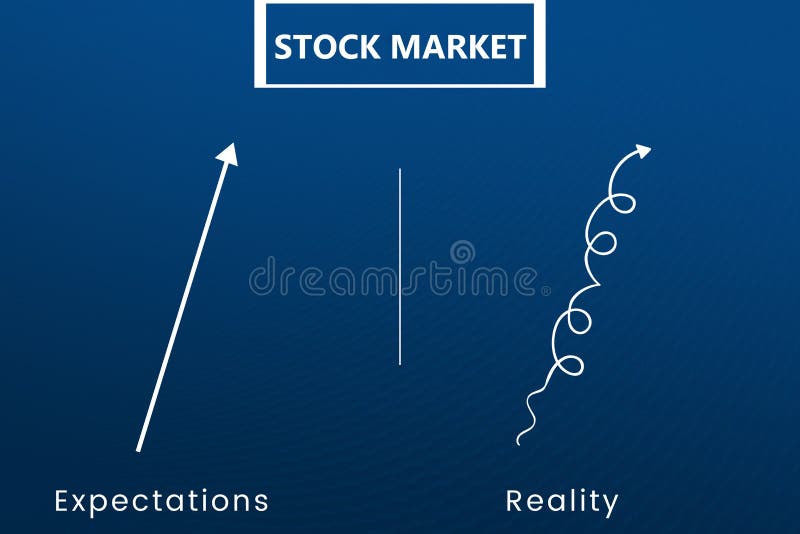
Perception versus Reality

Investors are not always sensible or rationale in their investing decisions and can be prone to various types of ‘bias’. These phenomena can explain the prevailing overtly optimistic market sentiments even when the macro-economic indicators are lacking behind.

Even with parameters like the G.D.P and inflation on the wrong side of desirable, and unemployment rate sky rocketing in 2021, the profits that the top 50 companies made in India in the last fiscal year has increased. This resulted in a lot of investors ignoring those macro-economic trends and could be the reason as to why the stock market segment is rising irrespective of it.

Hence the ever increasing corporate profits and the ‘feel good’ hormones can attribute to the ascend of the stock market levels from the previous years ruins but the question remains, ‘How long can this last’? Established wisdom suggests that corporates cannot sustain a contacting economy for long and that it is bound to catch up with it sooner rather than later. Caution is advised to investors with a majority of their money in these instruments. A bubble burst is in the realm of recurrent reality and cannot be ignored as a figment of the imagination.

An Overview of the Stock Market

The stock market or the share market comprises of buyers and sellers of shares. The shares can be traded over private or public platforms. Investors who buy shares of any institution, are conferred ownership to a certain part of the institution. A company can build its market capitalization through its outstanding shares. There are various financial intermediaries that act as middlemen by overseeing the financial transactions made between two parties, such as banks, insurance, stock exchanges.

India has two stock exchanges -the NSE and the BSE. The stock market provides the pricing information resulting from the financial transactions, between the buyers and the sellers, of the market. The stock market is regulated by SEBI which is a regulatory body that issues guidelines to intermediaries and companies regarding the securities and capital, with the motive of ensuring the interests of the investors are protected. The BSE is one of the oldest stock exchanges in Asia and has a market capitalization of $3 trillion dollars. The BSE constitutes the indices of BSE SENSEX, S&P BSE Smallcap, Midcap and Largecap, BSE 500. The NSE is a government owned stock exchange also having a market capitalization rate of $3 trillion. The NSE considers the indices of NIFTY 50, NIFTY Next 50, NIFTY 500.

The stock market ensures liquidity by providing a mechanism for an investor to sell their financial assets. The comprisal of the stock market ranges from small companies to large companies. Small individual investors or large investing firms can invest in any stocks from any of the stock exchanges in the world. Today, stocks are traded over electronic platforms, making it convenient for investors to look up at stock prices, analyze their perceptions according to the price indices and invest. Back in the days, stocks were traded through brokers using physical mediums, like certificates or paper receipts, which involved more complexity in contrast to the advancing technology of today’s world.

The stock market exhibits both the primary market and the secondary market. The primary market offers new shares to the investors, the sale of securities to the public can be facilitated by underwriting institutions such as bank. In the secondary market the shares that are already in the public domain or with the investors, are traded with buyers and sellers. The investors in the secondary market trade stock with each other rather than with any issuing firm.

There are two types of offerings of shares to the public -IPO and FPO. IPO are initial offerings of shares to the public done via primary market. FPO are follow on public offerings wherein an issuance of additional shares is done by a company after IPO. The prices of the shares offered in IPO are fixed, while the price of shares in FPO is deemed based on their market value.

Some companies have dividend payments which is a sort of reward to the investors for investing in their business. Dividends are the distributions of a company’s earnings to its shareholders.

Today, investors have an option for a better portfolio management, as investors can manage their risk by diversifying their investments among various financial instruments. Building a proper portfolio requires proper analysis of stock, bond or any other commodity and can bring in profits to the investor. 

IMPORTANT TERMS OF STOCK MARKET

  • Agent:

An agent is a brokerage firm which does buying/selling of shares on behalf of the investor in the stock market.

  • Ask/Offer:

It refers to the lowest price at which the owner of the equity shares is ready to sell the shares in the stock market.

Broker

A person who purchases or sells an investment on behalf of the investor/trader in return for a commission.

Bear Market It refers to a period in which the prices of equity shares fall consistently. You may look at it like beginning of a downward trend in the stock market.

Bull Market: An opposite of bear market, a bull market situation in which the prices of the stocks are increasing over a prolonged period of time. A single stock and a sector can be bullish at one time and bearish at another time.

Bid:

It is the highest price that the buyer of a stock is ready to pay for a particular stock.

Face value:

It relates to the amount of money or the value in cash that the holder of a security will obtain from the issuer of the security when the security matures at the specific date.

Limit Order –

A limit order is a type of order which executes at the price placed for buy or sell.

Market Order –

A market order is a type of order which executes as quickly as possible at the market price.

Day Order –

A day order is a direction to a broker to execute a trade at a specific price that expires at the end of the trading day if it is not complicated.

Authorized Shares –

This is the total number of shares that a company can trade.IPO – It is an Initial Public Offering that happens when the private company becomes a publicly traded company.

Secondary Offering –

This is another offering in order to sell more stocks and to raise more money form the public

Portfolio –

A collection of investments owned by you.

Margin –

Margin account lets a person to borrow money from the broker to buy shares.

INVESTMENT IN THE STOCK MARKET FOR BEGINNERS

The stock market refers to public markets that exist for issuing, buying, and selling stocks that trade on a stock exchange or over-the-counter.  In simple terms, if A wants to sell shares of Reliance Industries, the stock market will help him to meet the seller who is willing to buy Reliance Industries.  A person can trade in the stock market only through a registered intermediary known as a stock broker. The buying and selling of shares take place through electronic medium.

There are two main stock exchanges in India where majority of the trades take place – Bombay Stock Exchange (BSE) and the National Stock Exchange (NSE). Apart from these two exchanges, there are some other regional stock exchanges like Bangalore Stock Exchange, Madras Stock Exchange etc but these exchanges do not play a meaningful role anymore.

NSE is the leading stock exchange in India where one can buy or sell shares of publicly listed companies. It was established in the year 1992 and is located in Mumbai. NSE has a flagship index named as NIFTY50. The index comprises of the top 50 companies based on its trading volume and market capitalisation.  BSE is Asia’s first as well as the oldest stock exchange in India. It was established in 1875 and is located in Mumbai. BSE Sensex is the flagship index of BSE.

Securities Exchange Board of India (SEBI) is the regulatory body of the Indian Stock Markets. The main objective of SEBI is to safeguard the interest of retail investors, promote the development of stock exchanges, and regulate the activities of financial intermediaries and investors in the market. A stock broker also known as a dealer is a professional individual who buys/sells shares on behalf of its clients. In the stock market, stock broker is registered as a trading member with the stock exchange and holds a stock broking license. They operate under the guidelines prescribed by SEBI.

 ADVANTAGES OF INVESTING IN STOCK MARKET:

  •  the stock market can make great money in a short time of period.
  •  Unlike other investments, such as real estate and CDs, investors can easily access money in the stock market.
  • Investing in the stock market can help in our entire financial portfolio.

DISADVANTAGES IN INVESTING IN STOCK MARKET:

  • Investors can expect daily volatility in the stock market, but large failures in the system are less common.
  • In the stock market, there are winners and losers. Winners can make much money, but those who lose can see all of their investment disappear.
  • Every time an investor decides to buy or sell shares, he or she will have to shell out a certain proportion as brokerage fees to the broker.