Career advice for university students

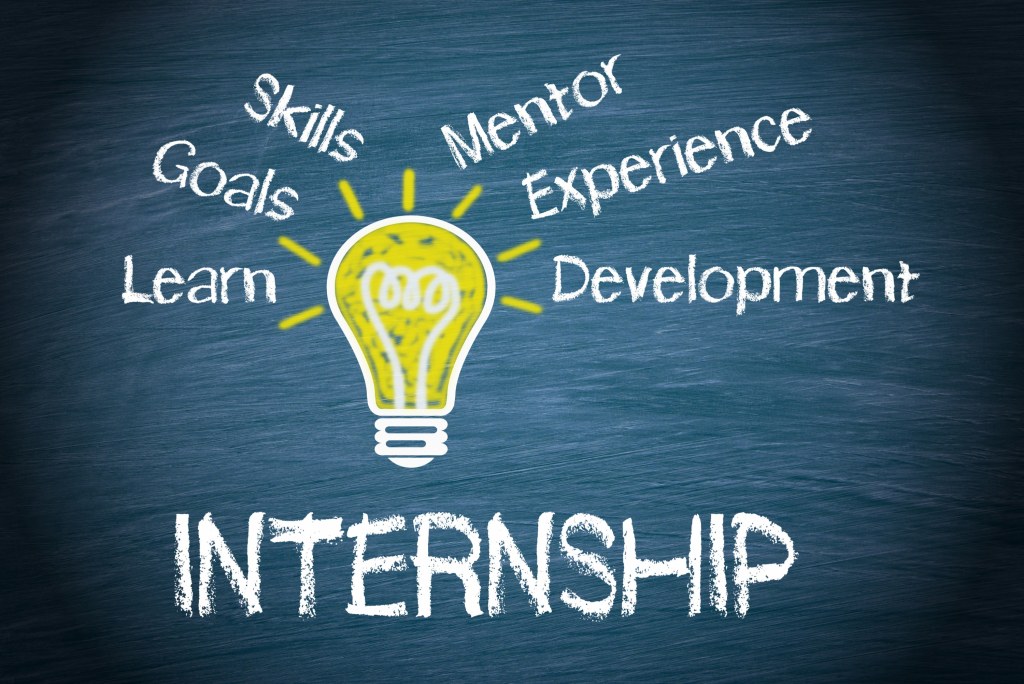
Seek internship opportunities

Internships are a great way to gain valuable, hands-on experience in your field. For your internship to be beneficial, it must apply to your career aspirations. For example, if you’re interested in becoming a veterinarian, it may be beneficial to work at a kennel or animal shelter where you can learn proper animal care and handling.

Grow your skills and knowledge

Employers want to hire candidates with a wide range of skills. Use your college years to expand your skills and overall knowledge. Consider elective courses relevant to your career aspirations. For example, if you’re a photographer, taking an art class can help you expand your creativity. If your school doesn’t offer classes in the skill you’re hoping to grow, consider investing in relevant software.

Get an early start

To ensure you get the most out of your career, start looking for opportunities before you graduate. Find jobs relevant to your major. For example, if you’re interested in becoming a graphic designer, consider working for a design agency. This opportunity can help you understand what daily life is like for fellow designers and help you better understand the industry. Similarly, if you’re an art major, consider working for a local gallery to gain knowledge about the art industry. The sooner you look for opportunities, the greater chance you have of getting a job.

Keep your skills up-to-date

When you apply for a job or internship, you’ll likely be competing with other candidates. Because of this, it’s important to keep your skills current regardless of your industry. This means staying up-to-date with various technology and industry trends to help you gain an advantage over other candidates and make you stand out to hiring managers. Stay current by doing online research, reading professional journals or visiting your school’s library.

Pursue your passion

The easiest way to find happiness in your career is to determine what you love doing. For example, if you enjoy woodworking or metalworking, consider becoming an engineer. This ensures you’re doing something that makes you happy every day and will help your job feel less like work and more like fun. Following your dreams can also help increase your productivity because you’ll likely be more excited about going back to work. This advice is crucial as you advance in your career because it ensures you stay encouraged and driven to be the best you can be in your industry.

Strive for excellence and stay motivated

Whether you’re in your first job or an internship, it’s important to aspire to be the best you can be. Identify your own mistakes and believe in yourself and your abilities. This can help you stay vigilant in pursuing your dreams and give you the ability to advance in your career. Ultimately, striving for excellence can help you find success.

Use your school’s career services

Before you graduate, take advantage of your school’s career services to help you jump-start your career. This campus resource can provide you with a wealth of information, from crafting a resume to getting a job. Your school’s career services can also put you in touch with alumni in your field. Your tuition also pays for these services.

Reference

https://www.indeed.com/career-advice/career-development/career-advice-for-college-students

Selection of our career after school

There are some major factors which influence the selection of our career

Selecting the right course and college is a very significant decision after 12th because the right selection will lead to a gratifying career as the wrong one is equal to ending up in studying a subject or a sphere that doesn’t really interest you. Moreover, the choice made after class 12 will be the one that will decide your future.

The contemporary and highly competitive world is giving the students a tough time to choose their career. Today, students are facing with plentiful options as there are several courses all of which look almost equally lucrative and interesting.

  1. Cultural background: The cultural background of an individual plays a massive role in influencing the career.
    • Example: if the parents are doctors the child may be very much inspired by their way of life or the respect that is being paid in the society. So the child may opt to become a doctor.
  2. Bad work experience:  A bad work experience of any family member in a particular field may also influence the teenage in a negative way. It may lead to loss of interest in that particular kind of job.
  3. Economic condition: It’s hard to believe that many dreams are killed every day as the economic condition of the family is one of the main reasons.
    • Example: A hefty amount is required to get admission in an architectural designing college.
  4. Potential: Different profession demand different kind of requirements.
    • Example: If you want to join the film industry and you don’t have the requirements such as height and various physical requirements than perusing a course on acting and dreaming to be actor may be a waste of time and money. Pursuing a career depending on the potential may lead to success.
  5. Parent’s dreams: Every parent has dreams and expectation for their child regarding their future. Sometimes children’s are being forced to fulfil their parent’s dream by killing their own dream.
  6. Social value of the job:  Some people get fascinated towards some jobs because of the respect and social value they carry.
    • Example: Being an IAS officer carries a lot of admiration in the society.
  7. Peer pressure: Peer also plays a very important role while choosing a career. Some people choose the same career as their friend to maintain the same level of status forgetting their own field of interest.
  8. Income: The future income of the job also plays a very important role while choosing a particular career. Some time running behind money kills the field that we are really interested in.
  9. Our tastes and interests: Career should be selected depending on our tastes and interest which will help to give 100% to the job.
Reference

https://www.thehighereducationreview.com/news/tips-to-choose-the-right-course-after-12th-nid-797.html

13 REASONS WHY?

As a student it is important to have a balanced lifestyle, for the better physical and mental well being. It’s important to find things that your enjoy and it’s possible only when we keep our body, mind and ot⁸her factors in control. We go through several changes at this age, socially and personally so, to be able to sustain a good life we need to check our overall lifestyle. We don’t have to go overboard for it simple habits can make a huge difference.


I have listed a few reasons as to why we should…

1 Wake up early

Photo by Acharaporn Kamornboonyarush on Pexels.com

Every parent has told their child to wake up early in the morning and we all have ignored it like we ignore assignments on holidays. There are ‘n’ no. of reasons to turn into an early bird. It gives us a lot of time for our work, helps in getting a good sleep, decreases stress and respiratory issues. It motivates us to get fresh air and meditate. Gives us enough time to eat our breakfast, most important meal of the day. Girls got a bonus reason for it as it gives a healthy, good skin to flaunt.

2 Drink water

Photo by Pixabay on Pexels.com

Although water is tasteless but only real drinkers know the taste of water. Water carries oxygen and nutrients to the cells of our body. Drink at least 3 L water daily to get the toxins out of our body, to get a healthy skin and a glow on the face. Helps in flushing bacteria from our bladder and helps indigestion. Water level affects energy and brain function of our body so, drinking a good amount of water is beneficial and it’s the best thing to prevent kidney stones. There are so many health benefits of water that the list can go on and on.

3 Read books

Photo by Mau00ebl BALLAND on Pexels.com

One of the most important habit in a person’s life is reading, from a very young age we are taught it’s importance as it helps in developing the mind. It reduces stres and helps us in escaping the stressful world for a moment. It gives power to our imagination, improves vocabulary and helps us learn new things. We should read everyday even if it’s for few mintues. Every night before sleeping ditch your phone and television with books. It will help you to develop reading habit.

4 Take a walk

Photo by Sebastian Voortman on Pexels.com

After a busy day of studying and scrolling memes on your phone it’s important to give your mind and body a break and what’s better than going out for a walk. A brisk walk for half an hour can be effective in burning a hell lot of calories. It will boost your mood and for your next session of studying you will be as fresh as a new rose bud. You can discover new things as you walk in your neighborhood. It also helps in lowering blood sugar level and will keep the weight in check.

5 Eat healthy

Photo by Jill Wellington on Pexels.com

Eating healthy food is important for students to keep their health as well as mind in proper state. Our mind will work properly only if our body is working properly and to get all the valuable nutrients one should eat vegetables, fruits and lentils in good quantity. Follow a balanced diet and eliminate the unhealthy food. Eating junk once in a while is okay but it should be avoided on a regular basis.

6 Write a journal

Photo by Bich Tran on Pexels.com

With the onset of digital world we have almost forgotten how to write. The only time we take up a pen is while writing our exams otherwise everything including notes are available on mobile phone. Writing has been included as one of the must to have skills. It helps you improve vocabulary and clarifies your thinking. Writing is a powerful skills that can help you get a wider perspective on thing and to influence other people. It gives you the power to frame your creativity and imagination on a piece of paper.

7 Do internships

Photo by Magnetme on Pexels.com

Internships play an important role whenever you apply for a job after all you need to have some experience and also it helps you learn new things related to the respective field. Big companies prefer students with a good number of internships over students with less or no experience in internships. So, take a Internship whenever you can.

8 Take a online course

Photo by Katerina Holmes on Pexels.com

Apart from school and college, there are so many online course available online, you can find and enroll yourself in any of them as per your interests. They will not only enhance your skills but they will provide you with a certificate as well that you can add in your resume. You can easily complete these courses while sitting in your home, you can turn your free time into a productive one.

9 Be socially active

Photo by Lisa on Pexels.com

Maintaining social relationships is equally vital as scoring good marks. You can’t excel in your life without relations. You need people to grow at times and being active socially helps you in a lot of ways like enhancing your communication skills, being up to date. If you are isolated from the outer world there are chances of you to feel depressed. So, for your mental, physical and social well being going out of the house once in a while is crucial.

10 Take up a hobby

Photo by Porapak Apichodilok on Pexels.com

Hobbies are always our best friends. They bring out the best in us, they give us way to express our creativity. They de-stress us and boost our mental health. Hobbies encourage us to have some ‘me-time’ and are like a mental escape from our daily routine. We don’t have to be perfect in something, we can always enjoy our hobbies as we like.

11 Watch series

Photo by John-Mark Smith on Pexels.com

Series or movies are not just for entertainment, many series are educational, motivational and good for mental health. They are a great stress relievers, and you can choose any genre from the heap of series like FRIENDS when you want to feel good, THE OFFICE when you want to laugh.They are also helpful in refining language skills. You can also connect with the characters and also you can write a review of the series it will upgrade your writing skills.

12 Listen music

Photo by Pixabay on Pexels.com

Music has proven to be mood uplifter. When we listen to our favorite music, our brain releases dopamine which promotes positive effects on mood. It reduces stress, anxiety and produces a positive effect on mind. You can even do you homework while listening to music on a low volume. Music is one the best way to kill boredom.

13 Take proper sleep

Photo by u0410u043bu0435u043au0441u0430u043du0434u0430u0440 u0426u0432u0435u0442u0430u043du043eu0432u0438u045b on Pexels.com

A full 8 hour sleep is as important as eating healthy and doing exercise. If the body doesn’t get proper rest all the above mentioned things will be in vain because improper sleeping schedule will affect your body and ultimately your studies. It will affect the brain function as well which will lower your concentration level. So, Keep all your electronics away at night and also eat light food to get a peaceful sleep.

Power of chair

We all want to see ourselves strong. Often there comes a time when we think that I wish we could do this, I wish we had this power. One such power is the strength of the chair but it is the most special. Getting it can change the fate of generations, but somewhere we are all afraid of it, all the battles of the world have been done for it. All the freedom struggles have happened just to bring the power of the chair to the people.

Often the power of the chair is considered to be the power of the politicians, but it’s the strength of every person who has any position. A H.R. have the power of the H.R.s chair. Simply we can put it as, every person who has any position or responsibility has that chair of power.

There is a famous quote “With great power comes great responsibility”. Once everyone start treating it as responsibility rather than as a power world will have no fights.

Serverless does it have servers?

Serverless does it have servers?

Or it has something more exciting.

For those who know about cloud or are interested about it must have heard this word once “serverless”. As confusing as it sounds it has created a lots of myths around this like

Is serverless actually server less?

Is serverless and FaaS really same?

If you are curious about this or just wanna know serverless let’s find out together. Also we will be taking some important questions like why you should learn/know serverless, does your enterprise actually need serverless? Let’s find out together.

The first thing is what is serverless-

According to cloudflare- serverless computing is a method of providing back-end services on an as-used basis.¹

Also serverless framework is free opensource framework build for developing lambda a serverless computing platform of amazon. So what serverless basically means is rather than managing your server together with application you let the server provider manage it. This way you can focus more on application you are writing. You give them the code and they will imply this on server and will charge you based on traffic and services. so serverless doesn’t means having no server but means having no hussle of servers.

Many times FaaS and serverless are taken as replaceable words but are they same? 

While serverless is a broad term Serverless computing can be divided in two types

BaaS(back-end as a service)

FaaS(function as a service)

so FaaS is a type of serverless computing.

Now why should you learn/know serverless? It’s simple as it’s a growing field if you want to use it in firm, in your career or if you just want to feed your curiosity you should learn/know it.

Does you enterprise or you need it?

The big part of you decision depends on

Time- if you have time to manage back-end issue or you love doing it you can leave serverless

Money- It also depends on how well you can manage finances.

Knowledge- Also you should know you or the  human resource you hold how well they have knowledge about back-end or functions or will it be better leaving on serverless.

Hope this feeds your queries.

10 best place to learn serverless

1 . Serverless cloud development by qwicklabs

Qwicklabs is always my resource for learning something cloud, for these article too. Its bitesize lessons makes it easy to grasp or remember concept even if you are taking quest or not.

Remember you must sign in to read it’s content

https://www.qwiklabs.com/quests/152

2 . Serverless full stack application on aws- serverless.com

It’s a tutorial or a course by serverless.com to teach about serverless and its implications for full stack development and various tricks to utilise it financially 

https://www.serverless.com/learn/courses/full-stack-application-development-on-aws/

3. Microsoft learn

It has bite-size lessons, quizzes, some exercises, cute badges, you can always look how much you learnt or can take a quiz to refurbish your knowledge but most importantly a community to help with they want to try the stuff as the content progress for better grasping.

https://docs.microsoft.com/en-us/learn/paths/create-serverless-applications/

4 . 7- best serverless courses and aws lambda courses to learn in 2021-      medium

It’s a article by medium in which it explains what is serverless and why it’s important but also connects to lots of important resources to further proceed.

https://medium.com/javarevisited/7-best-serverless-and-aws-lambda-courses-to-learn-in-2021-de1820111c85

5 . Serverless- free code camp.org

 A collection of 73 posts on code camp. You can read them to understand serverless and what’s going on latest in it. 

https://www.freecodecamp.org/news/tag/serverless/

6. Serverless computing solutions Google cloud

It’s Google cloud explaining what’s serverless and why you should use there serverless products. This article is nice for those who are new and want to get start, it has a video, some links to documentation, some other sources like there trusted partners and some examples.

https://cloud.google.com/serverless

7. What is serverless computing?- IBM cloud education

It’s IBM C.E. explaining serverless, it’s nice but as it’s from IBM C.E. it’s more of clearing concepts and confusions and getting little learner insight instead of promotion of service like in above article, it’s worth reading for students looking for serverless or wants to clear there basics.

https://www.ibm.com/cloud/learn/serverless

8. What is serverless- gitlab

It’s a nice article by gitlab giving Idea of what is serverless and several open-source and big firm products you can get.

https://about.gitlab.com/topics/serverless/

9. Serverless- the new stack

It’s a short 1 minute article discussing what big brains think about serverless, what it is, it’s profits and challenges.

https://thenewstack.io/category/serverless/

10. What is serverless- cloudflare

It’s language is comparatively simple to above articles and it provides detail insights of serverless, if you’re jumbling in tough tech words can give this article a try.

https://www.cloudflare.com/en-in/learning/serverless/what-is-serverless/

LAST DAY OF MY SCHOOL

Have u ever felt anxious about starting a new phase of your life? Leaving the secure portals of your school where you have spent the years of your life? There were your parents, teachers, friends yo have your back , protect your and guide you to tackle your problems; but now you have to leave your comfort zone and venture out in this world to play your part and make a name out of yourself in a play called “LIFE”.

The last day of my school was the last chapter of my memeroable book of my student life, but this time flows away quickly. Let me dedicate a poem(not best, but written with heart) to my school life;

I still remember the last day of my school.

Walking down the memory lane;

My mind was flooded with the departing thoughts,

Constraining back the tear of emotions;

Asking a question why time has to fly?

There was abrupt ache in my heart,

For the longing of the friends I made here.

My ears will be free from this annoying bell!

My school uniform will be kept away,

But still I will miss those wonderful days.

Those days were precious!

The only problem was our homework;

The regular faces which our eyes perceive,

Will be lost in the mist of forthcoming future.

The joy will be gone away with my departing friends.

There will be no argument between the two groups,

My friends will not gather together for a single tiffin.

There will be no discussion at the Rialto.

This valuable moments will be taken away by time.

Cherishing this beautiful moments till my last breath;

The only last wish if I get to make!

To live that dusted away life again.

Mastering One Thing at a Time

Many people have multiple areas of life they would like to improve. For example, I would like to reach more people with my writing, to lift heavier weights at the gym, and to start practicing mindfulness more consistently. Those are just a few of the goals I find desirable and you probably have a long list yourself. The problem is, even if we are committed to working hard on our goals, our natural tendency is to revert back to our old habits at some point. Making a permanent lifestyle change is really difficult. Recently, I’ve come across a few research studies that (just maybe) will make these difficult lifestyle changes a little bit easier. As you’ll see, however, the approach to mastering many areas of life is somewhat counterintuitive.

Too Many Good Intentions

If you want to master multiple habits and stick to them for good, then you need to figure out how to be consistent. How can you do that? Well, here is one of the most robust findings from psychology research on how to actually follow through on your goals: Research has shown that you are 2x to 3x more likely to stick with your habits if you make a specific plan for when, where, and how you will perform the behavior. For example, in one study scientists asked people to fill out this sentence: “During the next week, I will partake in at least 20 minutes of vigorous exercise on [DAY] at [TIME OF DAY] at/in [PLACE].” Researchers found that people who filled out this sentence were 2x to 3x more likely to actually exercise compared to a control group who did not make plans for their future behavior. Psychologists call these specific plans “implementation intentions” because they state when, where, and how you intend to implement a particular behavior. This finding is well proven and has been repeated in hundreds studies across a broad range of areas. For example, implementation intentions have been found to increase the odds that people will start exercising, begin recycling, stick with studying, and even stop smoking. However (and this is crucial to understand) follow-up research has discovered implementation intentions only work when you focus on one thing at a time. In fact, researchers found that people who tried to accomplish multiple goals were less committed and less likely to succeed than those who focused on a single goal.

What Happens When You Focus on One Thing

When you begin practicing a new habit it requires a lot of conscious effort to remember to do it. After awhile, however, the pattern of behavior becomes easier. Eventually, your new habit becomes a normal routine and the process is more or less mindless and automatic. Researchers have a fancy term for this process called “automaticity.” Automaticity is the ability to perform a behavior without thinking about each step, which allows the pattern to become automatic and habitual. But here’s the thing: automaticity only occurs as the result of lots of repetition and practice. The more reps you put in, the more automatic a behavior becomes. For example, this chart shows how long it takes for people to make a habit out of taking a 10-minute walk after breakfast. In the beginning, the degree of automaticity is very low. After 30 days, the habit is becoming fairly routine. After 60 days, the process is about as automatic as it can become.

The most important thing to note is that there is some “tipping point” at which new habits become more or less automatic. The time it takes to build a habit depends on many factors including how difficult the habit is, what your environment is like, your genetics, and more.

That said, the study cited above found the average habit takes about 66 days to become automatic.

Conclusion

  1. You are 2x to 3x more likely to follow through with a habit if you make a specific plan for when, where, and how you are going to implement it. This is known as an implementation intention.
  2. You should focus entirely on one thing. Research has found that implementation intentions do not work if you try to improve multiple habits at the same time.
  3. Research has shown that any given habit becomes more automatic with more practice. On average, it takes at least two months for new habits to become automatic behaviors.

The counterintuitive insight from all of this research is that the best way to change your entire life is by not changing your entire life. Instead, it is best to focus on one specific habit, work on it until you master it, and make it an automatic part of your daily life. Then, repeat the process for the next habit.

THE USE OF MOBILE PHONES.

The invention of mobile phones is one of the greatest achievement of humankind. The first mobile phone service was started in Japan in 1979 and within 42 years it has revolutionized the lives of people. Mobile phones usage is growing at a rapid rate, today the world is unimaginable without mobile phones.

Mobile phones is one of the quickest means of communication device. A person can communicate with their friends or family who lives miles apart. It has eradicated the olden system of letter delivery. In morden generation assess to internet has acted as miracle to many tech company to accumulate wealth for their companies. We can take phones in our pocket and roam anywhere. By use of mobile phones life has become more comfortable also phones now do the work of laptop’s; we can do NetBanking, send our important documents to the required place through email and many more.

Parent’s encourage their children to use mobile phones as it promotes learning. People can assess to google or youtube for educational purposes. In the current pandemic situation the world has shifted to virtual meating and imparting knowledge as socializing is prohibited in peron/groups. Parents also encourage their children to use mobile phones as it has GPS system so that they are assured of their child safety when they venture out in the world alone. Phones also serves as an entertainment purposes. People can assess to different apps for movies and shows to keep themselves busy. People can save their money due to introduction of eBooks. Many important date can be stored in our phone which out mind can’t remember. It’s helps a person to captured their sweetest memory for them to cherish.

Mobile phones has connected the world digitally through internet. People can know what is happening around the world through news. The current scenario has changed a lot now the world is leading itself to globalization. Branding and advertising are done through online platform it’s has made growth in many different industries. Different countries set their own cyber security so that there is no breach of people’s privacy. Many tech company hires professional hackers for their companies digital data so that no one can hack into their companies system.

“Mobile phones are neither good or bad it depends on the individual how they use “.

Internship & The Role of an Intern

What is an internship? An internship is a period of work experience offered by an organization for a limited period of time. They are typically undertaken by students and graduates looking to gain relevant skills and experience in a particular field. An internship consists of an exchange of services for experience between the intern and the organization. Internships are used to determine whether the intern still has an interest in that field after the real-life experience. Internships provide current college students with the ability to participate in a field of their choice to receive hands-on learning about a particular future career, preparing them for full-time work following graduation.

Internships are usually short-term. They’re smaller investments in time and energy than full-time jobs. But they are certainly without a doubt a great investment of your time. Consequently, they’re perfect opportunities to explore your options. You deserve work that’s fulfilling. If necessary, you can sign up for a different but related internship role elsewhere to see if you’re happier there.

Your internship is going to shape the course of your career. It’ll assist you in acquiring the skills you need to perform up-to-par when you’re hired full-time. It’s essential you use your internship as the training opportunity it represents.

You’re sure to have a bright future if you work hard, build positive relationships, and use the skills you develop in your internship to your advantage.

Who is an intern?

An intern is a trainee who has signed on with an organisation for a brief period. An intern’s goal is to gain work experience, occasionally some university credit, and always an overall feel for the industry they’re interning in.

An intern is primarily a support role at least in the beginning. When you join up, your main job will be to assist, learn, and grow. After you’ve settled in, you’ll be expected to pull your own weight.

What does an intern do?

So, what does an intern do exactly? That depends on the industry in question and the kind of internship you’ve signed up for.

Here’s a general overview of the work you can expect to do as an intern:    

1. Assist and contribute to the team

In the beginning of your internship, you may your time simply trying to learn how the company works. You may shadow an employee to get an understanding of their role. After few days of learning the ins-and-outs of the company, you’ll start to assist and contribute more to the team. 

Here are some day-to-day intern roles and their responsibilities :  

  • Performing clerical duties
  • Managing social media and emails
  • Event handling
  • Research

2. Learn and gain experience

You’ll be expected to learn as much as you possibly can while you work, regardless of the kind of internship you’ve signed up for.

What kind of learning will you be doing? It can be broken down into two main areas :

  • Picking up hard skills : Hard skills are the technical skills you need to carry out your intern responsibilities, and eventually job duties, successfully.
  • Brushing up on your soft skills : Soft skills are as important as hard skills. Soft skills are all about your ability to relate to people and building mutually-beneficial relationships.

3. Job shadow

Job shadowing has become the norm recently. As the name suggests, the practice involves “shadowing” someone as they perform their daily duties, observing their activities, and learning what the role entails via indirect experience.

How does this work exactly? When you join the organisation, you may be assigned a mentor. The first few weeks, you may be tasked with following them around. Once you’ve shadowed for a while, you may be asked to help your mentor on projects or eventually take over some of their tasks.

4. Take on an increasing amount of responsibility

As time goes by, expect to shoulder an increasing amount of responsibility. Initially, they’ll gauge your current skill set and reliability with your initial workload. As you prove yourself to your colleagues and bosses, you’ll be entrusted with more crucial tasks. The better you perform, the more the responsibilities you’ll be given. Employers prefer quality over quantity – don’t afraid to ask for help if you need it. 

5. Make a career call 

Finally, usually at the tail-end of your internship, you have to make a career-defining decision: continue in the field you interned in or try your hand at something else entirely. You got a taste of what working in your industry full-time would be like. That’s the beauty of an internship you can always go into another field you would like. 

Why internships are beneficial?

Here are some reasons that expand on why an internship is essential to your personal and professional development:

  • Tests industry knowledge
  • Helps you figure out your interests
  • Creates new interests
  • Connects you to industry professionals
  • Allows you to learn in a safe environment
  • allows you to get paid to learn
  • Provides possible credit for your college degree
  • Allows you to potentially gain more internship opportunities
  • Creates a unique travel experience
  • Inspires you to learn more about an industry
  • Teaches you about the importance of work-life balance
  • Introduces you to office politics

INTERNATIONAL YOUTH DAY

International Youth Day was enforced by united nation in 1999 with the adoption of resolution 54/120. Every year this day is commemorated on 12th of August. The day is celebrated to spread awareness about the cultural and legal issues surrounding youth and try to resolve it. Numerous workshops, cultural gathering, concerts and meeting involving national and local government officials and different organizations takes place around the globe.


Every year UN comes up with different ideas to celebrate , this year’s the theme is ‘TRANSFORMING
FOOD SYSTEM-YOUTH INNOVATION FOR HUMAN AND PLANETORY HEALTH’ , the main objective behind this theme is to highlight the hard work and efforts put by the young people in the transformation of food system and aim to collectively save our planet.


“YOUTHS ARE THE BUILDING BLOCKS OF COMING FURTURE”.
Coming future stands on a strong foundation of the budding youth’s creative and collective power. The youth should be well refined with education and global exposure . To stand in the society and face the wordly challenges bravely and efficiently. They are the treasure to be preserved and valued.

Online Classes : Boon or Bane?

Coronavirus is changing the world in unprecedented ways. COVID-19 has its impact on all segments of life. It has also strongly affected whole education system. The sudden impact of corona pandemic in our country not only affects the global economy but harshly damaged our physical, social and mental well-being. The whole education system has been suddenly shifted digitally which is a huge challenge for both the students and teachers. The education system has been turned upside down. Students tend to lose their interest in online learning and it’s very challenging for the engagement of students.  

Online education has also proven to be a boon for people who were craving for some ‘me time’ amidst this hustle of life. This could be a great time to work on getting regular sleep, regular exercise, healthy nutrition, and getting regular work hours. We can finally enjoy that hobby that we never got around to. Online classes can often be more cost-effective than traditional classes and can be done at a pace the student is comfortable with.

Advantages of Online Classes

  1.  Online classes are convenient.

The biggest advantage of an online classes is that your classroom and instructor (theoretically) are available 24 hours a day, seven days a week. Your only excuse for missing class is not getting online. Otherwise, everything is available to you. You can get announcements, access notes, review assignments, take practice quizzes, discuss questions, chat with fellow students and study any time you want. Other than certain due dates, you make your own schedule for completing the requirements of the course.

2. Online classes offer flexibility.

You can study any time you want. You can study with whomever you want. You can study wearing anything you want. Online courses give you the flexibility to spend time with work, family, friends, significant others or any other activity you like.

3. Online classes offer flexibility.

You can study any time you want. You can study with whomever you want. You can study wearing anything you want. Online courses give you the flexibility to spend time with work, family, friends, significant others or any other activity you like.

4. Online classes have financial benefits.

Although you may think that buying a computer and paying for Internet access is pretty expensive, consider what it would cost you to reach to the campus. Consider the costs of eating out versus eating at home. These are very tangible benefits of having access to education at home.

5. Online courses teach you to be self-disciplined.

Most of us put off the things we need to do until the very last moment. When it comes to education, the last moment is the worst possible moment to learn. Sometimes that lesson is learned the hard way in the form of poor performance on an exam or assignment. But ultimately, you succeed because you realize the importance of doing things on time or even ahead of time. That self-realization propels your success in an online course. No one is there looking over your shoulder to tell you to go online and study. No one is there to make you ask questions or post responses. The motivation to study in an online course comes from you. It’s something we call student-centered or active learning. The online student takes responsibility for their course of studies and matures into an individual for whom learning and accomplishment are highly valued. In short, your success depends on you.

Disadvantages of Online Classes

  1. Online classes make it easier to procrastinate.

Procrastination will chop you to bits in an online course. There is no one to tell you to get to class on time. There is no one reminding you that assignments are due or that exams are coming. It’s easy to put off reading and assignments in the online environment. Before you know it, weeks have gone by, you haven’t done any homework and its exam time.

2. Online classes require you to be responsible for your own learning.

Only you are responsible for your learning. No one can force it on you. No one can make you study. Teachers can share a little knowledge and experience, show you a few tools and hope you get it. The spark and desire to pursue your dreams must be yours. So, the real disadvantage is that you might not own up to it. You might not take responsibility for your studies and your goals. You might get way behind and never catch up.

3. Online classes require more time than on-campus classes.

Believe it or not, you will spend more time studying and completing assignments in the online environment than you will in an on-campus course. If you are sitting in a classroom, it’s likely that you’ll miss a good percentage of what the teacher says, no matter how focused you are. It’s human nature to zone out for brief periods of time. When you are reading, you will have a tendency to go back over the notes if you miss something and that takes more time. The point is that you will likely learn more in an online environment, but you will have to make a greater effort to accomplish that learning.

4. Online classes may create a sense of isolation.

In an online class, no one can hear you scream. And that causes discomfort for some online students. Studying alone with only the computer as your companion can be terrifying. There’s no whispering in the back of the room, no commanding presence at the front of the classroom pleading for everyone to listen. The online environment is a much different atmosphere that takes some getting used to.

5. Lack of communicational skill development in online students

E-Learning methods are proven to be highly effective at improving the academic knowledge of the students. However, developing the communicational skills of the students is an area often neglected during online lessons. Due to the lack of face-to-face communication between peers, students and teachers in an online setting, the students might find that they are unable to work effectively in a team setting. Neglecting the communicational skills of the students will inevitably lead to many graduates who excel in theoretical knowledge, but who fail to pass their knowledge on to others.

Indian Education System

Education plays an important role in the development of an individual and making him a knowledgeable citizen. It is the education that makes an individual self-reliant, helps to suppress the social evils and contribute towards the development of the society and nation as a whole. Education helps in unravelling the mystery of nature. It enables us to understand and improve the working of our society. It creates conditions for a better life. Education brings out the capabilities to fight injustice happening in society. Every individual has the right to education. 

Indian Education is one of the largest and complex education systems in the world along with China. India is committed to providing basic education to its citizens, the framework of which is defined in the National Policy of Education. Elementary education is now compulsory in India. At the time of Independence, only 14% of India’s population was literate. Now after so many decades since Independence, the number of literates has increased by fivefold.

History of Education System

The history of Indian education system comes from the times of Ramayana and Mahabharata. The historic Indian education system is also called the Gurukula system. There were gurus then who are now known as teachers and shishyas who are called students now. The gurus and the shishyas lived together under one roof in Gurukula until the completion of their education. The shishyas were expected to help the guru in all the daily chores as part of their learning. The children belonging to higher strata of the society were taught all the subjects from Sanskrit to Holy Scriptures and mathematics to metaphysics by the gurus. The Gurukulas during those times focused on the practical aspects of life. The students were taught in the open classroom in the surrounding area of nature. This early system of education in India continued for many years until the modern education system came into the picture in the nineteenth century.

In the early 19th century, during the British period, the modern education system was brought into our country by Lord Thomas Babington Macaulay. The basic strength of this modernized education system was the examinations and a well-defined curriculum, which gave importance to subjects like science and mathematics and subjects like philosophy, metaphysics were given a back seat. The brick and mortar classrooms replaced the open classrooms in the Gurukulas. The essence of the guru shishya bond was taken over by a more formal relationship between the teacher and the student. To understand the progress of any student, examinations were conducted at frequent intervals. The focus of the education system shifted from learning to memorizing of the concepts to score good marks in the examinations.

Problems of Indian Education System

Over a period of time, it has been observed that there are many loopholes in the system of education in India. Instead of understanding the concepts, students started cramming and memorizing the lessons. Knowledge is given a backseat and scoring in high rankings takes importance. The modern parents have tuned their mindsets accordingly and their goal is to ensure that their children score good marks instead of acquiring knowledge right from the primary level. 

Private schools and colleges have been rapidly increasing in the country but the results produced by them are far beyond satisfactory. It has also been observed that the quality of teachers deteriorated with the passing of time. Our examination system is responsible for the wide skill gap. India is producing lakhs of engineers and professionals every year but only a fraction of this number is actually getting employed. This is because the Indian examination system focuses more on scoring good percentages rather than the actual continuous comprehensive evaluation. 

Research and development, which should be the cornerstone of our system, are given the least importance. The private schools and colleges focus on the admission of more students and are least interested in the quality of their education. This is the major reason why the faculties and the teachers lack skills and specialization. This is quite evident from the fact that a single professor is assigned to teach multiple subjects. 

How Can We Improve the Indian Education System?

First and most importantly we should improve the grading system. Rote learning should be discouraged completely. Teachers and faculties should focus more on the analytical skills of the students and grade them accordingly. There should be more focus on comprehensive evaluation instead of scoring only good marks. Workshops must be organized for teachers on a regular basis to keep them updated about the latest developments in the sector of education. At the same time, the curriculum should be reframed according to the present needs of education in India. 

The payroll structure of the teachers and the faculties especially in the government institutions should be improved. This step will help in motivating the teachers to develop their skills and they will take a keen interest in grooming or shaping up a student’s life and career. The government and other entities who are associated with the education sector, need to understand the importance of quality of education. Education should be a holistic process that must focus on the overall development of the physical, emotional, social and cognitive skills of a child. It needs to be a slow and cyclic process and must take place gradually to help the child develop into an autonomous, independent and knowledgeable individual.

Conclusion

An educated individual is an individual who should be able to contribute towards the betterment of the economic and social development of the society as well as the country. The true goal of education must exceed awarding the degrees and certificates to the students. Education is not a tool to earn livelihood but it is a way to liberate the mind and soul of an individual. 

Anatula Sudhakar v. P. Buchi Reddy

Statement of Facts

This appeal for special leave is by the defendant in a suit for permanent injuction. Puli Chandra Reddy and Puli Buchi Reddy were the plaintiffs in the said suit. Both the plaintiffs claimed to be the respective owners in possession of the said two sites having purchased them under two registered sale deeds dated 9.12.1968 from Rukminibai. When they were digging trenches in order to commence construction, the defendant interfered with said work. The plaintiffs filed a suit for permanent injuction to restrain the defendant from interfering with their possession. Defendant resisted the suit claiming that suit property measuring 300sq. yards in premises No. 13/776 was purchased by him from K.V. Damodar Rao, brother of Rukminibai. He had also obtained a loan for such construction from the Central Government by mortgaging the said property. According to him, when he commenced construction in the said property, the plaintiffs tried to interfere with his possession and filed a false suit claiming to be in possession.

Issues Raised

  1. Whether the plaintiffs are in exclusive possession of the suit sites?
  2. Whether the defendant has interfered with the possession of the plaintiffs over the split plots?
  3. Whether the plaintiffs are entitled to permanent injunction? And to what relief?

Critical Analysis

A step in the right direction was taken by the High Court in its judgement of Anatula Sudhakar V. P. Buchi Reddy. The High Court by its judgement dated 18.1.1991 allowed the second appeal and restored the judgement and decree of the Irial Court and consequently held that plaintiffs had established their title in regard to the two vacant sites purchased by them and drew an inference that possession was presumed to be with them by applying the principle of possession follows title. The HC also held that it was not necessary to plaintiffs to sue for declaration of title, as the question of title could be examined incidental to the question of possession.

There was some confusion as to what circumstances the question of title will be directly and subsequently in issue in the suit for injunction simpliciter. In Vanagri Sri Selliamam Ayyanar Uthirasomasundareswarar Temple V. Rajanga Asari AIR 1965, Madras High Court considered an appeal arising from a suit for possession and injunction. The defendant contended that the plaintiff had filed an earlier suit for injunction which was dismissed, and therefore the plaintiff was precluded from agitating the issue of the title in the subsequent title suit, being barred by the principal of res judicata. It was held that the earlier suit was only for injunction and the averments in the plaint did not give rise to any question necessitating denial of plaintiffs title by the defendant, and as the earliest suit was only concerned only with possessory right and not title, the subsequent suit was not barred. There are several decisions taking similar view that in a suit for injunction, the question of title does not arise or would arise only incidentaly or collateraly, and therefore a subsequent suit for declaration oof title would not be barred. The judgement by the High Court has stated an effective decision and restoring the decree of the trial court in favour of the plaintiffs that the plaintiffs and their witnesses gave evidence to the effect that Damodar Rao represented that his sister Rukminibai was the owner of the plot and negotiated for the sale of the several portions thereof in favour of the plaintiffs. Further, where title of plaintiffs is disputed and claims for possession is purely based on tiltle, and the plaintiffs have to rely on various principles of law relating to ostensible ownership and section 41 of TPA, validity of an oral gift by way of ‘Pasupu Kumkumam’ under Hindu Law, estoppel and acquiescene, to put forth a case of title, such complicated questions could properly be examined only in a title suit, that is a suit for declaration and consequential reliefs and in a suit for an injunction simppliciter.

An Ideal Student

Qualities of an ideal student

Many people regard bookish knowledge to be the ‘all and end-all’ of education. This is not correct. Real education means overall development of the personality of the student. Therefore, an ideal student is the person who takes interest in all activities of his educational institution. He is good not only at studies, but also at games and other activities outside the classroom. He does nothing, which may bring disgrace to him, his parents, his school or his nation. He tries his best to become an ideal citizen.

An ideal student is diligent. He always tries to excel others in his class. He sets an example for others by his actions and behaviour in the school and college. He brings name and fame to his school. Discipline, respect for elders and good manners are his chief characteristics. He makes his mind, body and spirit strong to meet the challenges of his future life. He believes that a sound mind lives in a sound body. He is very regular and punctual. He does everything at the right time and in the right manner. He does his duty faithfully and sincerely without thinking of the reward.

An ideal student always tries to develop good habits and pleasant manners. He is polite in speech. He is always ready to help all those who are in need of him. He is honest in his dealings with others. He always keeps only good company. He has an unquenchable thirst for knowledge and he is always keen on learning something new. An ideal student always devotes enough time to reading books of common interest, and the works of great men.

An ideal student is a model person. He is never proud of his achievements. He is confident and brave. He can express his views frankly without fear and favour. He is steadfast in the struggle of life and faces all challenges boldly and cheerfully. He can never think of using unfair means in an examination.

Restraint and self control are the chief characteristics of an ideal student. He thinks twice before he speaks or does a thing. He never uses impolite language. He never misses an opportunity to serve his fellowmen. He is objective and considerate in his approach. He hates the sin but not the sinner. He is God – fearing and does not have malice to anybody. He bears a good moral character. An ideal student is aware of the fact that,
“If wealth is lost, nothing is lost;
If health is lost, something is lost;
But if character is lost, everything is lost.”
An ideal student today is the citizen of tomorrow.