On 10th February 2025, Prime Minister Shri Narendra Modi interacted with students at Sunder Nursery, New Delhi, during the first episode of the 8th edition of Pariksha Pe Charcha (PPC). In this informal yet insightful session, the Prime Minister engaged with students from across the country, discussing a variety of topics. The 36 students present learned from the Prime Minister valuable lessons on Nutrition and Wellness; Mastering Pressure; Challenging Oneself; The Art of Leadership; Beyond Books – 360º Growth; Finding Positives and more. This interactive session provided students with valuable insights and practical strategies to navigate academic challenges with confidence and a growth mind set.
Today, renowned actor and mental health champion Deepika Padukone participated in the second episode of the 8th edition of Pariksha Pe Charcha. Around 60 students attended the interactive session.
Deepika shared how addressing mental health challenges can be empowering and spoke about the valuable lessons she learned from her own struggles. Sharing her stress management strategies, she emphasized the importance of getting enough sleep, spending time outdoors in natural sunlight and fresh air, and maintaining a healthy daily routine to effectively reduce stress. She further emphasized that self-confidence and a positive mind set are key to success. Encouraging students to see failures as learning opportunities, she inspired them to keep moving forward with determination.
Reiterating Prime Minister Shri Narendra Modi’s message—”Express, Never Suppress”—Deepika stressed the importance of seeking help when needed. She engaged with students in an interactive activity, where they wrote down their strengths and pinned them on a board on the stage, reinforcing the significance of self-awareness and recognizing one’s strengths. She conducted a live grounding session through an activity called 54321, demonstrating a technique to improve concentration during exams.
Students physically present at the program posed their queries, and Deepika responded by drawing from her personal experiences, offering valuable insights and practical advice. Additionally, a student from an international CBSE school also had the opportunity to ask a question, further enriching the discussion with a wider perspective.
The 8th edition of PPC had set a new benchmark. With over 5 crore participation, this year’s program exemplifies its status as a Jan Andolan, inspiring collective celebration of learning. For the episode with the Prime Minister, 36 students from all State and UT were selected from State/UT Board Government schools, Kendriya Vidyalaya, Sainik School, Eklavya Model Residential School, CBSE and Navodaya Vidyalaya. Pariksha Pe Charcha 2025 will feature additional six insightful episodes, bringing together renowned personalities from diverse fields to guide students on essential aspects of life and learning. Each episode will address key themes:
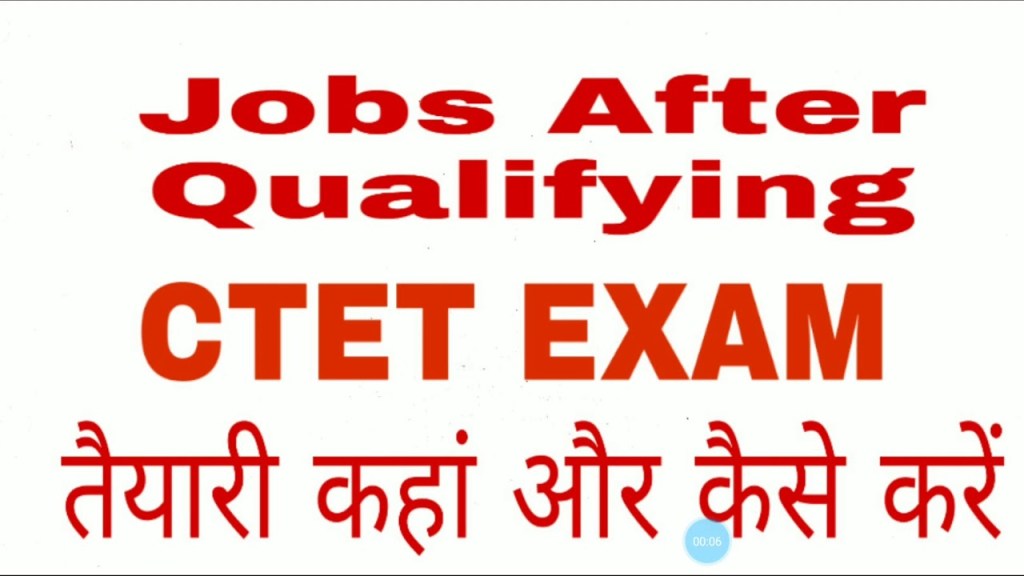
The Central Teacher Eligibility Test (CTET) is a national-level examination conducted by the Central Board of Secondary Education (CBSE) to assess candidates’ eligibility for teaching positions in schools. Qualifying CTET opens the door to various teaching opportunities in both government and private schools across India. This article provides a comprehensive overview of the career prospects available after clearing the CTET exam.
Why CTET is Important?
Mandatory Qualification: CTET is a prerequisite for applying to teaching positions in central government schools like Kendriya Vidyalayas (KVs) and Navodaya Vidyalayas (NVs).
Enhanced Credibility: CTET certification adds weight to a candidate’s profile, even in private and unaided schools.
Nationwide Acceptance: The CTET score is recognized by schools across India, providing broader career opportunities.
Teaching Opportunities After CTET
1. Central Government Schools
Examples: Kendriya Vidyalayas (KVs), Navodaya Vidyalayas (NVs), Tibetan Schools, and other schools under the administrative control of the central government.
Roles:
Primary Teacher (PRT) for Classes I-V.
Trained Graduate Teacher (TGT) for Classes VI-VIII (requires additional qualifications).
Benefits:
Competitive salary.
Job security and pension benefits.
Opportunities for professional development.
2. State Government Schools
Many state governments consider CTET scores for recruitment in state-run and aided schools.
Candidates may need to meet specific state eligibility criteria, such as proficiency in the local language.
3. Private and Unaided Schools
Role: Teachers in reputed private schools often prioritize candidates with CTET certification.
Advantages:
Higher chances of selection due to CTET qualification.
Negotiable salary packages in high-ranking schools.
4. Education Departments
Role: Educational officers or trainers for teacher training programs.
Scope: Opportunities to work in curriculum development, teacher training, and educational policy implementation.
5. Special Category Schools
Examples: Schools run by the Ministry of Defence, such as Army Public Schools and Air Force Schools.
Role: Primary and secondary teachers for children of defense personnel.
6. E-Learning and EdTech Platforms
Role: Content developers, online tutors, or subject matter experts in educational technology companies.
Scope: Creating teaching material, video lessons, or conducting live classes.
7. International Schools
Some international schools in India and abroad recognize CTET and prioritize candidates with this qualification for teaching positions.
Non-Teaching Opportunities After CTET
Educational Content Development
Designing teaching aids, lesson plans, and curriculum resources for publishers and educational organizations.
Teacher Training
Assisting in the professional development of teachers by conducting workshops and training sessions.
Education Consultant
Advising schools or educational bodies on curriculum design, teaching methodologies, and assessment practices.
Salary Prospects After CTET
Government Schools:
Primary Teacher (PRT): ₹35,000 to ₹50,000 per month.
Trained Graduate Teacher (TGT): ₹40,000 to ₹60,000 per month.
Post Graduate Teacher (PGT): ₹50,000 to ₹70,000 per month.
Private Schools:
Salaries vary based on the school’s reputation and location, ranging from ₹20,000 to ₹60,000 per month.
EdTech Platforms:
Online tutors or content developers may earn ₹25,000 to ₹75,000 per month, depending on experience.
Career Advancement Opportunities
Promotions:
With experience, teachers can advance to positions like Head of Department (HOD), Vice Principal, or Principal.
Further Qualifications:
Pursue courses like Bachelor of Education (B.Ed.), Master of Education (M.Ed.), or specialized certifications to enhance career prospects.
Research and Higher Studies:
Opportunities to work in educational research or pursue higher studies in pedagogy and child development.
Preparation for Further Exams
CTET qualification also makes candidates eligible to apply for other competitive exams, such as:
State TET Exams: To qualify for state-level teaching positions.
KVS/NVS Recruitment Exams: For higher-level positions in central government schools.
NET (National Eligibility Test): For college and university-level teaching positions.
Conclusion
Qualifying CTET is a significant milestone for aspiring teachers. It not only opens the doors to rewarding teaching positions in government and private schools but also provides opportunities in diverse educational roles. With the growing emphasis on quality education, the demand for CTET-qualified teachers is set to rise. Those passionate about teaching can look forward to a fulfilling and impactful career.
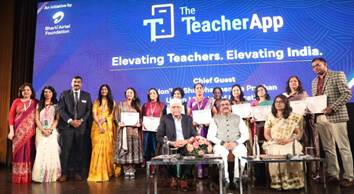
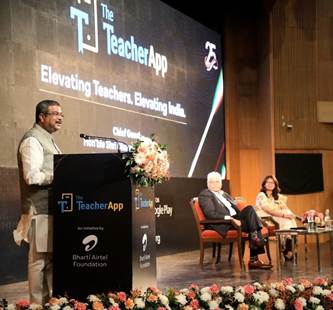
Union Minister for Education, Shri Dharmendra Pradhan, today in New Delhi unveiled the TeacherApp, an innovative digital platform designed to revolutionize education in India by equipping educators with future-ready skills to meet the demands of 21st-century classrooms. The Platform has been developed by Bharti Airtel Foundation, the philanthropic arm of Bharti Enterprises. Vice Chairman of Bharti Enterprises, Shri Rakesh Bharti Mittal; CEO of Bharti Airtel Foundation, Smt. Mamta Saikia, dignitaries from the education sector, school principals, teachers and B.Ed. students were also present at the event.
Addressing the gathering on the theme of “Elevating Teachers, Elevating India,” Shri Dharmendra Pradhan stated that this app will significantly empower teachers through continuous capacity building, leveraging innovative course content, technology, and community-building features. He emphasized that teachers are the real Karmayogis shaping the future generation, and the government is placing unprecedented focus on their continuous capacity building in line with the spirit of NEP 2020.
The Minister further highlighted that enlightened teachers create enlightened students. As India progresses in the knowledge-driven 21st century, teachers will play a pivotal role in identifying future opportunities and ensuring that our youth lead the nation’s growth story, he added.
Based on the on-ground experience and deep understanding of the challenges educators face, The TeacherApp has been conceptualised. This platform will equip them with both time-tested and future-ready skills through innovative digital resources. This user-centric, free app developed with direct inputs from teachers is accessible across the Web, iOS, and Android, ensuring seamless access for educators nationwide. The platform offers over 260 hours of high-quality resources, both created and curated including courses, learning bytes, short videos, podcasts, and interactive webinar formats such as thematic fests, webinars, competitions, and quizzes, all designed to foster future readiness, elevate pedagogical practices, and enhance student engagement in classrooms. Additionally, the app also features live expert sessions that provide practical classroom strategies and aims to build a community of teachers by highlighting their exceptional impact stories. The app combines tech innovation with partnerships across 12 states to transform education.
This platform has a unique section called Teaching Kits comprising content of 900 hours. This feature is designed to support teachers with tools Including teaching videos, project-based learning activities, worksheets, lesson plans, and question banks, among others for classroom delivery. With a mission to transform schools into safe and happy learning spaces, The TeacherApp not only supports teachers’ growth but also empowers schools’ leaders and administrators. Aligned with the National Education Policy 2020, the app aims to build future-ready educators equipped to meet the evolving needs of education.
Shri Rakesh Bharti Mittal, in his address, said that to make India thrive as a global economic leader, it is imperative that the education system equips educators to foster creativity, critical thinking, and innovation. The TeacherApp will offer teachers access to world-class resources and best practices that empower them to deliver exceptional learning experiences, he added.
Several educational management tools are invaluable for teachers, enhancing efficiency, organization, and communication within classrooms. Here are some top picks:
Google Classroom: This platform integrates seamlessly with Google Workspace (formerly G Suite) and allows teachers to create, distribute, and grade assignments digitally. It facilitates communication with students, provides a centralized location for resources, and offers collaboration features.
Canvas: Canvas is a learning management system (LMS) that offers a wide range of tools for course management, including assignment creation, grading, discussions, and multimedia content integration. It provides a customizable interface and supports mobile access for both teachers and students.
Schoology: Schoology is another popular LMS that streamlines classroom management tasks such as lesson planning, grading, and communication. It offers features for creating interactive assignments, quizzes, and discussions, as well as tools for tracking student progress and performance.
Edmodo: Edmodo is a user-friendly platform that enables teachers to create a virtual classroom environment for engaging students in discussions, assignments, and collaborative projects. It also offers features for parent communication and professional development.
Microsoft Teams: Teams is a collaboration platform that integrates with Microsoft Office 365, providing tools for communication, file sharing, and project management. It allows teachers to host virtual meetings, share resources, and collaborate with students in real time.
ClassDojo: ClassDojo is a communication platform that strengthens the connection between teachers, students, and parents. It offers features for behavior tracking, messaging, and sharing updates and announcements, fostering a positive classroom culture.
Remind: Remind is a messaging app designed specifically for communication between teachers, students, and parents. It allows teachers to send announcements, reminders, and assignments via text message or email, ensuring that important information reaches everyone efficiently.
Nearpod: Nearpod is an interactive presentation platform that engages students with multimedia content, polls, quizzes, and collaborative activities. It allows teachers to create dynamic lessons and assess student understanding in real time.
Kahoot!: Kahoot! is a game-based learning platform that makes learning fun and interactive. Teachers can create quizzes, surveys, and discussions to assess student knowledge and engagement, fostering a competitive yet supportive learning environment.
Flipgrid: Flipgrid is a video discussion platform that encourages student voice and participation. Teachers can create discussion prompts, and students respond with short video clips, promoting communication and collaboration among classmates.
These educational management tools empower teachers to streamline administrative tasks, enhance communication and collaboration, and create engaging learning experiences for their students. By leveraging these tools effectively, teachers can maximize their impact in the classroom and support student success.
“Quality Education” the fourth goal among the seventeen Sustainable Development Goals (SDG) outlined by the United Nations, is “to ensure inclusive and equitable quality education and promote lifelong learning opportunities for all”. These descriptions are remarkably similar to the focus identified through this research and, with this in mind, the three dimensions of this research are further explained as being; (1) the ‘Importance of Interaction’ – referring to the various levels of interaction between individuals within the school environment, accounting for behaviour, atmosphere, and types of communication, (2) the ‘Dynamics of Individuation’ – referring to the way in which the differing needs of individuals are personalised and catered for, accounting for classroom pedagogical approaches and student diversification, and (3) the ‘Need for Psychological Support’ – referring to the way in which individuals within the school and the school as a whole is supported by its community, from both an educational and psychological perspective. By suggesting that these research directions are intertwined concepts, they propose a holistic observation of contributing factors that influence the educational process.
This assessment could be used to identify teacher strengths from a personal, interpersonal, psychological, and pedagogical perspective. The Questionnaire of Teacher Interaction (QTI), Technological Pedagogical and Content Knowledge (TPaCK), and Mental Health Inventory (MHI) were used in the pilot study and were considered to be suitable for the needs of this research stage.
The ‘Educational Bubble’
In a recent talk, Seema Bansal (2016) mentioned being asked by the then head of the Department of Education in the state of Haryana (India), for help in addressing issues in their public schools. These ‘issues’ ranged in detail and complexity, including that up to 50% of students fall so far behind their peers before the age of eleven that they will be unable to recover. Despite public schools offering free meals or books to students, it was also found that 40% of parents would pull their children out of these public schools and register them into private schools. Bansal (2016), representing BCG (Boston Consulting Group), was asked to assist in the education renovation of an Indian state of Haryana, which consists of 15,000 public schools with over 2 million students. Bansal mentions needing to uncover the factors that have caused the educational issues in the first place and, in identifying the goals necessary to develop strategies for reaching this particular goal, decided to go directly into classrooms and observe the way educators were teaching. Reporting that the problem within Indian schools was the quality of education, not access to education, mentions that Bansals’ BCG team devised a three-year plan that was based around student learning outcomes and explicit focusing of accountability, data systems, and organizational capacity.
Bansal (2016) reports that Haryana teachers were very capable of teaching a class but, the majority of their time was spent outside of the classroom; this was interesting as, before physically entering a classroom, non-educators had apparently viewed teachers being ‘lazy’ or ‘incapable’. Although Bansal (2016) reported teachers not necessarily teaching, she mentions that it was because they were supervising the construction of new classroom buildings, supervising the cooking of student lunches, or visiting a bank to deposit scholarship money for students. This particular insight was (and is) incredible; Bansal asked teachers why they were not teaching and the teachers answered by saying that “when a supervisor comes to visit us, these are exactly the things that he checks” (5:29). This particular finding shows that in the provision of government programmes in Haryana, designed to motivate students to stay in school and give greater access, had become an additional point of accountability for teachers and had started to impede classroom instruction. Seeing this as an issue, Bansal and her team began to look at the literature at various educational programmes and pilot programmes that have been shown to improve instructional practice. However, what a large proportion of individuals fail to recognise is how the implementation of these programmes will always come at a cost. For example, schools that take part in a pilot that explores the use of innovative technologies on student learning might show that this programme does indeed result in higher levels of academic outcomes.
In Bansal’s (2016) talk she mentions that, with regards to studies and interventions, researchers will typically bring in resources such as money, experience, research assistants, or products. Unless researchers intend to roll out this innovation across every classroom in the country, the findings are most likely going to be un-scalable, ungeneralisable, unusable, and does not reflect a real-world classroom setting. It has been previously mentioned that “teaching requires being responsive to real-world conditions and constraints that shape the activities of the classroom and students” (Motoca et al., 2014, pg. 120). This view is similar to schools being ‘learning organisations’ where the “emphasis of research might be more upon the selection and differentiation of pupils and on their subculture rather than on the authority structure or the decision-making processes within the school” (Bell, 1980, pg.183). Hamzah, Yakop, Nordin and Rahman (2011) explain that, like all organisations, there is a strong emphasis on schools to adapt to their surroundings, encourage flexibility, and to be responsive to the various societal and cultural changes across an educational landscape.
While there is a large body of evidence favouring schools as learning organisations (Mulford, 1997; Stoll and Fink, 1996), research concerning how a school should go about this change is not as prevailing (Silins, Zarins, & Mulford, 2002). While it is clear that there are similarities between a school and an ‘organisation’, both have structure, both have management, there is leadership, interaction, and varying levels of accountability, it is also clear that many factors influence the way in which both operate. Johnston (1998) sought to investigate the key characteristics that involved a school identifying itself as being a ‘learning organisation’. Although focusing exclusively on post-primary schools based in Austrailia, it was found that inclusive, collaborative structures, effective communication channels, integrated professional development, and learning-focused leadership were the four main characteristics of schools being one of these ‘learning organisations’.
Under the three guiding topics of this research, explicitly outlined through questions and hypotheses, this current research sought to discover what the Irish educational environment needs and how a piece of research could be used practically to support school systems and the individuals within them. This research is looking towards the perception of a school being a learning organisation; considering the way which Silins, Zarins and Mulford’s (2002) express the four factors of ‘learning organisations’ above. These descriptions are remarkably similar to the focus identified through this research and, with this in mind, the three dimensions of this research are further explained as being; (1) the ‘Importance of Interaction’ – referring to the various levels of interaction between individuals within the school environment, accounting for behaviour, atmosphere, and types of communication, (2) the ‘Dynamics of Individuation’ – referring to the way in which the differing needs of individuals are personalised and catered for, accounting for classroom pedagogical approaches and student diversification, and (3) the ‘Need for Psychological Support’ – referring to the way in which individuals within the school and the school as a whole is supported by its community, from both an educational and psychological perspective. By suggesting that these research directions are intertwined concepts, they propose a holistic observation of contributing factors that influence the educational process.
While research in an Irish context has found that only 33.1% of schools regularly engage with SSE (Brown, 2010), this dispute between the DES and teaching unions will cause frustration, anxiety, and confusion throughout the educational community. The SSE is a thorough research process that requires considerable resources, the problem is one of ‘lack of support’, almost mirroring the issues faced by Bansal’s (2016) team in Haryana. Additionally, this lack of support echoes in other ways. For example, on 30th of March 2016, the INTO released a press release that argued against the cut in government funding for education and highlighted that schools are being forced to fundraise themselves, that they are “kept running on cake sales, raffles and sponsored walks” (2016b), despite having no empirical evidence to support.
3.6. Conclusion – The Individualised Teacher Report
This claim within the press release itself, it does clearly articulate the many problems experienced in Irish Education.
Despite focusing on the individual educator, rather than the collective school environment, this Ph.D. project somewhat resembles the development of a self-evaluation process; it requires educators to compete measures that evaluate their subjective instructional and psychological resources. Although the issues surrounding self-evaluation may be a possible limitation, this research would argue the opposite. This study could provide a process that allows schools to self-evaluate in a way that takes the workload away from schools, provides tailored feedback to individual educators, has a standardised methodological approach, and is evidence based and research driven. A new model of self-evaluation may be considered a momentous task; however, it is not beyond the scope of this project.
According to Collins and Pratt (2011), “there is a move to adopt a single, dominant view of effective teaching … [where] teachers are asked to reflect on who they are and how they teach but with an implied message that reflection should conform to some preconceived notion of a ‘good’ teacher” (pg. 359). It is naïve to assume that there is a ‘single view’ of what it means to be an effective educator, as the requirements and needs of one classroom group will differ that than of another. What is arguably more appropriate for education, rather than training educators to teach in the same way and conform to a preconceived notion of what a ‘good teacher’ is, is to encourage and train teachers to be self-reflective and adapt their teaching to suit the needs of their students. Boud, Keogh, and Walker (1985) mentioned that reflective practice is an important human activity where provision is given for individuals to recapture their experiences and evaluate them to improve on one’s abilities. One consistency throughout the literature of educator training and interaction is the importance of self-reflection; Paterson and Chapman (2013), for example, argue that self-reflection that motivates an individual to learn from their experiences and is the key towards the maintenance and development of competency throughout their work practices. Others, such as or Hendrickx et al. (2016), mentions that reflective teachers who are aware of their influence on student behaviour can tailor their interactions to benefit their instructional practices.
According to Patil (2013), reflective practices are self-regulated processes that aim to enhance an individuals’ ability to communicate and make balanced decisions. Educational researchers, such as Valli (1997), describe reflective teachers as being individuals that can “look back on events, make judgments about them, and alter their teaching behaviors in light of craft, research, and ethical knowledge” (pg. 70). Other researchers argue that reflective action “involves intuition, emotion, and passion and is not something that can be neatly packaged as a set of techniques for teachers to use” (Zeichner & Liston 1996, pg. 9). These quotes would suggest that reflective practice in education is an ideal that pedagogics and educational researchers would encourage teachers to become accustomed to, but that the practical implementation of may be somewhat difficult to achieve.
Kay and Johnson (2002), speaking about the University of Washington’s teacher education programme, mention that the reflective seminars and completion of reflective portfolios are a useful method to provide support to student teachers in developing the skills necessary to reflect on their practices. Kay and Johnson (2002) do mention that the limitation of these methods is the way they categorise dimensions of reflection into a teachable concept, or that the use of typologies naturally constrain teachers towards ‘thinking like a teacher’. But, similar to Pratt and Collins (2010) view of the TPI, the concept of using this approach as a tool is quite useful. Without the opportunity and a way for teachers to systematically reflect on their instructional practices, they may be unable to view the importance of their instructional decisions, interactions, and relationships with students.
REFERENCES:
Bansal, S. (2016, May). TED Paris: How to fix a broken education system without any more money. Retrieved 1/7/2016 from TED.com at https://www.ted.com/talks/ seema_bansal_how_to_fix_a_broken_education_system_without_any_more_money?language=en.
Motoca, L. M., Farmer, T. W., Hamm, J. V., Byun, S. Y., Lee, D. L., Brooks, D. S., … & Moohr, M. M. (2014). Directed consultation, the SEALS model, and teachers’ classroom management. Journal of Emotional and Behavioural Disorders, 22(2): 119-129.
Bell, L. A. (1980). The School as an Organisation: a re‐appraisal. British Journal of Sociology of Education, 1(2), 183-192.
Hamzah, M., Yakop, F. M., Nordin, N. M., & Rahman, S. (2011). School as learning organisation: The role of principal’s transformational leadership in promoting teacher engagement. World Applied Sciences, 14, 58-63.
Mulford, B. (1998). Organisational learning and educational change. In A. Hargreaves, A. Lieberman, M. Fullan and D. Hopkins (Eds). International Handbook of Educational Change. Norwell, MA: Kluwer Academic Publishers.
Silins, H., Zarins, S., & Mulford, W. R. (2002). What characteristics and processes define a school as a learning organisation? Is this a useful concept to apply to schools? International Education Journal, 3(1): 24-32.
Johnston, C. (1998). Leadership and the learning organisation in self-managing schools. Unpublished doctoral dissertation, University of Melbourne, Victoria.
Brown, (2010). A mixed methods analysis of a mixed methods system: attitudes of Post Primary school Principals to internal/external evaluation: The Case of Ireland. Cited In McNamara, G., & O’Hara, J. (2012). From looking at our schools (LAOS) to whole school evaluation-management, leadership and learning (WSE-MLL): the evolution of inspection in Irish schools over the past decade. Educational Assessment, Evaluation and Accountability, 24(2), 79-97.
Collins, J. B., & Pratt, D. D. (2011). The teaching perspectives inventory at 10 years and 100,000 respondents: Reliability and validity of a teacher self-report inventory. Adult Education Quarterly, 61(4); 358-375.
Boud, D., Keogh, R., & Walker, D. (1985). Reflection, Turning Experience into Learning. Routledge.
Paterson, C., & Chapman, J. (2013). Enhancing skills of critical reflection to evidence learning in professional practice. Physical Therapy in Sport, 14(3): 133-138.
Hendrickx, M. M., Mainhard, M. T., Boor-Klip, H. J., Cillessen, A. H., & Brekelmans, M. (2016). Social dynamics in the classroom: Teacher support and conflict and the peer ecology. Teaching and Teacher Education, 53, 30-40.
Patil, S.S.J. (2013). Reflective practice in education. Global Online Electron Int Interdi Res J, 2(1): 356-358.
Valli, L. (1997). Listening to other voices: A description of teacher reflection in the United States. Peabody Journal of Education, 72(1): 67–88.
Zeichner, K. M., & &Liston, D. P. (1996). Reflective teaching: An introduction. Mahwah, New Jersey: Lawrence Erlbaum Associates.
Johnson, B.R., & Kay, A.J. (2002). Mixed Methods Research: A Research Paradigm whose Time Has Come. Educational Researcher, 33(7): 14-26.
The word teacher in India is much more than a word of professional identity. The feeling goes very deep with a teacher. If we look into ancient India, we can find a vast role of gurus (teachers) in shaping the beliefs of our disciples. This tradition still exists today, even though it has waned a bit after being hit by the fierce waves of time.
In India, Teachers’ Day is celebrated on 5th September on the birth anniversary of Dr. Sarvepalli Radhakrishnan. In the year 1965, some of the prominent students of Late Dr S. Radhakrishnan organised a gathering to pay obeisance to that Great Teacher of repute. In that gathering, in his speech Dr Radhakrishnan expressed his deep reservation regarding his birth anniversary celebration and emphasised that his birth anniversary should be celebrated as ‘Teachers’ Day’, by paying homage to other Great Teachers of India and Bangladesh. Since the year 1967, 5th September is celebrated as Teachers’ Day till date.
There is a celebratory tradition that students across the country follow in the vibe of the prestigious day. Students dress up like their teachers and do roleplaying activities with junior classes, showing a glimpse of admiration for their modern age gurus. Teachers are showered with gifts, flowers and handmade greeting cards and many more tokens of appreciation from their students as a symbol of respect and gratitude for providing versatile guidance to them. Students also organize cultural events, up memorable speeches, shows, group activities and much more.
The word Guru is derived from two Sanskrit words GU meaning Darkness and RU meaning Destroyer so guru means “one who destroys darkness”. The above Sanskrit quote means that the guru or teacher is a combination of three deities (Brahma, Vishnu, and Mahesh) from Indian mythology who bestow great wisdom and remove darkness from the lives of their students.
Though becoming a teacher is not an easy task, they have to be patient and solve their students’ problems for a better future. They teach their students about the importance of time and how to manage and achieve something in their life. They teach us how to respect our elders and parents and how to treat other people around us. The future and present of children totally depend on the education they get from their teachers and it is only they who sometimes become our best friends and help us to remove the mess created by us somewhere in our life.
Union Education Minister Shri Ramesh Pokhriyal ‘Nishank’ today announced the commencement of the registration process of the fourth edition of Prime Minister’s Interaction Programme with school students, teachers and parents – Pariksha Pe Charcha 2021 through his social media platform.
Pariksha Pe Charcha is a much-awaited annual event where the Prime Minister responds to questions related to examination stress and related areas posed by students in his uniquely engaging style in a live programme. Shri Pokhriyal informed that this time the programme will be held virtually. He further stated that questions related to dealing with examination stress from school students of class 9 to 12 will be invited through MyGov platform and selected questions will be featured in the programme. He also informed that school students, teachers and parents from all across the country are to be selected through an online creative writing competition designed specifically for them on MyGov platform. There are different topics assigned for students, parents and teachers in the contest. The applicants can also pose their questions on this platform. The selected participants will be participating in the programme online from their respective State and UT headquarters and will be presented with a special PPC kit (Pariksha Pe Charcha kit). The portal for online creative writing competition will remain open till 14thMarch 2021, he added.
Activity: Draw a scene depicting a festival around your favourite subject.
Topic 2: India Is Incredible, Travel and Explore
Activity: Imagine your friend visits your city for three days. What memories would you create for him or her in each of the following categories?
Places to See: (Word Limit: 500 Words)
Food to Relish: (Word Limit: 500 Words)
Experiences to remember: (Word Limit: 500 Words)
Topic 3: As One Journey Ends, Another Begins
Activity: Describe the most memorable experiences of your school life in not more than 1500 words
Topic 4: Aspire, Not to Be, but to Do
Activity: If there was no restriction on resources or opportunities, what would you do for society and why? Submit a write up in not more than 1500 words
Topic 5: Be Grateful
Activity: Write ‘Gratitude Cards’ for those whom you are grateful to in not more than 500 words
For Teachers
Topic: Online Education System – Its benefits and how it can be improved further.
Activity: Write an essay on the topic in about 1500 words
For Parents
Topic 1: Your Words Make Your Child’s World – Encourage, As You Have Always Done
Activity: Write a story about the vision you share with your child for his or her future. Let your child write the first sentence. Then you write the next and so on. (Word Limit: 1500 Words)
Topic 2: Be Your Child’s Friend—Keep Depression Away
Activity: Write a postcard to your child and let him or her know why they are special. (Word Limit: 100 Words)
The primary responsibility of combining the inherent talents of the students lies with the teachers; a good teacher is a personality-builder, a society-builder, and a nation-builder, said the President of India, Shri Ram Nath Kovind. He was speaking at a virtual award ceremony today (September 5, 2021) on the occasion of Teachers’ Day wherein 44 teachers from across the country were honoured with the National Awards.
Union Minister for Education, Shri Dharmendra Pradhan and Minister of State for Education, Shri Subhas Sarkar; MoS, Shri RajKumar Ranjan Singh and Smt Annapurna Devi also graced the occasion. Smt. Anita Karwal, Secretary, Department of School Education and Literacy and Shri Amit Khare, Secretary, Department of Higher Education and other senior officials were present on the occasion.
The President congratulated all the teachers who received the award for their distinguished contributions. He said that such teachers strengthen his belief that the future generation is safe in the hands of our well-qualified teachers. He said that teachers have a very important place in everyone’s life. People remember their teachers life-long. Teachers who nurture their students with affection and devotion always get respect from their students.
The President urged teachers to inspire and enable their students to envision a golden future and acquire aptitude to fulfill their aspirations. He said that it is the duty of teachers to inculcate interest in studies in their students. Sensitive teachers can shape the future of students by their behaviour, conduct and teaching. He said that they should pay special attention to the fact that each student has different abilities, talents, psychology, social background and environment. Therefore, emphasis should be laid on all-round development of each child according to their special needs, interests and abilities.
The President said that the National Education Policy, implemented last year, has set an ambitious objective of establishing India as a global knowledge super-power. We have to provide such education to the students which would be helpful in building a just society based on knowledge. Our education system should be such that students develop commitment to the constitutional values and fundamental duties, strengthen patriotic feeling, and make them aware of their role in the changing global scenario.
The President noted that the Union Ministry of Education has taken some important steps to enable teachers. The Ministry has started integrated teachers’ training programme called ‘Nishtha’ under which efforts are being made for ‘Online Capacity Building’ for teachers. Apart from this, ‘Pragyata’ i.e. guidelines on digital education which were issued last year, is also a commendable step with a view to maintain the pace of education even during the crisis of Covid pandemic. He commended the entire team of Union Ministry of Education for finding new avenues even in difficult circumstances.
Speaking on the occasion, Shri Pradhan said that the role that a teacher plays is crucial for the robust development of a nation. They are instrumental in shaping the minds of our new generation, he added. Shri Pradhan thanked all the teachers who are working tirelessly to shape the destiny of a 21st-century India.
The Minister congratuled all the 44 teachers from 28 states/UTs who have done exemplary work and been conferred with the National Awards. He also remembered Padma Shri Late Shri Prakash Rao of Odisha and countless others like him who have empowered children through education.
Shri Pradhan said that he feels privileged to join the ceremony to recognise the, efforts of the best teachers in India. They have played a key role in ensuring continuity of education during Covid – 19, he added.
MoS, Education, Smt Annpurna Devi gave the Vote of Thanks.
The first step to taking good notes in class is to come to class prepared. Here are some steps you can take to improve your note-taking before class even begins:
Preview your text or reading assignments before the lecture. Previewing allows you to identify the main ideas and concepts that will most likely be discussed during the lecture.
Look at your course syllabus so that you know the topic / focus of the class and what’s going to be important to focus on.
Briefly review notes from previous class sessions to help you situate the new ideas you’ll learn in this class.
Keep organized to help you find information more easily later. Title your page with the class name and date. Keep separate notebook sections or notebooks for each class and keep all notes for each class together in one space, in chronological order.
Note-taking during class
Now that you are prepared and organized, what can you do to take good notes while listening to a lecture in class? Here are some practical steps you can try to improve your in-class note-taking:
If you are seeking conceptual information, focus on the main points the professor makes, rather than copying down the entire presentation or every word the professor says. Remember, if you review your notes after class, you can always fill in any gaps or define words or concepts you didn’t catch in class.
If you are learning factual information, transcribing most of the lecture verbatim can help with recall for short-answer test questions, but only if you study these notes within 24 hours.
Record questions and thoughts you have or content that is confusing to you that you want to follow up on later or ask your professor about.
Jot down keywords, dates, names, etc. that you can then go back and define or explain later.
Take visually clear, concise, organized and structured notes so that they are easy to read and make sense to you later. See different formats of notes below for ideas.
If you want your notes to be concise and brief, use abbreviations and symbols. Write in bullets and phrases instead of complete sentences. This will help your mind and hand to stay fresh during class and will help you access things easier and quicker after class. It will also help you focus on the main concepts.
Be consistent with your structure. Pick a format that works for you and stick with it so that your notes are structured the same way each day.
For online lectures, follow the above steps to help you effectively manage your study time. Once you’ve watched the lecture in its entirety, use the rewind feature to plug in any major gaps in your notes. Take notes of the timestamps of any parts of the lecture you want to revisit later.
Determining what’s important enough to write down
You may be asking yourself how you can identify the main points of a lecture. Here are some tips for recognizing the most important points in a lecture:
Introductory remarks often include summaries of overviews of main points.
Listen for signal words / phrases like, “There are four main…” or “To sum up…” or “A major reason why…”
Repeated words or concepts are often important.
Non-verbal cues like pointing, gestures, or a vocal emphasis on certain words, etc. can indicate important points.
Final remarks often provide a summary of the important points of the lecture.
Consider watching online lectures in real-time. Watching the lecture for the first time without pausing or rewinding can help force you to focus on what’s important enough to write down.
The year 2020, as we all know, will be a major change in our life. It has also demonstrated the opposite side of existence. We continued to count things for the future, and when the pandemic struck, it reminded us of how unexpected life can be; different aspects of life were affected, and working conditions were significantly altered. There was a lot of misunderstanding in the education industry about how to teach pupils, how to start lessons, and so on. However, technology was the solution to all problems.
People have used mobile phones for social interactions and pleasure in the past, but they have now evolved into a source of information, and we can say that school has come within our grasp. This situation is very similar to one of the chapters in NCERT’s English course book for class 9 called “The fun they had,” in which two children from the future (2050) got their hands on a real hardcover book from their grandfather and were amused by the idea of a real school and school building where all the children of the same age group used to study together under one roof and thought that happiness was being together with their friends. Did the pupils in this circumstance realise that this narrative would become so relevant and genuine to them? Many parents used to refuse to let their children to use cell phones, but it has now become a necessity.
Although there are always two sides to a coin, sales of smart phones soared as a result of the epidemic, since every home needed one additional one for their children to attend courses. Technology has also played a significant role in education, and how we use it can have positive or negative consequences. Phones have evolved into more than simply a means of communication; they have also become a lifeline and an indispensible component of our lives in some manner. It was a struggle for teachers to not only teach their material but also to engage with their pupils throughout these testing periods. They’ve also learned to utilise technology in a variety of ways, including not just communicating but also using various digital classrooms, boards, and audio and visual teaching and learning methods. They were not only effective in speaking with pupils, but also with their guardians, and despite the challenges, they were able to establish an emotional bond with them.
Many parents lost their jobs as a result of industry losses and were obliged to shift their children from private to government schools, but many were pleased to do so because the curriculum is on par with top institutions. The government and teachers have made it a point to link each and every kid with them. Many teachers aided their students financially as well as academically. Many teachers have also attempted to offer phones or internet connections to their kids, demonstrating that humanity bears primary responsibility in any scenario.
The desire for change in school education emerges as a result of continual changes in society on psychological, social, and economic levels. As a result, we must constantly introduce and upgrade a framework. As you can see with the current pandemic, a lot of adjustments are required both during and after the crisis. With this in mind, the Delhi government began giving curriculum-based work sheets to children of all grades, as well as training their teachers.
Teachers’ ability and efficiency have been improved via the use of webinars and online seminars on a regular basis. Regular trainings were provided to demonstrate how to use Google products to make the teaching and learning process more engaging and beneficial. The government has also launched a number of applications, such as Chalklit and Diksha, to provide a platform for various trainings and to keep instructors informed about innovative ways of teaching and learning. It was remarkable that students continued to attend courses on a regular basis, whether they were in the same city or in their village; their desire to study grew day by day, and they began to respond positively.
Teachers take exams of students to test how good they are in studying so wouldn’t it be right to take exam of teachers to test how good are they at teaching ? When a student is not studying properly teachers often scold student or contact his/her parents. So, if a teacher is lacking somewhere in teaching shouldn’t students tell him so that he can change his method of teaching.
Students are future of a country and teachers have responsibilities to shape them so that they can have a better future. It is just like a potter gives shape to a clay. I’m not saying that students get a spotless chit for pinning everything on teachers in the event that they don’t get successful. The two of them are similarly responsible for student’s prosperity or disappointment.
Teaching is regularly a singular undertaking. More often than not the teacher is separated from everyone else before the students and he is considered as an insightful master. How an teacher can know how great he is at his specific employment ? How might he work on his courses ? That is the reason, an teacher needs the assistance of his students to land input about his position. He needs input to further develop his showing abilities and his instructing materials.
Those criticism are additionally an approach to make a discourse among teachers and students. Students ought to reserve the option to criticize both the substance and the techniques for educating. On one hand, the student might turn out to be more persuaded and afterward may connect with and listen all the more cautiously during the class. Then again, they can foster analysis which is today a fundamental ability in a world overpowered by data. Through this interaction of recognizing the failure of their teachers, students will deal with their own failure all the more without any problem.
Again, I am not encouraging the act of disrespect towards teacher. Teachers are incredible individuals who teach us however in case they are managing their work wrongly, they ought to be corrected by understudies. Actually like how teachers set students back on track way. This will be improvement for both teachers as well as students.
Teachers are one of the most important pillars of society; they spend their entire lives enabling students to learn and explore. A teacher is a friend and a philosopher who guides us jn understanding the world around us. From academic knowledge to moral knowledge, a teacher is a treasure trove. A teacher’s contribution to the world is priceless because of the fact that they educate men and women of tomorrow.
Furthermore, teachers also help to increase literary rates in a country, thereby enabling opportunities and jobs that will help students to secure their lives. Almost every country in the world dedicates a day to celebrate and honour teachers. In India, teacher’s day is celebrated on 5th September, while the World Teacher’s Day is celebrated on 5th October, every year. However, various countries have their own specific dates for honoring their teachers.
Teacher’s Day is celebrated to honour teachers and celebrate their contribution to a particular field or the community in general. The idea of celebrating the profession of a teacher is not new, it can be traced back to the 19th century. During those times, a local teacher’s contribution is celebrated or a specific achievement in education. This is one of the reasons why the world celebrates Teacher’s Day on different dates. For instance, India celebrates Teacher’s Day on 5th September, commemorating the birth of the second president of India, Dr. Sarvepalli Radhakrishnan. While other countries celebrate World Teacher’s Day on 5th October, as established by UNESCO.
Teacher’s Day in India
Guru Purnima is an Indian festival dedicated to honouring academic and spiritual teachers. It historically marks the birth of Ved Vyasa, the author of the Mahabharata, Vedas and the Puranas. The festival traditionally celebrated by the Jains and Buddhists to honour teachers who enlighten others with no monetary expectation in return. It is traditionally celebrated during the full moon day of the Hindu calendar month of Ashada. This corresponds to June and July of the Gregorian calendar.
The birth of the Second President of India, Dr. Sarvepalli Radhakrishnan, on 5th September, is celebrated as Teacher’s Day. When he became President of India, some of his students and friends requested him to celebrate his birthday on 5th September. He had replied that he would be honoured if the contribution of all teachers would be observed on that particular date, instead of celebrating his birthday. And ever since, 5th September every year has been celebrated as Teacher’s Day.
In India, teachers and students report to class as usual on Teacher’s Day. However, classes and lectures are replaced by celebrations and remembrances. Students and teachers also take part in many activities and mini-games. It is also common for students and their parents to present gifts to the teachers. Many students also organize plays and dance performances on this particular day.
Conclusion
Teacher’s Day is celebrated to honour the contribution of teachers to the society. In India, Teacher’s Day is officially celebrated on 5th September, while most other countries celebrate it on 5th October. Regardless of the date, a teacher’s contribution is priceless, hence it is celebrated with zeal and great enthusiasm.
We celebrate teachers day in memory of Sarvepalli Radhakrishnan .we as a whole have learned a lot from our teachers. Their lessons direct us at each phase of our life. They value the most in our lives, and this is the motivation behind why we observe Teacher’s Day devoting them. It is a day to praise the most encouraging bond between the teachers and the students.
Each student should value and regard their teachers. Their challenging work and sacrifices for our mental development are unimaginable. A teacher, some of the time, plays a more critical job than our parents. They shape up our future and build up our mind to differentiate between good and evil.
A teacher additionally does the country building work by making the future of every individual living in a nation. Teachers show us, yet they likewise improve our character, ability level and certainty. They think for each person, that is the reason we should consider and respect them on Teacher’s Day every year.we must follow their lessons to become successful.
A Teacher is someone who acts as a guide and inspiration to people – both young and old. He/she is charged with the responsibility of creating awareness as well as opening the mind of people by instilling values, morals, and ethics. Teachers efforts are recognized during the teacher’s day. They shape minds, and we annually celebrate their contribution to the development of society in the form of Teachers’ day across the world. However, We celebrate The International Teachers Day on October 5th annually.
Teachers’ Day in IndiaTeachers are respected and honored for their important contribution in shaping individuals. 5th of September is annually celebrated as Teachers’ day in India. This is actually the birthday of the former President of India, Dr. Sarvepalli Radhakrishnan.
The contributions and efforts made by teachers never go unnoticed. This led to the inauguration of the Teacher’s day which seeks to celebrate the efforts made by the teachers. In India, we celebrate the teacher’s day on the birthday of Dr. Sarvepalli Radhakrishnan who was known as a man of many great qualities and attributes.
Teachers play many roles in overall development such as:
They instill discipline into young people molding them into future
Also, they provide their students with spiritual and emotional guidance.
Teachers also come across numerous challenges in their day to day activities such as the unappreciative culture by the community as well as dealing with disciplinary issues of their students.
What can we do on Teachers’ Day?
A thank-you can go a long way. In our busy lives, we have come to forget expressing gratitude. Many studies have come up explaining the benefits that gratitude can have on the one who expresses it and on the one who receives it. We can take this opportunity as a day to thank our teachers and express our love and care for them.
We can suggest and provide assistance by making use of the skills that we have learned over these years.
Also, we can give them a visit on this day and share with them our experiences. This will for sure make them happy and proud of their efforts.
We can present a small token of appreciation, something that they could keep as a memory like a pen or a planner or something that would be useful for them.
We should also seek their blessings and let them know that we are always there for them when they need us.
Students can collectively gift them books and other materials and organize a get-together especially if the class has graduated.
Time spent with them and gratitude expressed would be a great gesture to make teachers happy and proud. It is very important to recognize their contribution to molding our personality.
Conclusion
Teachers play an important role in the development of any country. This is why it is vital to set aside a day when the teachers are given the recognition they deserve. We celebrate Teachers’ day to honor the contribution of Teachers in our lives. Duties undertaken by teachers in the upbringing of children is immense and thus being recognized with teachers’ day is a step towards recognizing the profession and the role they play in society.
The outbreak of the novel coronavirus has significantly affected all sectors including the education sector, the agriculture sector, the industrial sector, and our economy in its entirety. This unforeseen virus has single-handedly disrupted the entire world, from every country’s economy to everyone’s professional as well as personal life. One of the sectors which have been deeply affected is the education sector. Schools have been working offline efficiently for a long time and expecting a fluid switch from offline classes to e-learning is not practical. Most of the schools and the students are not well-equipped with technology to conduct classes regularly, administer tests, organise co-curricular activities, et cetera. Teachers now have to work double the amount they did with the same, if not less, salary.
Here are some problems that teachers are facing in our country:
• Technological Gap
On one hand, the previous generation is not familiar with technology and on the other, the present generation excels in this area. All their existing curriculum plans are no longer applicable for online learning, thus, they have had to opt for new timetables and plans which may or may not be favourable for them. Learning your way around new applications, especially at the risk of your job, is not an easy task. Upon that, teachers are also made to feel embarrassed because of their lack of knowledge in this area.
• Unemployment or fall in salary
In these difficult times, teachers are facing financial problems. Due to classes no longer being conducted in many schools or shut down of local schools, teachers and other employees are losing their jobs. The sports department is not engaged in teaching or other activities due to the lockdown and social distancing protocols which do not allow sports. Many teachers have been cut and their work given to others, overburdening them while leaving the others unemployed. Some educational institutions are reducing the salaries of their employees, or simply making them work by not giving them their well-deserved pay.
• Household chores
India, a country which follows a largely patriarchal system, has about 70 female teachers per a hundred men. Women in our country are expected to attend to all the household chores. Many teachers of this age also have kids, whom they need to handle during the classes as well. Thus, teachers, both male and female, are overburdened with work. Having classes 6 days a week and handling your house are not easy tasks, especially with the added stress of the pandemic and the uncertain future.
• Bullying
Students are taking advantage of the anonymity that the internet provides. Disrupting classes, passing snide comments, making fun of the teacher, et cetera are very common these days. Students do it out of fun or boredom, what they do not realise is the deep mental effects bullying has on others. Teachers are already pressurised by the schools and the demand to quickly adapt to new teaching methods, they also have to go through this.
Elementary class teachers are finding it difficult to engage students. Their screen time is increasing and as teaching takes up most of their day, their physical exercise has reduced. Social isolation and all these factors together are negatively affecting our teachers. Let’s take a vow to be kinder to them as they are surely doing their best!
Covid-19 struck us without a warning and left all educational institutions scrambling to respond to its urgencies. It has also created a need to creatively deal with such unforeseen and once-in-a-century catastrophic events that are being called the ‘new normal’.
Educational institutions deserve appreciation for a quick response to the lockdown restrictions amid the pandemic. Their readiness has resulted in a wave of online classes for learners of every level, ranging from course subjects, co-curricular areas such as fine and performing arts to mental wellness and physical fitness.
Bullying by students, argumentative parents who often peep into classes, and distracted children — these are just some of the challenges teachers face during online classes.
While teachers in private schools primarily complain about online bullying by students during video calls, their government counterparts claim the biggest challenge is reaching students who belong to the economically weaker section.
Students are bored in their homes which often results in them doing mischievous activities for entertainment. They share links of online classes that are sent to them by their teachers. They also tend to create Zoom IDs in random, unidentifiable names and troll teachers. Some switch off their camera and call teachers by their names from these IDs, some use them to send memes to teachers.
Teachers also claim that student’s relatives use the link to log into the class and “see what the teacher looks like, what she teaches and how she speaks”.
As per foreign media reports, Singapore banned some video conferencing applications used for teaching after hackers posted obscene images during classes.
Students who bully teachers, relate it with being cool and laugh it out, in the process what they don’t realize is how much embarrassment the teacher must have felt.
However, with no clue yet on when institutes can reopen, teachers say they are trying their best to get past the hurdles which often means just ignoring undisciplined behavior.




















 Eduindex
You must be logged in to post a comment.