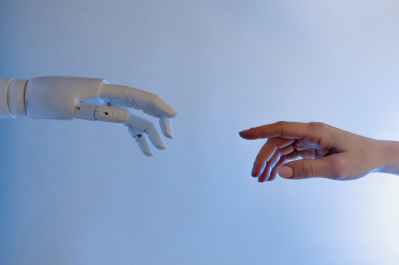
Understanding Artificial Intelligence(AI) and its Application.

Artificial intelligence (AI) refers to the simulation of human intelligence in machines that are programmed to think like humans and mimic their actions. The term may also be applied to any machine that exhibits traits associated with a human mind such as learning and problem-solving.

The ideal characteristic of artificial intelligence is its ability to rationalize and take actions that have the best chance of achieving a specific goal. When most people hear the term artificial intelligence, the first thing they usually think of is robots. That’s because big-budget films and novels weave stories about human-like machines that wreak havoc on Earth. But nothing could be further from the truth. Artificial intelligence is based on the principle that human intelligence can be defined in a way that a machine can easily mimic it and execute tasks, from the simplest to those that are even more complex. The goals of artificial intelligence include learning, reasoning, and perception.

Application of AI in different fields.

Personalized Online Shopping.

Personalizing users’ experience has become the latest pantheon for all the leading tech giants. Ecommerce stores aren’t behind either, and have been the biggest platforms to implement the personalization domain of AI. 

Marketing.

One of the greatest artificial intelligence examples applications, Marketing, has been a key area for improvement and the latest trends in AI. With the growing advancement in AI, in the near future, it may be possible for consumers on the web to buy products by snapping a photo of it.

Social Media.

The most common use of AI in social media is for face verification and to detect facial features. AI in social media can be associated with big data and machine learning where deep learning is used to extract every minute detail from an image by using a bunch of deep neural networks. On the other hand, machine learning algorithms are used to design your feed based on your interests.

Agriculture.

The latest artificial intelligence applications in the form of image recognition identify possible defects in the crops through images captured by the user’s smartphone camera. Users are then provided with soil restoration techniques, tips, and other possible solutions to deal with the identified defects.

Video Games.

The gaming world is the best example of intelligent applications of artificial intelligence as it is at this platform where there are a lot of alterations in the purpose. AI is used for designing the game, developing the characters, and also frame the story to a certain extent.

Healthcare.

The Healthcare sector has been amongst the top adopters of AI technology. It boils down to the power of AI to crunch numbers fast and learn from historical data, which is critical in the healthcare industry. AI has taken a critical step in helping people with looking after patients as well. The automated bots and healthcare applications ensure proper medication and treatment of patients in the facilities.

Smart Homes.

The most advanced form of applications of artificial intelligence in the real-world are being implemented in homes, and are becoming smarter every day. Various devices like smart locks, smart switches, ect., are increasingly becoming compatible with various devices, and the application of smart homes is becoming more accessible to the general population every day.

Banks.

A lot of banks have already adopted AI-based systems or software to provide customer support and detect anomalies and credit card fraud. By tracing card usage and endpoint access, security specialists are more effectively preventing fraud. Organizations rely on AI to trace those steps by analyzing the behaviors of transactions.

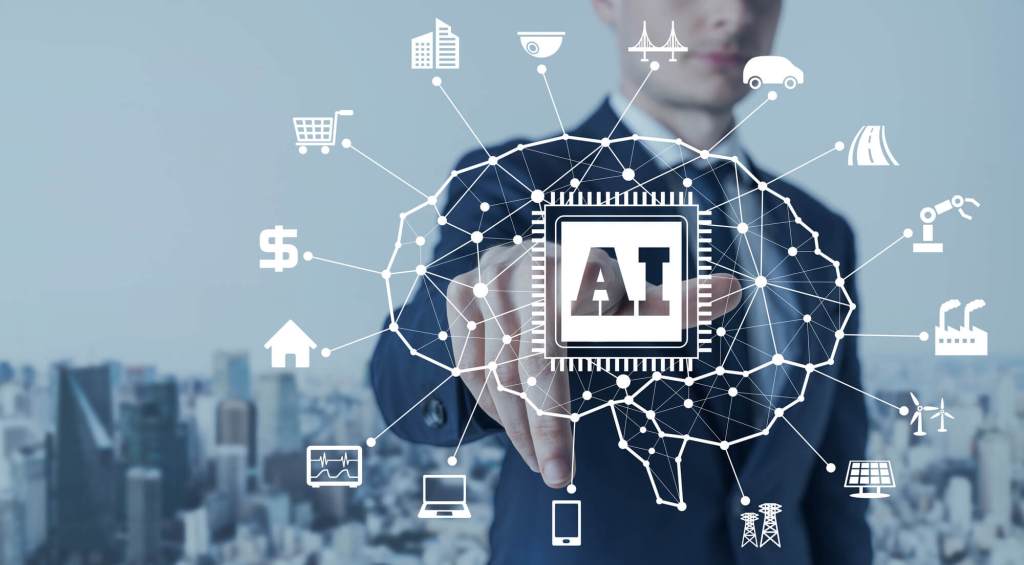
Web 3.0 : Financial Service Industry

How will the evolution of the web have an effect on Financial Services? This is a question that puts many financial institutions in peril but is it really something that will put banks out of business? 

What is Web 3.0?

Web 3.0 is a new evolution phase that is coming into reality. The web as we know, is evolving into something more secure with more opportunities and various features. A lot of people don’t understand Web 3.0 and are scared of it. This will be a massive change on how we see the internet and how we will use it. It is going to be a decentralized platform and it will be individualized wherein you can customize your internet browsing experience. 

The Royal Bank of Canada is utilizing millions of data points to train its own AI, resulting in fewer client calls and faster application delivery. Meanwhile, BNY Mellon, the world’s largest cross-border payments service provider, improved its fraud prediction accuracy by 20%. By researching real-time market data within nanoseconds, AI and high-performance computing (HPC) are combining to provide better and faster trading intelligence.

What does this mean for Financial Services?

Web 3.0 is transforming the finance sphere slowly into a decentralized place. Basically, you don’t need a financial institution governing your transaction or authorizing them. The transaction will only be initiated by you and reaches the receiver, in a matter of moments, without any middlemen. Using cryptocurrency, you can make transactions over blockchain that eliminates that bank server from between. Cryptos are digital assets that let users transact directly without a payment service provider in the intermediary, which means that they enable new forms of capital. Although Bitcoin remains comparatively low now, it still may provide effective money governance by preserving and protecting the data or memory of what our money represents. Then there is the unparalleled manipulation of fiat money. We can observe how central banks have significantly extended their balance sheets since the GFC and the ongoing pandemic COVID-19. 

DeFi

DeFi is short for decentralized finance where there are no middlemen between you and the receiver. The transaction will be on the blockchain where the transaction time is reduced from time of hours/days, to moments that you can count on your hands. With DeFi, you can perform all transactions and services that are offered by traditional banks, without the bank in between. Now, you might wait for your transaction to be passed through because your bank should allow it and then it has to pass through the bank’s server. 

DeFi uses cryptocurrency as the main currency because they are programmed using blockchain technology. There is a huge difference between CeFi and DeFi. 

Effect on Financial Services

Undoubtedly, Web 3.0 has opened its doors for infinite opportunities and many FinTechs are utilizing them while traditional institutions are being left behind. These organizations are investing in their technology and its improvement in this rapidly changing market. These FinTechs’ major part of investment is into AI which are being programmed to understand the different problems faced by people and able to give out the solutions in a matter of seconds. This dependance on AIs is being constantly improved which are learning from their own errors and giving better and more efficient solutions. A survey by NVIDIA , according to it, nearly 83% of finance service professionals say that AI is essential for the companies’ success. It is also said that AI can improve company growth by 20%.

Conclusion

Web 3.0 is bringing so many opportunities while improving the present technology and organizations that are utilizing it will not be taking rest anytime soon. This technology is just going to become better and better. Every single day that we see this technology step up just shows that we are not done with technology, it can be better and more efficient and these companies are proving that to use everyday. Web 3.0 is showing more freedom of speech and thoughts than the present restricted web 2.0, decentralization is going to put back the control back in the hand of the User.

“Where there is life, there is growth

Where there is age, there is evolution.”

~Charles Darwin

Thank you so much for reading this article. I have added information from different websites and I thank them for their view on this topic. Do leave comments on different aspects of Web 3.0 that you think will change us.

The links to pages that helped me understand Web 3.0 better:

Financialit.net: How web 3.0 is transforming the financial services industry?

https://www.finextra.com/the-long-read/231/how-ai-is-powering-the-future-of-financial-services

https://n26.com/en-eu/blog/what-is-defi#:~:text=How%20does%20DeFi%20work%3F,are%20secured%20through%20blockchain%20technology.

Xiaomi Looking To Supercharge Displays In Its Mid-Range Phones.

According to a new report, Xiaomi is planning to supercharge displays in its mid-range Android phones. The company is looking to bring LTPO displays that go down to 1Hz to its mid-range smartphones.

Xiaomi is planning to supercharge displays in its mid-range smartphones
This will, of course, help with power consumption. Those displays can dynamically raise or lower their refresh rates, from 1Hz to the max they offer, usually 120Hz. Pretty much all LTPO panels we’ve seen go all the way up to 120Hz.

This information comes from Digital Chat Station, a well-known tipster. Xiaomi is seemingly testing such a display in one of its mid-range smartphones. That display supports a 120Hz refresh rate, can go down to 1Hz, and it also offers DC dimming.

Xiaomi has been offering 120Hz displays in its mid-range smartphones for a while now. That includes Redmi and POCO phones as well. So, this move is not surprising, LTPO panels were expected to be offered in some mid-range devices sooner or later.

Xiaomi is a company that tends to offer really well-specced phones for reasonable price tags, so this is their forte. It remains to be seen what phone will break the ice, though.

LTPO displays have been around for quite some time now, and they keep evolving
LTPO displays have been around for quite some time now, and we’re seeing the third-gen of this tech in flagship smartphones these days. Not all LTPO displays can go way down to 1Hz, though, keep that in mind.

Many people value great displays, high refresh rates, and certainly displays that require less power to run at the same time. Some OEMs are still way behind in that regard, but Xiaomi is not one of them.

We also don’t know when will the first mid-range Xiaomi smartphone with such a display see the light of day, nor how much will it cost. Such a phone is now in testing, so it may take Xiaomi a bit of time to deliver it.

Samsung Could Start Beta Testing Android 13 On The Galaxy S22 Soon.

A beta firmware update seems to show testing for Android 13 could begin soon for the Samsung Galaxy S22.The test could start in some parts of the world in July 2022.The beta will also include Samsung’s latest One UI 5.0 skin.

Android 13 is currently in its third beta version for Google’s Pixel phones. However, there’s word that a beta for the OS could soon be made available for the Samsung Galaxy S22 family of smartphones.

Read more: Android 13 schedule – When will it launch?

According to Tizenhelp, it has spotted beta firmware for the Galaxy S22 series in South Korea. The firmware beta, with the user number of S906NKSU2ZVF6 is for the Android 13 beta, which is also for the company’s own One UI 5.0 skin. The story says that the firmware’s appearance could mean that beta testing for the Galaxy S22 Android 13 update could begin in South Korea, and perhaps other parts of the world, as soon as July 2022.

While many of Android 13’s new additions and improvements have been revealed, there hasn’t been much in the way of news for Samsung’s One UI 5.0. Hopefully, we will get some concrete info about that phone skin’s new features soon as well.  While the Galaxy S22 phones will get first crack at the Android 13 beta, it’s expected that other high end Samsung phones will be allowed to enter the beta testing program in the weeks and months to come.

Comments.

Samsung Could Start Beta Testing Android 13 On The Galaxy S22 Soon.

A beta firmware update seems to show testing for Android 13 could begin soon for the Samsung Galaxy S22.The test could start in some parts of the world in July 2022.The beta will also include Samsung’s latest One UI 5.0 skin.

Android 13 is currently in its third beta version for Google’s Pixel phones. However, there’s word that a beta for the OS could soon be made available for the Samsung Galaxy S22 family of smartphones.

Read more: Android 13 schedule – When will it launch?

According to Tizenhelp, it has spotted beta firmware for the Galaxy S22 series in South Korea. The firmware beta, with the user number of S906NKSU2ZVF6 is for the Android 13 beta, which is also for the company’s own One UI 5.0 skin. The story says that the firmware’s appearance could mean that beta testing for the Galaxy S22 Android 13 update could begin in South Korea, and perhaps other parts of the world, as soon as July 2022.

While many of Android 13’s new additions and improvements have been revealed, there hasn’t been much in the way of news for Samsung’s One UI 5.0. Hopefully, we will get some concrete info about that phone skin’s new features soon as well.  While the Galaxy S22 phones will get first crack at the Android 13 beta, it’s expected that other high end Samsung phones will be allowed to enter the beta testing program in the weeks and months to come.

Comments.

SpaceX Claims 5G Plan Could ‘render Starlink Unusable For Most Americans’

SpaceX has said its U.S.-based Starlink customers will see their broadband service badly disrupted if Dish Network is allowed to use the 12GHz band for its 5G cellular network.

The decision is in the hands of the Federal Communications Commission (FCC) as Dish Network and others such as New York-based RS Access lobby the agency to let them use the 12GHz band. But SpaceX isn’t happy.

“If Dish’s lobbying efforts succeed, our study shows that Starlink customers will experience harmful interference more than 77% of the time and total outage of service 74% of the time, rendering Starlink unusable for most Americans,” the company said in a message posted on its website on Tuesday, June 21.

The long-running dispute involves a number of companies that are trying to gain access to the 12GHz band that SpaceX already uses for its internet-from-space Starlink service.

Dish has previously published data suggesting that ground-based 5G networks could comfortably share the frequency with low-Earth orbit satellite networks operated by the likes of SpaceX for its Starlink service.

But this week, SpaceX said that technical studies “dating back as far as 2016” suggest that opening up the band to ground-based 5G networks could adversely impact its Starlink service, and it even accused Dish of attempting to “mislead the FCC with faulty analysis in hopes of obscuring the truth.”

The company led by billionaire entrepreneur Elon Musk also shared a 12-page technical analysis explaining how mobile services envisioned by Dish would “cause massive disruptions to users of next-generation satellite services,” such as Starlink.

It explained that a high-gain antenna, like the SpaceX user terminal, is “designed with sufficient sensitivity to receive very weak signals coming from a desired transmitter,” adding that “such antennas do not, however, ‘reject’ interference coming from other directions.” The result is that interference would “completely wipe out the desired signal.”

In widely reported comments, a Dish spokesperson said its “expert engineers are evaluating SpaceX’s claims.”

Dish announced last week that it has launched commercial 5G services in more than 100 U.S. Cities — covering around 20% of the nation’s population — by using frequencies in other spectrum bands. But whether it can access the 12GHz band as part of its 5G rollout remains to be seen.

SpaceX has launched more than 2,500 Starlink satellites into orbit for its broadband service, which currently serves more than 400,000 customers in 34 countries.

Apple Releases New Safari Technology Preview With MacOS Ventura Features

AppleInsider is supported by its audience and may earn commission as an Amazon Associate and affiliate partner on qualifying purchases. These affiliate partnerships do not influence our editorial content.

Apple has released a new version of Safari Technology Preview with features included in the company’s upcoming macOS Ventura update.

Safari Technology Preview is an experimental browser designed to test features that could be released in new versions of Safari. The company on Tuesday released Safari Technology Preview 147, with several macOS Ventura features.

The new browser version includes Live Text, support for Apple Passkeys, and improved Safari Web Extensions, among other features. However, some features are missing, such as Tab Groups syncing, Website Settings, and Web Extensions.

With the release, users who are currently on macOS Monterey will be able to test out some of those new features without downloading the beta version of macOS Ventura.

Apple’s full release notes for the Safari Technology Preview version are available below.

Live Text. Select and interact with text in videos or translate text in images on the web in macOS Ventura betas on Apple Silicon-based Macs.

Web technologies. Experience and test the HTML, CSS, JavaScript, and other web technologies that are available in Safari 16 Beta and included in previous Safari Technology Preview releases.

Web Push. Send notifications to people who opt-in on your website or web app with Safari Technology Preview on macOS Ventura betas.

Passkeys. Preview the new type of phishing-resistant credential that makes signing in to websites safer and easier. Available through Safari’s WebAuthn platform authenticator. To learn more about passkeys, see Meet passkeys.

Improved Safari Web Extensions. Test out API improvements including the ability to open a Safari Web Extension popover programmatically.

Web Inspector Extensions. Build custom tooling or convert existing developer tools extensions to use in Web Inspector.

Flexbox Inspector. Use the new visualization overlay in Web Inspector to help you more quickly and easily understand the layout of elements with Flexbox. It marks both the free space and gaps between flex items to reveal how they affect the result.

What is Cyber Crime?

Cyber crime is any criminal related activity done by a person using a computer or network. It can also be defined as any illegal activity done via the internet. Offences that are committed against individuals or group of individuals with a criminal motive to imtentionally harm the reputation of the victim or cause physical or mental harm using modern telecommunication networks such as Internet (e – mails, chat rooms, etc) and mobile phones(bluetooth, sms, mms) is termed as cyber crime.

Listed below are some ways to prevent Cyber Crime:

1)Strong password

Passwords should be of eight characters (including a combination of letters, numbers and symbols).

2) Ensure your software is up-to-date

3) Don’t fall for pop-ups

If an email or pop-up window asks you to enter username or password, don’t do it. Instead, open your browser and visit the site directly.

4) Secure your internet network with a strong encryption passwoed and a VPN

5) Educate yoir children about internet risks

Communicate with them and assure them that they can come to you if they face any stalking, bullying or online harassment.

6) Protect your financial data

Remember this: Legitimate banks or companies will never ask for any personal details or ask you to transfer money into an account.

7) If you fall victim to Cyber crime, then:

a) contact the banks or companies where the fraud occured.

b) place fraud alerts and get your credit reports

c) register complaint with cyber cell or local police station

The Future of Artificial Intelligence

Credit: CFI

Introduction

AI research follows two distinct, and to some extent competing, methods, the symbolic (or “top-down”) approach, and the connectionist (or “bottom-up”) approach. The top-down approach seeks to replicate intelligence by analyzing cognition independent of the biological structure of the brain, in terms of the processing of symbols—whence the symbolic label. The bottom-up approach, on the other hand, involves creating artificial neural networks in imitation of the brain’s structure—whence the connectionist label.

What is Artificial Intelligence?

Artificial intelligence (AI), is the ability of a digital computer or computer-controlled robot to perform tasks commonly associated with intelligent beings. The term is frequently applied to the project of developing systems endowed with the intellectual processes characteristic of humans, such as the ability to reason, discover meaning, generalize, or learn from past experience. Since the development of the digital computer in the 1940s, it has been demonstrated that computers can be programmed to carry out very complex tasks—as, for example, discovering proofs for mathematical theorems or playing chess—with great proficiency.

How does AI Work?

Less than a decade after breaking the Nazi encryption machine Enigma and helping the Allied Forces win World War II, mathematician Alan Turing changed history a second time with a simple question: “Can machines think?” Turing’s paper “Computing Machinery and Intelligence” (1950), and its subsequent Turing Test, established the fundamental goal and vision of artificial intelligence. At its core, AI is the branch of computer science that aims to answer Turing’s question in the affirmative. It is the endeavor to replicate or simulate human intelligence in machines. The expansive goal of artificial intelligence has given rise to many questions and debates. So much so, that no singular definition of the field is universally accepted.  

Types of Artificial Intelligence

Reactive Machines

A reactive machine follows the most basic of AI principles and, as its name implies, is capable of only using its intelligence to perceive and react to the world in front of it. A reactive machine cannot store a memory and as a result cannot rely on past experiences to inform decision making in real-time.

Limited Memory

Limited memory artificial intelligence has the ability to store previous data and predictions when gathering information and weighing potential decisions — essentially looking into the past for clues on what may come next. Limited memory artificial intelligence is more complex and presents greater possibilities than reactive machines.

Self-awareness

Once Theory of Mind can be established in artificial intelligence, sometime well into the future, the final step will be for AI to become self-aware. This kind of artificial intelligence possesses human-level consciousness and understands its own existence in the world, as well as the presence and emotional state of others. 

Evolution of AI

IFM is just one of countless AI innovators in a field that’s hotter than ever and getting more so all the time. Here’s a good indicator: Of the 9,100 patients received by IBM inventors in 2018, 1,600 (or nearly 18 percent) were AI-related. Here’s another: Tesla founder and tech titan Elon Musk recently donated $10 million to fund ongoing research at the non-profit research company OpenAI — a mere drop in the proverbial bucket if his $1 billion co-pledge in 2015 is any indication. And in 2017, Russian President Vladimir Putin told school children that “Whoever becomes the leader in this sphere [AI] will become the ruler of the world.” He then tossed his head back and laughed maniacally.

Future of AI

Some sectors are at the start of their AI journey, others are veteran travelers. Both have a long way to go. Regardless, the impact artificial intelligence is having on our present day lives is hard to ignore:

  • Transportation: Although it could take a decade or more to perfect them, autonomous cars will one day ferry us from place to place.
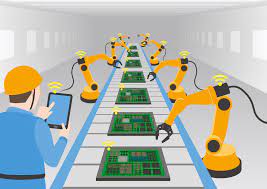
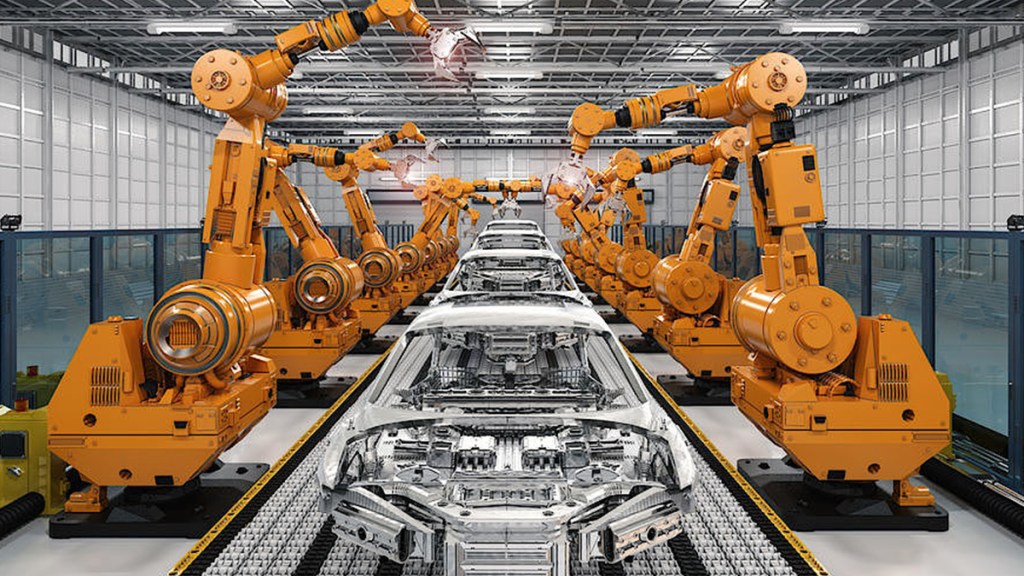
  • Manufacturing: AI powered robots work alongside humans to perform a limited range of tasks like assembly and stacking, and predictive analysis sensors keep equipment running smoothly.
  • Healthcare: In the comparatively AI-nascent field of healthcare, diseases are more quickly and accurately diagnosed, drug discovery is sped up and streamlined, virtual nursing assistants monitor patients and big data analysis helps to create a more personalized patient experience.
  • Education: Textbooks are digitized with the help of AI, early-stage virtual tutors assist human instructors and facial analysis gauges the emotions of students to help determine who’s struggling or bored and better tailor the experience to their individual needs.

Conclusion

Artificial intelligence is impacting the future of virtually every industry and every human being. Artificial intelligence has acted as the main driver of emerging technologies like big data, robotics and IoT, and it will continue to act as a technological innovator for the foreseeable future. AI is projected to have a lasting impact on just about every industry imaginable. We’re already seeing artificial intelligence in our smart devices, cars, healthcare system and favorite apps, and we’ll continue to see its influence permeate deeper into many other industries for the foreseeable future.

References

The Future of Cryptocurrency

Credit: EconomicTimes

Introduction

Cryptocurrencies are digital or virtual currencies underpinned by cryptographic systems. They enable secure online payments without the use of third-party intermediaries. “Crypto” refers to the various encryption algorithms and cryptographic techniques that safeguard these entries, such as elliptical curve encryption, public-private key pairs, and hashing functions. Cryptocurrencies can be mined or purchased from cryptocurrency exchanges. Not all eCommerce sites allow purchases using cryptocurrencies. In fact, cryptocurrencies, even popular ones like Bitcoin, are hardly used for retail transactions.

What is Cryptocurrency?

A cryptocurrency is a digital or virtual currency that is secured by cryptography, which makes it nearly impossible to counterfeit or double-spend. Many cryptocurrencies are decentralized networks based on blockchain technology—a distributed ledger enforced by a disparate network of computers. A defining feature of cryptocurrencies is that they are generally not issued by any central authority, rendering them theoretically immune to government interference or manipulation.

Blockchain Technology

Central to the appeal and functionality of Bitcoin and other cryptocurrencies is blockchain technology. As its name indicates, a blockchain is essentially a set of connected blocks or an online ledger. Each block contains a set of transactions that have been independently verified by each member of the network. Every new block generated must be verified by each node before being confirmed, making it almost impossible to forge transaction histories. The contents of the online ledger must be agreed upon by the entire network of an individual node, or computer maintaining a copy of the ledger.

Types of Cryptocurrency

Bitcoin is the most popular and valuable cryptocurrency. An anonymous person called Satoshi Nakamoto invented it and introduced it to the world via a white paper in 2008. There are thousands of cryptocurrencies present in the market today. Each cryptocurrency claims to have a different function and specification. For example, Ethereum’s ether markets itself as gas for the underlying smart contract platform. Ripple’s XRP is used by banks to facilitate transfers between different geographies. Bitcoin, which was made available to the public in 2009, remains the most widely traded and covered cryptocurrency. As of November 2021, there were over 18.8 million bitcoins in circulation with a total market cap of around $1.2 trillion. Only 21 million bitcoins will ever exist.

Is Cryptocurrency Legal?

Fiat currencies derive their authority as mediums of the transaction from the government or monetary authorities. For example, each dollar bill is backstopped by the Federal Reserve. But cryptocurrencies are not backed by any public or private entities. Therefore, it has been difficult to make a case for their legal status in different financial jurisdictions throughout the world. It doesn’t help matters that cryptocurrencies have largely functioned outside most existing financial infrastructure. The legal status of cryptocurrencies has implications for their use in daily transactions and trading. In June 2019, the Financial Action Task Force (FATF) recommended that wire transfers of cryptocurrencies should be subject to the requirements of its Travel Rule, which requires AML compliance. As of December 2021, El Salvador was the only country in the world to allow Bitcoin as legal tender for monetary transactions. In the rest of the world, cryptocurrency regulation varies by jurisdiction.

Future of Cryptocurrency

A cryptocurrency that aspires to become part of the mainstream financial system may have to satisfy widely divergent criteria. It would need to be mathematically complex (to avoid fraud and hacker attacks) but easy for consumers to understand; decentralized but with adequate consumer safeguards and protection; and preserve user anonymity without being a conduit for tax evasion, money laundering, and other nefarious activities. Since these are formidable criteria to satisfy, is it possible that the most popular cryptocurrency in a few years could have attributes that fall in between heavily-regulated fiat currencies and today’s cryptocurrencies?

Conclusion

The emergence of Bitcoin has sparked a debate about its future and that of other cryptocurrencies. Despite Bitcoin’s recent issues, its success since its 2009 launch has inspired the creation of alternative cryptocurrencies such as Ethereum, Litecoin, and Ripple. A cryptocurrency that aspires to become part of the mainstream financial system would have to satisfy very divergent criteria. While that possibility looks remote, there is little doubt that Bitcoin’s success or failure in dealing with the challenges it faces may determine the fortunes of other cryptocurrencies in the years ahead.

References

How Automation is Changing Workplace Everywhere?

Credit: Prospects

Introduction

There was a time when the term “automation” was synonymous with advanced manufacturing plants full of robotics. While replacing human labor with machine labor is a prime example of workplace automation, it’s far from the only example. Automation is present in modern businesses of all sizes – including subtle features in common software applications, and more obvious implementations like self-driving vehicles or autonomous robots. There is much debate about where workplace automation will lead the economy, but observers tend to agree that the trend is gaining momentum. Every business process is on the table for automation, especially as technology becomes more sophisticated. 

What is Workplace Automation?

Here’s a common misconception that automation involves towering robotics, but it can be as simple as a set of tools housed within common business software programs. At its core, automation is about implementing a system to complete repetitive and easily replicated tasks without the need for human labor. “Automation takes a lot of forms,” said Fred Townes, chief product officer at READY Education. “For small businesses, the most important thing is [repetition]. When you find something you do more than once that adds value … you want to look into automation.”

Machine Learning as the Driver for Automation

Machine learning and artificial intelligence enable new forms of “smart” automation. As the software learns, the more adaptable it becomes. These technologies open the door for the automation of higher-order tasks in addition to the basic, repetitive tasks. “I think there’s a lot of focus at the moment on these tasks that humans don’t want to do,” Sharma said. “But what’s going to happen in the future is … automation will not just be about automating those tasks humans are doing today, but it will be about realizing potential opportunities.”

Example of Common Workplace Automation

1. Email marketing

Many small business owners already use at least one form of automation: email marketing. Companies like Zoho and Constant Contact offer software that allows users to tailor the parameters of their email marketing campaign to their liking and then set it to run automatically. 

2. Customer service

Customer service departments are also getting an automation makeover with the introduction of tools like chatbots and automated text message marketing solutions.

3. Human resources

Given the predictable and repetitive nature of HR duties – like payroll and timesheets – digitization can transform the efficiency of a department.

Conclusion

Economic insecurity displaced workers feel is very real, but automation is not the enemy. Instead, Wallace hopes to educate people about leveraging this powerful technology to create their own incomes – essentially establishing a society of entrepreneurs and small companies. “If we can establish a way to make sure we all have enough food, clothing, and shelter to survive … and allow people to repurpose their gifts, unique abilities, and enable them to proliferate that and sell it as a good or a service, then we’re adding income,” Wallace said. “We can create an opportunity to generate income for next to nothing, so why not teach people to leverage the tech that disrupted the marketplace in the first place to embrace it and use it for something more in line with who they are, as an expression of their unique abilities?”

References

Why does the World Need to Decarbonize Transport?

Credit: ITF

Introduction

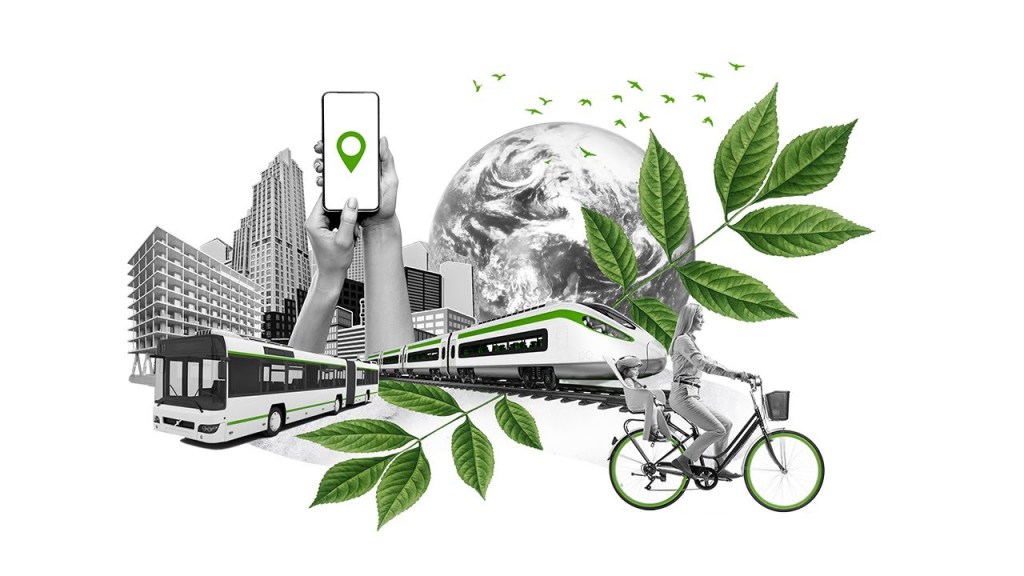
Moving people and goods accounts for one-quarter of global energy use, and the demand for energy from this sector is continuing to grow. This is due mainly to the increasing number and size of vehicles on our roads: more than 1.42 billion are currently in use, with an expected two billion by 2040. Road vehicles, most still powered by fossil fuels, account for nearly 75 per cent of total transport-related greenhouse gas emissions. Emissions from aviation and shipping are also projected to sail upwards between now and 2050. Flying contributes 12 per cent of the world’s total carbon dioxide emissions, while the marine sector, if it were a country, would be ranked between Germany and Japan as the sixth-largest source.

Why to Decarbonize the Transport?

Climate change cannot be stopped without decarbonizing transport. Transport emits around 23% of the energy-related CO2 that feeds global warming. Without immediate action, its share could reach 40% by 2030. Transport emissions have grown faster than those of any other sector over the past 50 years. Demand for transport will continue to grow massively in the coming decades. As a result CO2 emissions from transport activity will not fall, but could increase by 60% by 2050. And because transport relies on oil for 92% of its energy, it is particularly hard to decarbonize. 

Ambition of the Initiative

The Decarbonising Transport initiative helps governments and industry to translate climate ambitions into actions. Specifically, it:

  • Builds a catalogue of effective CO2 mitigation measures: the Transport Climate Action Directory.
  • Provides targeted analytical assistance for countries and partners to identify climate actions that work.
  • Gathers and shares evidence for best practices that will accelerate the transition to carbon-neutral mobility.
  • Shapes the climate change debate by building a global policy dialogue and by bringing the transport perspective to the broader climate change discussions.

Stream of the Initiative

 The Decarbonising Transport initiative is organised in five work streams:

  • Tracking progress: The initiative evaluates how current mitigation measures contribute to reaching objectives for reducing transport CO2.
  • In-depth sectoral studies: The initiative identifies effective policies for decarbonizing urban passenger transport, road freight transport, maritime transport, aviation and inter-urban transport.
  • Focus studies: The initiative analyses specific decarbonization issues and feeds the results into other work streams.
  • National pathways: The initiative assesses available policy levers for decarbonizing transport from a country perspective. Projects may also examine regional or sub-national levels.
  • Policy Dialogue: The initiative organizes global dialogue on transport and climate change through high-level roundtables, policy briefings and technical workshops. It acts as a conduit for transport sector input to climate change negotiations.

Conclusion

The Decarbonizing Transport initiative was launched in 2016 with core funding from the ITF’s Corporate Partnership Board (CPB). Other funding partners currently include the governments of France, Korea, Ireland and the Netherlands, the World Bank, the European Commission, the Climate Works Foundation, the Fédération Internationale de l’Automobile (FIA), the FIA Foundation, the International Road Transport Union (IRU) and the Swedish Shipowners’ Association. In recognition of the work of its Decarbonizing Transport initiative, the UN Climate Change Secretariat (UNFCCC) has named the International Transport Forum a focal point for transport under its Marrakech Partnership. In this role, the ITF acts as a conduit for the exchange of information between the transport sector and the UNFCCC, as well as providing inputs to the UNFCCC process.

References

Technological Determinism

Technological determinism is a reductionist theory that aims to provide a causative link between technology and a society’s nature. It tries to explain as to whom or what could have a controlling power in human affairs. The theory questions the degree to which human thought or action is influenced by technological factors.


The term ‘technological determinism’ was coined by Thorstein Veblen and this theory revolves around the proposition that technology in any given society defines its nature. Technology is viewed as the driving force of culture in a society and it determines its course of history.

Karl Marx believed that technological progress lead to newer ways of production in a society and this ultimately influenced the cultural, political and economic aspects of a society, thereby inevitably changing society itself. He explained this statement with the example of how a feudal society that used a hand mill slowly changed into an industrial capitalist society with the introduction of the steam mill.

WINNER’S HYPOTHESES

Langdon Winner provided two hypotheses for this theory:

The technology of a given society is a fundamental influencer of the various ways in which a society exists
Changes in technology are the primary and most important source that leads to change in the society
An offshoot of the above hypotheses which is not as extreme is the belief that technology influences the various choices that we make and therefore a changed society can be traced back to changed technologies.

Technological determinism manifests itself at various levels initially it starts with the introduction of newer technologies introduces various changes and at times these changes can also lead to a loss of existing knowledge as well. For example, the introduction of newer agricultural tools and methods has seen the gradual loss of knowledge of traditional means of farming. Therefore technology is also influencing the level of knowledge in a society.

Examples of Technological determinism

History shows us numerous examples to explain why technology is considered to be determining the society that we live in. The invention of the gun changed how disputes were sorted out and changed the face of combat. A gun required minimum effort and skill to be used successfully and could be used from a safe distance. This when compared to how earlier wars were fought with swords and archery lead to a radical change in the weapons used in war. Today with the discovery .

Today with the discovery of nuclear energy, future wars will be fought with nuclear arsenal. Each new discovery causes a transition to a different society. The discovery of steam power let to the development of the industrial society and the introduction of computers has led to the dawn of the information age.

Technological Drift

Winner believed that changes in technology sometimes had unintended or unexpected results and effects as well. Winner called this phenomenon as ‘technological drift’ where people start drifting more and more among a sea of unpredictable and uncertain consequences. According to Winner, technology is not the slave of the human being but rather humans are slaves to technology as they are forced to adapt to the technological environment that surrounds them.

Forms of Technological Determinism

An alternative weaker view of technological determinism says that technology is serving a mediating function because despite it leading to changes in culture, it is actually controlled by human beings. When control of technology slowly reduces from being in the hands of few human beings, it passes completely into the control of technology itself. This view of humans having no control is referred to as ‘autonomous technological determinism.’

Technological Determinism and Media

New media are not only an addition to existing media, they are also new technologies and therefore do have a deterministic factor as well. Marshall McLuhan made a famous statement that “the medium is the message.” This means that the medium used to communicate influences the mind of the receiver. The introduction of news print, television and the internet have all shown how technological advances have an impact on the society in which we live in.

Criticism of Technological Determinism

A critique of technological determinism is that technology never forces itself on members of the society. Man creates technology and chooses to use them. He invents television and chooses to view it. There is no imposition on the part of the technology to be used rather technology requires people to participate or involve themselves at some point or another to use a car or a microwave. The choice of using technology and experiencing its effects therefore lies in the hand of a human being.

Written by: Ananya Kaushal

Death as a lesson

Most would agree with me when I say, Steve Jobs was one of the most brilliant people, who went on to become an innovator and entrepreneur and a co-founder of Apple then worked for Pixar too.

Today, for the first time, I watched a motivating speech given by him.

What he said, and how he said is no doubt invaluable. But the points he made is what makes it so great, making it an inspiring array of words aimed for people from all walks of life.

Perhaps that is the reason, this video on YouTube had more than 1.3 crore views. And this was not even the original one, it had been edited to create a story. But the lessons he has learnt and the three stories he told made all the difference.

We all know the successful reviews of Apple company from their over priced gadgets which no doubt never fail to deliver what they promise. But the penance behind it’s creation is perhaps more interesting to know and yet many are not aware of it.

From what I understood, Jobs talked of circumstances that lead you to a place. The dots that you can connect months, years or sometimes even decades. He also talked of failure as a teacher, and the lessons it teaches.

Now all of these were a good expressions of wisdom, because most of would have heard of it or have been told about while growing up. In some cases, you must have felt them to be true as well.

But the last one, the quote that he read at the age of 17, which impacted him for the next 33 years when he gave the speech and probably till his death 5 years later.

If you live each day as if it were your last, someday you’ll most certainly be right.”

-unknown

He questioned himself every morning, if he was going to do the things he would be doing if it were his last?

And facing yourself in the mirror when you answer. Because everything we do daily has an impact for the rest of our lives.

Living our life as a boon, living each moment as if it is the last will no doubt make us more happy if not more successful. Because then you are free of all the chains that bind your potential. The fears and thoughts that hinder your growth.

You are not only less self conscious (as you have few hours left to live) but you become an outgoing individual. You grab the chances, even the unseen opportunities that come your way.

You live the day to its fullest.

Carpe Diem becomes your mantra. Keeps you going through the ups and downs.

Just look at what Jobs managed to do all by himself. There are countless other people who have managed to become great personalities despite the troubles they had to live through.

And that my friend is how you can unlock your true potential. Wishing you all the very best all of your life’s endeavours.

Image source : Google

How satellite data can make companies rich

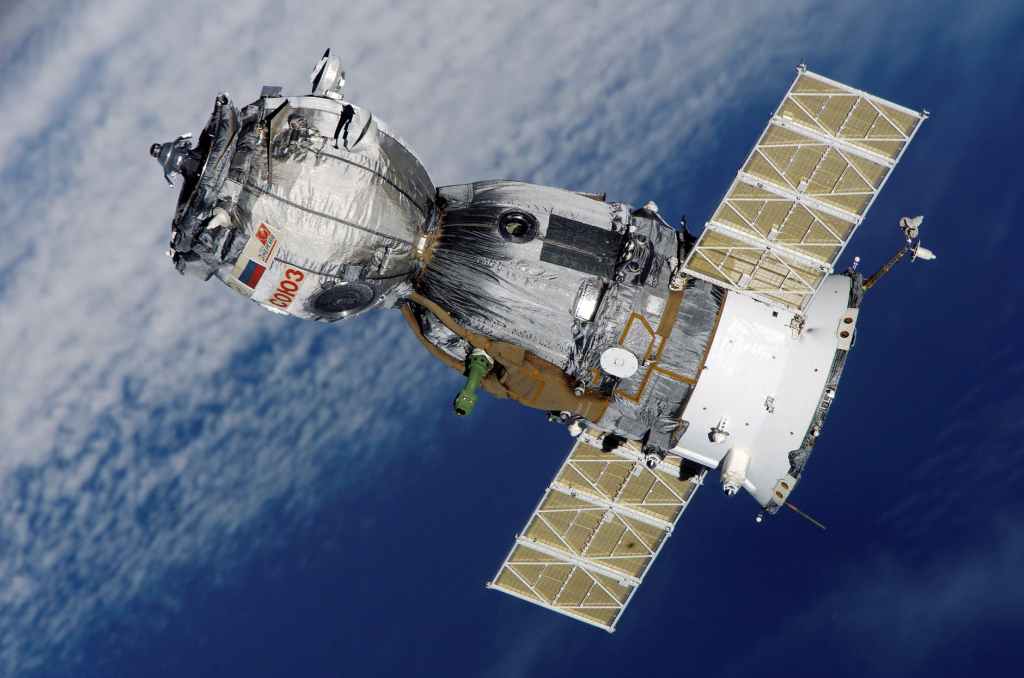
“Data is the new Fuel” Every company needs data, but now they are no longer dependant on digital resources, now they can get actual real world data, you can never ask your costumer what are they going to purchase after purchasing your product or why they prefer your competitors product over your’s, but now you can know and multiply your profit heavily. 

For a long time satellite data was on military’s hold but now things are changing, with advances of AI and ML now everyone can utilize satellite imagery for themselves and in there own unique way and governments are supporting the same. 

Here’s some facts from allied market research

Satellite Data Services Market to Reach $19.36 Bn, Globally, by 2027 at 19.1% CAGR: Allied Market Research”

Now how you can utilize

Data- the biggest profit is data, the more data you have the more profit you get. Companies are using techniques like web scraping to get data, know their market, and competitor; and you can use it as same but it’s real world data, how much customers are coming in your or your competitors firm or even how much they are earning. 

Surveillance-  you can have an eye on product delivery and management so you always know on-ground data, except for softwares products it works everywhere. 

Security- you can ensure the safety of products way ahead of CCTV era.

Here are some well known Indian firms to have you start

Dimension IGIS

Geokno

Geoinfosys

Names doesn’t stop here as it’s a growing industry, they will analyze and refine the data as per your need. 

Here’s link of some free isro courses to give more grasp. 

https://elearning.iirs.gov.in/edusatregistration/student

Always remember that in business, or anywhere one with the most data wins. In these era of competition you must always be equipped with latest tech to give your customer best, and satellite data is just what you need to have an edge. 

Research


From allied market research

https://www.prnewswire.com/news-releases/satellite-data-services-market-to-reach-19-36-bn-globally-by-2027-at-19-1-cagr-allied-market-research-301206045.html

Download Report Sample (252 Pages PDF with Insights, Charts, Tables, Figures) at https://www.alliedmarketresearch.com/request-sample/6793