E-learning boon or bane

Nowadays, there is an increase in trend of distance learning. Several people believe that this method has a total of positive impacts and it will alter conventional education while others say that argue that it is impossible to eliminate brick and mortal classroom.

To begin with, there are some advantages in attending virtual classroom. First and foremost, learning via internet is time-saving for both students and schools. For example, students can learn anything and anywhere provided that they have computer connecting the internet. In terms of teachers, they can deliver a lesson to all classes by video instead of teaching the same things again and again. Secondly, online education saves costs for country. For instance, schools can reduce overheat costs or decline budget for investing on facilities since expanding campus is not necessary. In addition, e-learning provides opportunity for people who live far from university. The fact shows that many residents in remote rural area still have chances to achieve degree thanks to this advanced technology.


On the other hands, face – to – face learning plays an integral part in education. Firstly, interactive learning is more effective than online learning. In detailed, when discussing about one topic, teachers can give some feedback for students to make sure that they understand all their mistakes and improve these errors. Moreover, studying under supervision motivates students to learn hard. Due to the fact that there are a huge number of students who are lazy and not self-awareness is learning, it is essential for them to have tutors who control students’ studies and help them have good academic results.


In conclusion, although there are a bunch of positive influences which online learning brings, I strongly believe that traditional education is a good teaching method which is irreplaceable. It not only helps students have more interaction with classmates but also provide them an environment to improve skills and learn new things together.

Fake News-a false alarm

What will happen if one morning we wake up and check our phone which will leave us bewildered with a notification of the demise of some famous personality and after few hours of feeling sad you realize that it was a fake news, that someone made a fool out of you. Think about that personality who will read the news of his own demise , such a strange thing right? The new digital era with modern technology has unleashed many unwanted and false practices which is affecting the individuals interpret daily developments. Now this thing leaves me in a state that whether I should watch news or read news articles or just leave everything and be unaware about the facts happening around me. Let me share some of the instances where I felt that fake news is becoming a threat to people. During this time of COVID-19, where the world is suffering from a painful time , people are still spreading fake news. They are giving false information about the number of corona cases rising in India and how the nation is in a dreadful situation with fear and suffrage. https://www.firstpost.com/tag/fake-news Second incident is from CBSE where the people were spreading rumors about the board examination of 10th&12th class. Students were confused with the dates and whether the examination will take place or not, this situation was no less than a terror for them because they were not sure with the dates and evaluation. But now the things have been settled and CBSE has warned against the fake news. https://scroll.in/announcements/958428/cbse-warns-against-fake-news-regarding-2020-board-exams There are many more examples which has threatened people and made a disbelief in media, where the people are in no state whether to believe the media or not. One of the major reasons why fake news is such a threat is the increasing difficulty for readers to identify the legitimacy of wake news websites. People are trusting blindly on everything , they are not checking the facts or they are not able to make a difference between a fabricated news or a real piece of news article. The fabricated news is creating a negative impact on the people and making the situation much more worse and entangled. This is a growing debate on how to address these issues without undermining the benefits of digital media. We should be aware about every digital platform before using it. Government should take preventive measures to combat this problem and come up with a solution so that people can actually rely on real news. Government should promote news literacy and strong professional journalism in the society.The media should work really hard in developing a real piece of news without fabricating it. Tech companies should come up with apps or other tools that can identify fake news in seconds and individuals should follow some guidelines or check the facts before believing in a news article. I will conclude this article with a quote of Abraham Lincoln “Don’t believe everything you read on the internet just because there’s a picture with a quote next to it.”

Technology as an integral part of education

What is technology?
Well according to the basic definition,Technology is the set of knowledge, skills, experience and techniques through which humans change, transform and use our environment in order to create tools, machines, products and services that meet our needs and desires.
That all put into simple words is using our smartphones,computers,laptops and basically anything that come in the category of machine is technology.

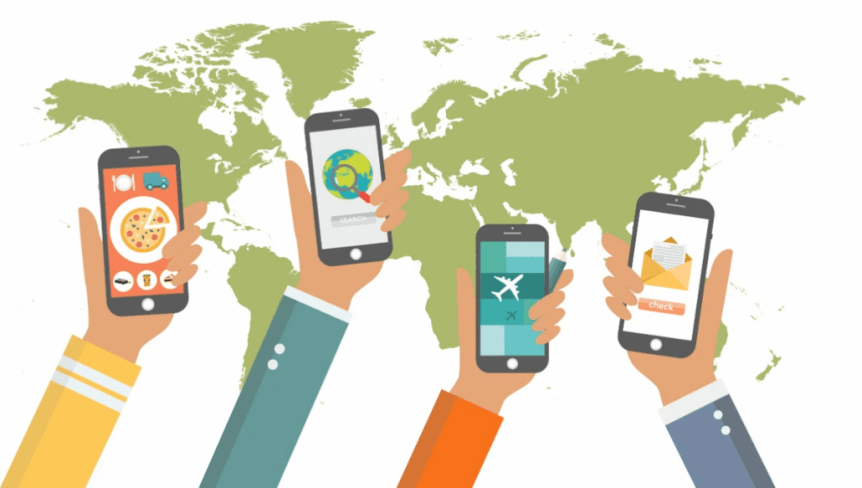
Today in this modern era technology has bought about a huge change in our lives and our day to day habits be it from recharging our phones to sending satellites in earth’s atmosphere anything and everything is somehow related to technology.But a huge amount of population is currently using technology at it’s best in order to learn and educate which has changed our present a lot from our past when education was not only just limited but that too not very easily accessible.

Let’s see how technology has changed the way of learning:
Education can be basically divided into three categories mainly primary,secondary and higher education.

PRIMARY EDUCATION:

Preschools and nursery education is considered to be the foundation of our education as it’s the first time we start to learn about new things and our environment.This is the time our brain is processed to think and analyze certain things and this process could be made creative using technology.At the preschool level, technology can be introduced in several ways at the most basic is the use of computers, tablets, and audio and video resources in classrooms.


SECONDARY EDUCATION:

There’s a transition of a student as he goes from primary to secondary school as his way of thinking changes,this is great time to get the student really into E -LEARNING ,as brain really process information really quickly and faster when information is in the form of visuals combined with audio.E-learning also has been rising as a supplement to the traditional classroom. Students with special talents or interests outside of the available curricula use e-learning to advance their skills or exceed grade restrictions.

HIGHER EDUCATION:

Online college course enrolment has seen a 29% increase in enrolment with nearly one third of all college students, or an estimated 6.7 million students are currently enrolled in online classes.Technology has helped a lot in spreading knowledge across the globe.Colleges like Harvard,MIT,Standford and many more put there online courses with best faculties on online learning platform like udemy,Coursera etc for a minimal price or free of cost.The gist is higher education is now easily and quickly accessible to a larger crowd and the credit goes to Technology.

Some other Ways in which technology is being used as a medium to educate:-

Flipped classroom:

This is an instructional strategy in which computer-assisted teaching is integrated with classroom instruction. Students are given basic essential instruction, such as lectures, before class instead of during class. Instructional content is delivered outside of the classroom, often online. The out-of-class delivery includes streaming video, reading materials, online chats, and other resources. This frees up classroom time for teachers to more actively engage with learners.

Virtual classrooms:

A virtual classroom provides the opportunity for students to receive direct instruction from a qualified teacher in an interactive environment. Learners can have direct and immediate access to their instructor for instant feedback and direction.For example: In India the biggest online learning platform is unacademy.

Augmented Reality:

Augmented reality (AR) provides students and teachers the opportunity to create layers of digital information, including both virtual world and real world elements, to interact with in real time.Augmented reality plays an important role in the future of classrooms.


Disadvantages :


A coin always has two sides”

Here is a list of disadvantages from learning through technology:
1)It could be distracting
2)It disconnects students from a face to face relationship with teacher
3)It may not be all the time the source they are studying from is reliable
4)It can cause major heath issues if a student is exposed to blue light for a prolonged period of time.

EDUindex: Correlation Coefficient for Curriculum Relevancy and Employability

Daily writing prompt
If you could meet a historical figure, who would it be and why?

The EDUindex is a quantitative measure designed to evaluate the relevancy of educational curricula to post-educational objectives, especially in the context of employability. It serves as a Correlation Coefficient that quantifies how well an academic curriculum aligns with the demands of the job market, skills required by employers, and overall preparedness for professional careers. The EDUindex is an insightful metric for educators, policymakers, and institutions to assess the effectiveness of their educational programs.

1. Understanding the EDUindex

  • Definition: The EDUindex is a value that ranges from -1 to +1, similar to traditional correlation coefficients. Here, a value close to +1 indicates a strong positive correlation between the curriculum and employability objectives, while a value close to -1 indicates a negative correlation. A value of 0 would indicate no correlation.
  • Purpose: It aims to bridge the gap between academic content and the skill sets required in the real world by providing a measurable framework for evaluating curriculum relevance. The primary focus is on ensuring that graduates possess the skills and knowledge necessary to meet the evolving demands of industries and employers.

2. Components of the EDUindex

The EDUindex is derived from various parameters that can be broadly categorized into the following components:

  • Curriculum Content Relevance: Measures how well the topics and subjects taught align with industry standards, technological advancements, and contemporary practices.
  • Skill-Based Learning: Assesses the extent to which the curriculum incorporates practical, hands-on experiences such as internships, projects, and case studies that enhance employability skills.
  • Soft Skills Integration: Evaluates the inclusion of communication, teamwork, problem-solving, and other essential soft skills in the curriculum.
  • Industry Collaboration: Looks at partnerships between educational institutions and industries, including guest lectures, workshops, and industry-based projects.
  • Graduate Employability Rates: Analyzes the percentage of graduates securing employment in their field of study within a certain period post-graduation.

3. EDUindex Gap Analysis

The EDUindex Gap Analysis is a diagnostic tool that identifies areas where the curriculum falls short in achieving alignment with post-educational goals, particularly employability. It helps institutions recognize missing elements or gaps that are crucial for enhancing the relevancy of their academic offerings.

How Gap Analysis Works
  • Step 1: Data Collection: Gather data on current curriculum structure, graduate employability outcomes, and industry feedback. This can include surveys from employers, feedback from alumni, and job market analysis.
  • Step 2: EDUindex Calculation: Using the collected data, calculate the current EDUindex score to understand the existing correlation between the curriculum and employability.
  • Step 3: Gap Identification: Identify gaps where the curriculum does not meet industry expectations. For instance:
    • Missing Skills: Lack of courses on emerging technologies like AI, Data Science, or Cybersecurity.
    • Outdated Content: Curriculum components that are no longer relevant in the current job market.
    • Insufficient Practical Exposure: Limited hands-on experience in labs, real-world projects, or internships.
  • Step 4: Recommendations: Based on the gap analysis, recommend curriculum changes such as the addition of industry-specific modules, skill development courses, or enhanced industry collaboration.

4. Benefits of Using the EDUindex

  • Improved Curriculum Design: Helps institutions refine their curriculum to better meet industry standards, thereby increasing the employability of graduates.
  • Data-Driven Decision Making: Provides a data-backed approach for curriculum reforms, ensuring that changes are aligned with market demands.
  • Institutional Benchmarking: Enables educational institutions to benchmark their programs against industry standards and other institutions.
  • Enhanced Student Outcomes: By aligning the curriculum with employability, students gain relevant skills that increase their job readiness.
  • Feedback Loop for Continuous Improvement: The EDUindex fosters a continuous feedback loop where institutions can regularly assess and update their curricula based on industry trends.

5. Case Study: Implementing EDUindex in Higher Education

Let’s consider an example of a university implementing the EDUindex for its Computer Science program:

  • Initial Assessment: The EDUindex score was calculated as 0.45, indicating a moderate alignment with employability goals. Key gaps included limited exposure to cloud computing and AI.
  • Gap Analysis Results:
    • Missing Courses: No dedicated courses on Cloud Technologies or AI.
    • Industry Collaboration: Lack of partnerships with tech companies for internships.
    • Outdated Curriculum: Focused more on theoretical knowledge rather than practical applications.
  • Action Plan:
    • Introduced new electives on AI, Machine Learning, and Cloud Computing.
    • Partnered with industry leaders like Google and AWS for certification programs.
    • Enhanced internship opportunities and real-world projects.
  • Outcome: After implementing these changes, the EDUindex score improved to 0.75, and the graduate employability rate increased by 20%.

6. Conclusion

The EDUindex serves as a vital metric for aligning educational curricula with post-educational objectives, particularly in enhancing employability. By leveraging the EDUindex and conducting regular gap analyses, educational institutions can ensure that their programs remain relevant, adaptive, and effective in preparing students for the dynamic job market.