Cabinet approves continuation of the Atal Innovation Mission

The Union Cabinet, chaired by the Prime Minister Shri Narendra Modi, has approved the continuation of its flagship initiative, the Atal Innovation Mission (AIM), under the aegis of NITI Aayog, with an enhanced scope of work and an allocated budget of Rs.2,750 crore for the period till March 31, 2028.

AIM 2.0 is a step towards Viksit Bharat that aims to expand, strengthen, and deepen India’s already vibrant innovation and entrepreneurship ecosystem.

The approval underscores the government’s commitment to fostering a robust innovation and entrepreneurship ecosystem in India. With India at rank 39 on the Global Innovation Index and home to world’s third-largest start-up ecosystem, the next phase of Atal Innovation Mission (AIM 2.0) is expected to further enhance India’s global competitiveness. The continuation of AIM will directly contribute to creating better jobs, innovative products, and high-impact services across sectors.

While building on the accomplishments of AIM 1.0, such as Atal Tinkering Labs (ATL) and Atal Incubation Centers (AIC), AIM 2.0 marks a qualitative shift in the mission’s approach. Whereas AIM 1.0 involved implementing programs that built new innovation infrastructure to strengthen India’s then nascent ecosystem, AIM 2.0 involves piloting new initiatives designed to fill gaps in the ecosystem and scaling successes through central and state governments, industry, academia and community. 

AIM 2.0 is designed to strengthen India’s innovation and entrepreneurship ecosystem in three ways: (a) by increasing input (i.e., ushering more innovators and entrepreneurs),  (b) by improving the success rate or ‘throughput’ (i.e., helping more startups succeed) and (c) by improving the quality of ‘output’ (i.e., producing better jobs, products and services).

Two programs target increasing input to the ecosystem:

  • The Language Inclusive Program of Innovation (LIPI) to build innovation and entrepreneurship ecosystems in India’s 22 scheduled languages for lowering entry barrier confronting innovators, entrepreneurs and investors who don’t speak English. 30 Vernacular Innovation Centers will be established in existing incubators.
  • The Frontier Program to create customized templates for the innovation and entrepreneurship ecosystems of Jammu and Kashmir (J&K), Ladakh, the North Eastern states (NE), Aspirational Districts and Blocks where 15% of India’s citizens live. 2500 new ATLs will be created for template development.

Four programs target improving the throughput of the ecosystem:

  • The Human Capital Development Program to create a system for producing professionals (managers, teachers, trainers) to build, operate, and maintain India’s innovation and entrepreneurship ecosystem. The pilot will produce 5500 such professionals.
  • The Deeptech Reactor to create a research sandbox for testing ways of commercializing research-based deep tech startups that require significantly longer time and deeper investment to get to market. Minimum 1 Deeptech Reactor will be piloted.
  • The State Innovation Mission (SIM) to assist states/UTs with building a strong innovation and entrepreneurship ecosystem that focuses on their areas of strength. SIM will be a component of the NITI Aayog’s State Support Mission.
  • The International Innovation Collaborations program to take India’s innovation and entrepreneurship ecosystem international. Four areas of intervention are identified: (a) an Annual Global Tinkering Olympiad (b) creation of 10 Bi-lateral, multilateral engagements with advanced nations (c) as a knowledge partner, helping the United Nation’s World Intellectual Property Organization (WIPO) spread the models of AIM and its programs (ATL, AIC) to the countries of the global south, and (d) anchoring the Startup20 Engagement Group of the G20 for India.

Two programs target improving the quality of output (jobs, products, and services):

  • The Industrial Accelerator program to increase industry involvement in scaling-up advanced startups. Minimum 10 Industry Accelerators in critical sectors will be created in Public Private Partnership (PPP) mode.
  • The Atal Sectoral Innovation Launchpads (ASIL) program to build iDEX-like platforms in central ministries for integrating and procuring from startups in key industry sectors. Minimum 10 launchpads will be built across key ministries.

*****

DST to Announce Quantum Start-ups under National Mission on Interdisciplinary Cyber Physical Systems and National Quantum Mission

Start-ups selected for support under the newly established guidelines in Quantum Technologies will be officially unveiled by the Union Minister of State (Independent Charge) for Science and Technology, Minister of State (Independent Charge) for Earth Sciences, MoS PMO, Department of Atomic Energy, Department of Space, Personnel, Public Grievances and Pensions, Dr. Jitendra Singh at an event, scheduled for 26th November 2024.

Department of Science and Technology (DST) has established detailed guidelines to support and nurture startups in the field of quantum technologies. These comprehensive guidelines provide a structured framework for startups to access essential resources, funding opportunities, mentorship, and infrastructure support, empowering them to accelerate innovation and contribute to India’s quantum ecosystem.

The unveiling of the startups by the Union Minister, who will be the Chief Guest for the occasion will showcase India’s growing prowess in quantum research, development, and commercialization.

A Call for Proposals was launched earlier this year by the I-HUB Quantum Technology Foundation, a Technology Innovation Hub (TIH) established at the Indian Institute of Science Education and Research (IISER), Pune, under the National Mission on Interdisciplinary Cyber-Physical Systems (NM-ICPS). The response from start-ups across the nation showcased the increasing interest in quantum technologies and the potential for ground-breaking advancements.

The selected start-ups, representing cutting-edge innovation across diverse domains such as quantum communication, computing, sensing, and materials, were chosen through a rigorous evaluation process. These pioneering ventures are poised to contribute significantly to India’s quantum ecosystem, addressing critical technological challenges and driving economic growth.

With the growing momentum in India’s start-up ecosystem, the National Quantum Mission is dedicated to nurturing ventures in quantum technology, and propelling the nation toward world-wide excellence in this transformative field.

***

National Workshop deliberated on strengthening India’s Geospatial Ecosystem

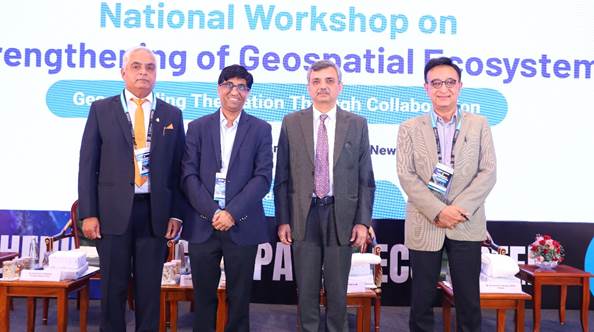
Policymakers, experts and industry leaders came together to discuss ways to advance India’s geospatial sector in alignment with the National Geospatial Policy (NGP) 2022 at the National Workshop on Strengthening the Geospatial Ecosystem today at Bharat Mandapam, New Delhi.

The workshop organised by the Survey of India (SoI), the National Mapping Agency under the Department of Science and Technology (DST), featured extensive discussions on key aspects of geospatial development.

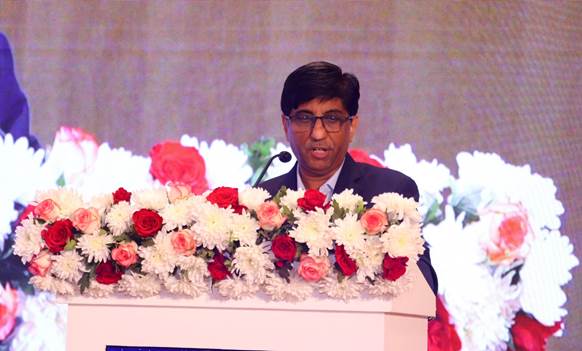
“The National Geospatial Policy 2022 is not just a government initiative; it is a collective responsibility. Every citizen, every institution, and every industry have a role to play in realizing the promise of this policy. As we embrace the power of geospatial technologies, let us work together to ensure that the benefits are felt by all,” said Secretary DST, Professor Abhay Karandikar.

“The focus now should be on working together, reducing duplication and cross-collaboration in Geospatial schemes. Avenues of collaborative funding should be sought out in the larger interest of the nation,” said Shri Hitesh Kumar S. Makwana, Surveyor General of India.

Participants explored the collaborative roles of central ministries and state governments in implementing NGP-22 to build a robust geospatial ecosystem. The event also highlighted the impact of Operation Dronagiri, launched on 13th November 2024, as a pioneering initiative leveraging geospatial technologies to address challenges in agriculture, infrastructure, transportation and livelihoods. The initiative is a step towards positioning India as a leader in geospatial innovation, driving economic growth and sectoral development through data-driven solutions.

The workshop laid special focus on the challenges and strategies for establishing a uniform and modernized National Geodetic Reference Frame to support integrated services and sustainable development. Discussions also addressed the importance of capacity development in the geospatial sector through curriculum standardization, skill-development programs and cutting-edge research initiatives.

The workshop in which Shri Manoj Joshi, Secretary Department of Land Resources and Shri Srikant Shastri, Chairman GDPDC participated, served as a significant step toward realizing the vision of NGP-22, fostering innovation, economic prosperity and technological leadership.

It reinforced India’s commitment to becoming a global leader in the geospatial sector by building a collaborative ecosystem involving government, academia and the private sector.

****

Annual Conference on All India Services Personnel Reforms

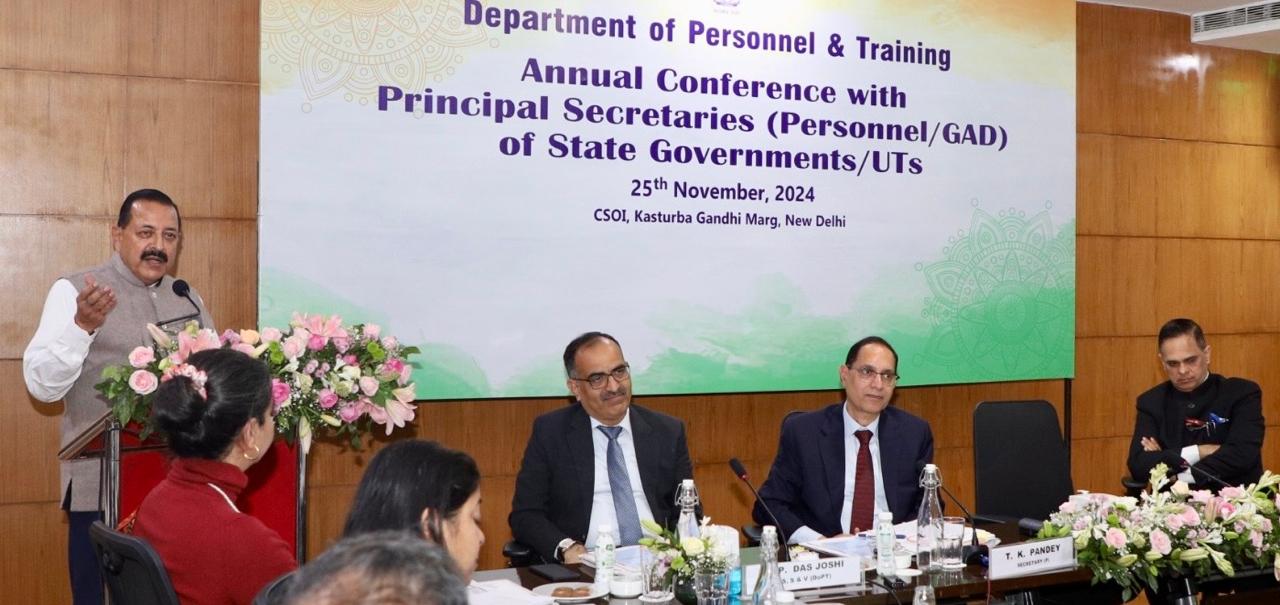
Union Minister of State (Independent Charge) for Science and Technology; Earth Sciences and Minister of State for PMO, Department of Atomic Energy, Department of Space, Personnel, Public Grievances and Pensions, Dr. Jitendra Singh convened a meeting of State GAD/ Personnel Secretaries to receive an update about the status of General Administration Department working in individual States and UTs as well as to familiarise them with new initiatives undertaken by the Central Government headed by Prime Minister Sh Narendra Modi.

The Union MoS DoPT shared a futuristic vision in governance  driven by latest technology and motivated by the goal of Viksit Bharat 2047.

 The meeting served as a platform for fostering knowledge exchange and collaboration among administrative leaders, with a focus on capacity building, technological integration, and reforms to enhance governance. The conference saw participation from almost all the States and Union Territories.

Addressing the participants, Dr. Jitendra Singh underscored the critical need for regular interactions to empower civil servants in meeting the evolving challenges of governance. He reaffirmed the government’s commitment to transparency, integrity, accountability, and efficiency, as reflected in initiatives like Mission Karmayogi, which has institutionalized capacity building for civil servants at all levels.

Highlighting the importance of grievance redressal mechanisms, the Minister noted that the centralized system has witnessed an unprecedented increase in public trust, with complaints handled annually growing from 2 lakh in 2014 to over 25 lakh in 2024. This surge demonstrates the government’s ability to address citizens’ concerns more effectively and in a timely manner.

During the meeting, Union Minister Dr. Jitendra Singh addressed several concerns raised by Principal Secretaries regarding administrative challenges and the development of civil servants. One key suggestion was the creation of a mentoring framework where senior officers could guide younger batches, helping them benefit from the knowledge and experience of their seniors. The Minister acknowledged this proposal and highlighted the importance of mentorship in shaping future leaders within the civil service.

Dr Jitendra Singh shared that the Department of Personnel and Training (DoPT) had already initiated a mentorship program in 2016, where officers undergo a three-month exposure to central government priorities, gaining a better understanding of national-level governance. This initiative has proven effective in boosting the confidence and initiative of younger officers, enabling them to interact with senior mentors and learn key aspects of governance practices.

In response to concerns about the lack of exposure for officers at the Deputy Secretary and Joint Secretary levels, Dr. Jitendra Singh emphasized ongoing efforts to address this gap. He highlighted initiatives like the National Learning Week and Mission Karmayogi, which now cater to various levels of civil servants, including those in state administrations. These programs are designed to equip officers with the necessary skills to navigate dynamic governance challenges.

Dr. Jitendra Singh also appreciated the development of online knowledge series aimed at providing essential information to officers and assured that the DoPT would collaborate with states to share best practices and resources, further enhancing the learning environment for civil servants nationwide.

The conference explored several key topics vital to governance and administrative reforms, with a focus on the increasing role of technology in administration. A major highlight was the implementation of centralized grievance mechanisms, which have greatly enhanced public trust in the system’s responsiveness. The discussions showcased success stories, such as the integration of face recognition technology and year-long capacity-building initiatives, both of which are helping civil servants adapt quickly to evolving governance needs. These reforms, along with Mission Karmayogi’s institutionalized framework, are equipping officers with the necessary skills to tackle modern administrative challenges effectively.

Sessions at the conference aimed to provide civil servants with the tools needed for contemporary governance. The Department of Personnel and Training (DoPT) presented key personnel reforms, and a discussion on Mission Karmayogi illustrated its transformative impact on civil services. The event also highlighted the use of electronic Human Resource Management Systems (eHRMS) to streamline personnel management, alongside discussions on the successful implementation of the Right to Public Grievance Redressal Act, which has boosted public service accountability.

Additionally, the Department of Administrative Reforms and Public Grievances (DARPG) conducted a session on digitalization, centralized grievance redressal, and special campaigns, aiming to modernize administrative processes.

Dr. Jitendra Singh emphasized the need for states to adopt technologies like face recognition systems to improve administrative efficiency. He also stressed that the capacity-building measures under Mission Karmayogi would help civil servants navigate the complexities of modern governance.

The Minister also highlighted the 2018 amendments to the Prevention of Corruption Act, which introduced accountability for both bribe-givers and bribe-takers, fostering a more balanced and just approach to corruption. He further emphasized the need for regular exchanges of best practices among states to replicate successful governance models nationwide.

The conference, organized by DoPT, saw the participation of DoPT Secretary Shri Tuhin Kanta Pandey, DARPG Secretary Shri V. Srinivas, and senior officials from both departments, enriching discussions on governance reforms.

Dr. Jitendra Singh concluded by expressing confidence that these collaborative efforts would drive progress and empower civil servants for more effective public service delivery.

*****

E-SHRAM PORTAL

The Ministry of Labour and Employment launched eShram portal (eshram.gov.in) nationwide on 26th August 2021 for creation of a comprehensive National Database of Unorganised Workers (NDUW) verified and seeded with Aadhaar. eShram portal is meant to register and support the unorganised workers by providing them a Universal Account Number (UAN).

In October 2024, on an average about 60,000 registrations happened on eShram per day and a single day registration reached 97,839 on 09.10.2024. As on 19th November 2024, over 30.40 crore unorganised workers have registered on eShram portal, on a self-declaration basis. The key social security benefits extended to the unorganised workers through eShram portal are as follows:

  • eShram has been integrated with National Career Service (NCS) Portal. An unorganised worker can register on NCS using his/ her Universal Account Number (UAN) and search for suitable job opportunities. An option/ link has also been provided to registrant on eShram portal to seamlessly register on NCS.
  • eShram is also integrated with Pradhan Mantri Shram Yogi Maandhan (PM-SYM). PM-SYM is a pension scheme for unorganised workers who are aged between 18-40 years. Using UAN (eShram), any unorganised worker can easily register on Maandhan portal.
  • To provide skill enhancement and apprenticeship opportunities to unorganised worker, eShram has been integrated with Skill India Digital portal of Ministry of Skill Development and Entrepreneurship.
  • eShram is also integrated with myScheme portal. myScheme is a National Platform that aims to offer one-stop search and discovery of the Government schemes. It provides an innovative, technology-based solution to discover scheme information based upon the eligibility of the citizen.

Further, Ministry of Labour and Employment has also launched the eShram– “One-Stop-Solution” on 21st October 2024. eShram– “One-Stop-Solution” entails integration of different Social Security/ Welfare schemes at single portal i.e., eShram. This enables unorganised workers registered on eShram to access social security schemes and see benefits availed by them, through eShram. So far, twelve (12) Social Security/ Welfare Schemes have been integrated/ mapped with eShram which includes: – One Nation One Ration Card, Mahatma Gandhi National Rural Employment Guarantee Act, National Social Assistance Programme (Indira Gandhi National Disability Pension Scheme, Indira Gandhi National Widow Pension Scheme, National Family Benefit Scheme) Pradhan Mantri Awas Yojana – Gramin (PMAY-G), etc. 

eShram data is being shared with State/ UTs Labour Departments through integration and Data Sharing Portal (DSP) based on Standard Operating Procedure (SOP) and guidelines prepared by Ministry of Labour and Employment in consultation with National Informatics Centre (NIC), Unique Identification Authority of India (UIDAI) and States/ UTs.  All States/UTs have been on boarded on Data Sharing Portal (DSP) and 10 States/UTs have completed integration. 

Integration of Social Security/ Welfare Schemes with eShram is a continuous process.

CAQMrelaxes certain restrictions under Stage-III and Stage-IV of the Graded Response Action Plan (GRAP)

Daily writing prompt
Do you have a favorite place you have visited? Where is it?

Today, the Hon’ble Supreme Court vide its Order dated 25.11.2024 in WP (C) No. 13029 of 1985 titled as M. C. Mehta Vs. Union of India & Ors., inter alia, directed as under:

“…we direct the Commission to consider the grant of relaxation of actions in terms of clauses 5 and 8 of Stage IV measures (only in relation to educational institutions) as well as clause 11 of Stage III measures. The Commission may consider of grant of exemptions to certain classes from the aforesaid actions/measures. The Commission will have to consider the grant of relaxation/exemption as regards the actions under the aforesaid three clauses for various reasons, including the following:

  1. A large number of students are being deprived of the facility of Mid Day Meals as the schools and anganwadis are closed;
  2. A large number of students do not have the facilities to take benefit of online education. Many educational institutions do not have facilities to provide online education; and
  3. The residences of many students do not have air purifiers, and therefore, there may not be any difference between the children sitting at home and the children attending school.

…We also leave it to the Commission to decide on the continuation of the ban on conducting physical classes of X and XII standards on the same grounds.

Various options can be considered by the Commission. One can be of granting relaxation to those schools and educational institutions which do not have the facility of online education, and the other can be of granting relaxation to those students who do not have the facilities of attending online education at their respective homes. We make it clear that we are leaving it to the Commission to decide to what extent, if any, the measures relating to education which are otherwise applicable in Stages III and IV of the GRAP can be either relaxed or exceptions can be carved out. We expect that a decision shall be taken by the Commission during the course of the day or, at the latest, by tomorrow morning so that it can be implemented…”

Further, in respectful compliance of the above noted directives of the Hon’ble Supreme Court, the Commission further deliberated upon the related issues and has taken note of the following key factors:

  1. All the primary schools in the NCT of Delhi and also those in other areas of NCR do not have capabilities / access for conducting classes purely in an online mode;
  2. The adverse air quality scenario, primarily owing to highly unfavourable meteorological and climatic conditions, generally prevails for a long duration during winter months typically from November till January and going by the AQI trend in Delhi during such periods, GRAP Stages – III / IV are required to be invoked for considerable periods of time during these months. Such restrictions have an impact on the functioning of the educational system and the quality of education; 
  1. Students of classes X and XII and the associated school authorities are most impacted by the GRAP Stage – IV restrictions, considering the Board examinations facing them and the various competitive exams which follow. These students are required to attend classes in a physical mode considering the practical classes as also the practical examinations. Besides, the students are also required to attend to extra classes / tutorials for the Board examinations;
  2. The Commission also considered various representations relating to conduct of physical classes in schools during such restrictive GRAP stages.

Considering all the above noted aspects and in respectful compliance of the Hon’ble Supreme Court’s directives, the Commission, today has ordered the following with immediate effect and until further orders:

  • Clause 11 of GRAP Stage-III, Clause 5 of GRAP Stage-IV and Clause 8 of GRAP Stage-IV (to the extent it relates to colleges / educational institutions) are relaxed to the extent that State Govts. in the NCR and the GNCTD shall ensure that all classes upto 12th Standard in schools and those in colleges / educational institutions are conducted in a “Hybrid” mode i.e., both in “physical” and also in an “online” mode, wherever online mode is feasible, in the territorial jurisdiction of the NCT of Delhi and in the districts of Gurugram, Faridabad, Ghaziabad and Gautam Buddh Nagar in the NCR. The option to exercise online mode of education, wherever available, shall vest with the students and their guardians.
  • NCR State Governments may also consider conducting classes in a hybrid mode as above in all other areas in NCR.

                                                                            *****

Teachers are the real Karmayogis building the future generation

Daily writing prompt
Share five things you’re good at.

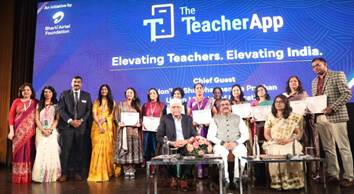
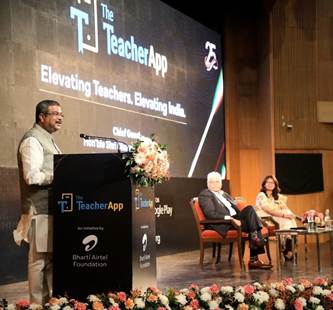
Union Minister for Education, Shri Dharmendra Pradhan, today in New Delhi unveiled the TeacherApp, an innovative digital platform designed to revolutionize education in India by equipping educators with future-ready skills to meet the demands of 21st-century classrooms. The Platform has been developed by Bharti Airtel Foundation, the philanthropic arm of Bharti Enterprises. Vice Chairman of Bharti Enterprises, Shri Rakesh Bharti Mittal; CEO of Bharti Airtel Foundation, Smt. Mamta Saikia, dignitaries from the education sector, school principals, teachers and B.Ed. students were also present at the event.

Image

Addressing the gathering on the theme of “Elevating Teachers, Elevating India,” Shri Dharmendra Pradhan stated that this app will significantly empower teachers through continuous capacity building, leveraging innovative course content, technology, and community-building features. He emphasized that teachers are the real Karmayogis shaping the future generation, and the government is placing unprecedented focus on their continuous capacity building in line with the spirit of NEP 2020.

Image

The Minister further highlighted that enlightened teachers create enlightened students. As India progresses in the knowledge-driven 21st century, teachers will play a pivotal role in identifying future opportunities and ensuring that our youth lead the nation’s growth story, he added.

Based on the on-ground experience and deep understanding of the challenges educators face, The TeacherApp has been conceptualised. This platform will equip them with both time-tested and future-ready skills through innovative digital resources. This user-centric, free app developed with direct inputs from teachers is accessible across the Web, iOS, and Android, ensuring seamless access for educators nationwide. The platform offers over 260 hours of high-quality resources, both created and curated including courses, learning bytes, short videos, podcasts, and interactive webinar formats such as thematic fests, webinars, competitions, and quizzes, all designed to foster future readiness, elevate pedagogical practices, and enhance student engagement in classrooms. Additionally, the app also features live expert sessions that provide practical classroom strategies and aims to build a community of teachers by highlighting their exceptional impact stories. The app combines tech innovation with partnerships across 12 states to transform education.

This platform has a unique section called Teaching Kits comprising content of 900 hours. This feature is designed to support teachers with tools Including teaching videos, project-based learning activities, worksheets, lesson plans, and question banks, among others for classroom delivery. With a mission to transform schools into safe and happy learning spaces, The TeacherApp not only supports teachers’ growth but also empowers schools’ leaders and administrators. Aligned with the National Education Policy 2020, the app aims to build future-ready educators equipped to meet the evolving needs of education.

Shri Rakesh Bharti Mittal, in his address, said that to make India thrive as a global economic leader, it is imperative that the education system equips educators to foster creativity, critical thinking, and innovation. The TeacherApp will offer teachers access to world-class resources and best practices that empower them to deliver exceptional learning experiences, he added.

*****

One Nation One Subscription (ONOS)

Daily writing prompt
What is one thing you would change about yourself?

The Union Cabinet, chaired by Prime Minister Shri Narendra Modi, has approved One Nation One Subscription,  a new Central Sector Scheme for providing country-wide access to scholarly research articles and journal publication. The scheme will be administered through a simple, user friendly and fully digital process. This will be a “One Nation One Subscription” facility for the government higher education institutions and R&D laboratories of the central government.

A total of about Rs.6,000 crore has been allocated for One Nation One Subscription for 3 calendar years, 2025, 2026 and 2027 as a new Central Sector Scheme. One Nation One Subscription will build on and further enhance the scope and reach of the range of initiatives undertaken by the Government of India over the past decade in the domains of education, for maximizing access to quality higher education for the youth of India. This will supplement the ANRF initiative to promote research and development and foster a culture of research and innovation throughout government universities, colleges, research institutions, and R&D laboratories.

The benefits of One Nation One Subscription scheme will be provided to all Higher Educational Institutions under the management of the Central or State Government and Research & Development Institutions of the Central Government, through a national subscription coordinated by a central agency, namely the Information and Library Network (INFLIBNET), an autonomous inter-university centre of the University Grants Commission (UGC). This list covers more than 6,300 institutions, translating into nearly 1.8 crore students, faculty and researchers, who will be able to potentially avail benefits of One Nation One Subscription.

This is in line with the goals of Viksitbharat@2047, National Education Policy (NEP) 2020 and Anusandhan National Research Foundation (ANRF). The initiative will expand access to scholarly journals to a vast diaspora of students, faculty, researchers and scientists of all disciplines, including those in tier 2 and tier 3 cities, thereby promoting core as well as interdisciplinary research in the country. The ANRF will periodically review the usage of One Nation One Subscription and publications of Indian authors of these institutions.

The Department of Higher Education will have a unified portal “One Nation One Subscription” through which the institutions will be able to access the journals. The ANRF will periodically review the usage of One Nation One Subscription and publications of Indian authors of these institutions. The DHE and other Ministries having HEIs and R&D Institutions under their management shall be proactively conducting Information, Education and Communication (IEC) campaigns among students, faculty and researchers of these institutions about availability and method of access to One Nation One Subscription, resulting in improved usage of the facility across the country. The State Governments will also be requested to carry out campaigns at their level for maximizing usage of the unique facility by students, faculty and researchers of all government institutions.

*****

Bureau of Indian Standards addresses need for reliable, affordable medical assistive technology

Daily writing prompt
What is one thing you would change about yourself?

The Bureau of Indian Standards (BIS), India’s National Standards Body is addressing growing need for reliable and affordable medical assistive technology. The Bureau is developing standards for innovative products such as therapeutic footwear, portable ramps, braille displays, and fall detectors, which support individuals with disabilities and enhance their quality of life.

In line with the National Medical Device Policy, 2023, BIS is prioritizing standards development for 214 critical medical devices. These have been identified in consultation with the Department of Pharmaceuticals (DoP). It includes septal closure devices, plasma sterilizers, and phototherapy machines. The initiative is set for phased completion by December 2025.

The Bureau is also driving improvements in healthcare quality, safety, and reliability by developing robust medical device and service standards. By aligning with the Medical Devices Rules, 2017, and the National Medical Device Policy, 2023, BIS is proving to be instrumental in establishing a robust regulatory framework that prioritizes public safety while fostering innovation.

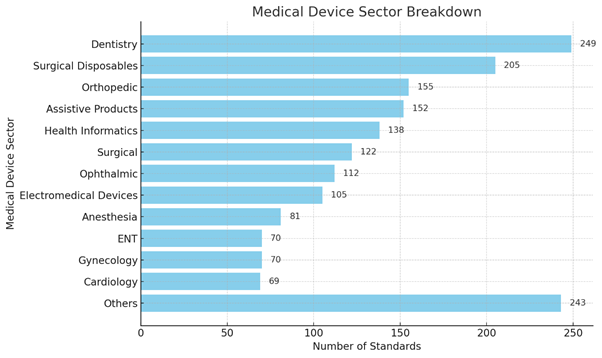
Output image

BIS has published over 1,700 standards for the medical sector, covering specialities such as cardiology, neurology, orthopaedics, ophthalmology, and more. Of these, around 1,200 standards specifically focus on medical devices critical to healthcare, including:

  • Life-saving devices: Cardiac pacemakers, heart valves, ventilators, and haemodialysis machines.
  • Advanced diagnostic tools: X-ray machines, CT scanners, MRI systems, and blood glucose monitors.
  • Assistive technology: Hearing aids, wheelchairs, Jaipur Foot, and tactile pathways for visually impaired individuals.

BIS standards in this sector ensure that Indian medical devices are safe, effective, and globally competitive. These efforts build trust among healthcare providers, consumers, and international stakeholders while solidifying India’s reputation as a leader in healthcare innovation.

Key Standards for Medical Devices:

Some of the key Indian Standards developed by BIS include:

  1. Cardiac Pacemakers: IS 13450 (Part 2/Sec 31): 2021
  2. Heart Valves: IS 17840
  3. Hip and Knee Implants: IS 12375
  4. Ventilators: IS 13450 (Part 2/Sec 12): 2023
  5. Infant Incubators and Radiant Warmers: IS 13450 (Part 2/Sec 19): 2023 for incubators and IS 13450 (Part 2/Sec 21): 2023 for radiant warmers
  6. Haemodialysis Machines: IS 13450 (Part 2/Sec 16) : 2019
  7. Infusion Pumps: IS 13450 (Part 2/Sec 24): 2019
  8. Advanced Diagnostic Tools:
    • X-ray and CT Machines: IS 7620 (Part 1) : 1986
    • MRI Systems: IS 13450 (Part 2/Sec 33) : 2018
    • Ultrasound Devices: IS 13450 (Part 2/Sec 37): 2019
    • ECG: Covered under IS 13450 (Part 2/Sec 25): 2018
  9. Monitoring Devices:
    • Blood Pressure Monitors: IS 13450 (Part 2/Sec 34): 2019
    • Blood Glucose Monitors: IS/ISO 15197: 2013
    • Pulse Oximeters: IS/ISO 80601-2-61: 2017

***

Two-day knowledge sharing workshop under STARS

The Department of School Education & Literacy (DoSE&L), Ministry of Education, hosted a two-day Strengthening Teaching-Learning and Results for States (STARS) knowledge sharing workshop in Bhopal, Madhya Pradesh, from 30th September to 1st October 2024. The workshop, focusing on School-to-Work Transition and Strengthening the Assessment System, was inaugurated by Shri Uday Pratap Singh, Minister of Transport and School Education, Madhya Pradesh. The workshop emphasized the Ministry of Education’s commitment to fostering a robust educational ecosystem that prepares students for the challenges of the future workforce.

Shri Singh during his inaugural speech said that the National Education Policy 2020 emphasises on the overall development of children. He also mentioned that the STARS project will play a crucial role in the transformation of the education system.

Day 1: School-to-Work Transition

Shri Sanjay Kumar, Secretary, DoSE&L, in the inaugural session, provided essential context for the workshop, emphasizing the importance of bridging the gap between education and employment. Shri Vipin Kumar, Additional Secretary, DoSE&L, welcomed all the participants in the workshop providing great scope for learning. Dr. Sanjay Goyal, Secretary, Department of Education, Madhya Pradesh, highlighted the importance of this workshop and cross-learning which can happen between the states through such platforms.

The first panel discussion, moderated by Shri Vipin Kumar, focused on the role of policy frameworks such as National Education Policy 2020, National Curriculum Framework (NCF), and National Credit Framework (NCrF) in school-to-work transitions. Discussions highlighted the integration of skill education into school curricula, the role of the NCF in fostering multidisciplinary learning and adaptability, and the importance of continuous evaluation and updating of curricula to match industry standards. The panel also addressed the promotion of real-world exposure through internships and apprenticeships under NEP and NCrF, the flexibility of learning pathways through NCrF, and the role of policies in bridging the gap between academia and industry.

Prof. Dinesh Prasad Saklani, Director, NCERT, in his presentation, said that departments need to work in integration and not in silos, with a common vision of strengthening the education system for our future generations. He also highlighted the need to align the curriculum with the industry demands to make school-to-work transition more seamless for young learners.

Shri Biswajit Saha, Director, Skills, CBSE, talked about strengthening 21st century skills across CBSE schools and moderated a panel discussion on the challenges and potential solutions in integrating skill hubs into the educational landscape, sharing experiences and best practices, and discussing strategies for effective implementation within schools and communities.

A panel discussion on psychometric analysis and career counselling in skill education was moderated by Dr. Usha Titus, Managing Director, Additional Skill Acquisition Programme, Kerala. The discussion centred on assessing the effectiveness of career counselling programs using data from psychometric assessments, evolving trends in career counselling, and the challenges faced in preparing students for the future workforce.

Dr. Supriya A.R., SPD of Kerala, discussed the partnerships with industry and work-based learning opportunities, leading to a panel discussion moderated by Shri Rajesh Sharma, SPD, Himachal Pradesh. The panel discussed building effective partnerships between schools and industry bodies, collaborating on programs, internships, and job placement efforts, and identifying best practices to enhance work-based learning.

Day 2: Strengthening Assessment System

On the second day, in his opening remarks, Shri Vipin Kumar, Additional Secretary of DoSE&L, discussed  the current effectiveness and need for improvement in assessment models. Smt. Idzes Angmo Kundan, Principal Secretary, Maharashtra, delivered an insightful presentation on Psychometric Analysis and Career Counselling in Skill Education, where she highlighted the 3 P approach to career choice, i.e., Personal interest, Parental approach, and Possible Opportunities.

Shri Dinesh Singh Kushwaha, Director, Public Instructions, Madhya Pradesh, made a compelling presentation on enhancing student outcome through strengthening assessment systems for future education. Dr. Jonas Bertling, Director of Educational Testing Service (ETS), discussed innovations in educational assessment. Dr. Maj. Vishal Sharma, Secretary, Himachal Pradesh Board for Secondary Education, highlighted innovative assessment practices that empower students for future education.

A presentation on VSK implementation in the state of Chhattisgarh was presented by Shri Pardeshi Siddharth Komal, Principal Secretary, Chhattisgarh. He moderated a panel discussion on VSK Modes and Integrating Assessment Outcomes for Informed Decision-Making. The panel provided insights on objectives and components of VSK including data collection and analysis, and strategies for integrating assessment outcomes with learning objectives.

Shri Ashish Modi, Director, Secondary Education, Rajasthan, made a compelling presentation on the importance of an assessment cell. The presentation was followed by a panel discussion on the theme of Strengthening Assessment Cells in states, which was moderated by Dr. M.K. Shanmuga Sundaram, Principal Secretary – Basic Education, Uttar Pradesh. The panel discussed the role of assessment cells in enhancing educational effectiveness, innovative practices adopted by these cells and the challenges faced along with strategies for mitigation.

The workshop concluded with key takeaways summarized by Shri Vipin Kumar. He underlined strategies for enhancing assessment systems and school-to-work transitions.

The event was graced by Shri Nilambuj Sharan, Senior Economic Advisor, Ministry of Skill Development and Entrepreneurship, Government of India; Shri Deepak Paliwal, Joint Director, PSSCIVE; Col. Santosh Kumar, Director, NCVET; Shri Narayanan Ramaswamy, National Head (Education and Skilling), KPMG; Smt. R. Vimala, SPD, Maharashtra; Smt. Ananya Das, SPD of Odisha; Shri Somit Shrivastava, Joint Commissioner (Per), Kendriya Vidhyalaya Sangathan; Shri Nitin Kapoor, CEO and Head, NSDC Academy; Shri Marvell Doss, Regional Director, Regional Directorate of Skill Development and Entrepreneurship, Bhopal; Shri Vibhash Trivedi, General Manager, Strategy and Operations, Skill Council for Green Jobs; Shri Ambrish Datta, Founder & CEO of Skillsvarsity; Shri Rohit Tripathi, Additional Project Director, Samagra Shiksha, Uttar Pradesh; Shri Deepak Rai, State Assistant Director – OSEPA, Odisha; Shri Manoj Padhi, Director SCERT, Odisha and Shri Rahul Rekhawar, Director, SCERT, Maharashtra.

*****

Fireside chat organised by US India Strategic Partnership Forum

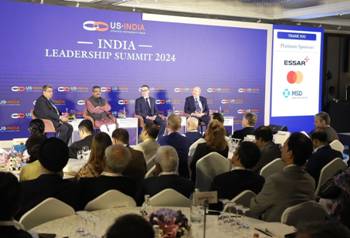
Union Minister for Education, Shri Dharmendra Pradhan, today participated in a fireside chat organised by the US India Strategic Partnership Forum as part of the India Leadership Summit 2024. He was joined by Mr. Ryan Roslansky, the CEO of LinkedIn, and Mr. Marvin Krislov, the President of Pace University.

Image

Speaking at the event, Shri Pradhan said that as the National Education Policy 2020 moves towards completing five years, India is giving unprecedented impetus to embracing new technologies, learning in Indian languages, and enhancing research and employability skills. He shared his thoughts on India’s progress in various aspects of education, which is driving learners towards competency and knowledge-based enterprises. The Minister also highlighted how India can embrace new opportunities for developing a future-ready, responsible generation of global citizens.

Shri Pradhan further stated that the world needs to come together to solve global challenges, and India is ready to play its role. From opening doors for foreign universities to set up campuses in India to moving towards a paradigm of prioritizing competency over degrees, India will fulfill the aspirations of its society and become a growth engine for the world, he added.

*****

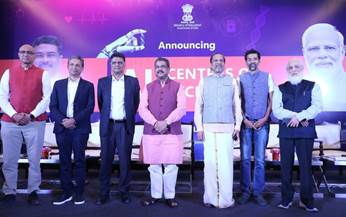
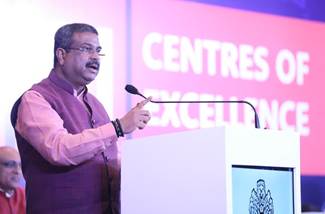
3 Centres of Excellence in AI in Healthcare, Agriculture and Sustainable Cities

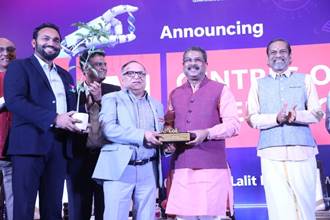
Union Minister for Education, Shri Dharmendra Pradhan, announced the establishment of three AI Centres of Excellence (CoE) focused on Healthcare, Agriculture, and Sustainable Cities in New Delhi today. Secretary, Department of Higher Education, Shri K. Sanjay Murthy; Co-chair of the Apex Committee and Founder and CEO of Zoho Corporation, Shri Sridhar Vembu; Chairman of the National Educational Technology Forum, Prof. Anil Sahasrabudhe; MD, PeakXV Partners and Surge, Shri Rajan Anandan; CEO, Khosla Labs, Shri Srikanth Nadhamuni; Head, Cropin AI Labs, Dr. Praveen Pankajakshan; senior officials from various ministries of the Government of India, Directors of IITs, Heads of higher educational institutions (HEIs), industry leaders, and start-up founders were also present at the event. Shri Pradhan presented a sapling and a Plaque to the representatives of AIIMS and IIT Delhi, IIT Ropar, and IIT Kanpur, which will lead the CoEs, for their commitments and support. Respective Apex Committee members of the AI-CoE Healthcare, Agriculture and Sustainable Cities explained the scope and extent of the projects.

While speaking at the event, Shri Dharmendra Pradhan hoped that the three AI-CoEs would emerge as temples of global public good. With the unveiling of the Centres, significant strides have been taken to strengthen Bharat’s credentials in the global AI landscape, he added. Shri Pradhan also said that with the talent and zeal that Bharat is blessed with, in the times ahead, these CoEs will be a key element of global public policy and also emerge as solution providers of the world.

Image

He complimented the apex committee led by Shri Sridhar Vembu for their meticulous and sincere efforts towards the implementation of these COEs in AI in the top academic institutions of the country. Expressing his gratitude to Prime Minister Shri Narendra Modi for his vision to establish India as a global hub of AI, he added that these CoEs in AI will give further impetus to the start-up ecosystem in the country, help create a new generation of job and wealth creators, and establish new paradigms of global public good.

Shri K. Sanjay Murthy, in his address highlighted that these CoEs are not just institution-based but are designed to serve the entire country. Stressing the importance of interdisciplinary research, he mentioned that with the right kind of collaboration among like-minded resources, optimum results can be achieved. He noted that the competitive-based challenge methods developed in educational institutions have ensured progress toward resolving common problems. He also expressed his gratitude to Shri Dharmendra Pradhan for his leadership and vision in bringing the entire project to fruition.

Dr. Sridhar Vembu, in his address, highlighted how these projects will holistically benefit the health of villages, cities, and the people of the country. He emphasized the importance of nurturing the country’s talent pool to ensure its members flourish and serve the nation in the coming 10 to 20 years. He added that the CoEs will bootstrap numerous efforts, create companies, nurture talent, and generate opportunities for our talent pool.

The genesis, implementation and insights into development so far in the AI-CoE was presented by Smt. Saumya Gupta Joint Secretary, Department of Higher Education, Ministry of Education. A short film on the theme, Make AI in India and Make Al work for India, was also shown during the event.

To realize the vision of “Viksit Bharat,” these three CoEs for Artificial Intelligence (AI) will be led by top educational institutions, in consortium with industry partners and startups. They will conduct interdisciplinary research, develop cutting-edge applications, and create scalable solutions in these three areas. This initiative aims to galvanize an effective AI ecosystem and nurture quality human resources in these critical fields.

As part of the vision to “Make AI in India and Make AI work for India,” the establishment of these centres was announced under Para 60 of the Budget Announcement for 2023-24. In alignment with this, the Government has approved the creation of the three AI Centres of Excellence, with a total financial outlay of Rs. 990.00 Crore over the period of FY 2023-24 to FY 2027-28.

To oversee the implementation of this initiative, an industry heavy Apex Committee has been constituted, co-chaired by Dr. Sridhar Vembu.

*****

Shri Dharmendra Pradhan interacts with scholars of five newly classified classical languages

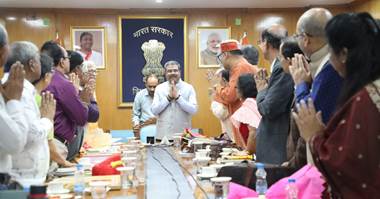
Union Minister for Education, Shri Dharmendra Pradhan, today interacted with the scholars of five newly classified classical languages – Prakrit, Pali, Marathi, Bangla, and Assamese. Chairman, Bharatiya Bhasha Samiti, Shri Chamu KrishnaShastry; Chairman, UGC, Shri M. Jagadesh Kumar; academicians, scholars and officials of the Ministry were also present at the event. The scholars expressed their happiness and thanked Prime Minister Shri Narendra Modi for including these beautiful Indian languages into the list of classical languages. They also extended their support towards promoting and enriching these languages.

Image

Speaking on the occasion, Shri Dharmendra Pradhan said that the government is making all-round efforts to promote learning in Indian languages as well as celebrate, honour, and preserve the linguistic heritage of the country, in line with the spirit of NEP 2020.

Image

Shri Pradhan also mentioned that Prime Minister Shri Narendra Modi has always said that all languages of the country are Indian languages. He said that the Government is taking all steps to strengthen and facilitate learning in all Indian languages. He also said that he would remain committed to facilitating learning in the mother language, boosting multilingualism with equal emphasis on all Indian languages, including strengthening their international presence.

Shri Pradhan also said that the soul of India lives through its languages. The government is also working on building an international presence of Indian languages, he added.

*****

7-Day tour to strengthen education ties with Singapore and Australia


In a significant move to enhance bilateral cooperation in the education sector, Union Minister for Education Shri Dharmendra Pradhan will visit Singapore and Australia from 20 to 26 October 2024. The visit is expected to foster collaboration, participation, and synergy in critical areas of mutual interest in education.

During the two day visit in Singapore, Shri Dharmendra Pradhan will address the members of Indian diaspora on 20th October 2024. The next day, Shri Dharmendra Pradhan will meet the Prime Minister of Singapore, H.E. Lawrence Wong; Deputy Prime Minister, H.E. Gan Kim Yong; Education Minister, H.E. – Chan Chun Sing; and Foreign Minister H.E. Vivian Balakrishnan. Shri Pradhan will visit the National University of Singapore ranked No.1 in Asia. He will also visit a local secondary school to discuss the scope of syllabus integration, keeping AI in focus. He will meet academicians, eminent representatives from alumni of IITs and IIMs and engage in discussions related to the education ecosystem of both countries.

During the 3-day visit to Australia, on 23rd October 2024, the Minister, in Melbourne, will meet Hon. Jason Clare MP, Minister for Education. Shri Pradhan will also deliver the Plenary address at the Australian International Education Conference. The Minister will be visiting the South Melbourne Primary School which is known for integrated approaches to learning.

He will visit ‘Discovery to Device’ at RMIT University which is a unique centre for MedTech prototyping and manufacturing. The visit will explore collaborative approaches to the commercialisation of medical technologies and role of industry-academia linkages in driving innovation..

Shri Pradhan will meet Hon. Jacinta Allan MP, Premiere of Victoria along with Australian Education Minister Hon Jason Clare MP. He will also visit Monash University to observe their Innovation Lab and Centre for Nano-fabrication.During his stay in Melbourne, Shri Pradhan will also interact with senior academics of Indian origin.

To explore opportunities for partnerships in educating early childhood education workforces, Shri Pradhan will visit Auburn Long Day Child Care Centre in Sydney on 24th October 2024. The Minister will interact with the representatives of the Innovative Research Universities (IRU) and will attend the 2nd Australia India Education and Skills Council.

On 25th October 2024, he will visit the Granville South Creative and Performing Arts High School.Shri Pradhan will visit the site of the Macquarie Park Innovation District (MPID). As home to over 180 multinational companies, MPID facilitates the practical application of research across telecommunications, digital industries, medical technology and pharmaceuticals for economic benefit.

Later in the day, Shri Pradhan will interact with Indian research students hosted by the Group of Eight, Australia’s most research intensive universities.

Shri Pradhan will visit the UNSW Energy Institute and the Trailblazer for Recycling and Clean Energy (TraCE) at the Tyree Energy Technologies Building, Kensington. Here, he will observe real-world examples of practical research applications with commercial impact through the UNSW Energy Institute, which brings together world-leading researchers and the energy industry.

He will also visit UTS Moore Park Sports and Exercise Precinct to explore cooperation in sports education and sports research. UTS’s Moore Park Precinct is a state-of-the-art teaching, research and sporting facility.

*****

India and Singapore strengthening partnership through ‘Talent, Resource & Market’

Union Minister for Education, Shri Dharmendra Pradhan met the Prime Minister of Singapore, H.E. Lawrence Wong today.

The Ministers had meaningful conversations on elevating and expanding the bilateral cooperation in school education, vocational education and research, between the two nations. The discussions focused on strengthening the partnership through three key pillars—‘Talent, Resource & Market.’

Shri Pradhan emphasized that India views Singapore as a trusted knowledge partner, particularly in advancing deep tech, startups, and innovation ecosystems. 

Shri Pradhan also highlighted that Prime Minister Narendra Modi and Prime Minister Mr. Wong have outlined a robust framework to elevate India-Singapore cooperation into a comprehensive partnership, including collaboration in critical and emerging sectors.

Earlier in the day, Shri Pradhan met his counterpart, Singapore’s Minister for Education, Mr. Chan Chun Sing, to discuss strengthening bilateral cooperation across various areas of education. Shri Pradhan emphasized the significance of the National Education Policy 2020 in facilitating the internationalization of India’s education system. The two ministers explored avenues for overseas internship programs, allowing Indian students to gain practical experience in Singaporean companies.

To further strengthen cultural connect between students of both countries the possibility of twinning of schools in India and Singapore was discussed. Joint Research collaboration in areas of mutual interest like deep tech, medicine, advance materials, etc. was also discussed.

They also deliberated on fostering academic and research collaboration through the twinning of schools and universities in both countries. Shri Pradhan highlighted opportunities for collaboration between Singapore’s National Institute of Education and NCERT in areas such as curriculum development, pedagogy, and teacher capacity-building.

Extending an invitation to Minister Chan to visit India, Shri Pradhan expressed his commitment to advancing shared goals and enhancing educational ties between the two nations.

Shri Pradhan also met with Singapore’s Minister for Foreign Affairs, Mr. Vivian Balakrishnan, to discuss deepening the India-Singapore Knowledge Partnership.

Both leaders emphasized the importance of working closely to elevate bilateral cooperation in education and expand collaborative efforts to achieve shared objectives.

Shri Pradhan also visited the National University of Singapore and met with Prof. Tan Eng Chye, President of the university. They discussed leveraging complementary strengths to build knowledge bridges, strengthen academic and research collaborations, and deepen engagements between NUS and top Indian higher education institutions across all academic fronts.

Shri Pradhan emphasized that NUS and Indian HEIs can collaborate to create value in areas such as deep start-ups, healthcare, advanced materials, digitalization, and sustainability, among others. The Minister also highlighted that a key focus area of NEP 2020 is enhancing access to quality higher education for the youth of India and the internationalization of its education system.

On the first day of his visit on 20th October 2024, Shri Pradhan had engaged with the members of the Indian diaspora in Singapore. He highlighted NEP 2020’s role in upskilling India’s youth and the enormous scale and magnitude of education in India.

The Minister’s visit to Singapore, followed by a trip to Australia, from 20 to 26 October 2024, aims to foster collaboration, participation, and synergy in critical areas of mutual interest in education.

*****