Australian International Education Conference

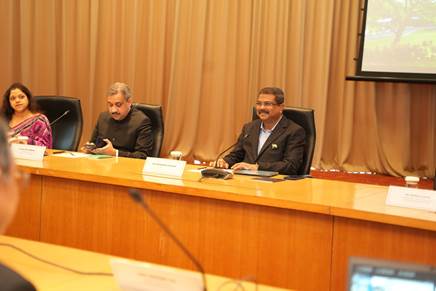
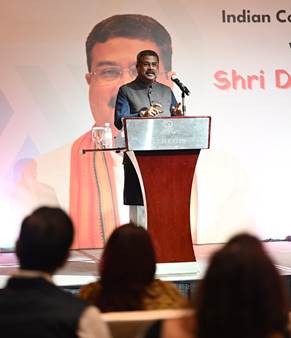
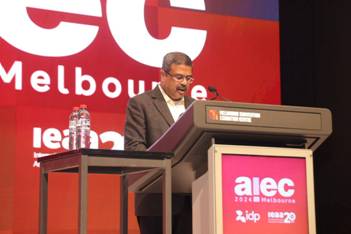
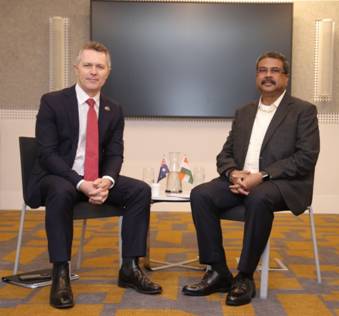
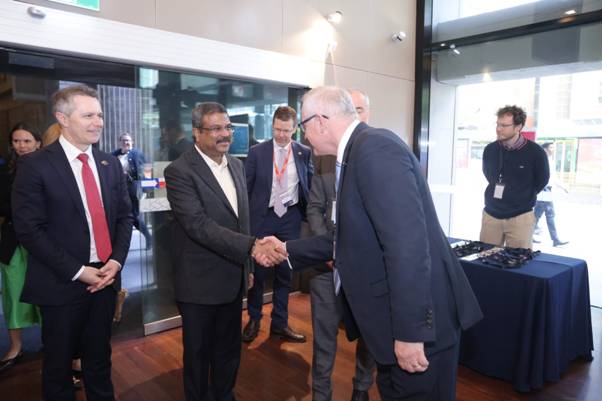
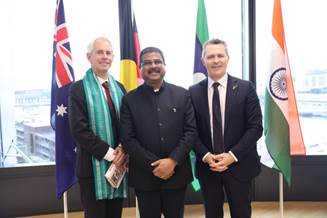
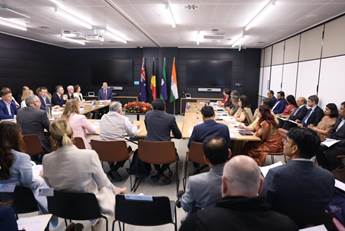
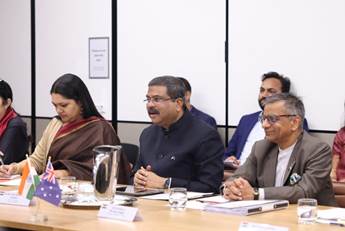
Union Minister for Education, Shri Dharmendra Pradhan, delivered the plenary speech at the Australian International Education Conference in Melbourne, Australia, today. Shri Pradhan also held a Bilateral Meeting with his counterpart Minister for Education, Government of Australia, Mr. Jason Clare MP. Members of the Indian delegation, heads of the universities of both countries, and other dignitaries were also present at the event.

Image

Shri Pradhan in his speech commended the strong and evolving partnership between India and Australia that ties the history of the two countries and will also pave the way for a brighter future together. He also reaffirmed the further strengthening of these ties under the visionary leadership of Prime Minister Shri Narendra Modi and Prime Minister of Australia Mr. Anthony Albanese.

Shri Pradhan also highlighted that in the 4th Industrial Revolution, education must prepare students to be creators and managers of technology. India’s National Education Policy provides a framework emphasising digital literacy, soft skills, critical thinking, and interdisciplinary studies to adapt to evolving job markets, he added.

Shri Pradhan emphasized that cooperation in education is the fulcrum of the India-Australia relationship. He stated that the main objective is to enhance India’s education system into a competency-based framework, focusing on skills-based education as outlined in India’s National Education Policy (NEP).

The Minister spoke about how NEP 2020 has transformed India’s learning landscape into a powerhouse of possibilities, the enduring India-Australia ties and the remarkable strides made in education cooperation powered by NEP 2020. The establishment of Australian university campuses in India is just the beginning, with much more potential to be realized, he added.

He also added that together, the countries can advance knowledge, leverage technology for global challenges, and create endless opportunities for innovation and entrepreneurship for the students.

The Minister also expressed that as a ‘Vishwa-Bandhu’, India is committed to being a trusted partner in human-centric development. The idea is to build and nurture global citizens, contributing to a brighter future for the next generation, he said.

Mr. Jason Clare MP, in his speech, emphasised the importance of a good education system that can change more than just lives. It can change nations, he added. Commending India’s education systems, he said that by 2035 one in four people around the world who get a university degree will get it in India. He mentioned how Australian universities like Deakin had been in India for 30 years and now Wollongong has one campus. He expressed his gratitude to Shri Pradhan for encouraging these initiatives. He also praised the work the six Innovative Research Universities are doing by exploring options for a consortium campus in India.

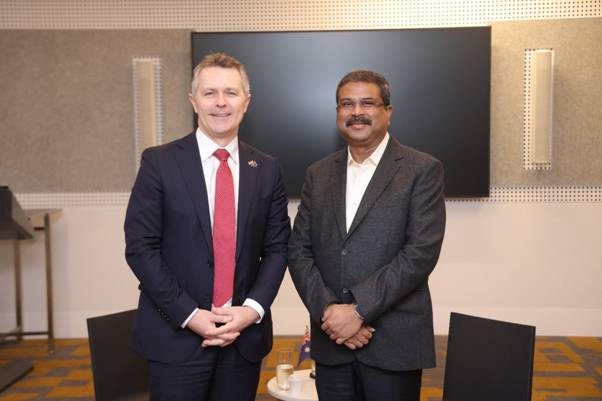
Earlier in the day, Shri Pradhan also met Mr. Jason Clare MP for a discussion regarding shared priorities of India and Australia in early childhood care, capacity building of teachers, and the potential for school twinning initiatives. Building on the strong institutional linkages between Indian and Australian higher education institutions, they agreed to further strengthen the partnership in critical and emerging technologies. They also explored the possibility of establishing branch campuses of Australian universities in India.

During these discussions, Shri Pradhan also met the Assistant Minister of Foreign Affairs, Mr. Tim Watts MP.

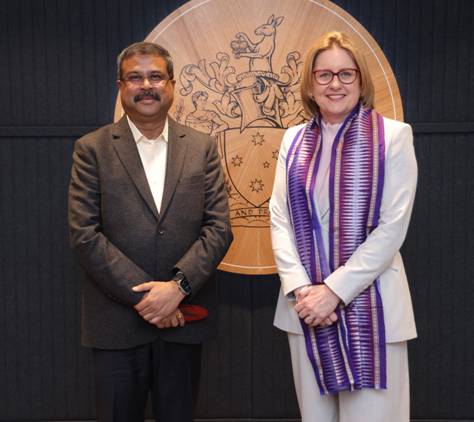
Shri Pradhan met Mrs. Jacinta Allan MP, Premier of Victoria, Australia. He highlighted that Victoria is home to the largest Indian diaspora in Australia. They had engaging conversations on ways to strengthen institutional linkages of schools and universities in Victoria with India.

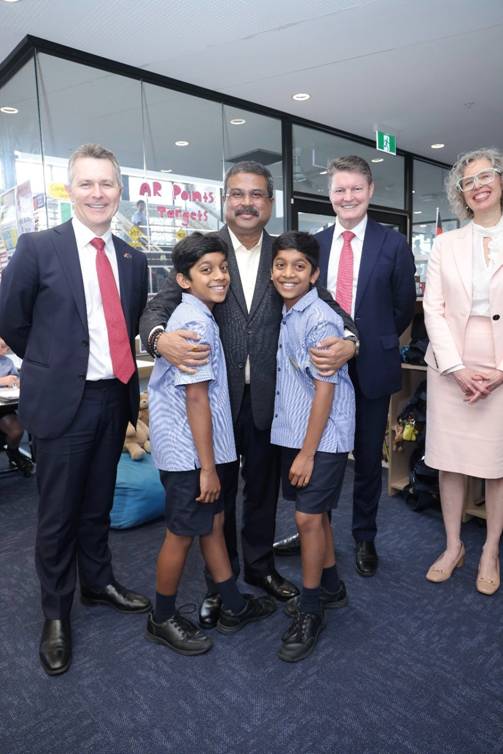
Shri Pradhan also visited South Melbourne Primary School and engaged with young learners. He explored the school’s innovative approaches to early childhood education. He emphasized how NEP 2020 in India places a strong focus on Early Childhood Care and Education (ECCE), which is essential for a child’s holistic development. He reaffirmed his commitment to adopting global best practices to make early learning universal, enjoyable, and stress-free.

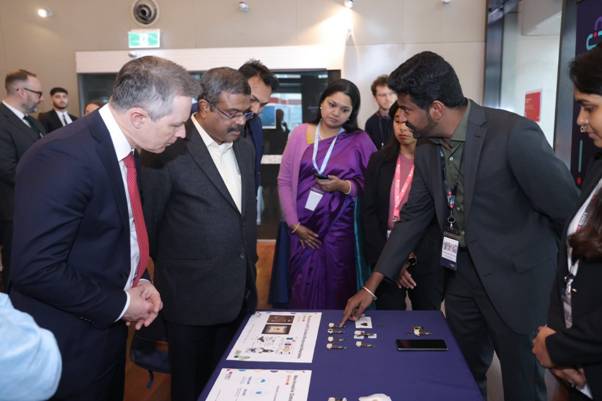
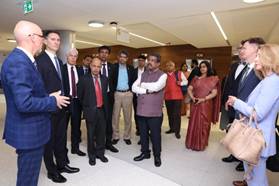
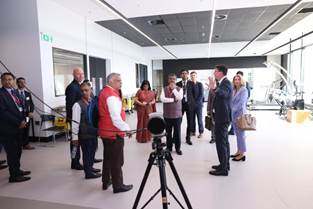
Shri Dharmendra Pradhan visited the Royal Melbourne Institute of Technology (RMIT), a hub for technology, design, and enterprise. He explored their ‘Discovery to Device’ med-tech facility, fast-tracking ideas to products. He also appreciated the university’s emphasis on industry experience, hands-on skills, and focus on transforming ideas into products. Shri Pradhan explored how RMIT can partner and work with top Indian HEIs to equip Indian students with future skills and jobs.

Discovery to Device transforms ideas into products, through prototyping and scale-up manufacture, to create real-world impact.

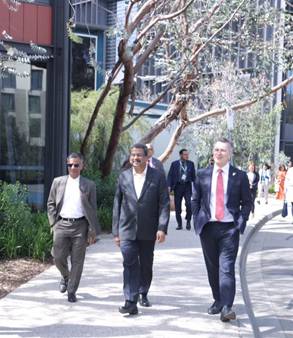
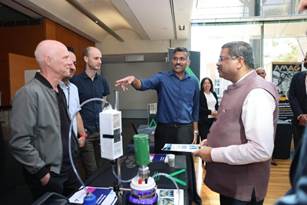
Shri Pradhan also visited Monash University, which has notably welcomed Indian students since the late 1960s. Shri Pradhan received key insights into the university’s research & innovation ecosystem and their plans to strengthen educational ties with Indian institutions through its New India Plan. He also toured the Innovation Lab & Center for Nanofabrication— commending their impressive facilities supporting talent in driving ideas into impactful innovations.

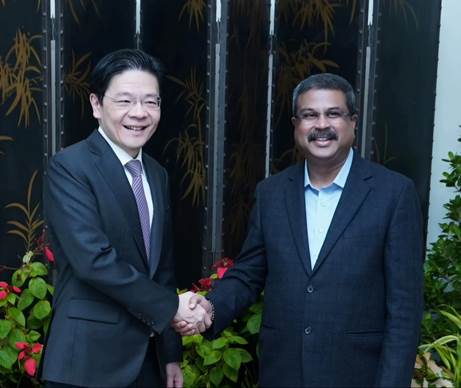
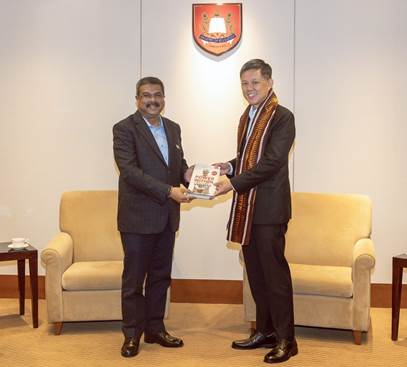
In a significant move to enhance bilateral cooperation in the education sector, Shri Pradhan is visiting Australia from 22 to 26 October 2024. The visit is expected to foster collaboration, participation, and synergy in critical areas of mutual interest in education. Earlier this week from 20-21 October, Shri Pradhan visited Singapore and met the Prime Minister, Deputy Prime Minister, Education Minister and other dignitaries to expand bilateral cooperation in skill-based education and research.

*****

2nd Australia-India Education and Skills Council (AIESC) meeting in Sydney

Union Minister for Education, Shri Dharmendra Pradhan, attended the 2nd Australia-India Education and Skills Council (AIESC) meeting in Sydney, Australia today alongside Minister for Education, Government of Australia, Mr. Jason Clare MP and Minister for Skills and Training, Government of Australia, Mr. Andrew Giles MP.

Image

Addressing the event, Shri Pradhan emphasized that the AIESC meeting has become a crucial platform for strengthening knowledge bridges, advancing shared priorities in education and skills development, breaking new ground, and envisioning a brighter future for Australia and India.

Shri Dharmendra Pradhan said that education and skills will be the driving force for building economic prosperity for India and Australia and also forging lasting connections between our people and institutions.

Image
Image

The Ministers held discussions focused on forecasting future workforce, education needs, bridging skill gaps through education and training, and strengthening research collaboration between the two countries’ higher education institutions. He hoped that AIESC would further strengthen the bilateral partnership between Australia and India at all levels of education: school, skills and higher education. He also informed that the next AIESC meeting will be in India in 2025.

Earlier in the day Shri Pradhan interacted with high level administrators from Innovative Research Universities (IRU) – a coalition of Universities in Australia, where he engaged in enriching discussions with its members. During his visit, he learned about their collaborative approaches to education delivery and efforts to facilitate impactful research for society. The Minister also explored the scope for potential collaborations between the IRU and Indian higher education institutions to advance the education agenda. The IRU is a group of Australian universities committed to inclusive excellence in education and research that advances the communities.

Image

In a significant move to enhance bilateral cooperation in the education sector, Shri Pradhan is visiting Australia from 22 to 26 October 2024. The visit is expected to foster collaboration, participation, and synergy in critical areas of mutual interest in education. Earlier this week from 20-21 October, Shri Pradhan visited Singapore and met the Prime Minister, Deputy Prime Minister, Education Minister and other dignitaries to expand bilateral cooperation in skill-based education and research.

*****

Macquarie Park Innovation District at Macquarie University, Sydney

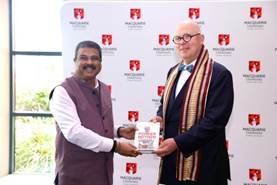
Union Minister for Education, Shri Dharmendra Pradhan, visited the Macquarie Park Innovation District at Macquarie University, Sydney, Australia. He was received by the Vice-Chancellor and President of the University Prof. S. Bruce Dowton and other officials.

Image
Image

Shri Pradhan explored how the University supports researchers and entrepreneurs in developing and scaling their ideas. He appreciated the University’s unique approach to collaborating with industry experts and communities to create a holistic learning experience. The Minister also noted that the University has been partnering with Indian educational institutions and industries. He emphasized that strong industry-academia links like these are crucial for driving innovation and preparing students for success.

Image

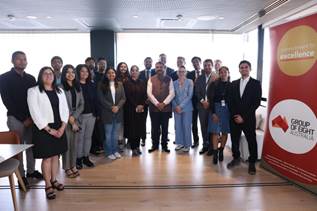
Later in the day, Shri Pradhan interacted with Indian students studying across Australia in an event held by the Group of Eight. He noted that they are working on cutting-edge research in robotics, chemicals, astrophysics, superconductivity, AI in manufacturing, healthcare, med-tech, climate change, water management and urban planning. He highlighted that research collaboration is the bedrock of collaboration between Australia and India and said that the insightful interaction has given him several points to ponder and has also convinced him that broader and deeper research collaboration is required between both countries. He appreciated and encouraged all the Indian students in Australia to contribute passionately to the future of Australia and India.

Image
Image

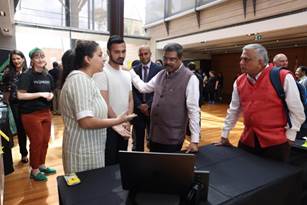
Shri Pradhan visited the campus of University of New South Wales (UNSW). He congratulated UNSW on completing 75 years and noted that Indian students have been in UNSW since its third year of inception. Shri Pradhan also interacted with start-ups incubated by various schools of the UNSW. He explored their products and services and appreciated their spirit and passion for innovation and change. He encouraged the start-ups to tailor their solutions to Indian society and the market. He also interacted with Indian students in UNSW.

The Minister visited UTS Moore Park, a sporting precinct housed at the University of Technology, Sydney. He noted that this is first-of-its-kind in Australia where university programs in sports are integrated within elite sporting facilities, providing a fertile base for a holistic learning experience in sports management, sports research, and allied health. He also discussed potential partnerships between UTS and Indian higher education institutions to deliver cutting-edge sports management and research programs.

Image

In a significant move to enhance bilateral cooperation in the education sector, Shri Pradhan is visiting Australia from 22nd to 26th October 2024. The visit is expected to foster collaboration, participation, and synergy in critical areas of mutual interest in education. Earlier this week from 20-21 October, Shri Pradhan visited Singapore and met the Prime Minister, Deputy Prime Minister, Education Minister and other dignitaries to expand bilateral cooperation in skill-based education and research.

*****
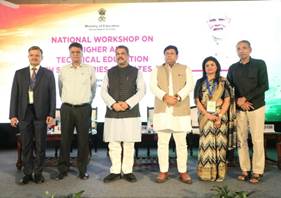
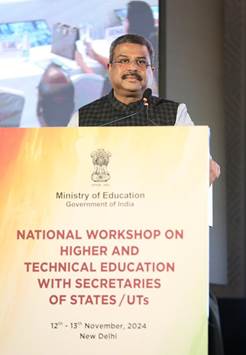
National Workshop on Higher and Technical Education with Secretaries of States/UTs

Union Minister for Education, Shri Dharmendra Pradhan, inaugurated a two-day National Workshop on Higher and Technical Education with Secretaries of States/UTs in New Delhi today. Minister of State for Education and the Development of North Eastern Region, Dr. Sukanta Majumdar, was also present at the event. Secretary, Department of Higher Education, Shri K. Sanjay Murthy; Additional Secretary, Department of Higher Education, Shri Sunil Kumar Barnwal; Chairman, UGC, Prof. M. Jagadesh Kumar; Joint Secretary, Department of Higher Education, Smt. Manmohan Kaur; Secretaries of States/UTs, academicians, Head of the Institutes, and officials of the Ministry were also present.

Image

While addressing the event Shri Pradhan said that the workshop will serve as a platform for rigorous academic brainstorming, particularly how education can bring substantive improvements in furthering ease of living, enhancing per capita income and achieving national priorities set by Prime Minister Shri Narendra Modi. He also said that the country has to become a producing economy by utilising the opportunities presented by Industry 4.0 and leapfrog and develop the education infrastructure that surpasses global standards. Education infrastructure is a multi-dimensional concept and beyond just developing brick-and-mortar structures, he added.

Image

The Minister suggested five key areas for the academic leaders and administrators to focus on. These were strengthening public universities through innovative modes of funding; setting up think tanks for aligning and tailoring curriculum as per the demand of industry and also as per the needs and aspirations of states/UTs; adopting a multidisciplinary approach to research and innovation for assuming leadership in solving global problems; promoting Academic Leadership Development Programmes in each state/UT through collaborations with eminent central/state institutions; and reviving vibrancy of campus life through sports, debate, poetry, drama, performing arts (already creditized through NEP) and giving primacy to these non-scholastic areas.

Shri Pradhan also emphasised the importance of teaching in Indian languages. Stressing the accountability towards the students of the country, he said everyone will have to work together to establish India’s global leadership in education.

Dr. Sukanta Majumdar, in his address, expressed his gratitude to Prime Minister Shri Narendra Modi for his vision to reshape India’s educational landscape through the National Education Policy (NEP) 2020. NEP is not just a policy; it is a roadmap to make India a global knowledge superpower, he added. Highlighting the five pillars of NEP 2020, which are access, equity, quality, affordability, and accountability, Dr. Majumdar said that these are the foundation for a modern, inclusive, and globally competitive education system. He urged the states and UTs to adopt NEP 2020 in both its letter and spirit. By implementing the policy, states can foster economic growth, build a skilled workforce, and enhance innovation and technological advancement, he said.

Shri K. Sanjay Murthy, in his address, set the context for the workshop. He briefly described the 14 technical sessions that would be held during the event. He also highlighted the key factors that emerged from serious deliberations over the past three years and mentioned that twenty guidelines have been developed, providing a framework for the universities. Additionally, he expressed his gratitude to Shri Dharmendra Pradhan for spearheading the implementation of NEP 2020 and for offering valuable guidance through his insights.

The objective of this workshop is to disseminate various approaches and methodologies to implement NEP 2020; effectively articulate the roadmap and implementation strategies, fostering knowledge exchange; provide a common platform for all stakeholders to come together and network for effective and smooth implementation of the NEP 2020 and encourage its adoption in state institutions, paving the way for a more robust, inclusive, and globally competitive education system across India.

Adopting NEP 2020 offers numerous benefits for states’ higher education systems. It can drive economic growth by creating a more skilled workforce, attracting investments, and boosting development. By aligning higher education with international standards, it enhances the global competitiveness of states’ education systems, potentially attracting more international students and collaborations. The policy’s emphasis on research and a multidisciplinary approach fosters innovation ecosystems within states, leading to technological advancements and economic benefits.

Successful implementation of NEP 2020 in higher education requires active participation and commitment from state governments. By leveraging central government schemes and aligning state policies with NEP 2020, states have the opportunity to transform their education systems to meet the challenges of the 21st century while preserving their unique cultural identities.

During this two-day workshop, 14 technical sessions on the themes of NEP 2020 Implementation – Challenges and Roadmap; Technology in Education; Collaboration in Education; Digital Governance; Capacity Building & Leadership; and Financing of Higher Education are going to be held by eminent panellists.

*****
Johns Hopkins University and Gupta-Klinsky India Institute

Union Minister for Education Shri Dharmendra Pradhan today met with a high-level delegation led by Mr. Ronald J. Daniels, President, Johns Hopkins University (JHU), Baltimore, Maryland, USA. The delegation also included officials from Gupta Klinsky India Institute (GKII), an internal unit of JHU with a mandate to bring the JHU community with Indian partners through research, education, policy and practice.

Secretary, Higher Education, Shri K. Sanjay Murthy; senior officials of the Department of Higher Education, Ministry of Education and Ministry of External Affairs attended the meeting.

Image

Shri Pradhan highlighted the transformative opportunities enabled by the National Education Policy 2020 (NEP 2020), which has paved the way for academic collaborations and advancing India’s education sector. Shri Pradhan appreciated the university’s commitment towards building robust partnerships with Indian HEIs, contributing to the global exchange of knowledge, particularly in the areas of dual and joint degree programmes, two-way mobility of students and faculty, and research partnerships in emerging fields like data science, artificial intelligence, and futuristic technologies. He emphasised the potential for these collaborations to foster innovation and entrepreneurship among students in both nations.

The discussion centred on strengthening academic and research collaborations between JHU and premier Indian Higher Education Institutions (HEIs). The delegation actively discussed establishing an offshore JHU campus in India.

Image

The visit by Mr. Daniels and the delegation highlights the growing significance of India-US educational cooperation. As part of their multi-city tour of India, the delegation will visit various Indian university campuses and engage with key government officials, academic leaders, and embassy representatives to strengthen JHU’s operations in India and advance the internationalisation efforts.

The 12-member delegation included distinguished academicians and administrators such as Fritz W. Schroeder, Senior Vice President for Development and Alumni Relations; Alexander Triantis, Dean of the Carey Business School; Judd Walson, Chair of the Department of International Health at the Bloomberg School; Sridevi Sarma, Vice Dean of Graduate Education at the Whiting School of Engineering; Jon Goldstein, Senior Associate Director of Development for International Programs; and Amita Gupta, Director of the Division of Infectious Diseases at Johns Hopkins University and Co-Founder of the Gupta-Klinsky India Institute (GKII).

Prominent Indian-origin faculty from JHU, such as Mathuram Santosham, Professor of Paediatrics and International Health, and Chirag Parikh, Professor of Medicine and Director of the Division of Nephrology, also participated. The delegation further included GKII officials and members of its advisory board, including Raj and Kamla Gupta, Deepak Raj, Kunal Pal, and Neetisha Besra.

*****
Self-shocks turn crystal to glass at ultralow power density

Daily writing prompt
Who are your current most favorite people?

Researchers have shown that utilizing shallow power, a crystalline material called indium selenide can “shock” itself to a glassy phase. This transformation lies at the heart of memory storage in devices like CDs and computer RAMs. It uses a billion times less electricity than the traditional melt-quench process for converting crystal to glass, and the discovery might revolutionise data storage in gadgets ranging from cell phones to computers. 

Glasses function similarly to solids but lack the regular periodic arrangement of atoms. To avoid the glass from getting too organized, a crystal is liquefied (melted) and then rapidly chilled (quenched) during the manufacturing process. This melt-quench technique is also employed in CDs, DVDs, and Blu-ray discs, where laser pulses are used to rapidly heat and quench a crystalline material to the glassy phase in order to write data; reversing the process erases data. Computers use similar materials known as phase-change RAMs, in which information is stored depending on the high versus low resistance provided by the glassy and crystalline phases.

The difficulty is that these devices consume more power, particularly during the writing process. The crystals must be heated to temperatures exceeding 800oC and then rapidly cooled. If it is possible to convert the crystal directly to glass without using the intermediate liquid phase, the amount of power required for memory storage can be greatly reduced. 

 A team of researchers from the Indian Institute of Science (IISc), Bangalore, University of Pennsylvania School of Engineering and Applied Science (Penn Engineering), Pennsylvania and Massachusetts Institute of Technology (MIT), Harvard, USA discovered that when electric current was passed through wires made of indium selenide, a 2D ferroelectric material, long stretches of the material transformed into glass. These breakthrough findings were published in the journal Nature. The research was supported by ANRF (erstwhile SERB) established through an Act of Parliament: ANRF, Act 2023.

The scientists unearthed that when a continuous current is passed parallel to the material’s 2D layers, they slide against each other in various directions. This results in the formation of many domains – tiny pockets with a specific dipole moment enclosed by defective regions that separate the domains. When multiple defects intersect in a small nanoscopic region, like too many holes punched in a wall, the structural integrity of the crystal collapses to form glass locally. 

These domain boundaries are like tectonic plates. They move with the electric field, and when they collide against each other, mechanical (and electrical) shocks are generated akin to an earthquake. This earthquake triggers an avalanche effect, causing disturbances far away from the epicentre, creating more domain boundaries and resulting glassy regions, which in turn spawns more earthquakes. The avalanche stops when the entire material turns into glass (long-range amorphisation). 

Prof. Nukala points out that multiple unique properties of indium selenide – its 2D structure, ferro electricity and piezoelectricity – all come together to allow this ultralow energy pathway for amorphisation through shocks. He further emphasized that the current findings will unlock a wider range of phase-change memory (PCM) applications.

Glass InSe PR2_Akanksha Jain

***

Atal Innovation Mission unveils fourth cohort of Community Innovator Fellows supported by Capgemini, India

Daily writing prompt
Who are your current most favorite people?

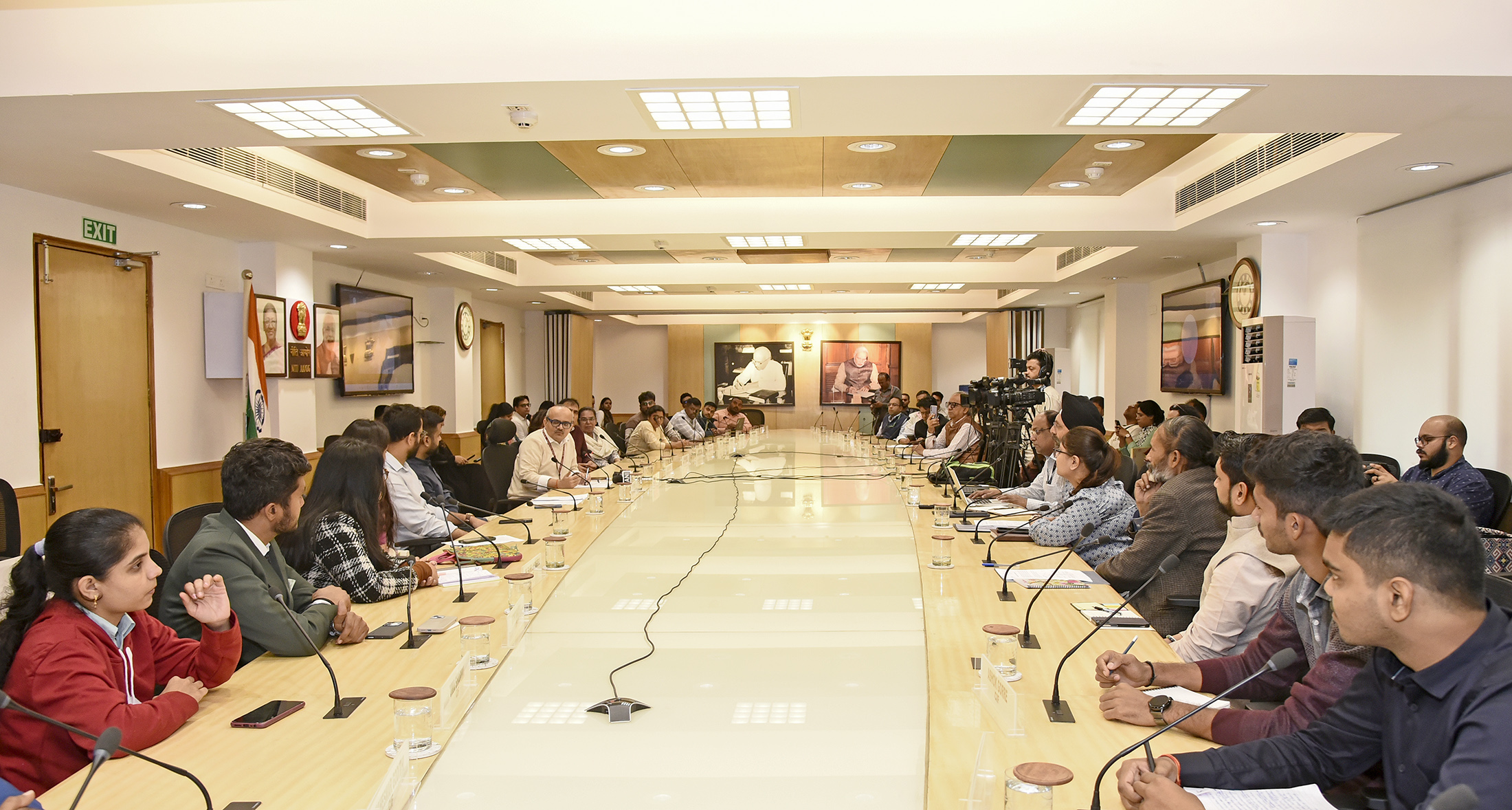
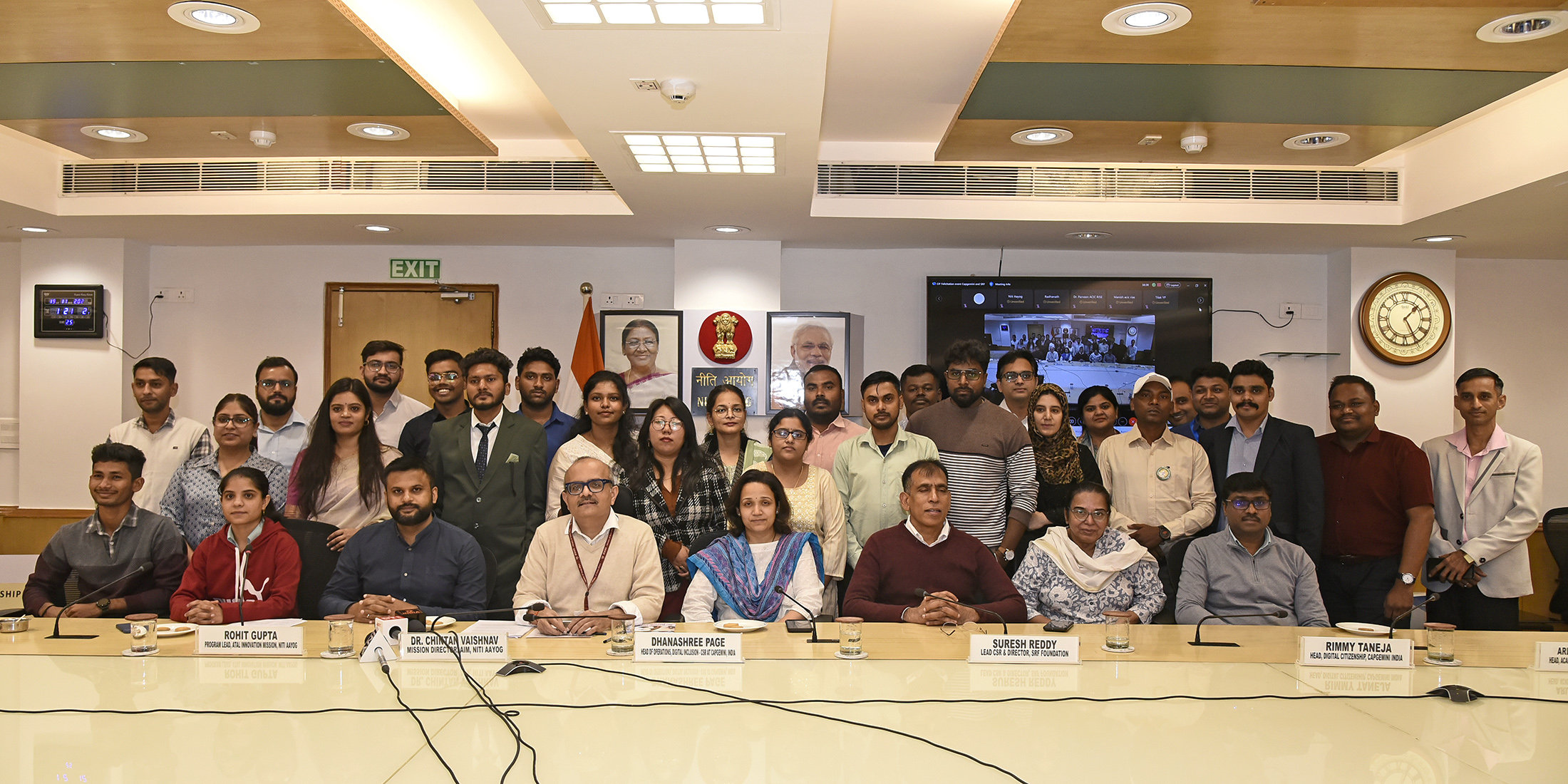
The Atal Innovation Mission (AIM), NITI Aayog marked a significant milestone today with the formal recognition of its fourth cohort of Community Innovator Fellows (CIFs). This year, the program has been further strengthened with the support of Capgemini India, marking a key partnership in fostering grassroots innovation across the country. The CIF initiative continues to empower local innovators, enabling them to address community-specific challenges through creative and sustainable solutions.

In conjunction with the cohort recognition, AIM commenced a two-day intensive bootcamp aimed at equipping these CIFs with the necessary skills and knowledge to scale their innovative solutions as part of AIM’s continued commitment to fostering grassroots innovation and promoting an entrepreneurial ecosystem across India, particularly in underserved regions. AIM, through its Atal Community Innovation Centers (ACIC) program has envisaged to serve the unserved/underserved areas of the country and provide support to every grassroots innovator and work towards accelerating the pathway to reach SDGs 2030.

The CIF Program is a one-year intensive initiative designed to provide aspiring innovators from all socio-economic backgrounds with the infrastructure, training, and mentorship necessary to scale their ideas and build sustainable businesses. Each Fellow is hosted at an Atal Community Innovation Center, where they receive entrepreneurial, SDG-focused, and life skills training while working on solutions tailored to their community’s unique challenges.

Speaking during the keynote address, Mission Director AIM, Dr.Chintan Vaishnav while applauding the program’s role in empowering innovators from Tier 2 and Tier 3 cities said, “The Community Innovator Fellows are uniquely positioned to address community-level problems with solutions that are both relevant and sustainable. This program is aspiring to create a model of excellence, where innovation meets purpose and where community-centric ideas drive national progress.”

He further highlighted the importance of initiatives like the CIF Program in advancing solutions to community level challenges in critical sectors.

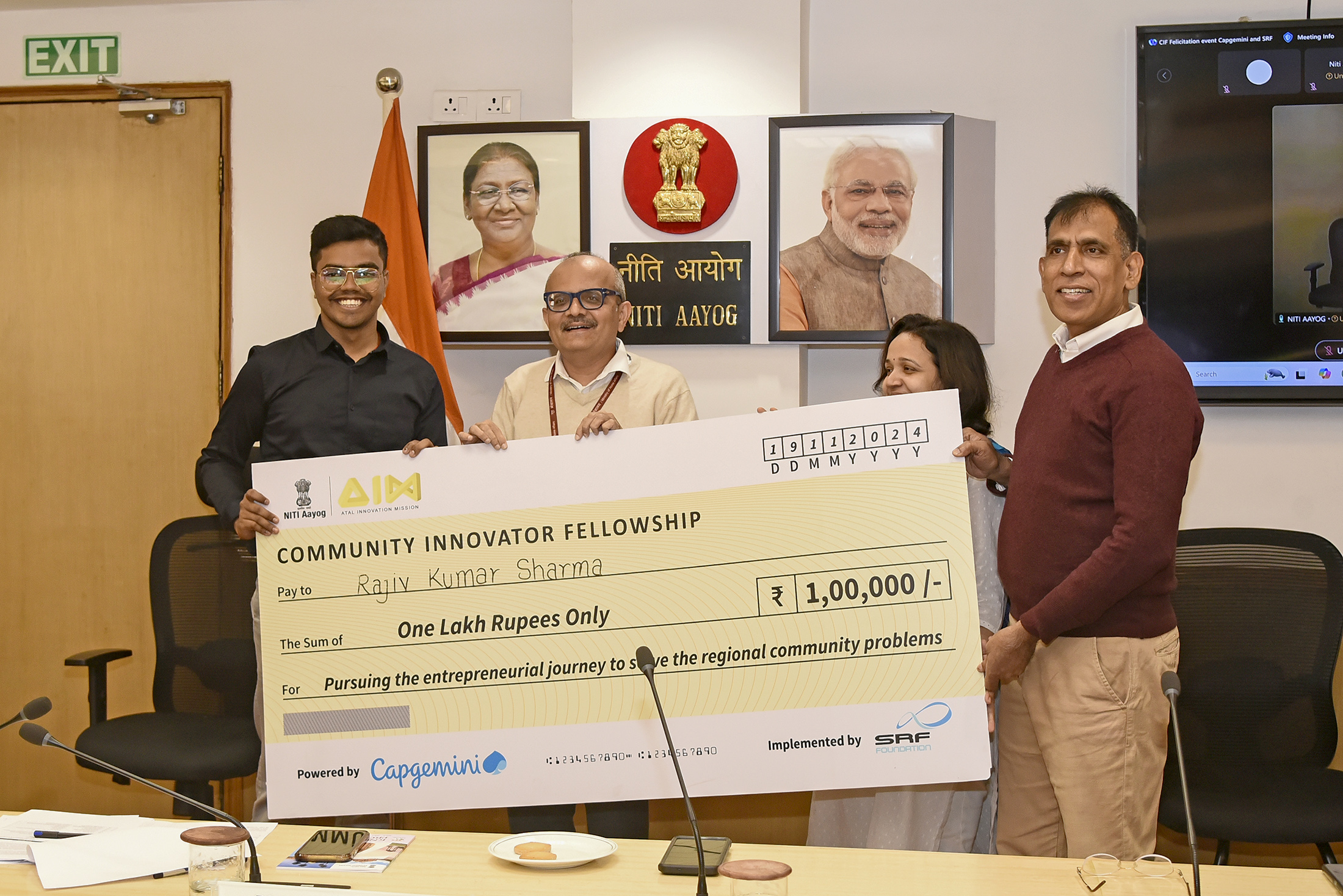
Capgemini India, a global leader in consulting, technology services, and digital transformation, is supporting this cohort by providing grants of INR 1 lakh each to 15 CIFs, helping them scale their innovative solutions. SRF Foundation is leading the program’s implementation in collaboration with AIM and Capgemini.

The event witnessed profound insights from distinguished speaker Dhanashree Page, Head of Operations, Digital Inclusion – CSR at Capgemini India. In her address, she emphasized the power of collaborative partnerships in fostering local innovation and driving societal progress. She remarked, “The CIFs represent the hope and creativity of India’s grassroots innovators. By empowering these individuals, we are enabling real, scalable solutions that can transform communities and drive sustainable change,” She said.

Dr. Suresh Reddy, Lead CSR & Director at SRF Foundation, spoke about the significant impact of social entrepreneurship in solving community challenges. “Today’s event showcases the commitment and ingenuity of the CIFs. They are truly the brightest minds in India, using their innovation to address critical local issues,” he said. “We, at SRF Foundation, remain committed to supporting such transformative initiatives and ensuring that their impact reaches every corner of the country.”

The event culminated with the presentation of grants to the CIFs, marking the beginning of their entrepreneurial journey as they work to scale their ideas and make a tangible impact in their communities.

 *****

IIT Ropar’s Role in Shaping a Self-Reliant Bharat Highlighted at VIVIBHA 2024

Daily writing prompt
Do you or your family make any special dishes for the holidays?

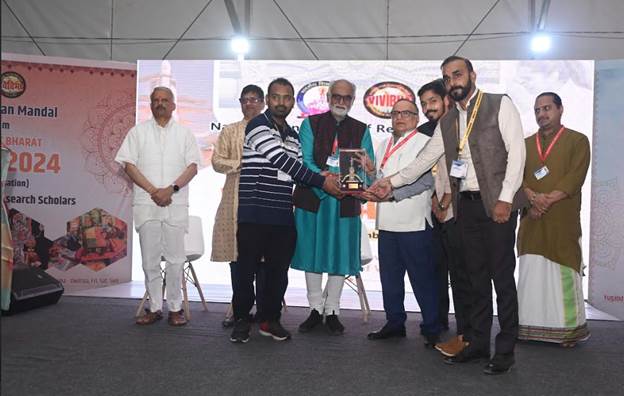
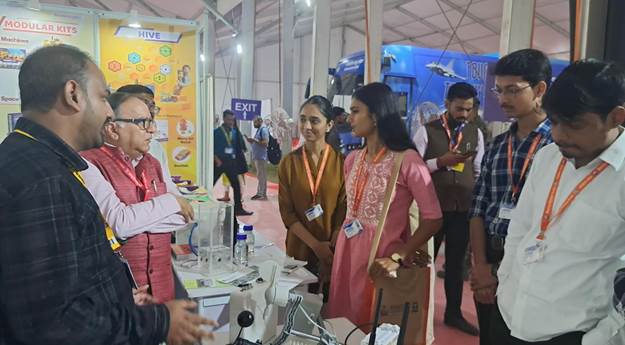
IIT Ropar proudly participated in VIVIBHA 2024, a distinguished three-day national conference organized by Bharatiya Shikshan Mandal (BSM) at SGT University, Gurugram. Themed “Vision for Viksit Bharat,” the event celebrated India’s rich cultural legacy while highlighting pioneering research and innovations that are shaping a self-sustaining nation.

The IIT Ropar TIF – AWaDH stall garnered considerable attention, particularly from Shri Dharmendra Pradhan, Union Minister of Education, who interacted with the team to explore the showcased innovations. Prof. Rajeev Ahuja, Director of IIT Ropar, also extended his support. In a significant achievement, AWaDH was awarded the Best Stall in the Academia category, recognizing the excellence and societal impact of its presented research.

As part of the “Research to Realisation” exhibition, the IIT Ropar Technology and Innovation Foundation – AWaDH Agriculture and Water Technology Development Hub showcased its transformative technologies that promote sustainable solutions in agriculture, water management, and environmental conservation. Key innovations on display included Moohsense: An AI-driven livestock management system; Digital Entomologist: A biodiversity monitoring tool; Nanobubble Technology for Water Purification; Air Sense: Advanced air quality sensors, and Soil Health Monitoring System: Precision farming tools for improved productivity.

VIVIBHA 2024’s focus on integrating Bharat-centric research with India’s vibrant cultural heritage closely aligns with AWaDH’s mission. The event reaffirmed the commitment to bridging tradition with cutting-edge technologies for a sustainable and prosperous future.

***

Bharat NCX 2024 Officially Inaugurated: Strengthening Cyber Defense and Strategic Decision-Making Across India

Daily writing prompt
Who are your current most favorite people?

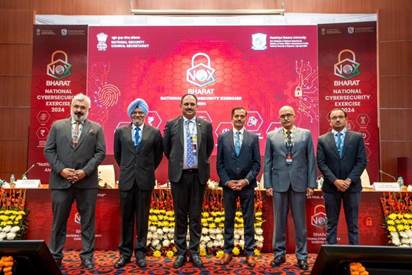
The Bharat National Cyber Security Exercise (Bharat NCX 2024), a landmark initiative to fortify India’s cybersecurity resilience, was inaugurated today at a high-profile ceremony organized by the National Security Council Secretariat (NSCS) in collaboration with Rashtriya Raksha University (RRU). The 12-day exercise is a critical step in preparing India’s cybersecurity professionals and leadership to tackle evolving threats with advanced cyber defense, incident response capabilities, and strategic decision-making.

In his Inaugural AddressLt Gen M. U. Nair, PVSM, AVSM, SM (Retd), the National Cyber Security Coordinator, stated, “Bharat NCX 2024 equips our nation’s cyber defenders and leaders with the skills to mitigate complex threats. From technical exercises to strategic decision-making, this initiative ensures our preparedness to manage crises at all levels.”

Prof. (Dr.) Bimal N. Patel, Vice Chancellor of RRU, delivered the Keynote Address, highlighting the integration of education, research, and innovation in addressing cybersecurity challenges. He remarked, “This exercise not only strengthens technical skills but also prepares leadership to navigate national-level cyber crises through informed decision-making.”

Key Features of Bharat NCX 2024: The exercise includes immersive training on cyber defense and incident response, live-fire simulations of cyberattacks on IT and OT systems, and collaborative platforms for government and industry stakeholders. A Strategic Decision-Making Exercise will bring together senior management from across sectors to simulate decision-making in a national-level cyber crisis, enhancing their ability to respond to high-pressure situations with strategic acumen. The CISO’s Conclave will feature Chief Information Security Officers from government, public, and private sectors sharing insights, participating in panel discussions, and exploring the latest trends and government initiatives in cybersecurity. On the sidelines, the Bharat Cybersecurity Startup Exhibition will showcase innovative solutions from Indian startups, emphasizing their role in enhancing the nation’s cybersecurity infrastructure. The exercise also highlights leadership engagement and capacity building, fostering a unified approach to emerging cyber challenges.

The event runs from November 18 to November 29, 2024, culminating in a comprehensive debrief to consolidate lessons learned and establish best practices in cybersecurity.

*****

Grievance Redressal Assessment And Index (GRAI) 2023 Launched On 18 November 2024

Daily writing prompt
Who are your current most favorite people?

Union Minister of State (Independent Charge) Science & Technology; Minister of State (Independent Charge) Earth Sciences; MoS PMO, Personnel, Public Grievances, Pensions, Atomic Energy and Space, Dr Jitendra Singh has launched Grievance Redressal Assessment and Index (GRAI) 2023 in the presence of Shri V. Srinivas, Secretary, Department of Administrative Reforms and Public Grievances (DARPG), Govt. of India.

Grievance Redressal Assessment and Index (GRAI) was conceptualized and designed by the DARPG, Govt. of India based on the recommendation of Parliamentary Standing Committee of Ministry of Personnel, Public Grievances and Pensions with an objective to present organigation-wise comparative picture and provide valuable insights about strengths and areas of improvement regarding grievance redressal mechanism. The first edition of GRAI 2022 was released on 21 June 2023.

Eighty-nine Central Ministries and Departments were assessed and ranked based on a comprehensive index in the dimensions of (1) Efficiency, (2) Feedback, (3) Domain and (4) Organisational Commitment and corresponding 11 indicators. To compute the index, data between January and December 2023was used from the Centralised Public Grievance Redressal and Management System (CPGRAMS).

As part of GRAI, Ministries and Departments are grouped in three groups based on the number of grievances registered in calendar year 2023 at CPGRAMS viz.

GroupsRegistered Grievance RangeNo. of Ministries/Departments
Aregistered grievances > 10,00028
Bregistered grievances 2,000 to 9,99933
Cregistered grievances < 2,00028

Department of Agriculture and Farmers Welfare, O/o the Comptroller & Auditor General of India and Department of Investment & Public Asset Management have topped the rankings in Group A, B and C respectively. A detailed list with top three Ministries and Departments in composite and dimension-wise ranking is as follows:

#Rank 1Rank 2Rank 3
Group A:Grievances > 10,000CompositeDepartment of Agriculture and Farmers WelfareDepartment of PostsMinistry of Cooperation
EfficiencyMinistry of CooperationDepartment of TelecommunicationsMinistry of Labour and Employment
FeedbackDepartment of Agriculture and Farmers WelfareCentral Board of Direct Taxes (Income Tax)Department of Defence
DomainUnique Identification Authority of IndiaMinistry of Home AffairsMinistry of Cooperation
Organisational CommitmentDepartment of PostsDepartment of TelecommunicationsMinistry of Corporate Affairs
Group B:Grievances 2,000 – 9,999CompositeO/o the Comptroller & Auditor General of IndiaDepartment of Land ResourcesNITI Aayog
EfficiencyDepartment of Legal AffairsDepartment of Land ResourcesNITI Aayog
FeedbackO/o the Comptroller & Auditor General of IndiaDepartment of ExpenditureDepartment of Financial Services (Pension Reforms)
DomainDepartment of Land ResourcesMinistry of Parliamentary AffairsMinistry of Drinking Water and Sanitation
Organisational CommitmentDepartment of Empowerment of Persons with DisabilitiesDepartment of Land ResourcesMinistry of Ayush
Group C:Grievances < 2,000CompositeDepartment of Investment & Public Asset ManagementMinistry of Development of North Eastern RegionDepartment of Pharmaceuticals
EfficiencyDepartment of Investment & Public Asset ManagementMinistry of Development of North Eastern RegionMinistry of Mines
FeedbackDepartment of PharmaceuticalsDepartment of Public EnterprisesDepartment of Investment & Public Asset Management
DomainMinistry of Development of North Eastern RegionDepartment of Youth AffairsDepartment of Bio Technology
Organisational CommitmentDepartment of Official LanguageDepartment of Chemicals and PetrochemicalsLegislative Department

In the GRAI 2023report released by DARPG, detailed Root-Cause Analysis has been included with specific inputs on areas of further improvement. This report presents a two-dimensional (vertical and horizontal) analysis of the root causes of effective redressal of grievances of each Ministries and Departments in an easily discernible colour coded analysis. The report also presents brief description of technical partners DARPG has engaged to facilitate the Ministries and Departments to optimally utilize CPGRAMS as a means of effective grievance redressal media.

Over the years, CPGRAMS has become a key tool for enhancing government accountability and transparency by enabling citizens to file and track grievances online. The Commonwealth Secretariat has recognised CPGRAMSas a best practice in Commonwealth Secretaries of Public Service / Secretaries to Cabinet meeting in April 2024.

The GRAI 2023 report presents a clear roadmap with an advisory for the Ministries and Departments to leverage CPGRAMS and its features like IGMS 2.0, TreeDashboard, etc., to enhance grievance redressal. The roadmap for improvement emphasizes integrating advanced technologies like AI and ML for data analysis, predictive analytics and preventive measures while revising ATR formats for better reporting. Capacity building for GROs, enhancing accountability through audits and extending CPGRAMS integration to the third-tier of government are key recommendations.

***

Morse Code: A Comprehensive Guide

Daily writing prompt
What are your family’s top 3 favorite meals?

Morse Code is a method of encoding text characters as sequences of dots (.) and dashes (-) that can be transmitted using sound, light, or visual signals. Named after its inventor, Samuel Morse, this system revolutionized long-distance communication in the 19th century and laid the groundwork for modern telecommunications. Though largely superseded by advanced technologies, Morse Code remains a valuable skill and is still used in various specialized applications today.

History of Morse Code

  • Invention by Samuel Morse: In the early 1830s, Samuel Morse, an American artist and inventor, along with Alfred Vail, developed the first version of Morse Code. It was initially intended for use with the telegraph, an electrical device that sends signals over wires.
  • First Successful Transmission: On May 24, 1844, Morse sent the first official telegraph message, “What hath God wrought,” from Washington, D.C., to Baltimore, Maryland. This event marked the beginning of a new era in communication.
  • Evolution of the Code: The original version of Morse Code was not suitable for all languages. As a result, a modified version called International Morse Code was developed in 1851, which is still in use today. The differences mainly involve changes to certain letters and punctuation marks.

How Morse Code Works

Morse Code represents letters, numbers, and punctuation using sequences of dots (short signals) and dashes (long signals). Each letter and number has a unique combination, making it possible to communicate messages clearly and efficiently.

The Basic Components

  • Dot (·): Represents a short signal. Typically lasts for one unit of time.
  • Dash (−): Represents a long signal, which is three times the duration of a dot.
  • Space:
    • Between dots and dashes within a character: 1 unit of time.
    • Between characters within a word: 3 units of time.
    • Between words: 7 units of time.

Morse Code Alphabet and Numbers

Here is the complete International Morse Code chart:

LetterCodeLetterCodeNumberCode
A·−N−·1·−−−−
B−···O−−−2··−−−
C−·−·P·−−·3···−−
D−··Q−−·−4····−
E·R·−·5·····
F··−·S···6−····
G−−·T7−−···
H····U··−8−−−··
I··V···−9−−−−·
J·−−−W·−−0−−−−−
K−·−X−··−
L·−··Y−·−−
M−−Z−−··

Special Characters and Punctuation

  • Period (.): ·−·−·−
  • Comma (,): −−··−−
  • Question Mark (?): ··−−··
  • Apostrophe (‘): ·−−−−·
  • Exclamation Mark (!): −·−·−−
  • Slash (/): −··−·
  • Parentheses ( ): −·−−·−
  • Ampersand (&): ·−···
  • Colon (:): −−−···
  • Semicolon (;): −·−·−·
  • Equals Sign (=): −···−
  • Plus (+): ·−·−·
  • Hyphen (-): −····−
  • Underscore (_): ··−−·−
  • Quotation Mark (“): ·−··−·
  • Dollar Sign ($): ···−··−
  • At Sign (@): ·−−·−·

Practical Uses of Morse Code

Despite being an old technology, Morse Code still finds use in various fields due to its simplicity and effectiveness:

  1. Aviation and Maritime: Morse Code is still used in aviation (especially for navigation aids like VORs and NDBs) and maritime communication (like SOS signals).
  2. Emergency Situations: Morse Code can be used to send distress signals when other forms of communication fail. The SOS signal (· · · − − − · · ·) is universally recognized.
  3. Military: The military uses Morse Code for secure, covert communication, especially in special operations.
  4. Amateur Radio (Ham Radio): Many amateur radio enthusiasts still use Morse Code, particularly for long-distance communication due to its ability to be transmitted over low bandwidth and noisy channels.
  5. Assistive Technology: Morse Code can assist individuals with disabilities. For example, those with limited motor skills can use Morse Code inputs to communicate using specialized devices.

Learning Morse Code

Learning Morse Code may seem daunting, but with consistent practice, it becomes second nature. Here are some tips for beginners:

Tips and Techniques

  1. Start with the Basics: Begin by learning the most commonly used letters (E, T, A, O, N, etc.).
  2. Use Mnemonics: Associating Morse Code patterns with memorable phrases or rhythms can help retention.
  3. Practice Regularly: Use online resources, mobile apps, or flashcards to practice consistently.
  4. Listen to Morse Code: Hearing Morse Code regularly helps in recognizing patterns faster. There are plenty of apps and websites that play random sequences for practice.
  5. Join a Community: Engage with amateur radio operators or Morse Code enthusiasts who can provide support and additional resources.

Morse Code Mnemonics Example

  • A (·−): Think of the phrase “A sail” (short and long).
  • B (−···): The phrase “Be a good boy” (one long, three short).
  • C (−·−·): Think of “Coca-Cola” (alternating sounds).
  • O (−−−): “Oh!” (a long exclamation).

Technological Impact of Morse Code

Morse Code was a key driver in the development of modern communication systems:

  • Telegraph: The invention of the telegraph, which used Morse Code, was the first form of long-distance communication that did not rely on physical transportation of messages.
  • Radio Communication: Early radio transmissions relied heavily on Morse Code due to its simplicity and the fact that it could be transmitted over low-quality channels.
  • Digital Communication: The binary nature of Morse Code (dots and dashes) influenced the development of digital communication protocols and encoding schemes.

Conclusion

Morse Code may seem like a relic from the past, but its enduring legacy and continued relevance in specialized fields highlight its significance. From enabling the first real-time long-distance communication to serving as a reliable backup in emergency situations, Morse Code has stood the test of time. Whether you’re an enthusiast looking to explore the history of telecommunications or someone interested in learning a new skill, Morse Code remains a fascinating and valuable part of our technological heritage.

Resources for Learning Morse Code

  • Websites: Morse Code Translator, Learn Morse Code
  • Books: The Art and Skill of Radio-Telegraphy by William G. Pierpont, Morse Code for Dummies by James Anderson
  • Apps: Morse Code apps like Morse-It, Morse Code Trainer, and Gboard Morse Code Keyboard for mobile practice.

Fun Fact

Did you know that Morse Code is not only auditory but also visual? It can be communicated using light signals (like a flashlight), making it versatile in various scenarios, especially in emergency situations where sound-based communication is not feasible.

Cost Management Strategies in Large-Scale Operations

Daily writing prompt
What is your favorite form of physical exercise?

In today’s competitive business environment, cost management in large-scale operations has become a critical component for maintaining profitability and sustainability. Whether you’re managing a manufacturing plant, a sprawling logistics network, or a multi-national corporation, understanding and implementing effective cost management strategies can mean the difference between thriving and merely surviving. This blog post will explore various techniques and insights into managing costs effectively, tailored for decision-makers who aim to enhance operational efficiency.

Photo by Photo By: Kaboompics.com on Pexels.com

Understanding the Importance of Cost Management

Effective cost management is crucial for any business, but it becomes even more essential as operations scale. Large-scale operations often involve complex processes, multiple stakeholders, and significant capital investments. Mismanagement at any level can lead to financial losses and potential operational setbacks. By focusing on cost management, businesses can optimize resources, streamline operations, and improve overall financial health.

Cost management is not just about cutting expenses; it’s about making strategic decisions that align with long-term goals. For example, investing in technology that reduces manual labor can lead to immediate costs but result in substantial savings over time. This mindset shifts the focus from short-term budget constraints to long-term operational efficiency and sustainability.

Lastly, operating at a large scale allows businesses to take advantage of economies of scale. However, without proper cost management strategies, these advantages can quickly dissipate. Implementing robust cost management processes ensures that large-scale operations remain agile, efficient, and competitive in a rapidly changing market.

Streamlining Procurement Processes

Procurement is a major cost center in large-scale operations. Efficient procurement strategies can significantly reduce waste and lower costs. Centralizing procurement functions to enhance negotiation power with suppliers is one approach. By consolidating purchases, businesses can leverage better pricing, terms, and contracts, thereby reducing costs.

Automation is another valuable tool for streamlining procurement. Implementing technology solutions like procurement software can reduce manual errors, increase transparency, and improve efficiency. Automation also enables real-time analytics, allowing businesses to make data-driven decisions that enhance cost management.

Building strong relationships with suppliers also plays a pivotal role in cost management. Collaborating with suppliers can lead to better pricing agreements, improved product quality, and quicker delivery times. Establishing trust and open communication lays the groundwork for a mutually beneficial partnership that enhances cost efficiency.

Enhancing Workforce Efficiency

Labor costs are a significant expense for large-scale operations. Improving workforce efficiency can yield substantial cost savings. One approach is to invest in employee training and development programs. Equipping employees with the skills they need to work efficiently reduces errors, improves productivity, and increases job satisfaction.

Adopting flexible work arrangements is another strategy that can enhance workforce efficiency. Offering remote work options or flexible schedules can reduce overhead costs while improving employee morale and retention. This flexibility can lead to increased productivity and lower turnover rates.

Leveraging technology to automate repetitive tasks can also pay dividends. By freeing up employees from mundane tasks, businesses can focus their efforts on higher-value activities. This not only leads to cost savings but also drives innovation and continuous improvement within the organization.

Optimizing Supply Chain Management

Supply chain management is a critical area for cost management in large-scale operations. Effective supply chain strategies can reduce costs and improve service levels. One way to achieve this is by optimizing inventory levels. Implementing just-in-time inventory systems can reduce carrying costs and minimize waste.

Utilizing technology to improve supply chain visibility is another key strategy. Real-time tracking and data analytics can provide insights into demand patterns, supplier performance, and potential disruptions. Businesses can proactively address issues and avoid costly delays by gaining better visibility into the supply chain.

Collaborating with supply chain partners can also yield cost-saving opportunities. Developing strategic partnerships and sharing information can improve coordination, reduce duplication, and enhance efficiency. Such collaboration fosters an integrated supply chain that operates seamlessly and cost-effectively.

Leveraging Technology for Cost Efficiency

Technology plays a crucial role in cost management for large-scale operations. Investing in advanced technologies can improve processes, reduce errors, and enhance decision-making. For instance, utilizing industrial piping in Utah can streamline production processes, reduce downtime, and enhance overall efficiency.

Data analytics is another powerful tool for cost management. By analyzing large volumes of data, businesses can identify cost-saving opportunities, uncover inefficiencies, and make informed decisions. Predictive analytics can also help anticipate demand fluctuations and optimize resource allocation.

Incorporating automation into various aspects of operations can result in significant cost savings. Automated systems can handle repetitive tasks, monitor performance, and generate insights. This reduces labor costs and enhances accuracy, speed, and consistency across the organization.

Conclusion

Effective cost management is essential for large-scale operations seeking sustainable growth and profitability. By implementing strategies such as streamlining procurement, enhancing workforce efficiency, optimizing supply chain management, and leveraging technology, businesses can achieve cost efficiency and maintain a competitive edge.

To further enhance your cost management efforts, consider exploring additional resources or consulting experts in the field. Remember, successful cost management requires a holistic and proactive approach. By continually evaluating and optimizing your operations, you can ensure a strong foundation for long-term success.

Beyond the Gauge How Pressure Sensors are Transforming Industrial Automation

Pressure sensors are vital components in industrial automation, measuring the pressure of gases or liquids and converting it into electrical signals for systems and operators. They play a crucial role across various industries, ensuring safety, efficiency, and productivity by helping machines adapt to changing conditions. Understanding these sensors is essential for engineers and technologists in creating reliable systems.

Photo by Julien Goettelmann on Pexels.com

Evolution of Pressure Sensor Technology

Pressure sensors have come a long way since their inception. Historically, they relied on simple mechanical components that would deform under pressure. Over time, advances in technology brought about electronic pressure sensors, which offer greater precision and reliability.

Major breakthroughs have marked the evolution of pressure sensors. The integration of microelectromechanical systems (MEMS) technology allowed sensors to become smaller, yet more powerful. Such advancements have been pivotal in automation, enabling smarter systems that adjust in real-time based on sensor feedback.

These technological strides have not only improved the accuracy of pressure sensors but have also broadened their applications. In industries where minute pressure differences can have significant implications, these advancements have been game-changers, paving the way for more sophisticated automation processes.

Innovative Applications of Pressure Sensors

Manufacturing Marvels

In the manufacturing sector, pressure sensors are integral to process control and quality assurance. Take, for example, a factory producing delicate electronic components. Here, pressure sensors ensure that the machinery operates within safe limits, maintaining the precise conditions needed to produce high-quality products consistently.

Oil and Gas Explorations

The oil and gas industry presents a challenging environment where pressure sensors play a crucial role. On offshore drilling rigs, these sensors monitor the pressure of drilling fluids, preventing blowouts and ensuring the safety of operations. This application not only enhances safety but also optimizes extraction processes, making them more efficient and cost-effective.

Aerospace Advancements

In aerospace, pressure sensors contribute significantly to flight safety and performance. They are used to monitor cabin pressure, fuel systems, and hydraulic circuits, ensuring that everything functions smoothly. The data collected helps airlines maintain their aircraft better, reducing downtime and enhancing passenger safety.

Automotive Innovations

The automotive industry also benefits significantly from pressure sensors and float switches. Modern vehicles use them in tire pressure monitoring systems, ensuring optimal tire performance and fuel efficiency.

Across these sectors, pressure sensors facilitate enhanced safety, efficiency, and productivity. By providing real-time data, they allow for immediate adjustments, reducing the risk of failures and optimizing processes.

Future Trends in Pressure Sensor Technology

The future of pressure sensor technology looks promising, with emerging technologies set to redefine industrial automation. Innovative materials and designs are making sensors more robust and versatile, allowing them to operate under extreme conditions.

One exciting development is the integration of IoT capabilities, enabling pressure sensors to communicate data wirelessly. This advancement opens up new possibilities for remote monitoring and predictive maintenance, helping industries reduce downtime and enhance operational efficiency.

Predictions for the global market suggest that pressure sensors will continue to grow in demand as industries push for smarter, more autonomous systems. The ongoing advancements in AI and machine learning will likely further integrate pressure sensors into complex decision-making processes, driving innovation in industrial automation.

Benefits and Challenges of Pressure Sensor Integration

The advantages of using pressure sensors in industrial automation are manifold. They provide critical data that helps improve process control, enhance safety, and boost efficiency. By facilitating real-time monitoring, they enable quick responses to system changes, reducing the risk of costly downtimes.

However, integrating pressure sensors into existing systems is not without challenges. Compatibility with legacy systems, sensor durability in harsh environments, and data management are common issues. To overcome these, engineers must carefully design and implement solutions that address these challenges while leveraging the benefits of modern pressure sensor technologies.

Conclusion

Now that you have a deeper understanding of pressure sensors and their applications, you can appreciate their significance in industrial automation. These small but powerful devices are driving advancements in various industries, ensuring safety, efficiency, and productivity.

Beyond Stethoscopes and Scalpel: How Technology is Revolutionizing Modern Healthcare

Picture a doctor’s office a decade ago, dominated by paper charts and manual test results. Fast forward to today, and imagine walking into a tech-savvy healthcare facility where your entire medical history is at the physician’s fingertips, available in an instant with the click of a button. This is the revolution of technology in healthcare. Gone are the days when healthcare professionals were forced to work with outdated methods. Now, technology is transforming medicine into a futuristic realm where efficiency, precision, and patient care are optimized like never before.

Photo by Pixabay on Pexels.com

Historical Perspective

To truly appreciate the impact of modern technology on healthcare, it’s essential to look back at the past. The evolution of technology in medicine has been nothing short of remarkable. In the early days, medical advancements were slow and laborious, relying heavily on trial and error. However, with each passing decade, the pace at which technology influenced medicine began to accelerate.

Initially, technological innovations were limited to basic tools and equipment. The invention of the stethoscope in the 19th century, for example, marked a significant leap in diagnostic capabilities. Fast forward to the 20th century, and the introduction of X-ray machines revolutionized the way doctors diagnosed and treated patients. These early technological advancements laid the foundation for what was to come.

The late 20th century saw the emergence of computers in healthcare. Electronic health records (EHR) became a game-changer, allowing for better organization and accessibility of patient information. This era also witnessed the rise of sophisticated imaging techniques such as MRI and CT scans, providing unprecedented insights into the human body. While these advancements were groundbreaking in their own right, they merely scratched the surface of what technology could achieve in healthcare.

Current State of Affairs

Today, we find ourselves in an era where technology is seamlessly integrated into every facet of healthcare delivery. The landscape has evolved dramatically, with cutting-edge technologies reshaping how healthcare is administered, making it more efficient and patient-centric.

Artificial intelligence (AI) is at the forefront of this transformation. AI-powered algorithms analyze vast amounts of data, assisting in diagnosis and treatment planning. For instance, ophthalmology EMR software leverages AI to provide ophthalmologists with accurate patient data, streamlining their practice. AI is also used in predictive analytics, enabling healthcare providers to anticipate potential health issues and intervene proactively. Many modern health-care providers are now embracing customizable AI EMRs that can be tailored to a clinic’s specific workflows. This flexibility helps reduce administrative work, streamline documentation, and ultimately allow care teams to spend more time focused on patients rather than paperwork.

Telemedicine, another technological marvel, has gained immense popularity, especially in the wake of the COVID-19 pandemic. Patients can now consult with healthcare professionals from the comfort of their homes, reducing the need for physical visits. This convenience is not only beneficial for patients but also alleviates the burden on overcrowded healthcare facilities.

Wearable devices, such as smartwatches and fitness trackers, have empowered individuals to take charge of their health. These gadgets monitor vital signs, track physical activity, and even provide reminders for medication. The data collected from wearables can be shared with healthcare providers, offering valuable insights into a patient’s daily health habits.

Challenges and Opportunities

While the integration of technology in healthcare offers immense promise, it is not without its challenges. One of the primary challenges is ensuring data security and privacy. With the digitization of patient records, protecting sensitive information from cyber threats is paramount. Healthcare providers must invest in robust cybersecurity measures to safeguard patient data.

Additionally, the adoption of technology in healthcare requires significant investment, both in terms of infrastructure and training. Healthcare professionals need to be well-versed in using new technologies to maximize their benefits. This necessitates continuous education and training programs, which can be resource-intensive.

Despite these challenges, the opportunities presented by technology in healthcare are vast. Improved diagnostic accuracy, enhanced patient engagement, and streamlined administrative processes are just a few of the benefits. By leveraging technology, healthcare providers can deliver more personalized and efficient care, ultimately improving patient outcomes.

Future Trends

Looking ahead, the future of healthcare technology is promising, with several trends set to further transform the industry. One such trend is the continued development and integration of AI into healthcare processes. AI is expected to play an even more significant role in areas such as personalized medicine, where treatment plans are tailored to an individual’s genetic makeup.

The Internet of Things (IoT) is another technology poised to revolutionize healthcare. IoT-enabled devices can collect and transmit data in real-time, allowing healthcare providers to monitor patients remotely. This capability is particularly valuable for managing chronic conditions, as it enables early intervention and reduces hospital visits.

Furthermore, blockchain technology holds potential for enhancing data security and interoperability in healthcare. By providing a decentralized and tamper-proof way of storing and sharing data, blockchain can improve trust and transparency in healthcare transactions.

Conclusion

In conclusion, technology is revolutionizing modern healthcare, from the evolution of medical tools to the integration of AI, telemedicine, and wearables. While challenges like data security and training remain, the potential for enhanced healthcare delivery is enormous. As we move forward, stakeholders must proactively adopt and adapt to these advancements to ensure optimal patient care and operational efficiency.

Track Your Transport App to Tackle Key Challenges in Logistics

Daily writing prompt
What details of your life could you pay more attention to?

NICDC Logistics Data Services Ltd. (NLDSL) announces the launch of Unified Logistics Interface Platform (ULIP) Hackathon 2.0, a competitive event aimed at fostering innovation and developing digital solutions to tackle pressing challenges in the logistics industry. The Hackathon was officially launched at an event held under the chairmanship of Shri Rajeev Singh Thakur, Additional Secretary, Department for Promotion of Industry and Internal Trade (DPIIT), at Vanijya Bhawan.

The launch event witnessed more than 1800 attendees joining the kick-off physically and virtually, reflecting widespread industry interest in the initiative. Hackathon 2.0 marks a significant step in leveraging innovation and technology to reshape and streamline India’s logistics and supply chain sector.

Building on the success of ULIP Hackathon 1.0, which resulted in the development of cutting-edge solutions, Hackathon 2.0 invites developers, start-ups, and industry players to come together once again. The focus of this year’s hackathon is on addressing key logistics challenges such as sustainabilitycomplex supply chain processesunified documentationand multimodal logistics optimization.

Speaking on the occasion, Shri Rajeev Singh Thakur, said, “We are excited to launch ULIP Hackathon 2.0, an initiative that fosters creativity, problem-solving, and collaboration. With the tremendous success of Hackathon 1.0, we are confident that this year’s event will generate even more innovative solutions to shape the future of India’s logistics ecosystem.”

As part of its ongoing commitment to transforming the logistics sector, NLDSL also announced the launch of the Track Your Transport (TYT) application powered by ULIP. This app is designed to empower small-scale transporters and traders by addressing various facets of logistics management, from providing tracking of cargo via all modes to verification of vehicles and drivers.  TYT eliminates the need for heavy IT infrastructure investments, making it a cost-effective and user-friendly tool for the unorganized sector.

Shri Rajat Kumar Saini, CEO & MD, NICDC and Chairman, NLDSL highlighted that the TYT app is a key milestone in their efforts to bring digital empowerment to small traders and transporters. He stated, “The app provides the tools necessary to enhance operational efficiency and visibility, ensuring that small players can compete on a level playing field with the rest of the industry.” 

Track Your Transport app can be accessed via the web at http://www.trackyourtransport.in or downloaded through Android, iOS, and Digital India App Stores.

About ULIP:

ULIP is a digital gateway that allows industry players to access logistics-related datasets from various Government systems through API-based integration. Currently, the platform integrates with 37 systems from 10 ministries via 118 APIs, covering over 1800 data fields. Private sector participation in ULIP has been instrumental in amplifying its impact, with over 1000 companies registered on the ULIP portal (www.goulip.in). Additionally, these companies have developed over 100 applications, leading to more than 54 crore API transactions.

About NLDSL:

NICDC Logistics Data Services Ltd. (NLDSL) has been at the forefront of transforming India’s logistics sector through its innovative solutions like Logistics Data Bank (LDB) and ULIP. By leveraging advanced technology, NLDSL has enhanced efficiency, transparency, and digitization within the industry.

The company was established on December 30, 2015, with the primary objective of harnessing Information and Communication Technology (ICT) to enhance efficiency in the Indian logistics sector. It is a joint venture between Government of India represented by National Industrial Corridor Development and Implementation Trust (NICDIT) and Japanese IT major NEC Corporation.

***